Loading
by BlastRoom
Trace energy and matter through real food webs, their trophic levels, and the decomposers that return matter to the soil and air.
#us_grade_8_science
40 questions
One question set, multiple game modes. Tap any game to see it in action. Not sure which to pick?
Answer to place stones and capture territory.
Outrun the snow together.
Earn blasts, then hunt the other team.
Answer to earn energy, then climb.

The class blasts through walls together.
Bid on mystery lots. Most money wins.
Sell tours. Nice, standard, or a total scam.

Answer, restock, and serve the rush.
More correct answers pulls the rope your way.
Answer, then shoot down the alien wave.
Answer, then tap to leap the frozen ridge.
On the Serengeti grassland, zebras feed on grasses, and lions feed on zebras. Nothing in this web feeds on lions. Which trophic level does the zebra occupy?
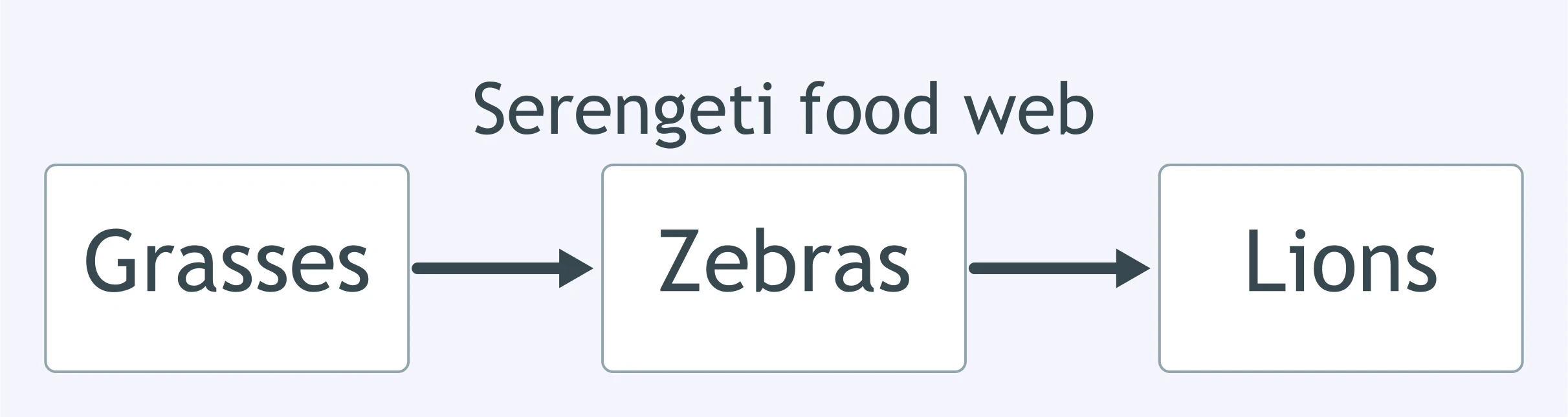
In a Pacific kelp forest, sea urchins graze on giant kelp, and sea otters feed on the urchins. What role does the kelp fill?
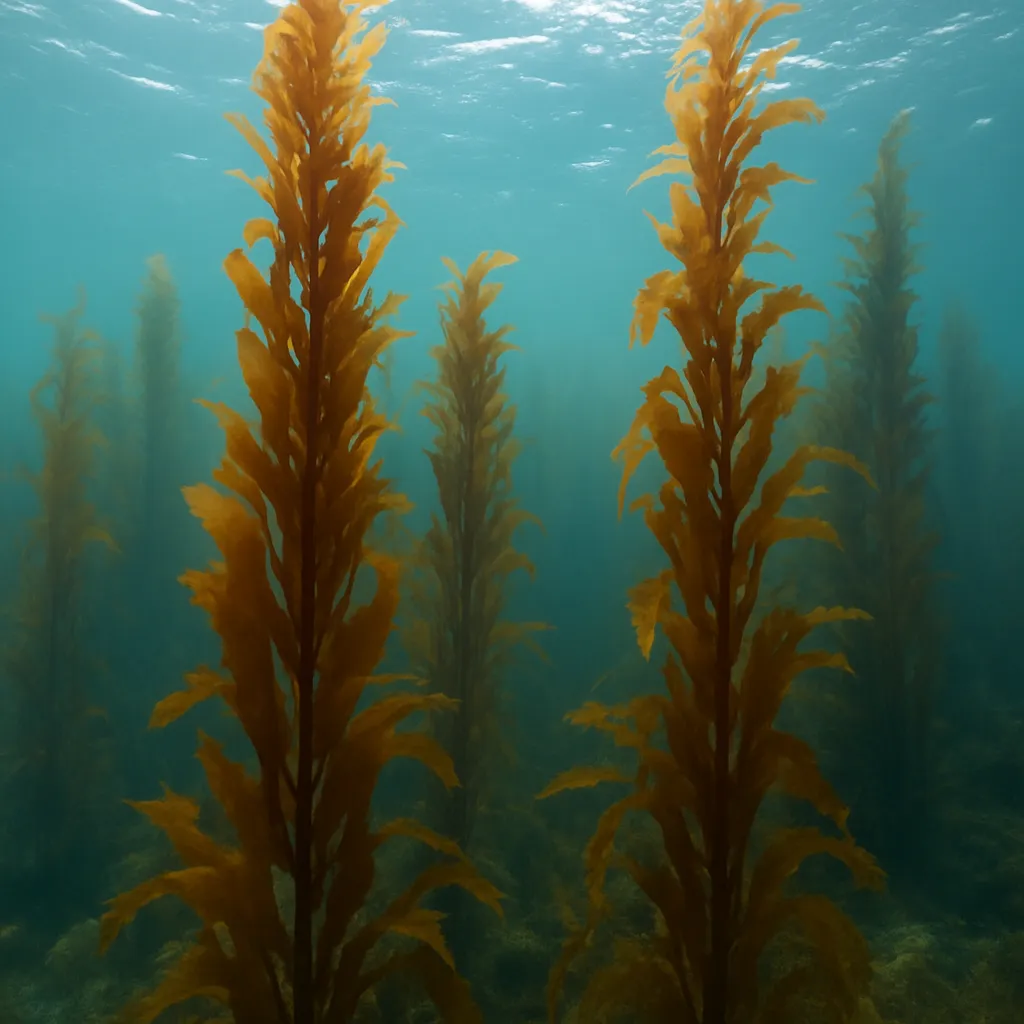
In a Chesapeake Bay salt marsh, marsh periwinkle snails graze on cordgrass, blue crabs eat the snails, and striped bass eat the crabs. The blue crab is best described as which kind of consumer?
In the Sonoran Desert, kangaroo rats eat mesquite seeds, rattlesnakes eat kangaroo rats, and red-tailed hawks eat rattlesnakes. Which level does the hawk occupy in this web?
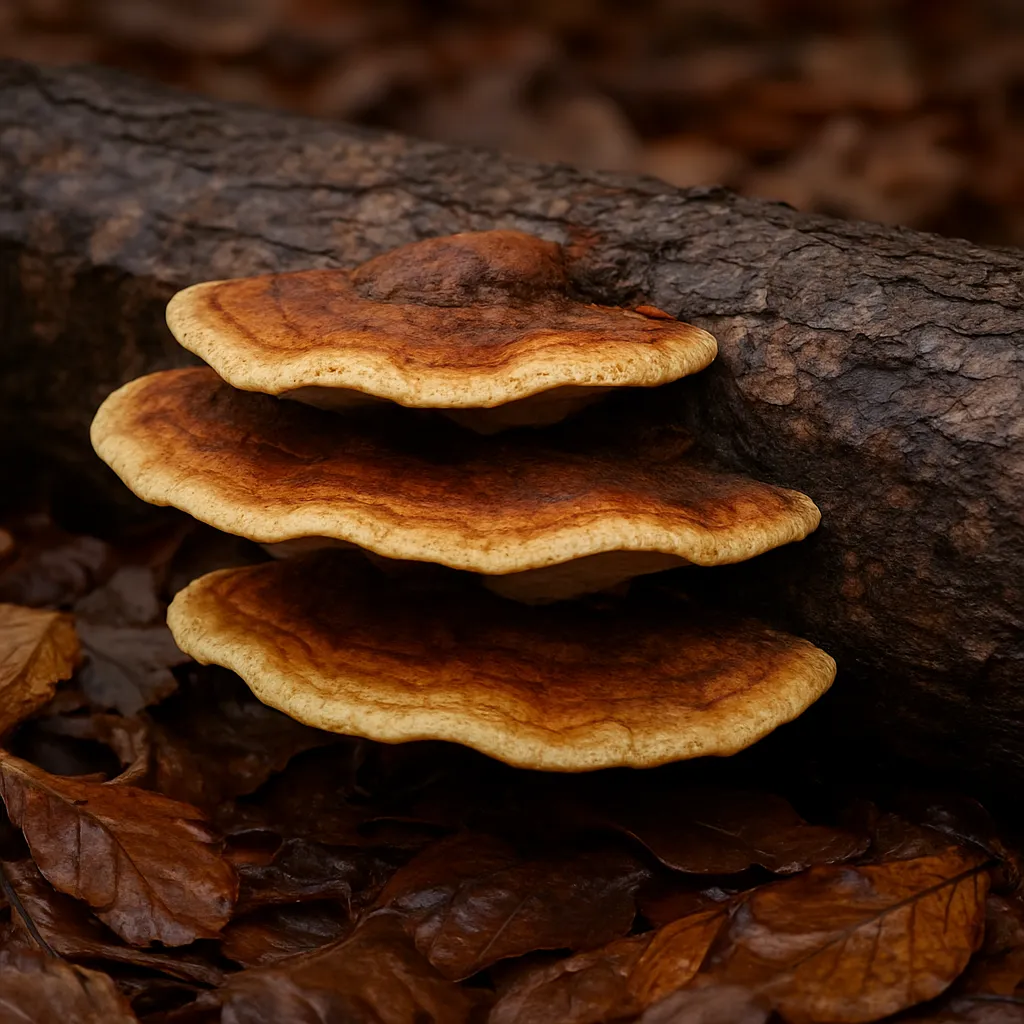
In an oak forest, shelf fungi spread through a fallen log and break its wood down until only crumbly material and soil are left. What role do these fungi fill in the forest web?
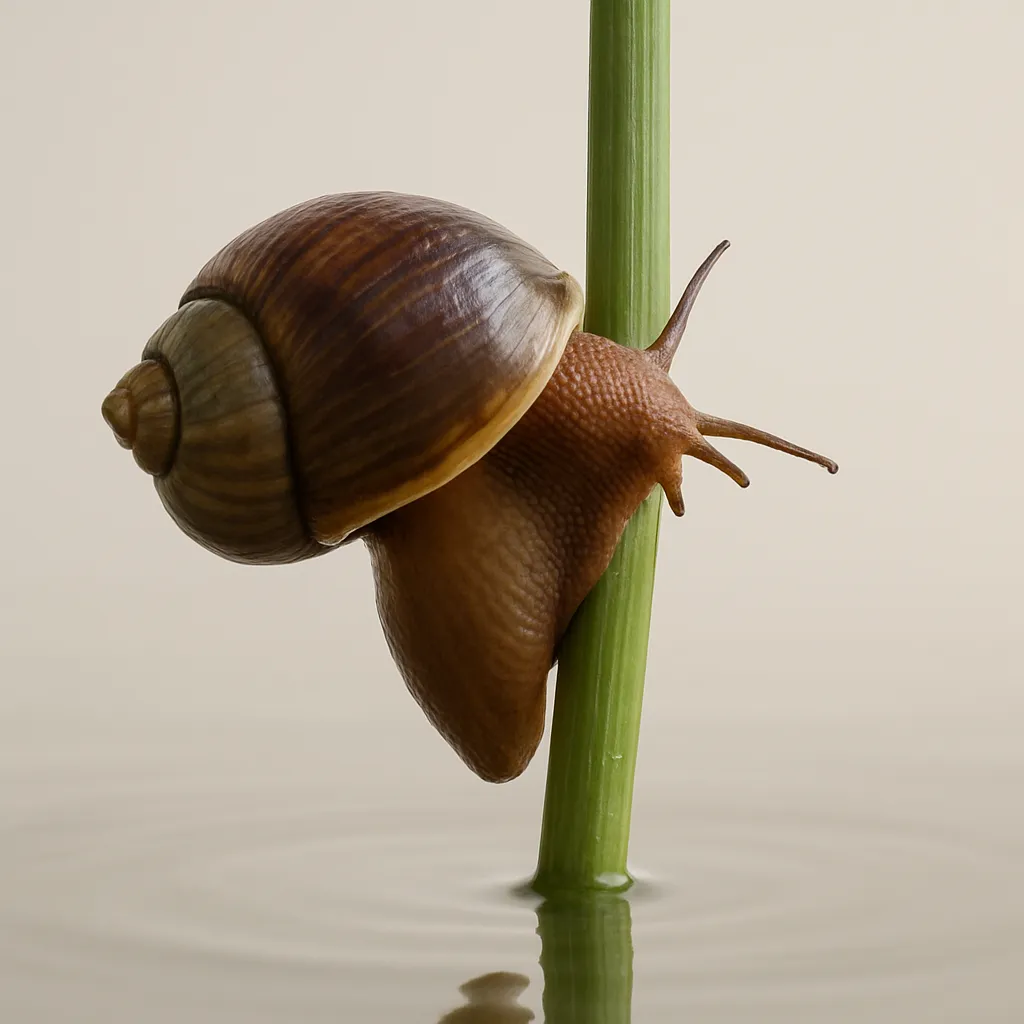
In the Everglades, apple snails scrape algae and sawgrass, and snail kites feed almost entirely on apple snails. Where does the apple snail sit in this web?
In the Southern Ocean, krill graze on phytoplankton drifting near the surface, and crabeater seals feed on krill. What role do the phytoplankton fill?
In a Rocky Mountain stream, mayfly nymphs scrape algae off the rocks, trout eat the nymphs, and ospreys catch the trout. The mayfly nymph is which kind of consumer?
In a Great Lakes web, water fleas graze on diatoms, alewives eat water fleas, and lake trout eat alewives. Which level does the lake trout occupy?
On a Kansas tallgrass prairie, grasshoppers chew prairie grasses, meadowlarks eat grasshoppers, and coyotes hunt meadowlarks. What role does the meadowlark fill?
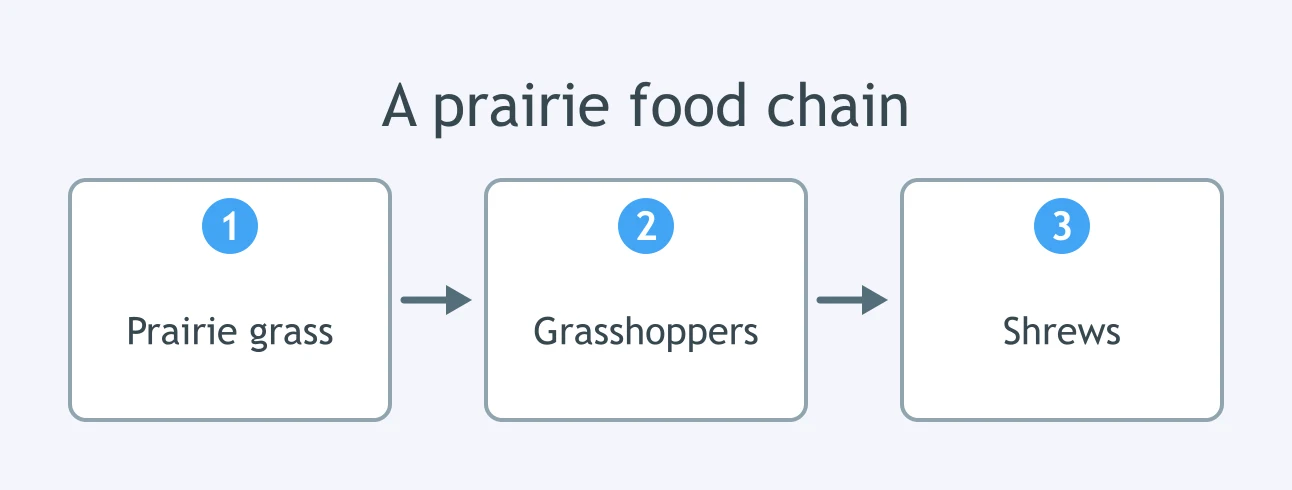
A patch of prairie grass stores 20,000 kJ over a summer. Grasshoppers eat the grass and shrews eat the grasshoppers. About 10 percent of one level's energy reaches the level above. About how much reaches the shrews?
Algae in a stream store 45,000 kJ in one season. Mayfly nymphs graze on the algae, and about 10 percent of one level's energy reaches the level above. About how much is stored in the nymphs?
Antarctic phytoplankton store 8,000 kJ. Krill eat the phytoplankton, herring eat the krill, and cod eat the herring. About 10 percent of the energy passes to each level above. About how much is stored in the cod?
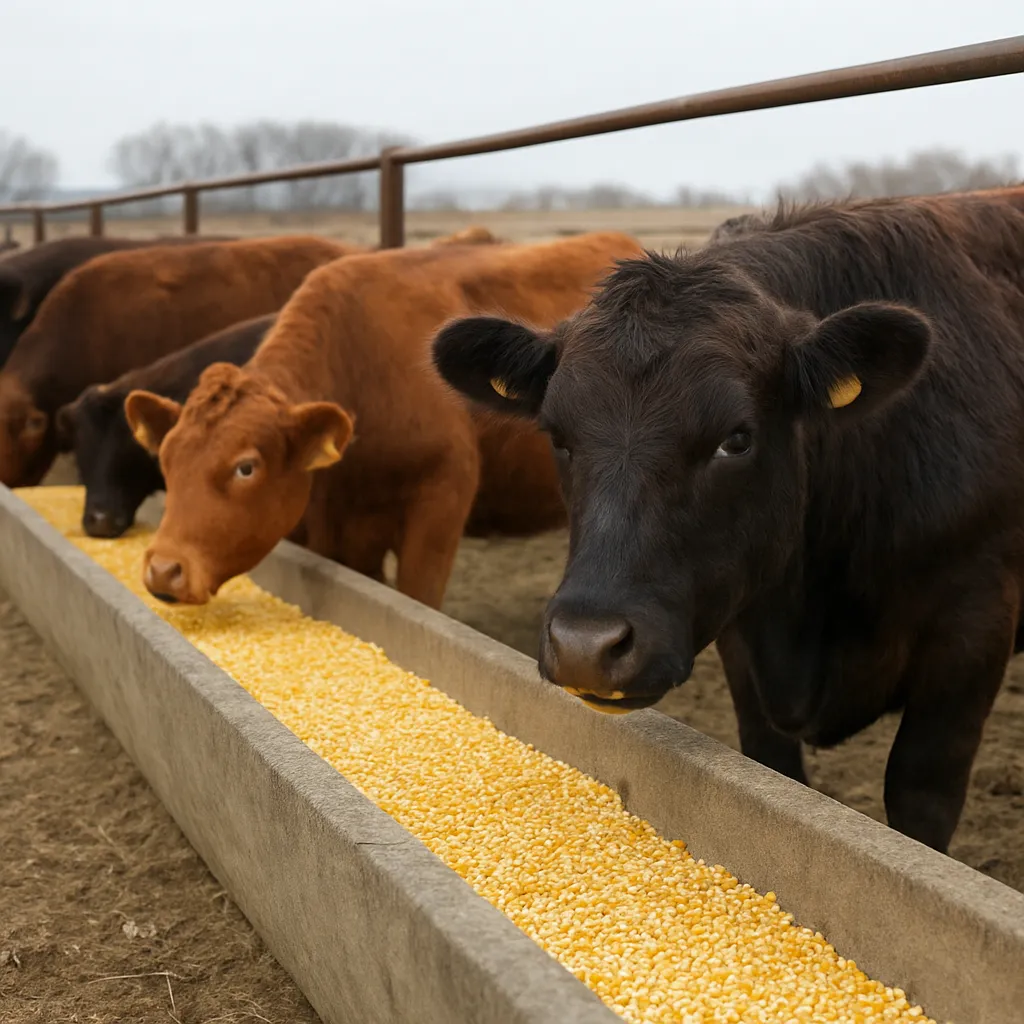
A cornfield stores 50,000 kJ in one growing season, and cattle are fed on that corn. About 10 percent of one level's energy reaches the level above. About how much is stored in the cattle?
A clover field stores 12,000 Calories. Rabbits feed on the clover and foxes feed on the rabbits, with about 10 percent of the energy passing to each higher level. About how many Calories are stored in the foxes?
Shrews in a meadow store about 30 kJ. They eat grasshoppers, which eat meadow grass, and about 10 percent of the energy at one level reaches the level above. About how much energy did the grass store?
Kelp in a bay stores 60,000 kJ over a season, and the sea urchins grazing on it store 6,000 kJ. How much of the kelp's energy is not stored in the urchins?
Seagrass in a Florida bay stores 1,000,000 kJ in a year. Green turtles graze the seagrass and tiger sharks eat the turtles, with about 10 percent passing to each level above. About how much reaches the sharks?
In an oak forest, nitrogen locked inside a fallen branch and a dead beetle ends up in the soil, where young oaks take it up through their roots. Which group makes that return possible?
A gardener piles dead leaves and vegetable scraps in a compost bin. Months later the pile is dark, crumbly soil. Which organisms did most of the work of breaking the material down?
A bison on a prairie eats grass, and some of the carbon in that grass returns to the air within hours. Which process in the bison sends that carbon back to the atmosphere?
Suppose every bacterium and fungus vanished from a pond. Dead leaves, fish and algae still sink to the bottom. What would most likely happen to the pond over the next few years?
In a salt marsh, dead cordgrass breaks into small pieces of detritus. Fiddler crabs shred the pieces and bacteria in the mud finish the job. Which step returns nitrogen to the sediment for new cordgrass?
A forest web has deer browsing on leaves, mice eating seeds, and bracket fungi breaking down a dead trunk. What happens to the trunk's matter and energy as the fungi break it down?
Decomposers get the energy they need from the dead matter they break down.
A kangaroo rat dies in the Sonoran Desert and soil bacteria break its body down over several weeks. What happens to the matter that made up its body?
In an Arctic tundra web, arrows are drawn from lichens to caribou and from caribou to wolves. Which statement matches what those arrows show?
A student is drawing a food web and needs one arrow between clover and rabbits, which graze on clover. Which way should the arrow point, and why?
In a woodland web, arrows run from acorns to gray squirrels and from gray squirrels to red foxes. What does the second arrow show?
In a food web diagram, an arrow drawn from a grasshopper to a sparrow means the grasshopper eats the sparrow.
A stream web shows arrows from algae to mayfly nymphs and from mayfly nymphs to trout. A student learns that belted kingfishers catch trout. Which arrow should be added?
In a marsh web, arrows run from cordgrass to grasshoppers, from cordgrass to snails, from grasshoppers to red-winged blackbirds, and from snails to red-winged blackbirds. What do those arrows tell you about the blackbirds?
In a savanna web an arrow runs from acacia leaves to giraffes. A student reads it as giraffes giving energy to the acacia tree. What is wrong with that reading?
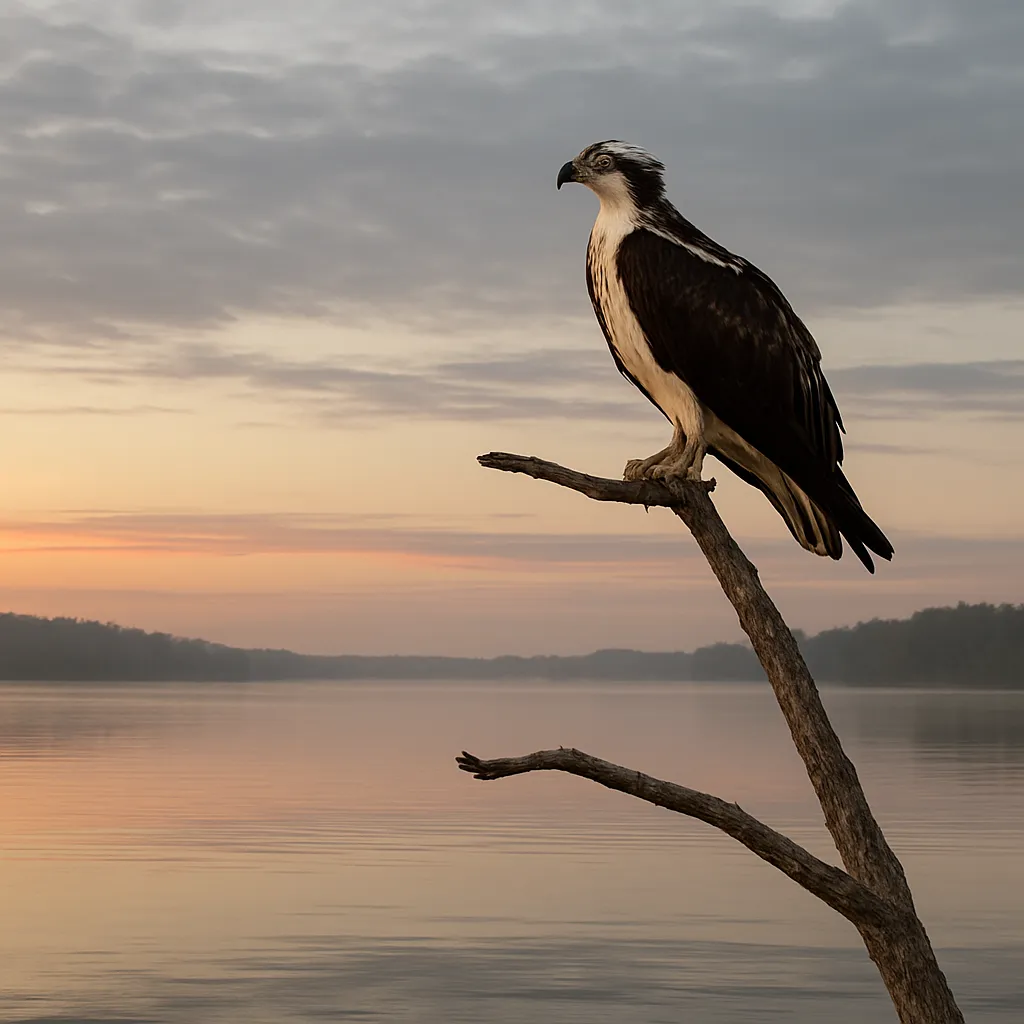
A lake holds billions of algae cells and millions of small fish, but only two nesting pairs of ospreys. Which statement best explains why so few ospreys can live there?
Ecologists rarely find a food chain with more than four or five links. What best explains that limit?
In an energy pyramid for a grassland, the producer level at the bottom forms the widest band and the top level the narrowest. Why is the producer band the widest?
A rabbit eats 1,000 kJ of grass but stores only about 100 kJ as new body tissue. A student says the missing 900 kJ was destroyed. How would you correct that student?
A farmer can feed far more people from a hectare of corn eaten directly than from the same hectare fed to cattle first. What accounts for the difference?
A long drought cuts grass growth on a savanna in half for two years. Zebra numbers fall, and lion numbers fall soon after. Why does the drop reach the lions?
In a forest web, hawks eat snakes and mice, snakes eat mice, and mice eat seeds. A disease wipes out the snakes. What most likely happens to the hawks?
Crack the passcode before the zombies get in.
Answer, then swat bugs for bonus points.
Race through questions at your own speed.
Same question on every screen. Fastest wins.

Pick a tile, answer, hit bonuses and steals.
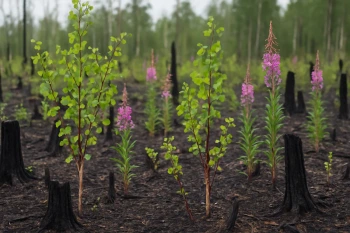
Primary and Secondary Succession
40 questions