Loading
by BlastRoom
Classify stars using apparent magnitude, color, temperature, size and luminosity.
#us_grade_8_science
40 questions
One question set, multiple game modes. Tap any game to see it in action. Not sure which to pick?
Answer to place stones and capture territory.
Outrun the snow together.
Earn blasts, then hunt the other team.
Answer to earn energy, then climb.

The class blasts through walls together.
Bid on mystery lots. Most money wins.
Sell tours. Nice, standard, or a total scam.

Answer, restock, and serve the rush.
More correct answers pulls the rope your way.
Answer, then shoot down the alien wave.
Answer, then tap to leap the frozen ridge.
Two stars sit side by side in a telescope view. One glows deep red, the other blue-white. What do their colors show about their surfaces?
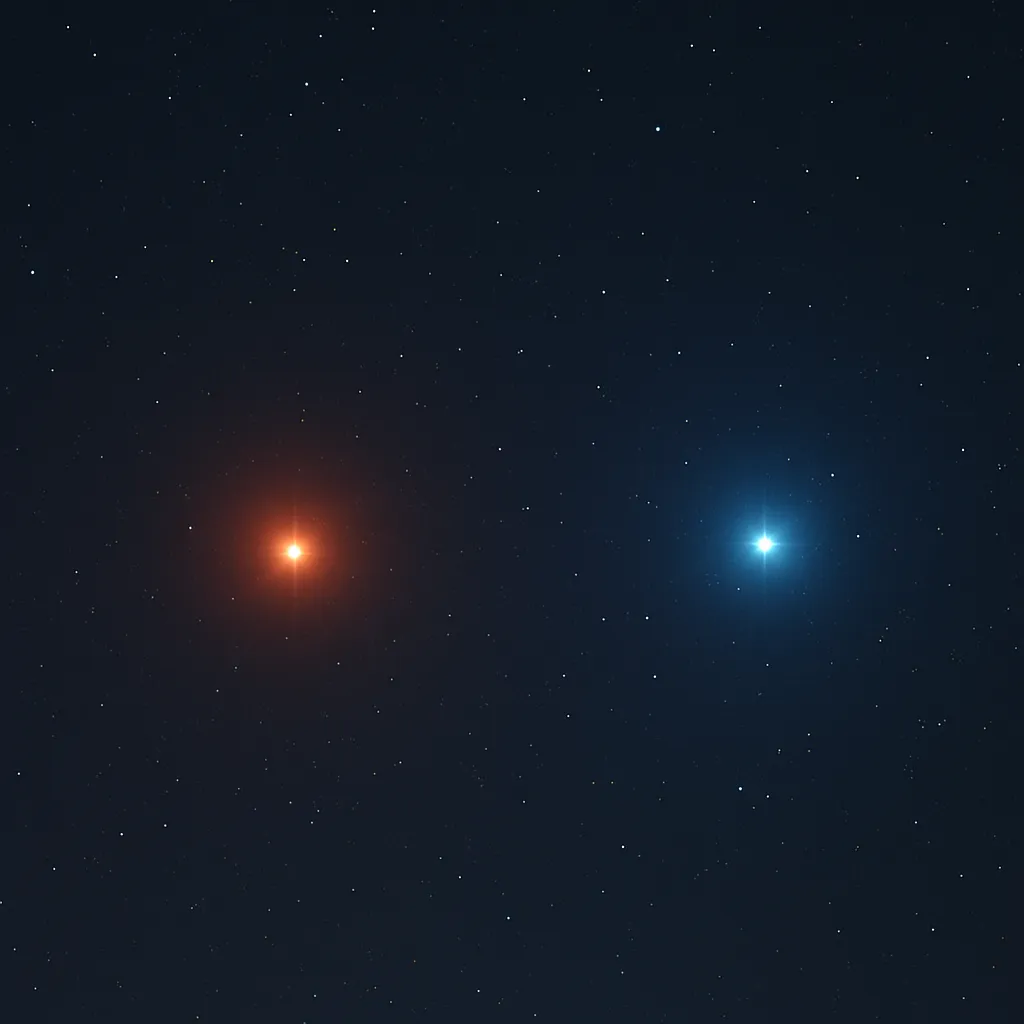
Betelgeuse has a surface temperature near 3500 K. Rigel's surface is near 12000 K. Which pair of colors matches these two stars?
A spectroscope shows a star's surface is about 30000 K. What color will observers see?
A red star has a cooler surface than a yellow star.
Four stars are measured at 3200 K, 5800 K, 9900 K and 25000 K. Which list gives their colors in that same order?
The Sun's surface is about 5800 K and looks yellow. Vega's surface is about 9600 K. What color does Vega's higher temperature predict?
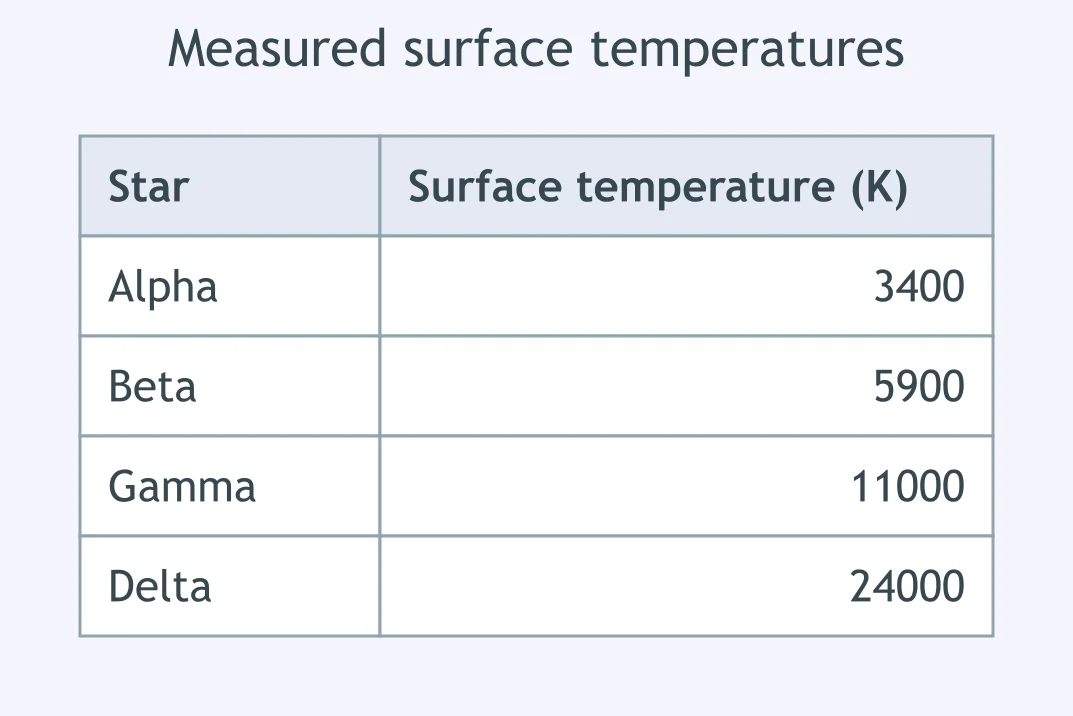
Use the table of measured surface temperatures. Which star most likely appears reddish to observers on Earth?
A star's color depends mainly on how far it is from Earth.
Star P and Star Q are the same size and the same distance away. Star P glows orange and Star Q glows yellow-white. What does the color difference show?
A star that once glowed yellow-white swells outward and its surface cools to about 3500 K. What color change should observers record?
Sirius looks brighter from Earth than Rigel, even though Rigel gives off far more light each second. What explains this?
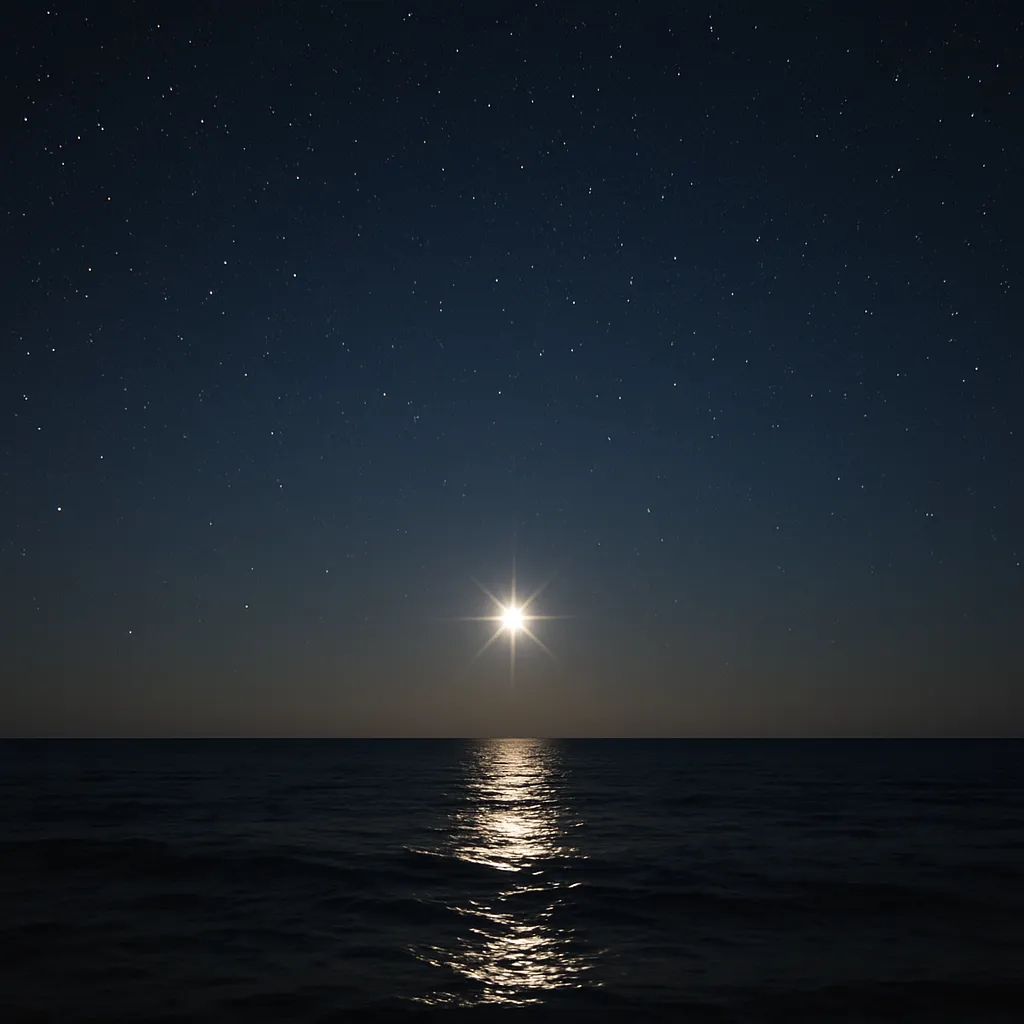
The Sun looks far brighter than any other star, yet it gives off an ordinary amount of light for a star. What best accounts for how bright it looks?
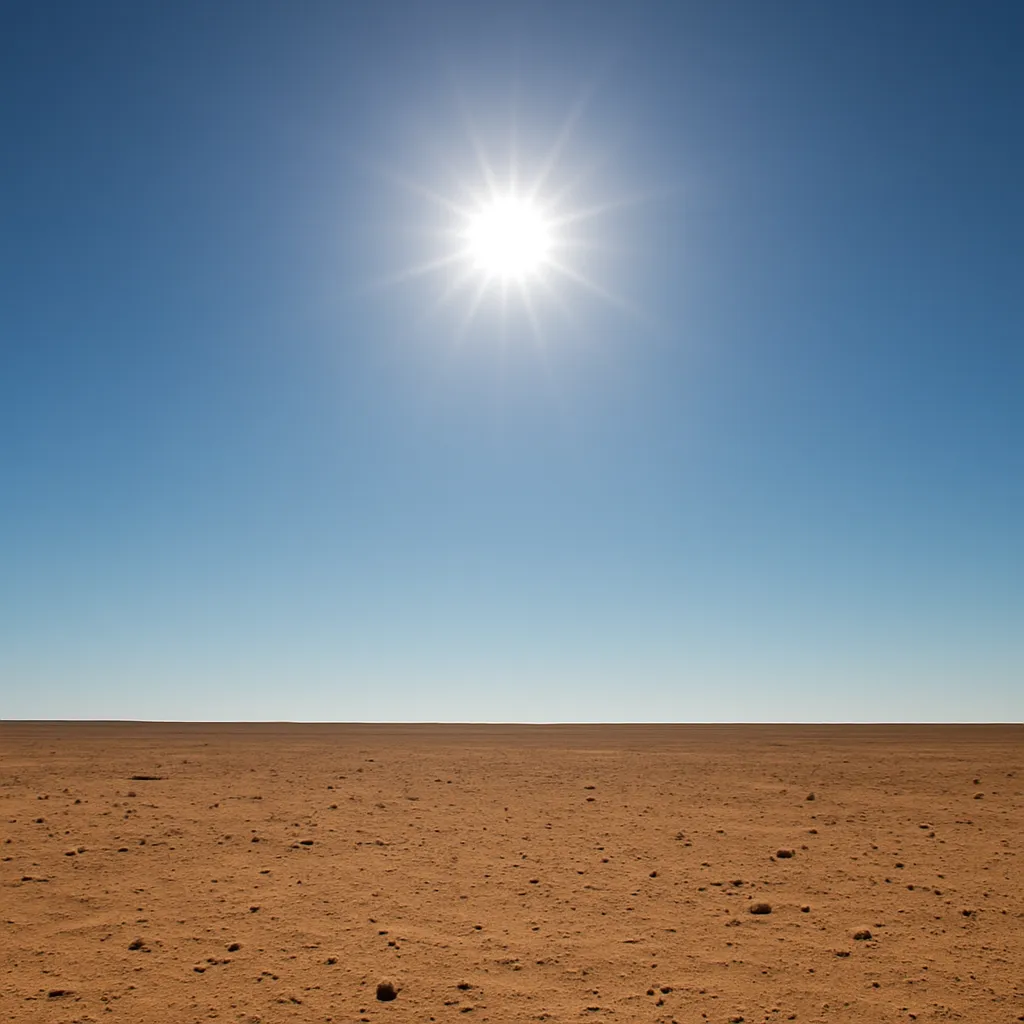
Two stars give off exactly the same amount of light each second, but one sits four times farther from Earth. How will they compare in the night sky?
Apparent magnitude measures how bright a star looks from Earth, not how much light it actually gives off.
Vega has an apparent magnitude near 0.0 and Polaris near 2.0. Which star looks brighter in the night sky, and why?
Proxima Centauri is the closest star to the Sun, yet nobody can see it without a telescope. What does that show about the star?
Astronomers imagine placing every star at the same distance from Earth before comparing them. Which property does that comparison reveal?
Use the table of star measurements. Which star looks brightest to an observer on Earth?
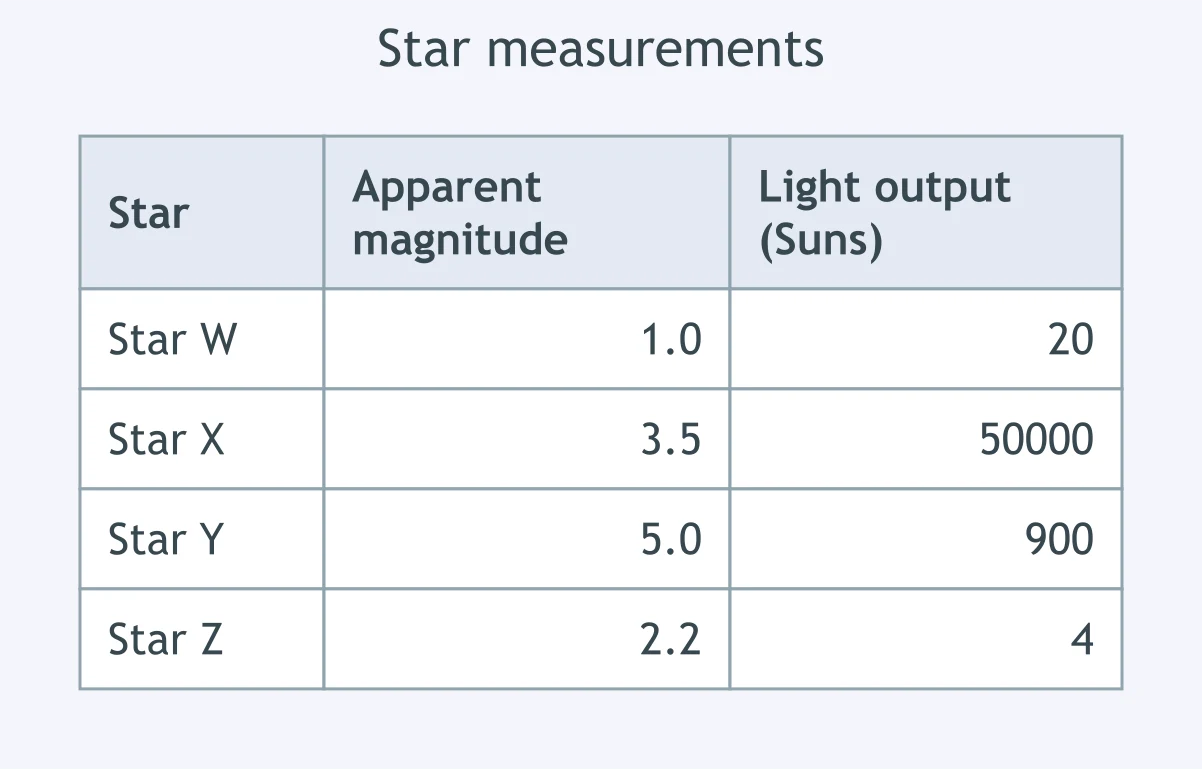
The star that looks brightest in the night sky is always the star that gives off the most light.
A student claims that a faint-looking star must give off little light. A supergiant 2000 light-years away looks faint from Earth. Which reasoning corrects the claim?
Star M and Star N both have surfaces near 4000 K. Star M gives off 900 times as much light per second. What follows?
Betelgeuse and a red dwarf both have surfaces near 3400 K, but Betelgeuse gives off millions of times more light each second. What accounts for the difference?
A red giant gives off about as much light per second as the Sun, but its surface is far cooler than the Sun's. What must be true of the red giant?
Among stars with the same surface temperature, the larger star gives off more light each second.
Star G has the same surface temperature as the Sun but a radius 100 times larger. How does the light it gives off each second compare with the Sun's?
Sirius B is a white dwarf about the size of Earth, with a surface hotter than the Sun's, yet it gives off far less light each second than the Sun. Why?
Star H and Star J have the same radius. Star H's surface is 8000 K and Star J's is 4000 K. Which star gives off more light each second?
Antares has a radius roughly 700 times the Sun's and a surface cooler than the Sun's, yet it outshines the Sun thousands of times over. What best explains that?
Star K and Star L have identical surface temperatures, and Star K's radius is 10 times Star L's. How much more light does Star K give off each second?
Two stars are both yellow, but one gives off five times more light each second. What best explains the difference?
A star measures 3200 K at the surface, has a radius 400 times the Sun's, and gives off about 15000 times the Sun's light each second. How is it classified?
A star's surface is near 25000 K, its radius is about 0.01 times the Sun's, and it gives off far less light than the Sun. Which classification fits?
A star's surface is about 5900 K, its radius is about 1.2 times the Sun's, and it gives off about 1.6 times the Sun's light each second. Which description fits it?
Deneb's surface is about 8500 K, it is far larger than the Sun, and it gives off over 100000 times the Sun's light each second. Which classification fits best?
Proxima Centauri's surface is about 3000 K, its radius is roughly one seventh of the Sun's, and it gives off far less light than the Sun. What kind of star is it?
Use the table of star measurements. Which star is a white dwarf?
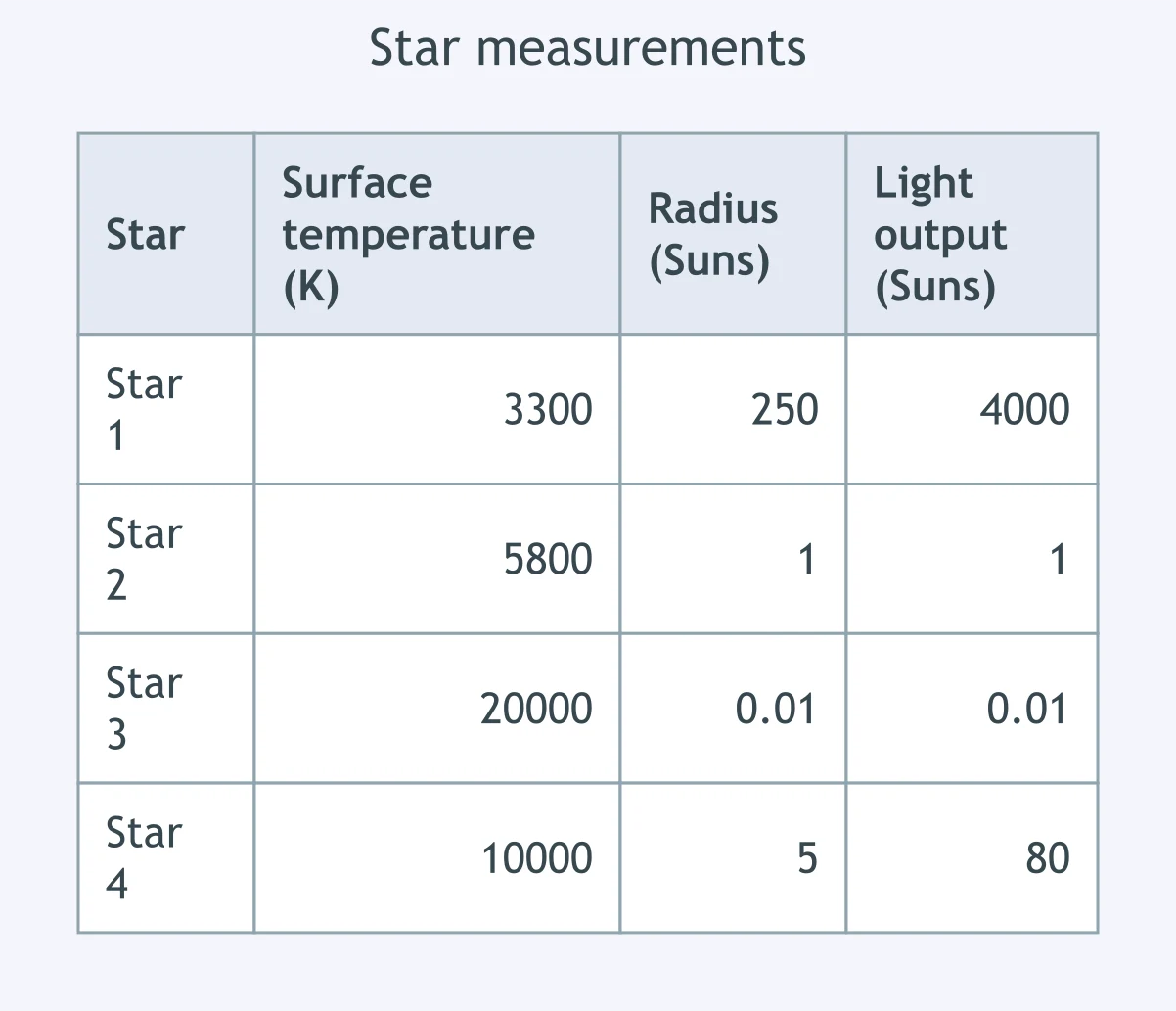
A star has a surface cooler than the Sun's, yet it gives off about 3000 times as much light each second as the Sun does. Which classification does this point to?
A white dwarf can have a hotter surface than the Sun and still look faint from Earth.
Two stars each give off 100 times the Sun's light per second. One glows blue-white and the other red. Which star is larger, and why?
A star's surface is about 3100 K and its radius is one third of the Sun's. Why does it give off far less light each second than the Sun?
Crack the passcode before the zombies get in.
Answer, then swat bugs for bonus points.
Race through questions at your own speed.
Same question on every screen. Fastest wins.

Pick a tile, answer, hit bonuses and steals.
The Hertzsprung-Russell Diagram
20 questions