Loading
by BlastRoom
Sort galaxies by their shape and contents and work out where our solar system sits inside the Milky Way.
#us_grade_8_science
40 questions
One question set, multiple game modes. Tap any game to see it in action. Not sure which to pick?
Answer to place stones and capture territory.
Outrun the snow together.
Earn blasts, then hunt the other team.
Answer to earn energy, then climb.

The class blasts through walls together.
Bid on mystery lots. Most money wins.
Sell tours. Nice, standard, or a total scam.

Answer, restock, and serve the rush.
More correct answers pulls the rope your way.
Answer, then shoot down the alien wave.
Answer, then tap to leap the frozen ridge.
A photograph shows a galaxy with a bright round bulge at its center and bluish arms of stars, gas and dust winding outward through a flat disk. Which type is it?
A galaxy shows a straight bar of stars running across its center, with two arms trailing away from the ends of that bar. Which type is it?
A small galaxy shows no bulge, no arms and no symmetry at all, only ragged clumps of bright blue stars and glowing gas. Which type is it?
A galaxy looks like a nearly round ball of stars, brightest in the middle and fading smoothly outward. It has no arms, no dust lanes, and yellow-red starlight. Which type is it?
A galaxy is seen edge-on as a very thin, flat streak of stars with a dark lane of dust running down its middle and a rounded bulge in the center. Which type is it?
An elliptical galaxy can look nearly round or can be stretched into a long, flattened oval.
Telescope images show a small, lopsided galaxy with torn, ragged edges beside a much larger spiral that is pulling on it. How should the small galaxy be classified?
Astronomers sort galaxies by shape and contents. Which feature places a galaxy in the spiral group rather than the elliptical group?
A giant galaxy sitting at the center of a cluster holds trillions of stars, glows evenly from the middle outward, and shows no arms and no dust lanes. Which type is it?
In the 1920s one astronomer sorted galaxies into groups by shape, including spiral, barred spiral and elliptical. Who was he?
Galaxy A holds thick clouds of cold gas and dust and many hot blue stars. Galaxy B holds almost no gas or dust and only old red and yellow stars. Which conclusion is best supported?
Elliptical galaxies contain very little free gas and dust between their stars. What does this best predict about them?
Hot blue stars shine for only a few million years before they die. The arms of one galaxy glow strongly blue. What does that color show?
Along one galaxy's arms, astronomers see many glowing pink clouds of hydrogen gas mixed with dark dust. What is happening in those clouds?
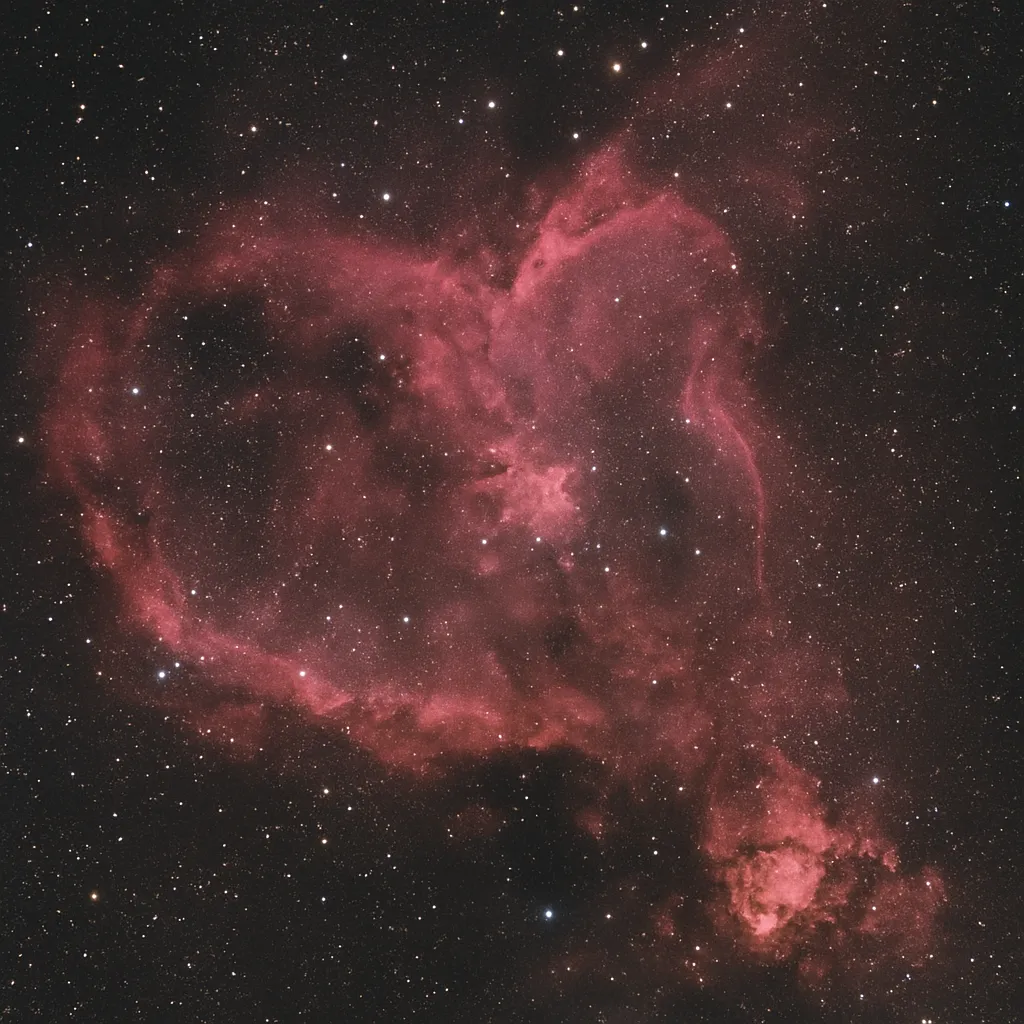
The light of one galaxy comes almost entirely from cool red stars, and its color hardly changes from its center to its edge. Which claim does this evidence support?
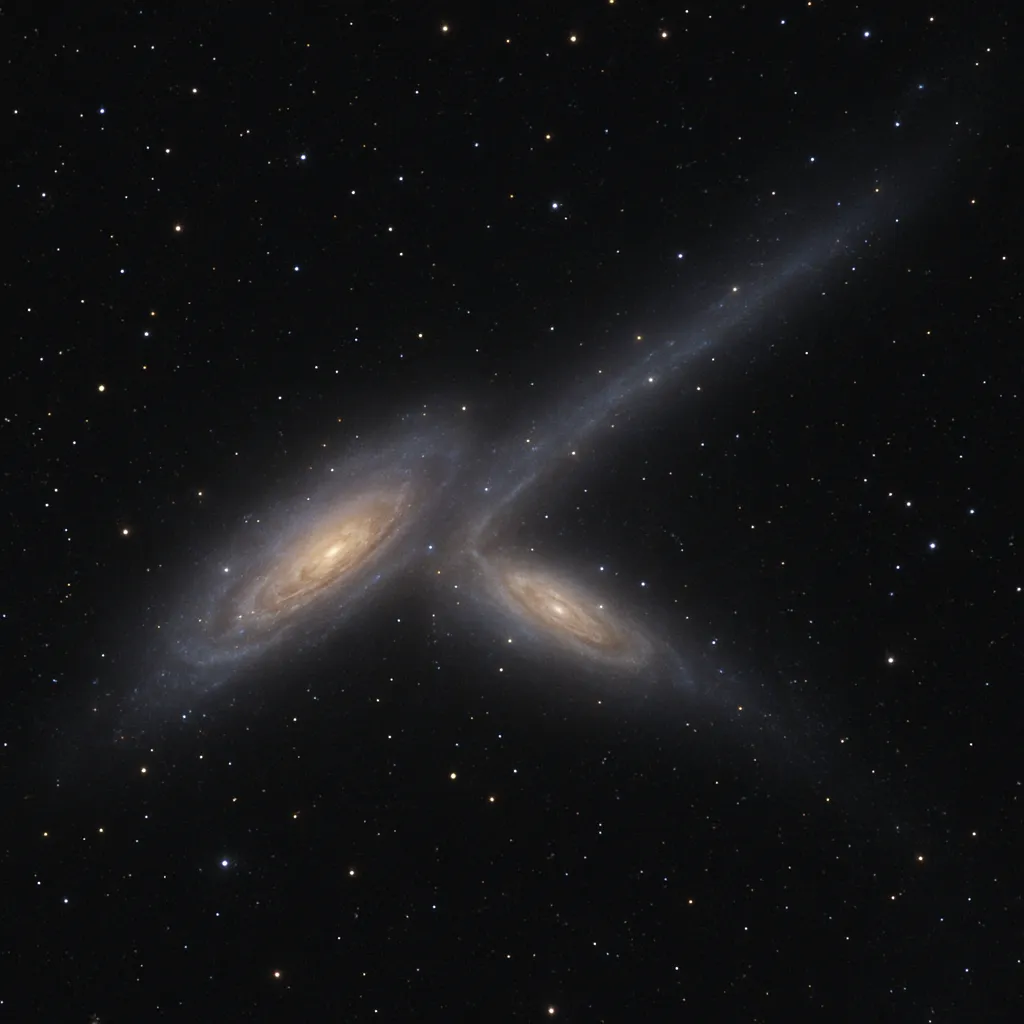
Two gas-rich galaxies pass through each other. Along the line where their gas clouds are squeezed together, hundreds of hot blue stars appear. What does this show?
Irregular galaxies are usually much larger than spiral galaxies like the Milky Way.
Claim: galaxy Q is still making new stars. Which observation would best support that claim?
In the Milky Way, the oldest stars sit in the halo and central bulge, while young stars sit in the arms. What is the best reasoning for this pattern?
A spiral galaxy and an elliptical galaxy each hold billions of stars that stay together as one system for billions of years. What keeps each galaxy's stars together?
From a dark site the Milky Way appears as a narrow hazy band stretching across the sky, and the sky away from that band holds far fewer stars. What does this appearance indicate?
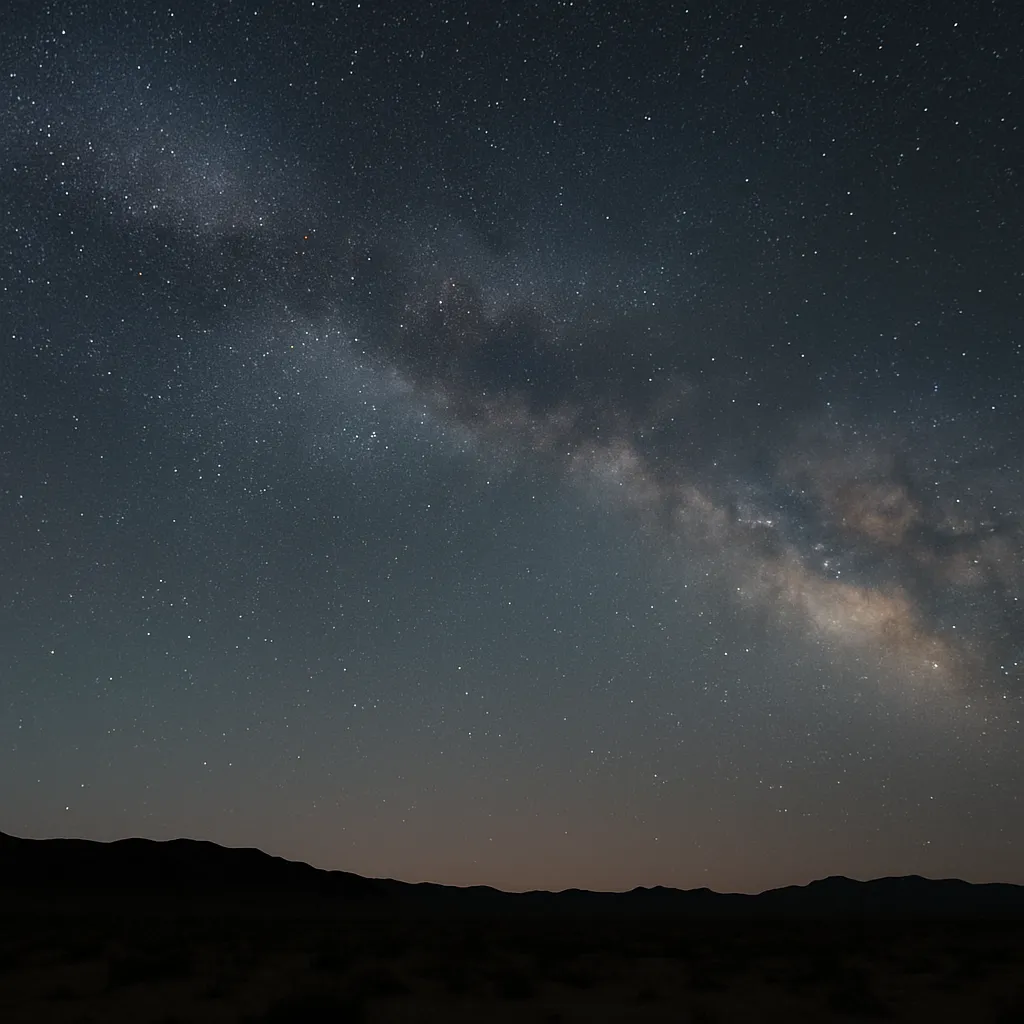
Astronomers can photograph other spiral galaxies whole, but not our own. Why can we not simply photograph the Milky Way's overall shape?
The hazy band of the Milky Way is widest and brightest in the direction of the constellation Sagittarius. What lies in that direction?
Long dark patches split the bright band of the Milky Way into pieces. What are these dark patches?
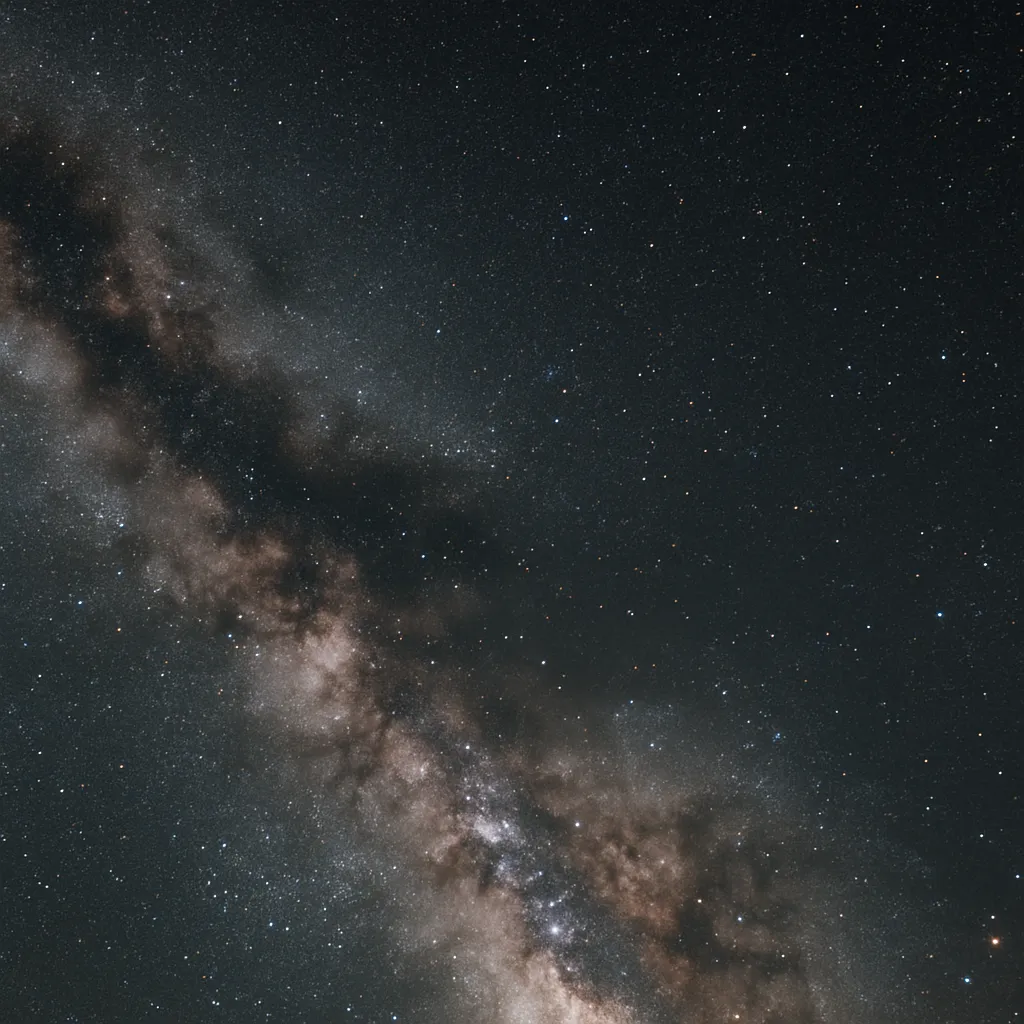
Radio and infrared telescopes reveal the crowded center of our galaxy, but visible-light telescopes cannot see it. What best explains the difference?
Looking at right angles to the Milky Way's band, an observer counts far fewer stars but can see many distant galaxies. Why does that direction look so different?
The pale band called the Milky Way is made of huge numbers of distant stars belonging to our own galaxy.
Stars near the center of the Milky Way race around one object in orbits as short as 16 years. The object holds about 4 million times the Sun's mass but gives off almost no light. What is it?
Astronomers describe the Milky Way as a barred spiral galaxy. Which observation best supports that description?
From the southern hemisphere two small hazy patches, the Magellanic Clouds, are visible well away from the Milky Way's band. What are they?
The center of the Milky Way lies about 27,000 light-years from the Sun, and the galaxy's disk is roughly 100,000 light-years across. Where does the solar system sit?
Put these three in order from smallest to largest: the solar system, the Local Group of galaxies, the Milky Way galaxy.
The Sun is one of well over one hundred billion stars in the Milky Way. Which statement describes the Sun's place among them?
A long-exposure photo of a tiny, dark-looking patch of sky shows thousands of faint galaxies. What does this suggest about the universe?
Light from the Sun reaches Earth in about 8 minutes, but light from the center of our galaxy takes about 27,000 years to reach us. What does this comparison show?
The Milky Way and the Andromeda galaxy both belong to the Local Group. What is the Local Group?
Distances across the Milky Way are reported in light-years instead of kilometers. What is the reason for that choice?
The Sun takes about 230 million years to circle the center of the Milky Way once. Earth formed about 4.6 billion years ago. About how many times has the Sun circled the galaxy since then?
Every single star you can see with the unaided eye on a dark night belongs to the Milky Way galaxy.
Proxima Centauri, the nearest star to the Sun, lies about 4 light-years away, while the Milky Way's disk is about 100,000 light-years across. What does this comparison show?
Crack the passcode before the zombies get in.
Answer, then swat bugs for bonus points.
Race through questions at your own speed.
Same question on every screen. Fastest wins.

Pick a tile, answer, hit bonuses and steals.
Evidence for the Origin of the Universe
20 questions