Loading
by BlastRoom
Judge how warm ocean water, air masses and winds build, steer and end a tropical cyclone.
#us_grade_8_science
40 questions
One question set, multiple game modes. Tap any game to see it in action. Not sure which to pick?
Answer to place stones and capture territory.
Outrun the snow together.
Earn blasts, then hunt the other team.
Answer to earn energy, then climb.

The class blasts through walls together.
Bid on mystery lots. Most money wins.
Sell tours. Nice, standard, or a total scam.

Answer, restock, and serve the rush.
More correct answers pulls the rope your way.
Answer, then shoot down the alien wave.
Answer, then tap to leap the frozen ridge.
A tropical disturbance drifts over ocean water at 29 degrees C, 15 degrees north of the equator, with winds near the surface and 10 kilometers up blowing the same way at similar speeds. What happens next?
A disturbance sits over ocean water measured at 21 degrees C. Winds are light at every height and the system is 14 degrees north of the equator. Why is it unlikely to become a tropical cyclone?
Hurricanes almost never form within about 5 degrees of the equator, even though the ocean water there is among the warmest on Earth. What explains this?
Over 28 degrees C water, thunderstorms build in a disturbance. Winds 12 kilometers up are blowing 90 kilometers per hour from the west while surface winds blow 20 kilometers per hour from the east. Predict the result.
A cluster of thunderstorms over 28 degrees C water with light shear moves under a large high-pressure system, where air is sinking over a wide area. What is the likely outcome?
A buoy reports 29 degrees C water, but a probe shows the warm layer is only 15 meters deep, with 22 degrees C water below it. A storm's winds churn the upper ocean. What follows?
Forecasters watch sea surface temperature closely in hurricane season. About how warm must the surface water be, through a deep layer, for a tropical cyclone to form and keep going?
Two disturbances sit over 28 degrees C water at 13 degrees north. Storm A has light winds at all heights. Storm B has upper winds 80 kilometers per hour faster than its surface winds. Which becomes a hurricane?
Hurricanes are common in the tropical North Atlantic but almost unheard of in the tropical South Atlantic. What accounts for the difference?
Tropical cyclones can form over a hot desert in summer, because the land surface there is warmer than the ocean.
A research aircraft flies straight through a hurricane. It records violent wind and heavy rain, then about 30 kilometers of light wind under a clear sky, then violent wind and heavy rain again. What made the calm stretch?
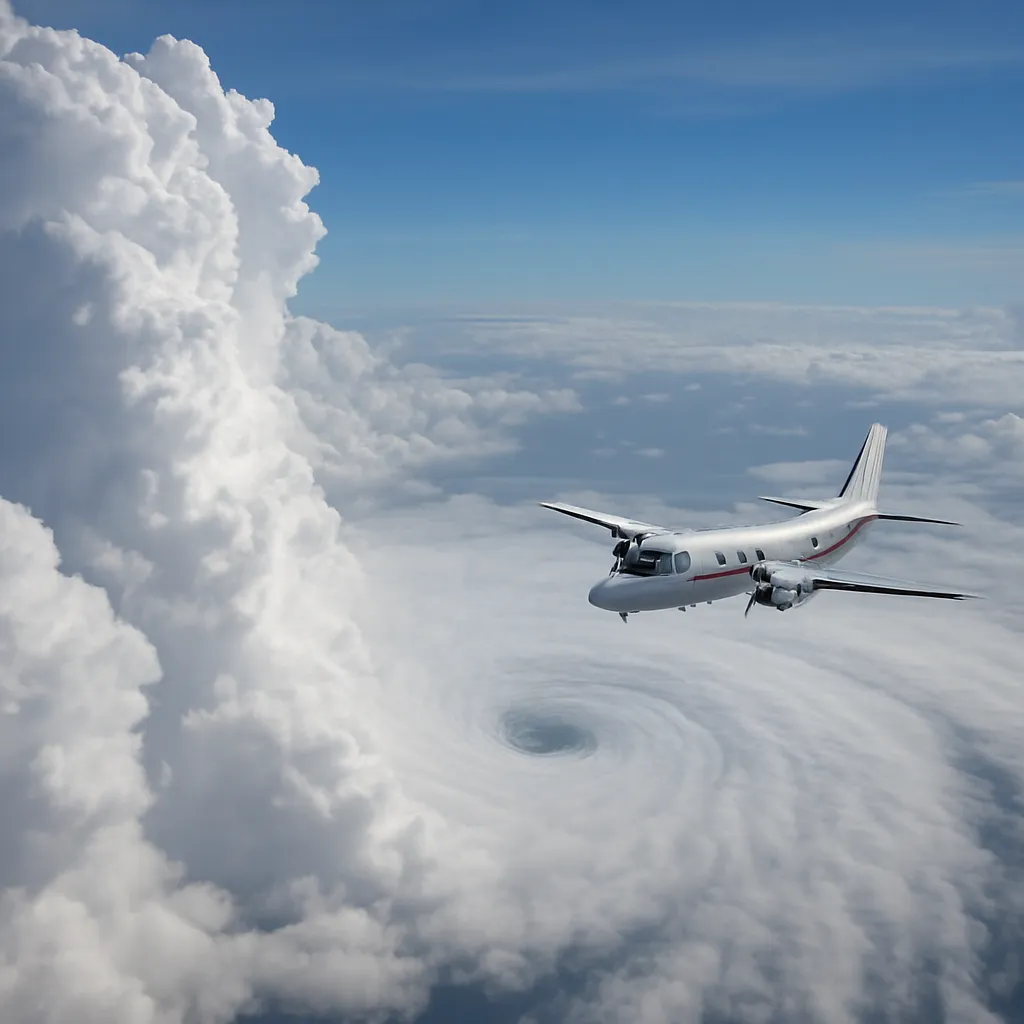
Radar shows a hurricane's fastest winds and heaviest rain in a ring around the center rather than at the very center. What is that ring called?
A hurricane can keep its winds blowing for days while it stays over warm ocean water. Where does most of the energy that drives those winds come from?
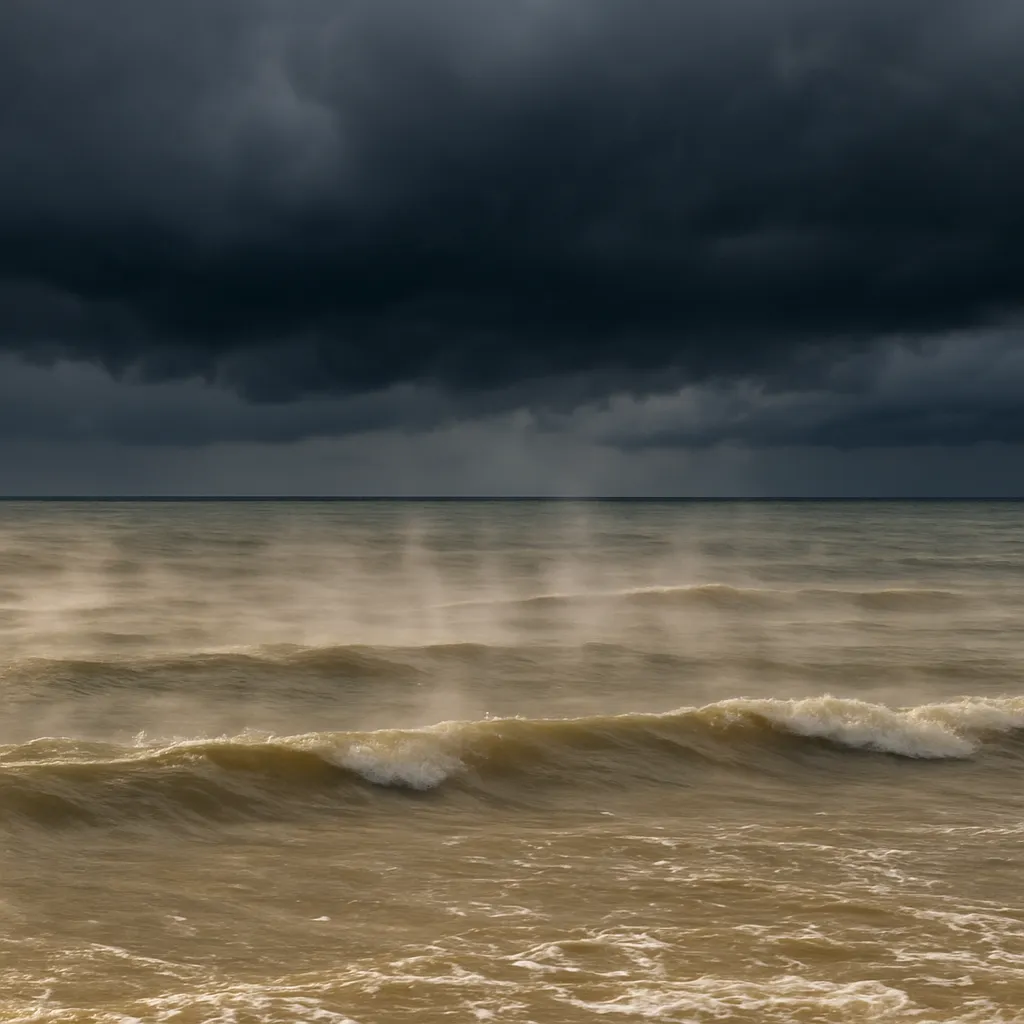
Trace the air through a mature hurricane, from the sea surface to the top of the storm. Which path describes it?
From inside the calm center of a hurricane, a crew sees blue sky overhead and a wall of cloud all around. Why is the sky clear right there?
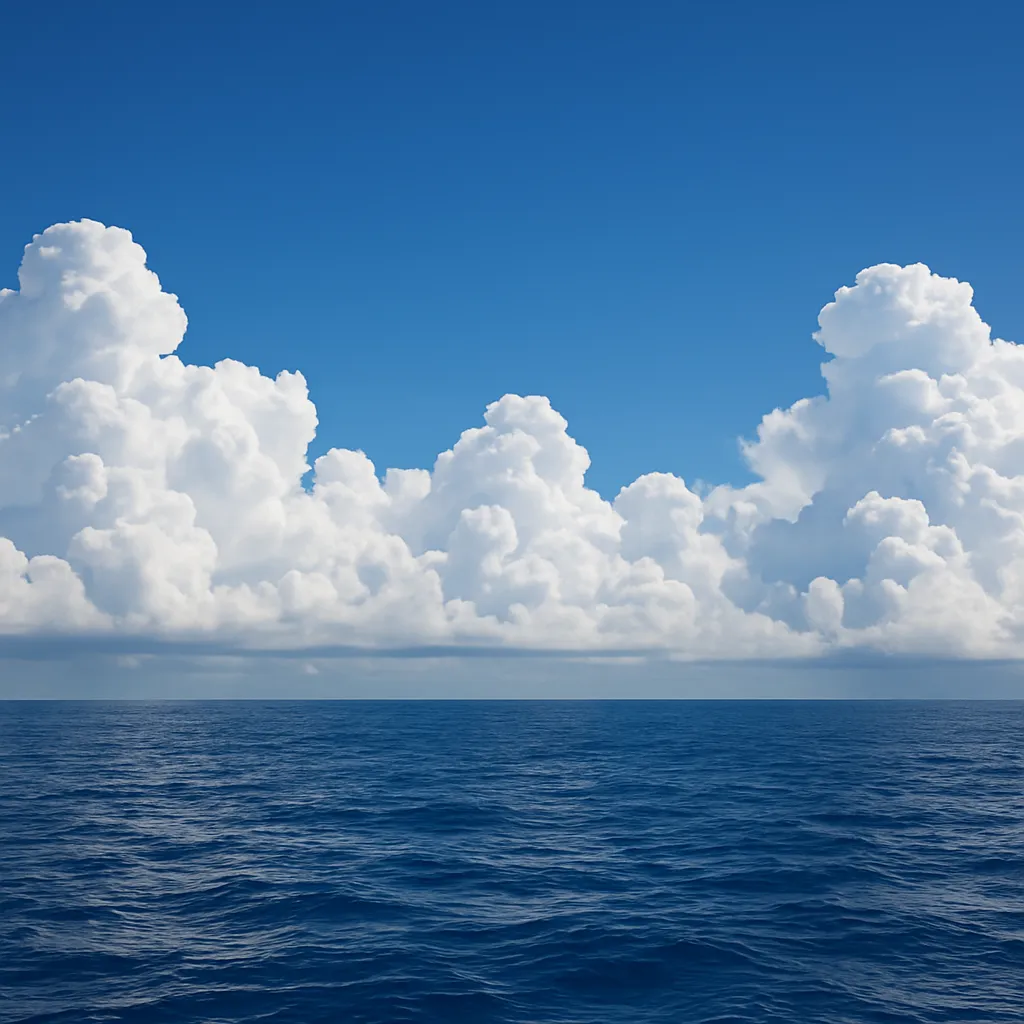
A coastal weather station's barometer falls steadily for six hours as a hurricane approaches, reaching its lowest reading, then rises again. When was the storm's center closest to the station?
Satellite images show curved lines of thunderstorms sweeping outward from a hurricane's center, with clearer gaps between them. What are these curved lines called?
In the Northern Hemisphere, the surface winds of a hurricane spiral counterclockwise around its center.
A hurricane comes ashore and travels 200 kilometers inland over dry farmland. Its wind speeds drop steadily the whole way. Which explanation fits?
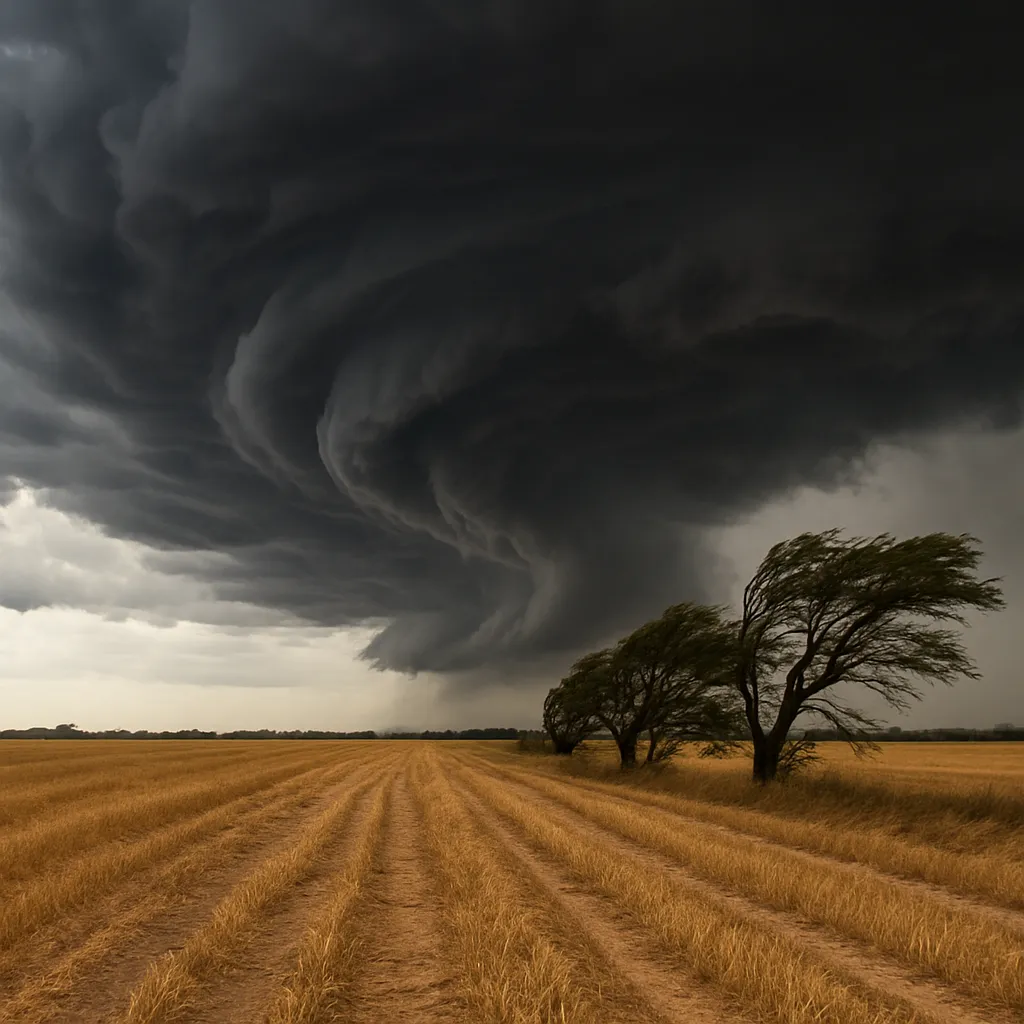
A tropical storm with weak wind shear above it moves from water at 27 degrees C onto a patch of water at 30 degrees C. Predict what its winds will do over the next day.
A hurricane at 25 degrees north moves north over water that cools from 28 degrees C to 22 degrees C. Wind shear stays weak. What should forecasters expect?
A hurricane over 29 degrees C water moves under a fast jet stream, so winds 12 kilometers up become far stronger than its surface winds. What will most likely happen to the storm?
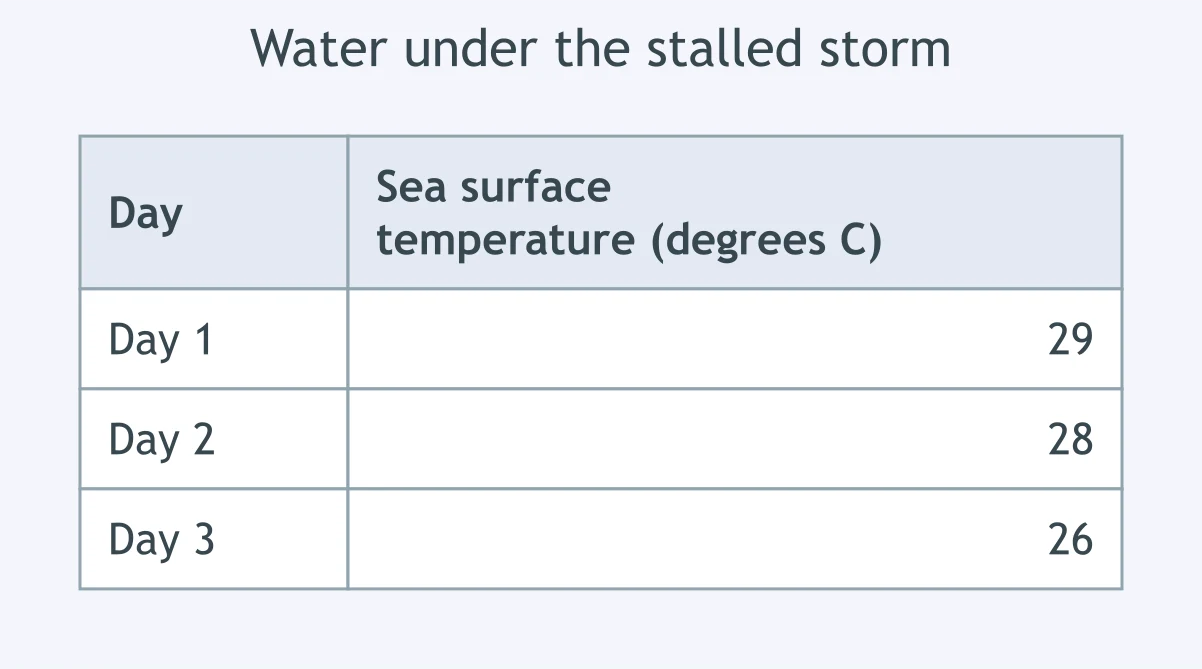
A hurricane stalls over one patch of ocean for three days. The table shows the sea surface temperature measured under it. What will most likely happen to the storm?
A hurricane crosses a swirling eddy of the warm Gulf Stream water, where 28 degrees C water extends more than 100 meters deep. Shear stays weak. What is likely over the next day?
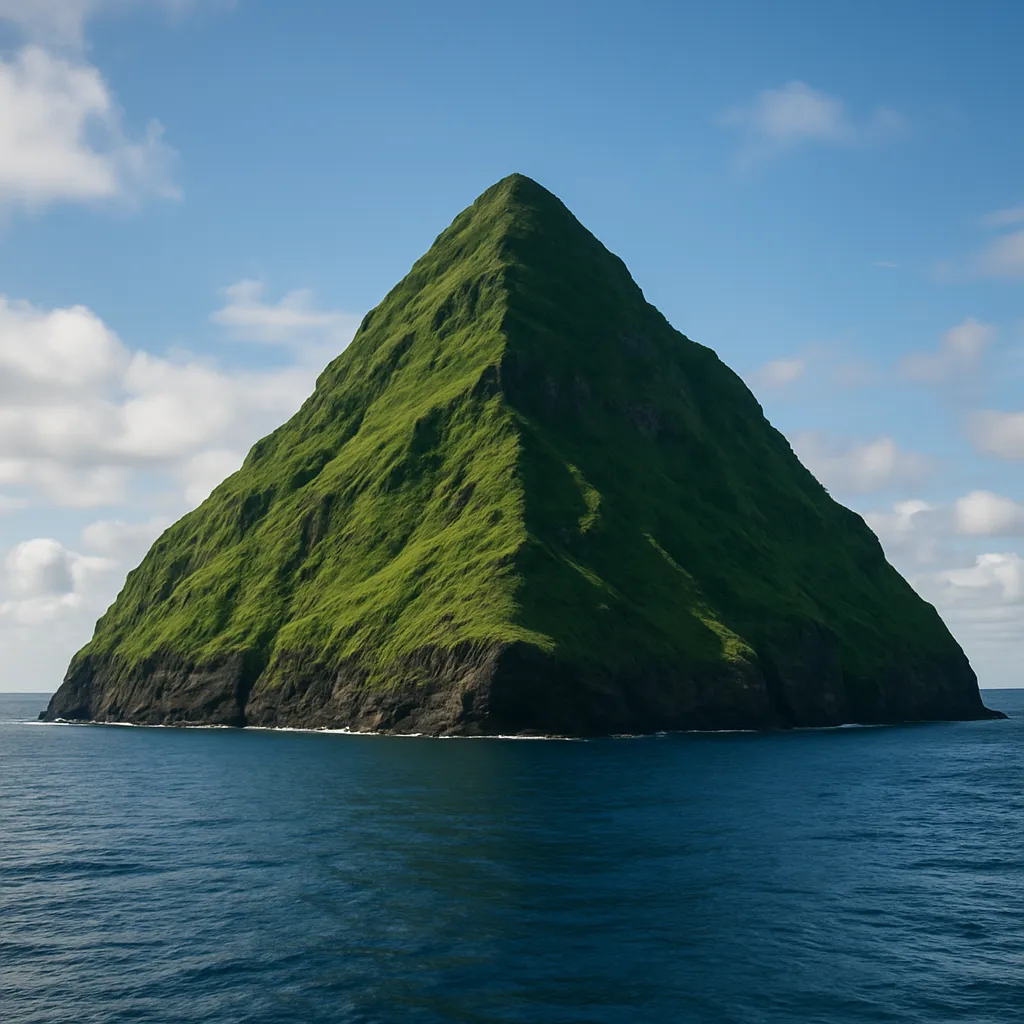
A tropical storm's center passes directly over a mountainous island whose peaks rise 3 kilometers above the sea. What happens to the storm while it is over the island?
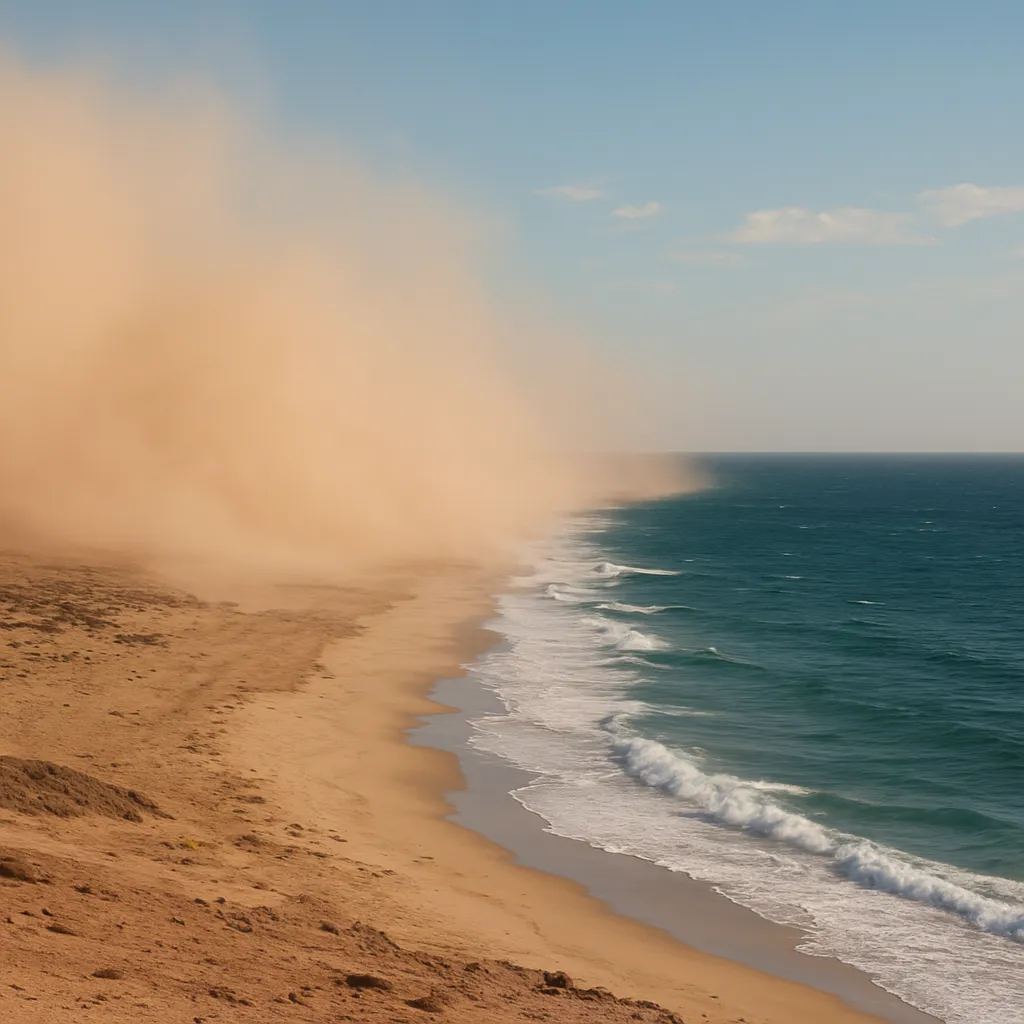
Satellite images show very dry desert air wrapping into the western side of a hurricane. Rain in that half of the storm fades. What does this predict for the storm's strength?
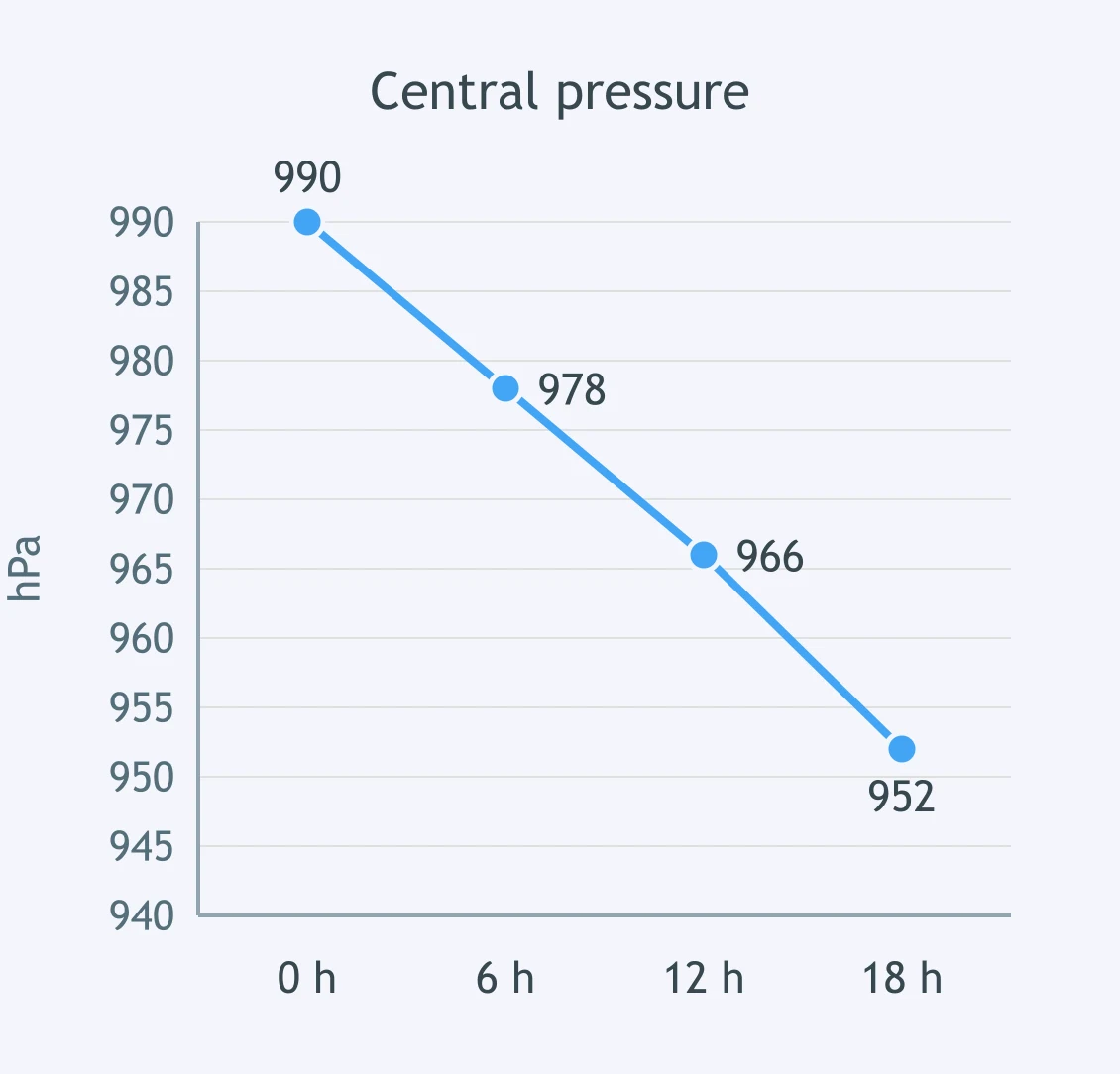
Look at the graph of a hurricane's central air pressure over 18 hours. What does the trend show about the storm?
A hurricane weakens while crossing a narrow peninsula of flat land, then moves back out over 29 degrees C water with weak shear above it. Predict what happens after it returns to sea.
Emergency planners rank shorelines by their risk of flooding from the mound of seawater a hurricane's winds push ahead of it at landfall. Which shoreline is at greatest risk?
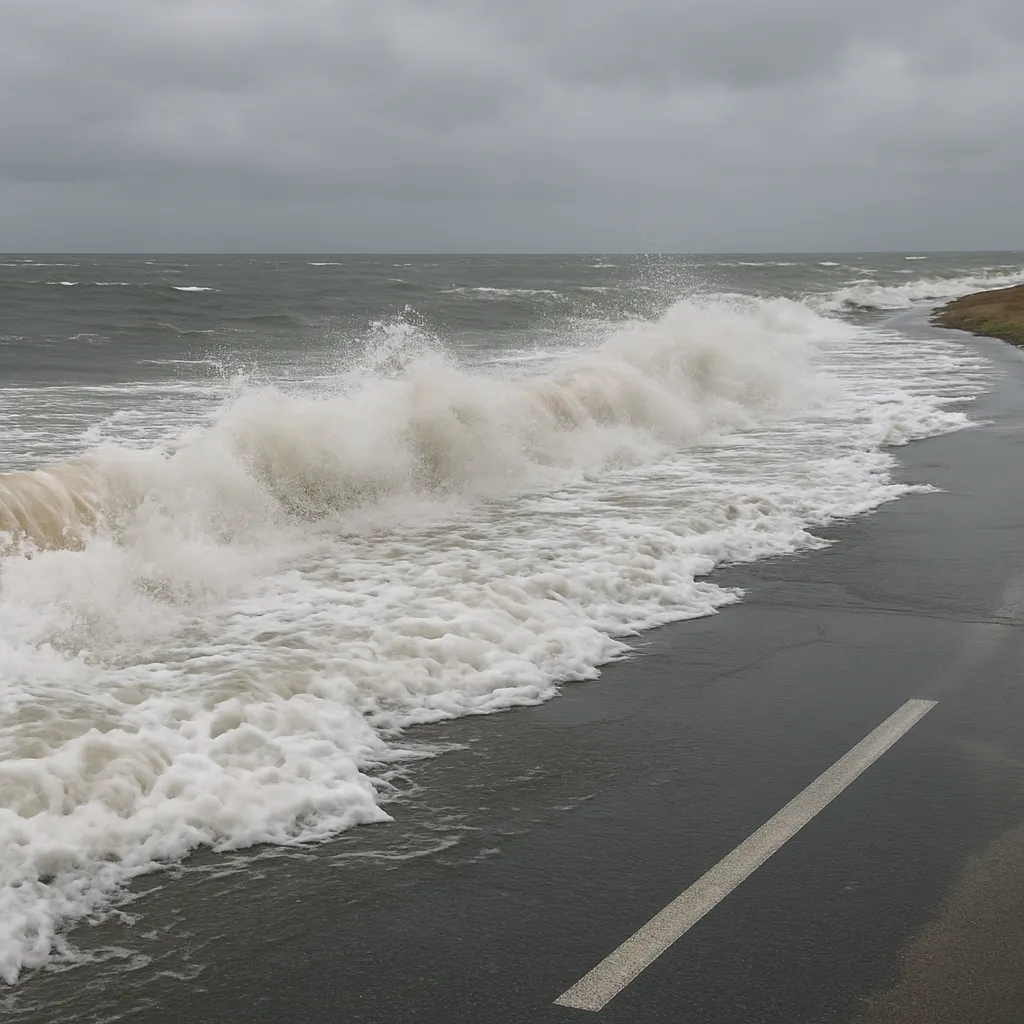
Seawater rises several meters above normal along a coast as a hurricane comes ashore, flooding streets far from the beach. What produces this rise in water level?
Two towns face the same 3 meter storm surge. In one, landfall happens at high tide, and in the other, at low tide. What difference should planners expect?
A Northern Hemisphere hurricane, with winds turning counterclockwise, moves north toward a coast that faces south. On which side of its center will the storm surge be highest?
A weakening tropical storm crawls over hilly country for two days, dropping 500 millimeters of rain. Towns 200 kilometers from the coast are evacuated. Which hazard are they facing?
Most deaths in tropical cyclones are caused by water, from storm surge and inland flooding, rather than by wind.
Storms that form over the tropical Atlantic near 12 degrees north almost always travel westward across the ocean for their first several days. Which wind system steers them that way?
A hurricane tracks west for days, then near 32 degrees north turns north and finally speeds off toward the east-northeast, out into the open Atlantic. Which wind belt caused that final turn?
A large high-pressure system sits over the central Atlantic. A hurricane approaching it curves along the outside of the high rather than crossing its center. What does the high do to the storm?
Forecasters say a hurricane's path is set mainly by its steering flow. What is the steering flow?
A hurricane is 400 kilometers from a coastal city and moving straight toward it at 20 kilometers per hour. If it keeps that speed and heading, about how long until landfall?
A hurricane forecast track is a cone, narrow near the storm and much wider five days out. Why does the cone widen with time?
Crack the passcode before the zombies get in.
Answer, then swat bugs for bonus points.
Race through questions at your own speed.
Same question on every screen. Fastest wins.

Pick a tile, answer, hit bonuses and steals.
Weather, Climate and the Oceans: Key Terms in Use
20 questions