Loading
by BlastRoom
Reason from temperature and salinity data to how ocean currents move, warm coasts, and feed ocean ecosystems.
#us_grade_8_science
40 questions
One question set, multiple game modes. Tap any game to see it in action. Not sure which to pick?
Answer to place stones and capture territory.
Outrun the snow together.
Earn blasts, then hunt the other team.
Answer to earn energy, then climb.

The class blasts through walls together.
Bid on mystery lots. Most money wins.
Sell tours. Nice, standard, or a total scam.

Answer, restock, and serve the rush.
More correct answers pulls the rope your way.
Answer, then shoot down the alien wave.
Answer, then tap to leap the frozen ridge.
Sample A is 3 degrees C and Sample B is 20 degrees C. Both hold 35 grams of dissolved salt per kilogram. Where the two meet in open water, what happens?
Two seawater samples are both 10 degrees C. One holds 37 grams of dissolved salt per kilogram, the other 33 grams per kilogram. Which sample sinks when they meet?
At a river mouth, fresh river water at 15 degrees C flows into seawater that is also 15 degrees C and holds 35 grams of salt per kilogram. What does the river water do?
A station records surface water at 24 degrees C with 34.5 grams of salt per kilogram, and water 800 meters down at 5 degrees C with 34.9 grams per kilogram. Why does this column stay layered?
Water leaving the Mediterranean into the Atlantic is 13 degrees C with 38.4 grams of salt per kilogram. Atlantic water beside it is 11 degrees C with 35.5 grams per kilogram. What does the outflow do?
Glacier melt pours fresh water onto the cold surface of a polar sea where surface water normally sinks. What happens to that sinking?
A researcher wants the surface seawater at one station to start sinking. Which change to that surface water would most help?
Two beakers hold seawater of equal salinity, one at 5 degrees C and one at 25 degrees C. Why is the colder seawater denser?
Sample X is 6 degrees C with 34.0 grams of salt per kilogram. Sample Y is 6 degrees C with 36.0 grams per kilogram. Which sample ends up on top when they meet?
Deep ocean currents are driven mainly by differences in the density of seawater.
At a far North Atlantic station the surface water is 2 degrees C with 35.2 grams of salt per kilogram, and sea ice is forming. Ice formation leaves the water below saltier. What follows?
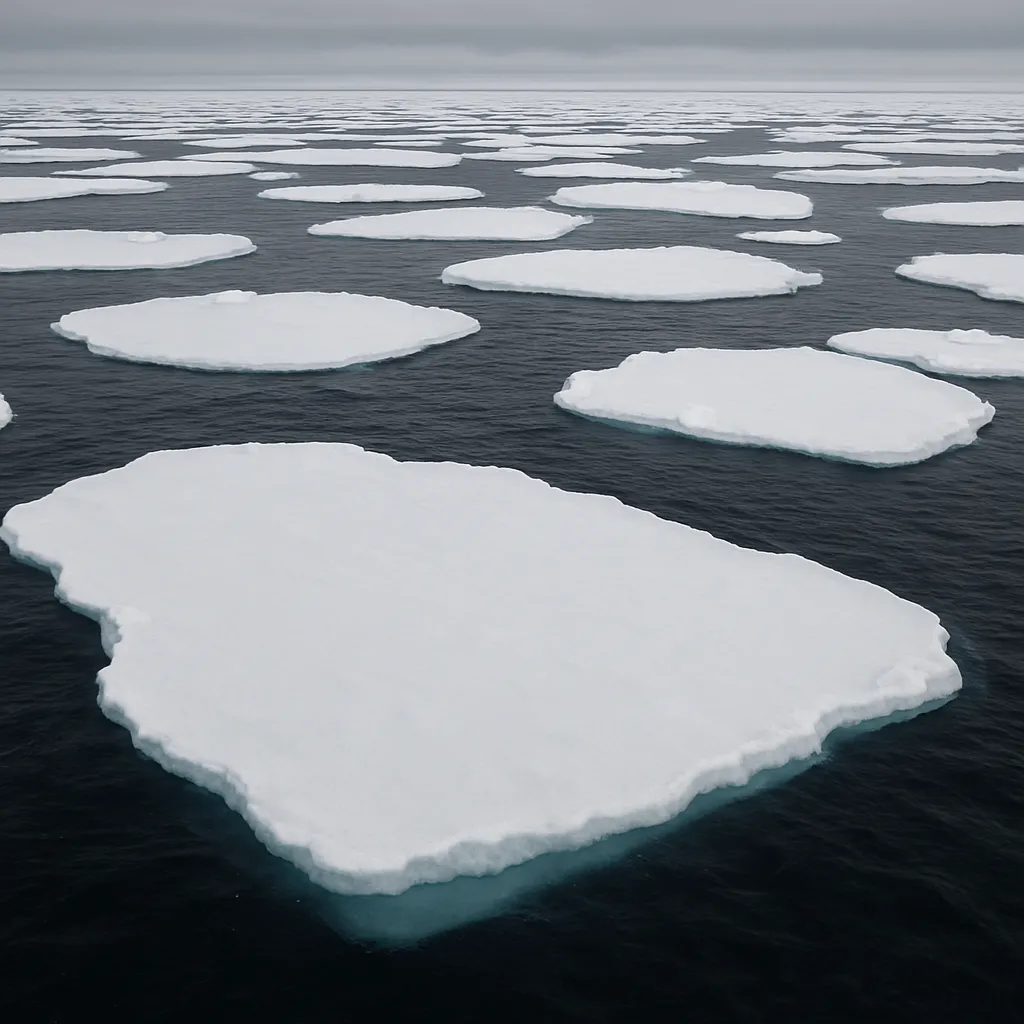
Near the Antarctic coast seawater freezes each winter, and the very cold water left behind is saltier than the water around it. Where does that water go?
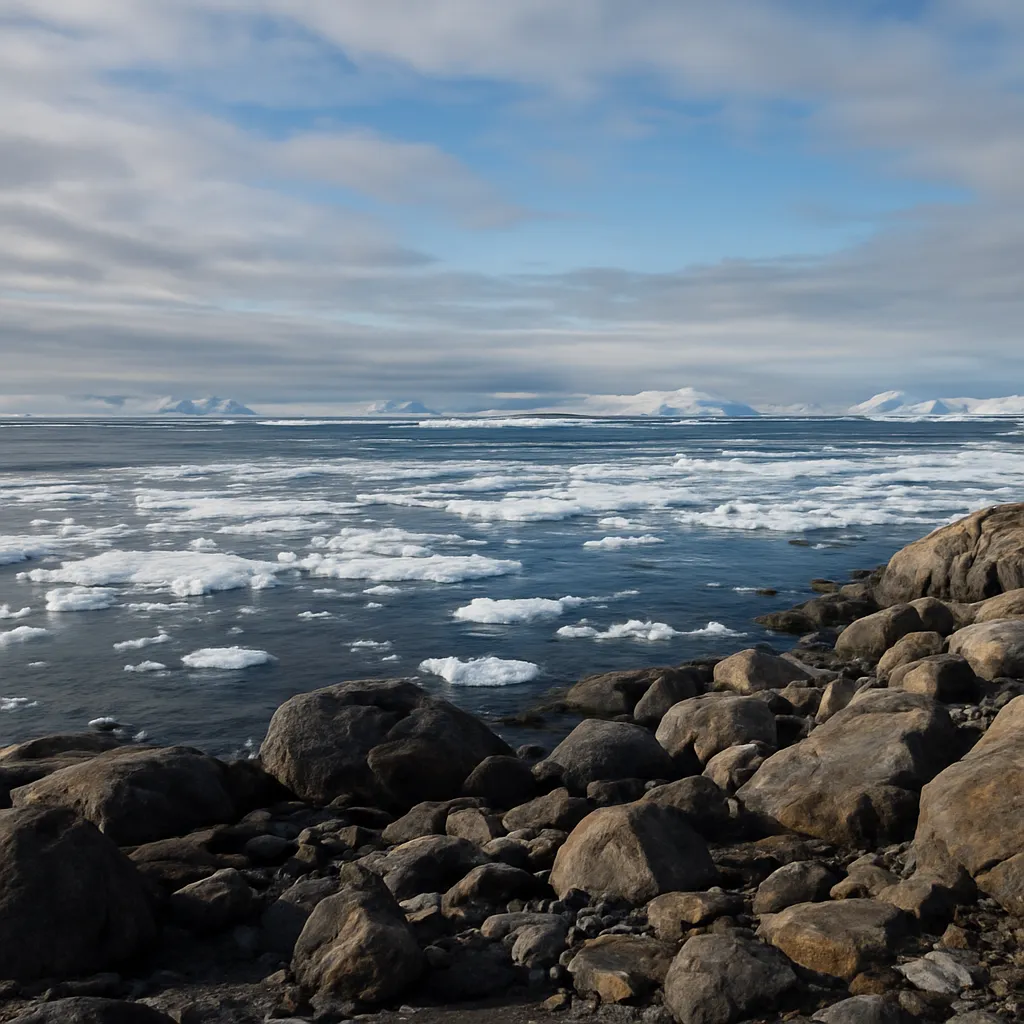
At a tropical station the surface water is 28 degrees C with 35 grams of salt per kilogram, and the water below it is colder. Why does no deep water form here?
A sample taken 4,000 meters below a tropical sea measures 1 degree C. What best explains water this cold under a tropical sea?
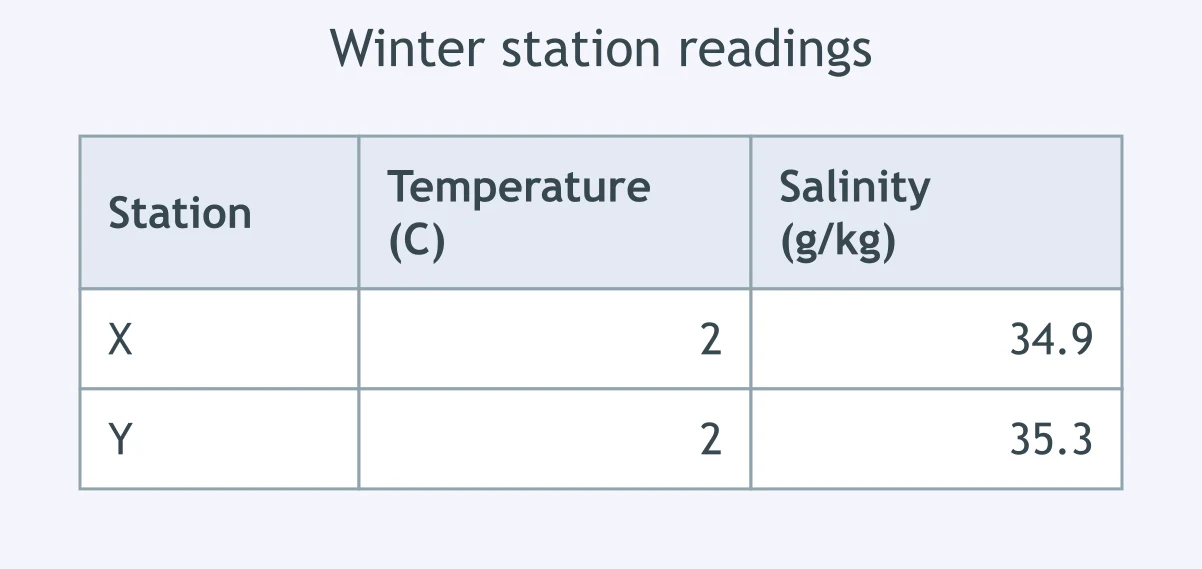
The table gives winter temperature and salinity at two North Atlantic stations. Which station is more likely to start water sinking to the deep ocean?
Surface water sinks in the far North Atlantic each winter. What flows in at the surface to replace the water that sinks?
Deep water sinks in the far North Atlantic and creeps along the ocean floor for centuries. For the global circulation to keep going, what must this water eventually do?
Deep water formed near Greenland is traced south, staying near 2 degrees C for hundreds of years. Why does it not warm up along the way?
Two port cities sit at the same latitude on opposite sides of an ocean. A current from the tropics washes Port A, and a current from polar waters washes Port B. What should winter records show?
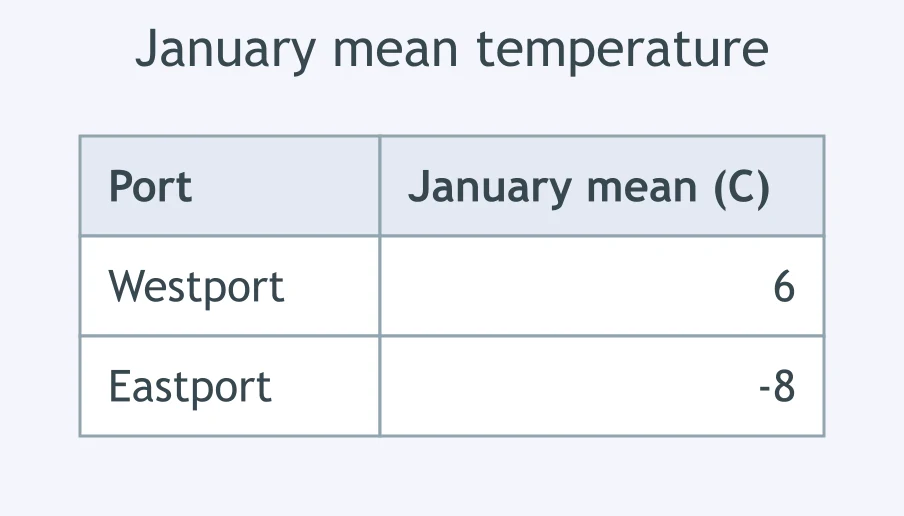
Both ports in the table lie at 55 degrees north, and one of them is washed by a current carrying tropical water. Which port is that?
A cold current flows along a coast from polar waters toward the equator. Air over that coast is often cool and foggy, and summers stay cooler than inland. What explains the cool coast?
The Gulf Stream is a warm surface current in the North Atlantic Ocean. What is this current doing to Earth's thermal energy?
Nain in Canada lies near 57 degrees north, and Bergen in Norway lies further north, near 60 degrees. Yet Bergen's January average is far warmer. Which claim does this comparison best support?
Ocean currents move water from place to place but carry no thermal energy with it.
Warm ocean water at 27 degrees C flows past a coast. How should this current affect precipitation on that coast?
A coastal desert lies beside a cold current. Fog rolls in most mornings, but rain almost never falls. Why does so little rain fall there?
A class asks why ocean currents can change a coast's climate at all. Which property of water best explains their effect?
Murmansk, Russia, lies north of the Arctic Circle, yet its harbor stays ice-free all winter. Which current carries the warm water that keeps it open?
Off one coast, wind pushes surface water away from shore and water from 200 meters down rises to replace it. Plankton grow thickly there. What best explains that growth?
One year the winds that drive upwelling along a coast fail, the surface water warms, and fish catches drop sharply. What is the most likely cause of the drop?
Two coasts lie at the same latitude, but one is washed by a warm current and the other by a cold current. Reef-building corals grow along only one. Which coast, and why?
Warm-water fish are caught further north each decade along one coast, while catches at the same latitude across the ocean have not changed. What best explains the northward shift?
Sunlight is strong in the clear surface water of the open tropical ocean, yet phytoplankton there are scarce. What best explains this?
Deep ocean water holds far more dissolved nutrients than surface water. Where do those deep nutrients come from?
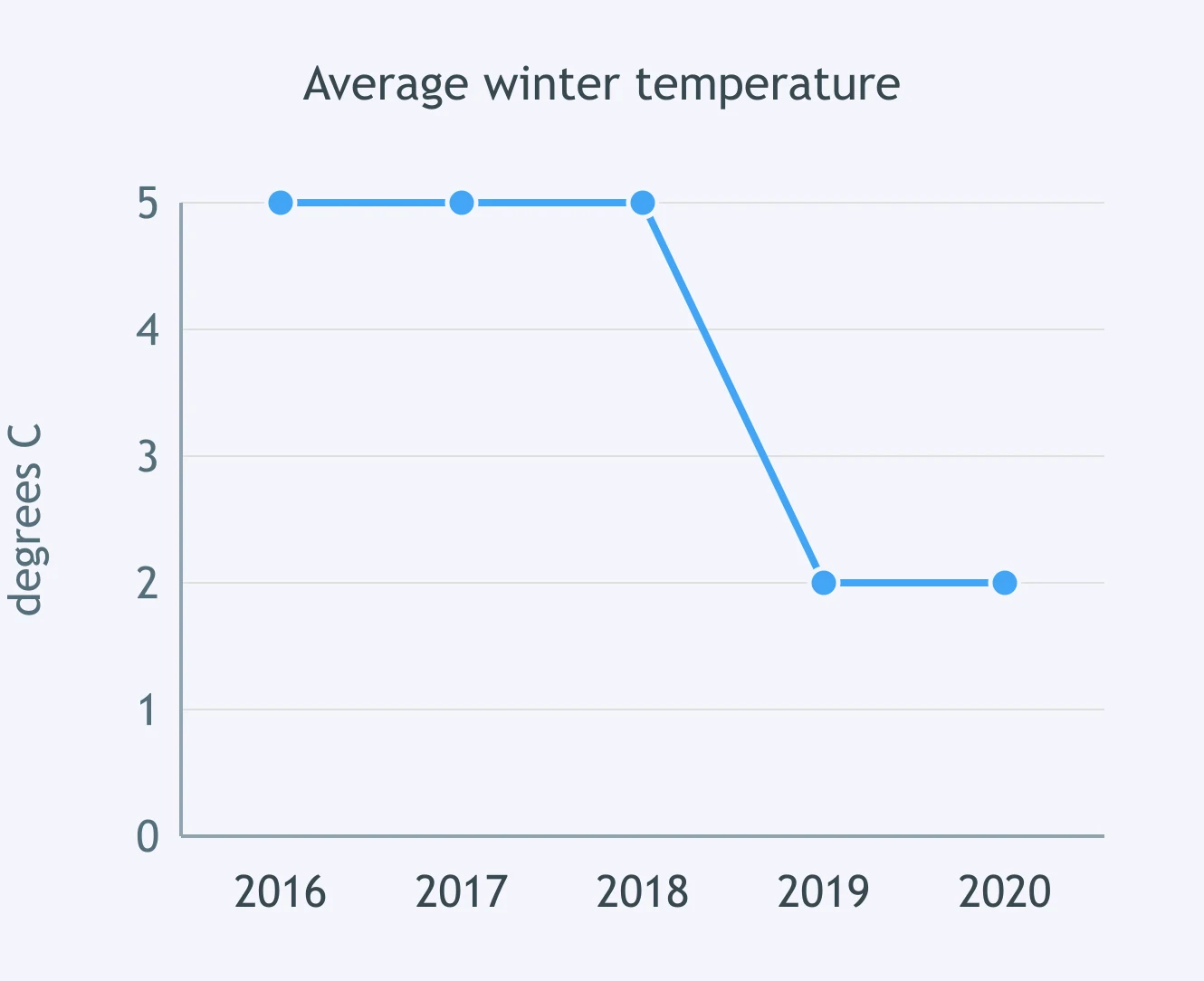
The graph shows one coastal town's average winter temperature. A warm current that washes this coast weakened sharply in 2019 and stayed weak. What does the record best support?
Along an upwelling coast the winds slacken for a season, and the surface water warms by 4 degrees C. Why does the surface water warm?
Global average temperature is rising, yet one North Atlantic coast has cooled slightly as the sinking that drives its deep circulation has weakened. What best explains that cooling?
A cold current that used to hug one coast shifts 100 kilometers offshore. Coastal fog becomes rare and summer afternoons warm by 3 degrees C. What does this change best show?
Records show that surface salinity in a North Atlantic region where deep water forms has fallen over several decades. What should scientists expect this trend to do to deep-water formation?
Over one decade, measurements show a deep current's flow fell by about a third, and the amount of warm tropical water reaching a northern sea fell over the same years. What does this best support?
Crack the passcode before the zombies get in.
Answer, then swat bugs for bonus points.
Race through questions at your own speed.
Same question on every screen. Fastest wins.

Pick a tile, answer, hit bonuses and steals.

Weather and Climate
20 questions