Loading
by BlastRoom
Explore what drives surface and deep ocean currents and where the major ones flow.
#earth_space_science
40 questions
One question set, multiple game modes. Tap any game to see it in action. Not sure which to pick?
Answer to place stones and capture territory.
Outrun the snow together.
Earn blasts, then hunt the other team.
Answer to earn energy, then climb.

The class blasts through walls together.
Bid on mystery lots. Most money wins.
Sell tours. Nice, standard, or a total scam.

Answer, restock, and serve the rush.
More correct answers pulls the rope your way.
Answer, then shoot down the alien wave.
Answer, then tap to leap the frozen ridge.
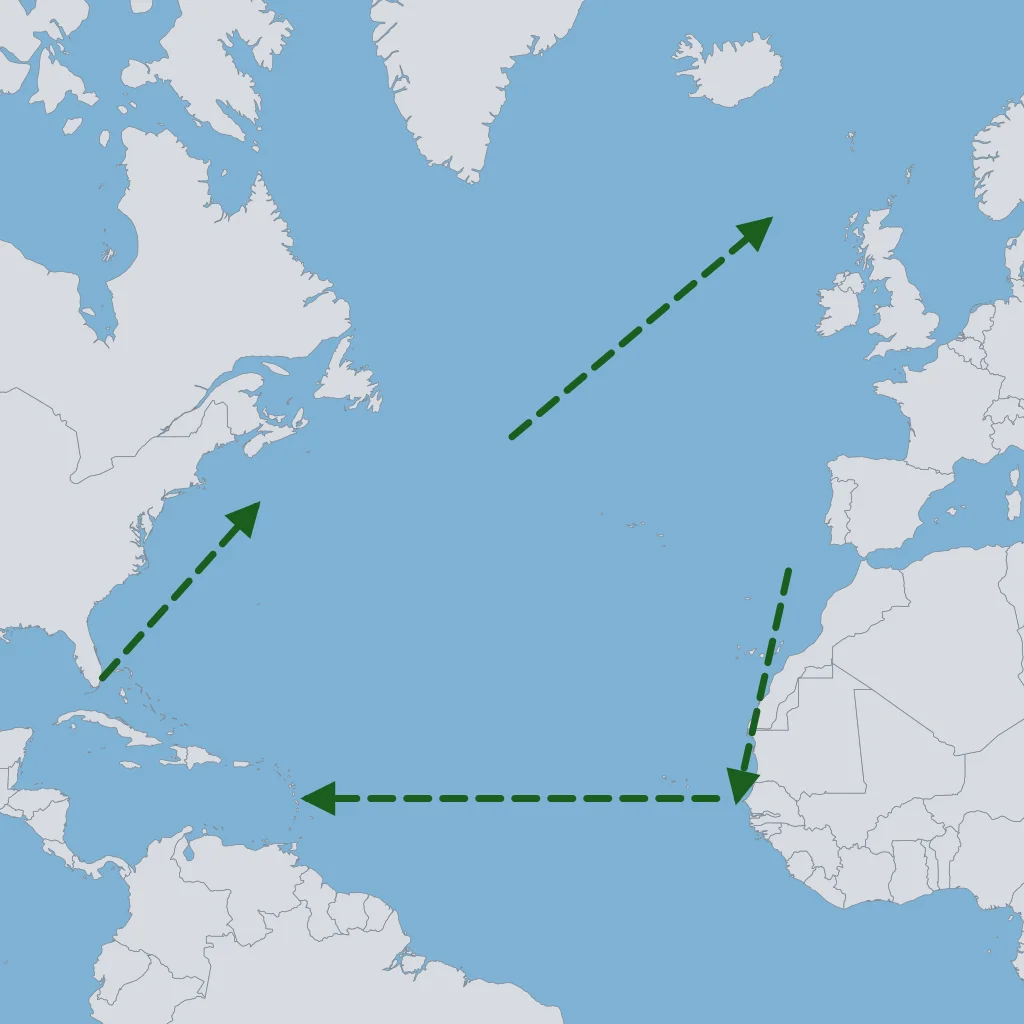
A map shows four current segments joining into one closed loop in the North Atlantic. The segment east of North America points northeast, and the segment off West Africa points south. Which way does this gyre turn?
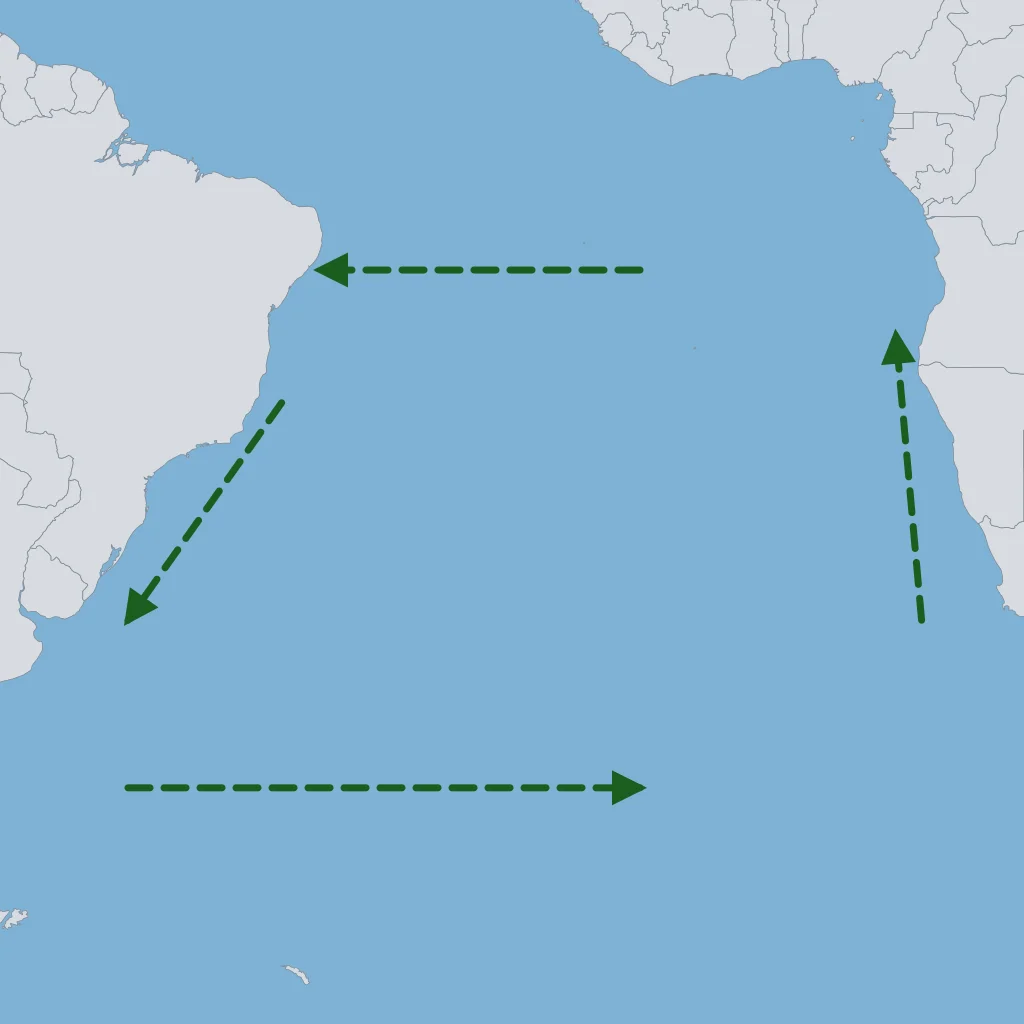
A map of the South Atlantic shows a closed loop of four current segments. The segment off the coast of Brazil points south, and the segment off southwestern Africa points north. Which way does this gyre turn?
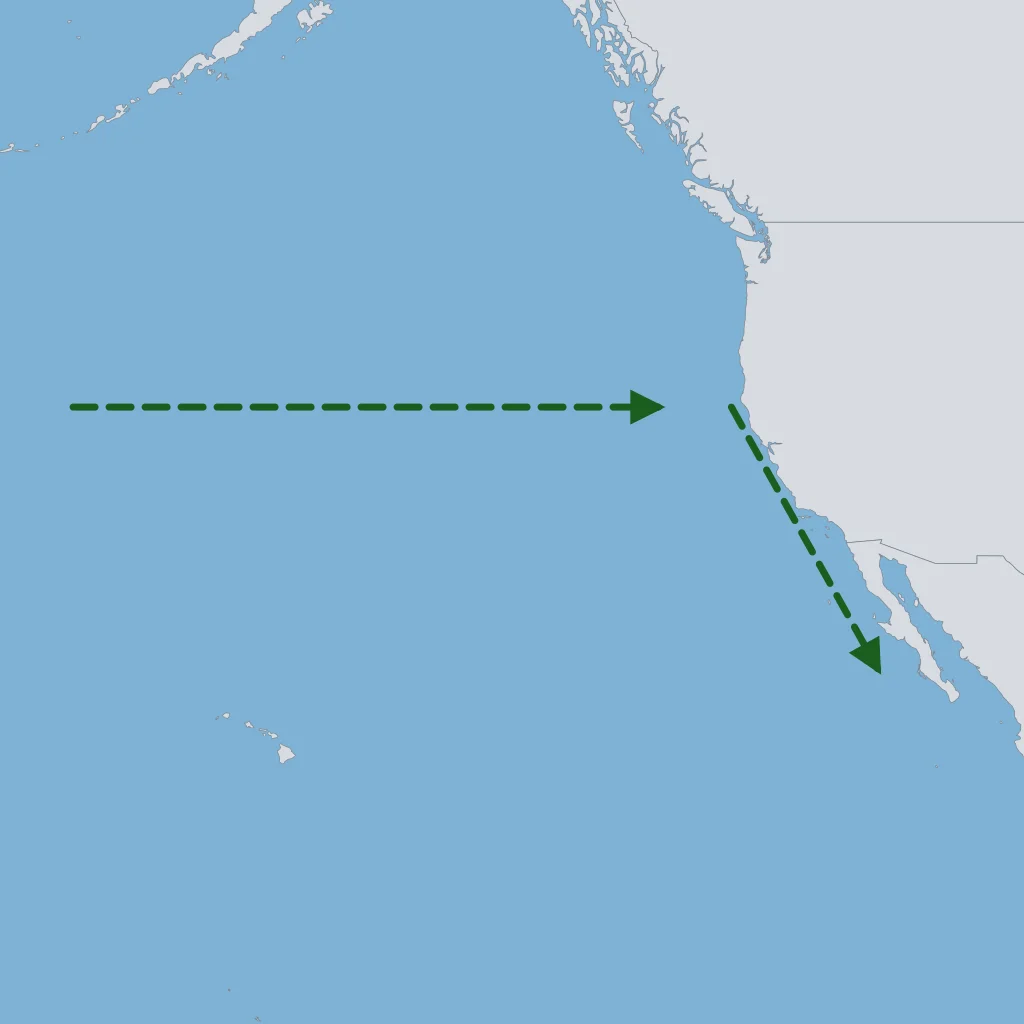
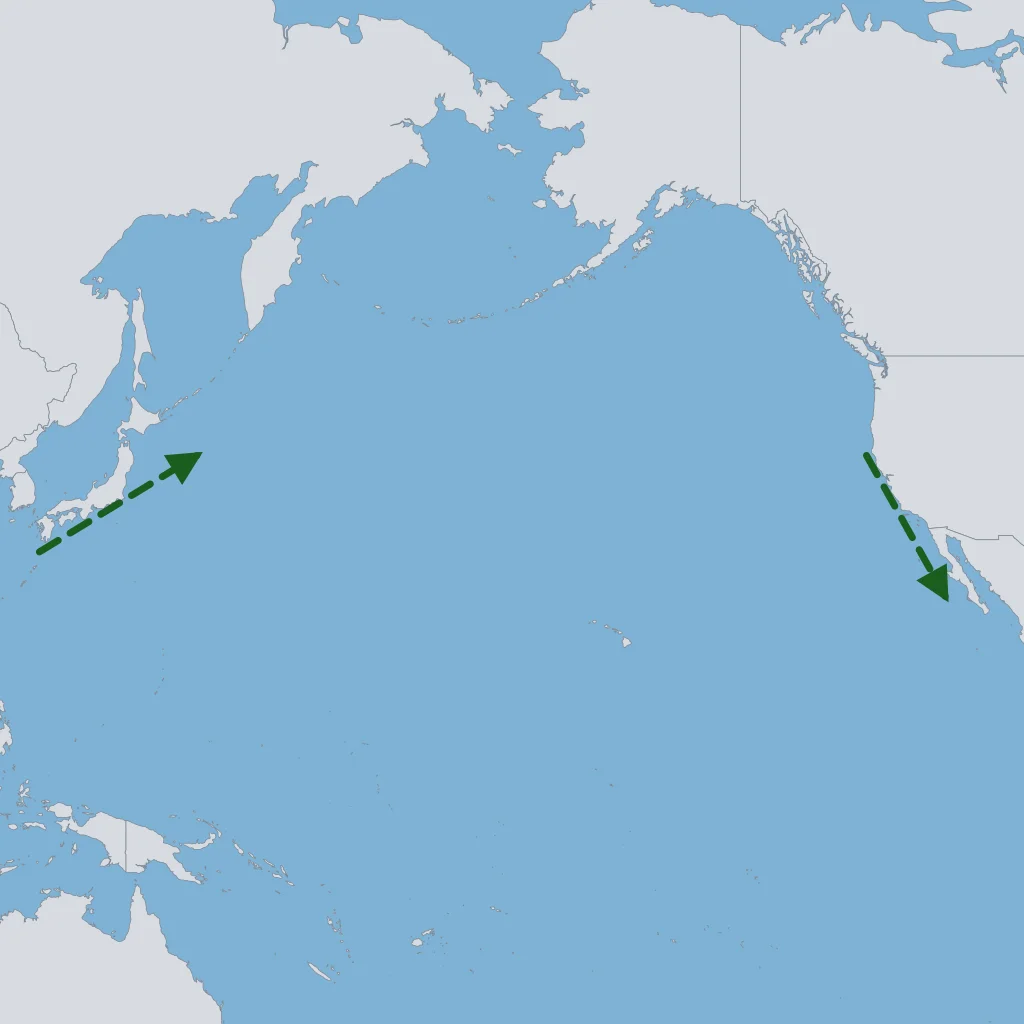
A map of the North Pacific shows two current segments: one along 40 degrees N flowing east across the open ocean, and one along the North American coast flowing south. Together these are part of a gyre turning which way?
A map of the South Pacific shows two current segments: one along 45 degrees S flowing east, and one along the coast of South America flowing north. Together these are part of a gyre turning which way?
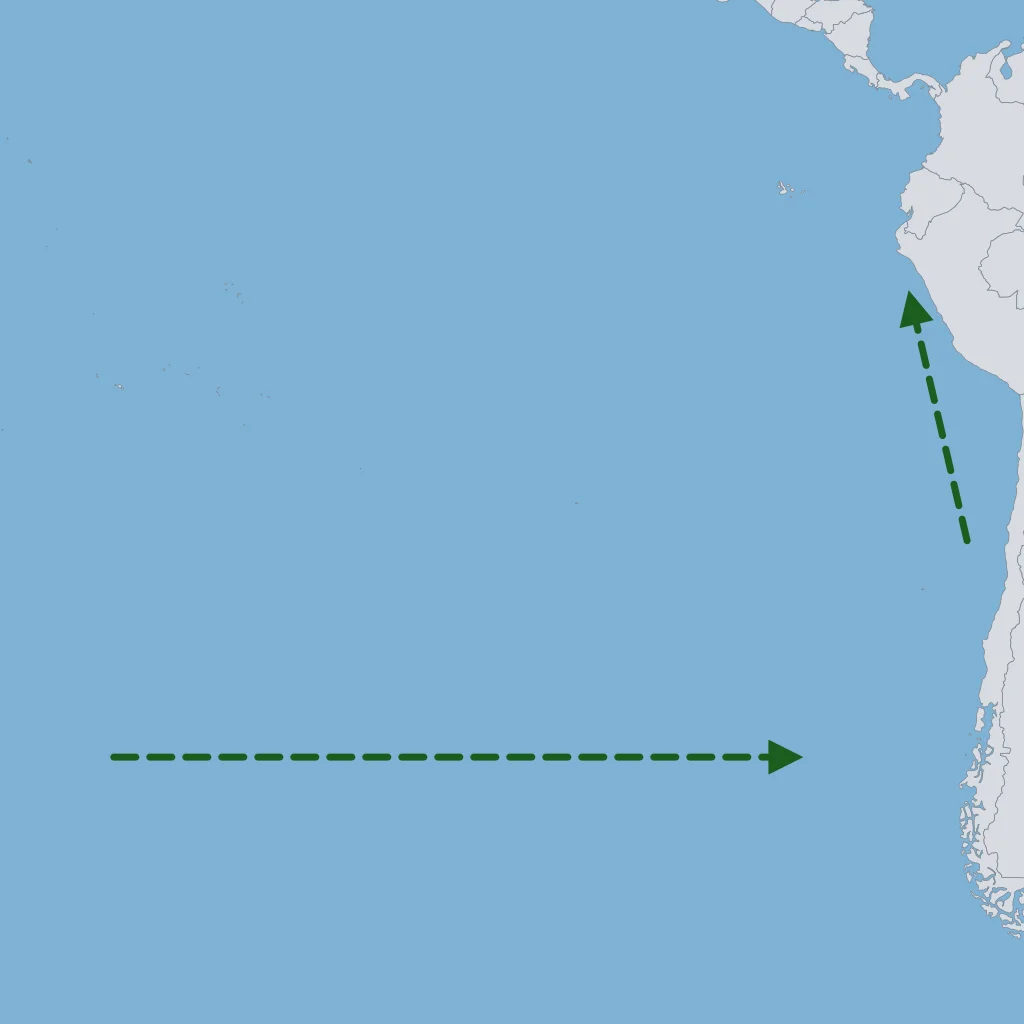
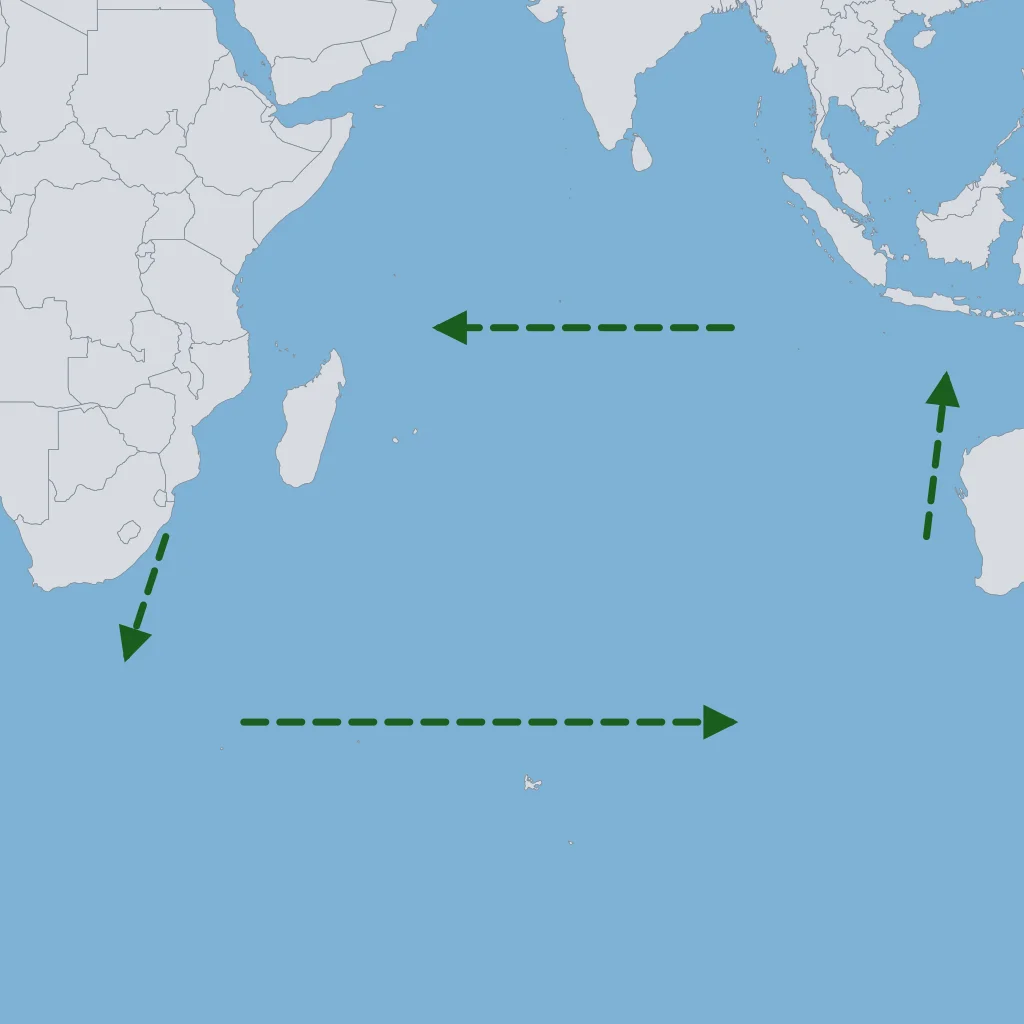
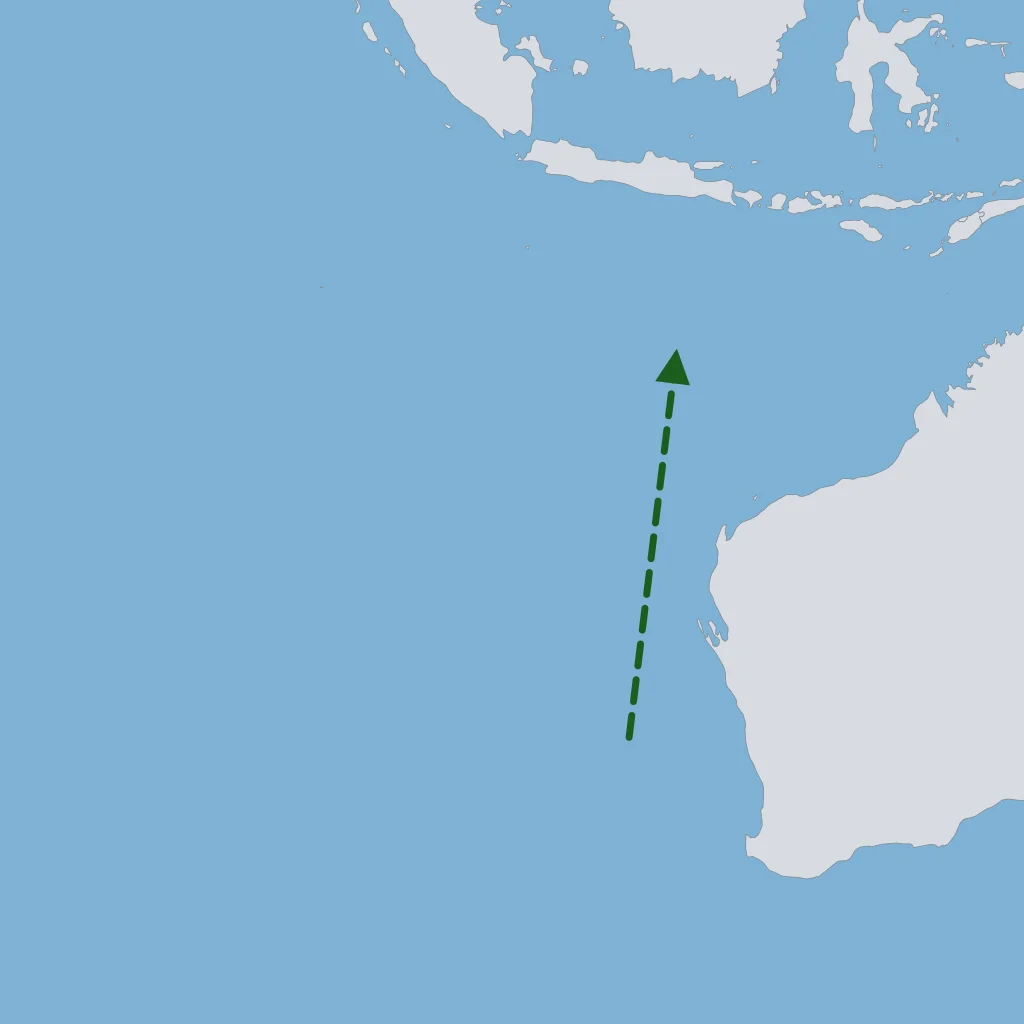
A map of the southern Indian Ocean shows a closed loop of four current segments. The segment off eastern Africa points south, and the segment off western Australia points north. Which way does this gyre turn?
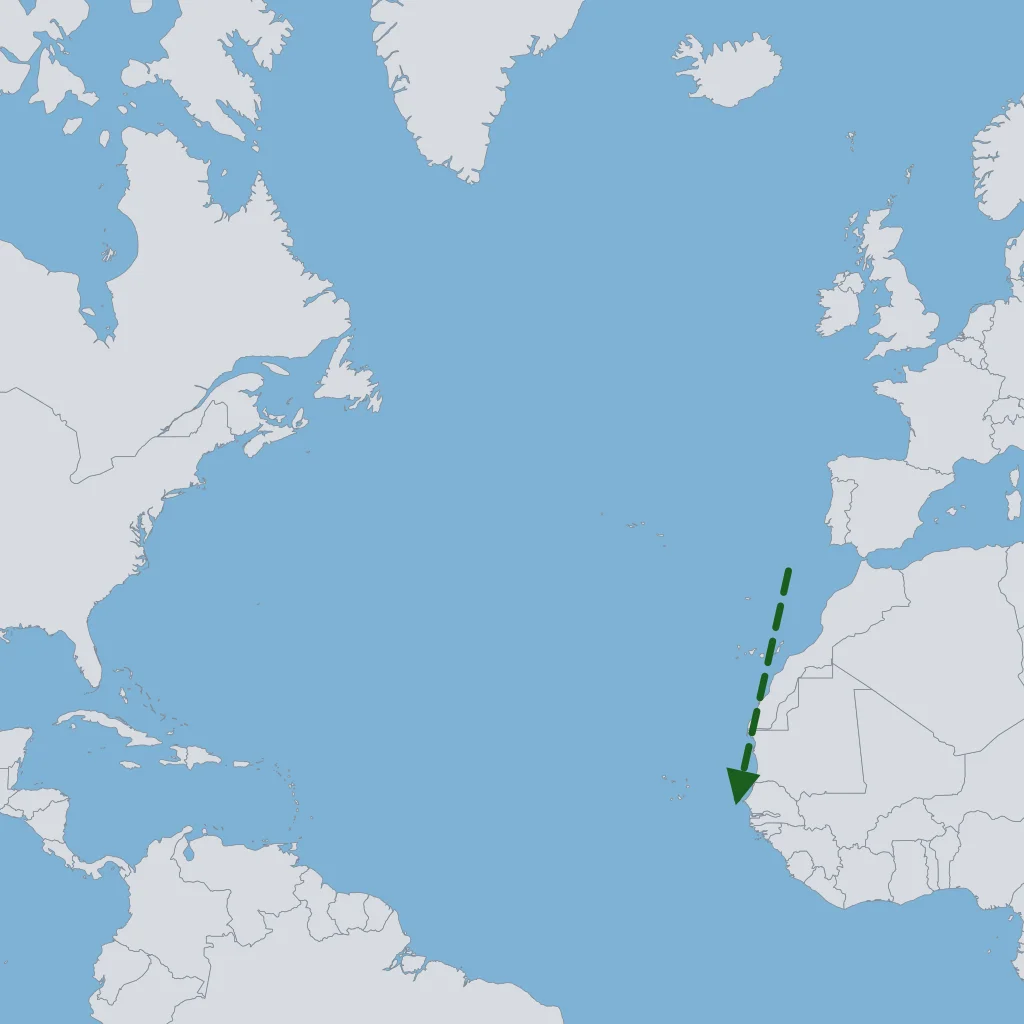
Off the coast of Portugal and Morocco, a mapped current arrow points south. If this arrow is one segment of a single closed subtropical gyre in the North Atlantic, which way must the whole gyre turn?
A student draws the North Pacific Gyre turning counterclockwise. The map shows the Kuroshio Current off Japan flowing northeast and the California Current flowing south along North America. Is the student's rotation correct?
A South Atlantic map shows the Brazil Current flowing south along South America and the Benguela Current flowing north along Africa. A student says this gyre spins clockwise because it lies in the Southern Hemisphere. Is the student correct?
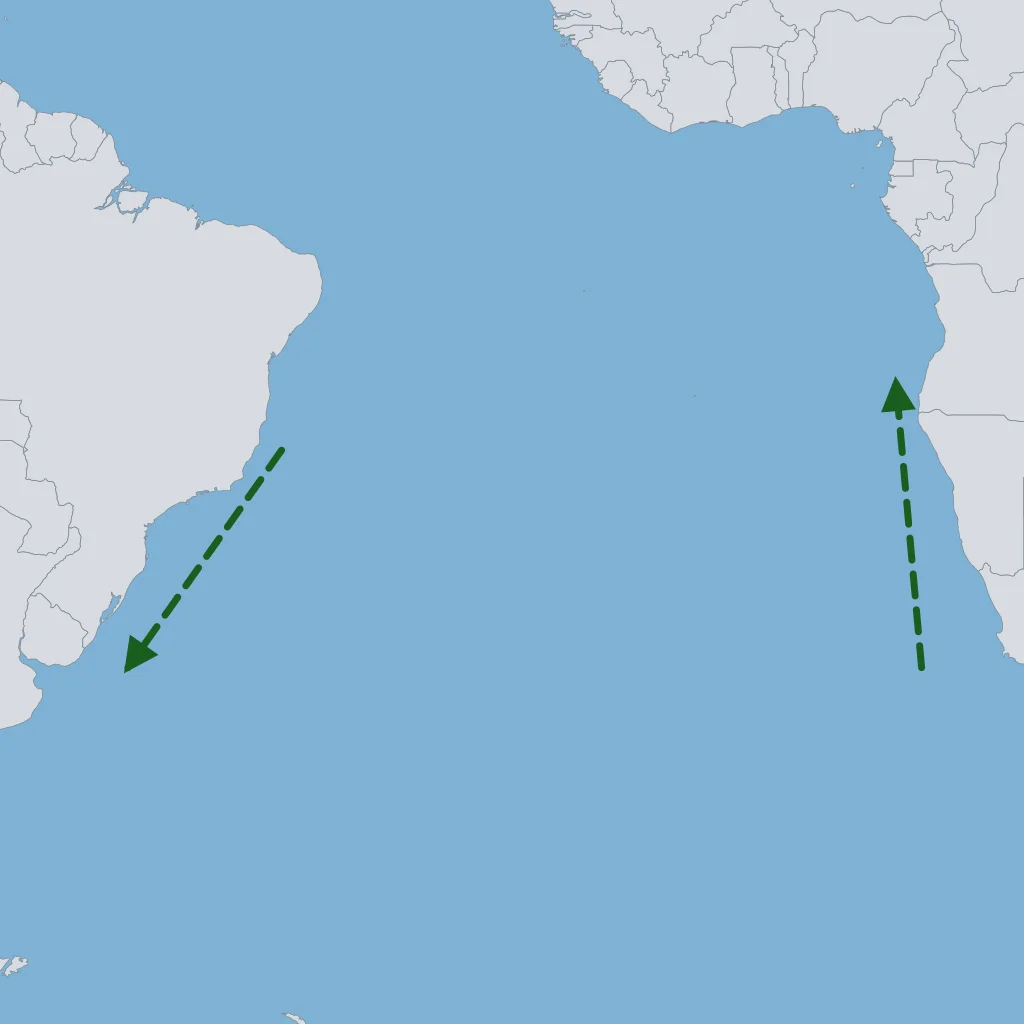
In the southern Indian Ocean, a current arrow off western Australia points north, back toward the equator. If this is one segment of the region's subtropical gyre, which way does the whole gyre turn?
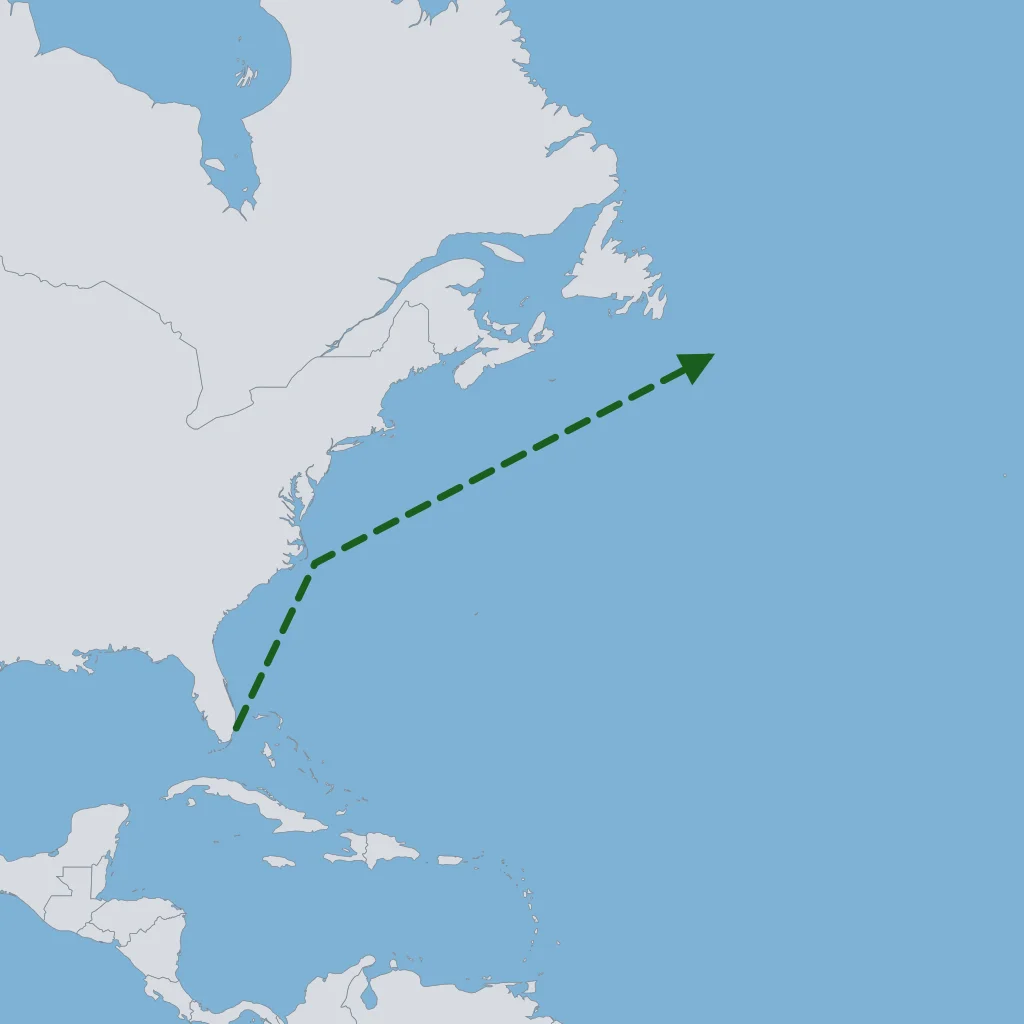
A map traces one current: warm tropical water moving north-northeast along the eastern seaboard of the United States, then curving northeast into the open Atlantic. Which current is this?
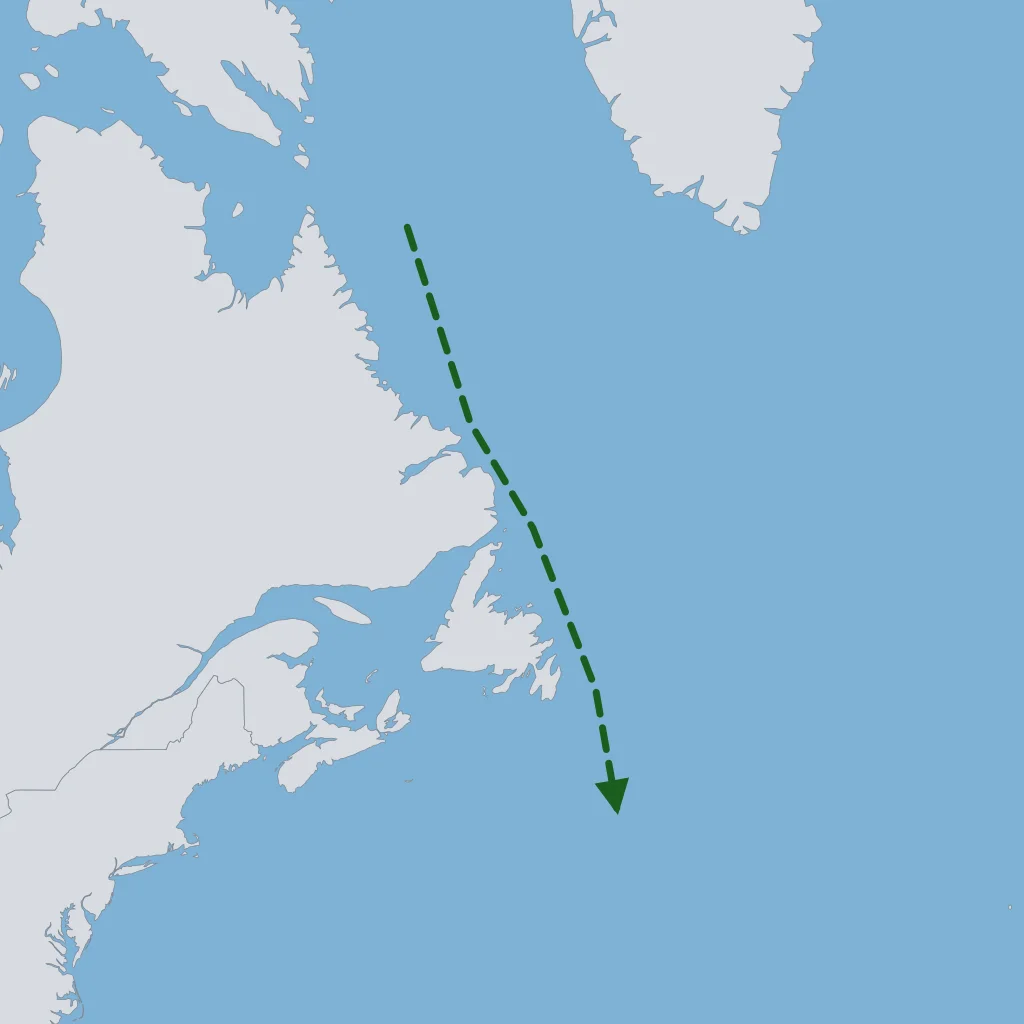
A map traces one current: cold water flowing south from the Arctic along the coast of Labrador and Newfoundland. Which current is this?
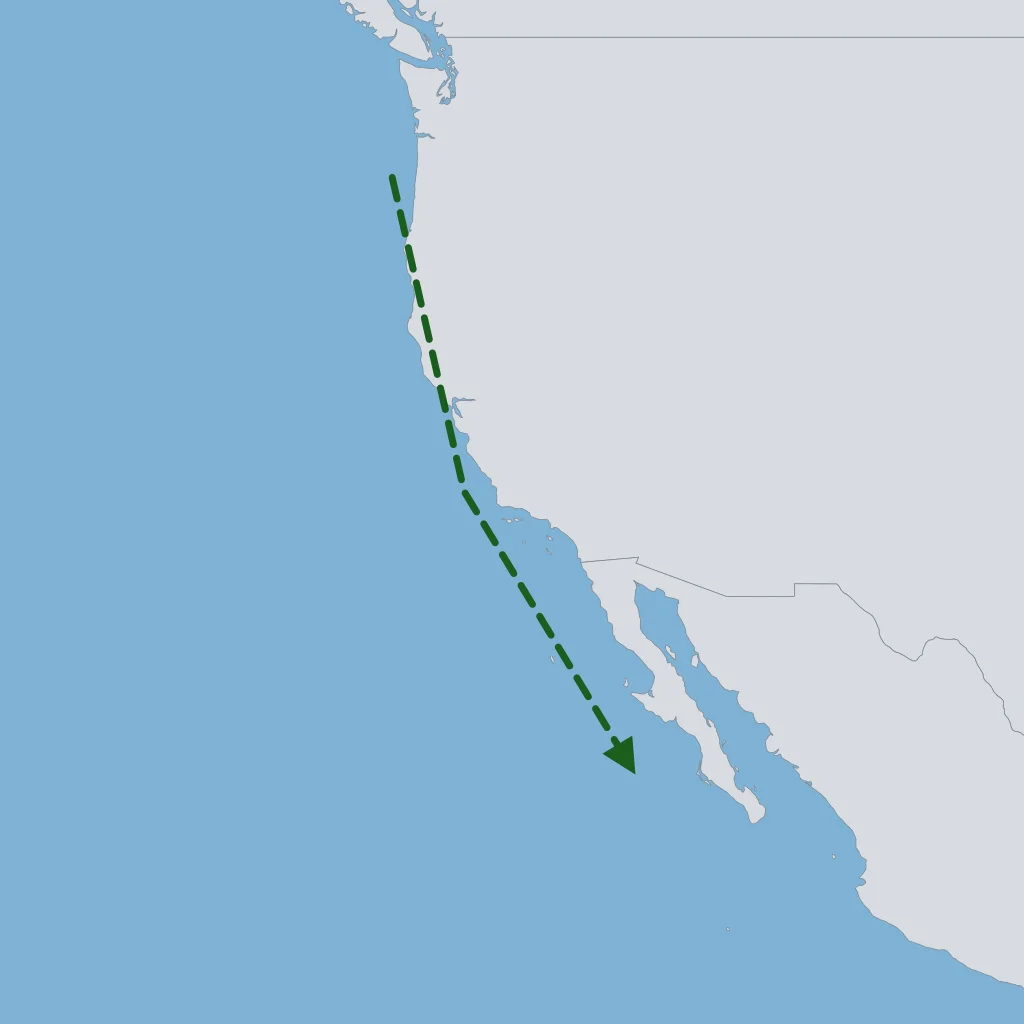
A map traces one current: cool water flowing south along the west coast of North America, from the Pacific Northwest toward Mexico. Which current is this?
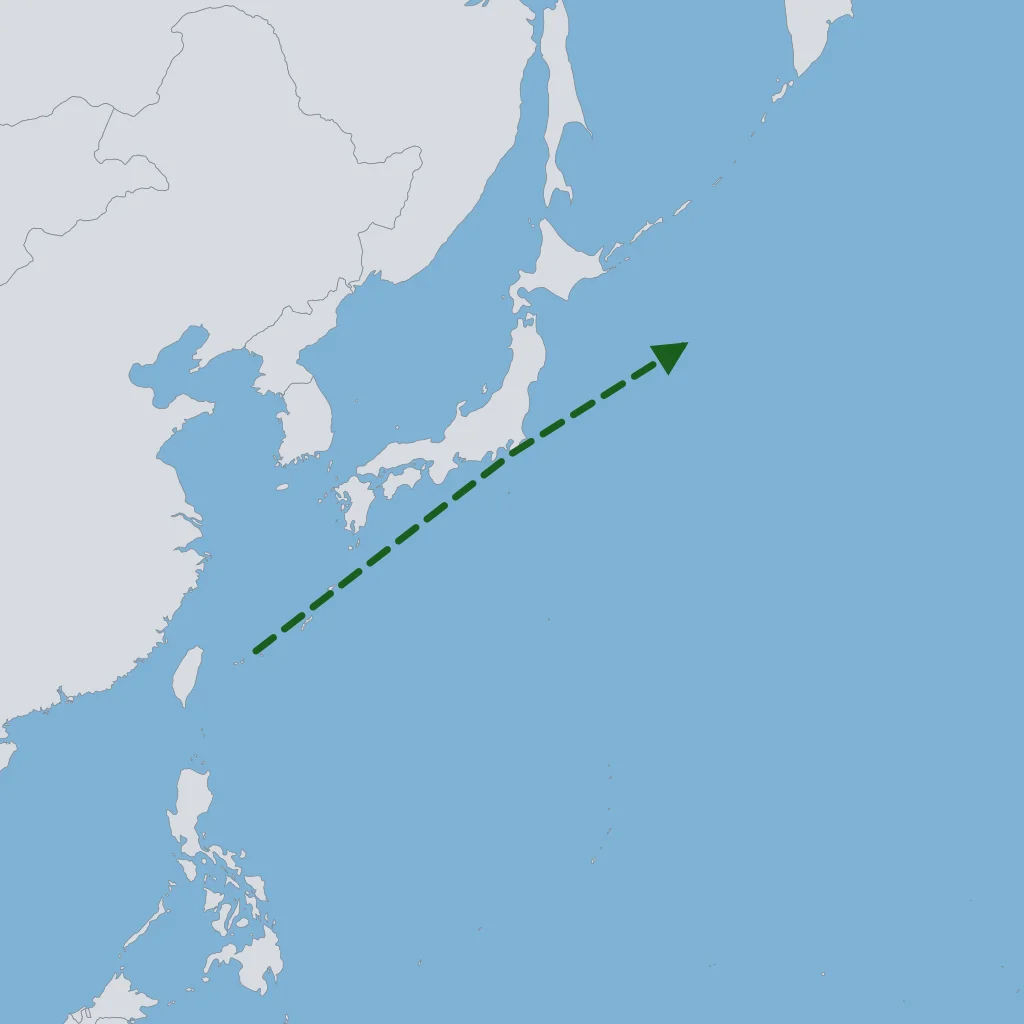
A map traces one current: warm water flowing northeast along the coast of Japan and out into the open Pacific. Which current is this?
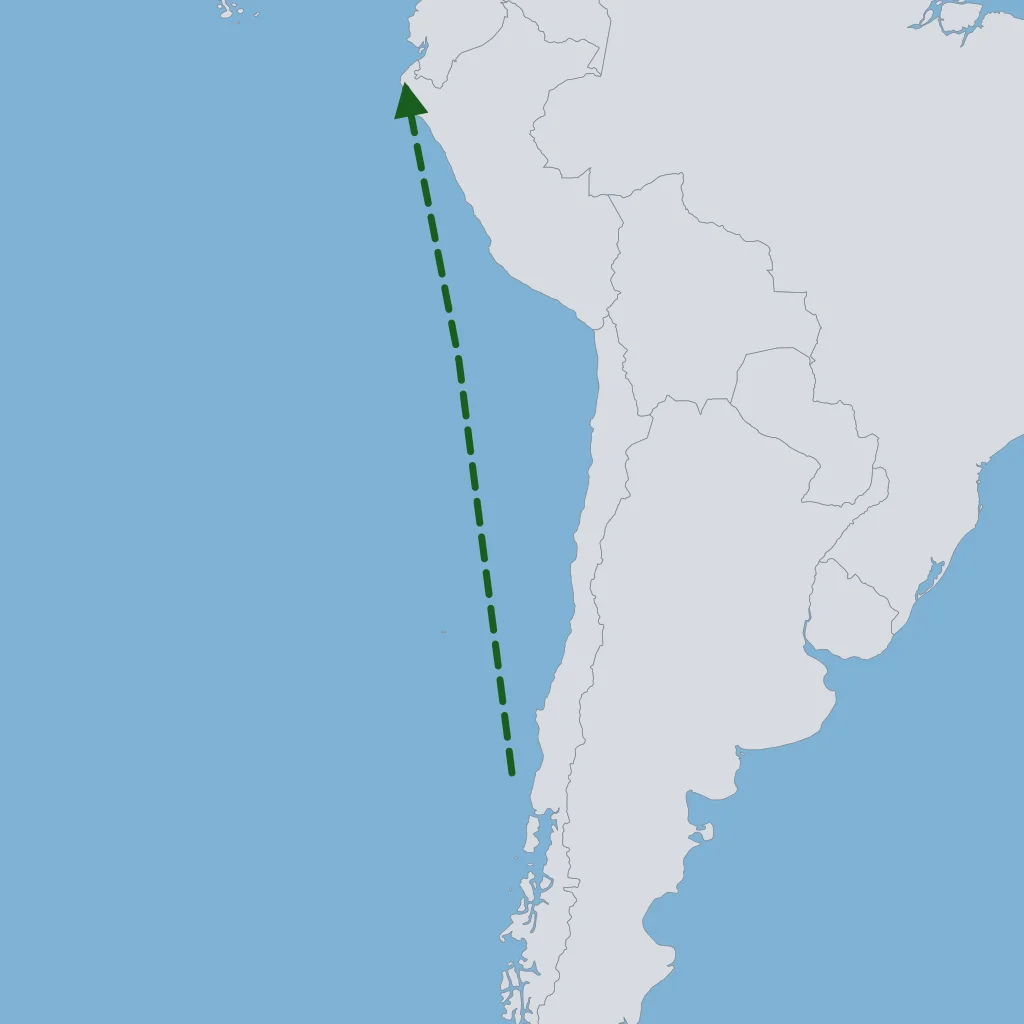
A map traces one current: cold water flowing north along the western coast of South America. Which current is this?
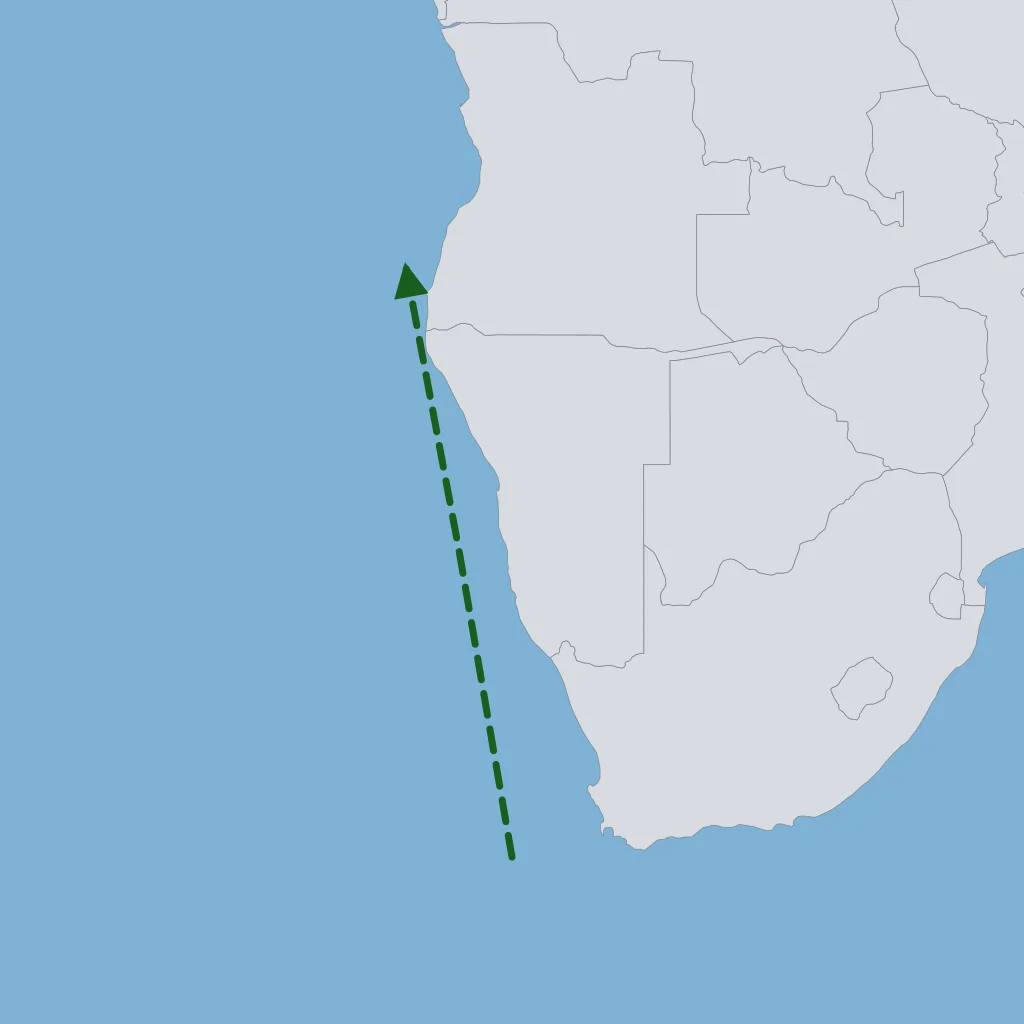
A map traces one current: cold water flowing north along the southwestern coast of Africa. Which current is this?
A map traces one current: warm water flowing south along the southeastern coast of Africa. Which current is this?
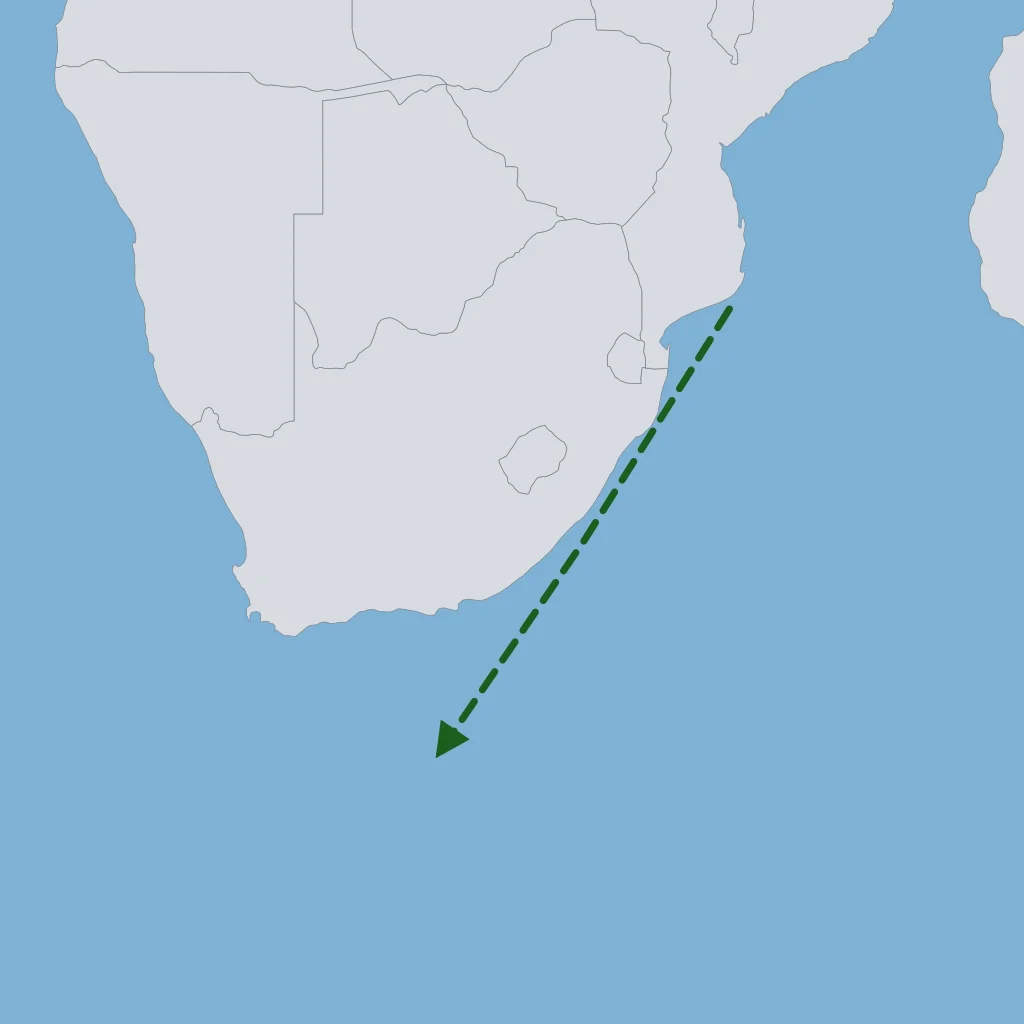
A map traces one current: cold water flowing steadily eastward, uninterrupted by any continent, all the way around the far Southern Ocean. Which current is this?
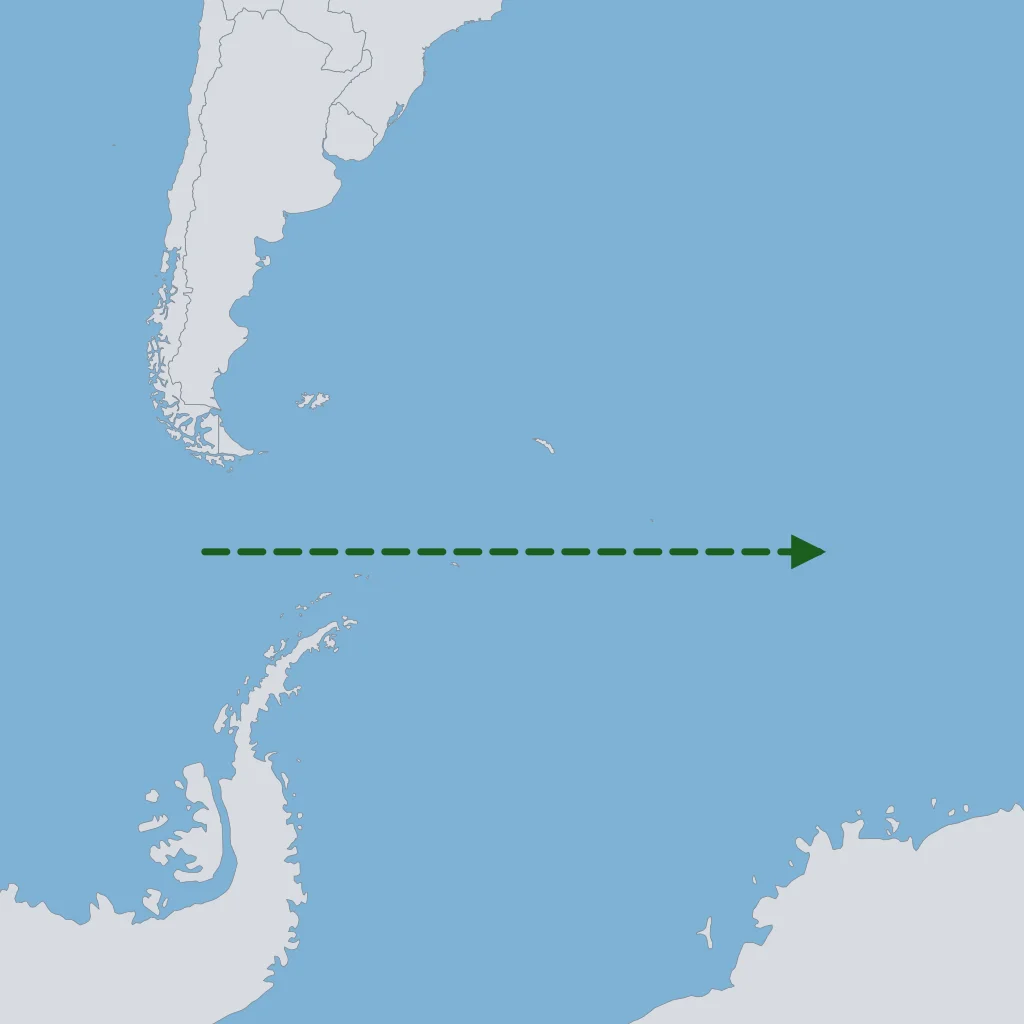
Use the deflection diagram. One labeled line shows the path a current would take if Earth did not rotate, and the other shows the path it actually follows. Which label marks the current's real path?
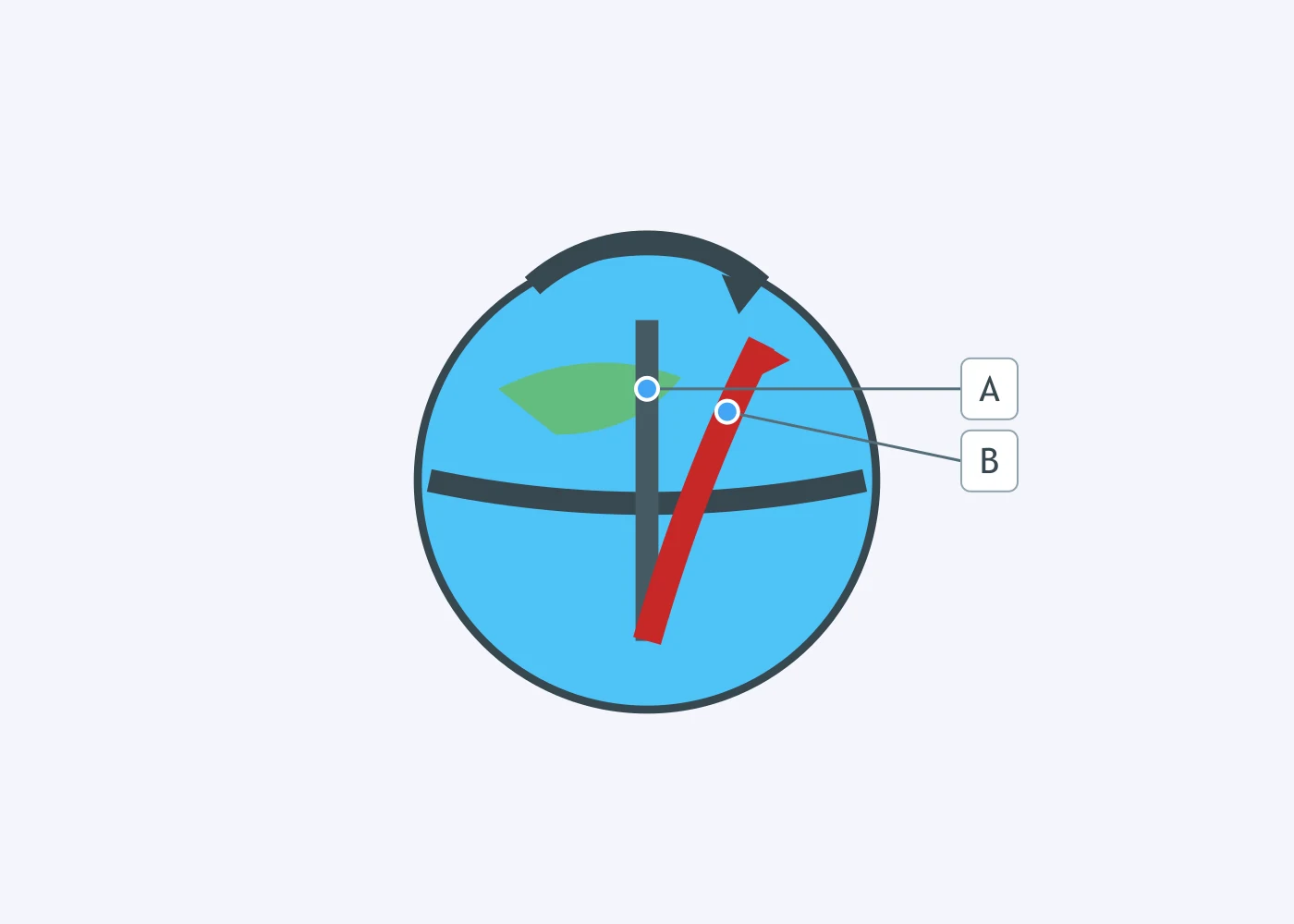
Use the deflection diagram. One labeled line shows the path water actually follows on the rotating Earth, and the other shows the path it would follow with no rotation. If Earth stopped rotating, which label would describe the current's path?
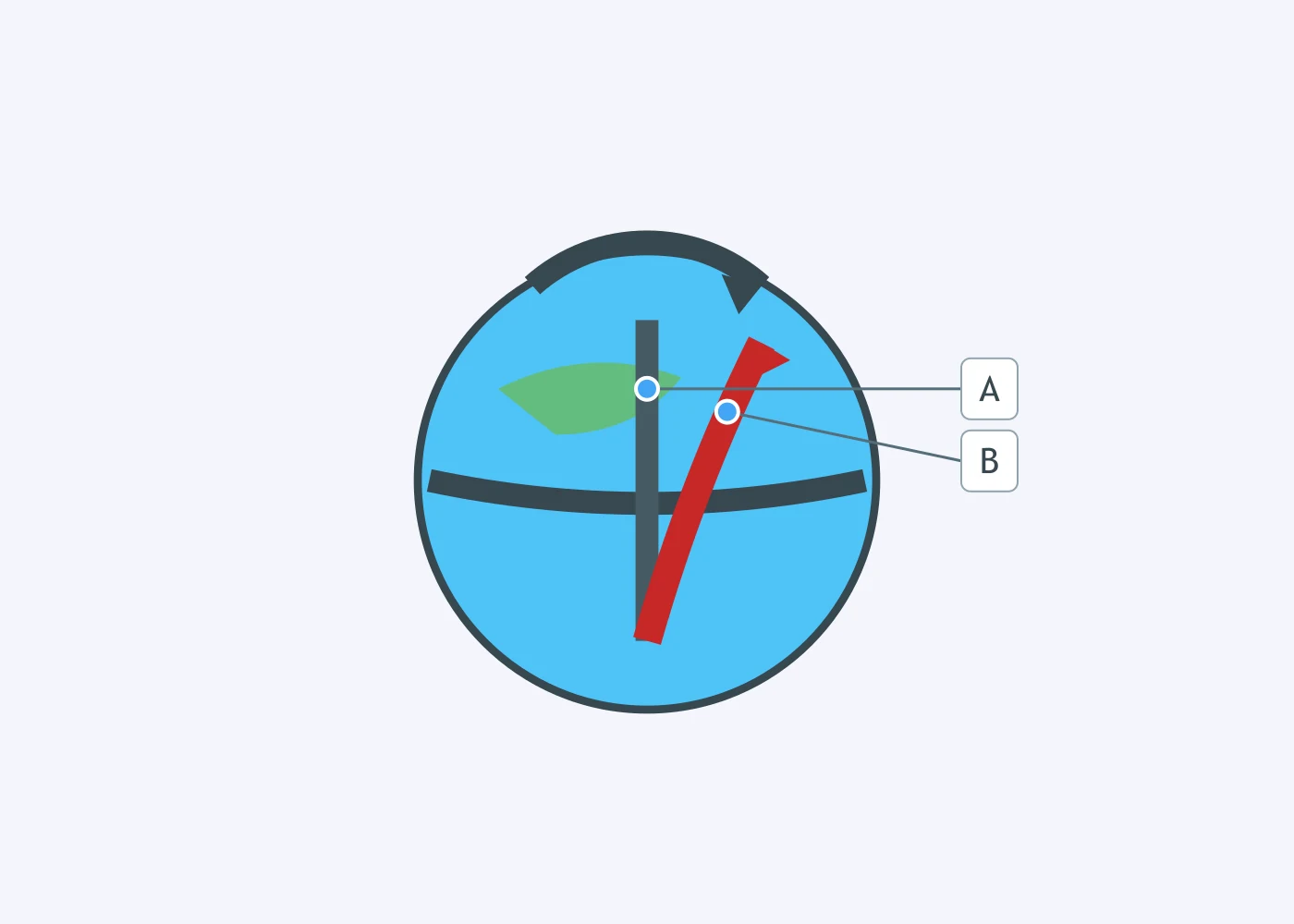
In the Northern Hemisphere, does an object moving away from the equator deflect to the east or the west of its path?
Use the diagram. Label A marks Earth's rotation arrow and label B marks a nearby landmass for reference. This rotation, together with the deflection it causes on moving water, is known as which effect?
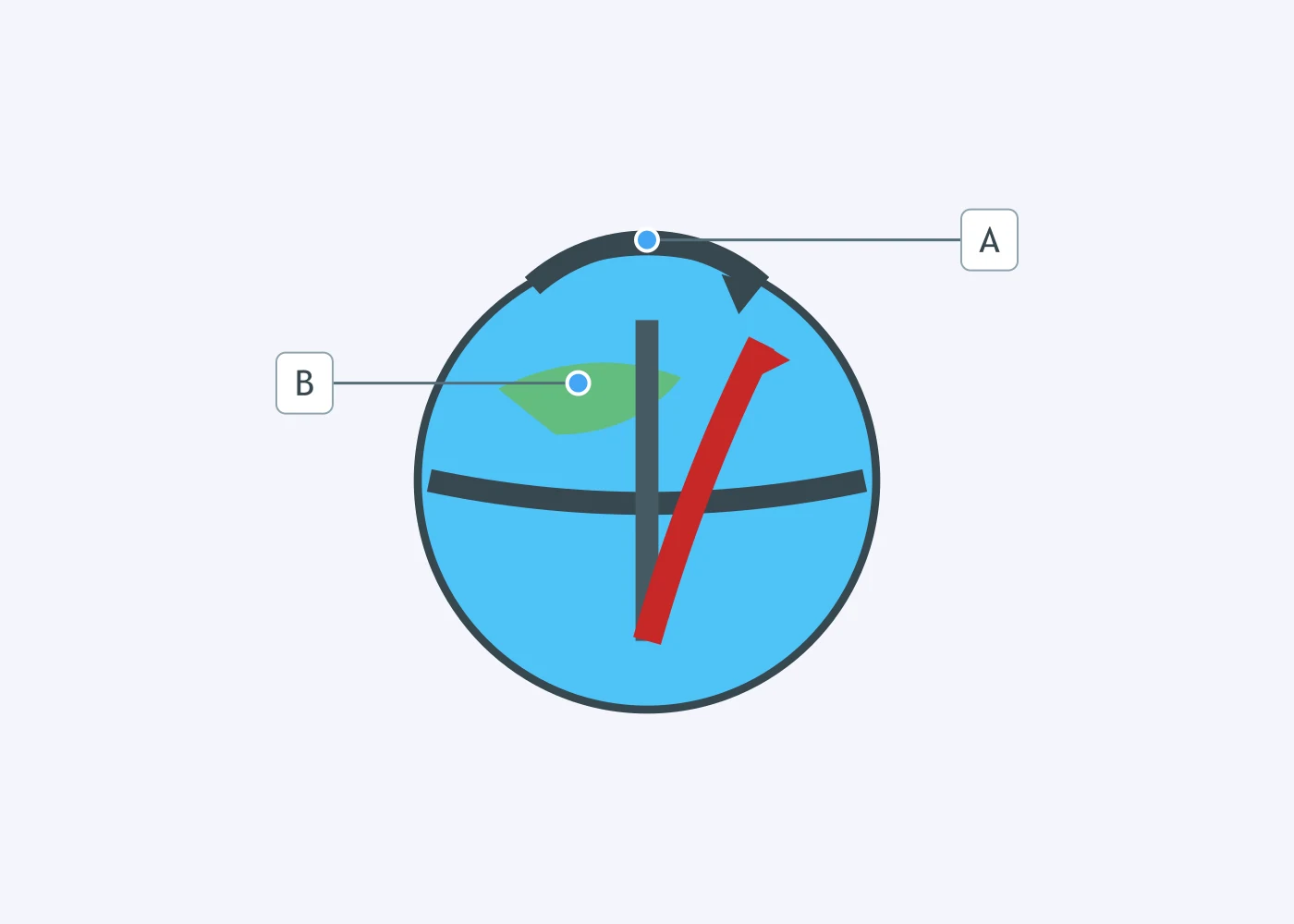
What is the primary force that sets the direction of surface ocean currents in the open ocean?
Deep ocean currents, far below where wind can reach, are driven mainly by what, unlike the wind-driven currents at the surface?
The regular daily rise and fall of tidal currents in a harbor is caused mainly by what?
A surface current moves almost exactly with the wind near the equator, but at higher latitude in the Northern Hemisphere it drifts more and more to the right of the wind direction. What best explains this growing rightward drift?
The cross section shows a water mass forming at the surface near Greenland, sinking to the floor of the basin, and then creeping slowly south along the bottom. What makes this water dense enough to sink?
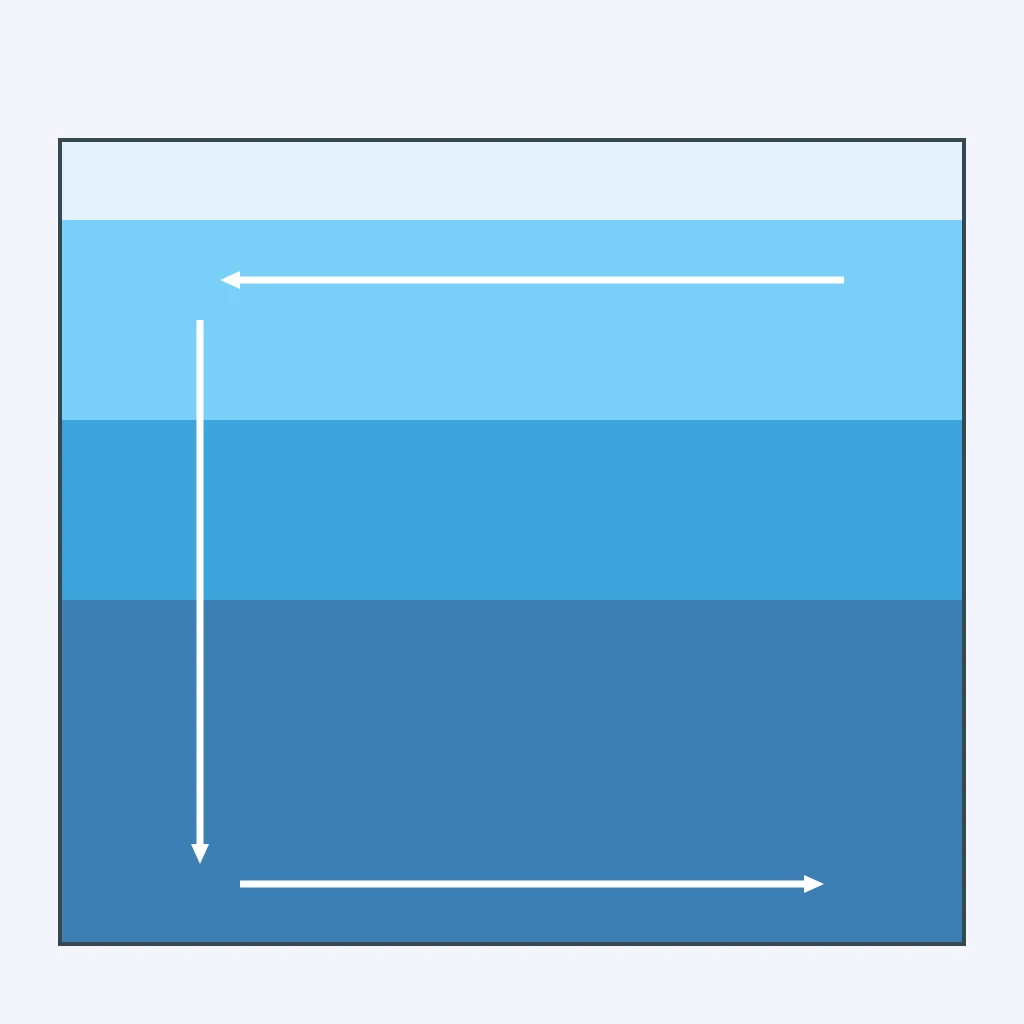
The cross section shows dense water sinking in the North Atlantic and creeping along the sea floor. Many years later and thousands of kilometers away, what eventually happens to this deep water?
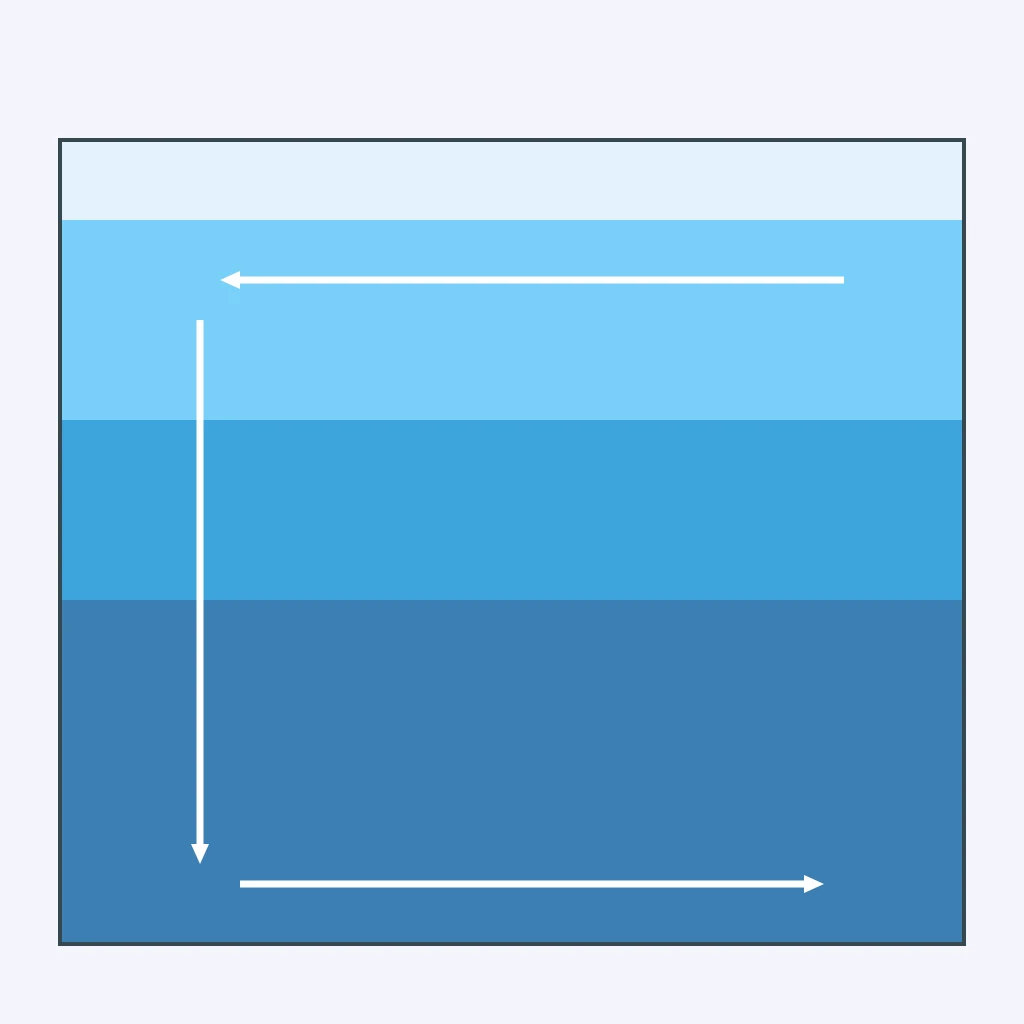
The cross section shows surface water sinking and creeping along the sea floor. This deep flow later upwells elsewhere and returns as a warmer surface current. What is this whole worldwide loop commonly called?
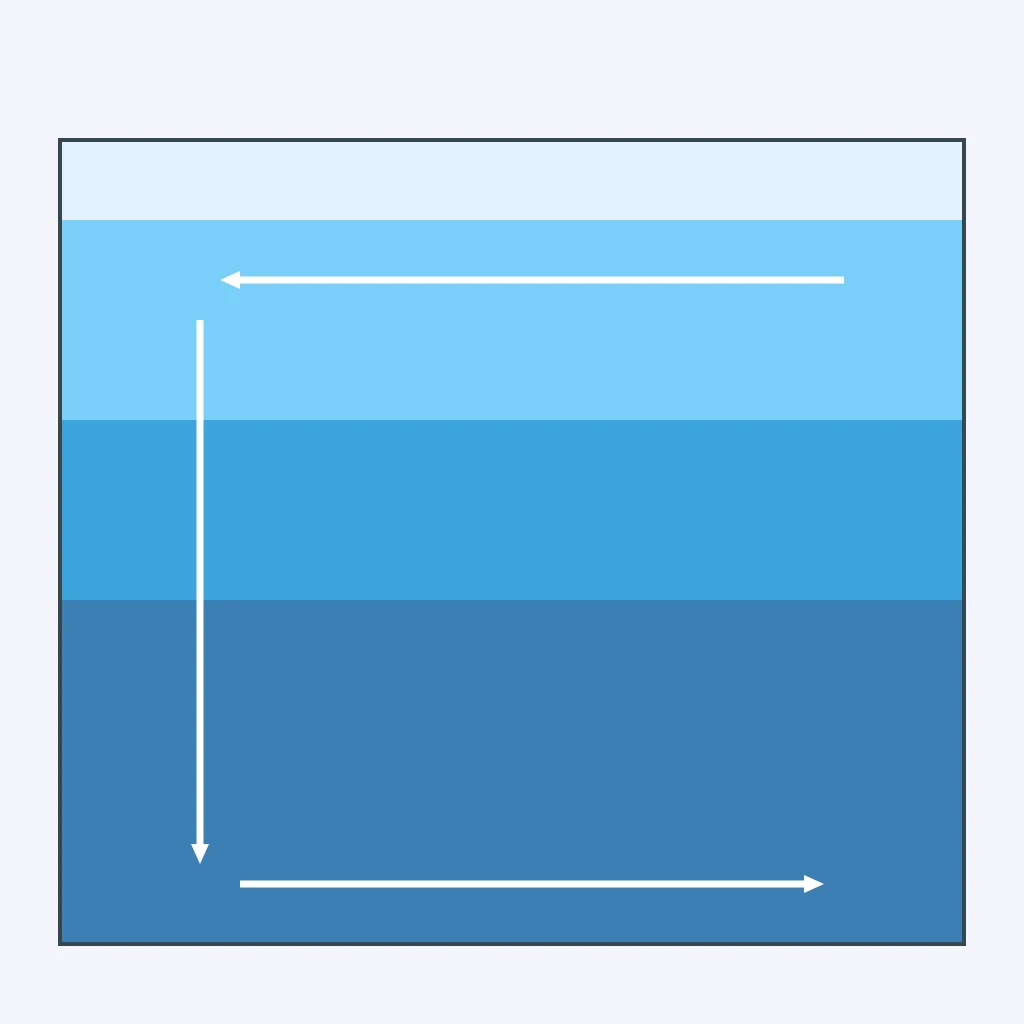
The cross section shows one part of a worldwide loop of sinking deep water and returning surface water. About how long does a single parcel of water take to complete one full circuit of that loop?
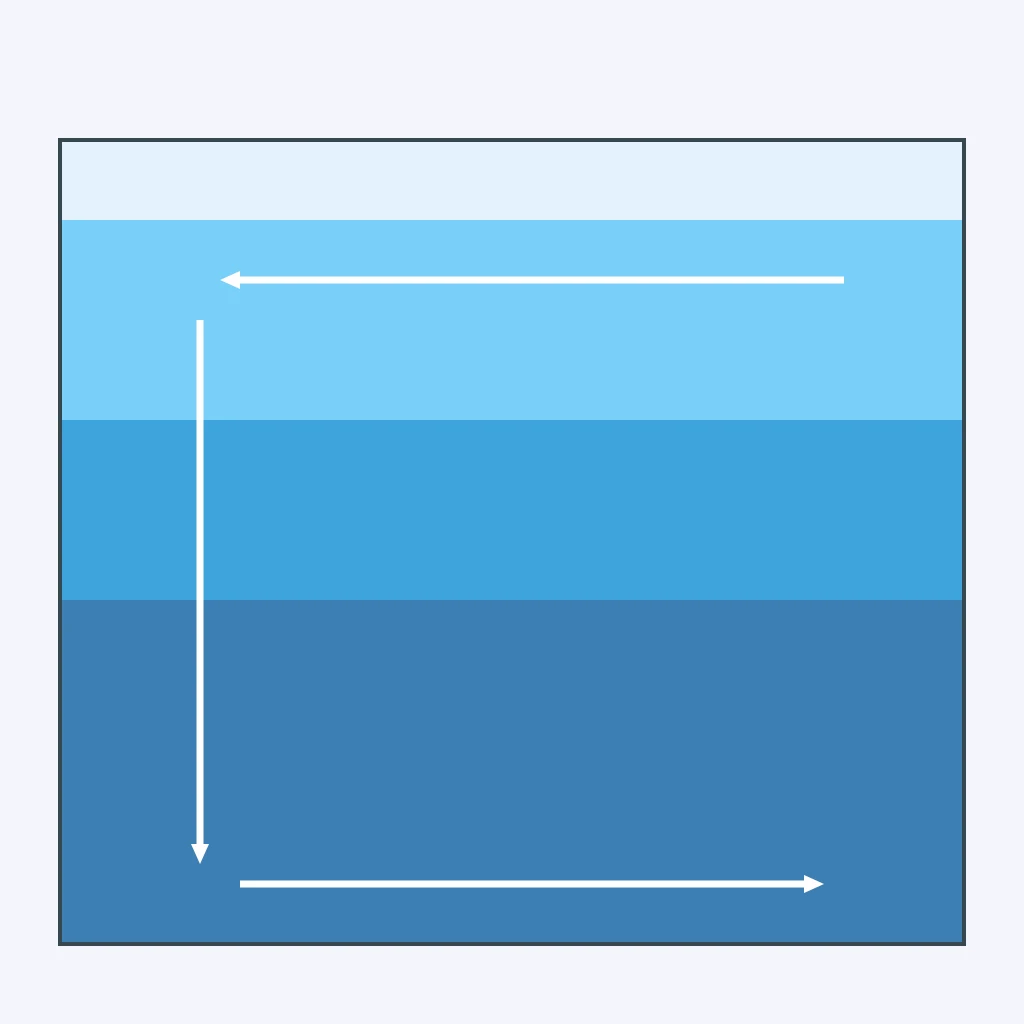
If a large pulse of fresh water from melting ice flowed into the region where the cross section shows water sinking, what would most likely happen to the sinking?
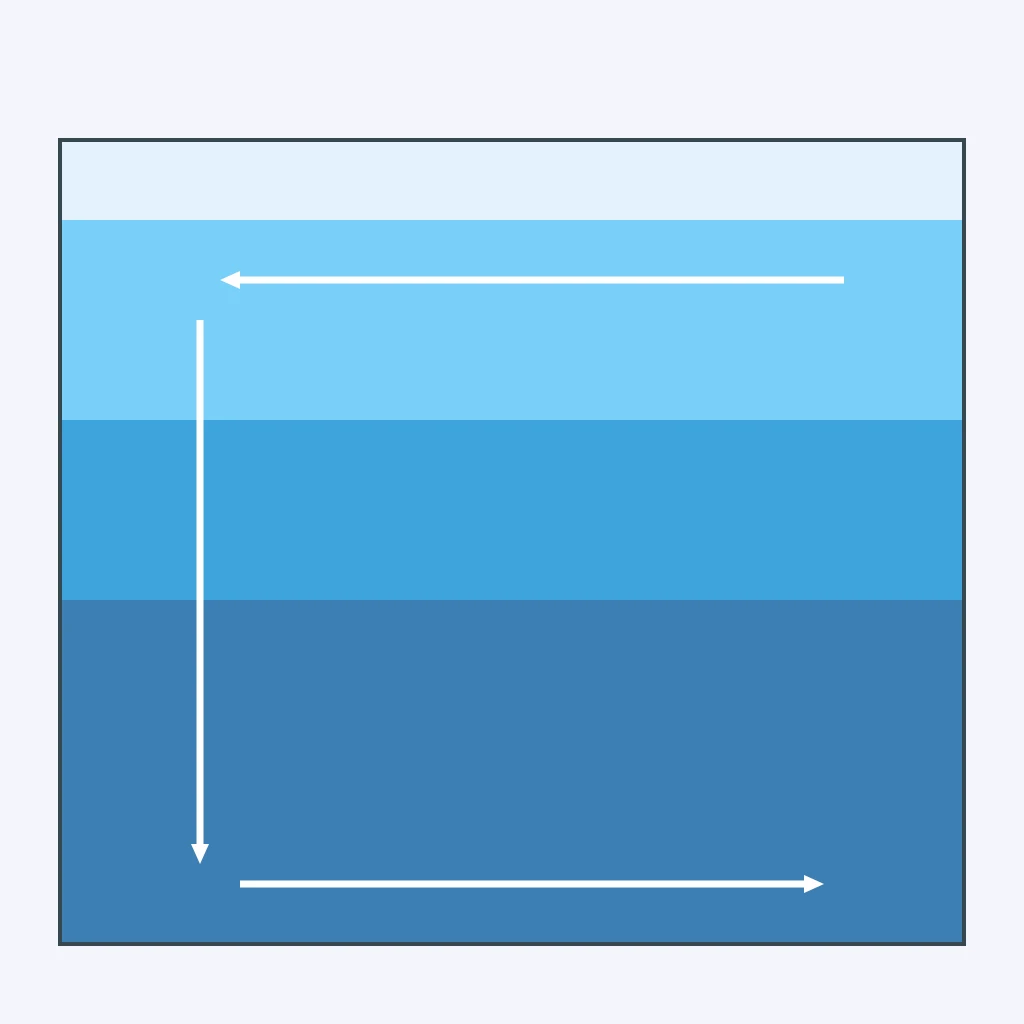
Unlike the surface current shown at the top of this cross section, which is driven mainly by wind, what drives the deep flow along the bottom?
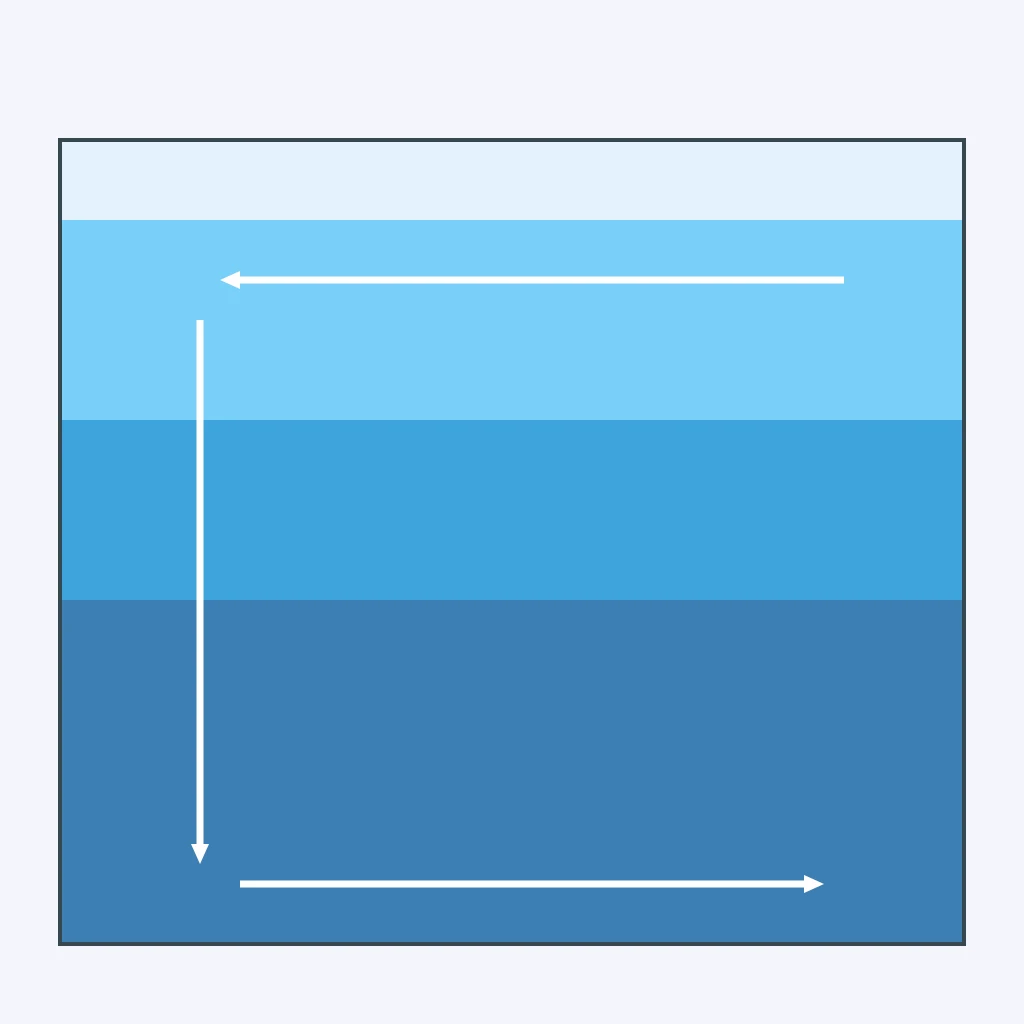
The sinking process shown in this cross section, driven by differences in heat and salt content, gives the whole circulation its name. What is it called?
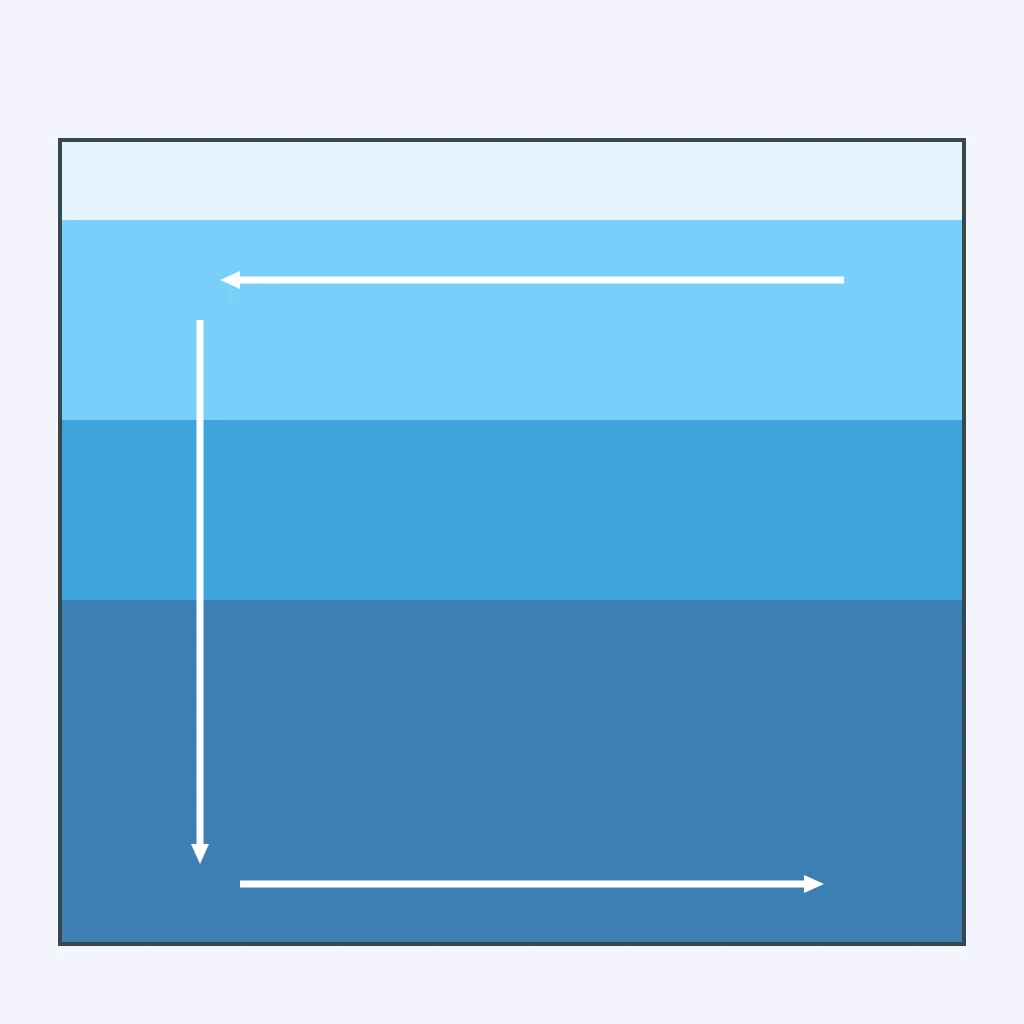
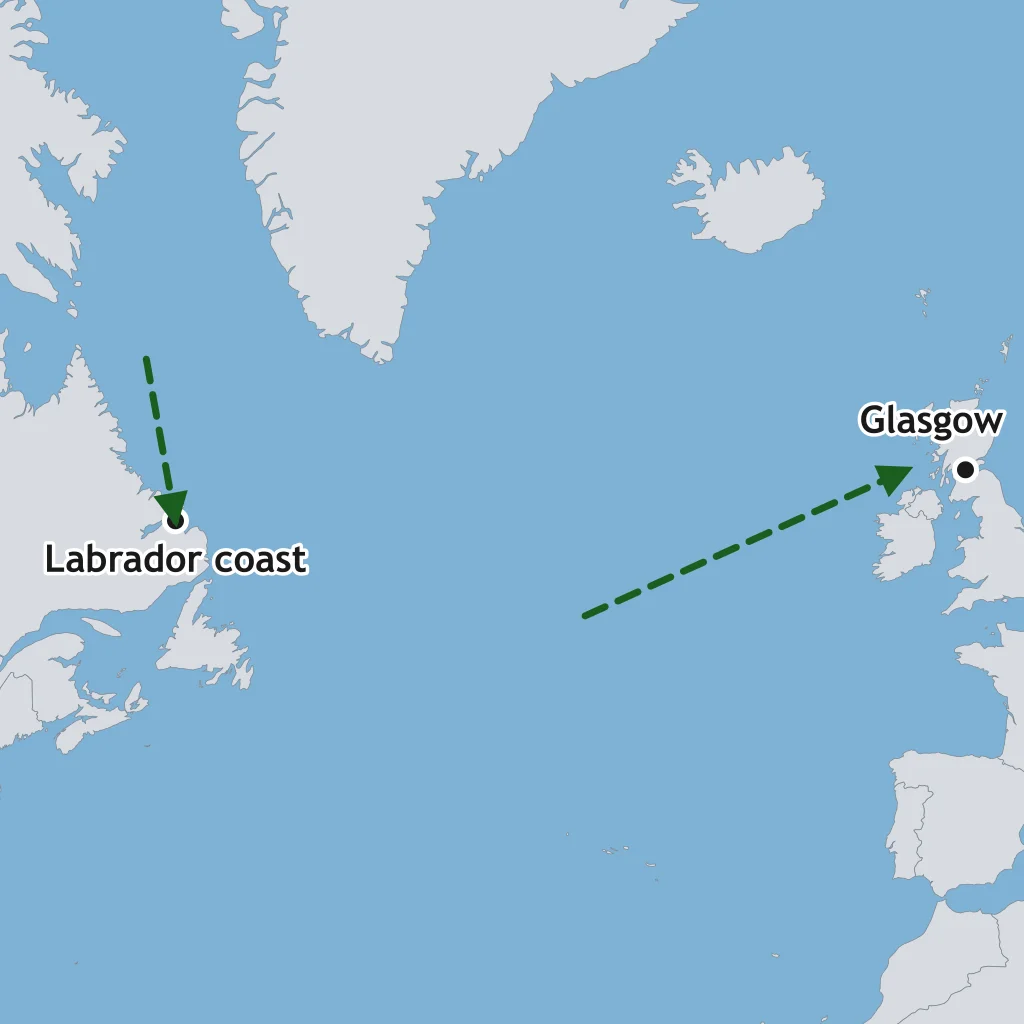
Glasgow, Scotland and a harbor on Canada's Labrador coast sit at nearly the same latitude, 55 degrees N. Glasgow's harbor stays ice-free all winter, while the Labrador harbor freezes over. What best explains this difference?
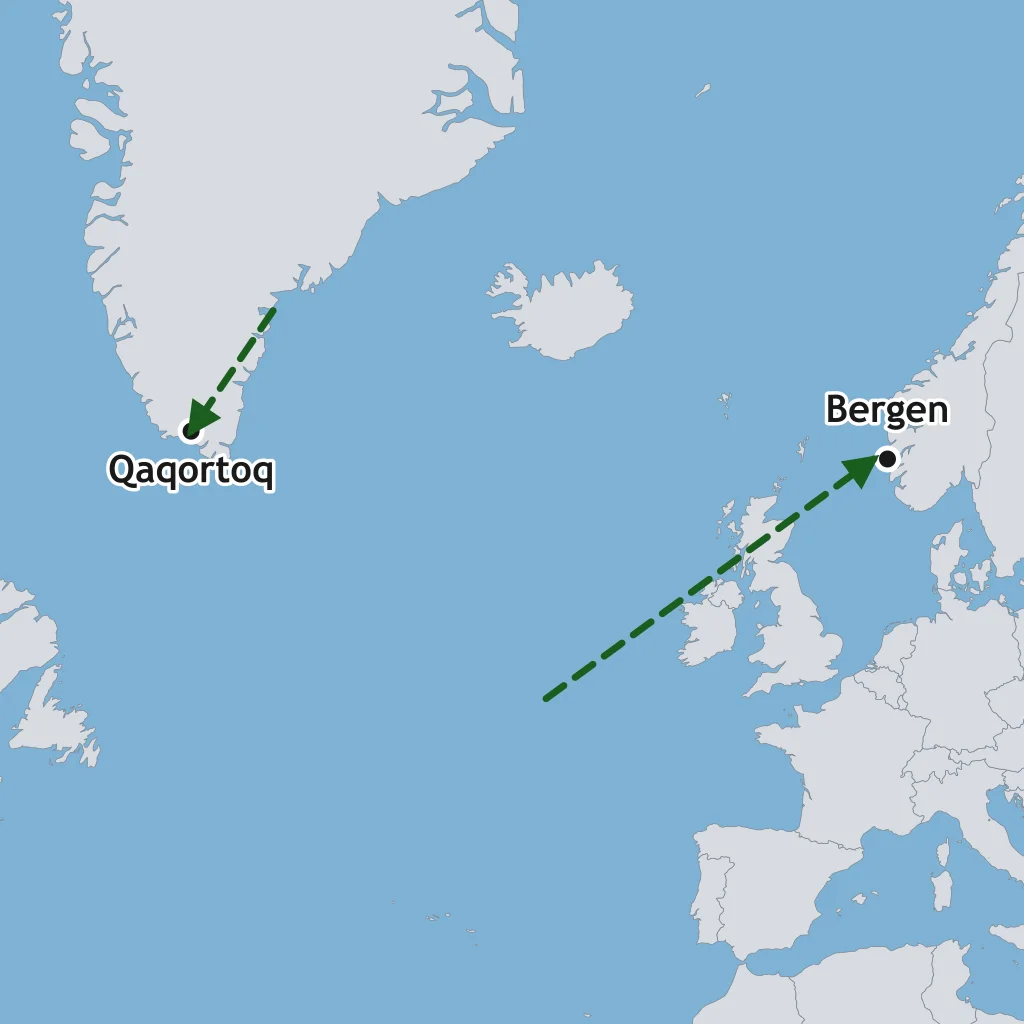
Bergen, Norway sits at 60 degrees N with a mild, largely ice-free harbor, while Qaqortoq, Greenland, at a similar latitude, has a much colder coastal climate. What best explains Bergen's milder coast?
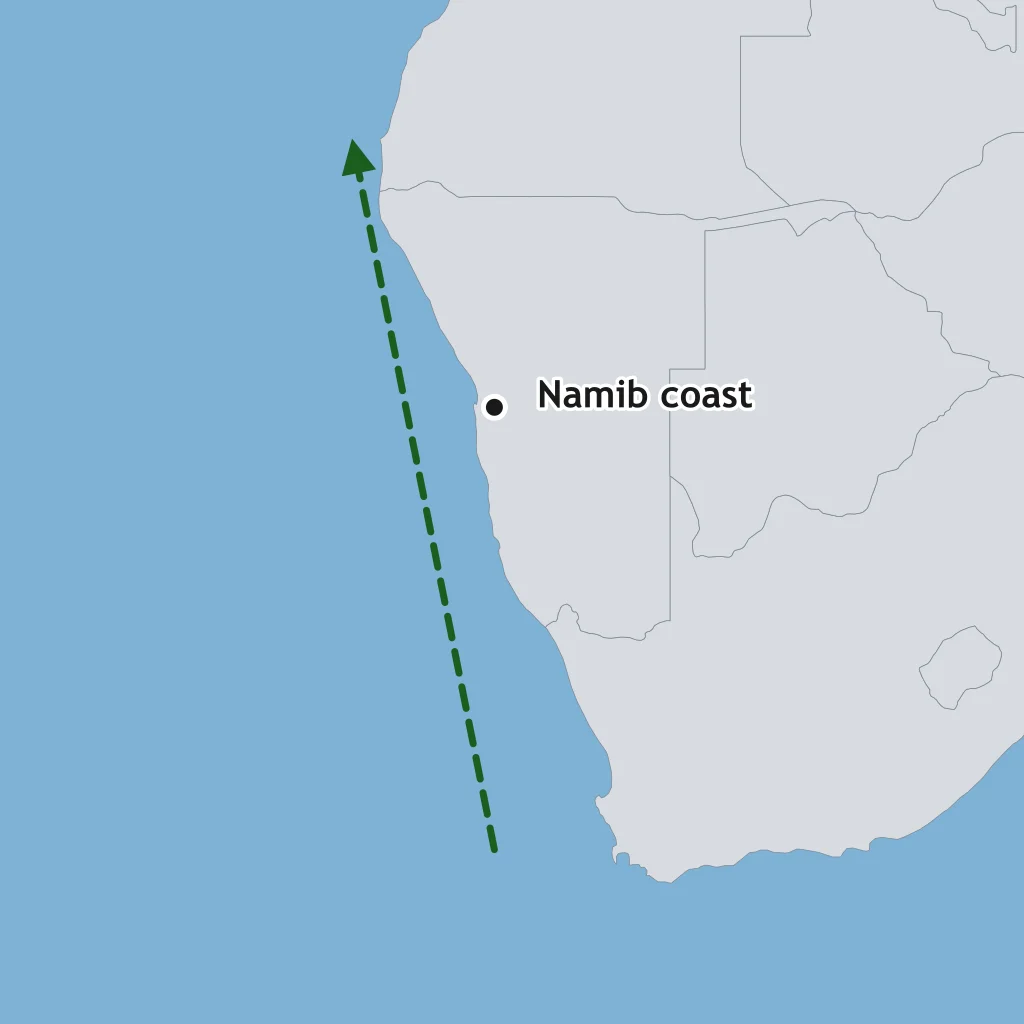
Coastal Namibia lies next to the cold Benguela Current, and the Namib Desert runs right along its shore despite being beside the ocean. How does this cold current help produce a coastal desert?
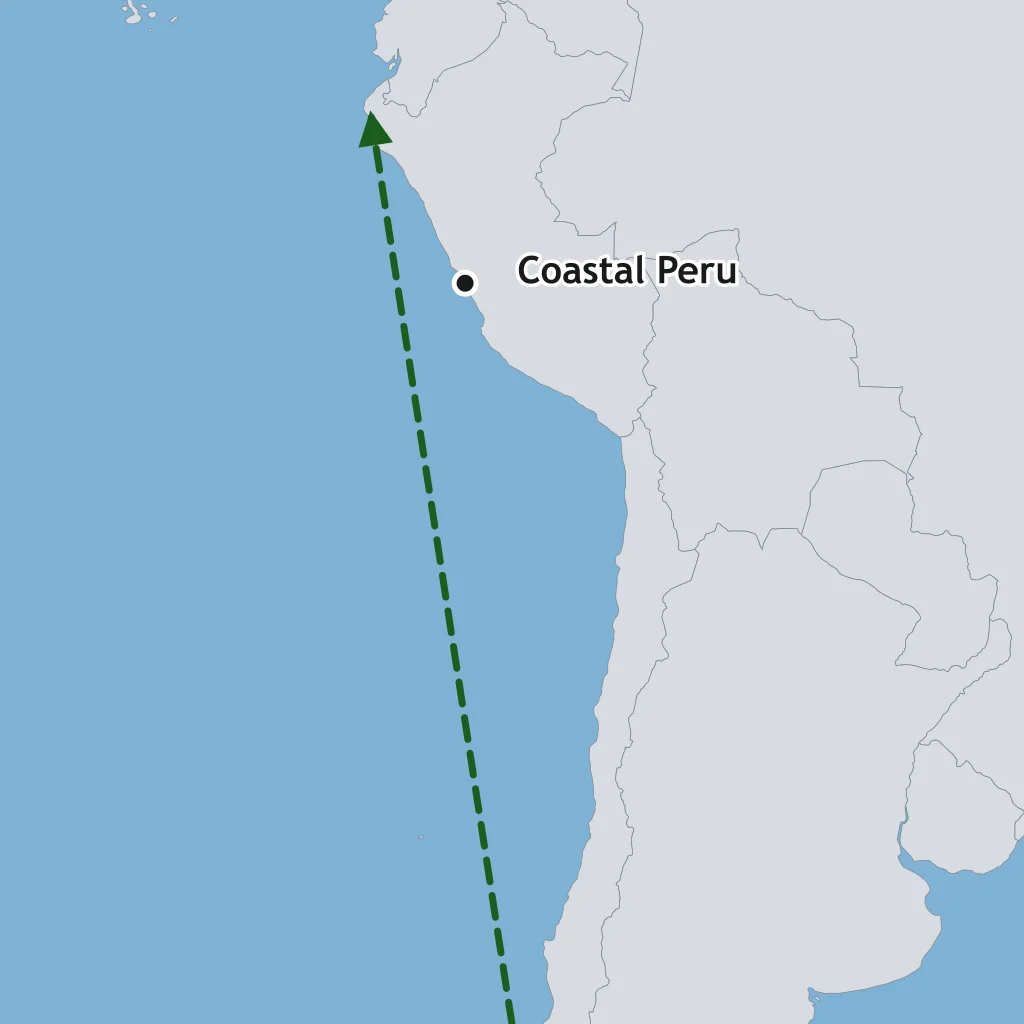
The coast of Peru, cooled by the Peru Current, supports one of the richest fishing grounds in the world. What about this current makes the coastal waters so productive for fish?
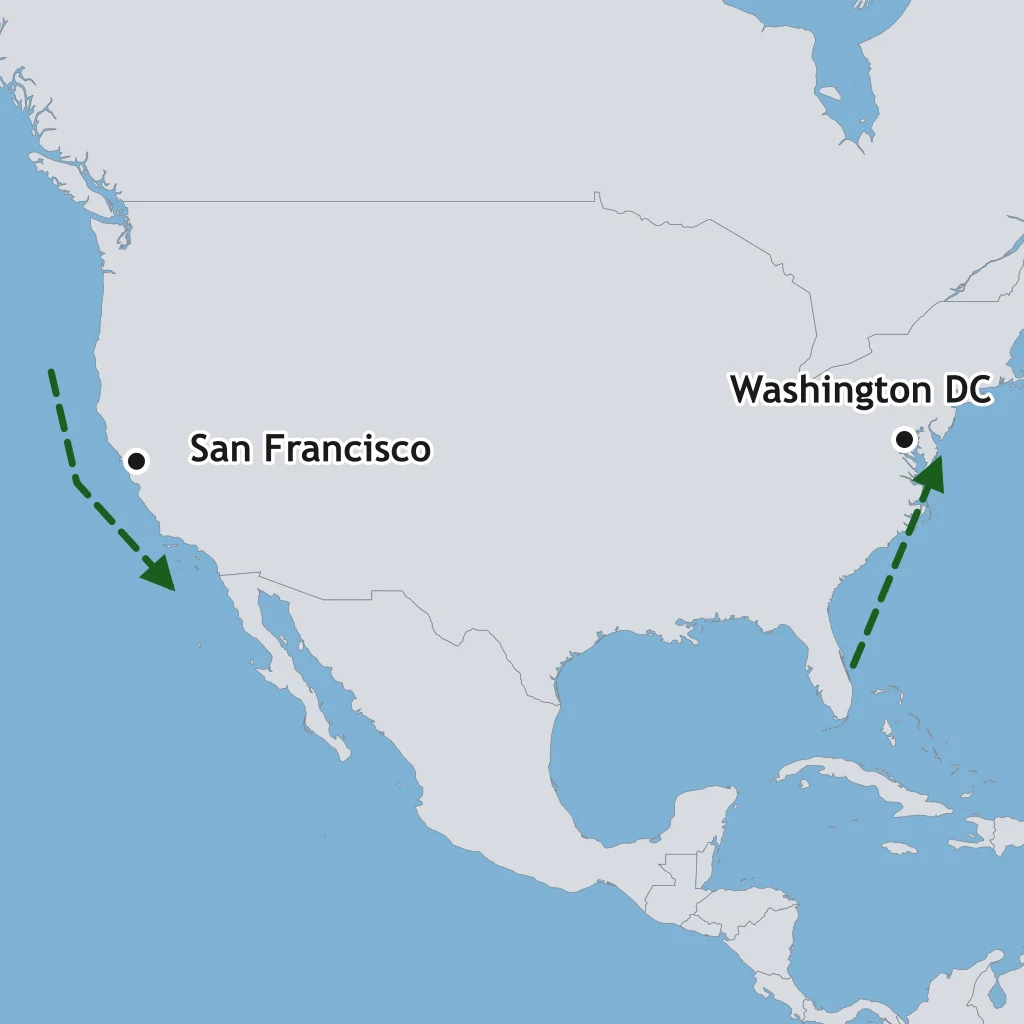
San Francisco and Washington, D.C. sit at roughly similar latitudes, yet San Francisco has cool, foggy summers while Washington has hot, humid summers. Which current difference best explains San Francisco's cooler coast?
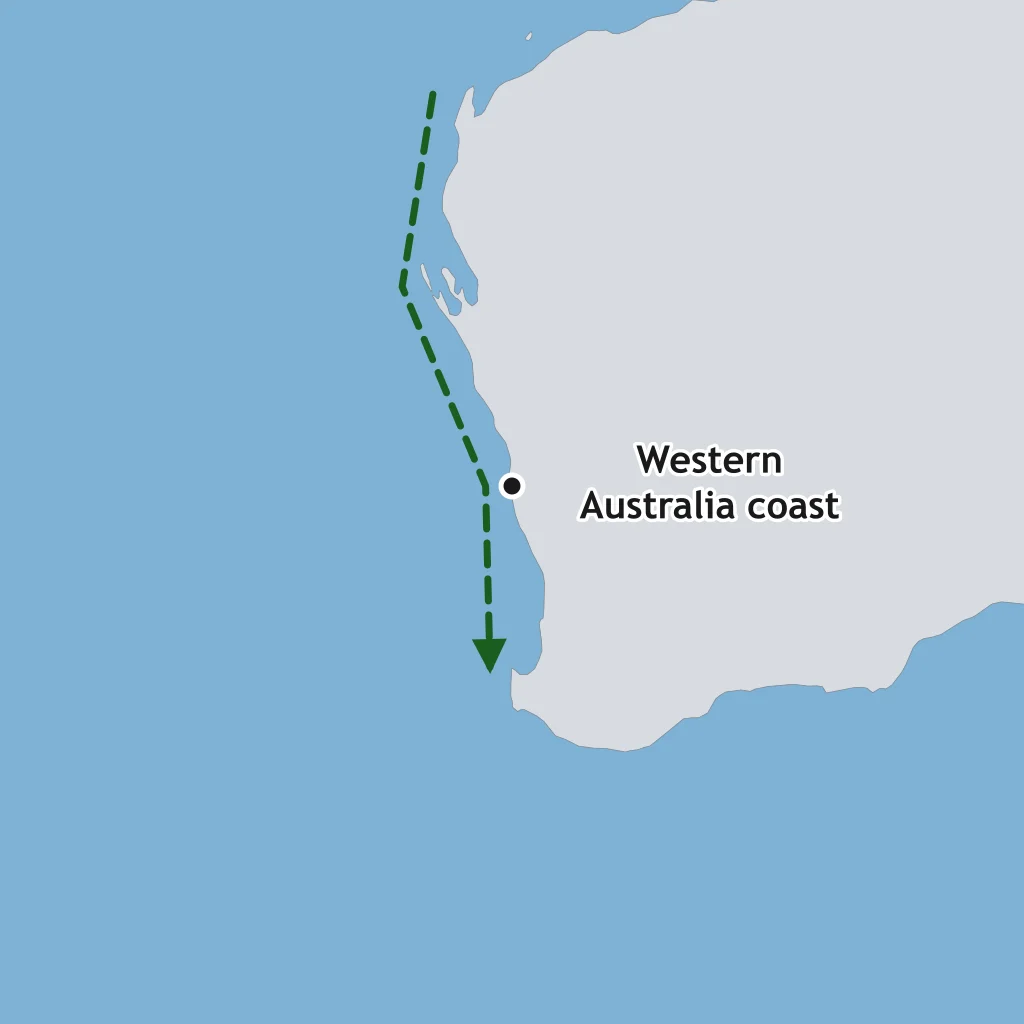
Eastern-boundary currents are usually cold and flow toward the equator. The map traces the Leeuwin Current off Western Australia, on the eastern side of the Indian Ocean, where coral reefs grow farther south than usual. What makes it unusual?
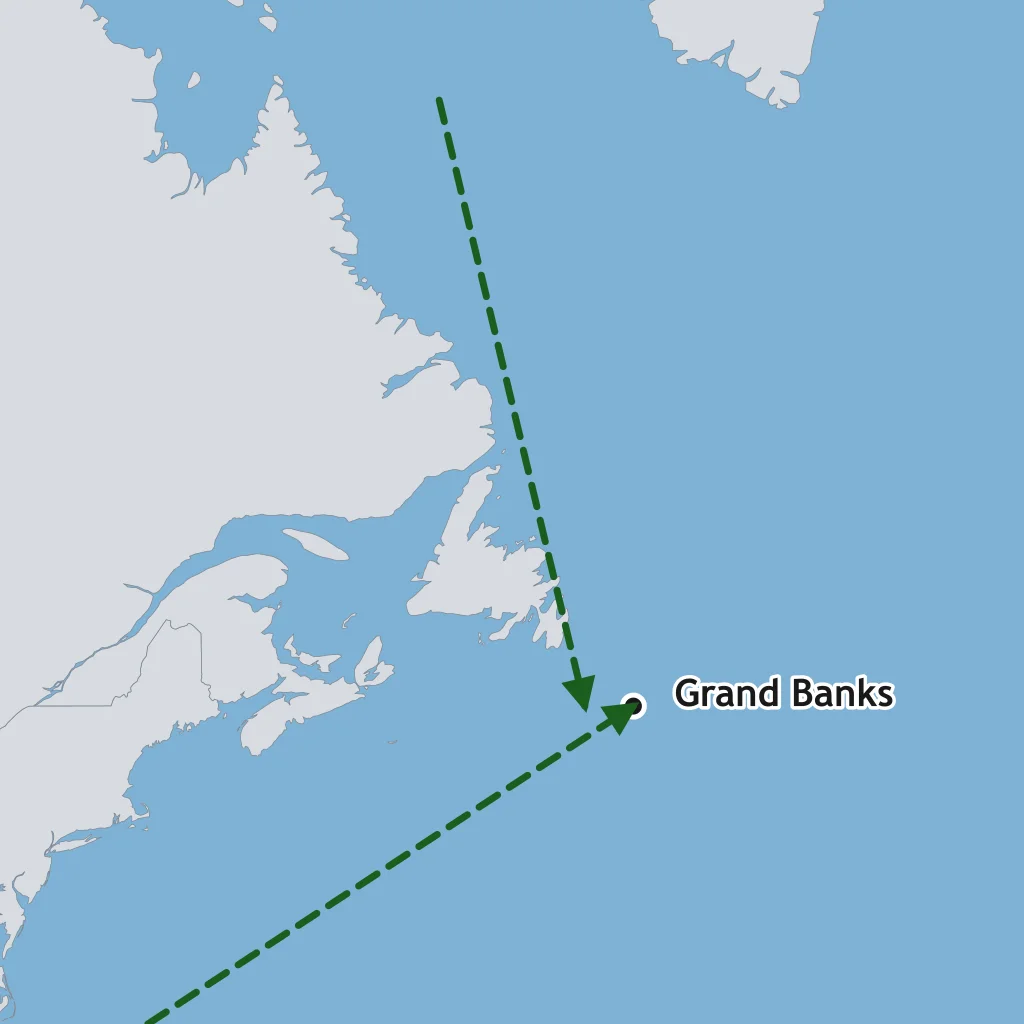
Near the Grand Banks off Newfoundland, the cold Labrador Current meets the warm Gulf Stream. This meeting point has long supported one of the world's richest fishing grounds. Why does the mixing of these currents boost fish populations there?
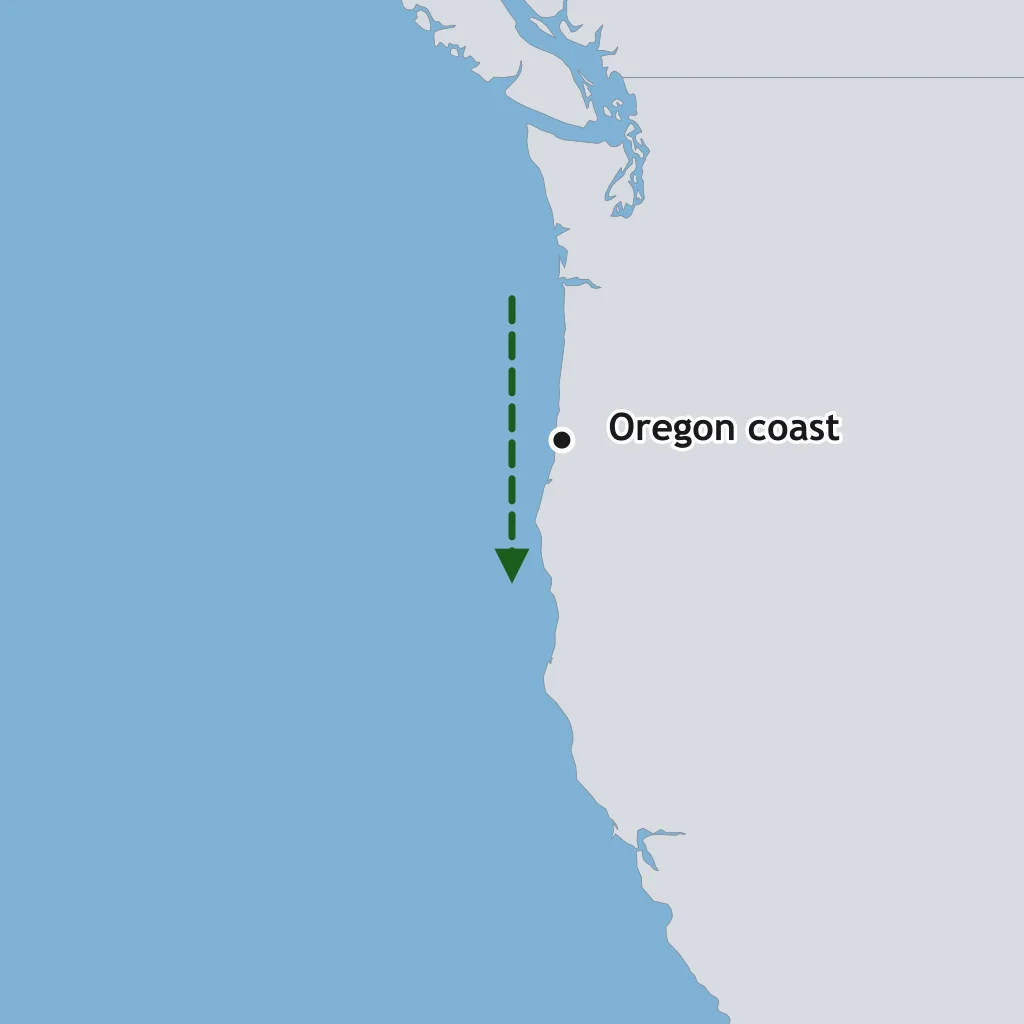
In summer, strong winds blow along the Oregon coast and push surface water offshore. Cold water from below then rises to replace it, cooling the coast even while inland valleys grow hot. What is this wind-driven rise of deep water called?
Crack the passcode before the zombies get in.
Answer, then swat bugs for bonus points.
Race through questions at your own speed.
Same question on every screen. Fastest wins.

Pick a tile, answer, hit bonuses and steals.
20 questions