Loading
by BlastRoom
Compare radiation, conduction and convection as ways energy moves through the atmosphere, and interpret Earth's energy budget and albedo.
#earth_space_science
40 questions
One question set, multiple game modes. Tap any game to see it in action. Not sure which to pick?
Answer to place stones and capture territory.
Outrun the snow together.
Earn blasts, then hunt the other team.
Answer to earn energy, then climb.

The class blasts through walls together.
Bid on mystery lots. Most money wins.
Sell tours. Nice, standard, or a total scam.

Answer, restock, and serve the rush.
More correct answers pulls the rope your way.
Answer, then shoot down the alien wave.
Answer, then tap to leap the frozen ridge.
On a clear, calm night the ground radiates heat away and cools quickly. The thin layer of air touching the ground cools right along with it. By what process does that air layer lose energy directly to the ground?
A cook leaves a metal spatula resting in a hot frying pan. A few minutes later the spatula's handle is too hot to touch, even though the handle never touched the food or the burner. Which process heated the handle?
The heat that passes directly from a sun-warmed asphalt parking lot into the sole of a shoe pressed against it travels by which process?
A room radiator heats the air right next to it. That warmed air rises and spreads through the room while cooler air sinks to take its place. Which process carries the heat through the room?
Water boiling in a pot is heated only at the bottom by the burner, yet the whole pot of water eventually reaches a rolling boil as warmer water rises and cooler water sinks to take its place. Which process is spreading the heat?
A hot air balloon rises because a burner heats the air trapped inside its envelope, making that air less dense than the surrounding cooler air. This lift depends on which process moving heated air upward?
At a beach, by late morning a wind consistently blows from the ocean toward the land. Which process, driven by unequal heating of land and water, is ultimately responsible for that wind?
A camper standing several feet from a campfire, without touching it or standing in its smoke, still feels warmth on her face. Which process is delivering that heat to her skin?
A vacuum (Thermos) flask has an evacuated gap between its inner and outer walls, which blocks two of the three heat-transfer processes. Only one process, needing no matter to travel through, can still cross that gap. Which one?
Sitting near a closed window on a sunny winter day, a student feels warmth on her skin even though the window is shut and no air is moving through it. Which process delivers that warmth?
By mid-afternoon a beach's dry sand is much hotter than the sea beside it, so the air over the sand warms and rises while air over the water stays cooler and denser. Which direction does the wind blow at ground level along the shore?
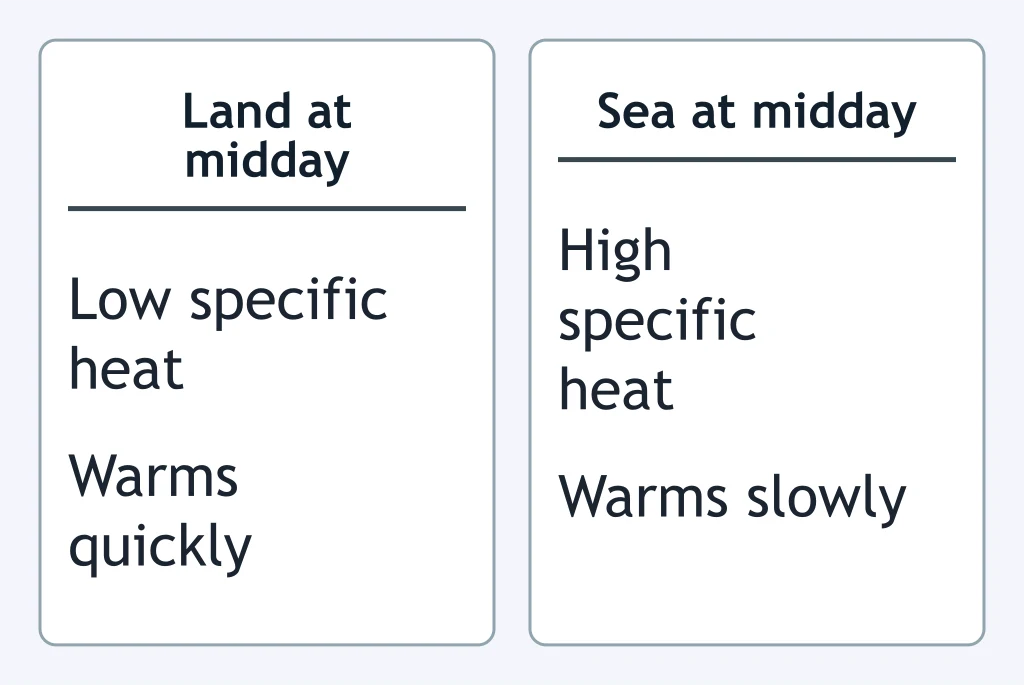
By midnight the same beach's sand has cooled below the sea's temperature, so the air over the water now stays warmer and rises while air over the land is cooler and denser. Which direction does the wind blow at ground level along the shore?
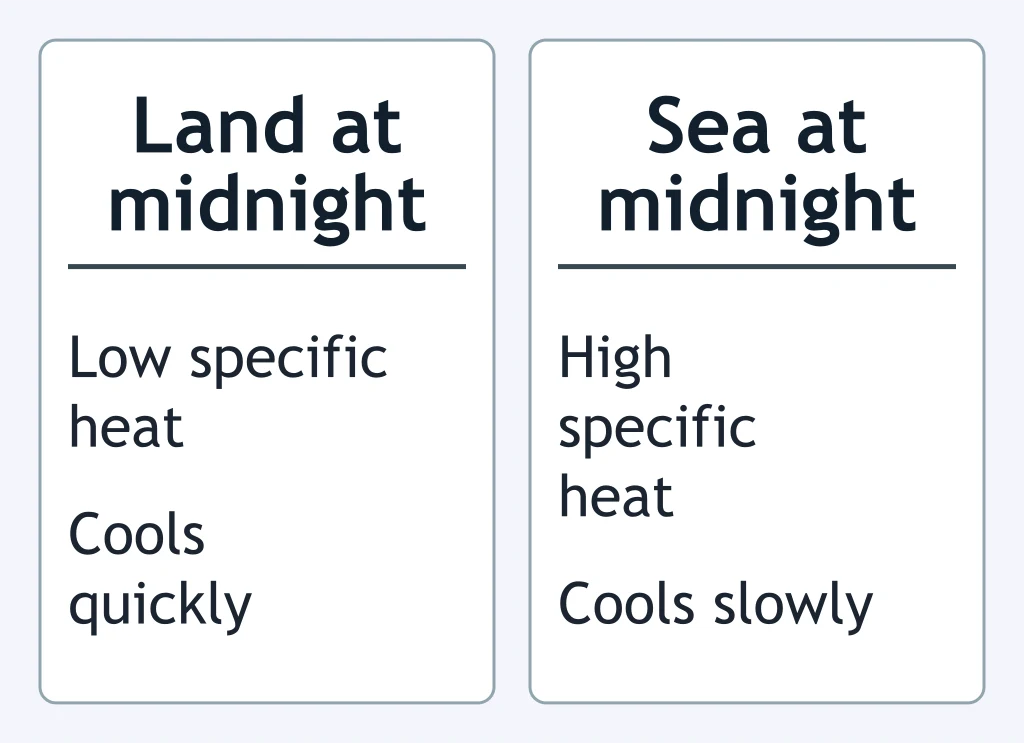
During the day, sunlight directly warms a mountain's slope faster than it warms the calmer, shaded air at the same elevation over the valley. Which direction does air move along the slope?
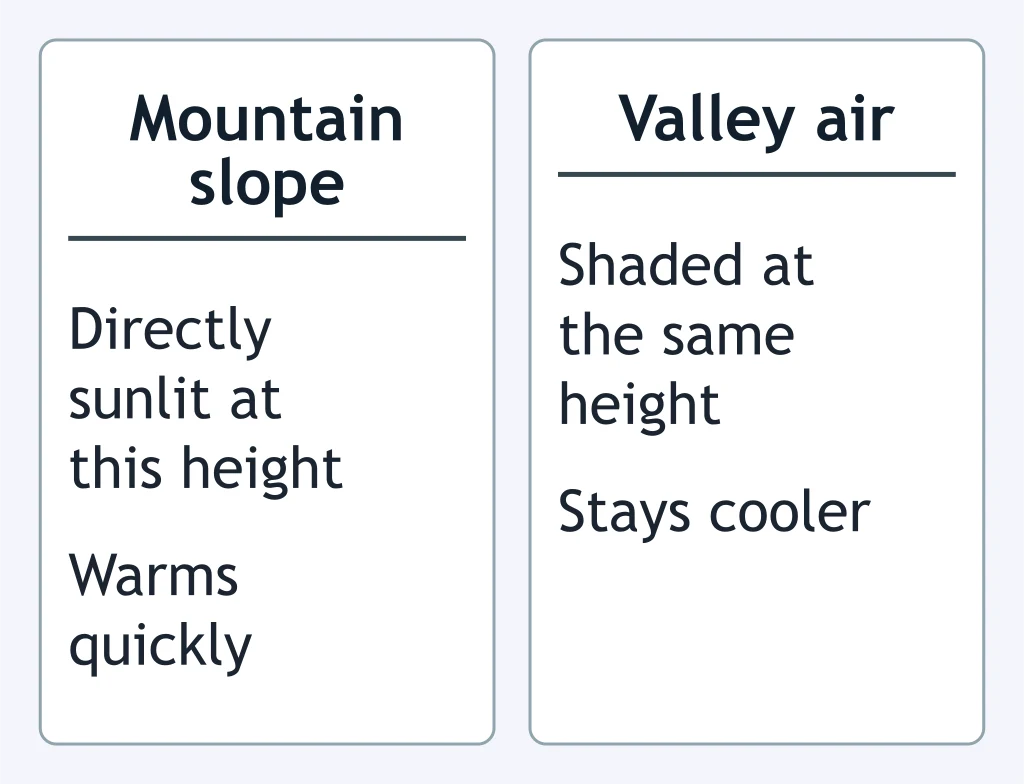
At night, a mountain's slope radiates heat away and cools faster than the more sheltered valley air at the same elevation. Which direction does air move along the slope?
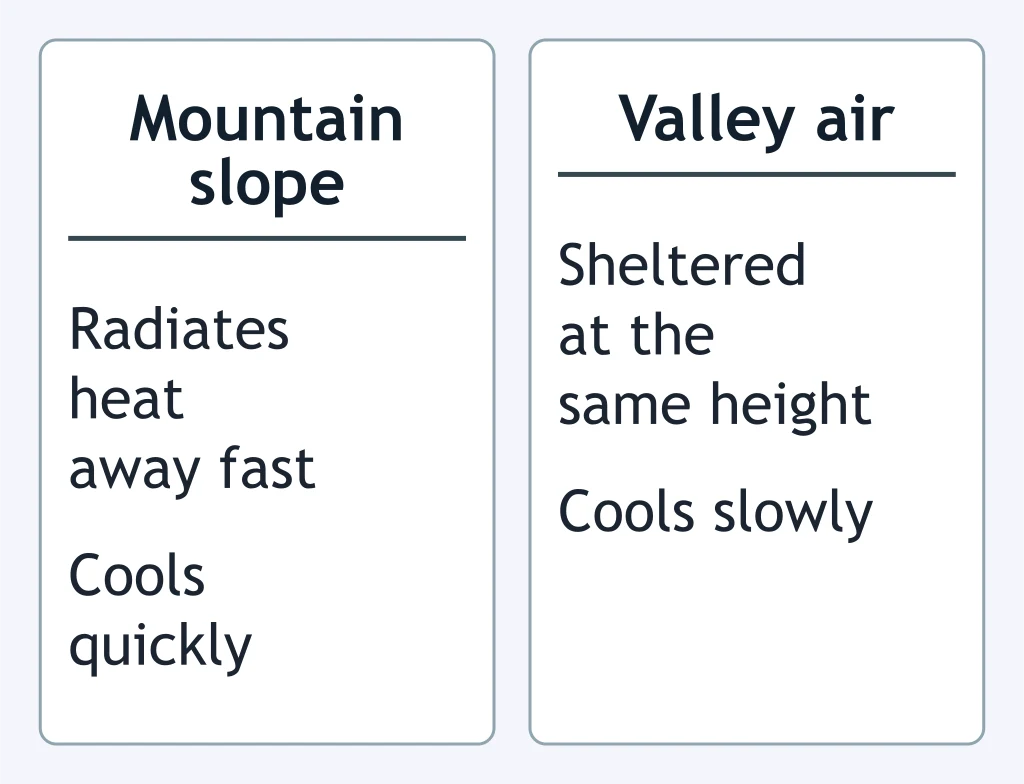
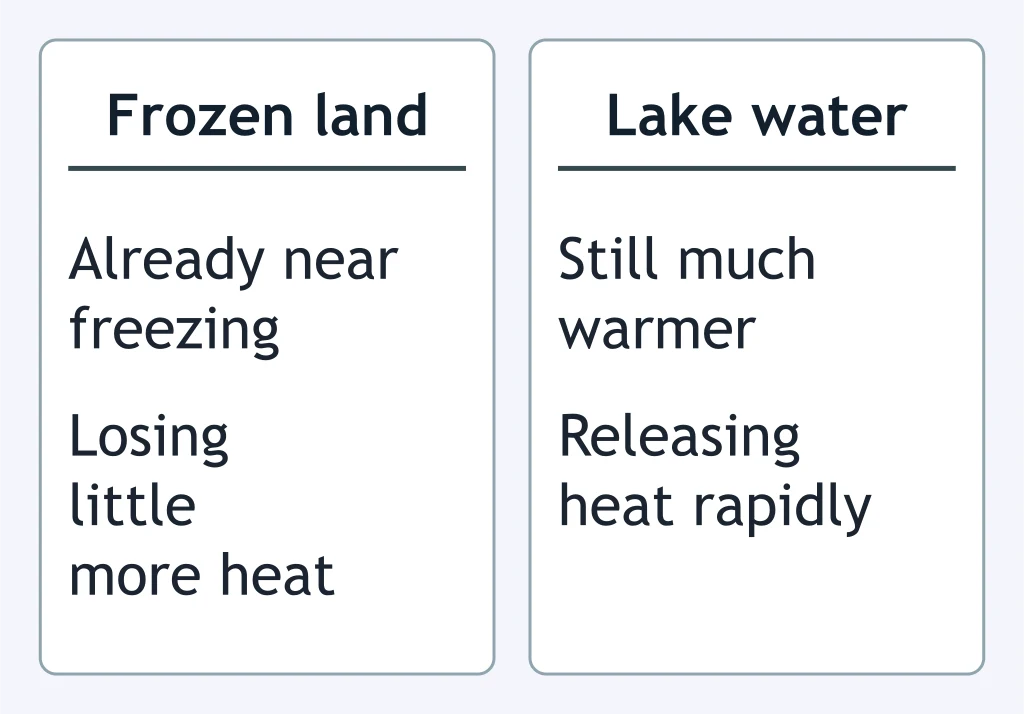
In early winter, a large lake is still much warmer than the frozen land around it, so air over the lake rises while air over the cold land sinks. Which direction does the ground-level wind blow near the shore?
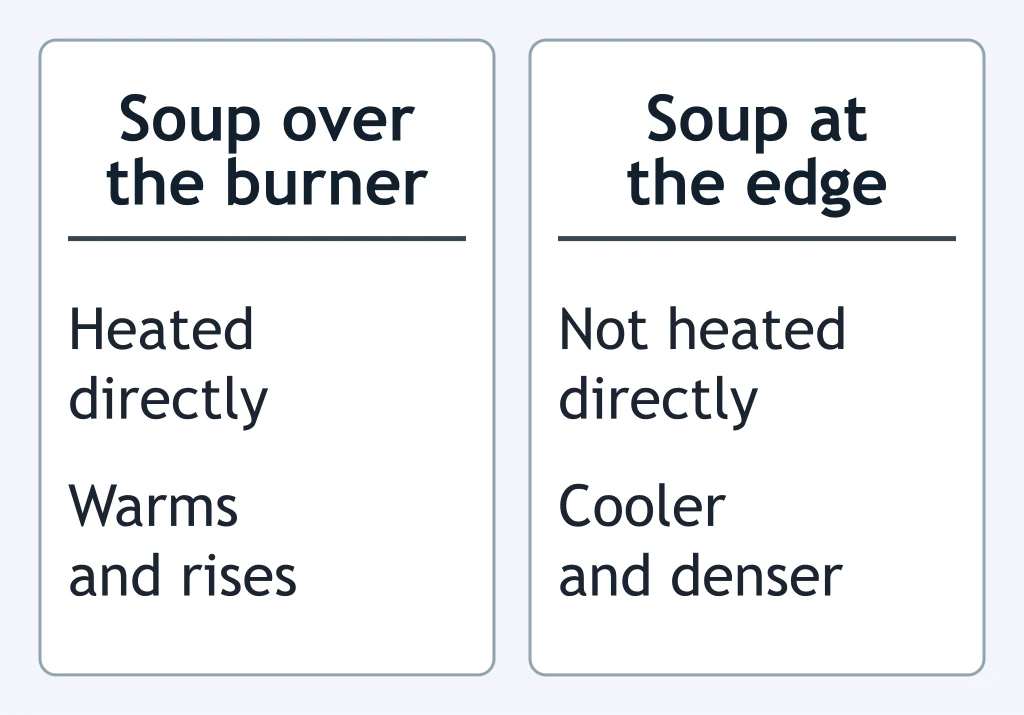
A pot of soup is heated only under one side by an off-center burner. Warm soup above the burner rises and spreads while cooler, denser soup on the far side sinks. At the surface, which way does the soup circulate?
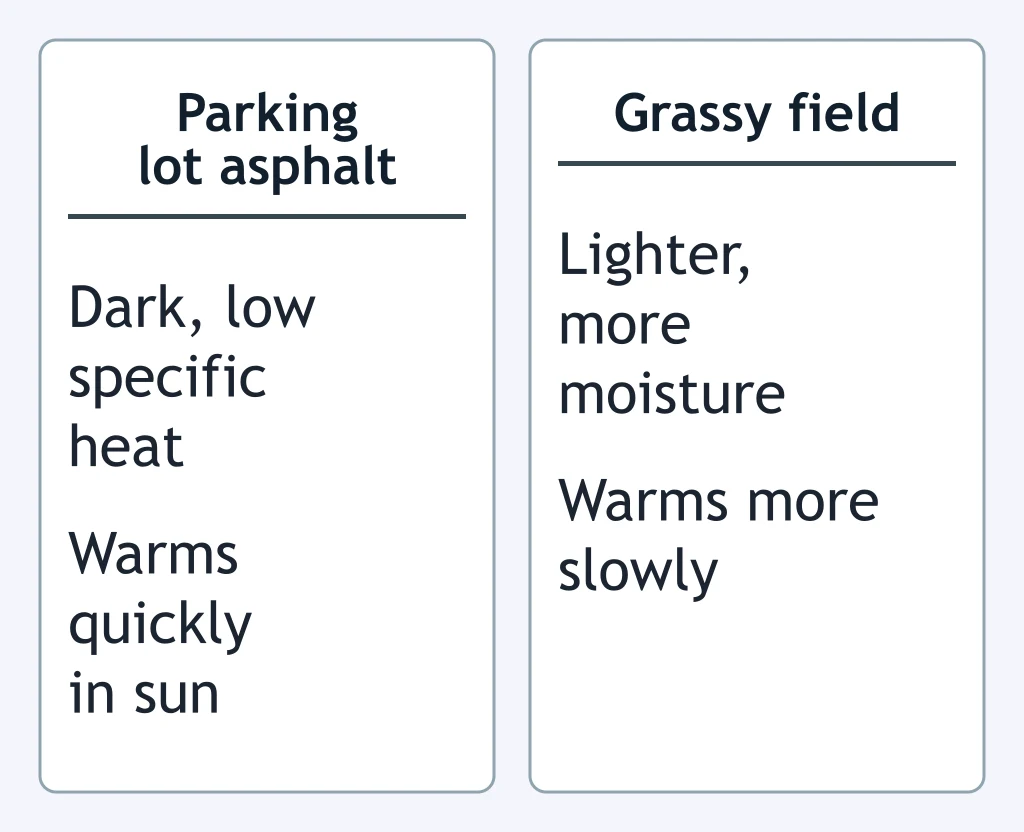
On a sunny afternoon, a parking lot's dark asphalt warms much faster than the grassy field beside it. A glider pilot circles directly above the parking lot to gain altitude. What is she relying on?
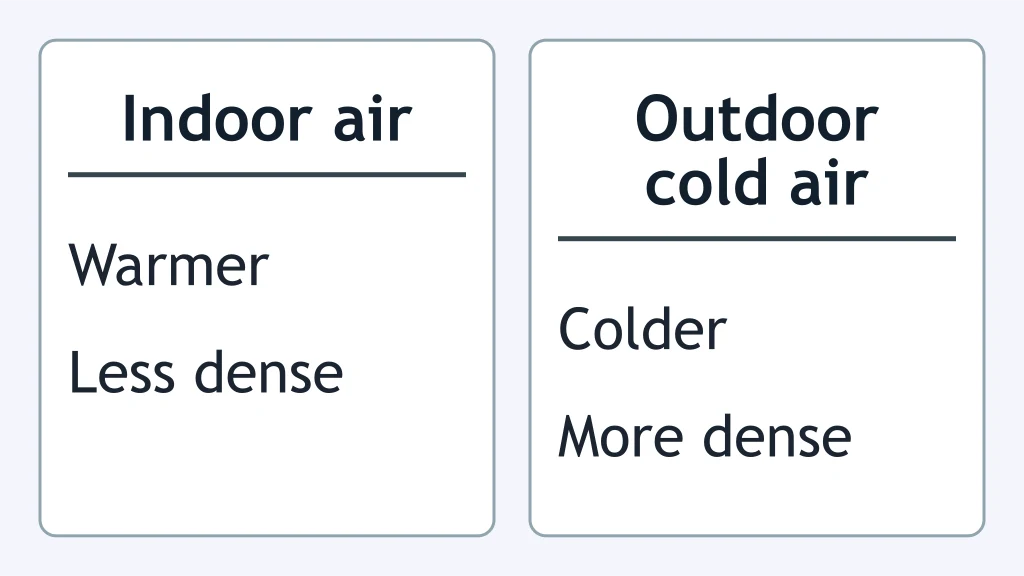
A room is kept warmer than the freezing air outside. It has two small vents open to the outside: one near the floor and one near the ceiling. Through which vent does outside air enter the room?
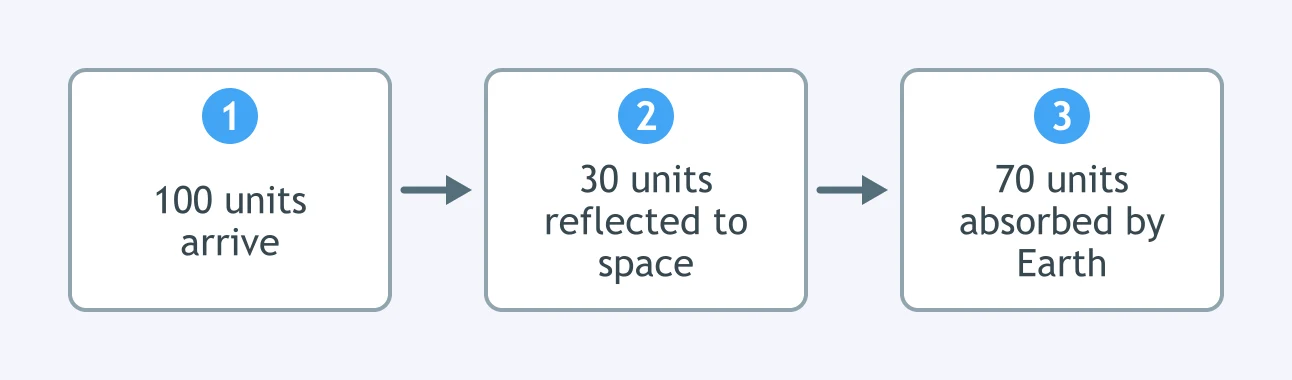
A diagram of Earth's energy budget starts with 100 units of incoming solar radiation. Thirty of those units are turned back to space without ever being absorbed, mostly by clouds and bright surfaces. What is that reflected fraction called?
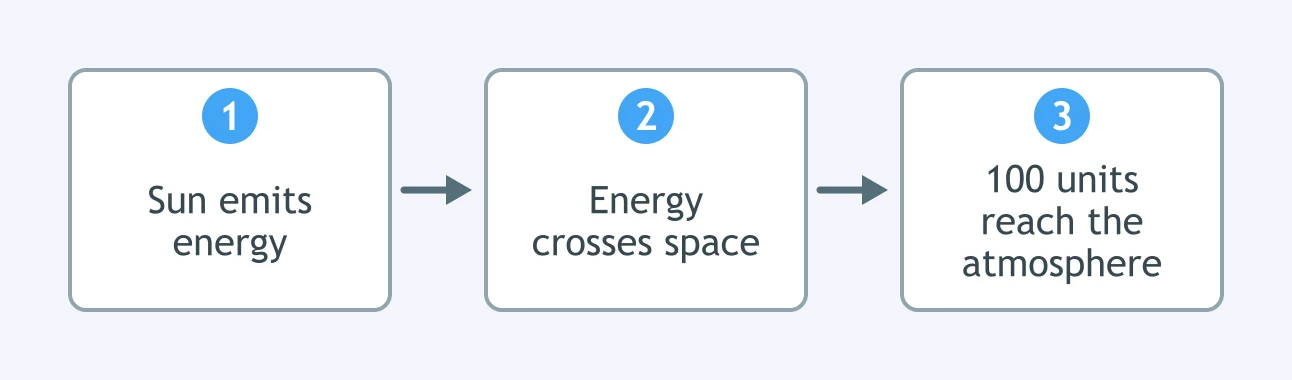
A diagram of Earth's energy budget begins with the Sun's radiation crossing space and arriving at the top of the atmosphere as 100 units. What is that incoming solar radiation called?
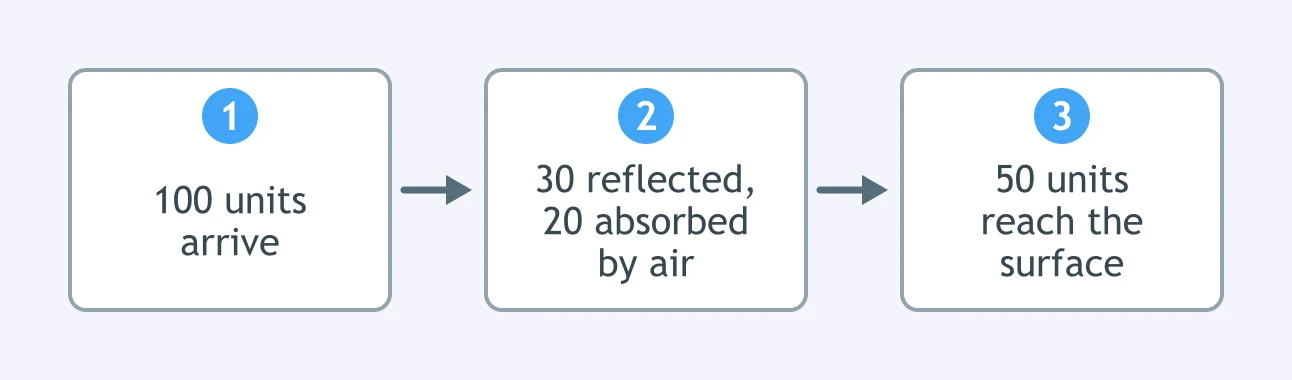
A diagram of Earth's energy budget shows insolation arriving, with some energy reflected to space, some absorbed by the atmosphere and clouds, and the remaining portion reaching Earth's surface. What is that last portion called?
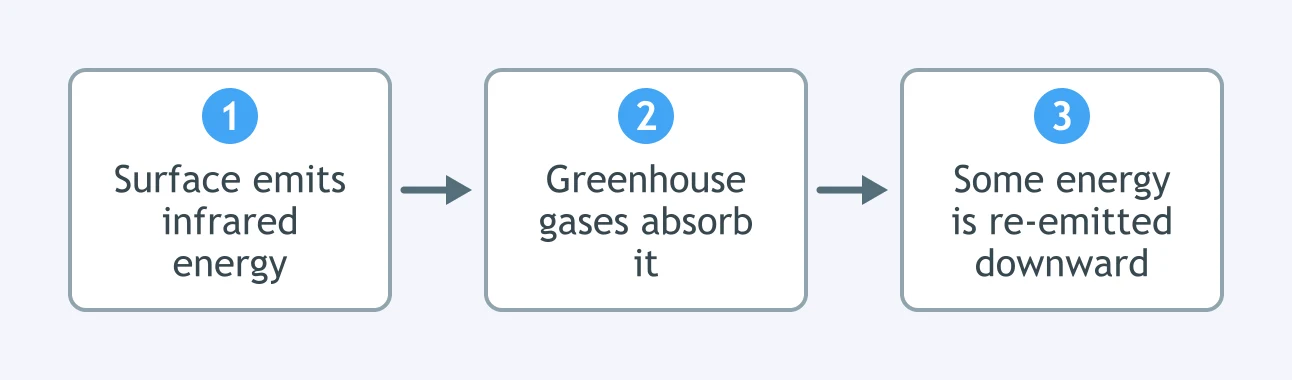
A diagram of Earth's energy budget shows the surface emitting energy upward as infrared radiation, which greenhouse gases in the atmosphere absorb and partly re-emit downward toward the surface. What is that downward-returned energy called?
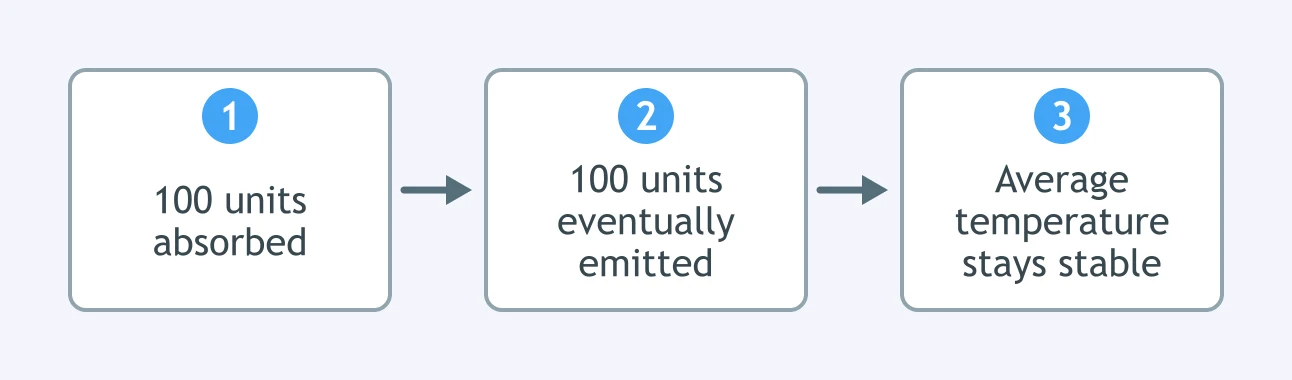
Over the course of a year, Earth's total outgoing radiation to space very nearly equals its total incoming solar radiation, keeping the planet's average temperature roughly stable. What is this balanced condition called?
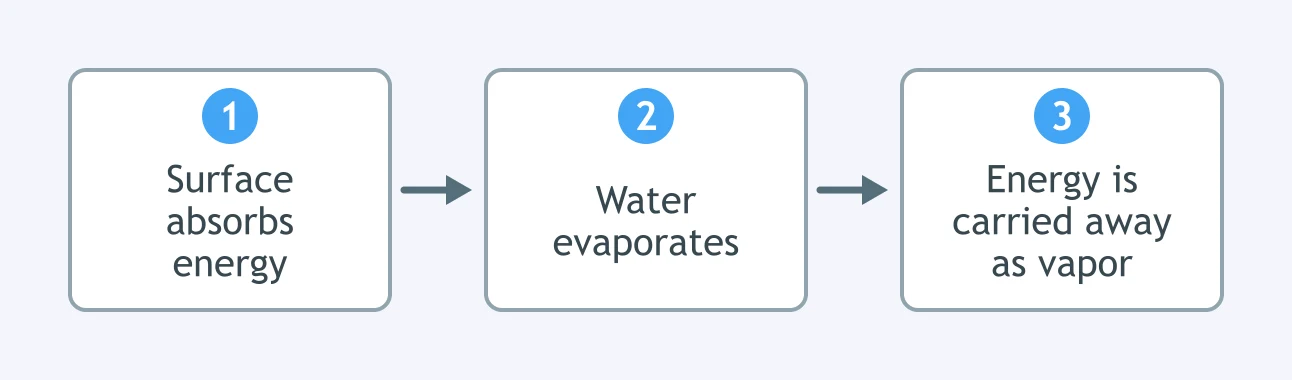
A diagram of Earth's energy budget shows a large share of the energy absorbed at the surface leaving not as direct heat but carried away when liquid water evaporates into water vapor. What is that pathway called?
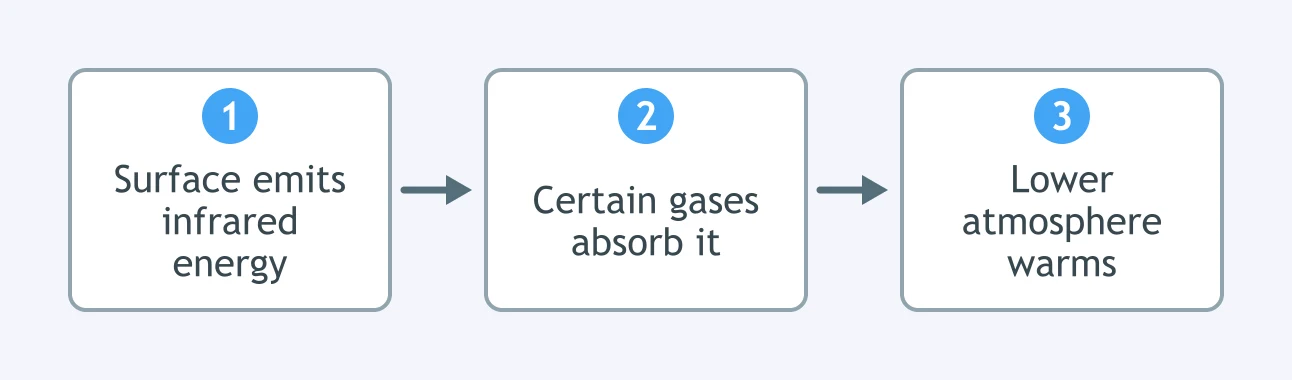
Which term names atmospheric gases such as carbon dioxide and water vapor that absorb and re-emit infrared radiation, keeping the lower atmosphere warmer than it would otherwise be?
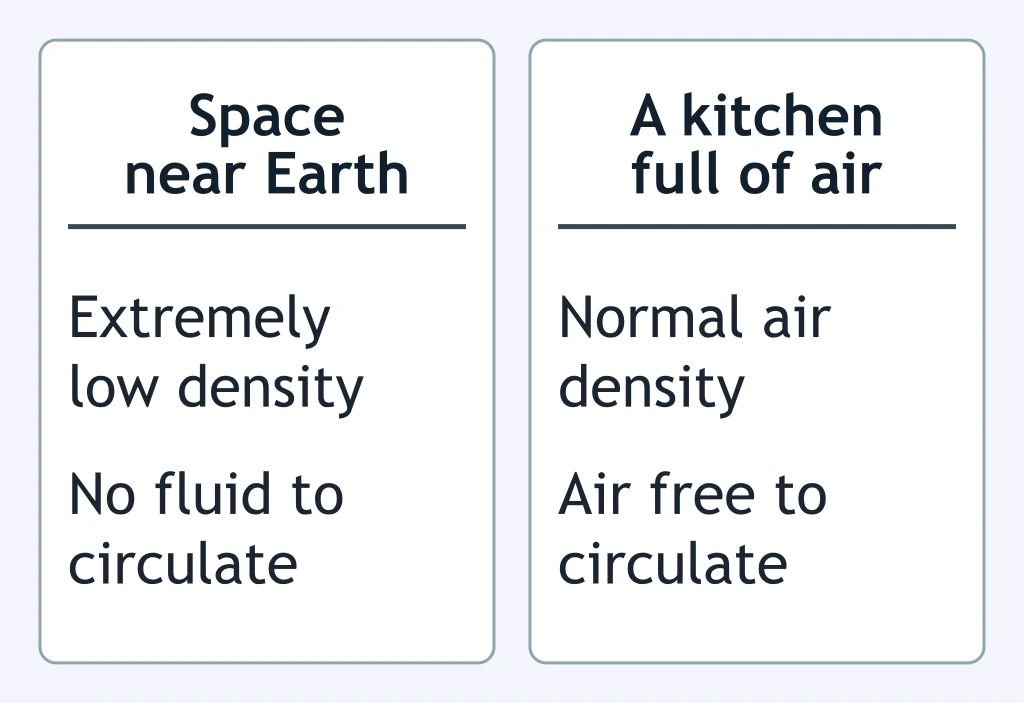
The table compares the near-vacuum of space with a kitchen full of air. Which heat-transfer process can carry energy through both environments shown?
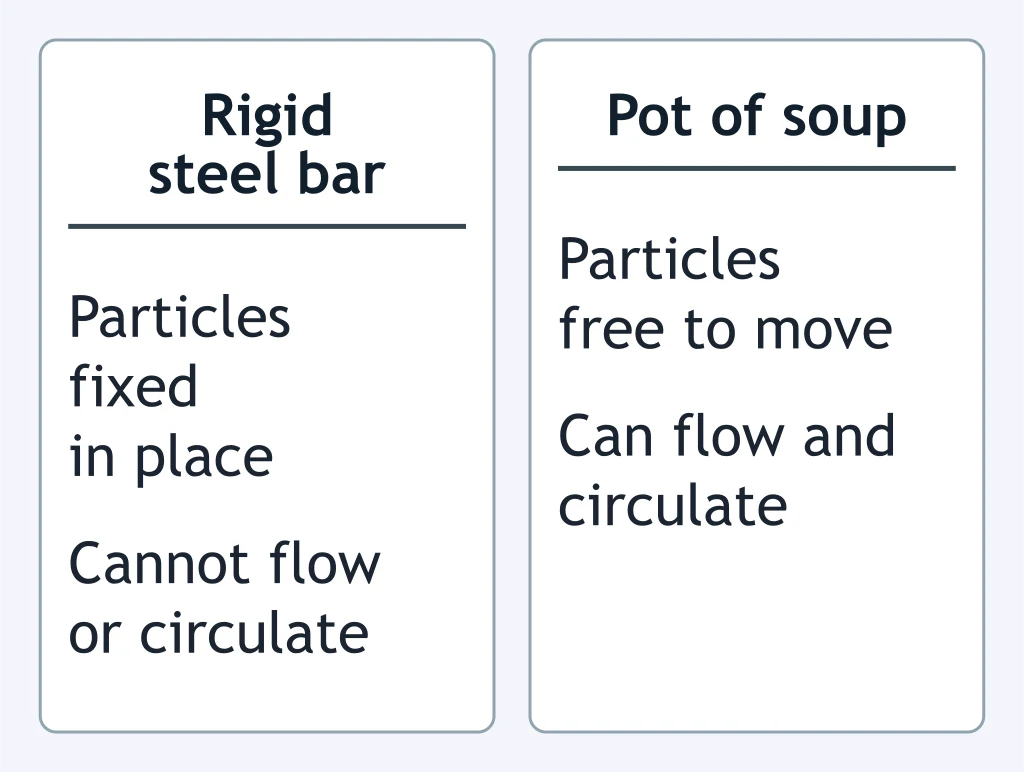
The table compares a rigid steel bar, whose particles cannot flow, with a pot of soup, whose particles are free to circulate. Which process needs particles free to circulate?
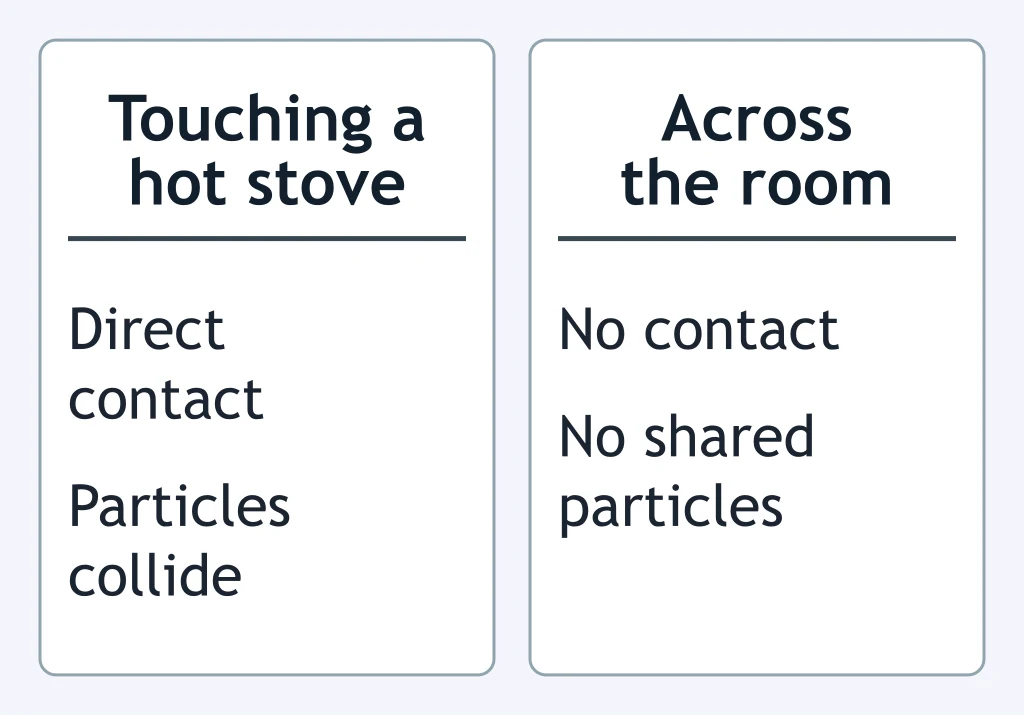
The table compares touching a hot stove directly with standing across the room from it. Which heat-transfer process requires the direct contact shown in the first case?
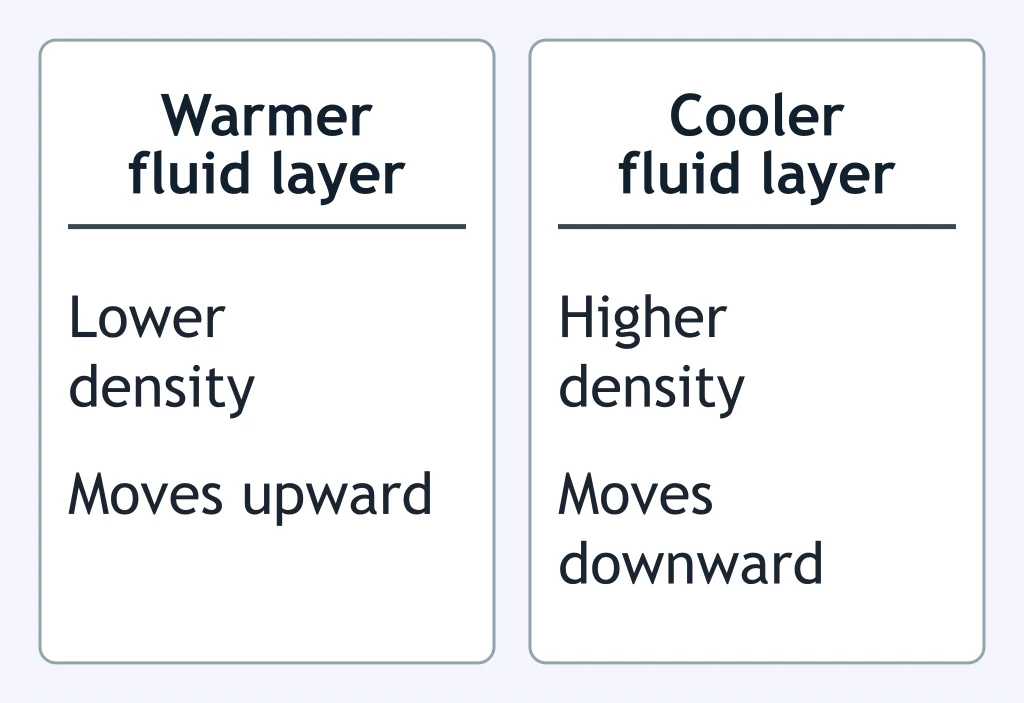
The table states a fluid fact: once disturbed, a warmer, less dense layer moves upward while a cooler, denser layer moves downward. Which process depends on this density-driven motion?
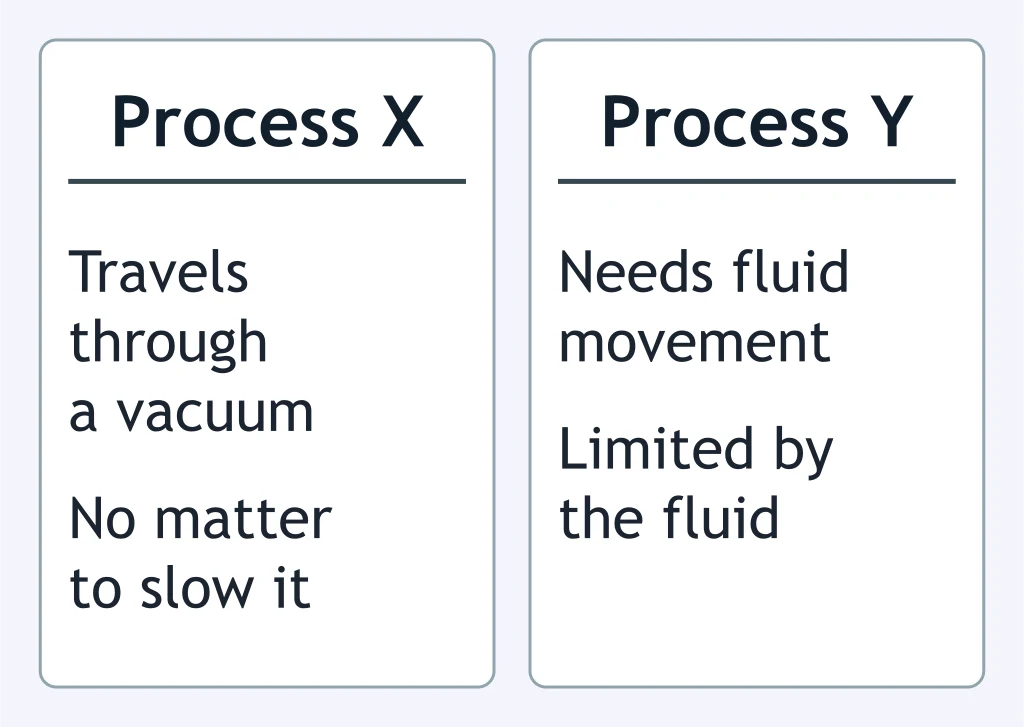
The table contrasts two heat-transfer processes without naming them: Process X carries energy across empty space with no delay from matter carrying it along, while Process Y is limited by how fast a heated fluid can physically move. Which one is Process X?
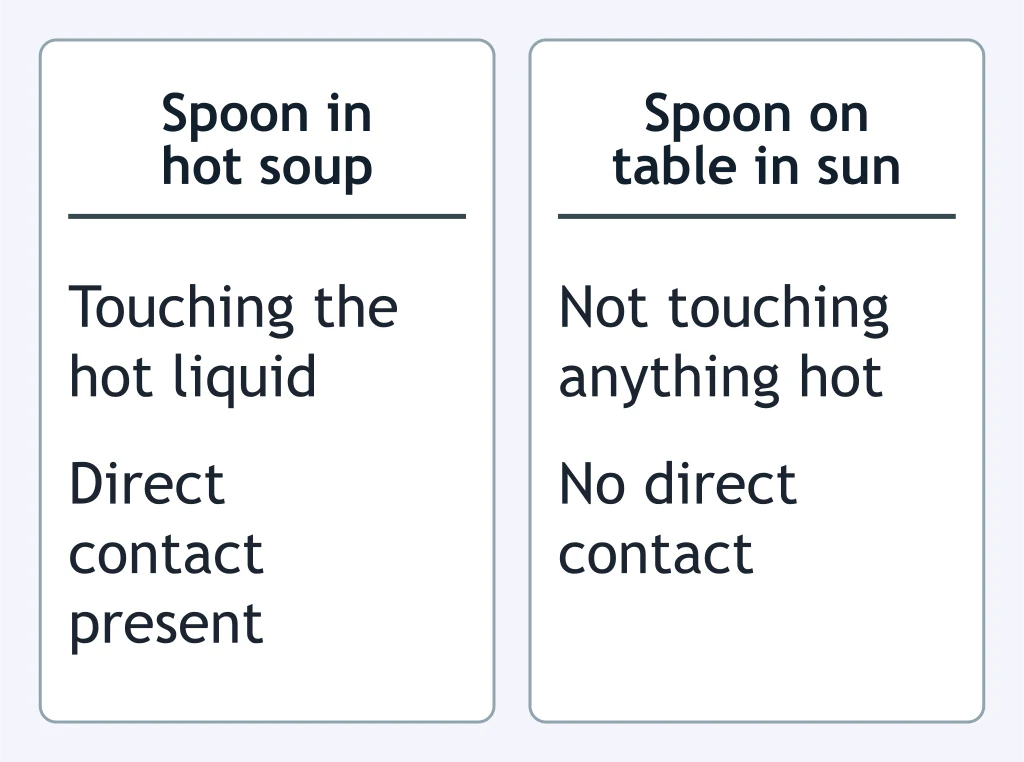
The table compares a spoon left touching hot soup with a spoon lying in direct sunlight on a table, touching nothing hot. Which process can still heat the second spoon even without contact with anything hot?
Heat can pass through a solid iron bar, a still liquid, and still air without the material itself flowing. Which process can carry heat through all three?
Conduction, convection and radiation all require one shared condition before any energy will flow between two objects or regions at all. What is that condition?
Two identical metal pans of dry sand sit in the same patch of sunlight for an hour. One pan is painted flat black and the other bright white. After an hour, the sand in the black pan is much warmer than the sand in the white pan. What does this best show?
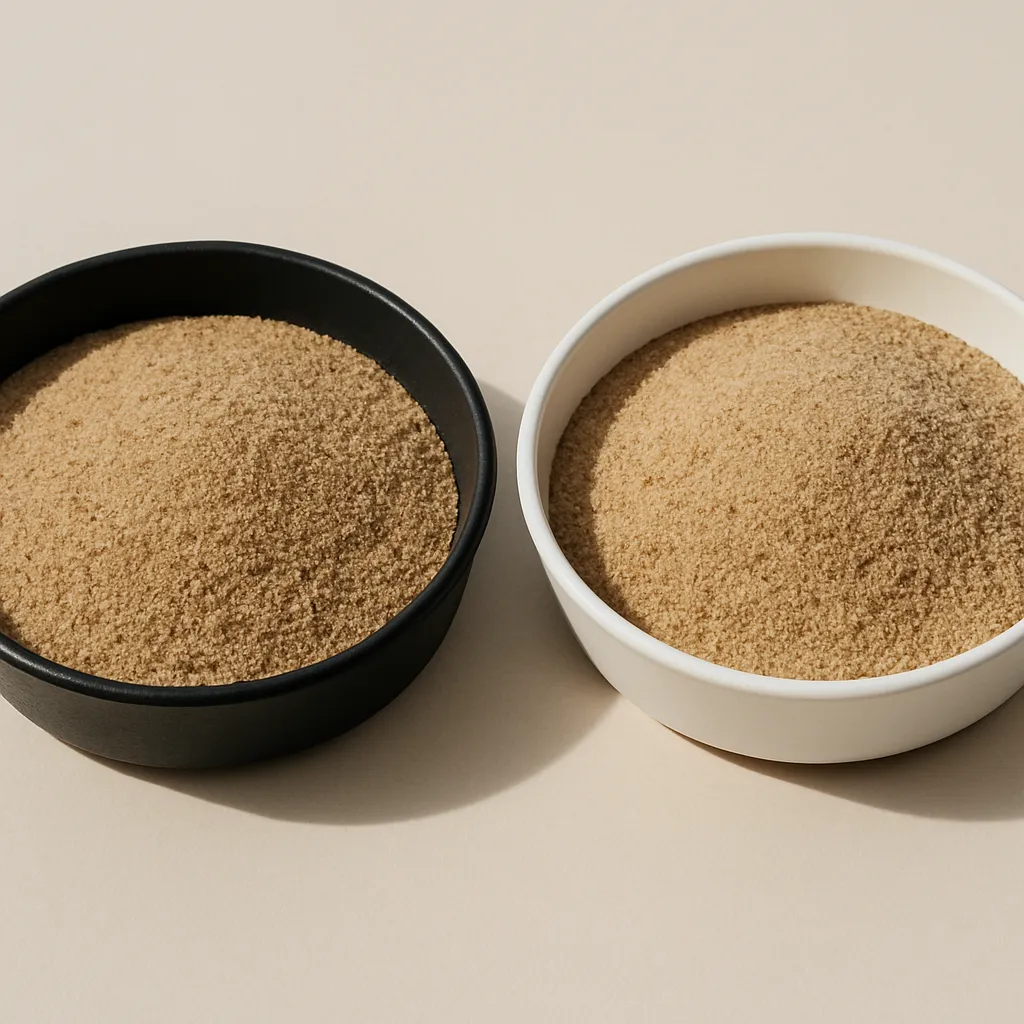
The same 100 J of solar energy heats 10 g of dry sand, whose specific heat is 0.83 J/(g·°C). Using , what is the sand's temperature rise, to the nearest whole degree Celsius?
The same 100 J of solar energy instead heats 10 g of water, whose specific heat is 4.18 J/(g·°C). Using , what is the water's temperature rise, to the nearest tenth of a degree Celsius?
By early afternoon, dry beach sand is much hotter to the touch than the ocean water beside it, even though both have received the same sunlight since sunrise. What best explains this?
Earth's surface re-emits absorbed sunlight as infrared radiation. Carbon dioxide and water vapor absorb much of that infrared and re-emit part of it back down. What is the net effect on the lower atmosphere's temperature?
Melting Arctic sea ice exposes darker ocean water where bright ice used to be. How does this change the region's albedo and further warming?
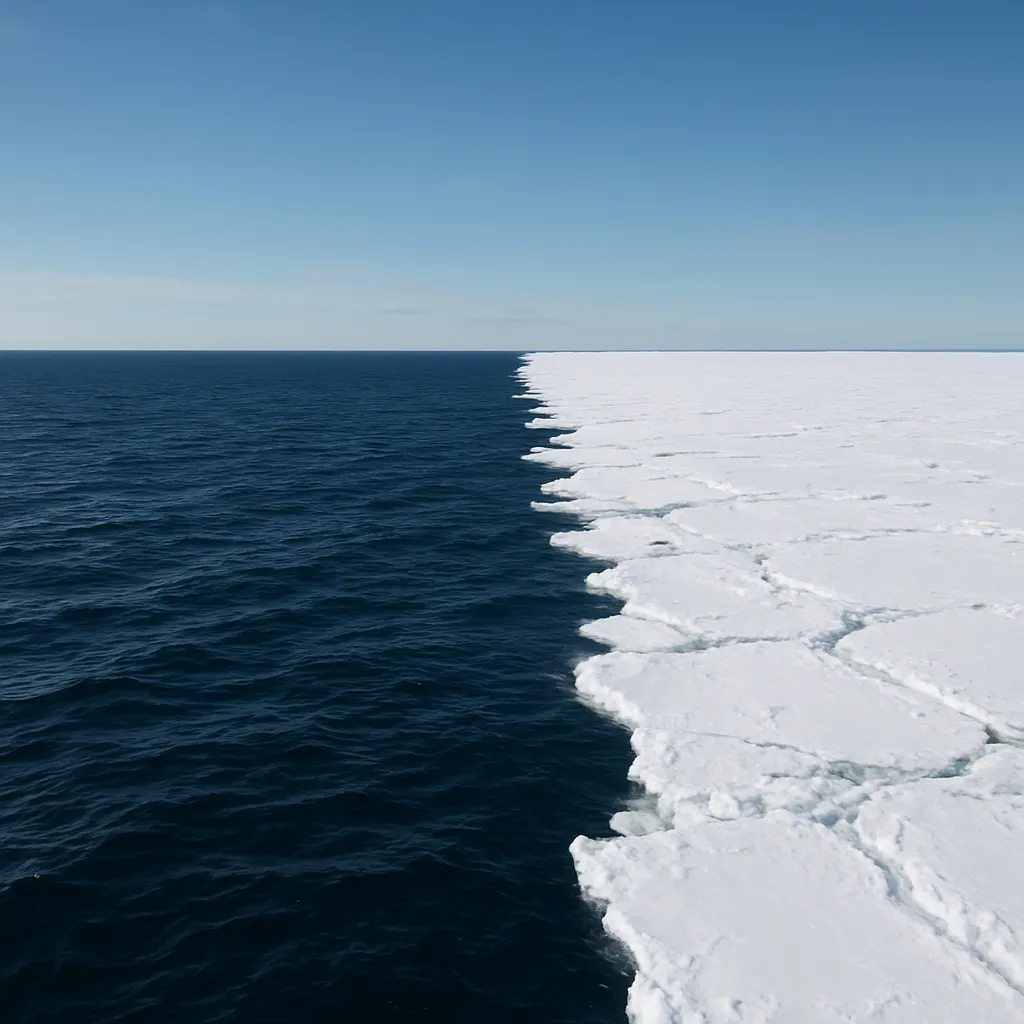
Fresh snow reflects about 80 to 90 percent of the sunlight striking it, while dark forest soil reflects only about 10 to 20 percent. Which surface has the higher albedo?
Crack the passcode before the zombies get in.
Answer, then swat bugs for bonus points.
Race through questions at your own speed.
Same question on every screen. Fastest wins.

Pick a tile, answer, hit bonuses and steals.
40 questions