Loading
by BlastRoom
Explains wave motion, wave measurements, longshore drift, and the coastal landforms and structures waves build and destroy.
#earth_space_science
40 questions
One question set, multiple game modes. Tap any game to see it in action. Not sure which to pick?
Answer to place stones and capture territory.
Outrun the snow together.
Earn blasts, then hunt the other team.
Answer to earn energy, then climb.

The class blasts through walls together.
Bid on mystery lots. Most money wins.
Sell tours. Nice, standard, or a total scam.

Answer, restock, and serve the rush.
More correct answers pulls the rope your way.
Answer, then shoot down the alien wave.
Answer, then tap to leap the frozen ridge.
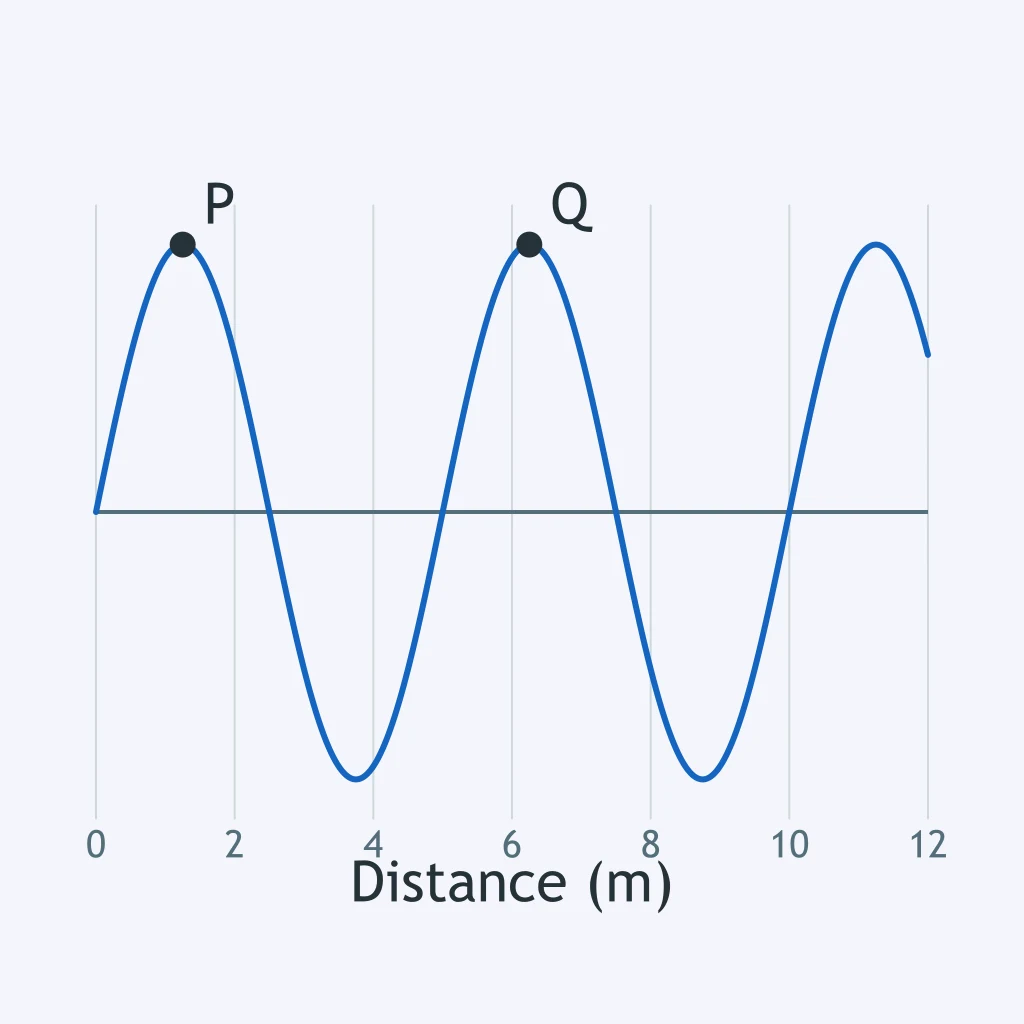
On a drawn wave profile, points P and Q mark the tops of two consecutive crests, 5 meters apart on the distance axis. What does the distance from P to Q represent?
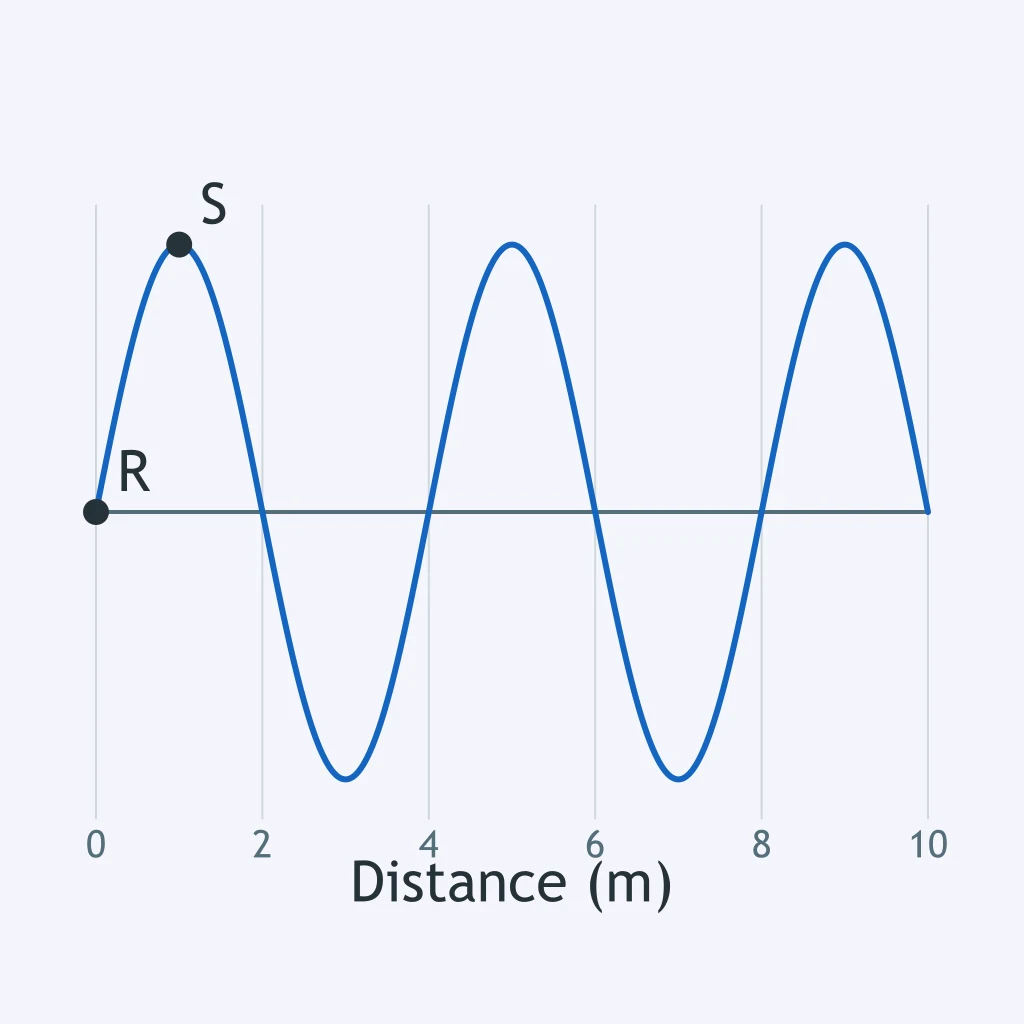
Point R lies on the still-water line and point S lies at the top of the next crest. What does the vertical distance from R to S represent?
Point T marks the bottom of a trough and point U marks the top of the next crest. What does the vertical distance from T to U represent?
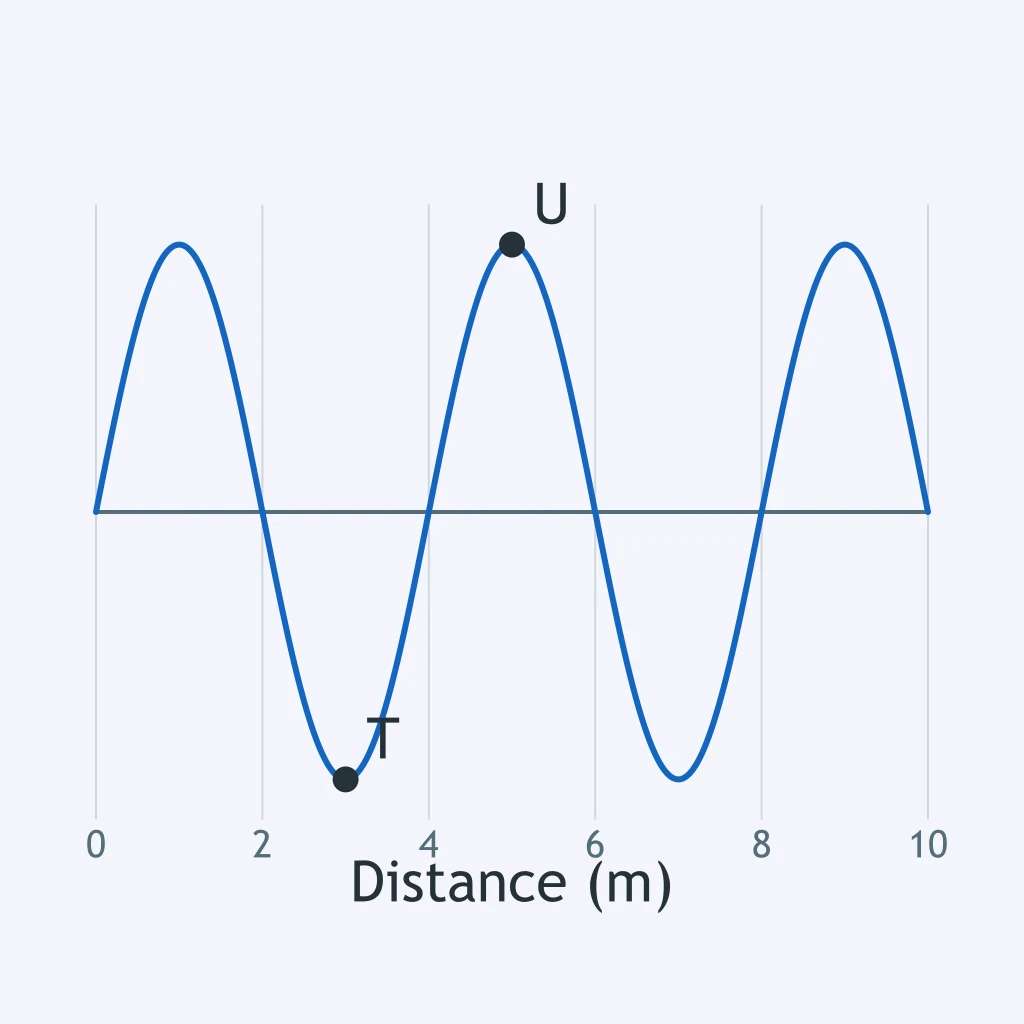
P marks the top of a crest and Q marks the bottom of the adjacent trough. What fraction of a wavelength separates P and Q?
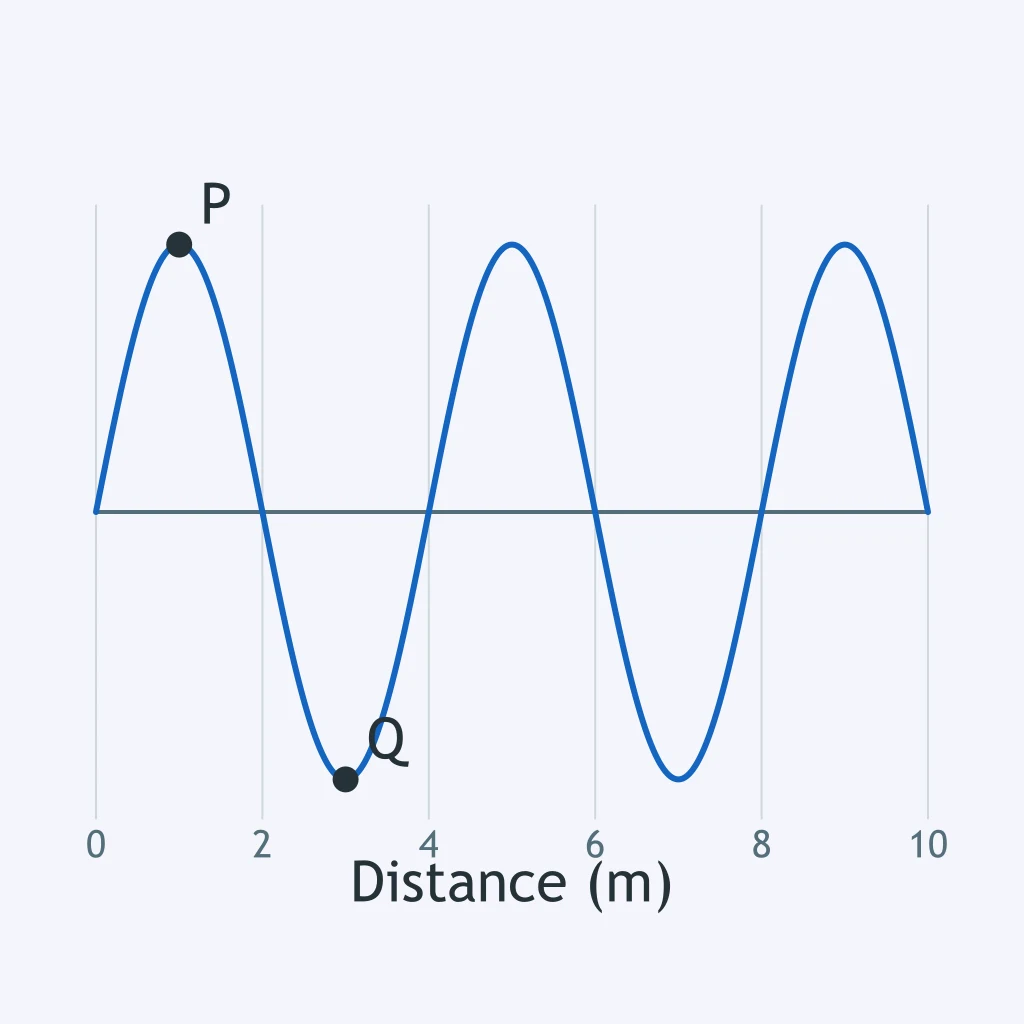
Marked points P and Q sit one wavelength apart on a wave profile, 6 meters apart on the axis. If the wave's period is 2 seconds, what is its speed?
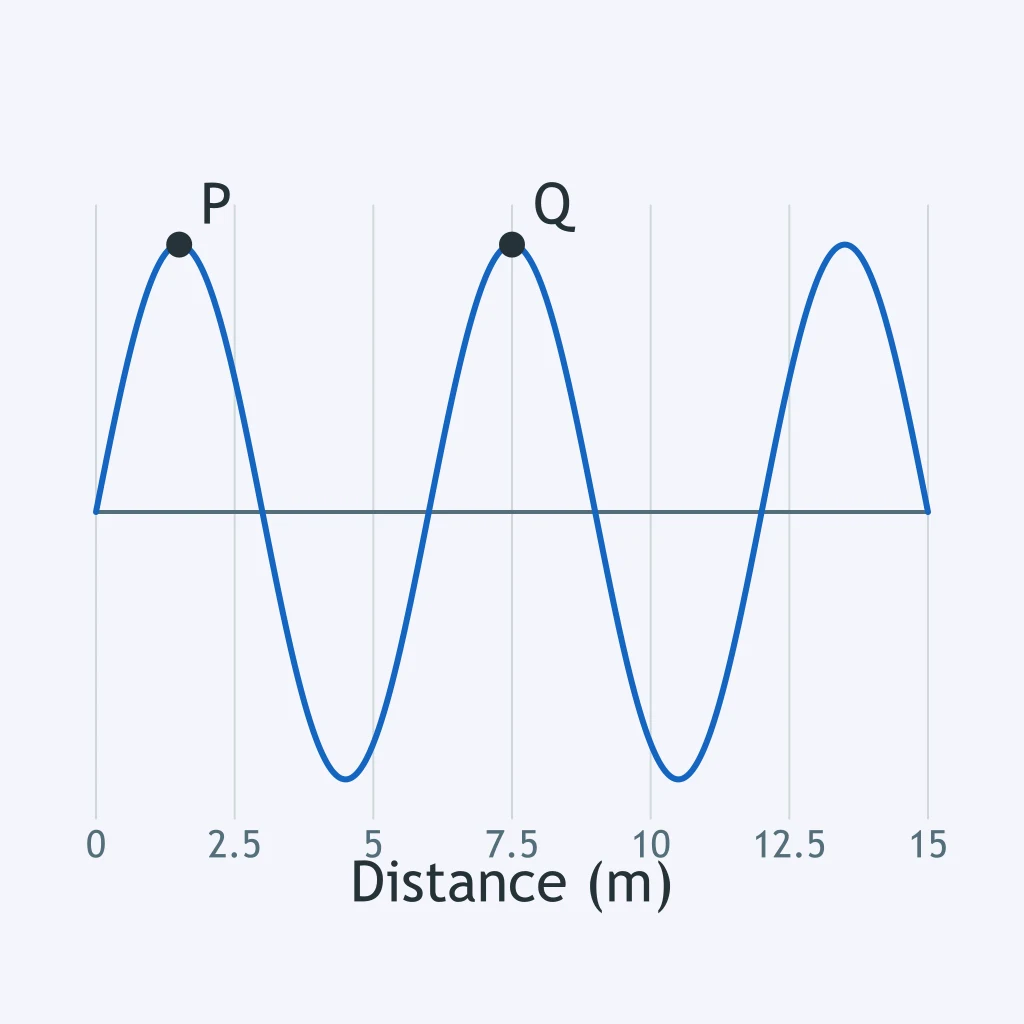
On this wave profile, the distance between marked crests P and Q, one full wavelength, is 250 centimeters. What is the wavelength in meters?
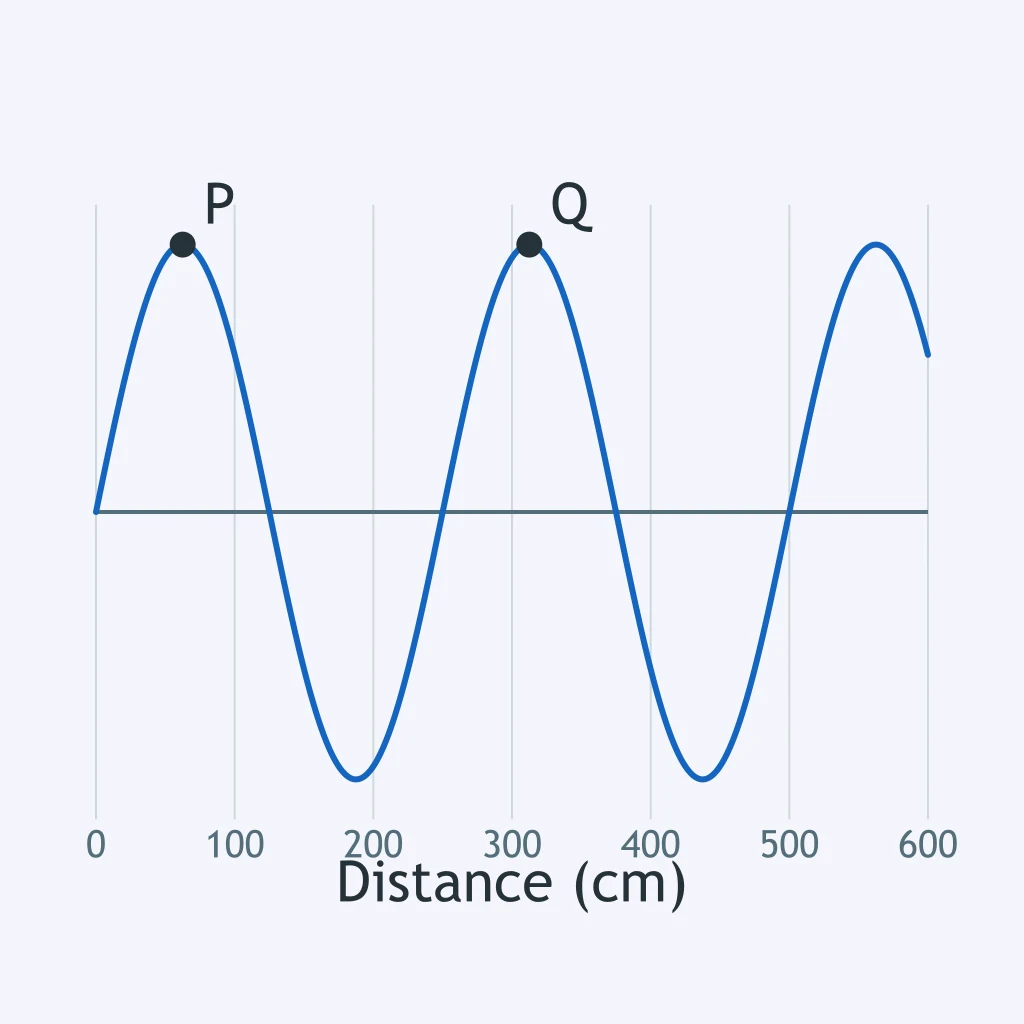
The vertical distance from still-water point R to crest point S, the wave's amplitude, is 1.5 meters. What is the wave's height?
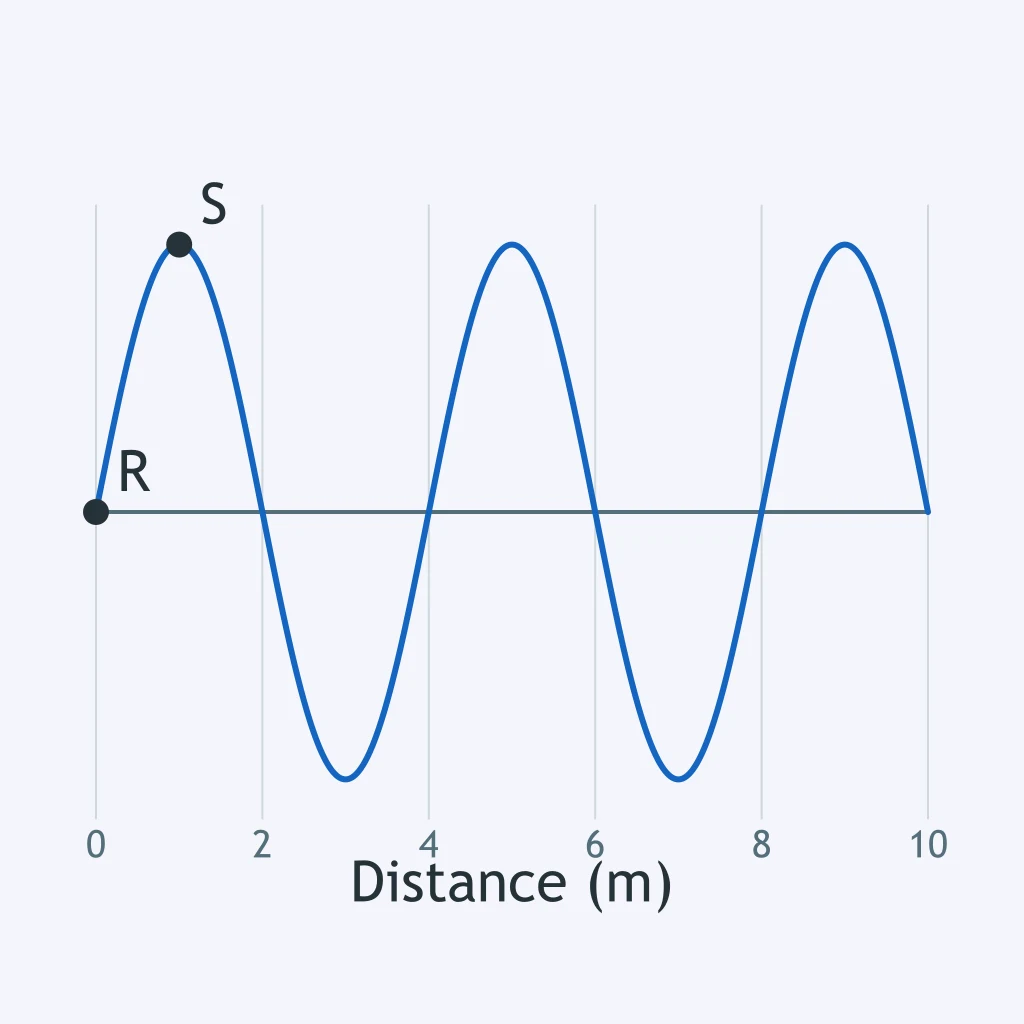
P and Q are both marked where the curve crosses the still-water line heading upward, one full cycle apart on the axis. What does the distance from P to Q equal?
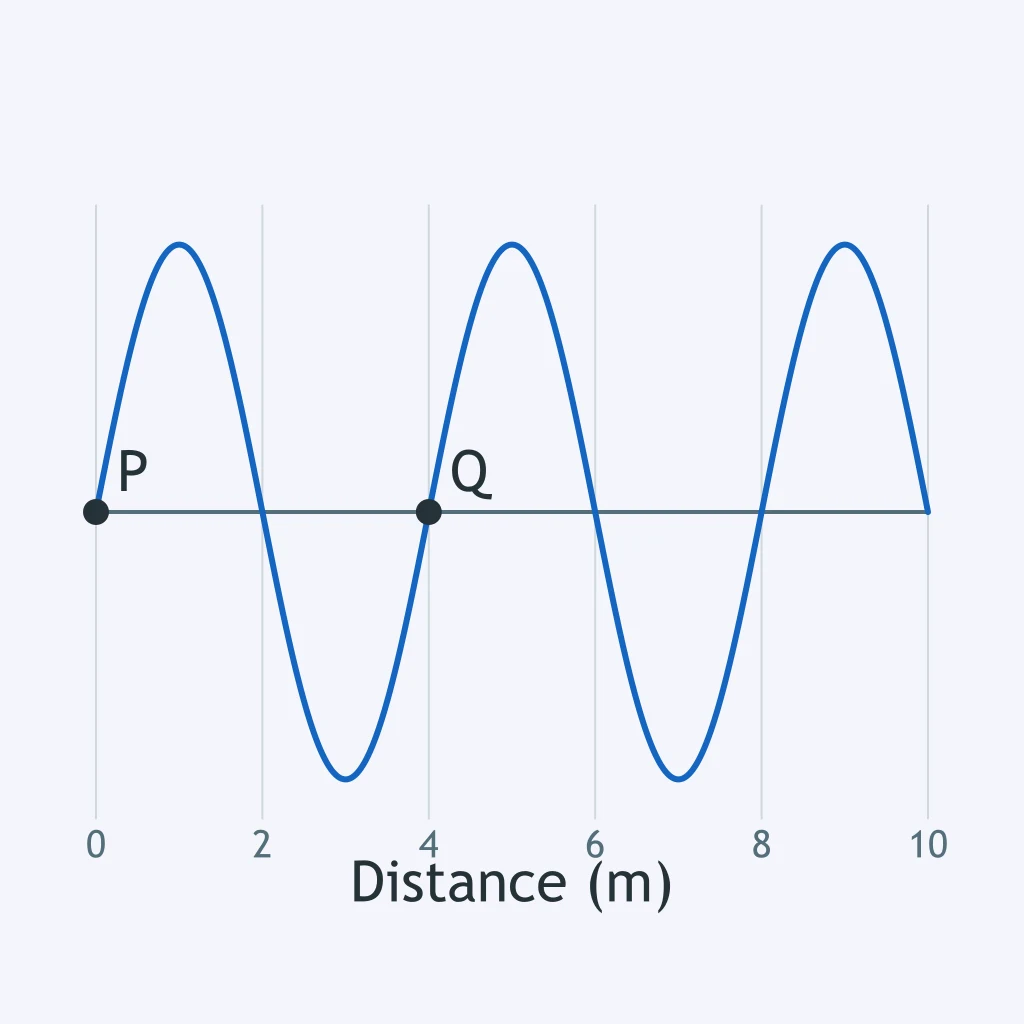
A cork bobs on the surface of open water as regular swells pass beneath it, rising, moving slightly forward, sinking, and returning close to where it began each cycle. What does this show about the water itself?
Ocean swells carry visible energy across miles of open water, yet a drifting bottle floats up and down without being carried toward shore. What does this show about a water wave?
A diver descending straight down beneath a series of passing surface swells notices the back-and-forth swaying of the water grows weaker the deeper she goes. Why does this happen?
As a wave moves from deep water into water shallower than about half its wavelength, it slows down and grows taller. What causes this change?
A wave approaches a coastline at an angle, crossing water of gradually decreasing depth. As it nears shore, the crest bends until it lines up more nearly parallel with the beach. What causes this bending?
In shallow water close to shore, a wave suddenly steepens, curls forward, and collapses as a breaker. What causes a wave to break at this point?
A large ocean swell passes over water much deeper than half its wavelength. How does the water at the seafloor move as the swell passes overhead?
A figure shows waves striking a straight, north-south beach at an angle from the northwest. Sand has built up against the north side of a wooden groin extending into the surf. Which direction is the longshore current moving the sand?
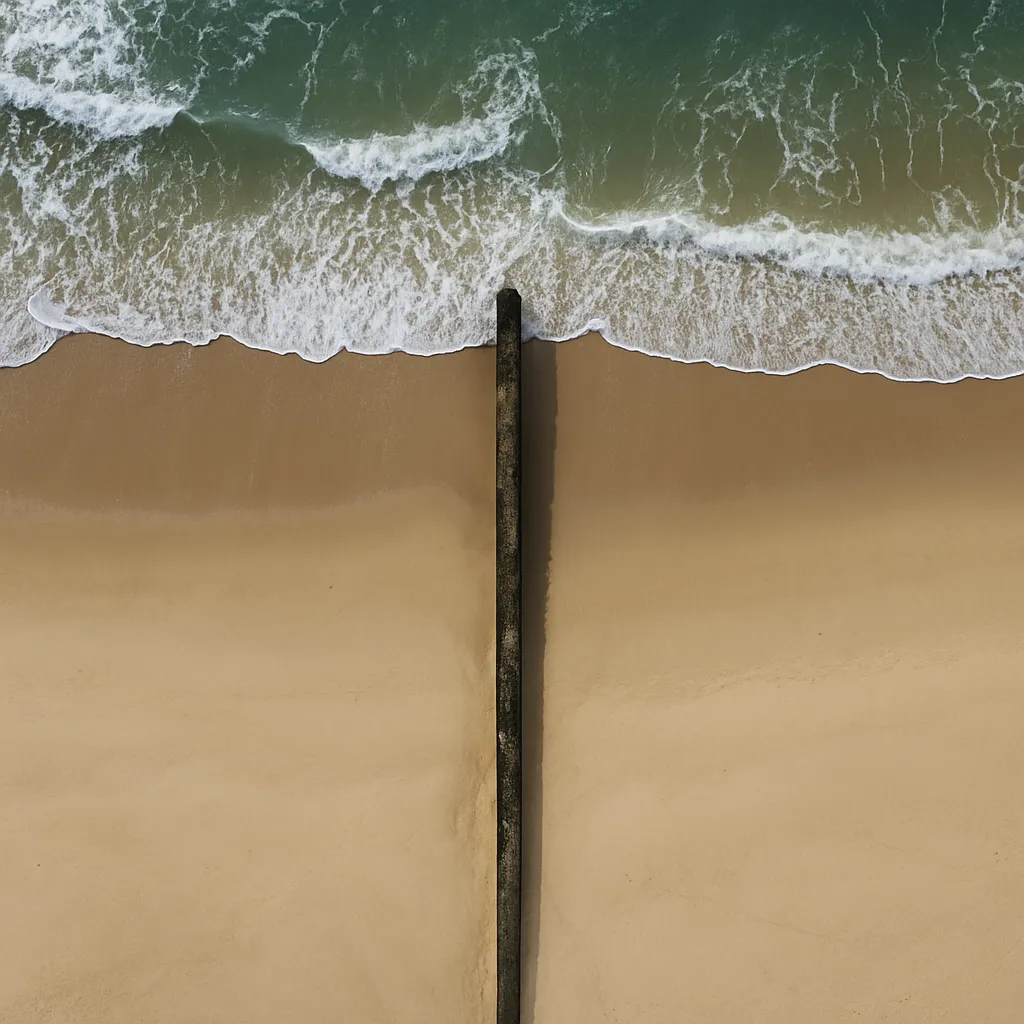
A figure shows waves striking a straight, north-south beach at an angle from the southeast. Sand has piled up against the south side of a stone jetty built out from the shore. Which direction is the longshore current moving the sand?
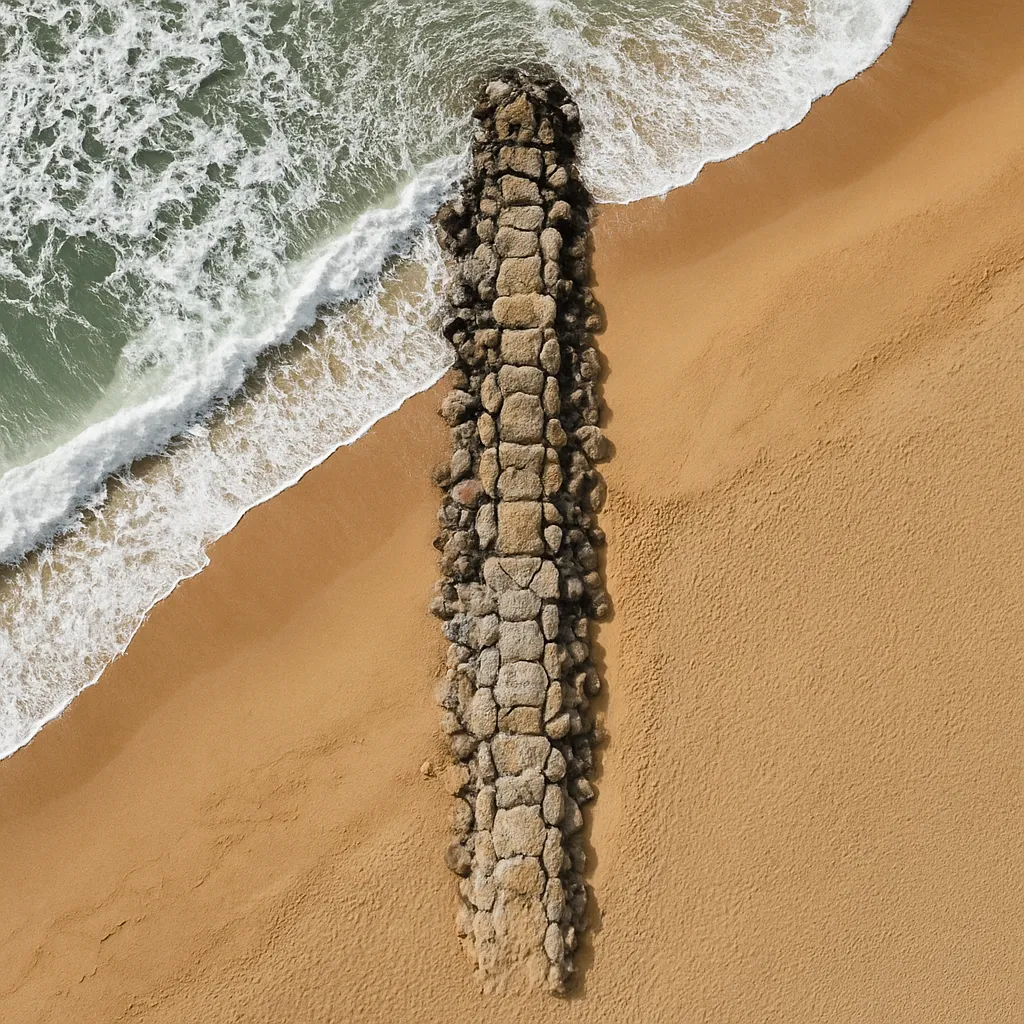
A figure shows a curved sandy spit growing outward from a headland, its tip hooking toward the mouth of a bay. Waves in the area consistently arrive from the northeast. What does the spit's curved shape show about the current?
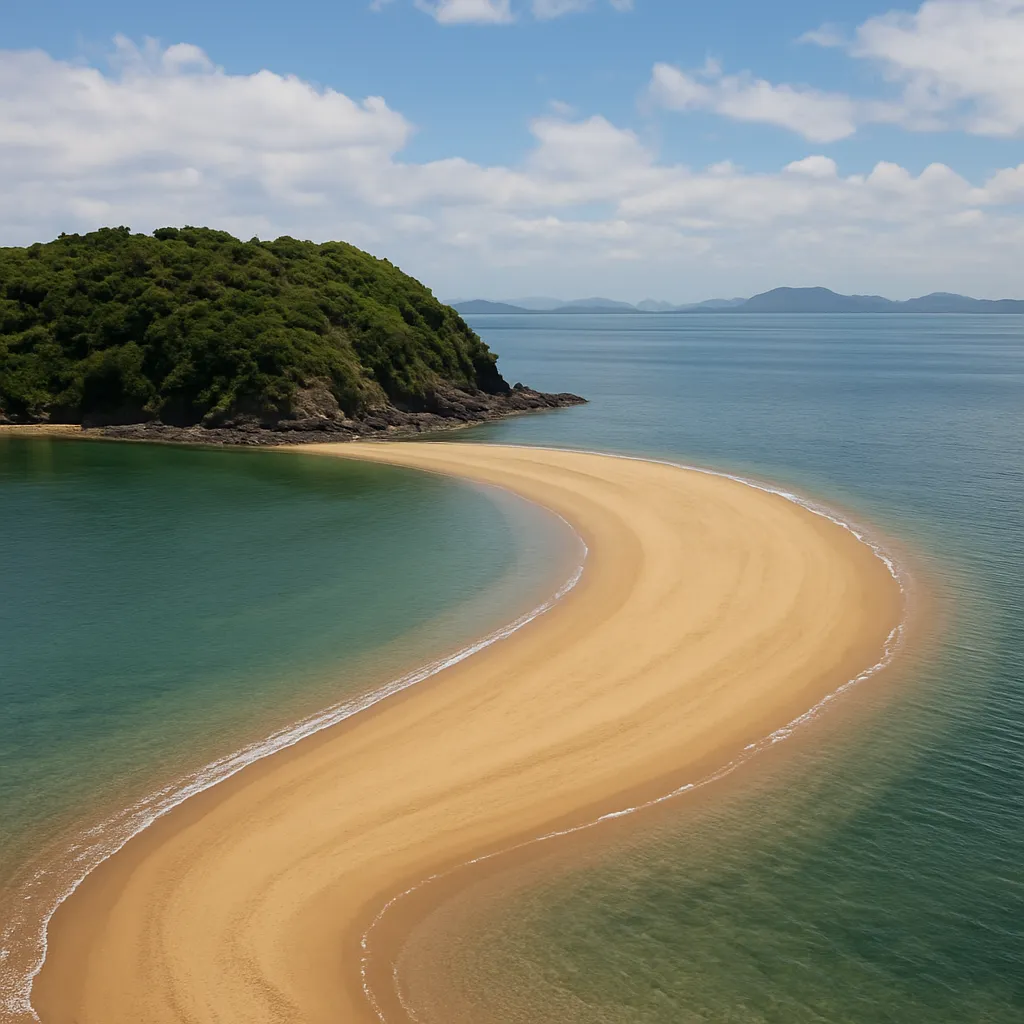
A north-south beach has the ocean to the east. Sand has built up thickly on the south side of a stone groin, while the north side has eroded down to bare rock. From which direction are the waves most likely arriving?
A figure shows an east-west shoreline with open water to the south. Waves consistently arrive from the southeast, striking the beach at an angle. Which direction does the current move sand along this shoreline?
A figure shows an east-west shoreline with open water to the south. Waves consistently arrive from the southwest, striking the beach at an angle. Which direction does the current move sand along this shoreline?
A figure shows waves striking a straight, north-south beach head-on, arriving from due east with crests parallel to the shoreline. What does this figure show about the longshore current?
A figure shows a river mouth on a north-south coastline that has gradually shifted southward over several decades. Waves along this coast consistently arrive from the northwest. What best explains the river mouth's shift?
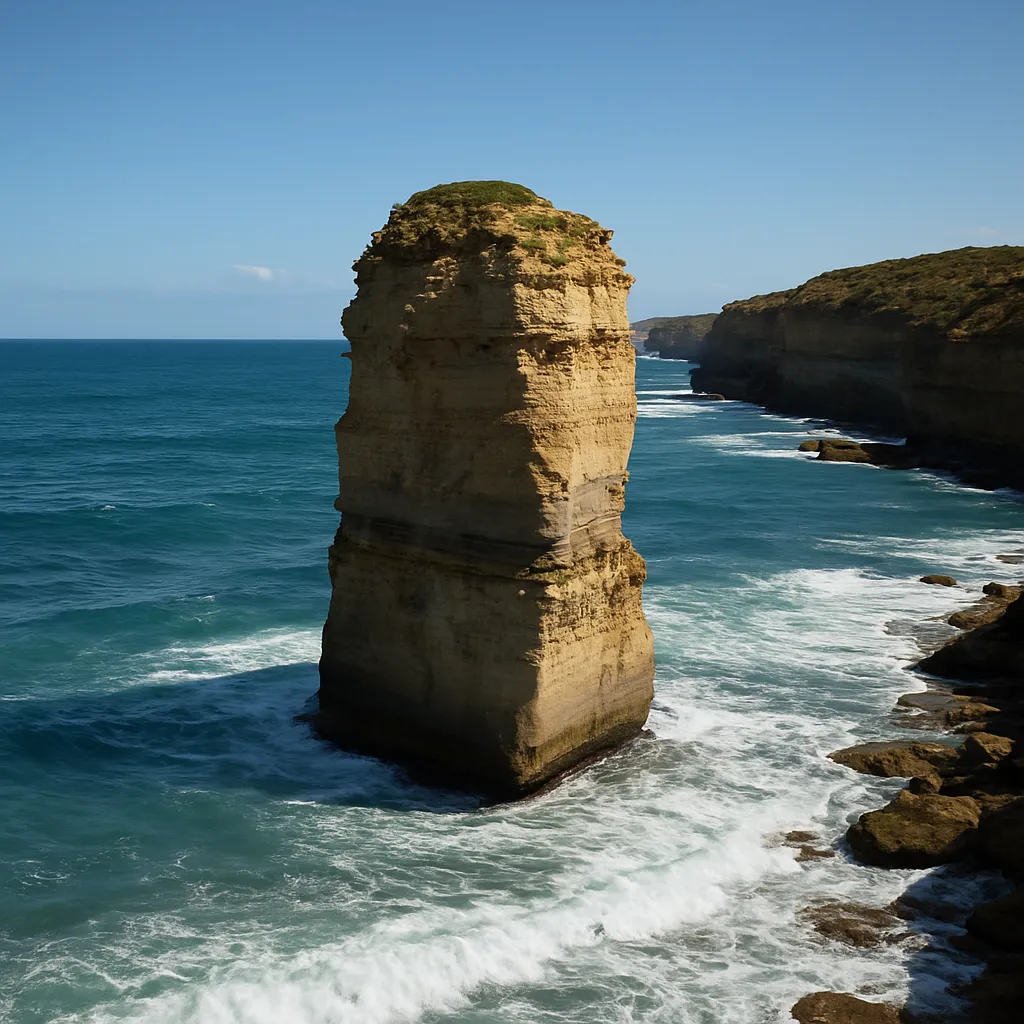
A figure shows an isolated pillar of rock standing alone in the surf just offshore from a rocky headland. What landform is shown, and how did it form?
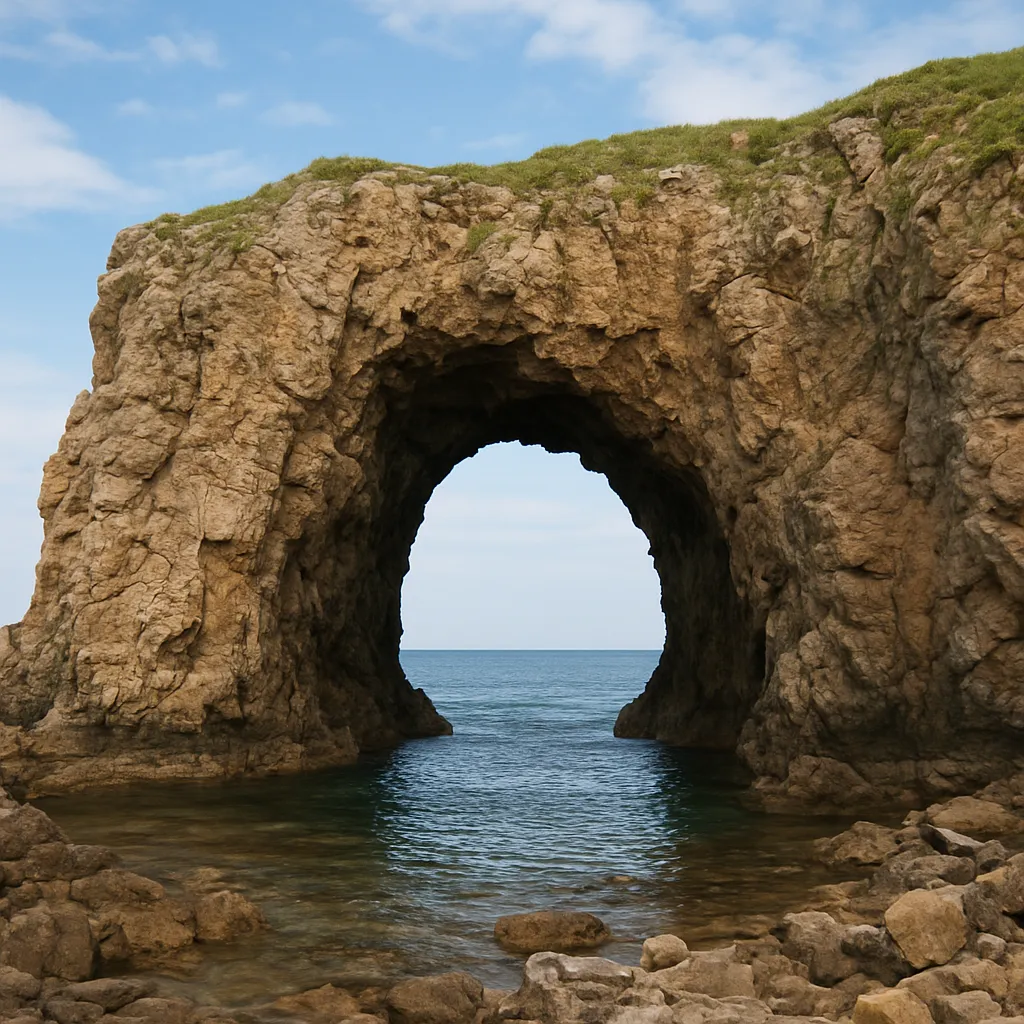
A figure shows a rocky headland with an opening cut clean through it near the waterline, framing open ocean on the other side. What landform is shown, and how did it form?
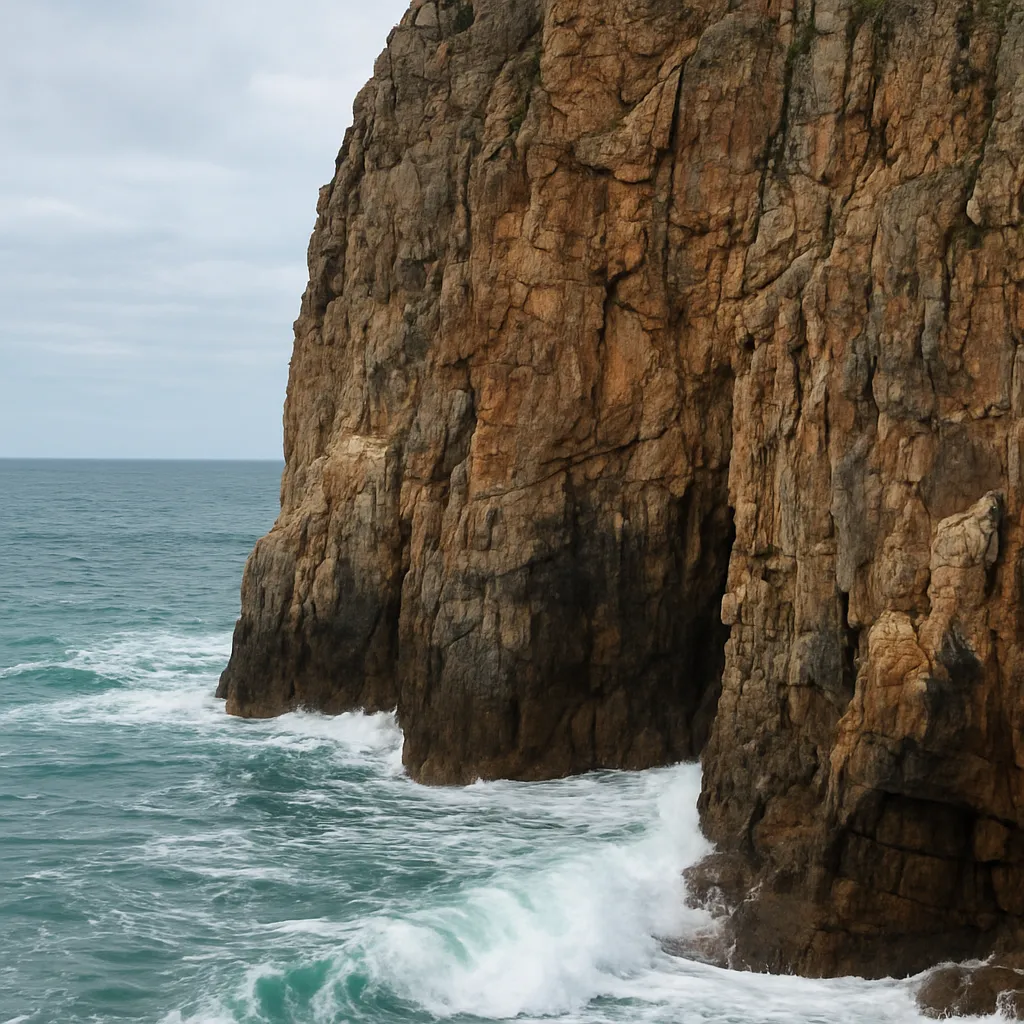
A figure shows a steep, freshly exposed rock cliff rising directly from the surf, with no beach at its base. What landform is shown, and how did it form?
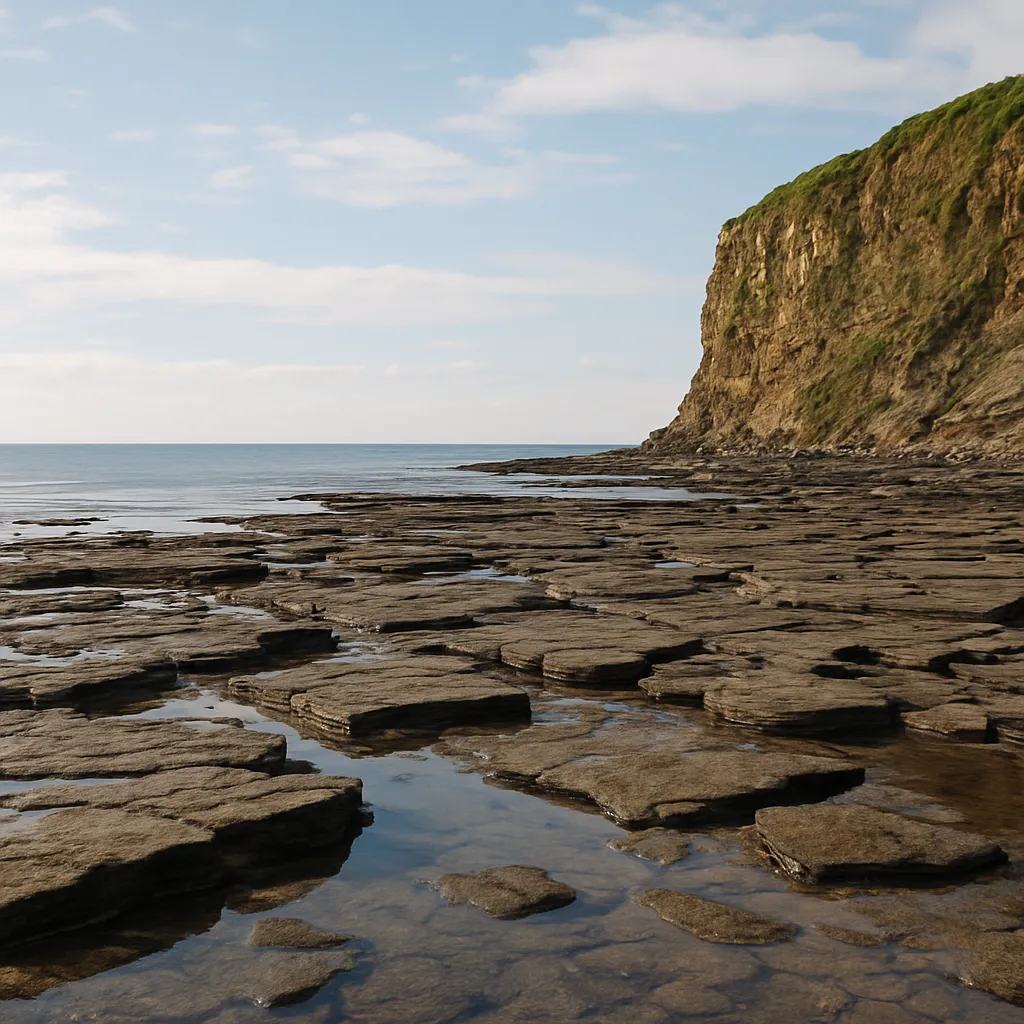
At low tide, a figure shows a flat, rocky shelf exposed at the base of a coastal cliff, covered by shallow water at high tide. What landform is shown, and how did it form?
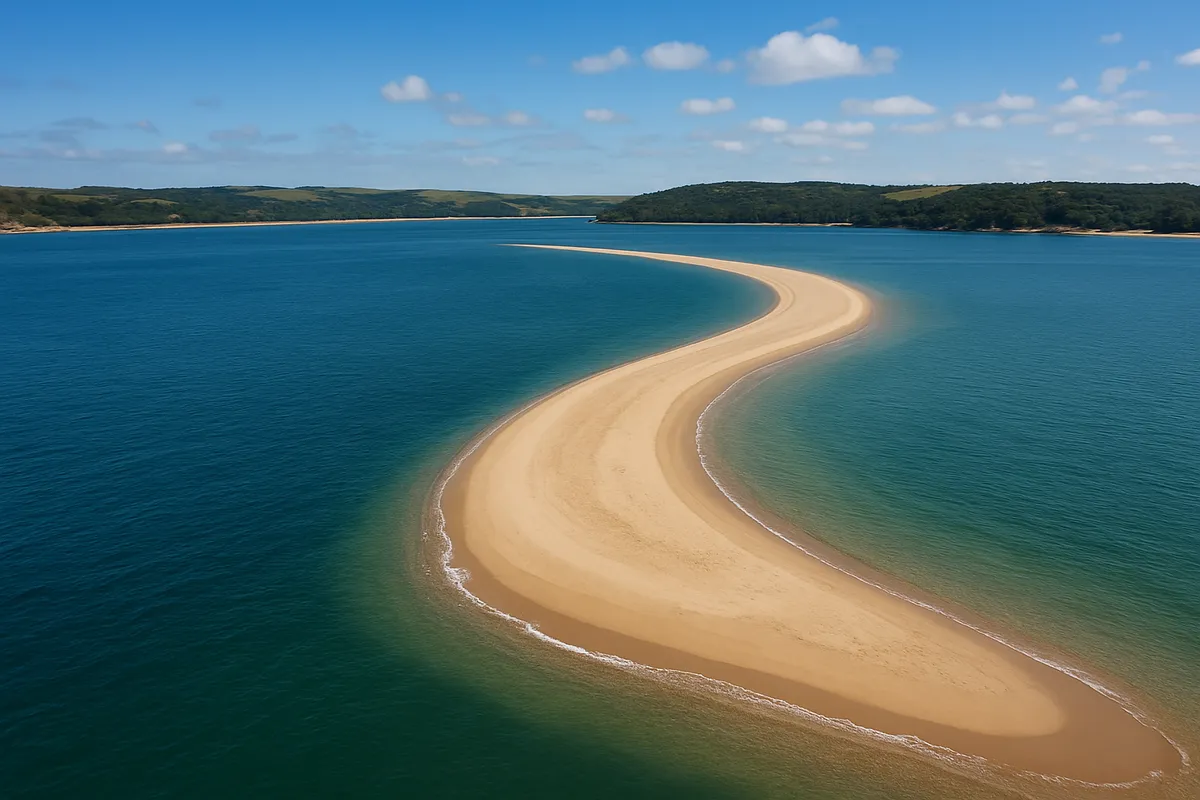
A figure shows a narrow ridge of sand extending out from a headland, its free end curving inward toward a bay rather than reaching the far shore. What landform is shown, and what built it?
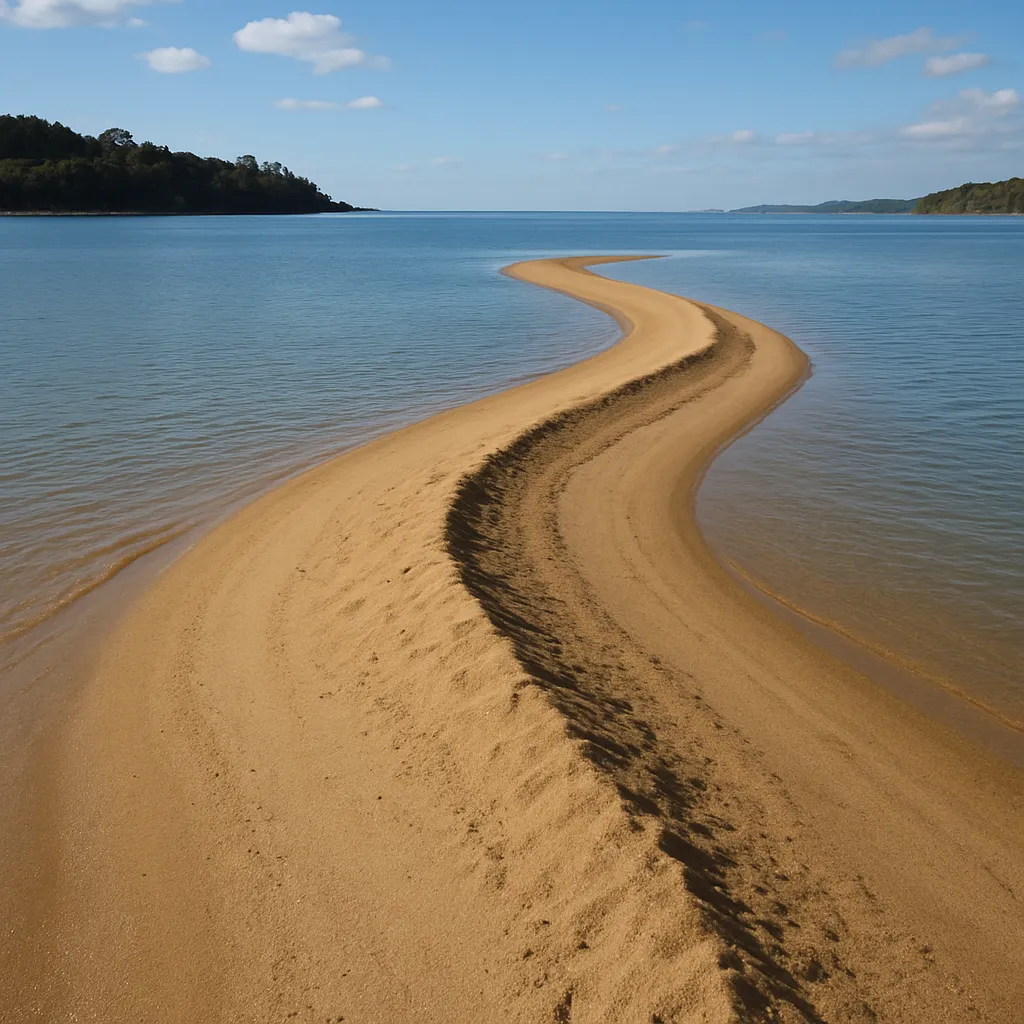
A figure shows a narrow ridge of sand directly connecting a small rocky island to the mainland shore. What landform is shown, and what built it?
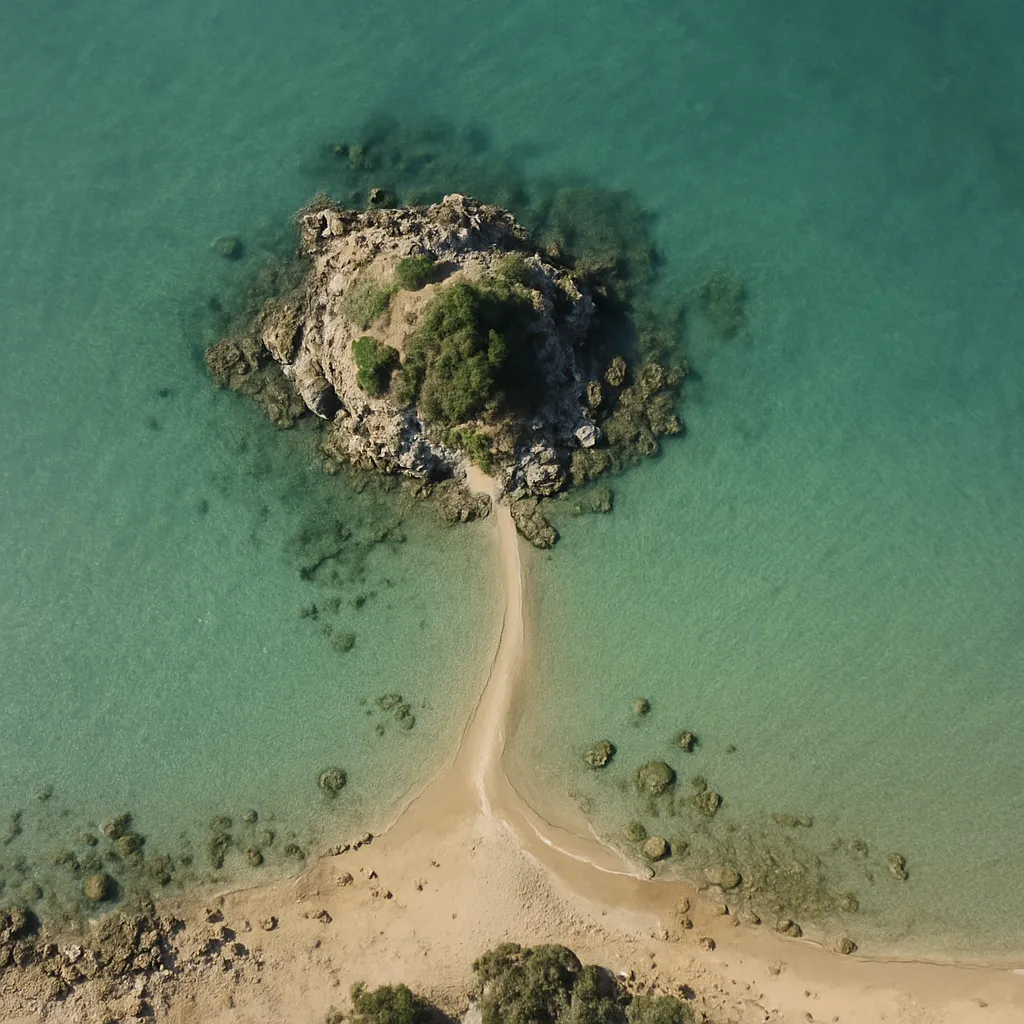
A figure shows a long, narrow island of sand running parallel to the mainland coast, separated from it by a shallow lagoon. What landform is shown, and what built it?
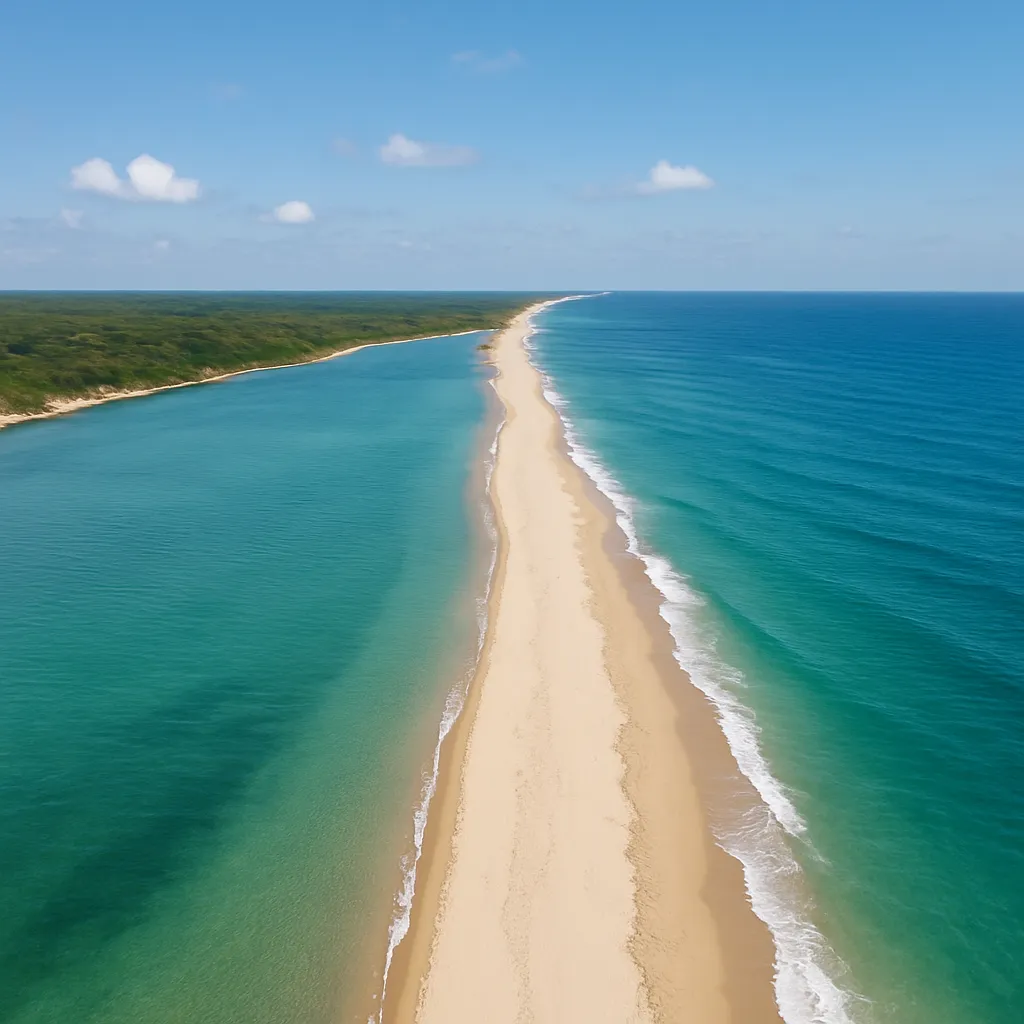
A figure shows a straight ridge of sand stretching completely across the mouth of a bay, cutting it off from the open ocean and forming an enclosed lagoon behind it. What landform is shown, and what built it?
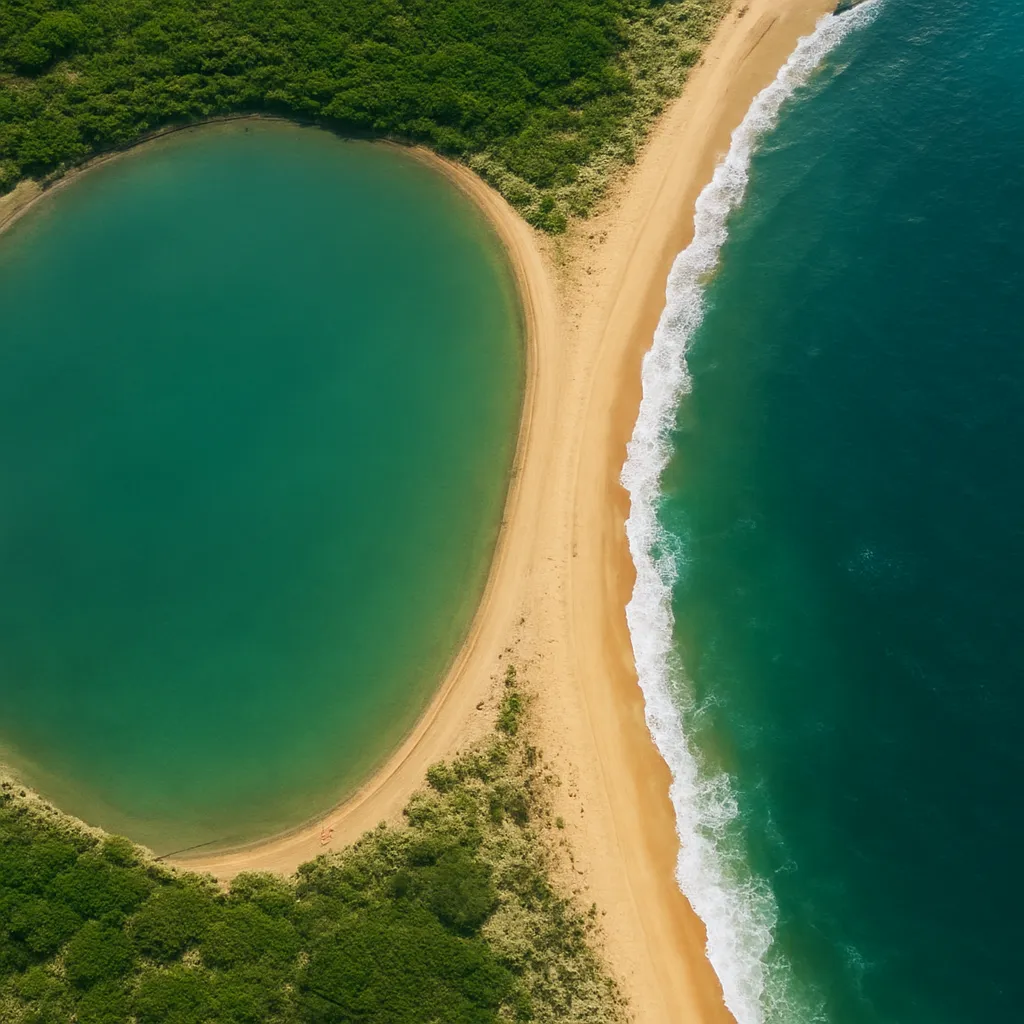
A figure shows a coastline alternating between rocky points that jut into the ocean and curved, sandy bays set back between them. What best explains this pattern?
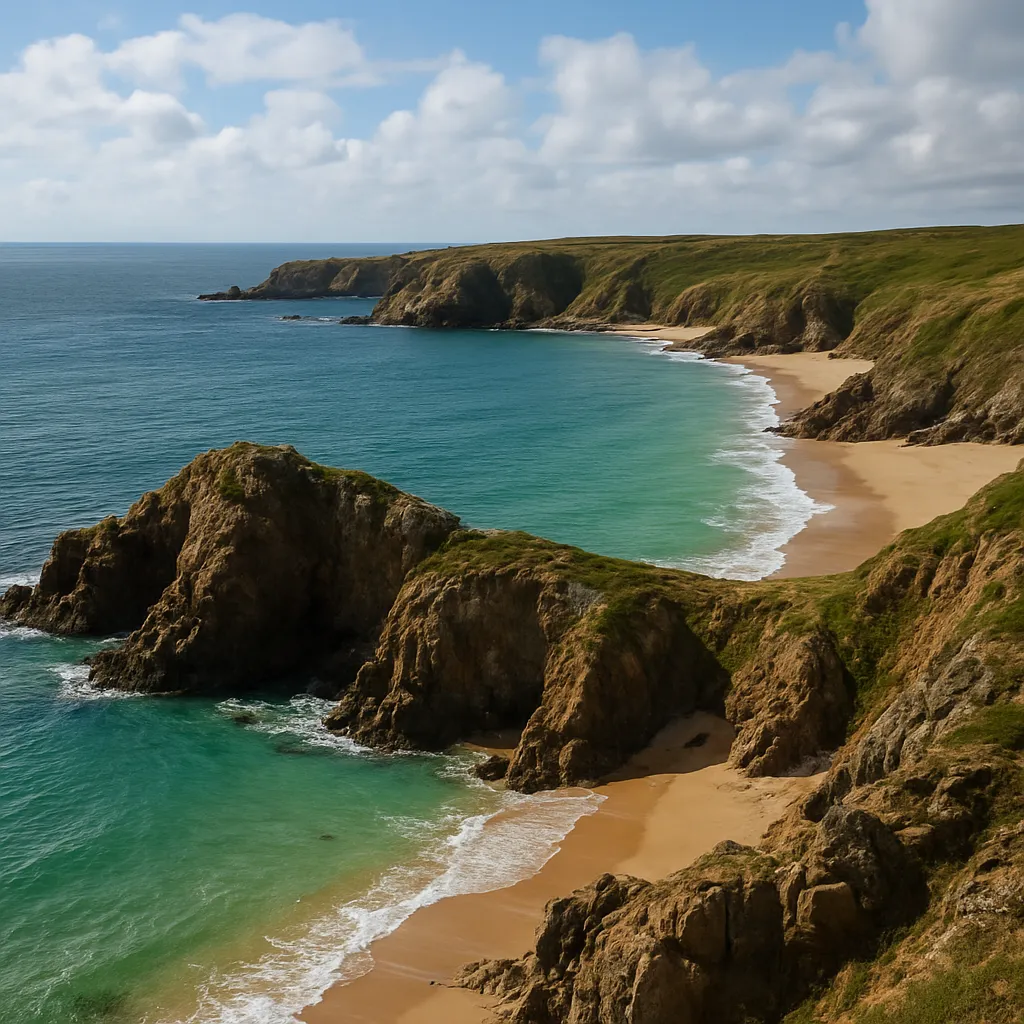
A town builds a single stone groin straight out from its beach to trap sand. Waves consistently approach from the north. Within a few years, the beach north of the groin has widened while the beach just south of it has narrowed. Why?
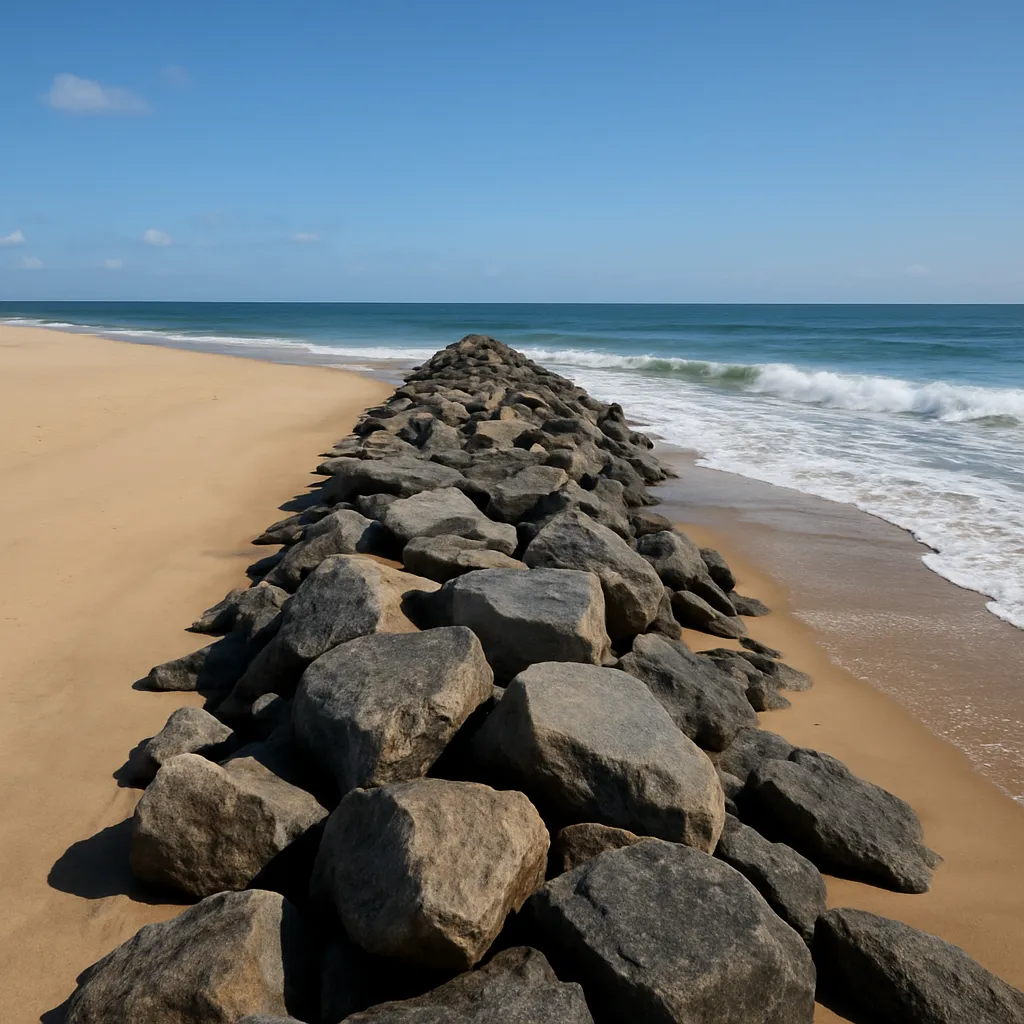
A coastal town builds a jetty on each side of its harbor entrance to keep the channel from filling with sand. A decade later, the beach on the updrift side has grown wider while the downdrift beach has narrowed sharply. Why?
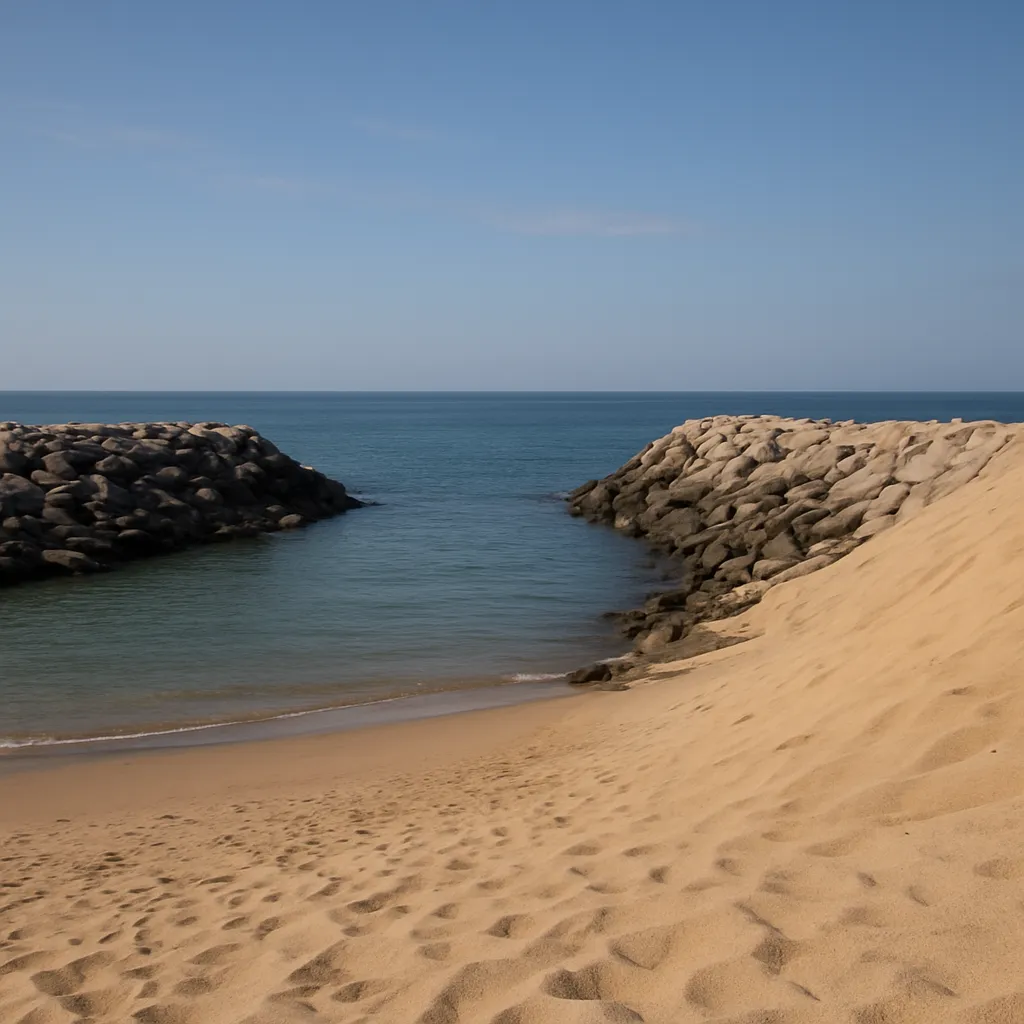
A town builds a vertical concrete seawall to protect beachfront property from an eroding shoreline. Within several years, the sandy beach directly in front of the seawall has disappeared entirely at high tide. Why?
An offshore breakwater is built parallel to a beach to reduce wave energy reaching the shore. Over time, a bulge of new sand builds up on the beach directly behind the breakwater. Why?
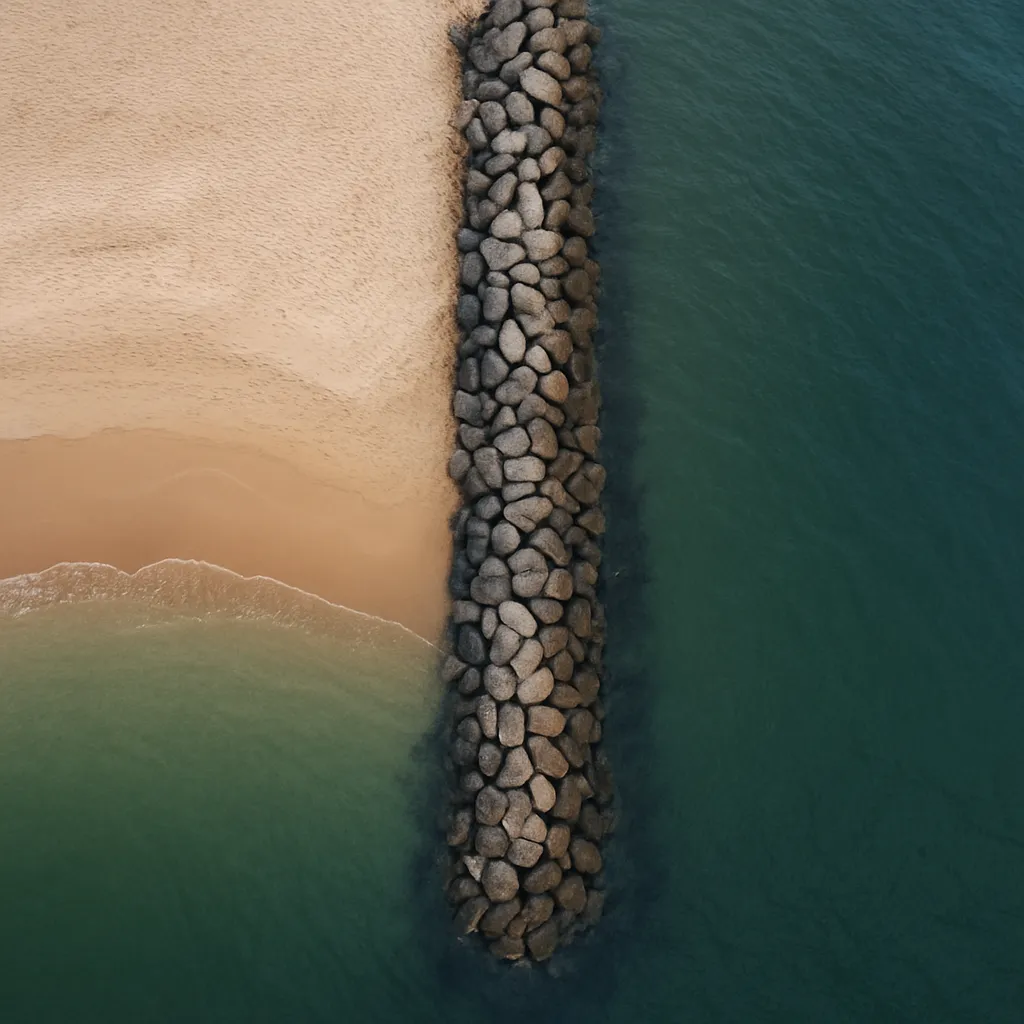
An old, crumbling groin is removed from a beach after decades of trapping sand on its updrift side. In the years that follow, sand gradually redistributes and the once-narrow downdrift beach widens again. Why?
A series of several groins is built one after another along a stretch of coast, each one trapping sand on its updrift side. Over time, the beaches farthest downdrift become the most severely eroded of all. Why?
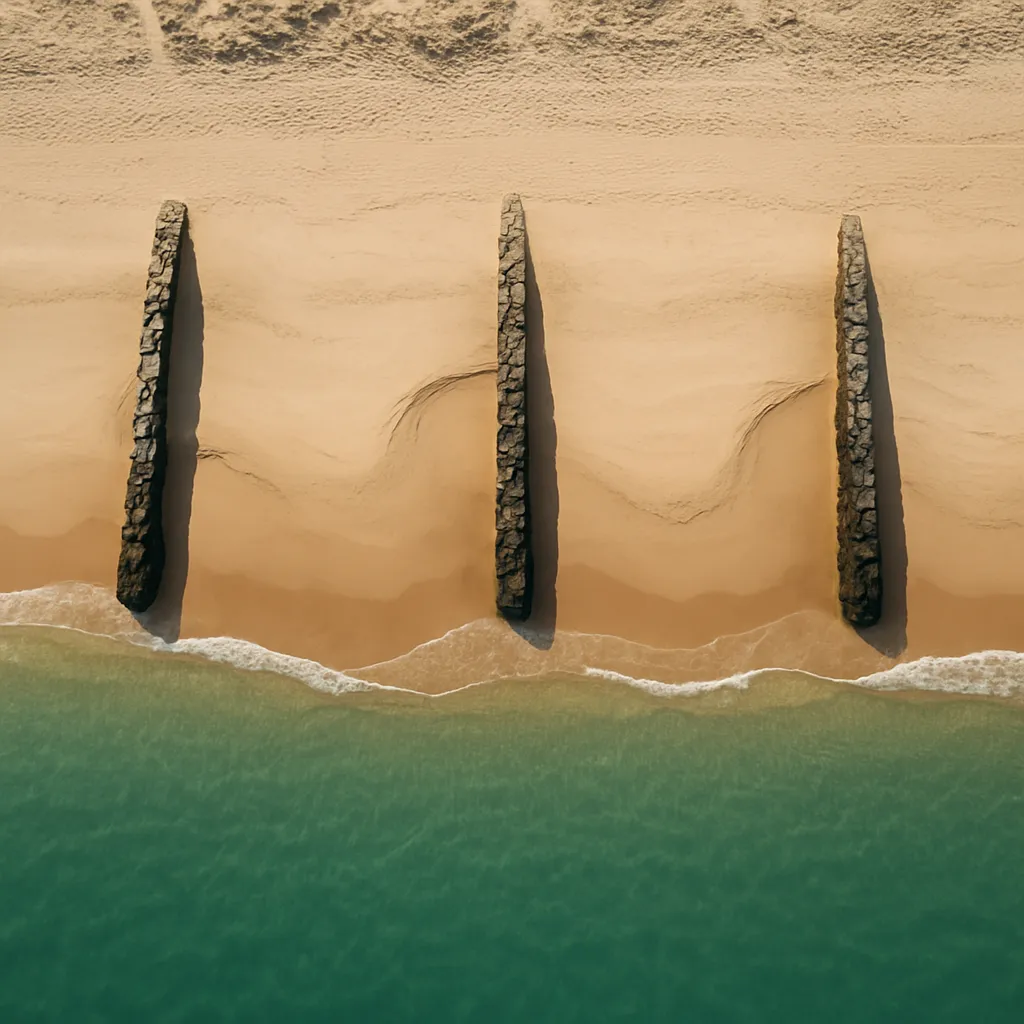
A coastal town has a jetty at one end of its main beach. Every few years, the town must pump in truckloads of new sand to keep the beach wide enough for visitors. Why does the town need to keep doing this?
A pair of jetties is built extending into the ocean on either side of a river's mouth. What is the main purpose of these structures?
Crack the passcode before the zombies get in.
Answer, then swat bugs for bonus points.
Race through questions at your own speed.
Same question on every screen. Fastest wins.

Pick a tile, answer, hit bonuses and steals.
40 questions