Loading
by BlastRoom
Calculate relative humidity and dew point from a psychrometer reading and explain what saturation and dew point mean.
#earth_space_science
50 questions
One question set, multiple game modes. Tap any game to see it in action. Not sure which to pick?
Answer to place stones and capture territory.
Outrun the snow together.
Earn blasts, then hunt the other team.
Answer to earn energy, then climb.

The class blasts through walls together.
Bid on mystery lots. Most money wins.
Sell tours. Nice, standard, or a total scam.

Answer, restock, and serve the rush.
More correct answers pulls the rope your way.
Answer, then shoot down the alien wave.
Answer, then tap to leap the frozen ridge.
The table lists dry-bulb temperature down the side and wet-bulb depression across the top. A station reads a dry-bulb temperature of 14 °C and a wet-bulb temperature of 10 °C. What is the relative humidity of this air?
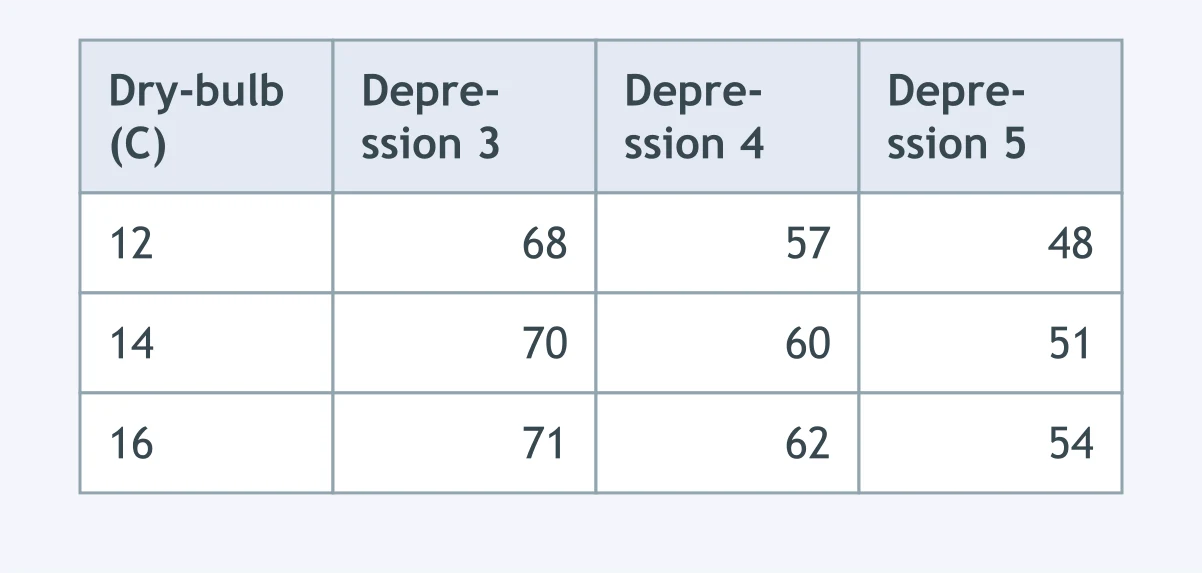
The table lists dry-bulb temperature down the side and wet-bulb depression across the top. A psychrometer reads a dry-bulb temperature of 20 °C and a wet-bulb temperature of 16 °C. What is the relative humidity of this air?
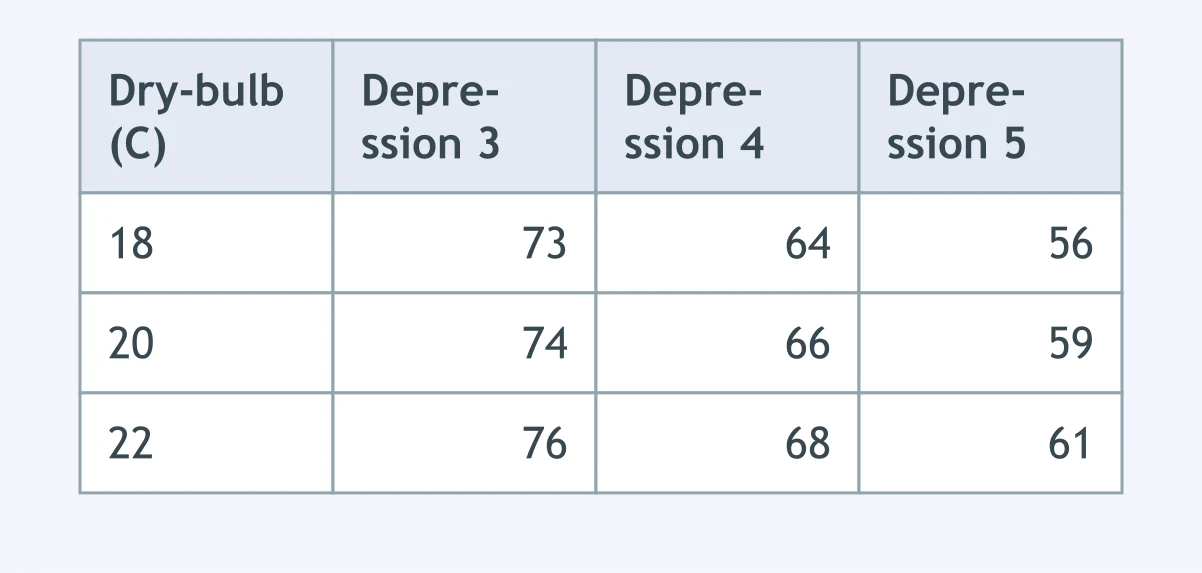
The table lists dry-bulb temperature down the side and wet-bulb depression across the top. A dry-bulb thermometer reads 8 °C and a wet-bulb thermometer reads 5 °C. What is the relative humidity of this air?
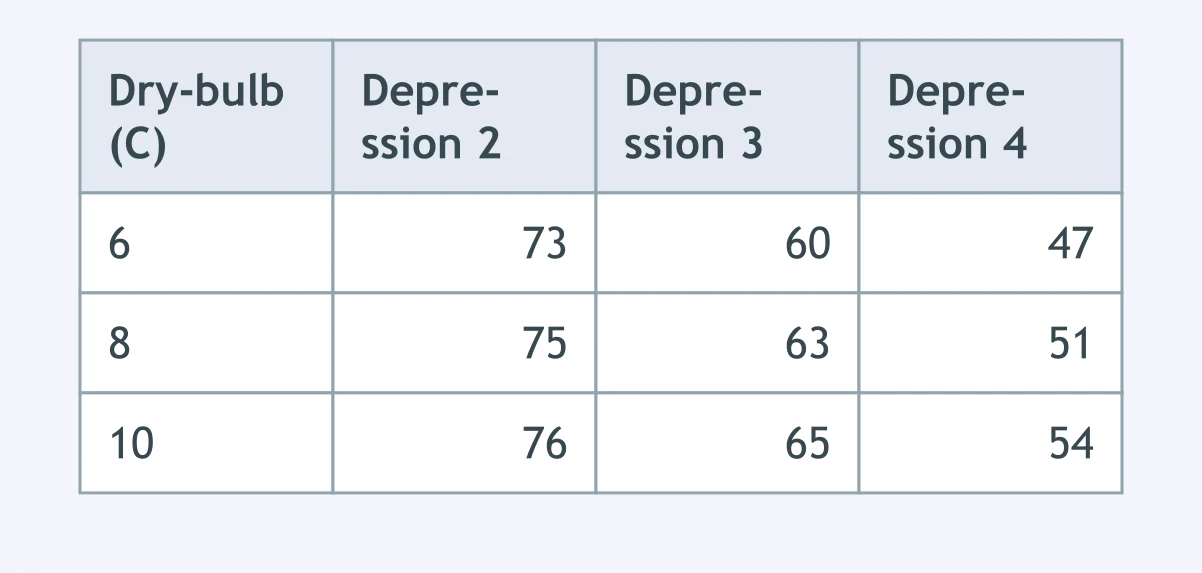
The table lists dry-bulb temperature down the side and wet-bulb depression across the top. A station reads a dry-bulb temperature of 24 °C and a wet-bulb temperature of 19 °C. What is the relative humidity of this air?
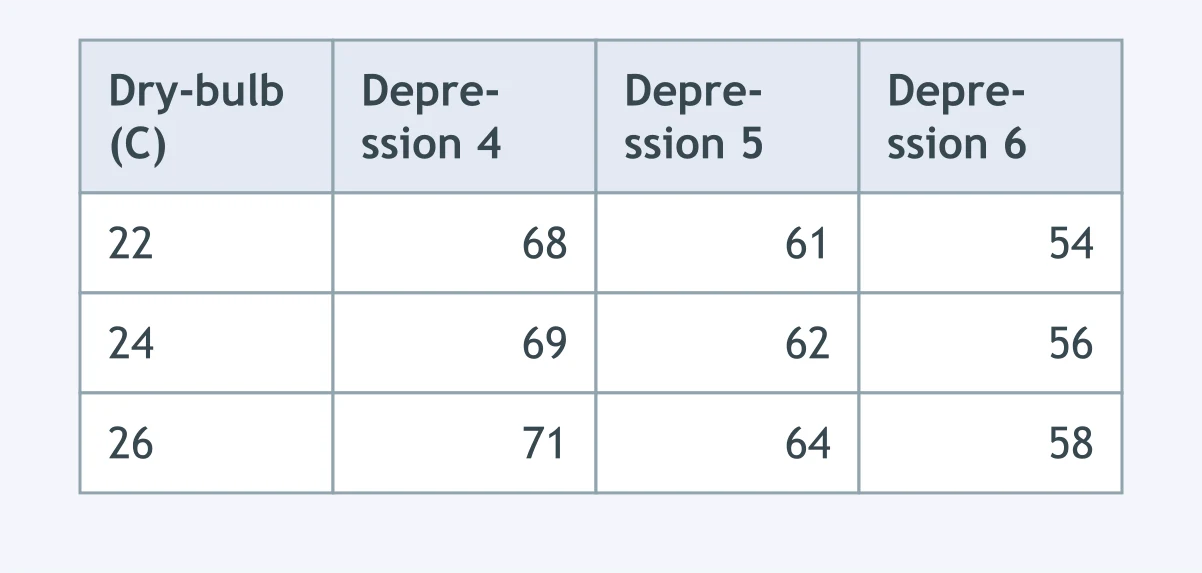
The table lists dry-bulb temperature down the side and wet-bulb depression across the top. A dry-bulb thermometer reads 2 °C and a wet-bulb thermometer reads 0 °C. What is the relative humidity of this air?
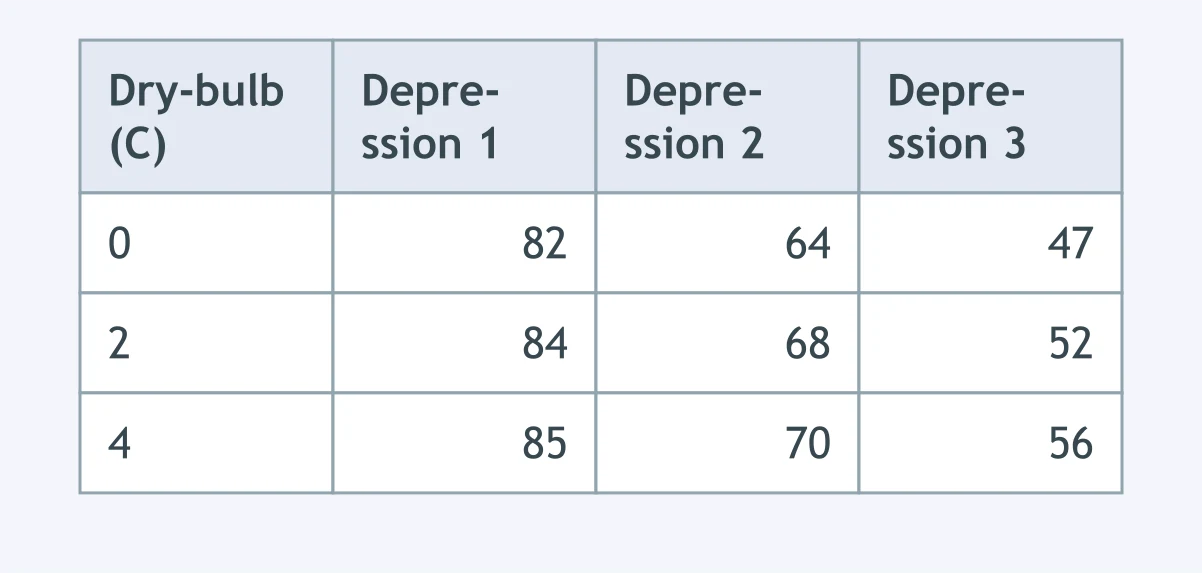
The table lists dry-bulb temperature down the side and wet-bulb depression across the top. A station reads a dry-bulb temperature of 30 °C and a wet-bulb temperature of 25 °C. What is the relative humidity of this air?
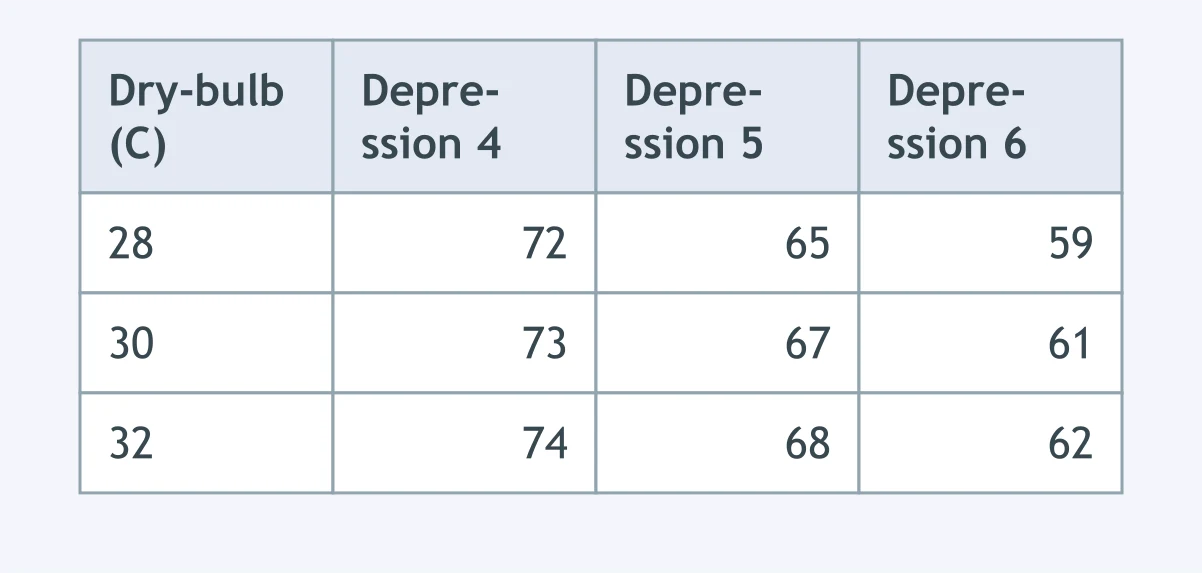
The table lists dry-bulb temperature down the side and wet-bulb depression across the top. A dry-bulb thermometer reads 16 °C and a wet-bulb thermometer reads 12 °C. What is the relative humidity of this air?
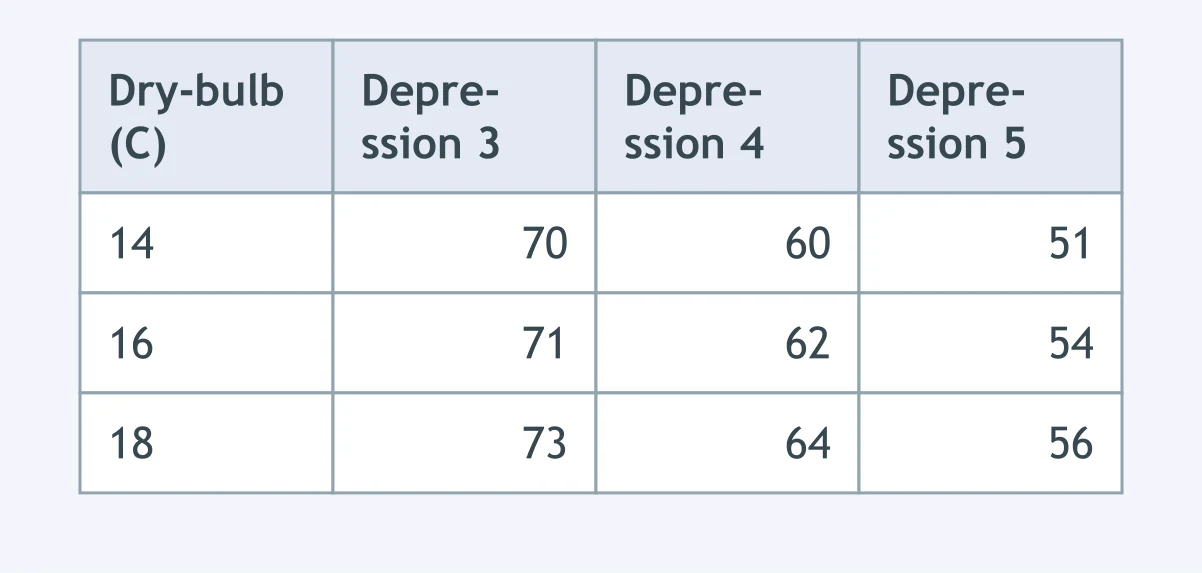
The table lists dry-bulb temperature down the side and wet-bulb depression across the top. A station reads a dry-bulb temperature of 6 °C and a wet-bulb temperature of 3 °C. What is the relative humidity of this air?
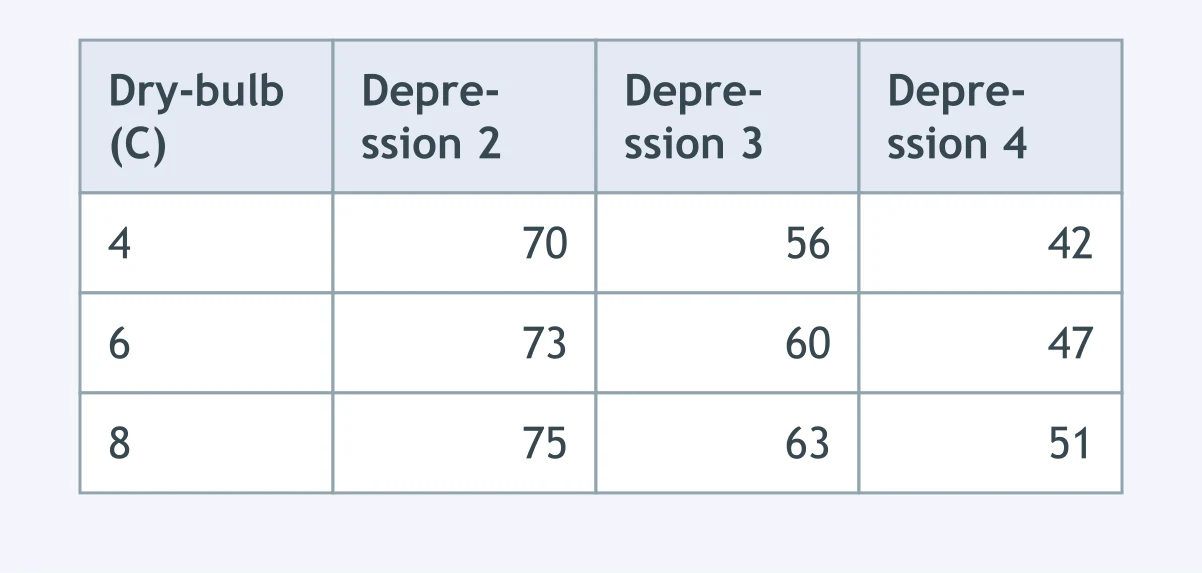
The table lists dry-bulb temperature down the side and wet-bulb depression across the top. A dry-bulb thermometer reads 26 °C and a wet-bulb thermometer reads 21 °C. What is the relative humidity of this air?
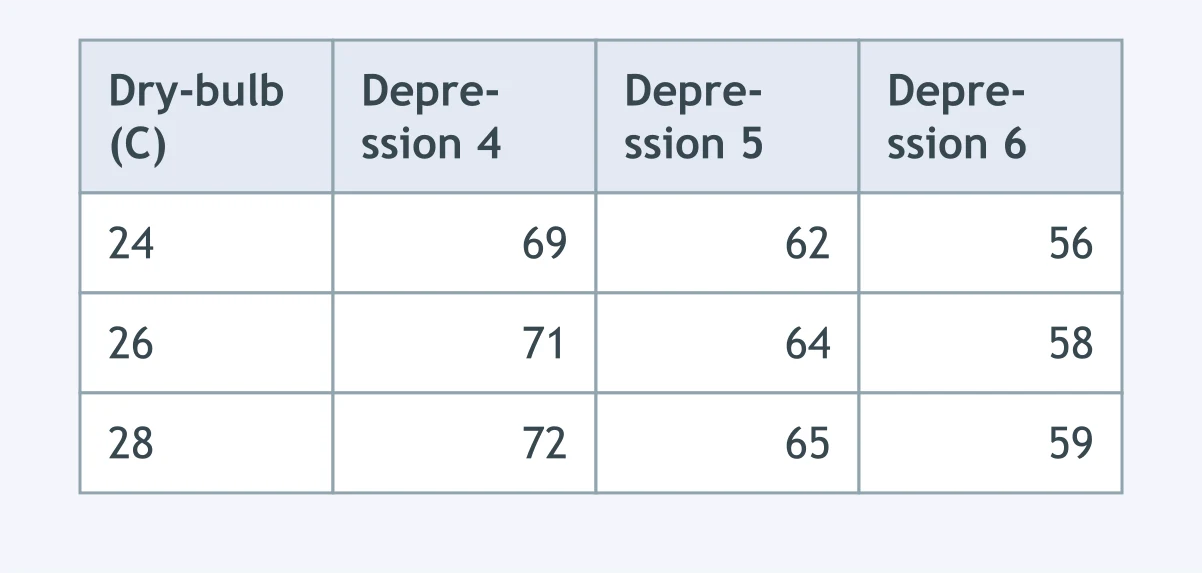
The table lists dry-bulb temperature down the side and wet-bulb depression across the top. A station reads a dry-bulb temperature of 12 °C and a wet-bulb temperature of 8 °C. What is the relative humidity of this air?
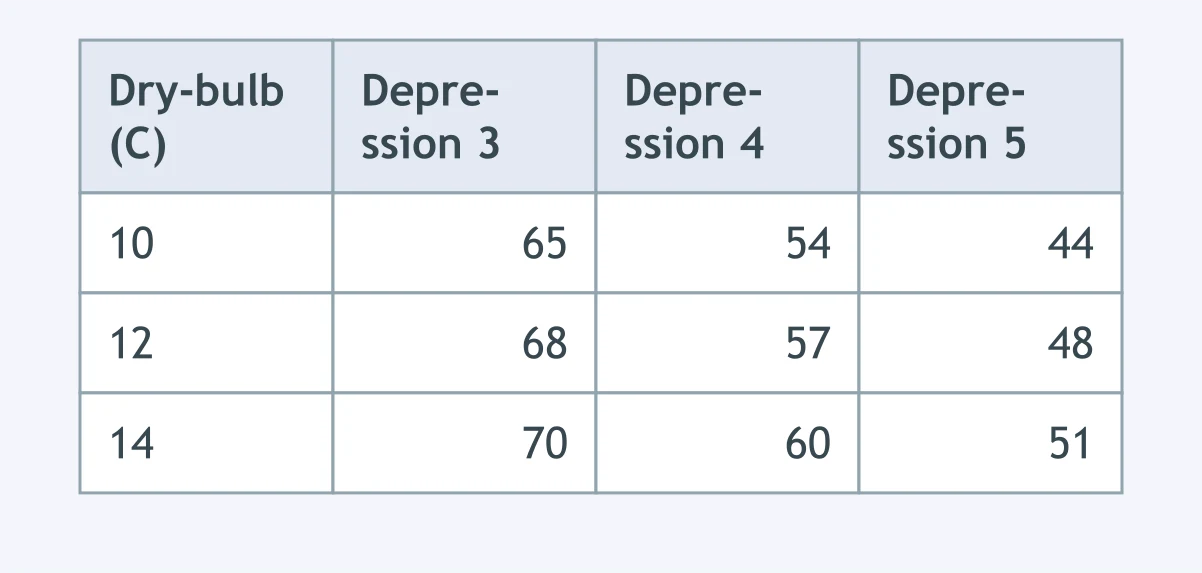
The table lists dry-bulb temperature down the side and wet-bulb depression across the top. A dry-bulb thermometer reads 18 °C and a wet-bulb thermometer reads 14 °C. What is the relative humidity of this air?
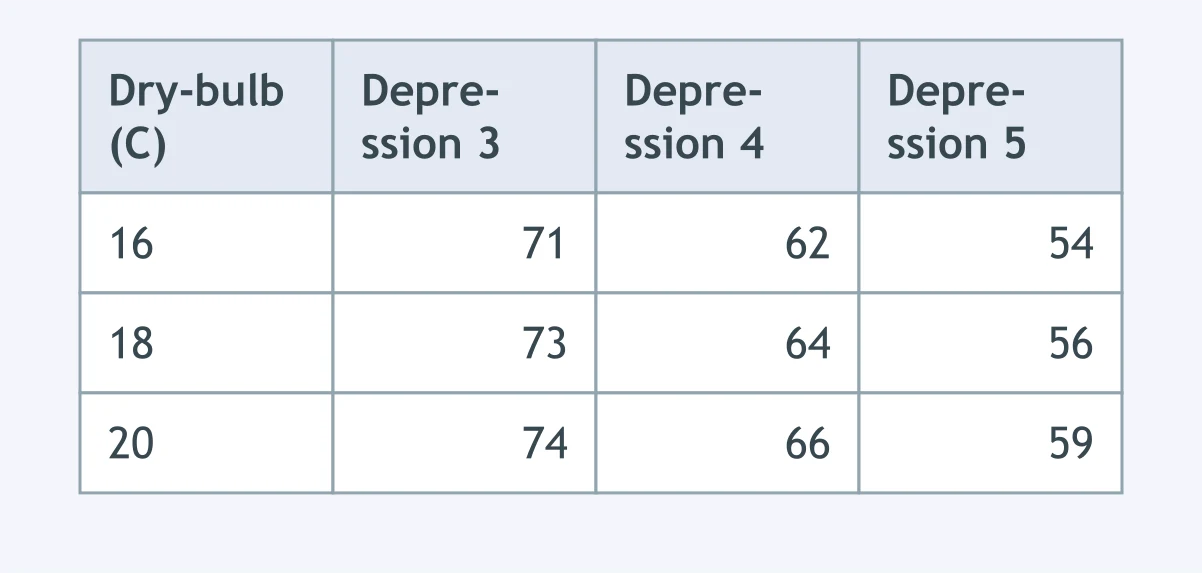
The table lists dry-bulb temperature down the side and wet-bulb depression across the top. A station reads a dry-bulb temperature of 28 °C and a wet-bulb temperature of 24 °C. What is the relative humidity of this air?
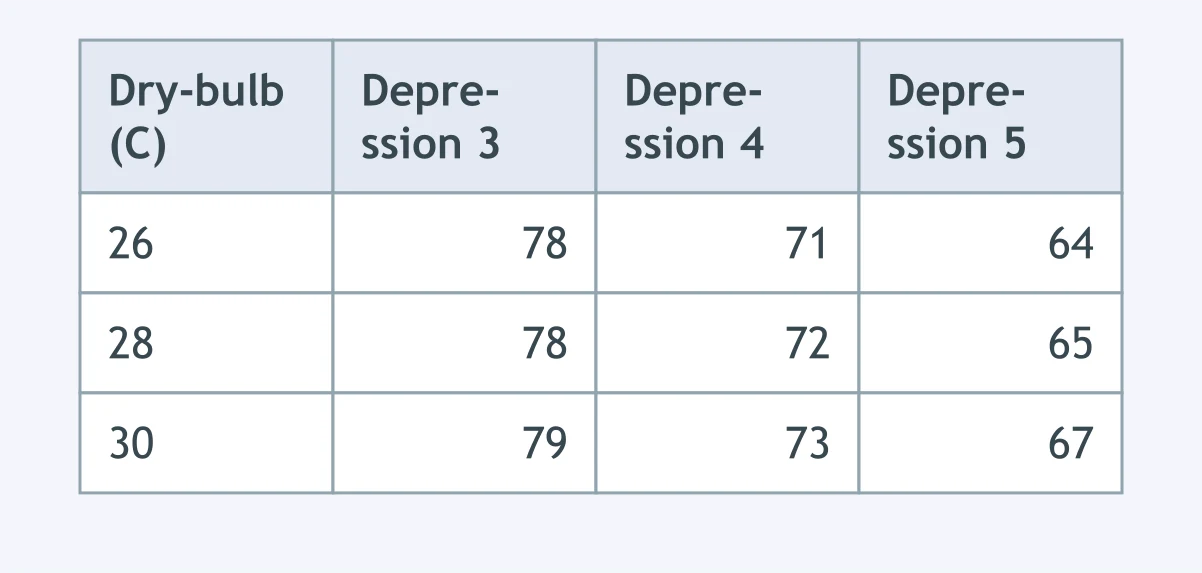
The table lists dry-bulb temperature down the side and wet-bulb depression across the top. A psychrometer at a station reads a dry-bulb temperature of 20 °C and a wet-bulb temperature of 16 °C. Using the dew point table, what is the dew point of this air?
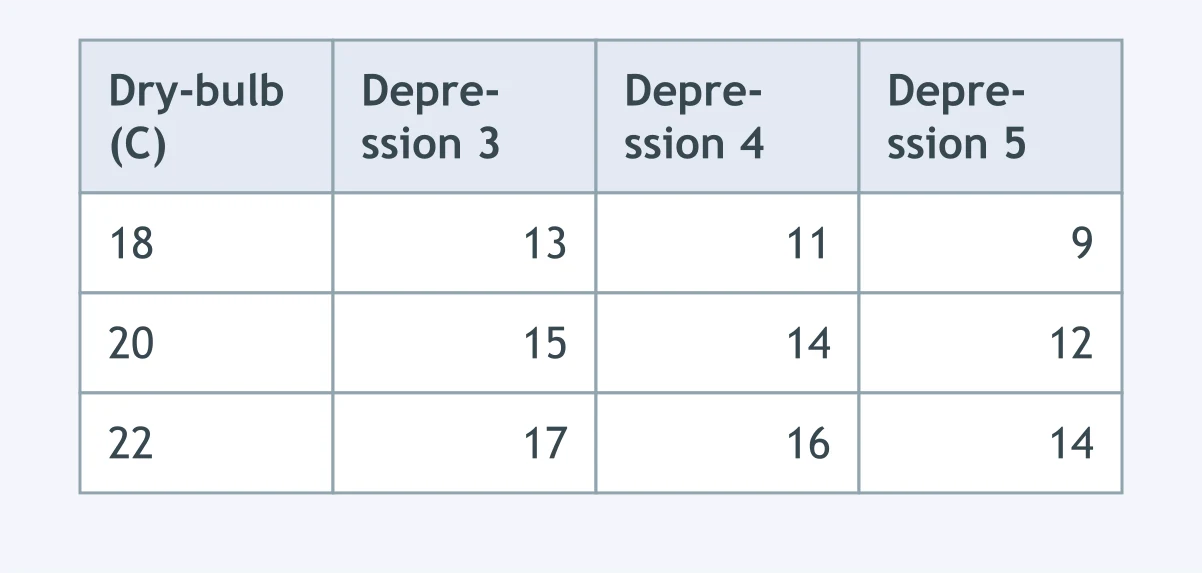
The table lists dry-bulb temperature down the side and wet-bulb depression across the top. A dry-bulb thermometer reads 18 °C and a wet-bulb thermometer reads 14 °C. Using the dew point table, what is the dew point of this air?
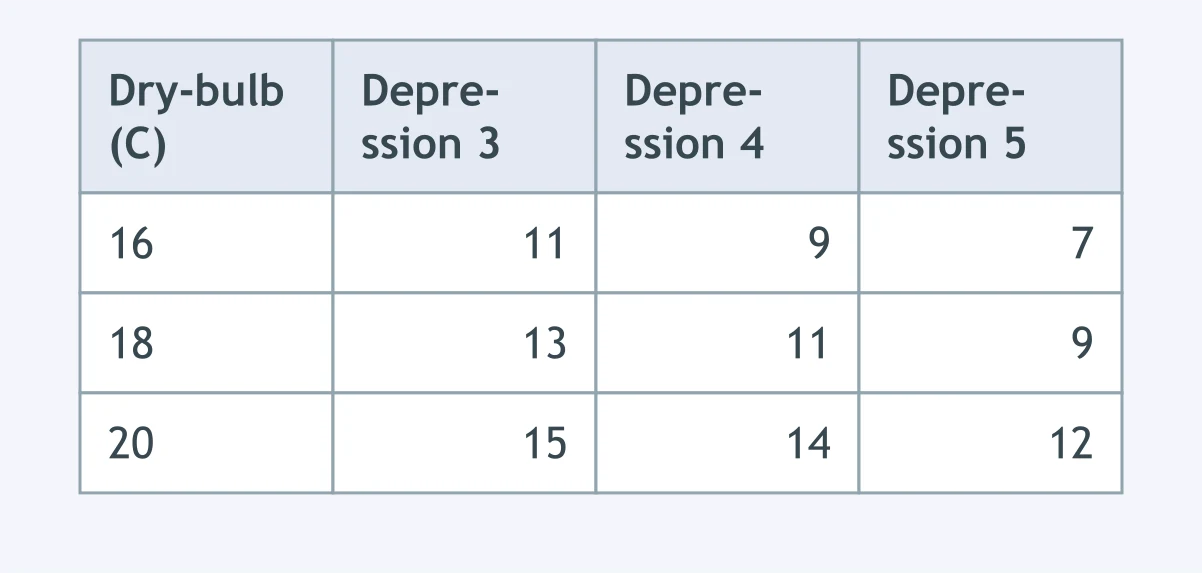
The table lists dry-bulb temperature down the side and wet-bulb depression across the top. A station reads a dry-bulb temperature of 10 °C and a wet-bulb temperature of 7 °C. Using the dew point table, what is the dew point of this air?
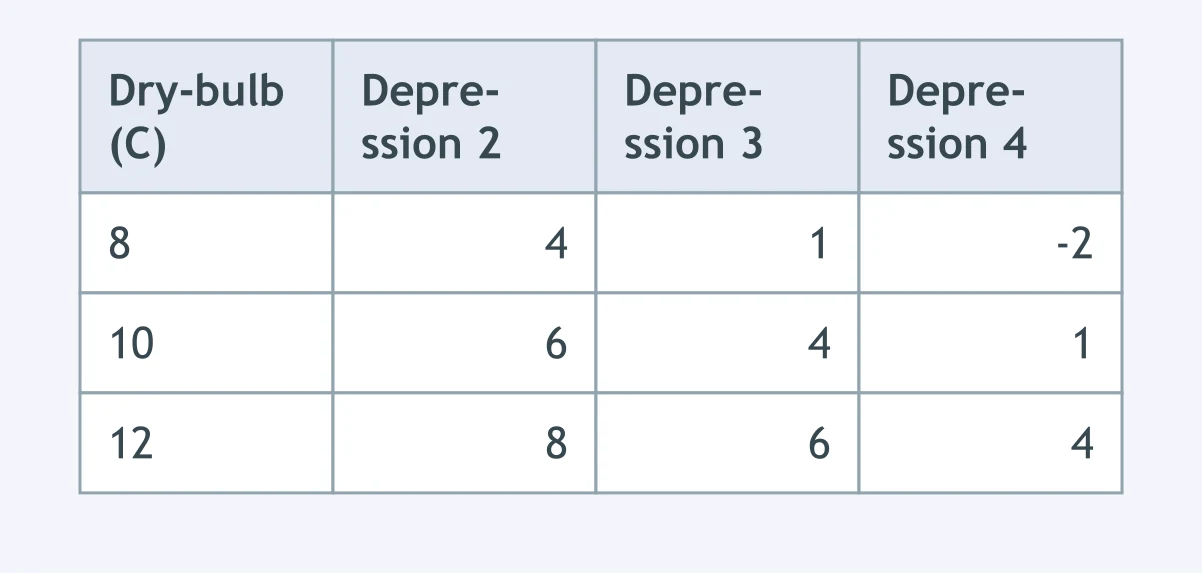
The table lists dry-bulb temperature down the side and wet-bulb depression across the top. A dry-bulb thermometer reads 24 °C and a wet-bulb thermometer reads 20 °C. Using the dew point table, what is the dew point of this air?
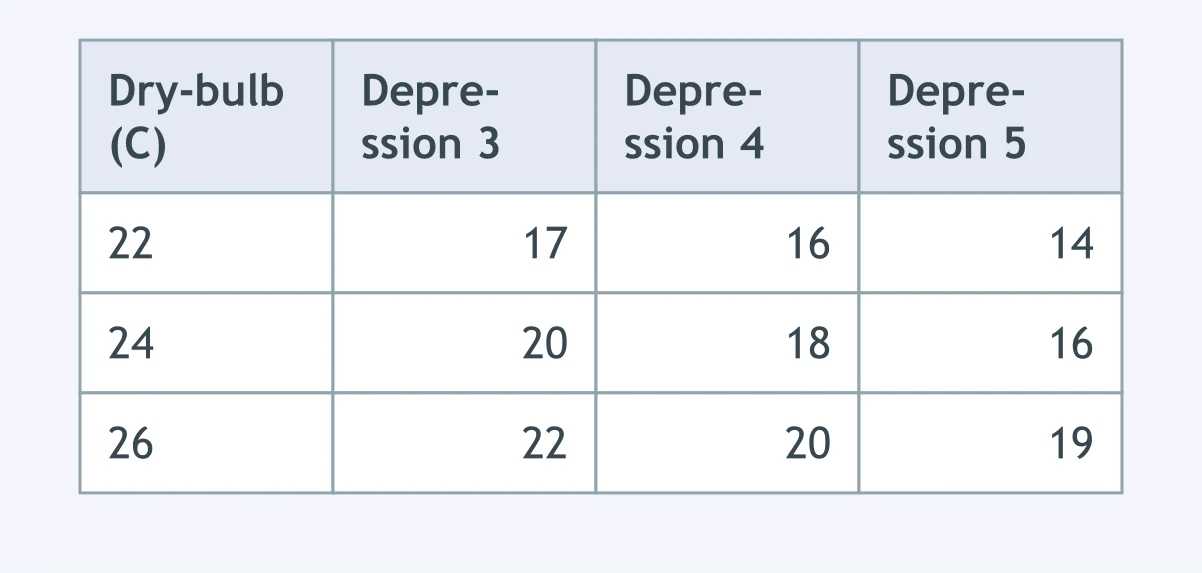
The table lists dry-bulb temperature down the side and wet-bulb depression across the top. A station reads a dry-bulb temperature of 4 °C and a wet-bulb temperature of 2 °C. Using the dew point table, what is the dew point of this air?
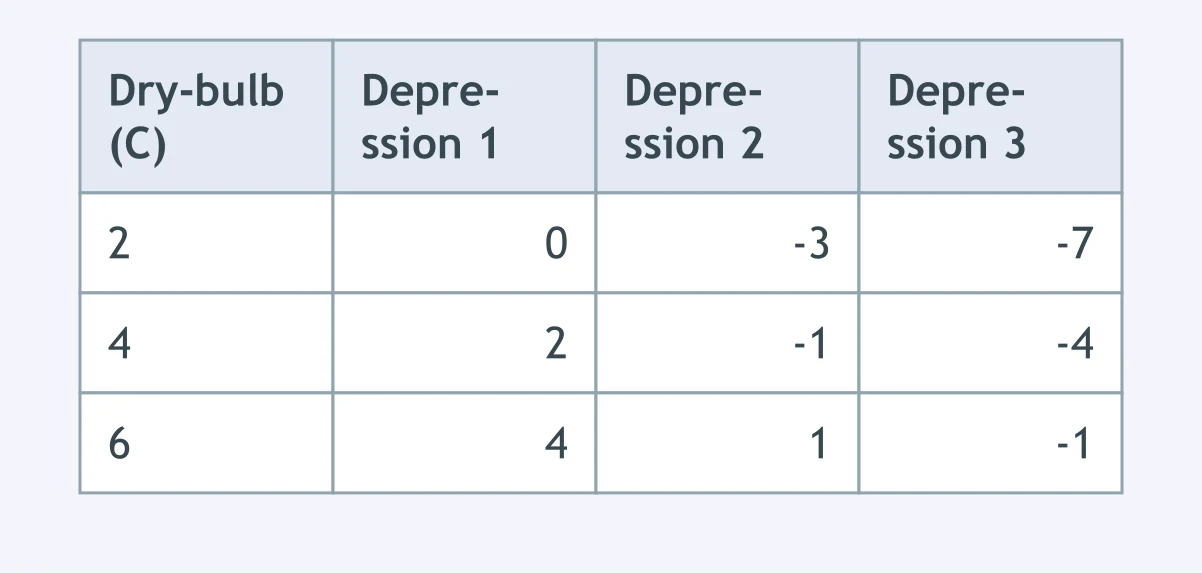
The table lists dry-bulb temperature down the side and wet-bulb depression across the top. A dry-bulb thermometer reads 28 °C and a wet-bulb thermometer reads 23 °C. Using the dew point table, what is the dew point of this air?
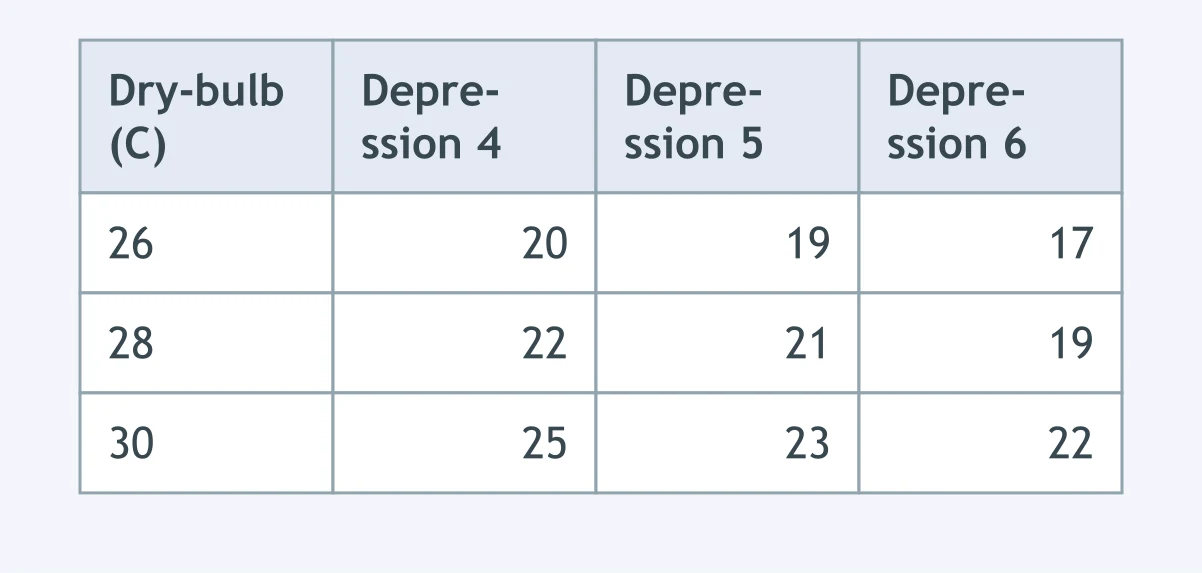
The table lists dry-bulb temperature down the side and wet-bulb depression across the top. A station reads a dry-bulb temperature of 14 °C and a wet-bulb temperature of 11 °C. Using the dew point table, what is the dew point of this air?
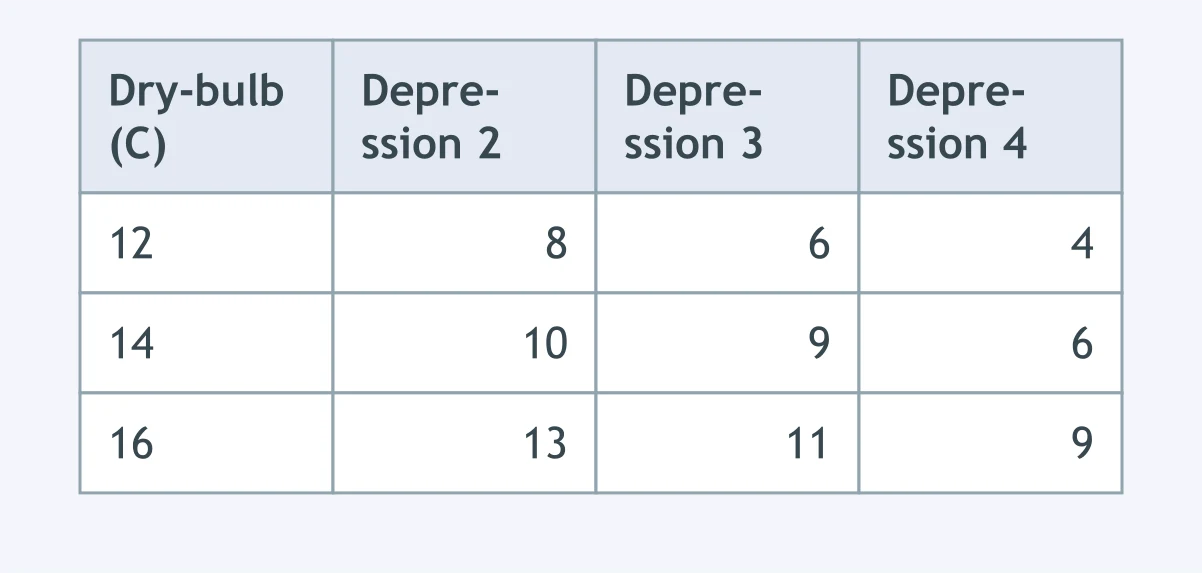
The table lists dry-bulb temperature down the side and wet-bulb depression across the top. A dry-bulb thermometer reads 22 °C and a wet-bulb thermometer reads 17 °C. Using the dew point table, what is the dew point of this air?
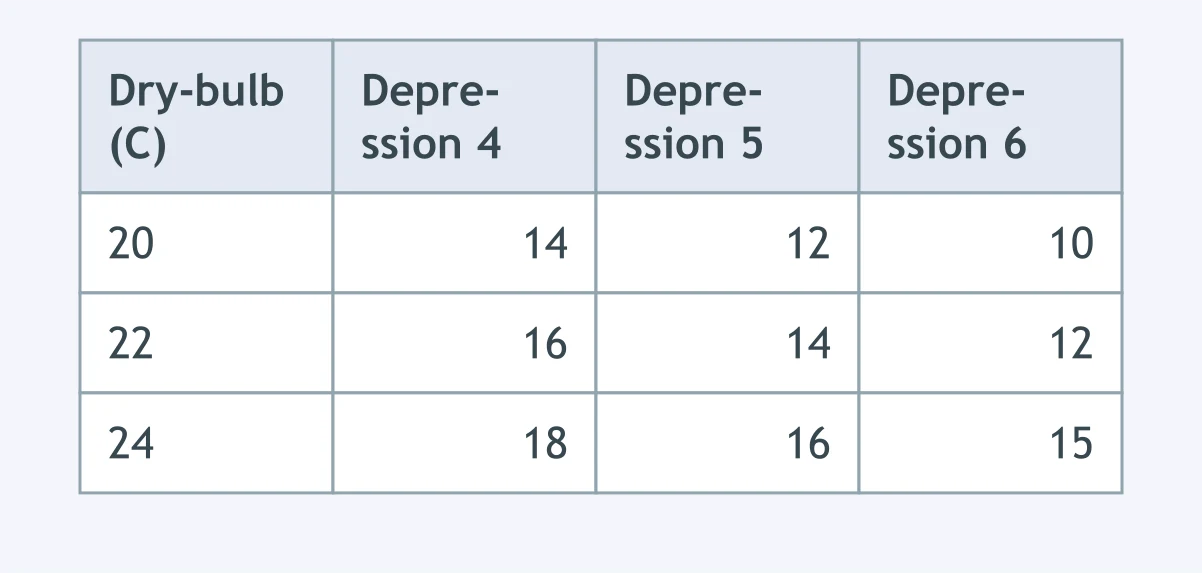
The table lists dry-bulb temperature down the side and wet-bulb depression across the top. A station reads a dry-bulb temperature of 30 °C and a wet-bulb temperature of 26 °C. Using the dew point table, what is the dew point of this air?
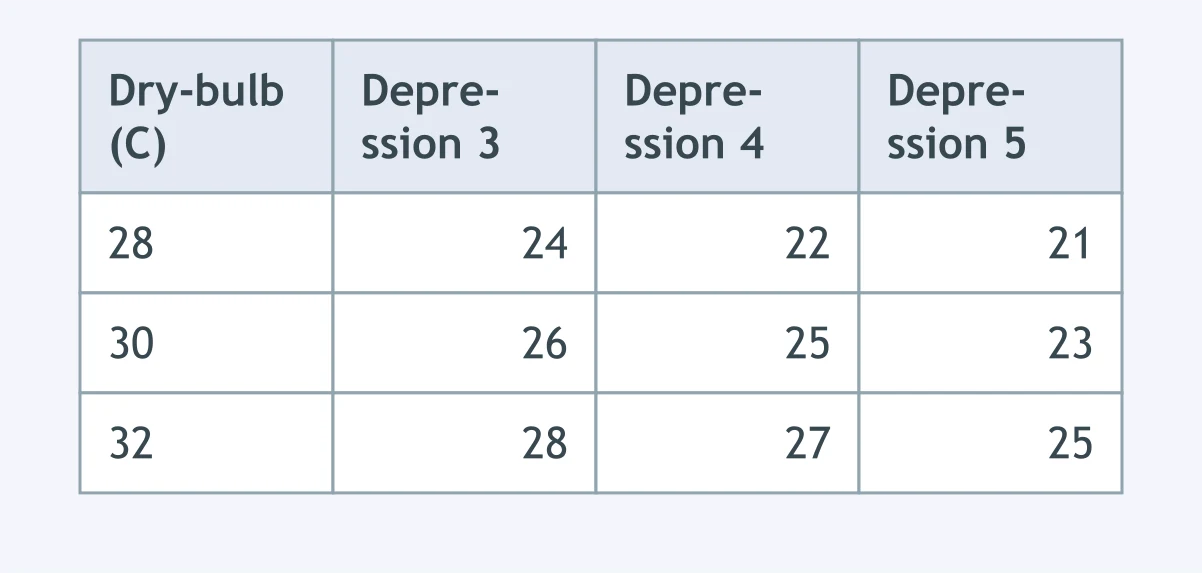
The table lists dry-bulb temperature down the side and wet-bulb depression across the top. A dry-bulb thermometer reads 16 °C and a wet-bulb thermometer reads 13 °C. Using the dew point table, what is the dew point of this air?
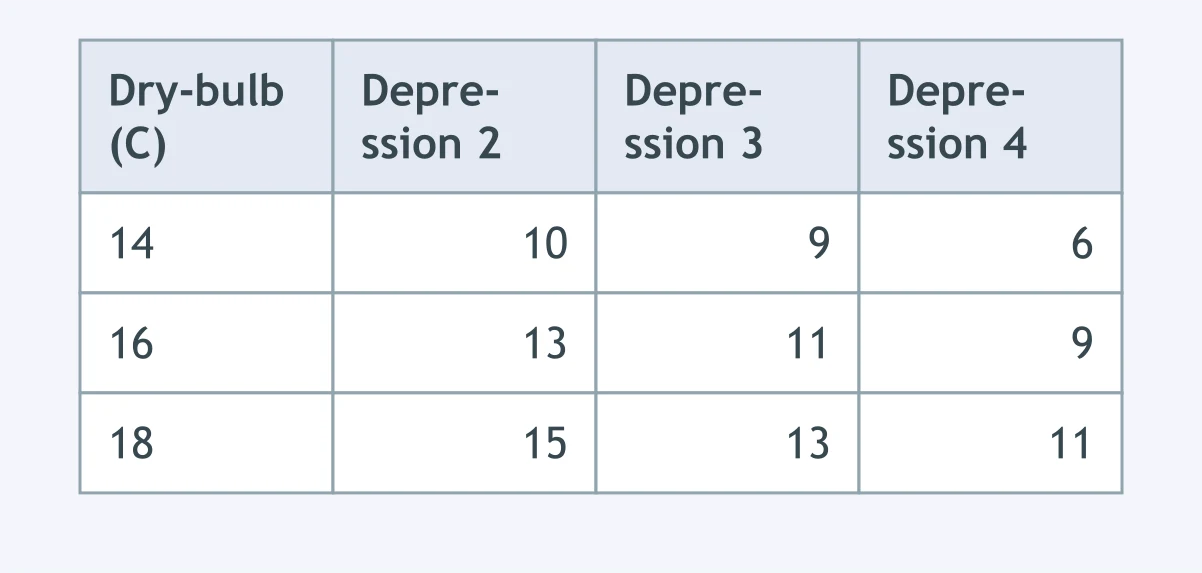
Two stations both report a dry-bulb temperature of 18 °C. Station M has a wet-bulb depression of 1 °C and Station N has a depression of 8 °C. What does that difference show?
At a weather station, the wet-bulb depression grows from 1 °C at 6 a.m. to 7 °C by noon while the dry-bulb temperature rises. What does the growing depression show about the relative humidity?
A psychrometer reading shows a wet-bulb depression of 0 °C. What does that reading indicate about the air?
Two identical rooms are both at 21 °C. Room X has a wet-bulb depression of 9 °C and Room Y has a depression of 2 °C. In which room would sweat evaporate from a person's skin more quickly?
A rooftop instrument shelter holds a steady dry-bulb temperature of 22 °C all afternoon while its wet-bulb depression grows from 2 °C to 6 °C. What is most likely happening to the amount of water vapor in the air?
A dry-bulb thermometer and a wet-bulb thermometer at the same station show a wet-bulb depression of 15 °C. What does that large a depression indicate about the air, in general?
At the same dry-bulb temperature, one instrument shelter shows a wet-bulb depression of 1 °C and another shows a depression of 12 °C. Which shelter's air has the higher dew point?
As a cold front approaches a station, the wet-bulb depression there shrinks from 8 °C toward 0 °C. What is the air's relative humidity doing?
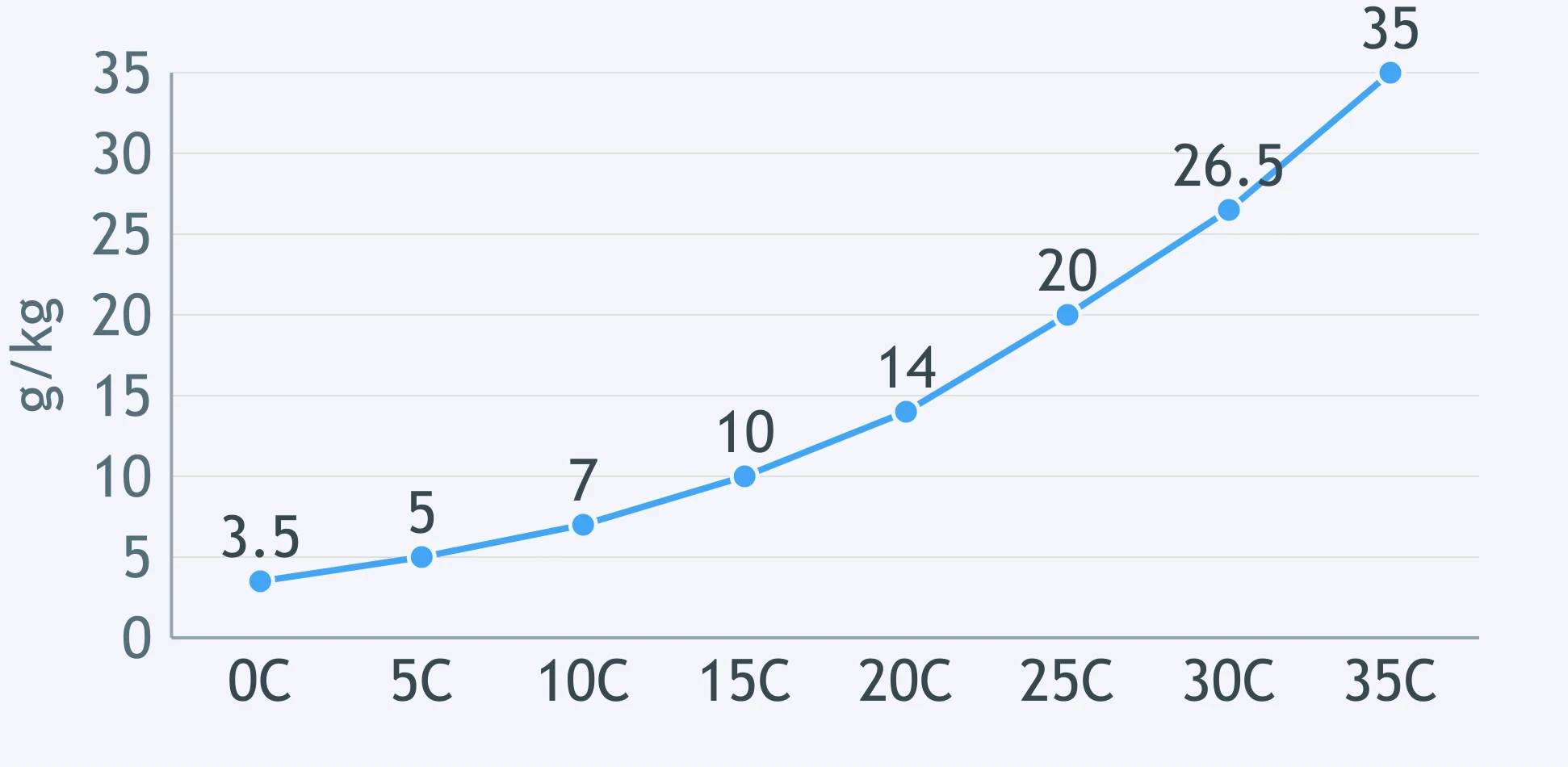
The graph plots the mass of water vapor a kilogram of saturated air can hold at each temperature. A parcel at 30 °C is carrying 20 g/kg of water vapor. What does the curve show about this parcel?
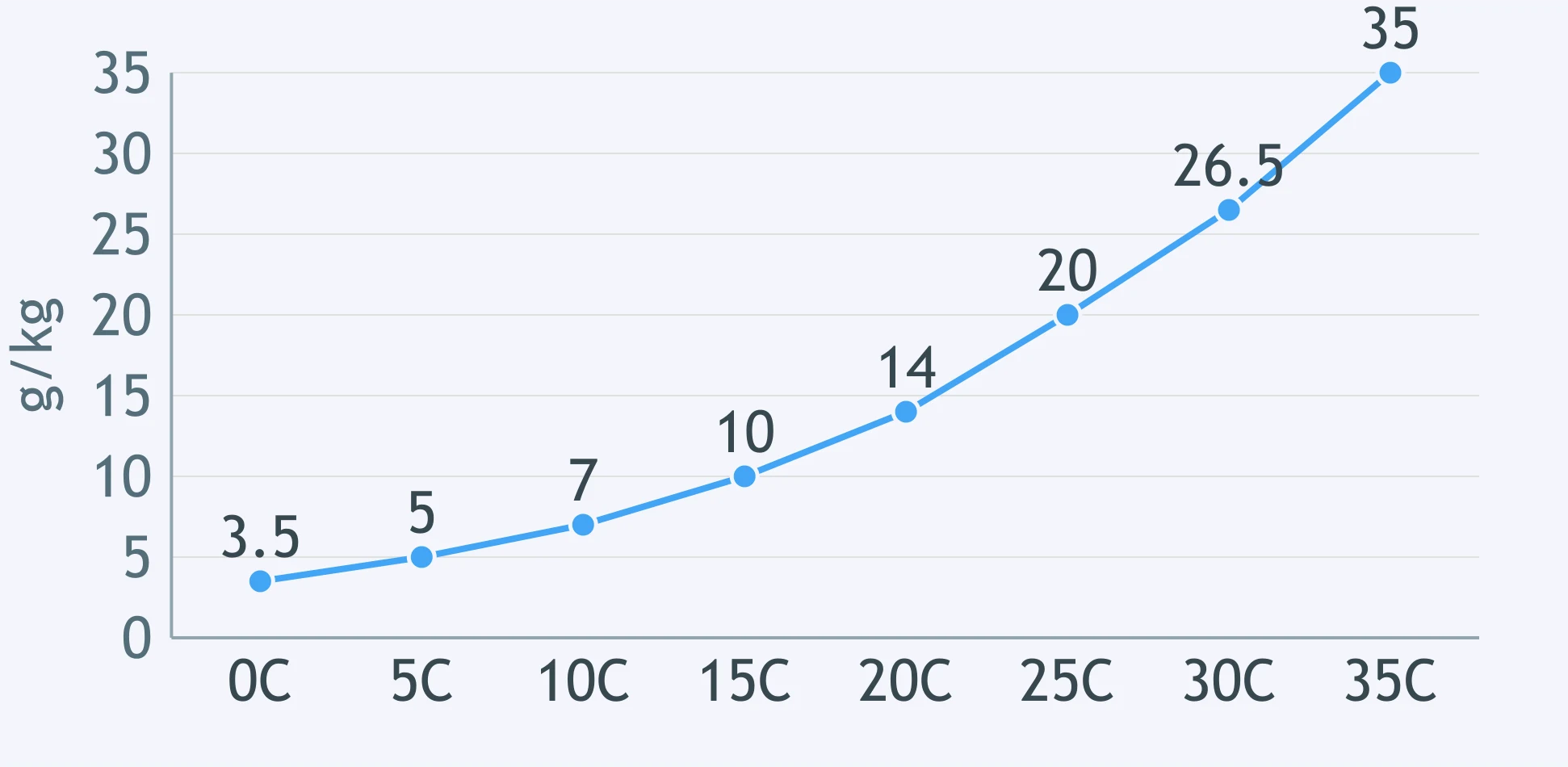
The graph plots the mass of water vapor a kilogram of saturated air can hold at each temperature. A parcel at 10 °C is carrying 7 g/kg of water vapor. What does the curve show about this parcel?
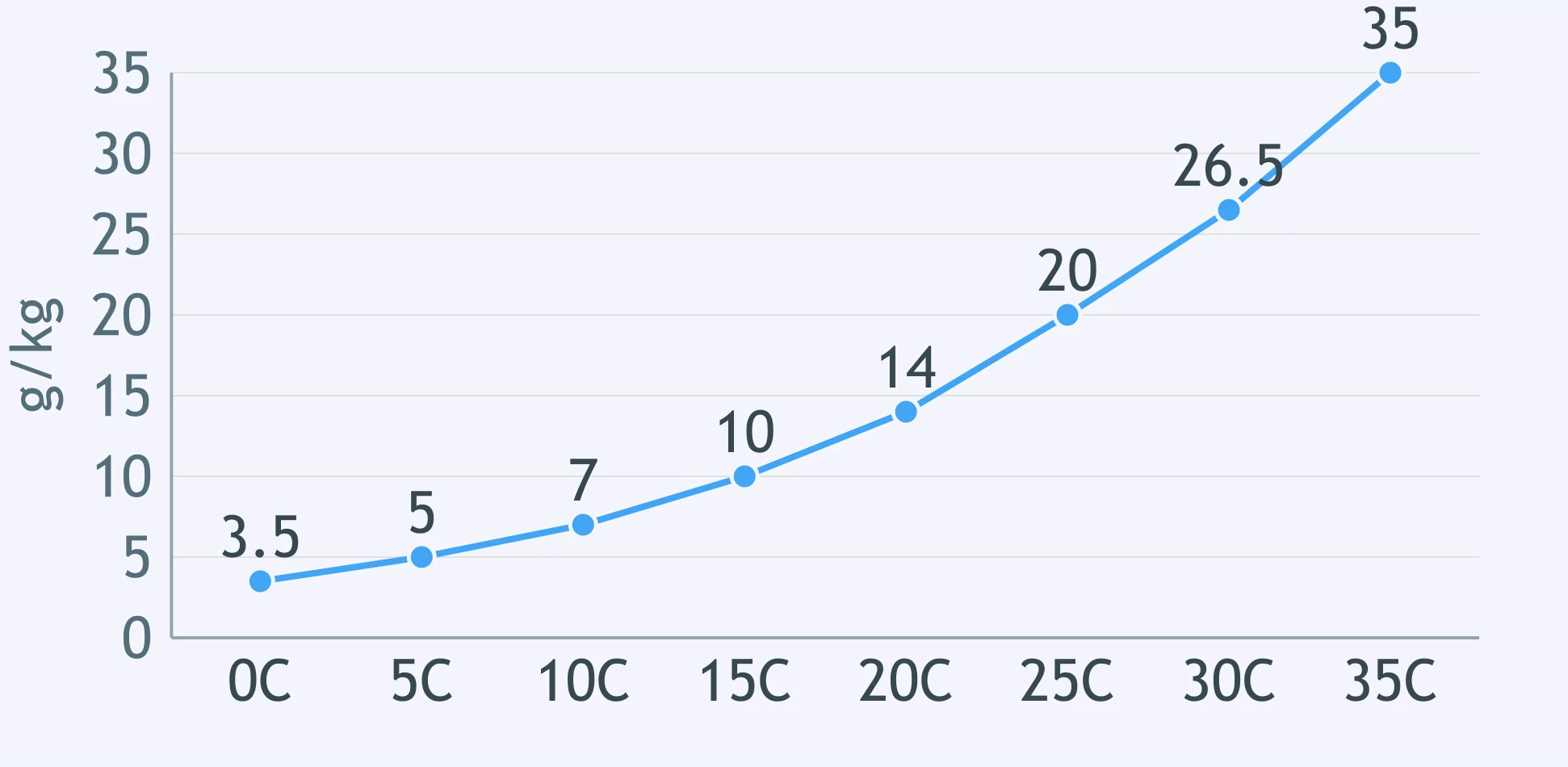
The graph plots the mass of water vapor a kilogram of saturated air can hold at each temperature. A parcel at 20 °C is carrying 9 g/kg of water vapor. What does the curve show about this parcel?
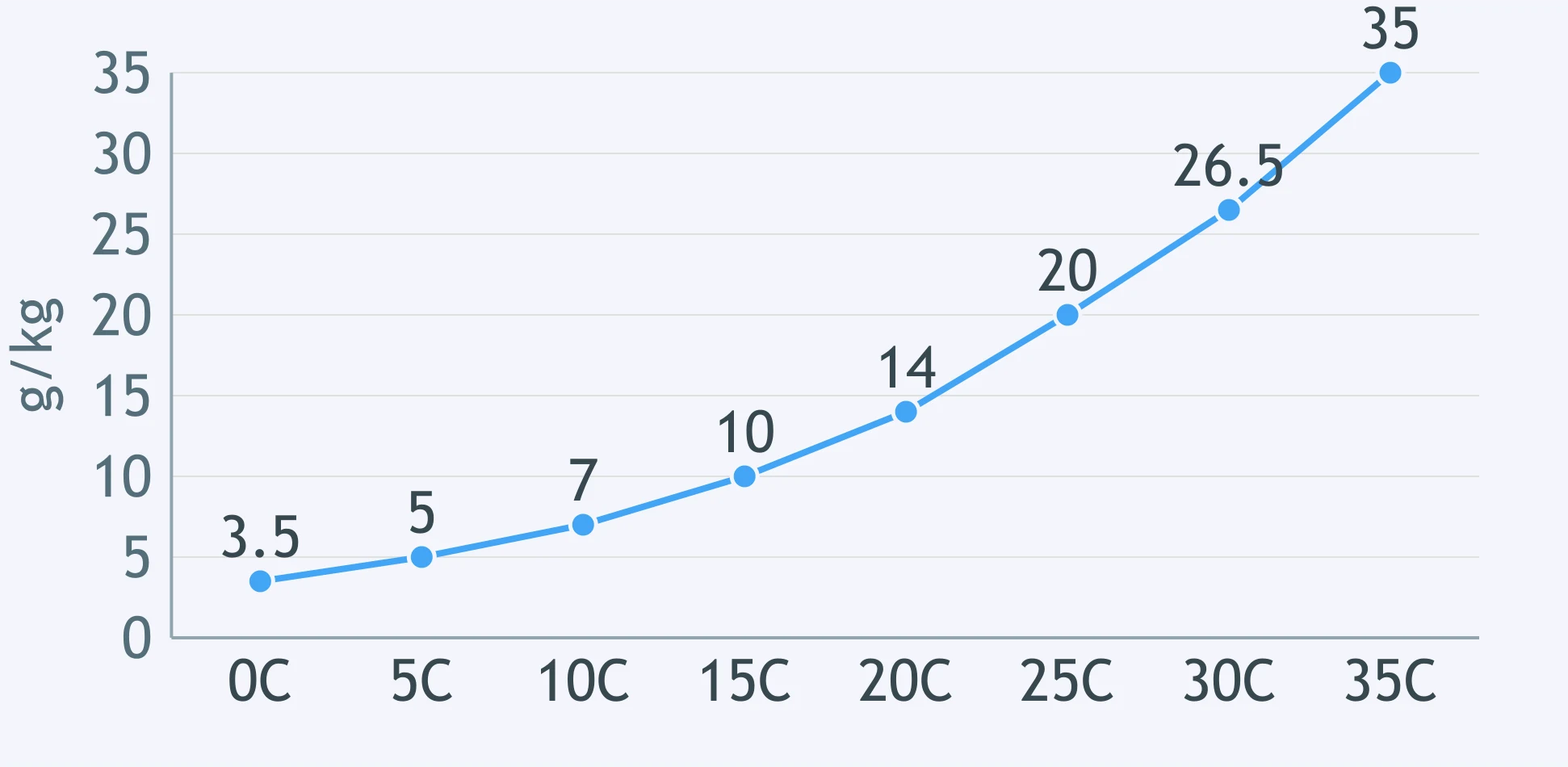
The graph plots the mass of water vapor a kilogram of saturated air can hold at each temperature. A parcel at 5 °C is carrying 5 g/kg of water vapor. What does the curve show about this parcel?
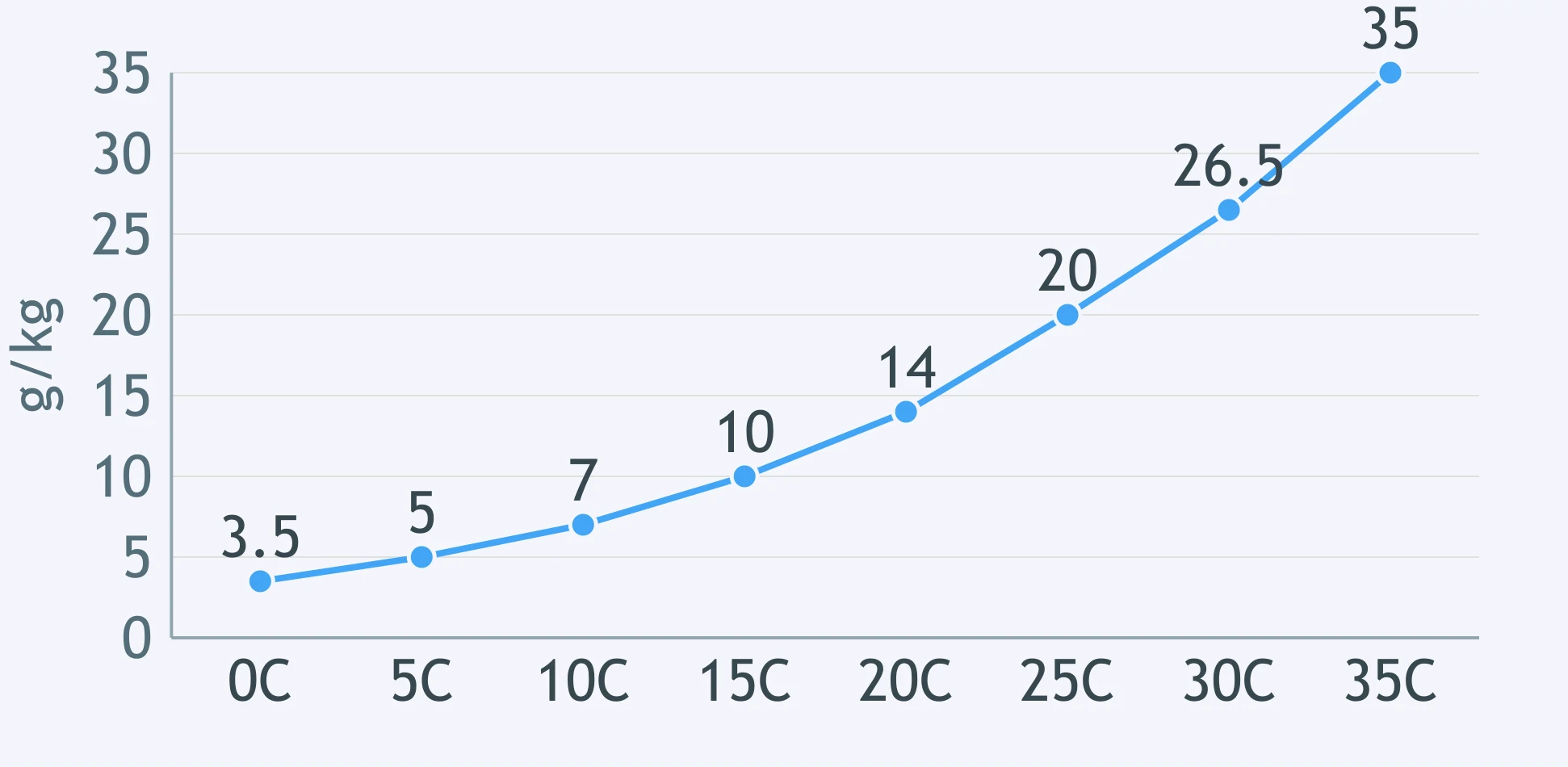
The graph plots the mass of water vapor a kilogram of saturated air can hold at each temperature. A parcel at 35 °C is carrying 24 g/kg of water vapor. What does the curve show about this parcel?
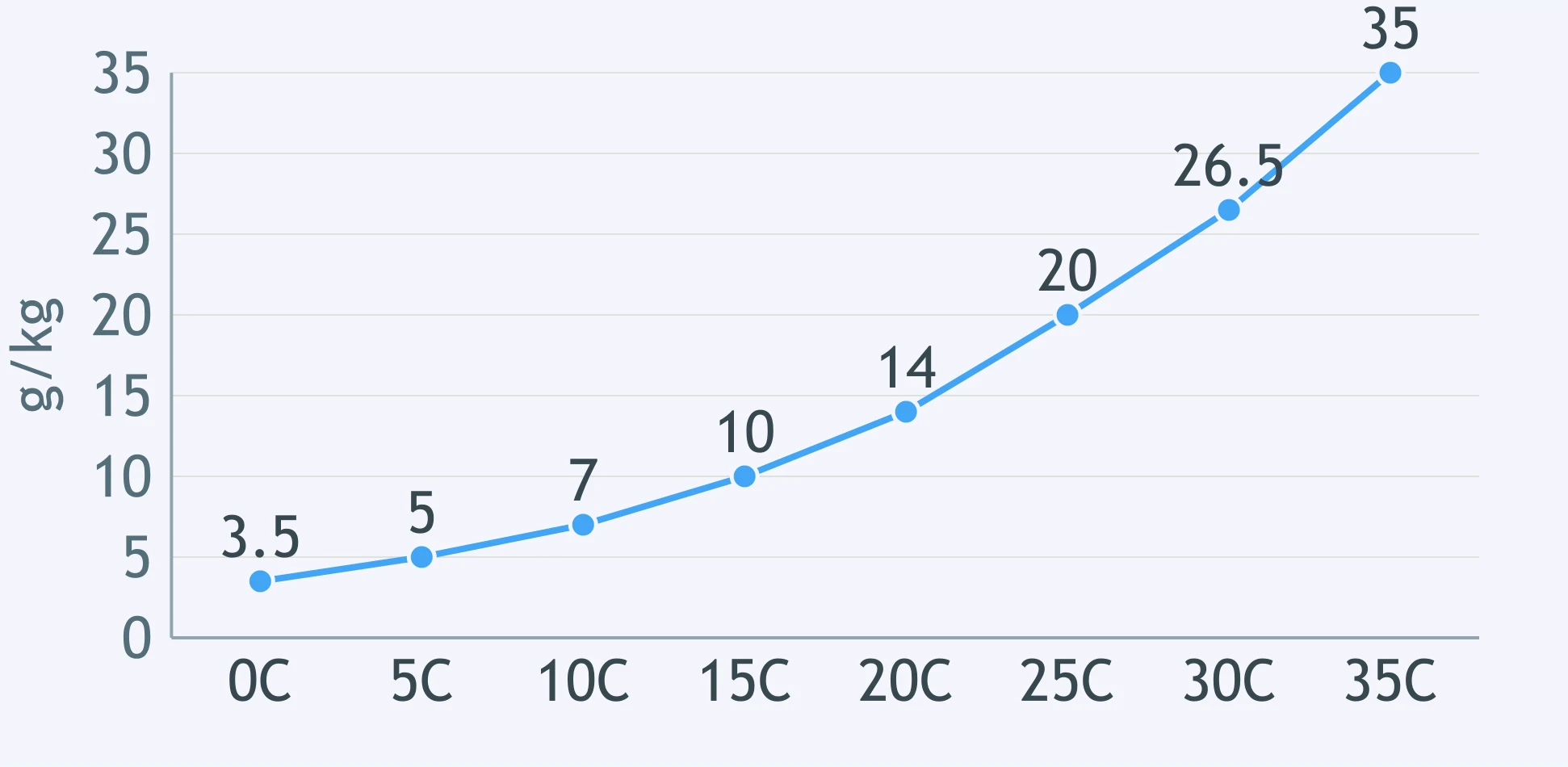
The graph plots the mass of water vapor a kilogram of saturated air can hold at each temperature. A parcel at 0 °C is carrying 3.5 g/kg of water vapor. What does the curve show about this parcel?
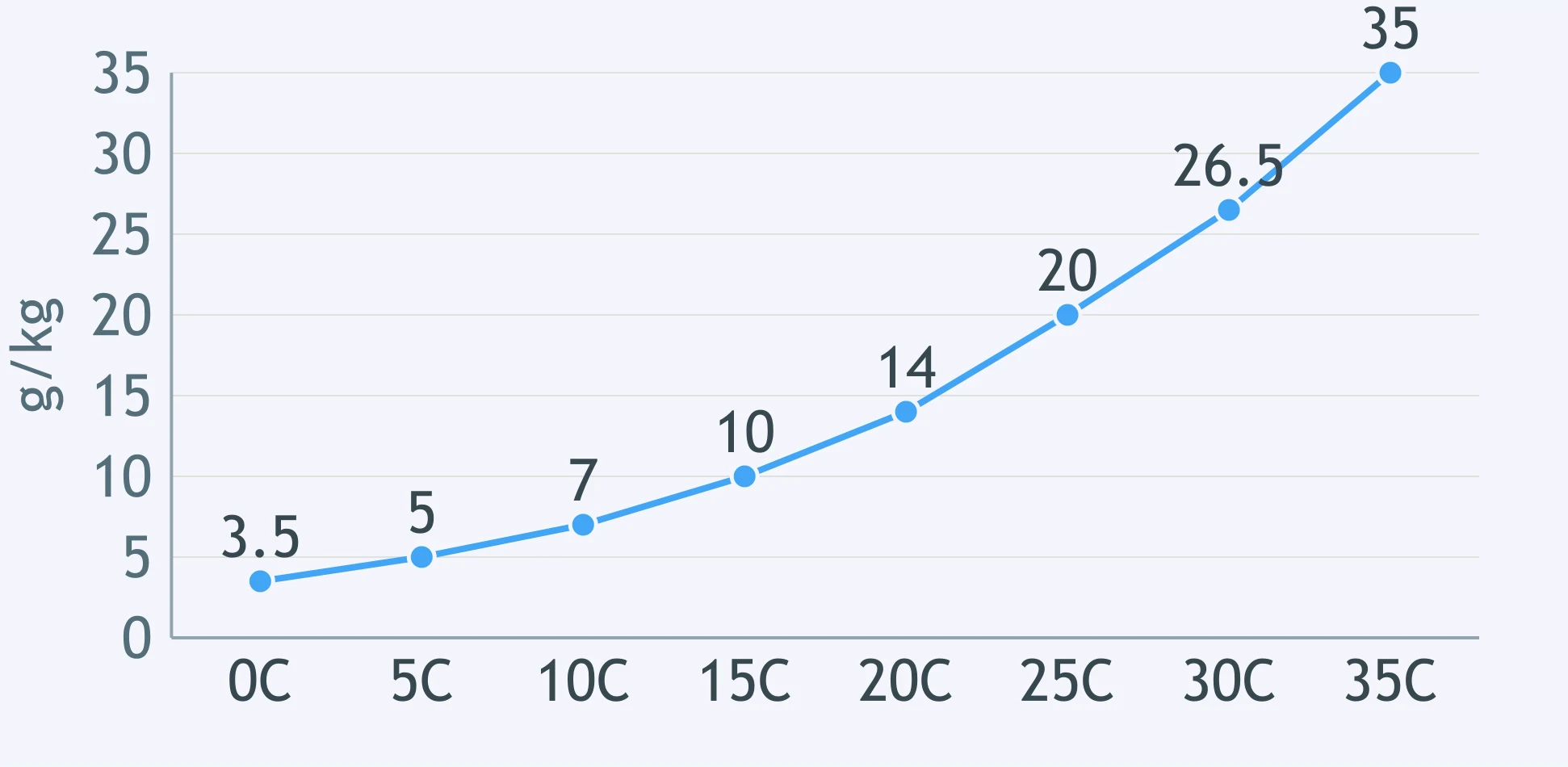
The graph plots the mass of water vapor a kilogram of saturated air can hold at each temperature. A parcel at 25 °C is carrying 15 g/kg of water vapor. What does the curve show about this parcel?
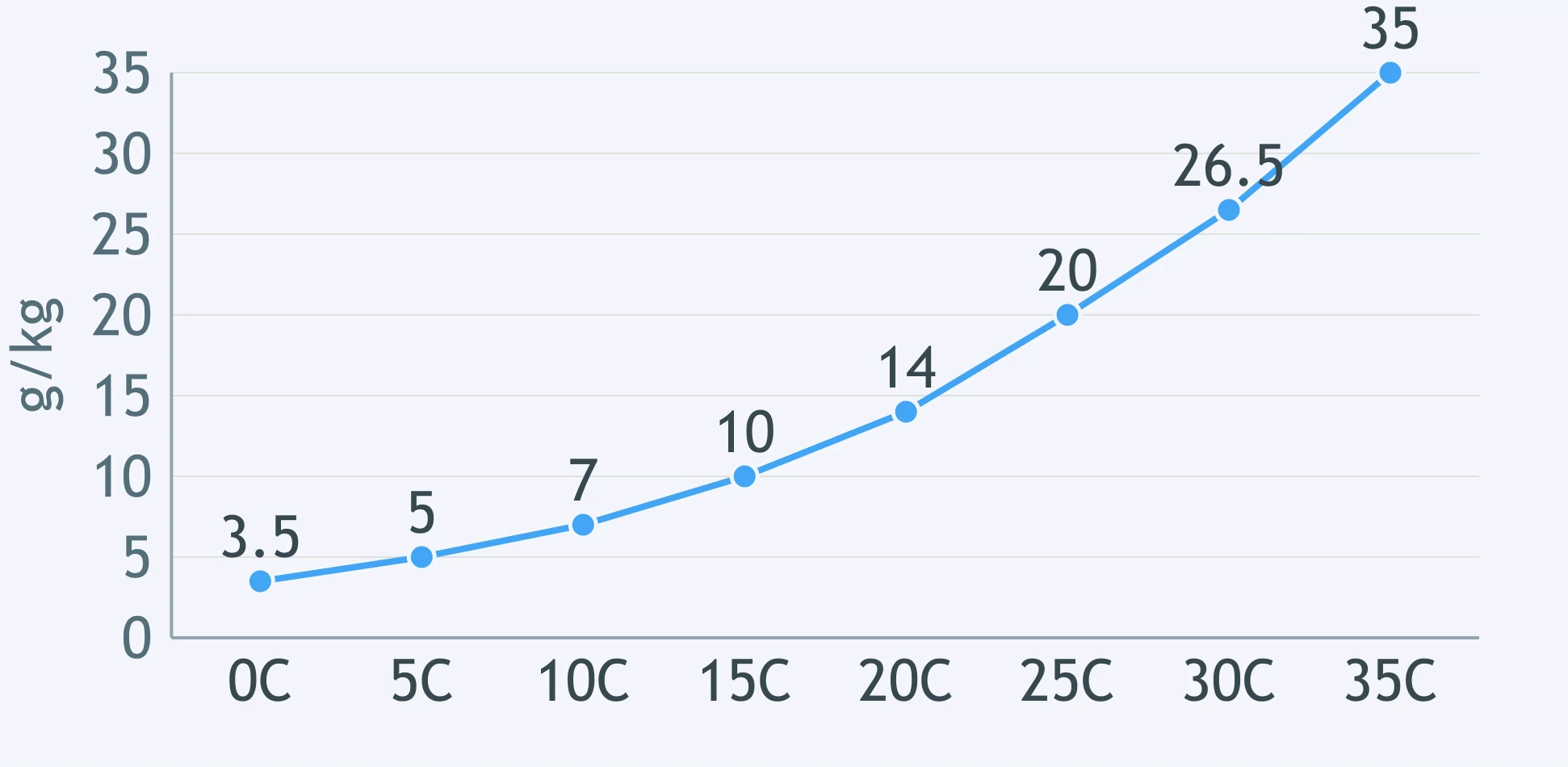
The graph plots the mass of water vapor a kilogram of saturated air can hold at each temperature. A parcel at 15 °C is carrying 10 g/kg of water vapor. What does the curve show about this parcel?
Near the ground on a clear evening, a layer of air has a temperature of 5 °C and a dew point of 5 °C, and the layer keeps cooling. What happens in that layer next?
Warm humid air rises and expands on a summer afternoon, cooling adiabatically until cumulus clouds appear at a certain height. What caused the cloud to form at that height?
A can of soda taken from the refrigerator is set on a table in a warm room, and water droplets soon appear on the outside of the can. What does this show about the can's surface temperature?
A weather report states that the air temperature and the dew point are both 20 °C at dawn and are forecast to stay equal through sunrise. What is most likely at ground level?
As night falls, the ground radiates heat and cools rapidly while the dew point of the air near it stays nearly constant. Once the ground reaches the dew point, what appears on grass and car windshields?
A parcel of air is cooled below its dew point, but no condensation nuclei are present in it. What is most likely to happen?
A hiker's glasses fog up the moment she steps from a cold porch into a warm, humid kitchen. What causes the fogging?
Overnight, the temperature at a station falls from 24 °C to 15 °C while the amount of water vapor in the air does not change. What happens to the relative humidity and to the dew point?
During the day, the temperature at a station rises from 12 °C to 28 °C while no water vapor is added to or removed from the air. What happens to the relative humidity and to the dew point?
A humidifier adds water vapor to a room while a thermostat holds the room's temperature constant. What happens to the relative humidity and to the dew point?
A dehumidifier removes water vapor from a room while a thermostat holds the room's temperature constant. What happens to the relative humidity and to the dew point?
A weather station records the same dew point at 6 a.m., when the air temperature is 10 °C, and at 2 p.m., when the air temperature is 26 °C. Has the amount of water vapor in the air changed between these readings?
Crack the passcode before the zombies get in.
Answer, then swat bugs for bonus points.
Race through questions at your own speed.
Same question on every screen. Fastest wins.

Pick a tile, answer, hit bonuses and steals.
Precipitation
25 questions