Loading
by BlastRoom
Explains how rain, snow, sleet, freezing rain, graupel and hail form, and how precipitation amounts and snowfall are measured.
#earth_space_science
25 questions
One question set, multiple game modes. Tap any game to see it in action. Not sure which to pick?
Answer to place stones and capture territory.
Outrun the snow together.
Earn blasts, then hunt the other team.
Answer to earn energy, then climb.

The class blasts through walls together.
Bid on mystery lots. Most money wins.
Sell tours. Nice, standard, or a total scam.

Answer, restock, and serve the rush.
More correct answers pulls the rope your way.
Answer, then shoot down the alien wave.
Answer, then tap to leap the frozen ridge.
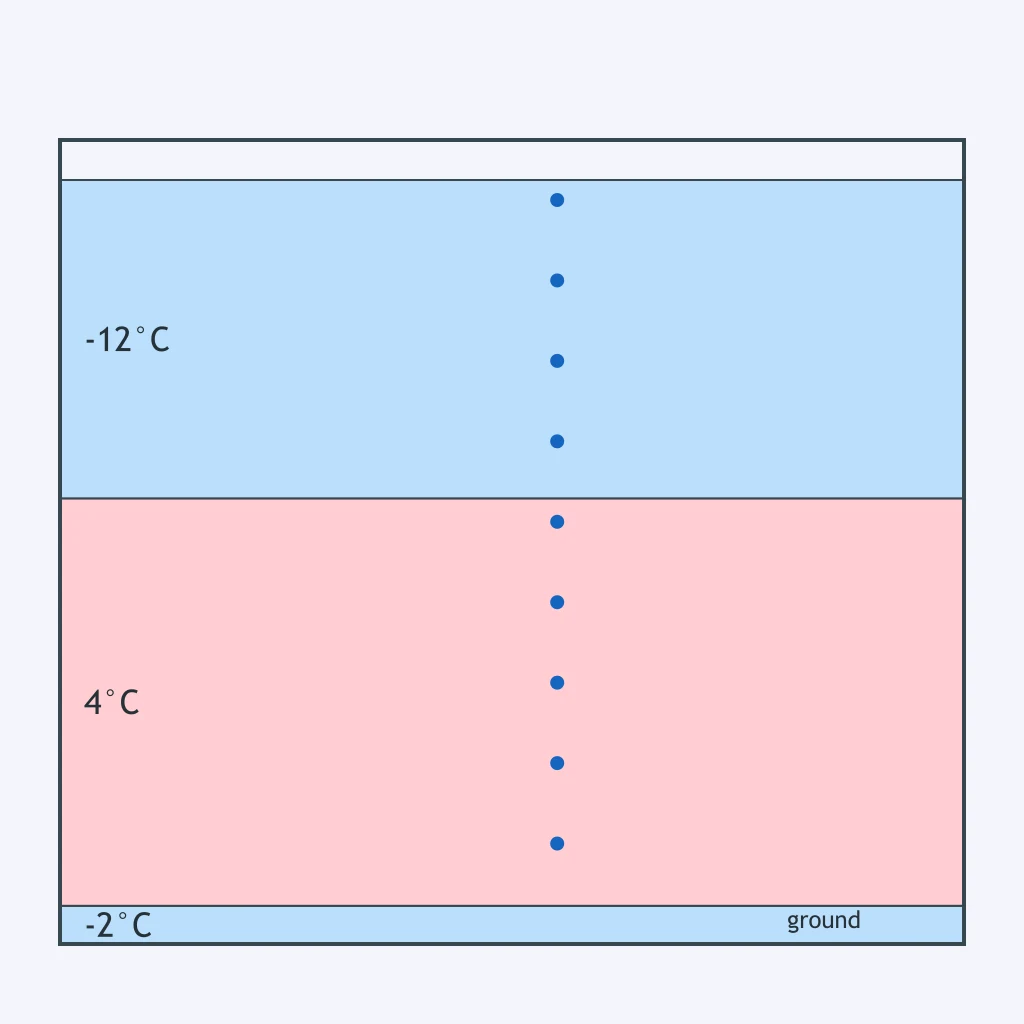
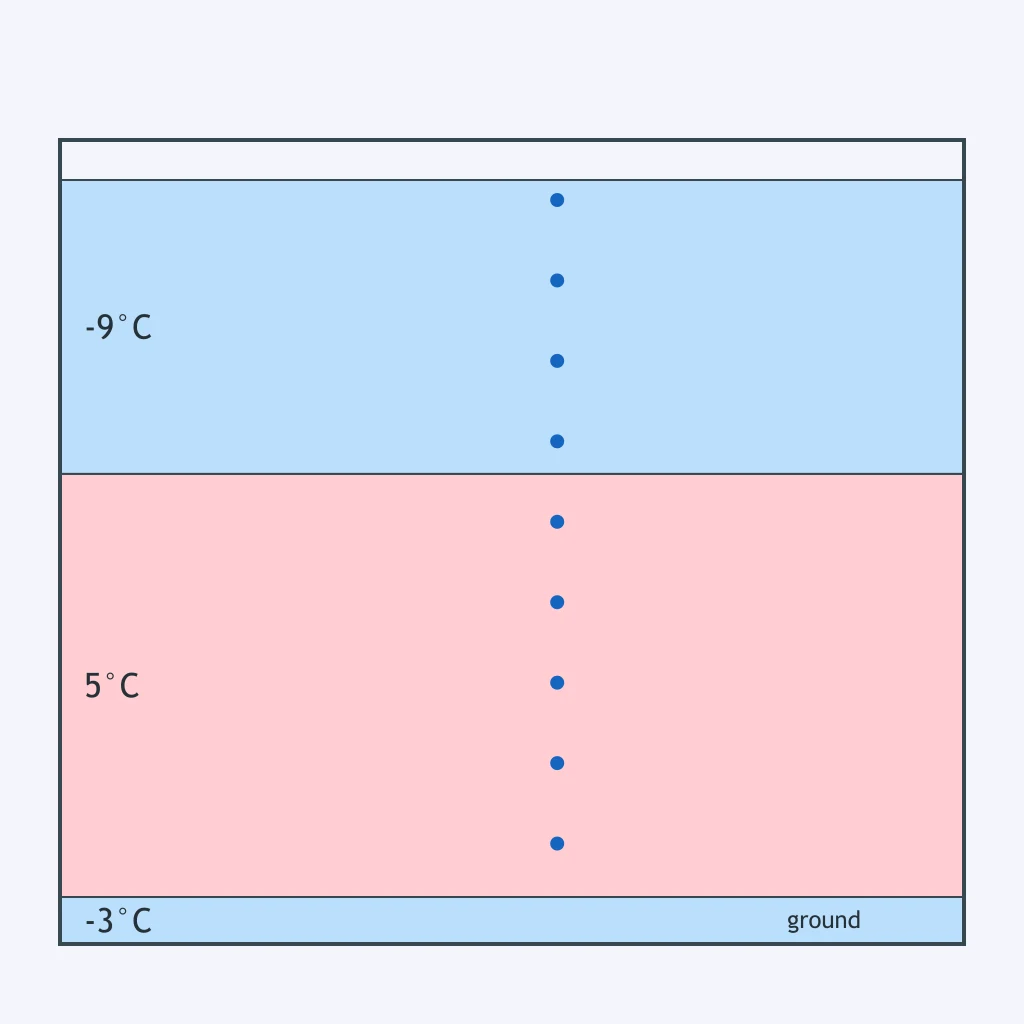
The cross section plots air temperature from the cloud base down to the ground at a mountain station, colored by whether each band sits above or below freezing. Which form of precipitation reaches the ground?
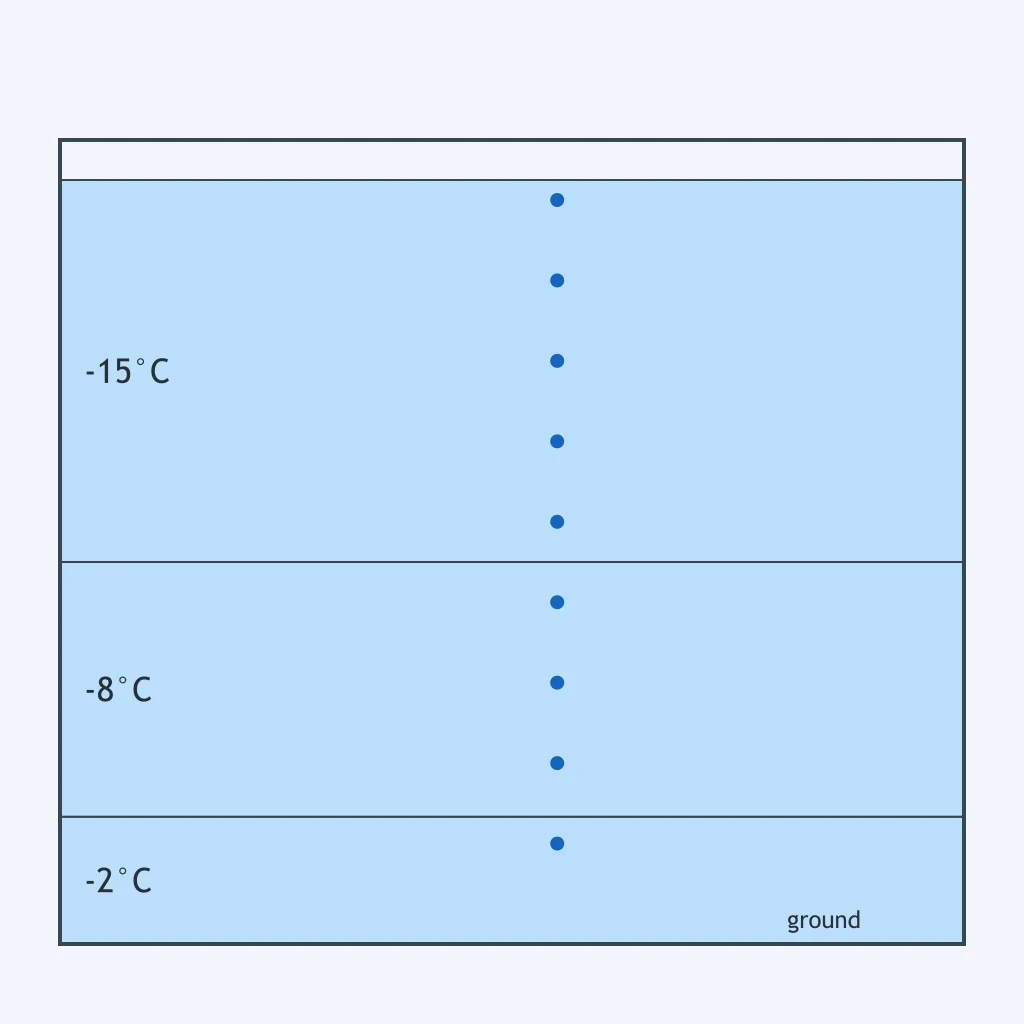
This profile was measured under a warm frontal cloud deck. Based on the temperature of every layer between the cloud and the ground, what falls at the surface?
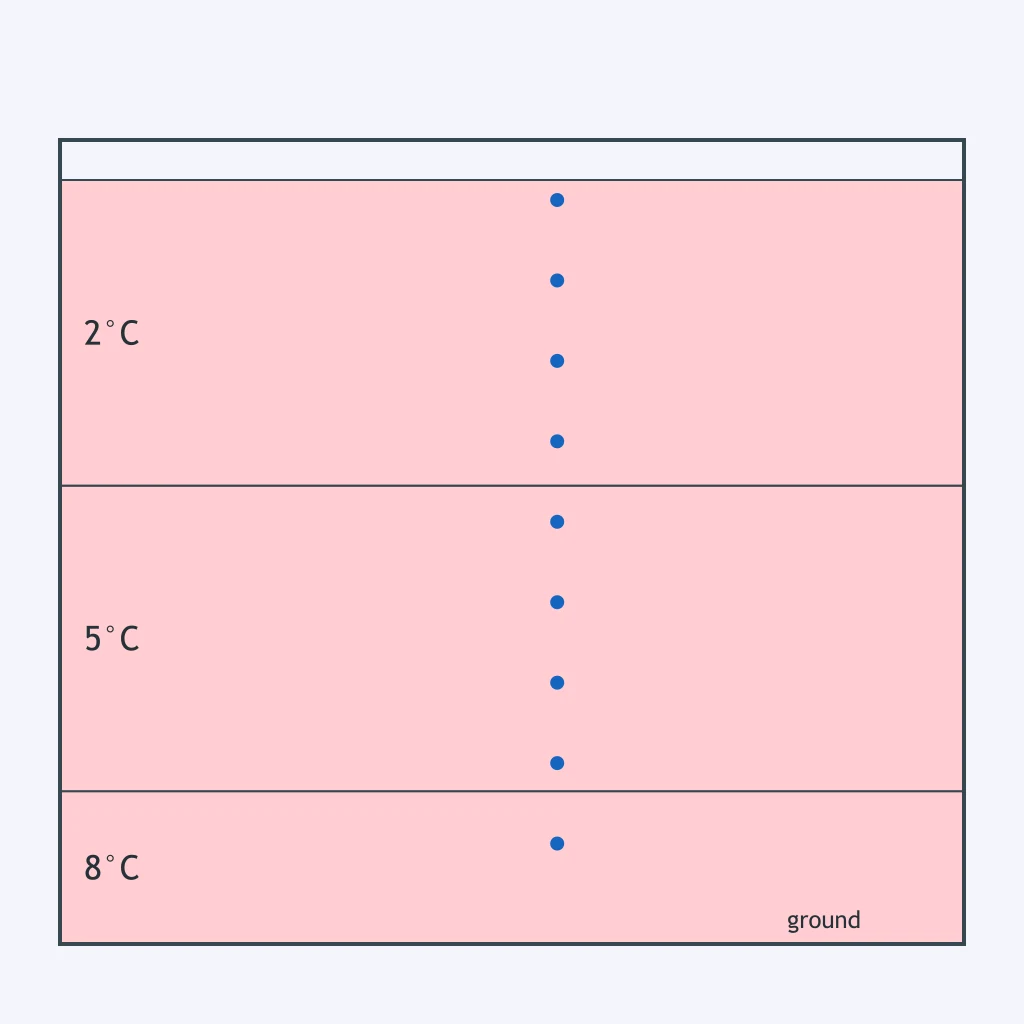
A snowflake falls from the cloud through the layers in this profile. What lands at the surface?
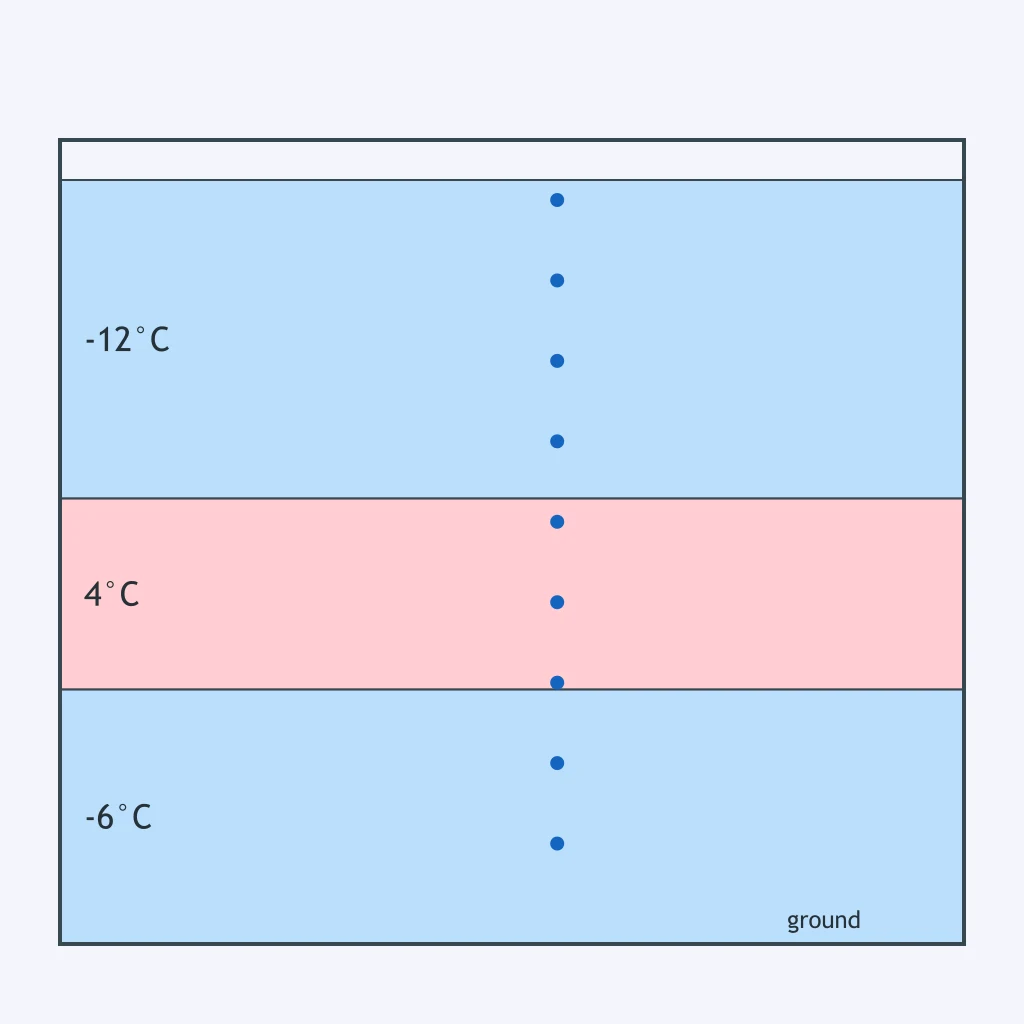
A snowflake falls from the cloud through the layers in this profile. What form of precipitation reaches the ground?
A meteorologist checks this vertical temperature profile before issuing a winter advisory. What type of precipitation does it predict at the ground?
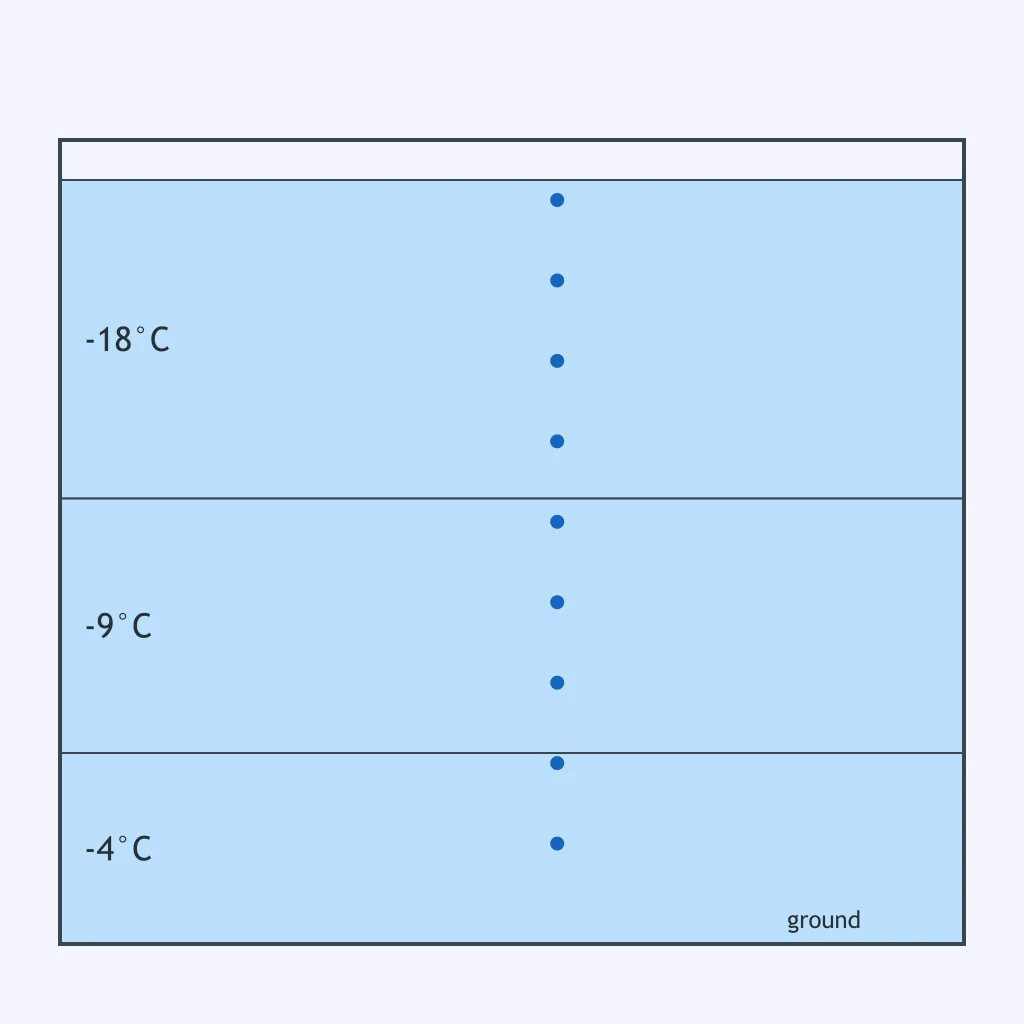
This profile was measured beneath a low cloud deck ahead of a spring storm. What form of precipitation does it produce at the ground?
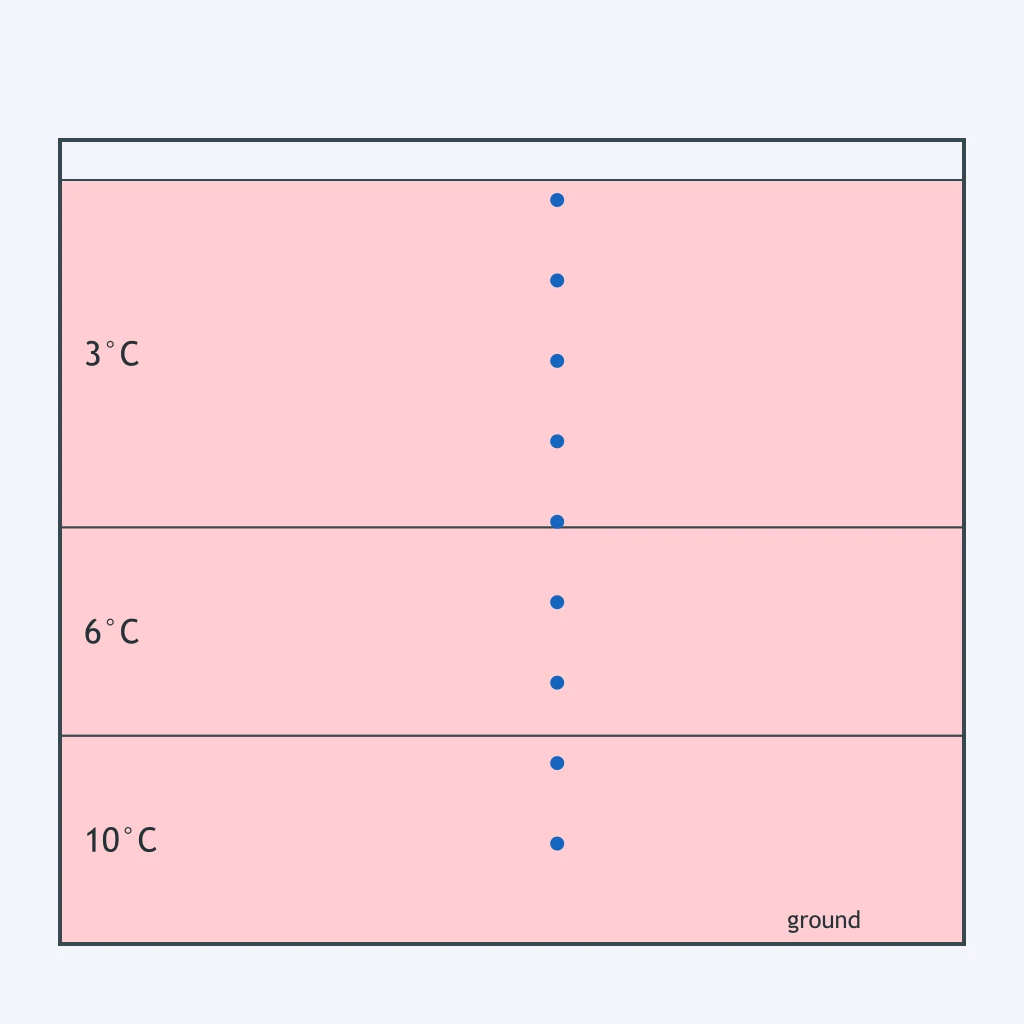
A snowflake falls from the cloud through the layers in this profile. What precipitation type reaches the ground?
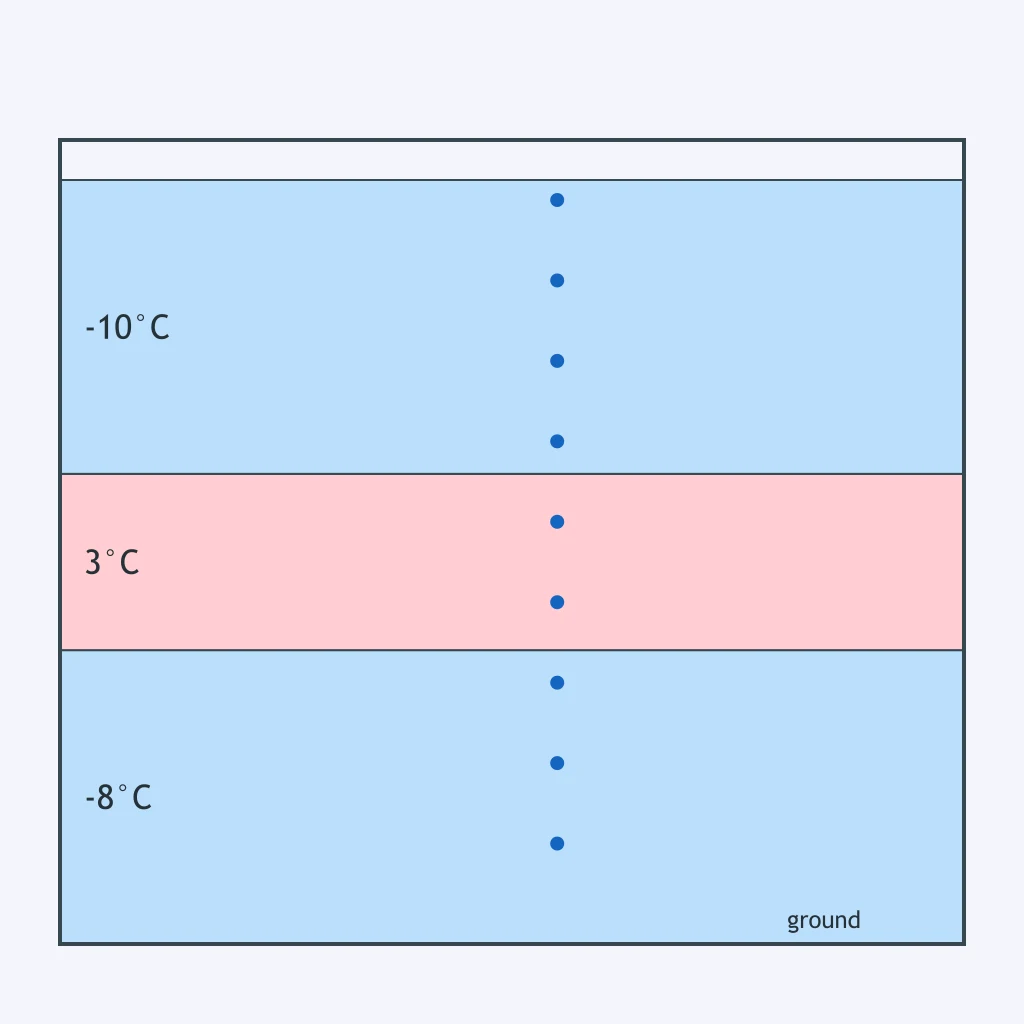
A winter storm warning is issued for this station based on the profile shown. What precipitation type is expected to coat surfaces there?
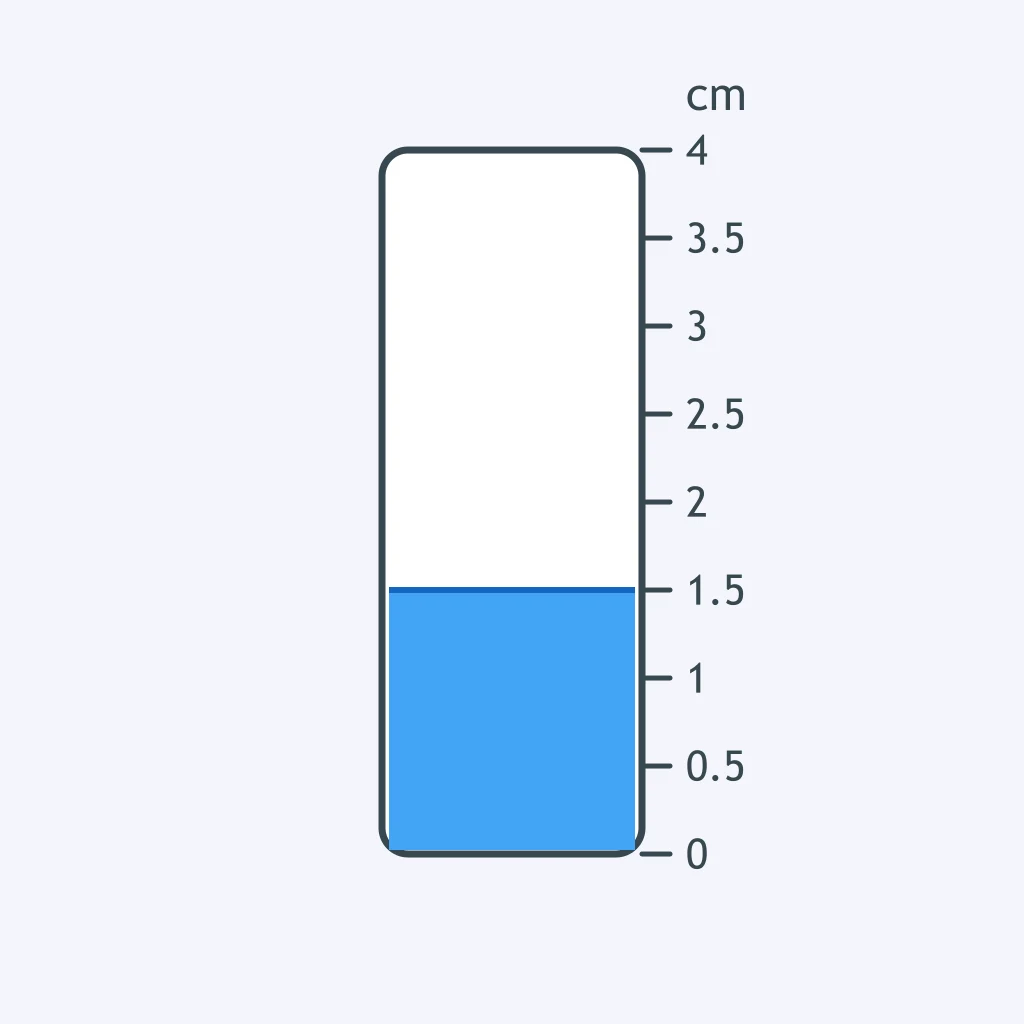
The figure shows a standard rain gauge after an evening thunderstorm, with water standing in the measuring tube. How much rain fell during the storm?
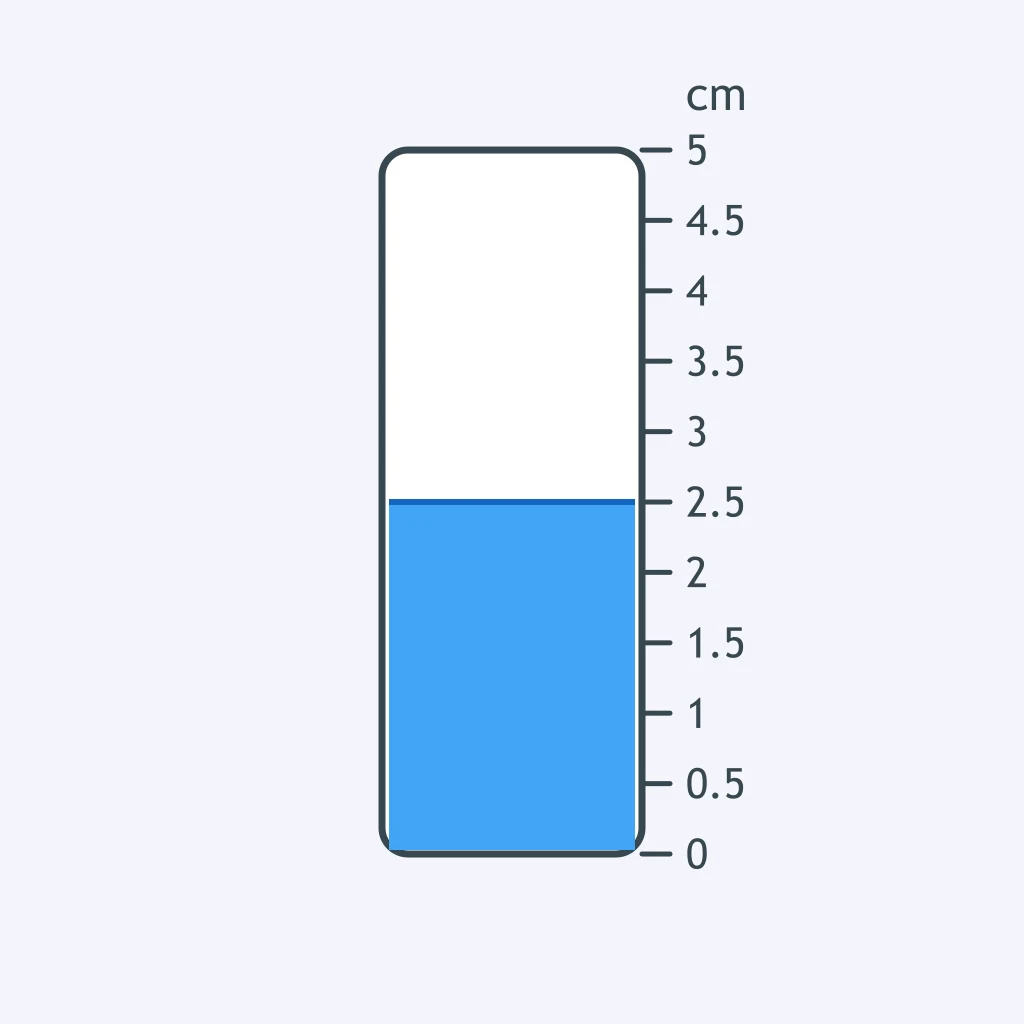
A gardener checks the rain gauge the morning after an overnight storm. What amount does the water level show?
After a brief afternoon shower, a student reads the rain gauge outside the classroom window. How much rain fell?
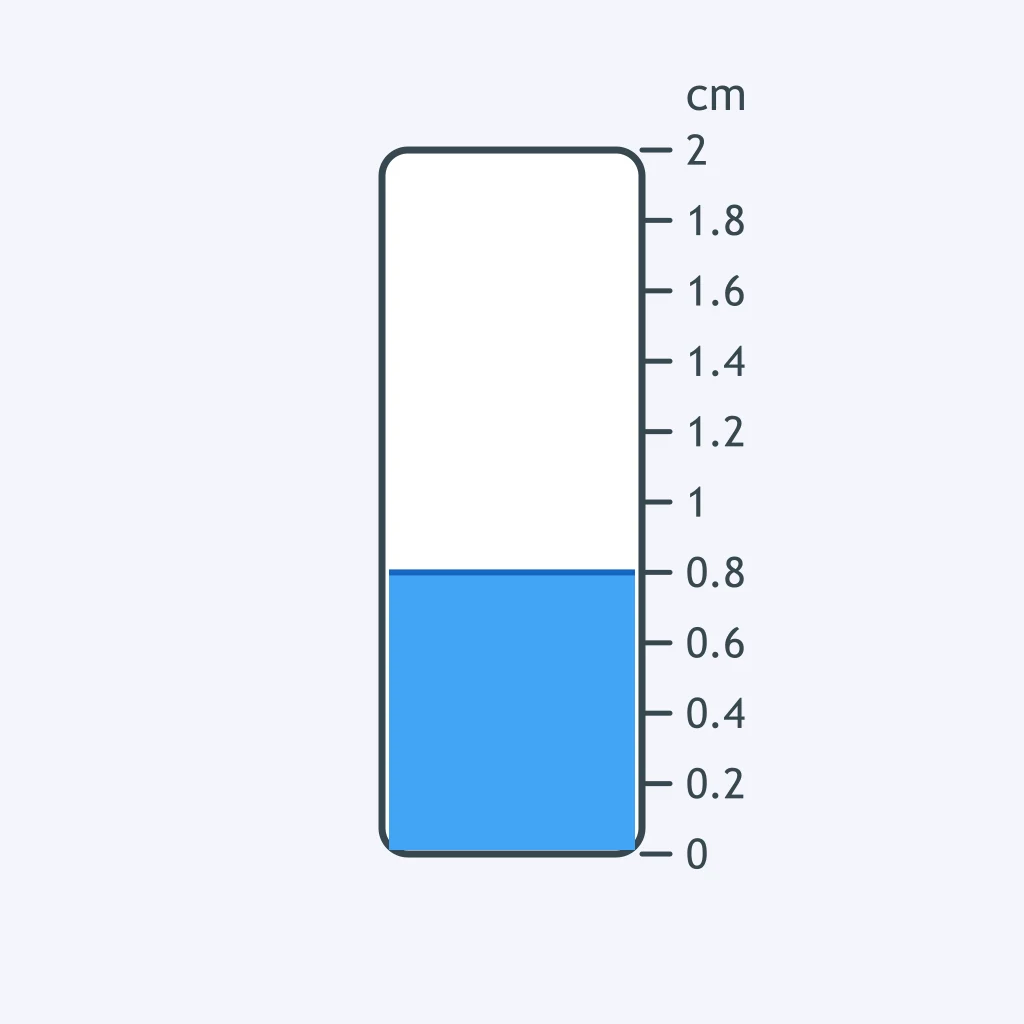
A weather station's rain gauge is read at the end of a long, soaking rain. What total does the water level show?
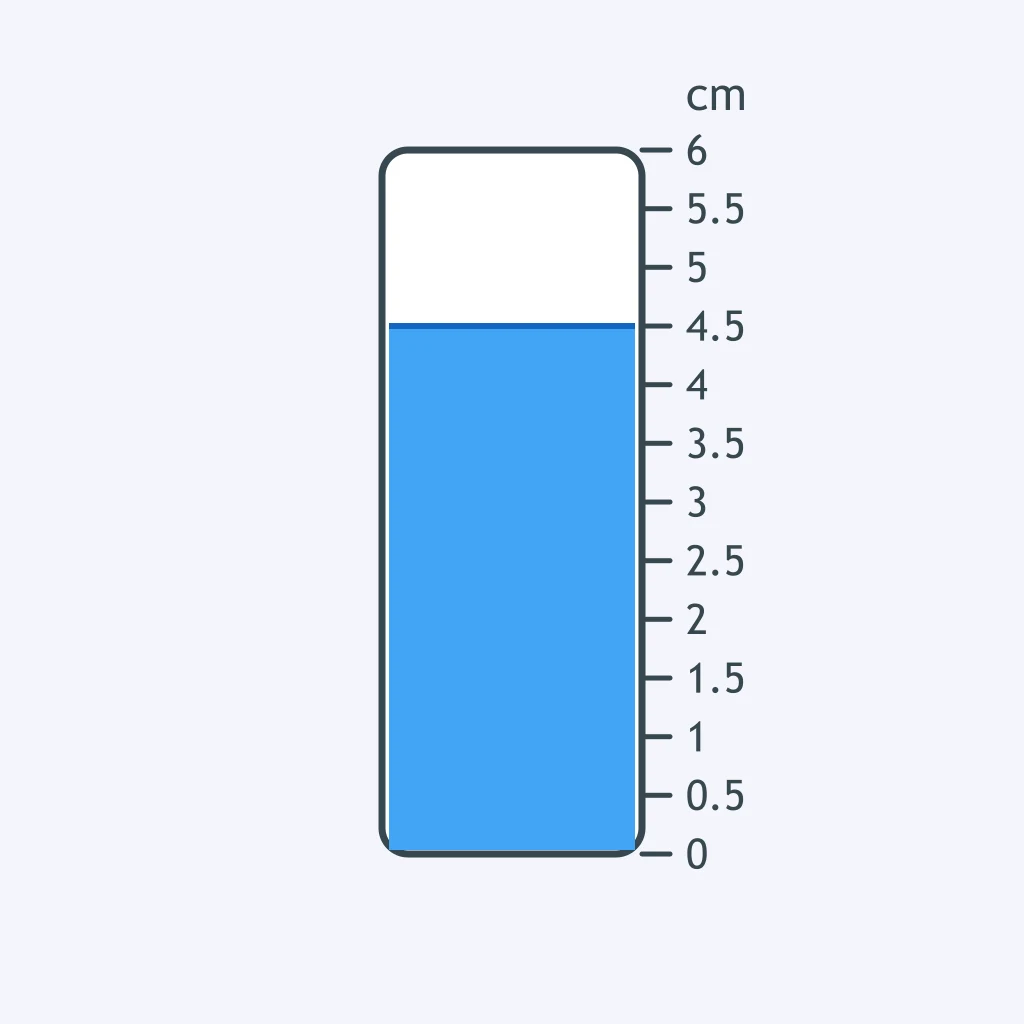
In a warm, shallow cloud over the tropical ocean, no ice ever forms because the entire cloud stays above freezing, yet raindrops still fall. Which process produced them?
Which process describes an ice crystal growing larger by pulling water vapor away from the supercooled liquid droplets around it, because ice needs a lower vapor pressure to grow than liquid water does?
A cold cumulus cloud over the Great Lakes in November holds both ice crystals and supercooled water droplets at the same altitude. Which process mainly grows the ice crystals large enough to fall?
A shallow, warm cumulus cloud over the Gulf of Mexico has droplets of many sizes and no ice. Raindrops grow there by collision and coalescence. Why do the larger drops sweep up the smaller ones?
A snow crystal falls through a cloud layer thick with supercooled droplets, which freeze onto its surface on contact and build it into a dense, opaque pellet. Which process created this pellet?
A winter storm leaves a smooth layer of clear ice coating every branch, wire and sidewalk in a town. Which form of precipitation fell during that storm?
Millions of tiny, hard, translucent ice pellets bounce audibly off a car's windshield and collect in a thin, crunchy layer that will not stick to tree branches. What fell?
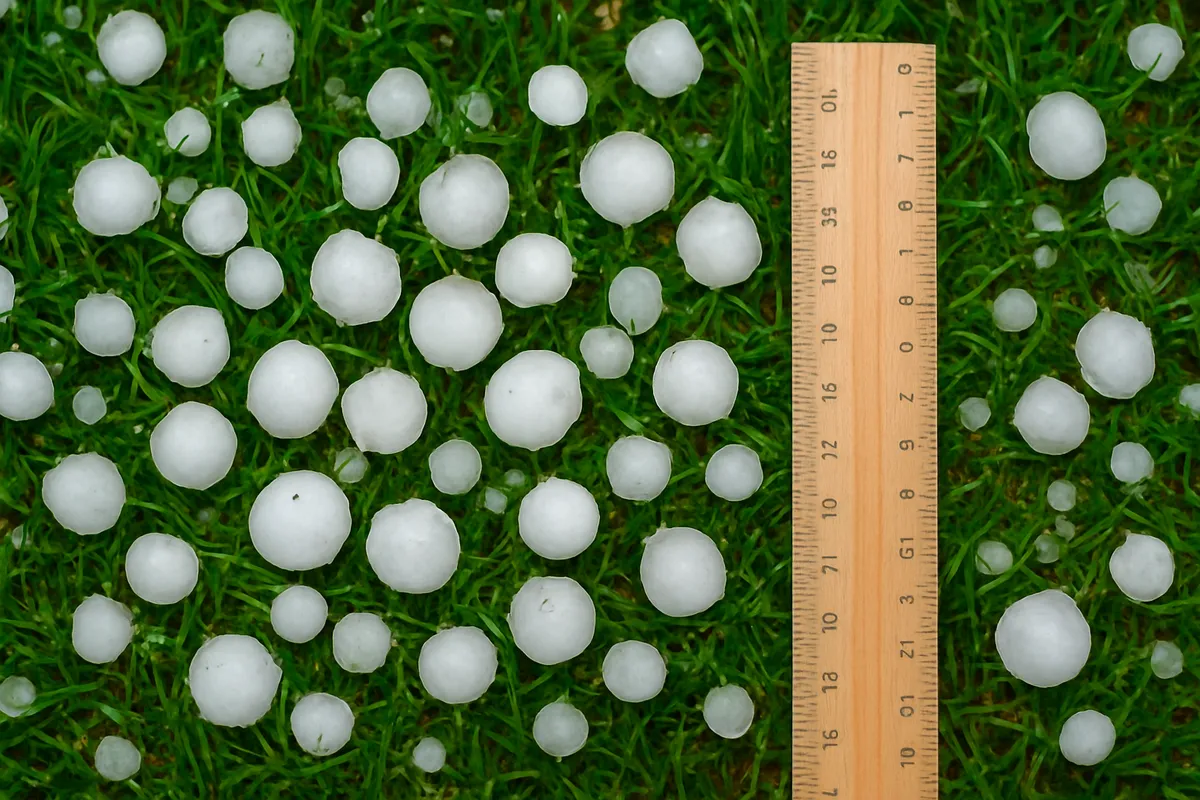
A summer thunderstorm leaves a yard littered with lumpy ice balls the size of marbles, several showing layered rings when cut in half. What form of precipitation fell?
Soft, crumbly white ice pellets a few millimeters wide fall during a cold-season shower and squash flat underfoot instead of bouncing like harder ice would. What fell?
Light precipitation overnight leaves individual six-sided ice crystals visible on a dark mitten, and the thin layer brushes away easily. What fell?
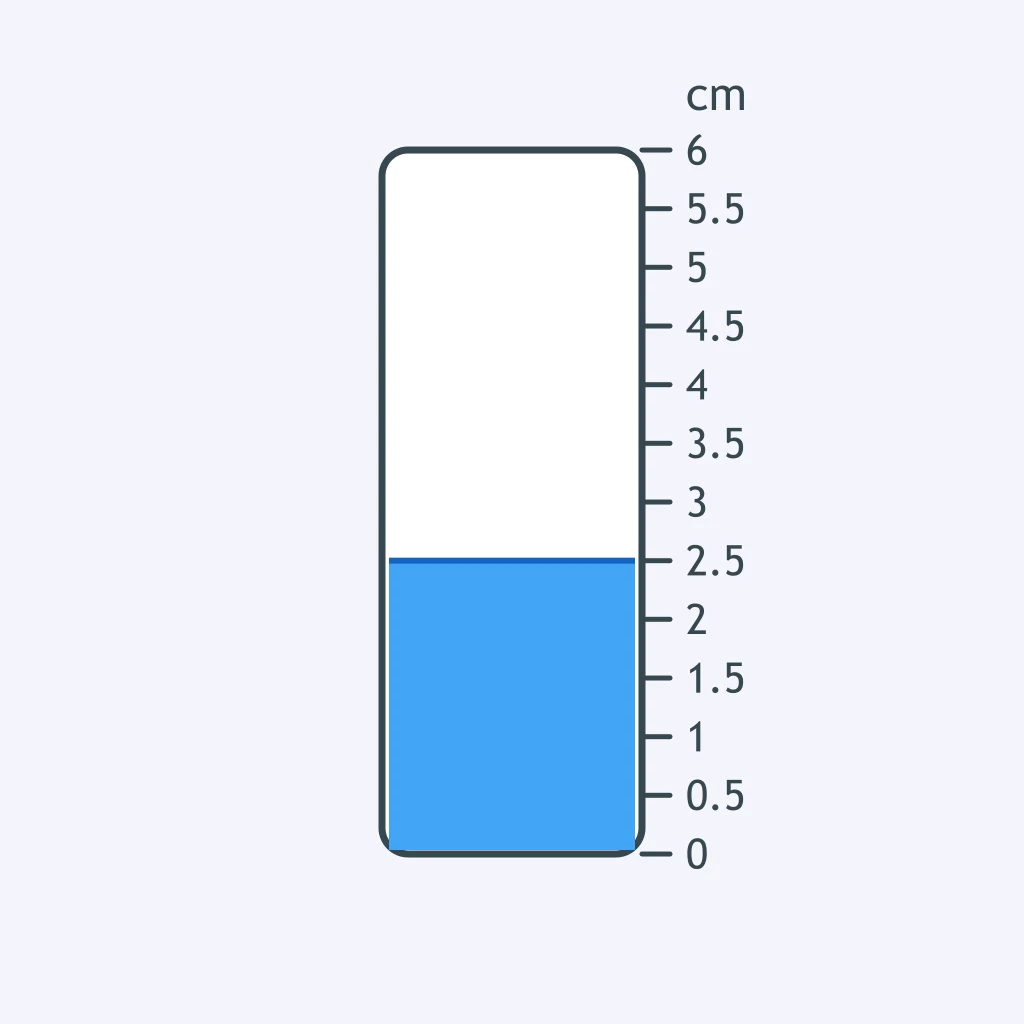
A snow board collects 24 cm of fresh snow overnight. The figure shows how much that sample melted down to in the rain gauge. What is this snowfall's snow-to-water ratio?
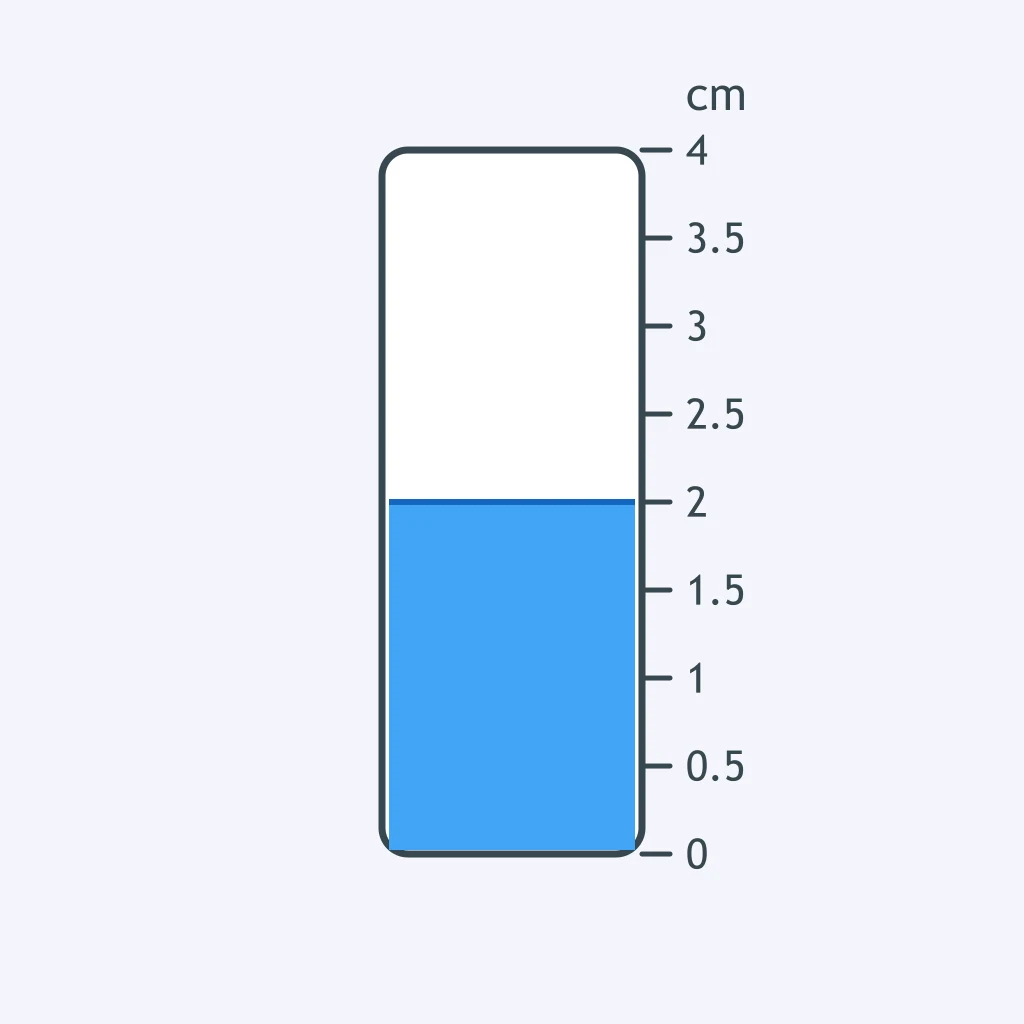
When a snowfall's actual density has not been measured, which snow-to-water ratio does the National Weather Service assume by default?
A snow board collects 20 cm of snow overnight. The figure shows how much that sample melted down to in the rain gauge. What is this snowfall's snow-to-water ratio?
Crack the passcode before the zombies get in.
Answer, then swat bugs for bonus points.
Race through questions at your own speed.
Same question on every screen. Fastest wins.

Pick a tile, answer, hit bonuses and steals.
Air Masses
30 questions