Loading
by BlastRoom
Identify the four front types from a cross section, a map symbol or a reported weather sequence, and describe the weather each brings.
#earth_space_science
40 questions
One question set, multiple game modes. Tap any game to see it in action. Not sure which to pick?
Answer to place stones and capture territory.
Outrun the snow together.
Earn blasts, then hunt the other team.
Answer to earn energy, then climb.

The class blasts through walls together.
Bid on mystery lots. Most money wins.
Sell tours. Nice, standard, or a total scam.

Answer, restock, and serve the rush.
More correct answers pulls the rope your way.
Answer, then shoot down the alien wave.
Answer, then tap to leap the frozen ridge.
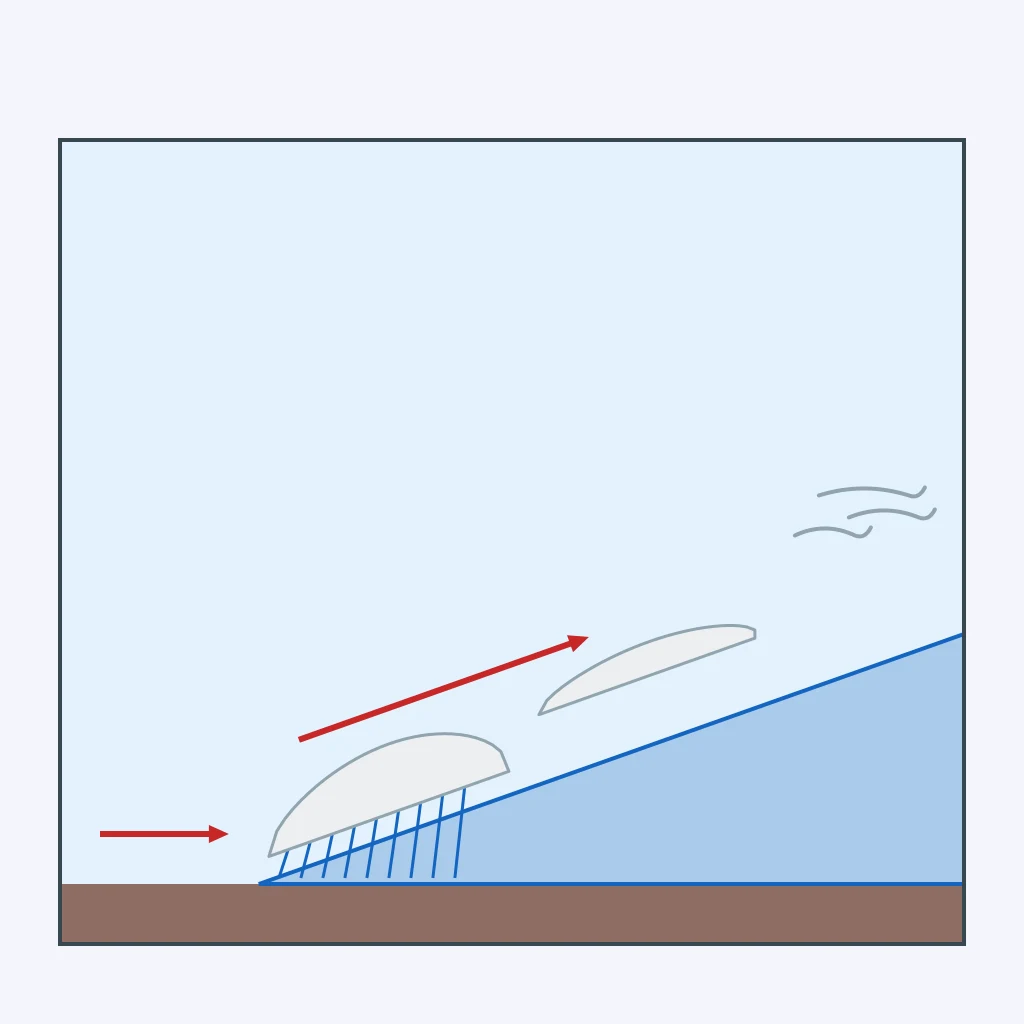
The cross section shows the boundary between two air masses in profile, with the cloud sequence drawn above it and arrows for the air motion. Which type of front is shown?
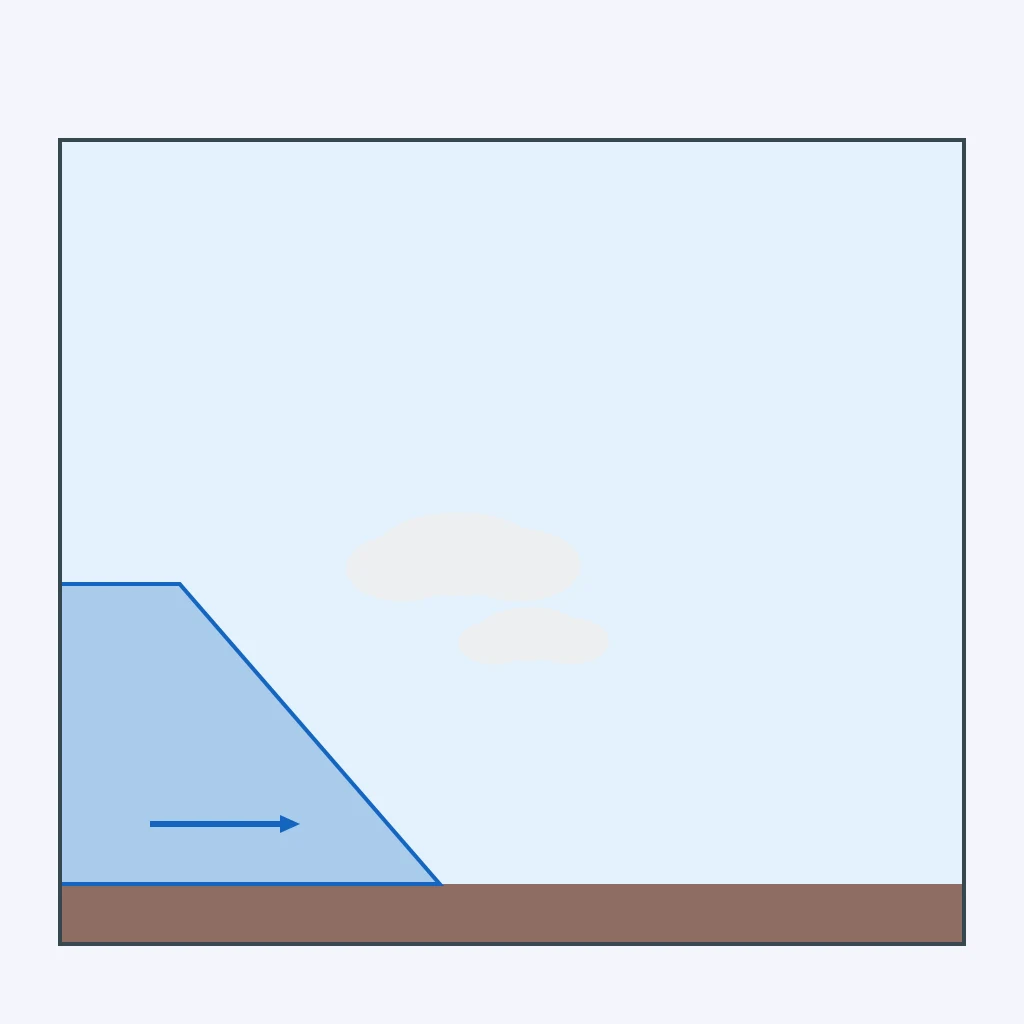
A meteorology class is shown this vertical slice through a frontal zone, with clouds sketched along the boundary above it. Which type of front does the cross section show?
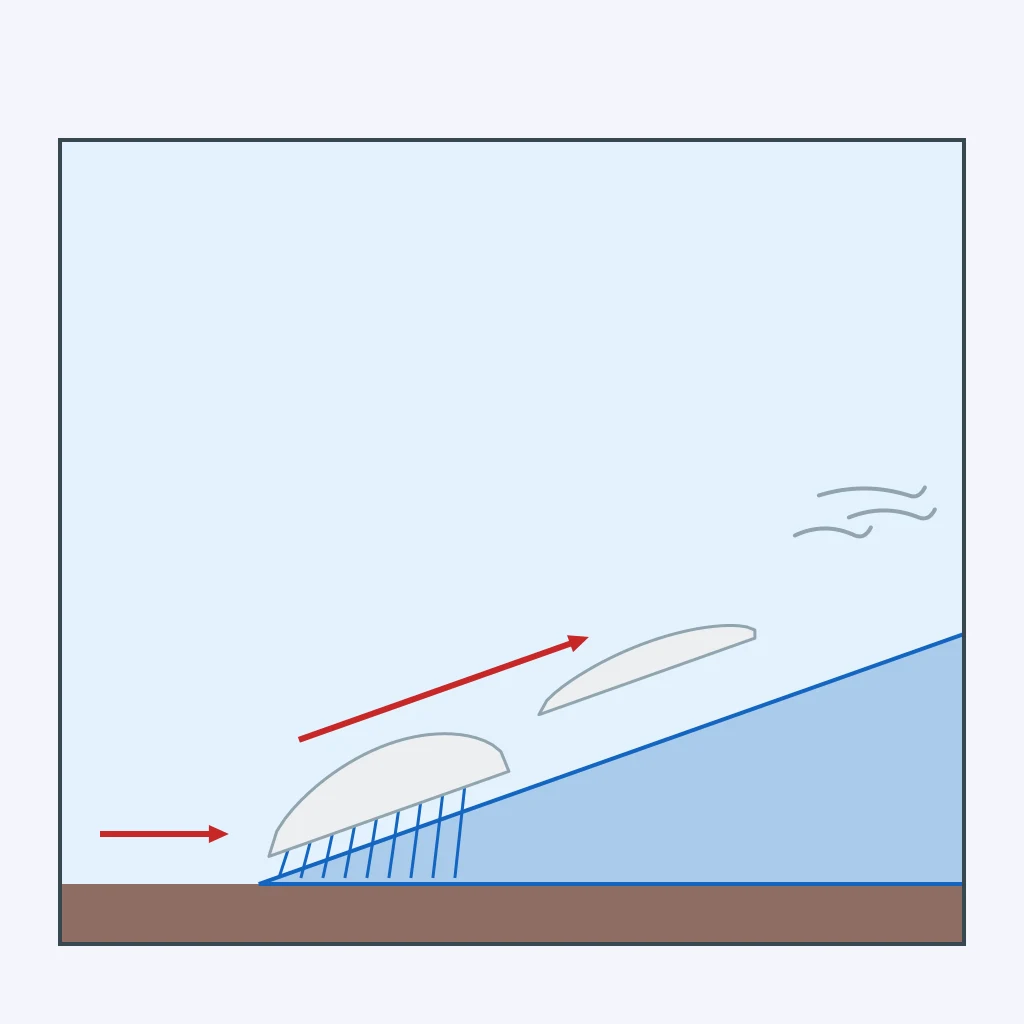
This diagram shows a frontal boundary in profile, with the cloud sequence above it and arrows marking the motion of the air on each side. What type of front is depicted?
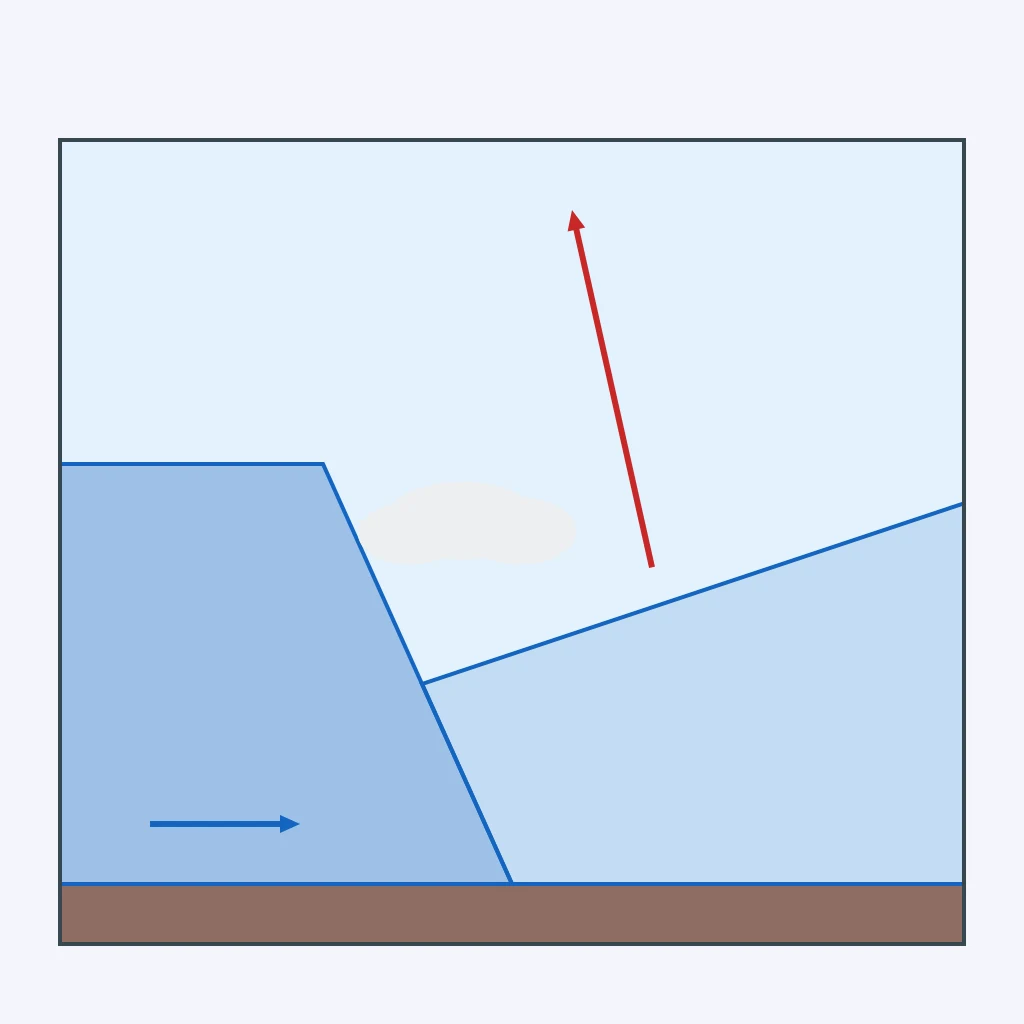
A textbook figure shows a frontal boundary between two air masses drawn in cross section, with clouds banked along it. Which front does this profile show?
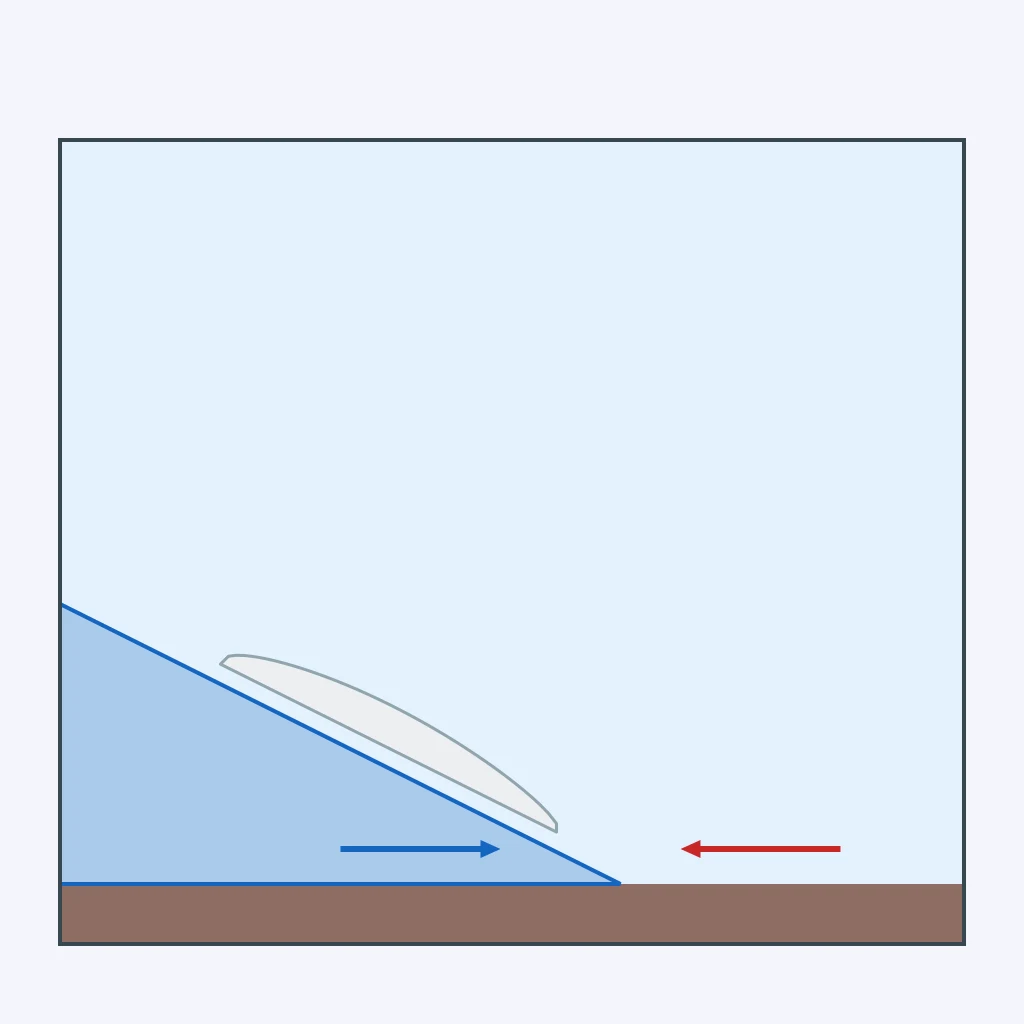
Below is a vertical slice through the atmosphere showing a frontal boundary, with the cloud sequence sketched above the sloping surface. Which type of front is this?
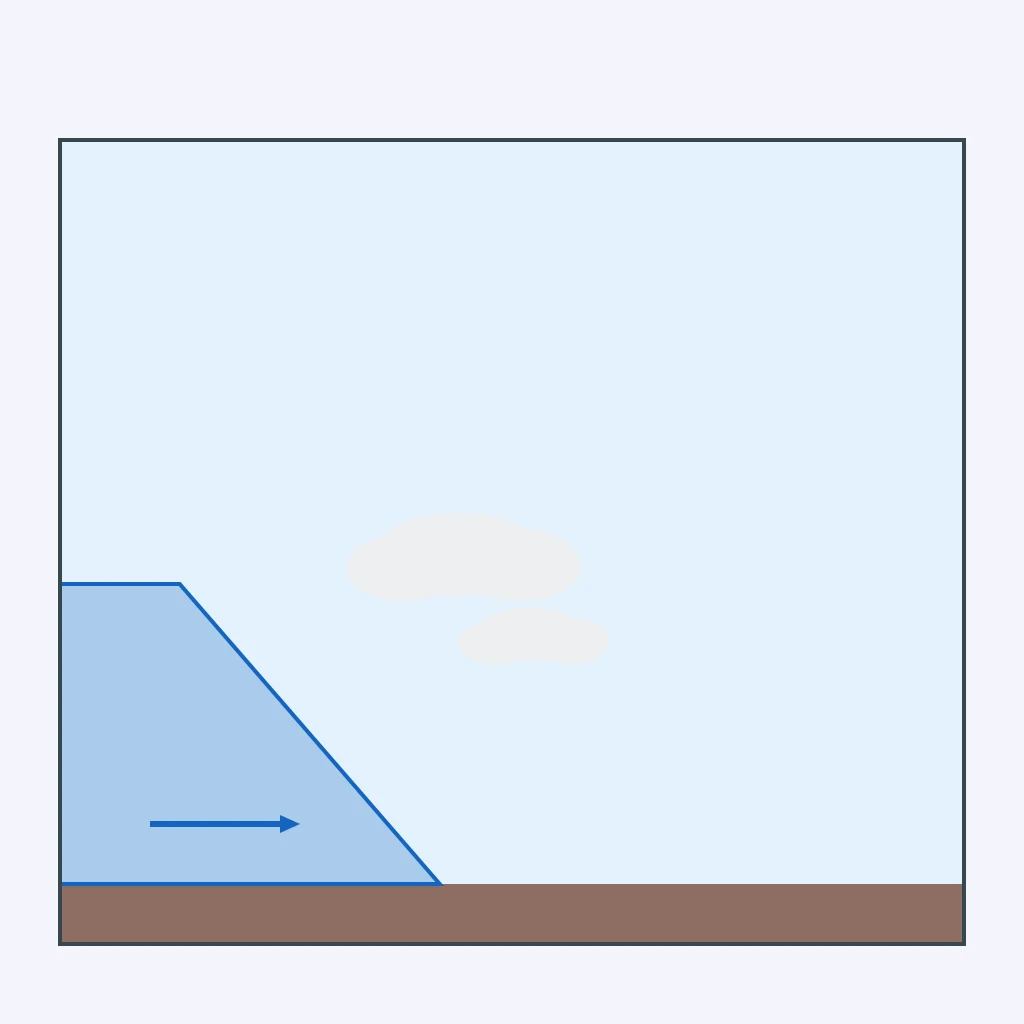
The cross section shows two air masses meeting along a sloping boundary, with the cloud deck drawn above it. Which front is shown in the diagram?
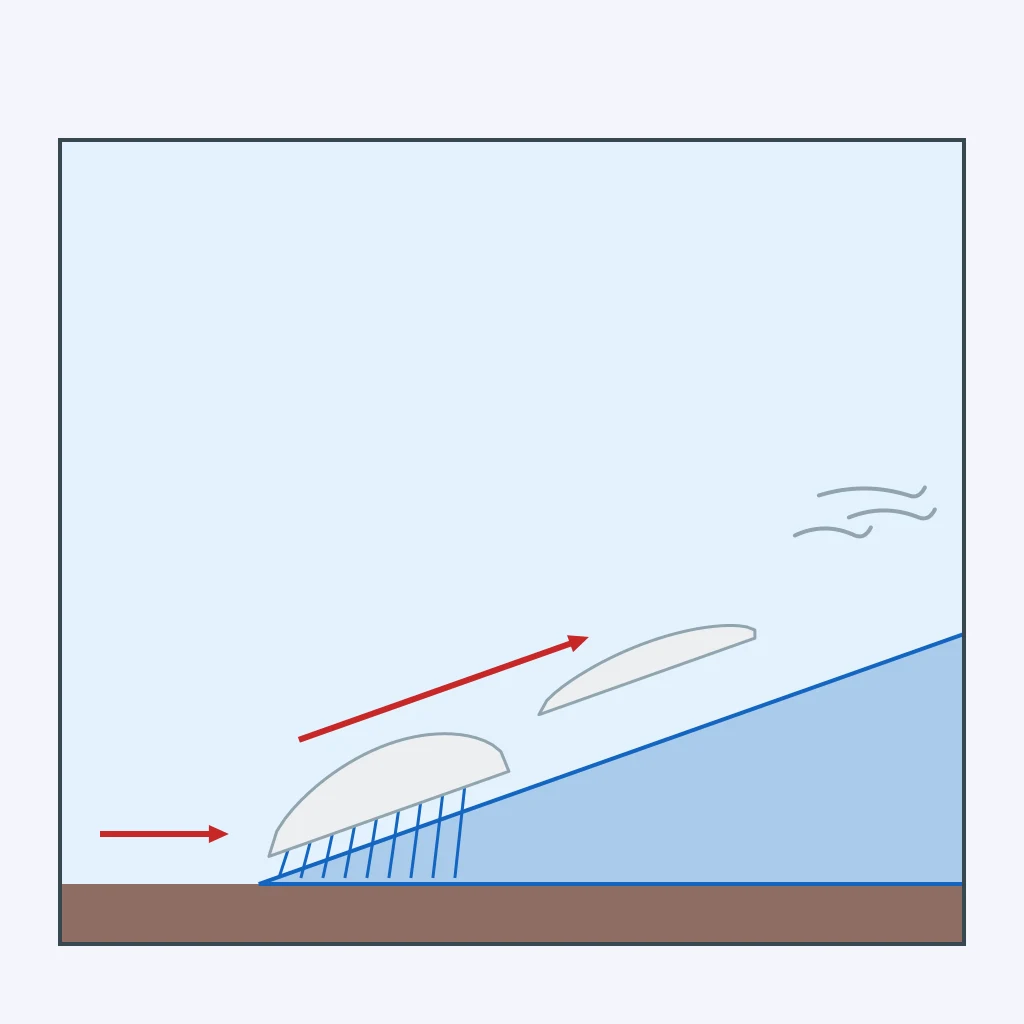
A forecaster displays this cross section of a frontal boundary, with clouds drawn above the sloping surface where the air masses meet. Which type of front is shown?
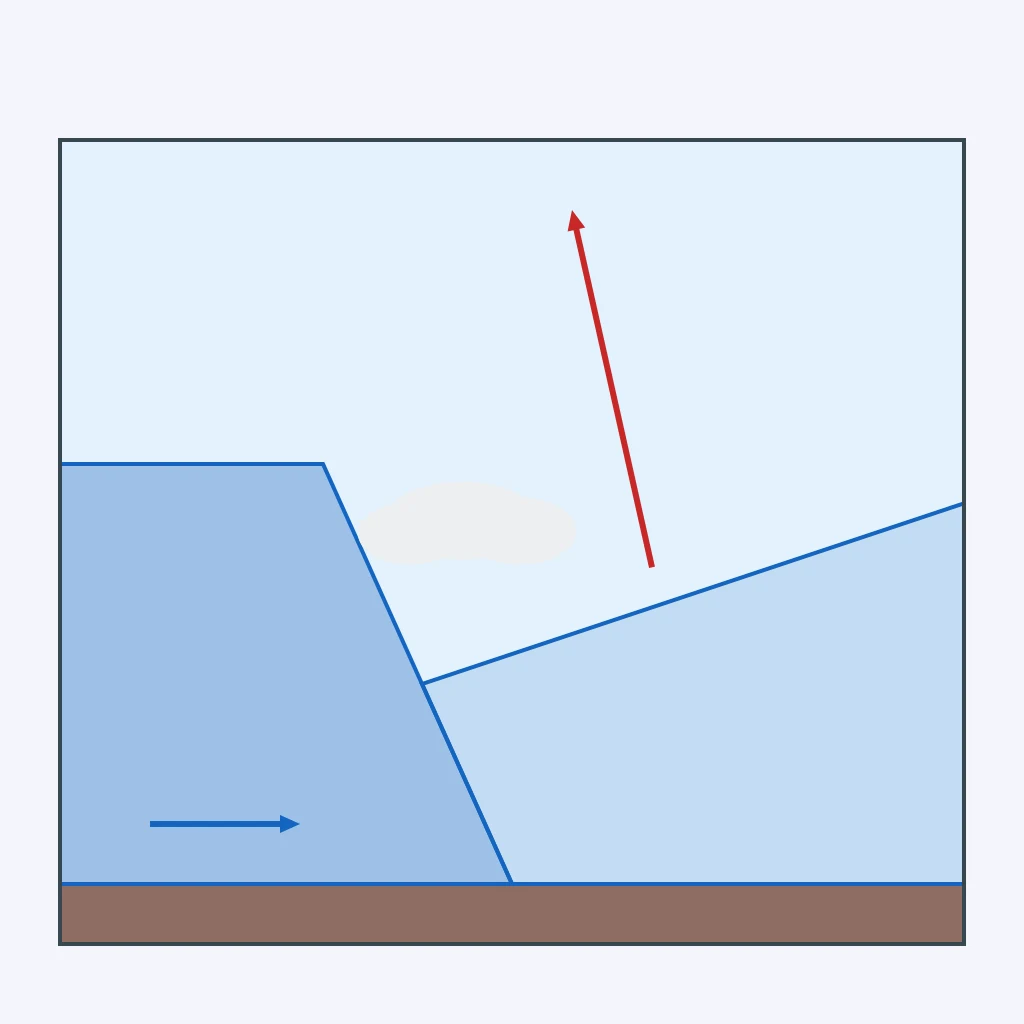
This profile shows the boundary between two air masses with clouds sketched along the slope above it. Which front does the cross section depict?
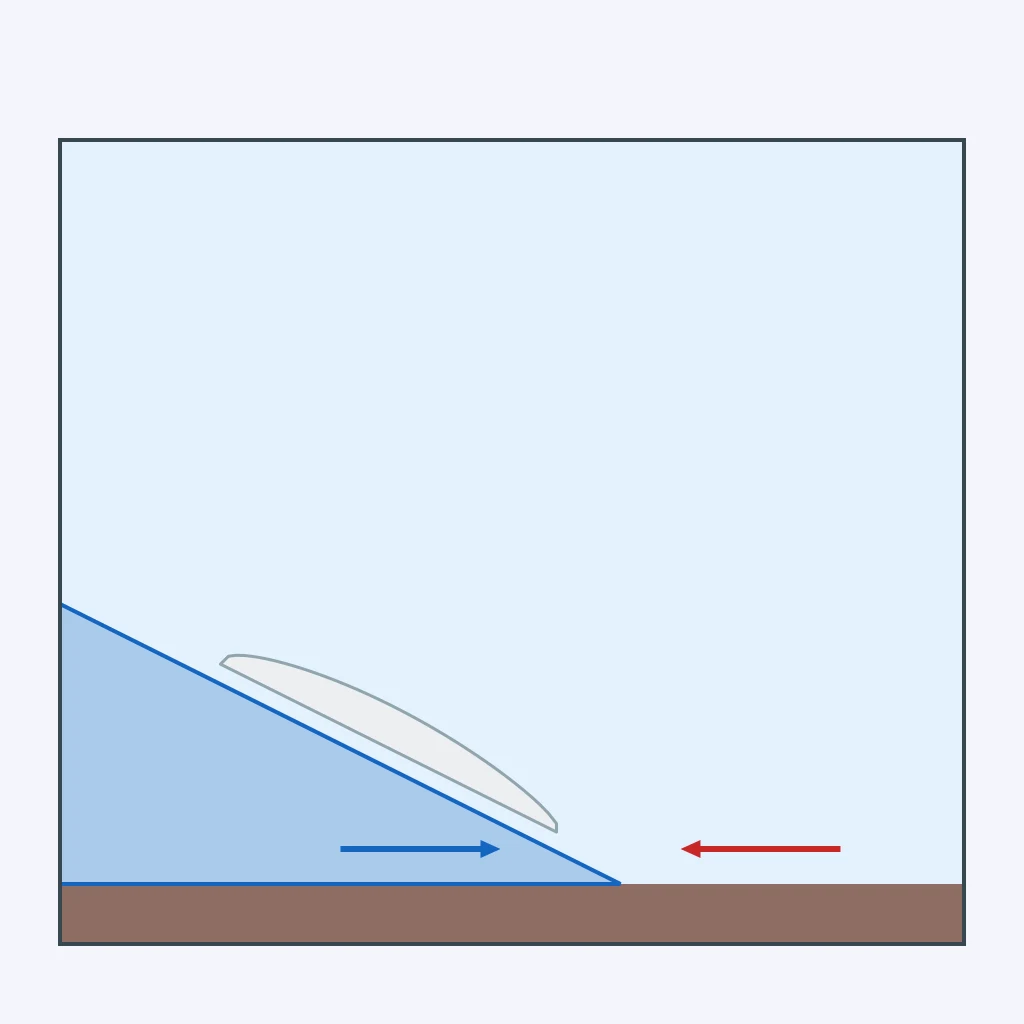
The diagram below is a vertical slice through a frontal boundary, with the cloud sequence and air-motion arrows drawn above it. Which type of front is shown?
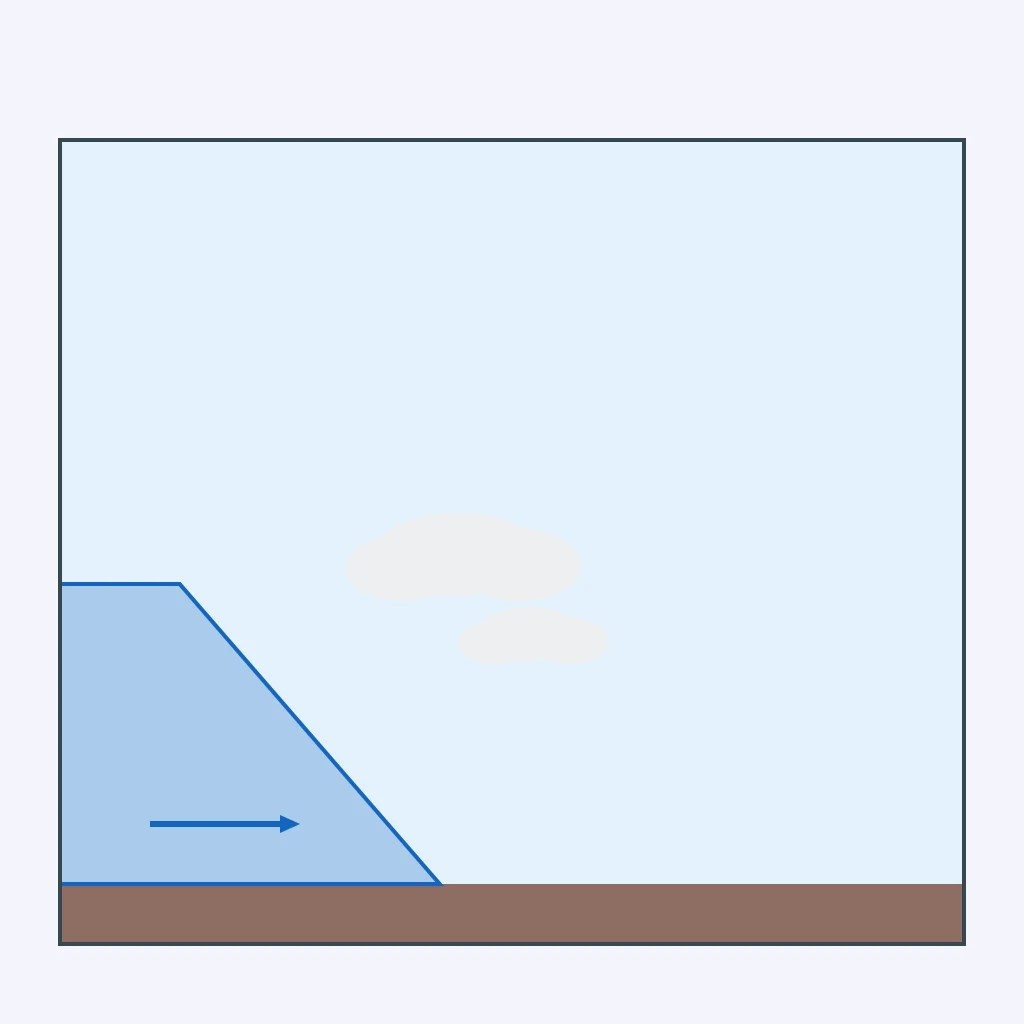
A weather report includes this cross section of a frontal surface, with clouds banked above the sloping boundary. Which type of front does it show?
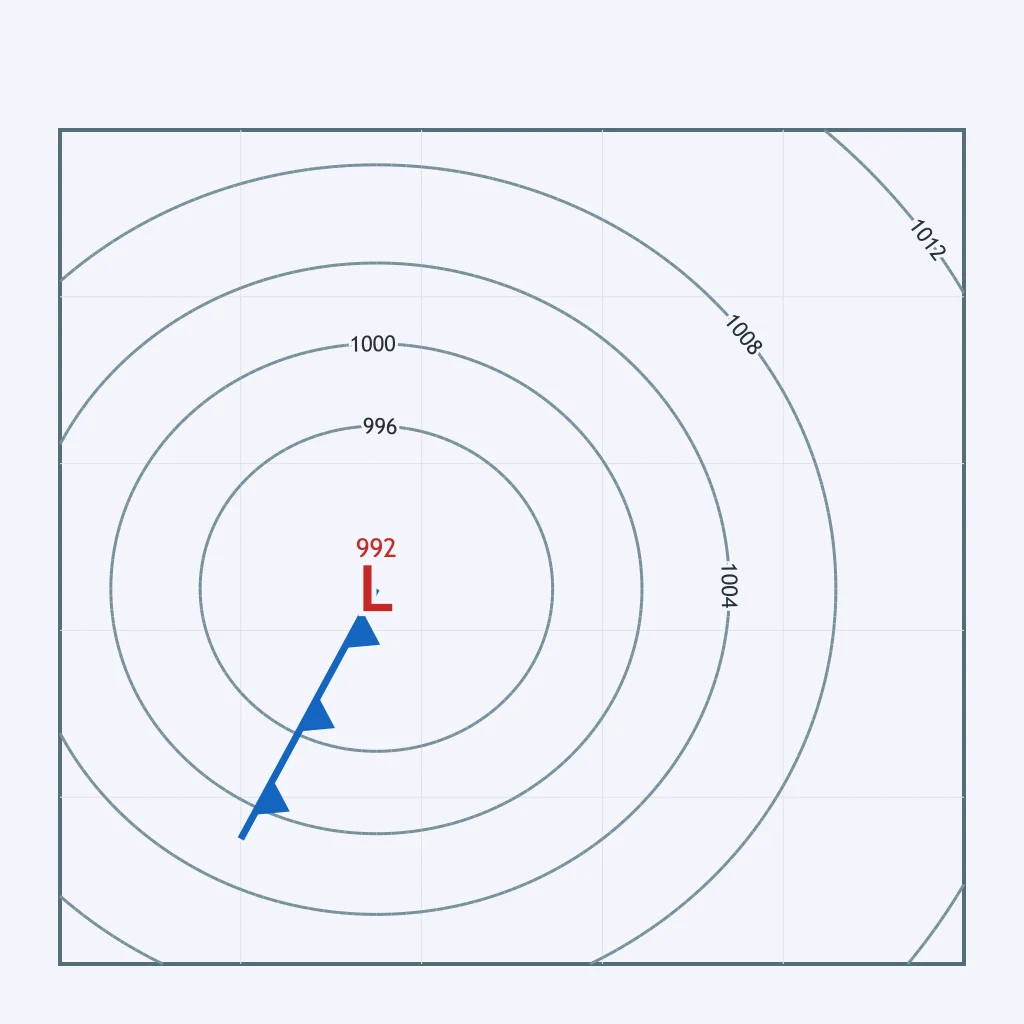
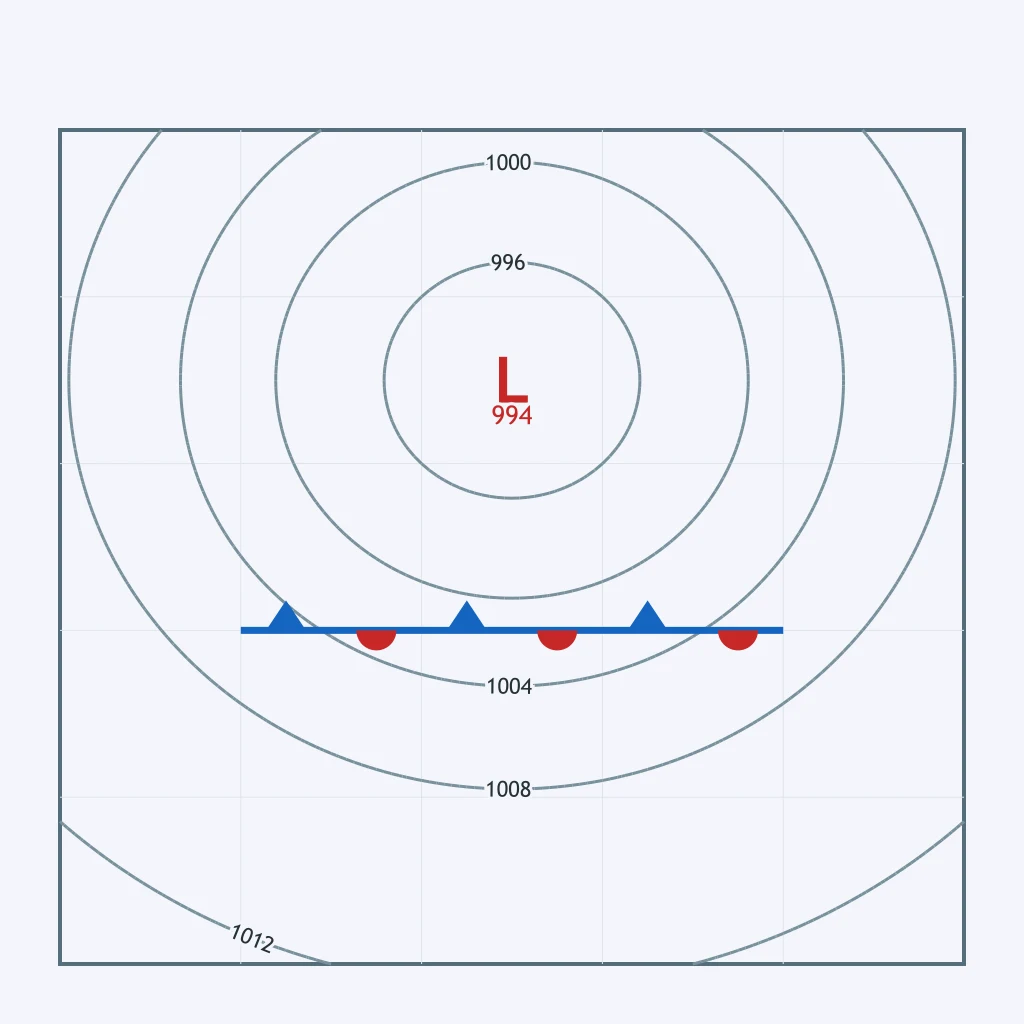
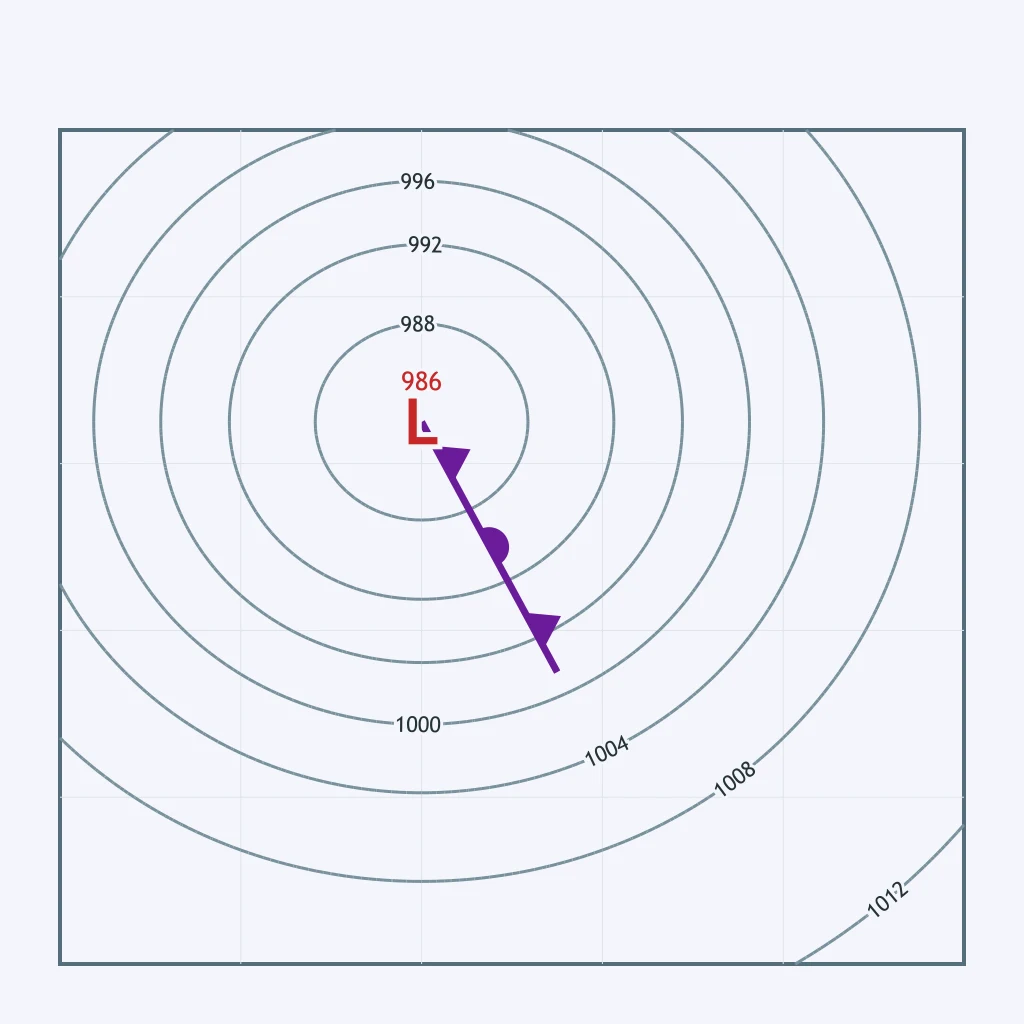
This is a section of a synoptic weather map showing one frontal boundary. Which type of front does the map symbol represent?
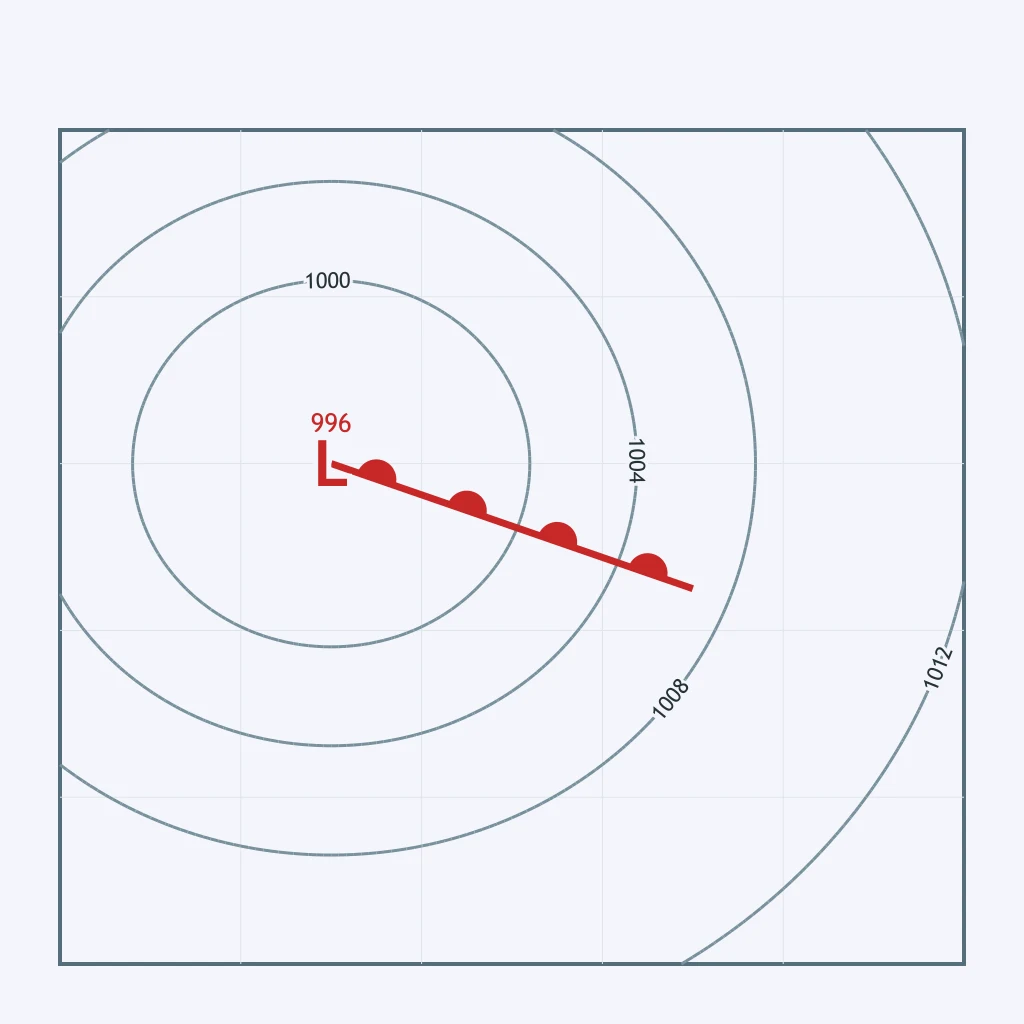
A news broadcast shows this weather map segment with one boundary drawn near a low-pressure center. Which type of front is drawn on the map?
On this section of a synoptic map, a single boundary extends from a low-pressure center. Which type of front is shown?
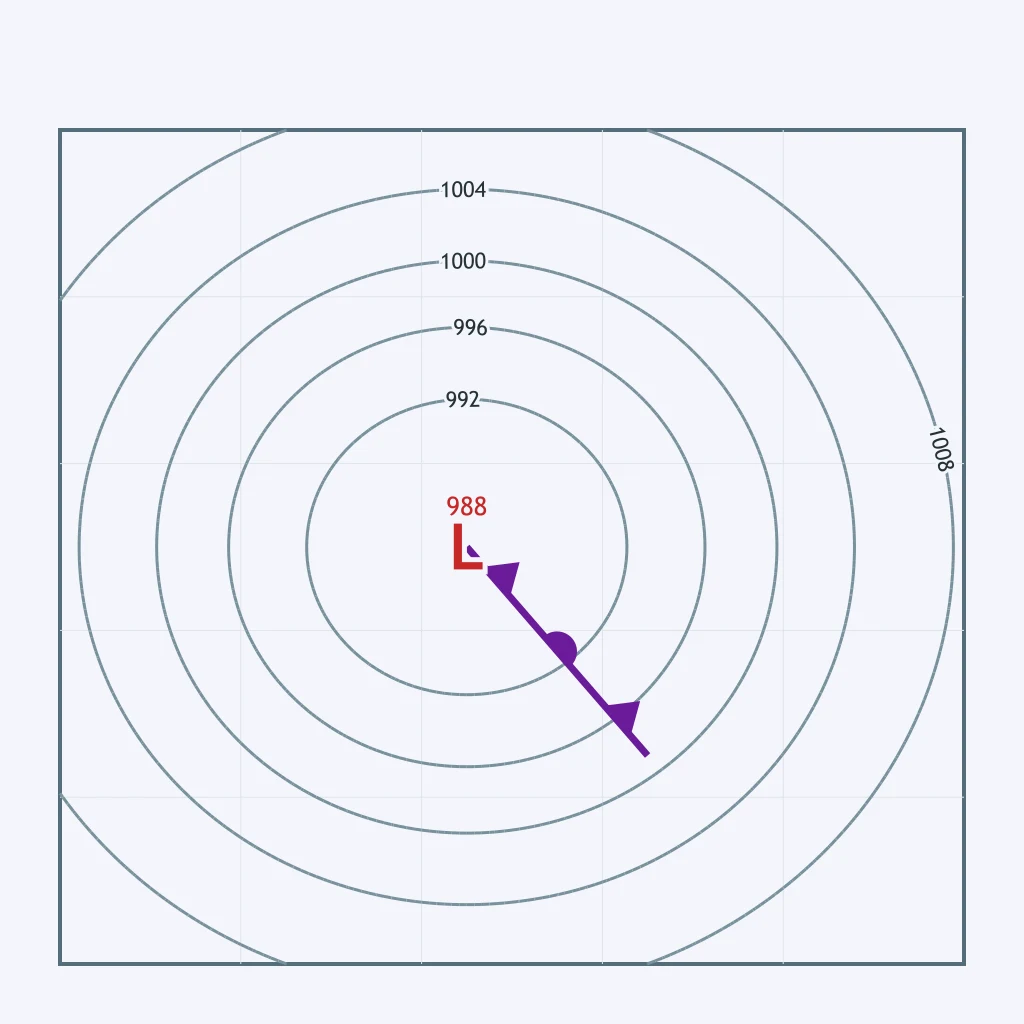
A textbook map shows a single frontal boundary. Which type of front does the symbol on the map represent?
This map segment, drawn near a strengthening low, shows one boundary. Which type of front is drawn there?
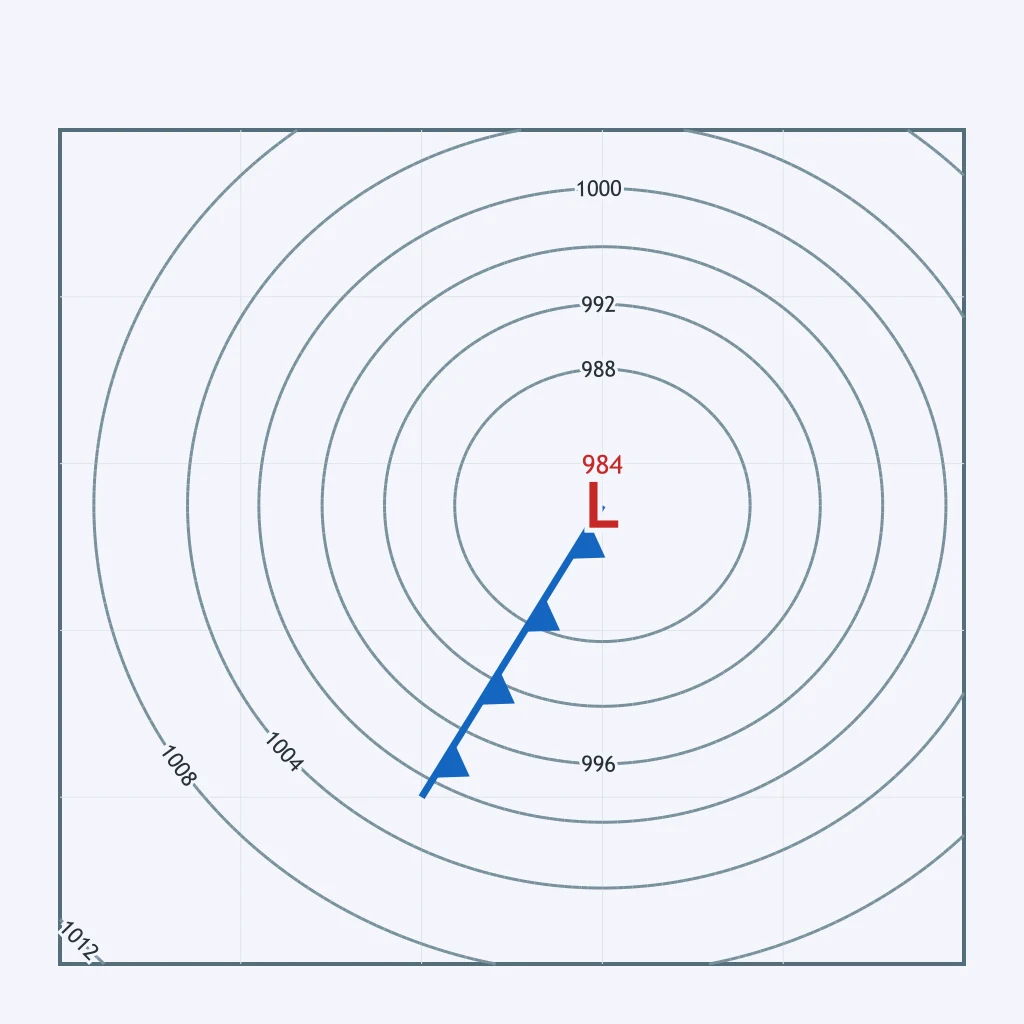
A class assignment includes this synoptic map with a marked boundary. Which type of front does the symbol shown represent?
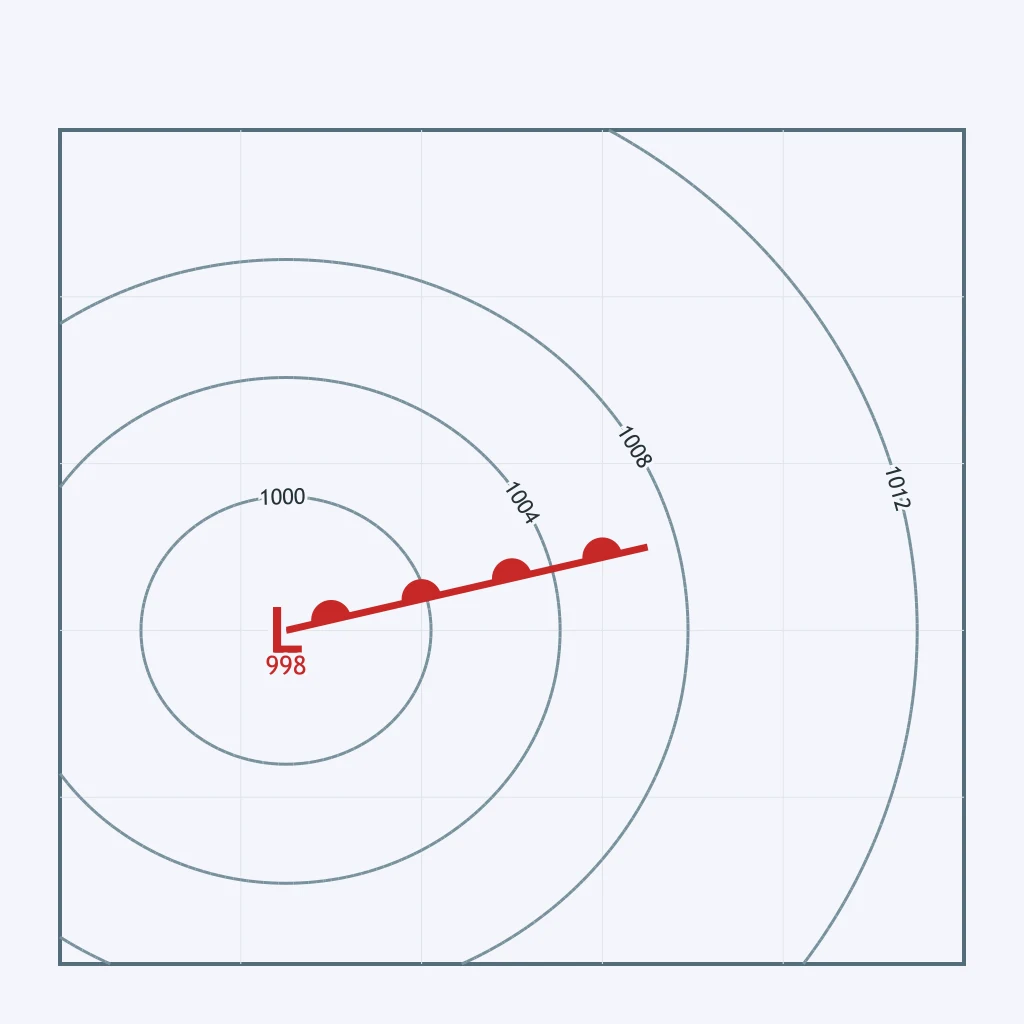
On the weather map below, a single boundary loops away from a low-pressure center. Which front does the map symbol show?
A station reports high cirrus first, then thickening altostratus, then a long spell of steady light rain lasting many hours, matching the current conditions plotted below. Which front is passing over the station?
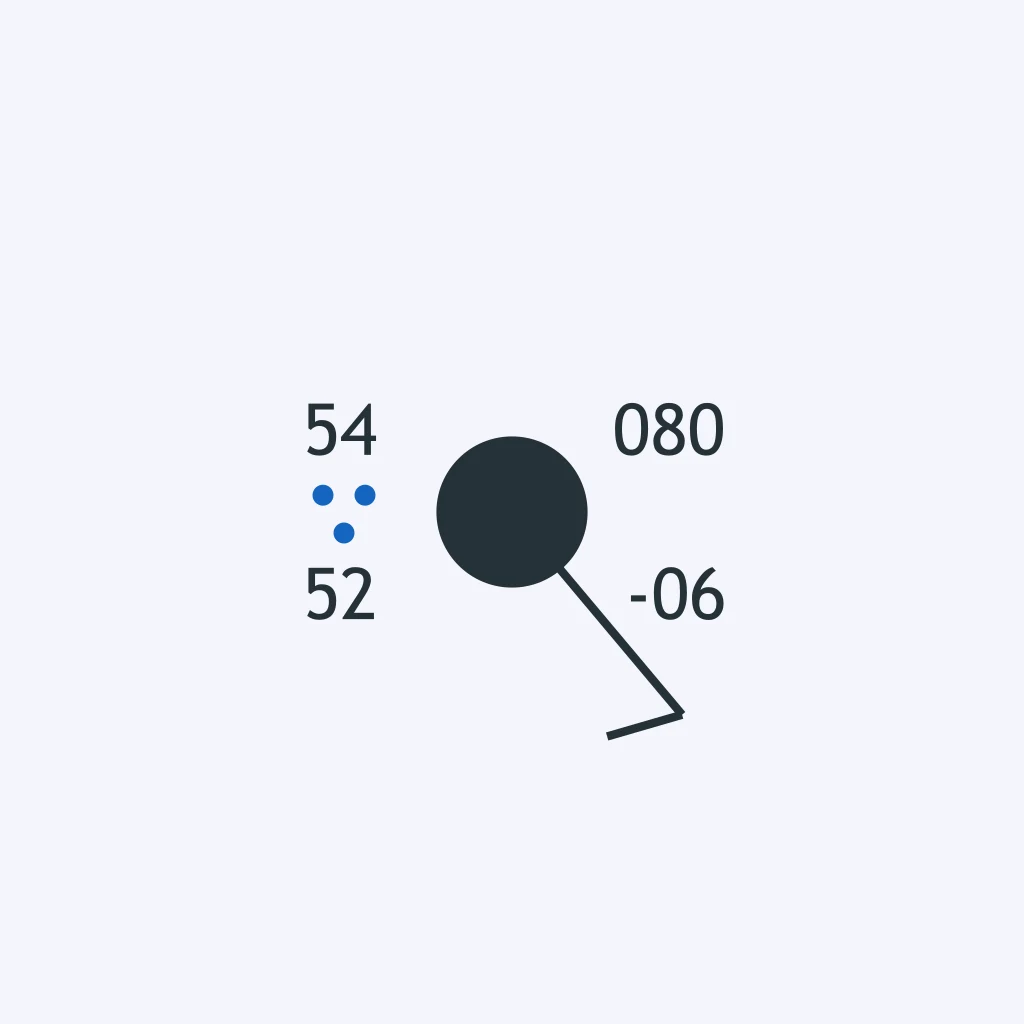
A station reports a sudden line of towering clouds followed by a brief, heavy downpour with thunder that ends within the hour, matching the plotted conditions below. Which front is passing?
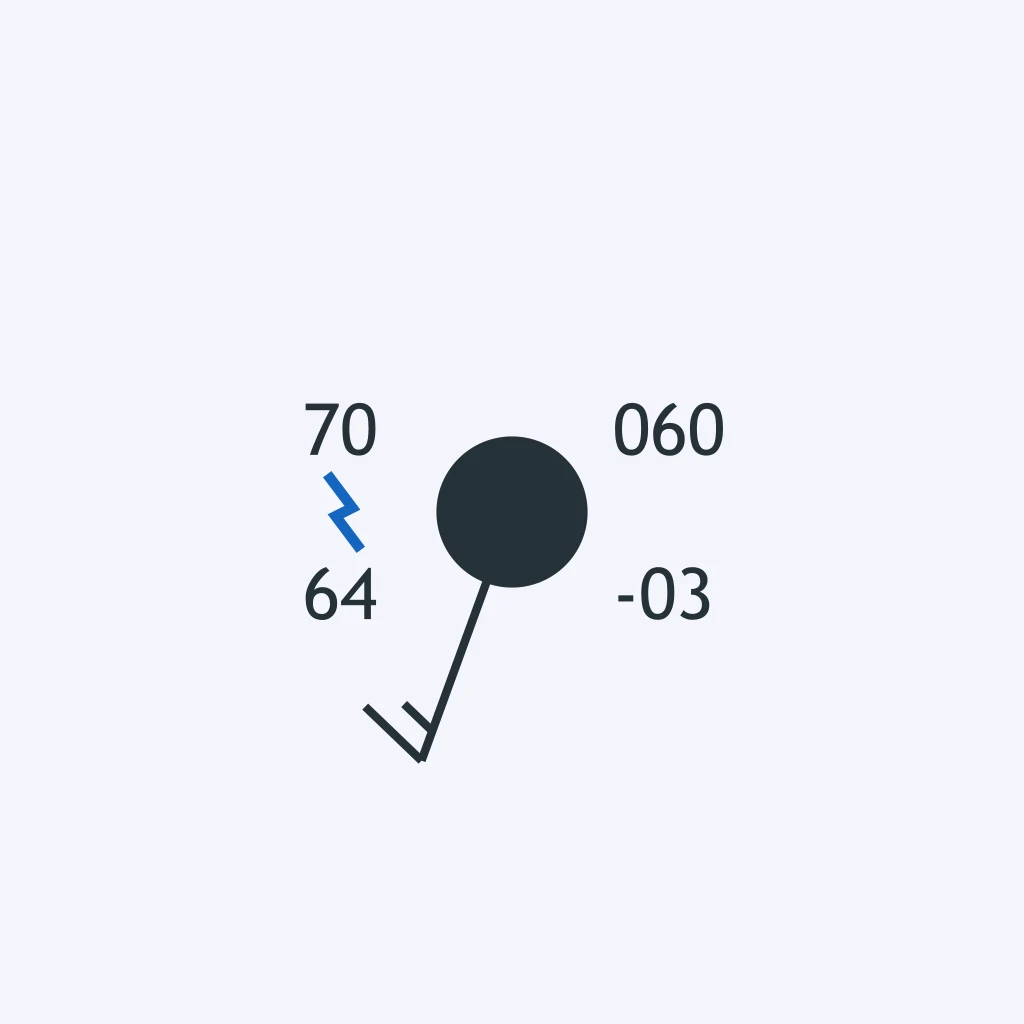
An airport log shows the sky clearing to thin cirrus overnight, then lowering and thickening clouds through the next day, with light rain settling in for several hours by evening, as the plotted conditions confirm. Which front is approaching?
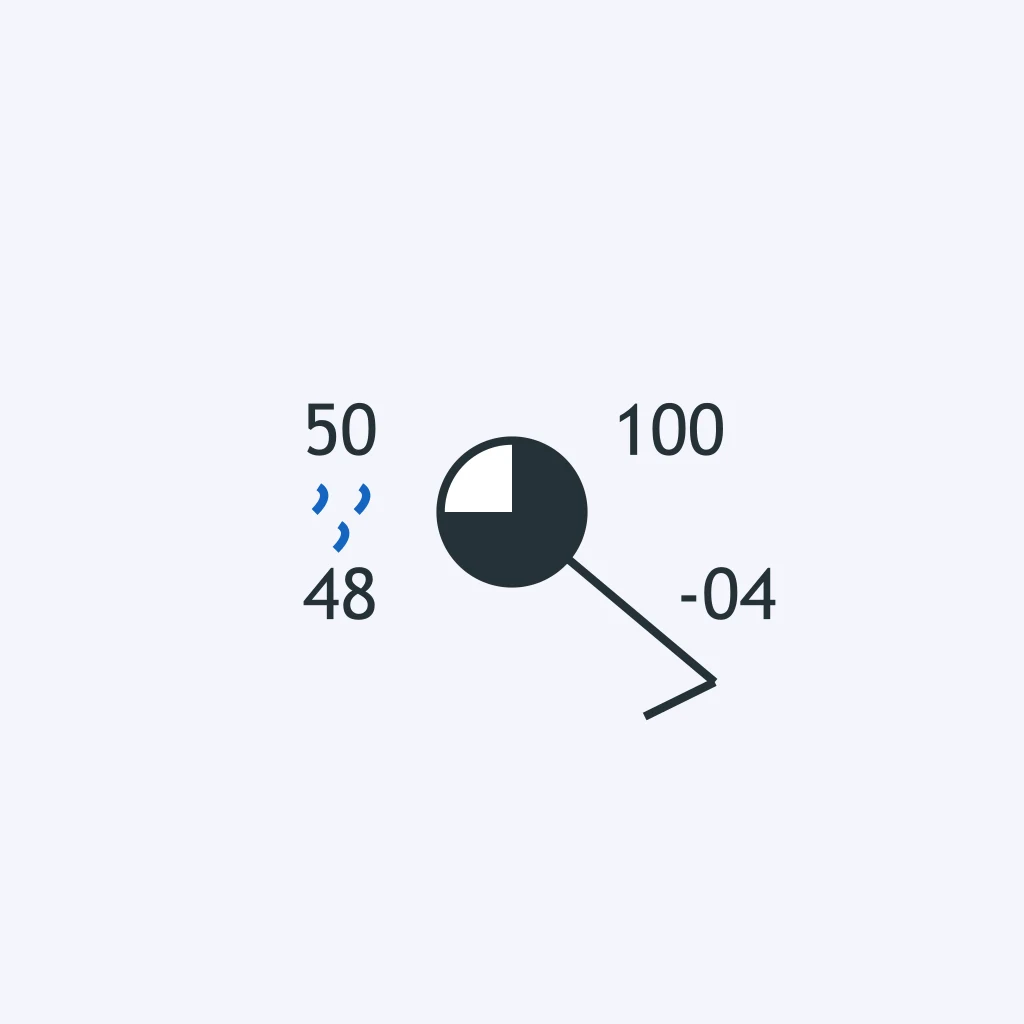
A ship's log records calm skies turning suddenly dark, a short burst of heavy rain and gusty wind, then rapid clearing within thirty minutes. The plot below shows the ship's conditions during the downpour. Which front just passed?
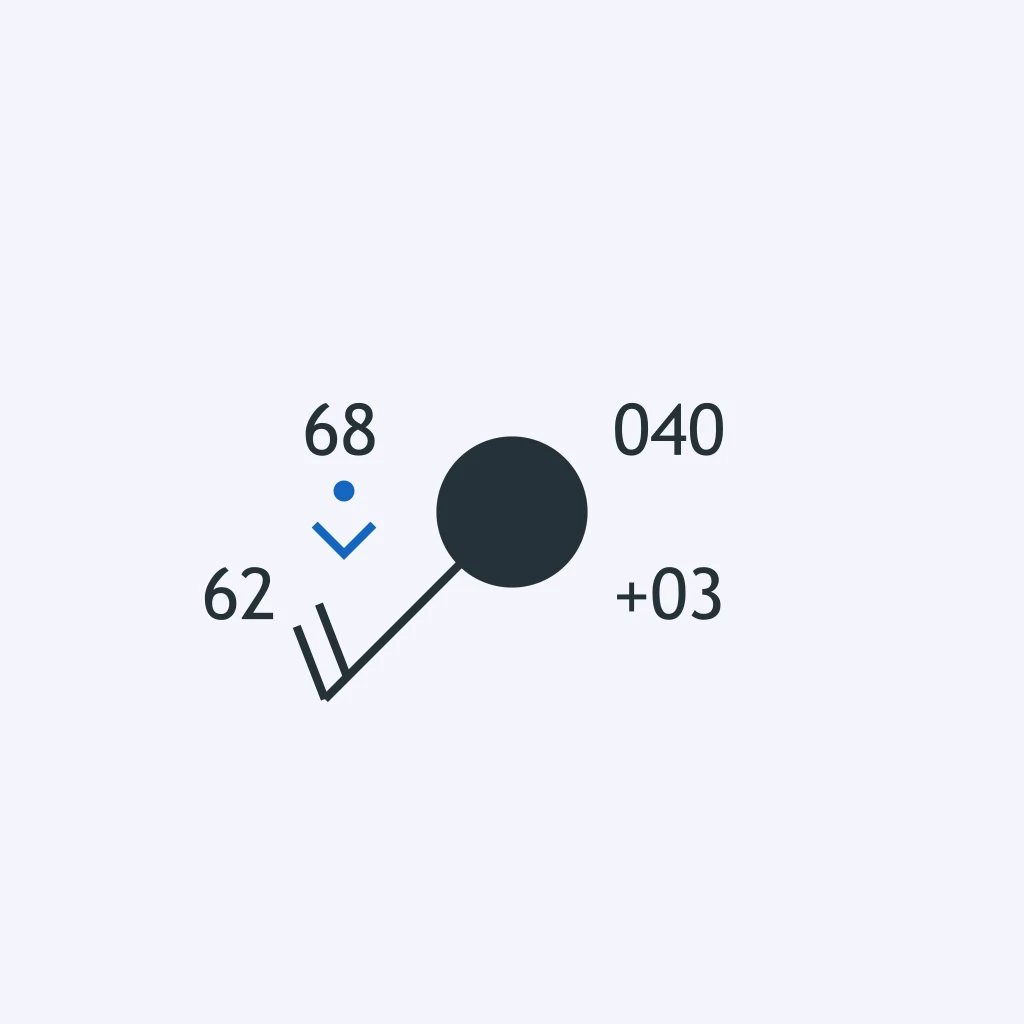
A station reports an extended period of light rain and mild temperatures, then a shift to a brief spell of heavier showers, as the plotted conditions confirm. Which front is affecting the station?
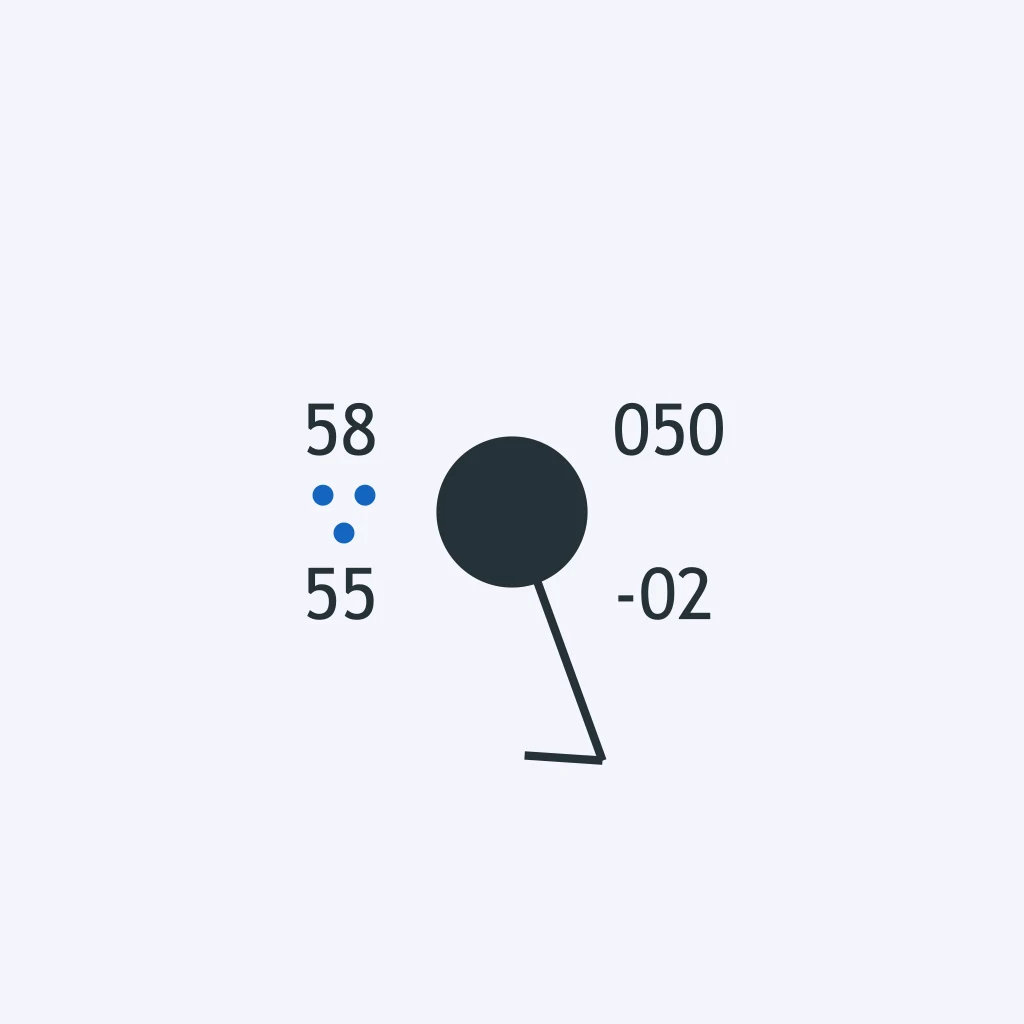
A station reports the same overcast sky and light drizzle for three straight days with almost no change in temperature or pressure, as the plotted conditions confirm. Which front is over the station?
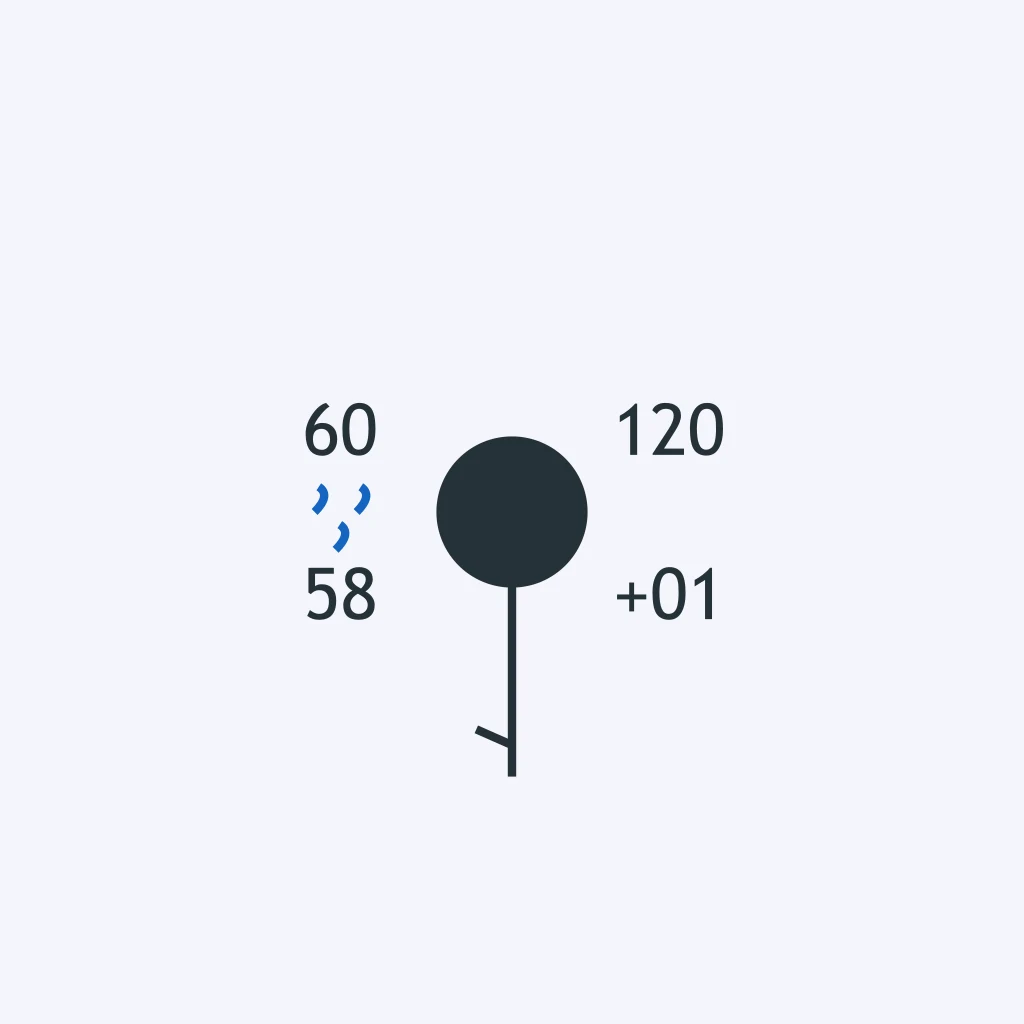
A weather diary notes a gradual buildup from wispy high clouds to a solid gray overcast, followed by many hours of steady, moderate rain, matching the plotted conditions below. Which front is arriving?
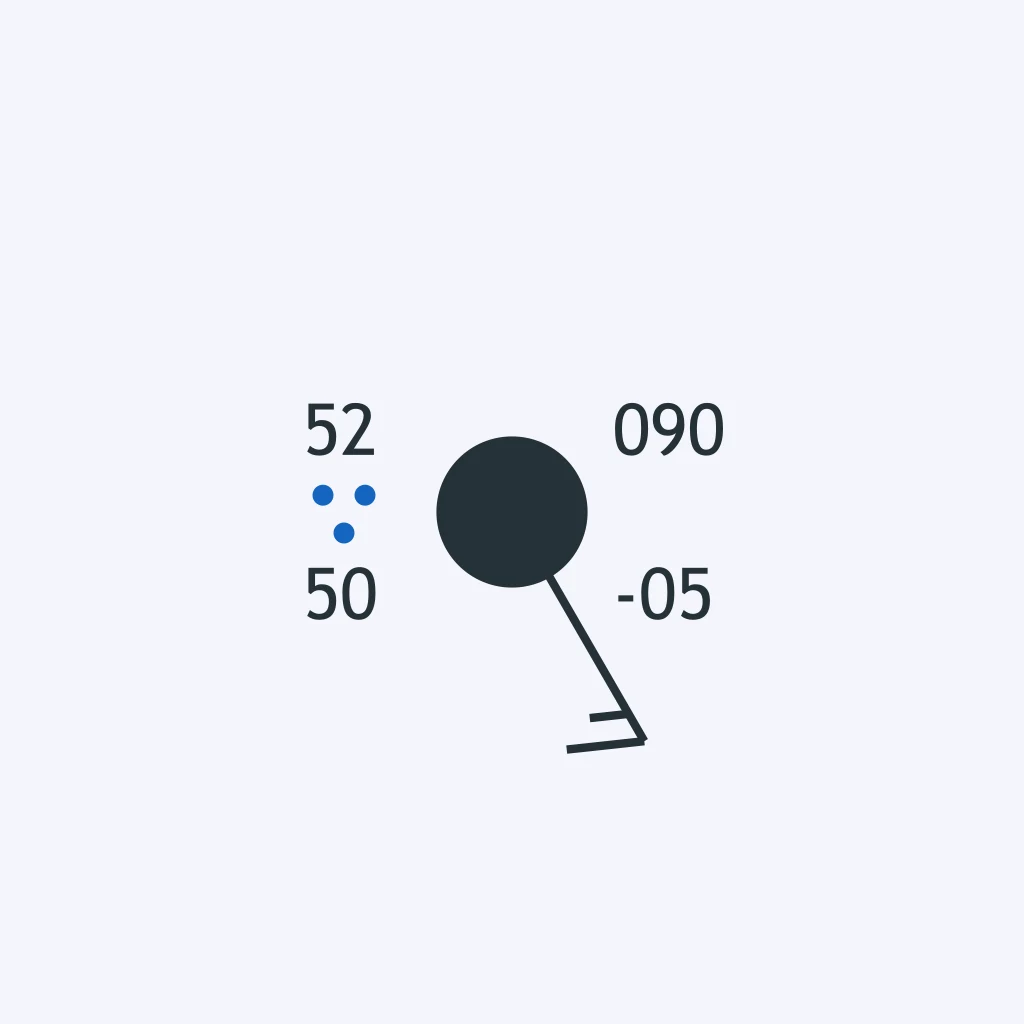
A field observer notes a rapid temperature drop, a short but intense hailstorm, and skies clearing again within the hour, matching the plotted conditions below. Which front swept through?
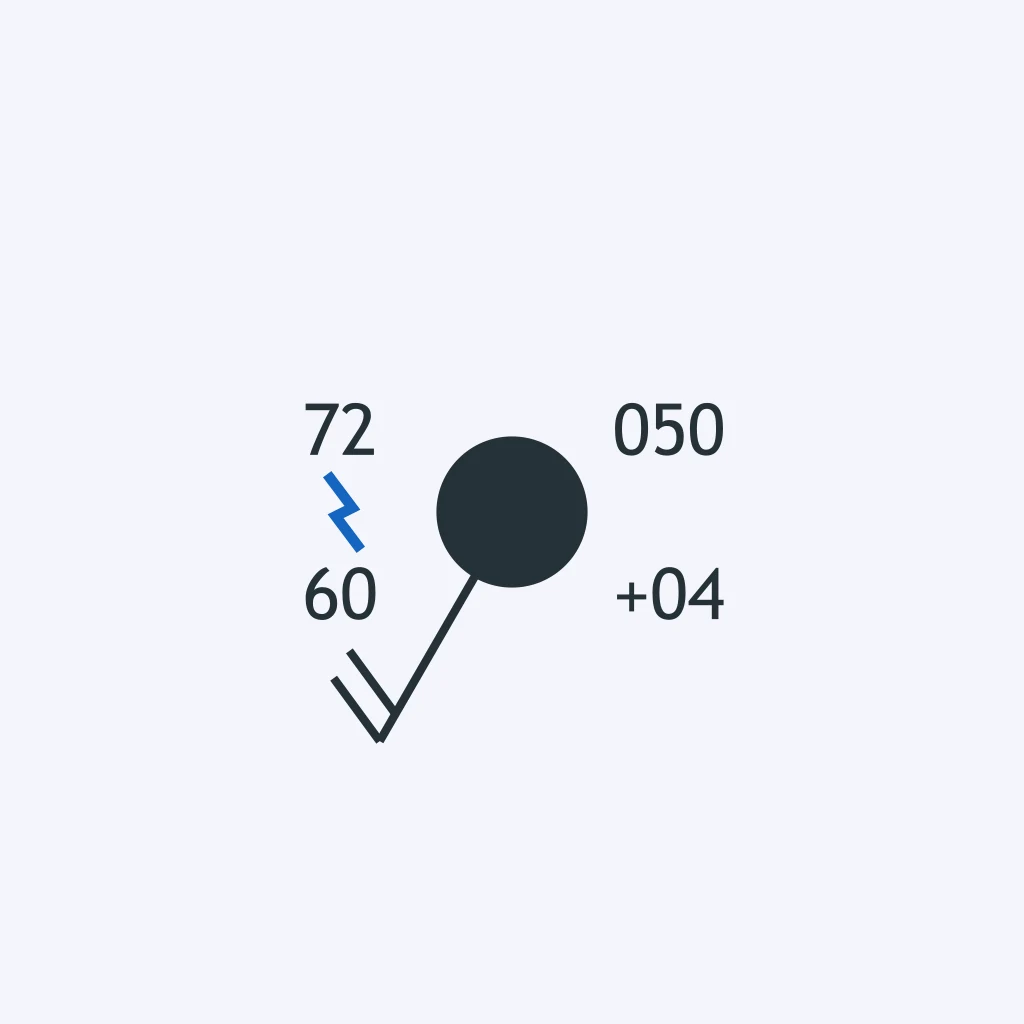
The two station plots below show conditions before and after a boundary swept through the same location. Which type of front passed through?
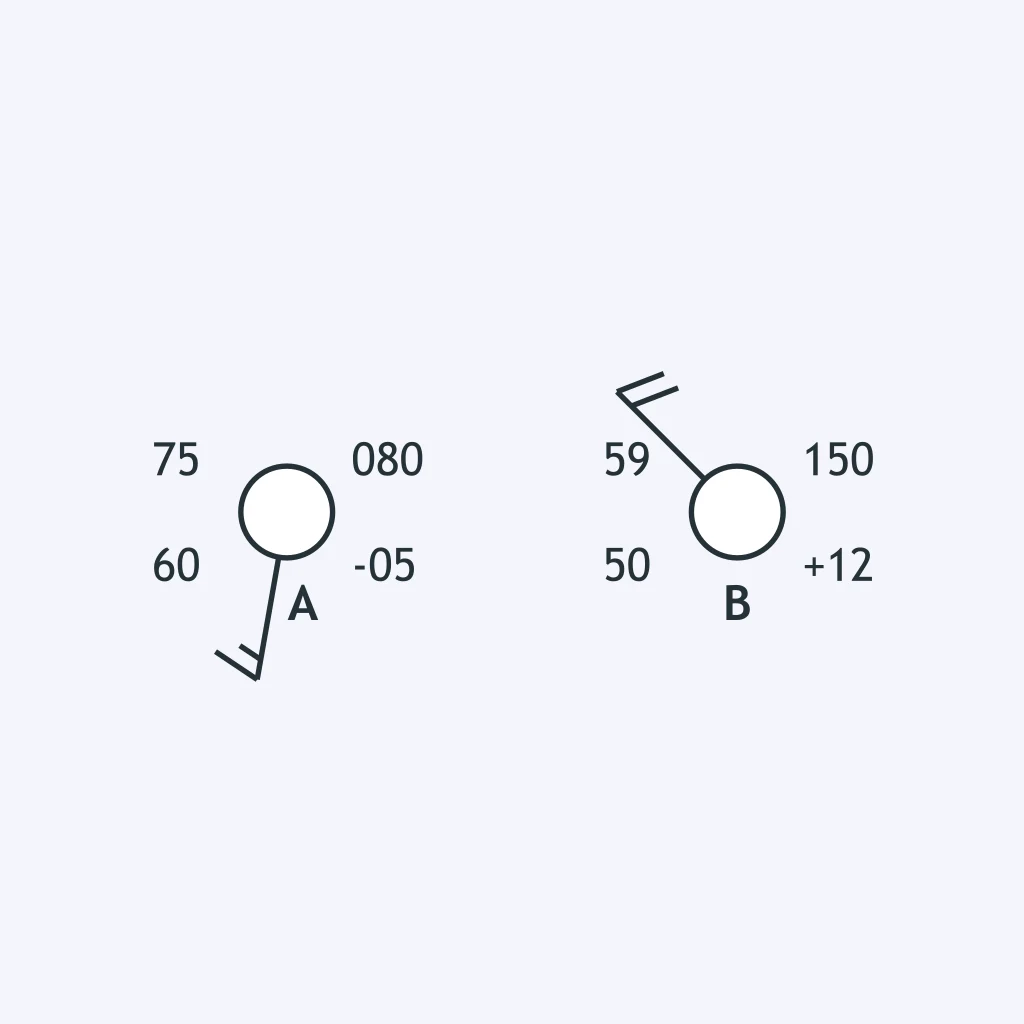
A dispatcher compares the two plotted stations below, recorded before and after a front passed the same site. Which type of front swept through?
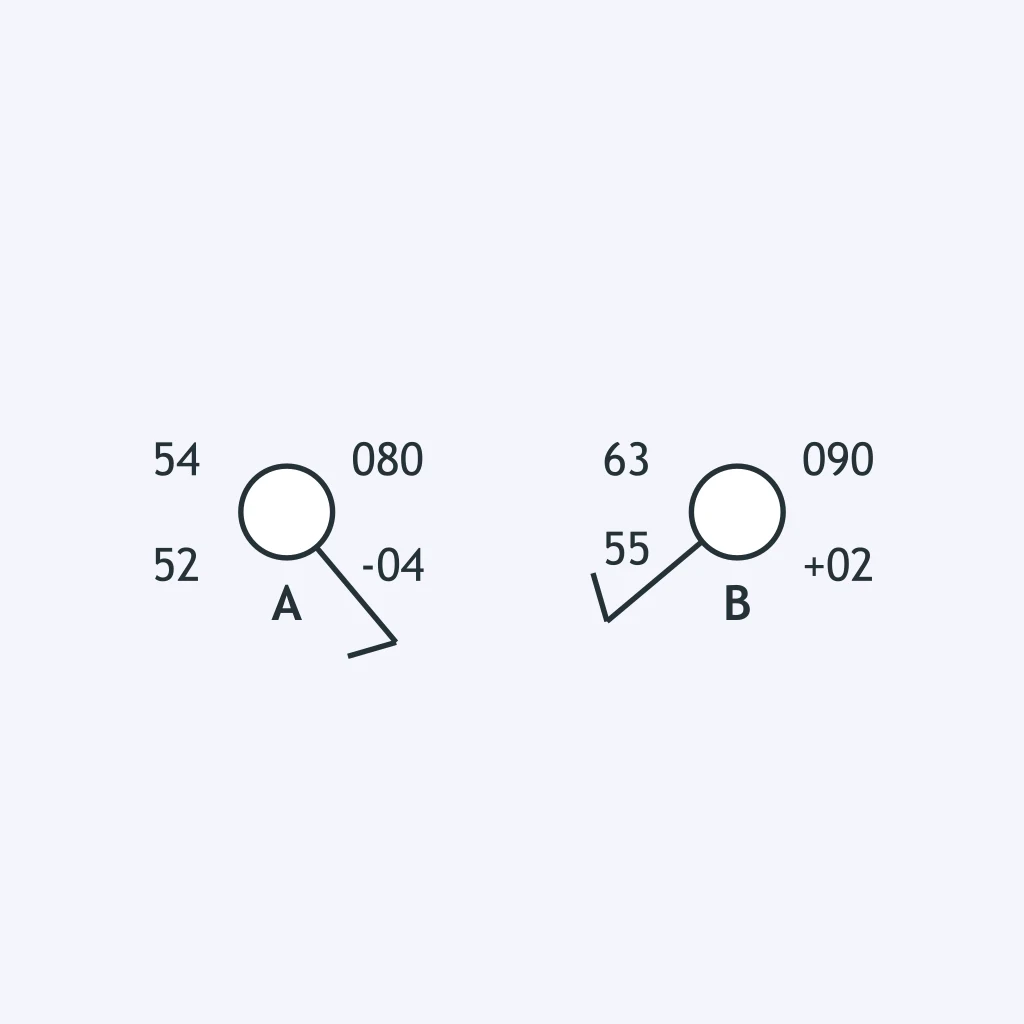
The two plots below show a station's conditions before and after a frontal passage. Which type of front swept over the station?
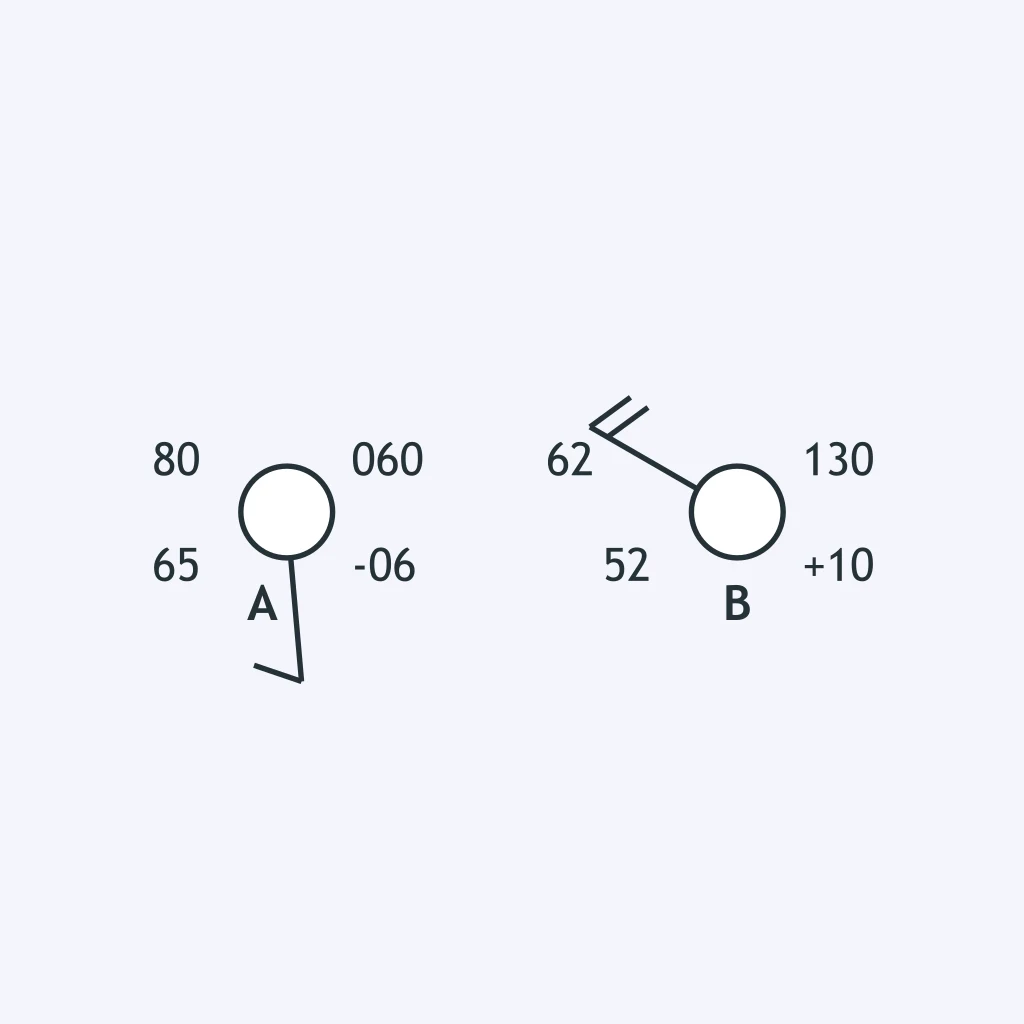
A student is asked to compare the two plotted stations below, taken before and after a boundary crossed the same town. Which type of front passed?
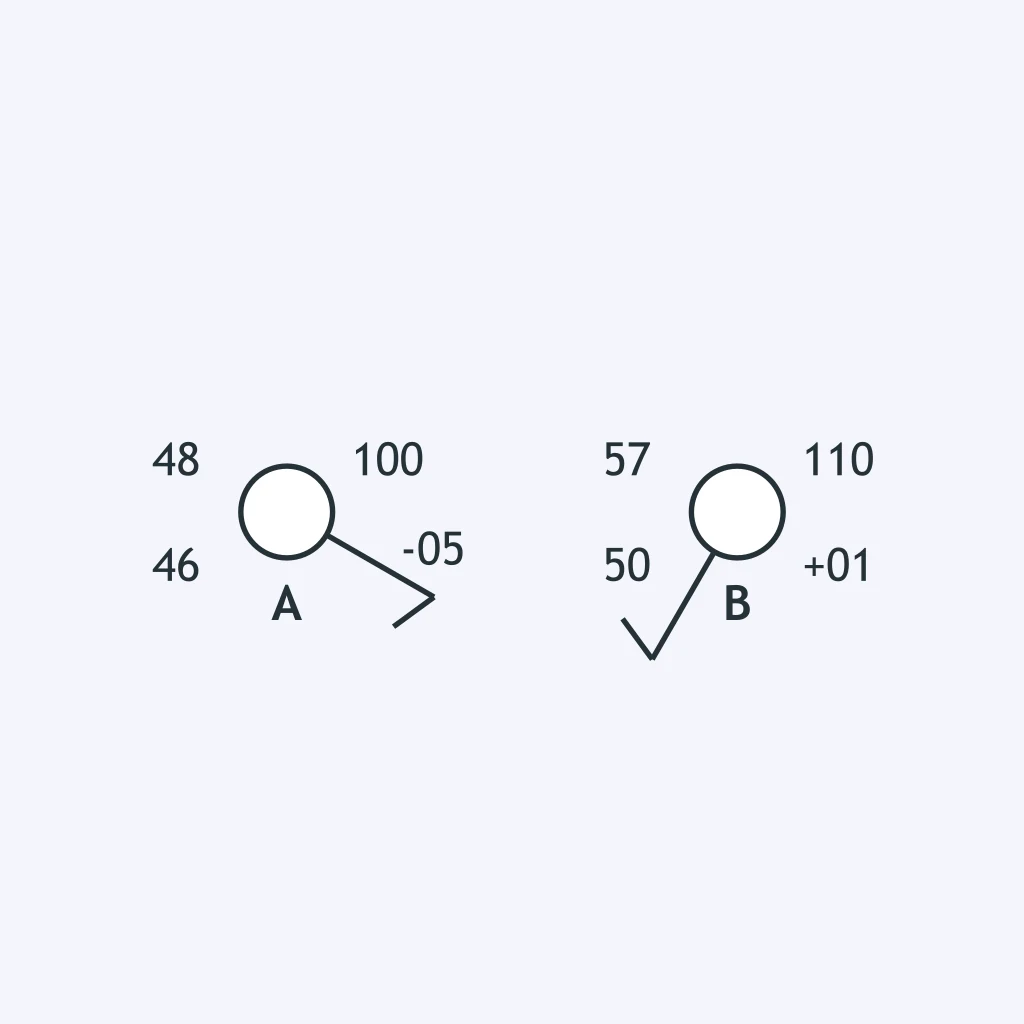
As a boundary sweeps through a station the wind veers from south to northwest, the temperature drops C in an hour and the pressure begins to rise. Which front has passed?
A pilot's log shows the wind slowly turning from east to south over several hours while the temperature climbs gradually and the pressure, after falling for a day, only levels off. Which front is passing?
Within minutes a station's wind snaps from south to northwest and the temperature drops sharply as a cold front passes. What usually happens to the dew point right after the front goes by?
A fast-moving cold front overtakes the warm front ahead of it and lifts the warm air entirely off the ground. What has formed at the surface where they meet?
Two air masses meet along a boundary, but neither one is strong enough to push the other back, so the line between them stops advancing in either direction for days. What kind of front is this?
Occlusion usually happens late in a mid-latitude low-pressure system's life, when the cold front catches the warm front. What generally happens to the low after its fronts occlude?
Along a stalled boundary, winds on each side blow nearly parallel to the front rather than directly into it, so neither air mass is pushed against the other. Why does the boundary stay in place?
In a cold occlusion, the overtaking cold air is colder than the air it undercuts ahead of the warm front. What happens to the lifted warm air in this case?
A warm front and a cold front cross the same town a day apart. Which statement compares the precipitation the two fronts bring?
Which statement correctly compares the slope of a warm front's boundary with that of a cold front's boundary?
Which statement compares how fast a cold front and a warm front typically move across the surface?
Crack the passcode before the zombies get in.
Answer, then swat bugs for bonus points.
Race through questions at your own speed.
Same question on every screen. Fastest wins.

Pick a tile, answer, hit bonuses and steals.
60 questions