Loading
by BlastRoom
Review air masses, fronts, pressure systems, station models, maps, and weather instruments.
#earth_space_science
50 questions
One question set, multiple game modes. Tap any game to see it in action. Not sure which to pick?
Answer to place stones and capture territory.
Outrun the snow together.
Earn blasts, then hunt the other team.
Answer to earn energy, then climb.

The class blasts through walls together.
Bid on mystery lots. Most money wins.
Sell tours. Nice, standard, or a total scam.

Answer, restock, and serve the rush.
More correct answers pulls the rope your way.
Answer, then shoot down the alien wave.
Answer, then tap to leap the frozen ridge.
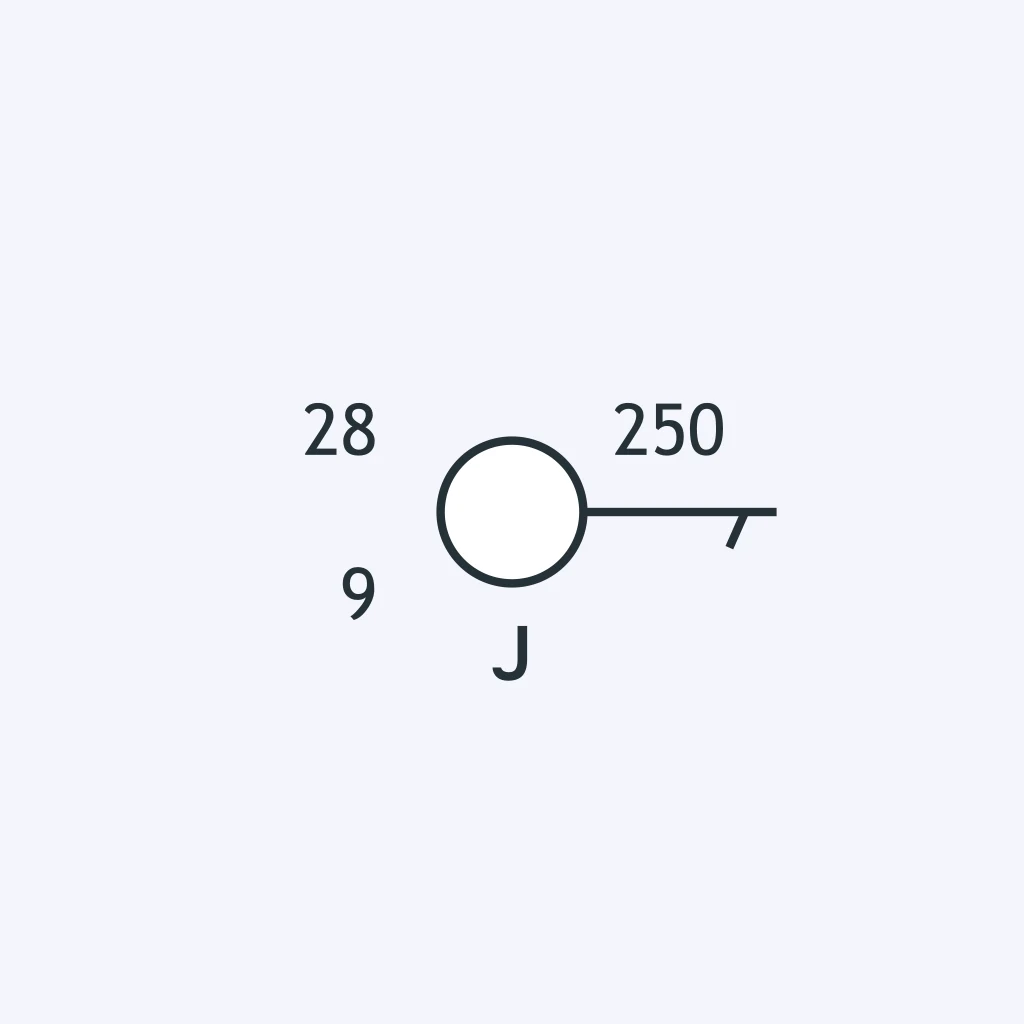
Use the station model. What present weather is reported at the station?
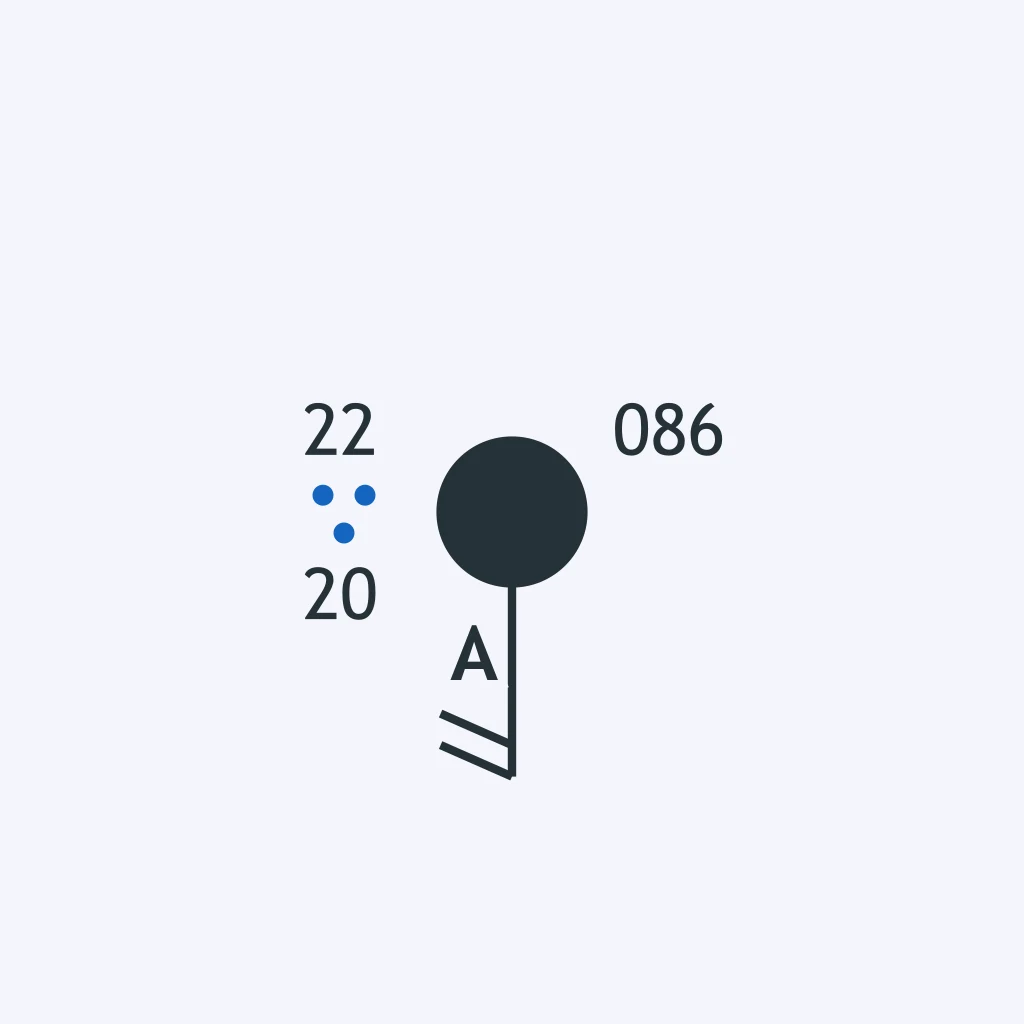
Use the station model. How much of the sky is covered by clouds?
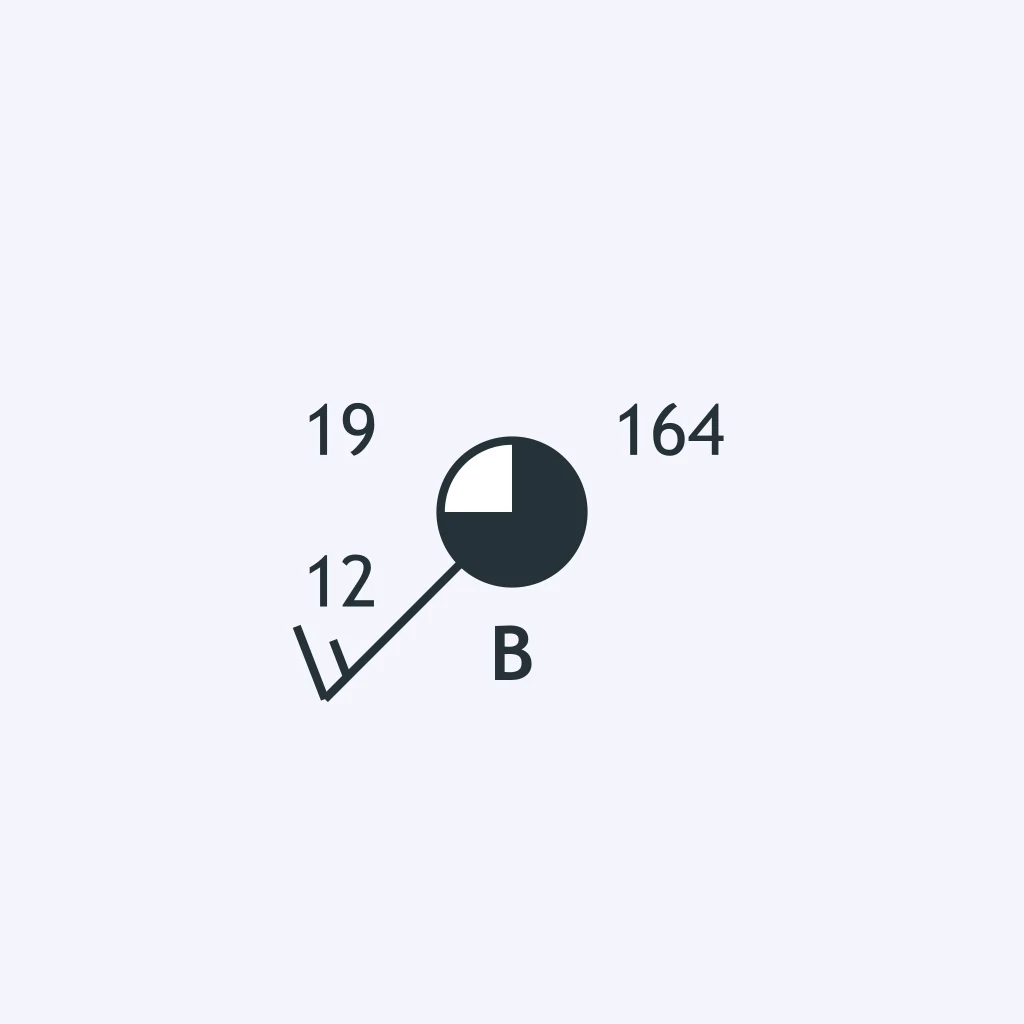
Use the station model. What dew point is plotted for the station?
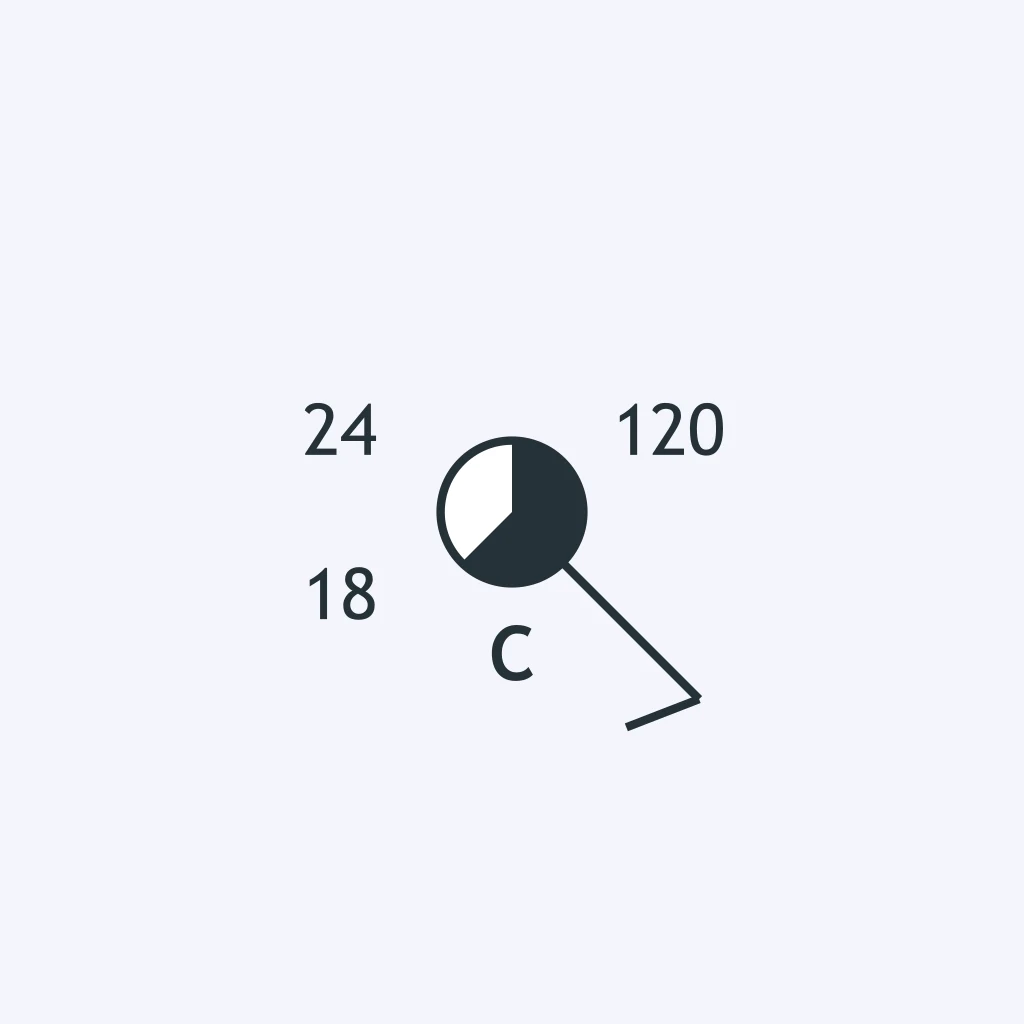
Use the station model. What wind is shown by the wind barb?
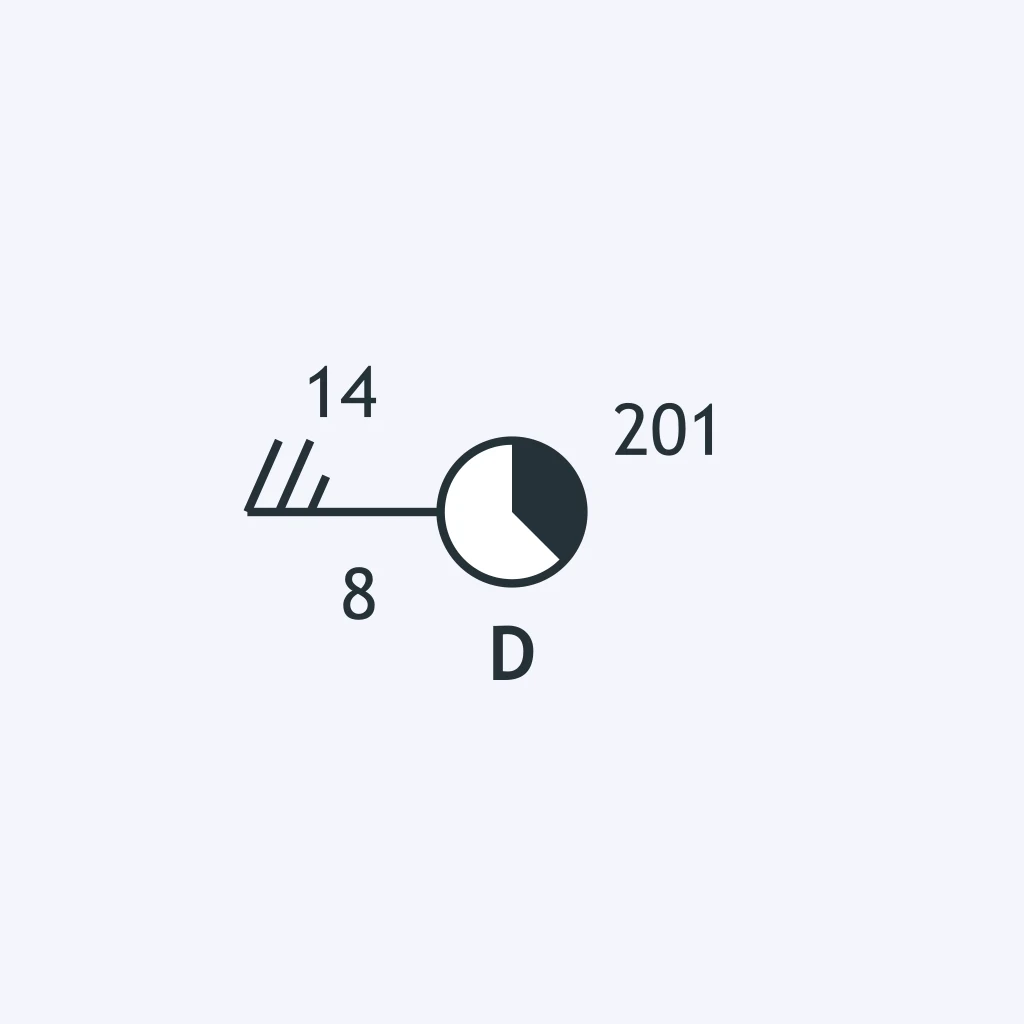
Use the station model. What sea-level pressure is encoded by the pressure plot?
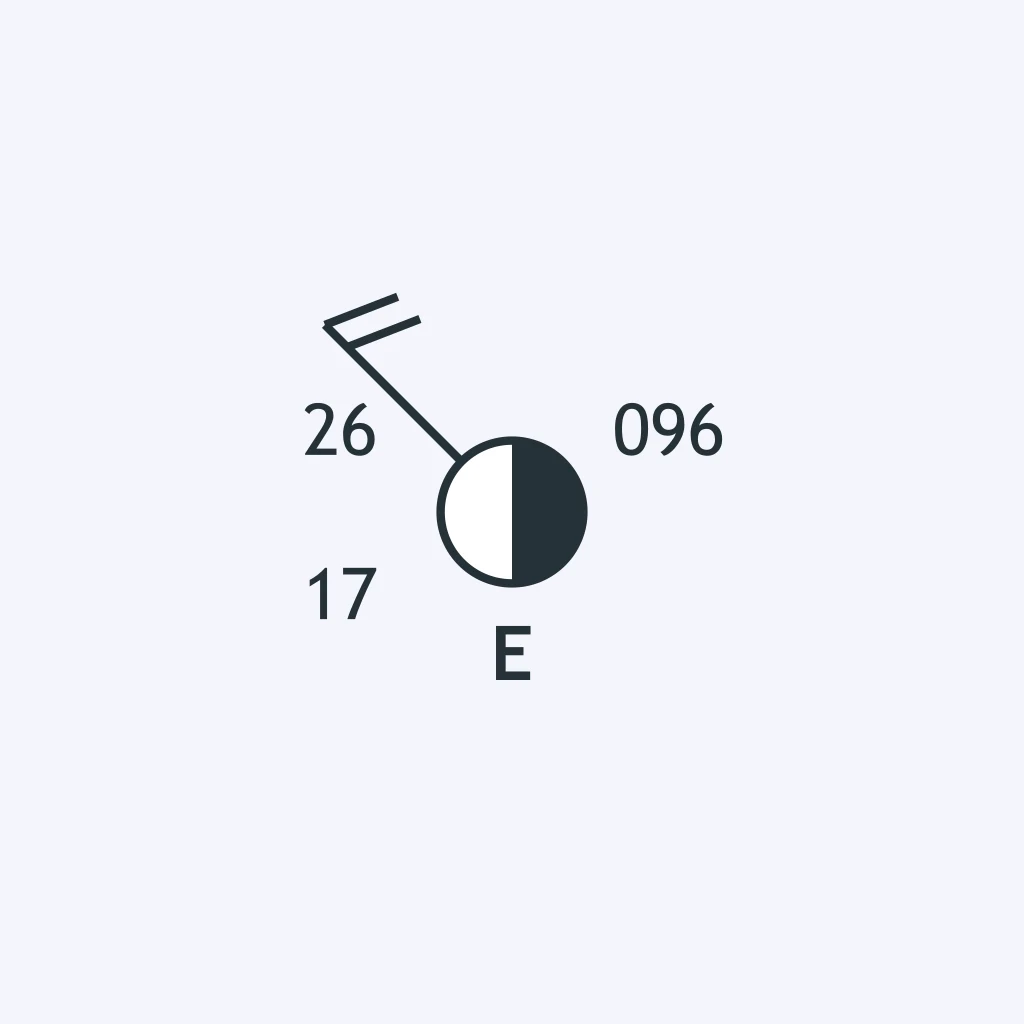
Use the station model. What 3-hour pressure change is plotted?
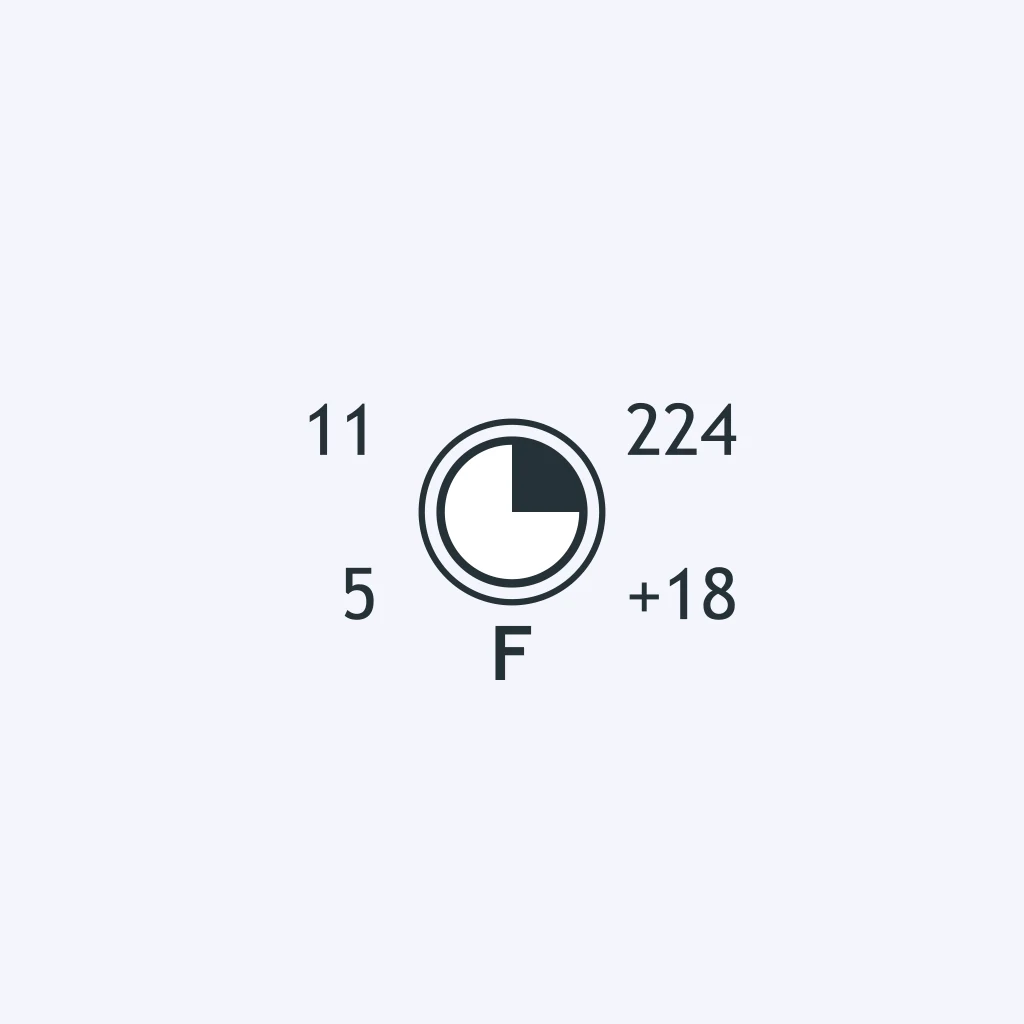
Use the station model. What is the dew point depression?
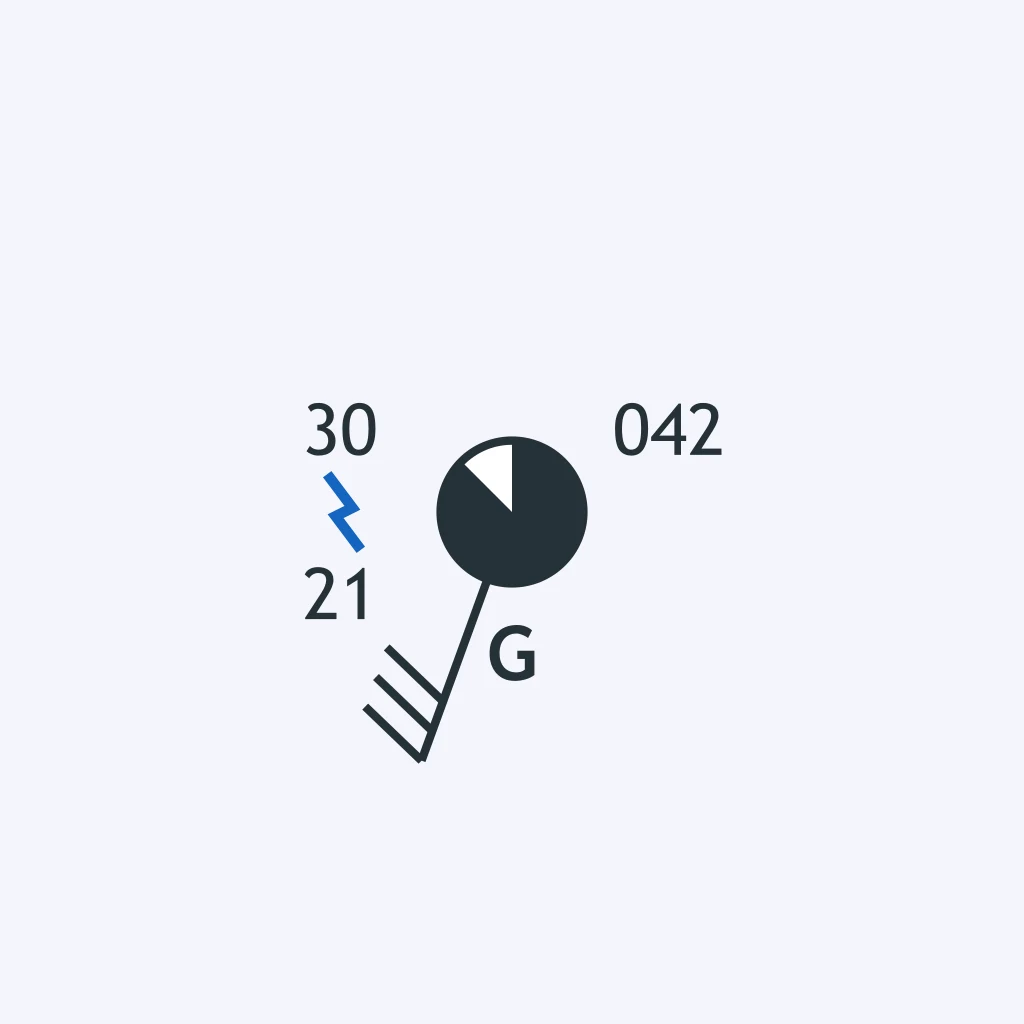
Use the two station models. Which station has air closest to saturation?
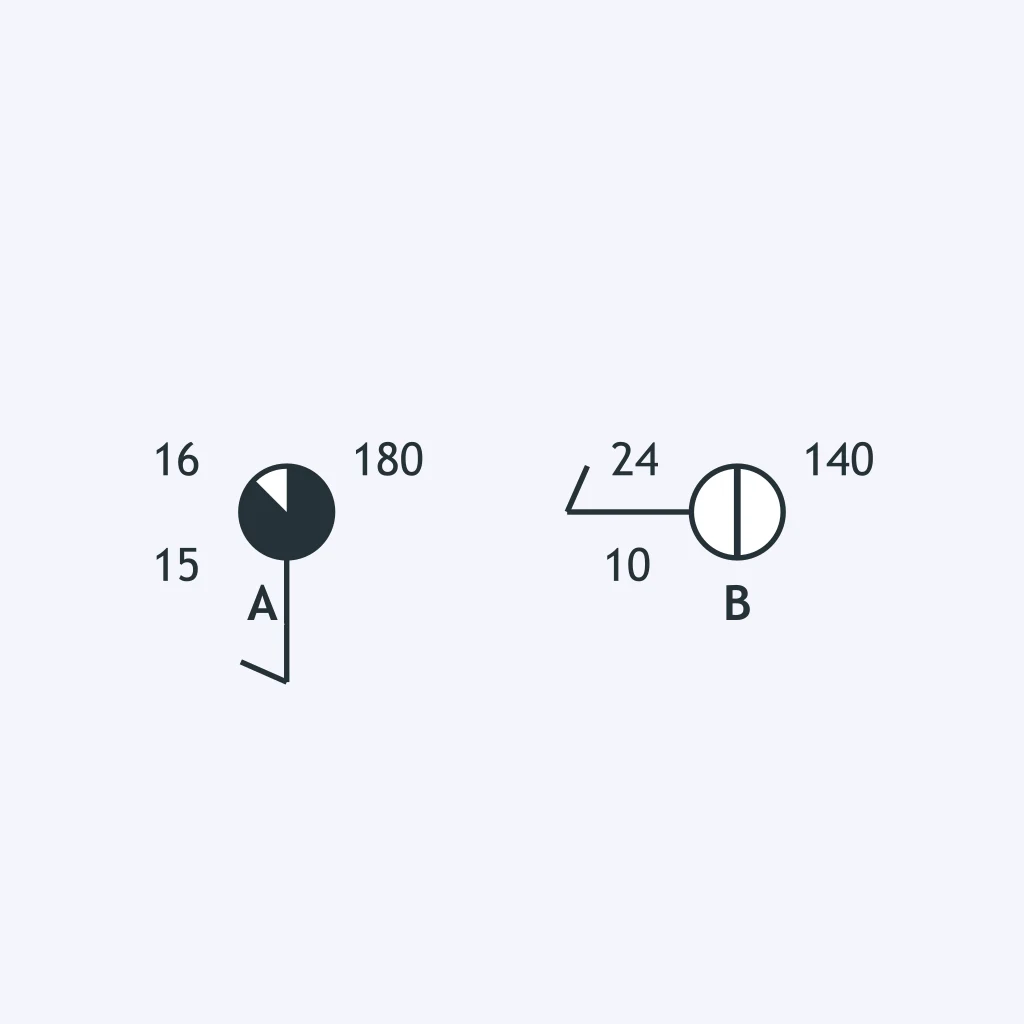
Use the station model. What sea-level pressure is encoded by the plotted pressure code?
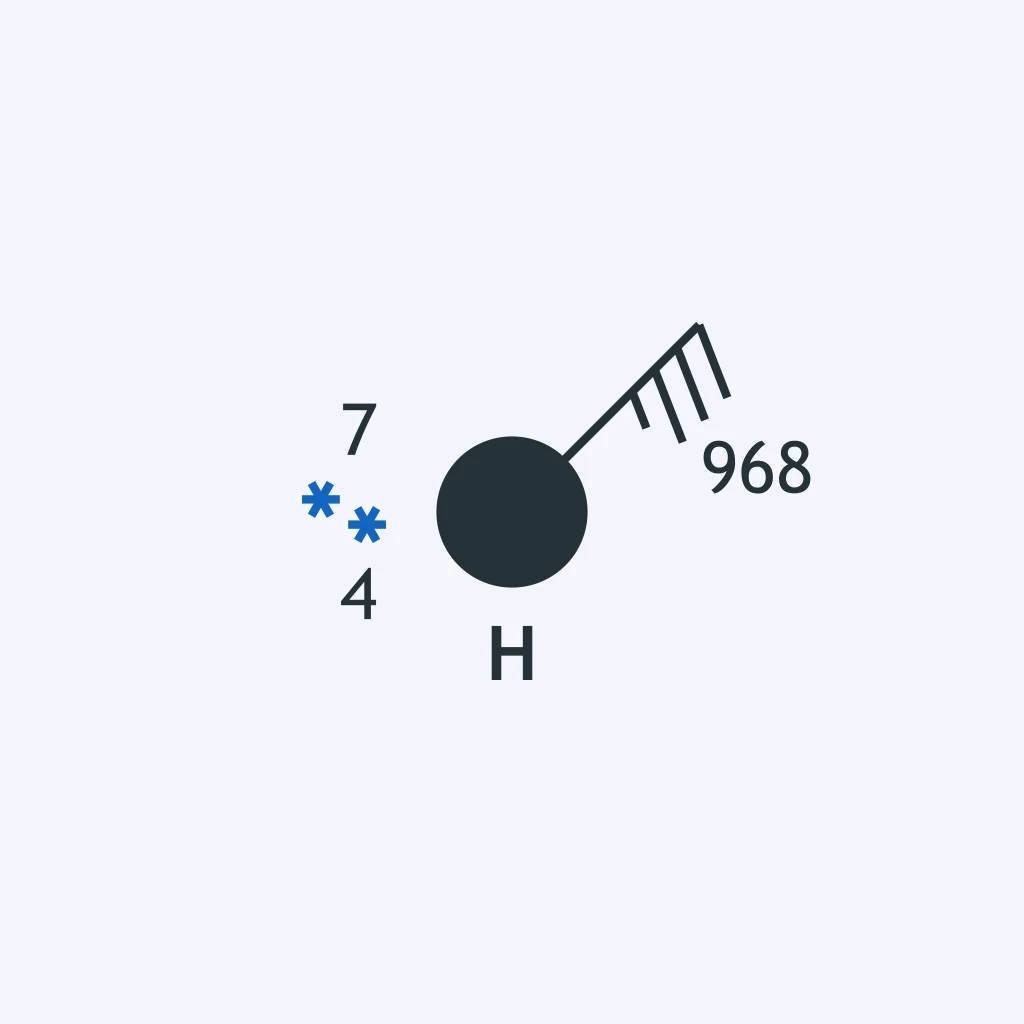
Use the station model. What wind direction and speed are shown?
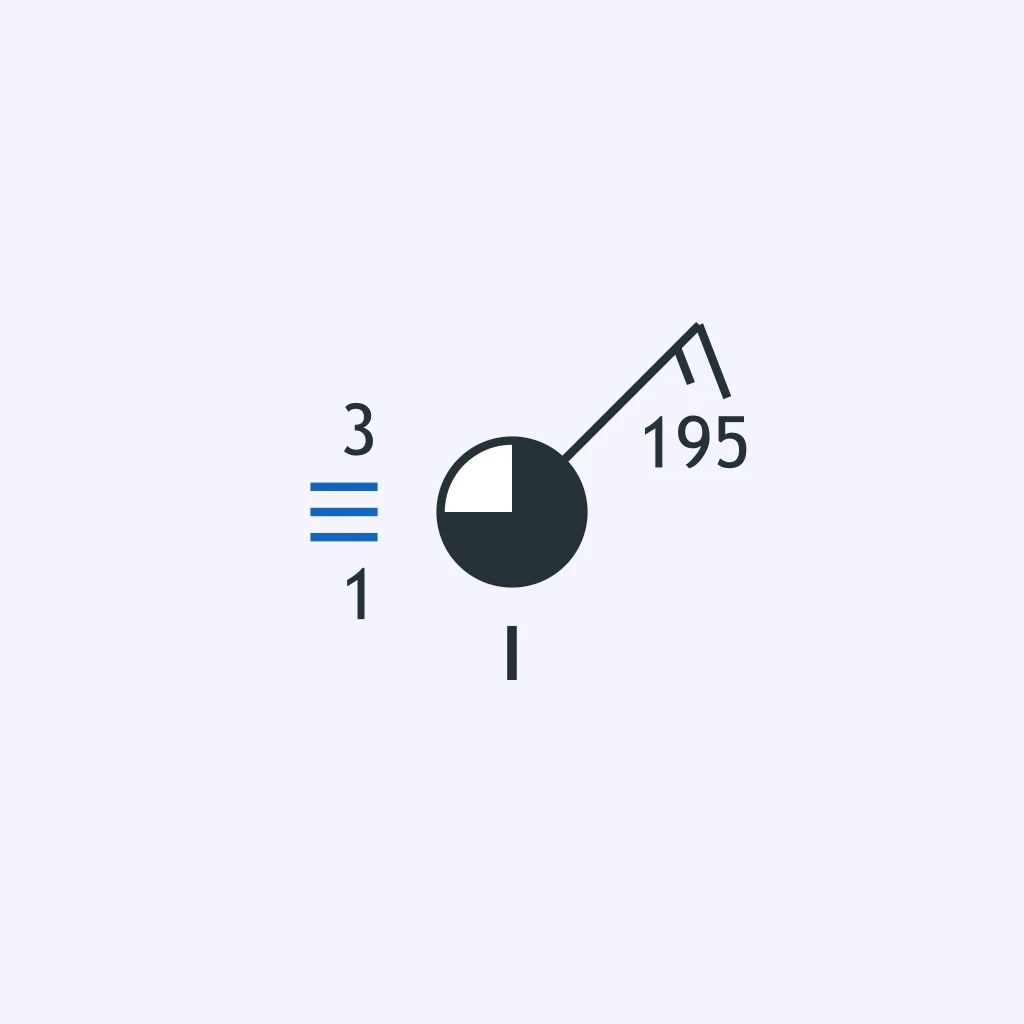
Use the station model. What sky condition is plotted by the center circle?
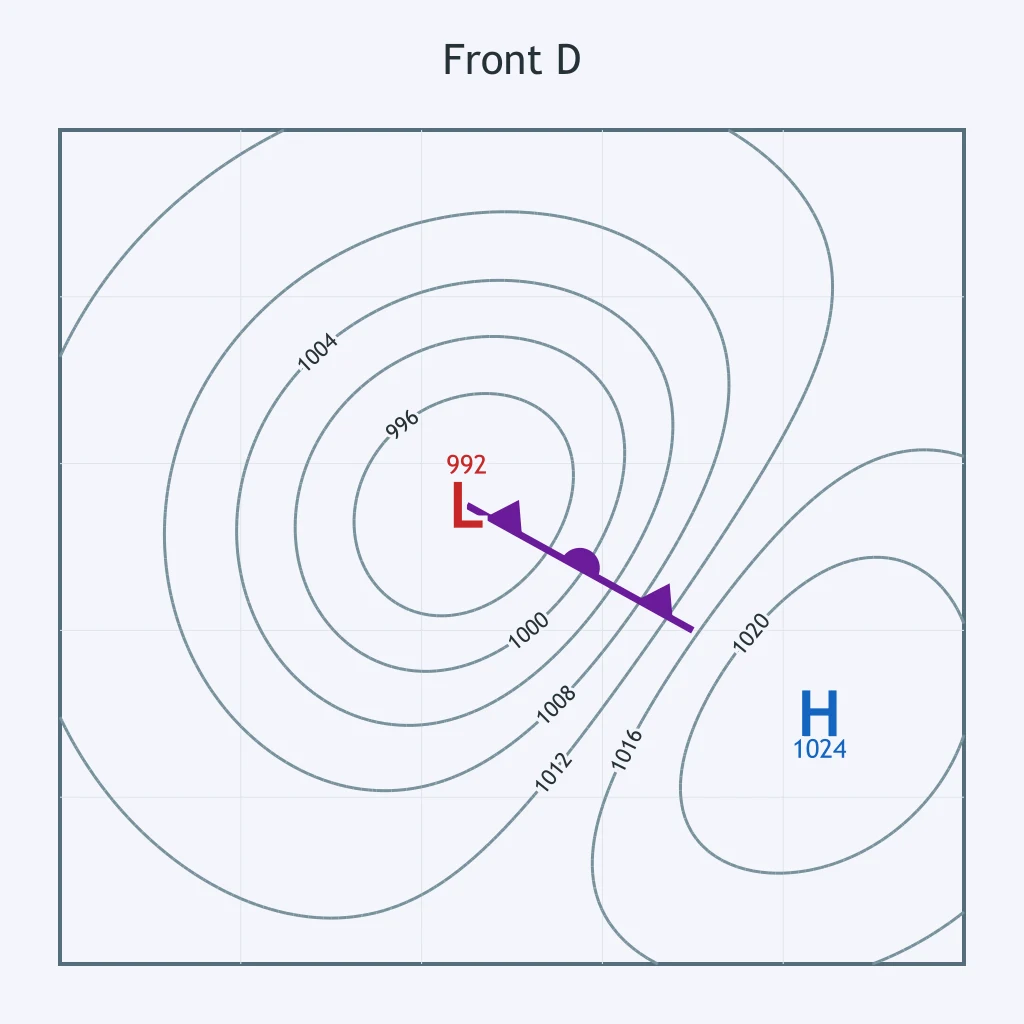
Use the weather map. What type of front is shown?
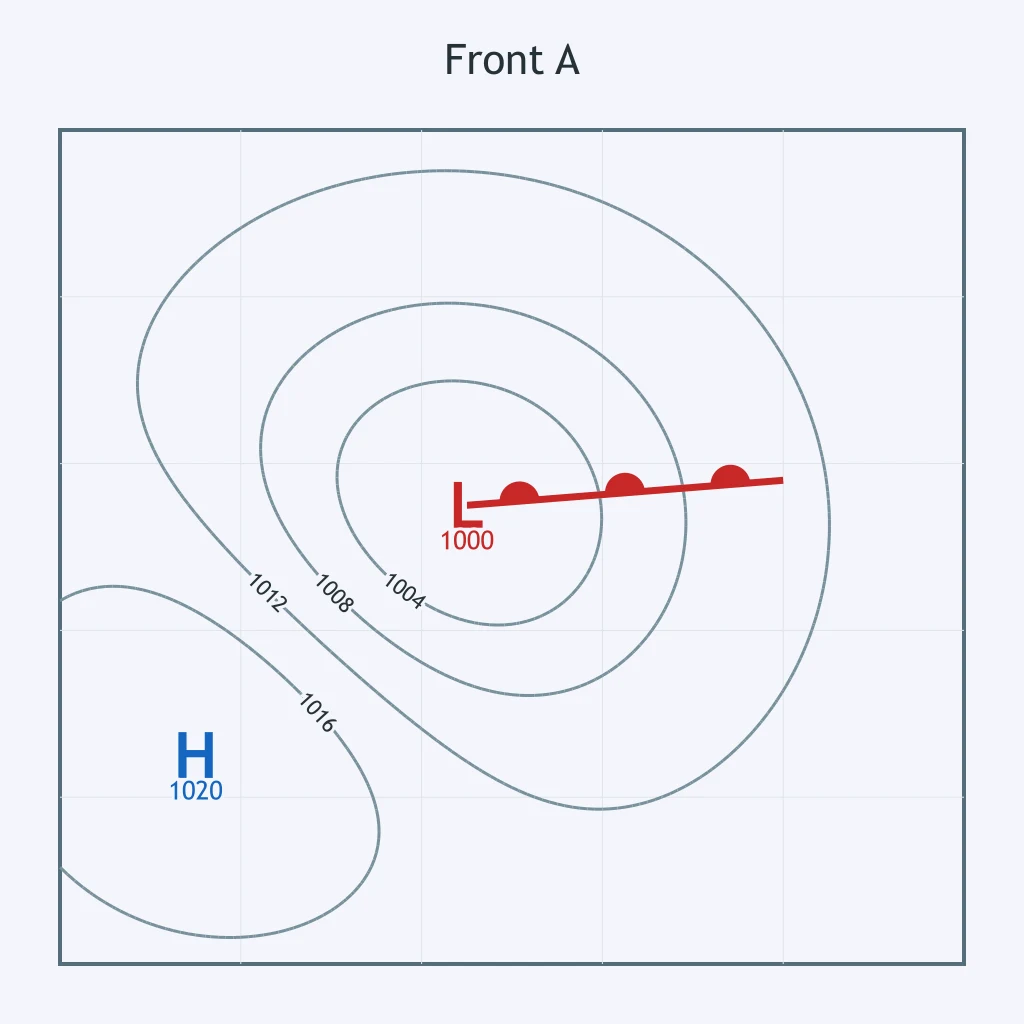
Use the weather map. What type of front is shown?
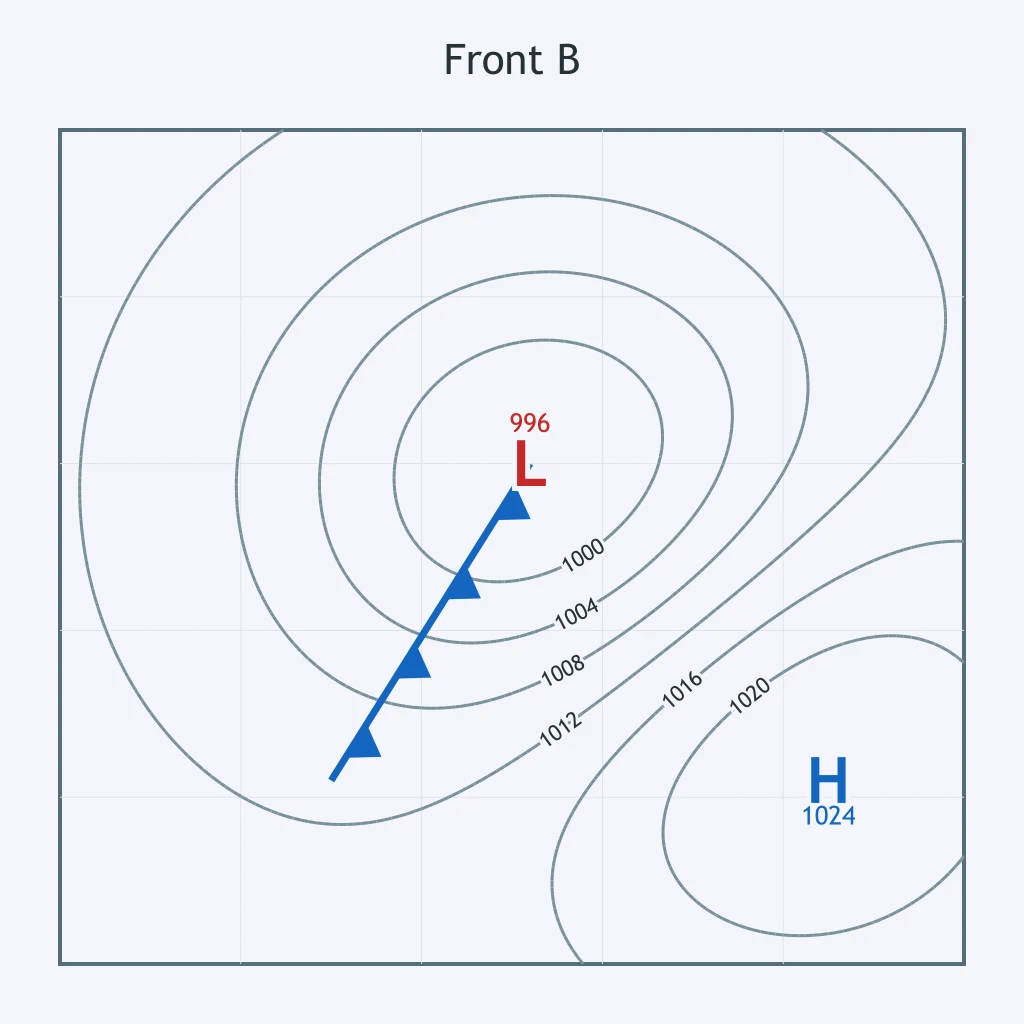
Use the weather map. What type of front is shown?
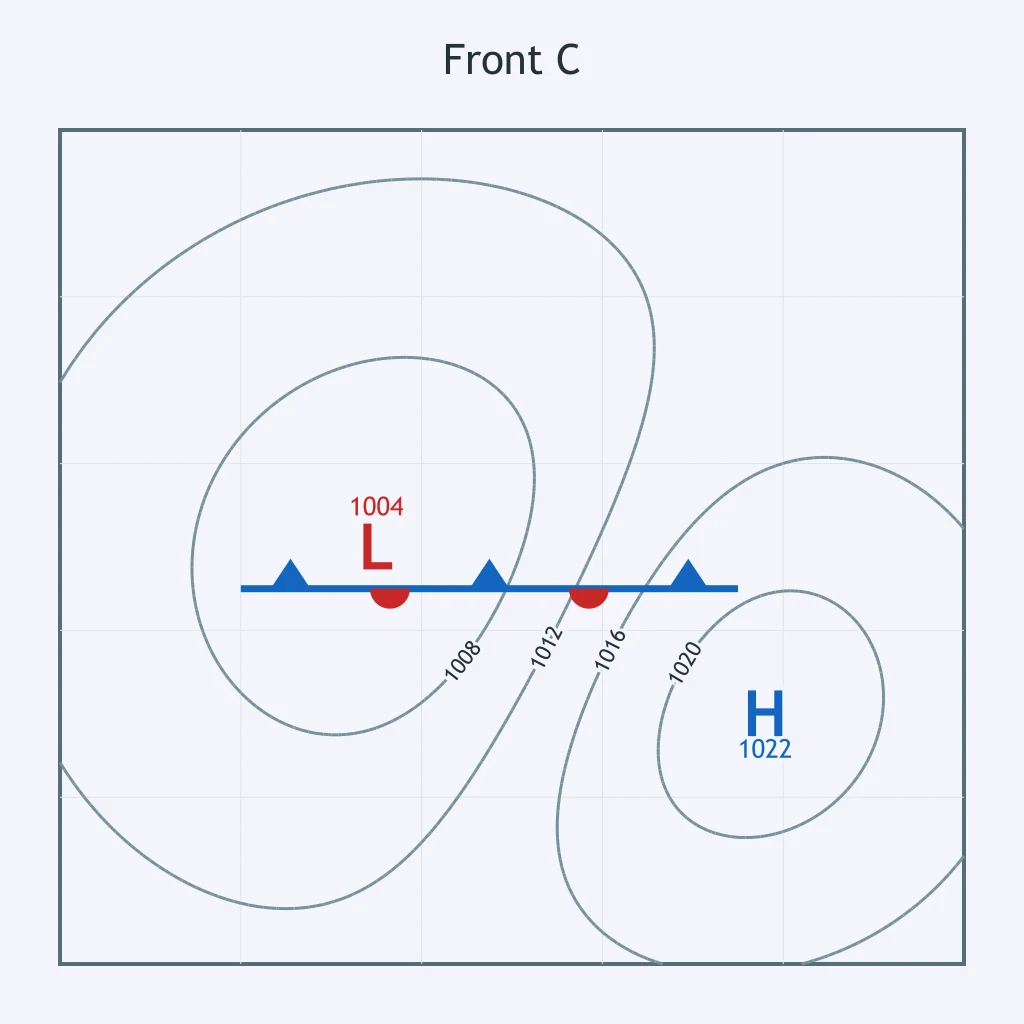
Use the weather map. What type of front is shown?
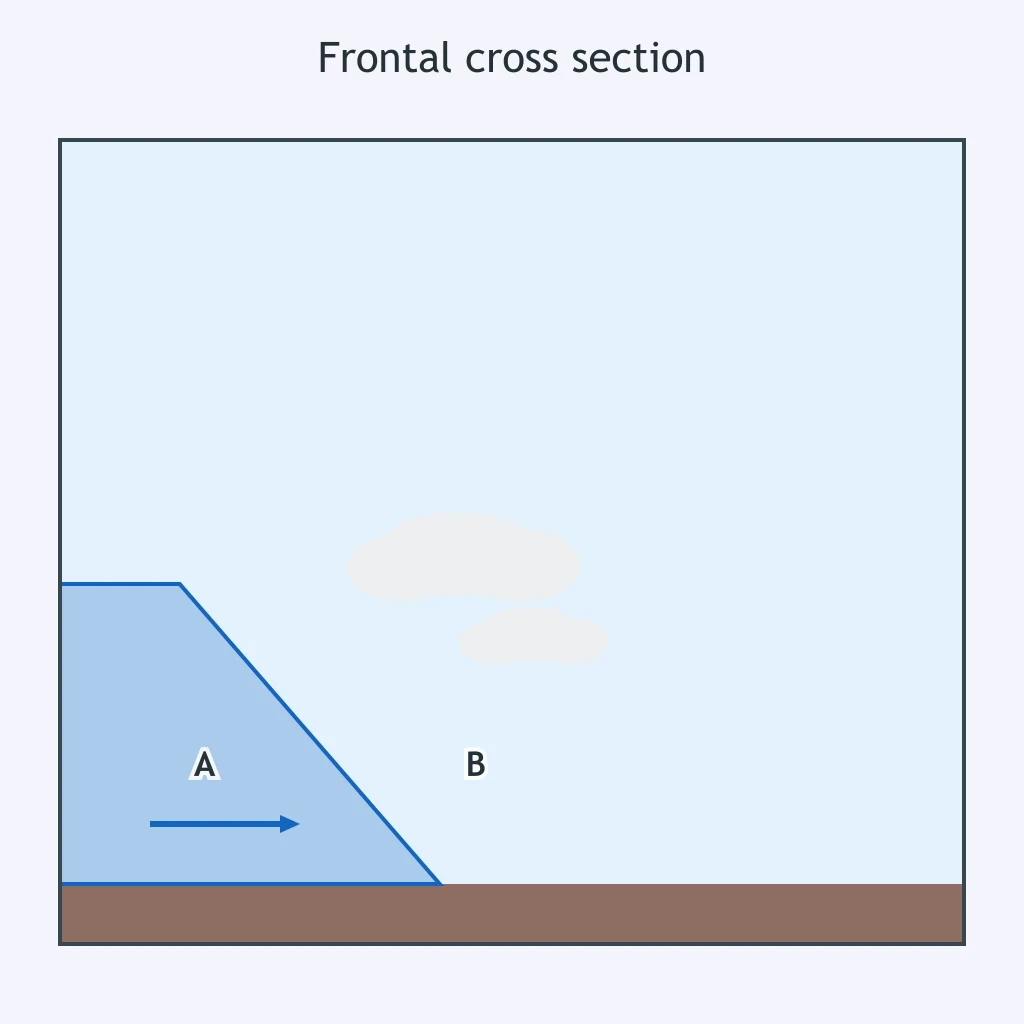
Use the frontal cross section. What type of front is shown?
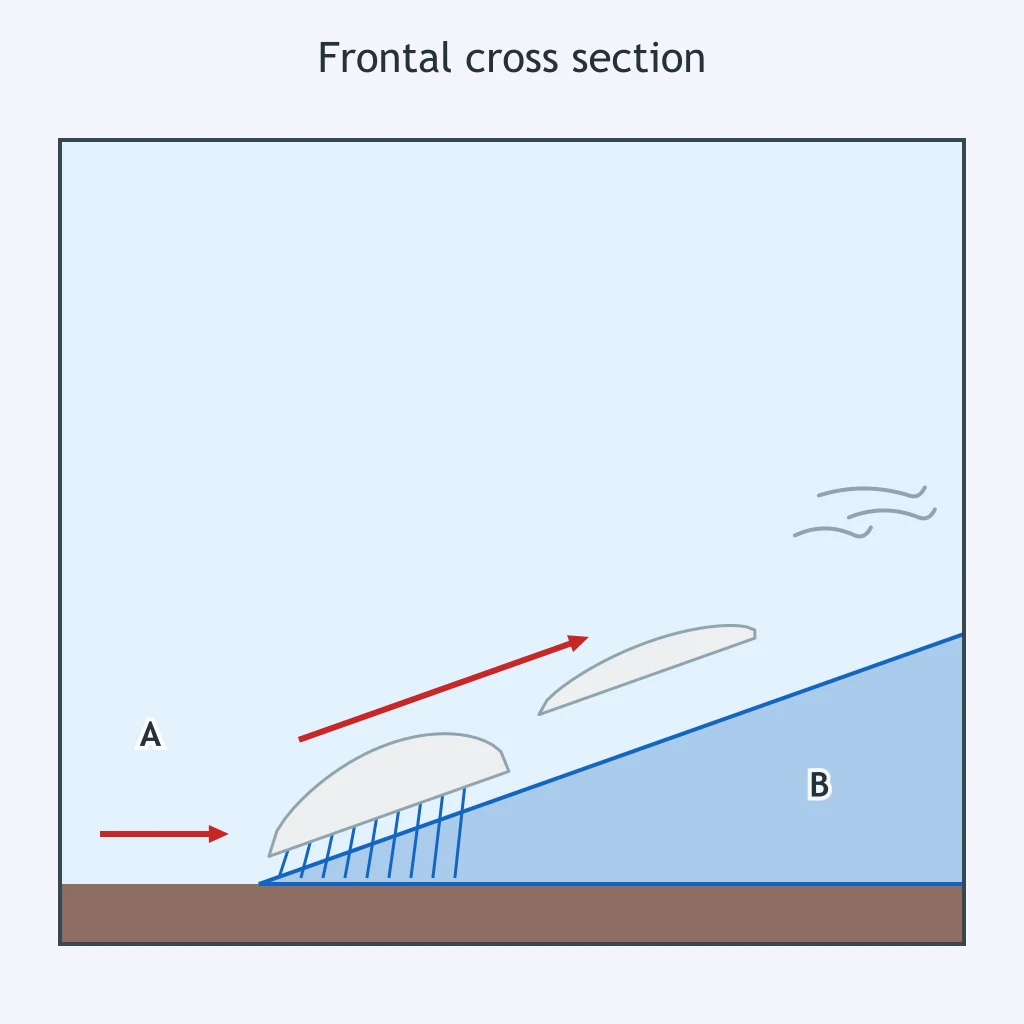
Use the frontal cross section. What type of front is shown?
A cold front passes a humid station in the afternoon. What weather sequence is most likely?
A warm front approaches a cool station. What weather sequence usually occurs before and after passage?
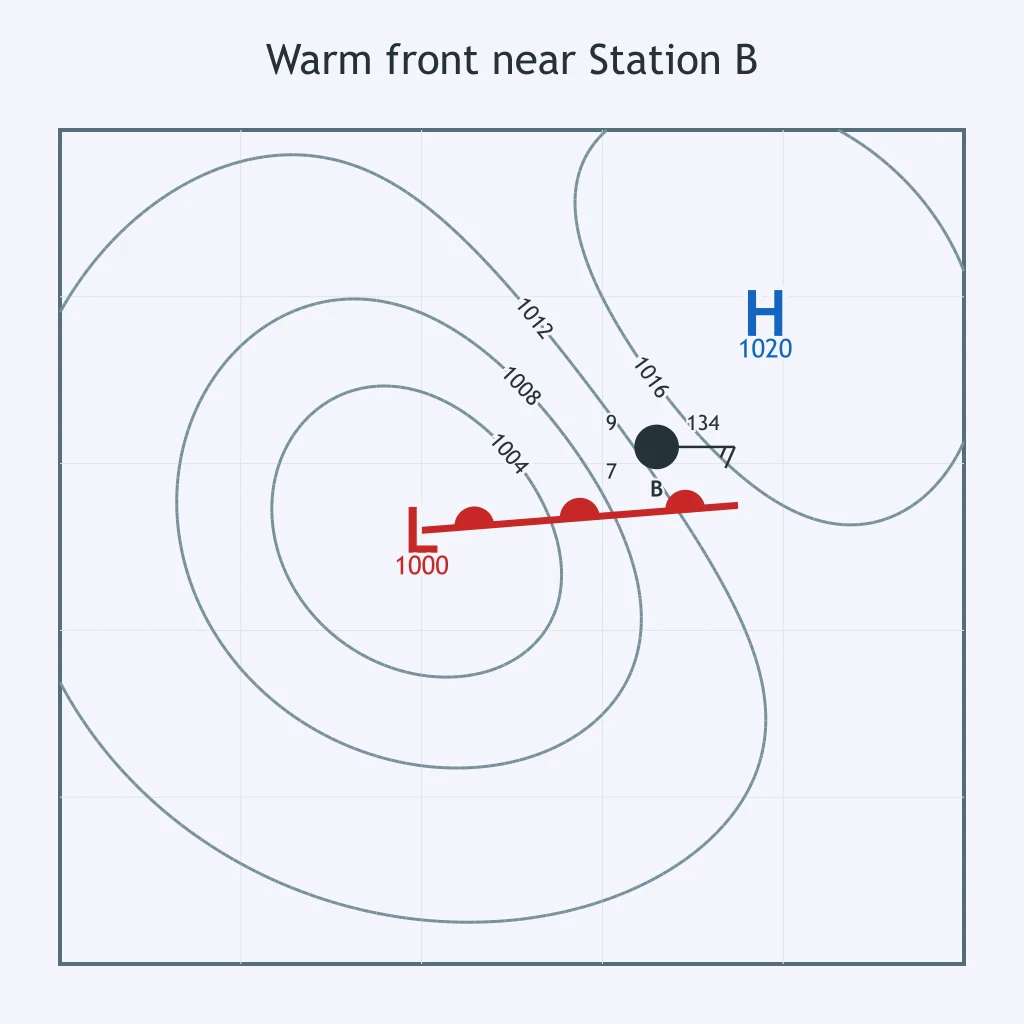
A boundary stays over the same county for two days with winds nearly parallel to it. What front best explains repeated clouds and rain?
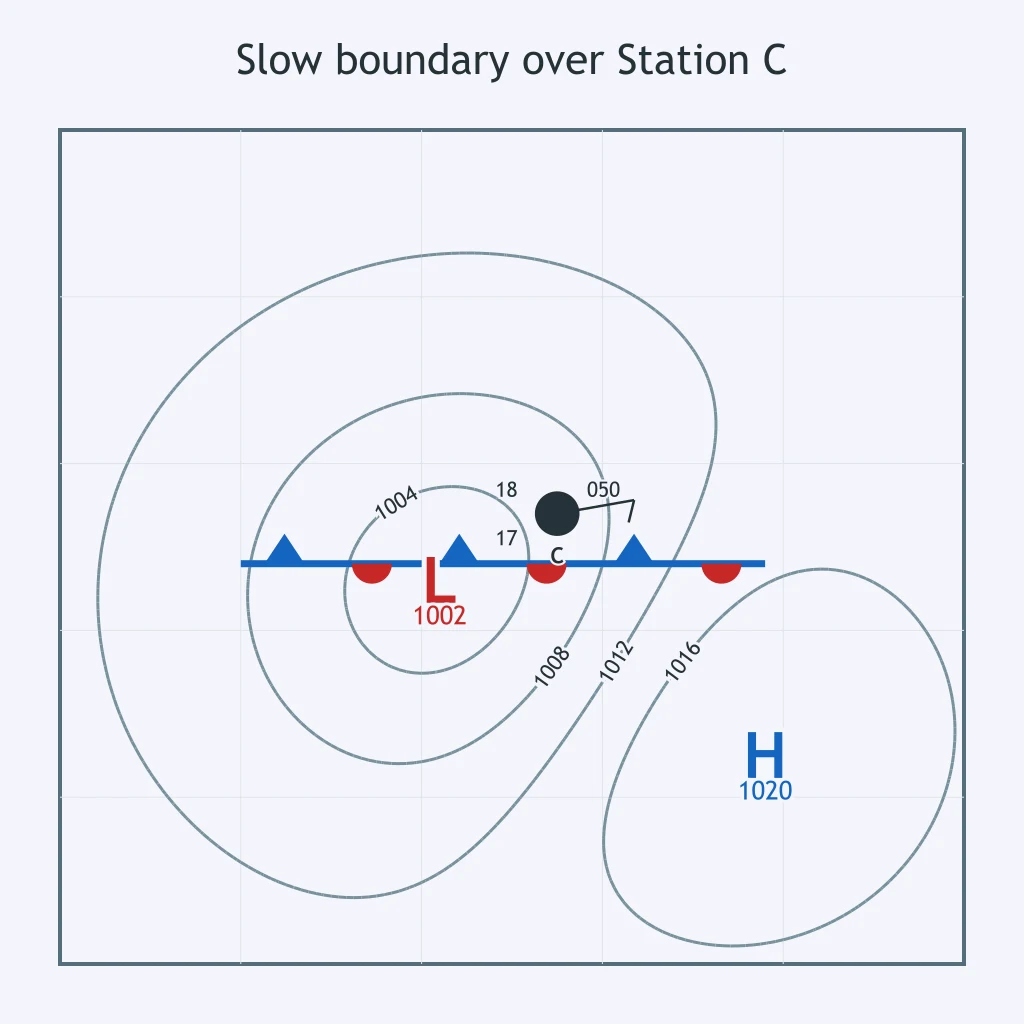
In a mature mid-latitude cyclone, the cold front catches the warm front near the low center. What front forms?
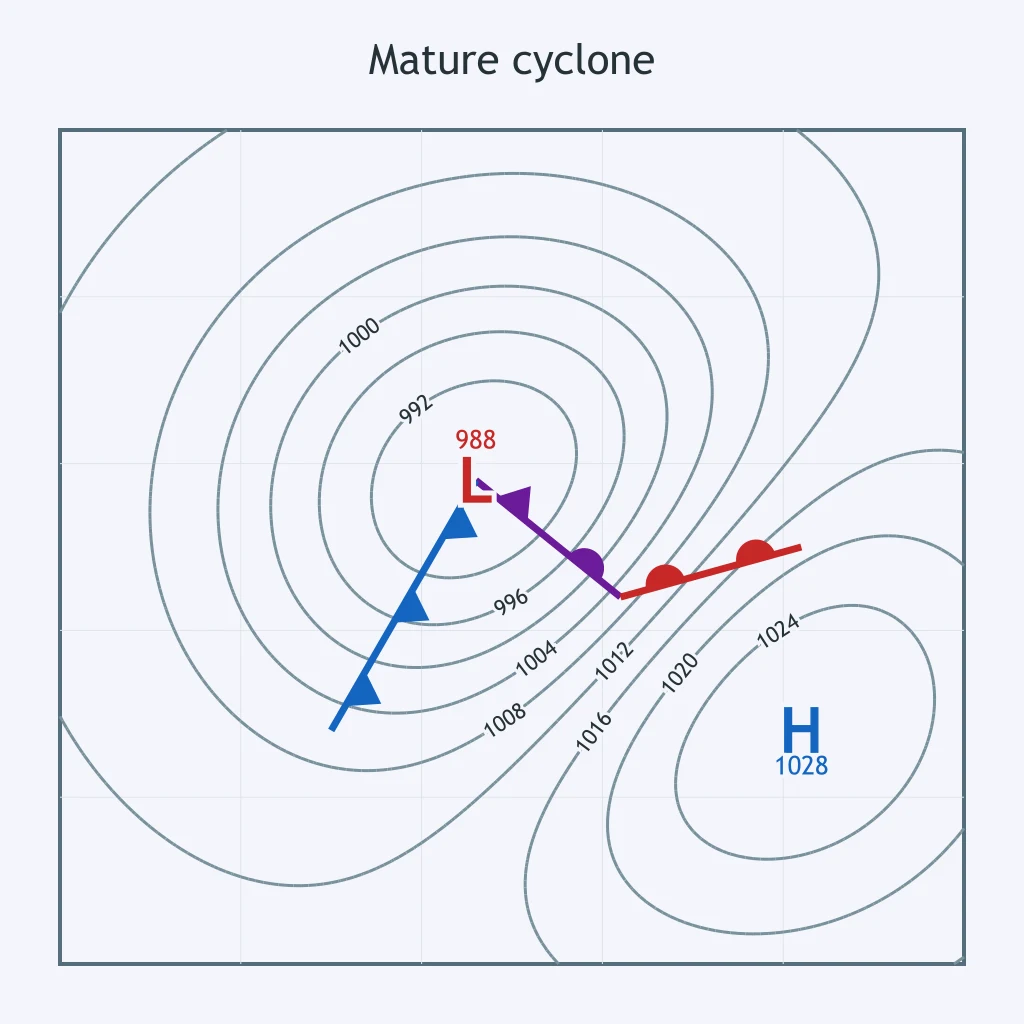
Use the map path. What air mass code best fits air moving from interior Canada into the north-central United States?
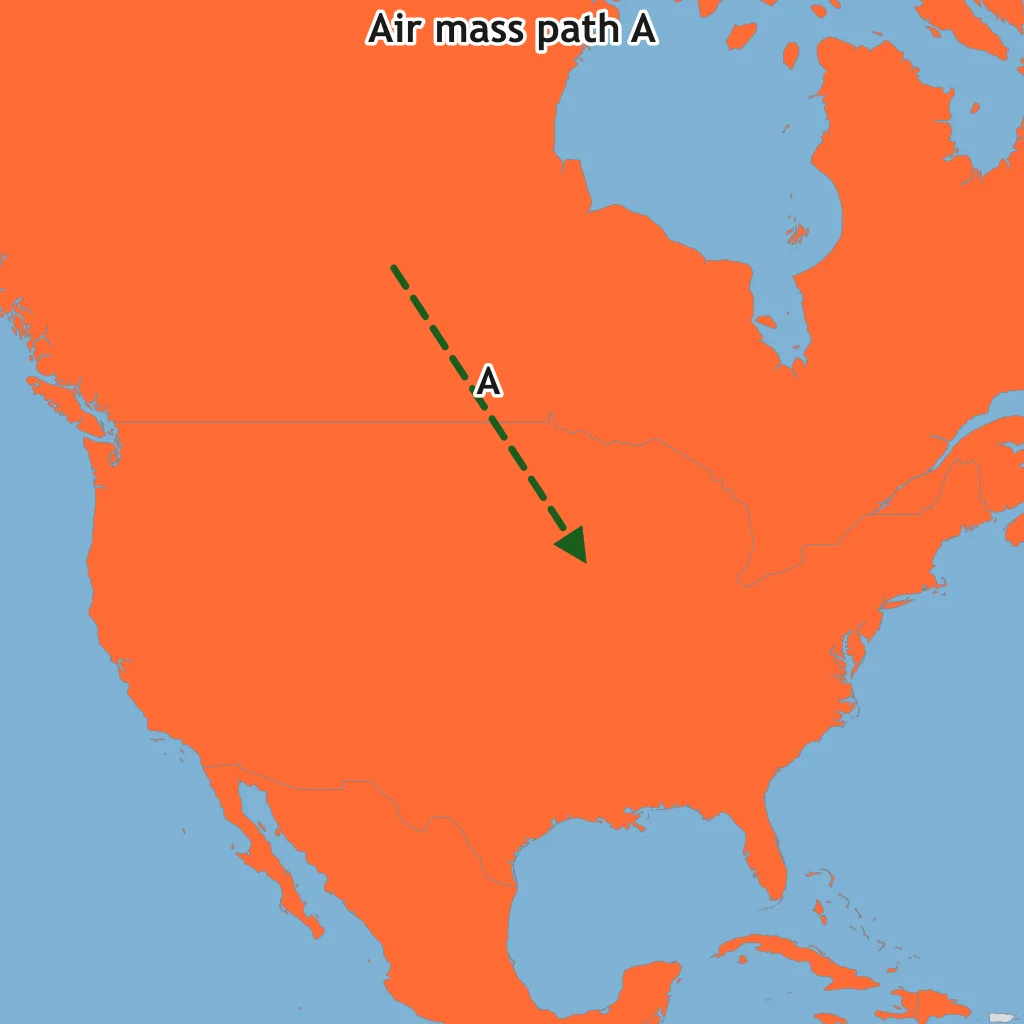
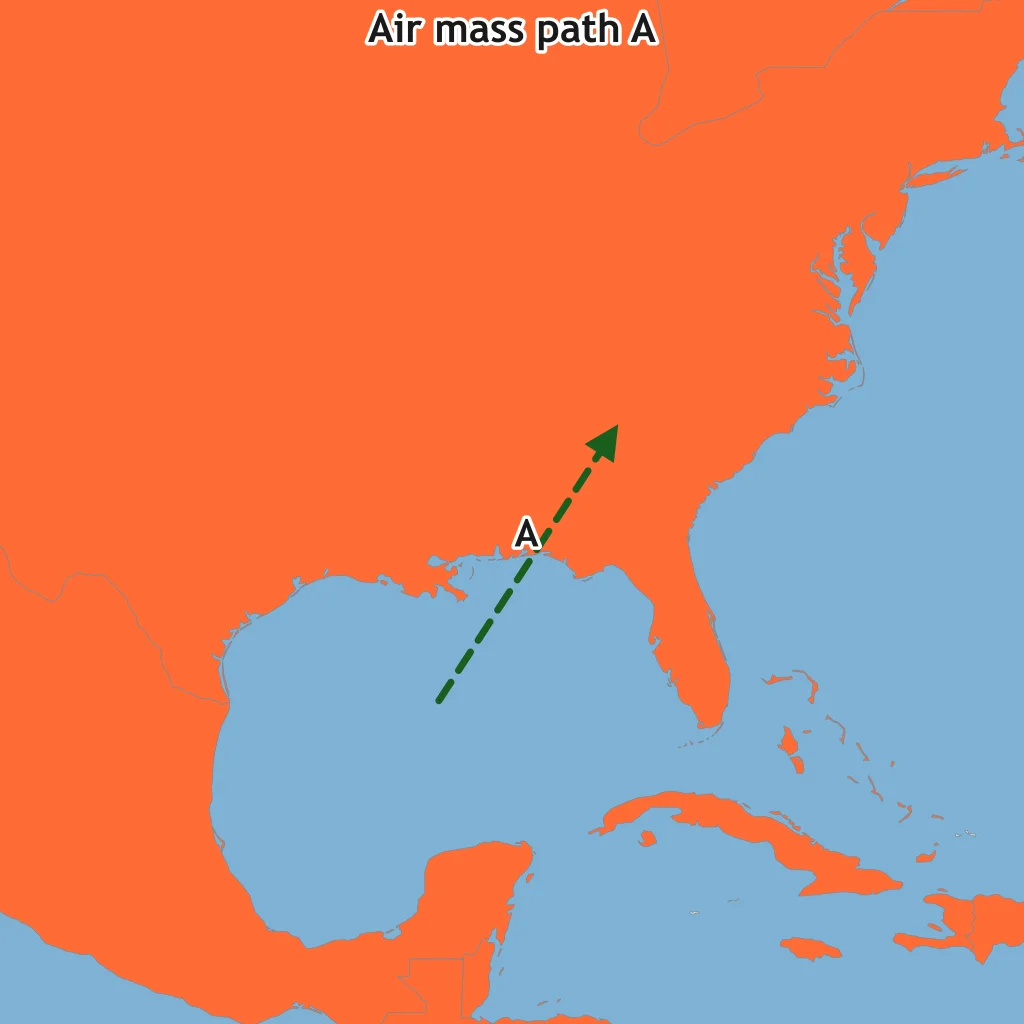
Use the map path. What air mass code best fits air moving from the Gulf of Mexico into the Southeast?
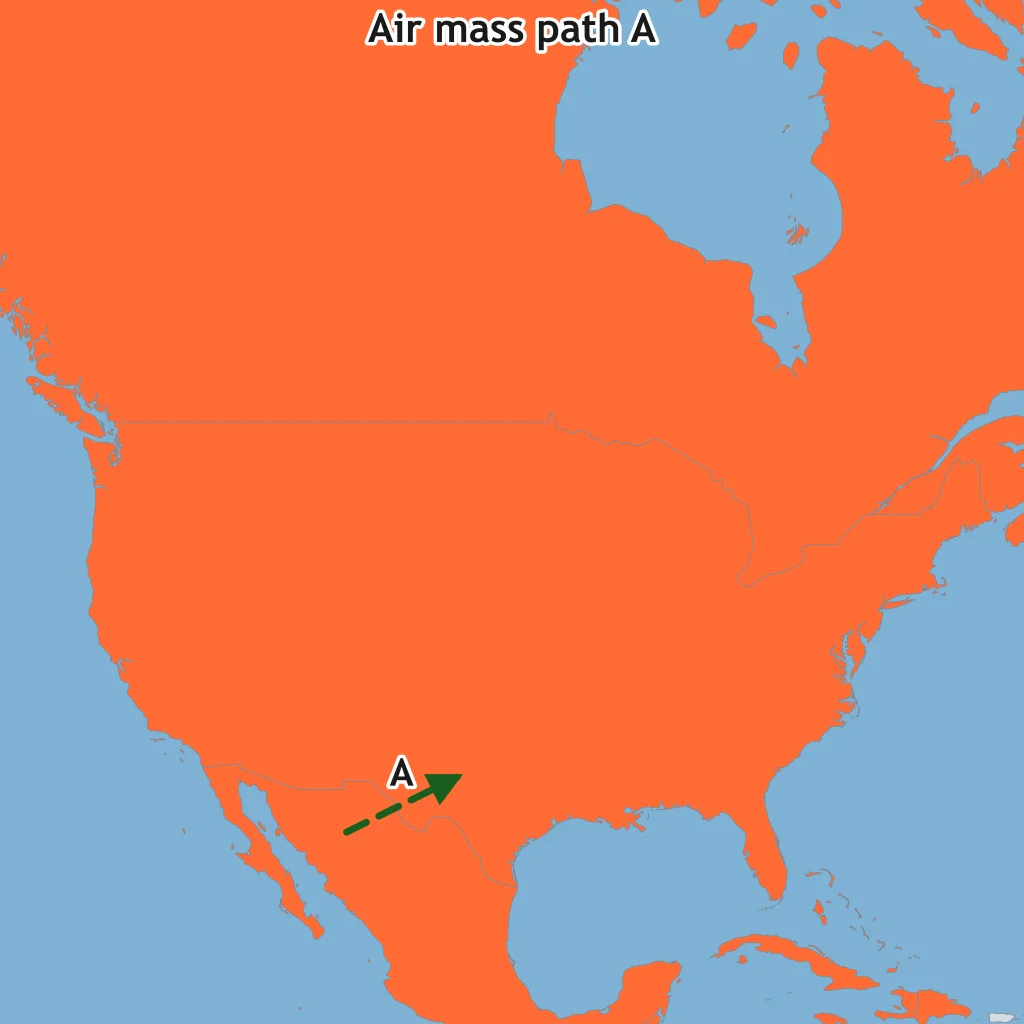
Use the map path. What weather should air from northern Mexico and the desert Southwest bring to west Texas in July?
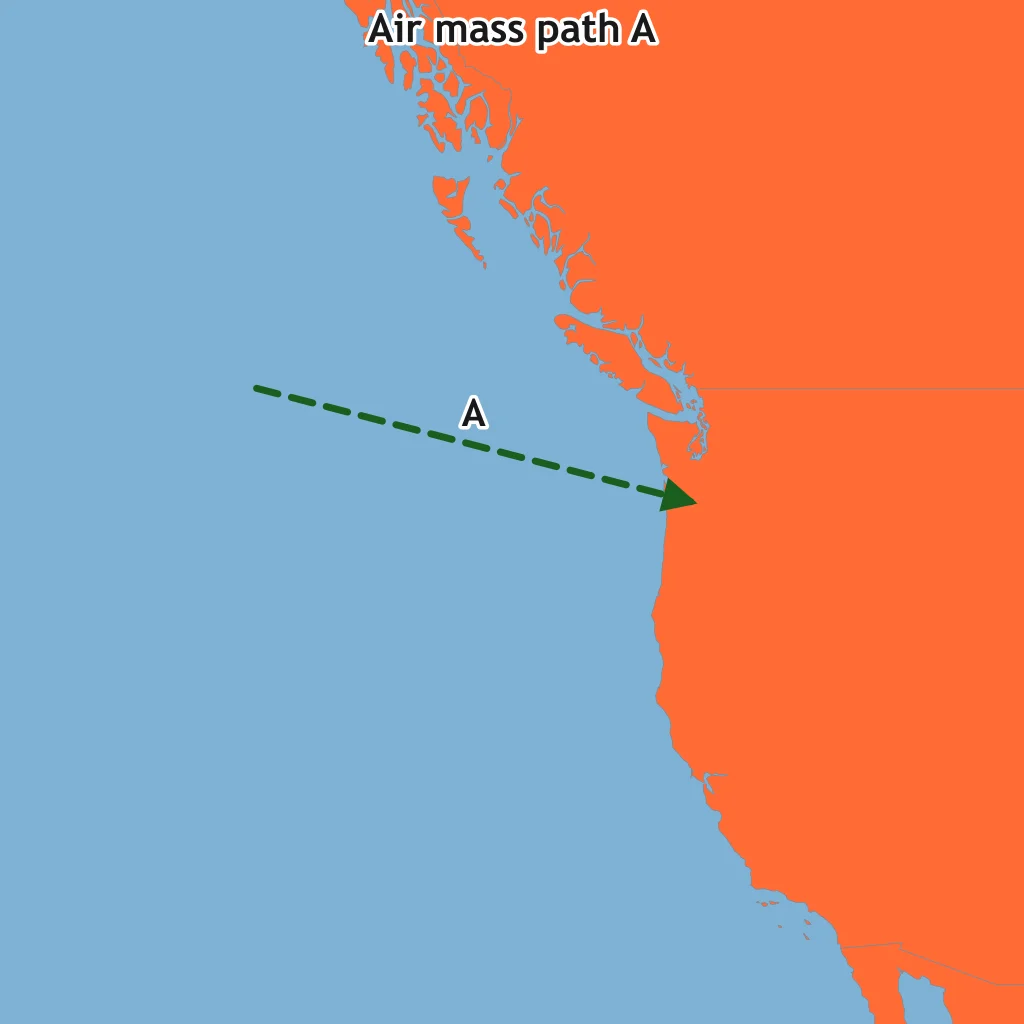
Use the map path. What air mass code best fits air moving from the North Pacific onto the Pacific Northwest coast?
In winter, air forms over the Arctic north of Canada and moves south. What air mass code and weather best match it?
In air mass symbols, what do the lowercase letters c and m describe?
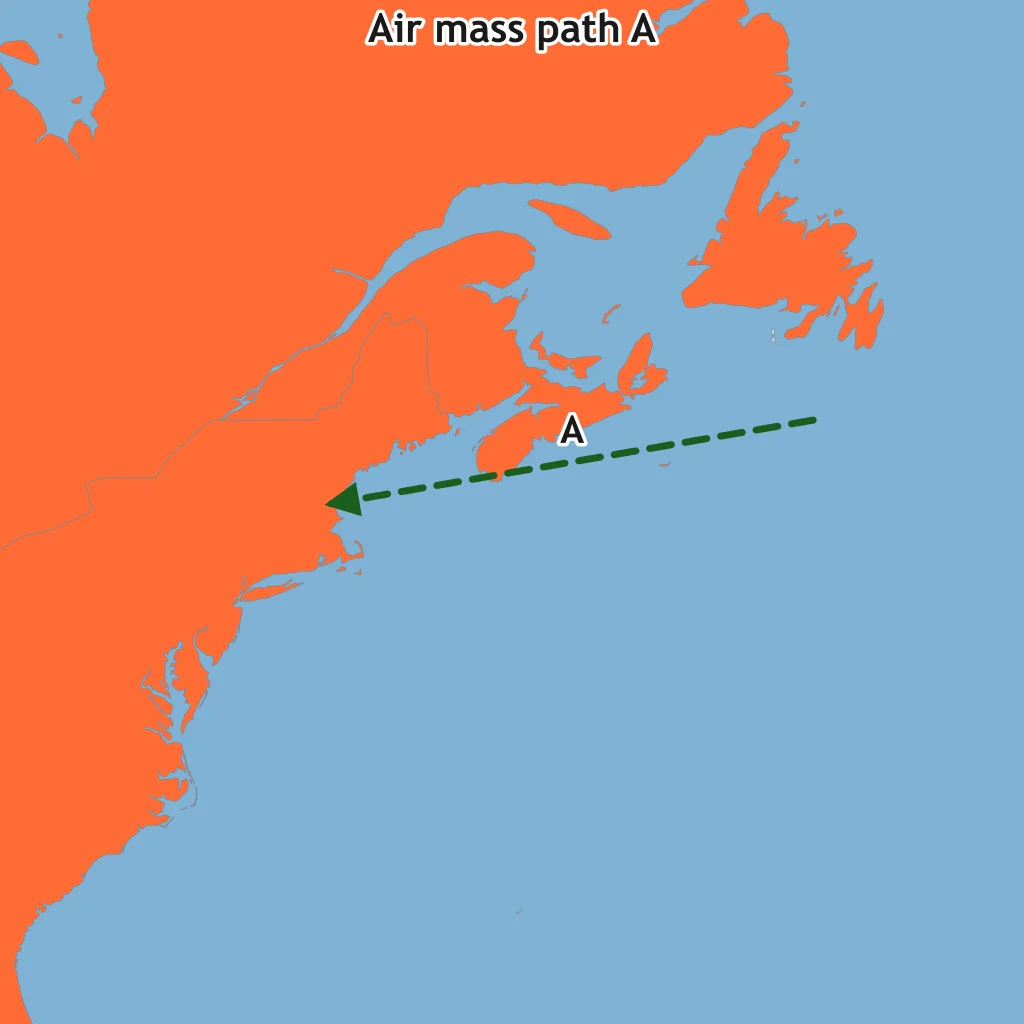
Use the map path. Air moving from the cold North Atlantic into New England in November most likely has what properties?
Two summer air masses reach Texas: cT from the desert Southwest and mT from the Gulf. What main property differs?
Use the weather map. What air motion and weather are expected near the high-pressure center?
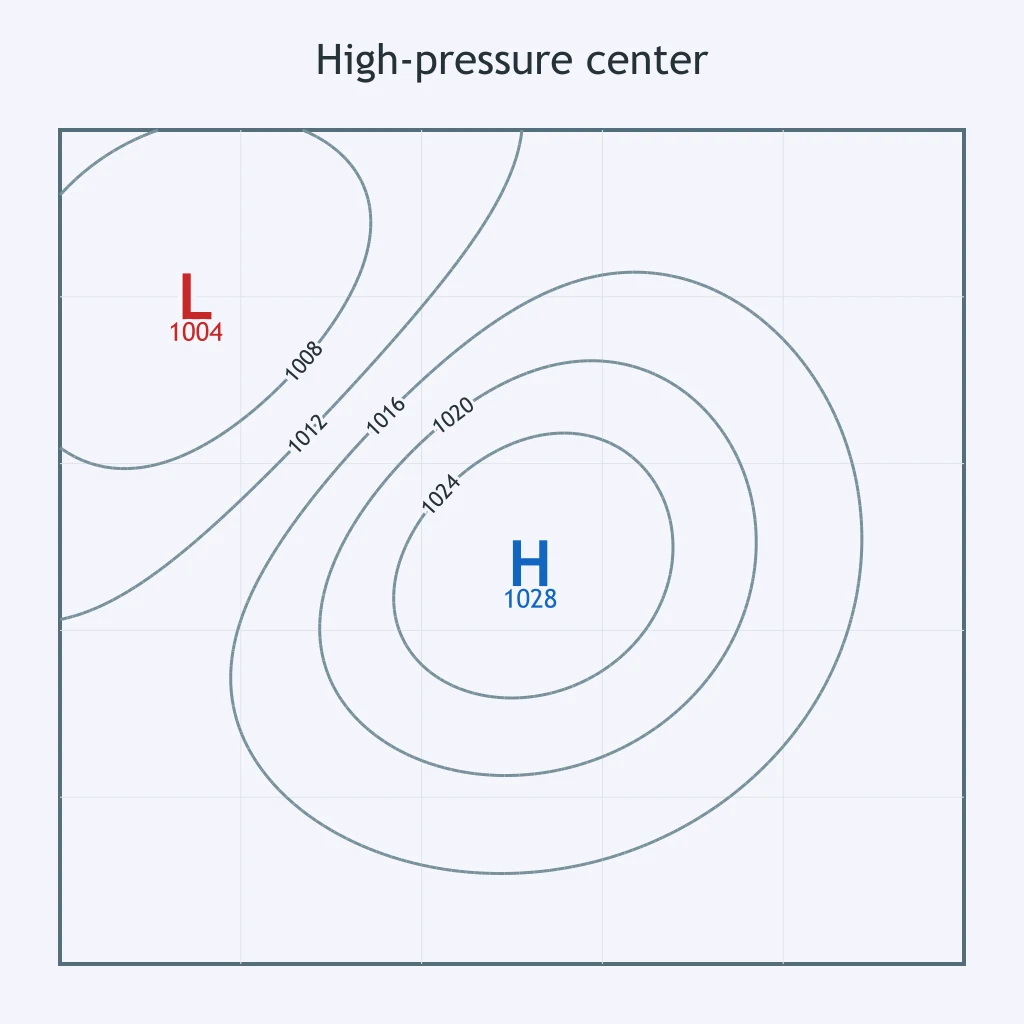
Use the weather map. What air motion and circulation are expected around the low in the Northern Hemisphere?
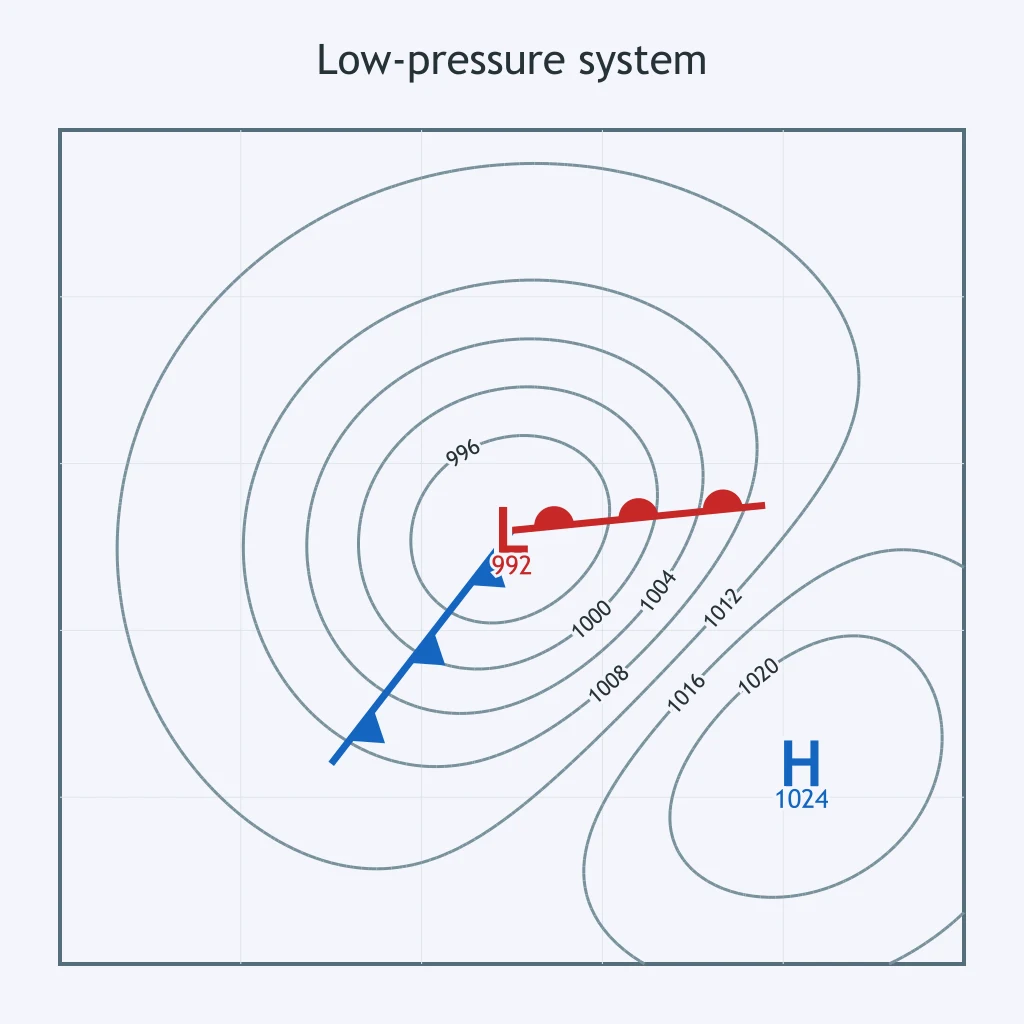
Use the weather map. Where should the strongest surface winds occur?
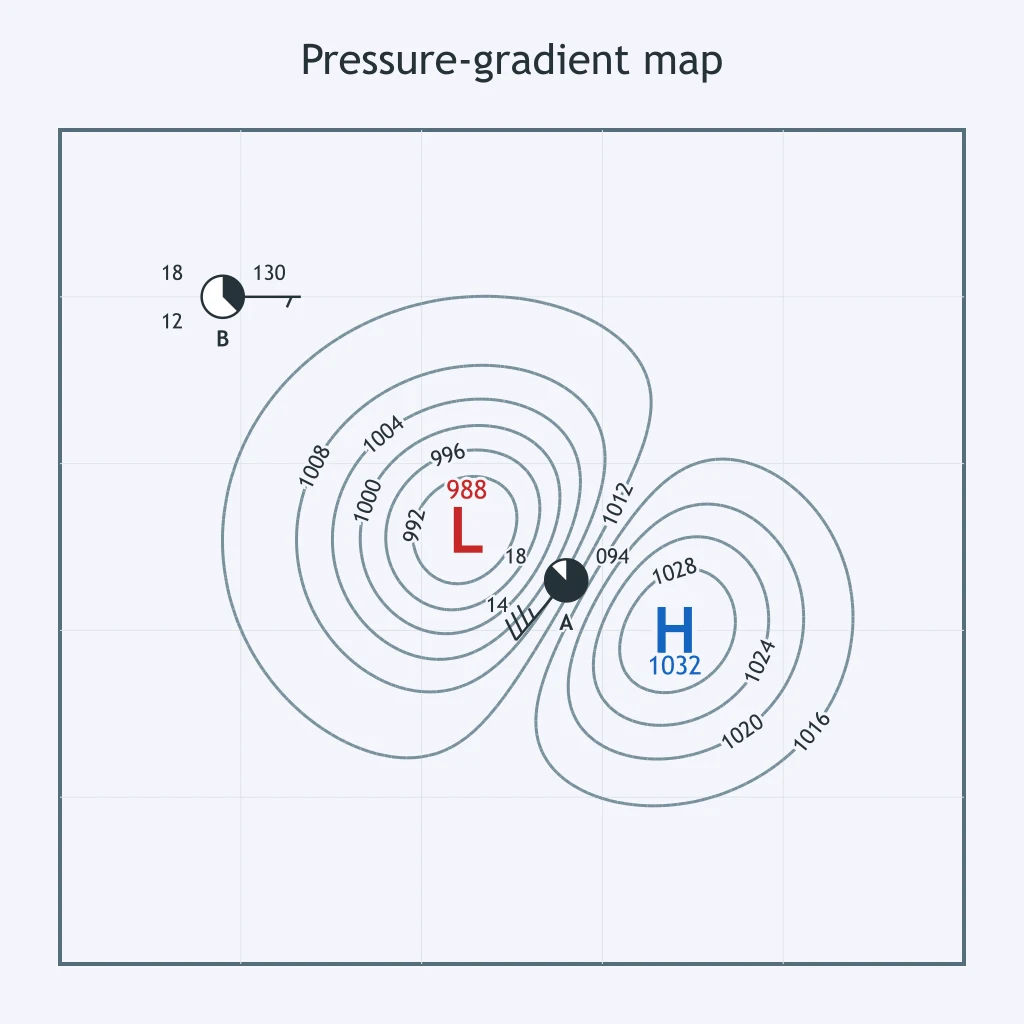
Use the weather map. What do the closed isobars around the L indicate?
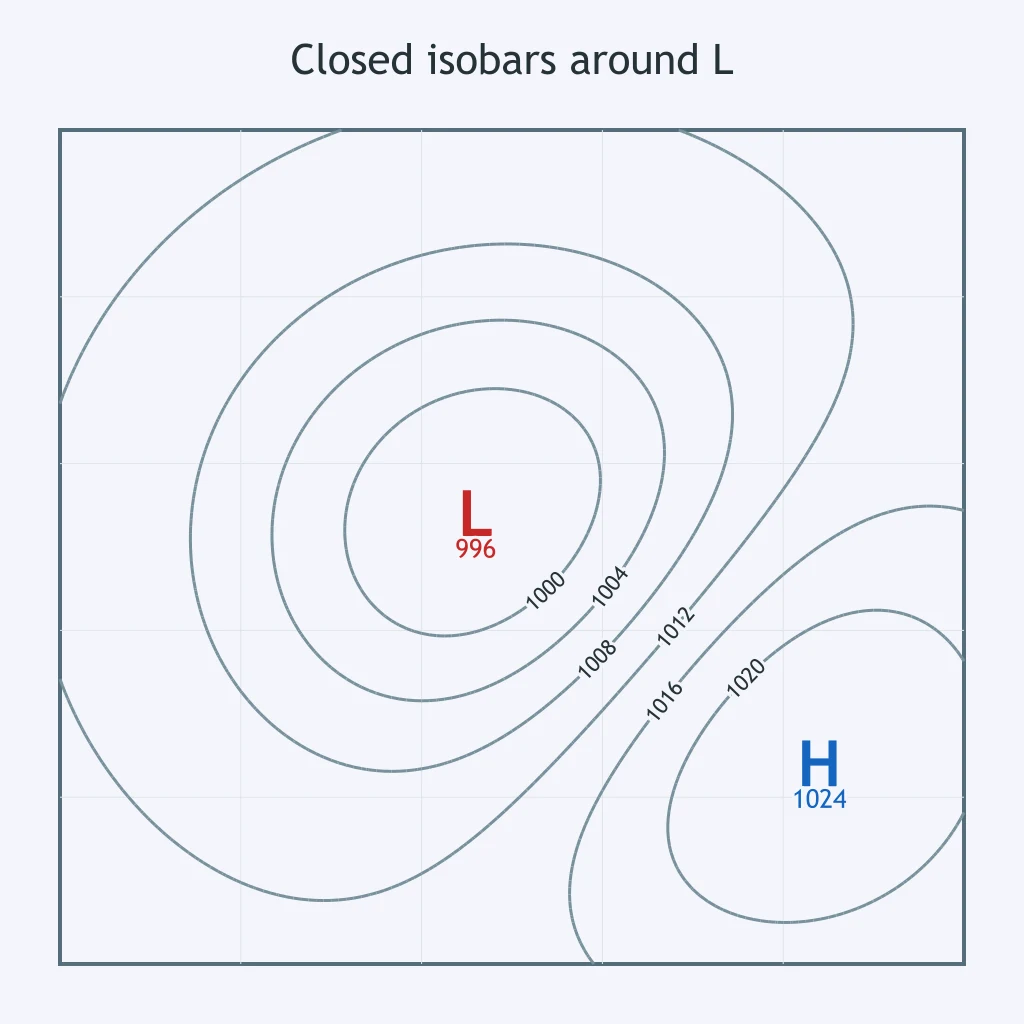
Air pressure changes from 1016 mb to 1000 mb over 400 km. What is the pressure gradient?
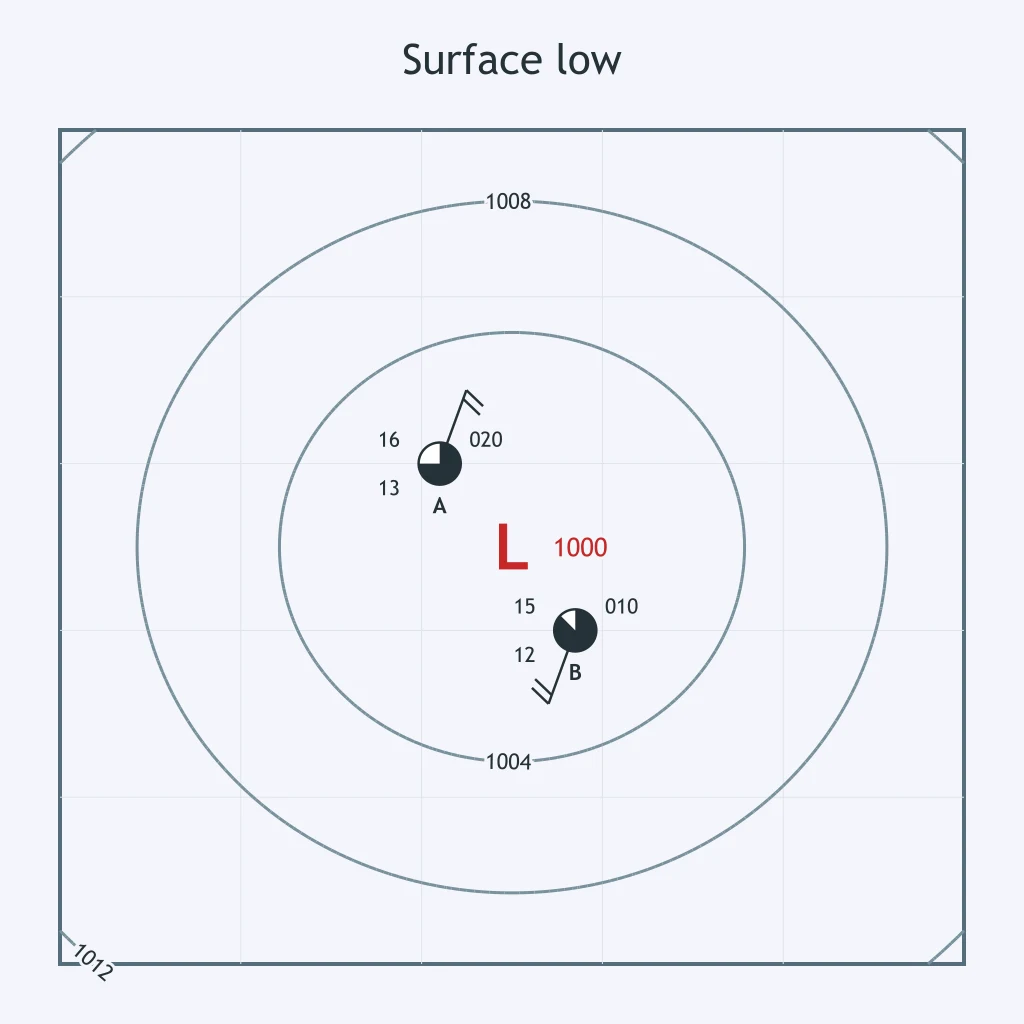
Use the map of the low. In the Northern Hemisphere, how do surface winds move near this center?
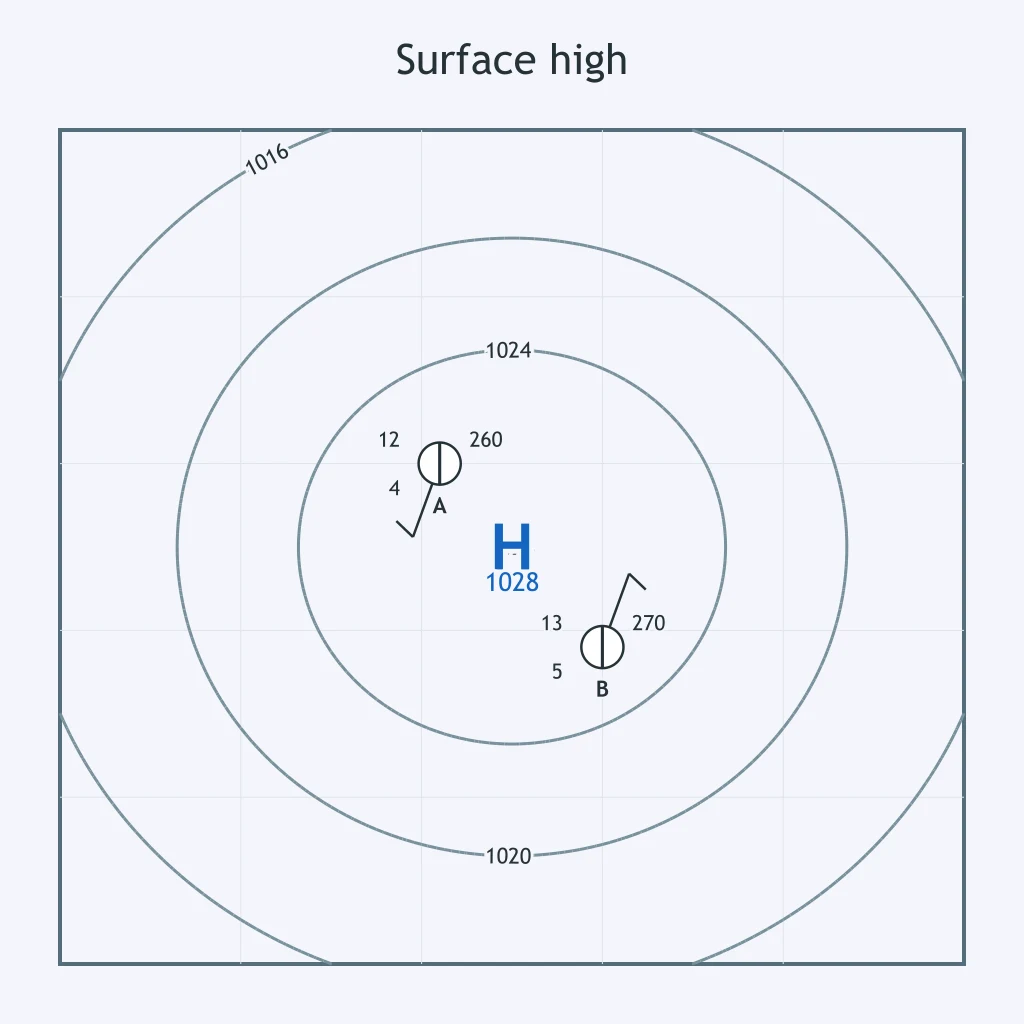
Use the map of the high. In the Northern Hemisphere, how do surface winds move near this center?
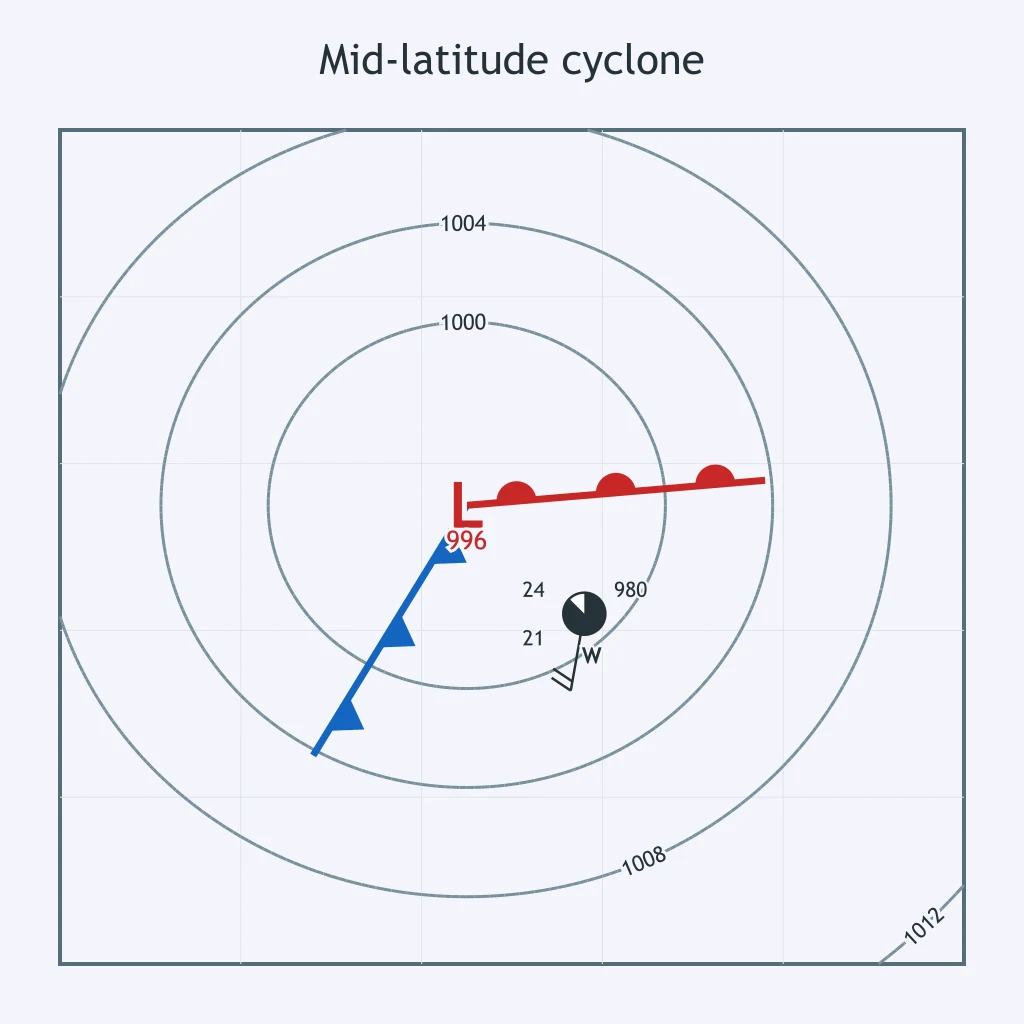
Use the cyclone map. What type of air is usually in the sector southeast of the low between the cold and warm fronts?
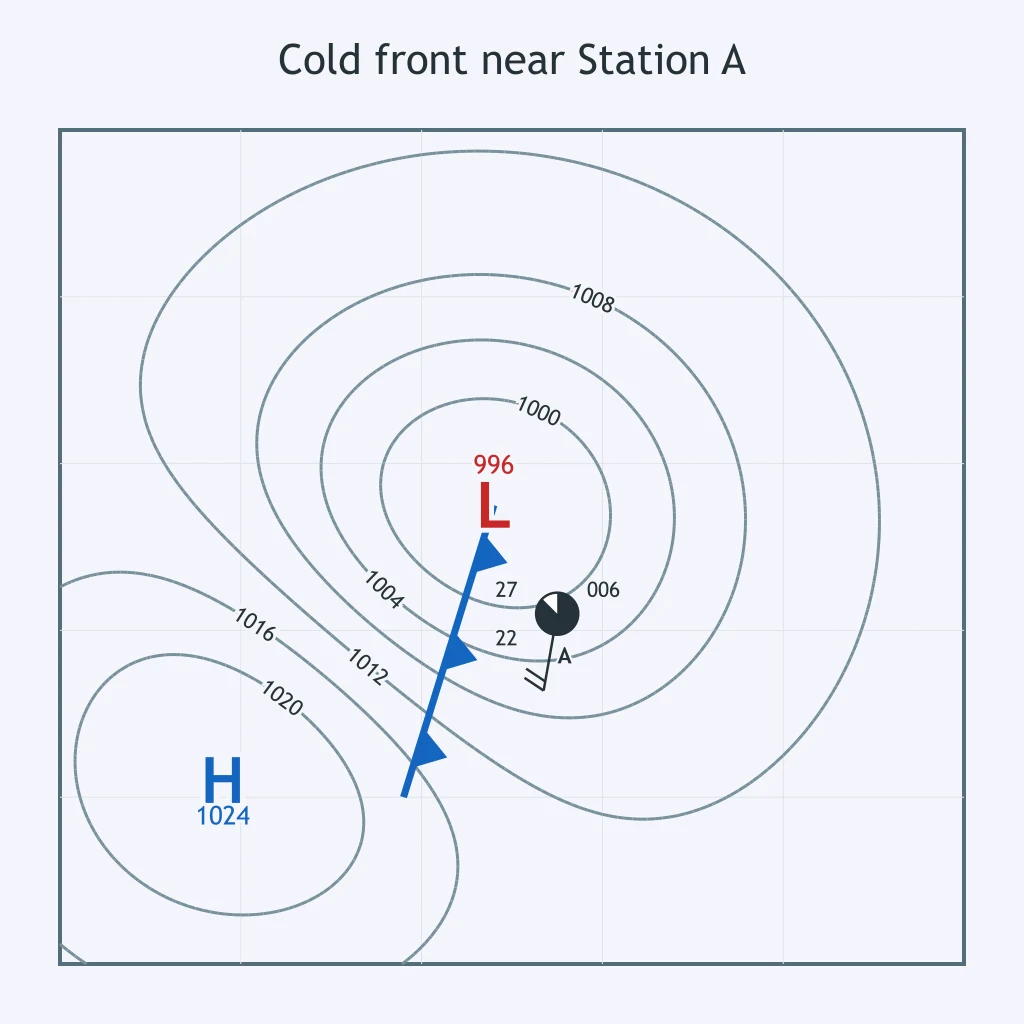
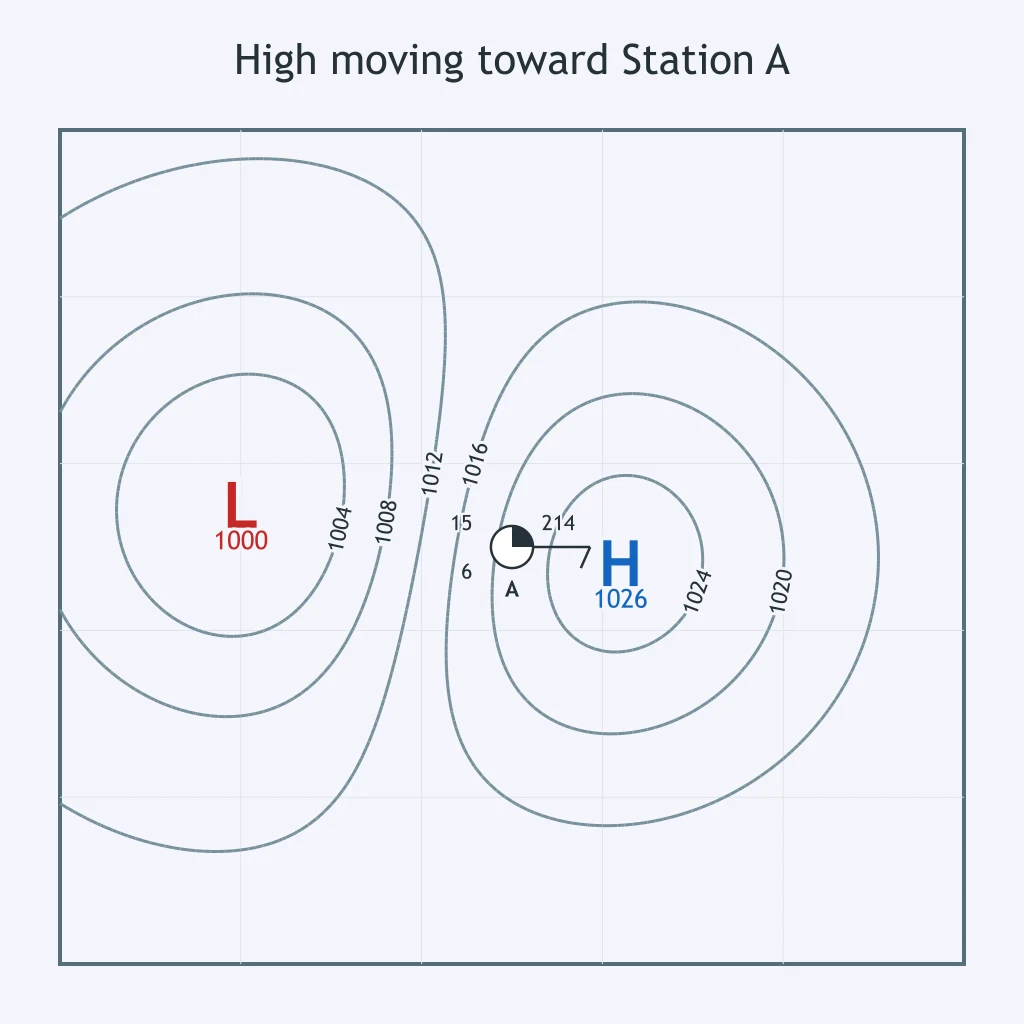
Use the weather map. If the high-pressure center moves toward Station A, what pressure tendency should Station A record?
A student needs the total depth of rain that fell overnight. Which instrument should the student use?
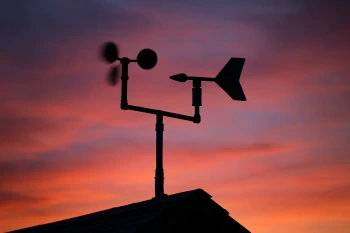
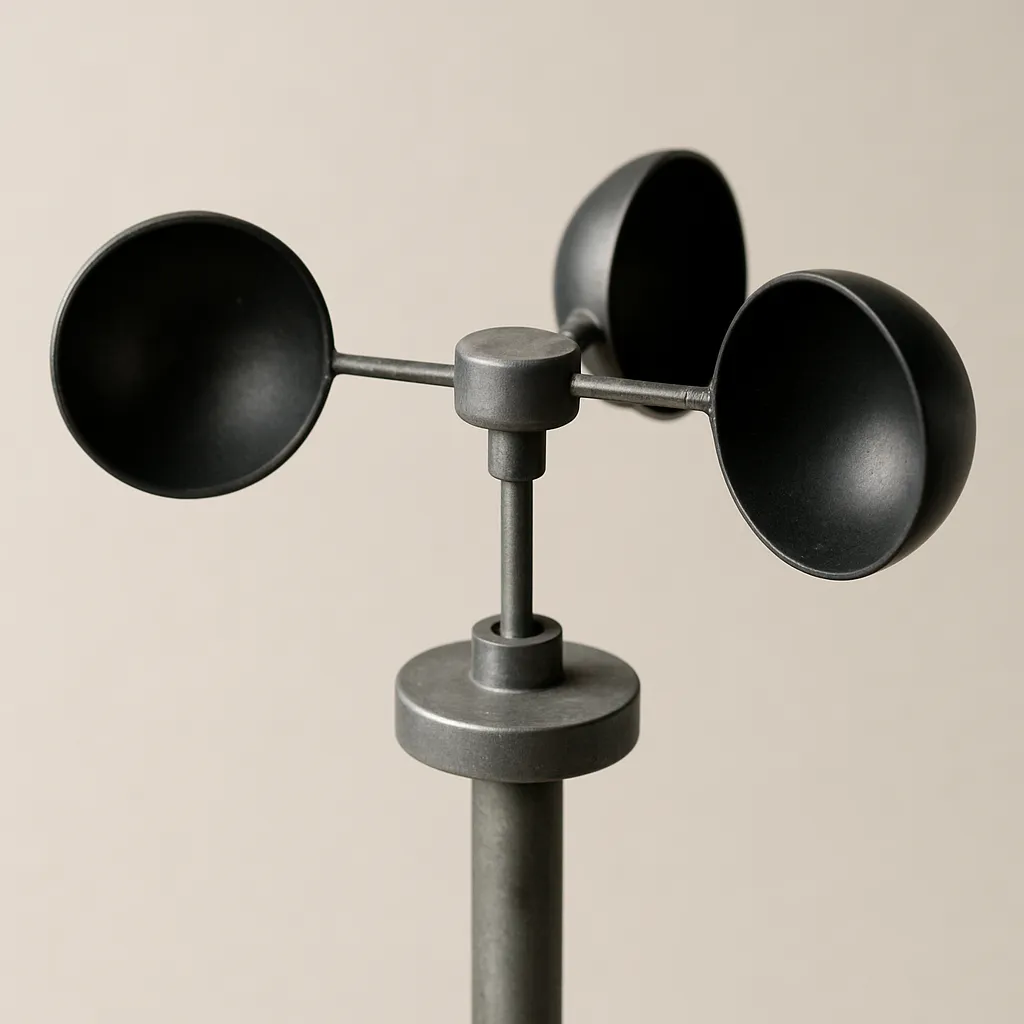
The pictured cup wheel spins on a mast at a weather station. What quantity does this instrument measure?
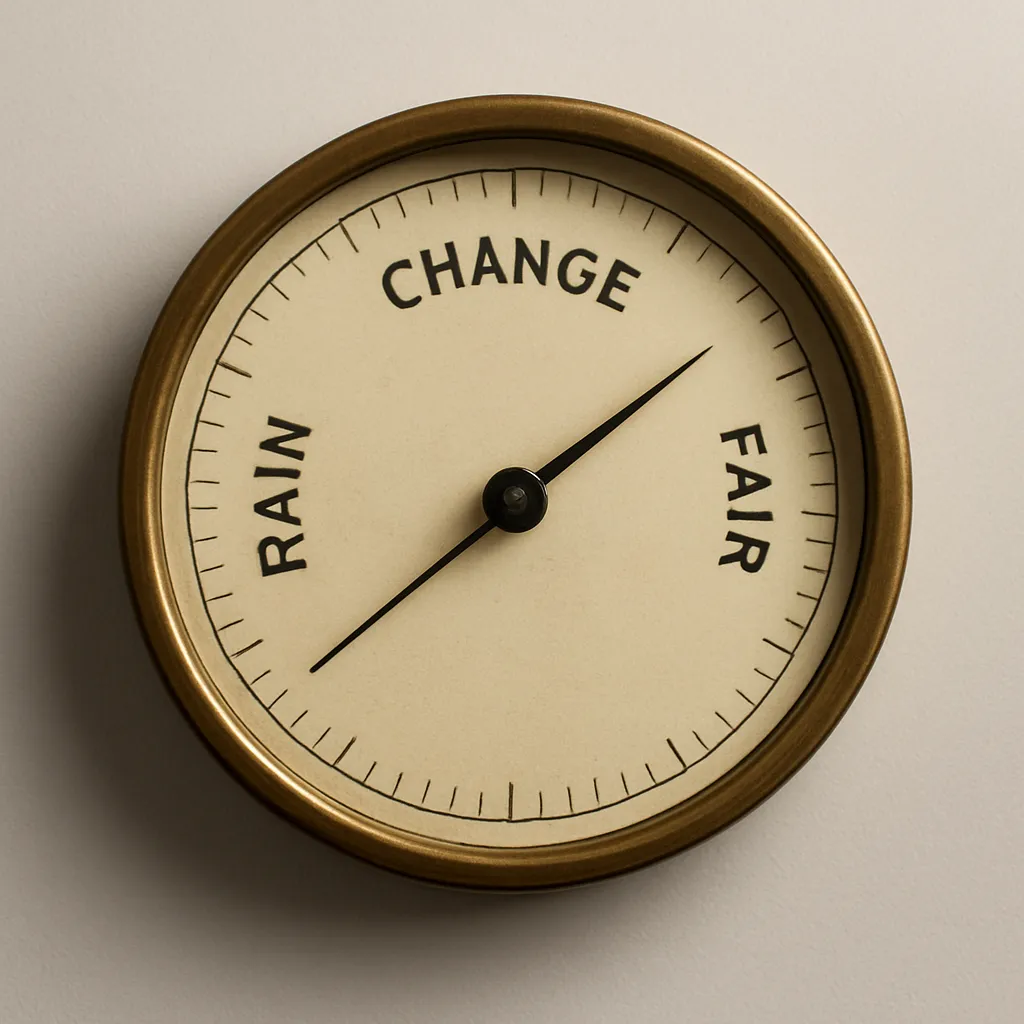
Suppose the pointer on a dial like this one swings steadily toward RAIN over several hours. What is happening to the air pressure?
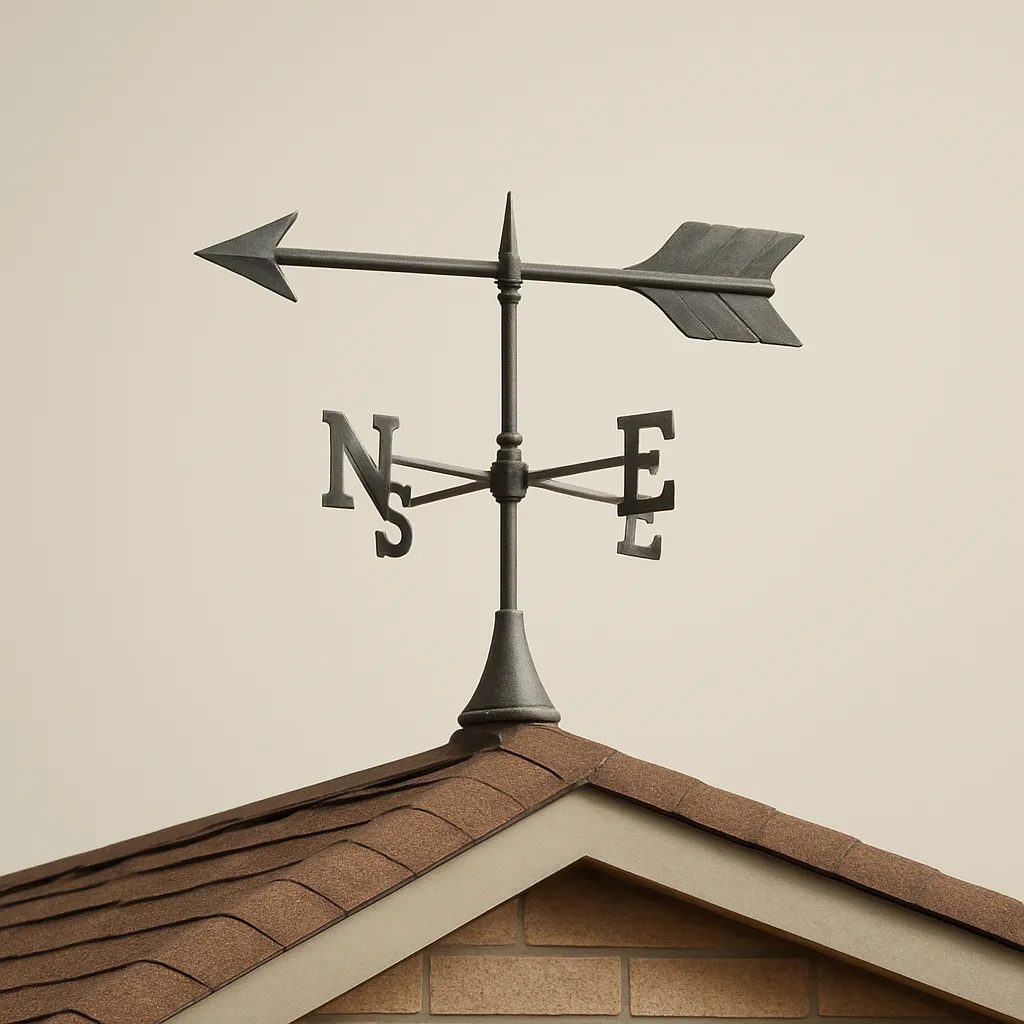
The pictured arrow turns freely above compass letters on a roof. What quantity does this instrument show?
A sling psychrometer has wet-bulb and dry-bulb thermometers. What atmospheric property does it help determine?
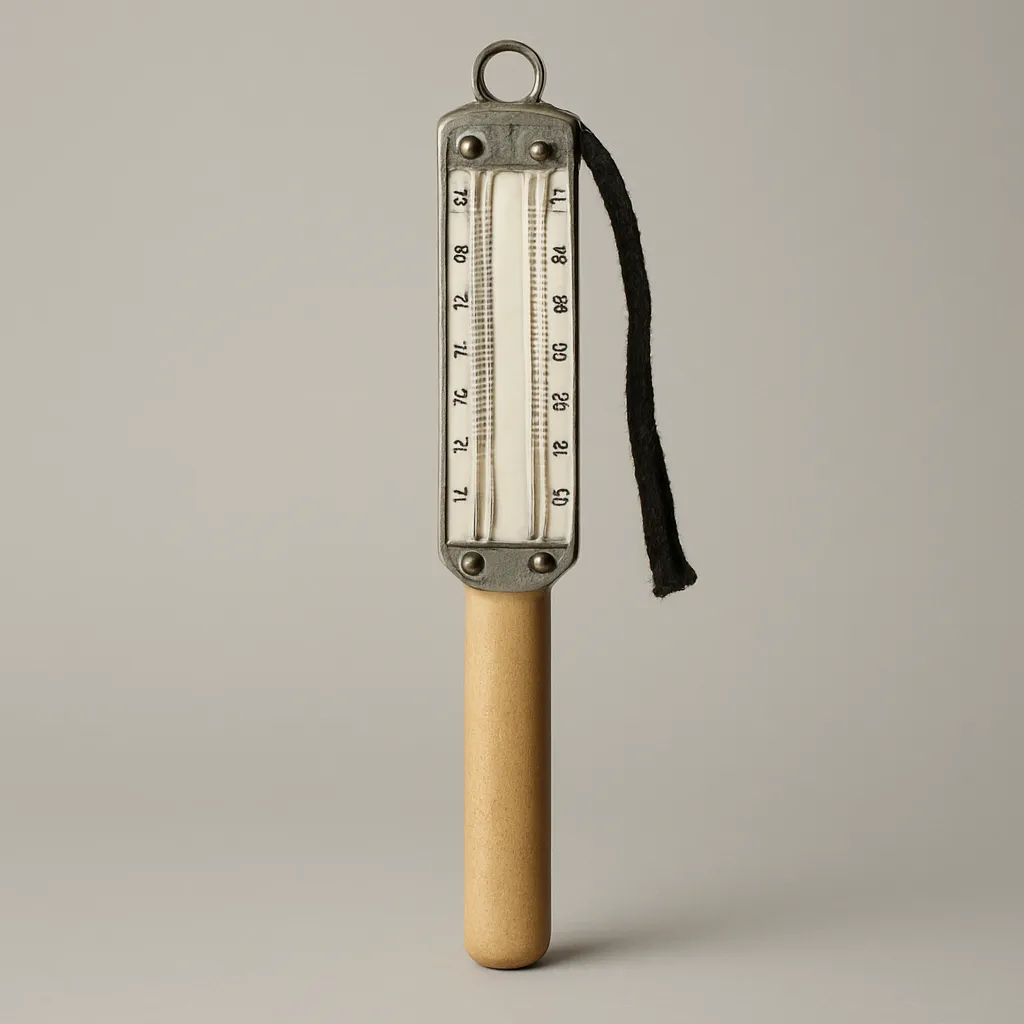
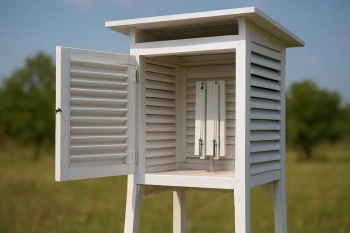
A weather observer needs the air temperature at the school weather station. Which instrument gives that measurement?
A sling psychrometer reads 22 °C on the dry bulb and 17 °C on the wet bulb. What is the wet-bulb depression?
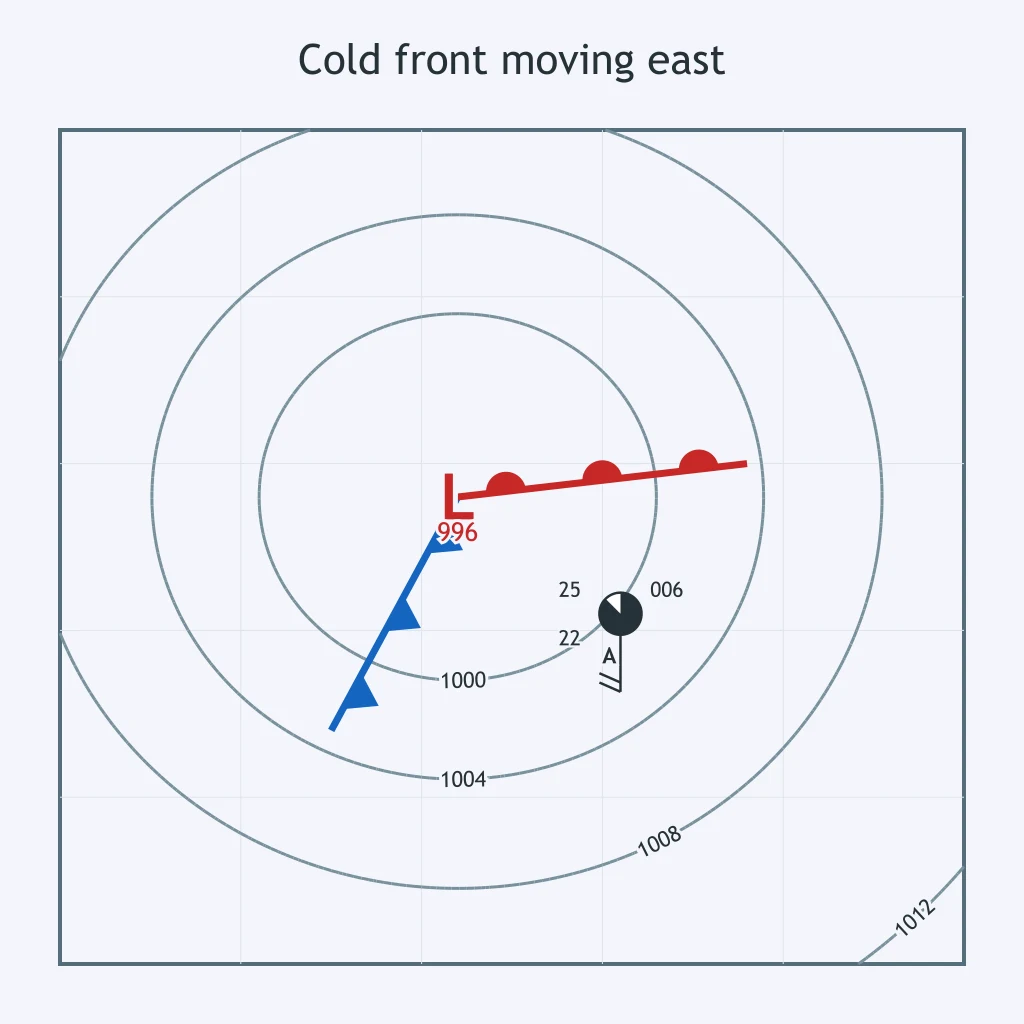
Use the synoptic map. A cold front west of Station A is moving east. What should Station A most likely experience next?
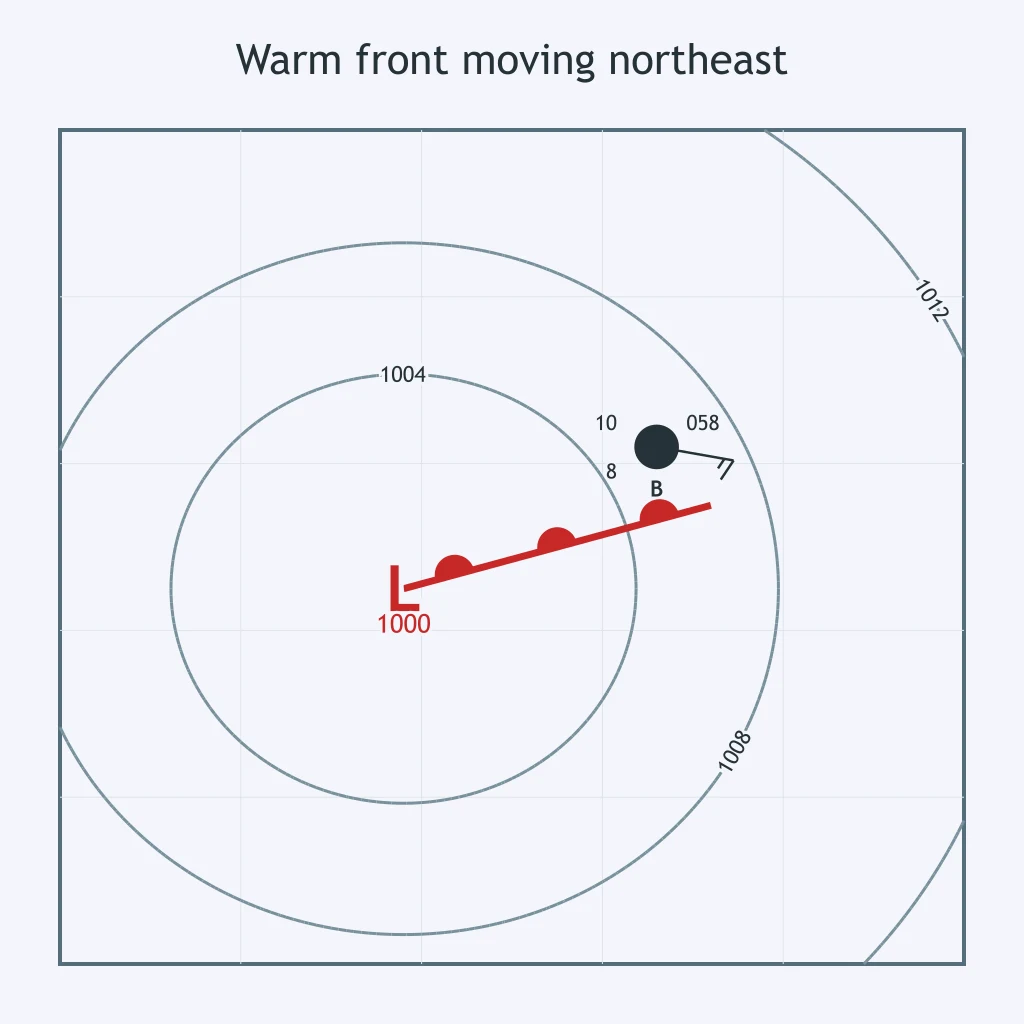
Use the synoptic map. A warm front southwest of Station B is moving northeast. What forecast best fits Station B?
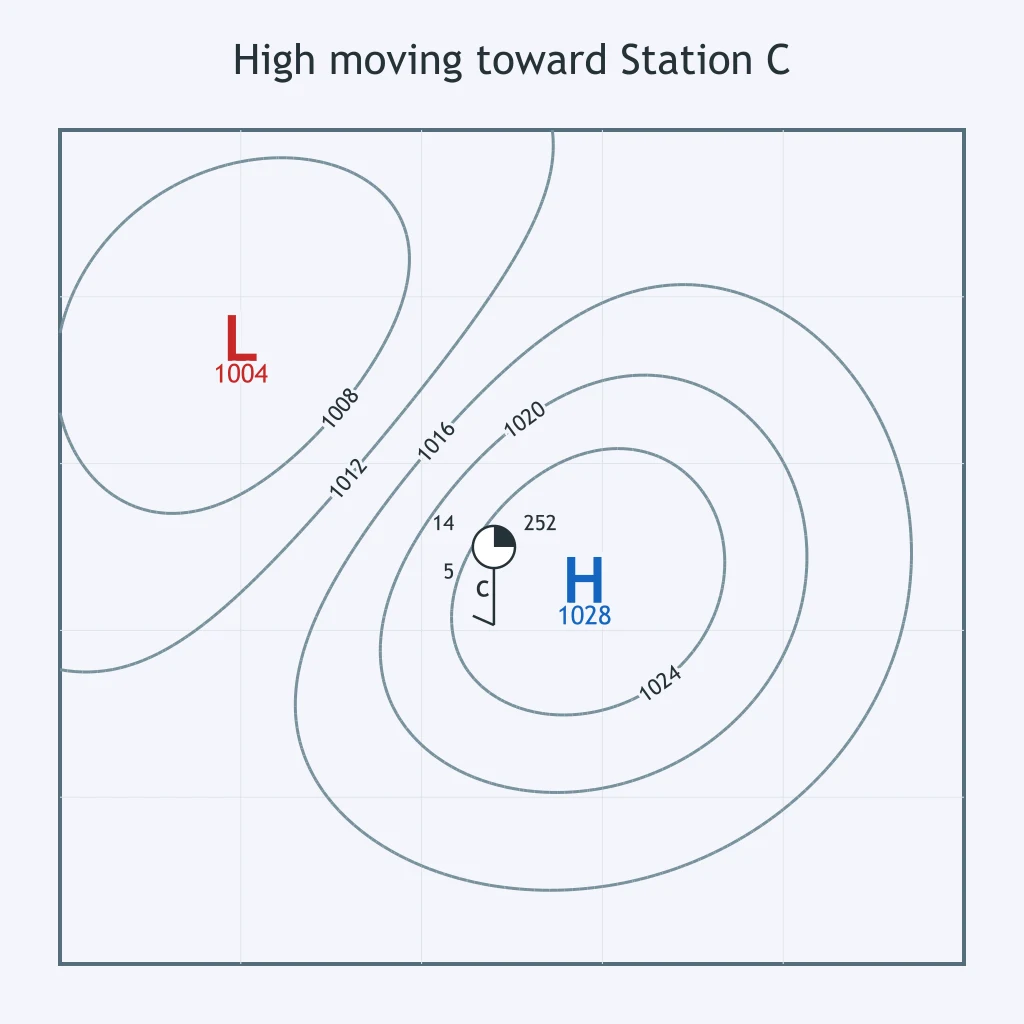
Use the synoptic map. A high-pressure center is moving toward Station C. What forecast is most likely?
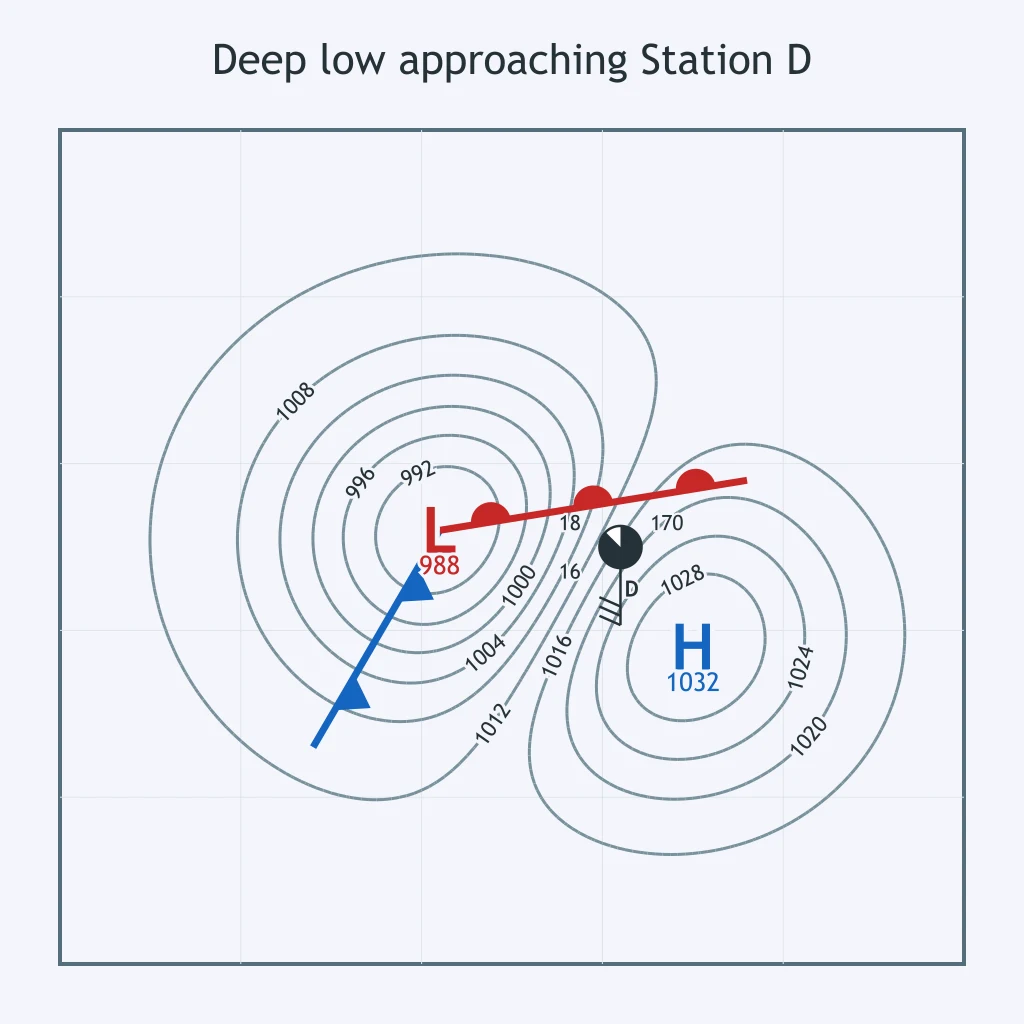
Use the synoptic map. A deep low is moving toward Station D and isobars are packed tightly. What should Station D expect?
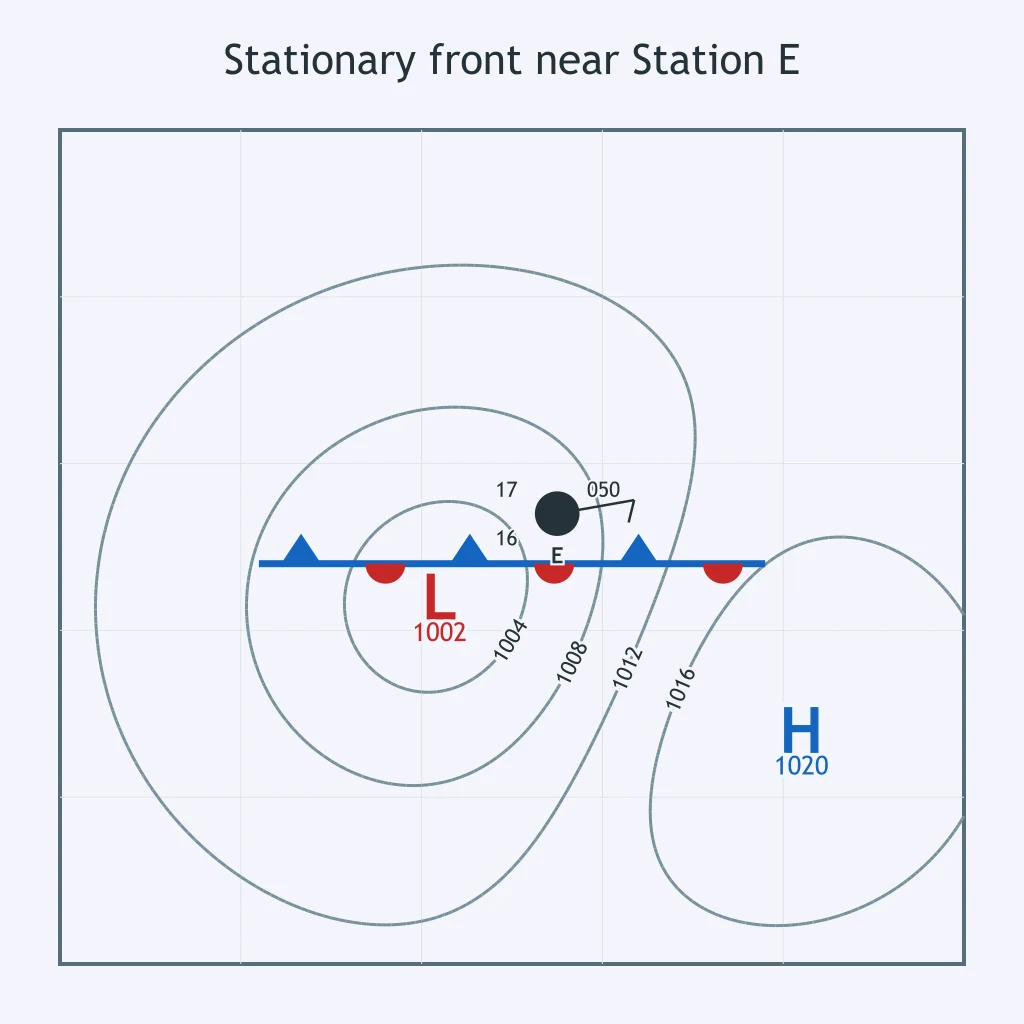
Use the synoptic map. A stationary front remains over Station E through tomorrow. What forecast best fits Station E?
Crack the passcode before the zombies get in.
Answer, then swat bugs for bonus points.
Race through questions at your own speed.
Same question on every screen. Fastest wins.

Pick a tile, answer, hit bonuses and steals.
25 questions