Loading
by BlastRoom
A review of thunderstorms, tornadoes, and hurricanes using severe-weather figures and data.
#earth_space_science
40 questions
One question set, multiple game modes. Tap any game to see it in action. Not sure which to pick?
Answer to place stones and capture territory.
Outrun the snow together.
Earn blasts, then hunt the other team.
Answer to earn energy, then climb.

The class blasts through walls together.
Bid on mystery lots. Most money wins.
Sell tours. Nice, standard, or a total scam.

Answer, restock, and serve the rush.
More correct answers pulls the rope your way.
Answer, then shoot down the alien wave.
Answer, then tap to leap the frozen ridge.
A thunderstorm has a dominant updraft building a tall cloud, with little precipitation falling yet. What thunderstorm stage is this?
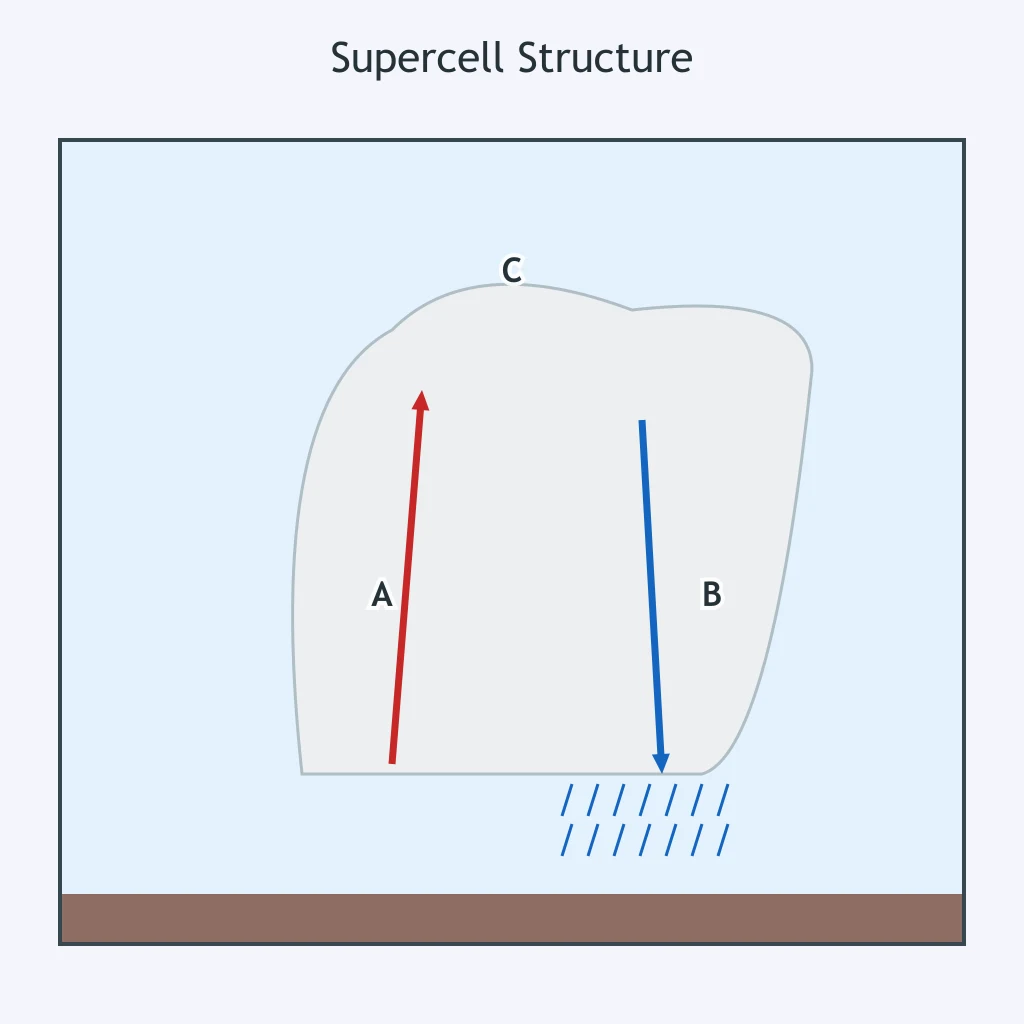
A thunderstorm cross section shows a strong updraft and a precipitation-driven downdraft in the same cell. What stage is the storm in?
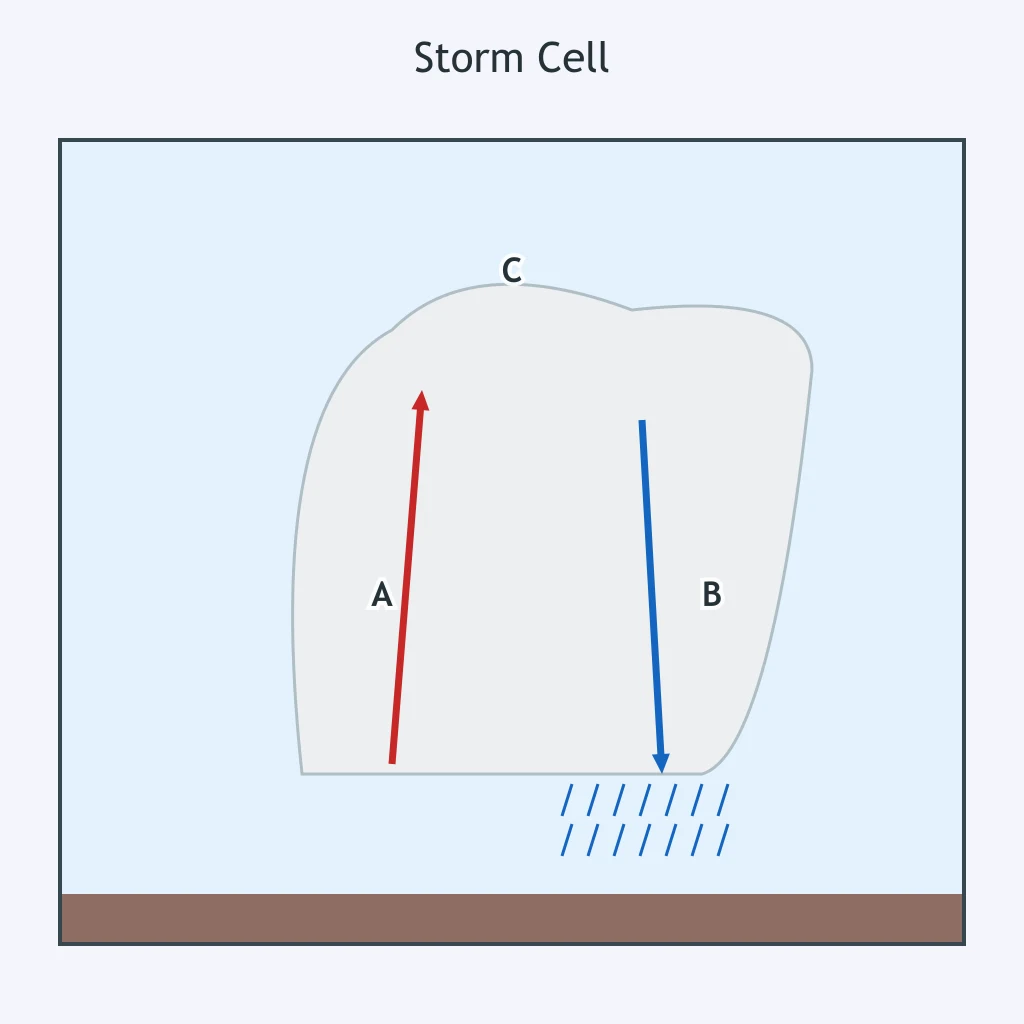
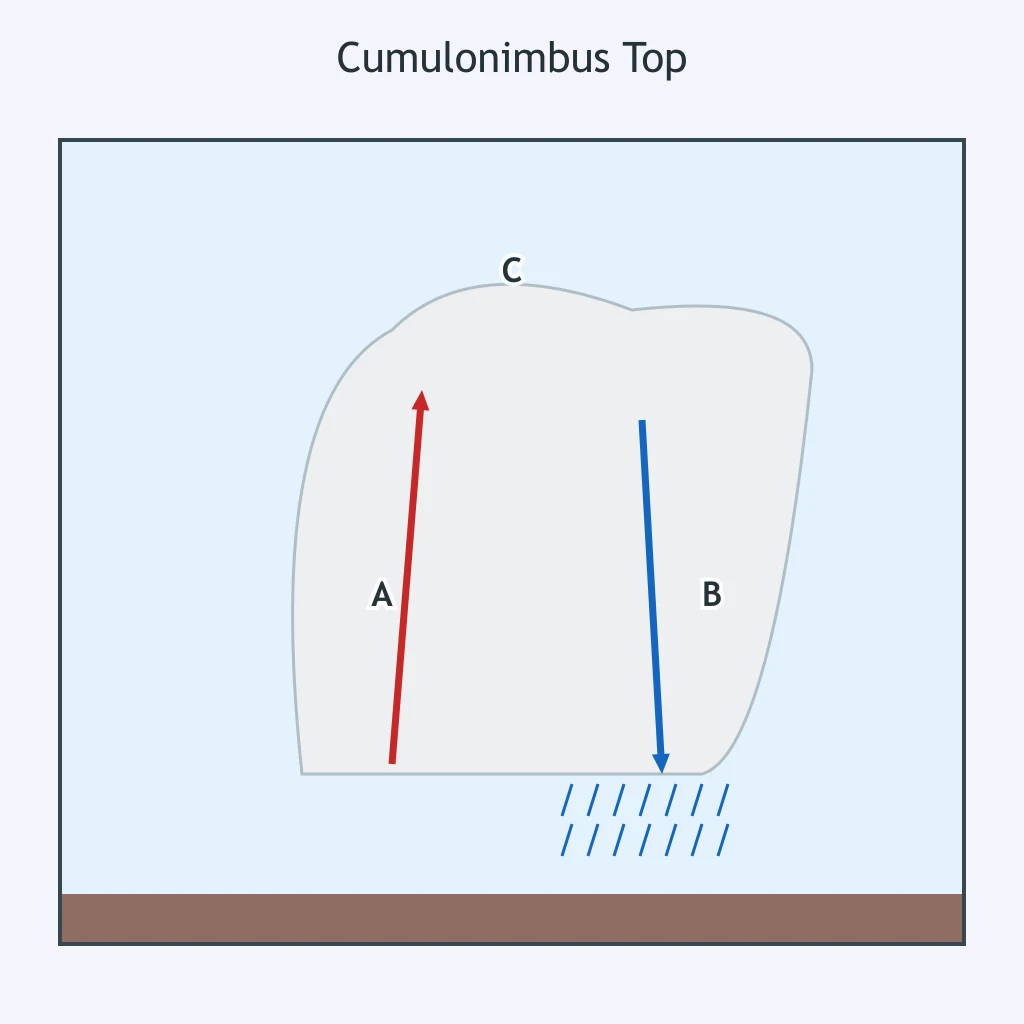
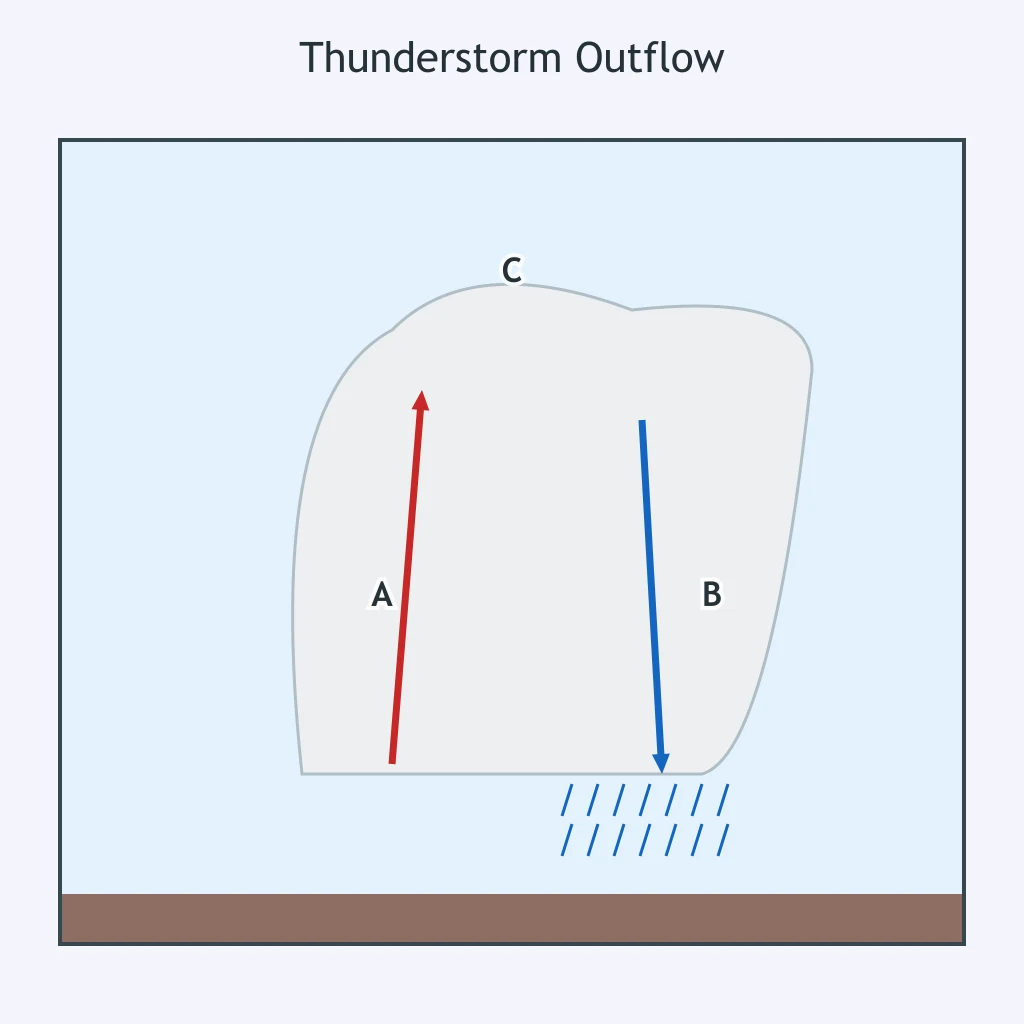
In the storm shown, downdraft B brings rain-cooled air down to the ground. A station sits just ahead of the rain, where this outflow arrives first. What does the observer notice?
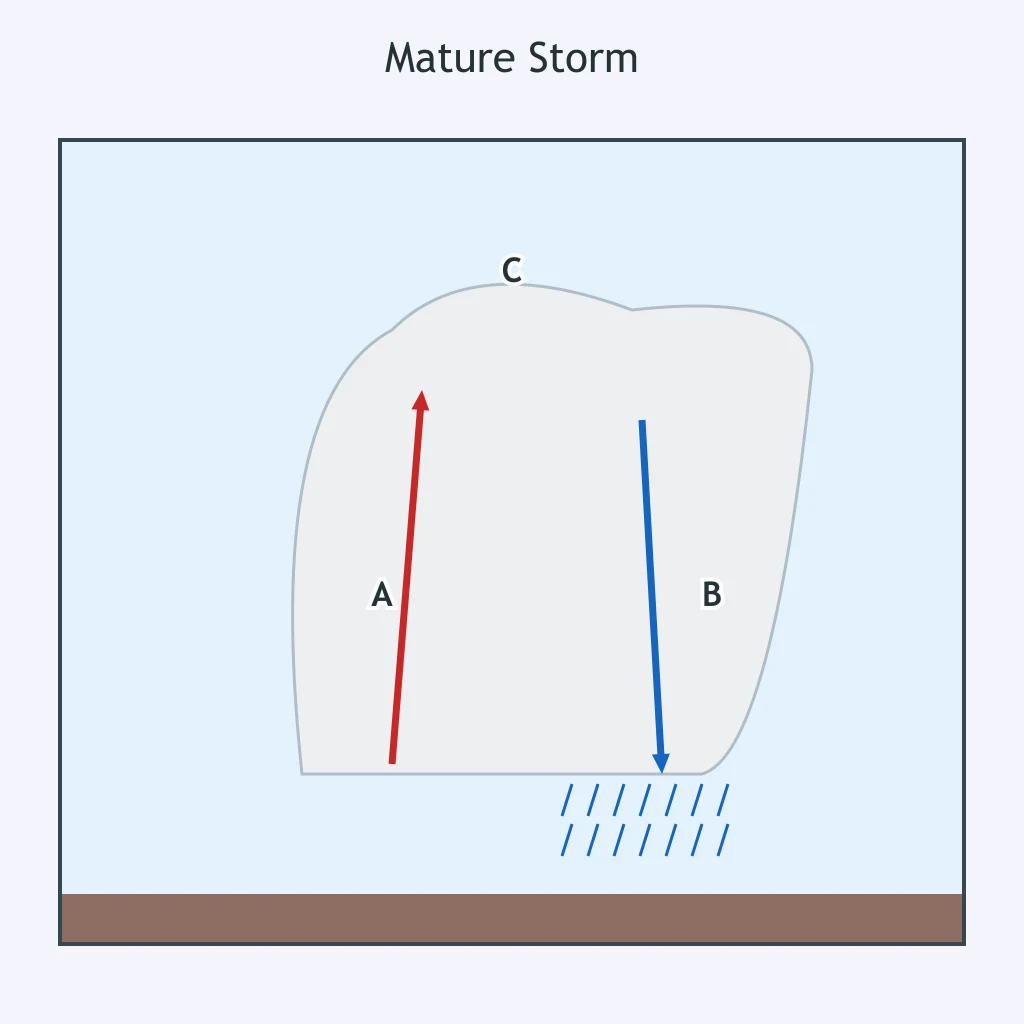
In a late-stage thunderstorm, downdrafts spread far from the storm and cut off its warm, moist inflow. What happens as this stage continues?
Inside a growing cumulonimbus cloud, many ice particles collide and separate electric charges. What hazard can this charge separation produce?
Use the storm cross section. The cloud top spreads sideways where the updraft reaches a stable layer. What cloud feature is forming?
A storm report lists hail 3 cm in diameter, peak wind gusts of 70 km/h, and no tornado. Why is the storm still classified as severe?
A lightning flash is followed by thunder 9 seconds later. If sound travels about 0.34 km/s, about how far away is the lightning?
Use the supercell diagram. Letter A marks the rotating updraft detected by Doppler radar. What is this feature called?
Wind shear near the ground can create a horizontal roll of spinning air, and a storm updraft can lift that roll. What change increases tornado potential?
A tornado is assigned an Enhanced Fujita rating after a damage survey. What evidence is used to estimate the rating?
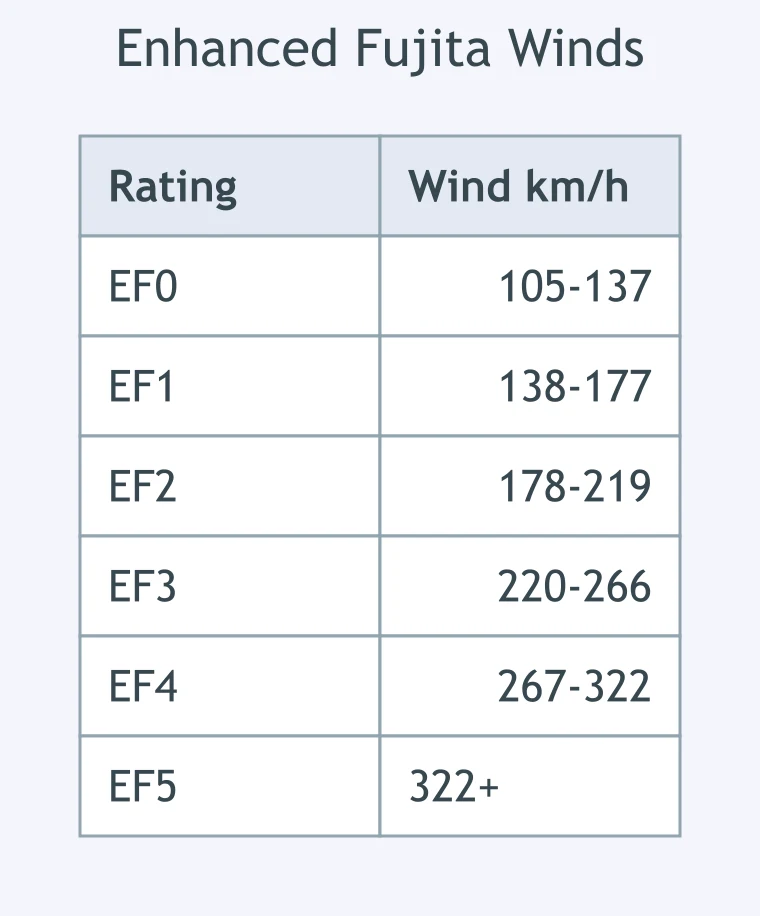
Use the EF-scale table. A surveyed tornado has an estimated peak gust of 190 km/h. What EF rating matches that estimate?
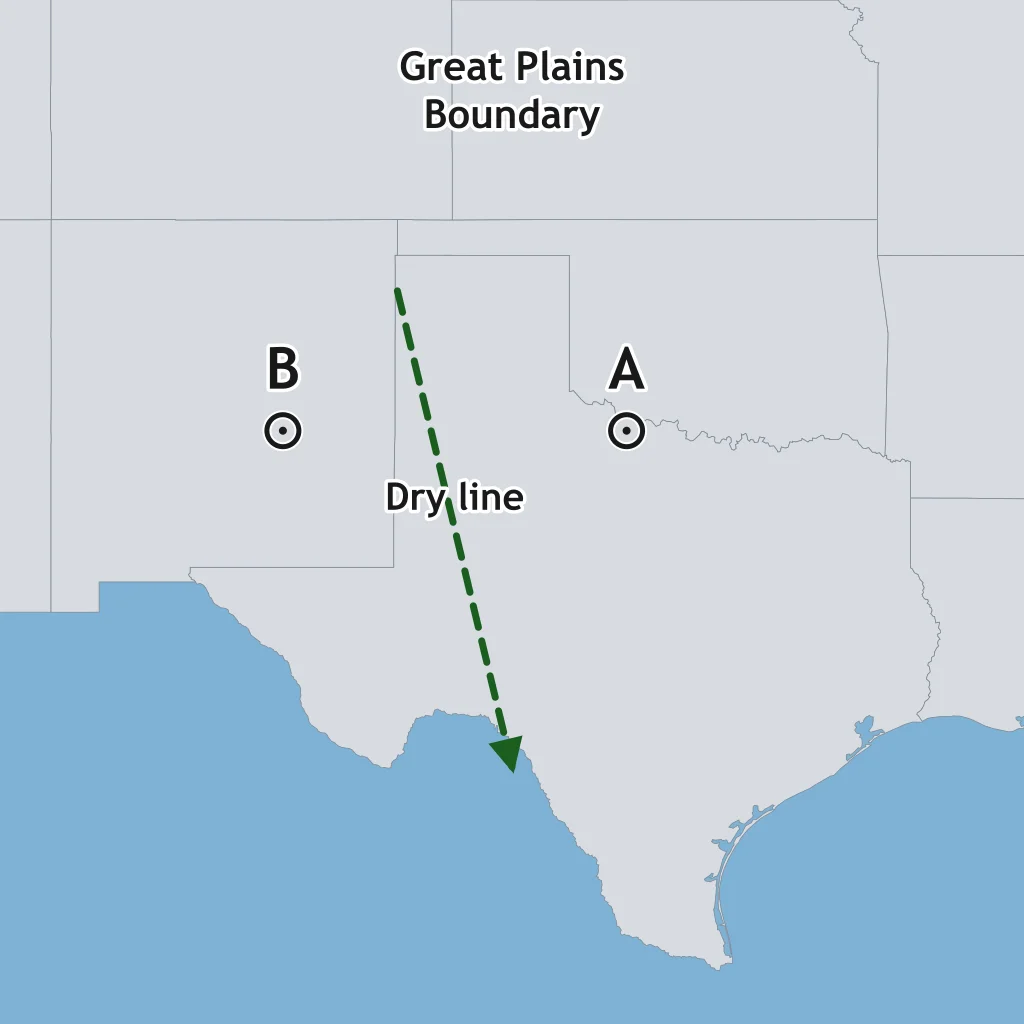
Use the Great Plains map. Point A is east of the dry line where warm, moist air meets drier air. Why are thunderstorms more likely near A?
A tornado warning is issued while students are in a school with no basement. Where should they shelter?
A weather alert says a tornado has been indicated by radar in the warned polygon. What action matches the alert?
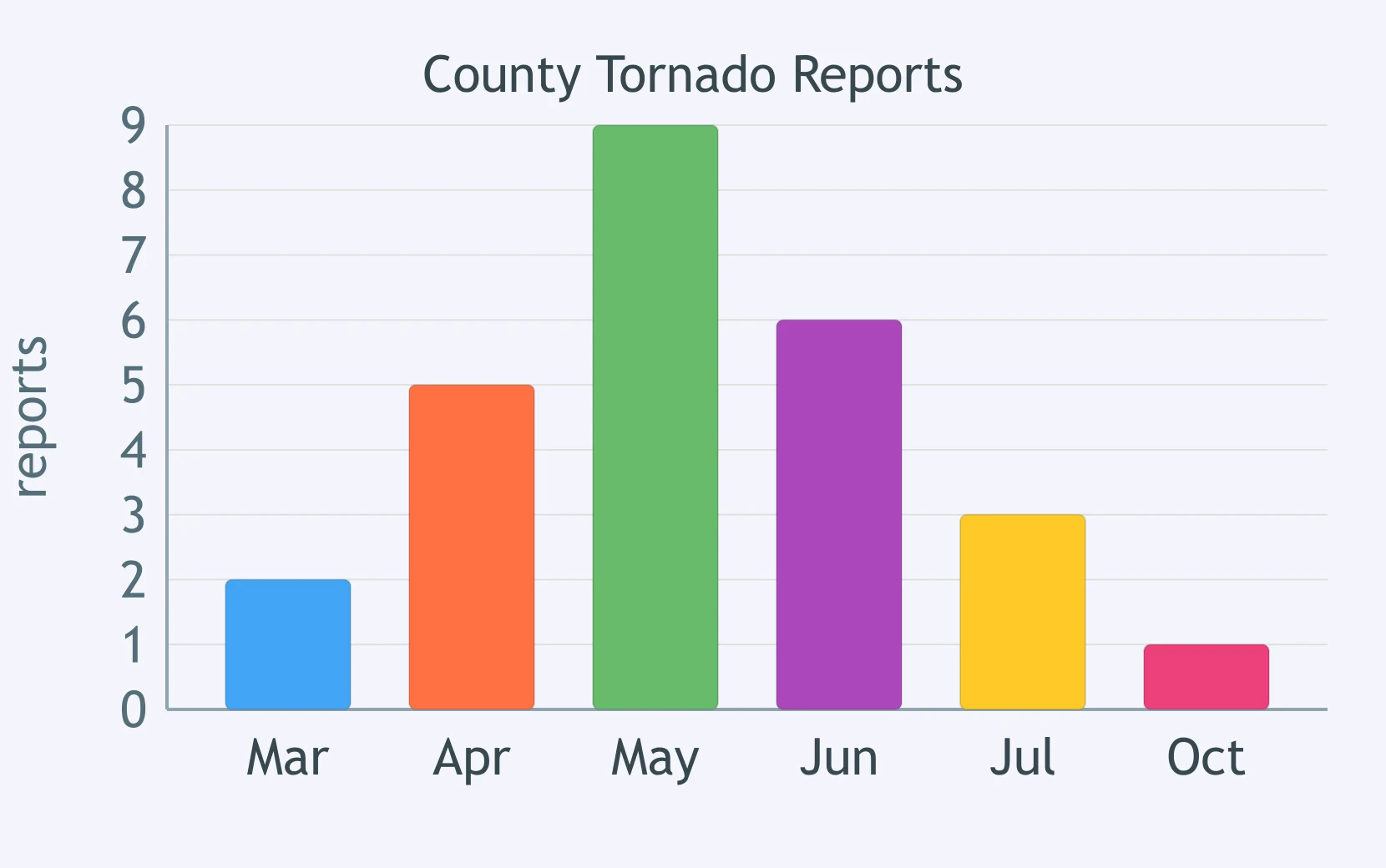
Use the bar graph of county tornado reports by month. Which plotted month has the greatest number of reports?
A tropical disturbance is over ocean water at 28 °C with moist air and low vertical wind shear. Which condition most helps it become a hurricane?
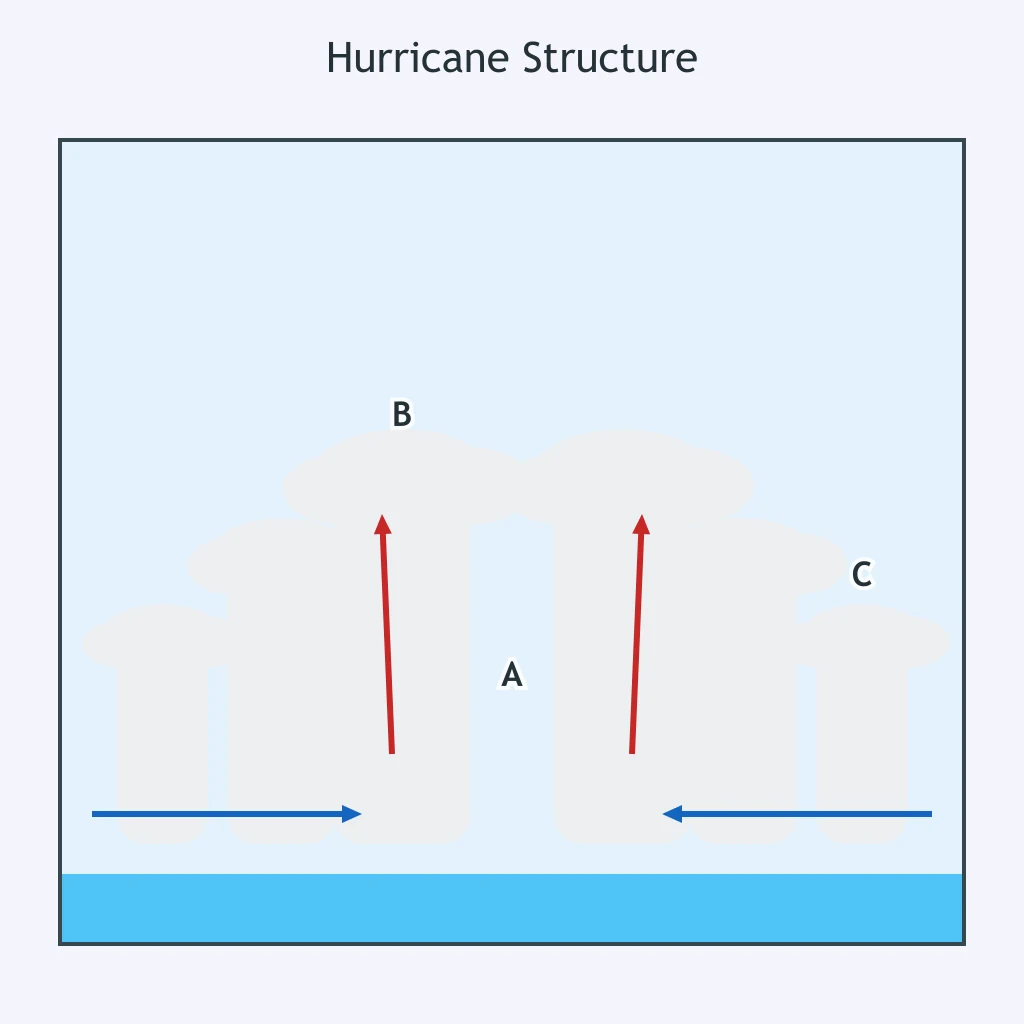
Use the hurricane cross section. Letter A marks the calm, mostly cloud-free center where air sinks. What structure is A?
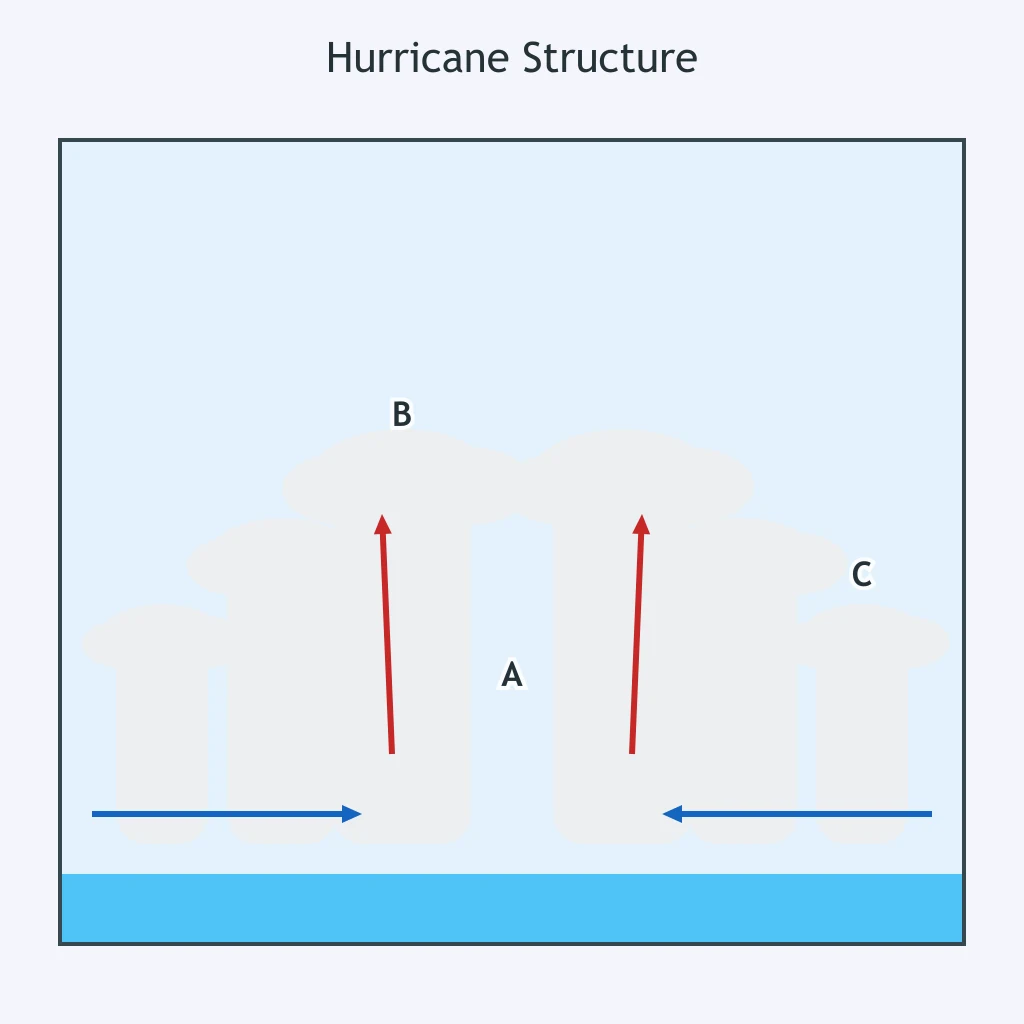
Use the hurricane cross section. Letter B surrounds the eye and has the fiercest winds and most intense rainfall. What structure is B?
Strong onshore hurricane winds pile seawater onto a shallow coast, raising the sea level far above normal. What is this hazard called?
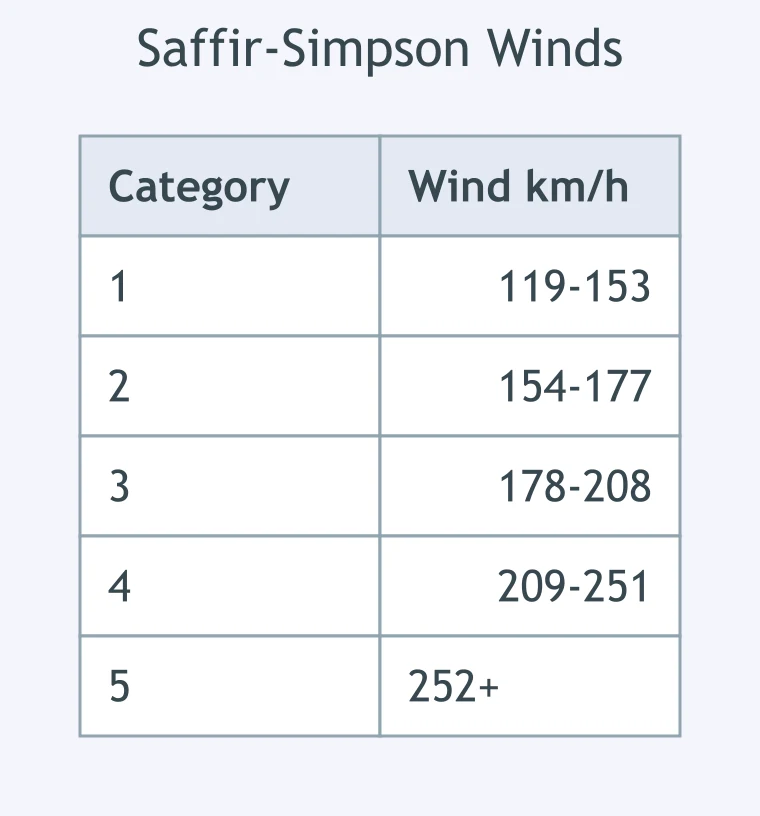
Use the Saffir-Simpson table. A hurricane has maximum sustained winds of 180 km/h. What category is it?
An NHC forecast-cone graphic is being used before landfall. What does the cone mainly represent?
Use the track map. The hurricane center moves from point A to B to C over 24 hours. What is the storm’s general motion?
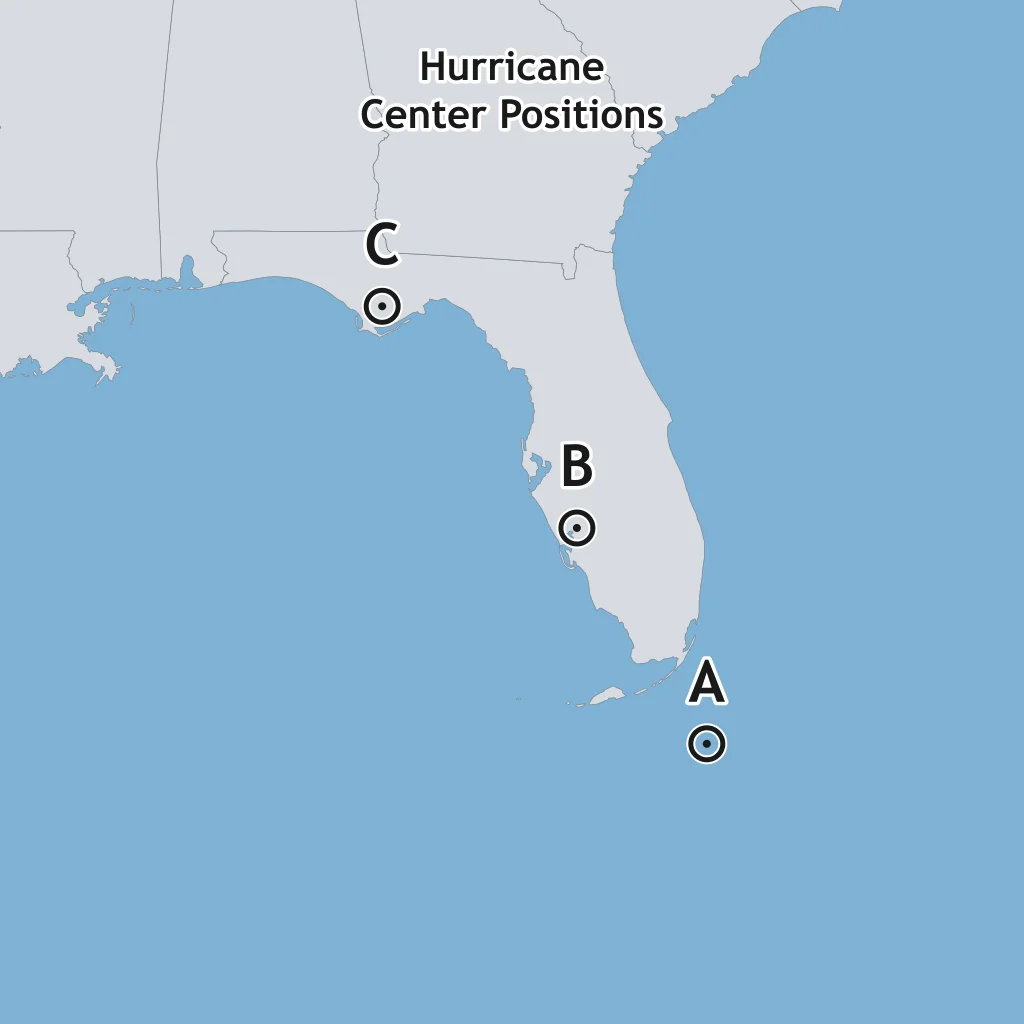
A Northern Hemisphere hurricane is moving due north. On which side of the moving storm are the strongest winds usually found?
A slow tropical cyclone moves inland over steep terrain and drops 30 cm of rain. What hazard is most likely even after winds weaken?
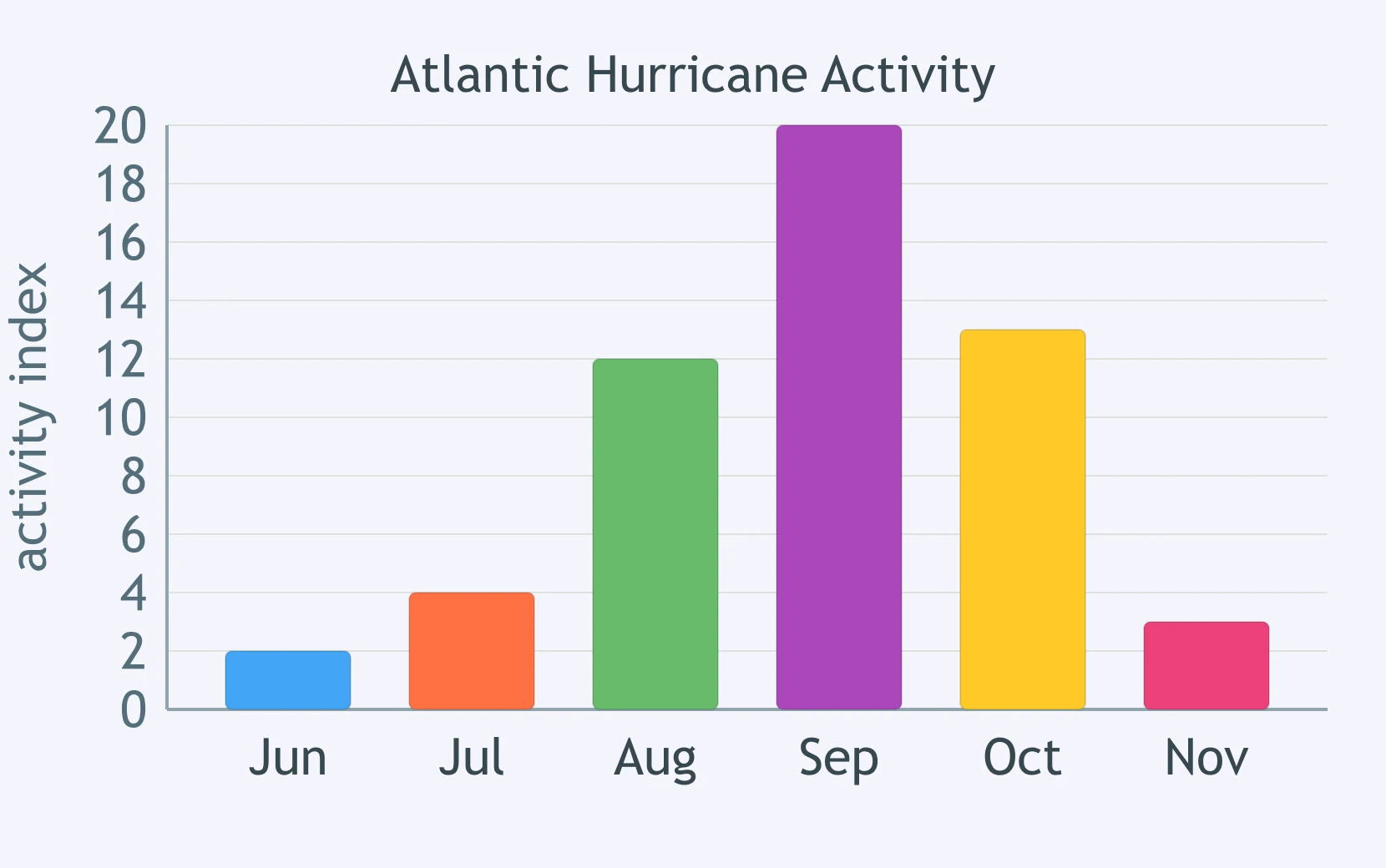
Use the Atlantic activity bar graph. Which month has the highest plotted hurricane activity?
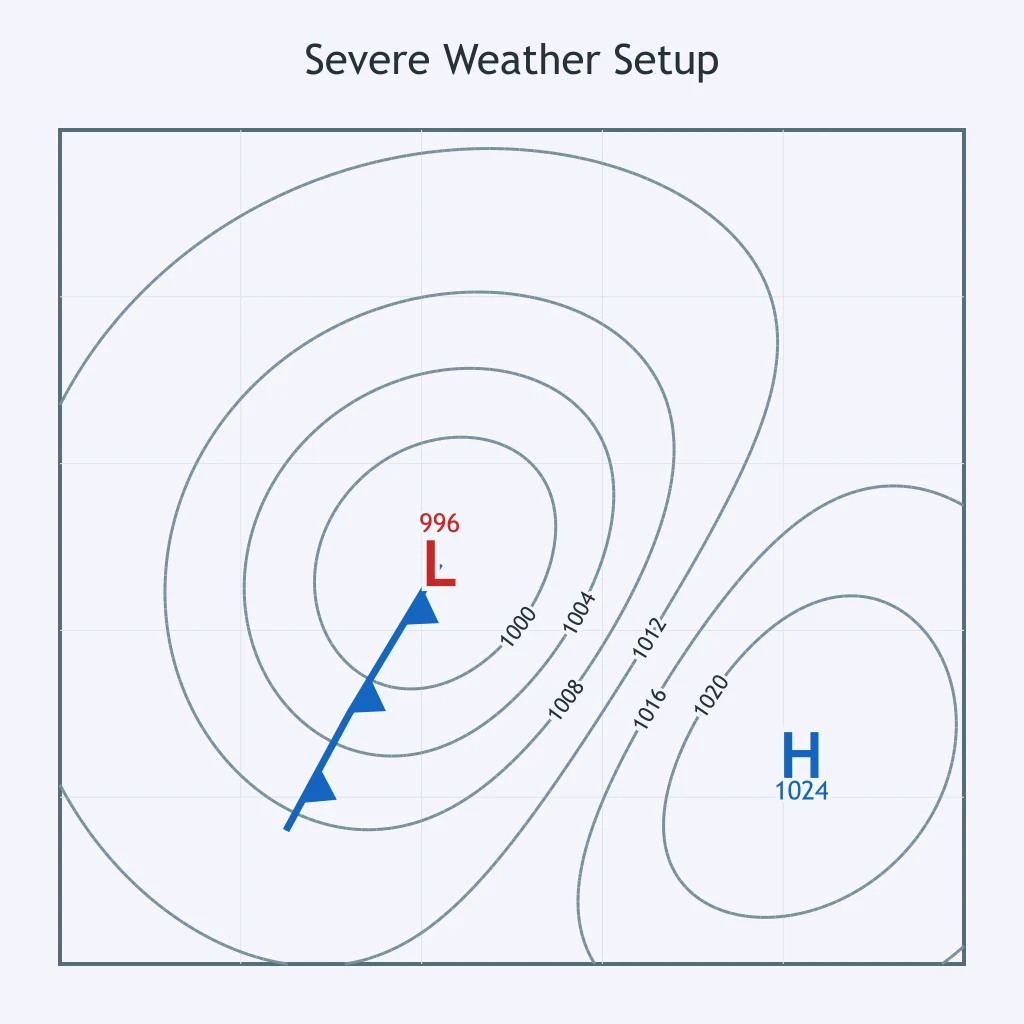
Use the synoptic weather map. Where the cold front lifts warm, humid air near the low, what weather is most likely?
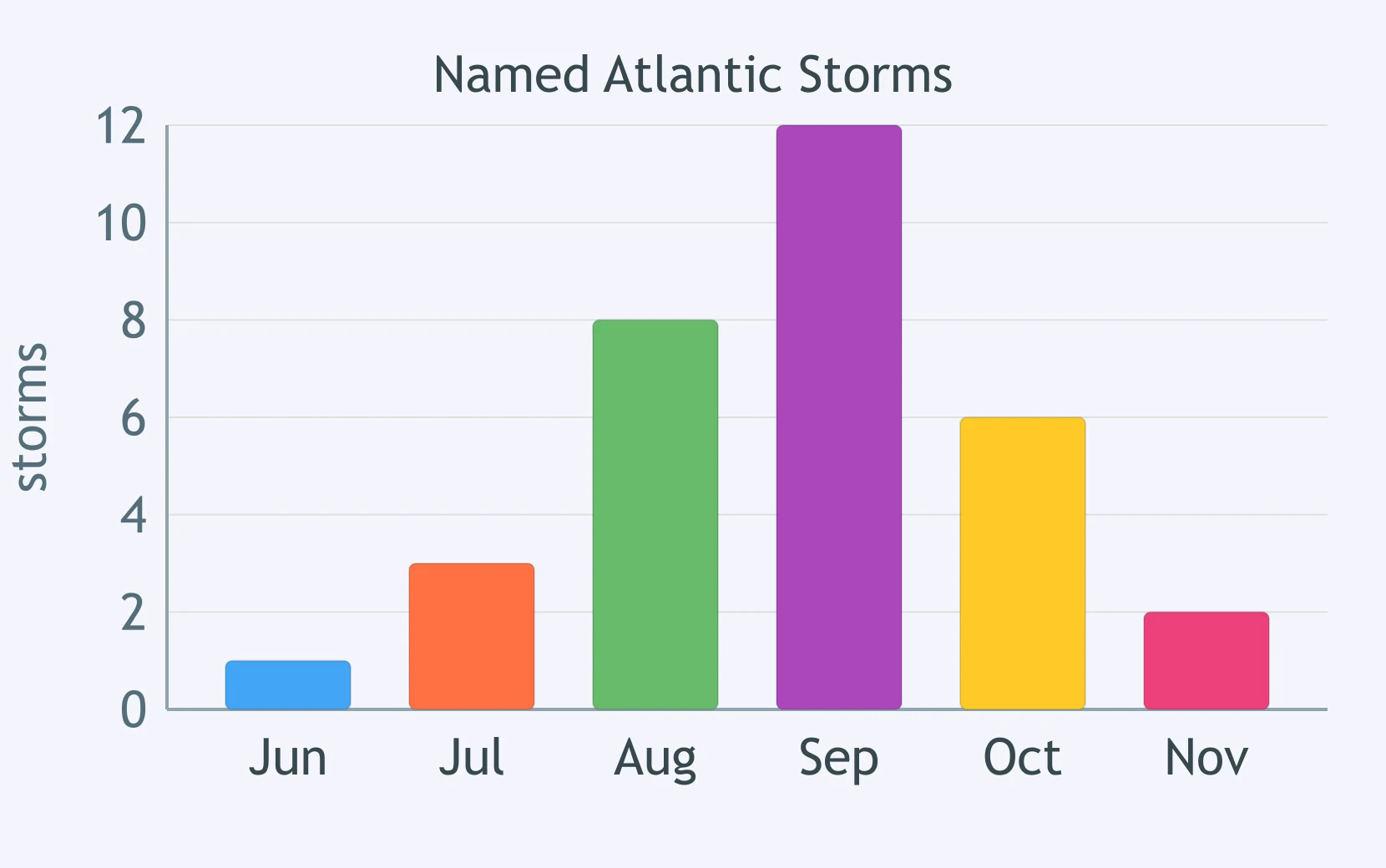
Use the named-storm bar graph. Which plotted month has the lowest number of storms?
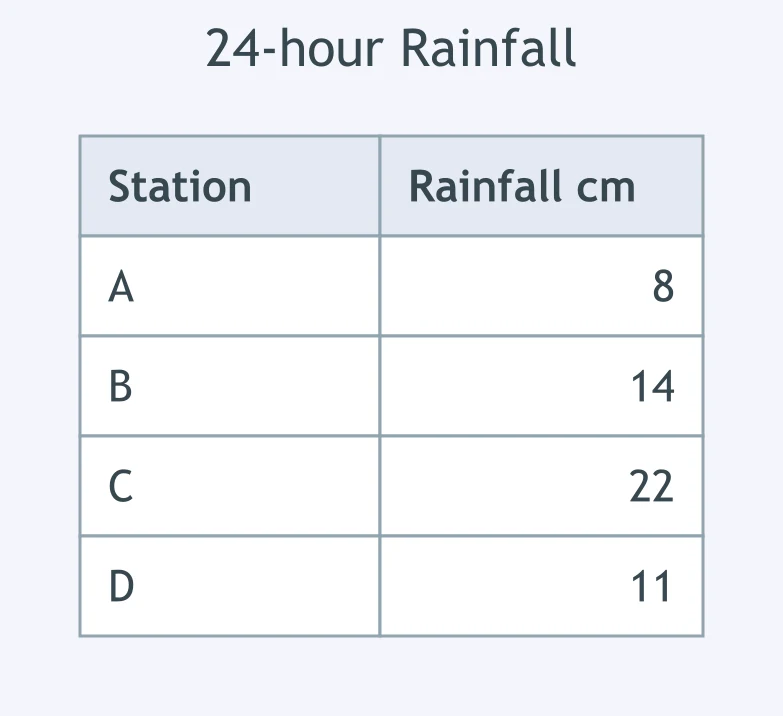
Use the 24-hour rainfall table. Which station recorded the greatest rainfall?
Use the thunderstorm cross section. Rain-cooled air from downdraft B spreads outward along the ground ahead of the storm. What is the leading edge of this cool air called?
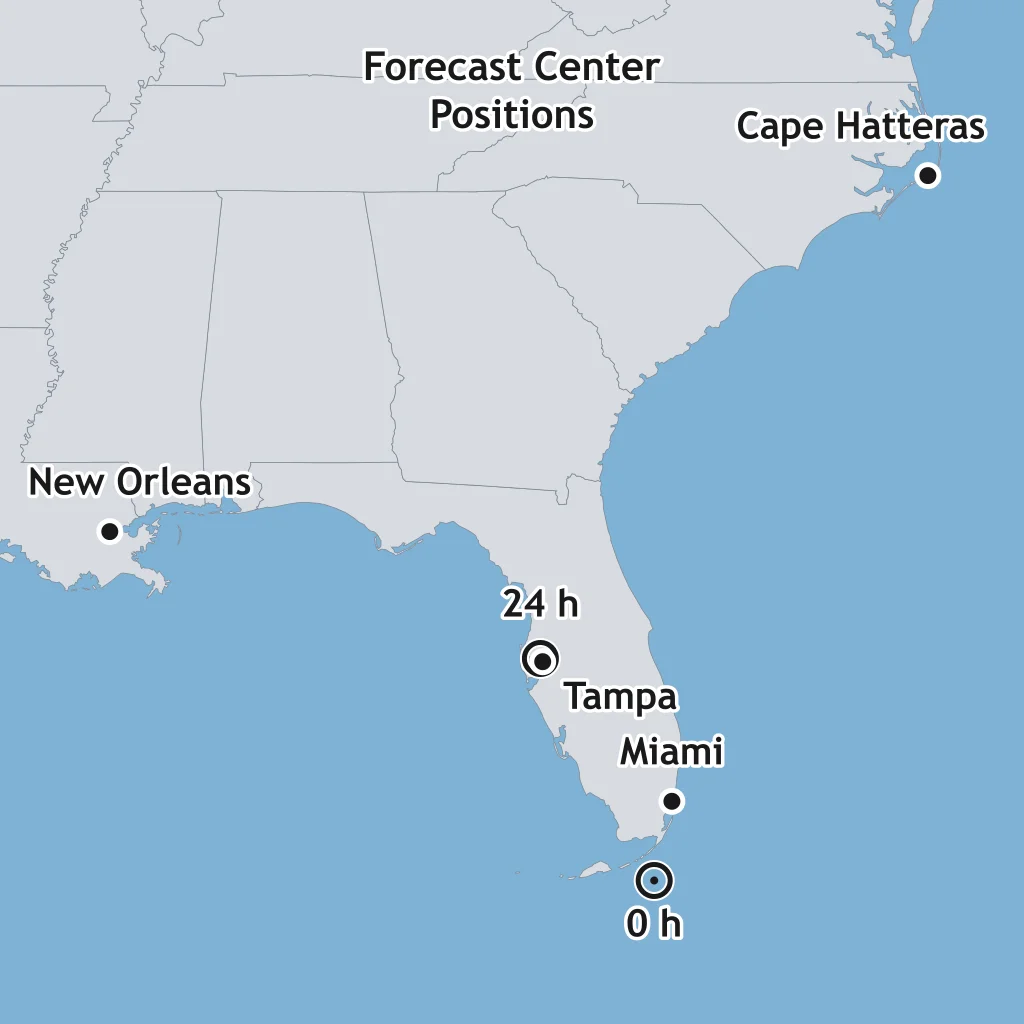
Use the track map with 0-hour and 24-hour center positions. Which city is closest to the 24-hour position?
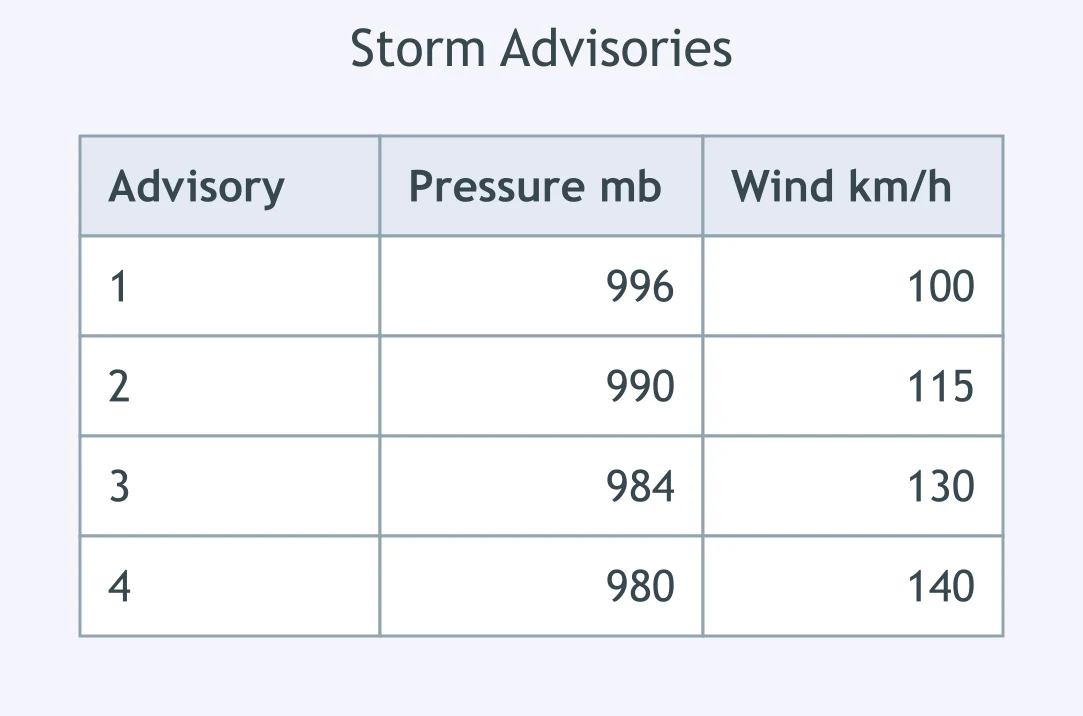
Use the advisory table. How is the tropical cyclone changing from Advisory 1 to Advisory 4?
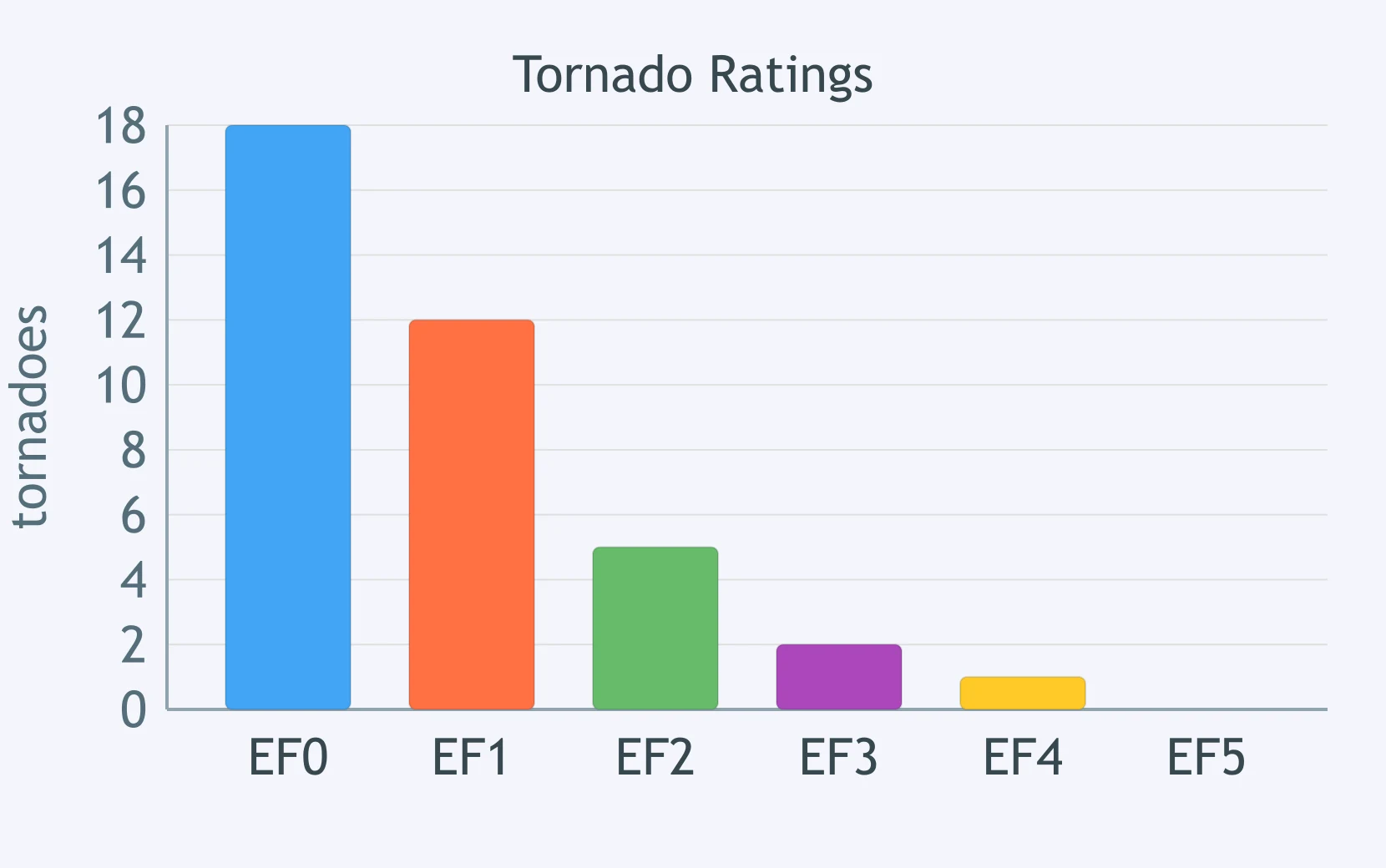
Use the EF-rating bar graph. Which rating has the greatest number of tornadoes in the data set?
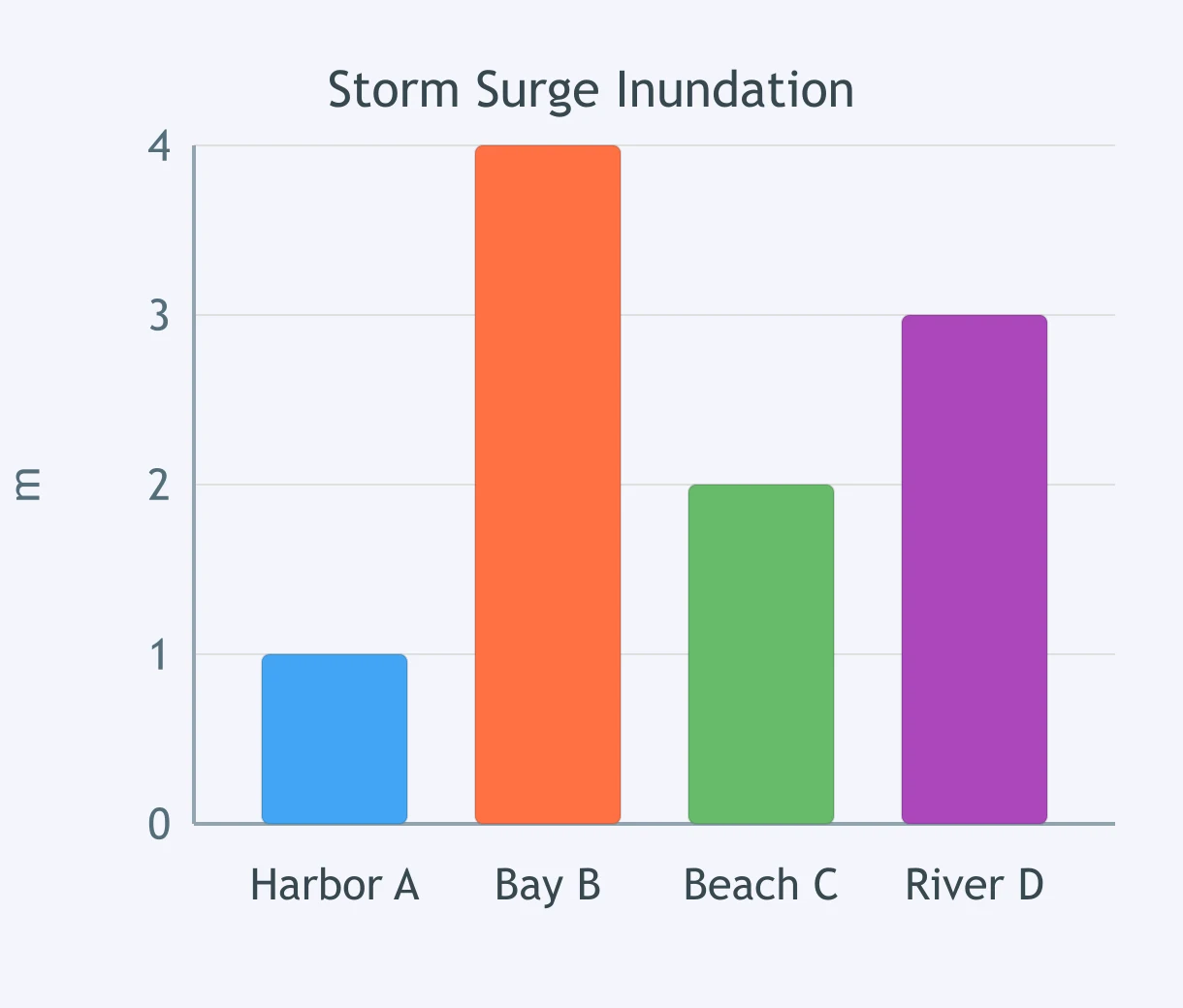
Use the storm-surge bar graph. Which location has the greatest modeled inundation depth?
A single thunderstorm cell and a hurricane both strike the same coast. How do their typical size and lifetime compare?
How are tornadoes and hurricanes rated differently?
Which damage pattern gives better evidence that winds rotated around a tornado instead of blowing straight outward?
Warm, moist air fuels both thunderstorms and hurricanes. What extra setting is essential for a hurricane but not for an ordinary land thunderstorm?
A tornado warning and a hurricane forecast cone are both issued before dangerous weather arrives. How do their warning scales usually differ?
A coastal town floods as seawater is pushed inland, while an inland valley floods from intense rainfall runoff. What comparison is correct?
Crack the passcode before the zombies get in.
Answer, then swat bugs for bonus points.
Race through questions at your own speed.
Same question on every screen. Fastest wins.

Pick a tile, answer, hit bonuses and steals.
30 questions