Loading
by BlastRoom
Tornadoes form in rotating thunderstorms, occur most often in favored regions, and are rated by damage.
#earth_space_science
25 questions
One question set, multiple game modes. Tap any game to see it in action. Not sure which to pick?
Answer to place stones and capture territory.
Outrun the snow together.
Earn blasts, then hunt the other team.
Answer to earn energy, then climb.

The class blasts through walls together.
Bid on mystery lots. Most money wins.
Sell tours. Nice, standard, or a total scam.

Answer, restock, and serve the rush.
More correct answers pulls the rope your way.
Answer, then shoot down the alien wave.
Answer, then tap to leap the frozen ridge.
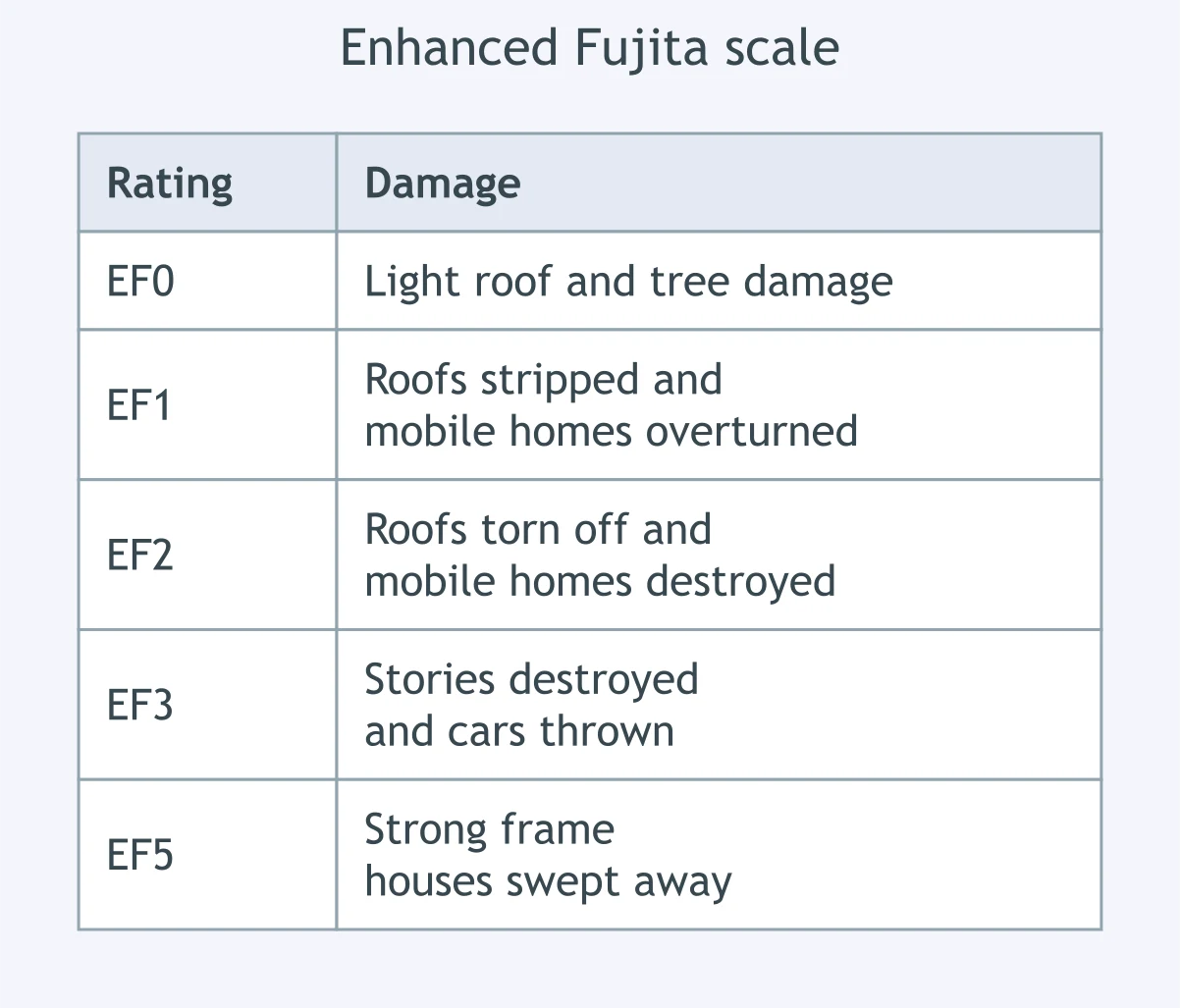
A survey finds entire stories of well-built houses destroyed and heavy cars lifted and thrown. Using the Enhanced Fujita table in the figure, what rating fits this damage?
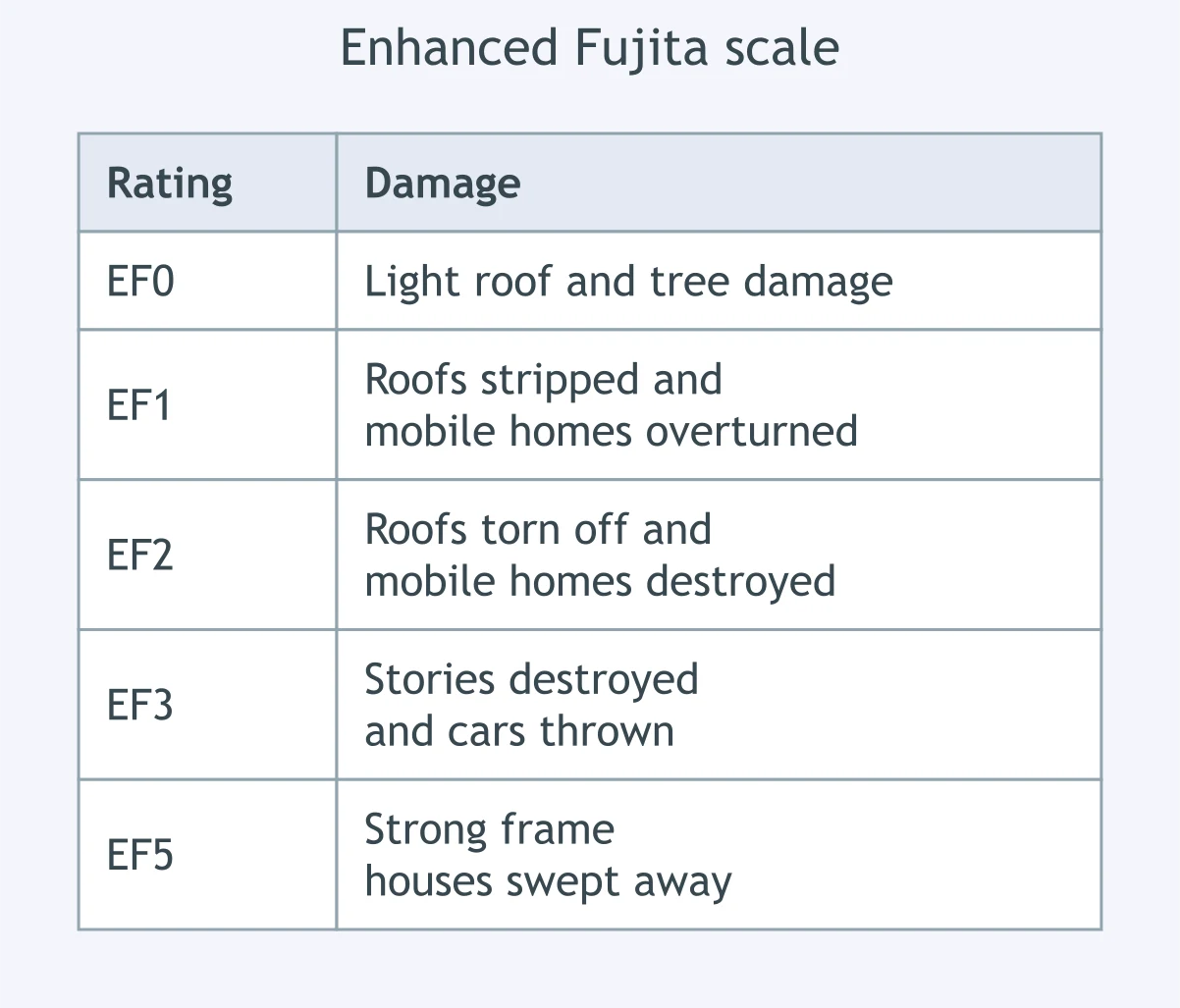
A tornado peels roof covering from a house, damages gutters, breaks tree branches, and pushes over shallow-rooted trees. Which EF rating matches the table?
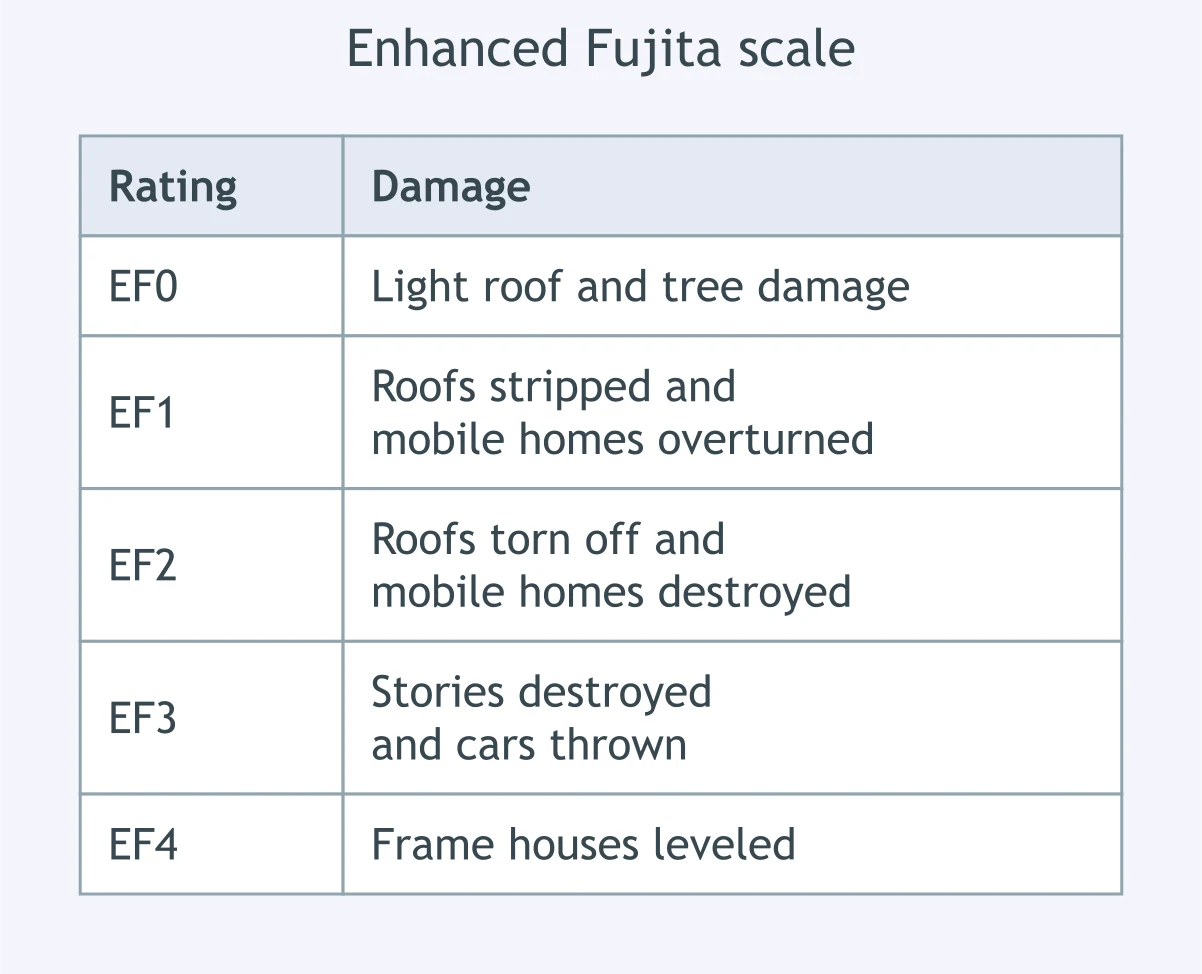
Damage includes roofs severely stripped, exterior doors lost, windows broken, and mobile homes overturned. Using the figure, which EF rating fits best?
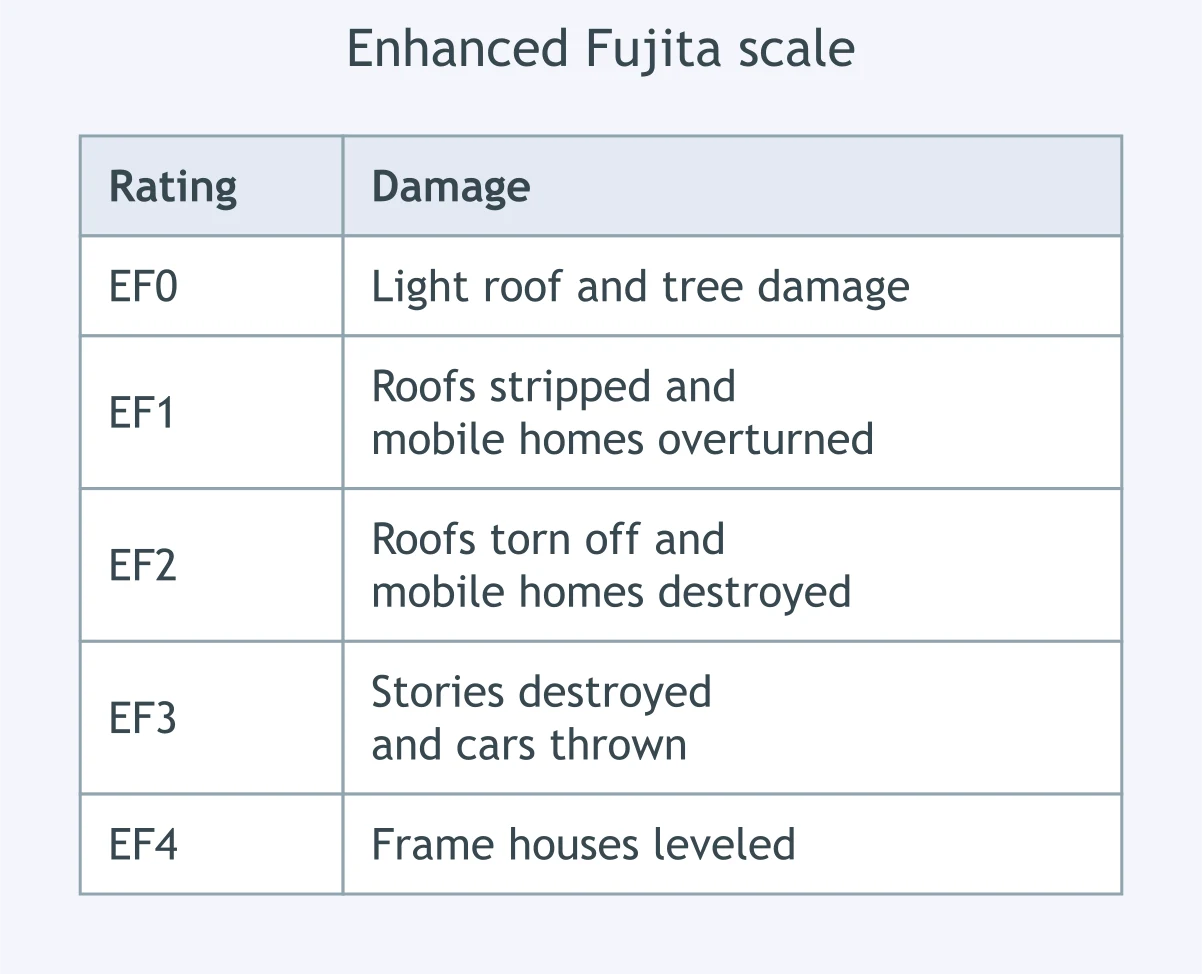
A damage team sees roofs torn off well-built houses, frame homes shifted on foundations, and mobile homes completely destroyed. Which EF rating should they assign?
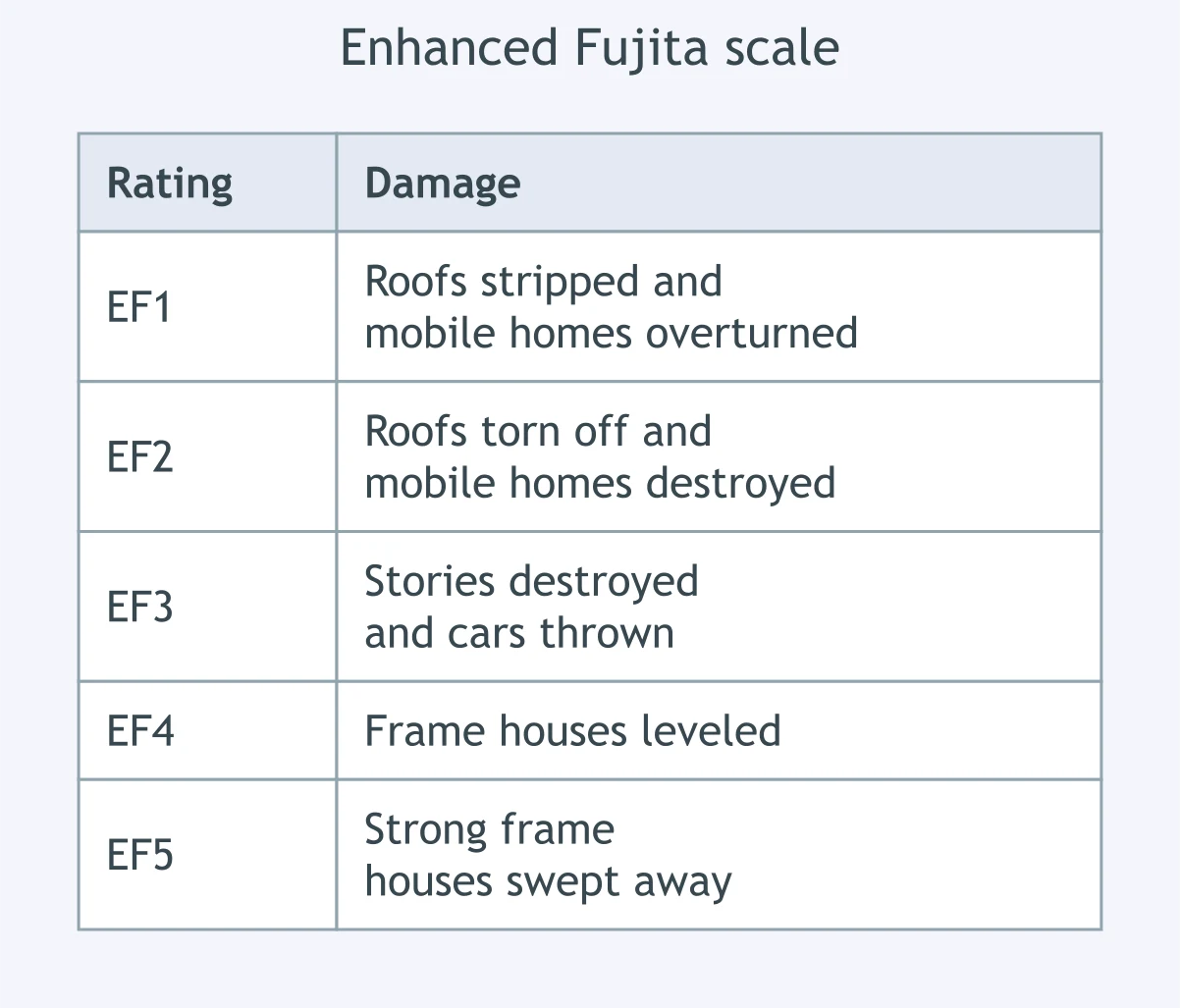
Several well-built frame houses are completely leveled, but the debris is not swept clean from the foundations. Which rating is indicated by the table?
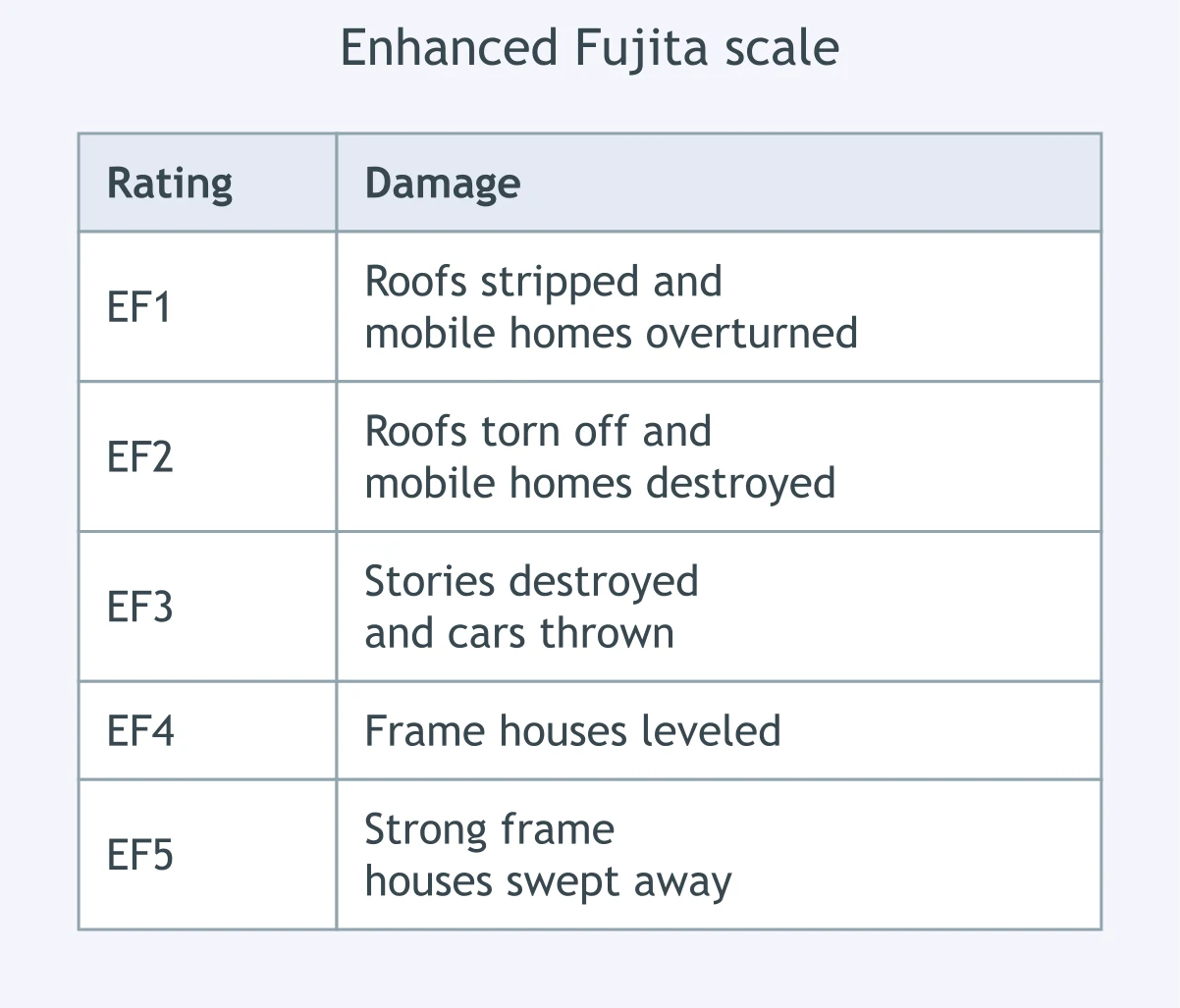
A strong frame house is leveled off its foundation and swept away, and automobile-sized debris is thrown through the air. Which EF rating fits this damage?
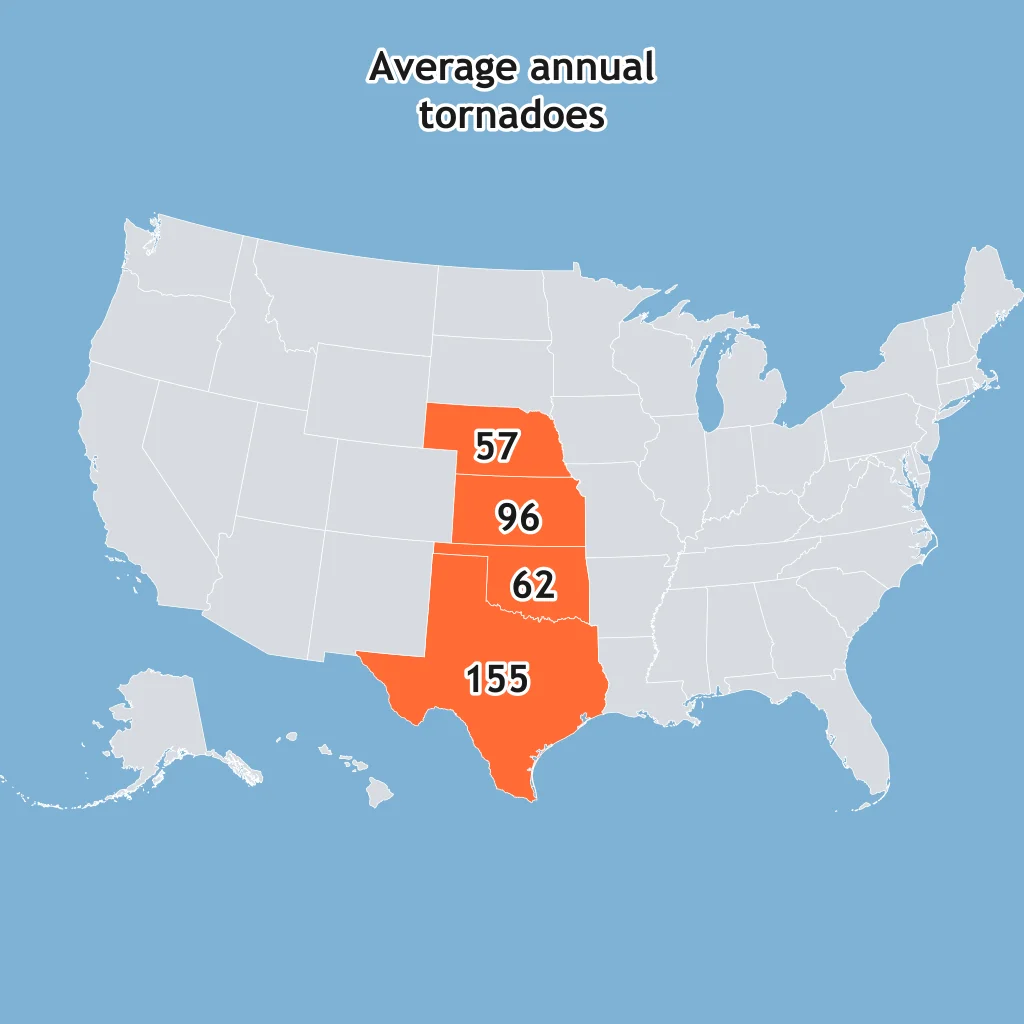
On the map, selected states show average annual tornado counts. Which selected state has the most tornadoes?
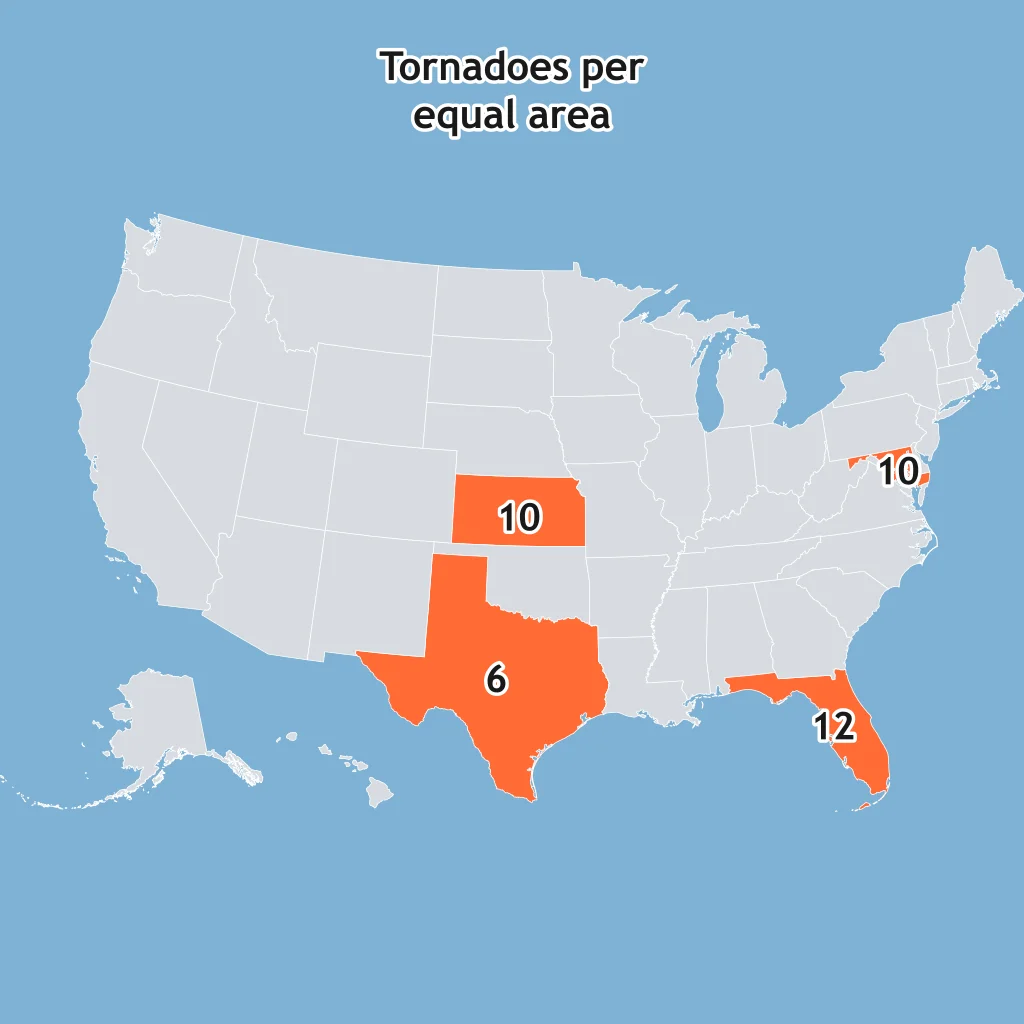
A map compares tornadoes per equal-size land area for Florida, Kansas, Maryland, and Texas. Which selected state has the highest tornado density?
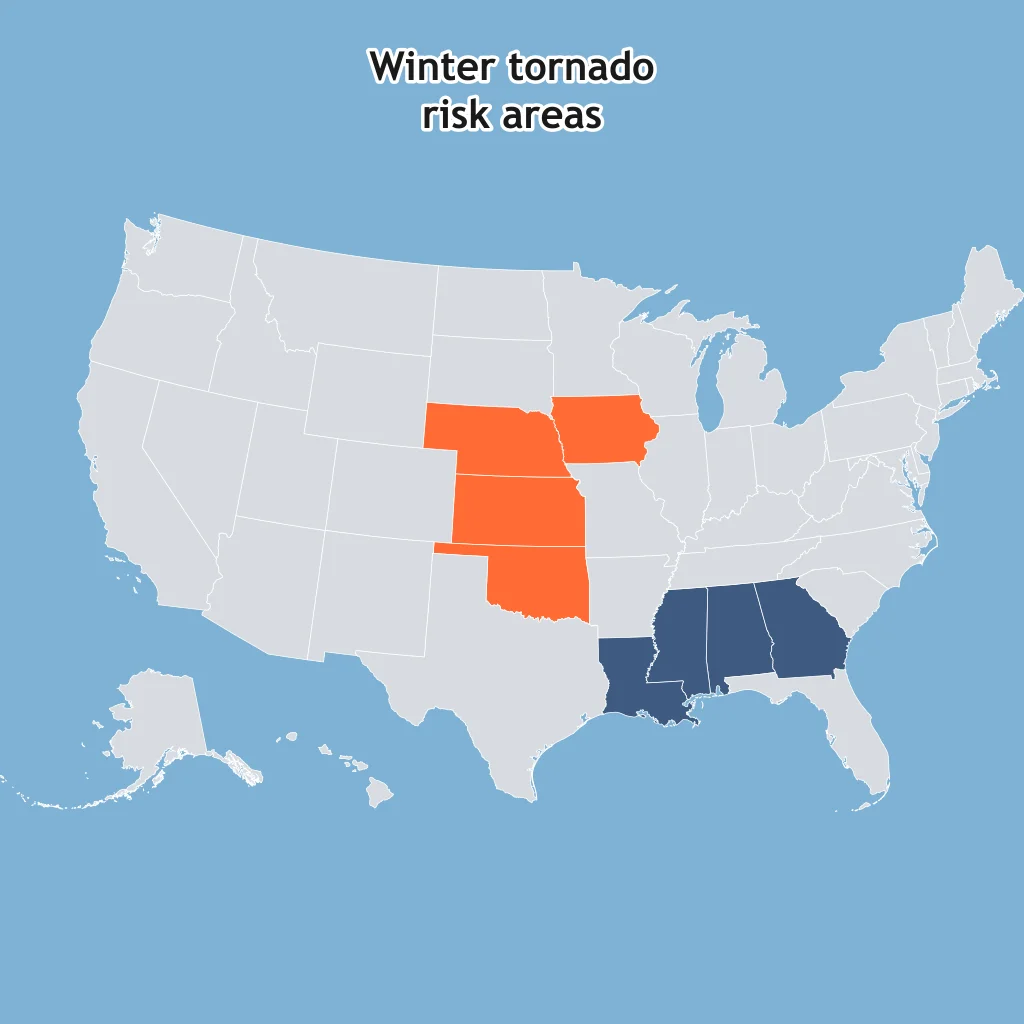
The map shades Louisiana, Mississippi, Alabama, and Georgia darker than Plains states for winter tornado risk. What does that seasonal pattern show?
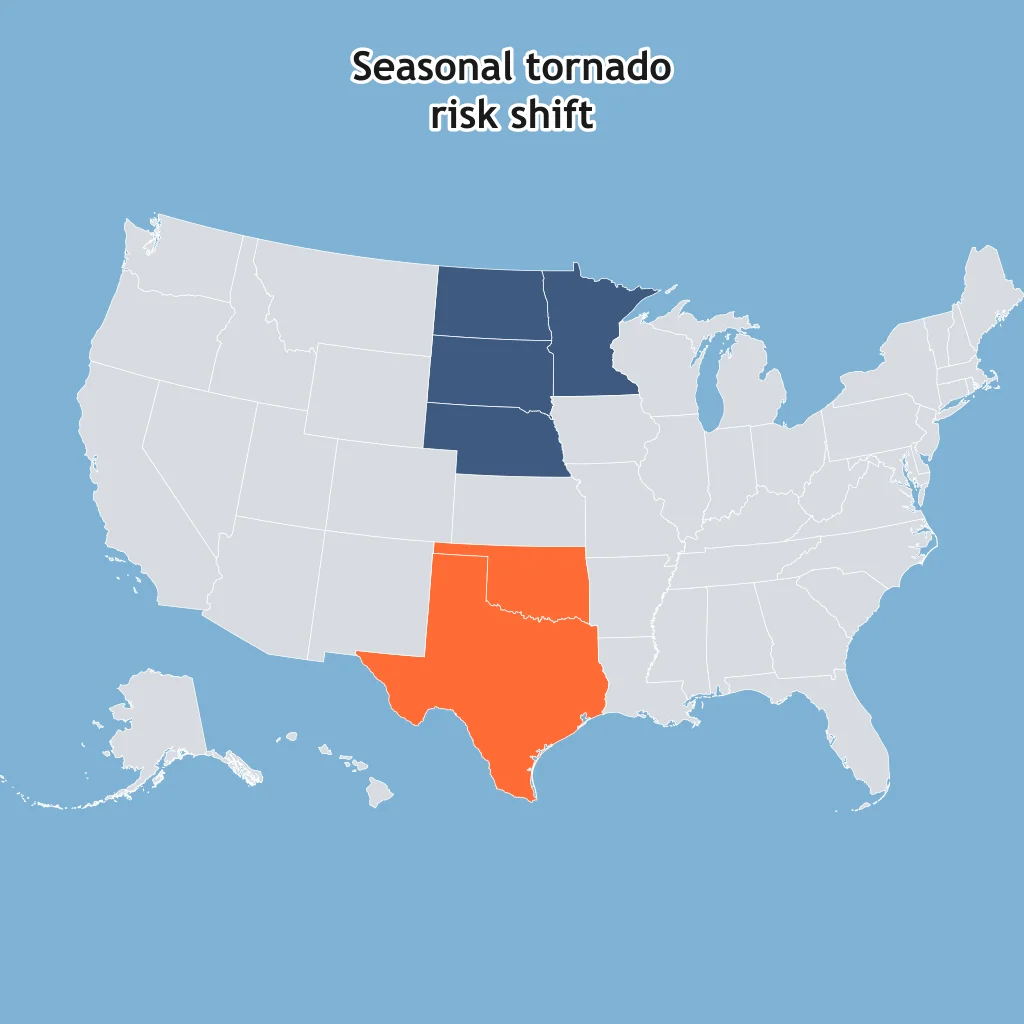
The map contrasts spring tornado risk in Texas and Oklahoma with summer risk in Nebraska, the Dakotas, and Minnesota. In what direction does the main risk shift by summer?
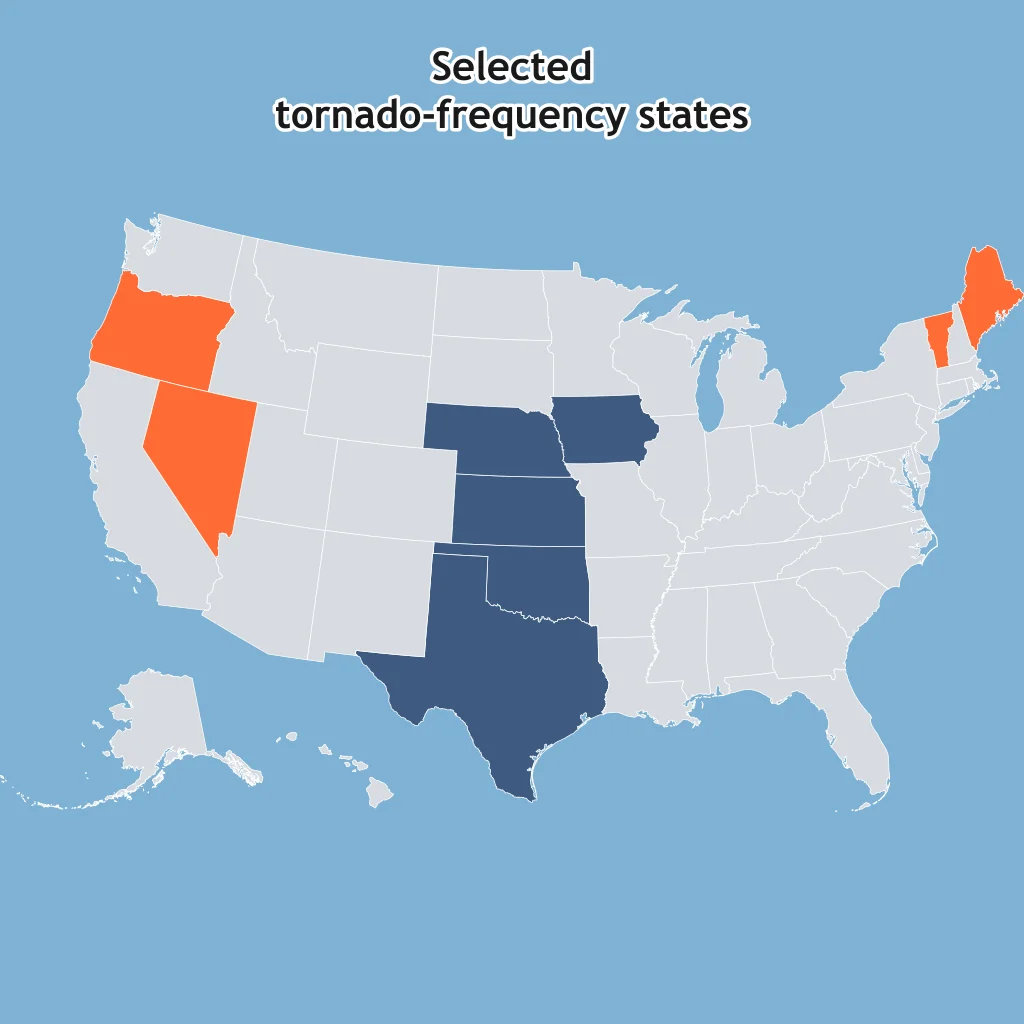
A tornado-frequency map shows darker selected states clustered from Texas through Kansas, Oklahoma, Nebraska, and Iowa. What regional pattern does this show?
In a supercell, fast winds aloft blow across slower surface winds from a different direction. What does this vertical wind shear first create?
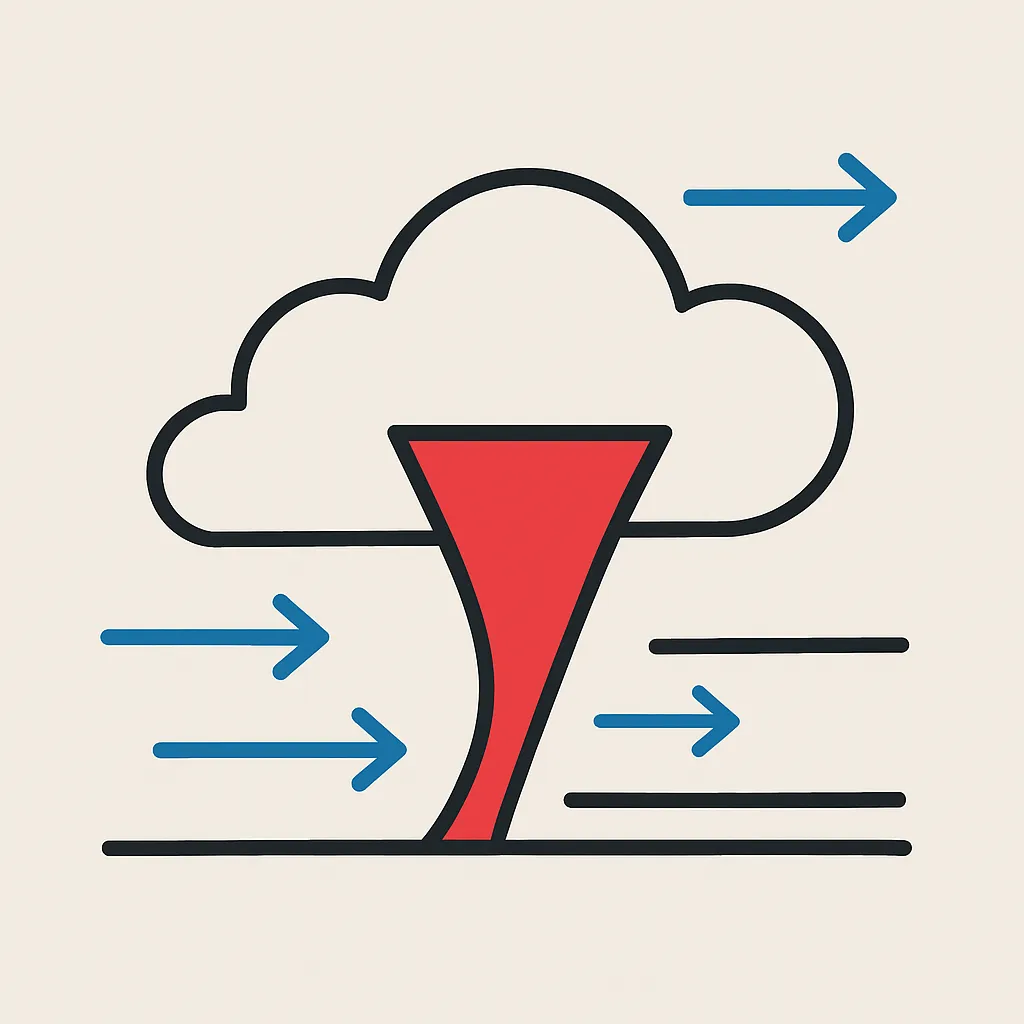
A storm diagram shows a strong updraft lifting a horizontally rotating tube until the rotation becomes vertical. What storm feature is developing?
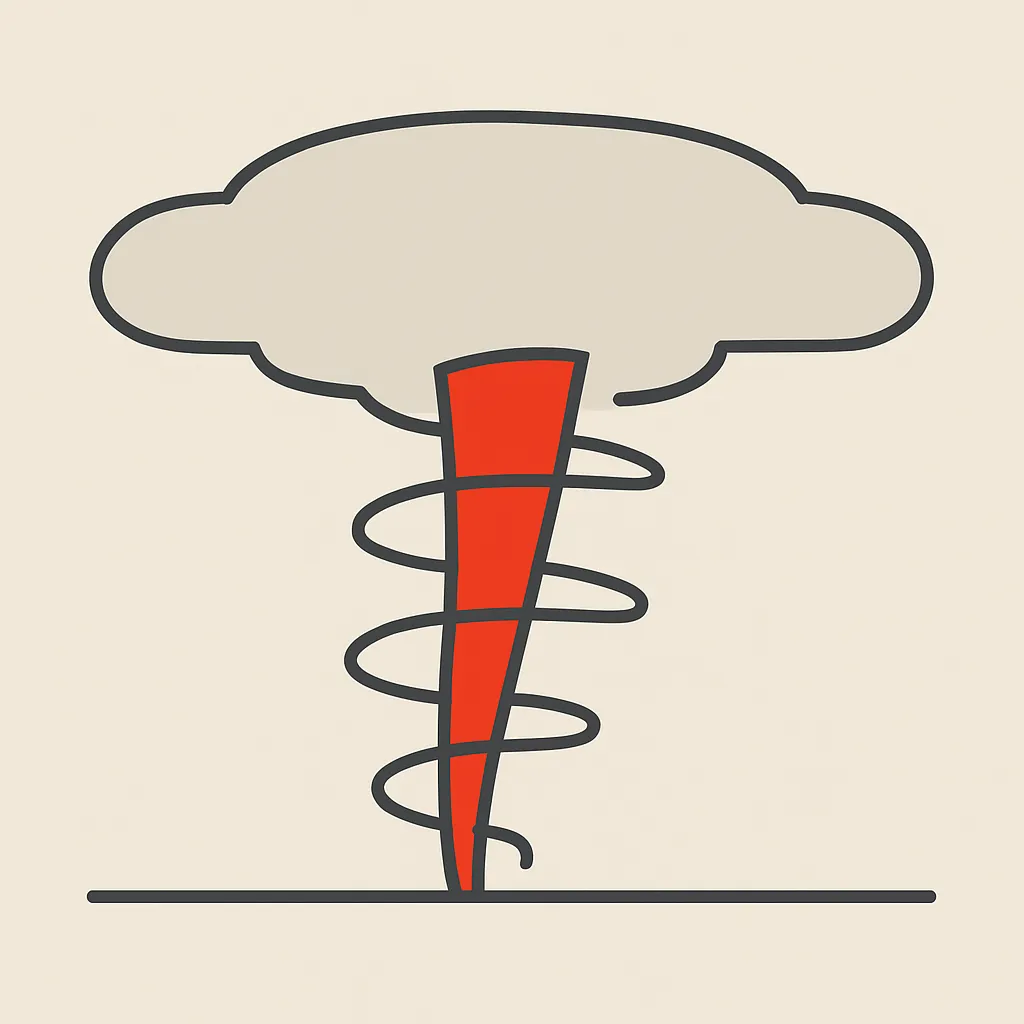
Doppler radar shows adjacent inbound and outbound winds within the same supercell updraft. What does that velocity couplet indicate?
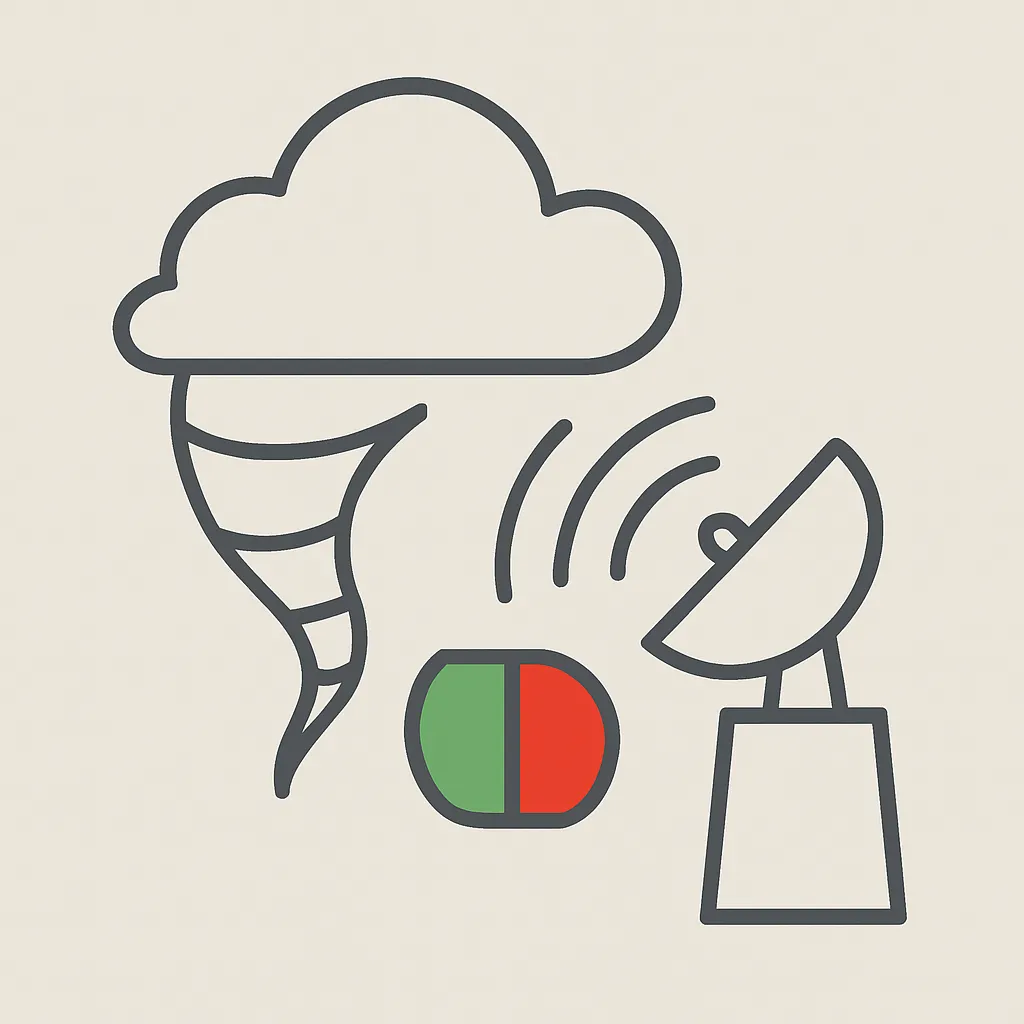
Why can a tilted updraft help a supercell thunderstorm last long enough to produce a tornado?

A rotating supercell has a mesocyclone, but no tornado forms. What does this observation show about tornado formation?
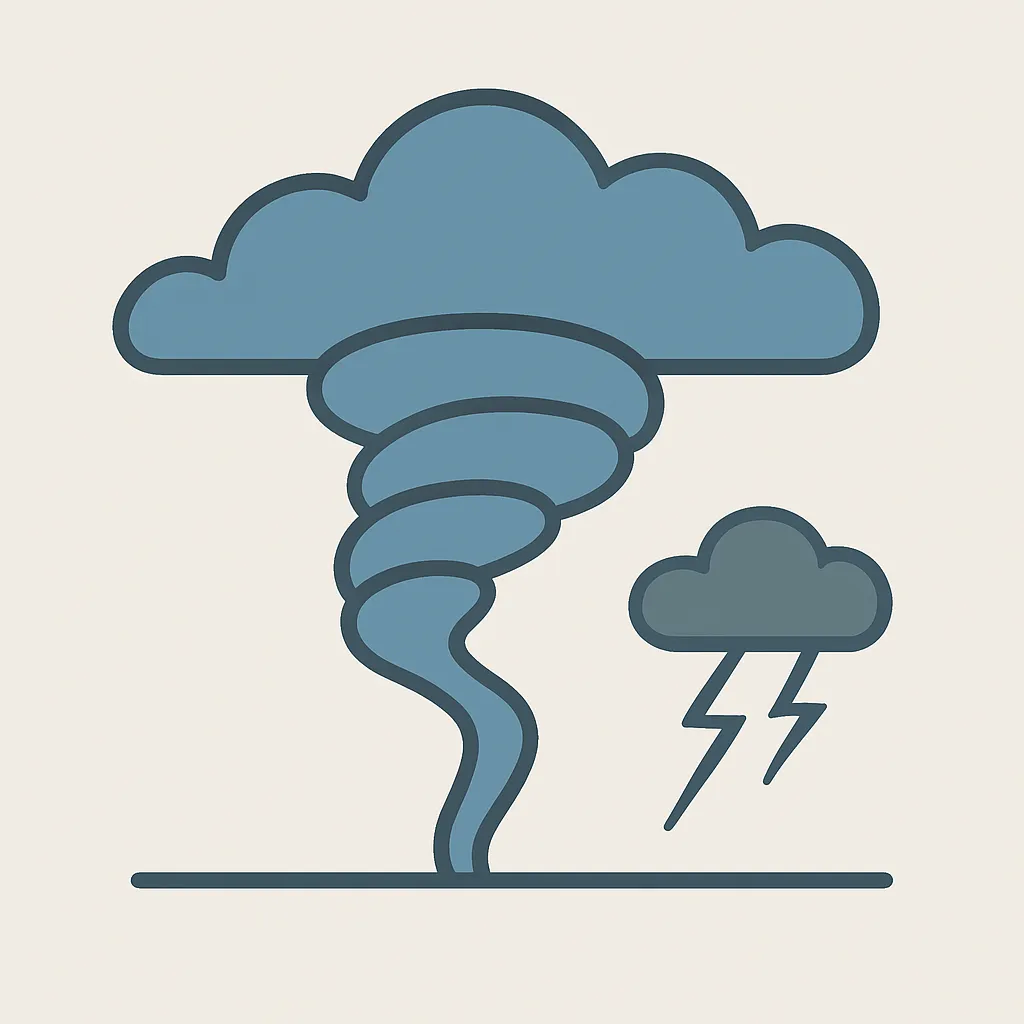
A funnel does not visibly reach the ground, but a rotating debris cloud is under it at the surface. What should a trained spotter report?
A county is under a tornado warning, not a watch. What does that warning mean?
A tornado watch is issued for your area before storms arrive. What is the best response?
During a tornado warning at school, students are moved from classrooms with windows. Where should they go?
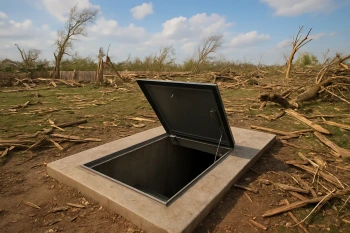
A family in a mobile home receives a tornado warning and a sturdy community shelter is nearby. What should they do?
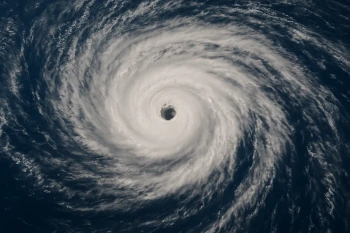
A tornado and a hurricane both have damaging rotating winds. Which comparison is correct?
How does vertical wind shear affect tornadoes and hurricanes differently?
In a supercell, how is the tornado different from the mesocyclone around it?
How do the Enhanced Fujita scale and the Saffir-Simpson Hurricane Wind Scale differ?
Crack the passcode before the zombies get in.
Answer, then swat bugs for bonus points.
Race through questions at your own speed.
Same question on every screen. Fastest wins.

Pick a tile, answer, hit bonuses and steals.
Severe Weather Review
40 questions