Loading
by BlastRoom
Classify metamorphic rocks by texture, trace parent rock to product, and distinguish contact from regional metamorphism.
#earth_space_science
30 questions
One question set, multiple game modes. Tap any game to see it in action. Not sure which to pick?
Answer to place stones and capture territory.
Outrun the snow together.
Earn blasts, then hunt the other team.
Answer to earn energy, then climb.

The class blasts through walls together.
Bid on mystery lots. Most money wins.
Sell tours. Nice, standard, or a total scam.

Answer, restock, and serve the rush.
More correct answers pulls the rope your way.
Answer, then shoot down the alien wave.
Answer, then tap to leap the frozen ridge.
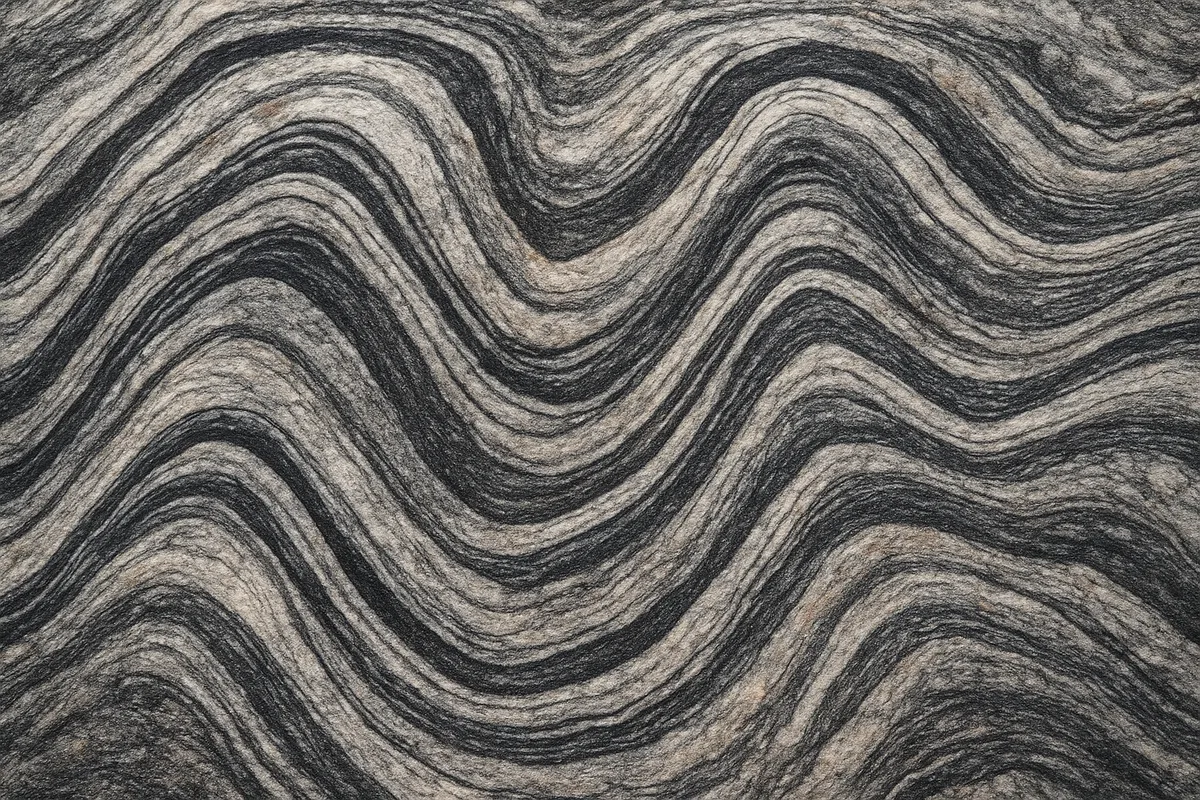
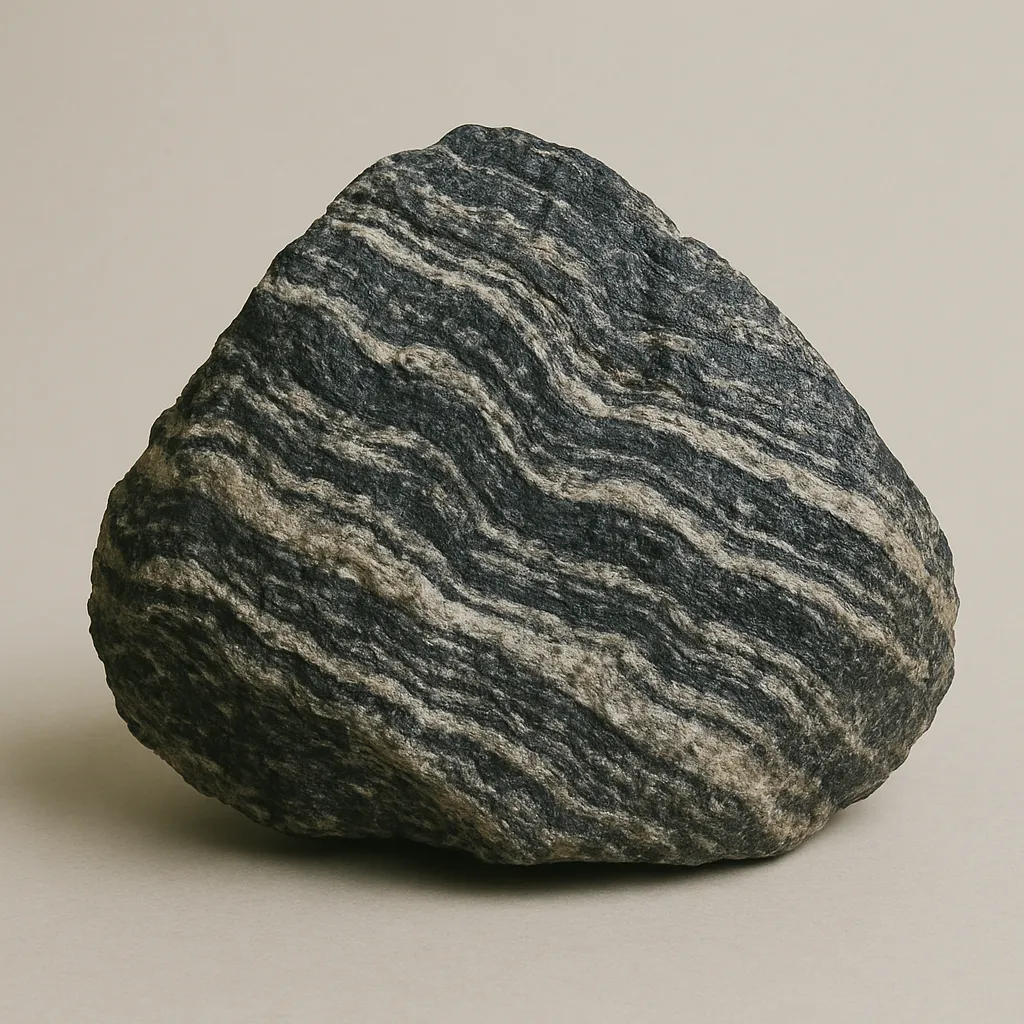
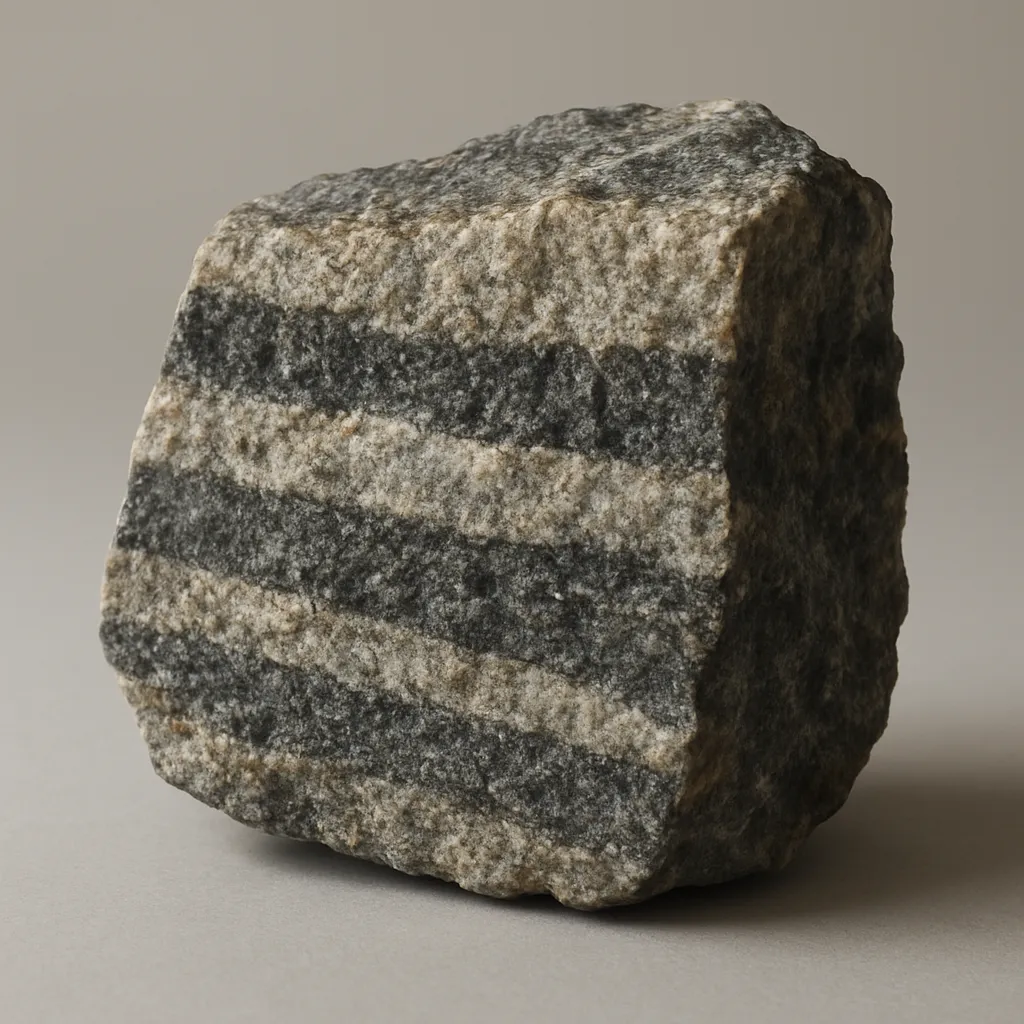
The specimen shows dark and light minerals separated into wavy parallel bands, with coarse crystals visible to the eye. How is this texture described?
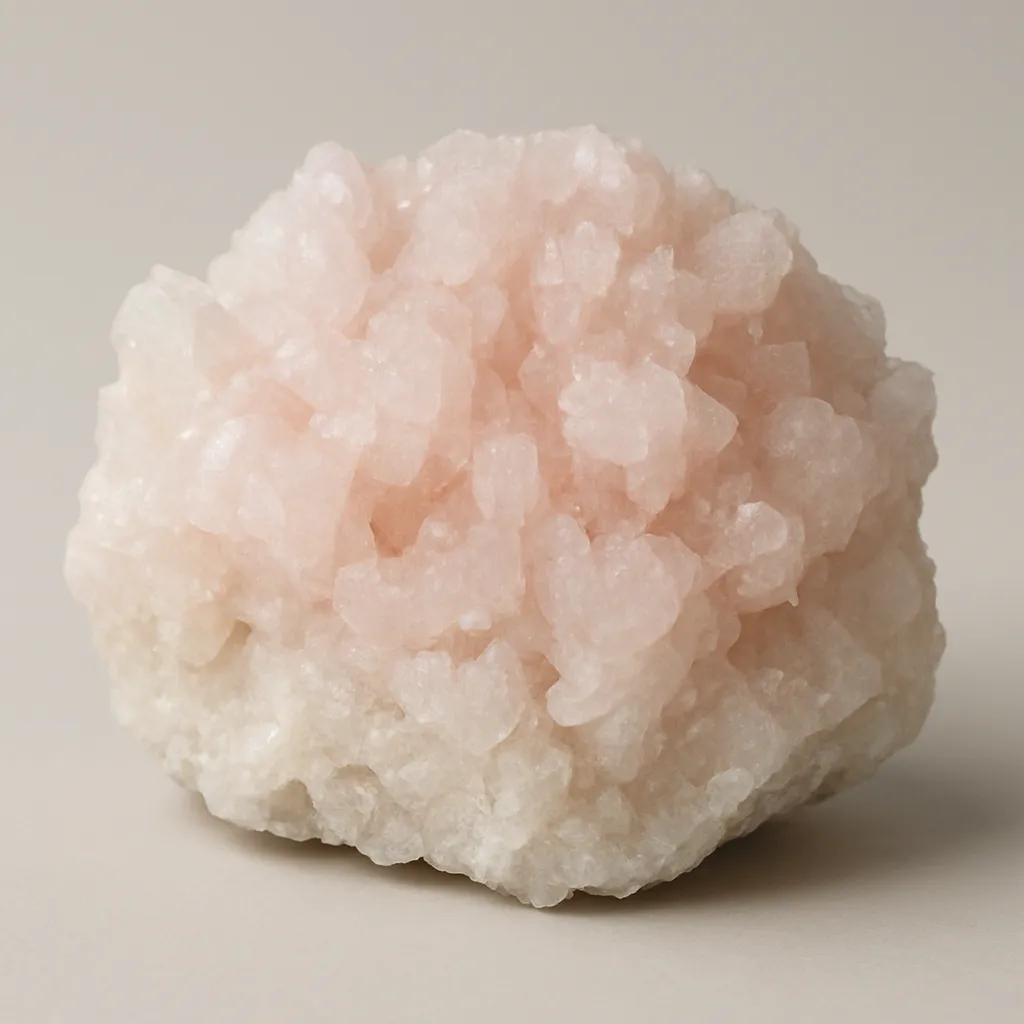
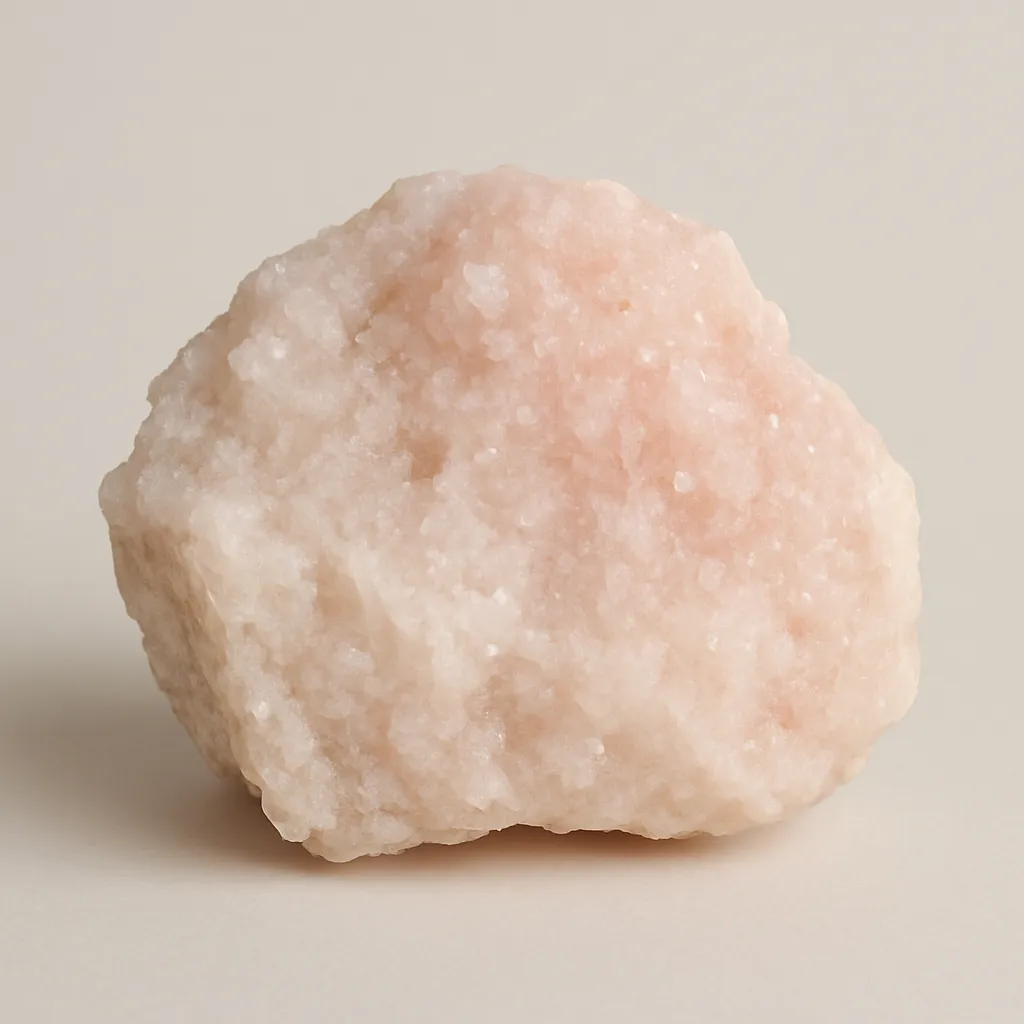
The specimen is a fine grained, uniform, white to pink rock with a sugary texture of interlocking crystals and no layering. How is this texture described?
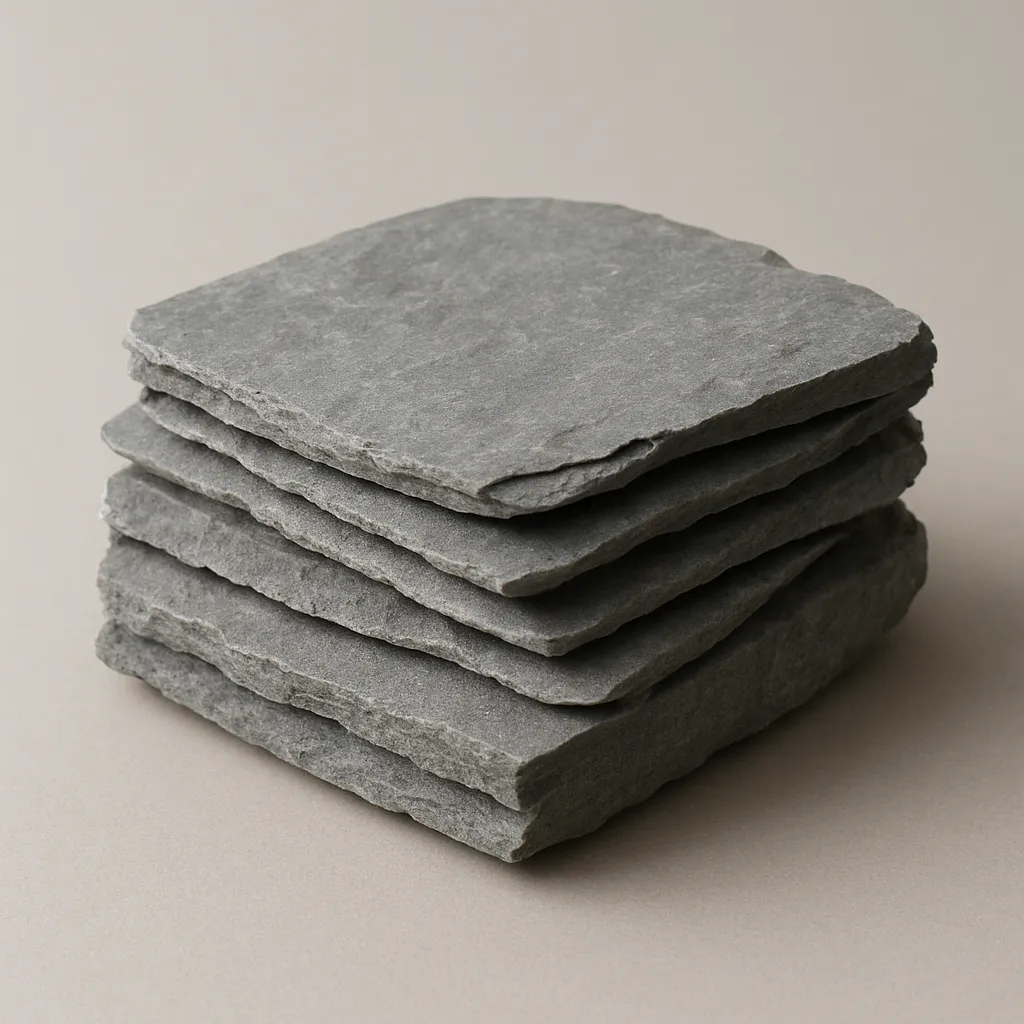
The specimen splits easily into thin, flat, dull sheets with a smooth surface, but no individual crystal is visible even with a hand lens. How is this texture described?
The specimen's surface has a wrinkled, silky sheen that shimmers as it is turned in the light. How is this texture described?
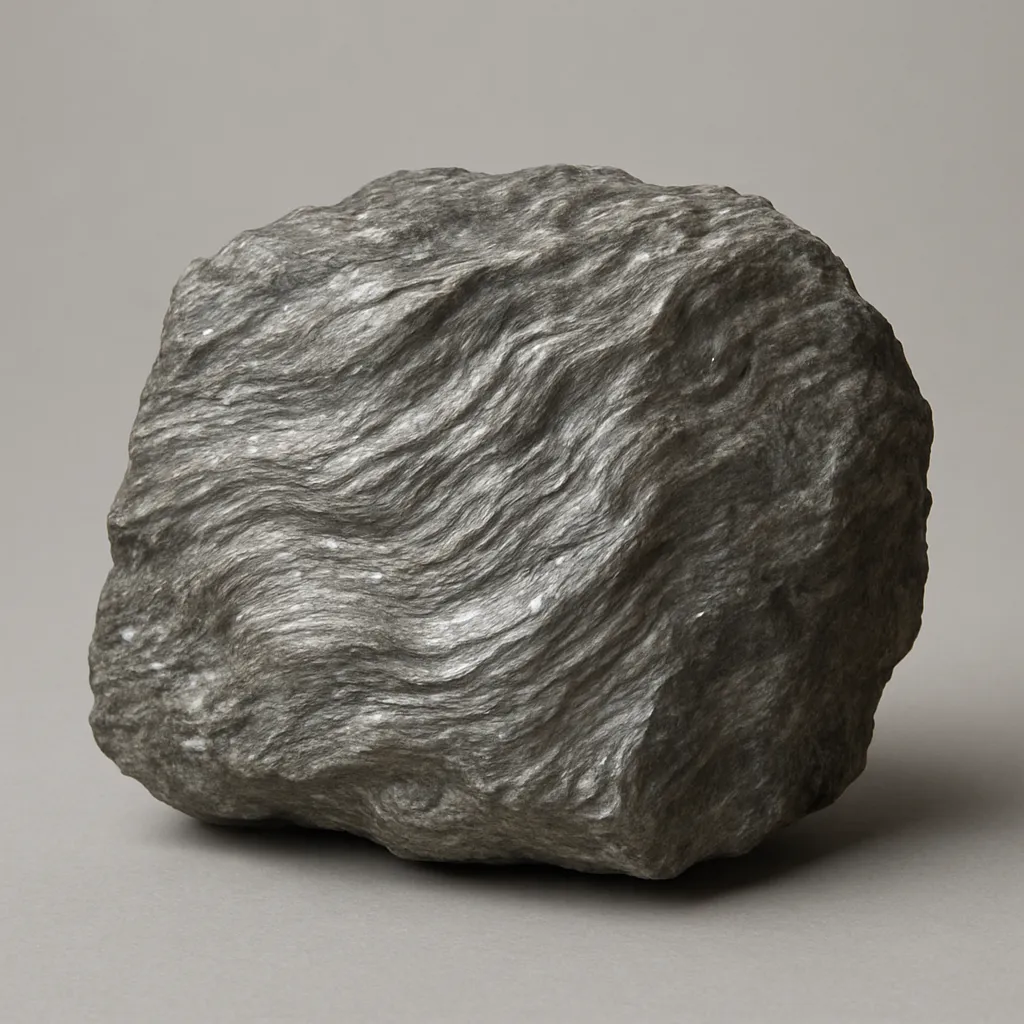
The specimen is coarse and granular, made of interlocking calcite crystals with no preferred orientation, and it fizzes in dilute acid. Why does this rock have no foliation?
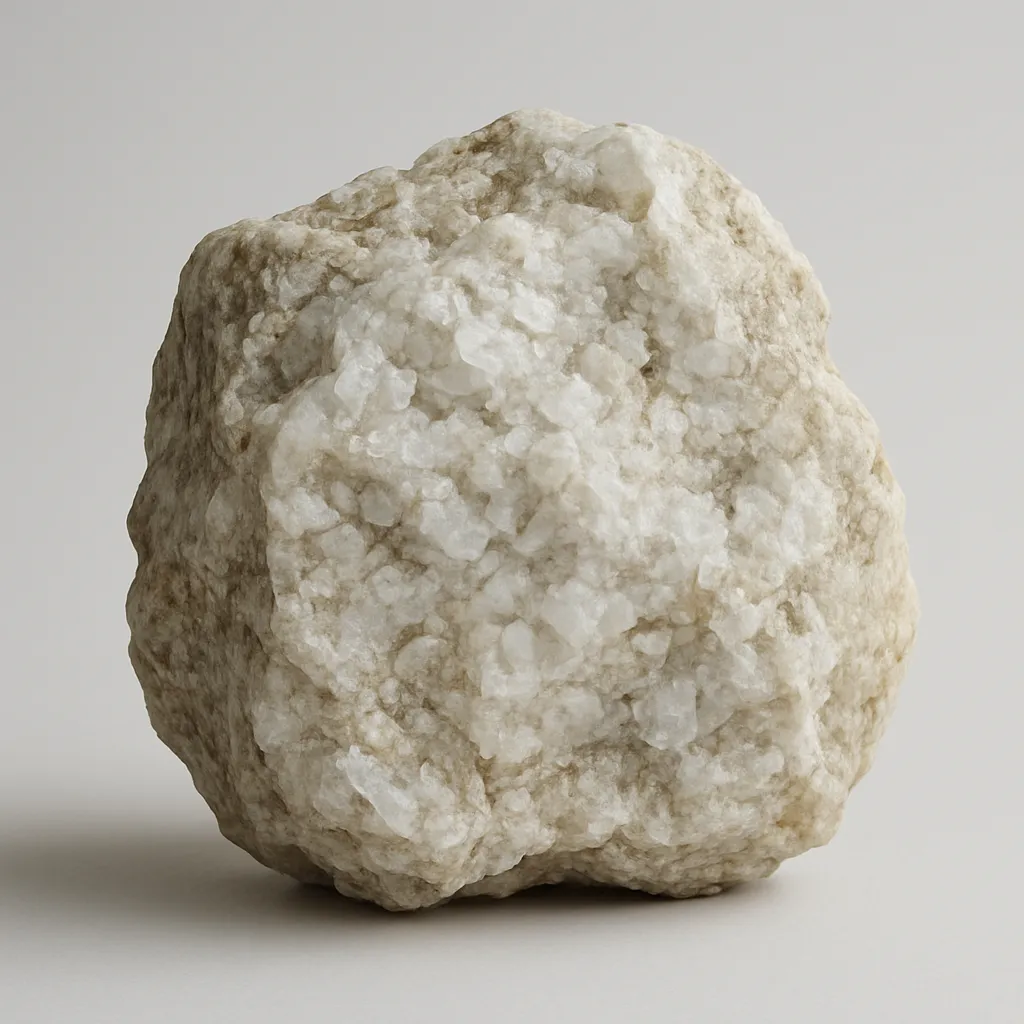
The specimen shows alternating light bands of quartz and feldspar and dark bands of mica and amphibole, all coarse grained. What process sorted these minerals into bands?
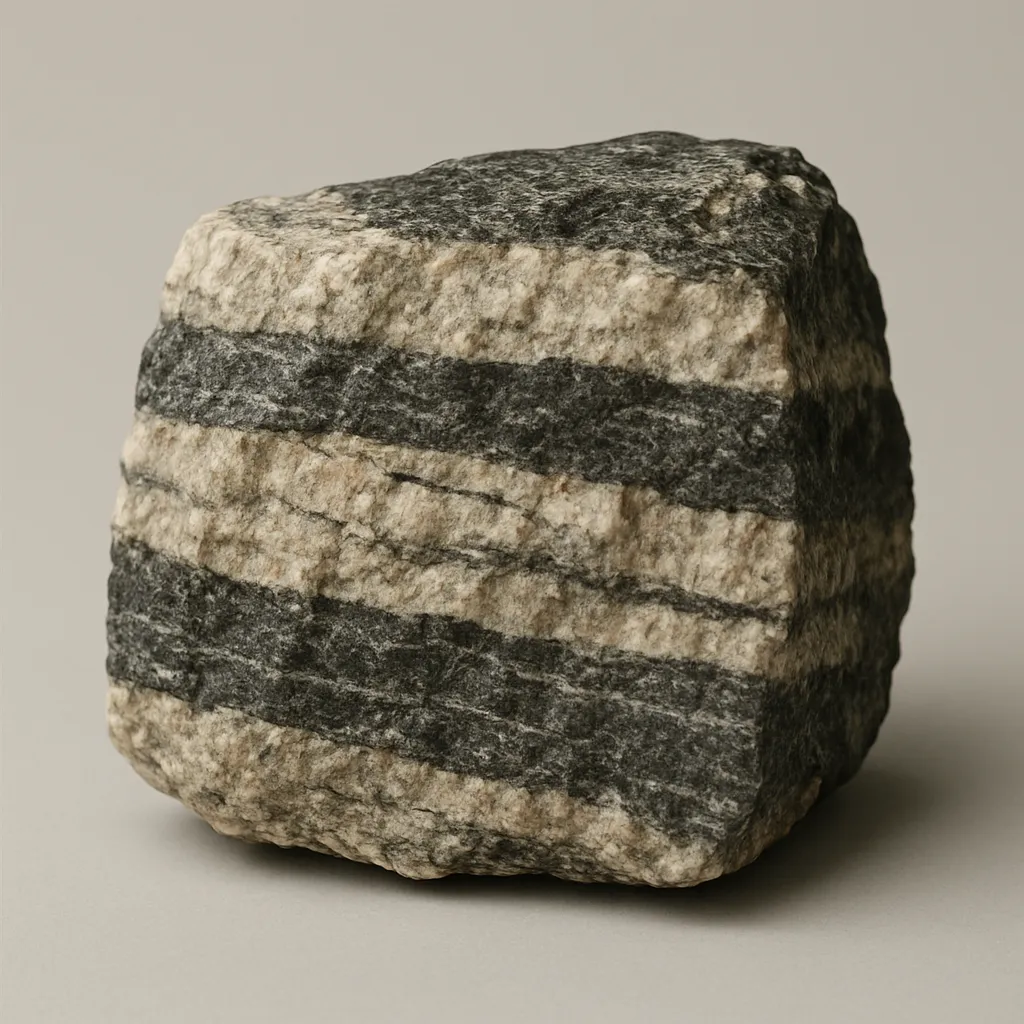
The specimen is a hard, dark, fine grained rock with no layering or banding, collected within a meter of an old igneous intrusion. How is this texture described?
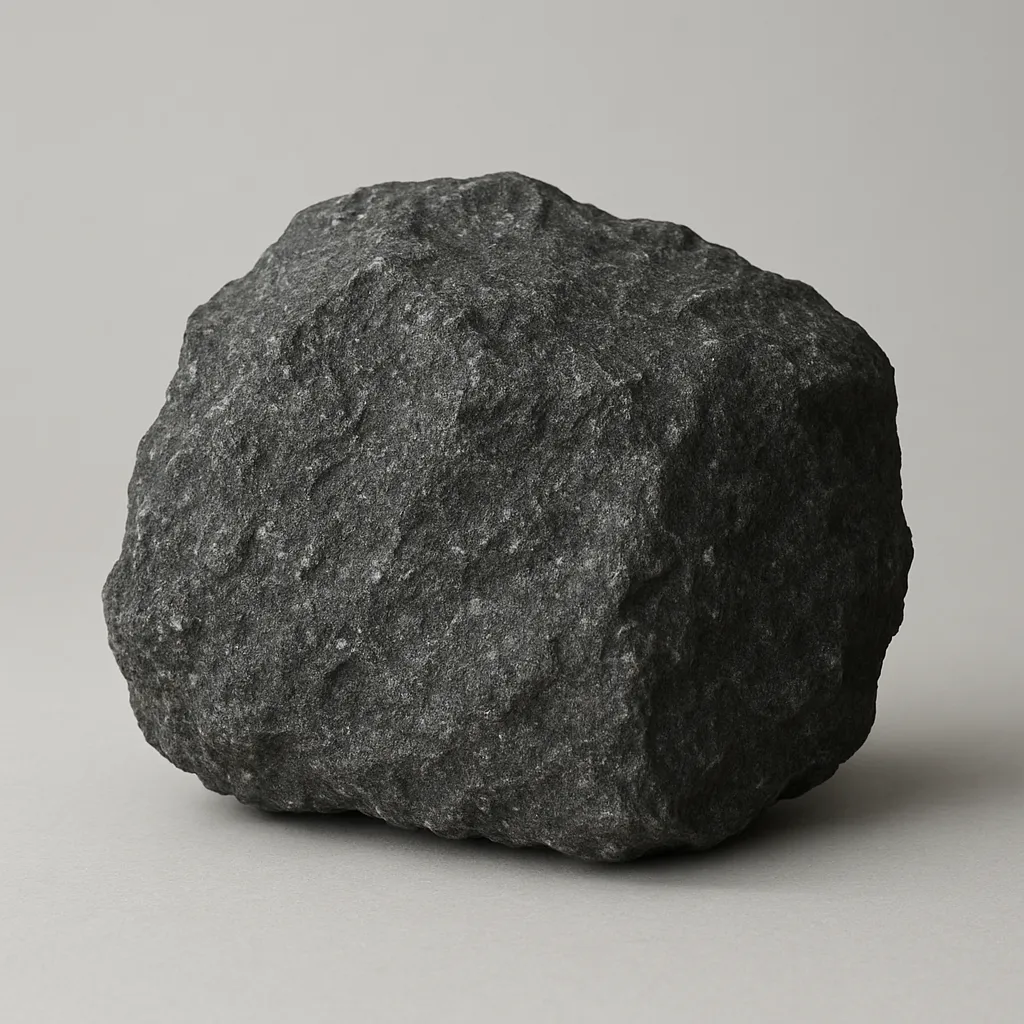
A bed of pure quartz sandstone is buried deep in a rising mountain belt and recrystallizes without melting. What does it become?
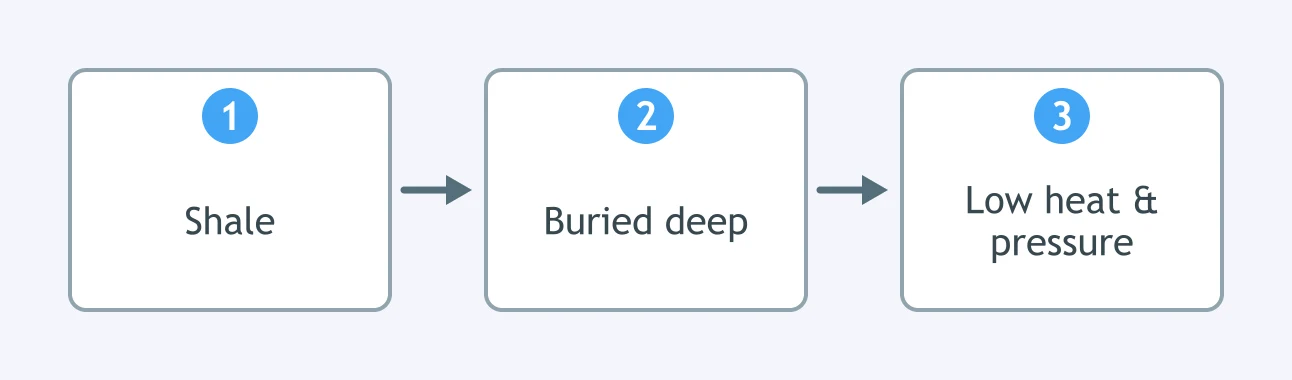
A shale bed is buried and squeezed under rising heat and pressure at low metamorphic grade. What does it become?
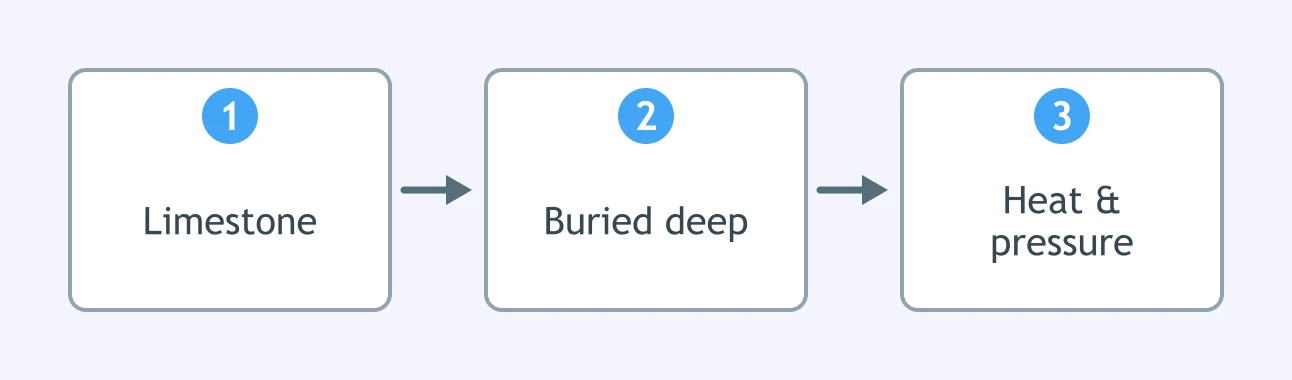
A bed of limestone is subjected to heat and pressure deep within a mountain belt without melting. What does it become?
A granite body deep in a continental collision zone is subjected to intense heat and strongly directed pressure. What does it become?

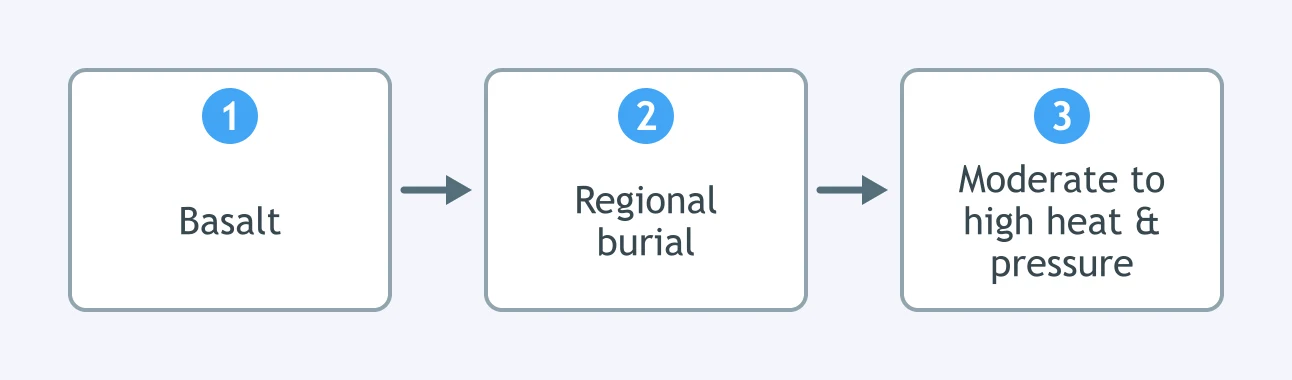
A basalt flow undergoes regional metamorphism at moderate to high grade within a mountain belt. What does it become?
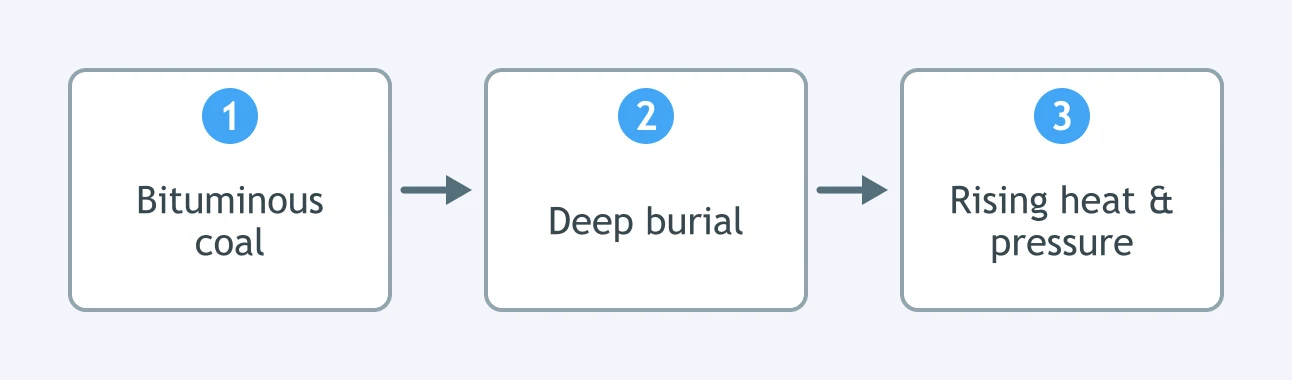
Bituminous coal is buried deeply in a mountain-building zone and subjected to rising heat and pressure. What does it become?
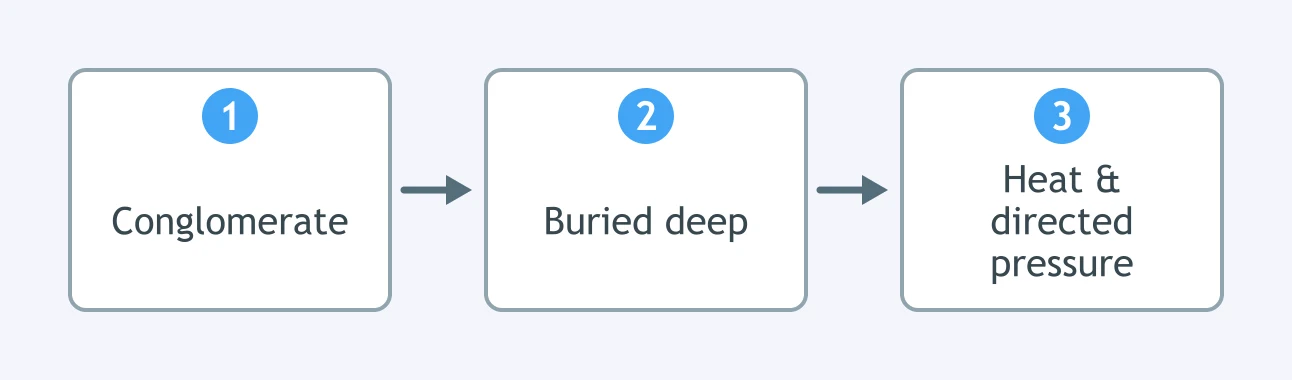
A conglomerate with rounded pebbles is subjected to heat and directed pressure, stretching its pebbles into elongated shapes. What does it become?
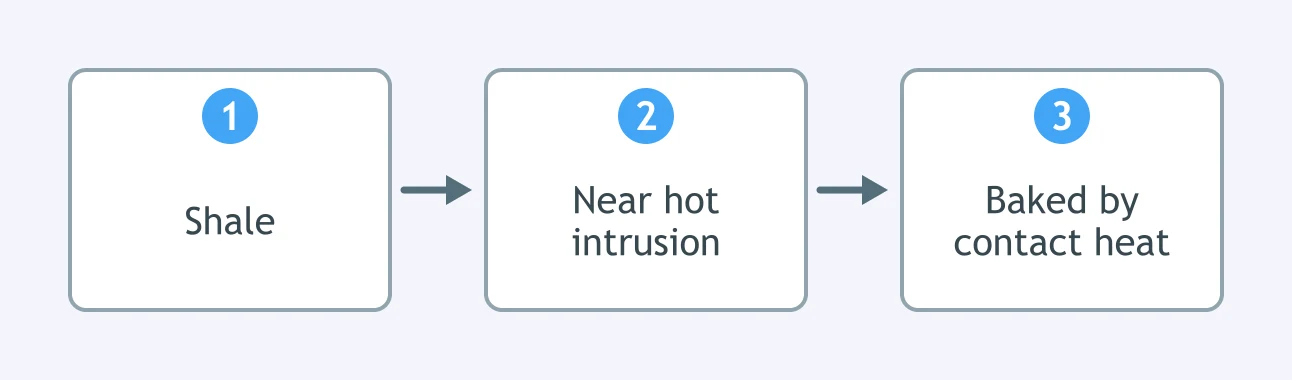
A shale layer next to a hot igneous intrusion is baked by contact heat alone, with little added pressure. What does it become?
A shale bed is traced from the edge of a mountain belt toward its core, where temperature and pressure rise steadily along the way. Which sequence of rocks is crossed?
A regional traverse crosses metamorphic index-mineral zones where temperature and pressure rise from the belt's edge toward its core. Which order of zones is crossed?
A traverse follows a basaltic sequence buried to increasing depth in a mountain belt, with metamorphic grade rising along the way. Which order of rocks is crossed?
A traverse moves away from a small igneous intrusion through its contact aureole toward unaltered rock. Which order of rocks is crossed?
A traverse follows basalt carried deeper into a subduction zone, where pressure rises faster than temperature. Which order of rocks is crossed?
A traverse follows shale buried to increasing depth beneath a mountain belt, where grade rises until rock begins to partially melt. Which order of rocks is crossed?
A granite body cuts limestone. Within a meter of the contact the limestone has coarse interlocking calcite crystals; a kilometer away it is unchanged. Which kind of metamorphism is shown?
A broad belt of schist and gneiss extends across thousands of square kilometers of an ancient mountain range, with no nearby igneous intrusion. Which kind of metamorphism produced it?
A basaltic dike cuts shale. Within centimeters of the dike the shale is baked into hard hornfels, while a few meters away it is unaltered. Which kind of metamorphism is shown?
Deep burial and directed tectonic pressure during a continental collision transform rock across an entire mountain belt. What texture do most of the resulting rocks show?
A narrow zone of altered rock surrounds a small igneous pluton and ends within a few hundred meters of it. Why does the altered zone stay so narrow?
The specimen is coarse grained, carries visible mica flakes all lying parallel, and splits readily along those flakes. Which rock is it?
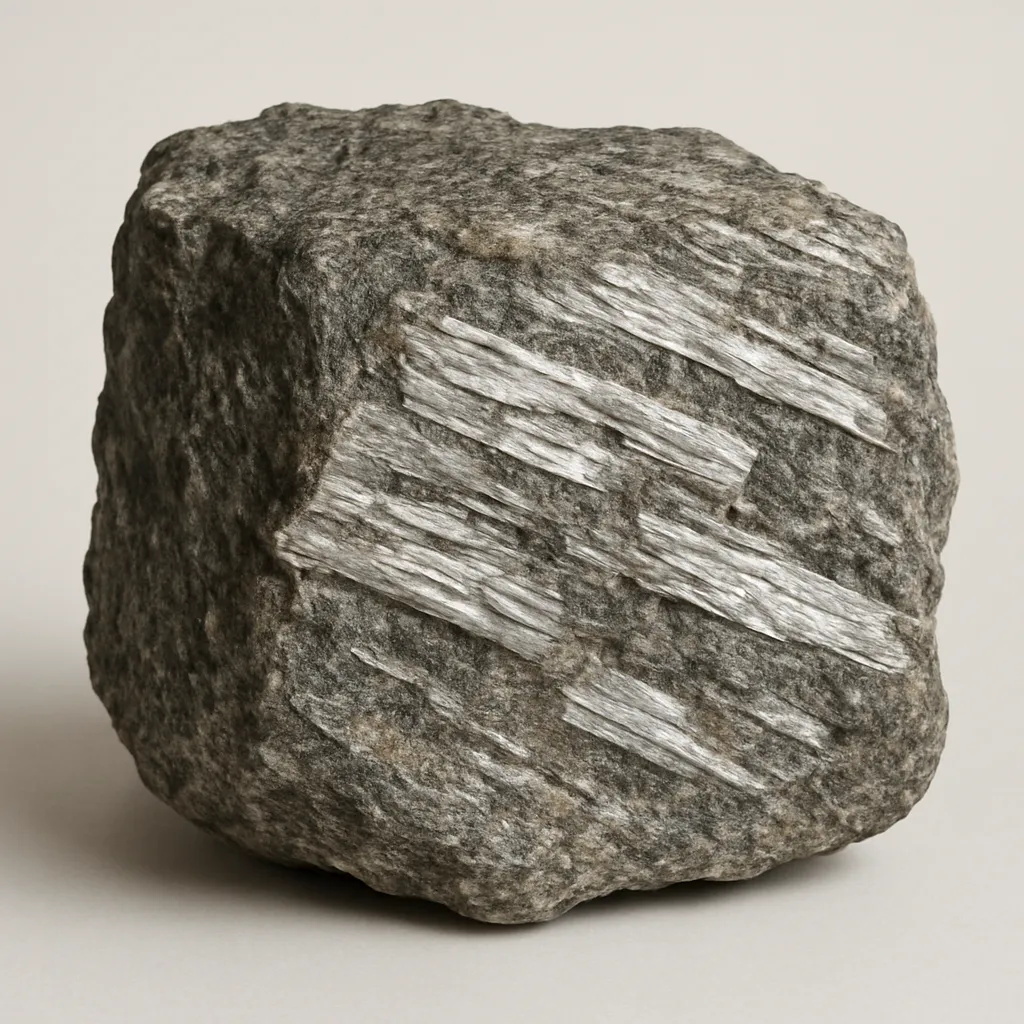
The specimen is a fine grained, dull gray rock that splits into thin flat sheets with a smooth surface, and no individual crystal is visible. Which rock is it?
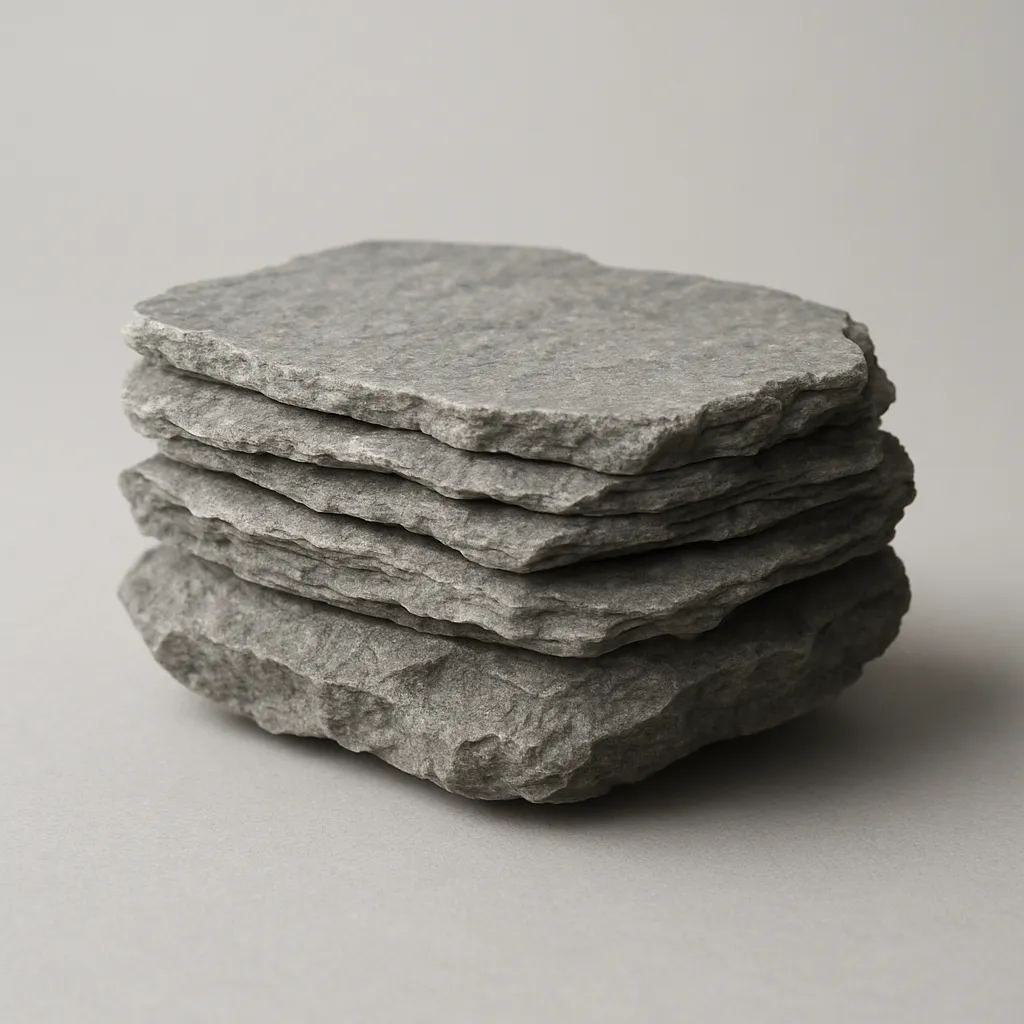
The specimen shows coarse alternating bands of light and dark minerals, banded but not splitting into sheets like a slate or schist. Which rock is it?
The specimen is white to pink, granular, made of interlocking calcite crystals with a sugary texture, and fizzes with dilute acid. Which rock is it?
Crack the passcode before the zombies get in.
Answer, then swat bugs for bonus points.
Race through questions at your own speed.
Same question on every screen. Fastest wins.

Pick a tile, answer, hit bonuses and steals.
40 questions