Loading
by BlastRoom
Practice identifying Earth's internal layers and the seismic evidence for them.
#earth_space_science
40 questions
One question set, multiple game modes. Tap any game to see it in action. Not sure which to pick?
Answer to place stones and capture territory.
Outrun the snow together.
Earn blasts, then hunt the other team.
Answer to earn energy, then climb.

The class blasts through walls together.
Bid on mystery lots. Most money wins.
Sell tours. Nice, standard, or a total scam.

Answer, restock, and serve the rush.
More correct answers pulls the rope your way.
Answer, then shoot down the alien wave.
Answer, then tap to leap the frozen ridge.
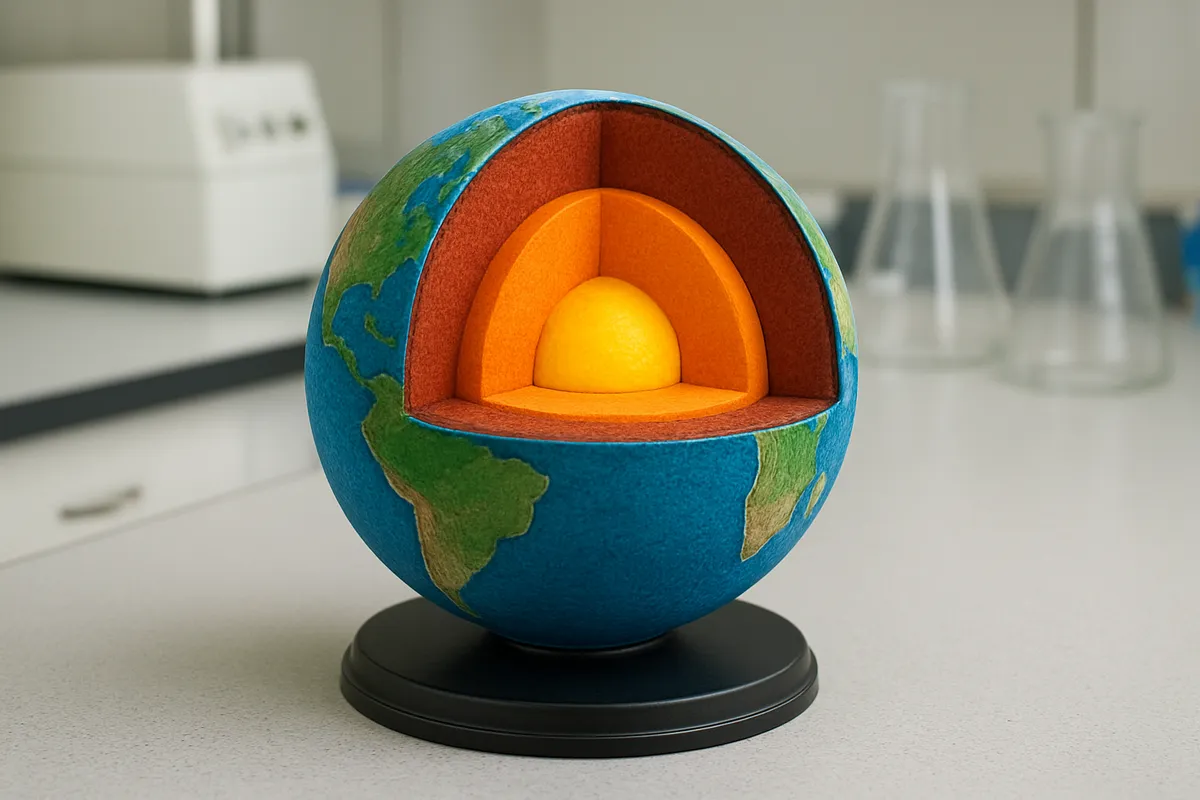
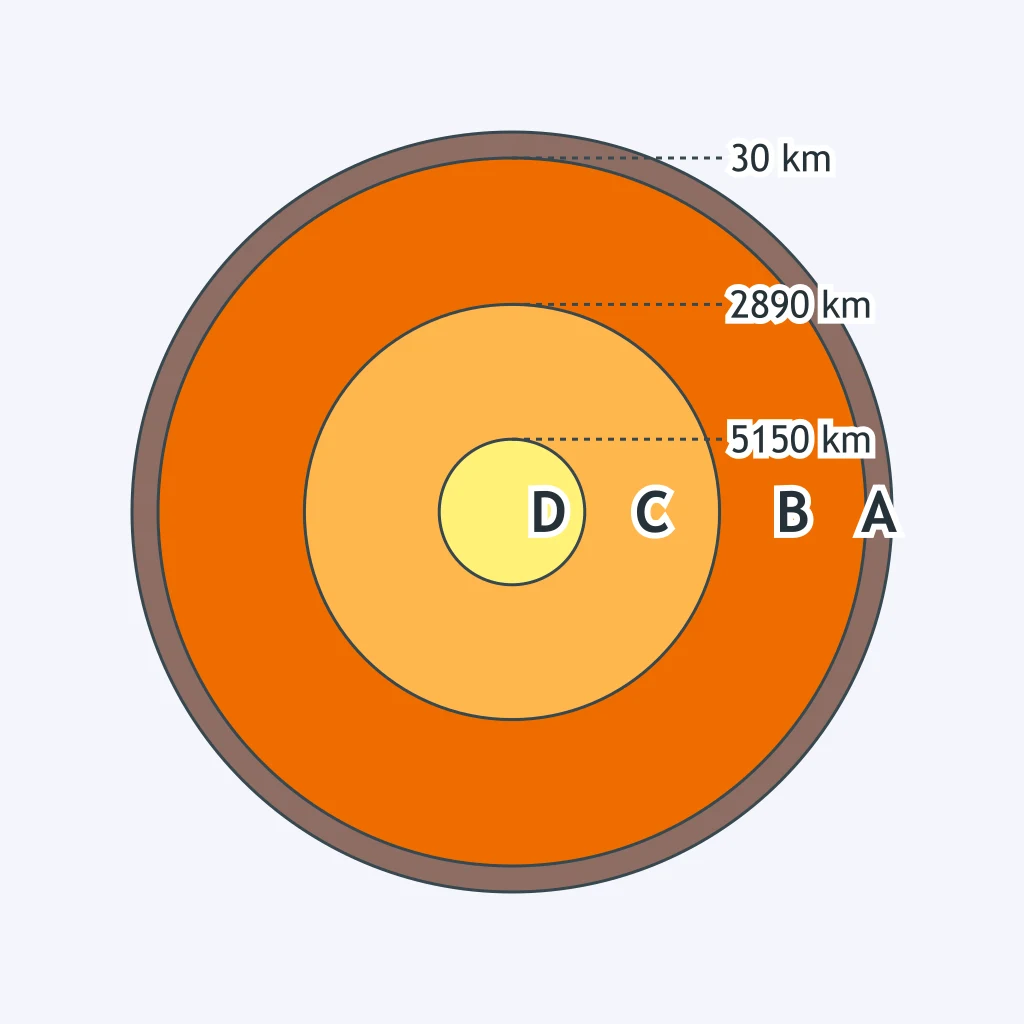
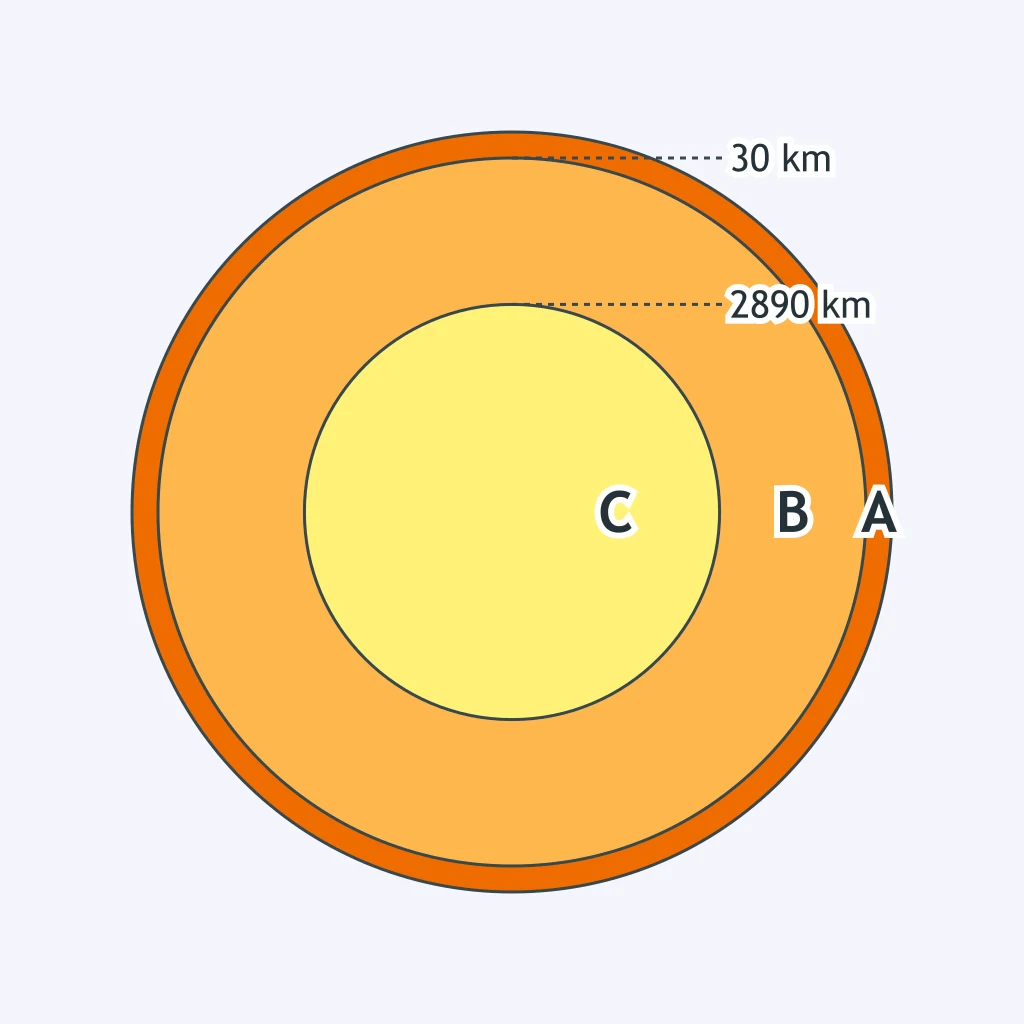
In the cross section, letter A marks the outer brittle shell from the surface to only a few tens of kilometers deep. Which layer is A?
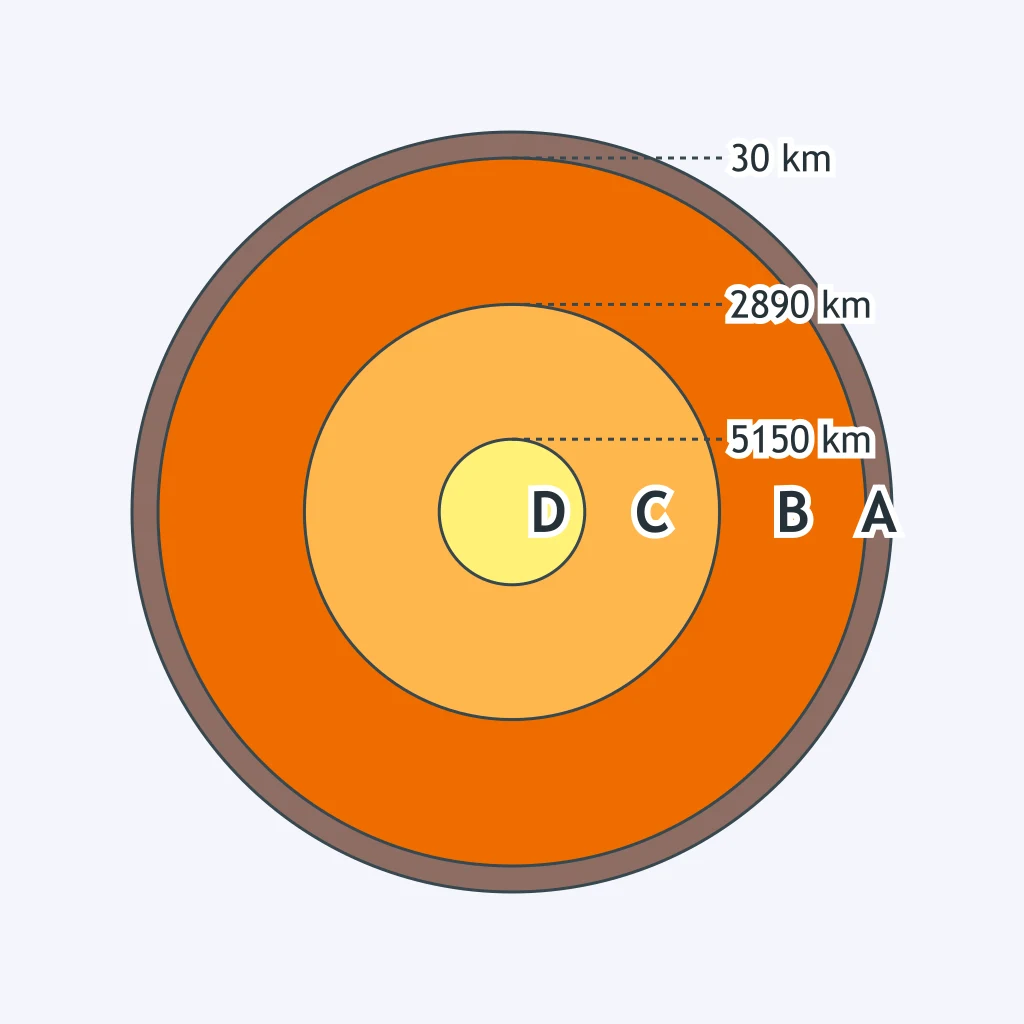
Letter B is the thick rocky layer below the crust and above the core, extending to about 2900 kilometers depth. Which layer is B?
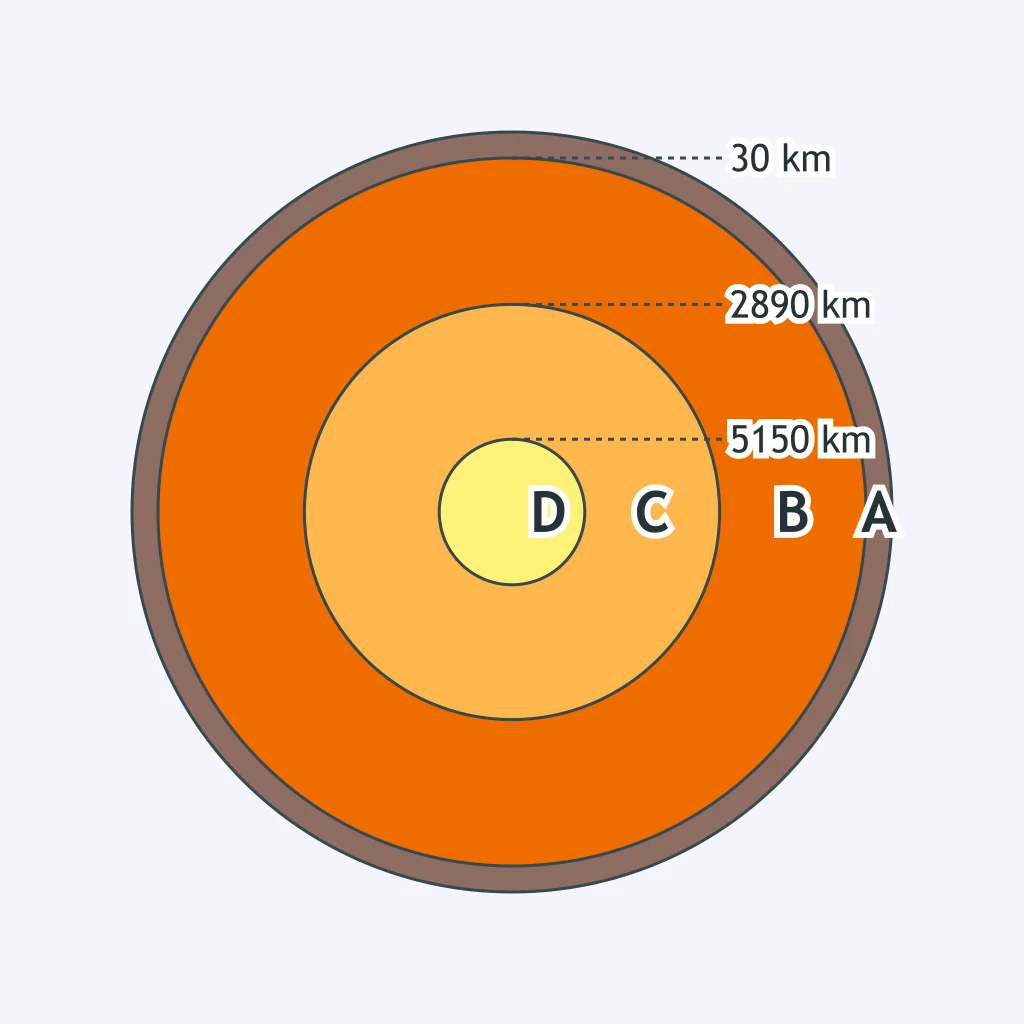
Letter C lies from about 2900 to 5150 kilometers depth and is liquid, so S waves do not pass through it. Which layer is C?
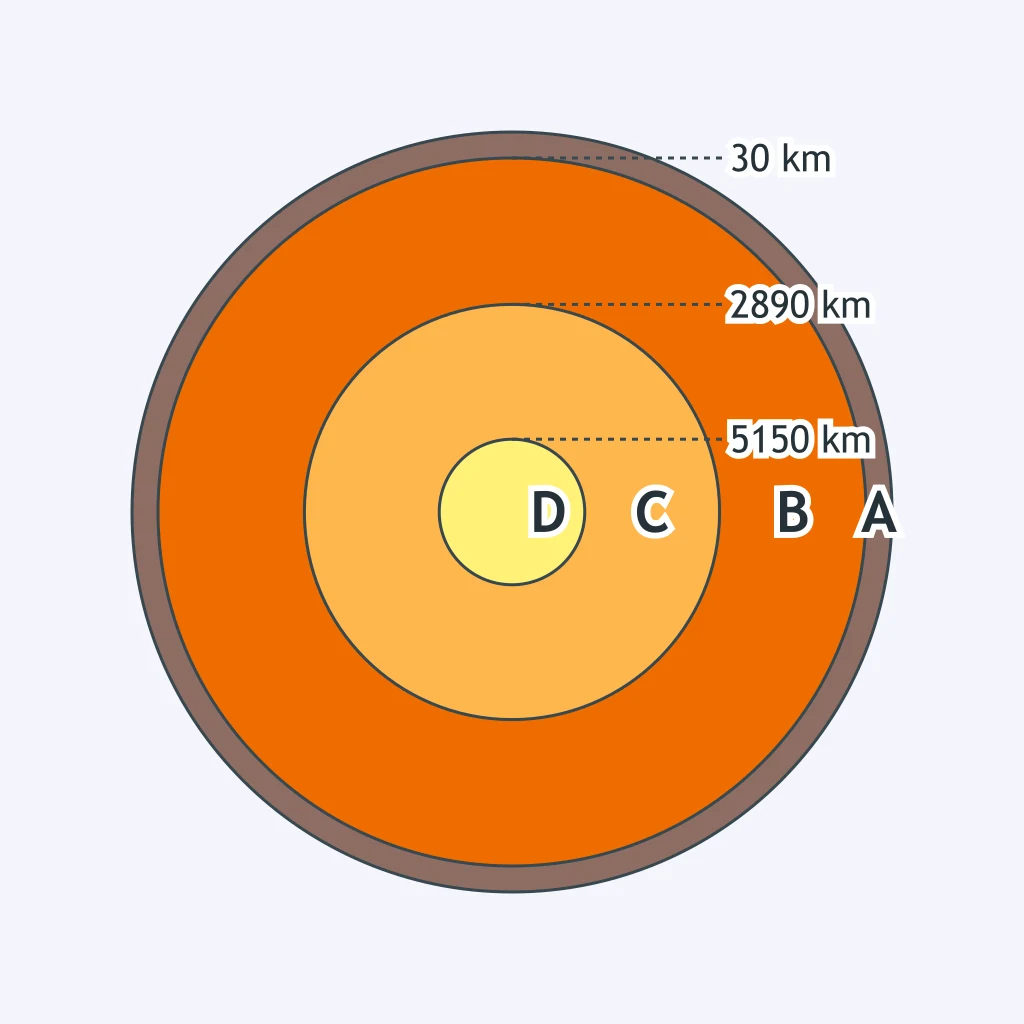
Letter D marks the central solid metal layer below about 5150 kilometers depth. Which layer is D?
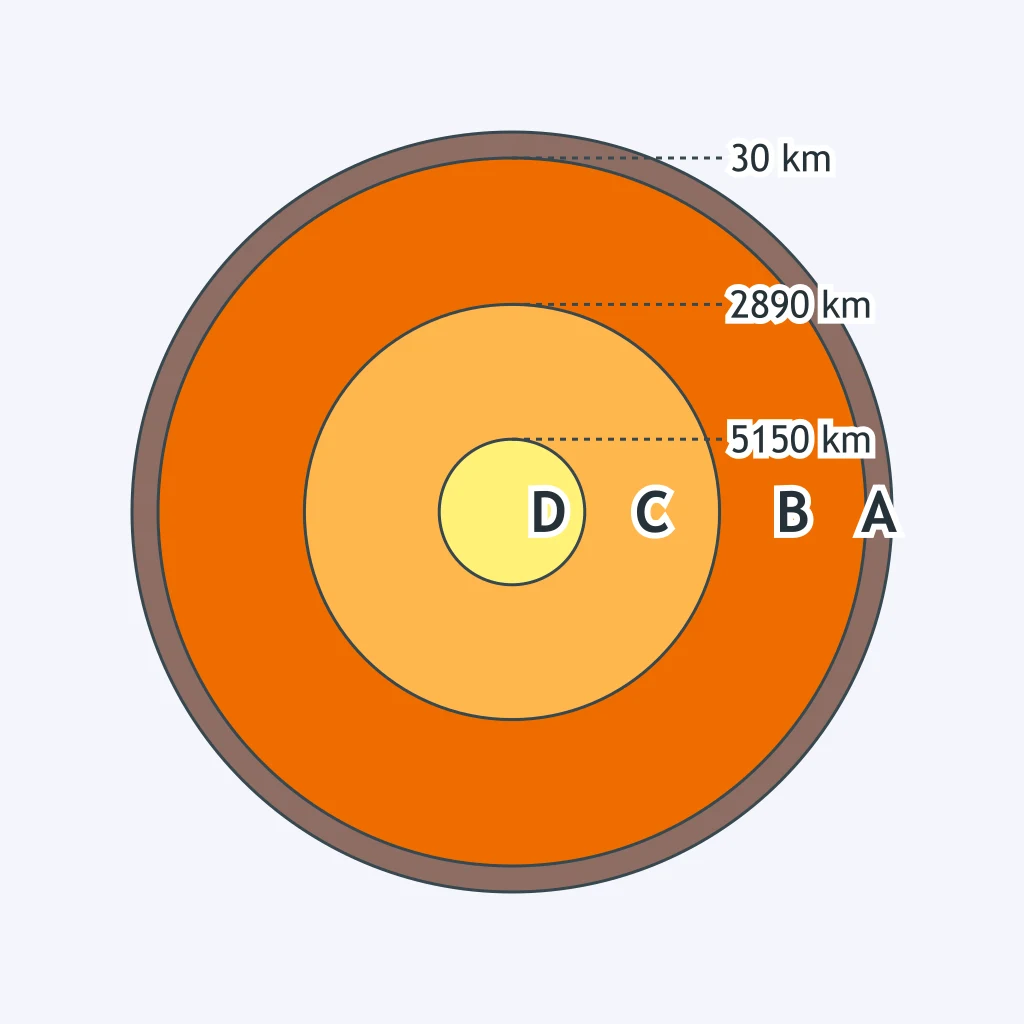
On the section, letter A is the only layer that includes both ocean-floor rock and continental bedrock. Which layer is A?
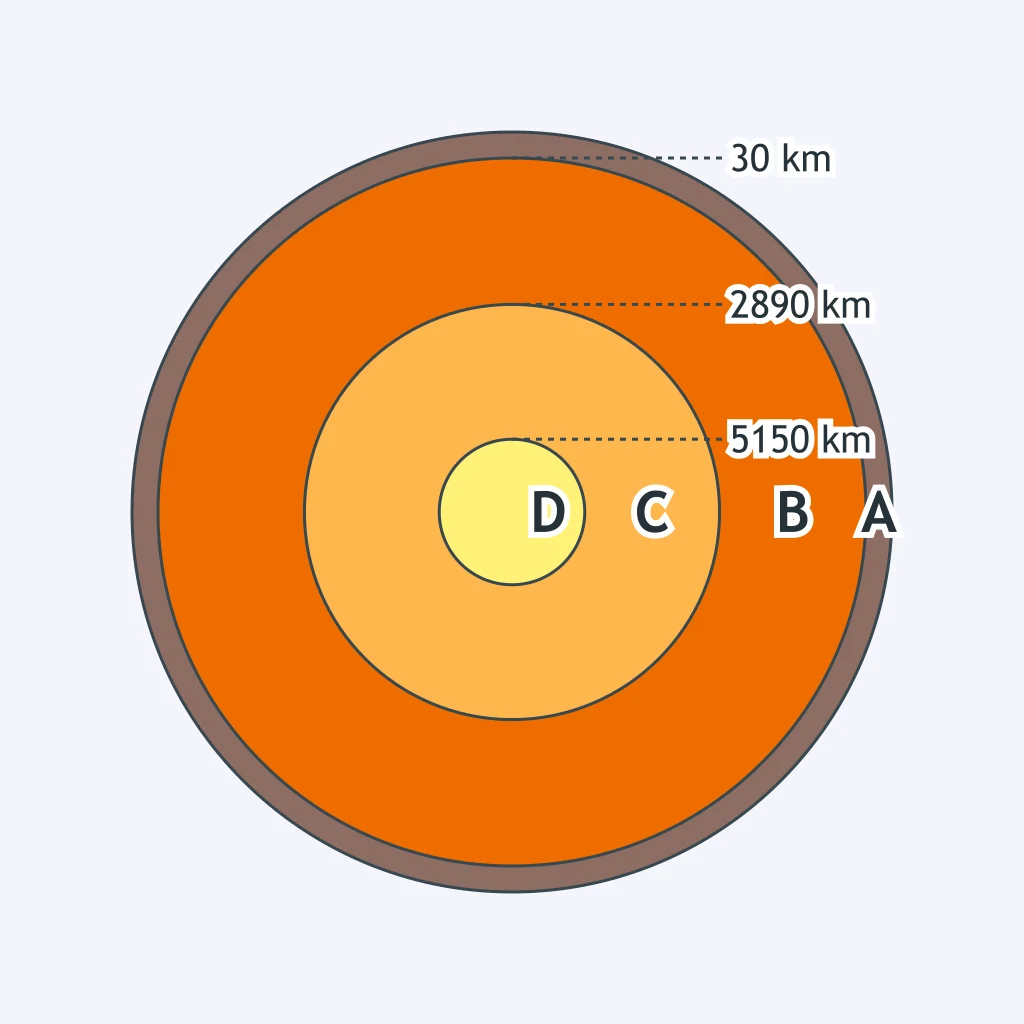
In a physical-layer model, letter A includes the crust plus the rigid uppermost mantle broken into plates. Which layer is A?
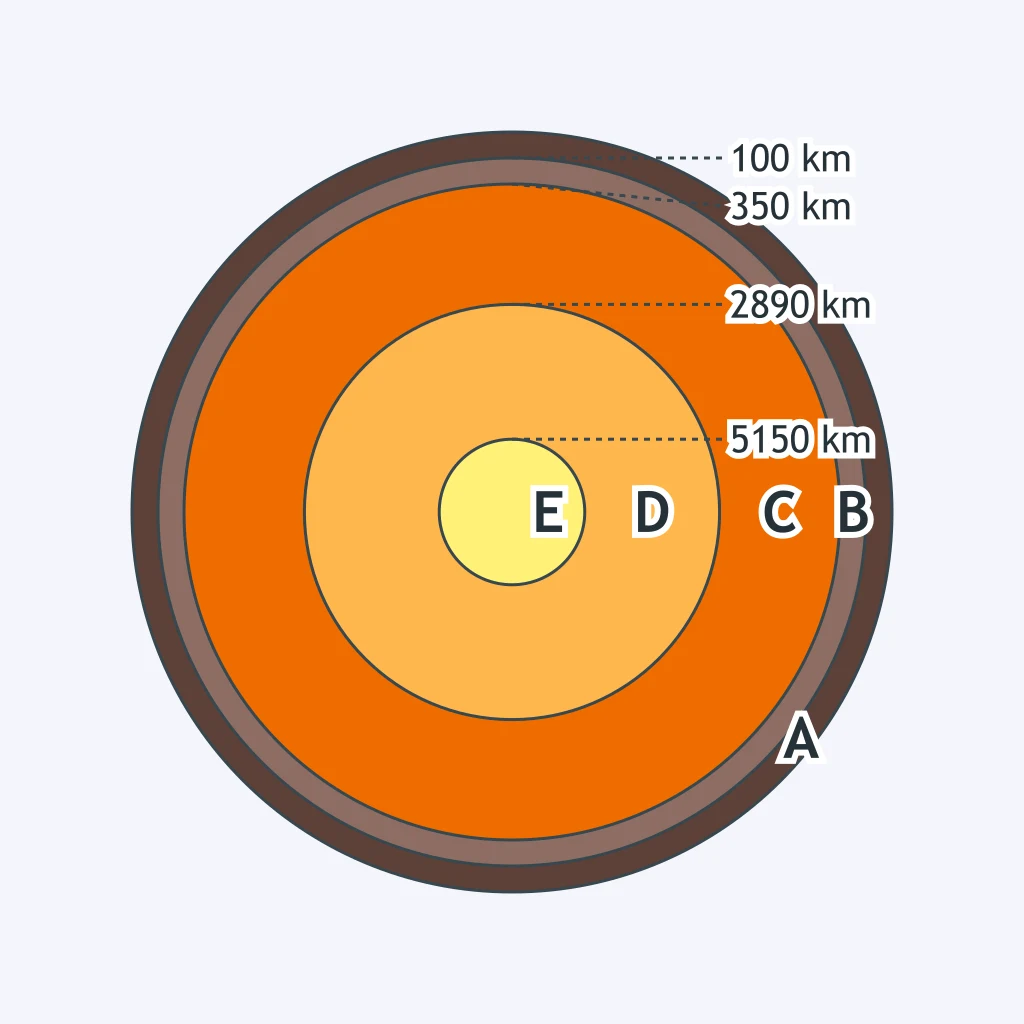
Letter B is weak upper-mantle rock beneath plates that can flow slowly over geologic time. Which physical layer is B?
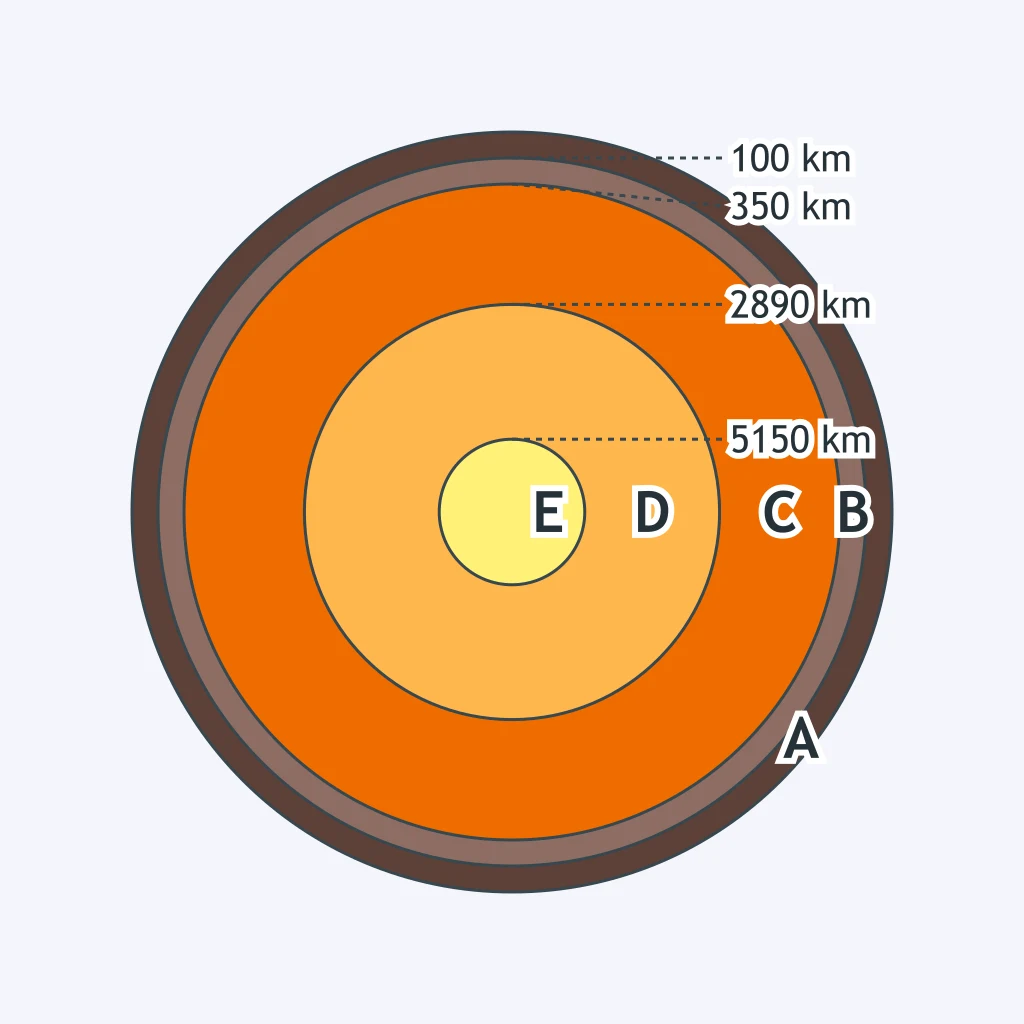
Letter C is the stronger mantle below the asthenosphere and above the outer core. Which physical layer is C?
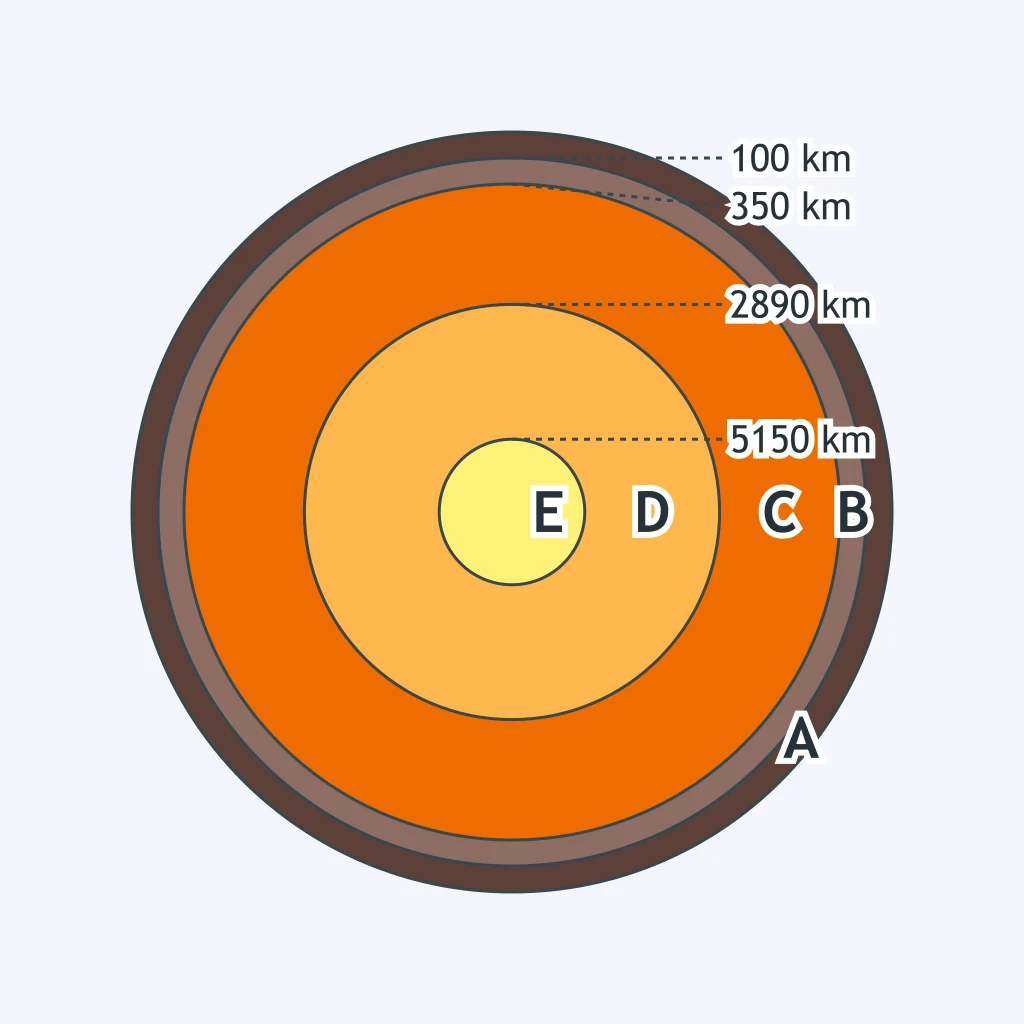
Letter B is made mostly of solid silicate rock and occupies most of Earth's volume. Which compositional layer is B?
Letter C begins near 2900 kilometers depth and is mostly iron and nickel rather than silicate rock. Which compositional layer is C?
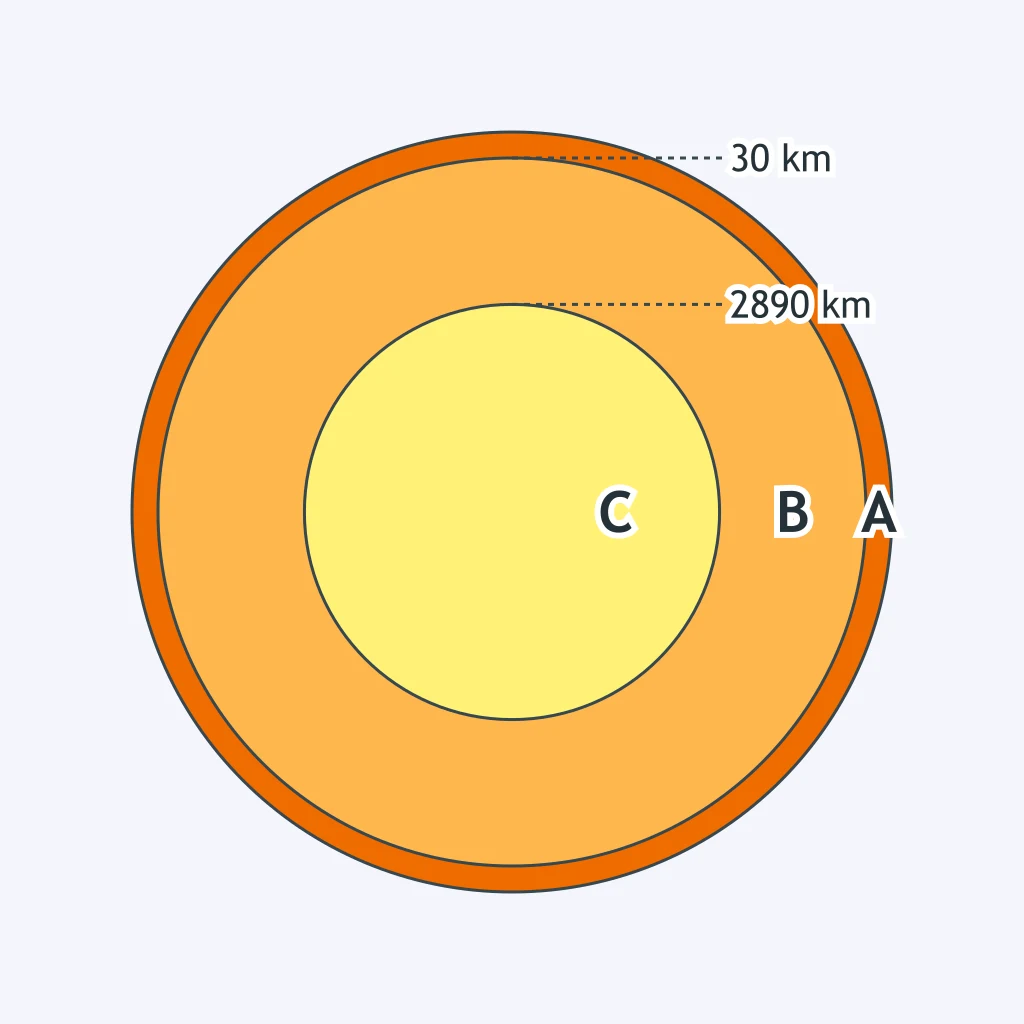
A compositional model divides Earth's interior into crust, mantle, and core. Which of these layers does the physical model split into a liquid layer and a solid layer?
The figure groups layers by whether rock is rigid, weak, liquid, or solid. What kind of Earth-interior classification is being used?
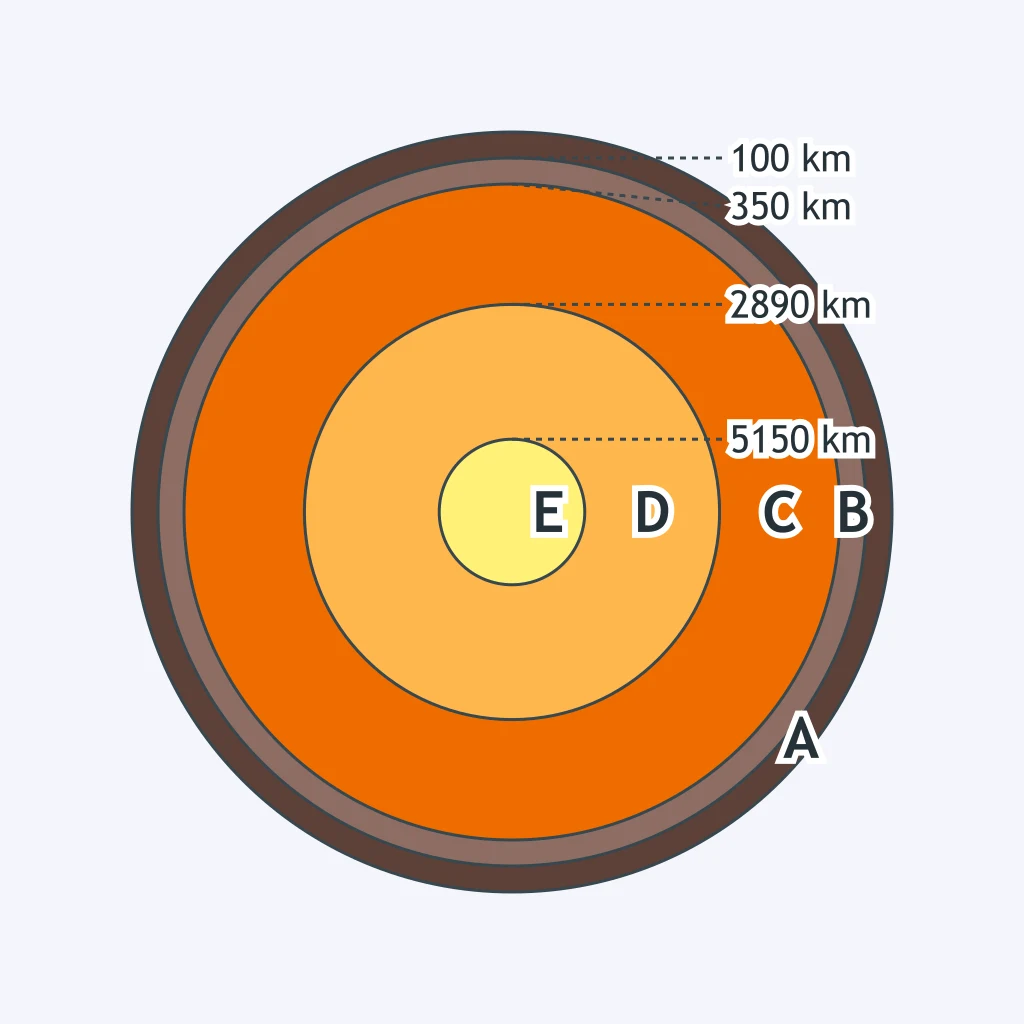
A tectonic plate contains continental crust and the rigid mantle directly beneath it. In the physical-layer model, what is the plate part of?
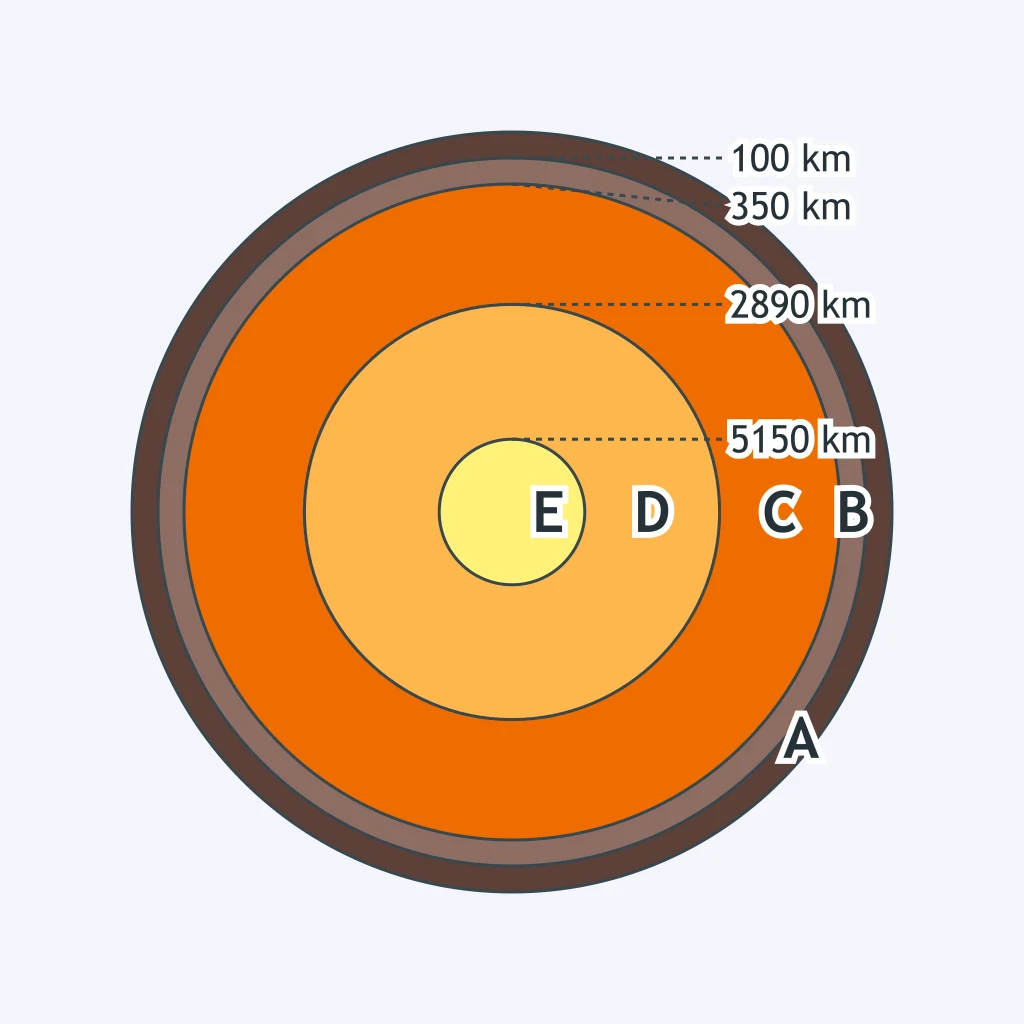
Hot upper-mantle rock is solid overall but deforms plastically under long-lasting stress. What physical layer does that describe?
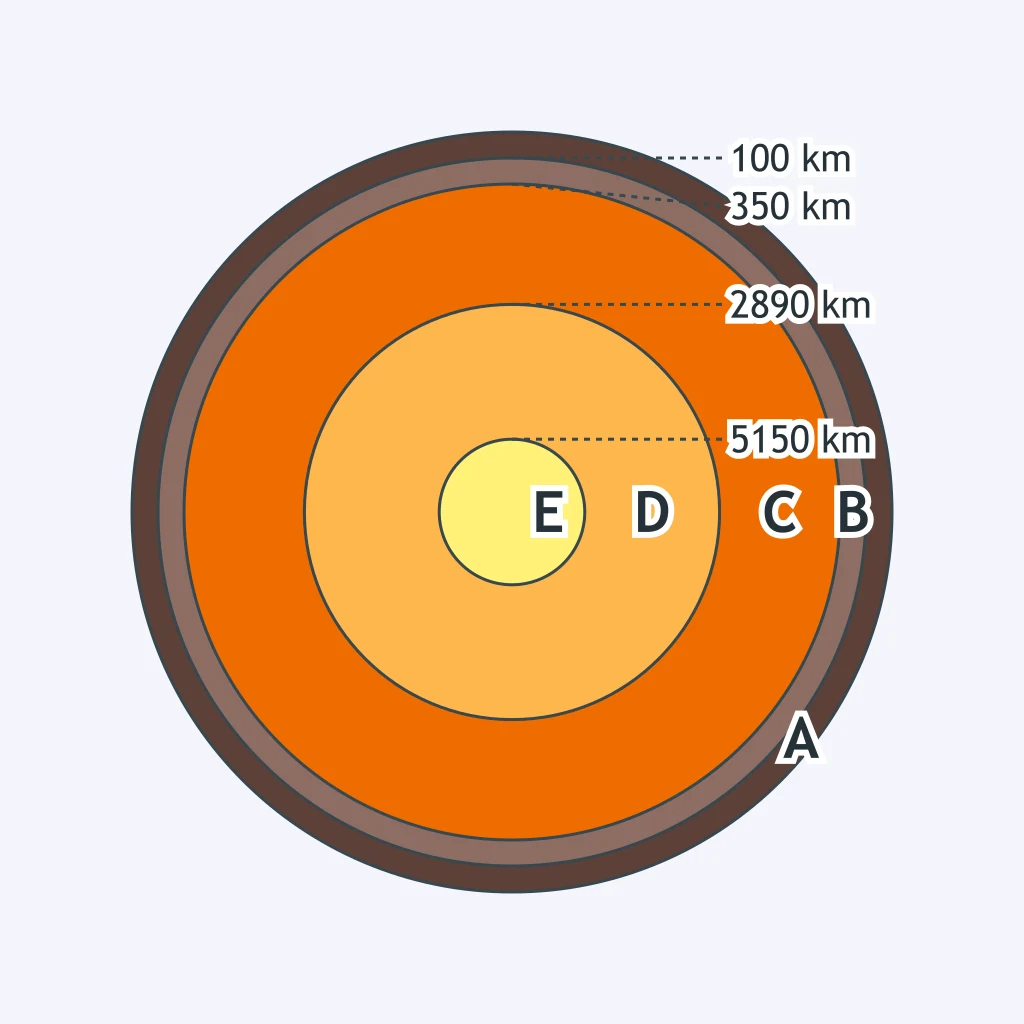
A model divides Earth's interior by what each layer is made of, not by how rigid or fluid it is. Which list of layers does that model use?
The same mantle material can be split into lithosphere, asthenosphere, and mesosphere. Why are these separate physical layers?
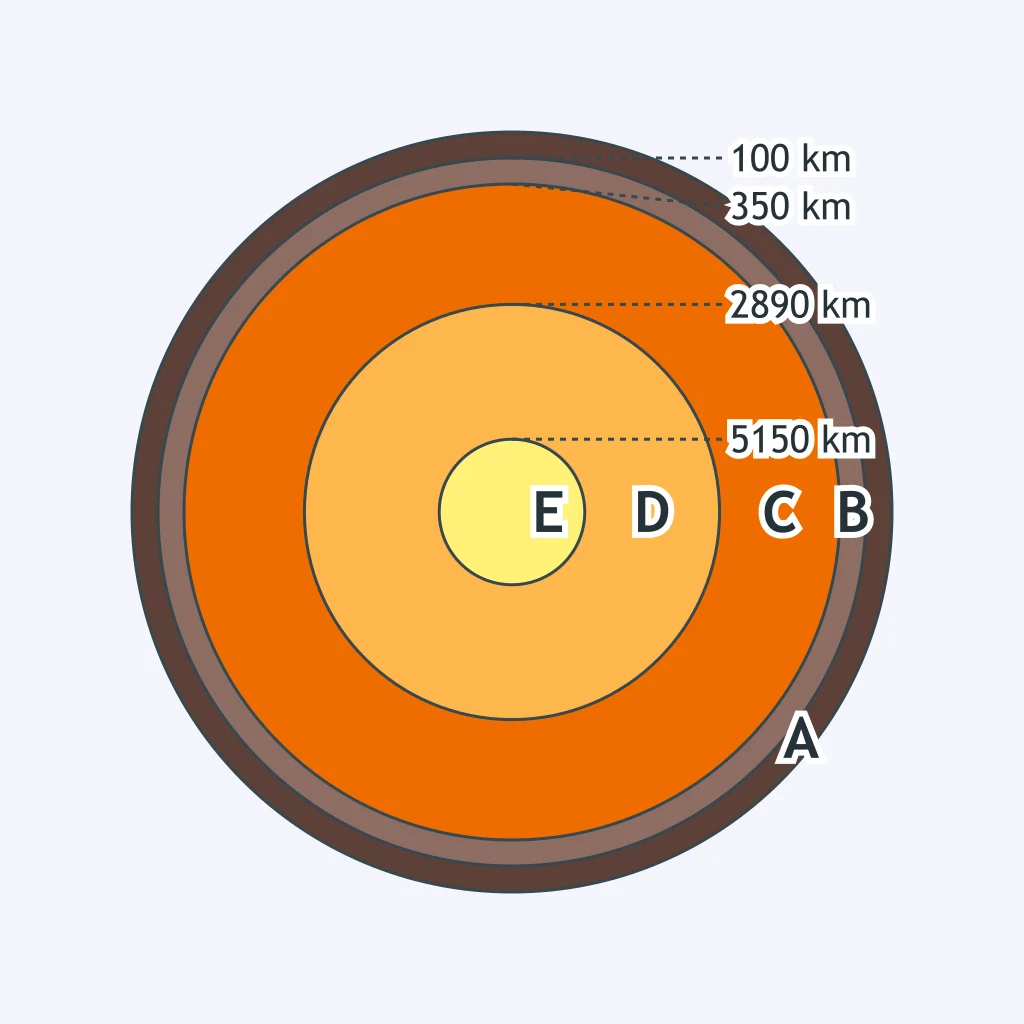
A model separates the core into a liquid shell and a solid center. What physical property is being used?
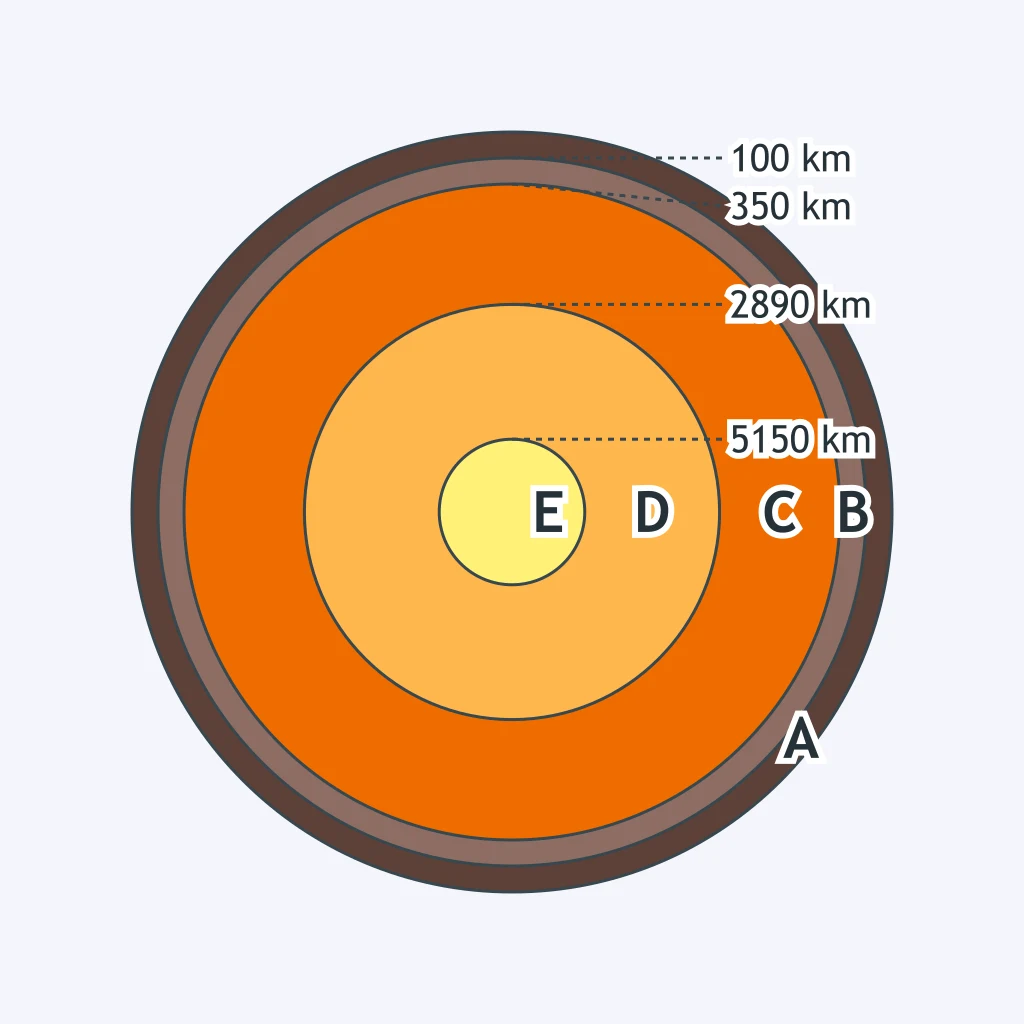
At a mid-ocean ridge, new hot plate material is part of the rigid plate after it cools. In physical-layer terms, it joins the ___.
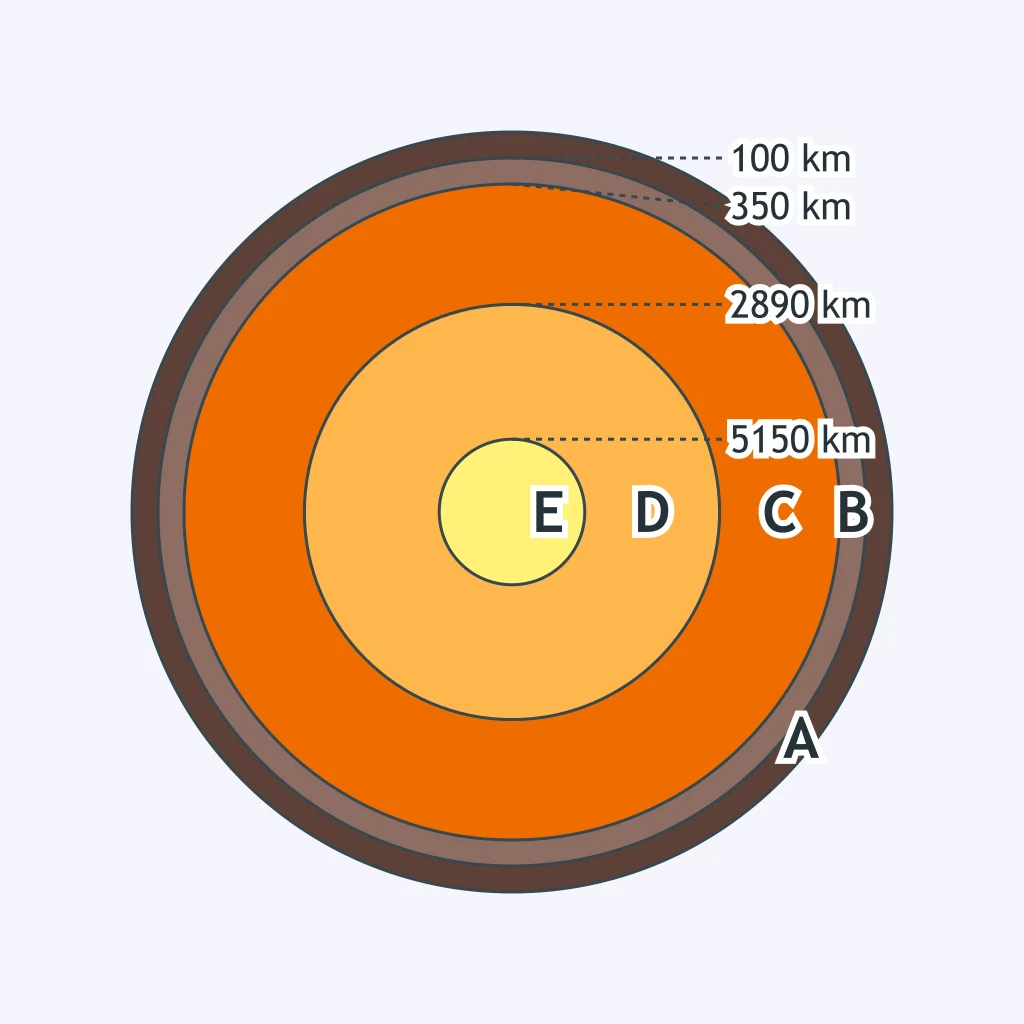
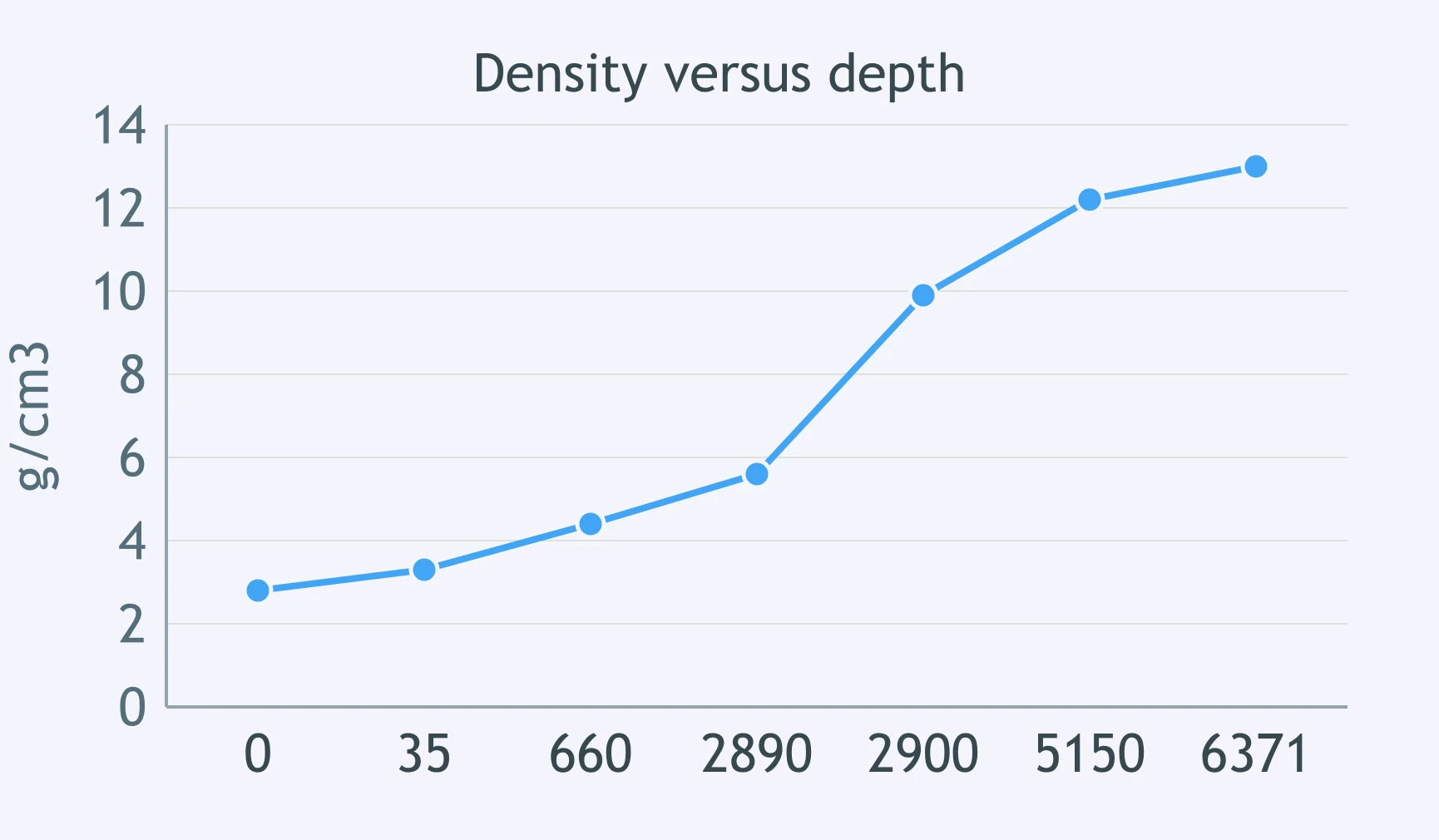
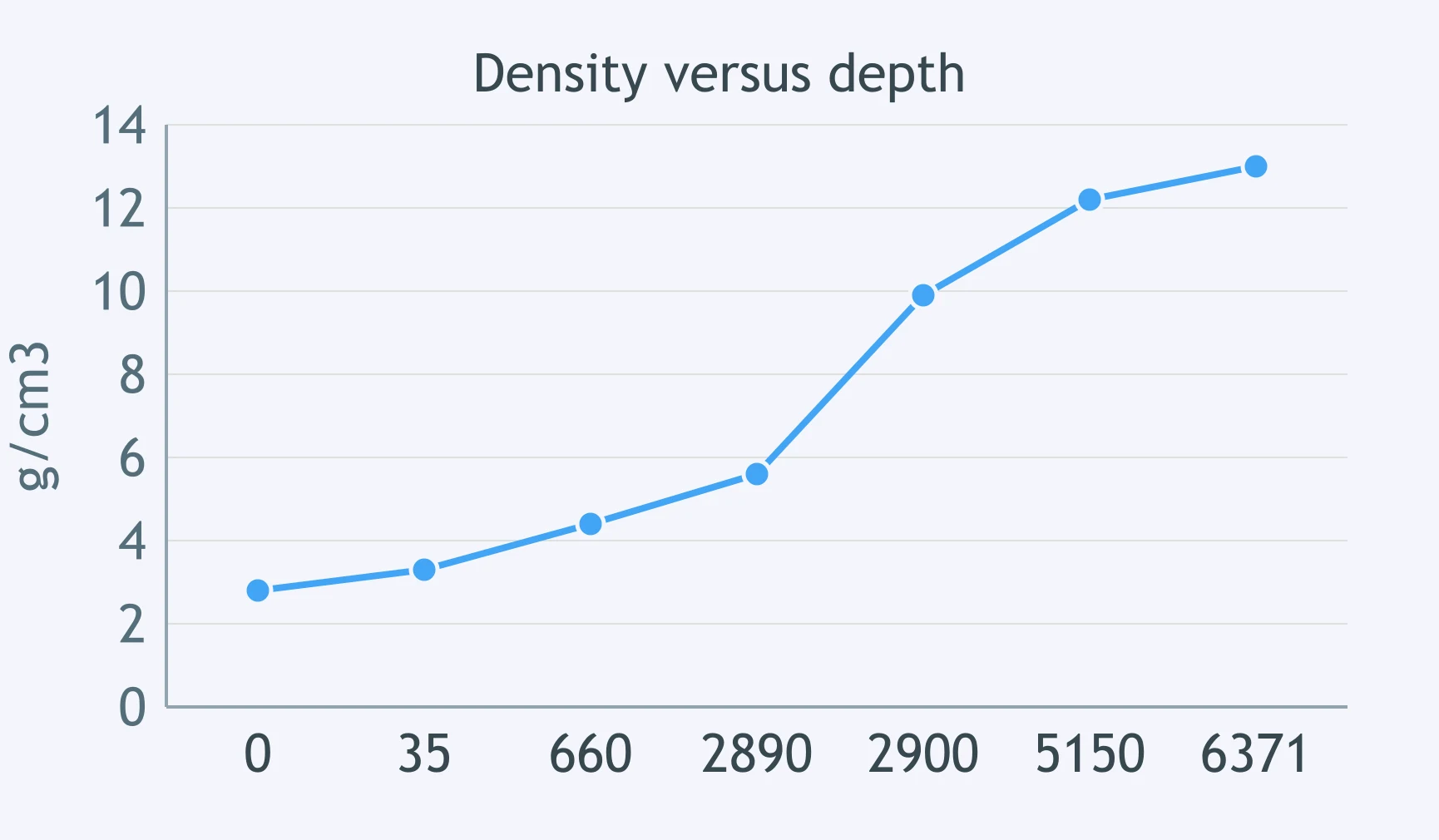
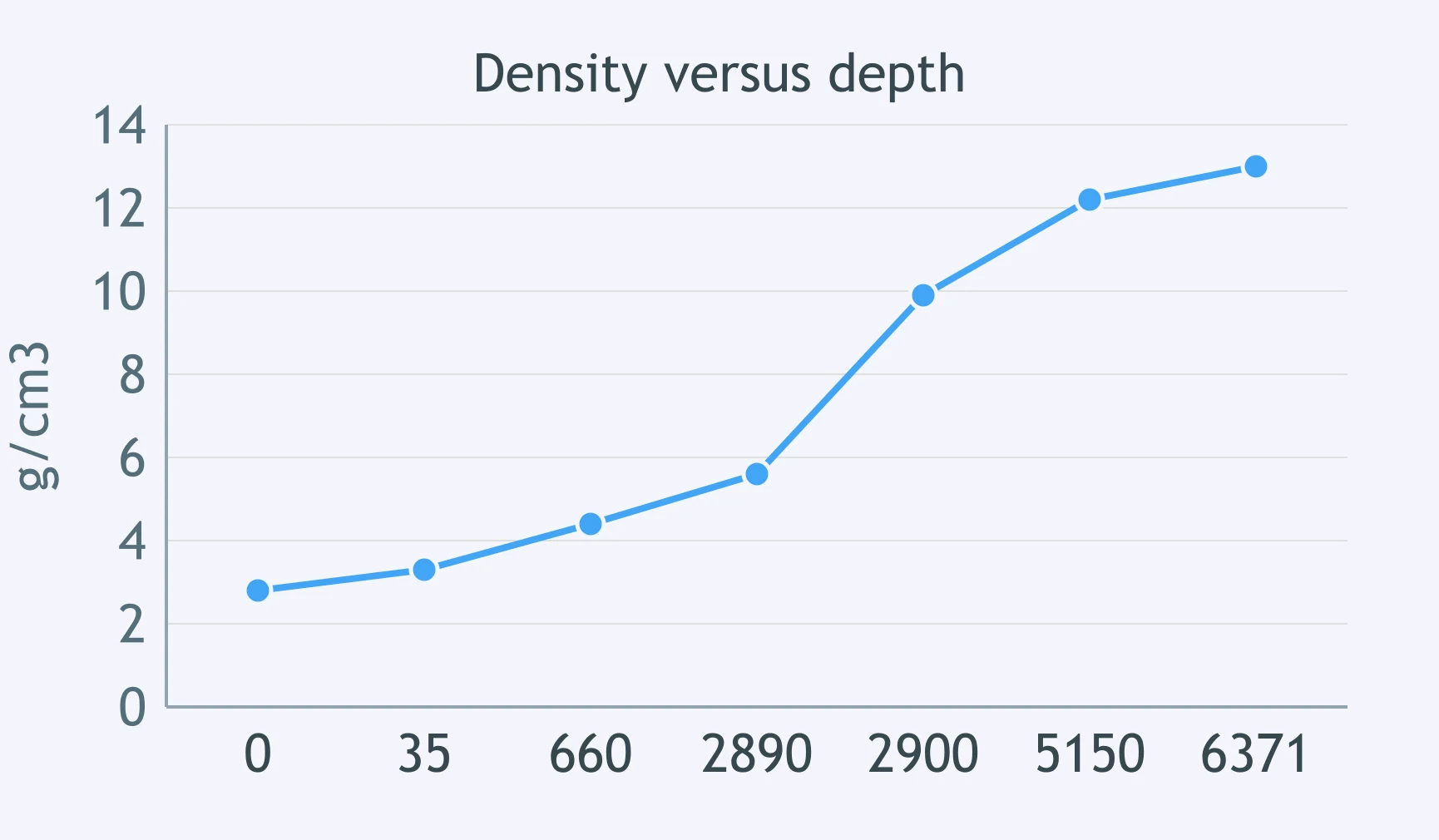
Use the density graph, which plots depth in kilometers. What causes the largest jump in density?
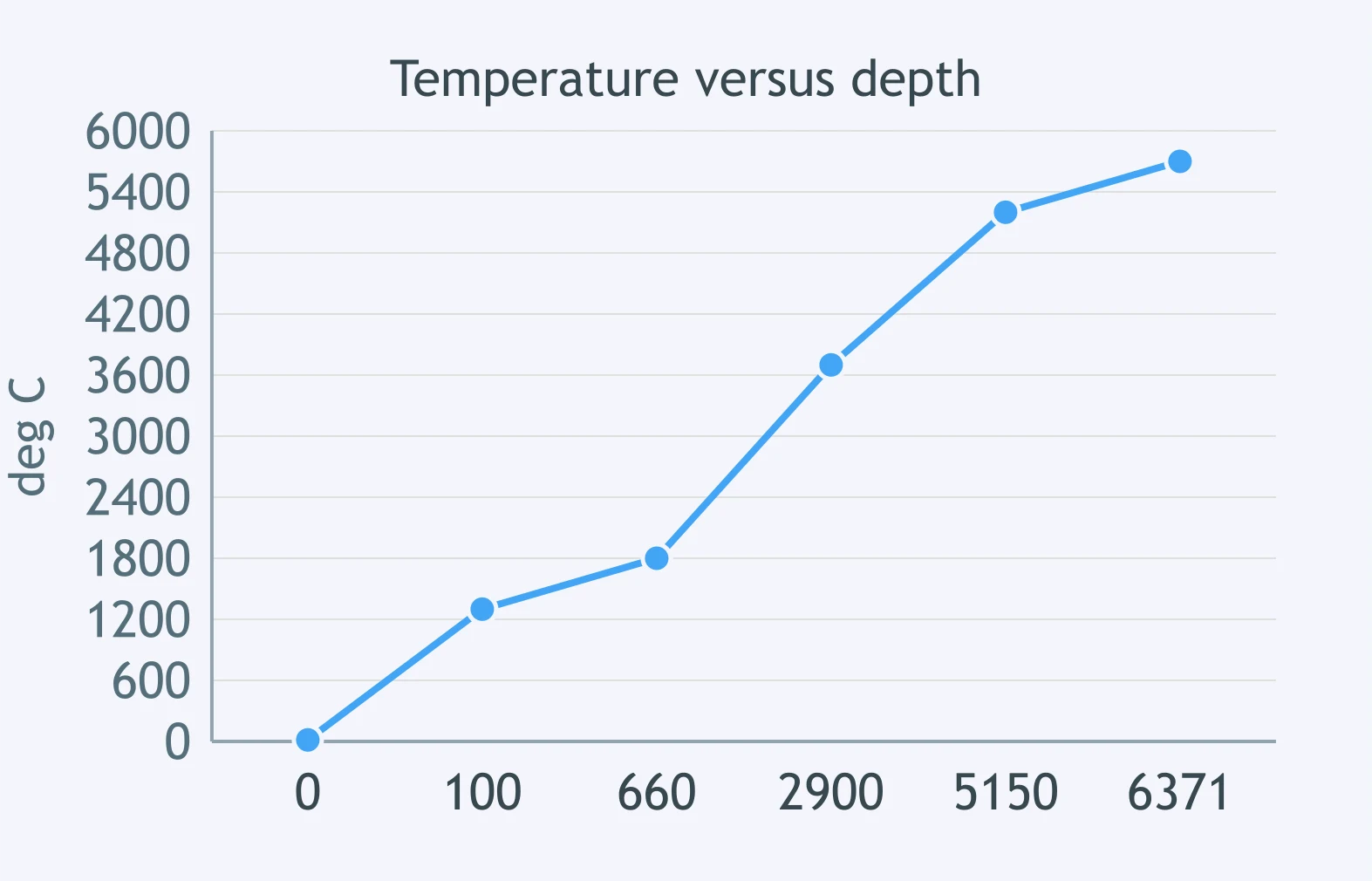
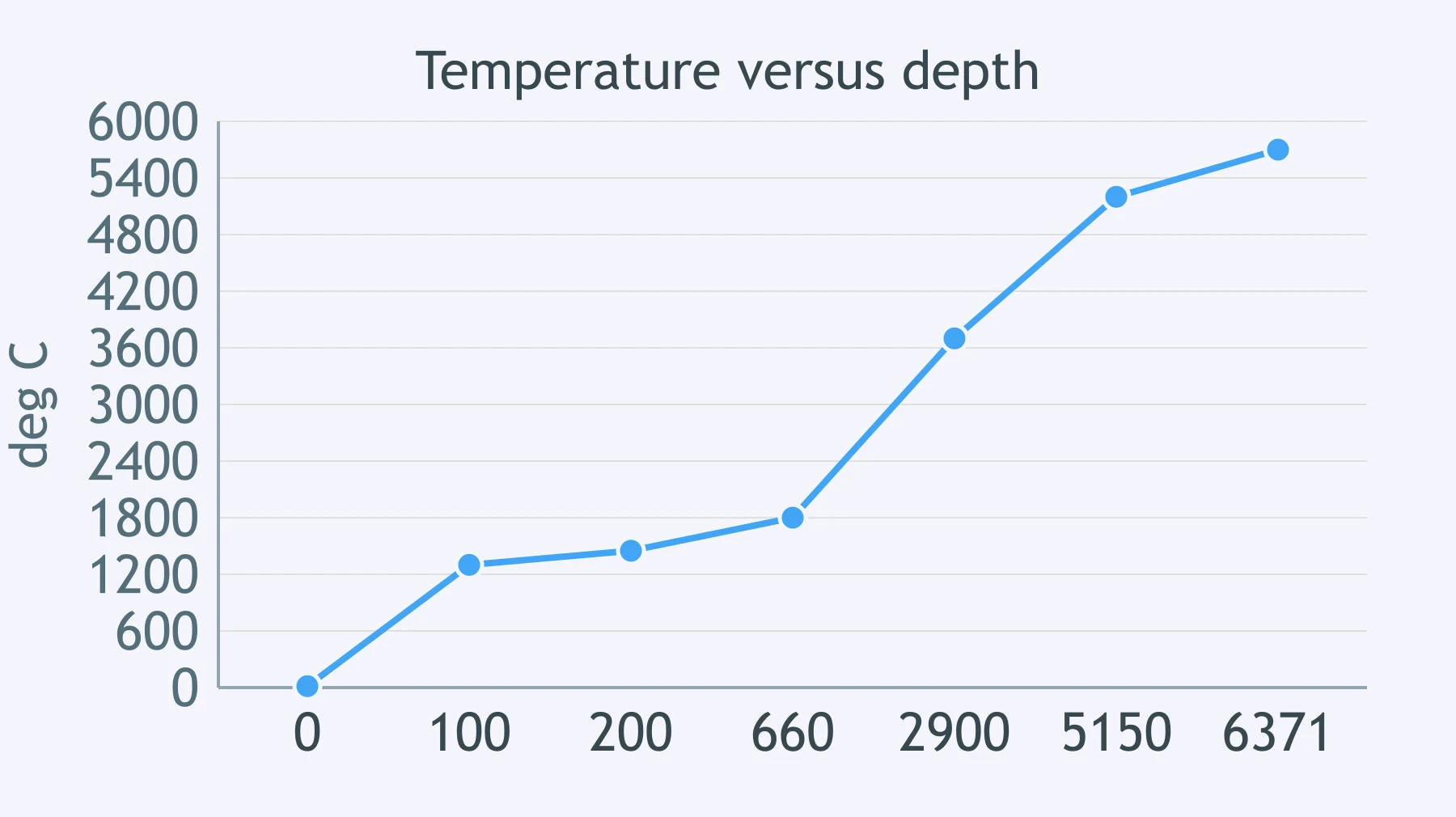
On the temperature graph, which region is hottest?
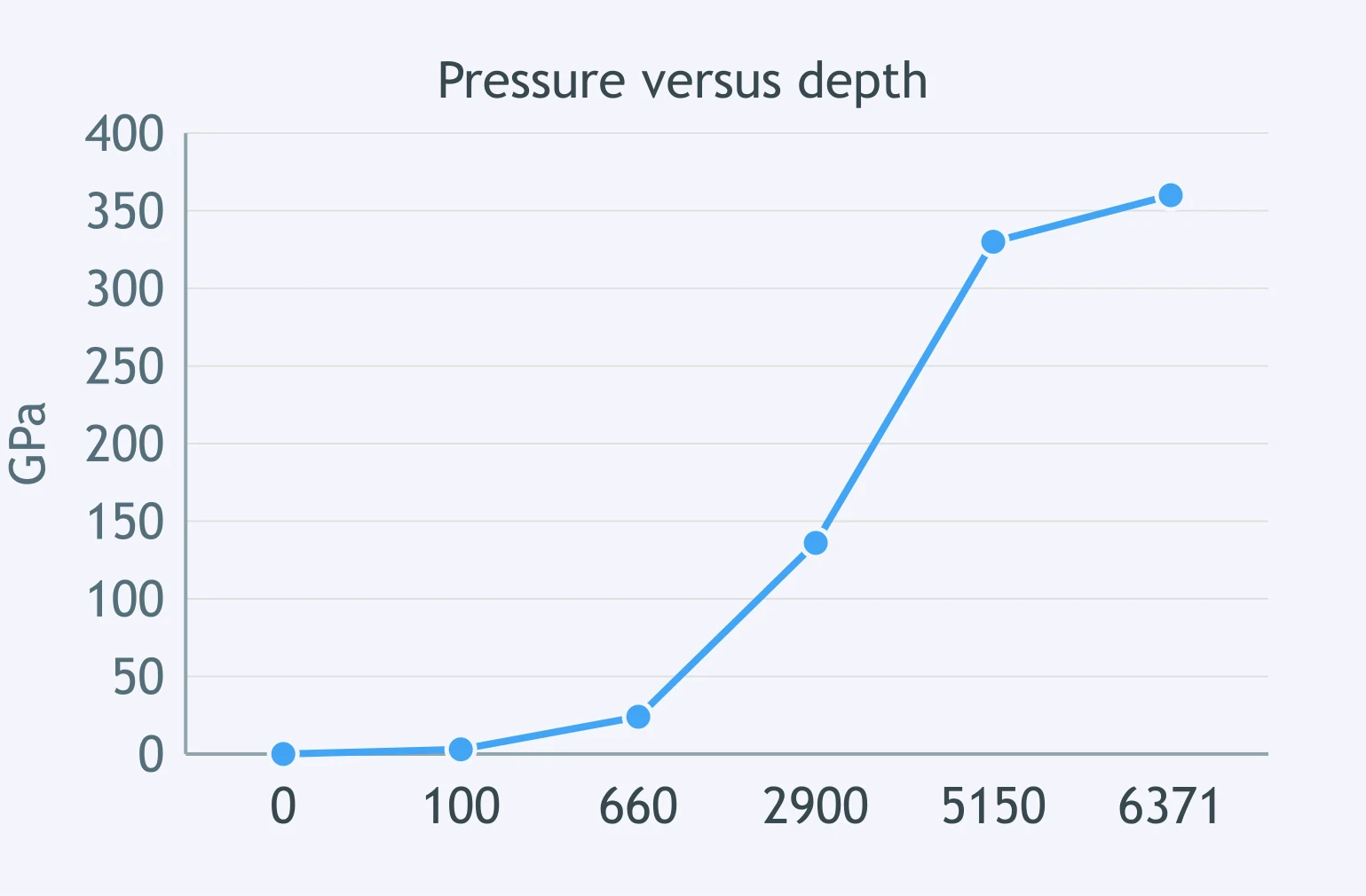
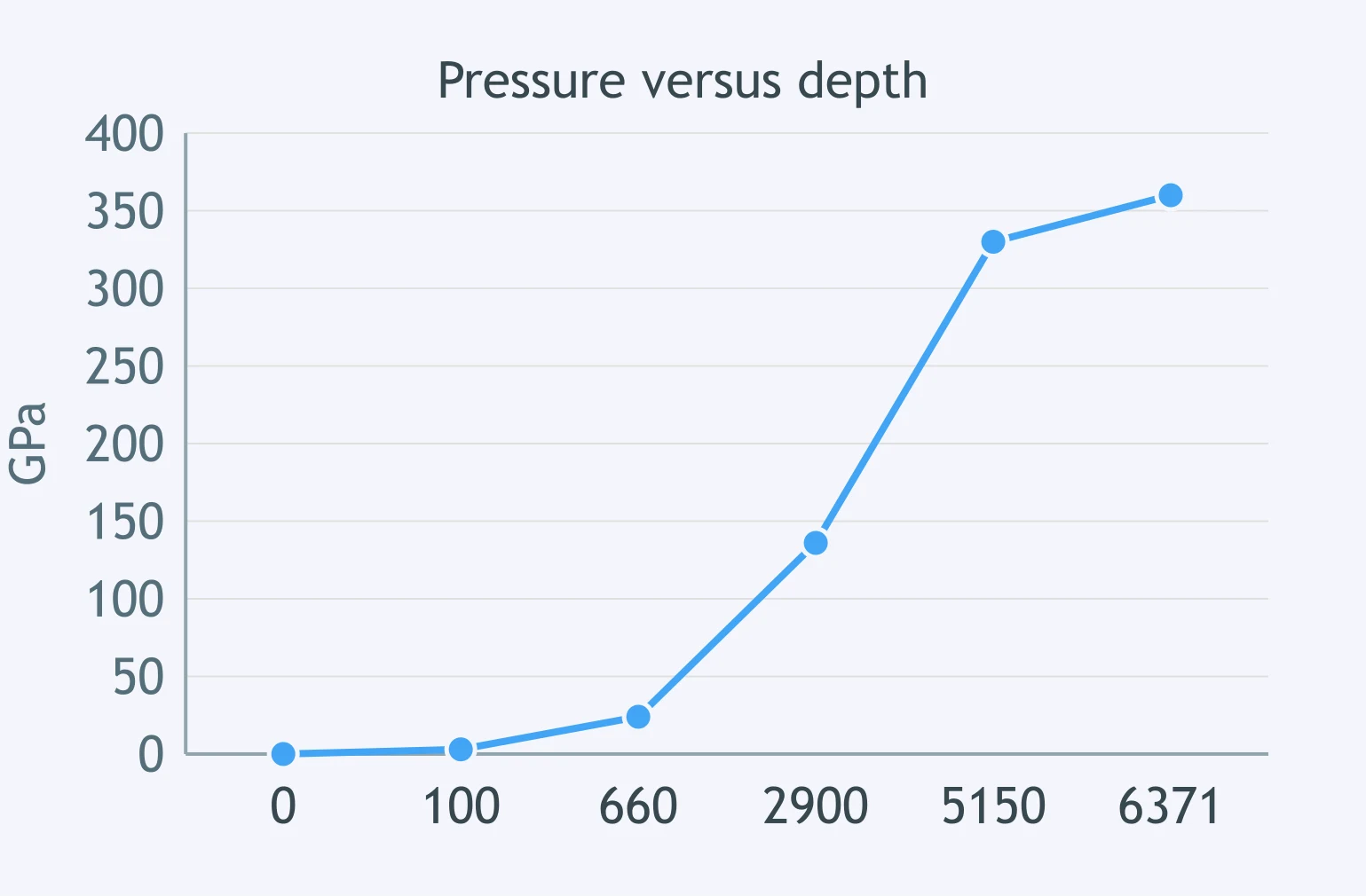
Use the pressure graph, which plots depth in kilometers. Which layer experiences the greatest pressure?
Use the density graph, which plots depth in kilometers. Which layer is least dense in this model?
Use the P-wave speed graph, which plots depth in kilometers. Which boundary does the sharp drop in speed mark?
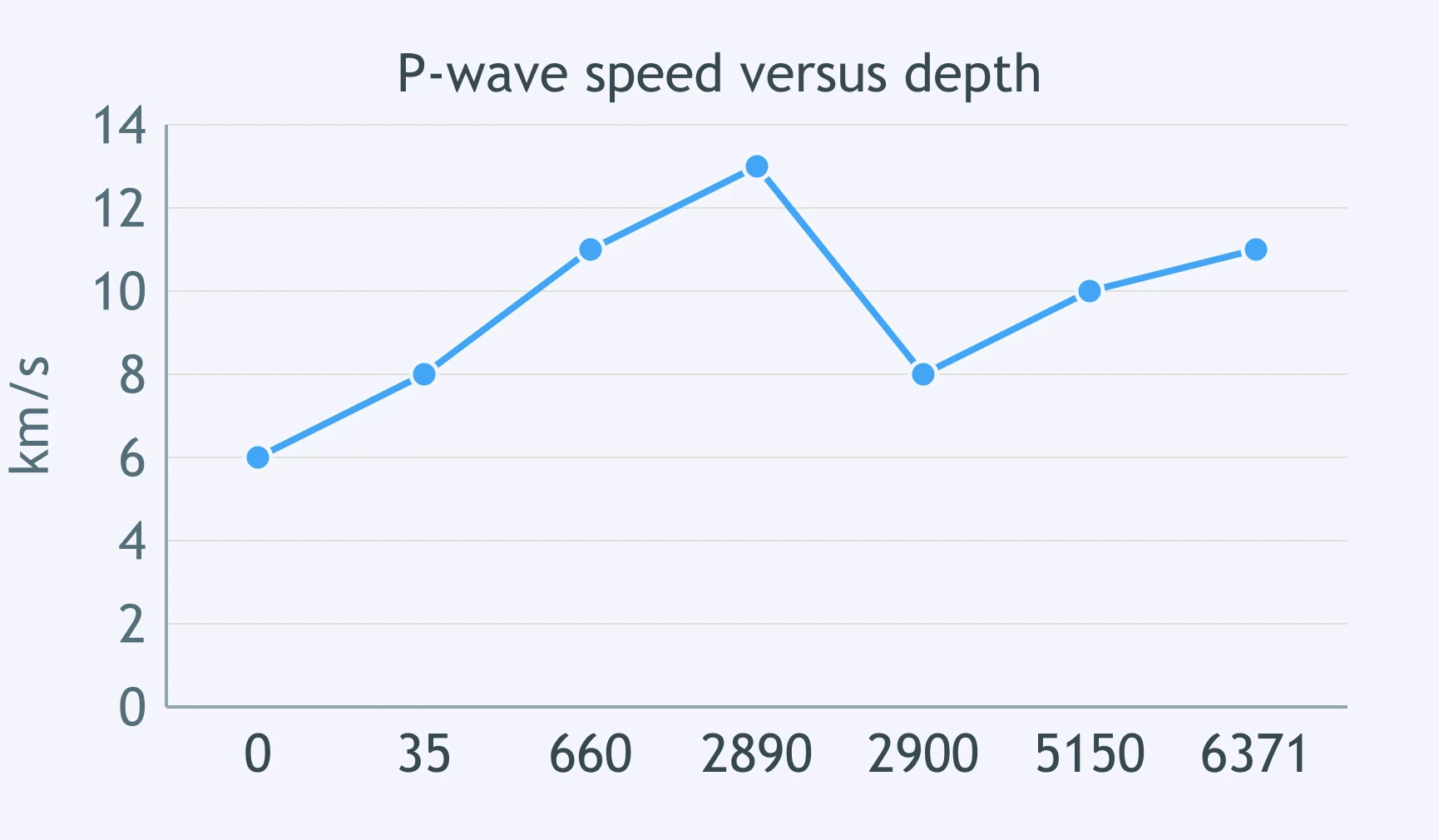
Use the temperature graph, which plots depth in kilometers. Upper-mantle rock at about 100 to 200 kilometers is close to its melting point but remains mostly solid. Which layer can flow slowly there?
Use the pressure graph. How does pressure change from the surface toward the center?
On the density graph, density is higher in the central layer than in the liquid layer around it. What does that imply about the central layer?
The ray diagram shows P waves bending through Earth's interior. Direct S waves, by contrast, never reach the far side of Earth. Which property of the outer core explains the S-wave shadow?
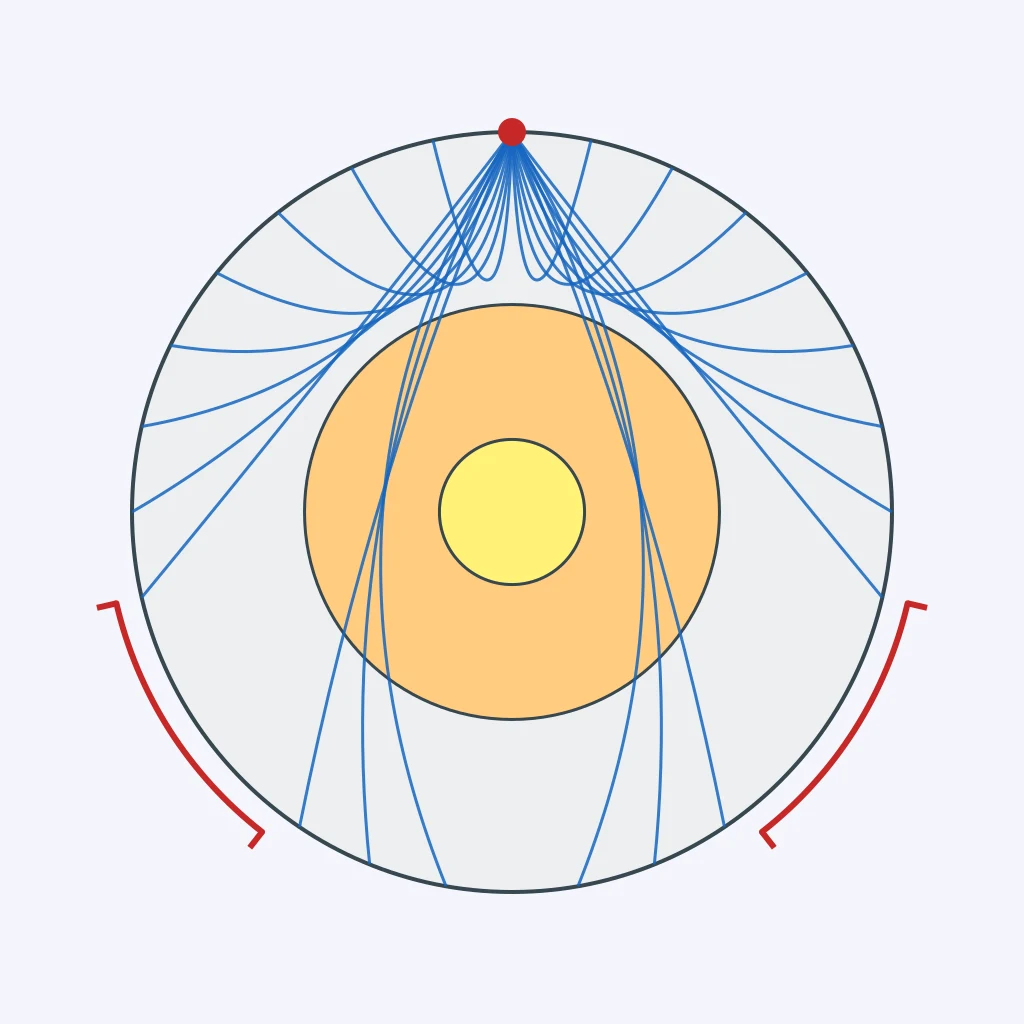
P waves reach many stations, but a ray diagram leaves a P-wave shadow zone from about 104° to 140°. What causes that zone?
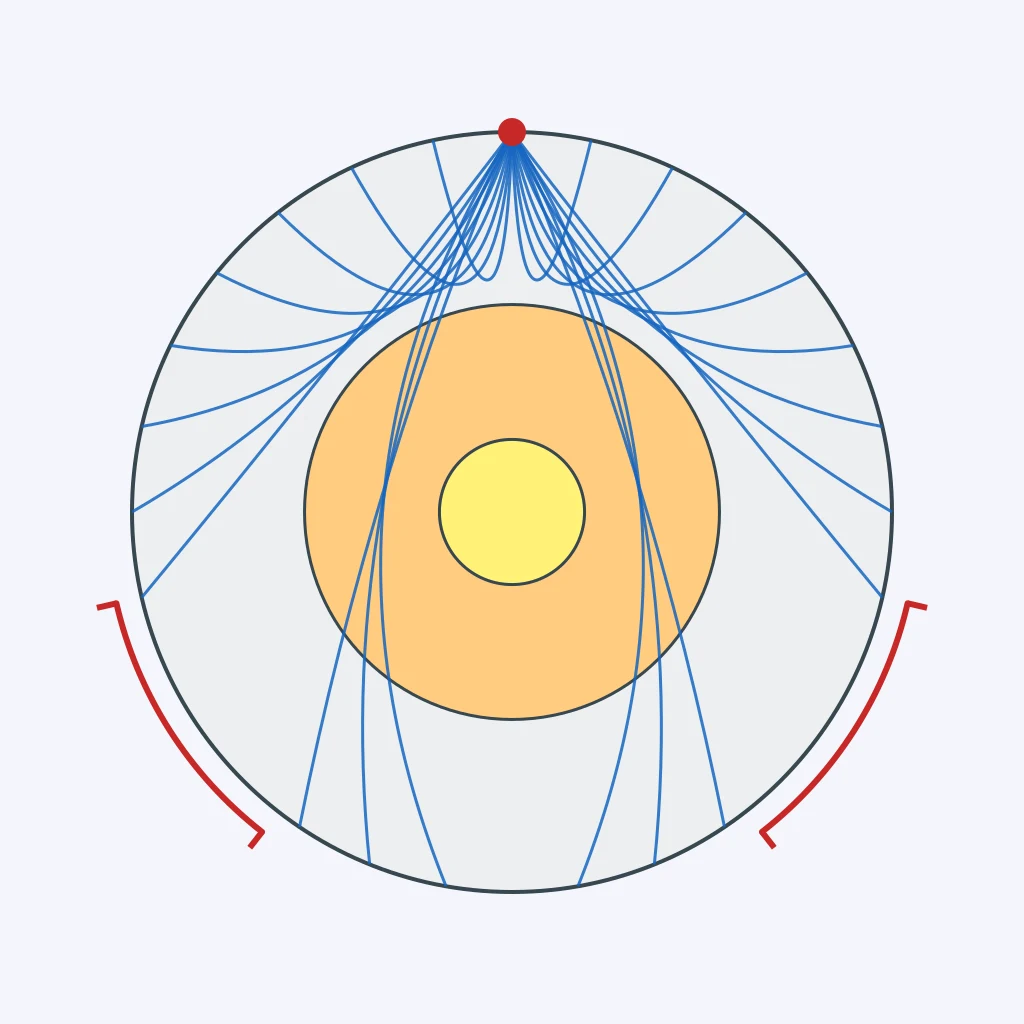
In 1909 Andrija Mohorovicic found an abrupt increase in seismic-wave speed at a boundary below the crust. Which two layers does that boundary separate?
Inge Lehmann explained faint P waves inside the core shadow zone with reflection and refraction from a deep boundary. What did that reveal?
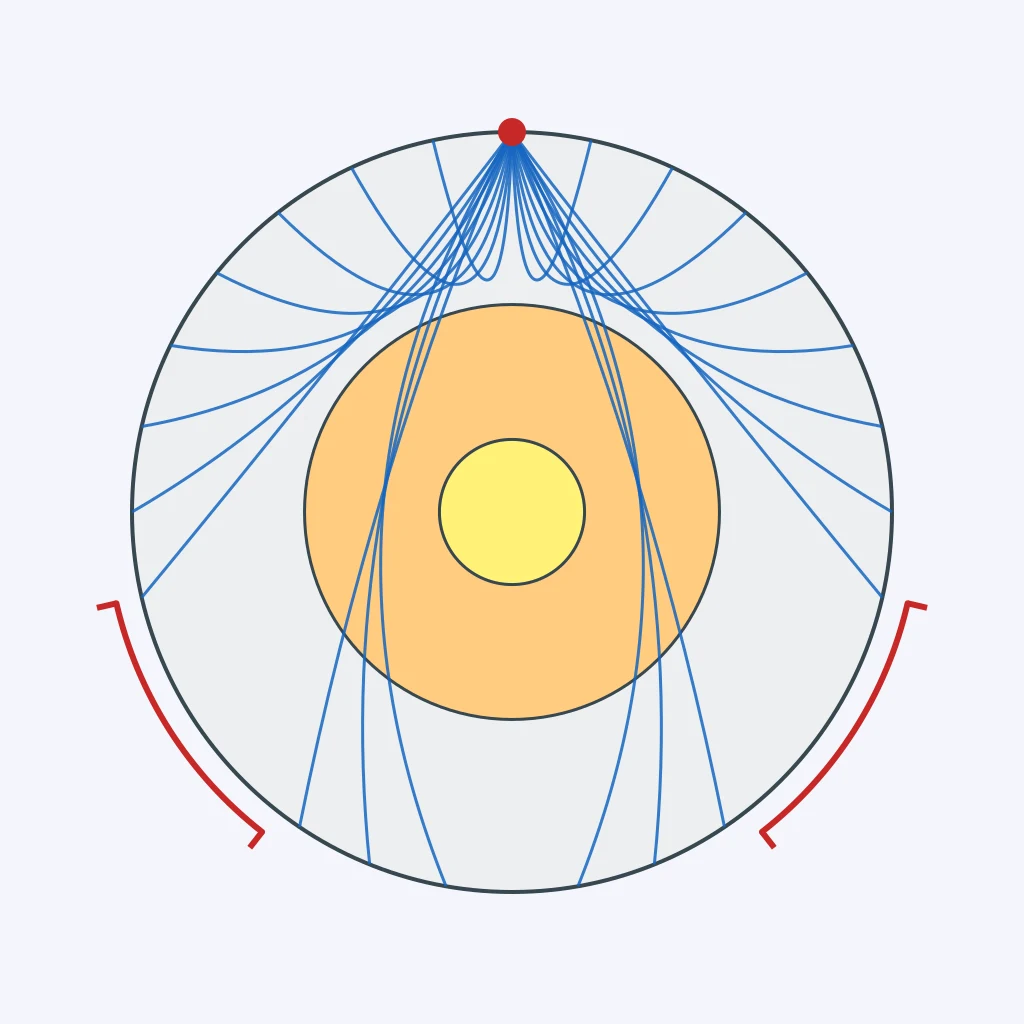
S waves cannot travel through Earth's liquid outer core. Which property of S waves explains this?
A sudden increase in P-wave speed just below a continent marks a change from crustal rock to denser mantle rock. What boundary is being crossed?
Seismic rays curve instead of traveling as straight lines through Earth. What does the curving show about the interior?
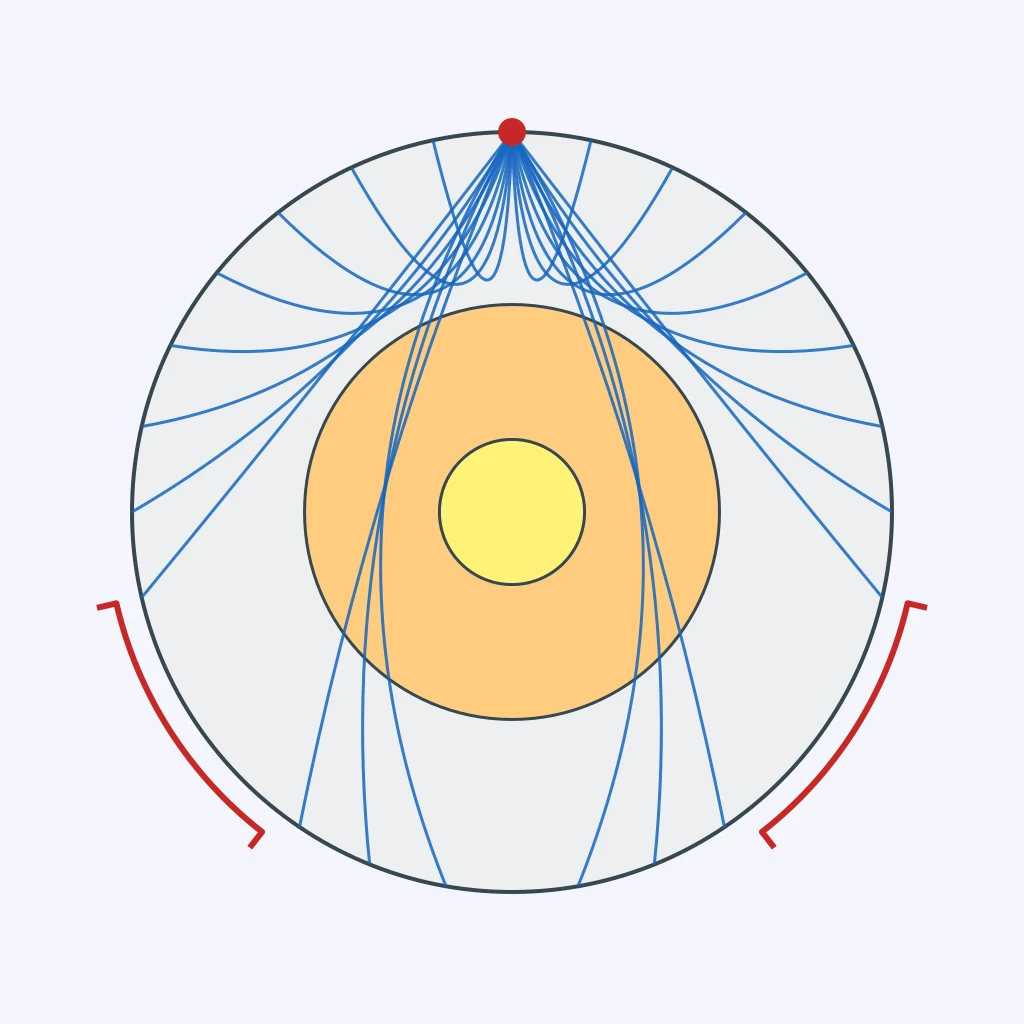
R.D. Oldham used earthquake records in 1906 to identify a deep central layer. What internal layer did those records reveal?
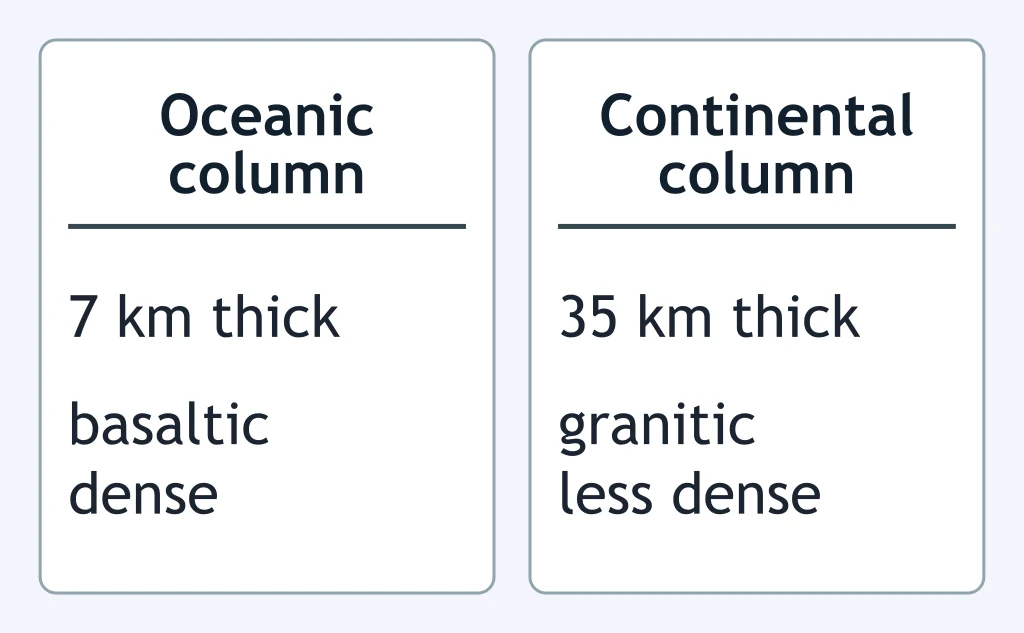
Two crustal columns are shown: a thin basaltic oceanic column and a thick granitic continental column. Which column stands higher isostatically?
At an ocean-continent convergent boundary, which crust usually subducts, and why?
Continental crust is about 35 kilometers thick on average. Where is continental crust thickest?
A dark basaltic crustal rock and a light granitic crustal rock are compared. Which rock is more typical of oceanic crust?
The Moho is about 6 kilometers below many ocean basins and about 35 kilometers below average continents. Where is the crust thinner?
Oceanic crust moves away from a mid-ocean ridge, cools, and becomes denser. What is the likely long-term result at a convergent boundary?
Crack the passcode before the zombies get in.
Answer, then swat bugs for bonus points.
Race through questions at your own speed.
Same question on every screen. Fastest wins.

Pick a tile, answer, hit bonuses and steals.
25 questions