Loading
by BlastRoom
A review bank on mineral formation, properties, identification, and mineral resources.
#earth_space_science
40 questions
One question set, multiple game modes. Tap any game to see it in action. Not sure which to pick?
Answer to place stones and capture territory.
Outrun the snow together.
Earn blasts, then hunt the other team.
Answer to earn energy, then climb.

The class blasts through walls together.
Bid on mystery lots. Most money wins.
Sell tours. Nice, standard, or a total scam.

Answer, restock, and serve the rush.
More correct answers pulls the rope your way.
Answer, then shoot down the alien wave.
Answer, then tap to leap the frozen ridge.
A naturally occurring, inorganic solid with a definite chemical composition and an orderly, repeating internal atomic structure is the definition of what term?
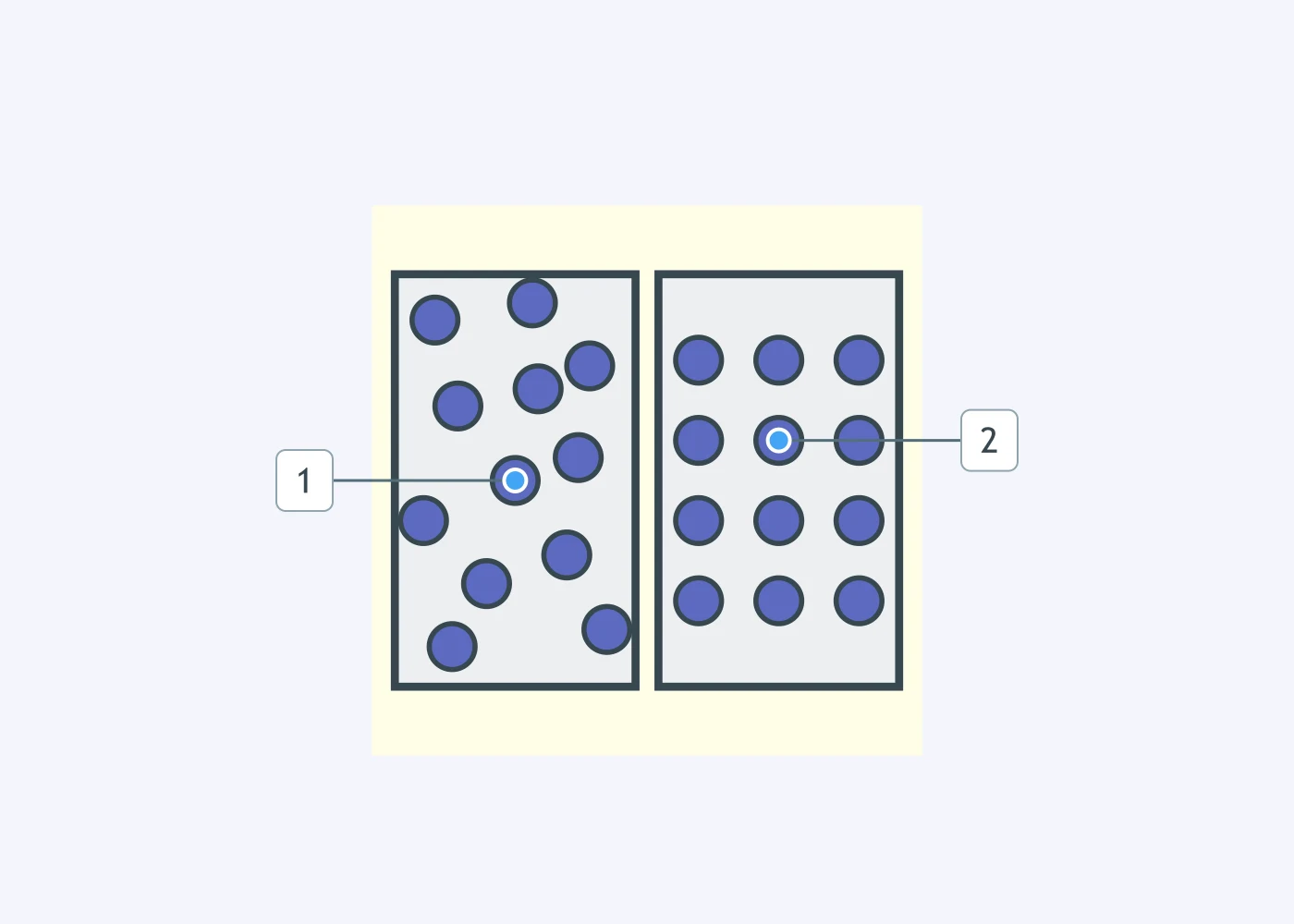
The diagram labels two atomic arrangements found in natural solids. Which one has the repeating pattern required for a true mineral crystal?
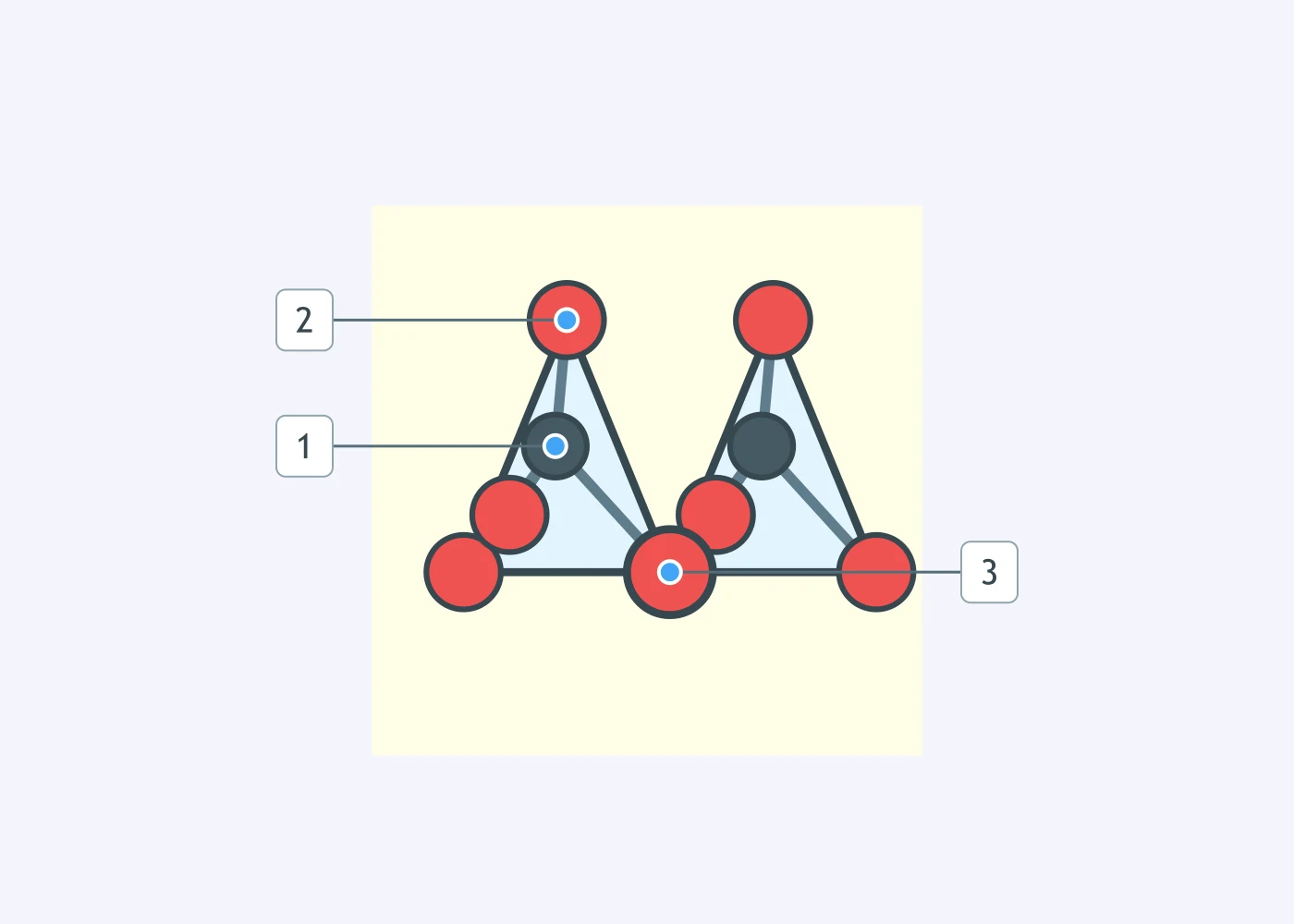
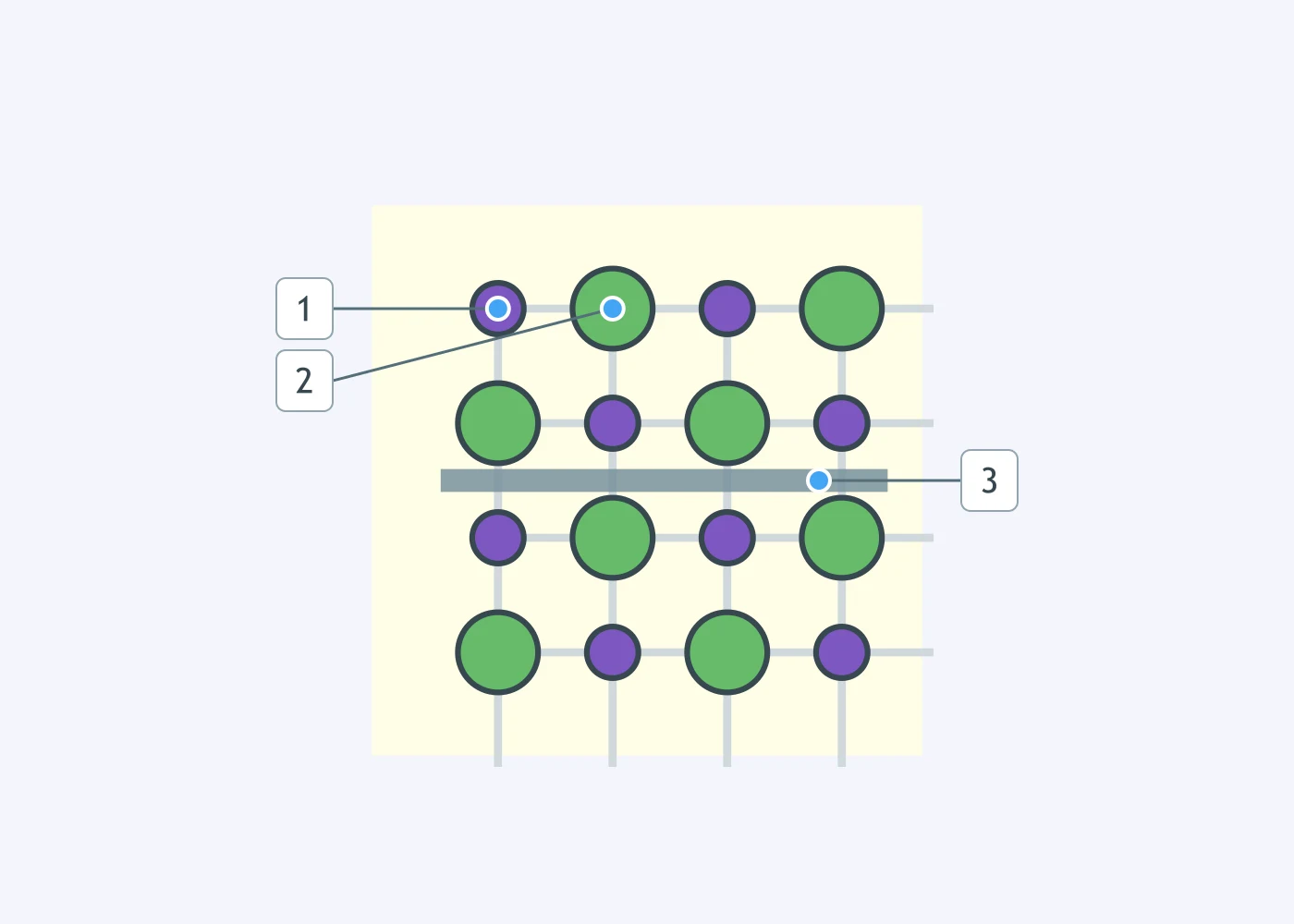
The diagram numbers three parts of the basic building block of silicate minerals. What is part 1, the atom at the center of each tetrahedron?
Halite forms when a shallow sea evaporates and sodium and chloride ions lock into a cubic lattice. In the diagram, what is part 3, the flat surface the crystal later breaks along?
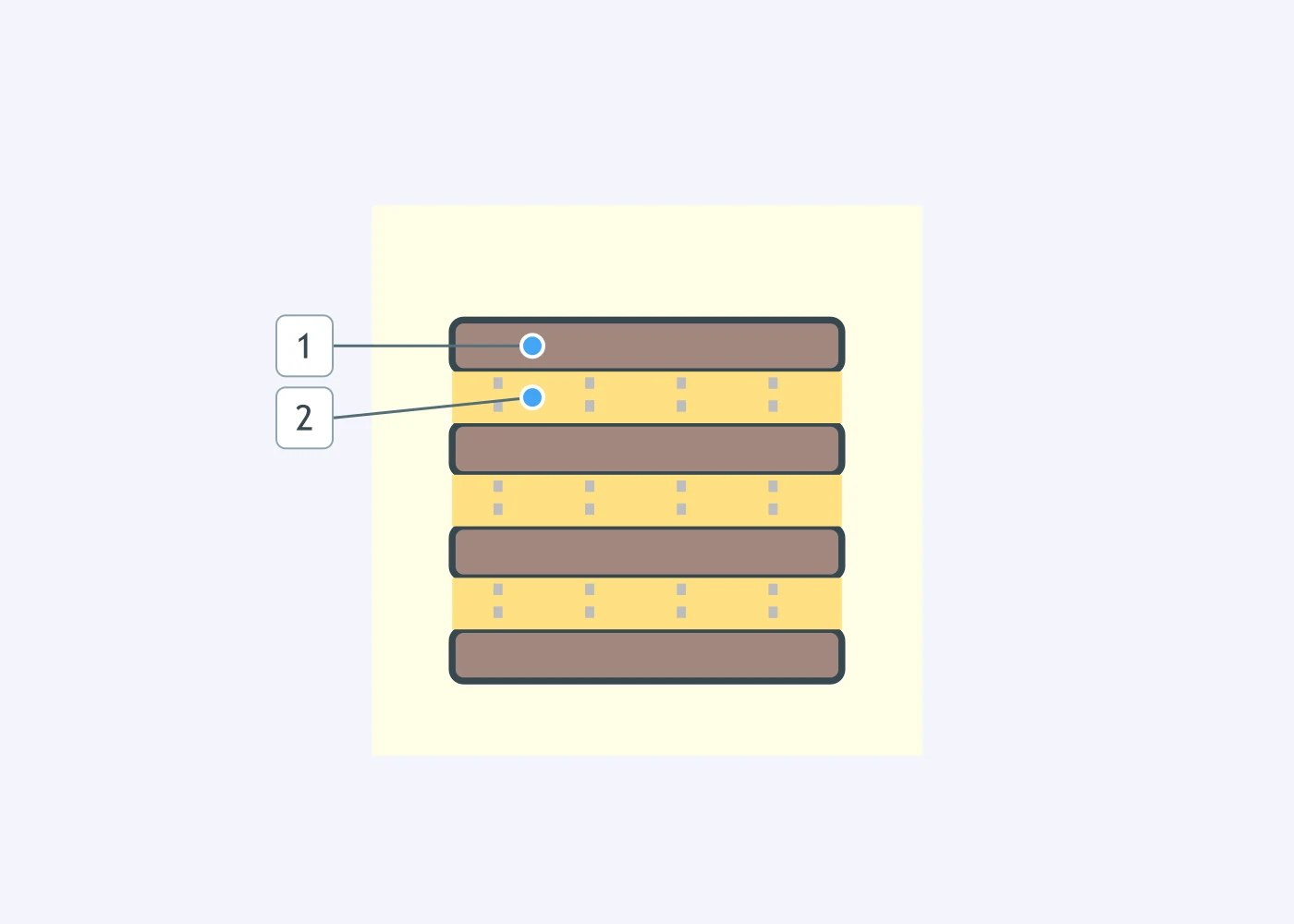
Mica forms as slow cooling arranges its silicate tetrahedra into flat stacked sheets. In the diagram, what is part 2, which later lets the sheets peel apart?
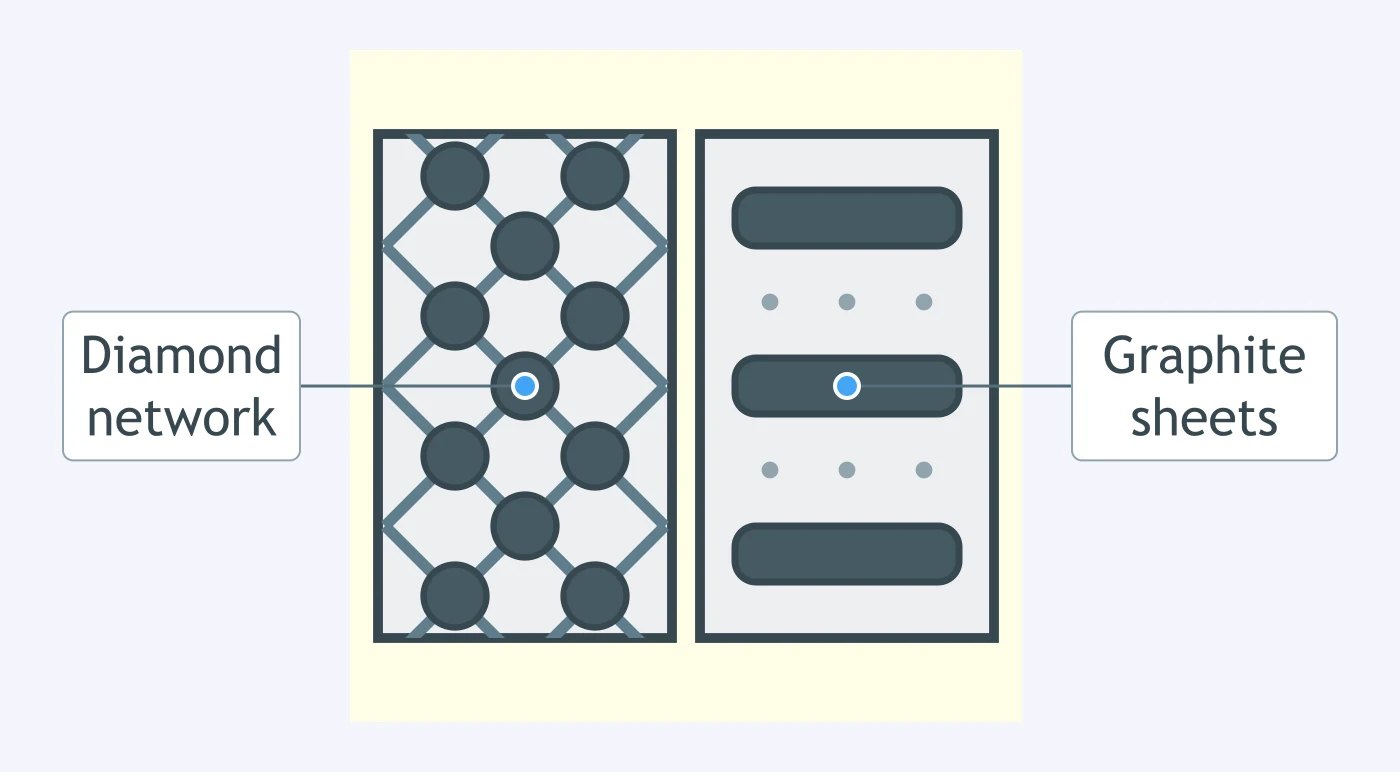
Diamond and graphite are both pure carbon, but diamond's atoms bond into a rigid three-dimensional network while graphite's bond into weakly stacked sheets. Which labeled structure explains why graphite feels slippery?
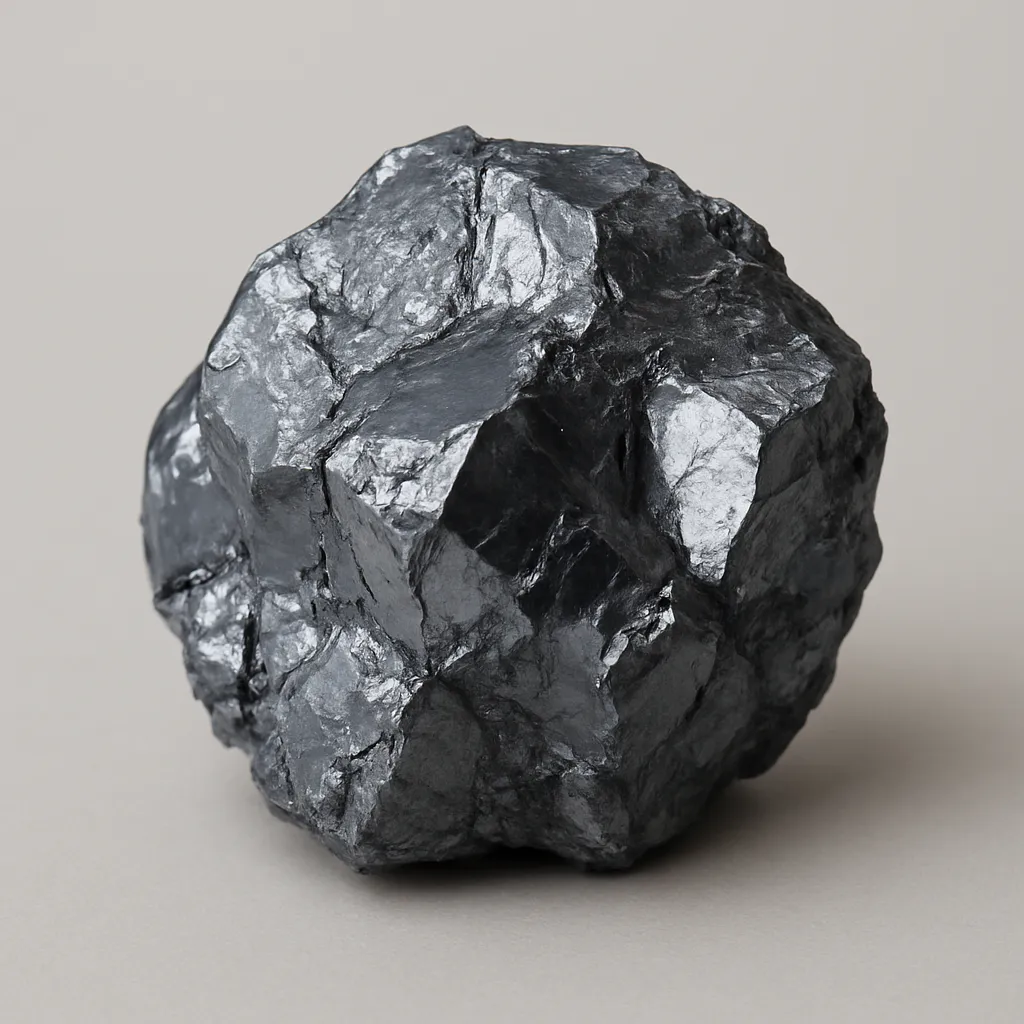
Look at how light reflects off the fresh faces of this gray specimen. Which luster does it show?
This specimen shines like glass rather than like metal. Which luster is shown?
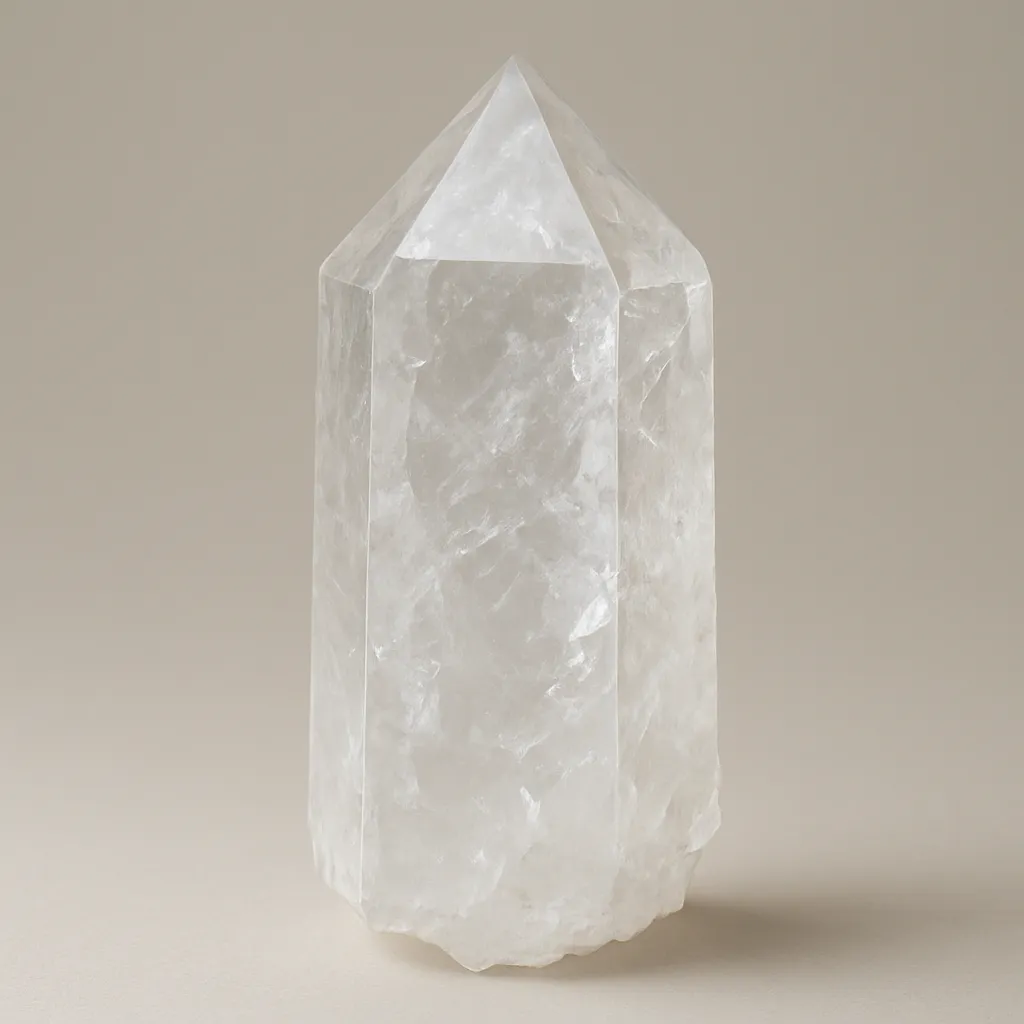
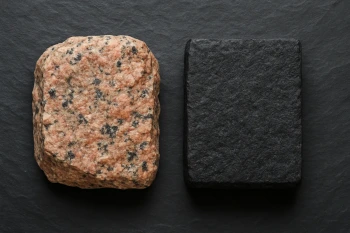
The specimen looks black, but rubbing it across an unglazed porcelain plate leaves a reddish-brown mark. Which property does the plate reveal?
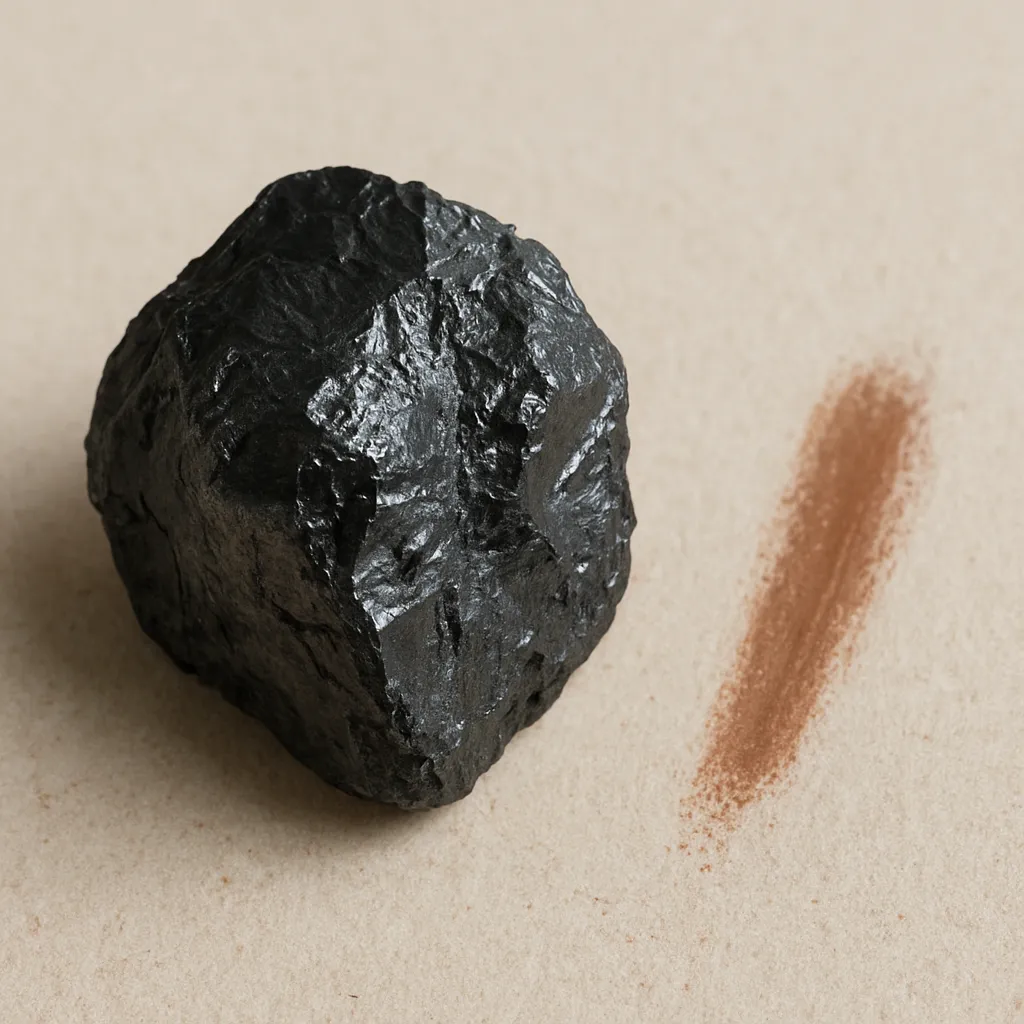
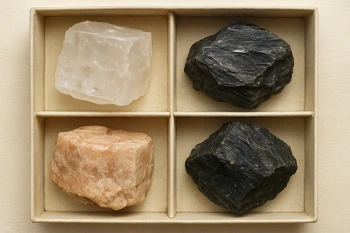
Look at how this pink feldspar specimen has broken. Which property is shown?
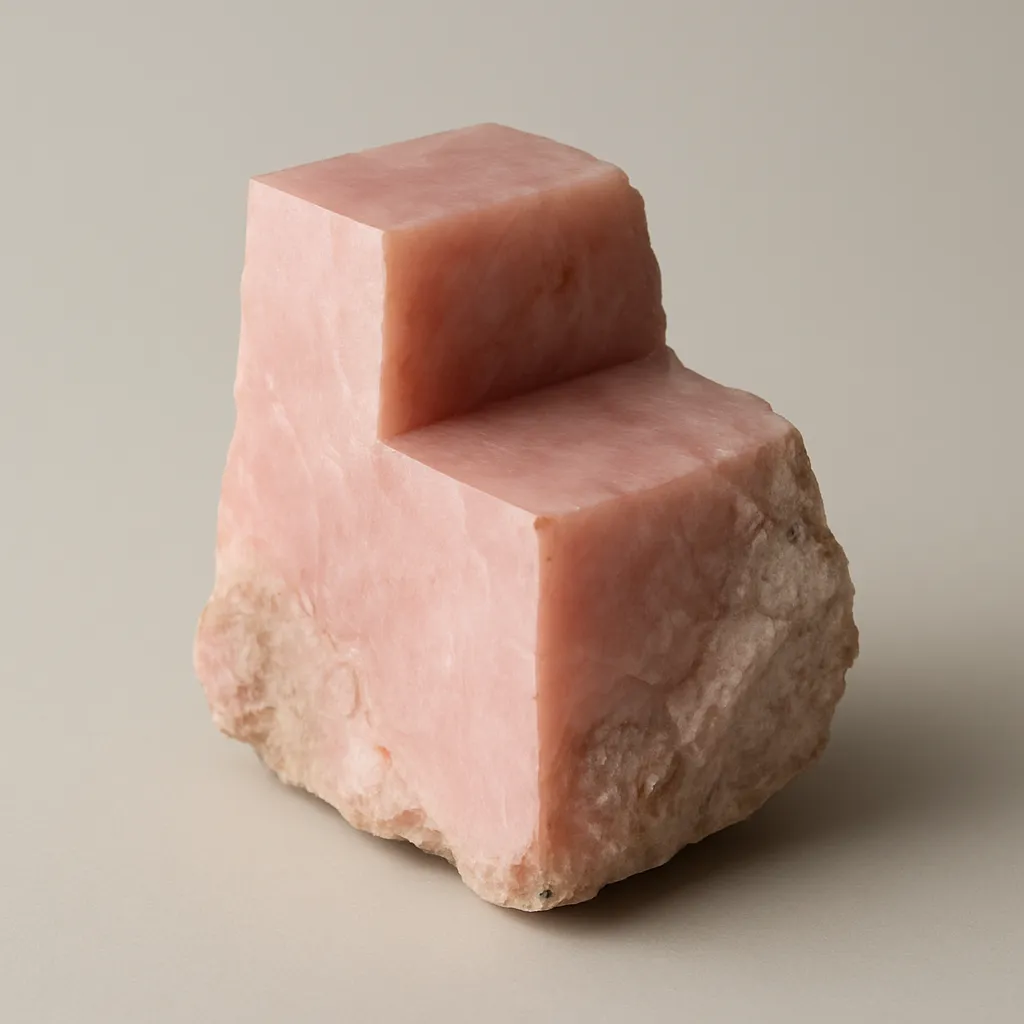
This specimen breaks into a slanted, closed block whose flat faces meet at corners, with no face meeting another at a right angle. Which property is shown?
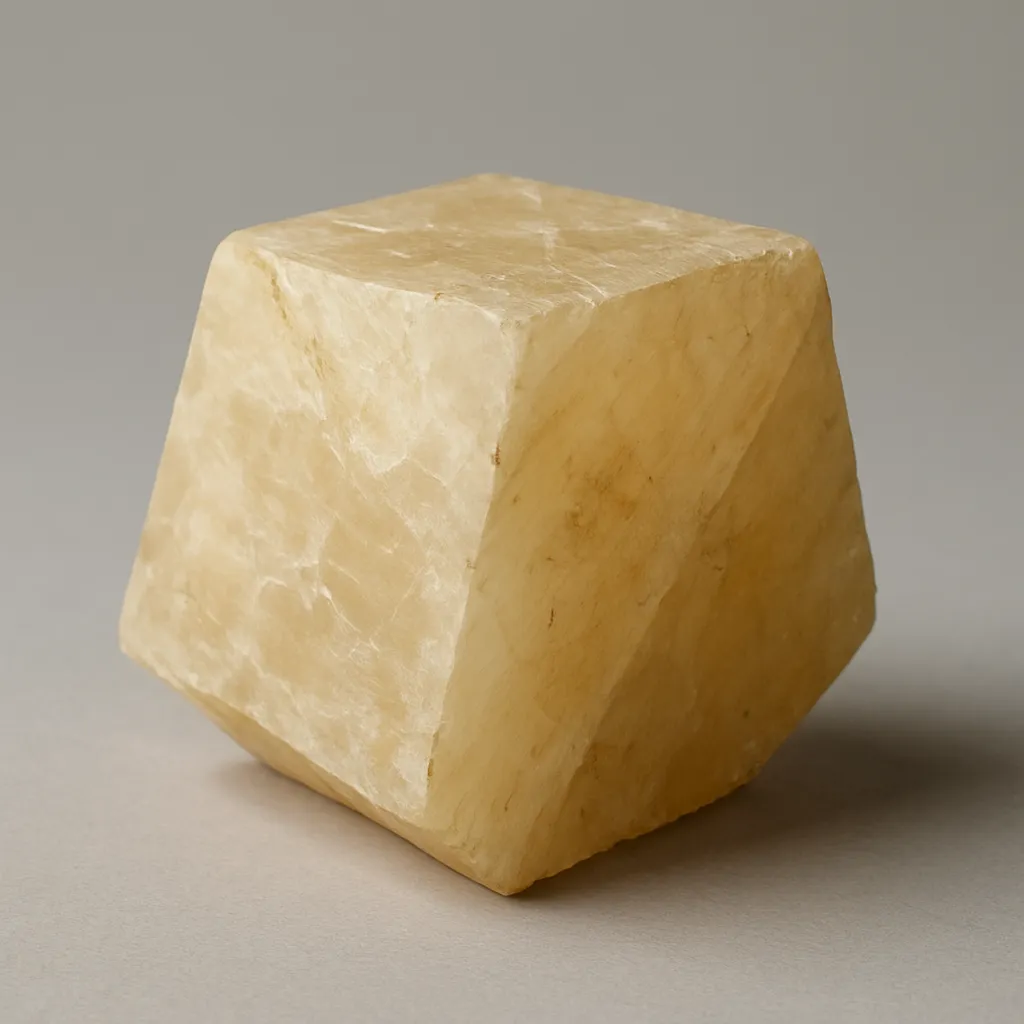
This specimen has no flat cleavage planes; instead it breaks along smooth, curved surfaces. Which property is shown?
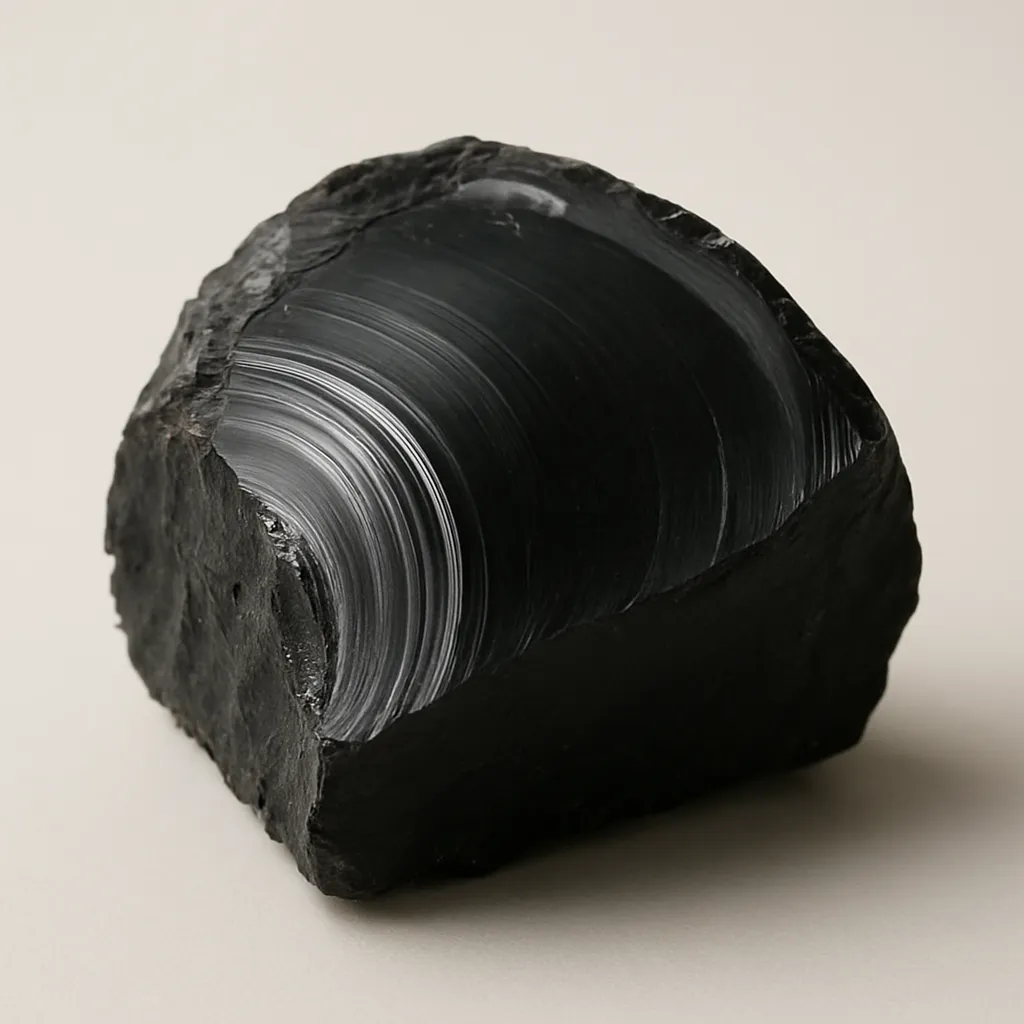
A steel nail easily scratches this specimen, but the specimen cannot scratch the nail. Which property is being tested?
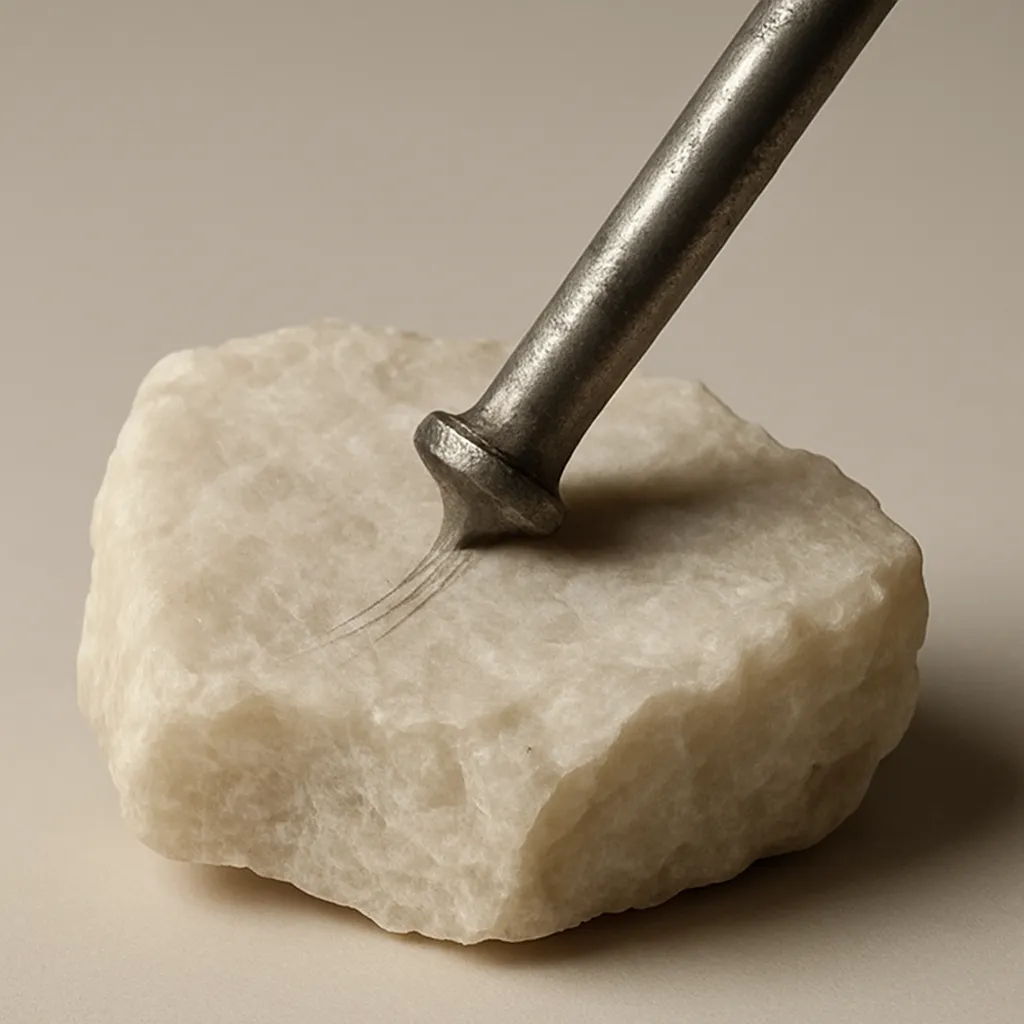
This fist-sized specimen feels far heavier in the hand than an ordinary rock of the same size. Which property does this demonstrate?
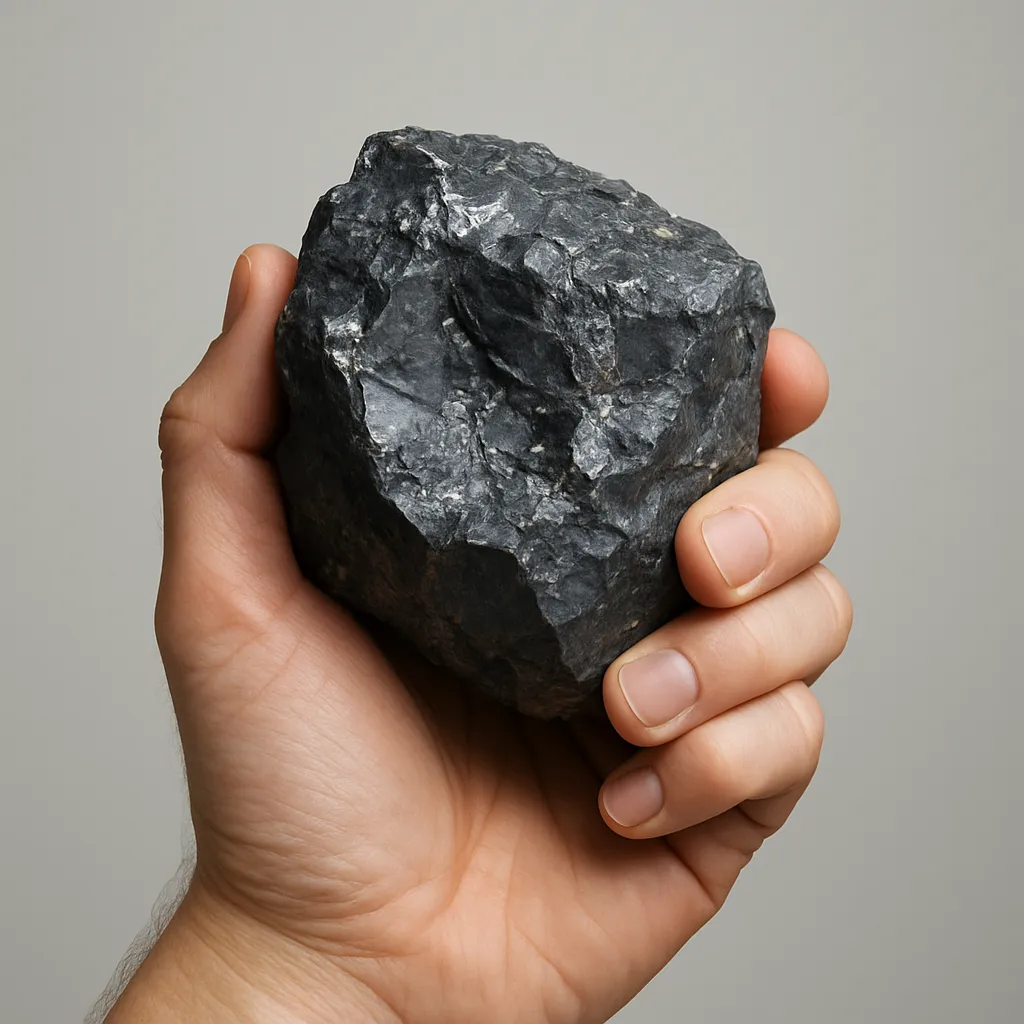
A small iron nail clings to this dark specimen without being touched by hand. Which property is shown?
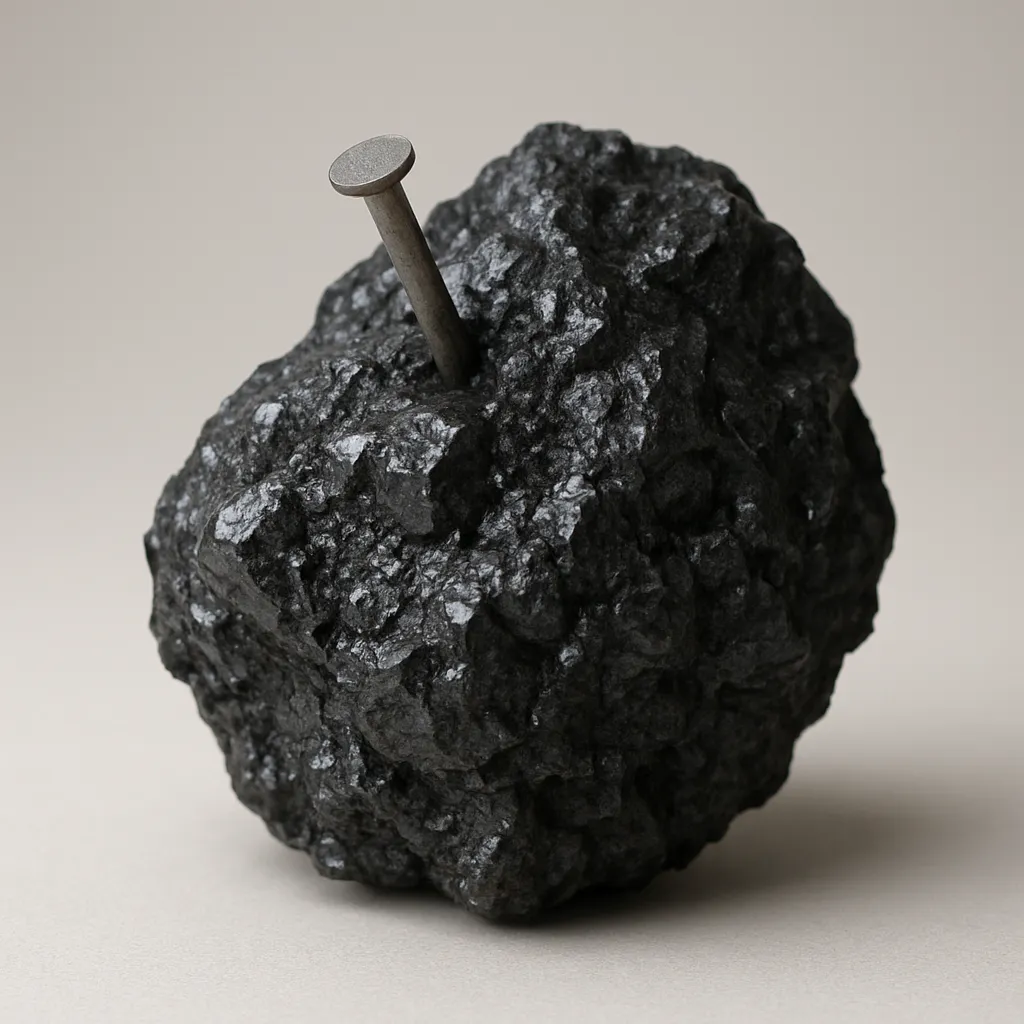
A drop of dilute acid placed on this specimen immediately fizzes with bubbles. Which property is shown?
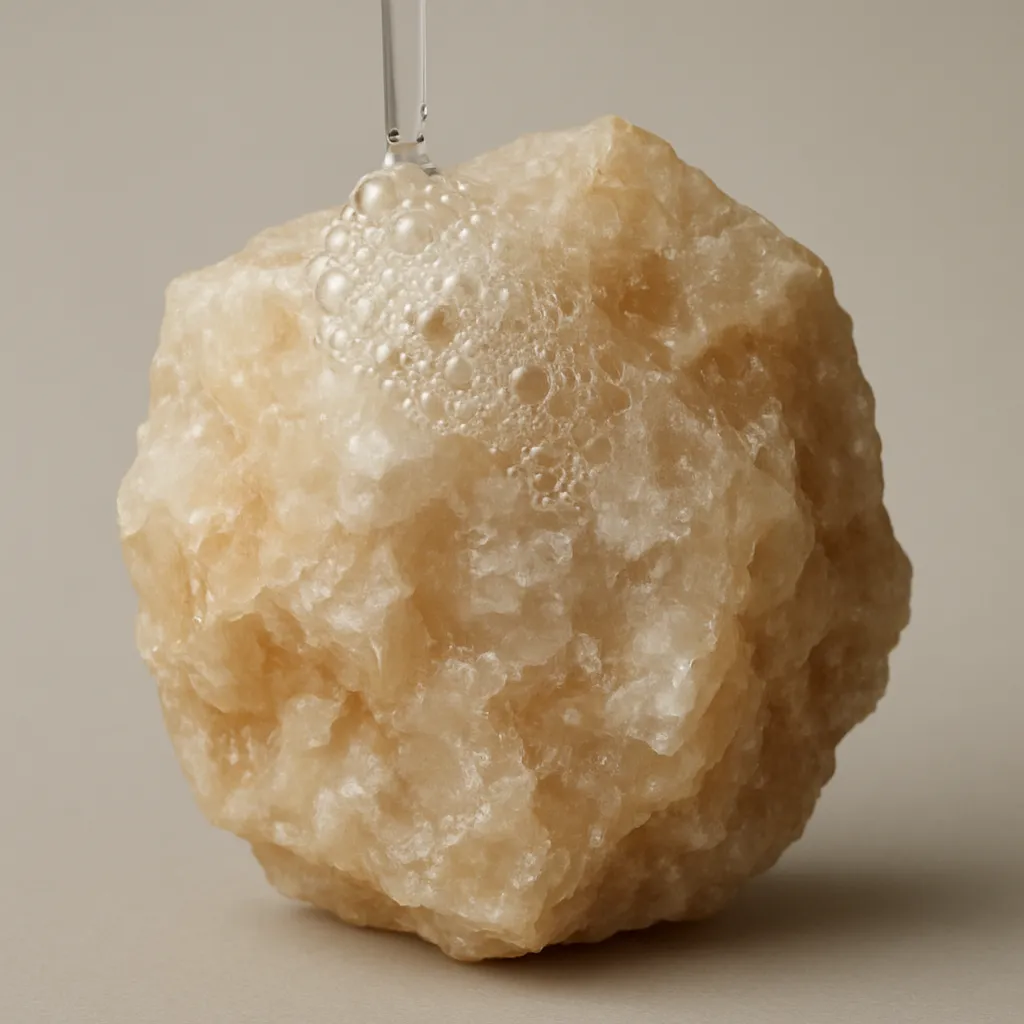
This specimen grew naturally into sharp-edged cubes rather than any other shape. Which property is shown?
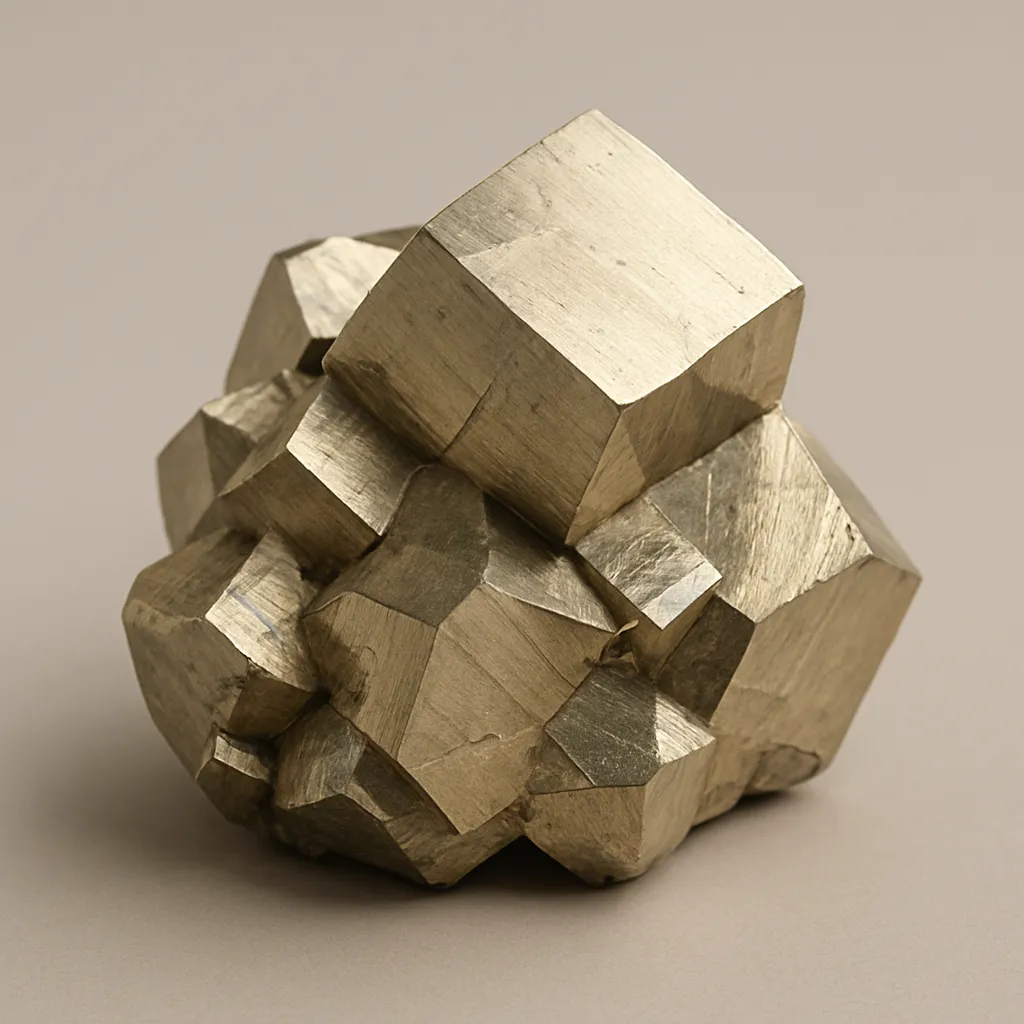
A brassy, gold-colored specimen leaves a greenish-black powder line on an unglazed plate rather than a golden-yellow one. Which property distinguishes it here from real gold?
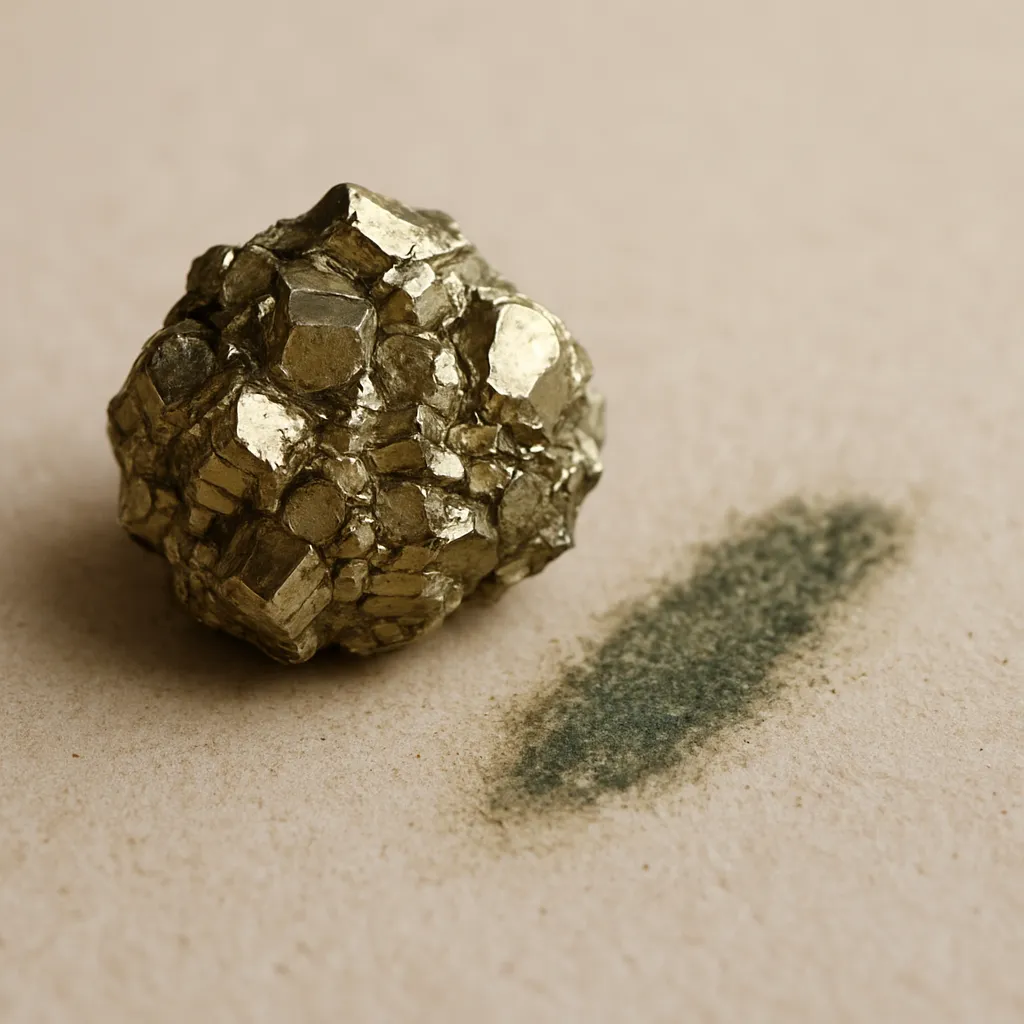
A colorless to white mineral has a hardness of 2 to 2.5, perfect cubic cleavage in three directions, and tastes salty when licked. Which mineral is it?
A pale, light-colored specimen has a hardness of 2, one direction of cleavage, and can be scratched with a fingernail. It is the main raw material for drywall. Which mineral is it?
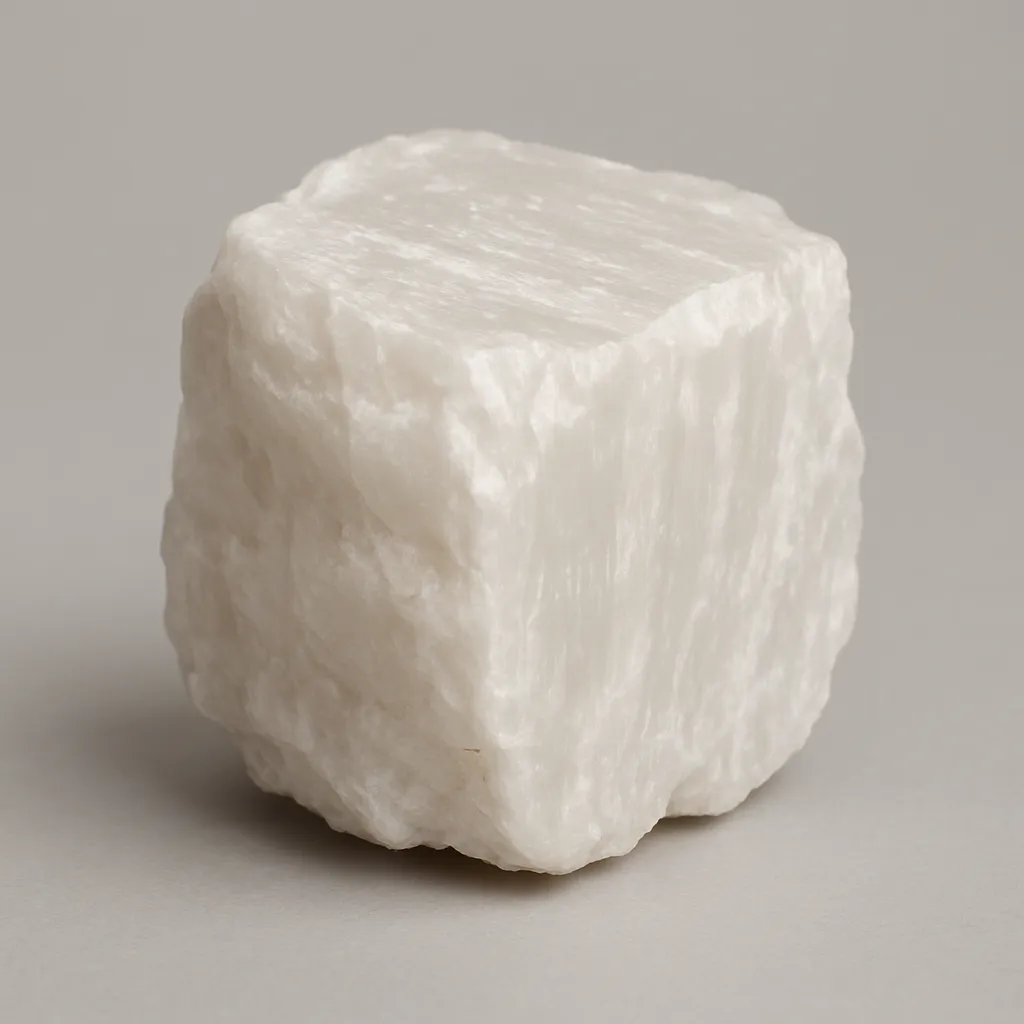
A dark green to black mineral has a hardness near 6 and two cleavage directions meeting at close to 90 degrees. Which mineral is it?
A soft, greasy-feeling white to green mineral has a hardness of 1, one direction of cleavage into flexible sheets, and is ground into the powder used in baby powder and cosmetics. Which mineral is it?
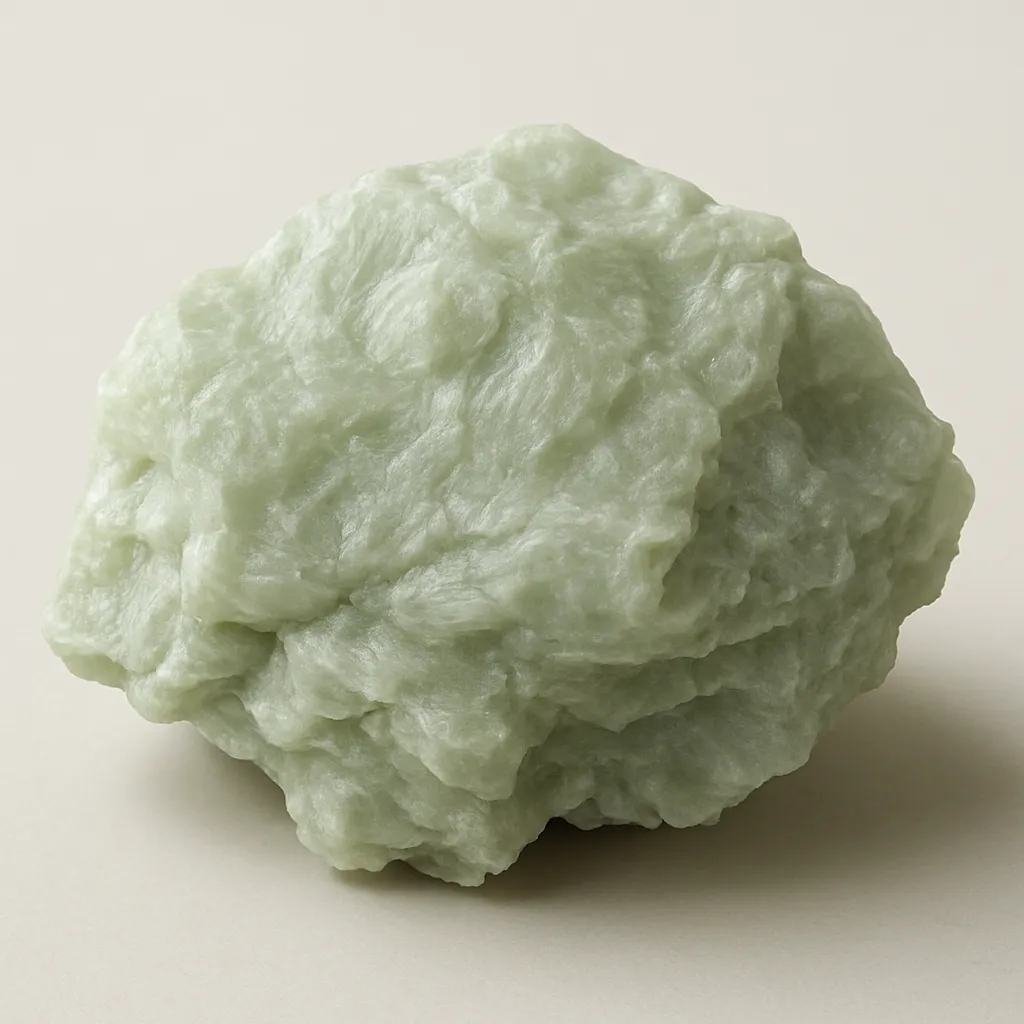
A metallic gray mineral has a hardness of 2.5, perfect cleavage in three directions at right angles, and an unusually high specific gravity for its size. Which mineral is it?
A brassy, gold-colored mineral forms sharp cubic crystals, has a hardness of 6 to 6.5, and leaves a greenish-black streak. Which mineral is it?
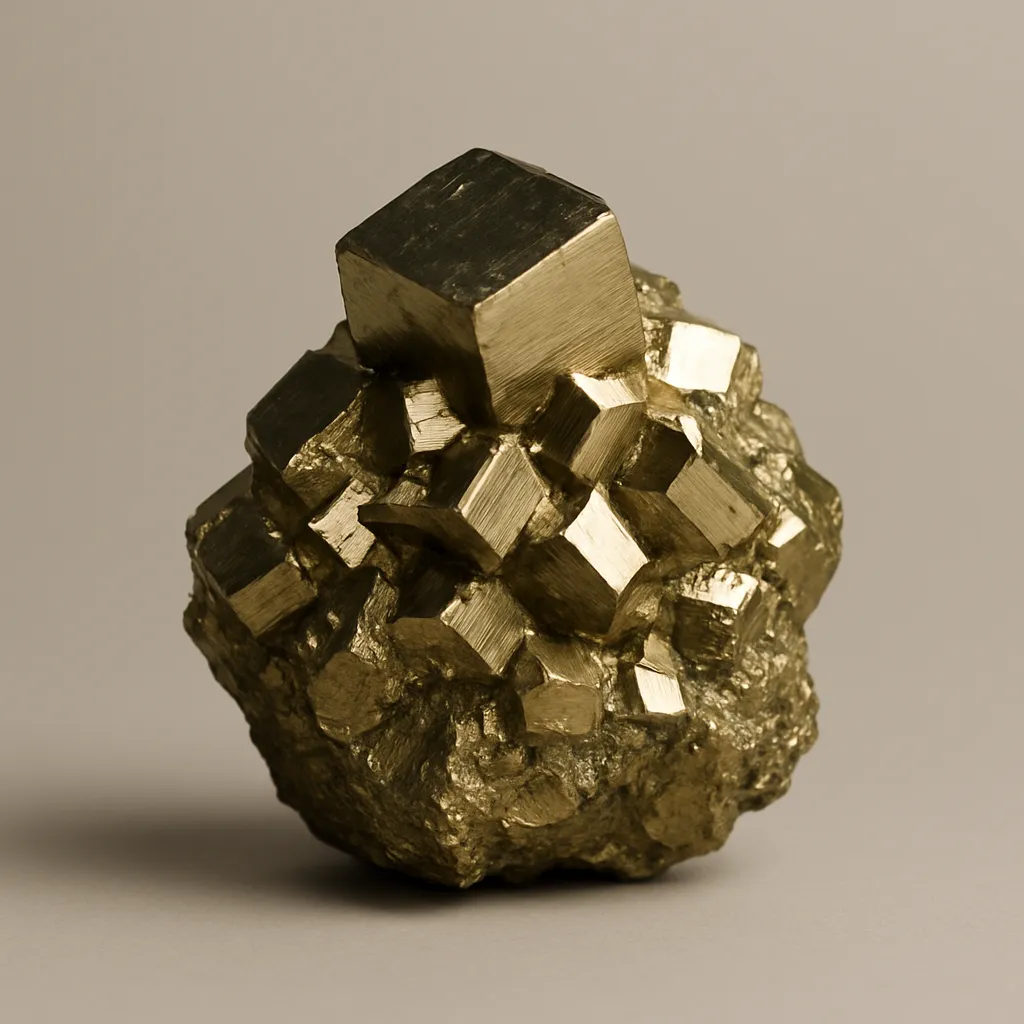
A clear to milky specimen has a hardness of 7, conchoidal fracture, a glassy luster, and six-sided prismatic crystals. Which mineral is it?
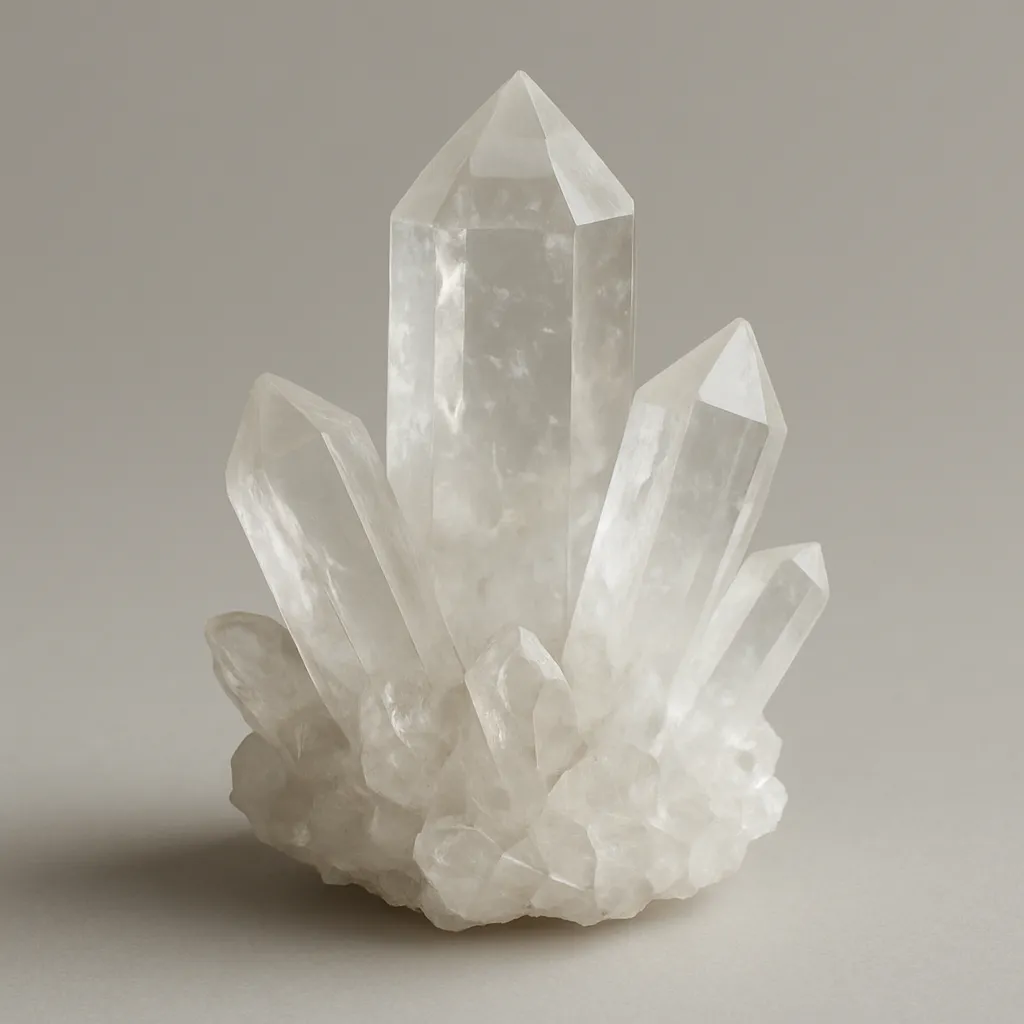
A black, opaque mineral has a hardness near 6, no visible cleavage, a black streak, and is strongly attracted to a magnet. Which mineral is it?
A dark, shiny mineral splits into thin, flexible, opaque black sheets and has a hardness of 2.5 to 3. Which mineral is it?
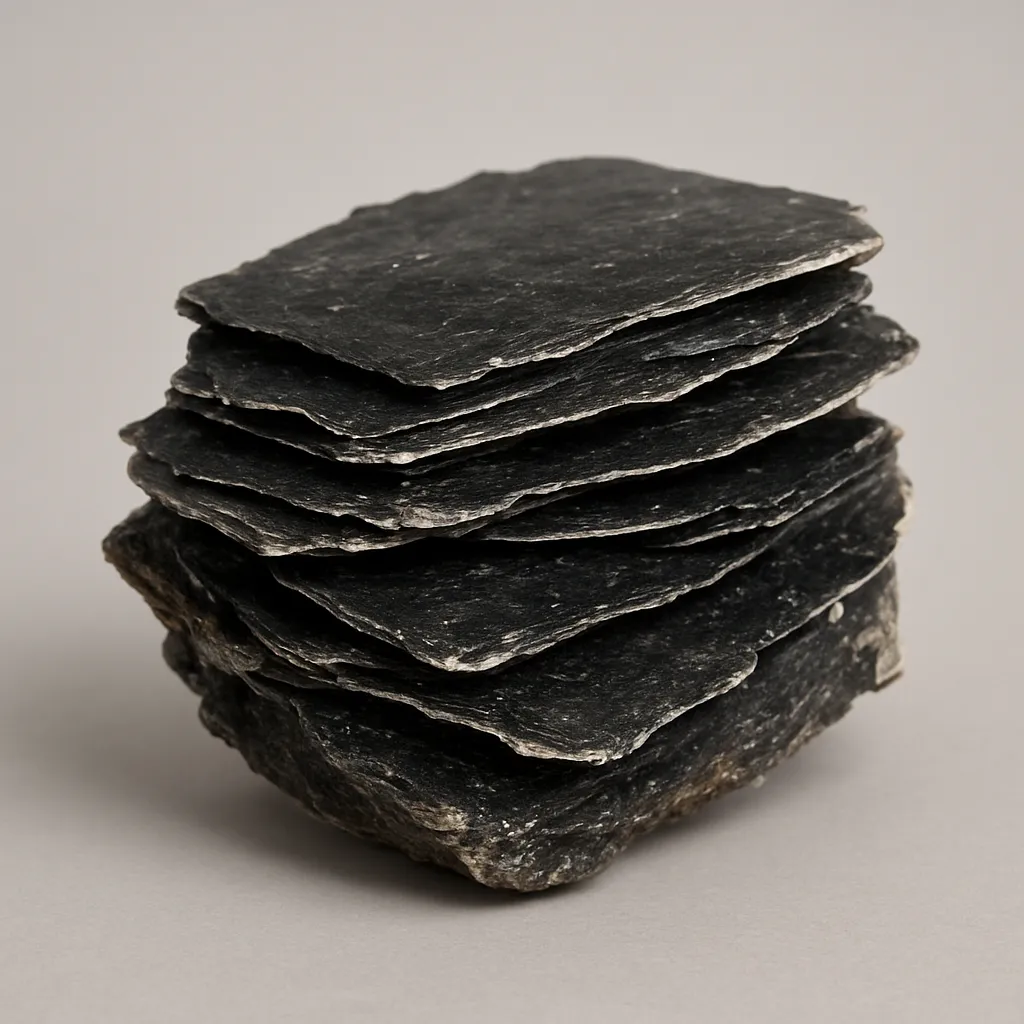
A pale, silvery mineral splits into thin, flexible, transparent sheets and has a hardness of 2 to 3. Which mineral is it?
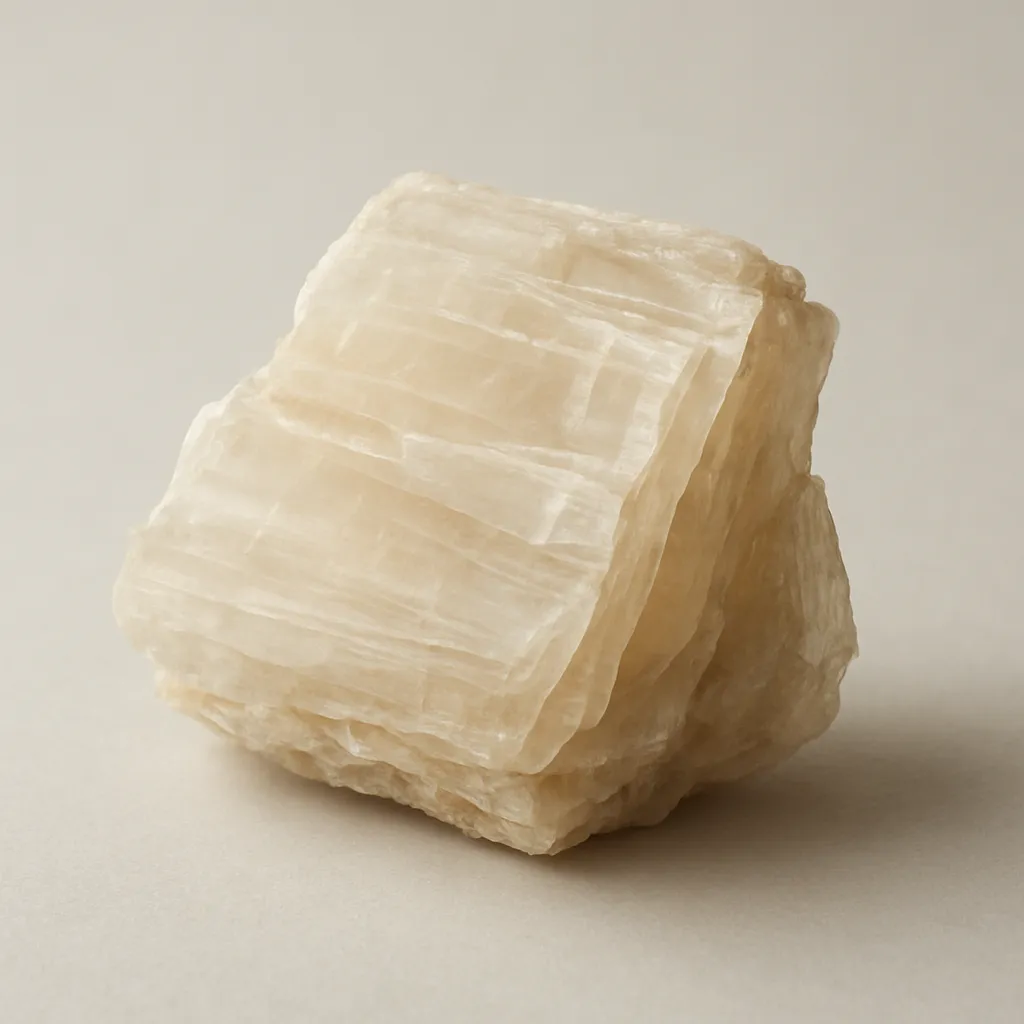
A steel mill receives a dense, silvery-gray to reddish rock whose powder leaves a red-brown streak. Which ore of iron is being delivered?
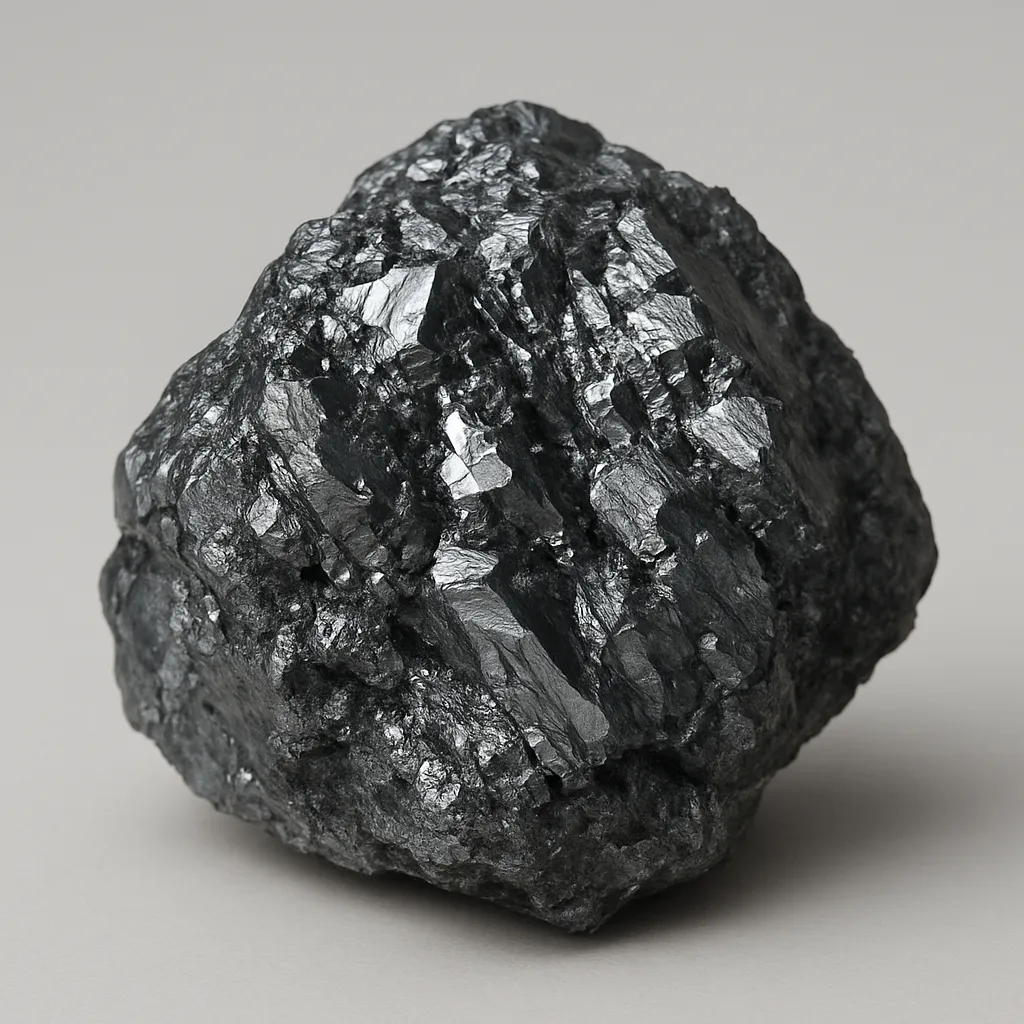
Which mineral is mined as the primary ore of zinc, typically a brown to black specimen with resinous luster and cleavage in six directions?
A copper refinery receives a brassy yellow ore that a knife blade easily scratches, unlike the much harder brassy pyrite. Which mineral is it?
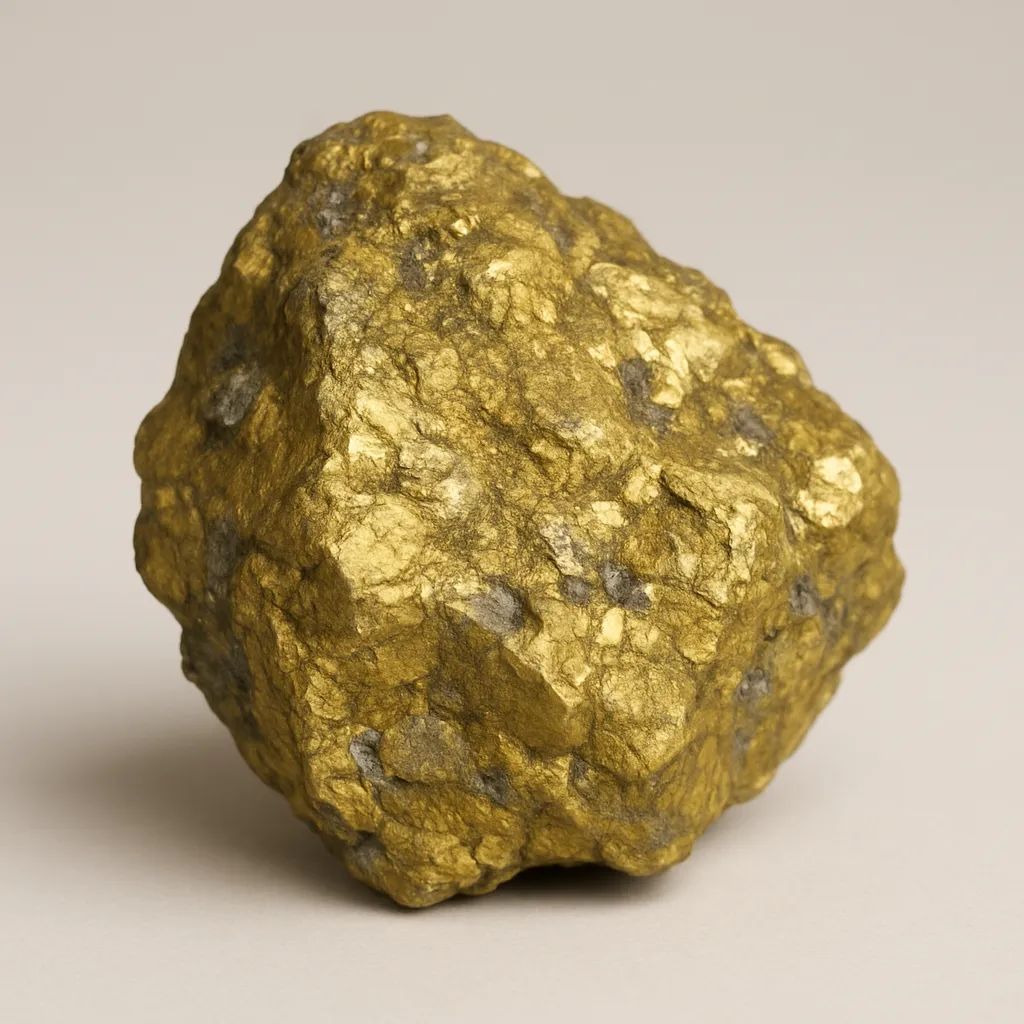
Ruby and sapphire are gem varieties of which mineral, rated 9 on the Mohs hardness scale?
A colorless specimen scratches every other mineral on the Mohs scale and is prized as a gemstone. Which mineral is it?
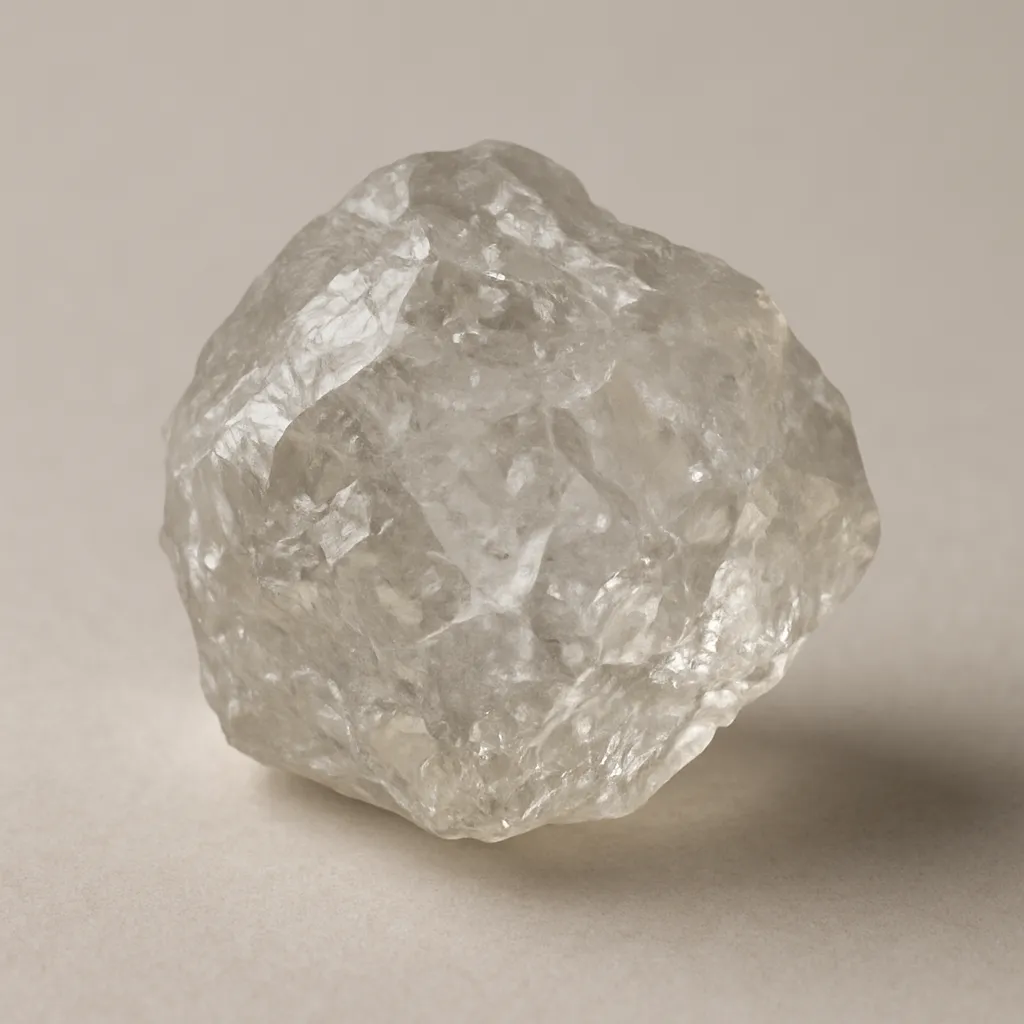
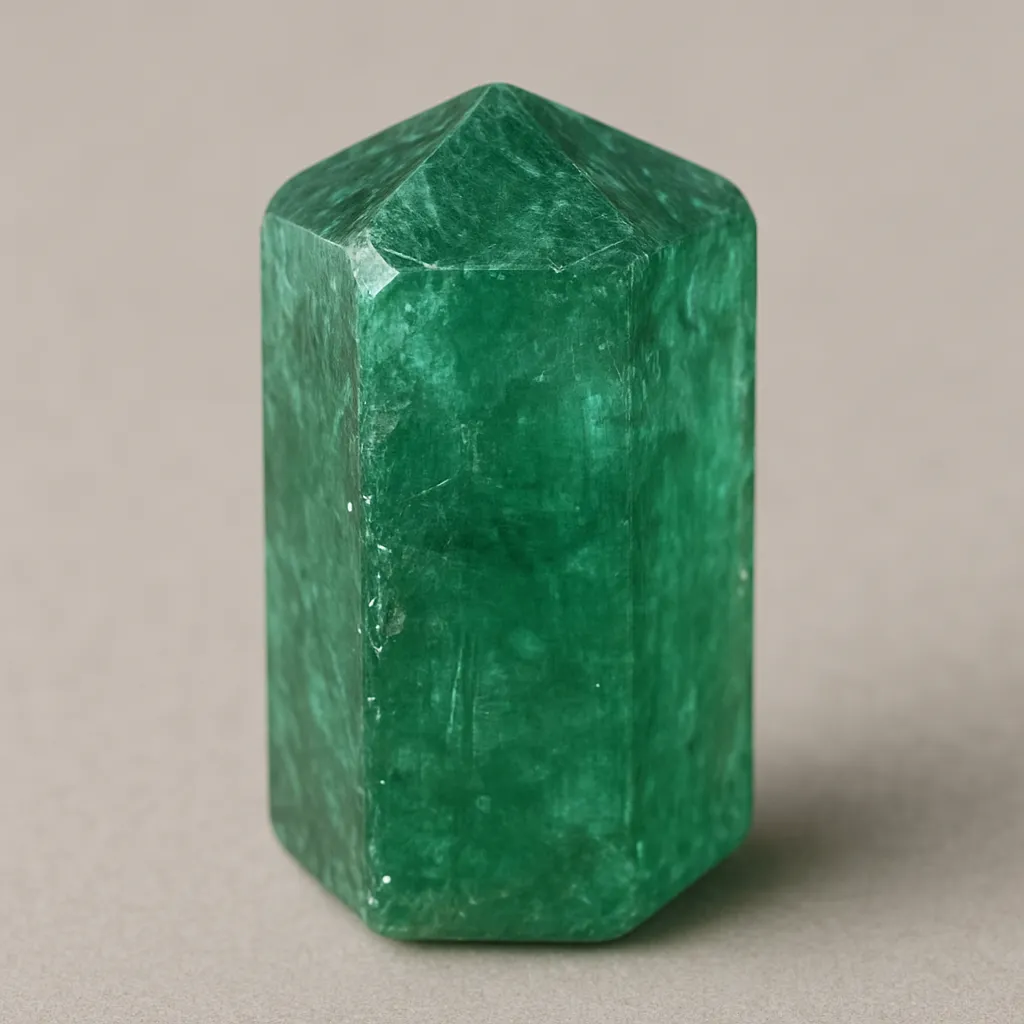
A green, hexagonal-crystal gem mineral valued as emerald is a variety of which mineral?
A student says two specimens must be different minerals because one is deep purple and one is nearly colorless. Both have hardness 4, cleavage in four directions, and cubic crystal form. What is the better conclusion?
A student says a specimen broke by cleavage because the pieces have shiny faces, but every break is actually a smooth curved surface with no repeated flat angle. What is the better conclusion?
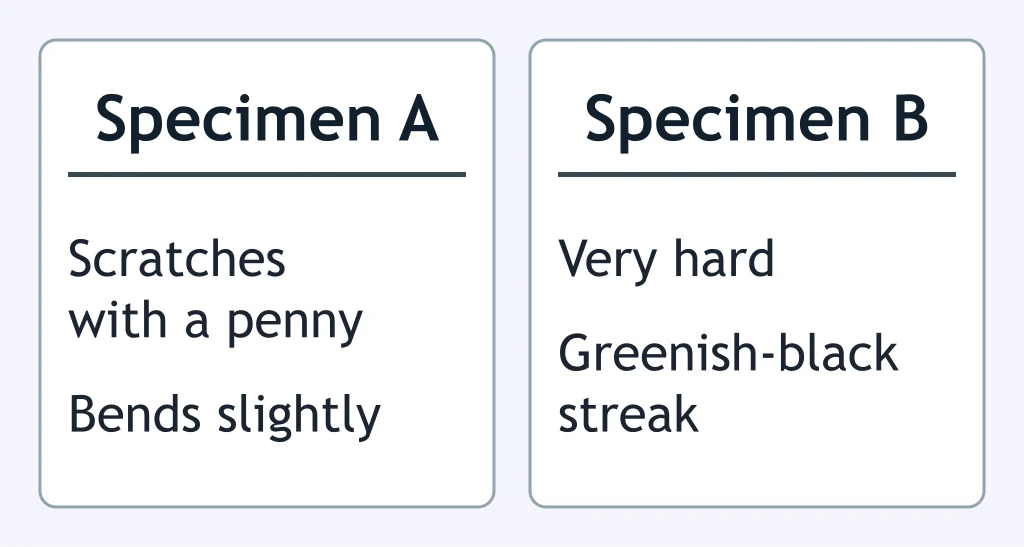
A prospector pans two brassy, gold-colored specimens from the same streambed. One scratches easily with a copper penny and bends slightly; the other is much harder and leaves a greenish-black streak. Which is more likely the real gold?
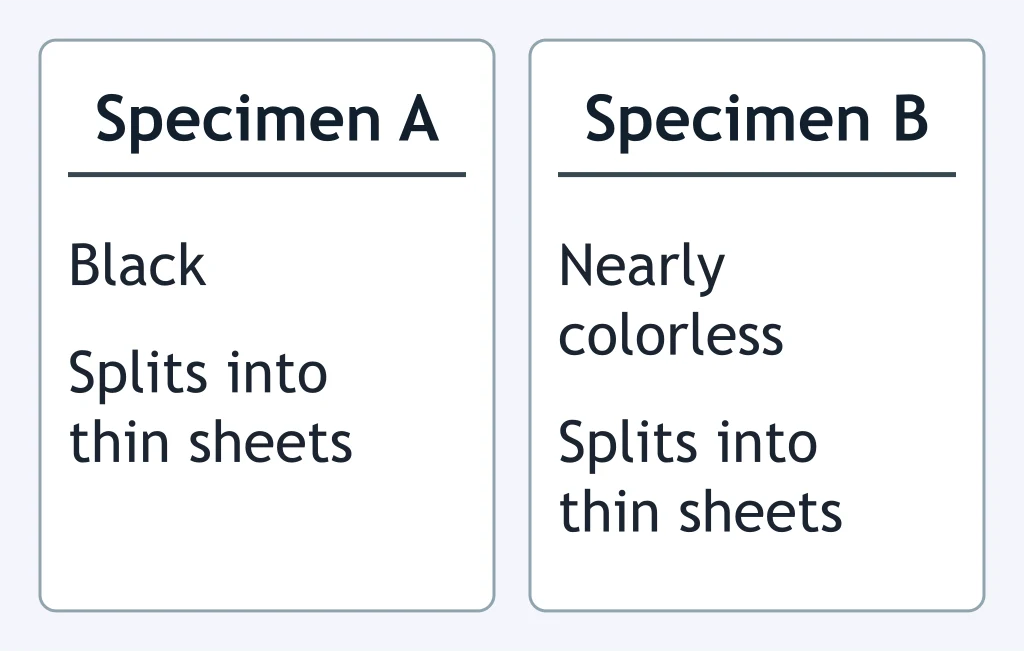
Two mica specimens split into identical thin, flexible sheets along one direction; one is black and one is nearly colorless. A student says they cannot be the same mineral group. What is the better conclusion?
A geologist finds a rock that is mostly non-valuable quartz and feldspar but has scattered flecks of visible gold. A student calls the whole rock 'ore.' What is the more precise conclusion?
A student scratches an unknown mineral with a fingernail and it resists scratching, then tests it with a copper penny and the penny scratches it. The student says the two results contradict each other. What is the better conclusion?
Crack the passcode before the zombies get in.
Answer, then swat bugs for bonus points.
Race through questions at your own speed.
Same question on every screen. Fastest wins.

Pick a tile, answer, hit bonuses and steals.
40 questions