Loading
by BlastRoom
Review drainage patterns, stream computation, erosional and depositional landforms, channel process, hydrographs and watersheds.
#earth_space_science
40 questions
One question set, multiple game modes. Tap any game to see it in action. Not sure which to pick?
Answer to place stones and capture territory.
Outrun the snow together.
Earn blasts, then hunt the other team.
Answer to earn energy, then climb.

The class blasts through walls together.
Bid on mystery lots. Most money wins.
Sell tours. Nice, standard, or a total scam.

Answer, restock, and serve the rush.
More correct answers pulls the rope your way.
Answer, then shoot down the alien wave.
Answer, then tap to leap the frozen ridge.
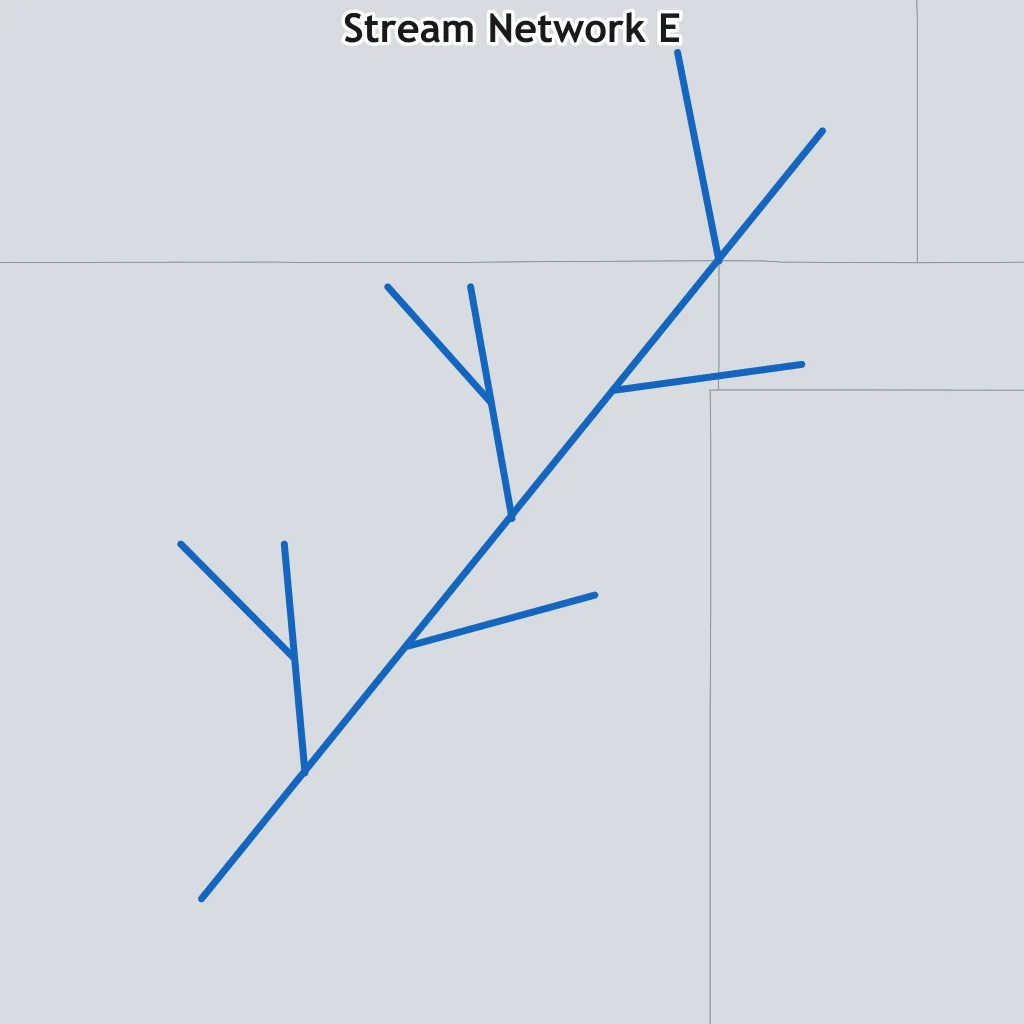
The map shows a tree-like network where many small tributaries join a larger trunk stream at acute angles. What drainage pattern is shown?
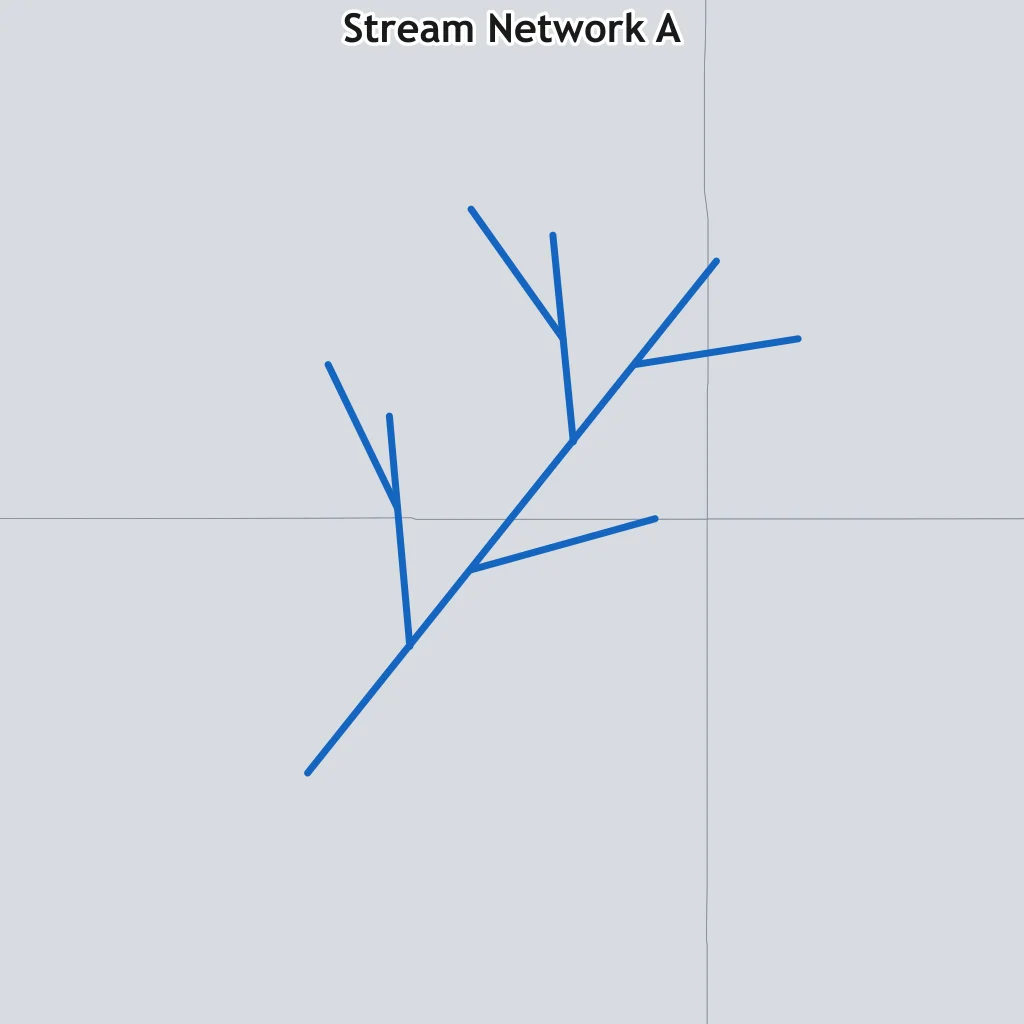
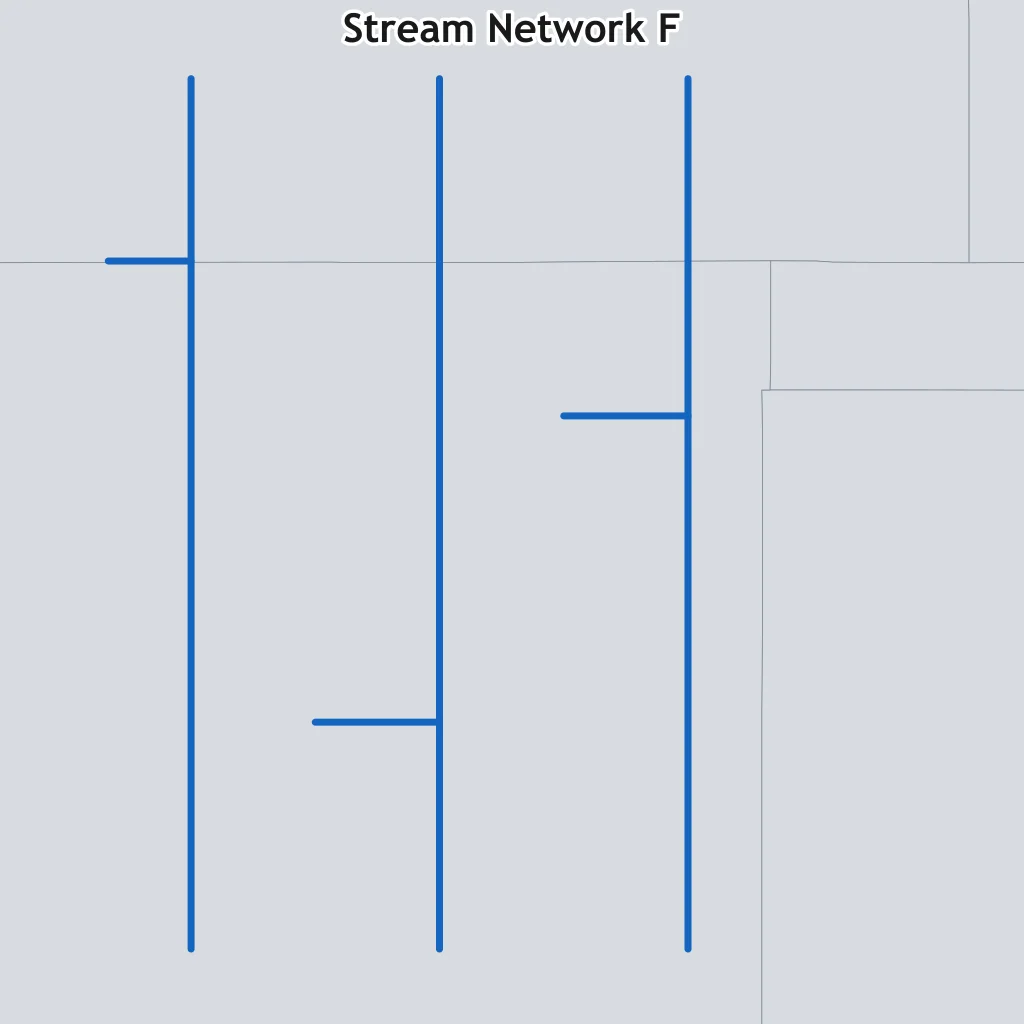
A stream map shows several long parallel valleys, with short side streams entering the main channels at nearly 90 degrees. What drainage pattern is shown?
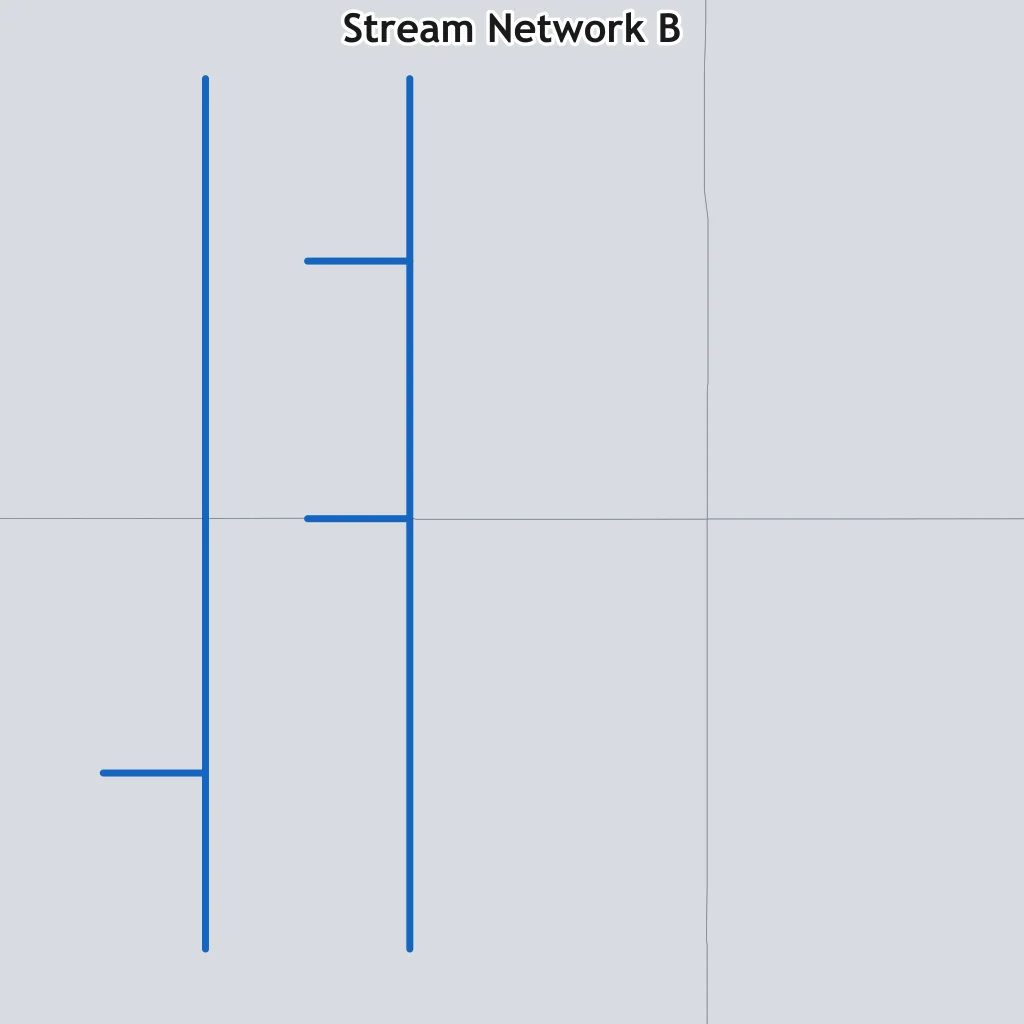
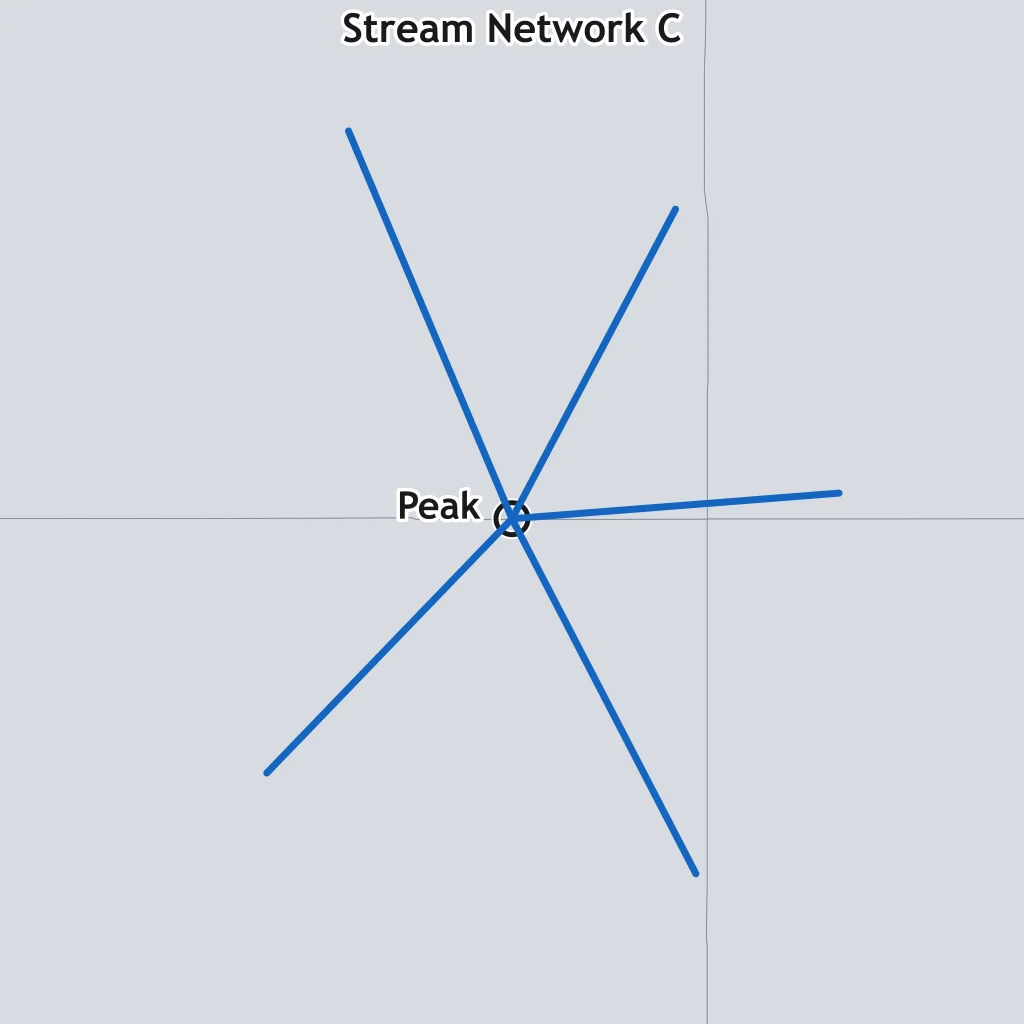
The map shows channels flowing outward in many directions from a high central peak. What drainage pattern is shown?
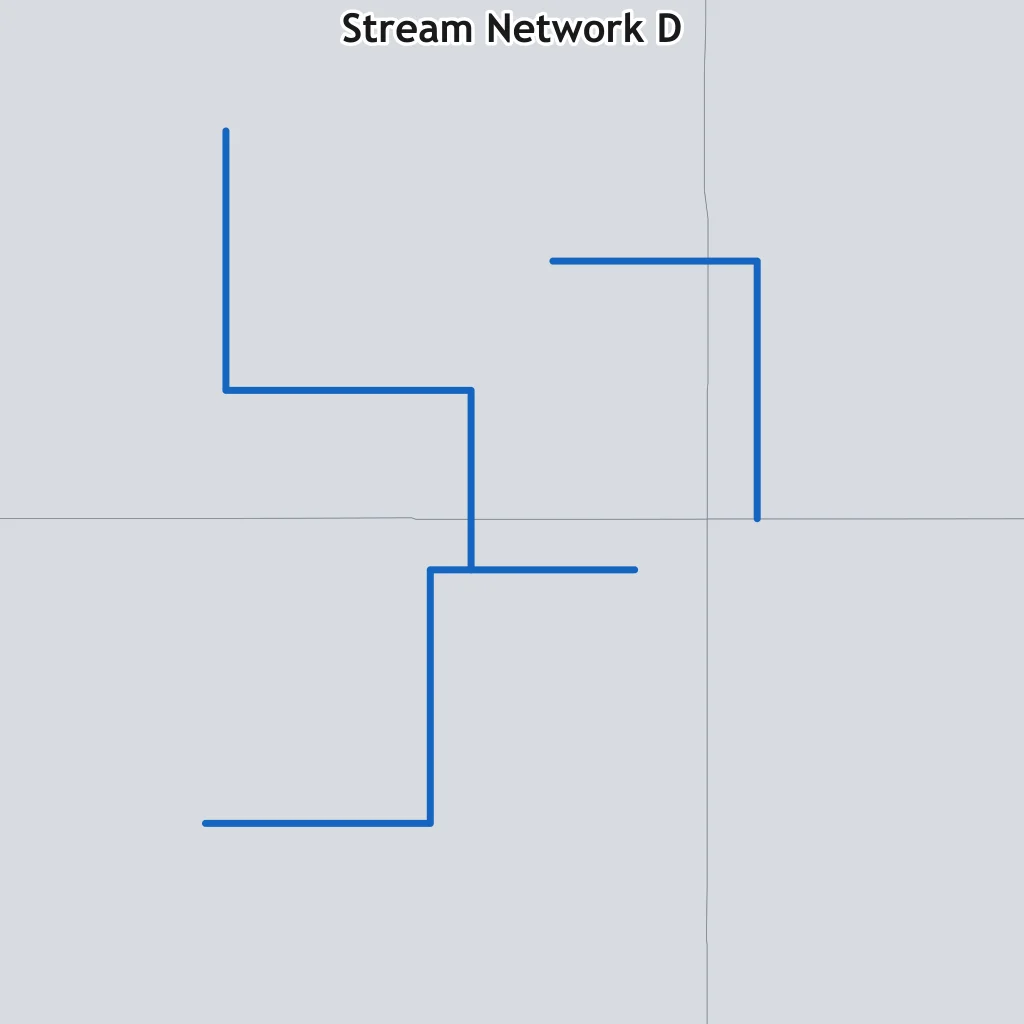
A map shows streams with many sharp right-angle bends, forming blocky turns controlled by joints in bedrock. What drainage pattern is shown?
On the map, one main trunk has many irregular branches that spread like limbs of a tree across uniform bedrock. What drainage pattern is shown?
The mapped channels run along folded ridges and valleys, and small tributaries cut across the ridges to join at right angles. What pattern is shown?
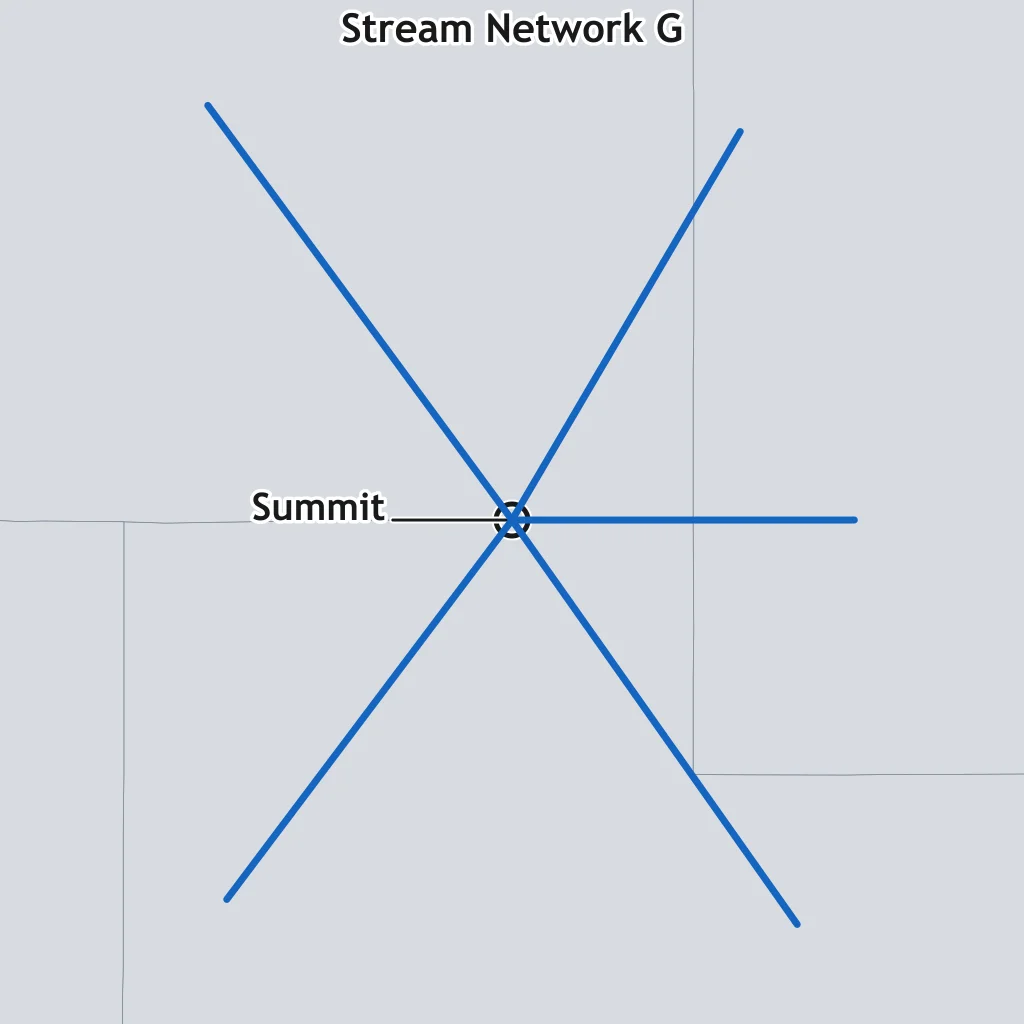
Several short streams on the map begin near a summit and flow away like spokes on a wheel. What drainage pattern is shown?
A rectangular stream channel is 8 meters wide and 1.5 meters deep, and water velocity is 2 meters per second. What is the discharge?
A stream is 12 meters wide with an average depth of 0.5 meter and an average velocity of 1.2 meters per second. What is its discharge?
A stream cross section has an area of 18 square meters, and the water moves at 0.6 meter per second. What is the discharge?
A small channel is 5 meters wide, has an average depth of 0.8 meter, and flows at 0.4 meter per second. What is the discharge?
A stream drops from an elevation of 860 meters to 380 meters over a channel distance of 40 kilometers. What is its average gradient?
A stream has a discharge of 96 cubic meters per second and a channel cross-sectional area of 24 square meters. What is its average velocity?
A stream flows at 1.2 meters per second. How long does a water parcel take to travel 3.6 kilometers downstream?
A low, flat strip beside a river is covered by water during high flow. What stream feature is this?
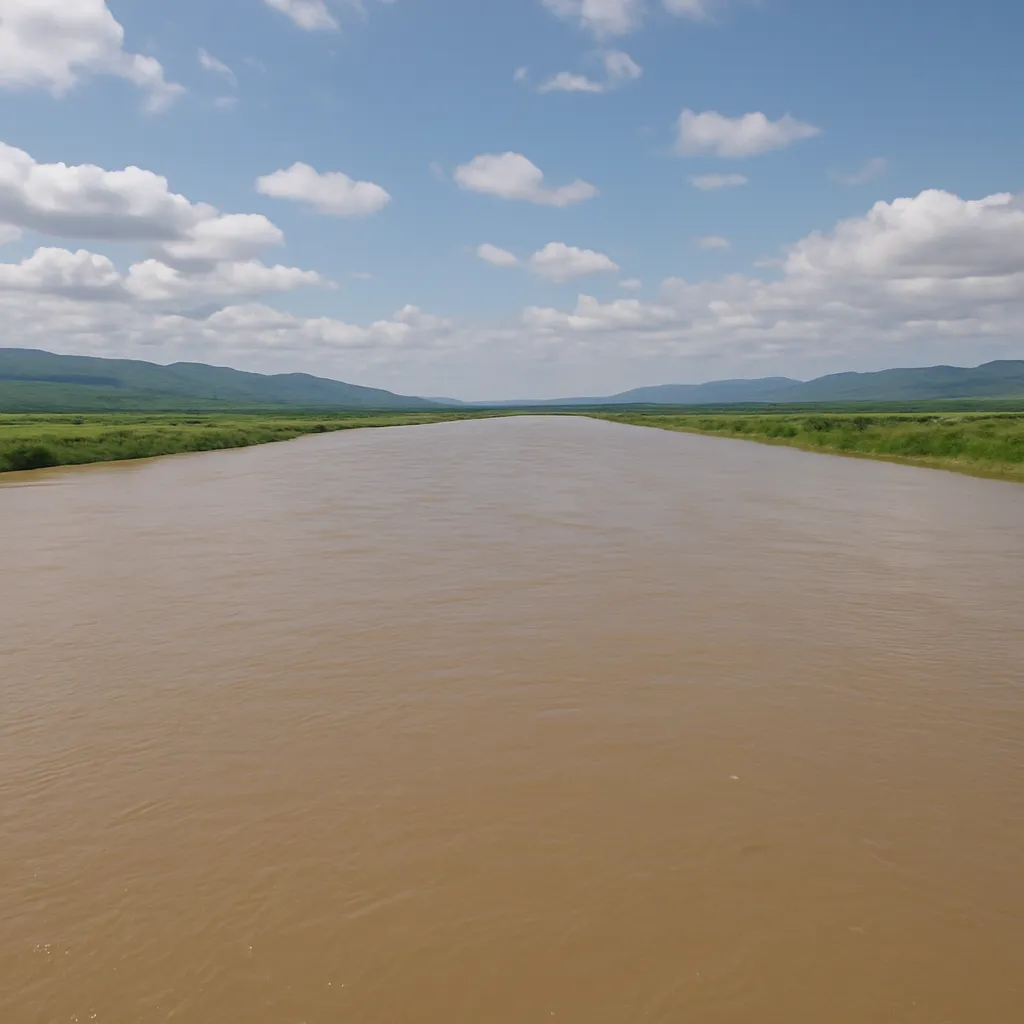
A river enters a quiet lake, splits into small distributaries, and deposits sediment that builds outward into the water. What landform is forming?
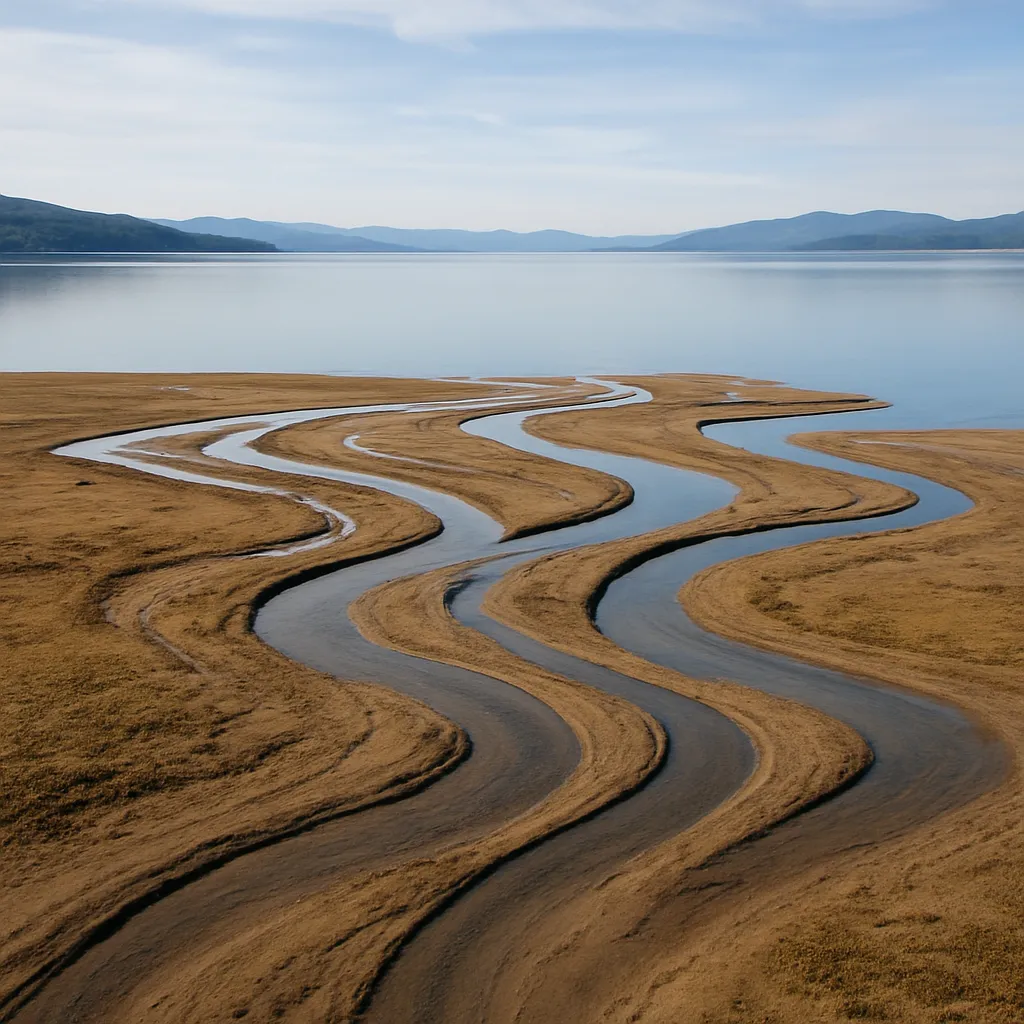
A cutoff bend leaves a crescent-shaped lake next to a meandering river. What feature is the crescent-shaped lake?
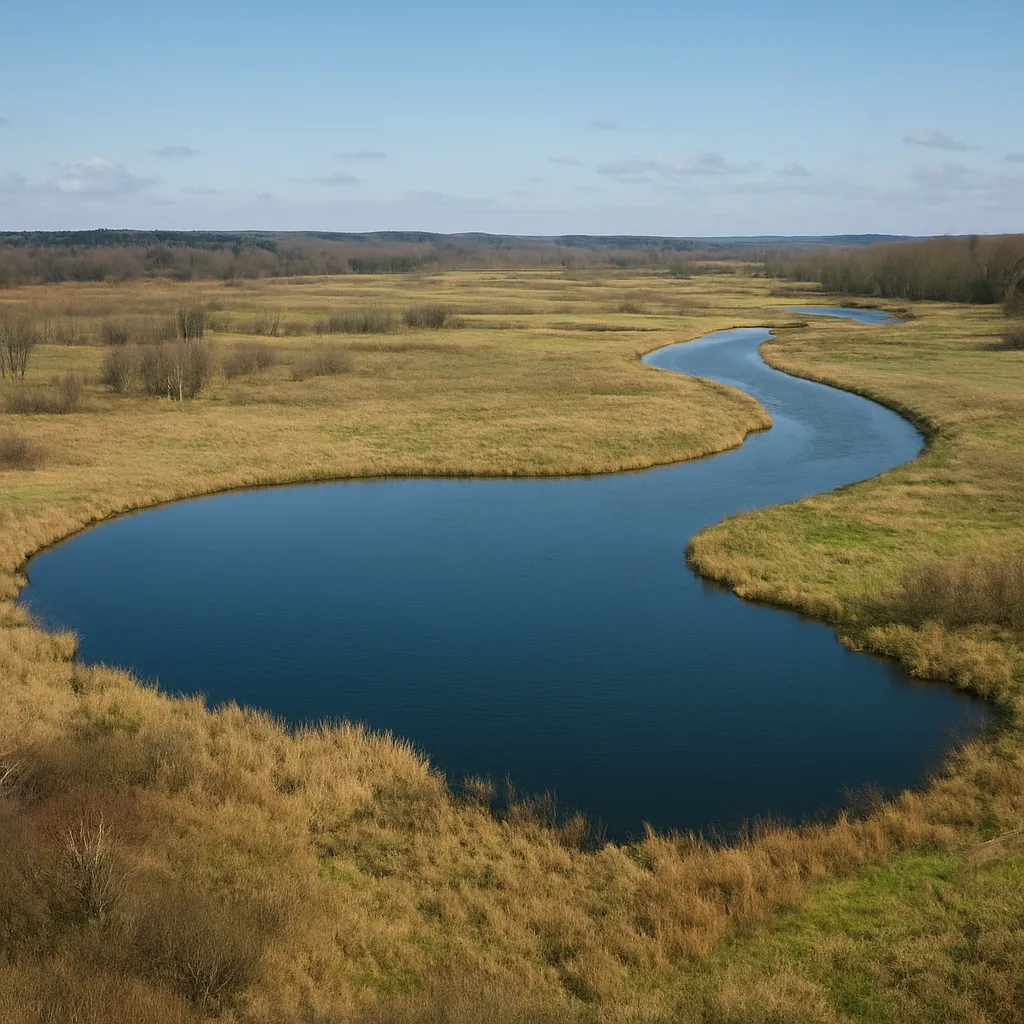
A steep mountain stream exits a canyon onto a dry valley floor and drops gravel in a fan-shaped deposit. What feature is this?
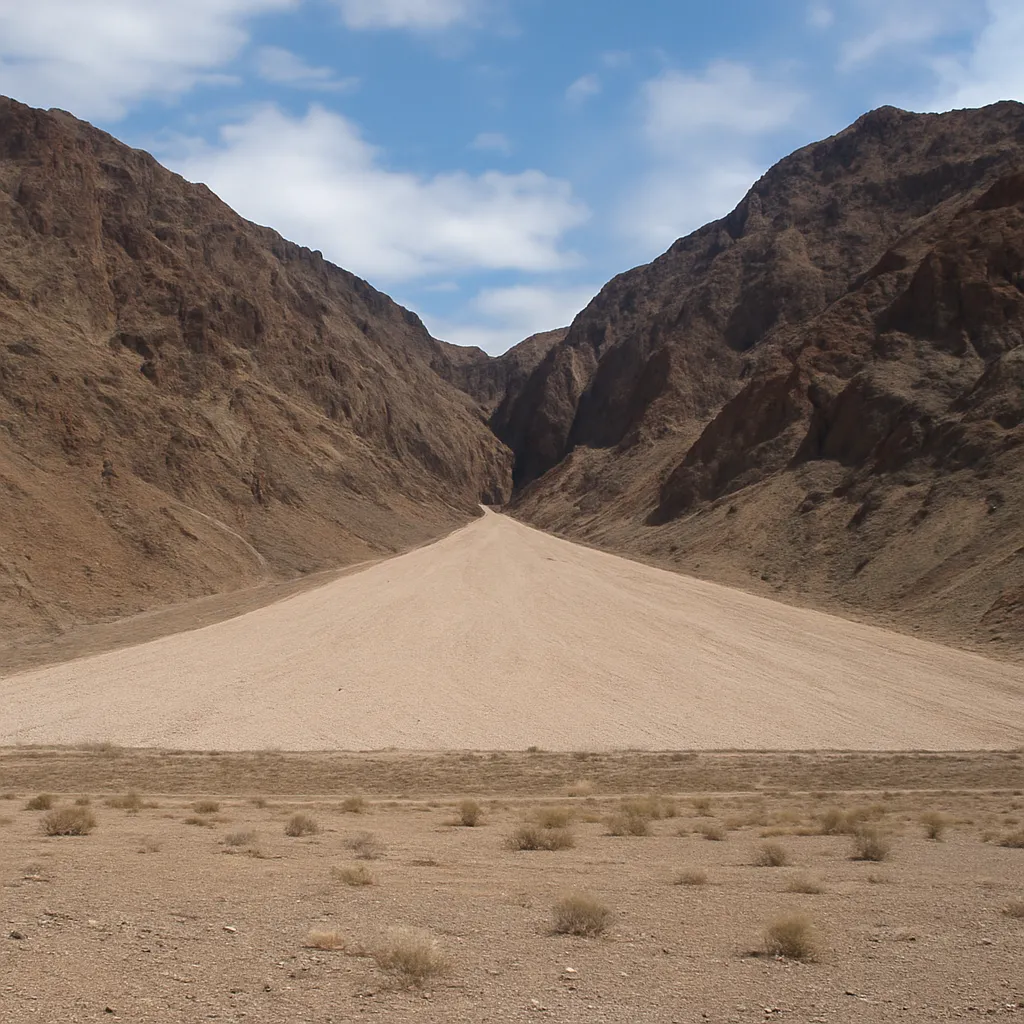
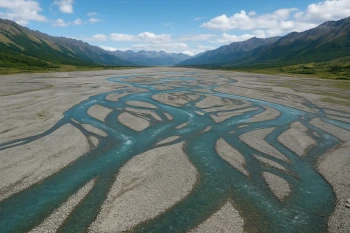
A sediment-loaded stream divides around many gravel bars, then rejoins downstream in shifting shallow channels. What channel form is shown?
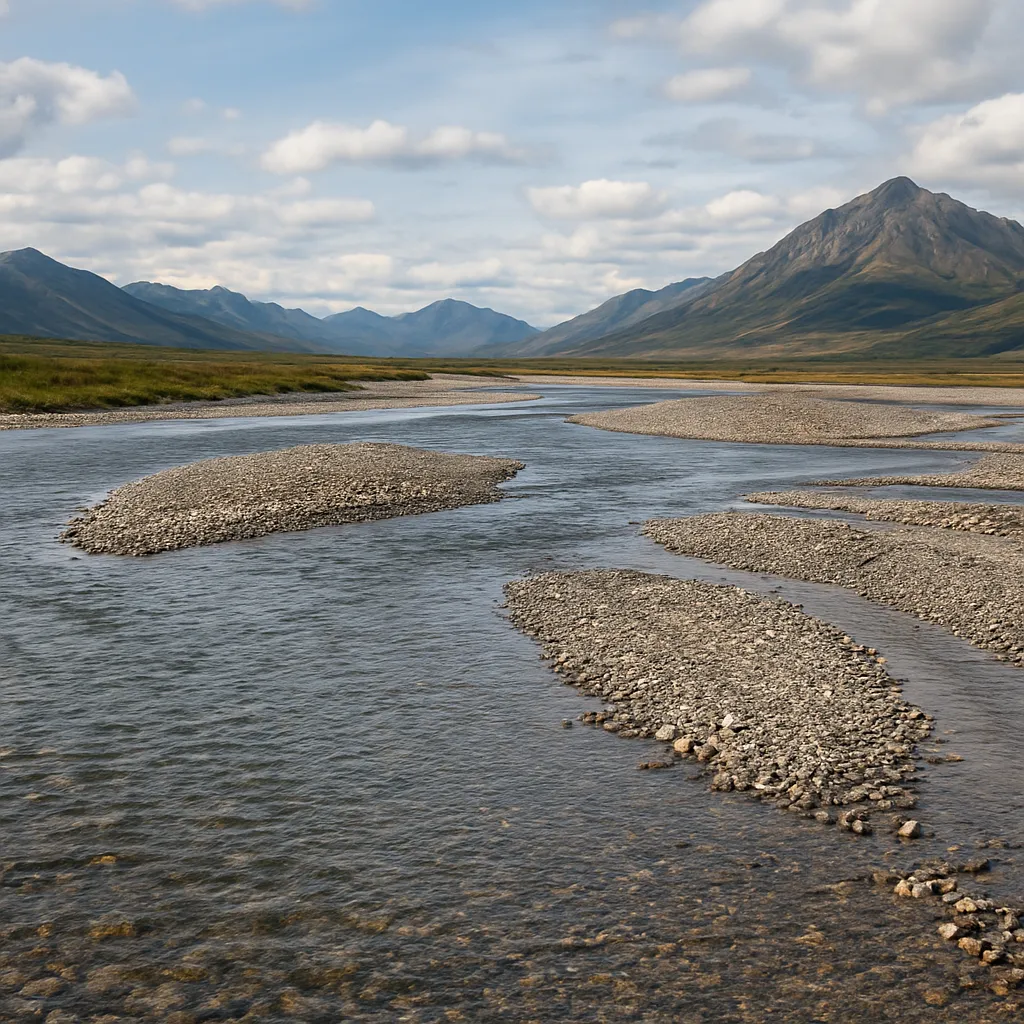
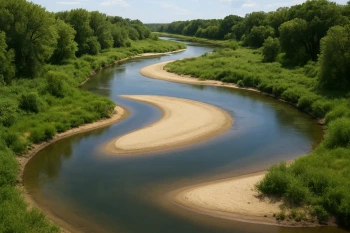
On the inside of a meander, slow water drops sand in a curved deposit attached to the bank. What landform is this?
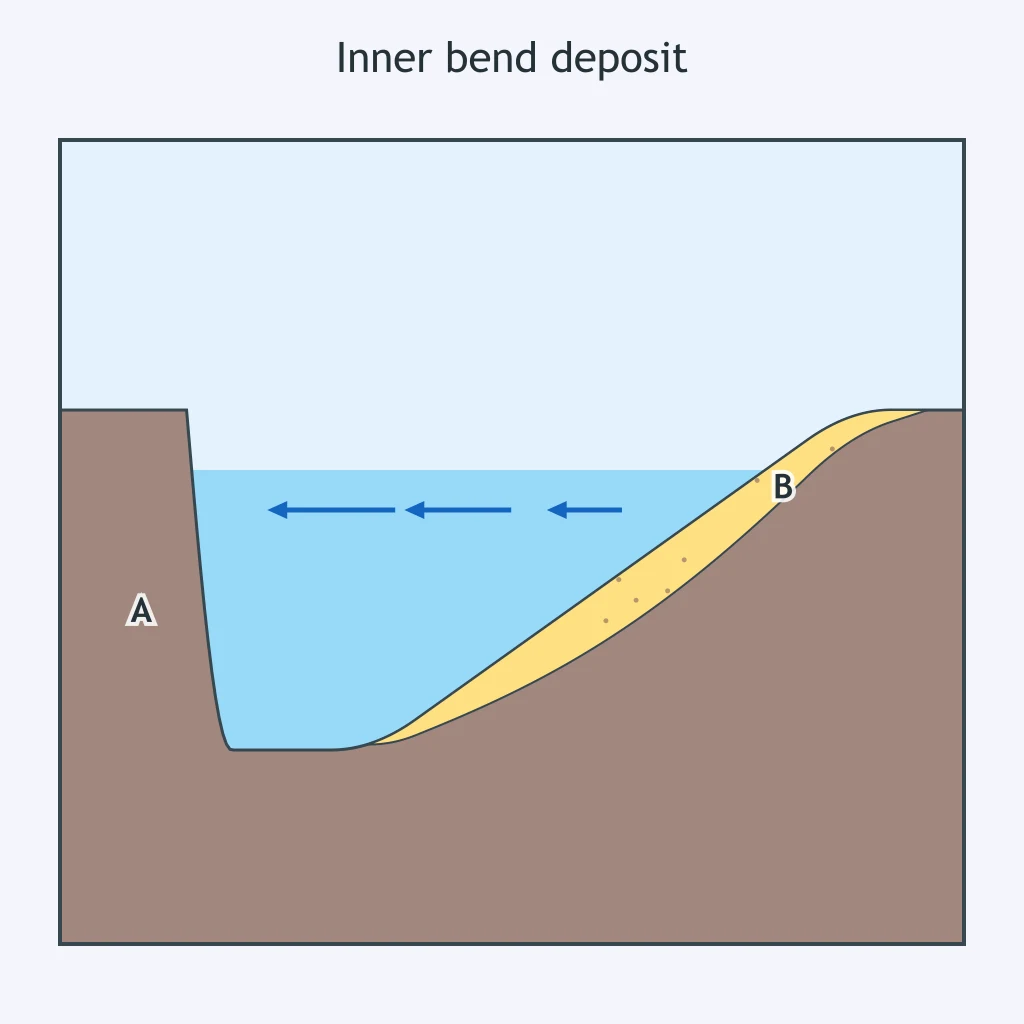
A flood breaks through a levee and spreads a fan-shaped sheet of sand across the floodplain. What deposit forms at the break?
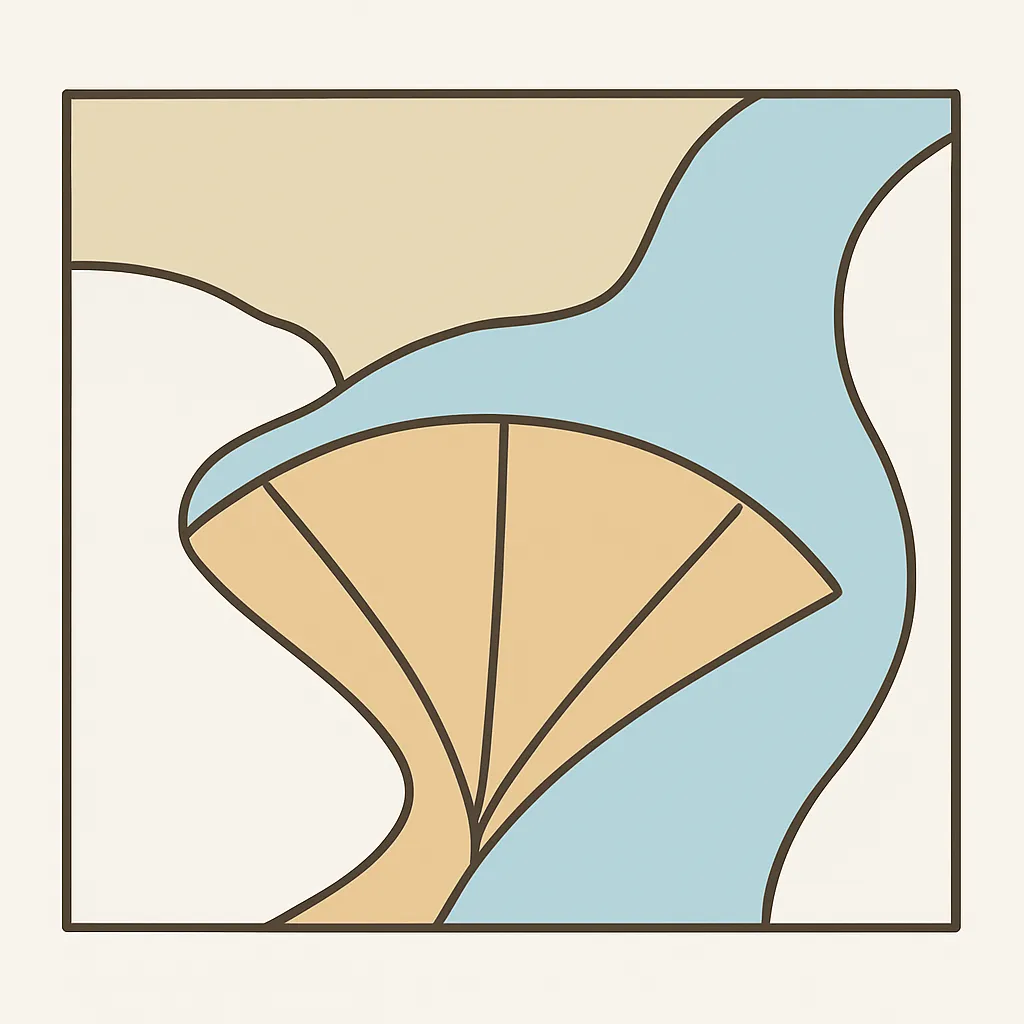
A stream has a steep gradient, waterfalls, rapids, and a narrow V-shaped valley with little floodplain. Which stage of development is shown?
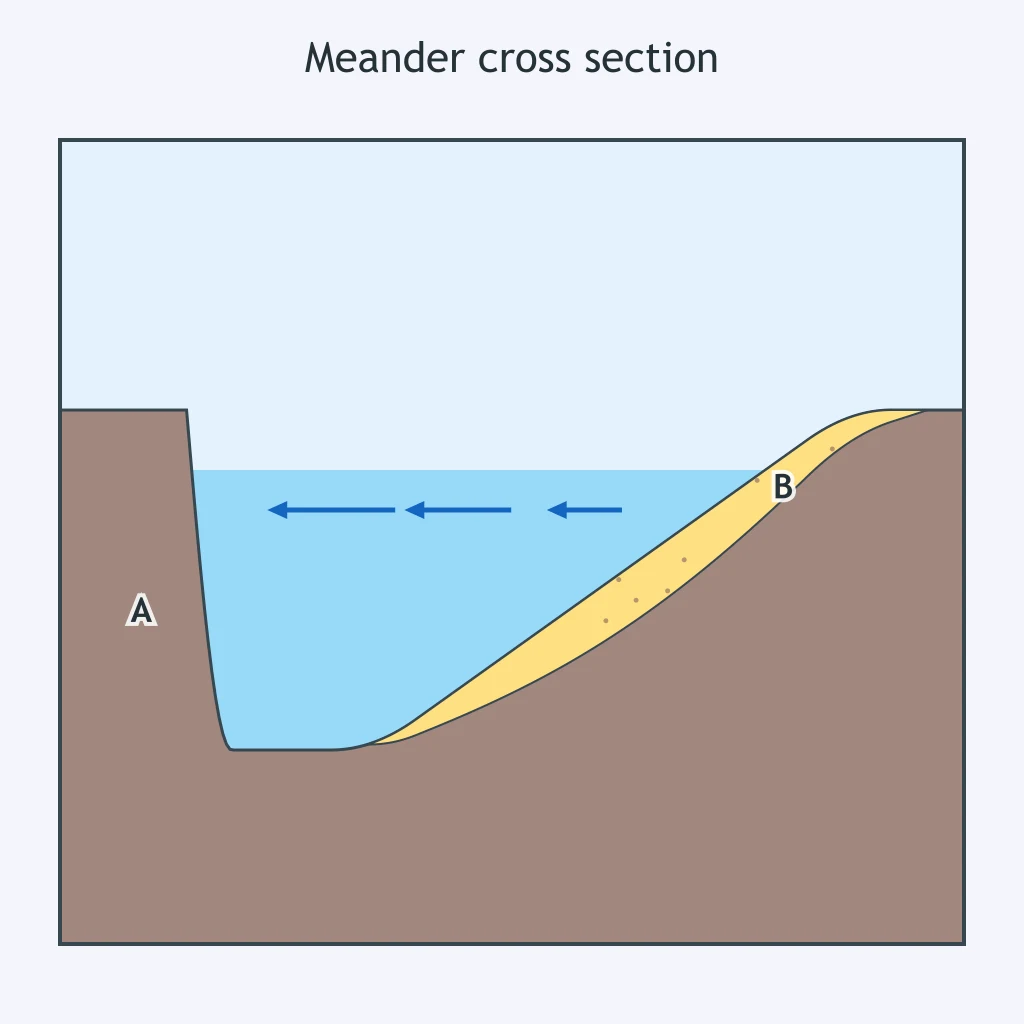
A meander cross section shows a deep, steep-sided channel on the left and a shallow, gentle inner slope on the right. What is happening on the left side?
A cross section through a bend shows shallow water and a gently sloping sandy surface on the inside of the curve. What process is dominant there?
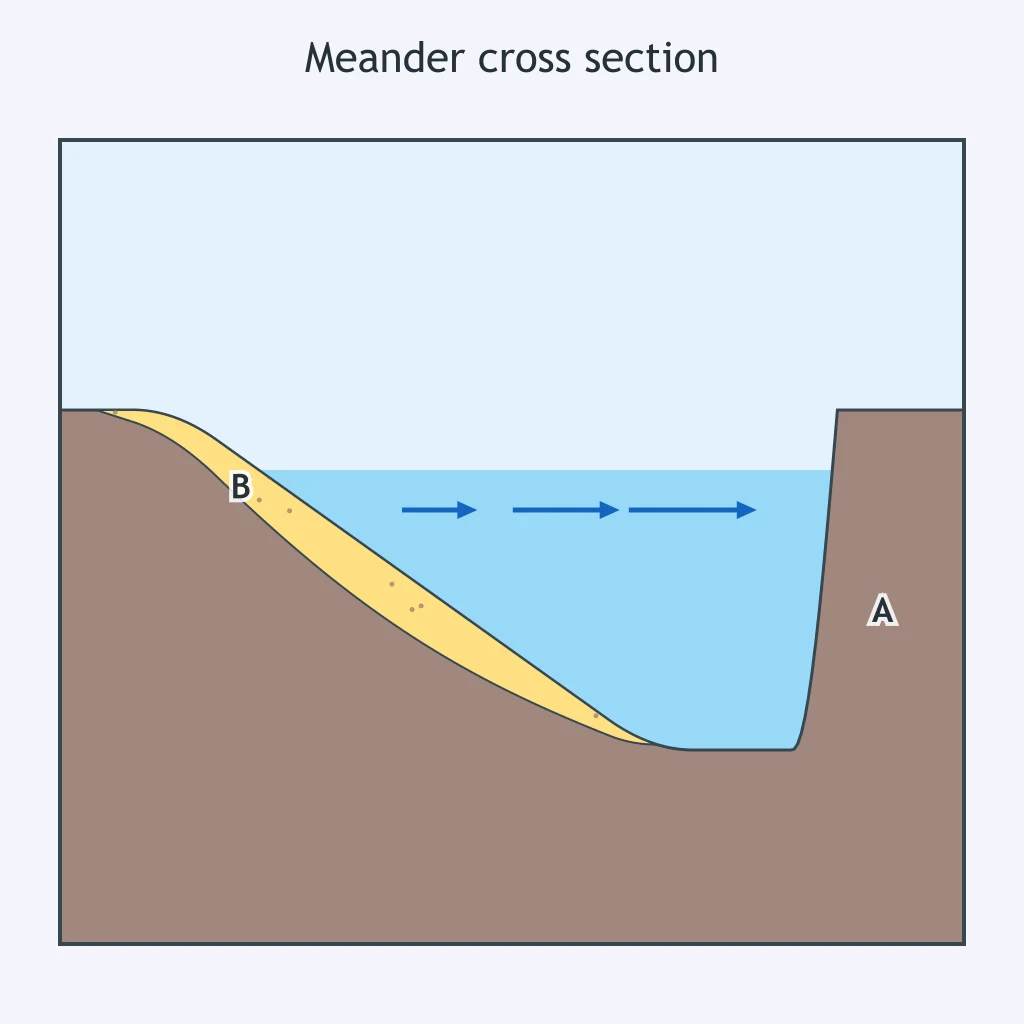
The deepest part of a meander channel lies beside the outside of the bend, while the inside is shallow and sandy. Where is stream velocity greatest?
In a stream channel cross section, the deepest water lies against the left bank and a shallow inner slope lies on the right. How will the channel most likely migrate?
During floods, a river spills over its banks and drops coarse sediment in raised ridges parallel to the channel. What landform is produced?
During a flood, water spreads from the channel across the flat land beside a river. Why are the layers it leaves far from the channel mostly silt and clay?
On the storm hydrograph, rainfall ended at hour 2. What lag time is shown between the end of rainfall and peak discharge?
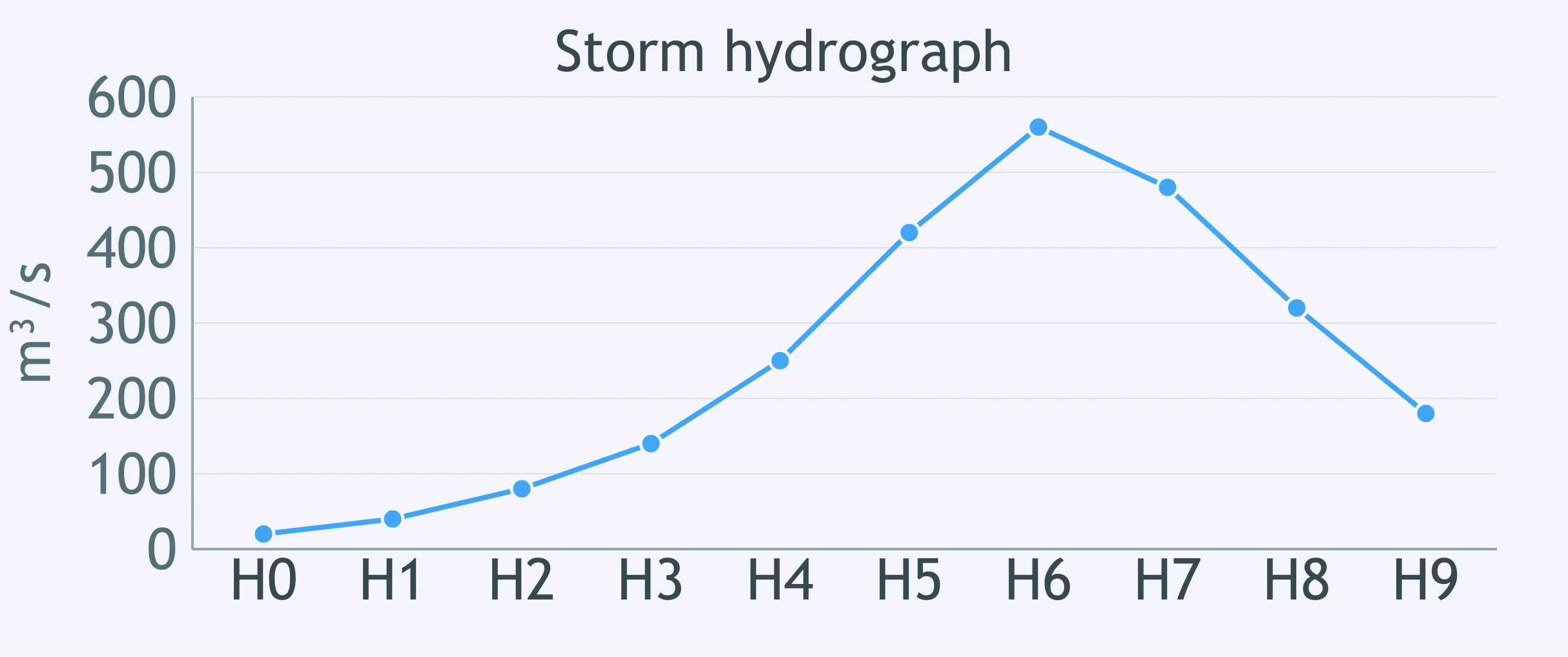
Use the storm hydrograph. What is the peak discharge of the stream during this event?
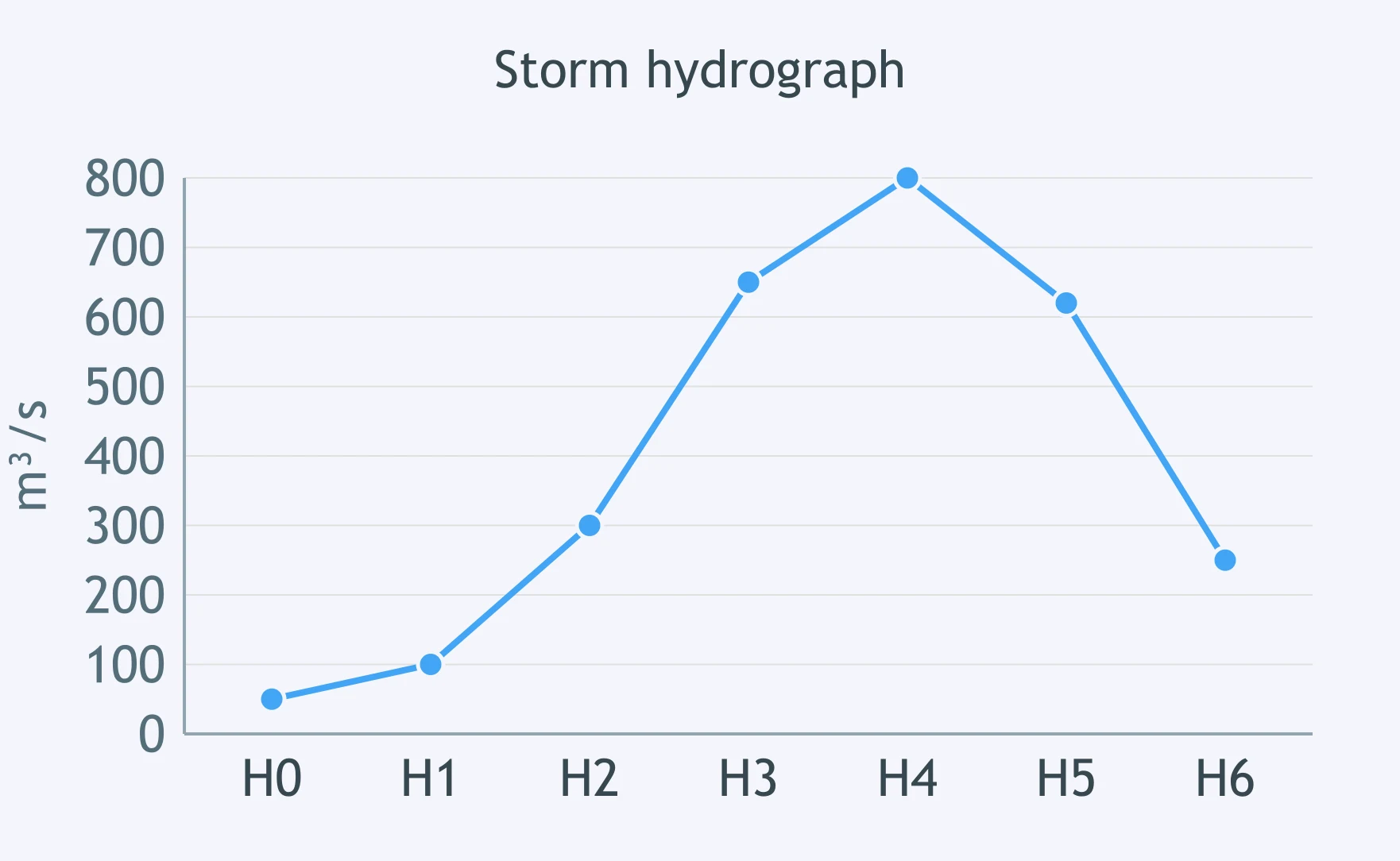
A storm's rainfall ended at hour 4. On the hydrograph, what is the lag time to the flood peak?
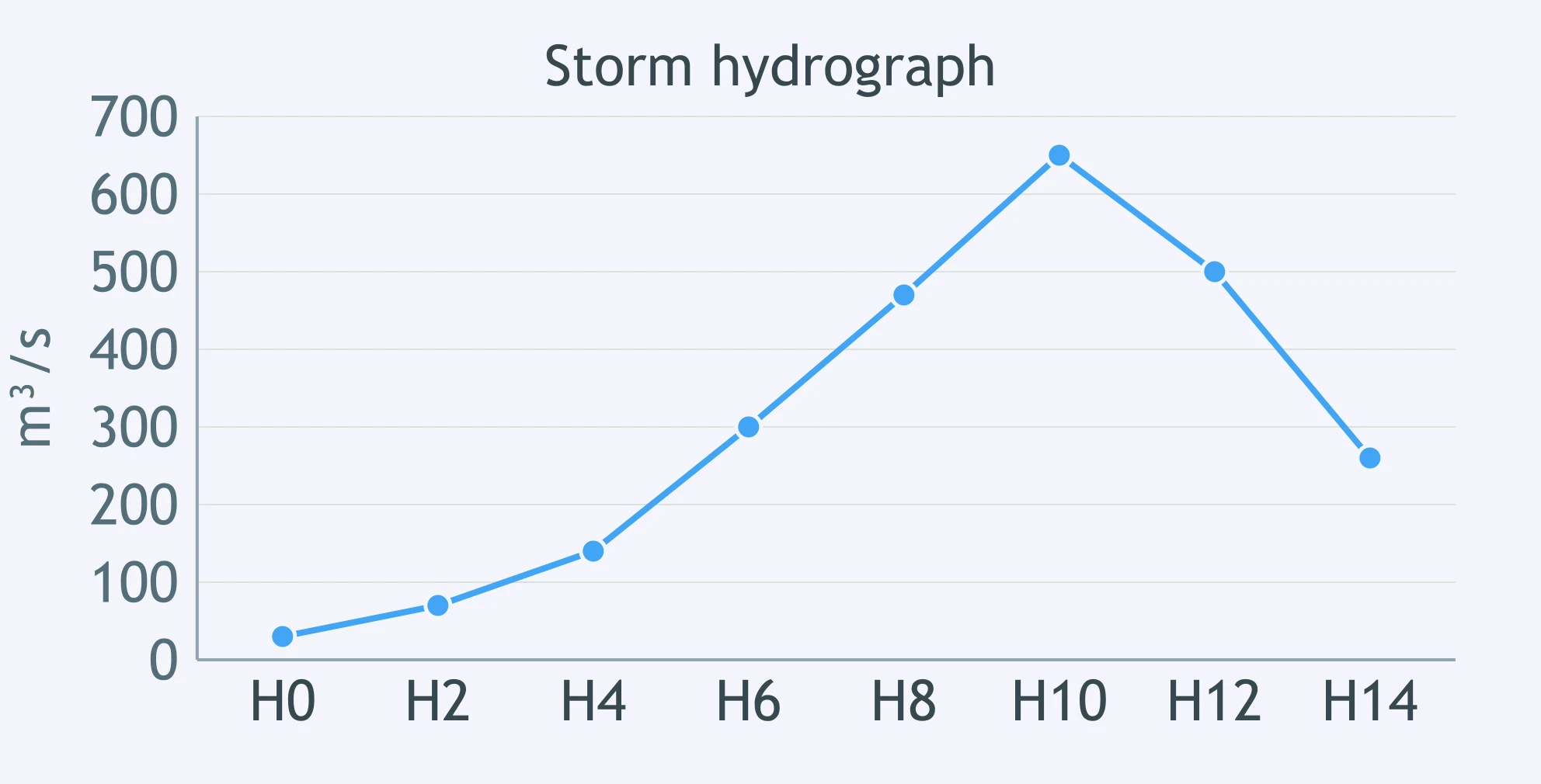
Read the hydrograph. What peak discharge should be reported for this storm?
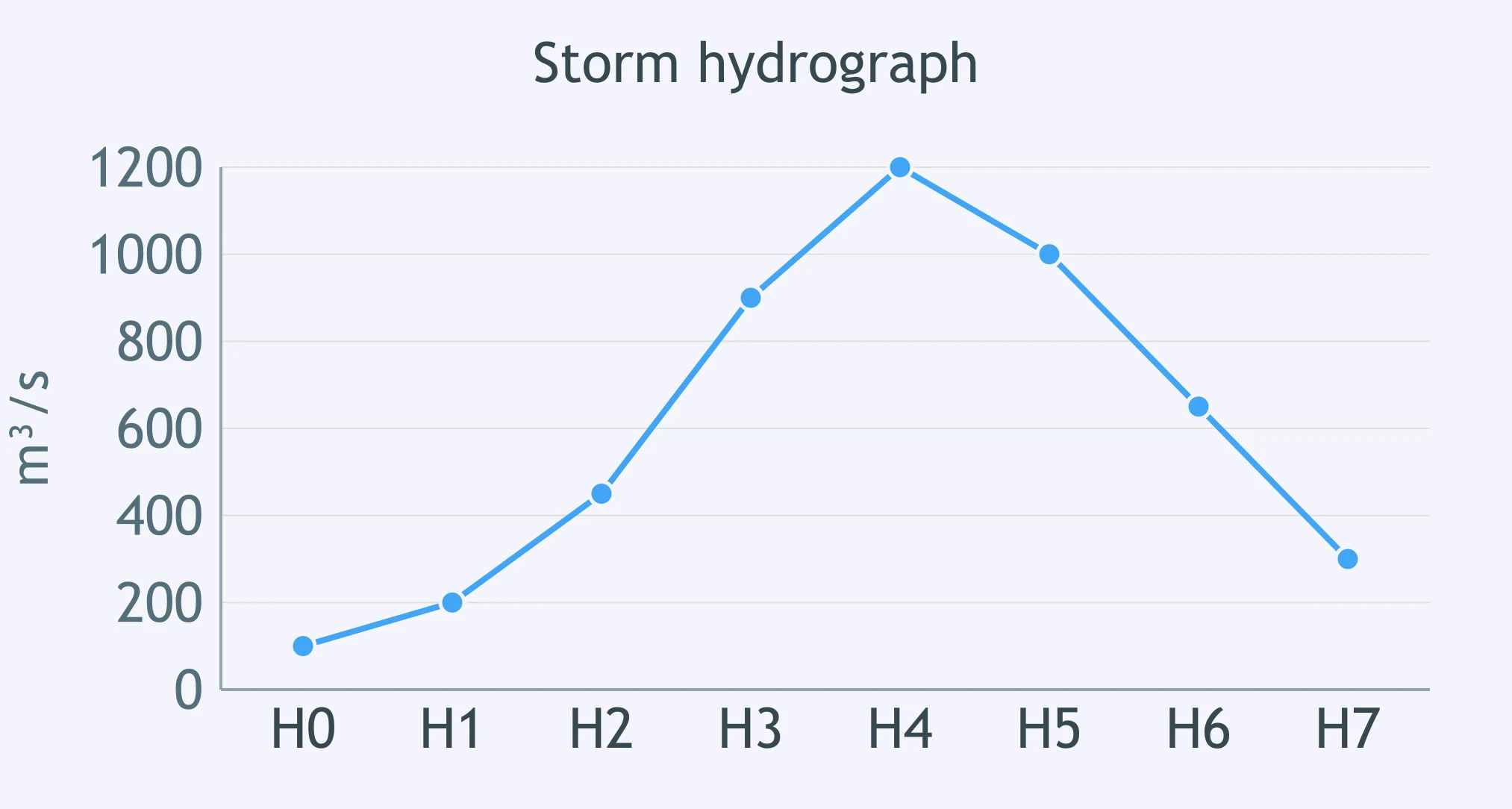
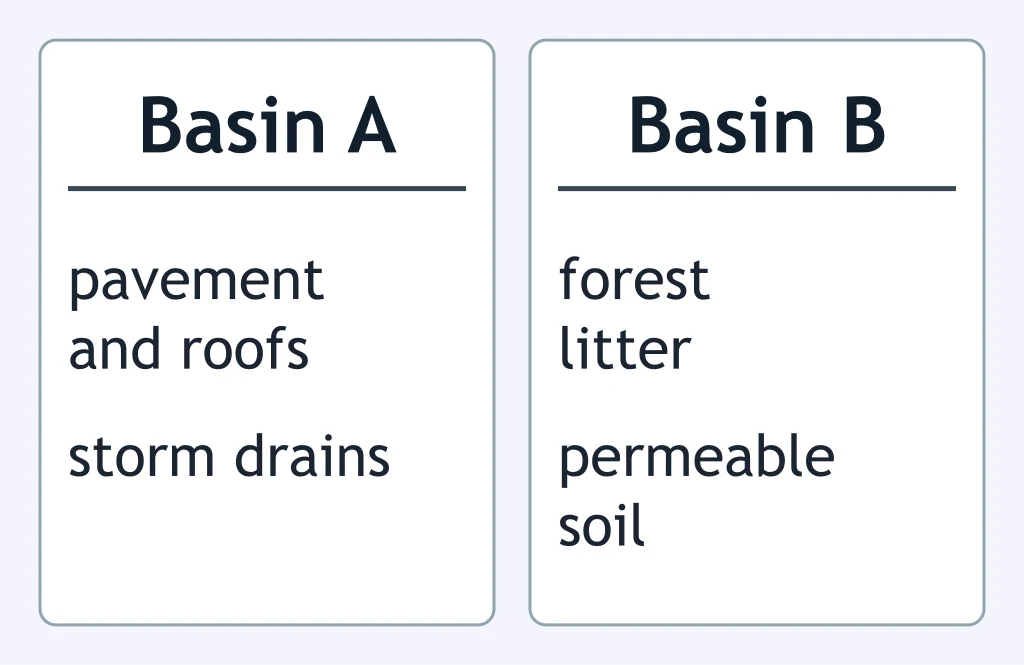
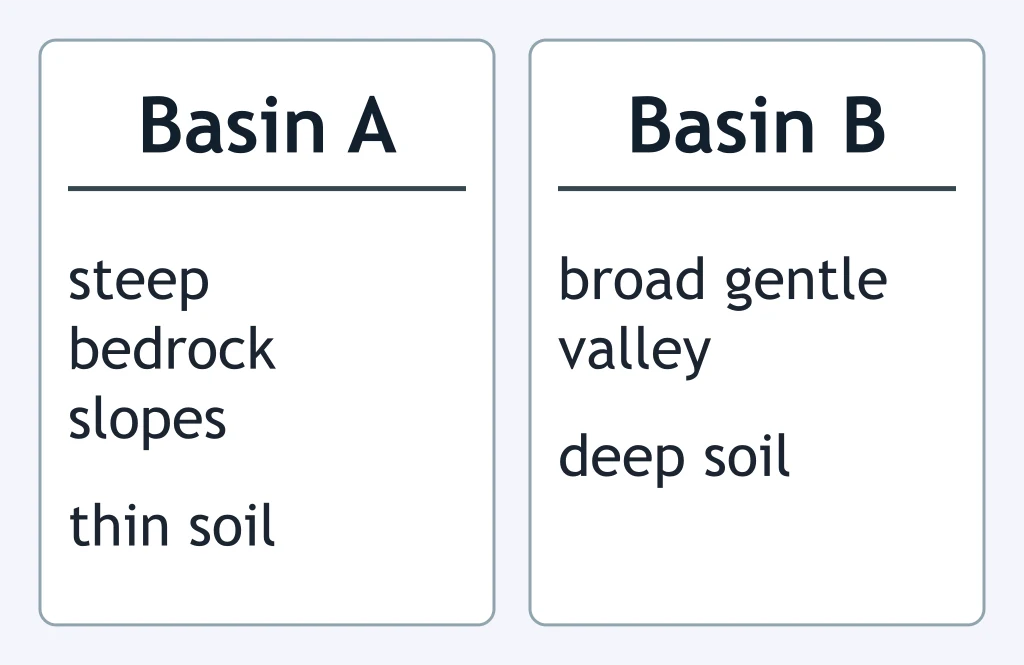
Panels A and B show equal-area basins after the same rainfall. Which storm response fits basin A?
Panel A shows steep bedrock slopes; panel B shows a broad low-gradient valley. With equal rain, what hydrograph difference is most likely for A?
A city keeps approving new houses on a floodplain where shallow overbank flooding occurs every few years. What mitigation directly reduces future exposure?
A town wants to lower the peak stage downtown during storms without moving buildings. What upstream mitigation addresses that peak most directly?
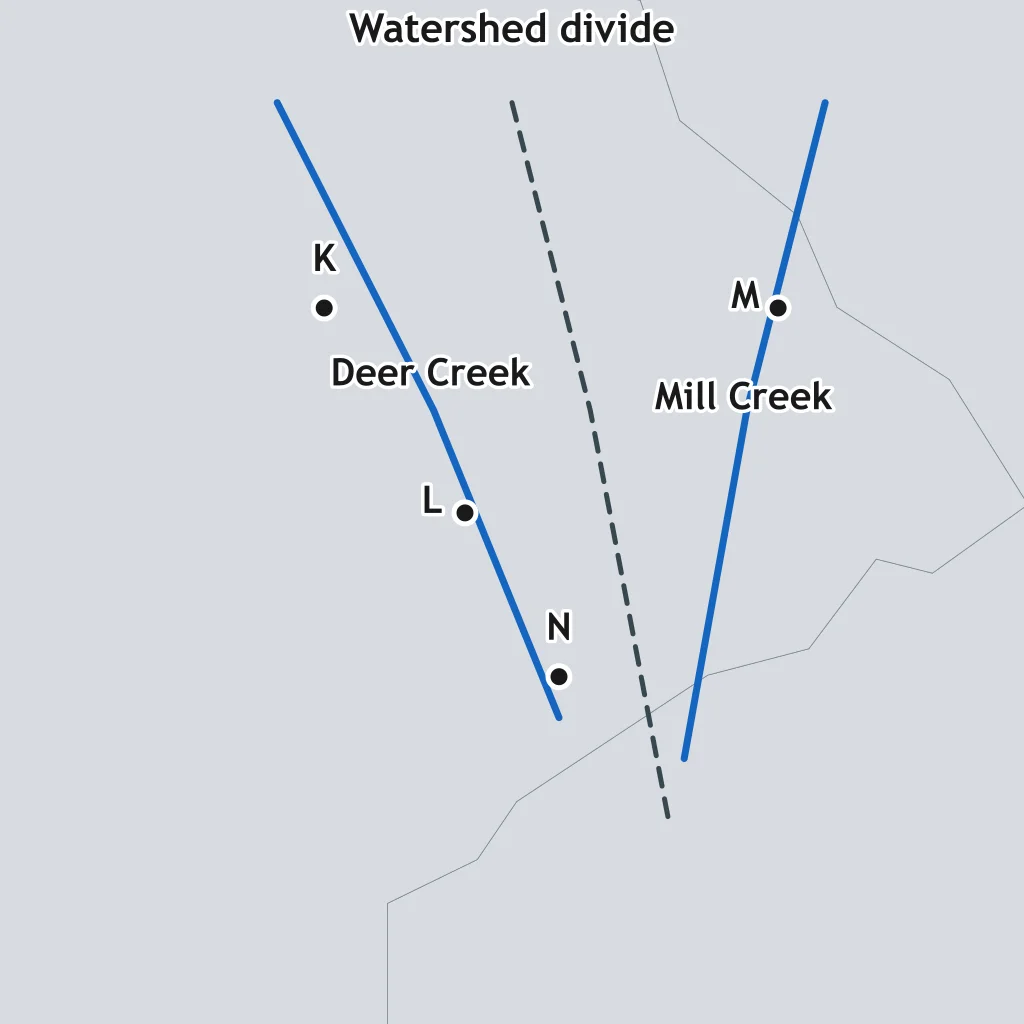
The map shows a drainage divide between Deer Creek and Mill Creek. Which labeled point is in the Mill Creek watershed?
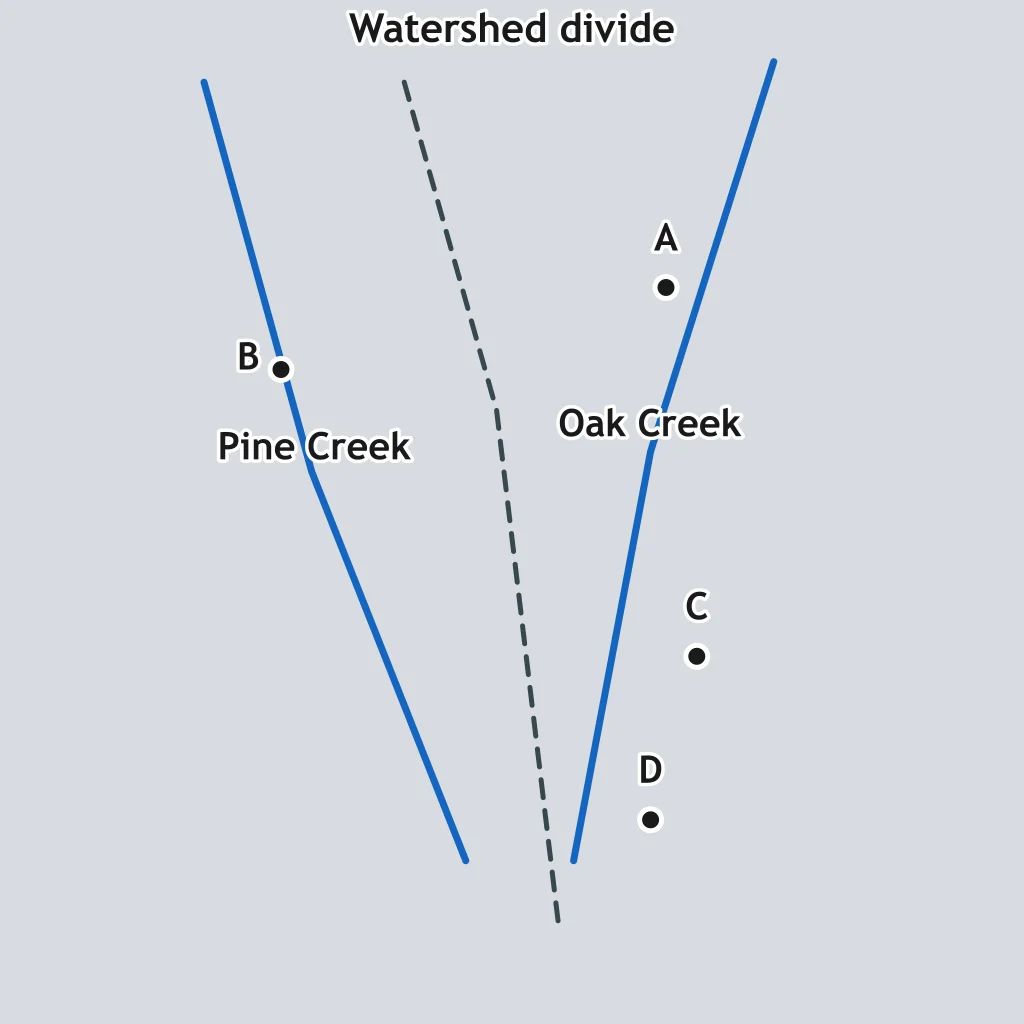
Runoff from which mapped point would flow toward Pine Creek instead of Oak Creek?
A wildfire removes vegetation and leaves water-repellent ash on steep slopes. Why is flash-flood risk higher during the next storm?
A storm drops 6 centimeters of rain on frozen ground. Why can the river rise faster than after the same rain on unfrozen soil?
Crack the passcode before the zombies get in.
Answer, then swat bugs for bonus points.
Race through questions at your own speed.
Same question on every screen. Fastest wins.

Pick a tile, answer, hit bonuses and steals.
Groundwater
40 questions