Loading
by BlastRoom
Explain porosity, permeability, the water table, and aquifers using cross sections and data tables.
#earth_space_science
40 questions
One question set, multiple game modes. Tap any game to see it in action. Not sure which to pick?
Answer to place stones and capture territory.
Outrun the snow together.
Earn blasts, then hunt the other team.
Answer to earn energy, then climb.

The class blasts through walls together.
Bid on mystery lots. Most money wins.
Sell tours. Nice, standard, or a total scam.

Answer, restock, and serve the rush.
More correct answers pulls the rope your way.
Answer, then shoot down the alien wave.
Answer, then tap to leap the frozen ridge.
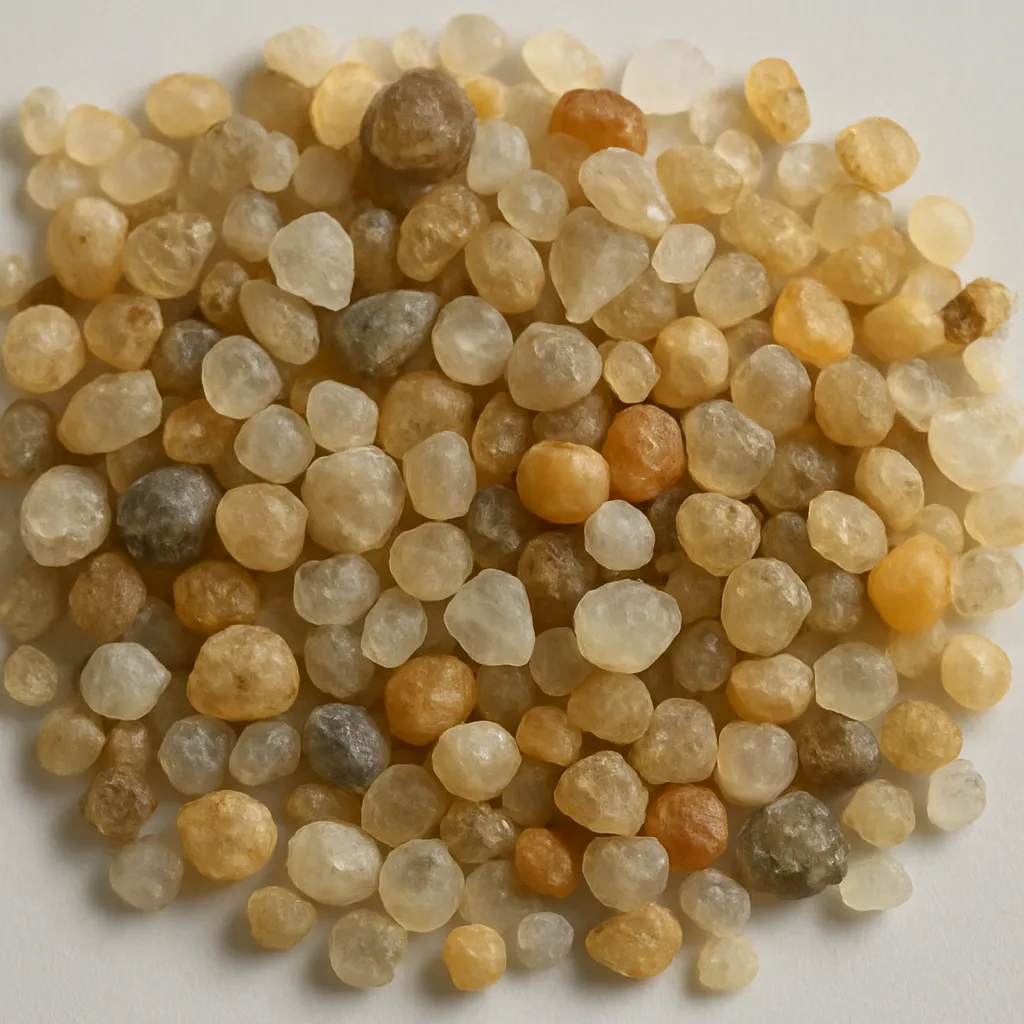
A sample of well-sorted, rounded coarse beach sand is examined closely. Which pair of properties best describes it?
A layer of compacted clay holds more than 40 percent pore space by volume, yet water barely moves through it. What best explains this?
A sample of solid limestone has few open pores, but is cut by many connected fractures. Which is true of this limestone?
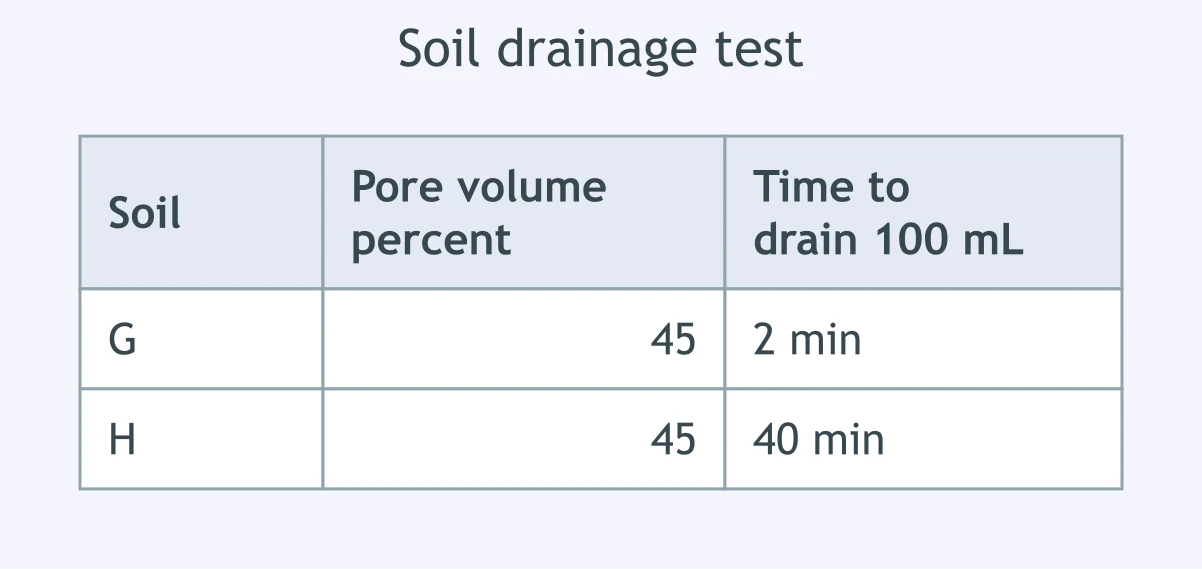
Use the table. Soil G and Soil H have the pore volumes and drain times shown. Which soil has the higher permeability?
A soil sample has a total volume of 250 cm³ and a porosity of 32 percent. What is the volume of its pore space?
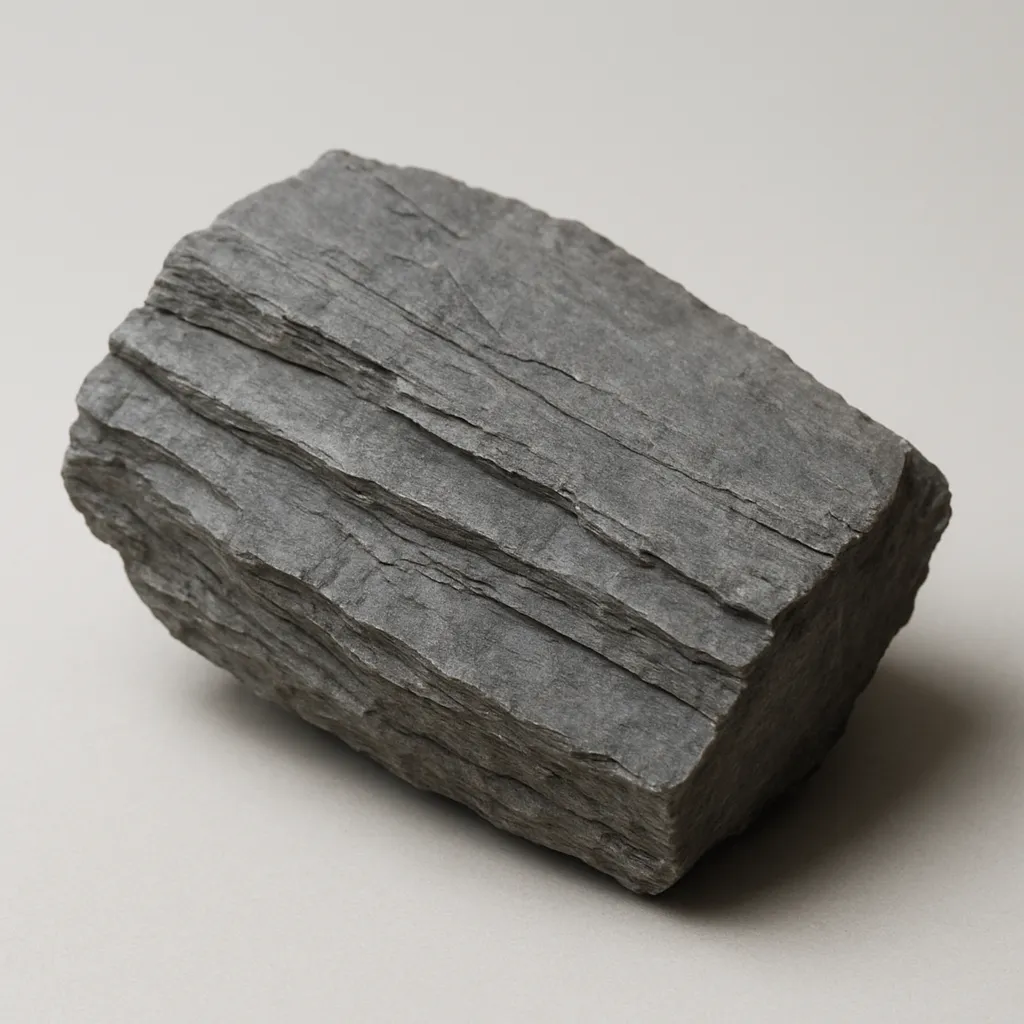
A cracked shale sample shows almost no pore space between its mineral grains, but water seeps steadily along its many parallel fractures. If minerals later seal those fractures shut, what happens?
Which term describes the fraction of a material's volume that is open pore space, regardless of whether that space is connected?
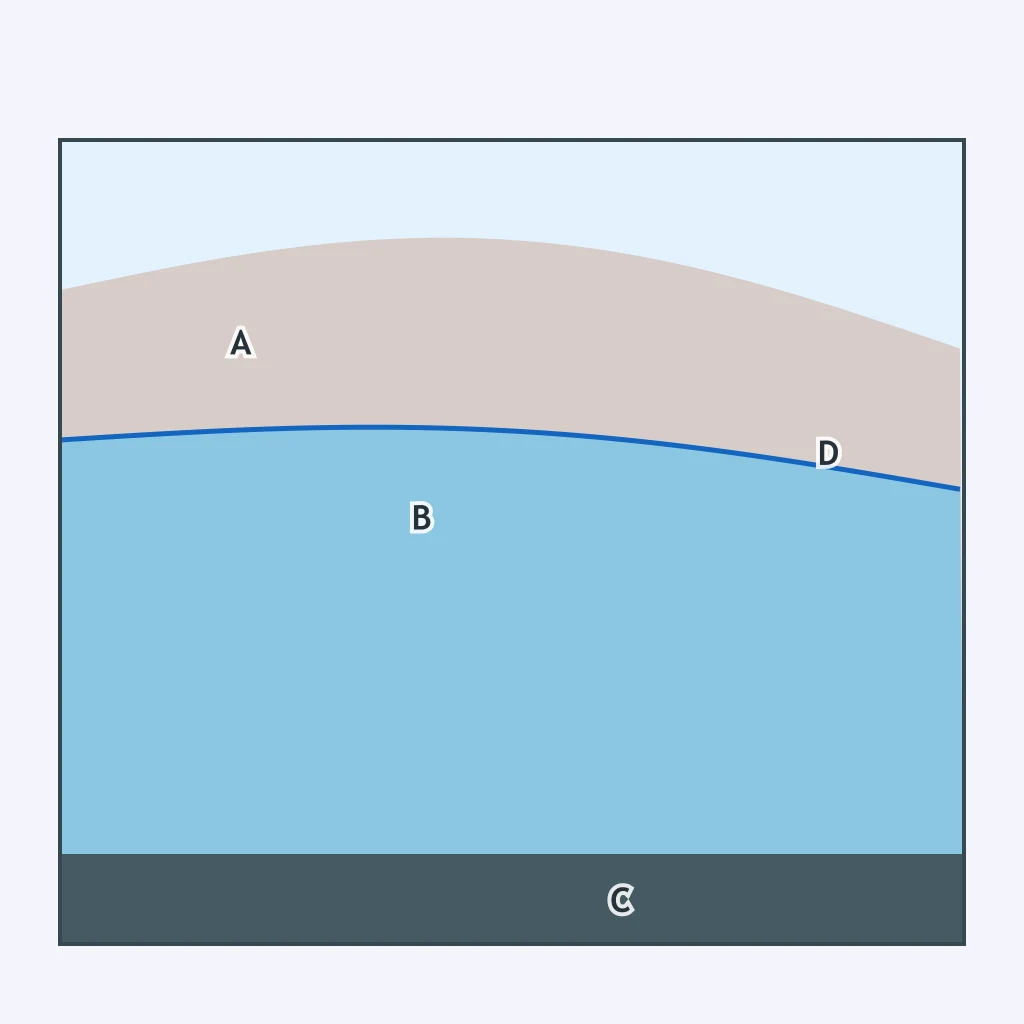
In the cross section, what zone does letter A mark?
In the cross section, what zone does letter X mark?
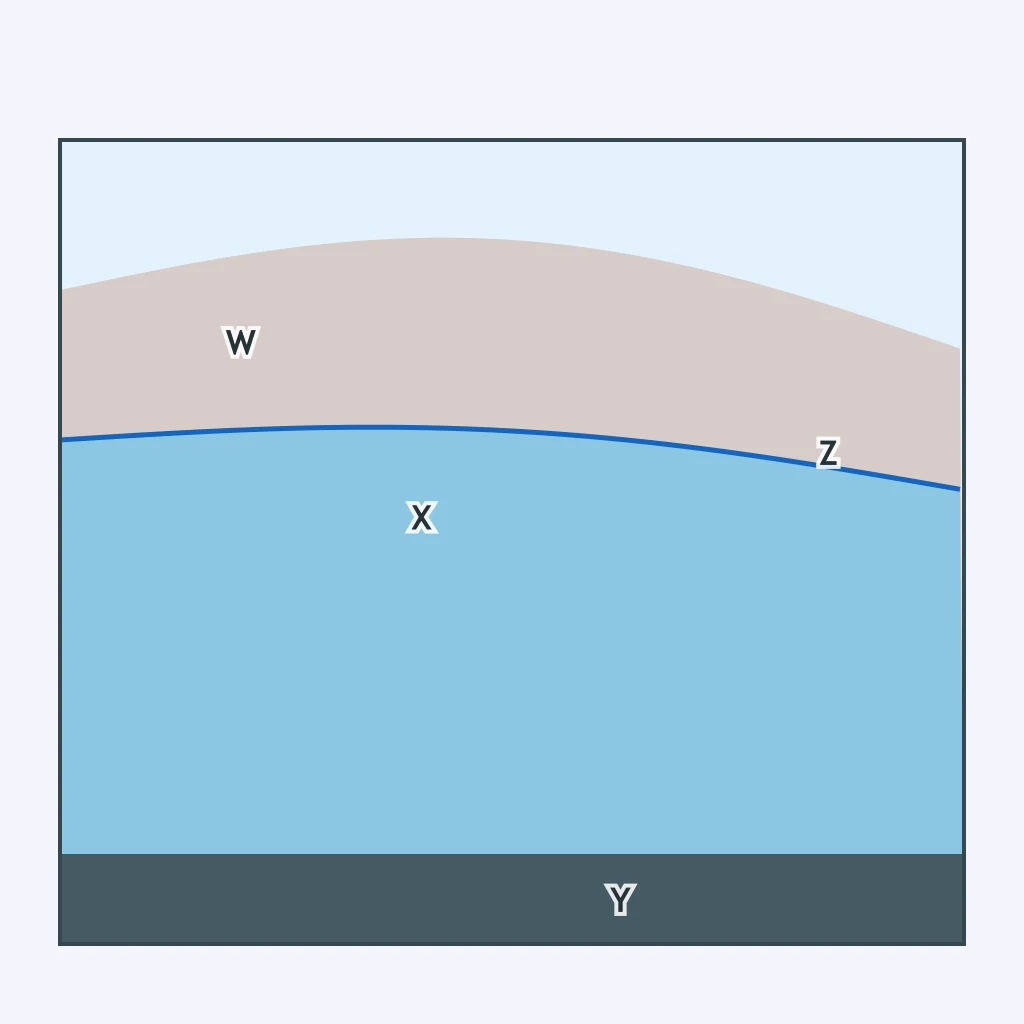
The cross section shows letter R inside the dark rock band at the very bottom of the slice. What does R mark?
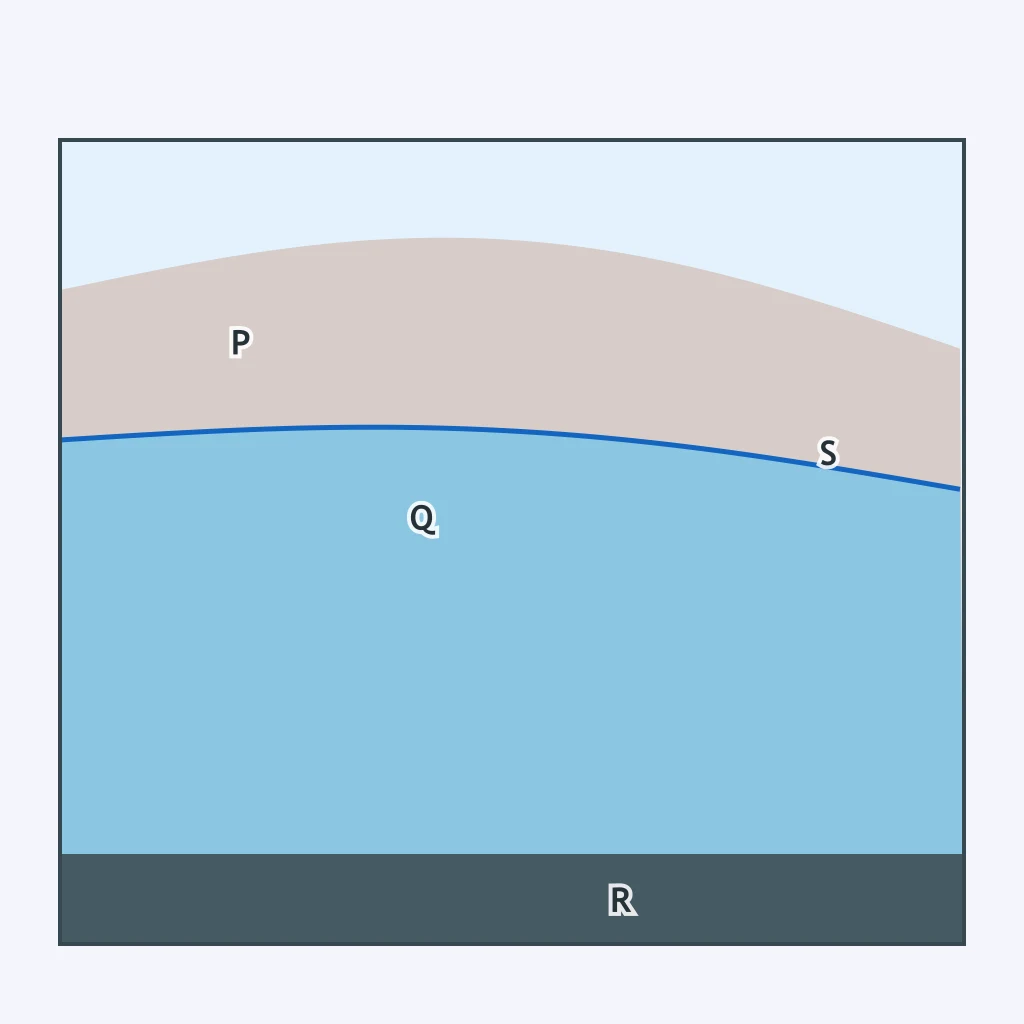
In the cross section, what does letter H mark?
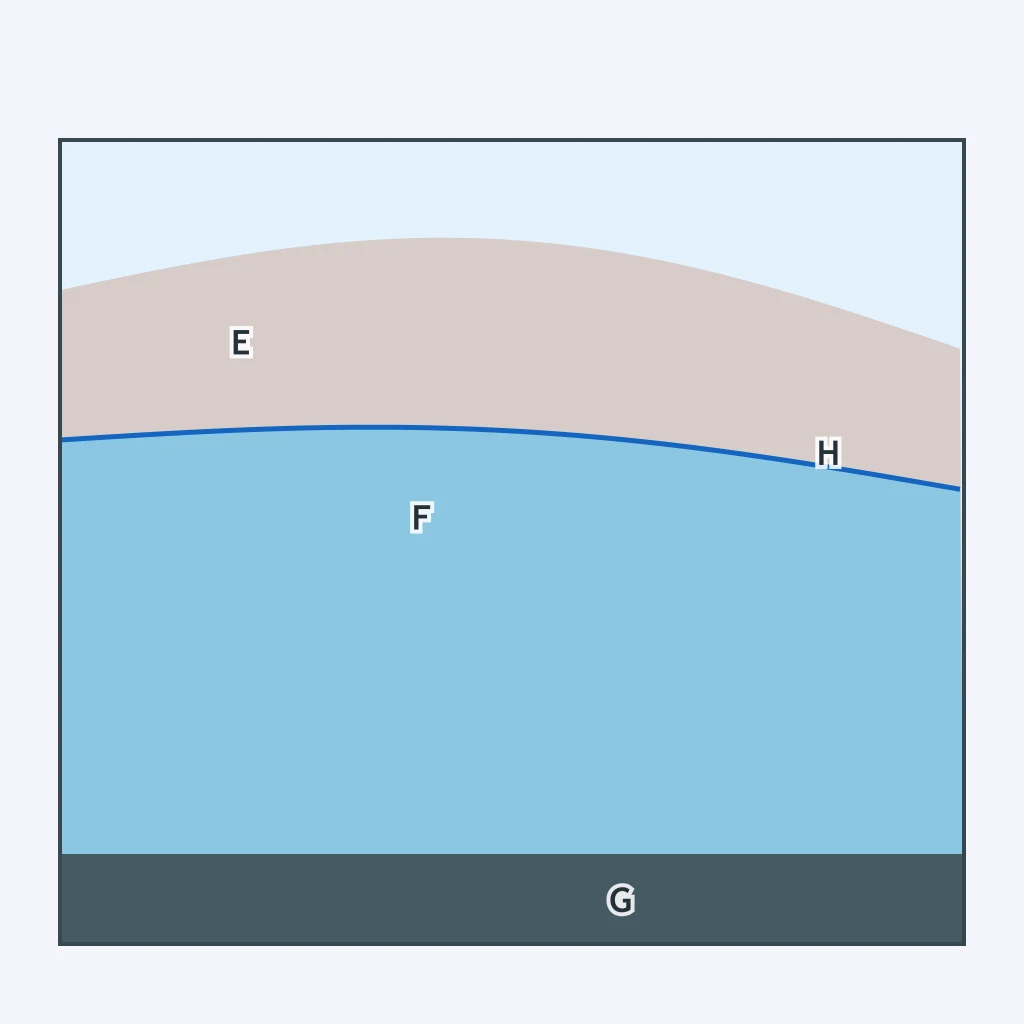
In the cross section, which correctly names the zones at A and B?
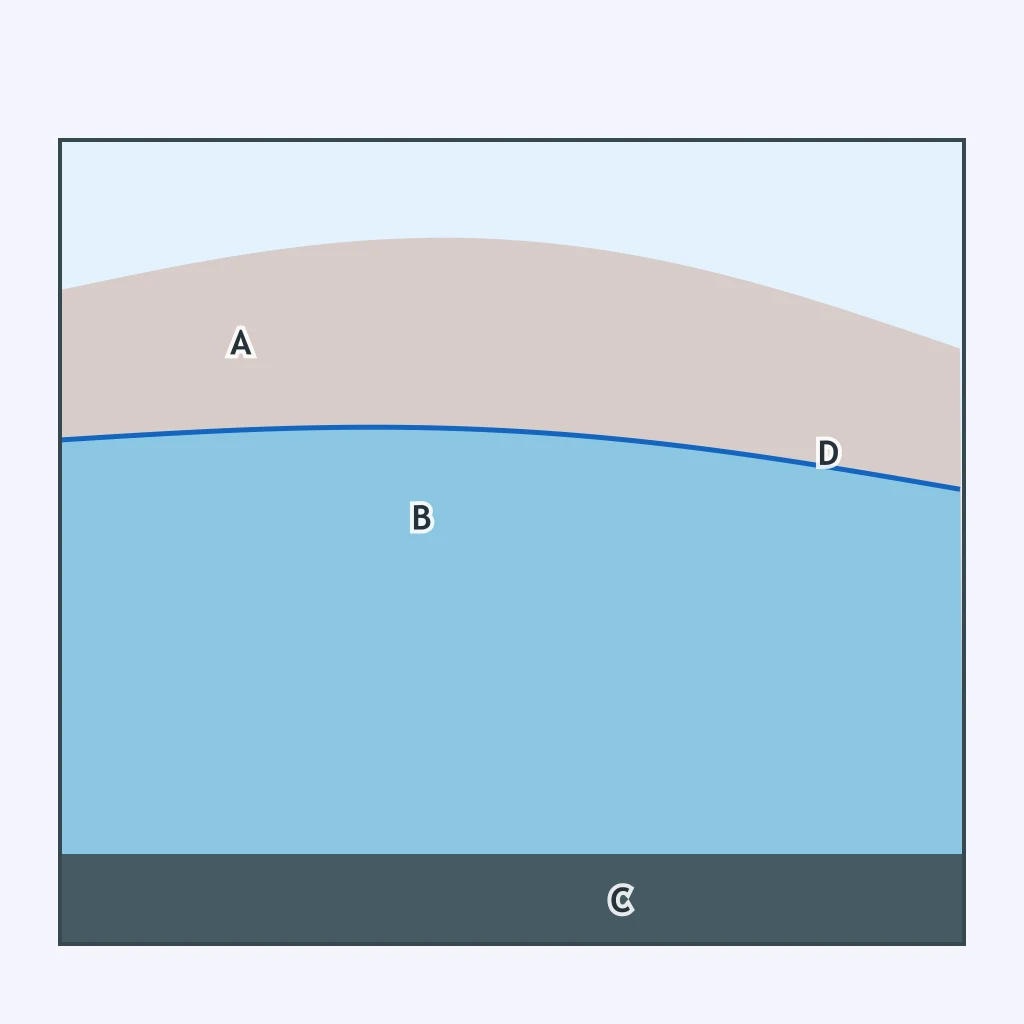
Which letter in the cross section marks ground where pores hold both air and water?
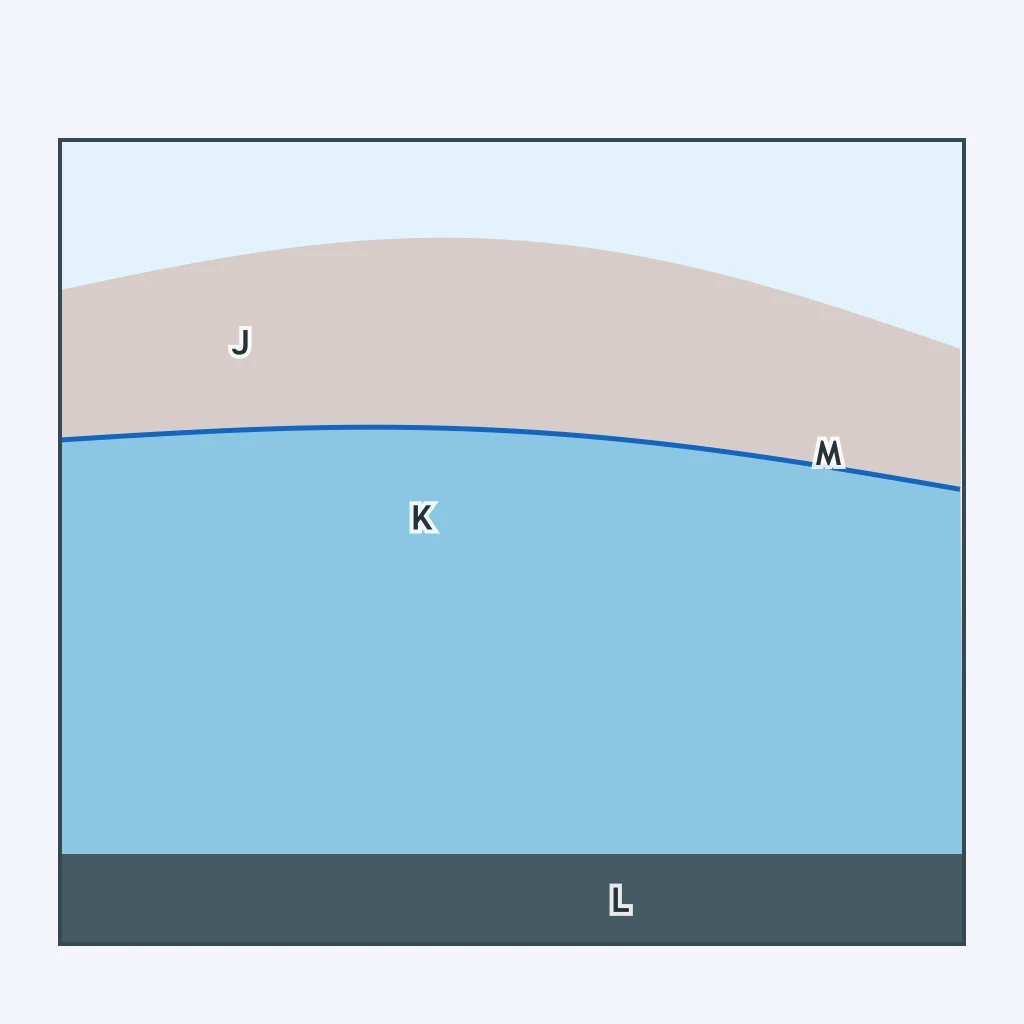
Which letter in the cross section marks ground where every pore is completely filled with water?
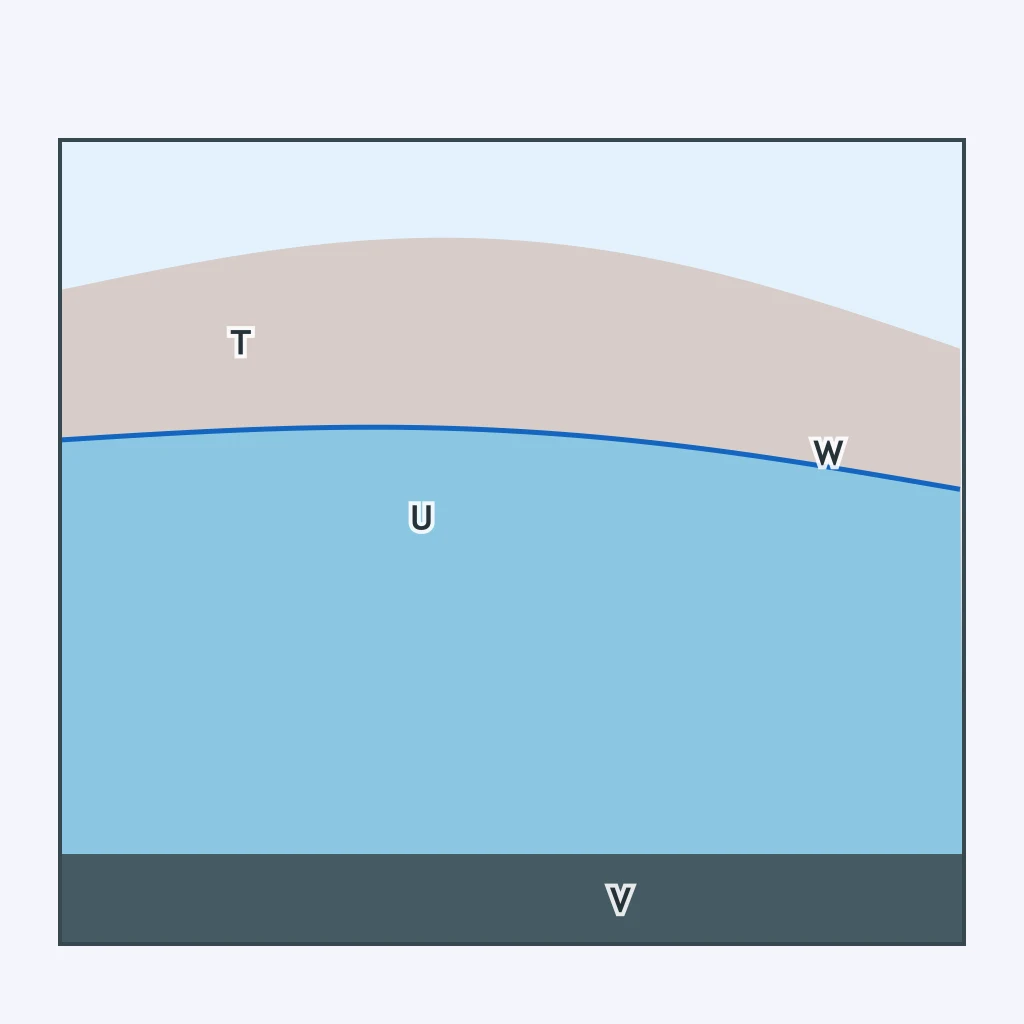
Which letter in the cross section marks the dense rock that stops most water from sinking any farther?
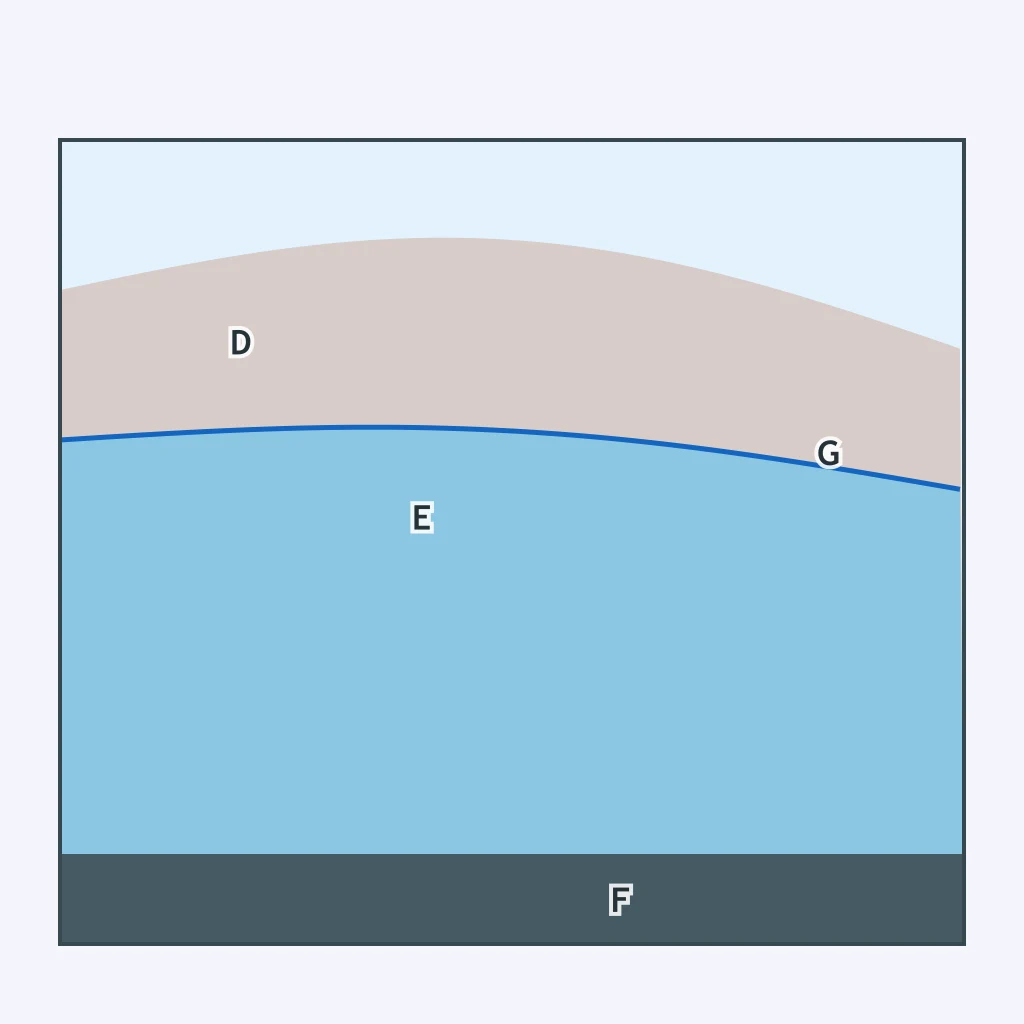
Which letter in the cross section marks the boundary between the unsaturated ground and the saturated ground below it?
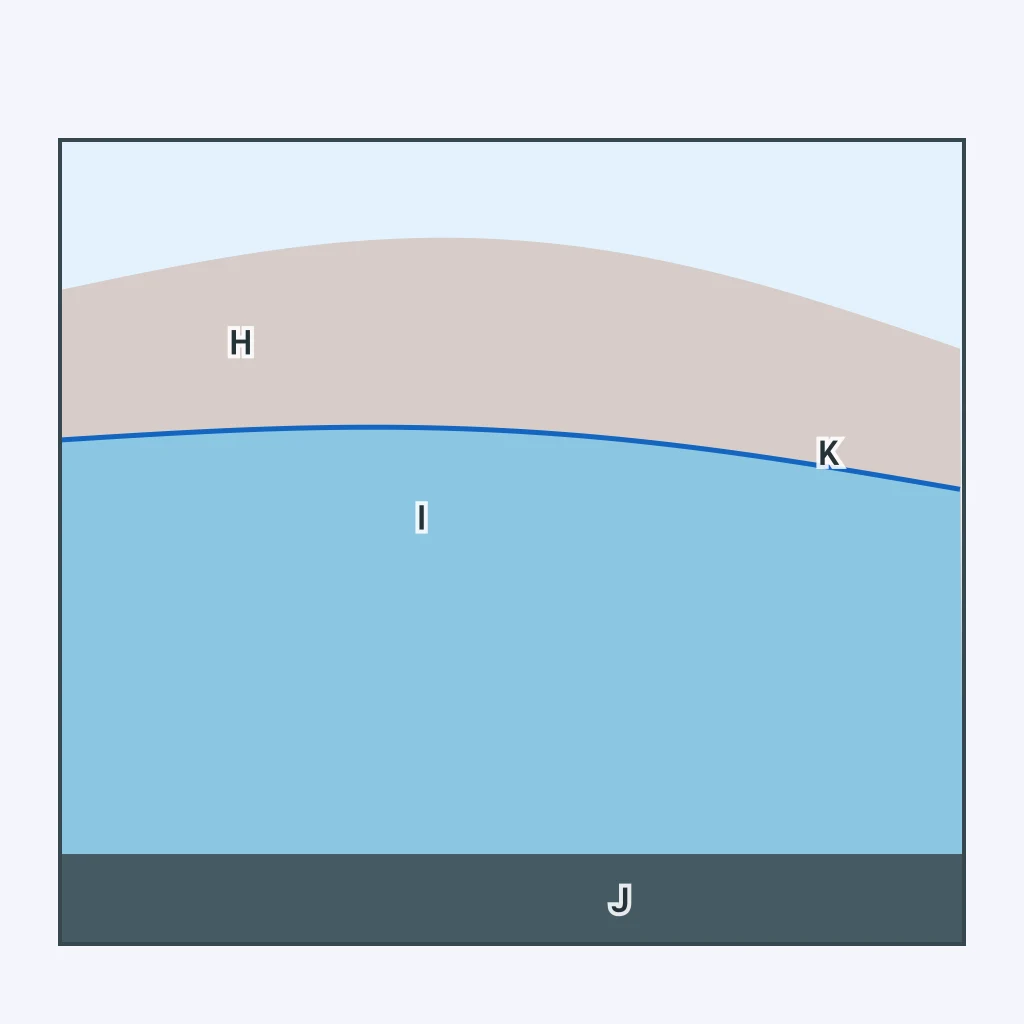
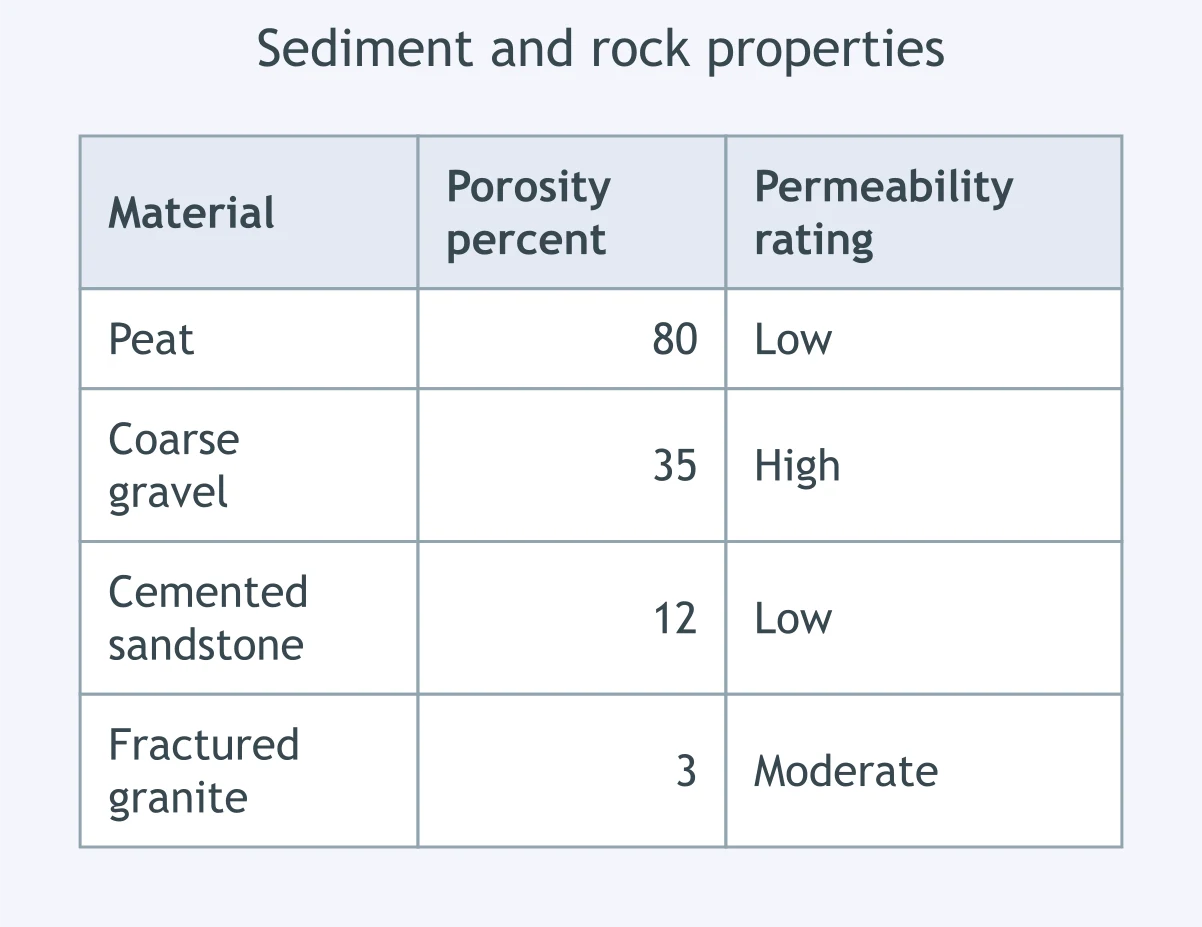
Use the table. Which material has the highest permeability?
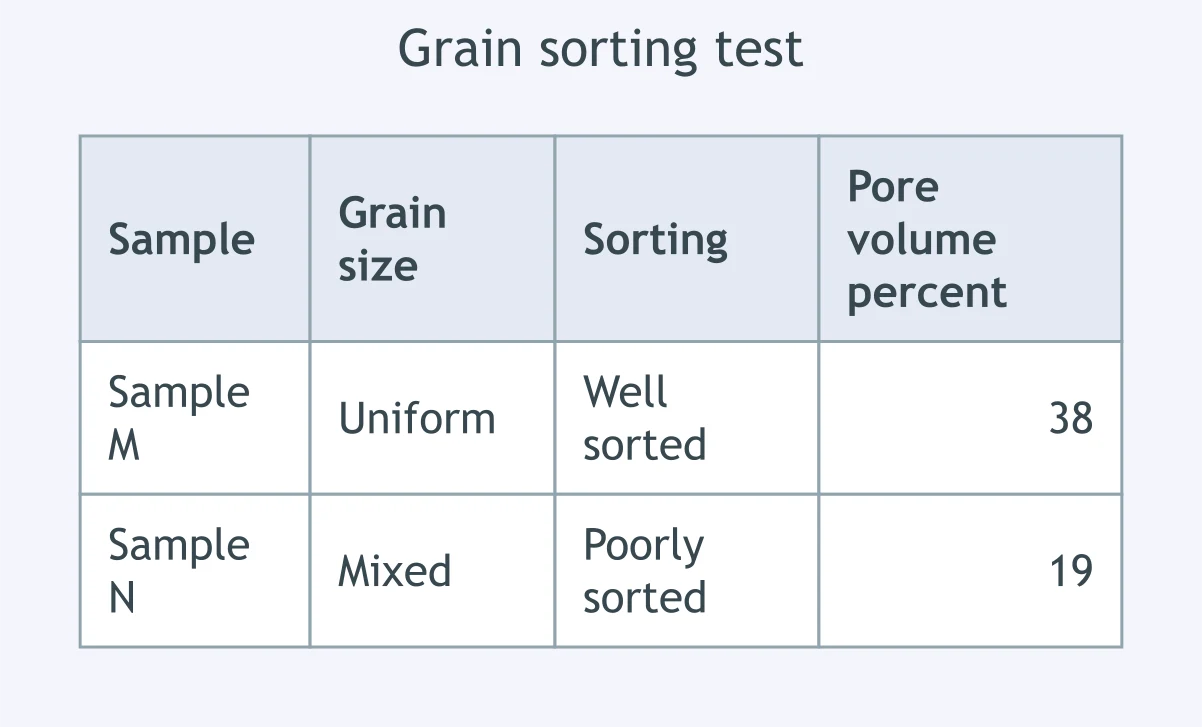
Use the table. Which sample has the greater porosity, and why?
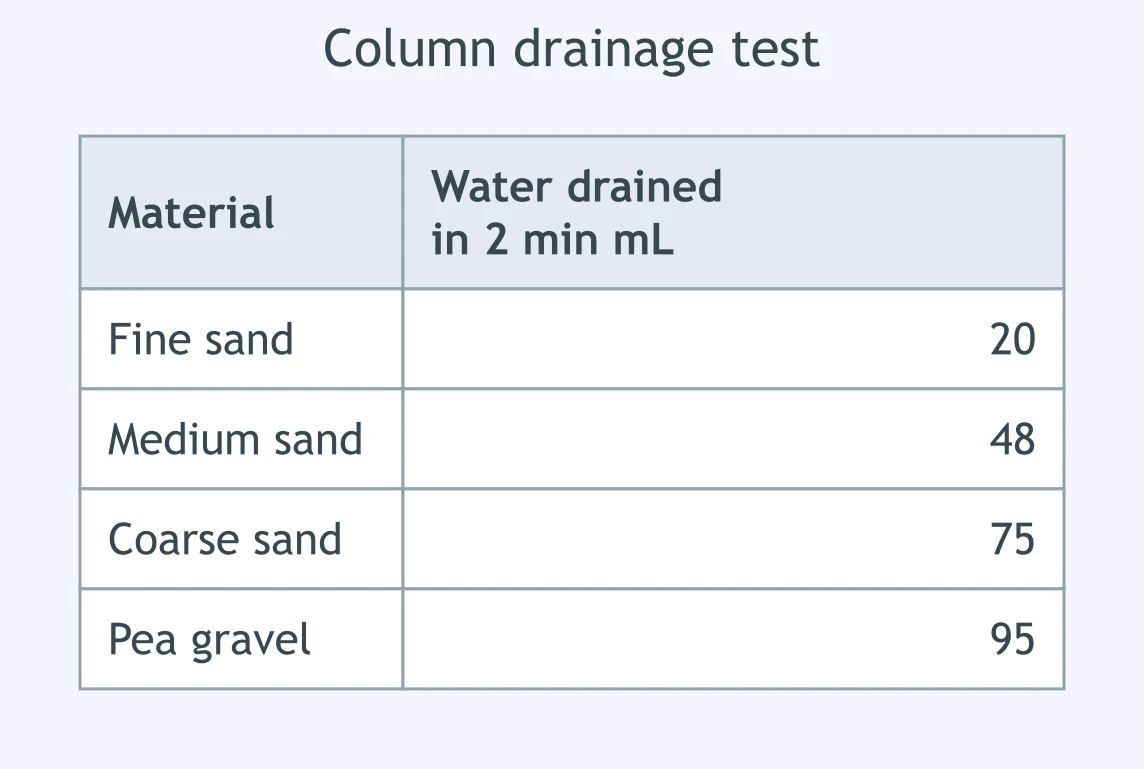
Use the table. Ranking these materials from least to most permeable, which order is correct?
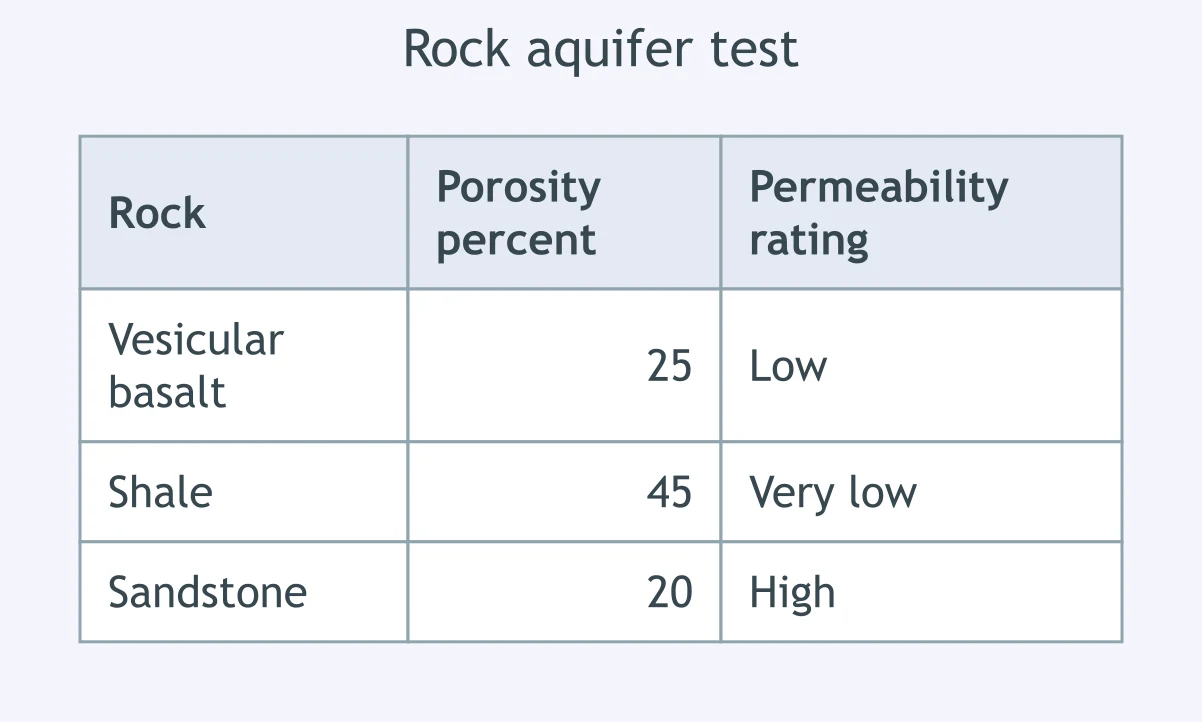
Use the table. Which rock would make the best aquifer, combining enough storage with enough flow?
Use the table. Both samples have the same grain size. Which has greater porosity, and why?
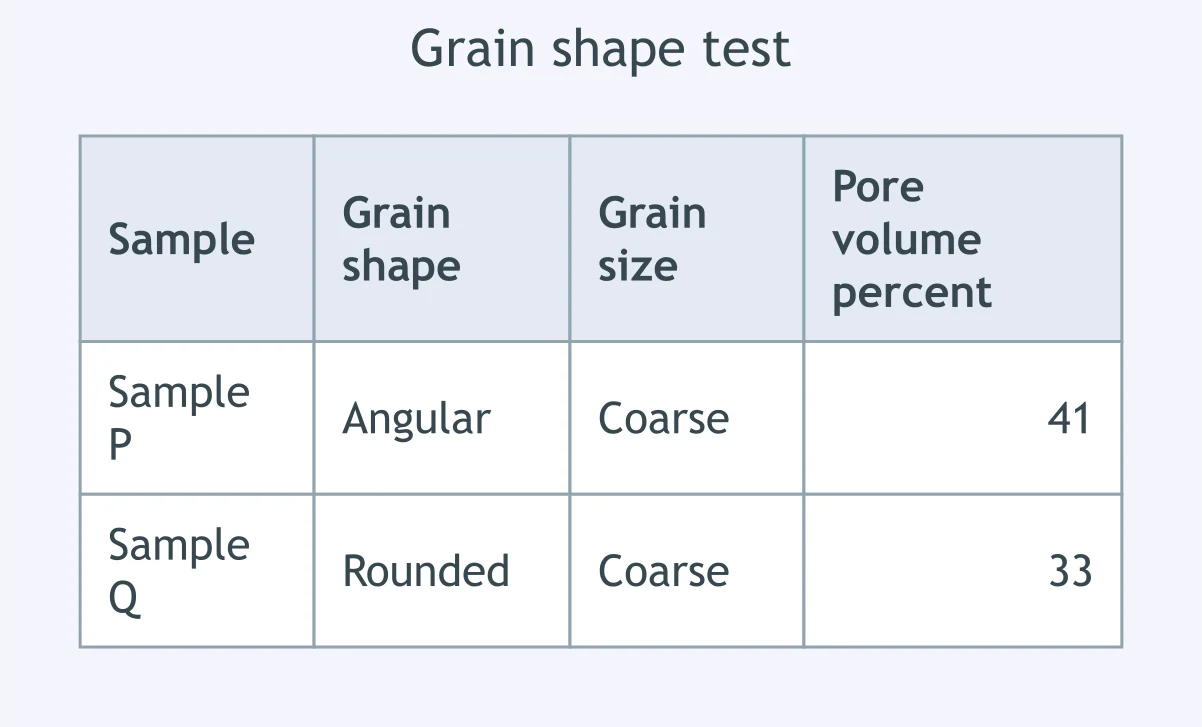
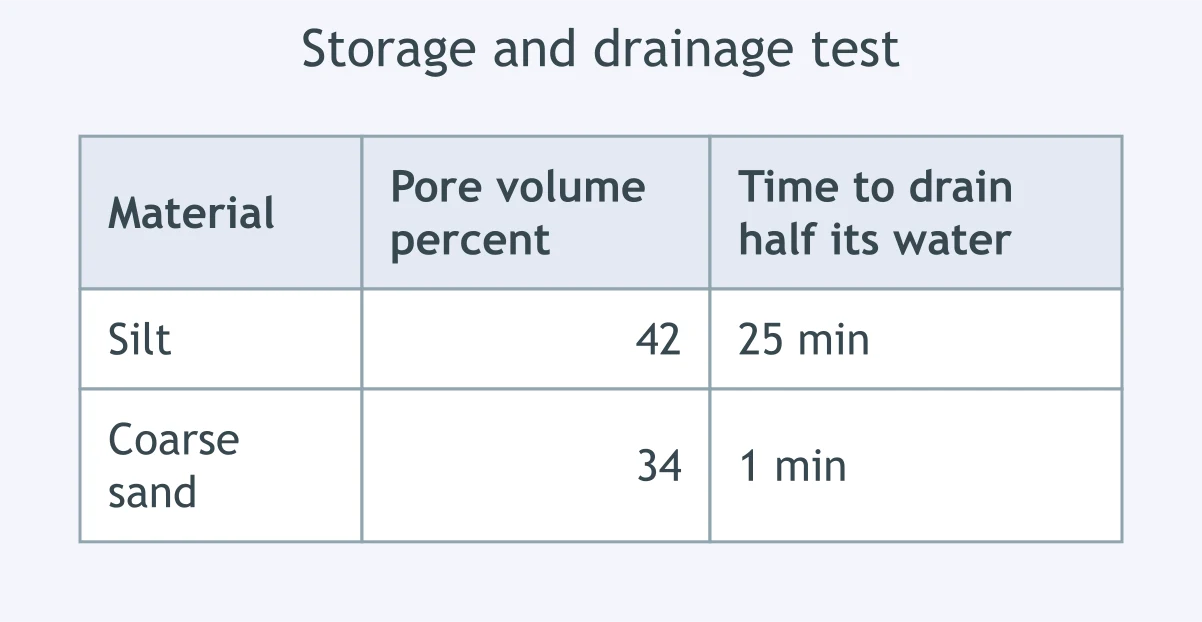
Use the table. Which material stores more water per volume but releases it far more slowly?
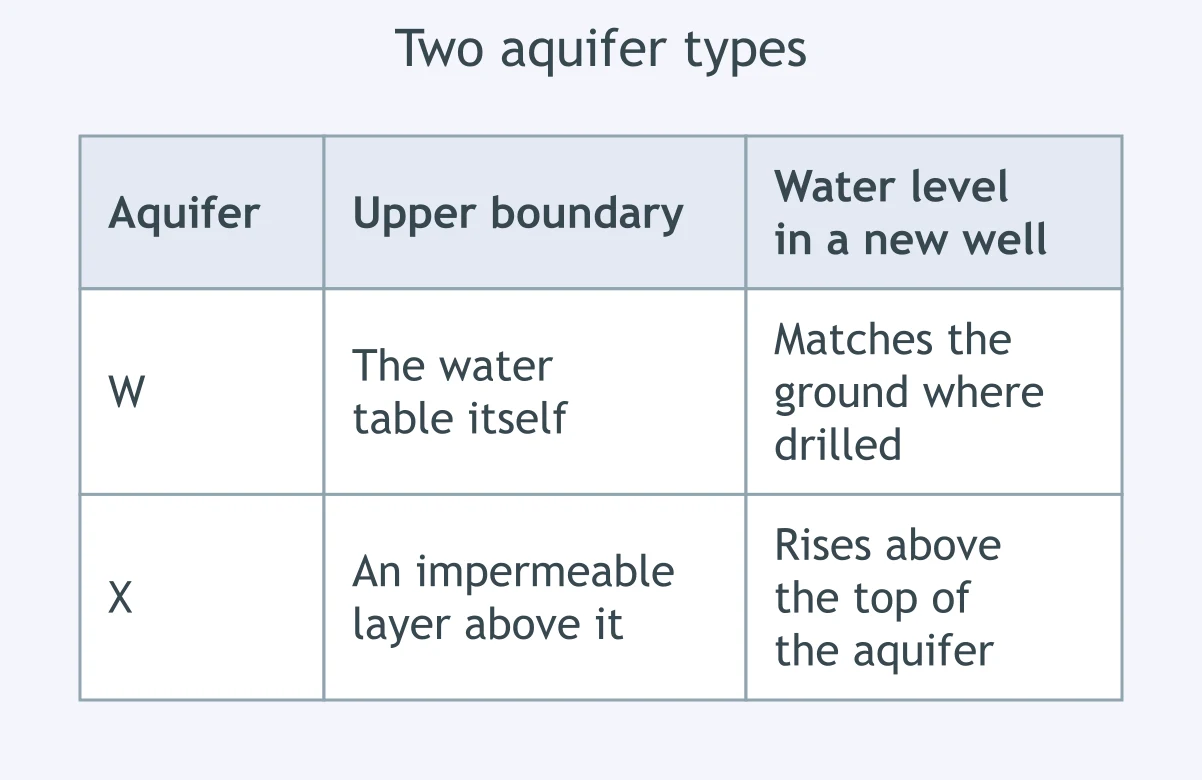
Use the table. Which aquifer, W or X, is confined, and why?
A tilted sandstone bed lies between two shale layers and is exposed at the surface in nearby highlands. A well drilled into the sandstone flows without a pump. What supplies the pressure?
A thick layer of dense clay lets almost no water pass through it. What term names this kind of layer?
Which best defines an aquifer?
A regional aquifer's sandstone layer is exposed at the surface many kilometers from the wells that tap it. Where does most of the aquifer's water enter the system?
Groundwater moves from a hillside recharge area toward a valley through a sand aquifer. Which best describes how it travels?
Uniform marbles fill container P, and much smaller uniform BBs fill container Q, both packed the same way. How do their porosities compare?
The figure compares two sediments of the same average grain size. Which sediment has the greater porosity?
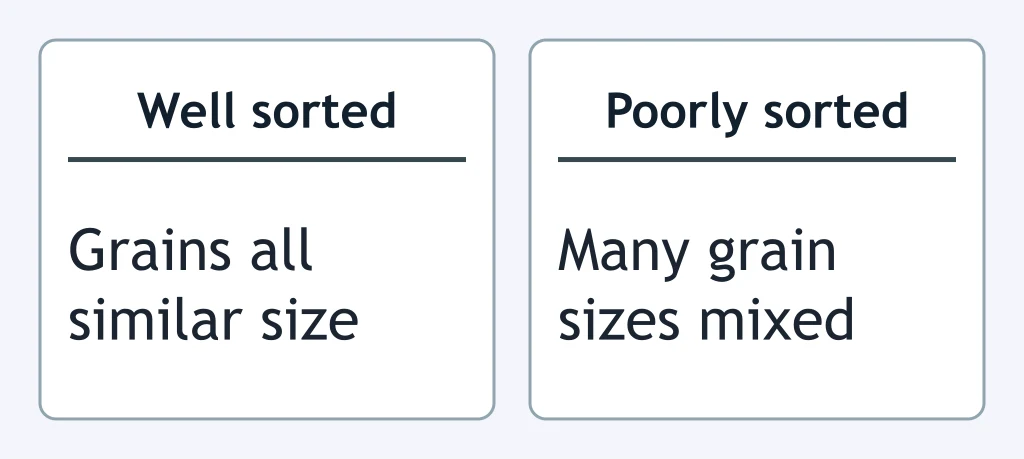
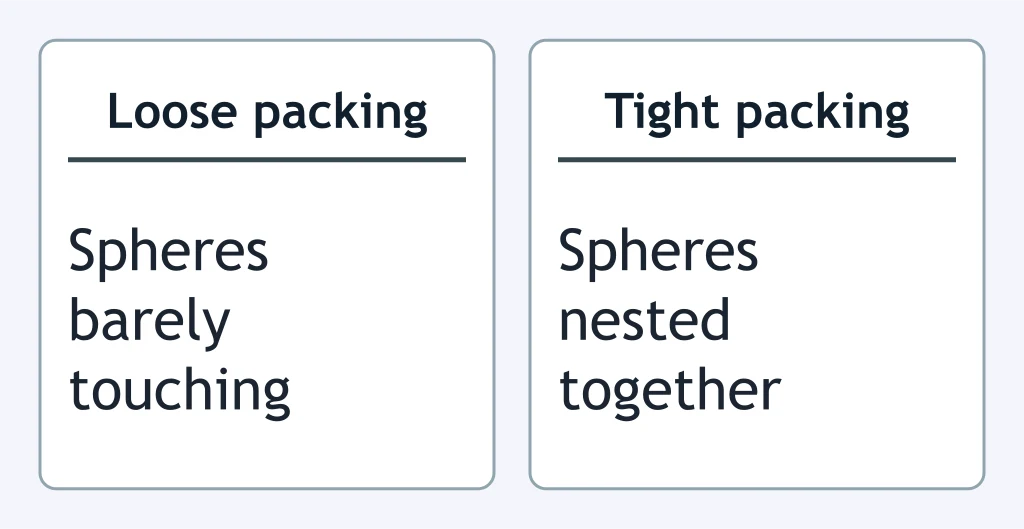
Identical spheres are arranged two ways in the figure. Which arrangement gives the greater porosity?
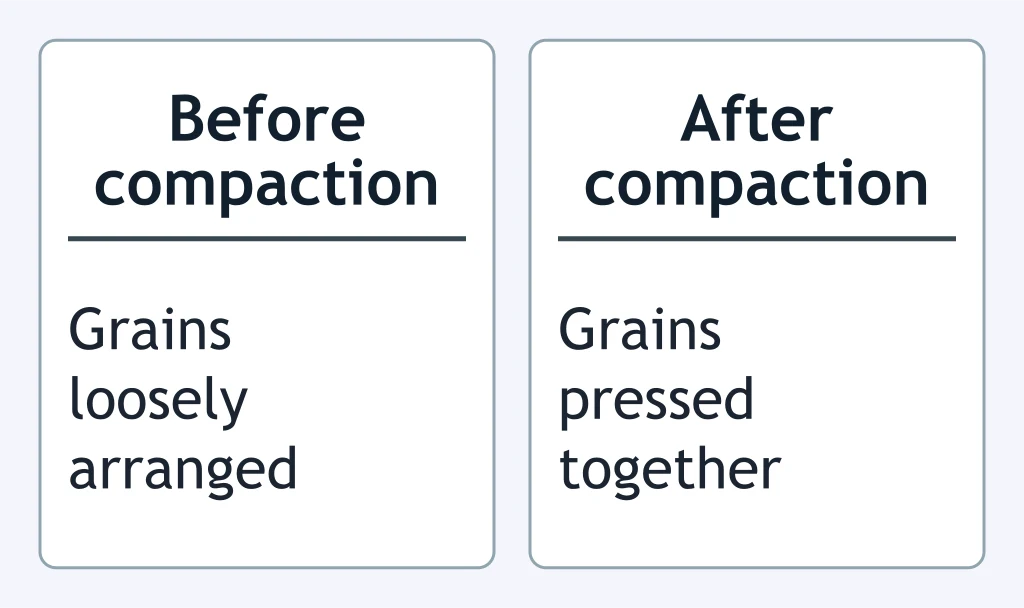
The figure shows a sediment sample before and after it is compacted by the weight of layers above it. What happens to its porosity?
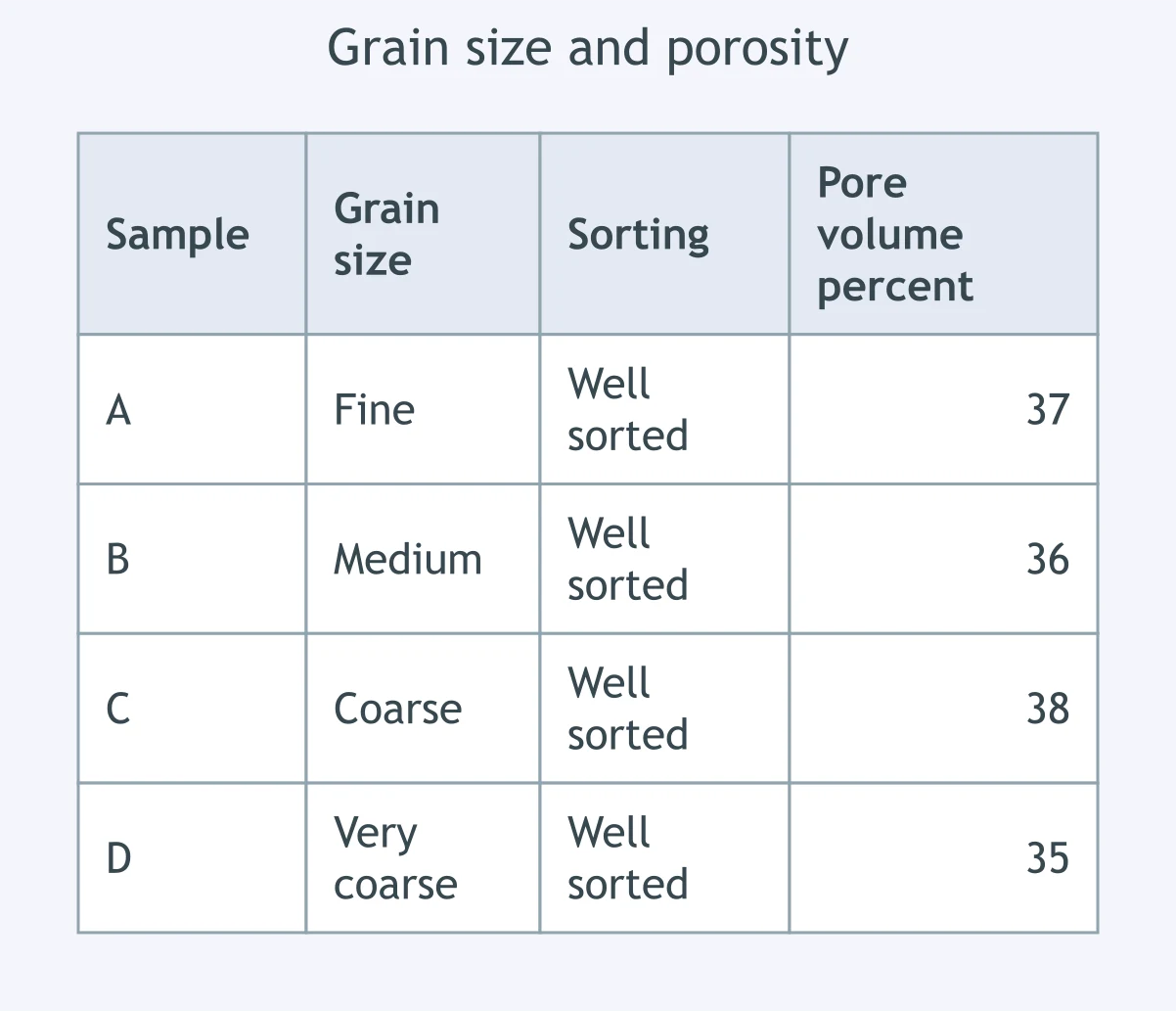
Use the table. All four samples are well sorted but differ in grain size. What does the pattern in the table show about grain size and porosity?
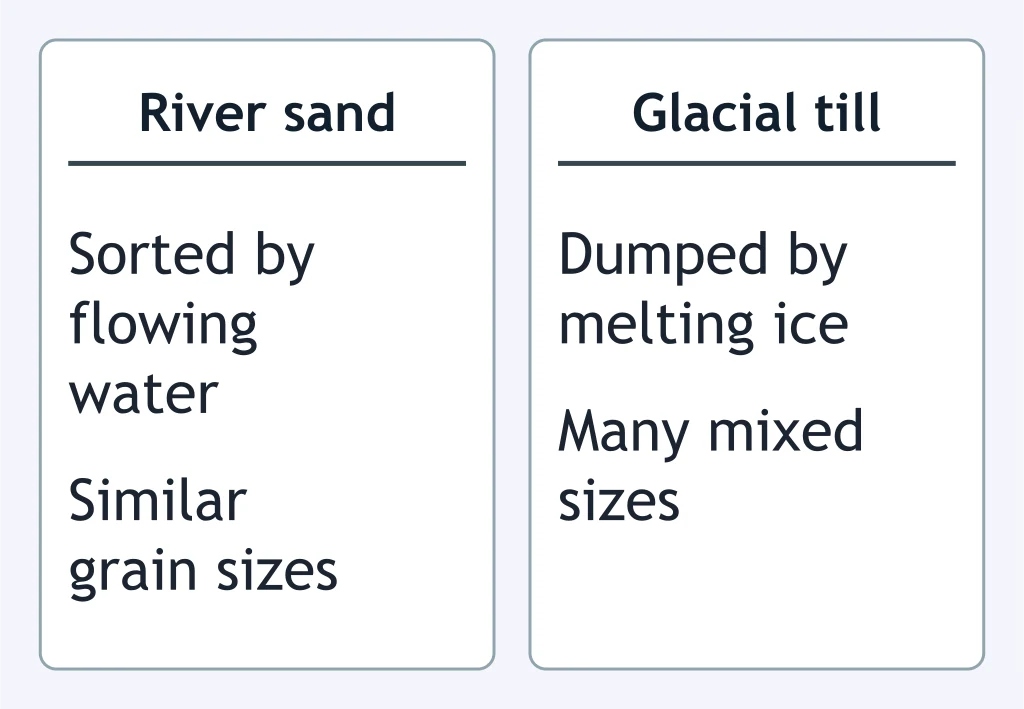
The figure compares sediment deposited by a river with sediment dumped directly by a melting glacier. Which is likely to have the greater porosity?
A region gets far less rainfall than normal for two straight years, while pumping from local wells stays the same. What most likely happens to the regional water table?
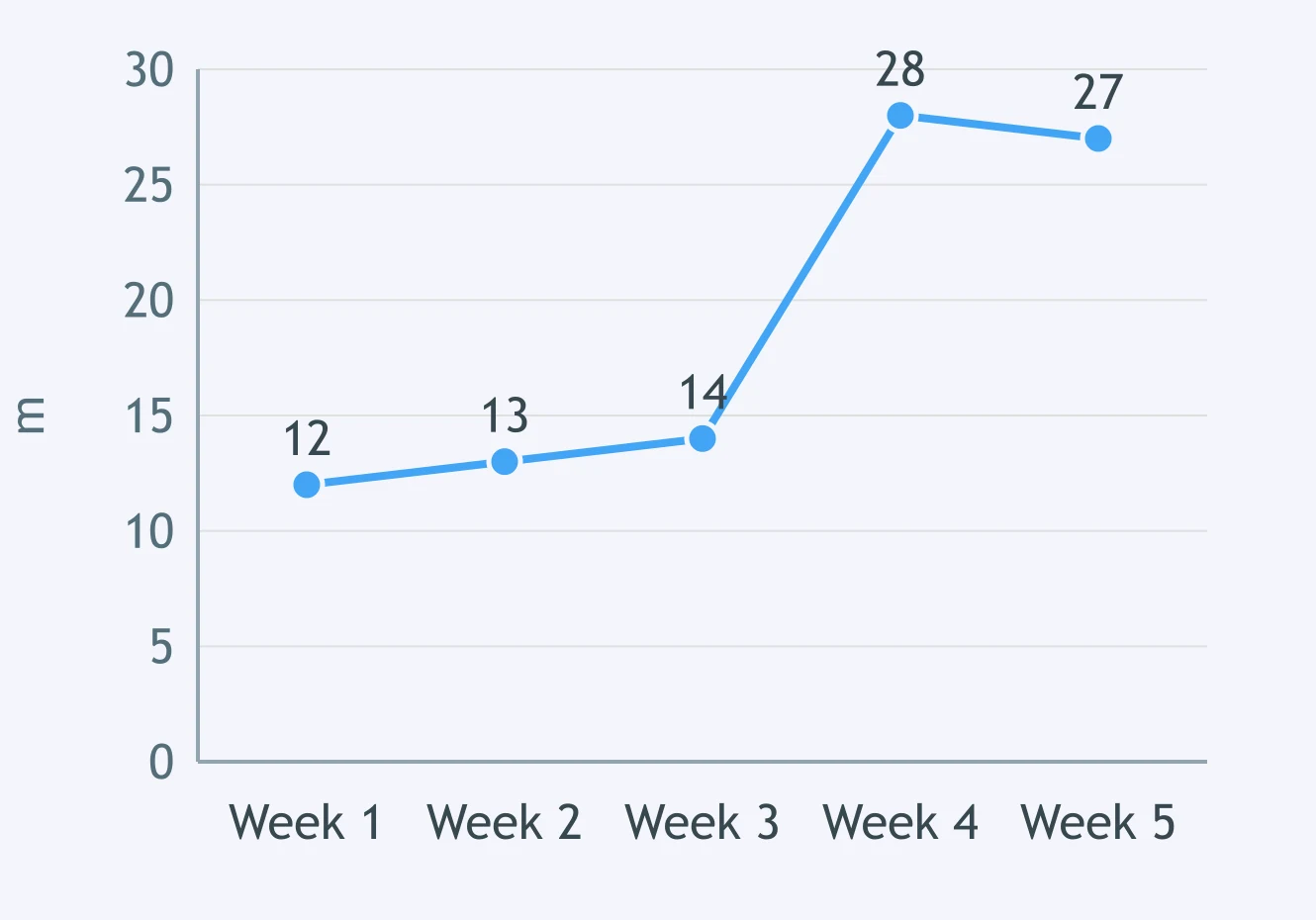
Use the graph of a well's water level each week. In which week does the water level rise the most from the week before?
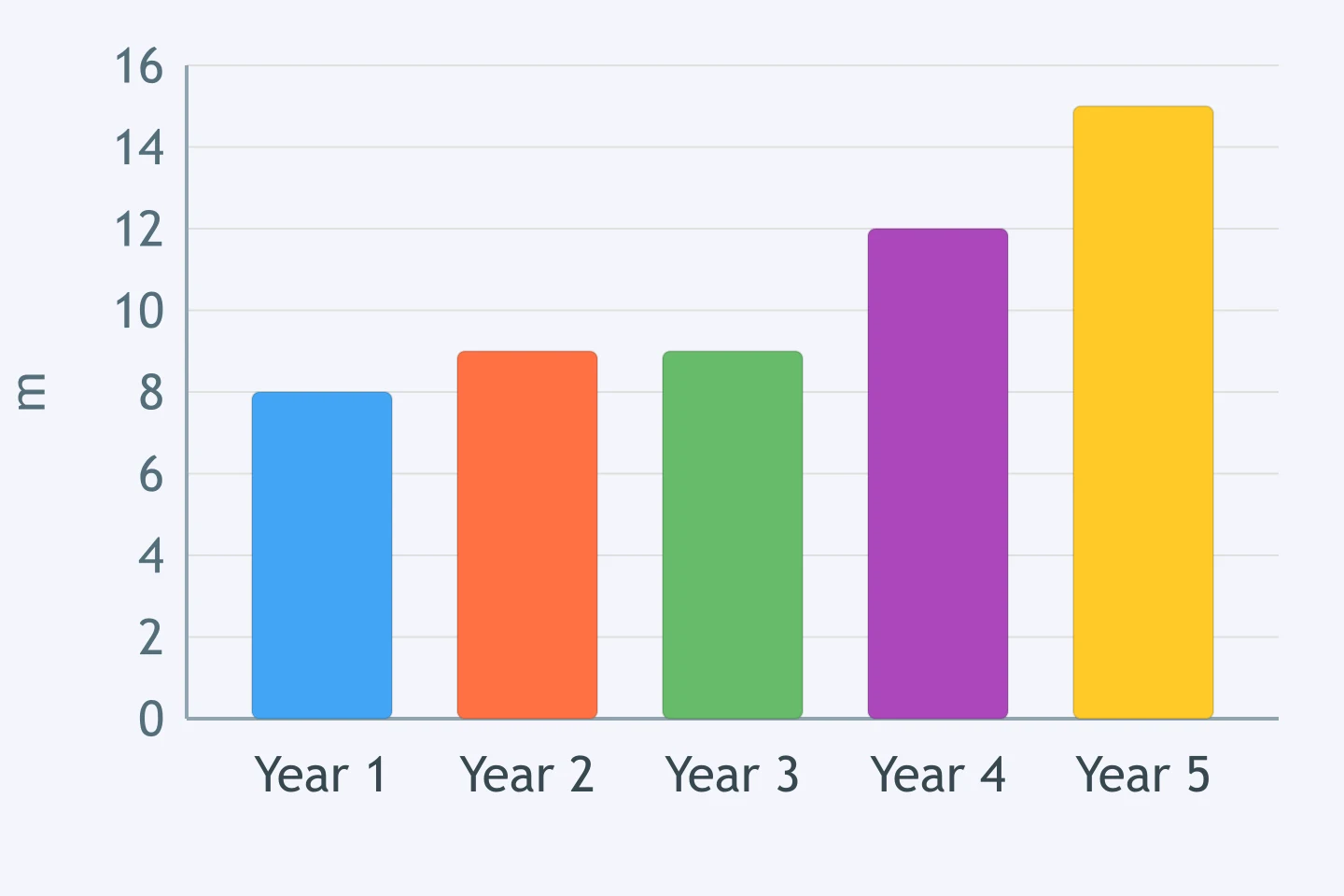
Use the bar graph of a well's water level after the town cut its pumping in half partway through Year 3. In which year does the level first show clear recovery?
A pumping well sits uphill from a natural spring on the same hillside. If pumping continues for months, what most likely happens to the spring's flow?
Farmers switch to flood irrigation, and much of the extra water steadily soaks into the ground beneath the fields each season. Over several years, what happens to the local water table?
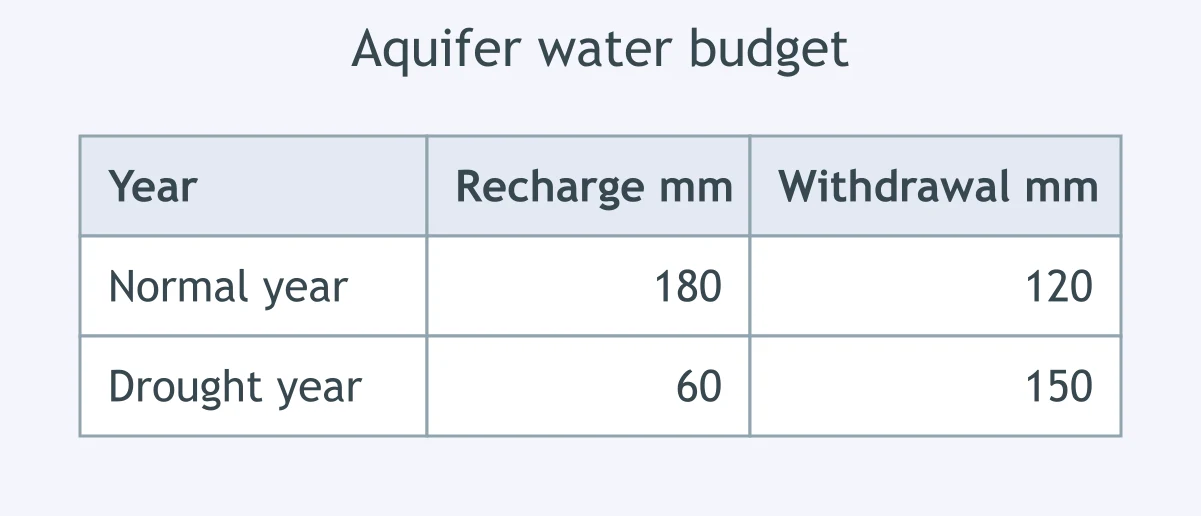
Use the water-budget table. In the drought year, withdrawal exceeds recharge by far more than in the normal year. What is the net effect on the aquifer's storage that year?
Crack the passcode before the zombies get in.
Answer, then swat bugs for bonus points.
Race through questions at your own speed.
Same question on every screen. Fastest wins.

Pick a tile, answer, hit bonuses and steals.
Groundwater Review
40 questions