Loading
by BlastRoom
Interpret water-budget graphs and surface conditions to predict infiltration, runoff, storage change, surplus, and deficit.
#earth_space_science
25 questions
One question set, multiple game modes. Tap any game to see it in action. Not sure which to pick?
Answer to place stones and capture territory.
Outrun the snow together.
Earn blasts, then hunt the other team.
Answer to earn energy, then climb.

The class blasts through walls together.
Bid on mystery lots. Most money wins.
Sell tours. Nice, standard, or a total scam.

Answer, restock, and serve the rush.
More correct answers pulls the rope your way.
Answer, then shoot down the alien wave.
Answer, then tap to leap the frozen ridge.
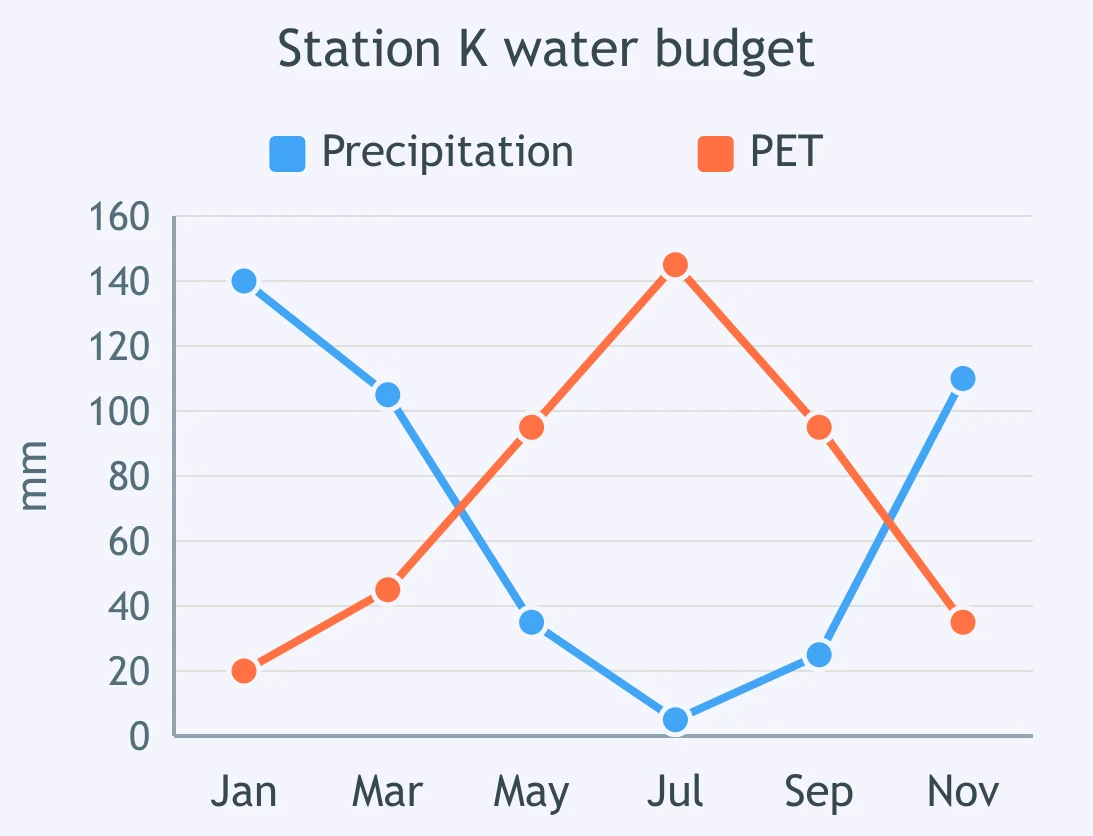
Use the water-budget graph. Soil storage is already full during the late-winter months when precipitation is above potential evapotranspiration. What condition is shown?
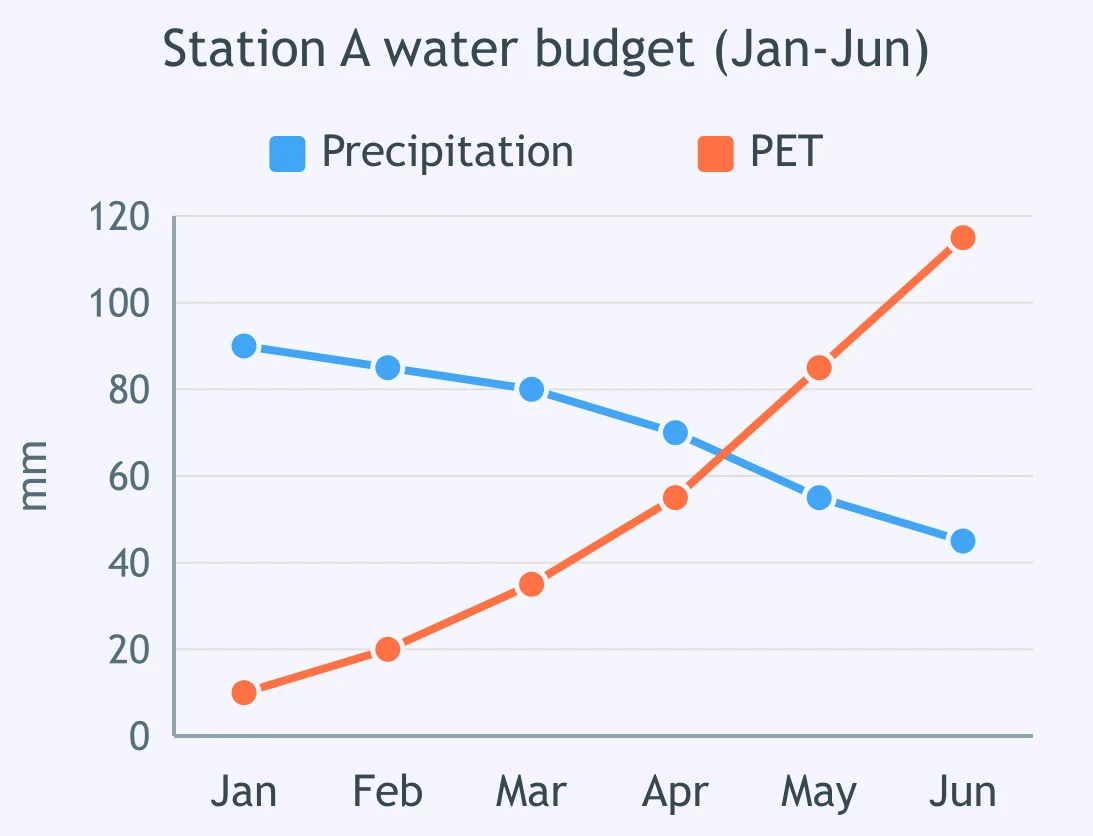
The graph shows autumn precipitation rising above potential evapotranspiration after a dry summer, while soil storage is still below capacity. What condition is shown?
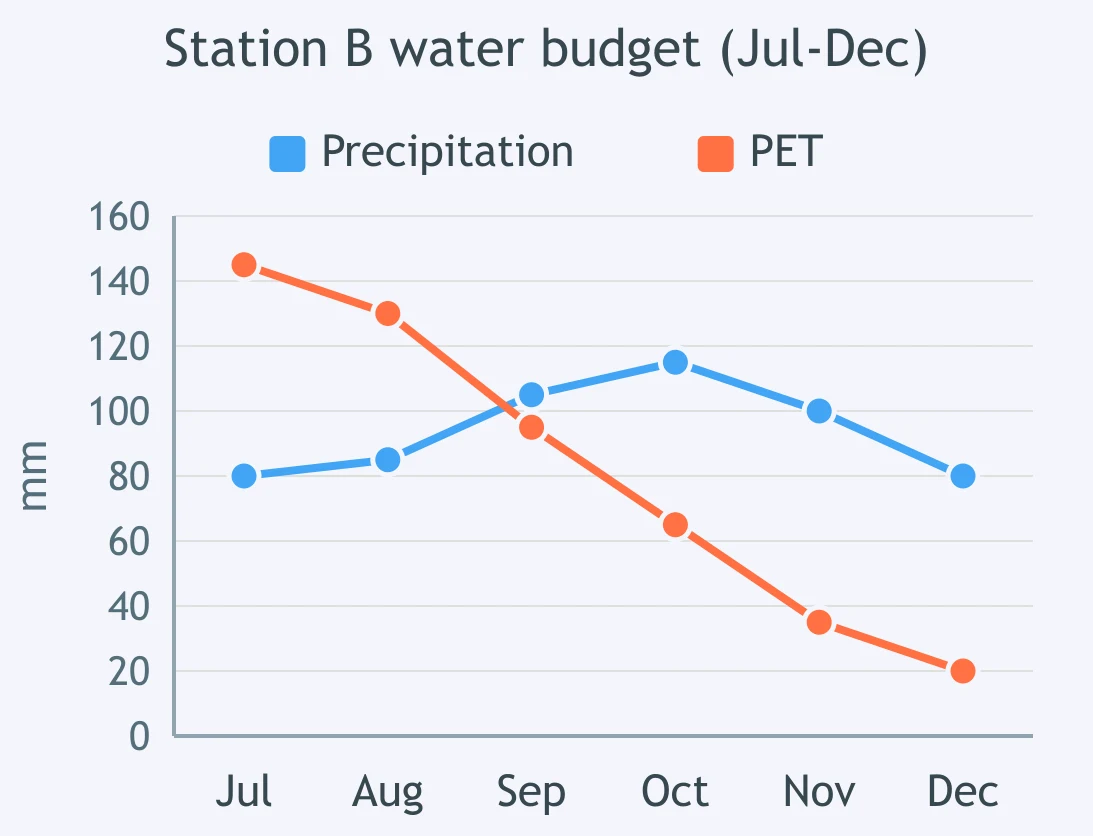
On the graph, potential evapotranspiration first rises above precipitation while the soil store still contains water. What condition supplies the extra demand?
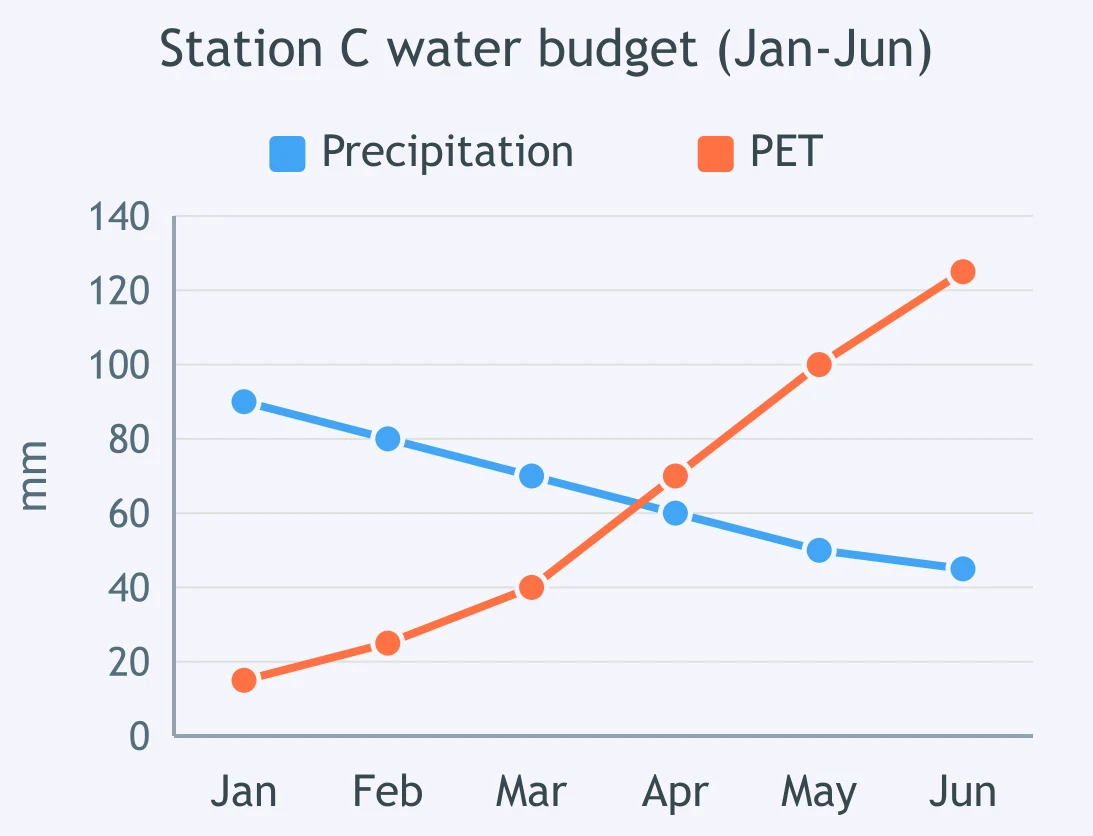
Use the graph for the dry station. In midsummer, potential evapotranspiration is far above precipitation and soil storage is empty. What condition is shown?
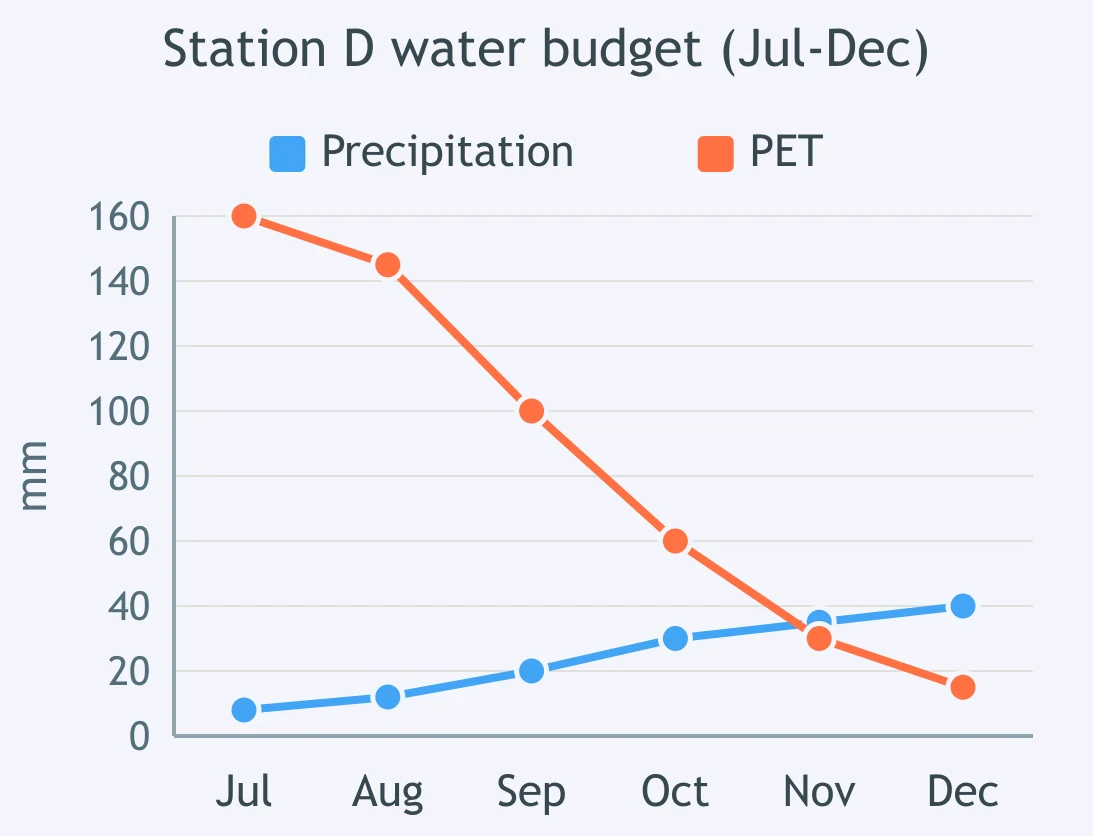
The graph shows precipitation above potential evapotranspiration in January and February, and soil storage is at capacity. What water-budget condition results?
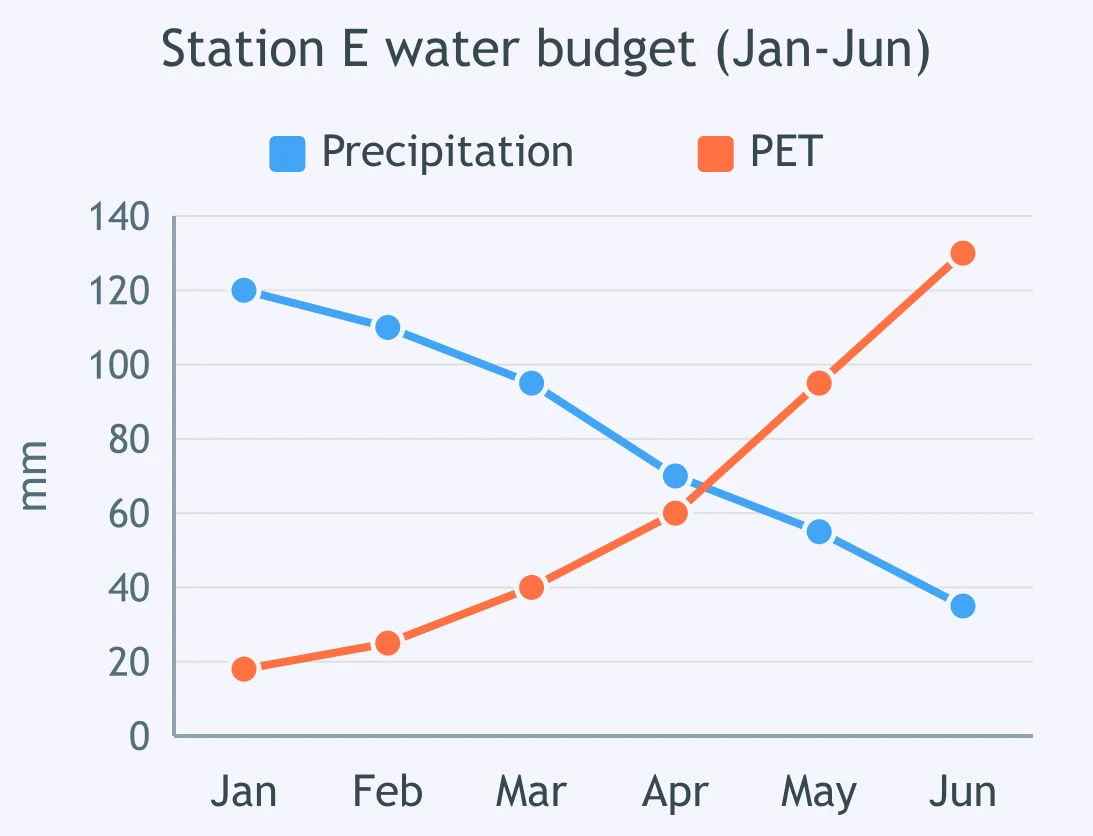
At the station in the graph, precipitation becomes greater than potential evapotranspiration in October after soil water was drawn down in summer. What begins in October?
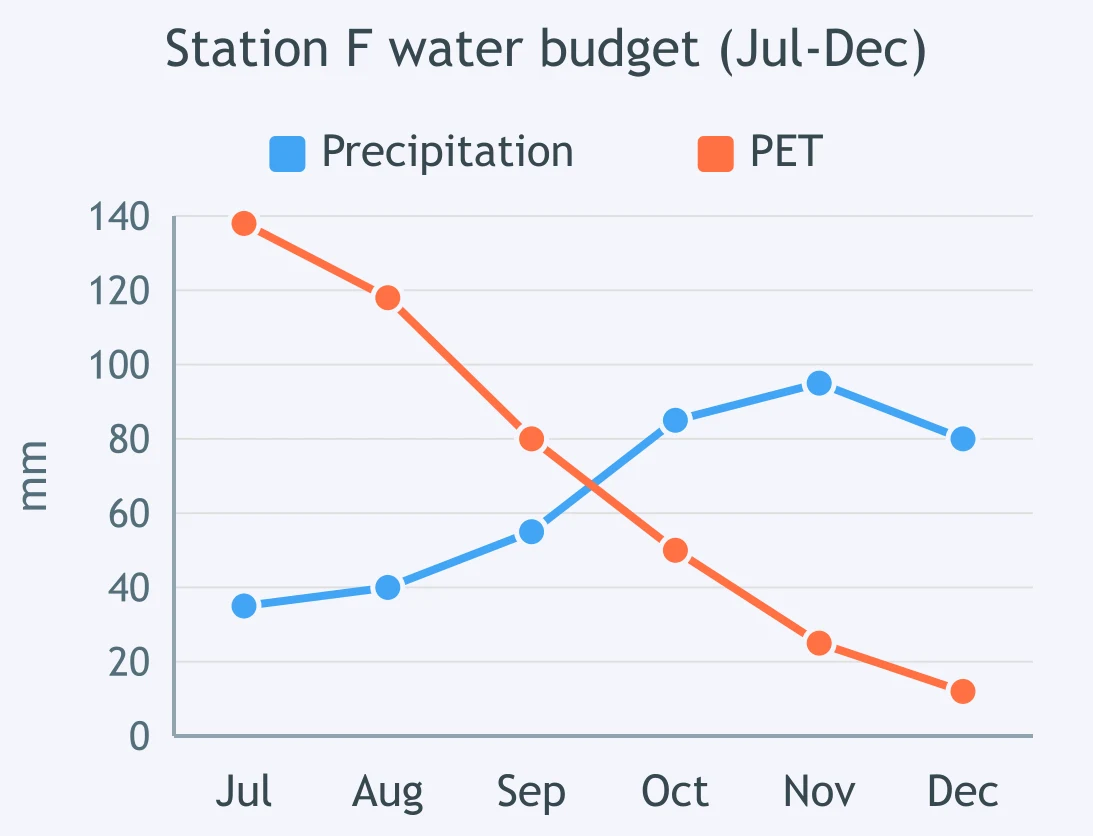
In the graph, potential evapotranspiration exceeds precipitation in late spring, and the soil store begins full but declines. What condition is shown during those first dry months?
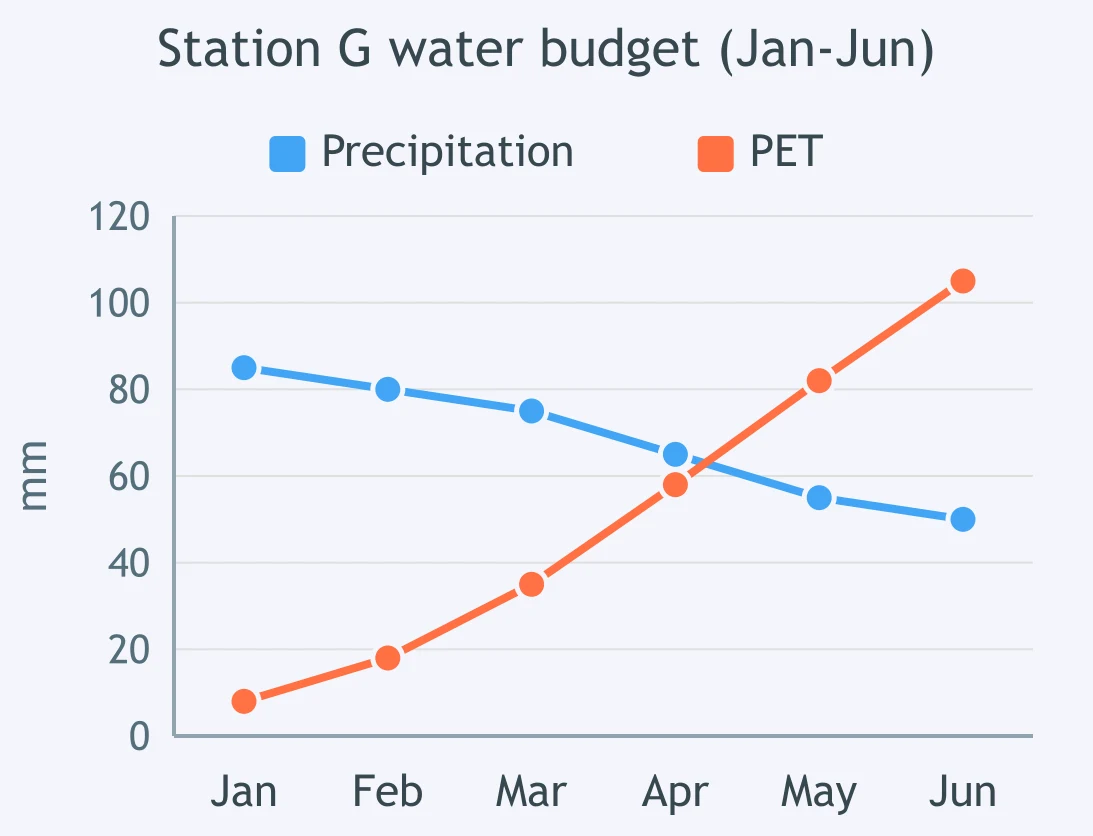
Use the graph. During late summer, precipitation is below potential evapotranspiration and the soil store has already reached zero. What condition is present?
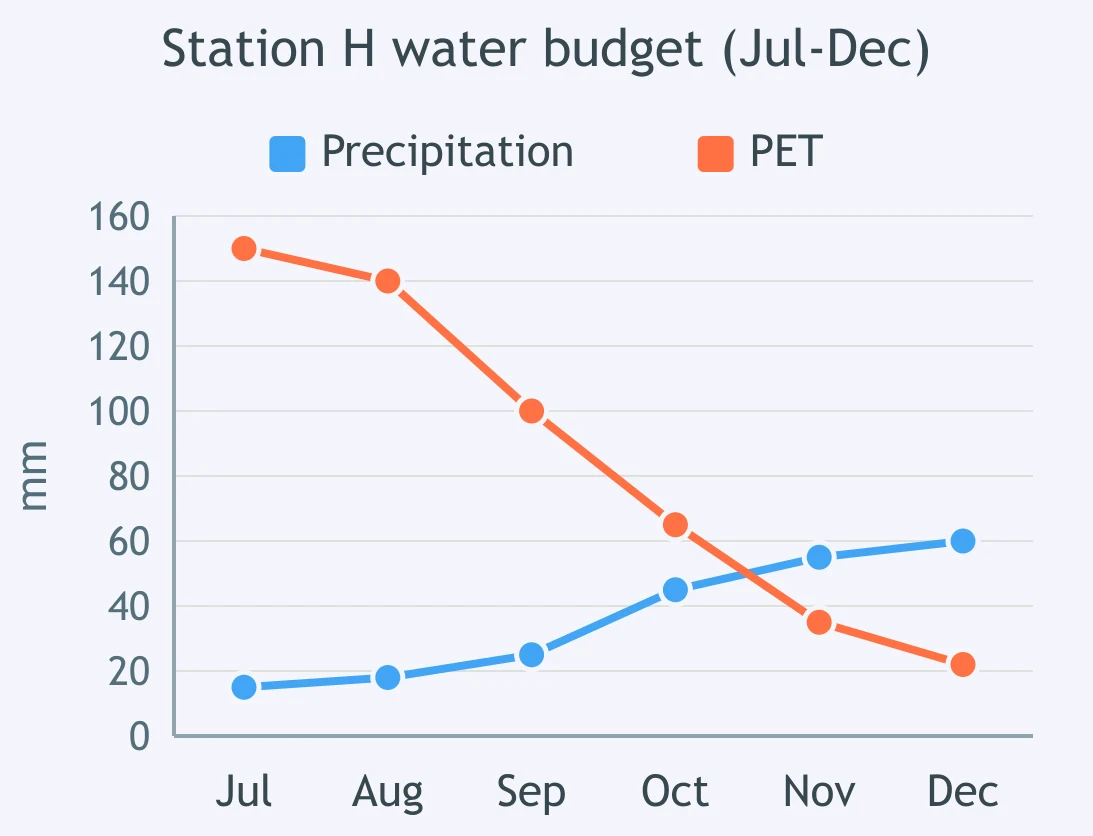
In July, a station has 60 millimeters of precipitation and 145 millimeters of potential evapotranspiration, with soil storage empty. What is the water deficit?
In April, precipitation is 105 millimeters and potential evapotranspiration is 65 millimeters. Soil storage is already full. How much water is surplus?
In September, precipitation is 75 millimeters and potential evapotranspiration is 110 millimeters. Soil storage decreases by 20 millimeters. What is actual evapotranspiration?
In October, precipitation is 95 millimeters and potential evapotranspiration is 45 millimeters. Soil storage has 30 millimeters of empty space. How much recharge occurs?
In June, a station records 35 millimeters of precipitation and 100 millimeters of potential evapotranspiration. Soil storage supplies 40 millimeters before it runs out. What is the deficit?
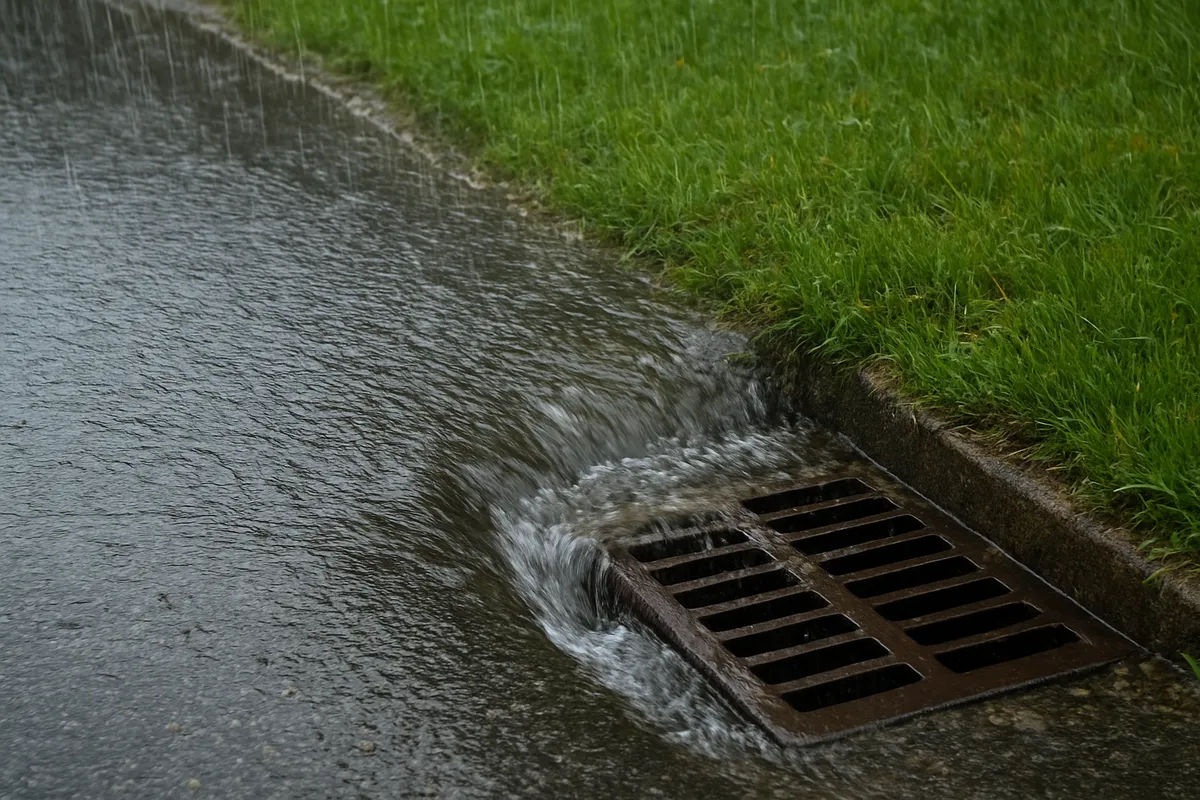
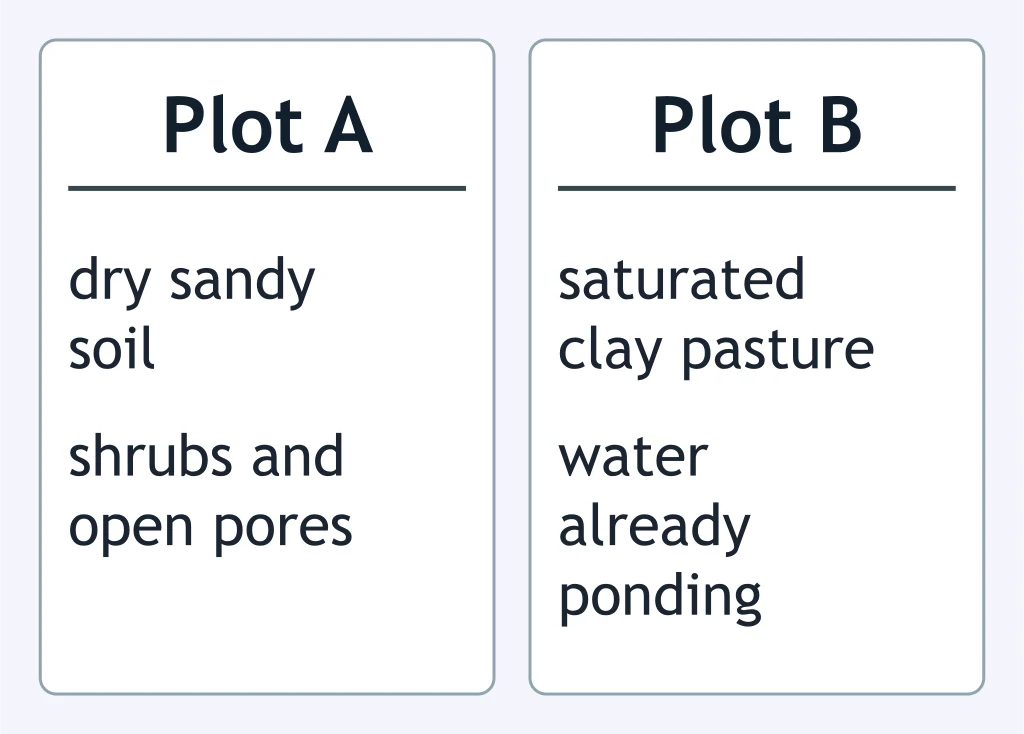
Use the two-panel surface diagram. Which plot will produce more runoff from the same storm, and why?
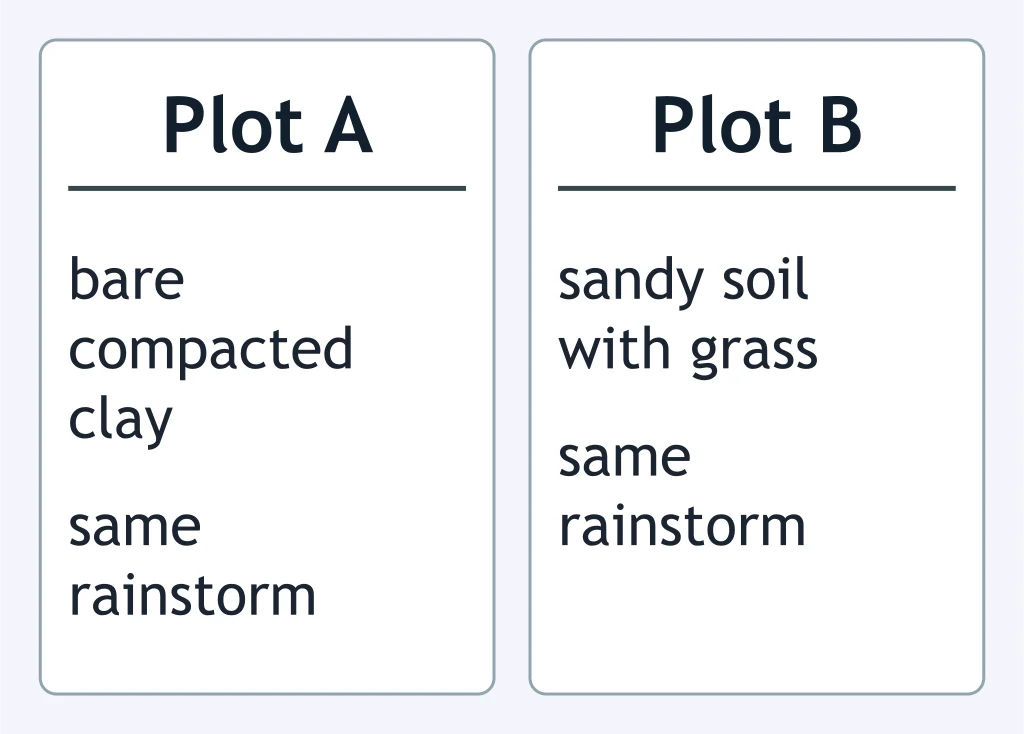
Read the two surface panels. Which plot will have greater runoff during the storm?
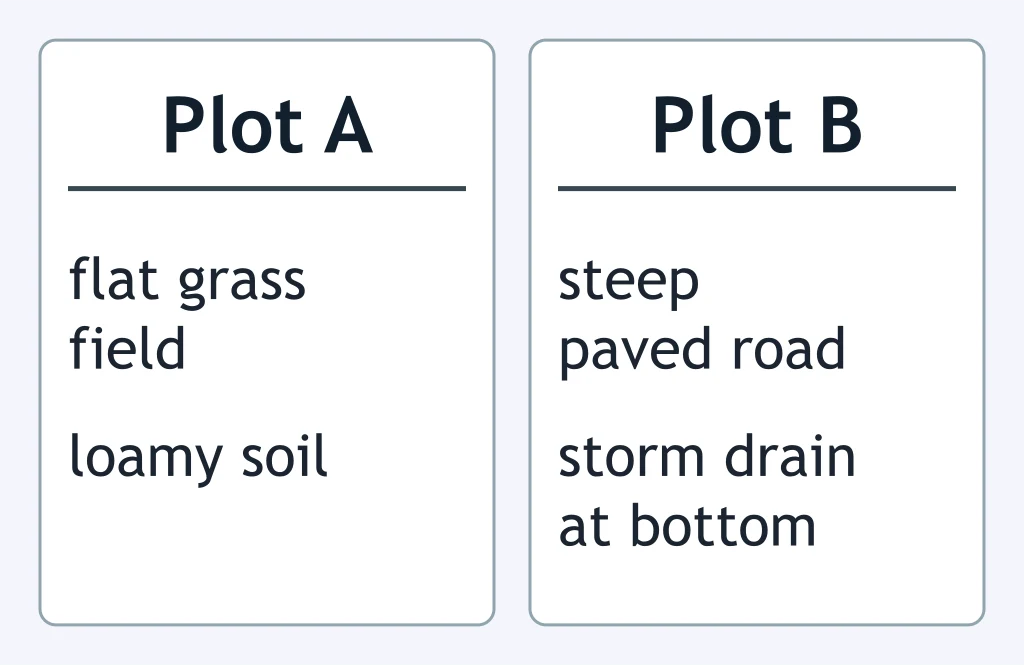
Use the surface diagram after a cold rain. Which plot will yield more runoff?
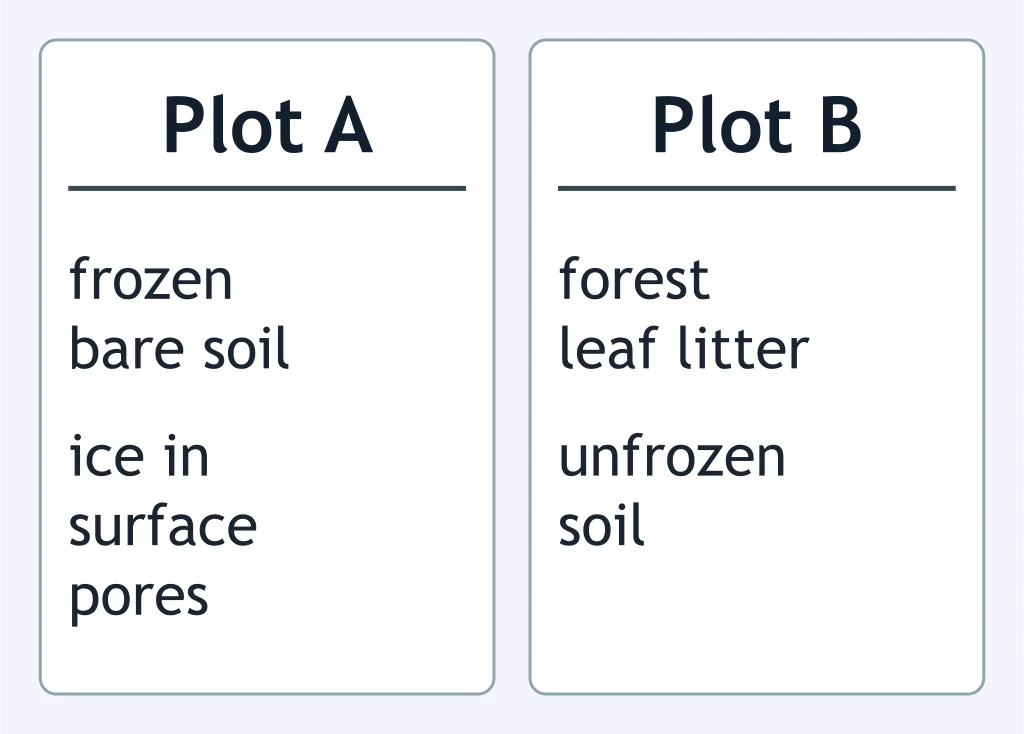
Compare the two plots in the figure. Which plot will have more runoff during the next hour of rain?
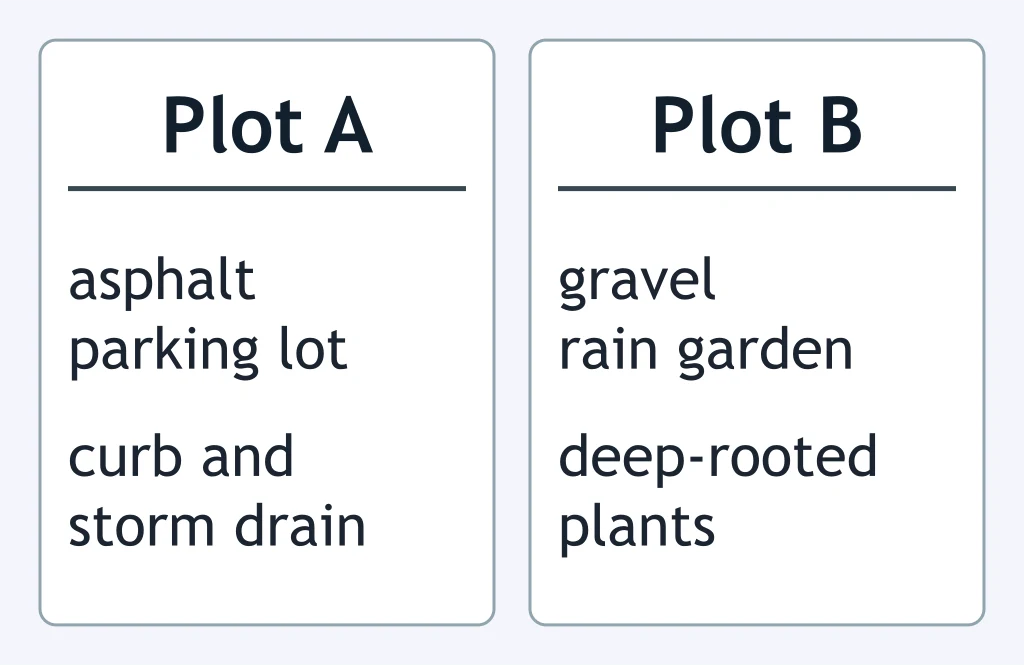
Use the urban runoff diagram. Which surface sends the larger fraction of rainfall into runoff?
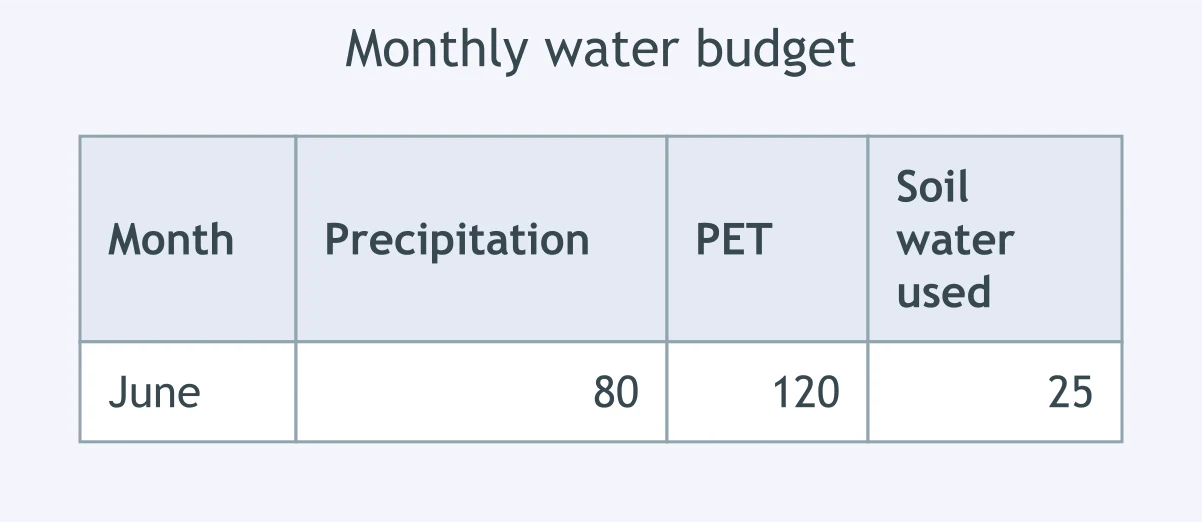
Use the one-row water-budget table. What is the actual evapotranspiration for June?
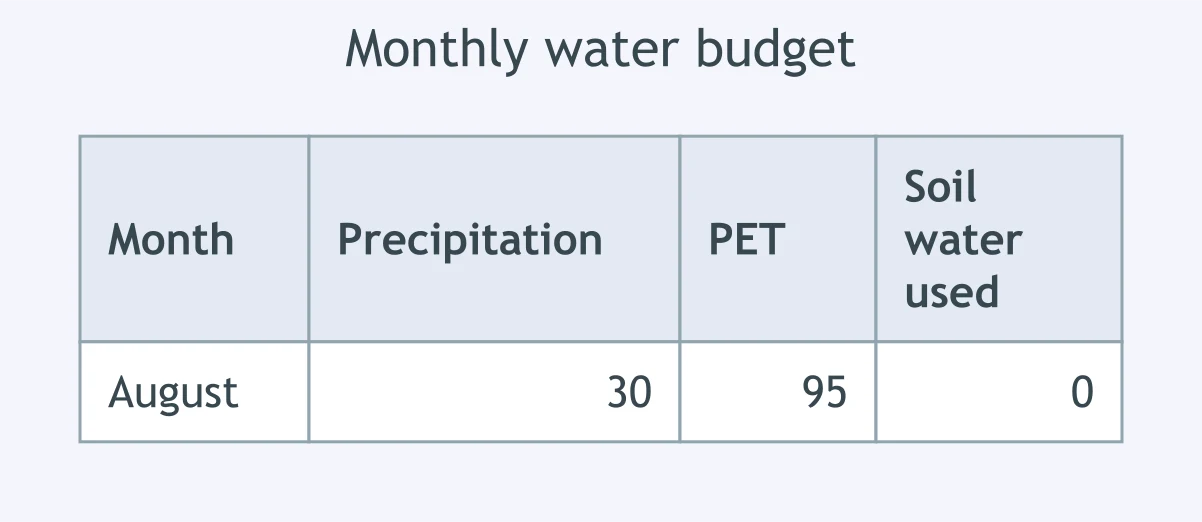
Use the table for August, when soil storage is empty. What is the actual evapotranspiration?
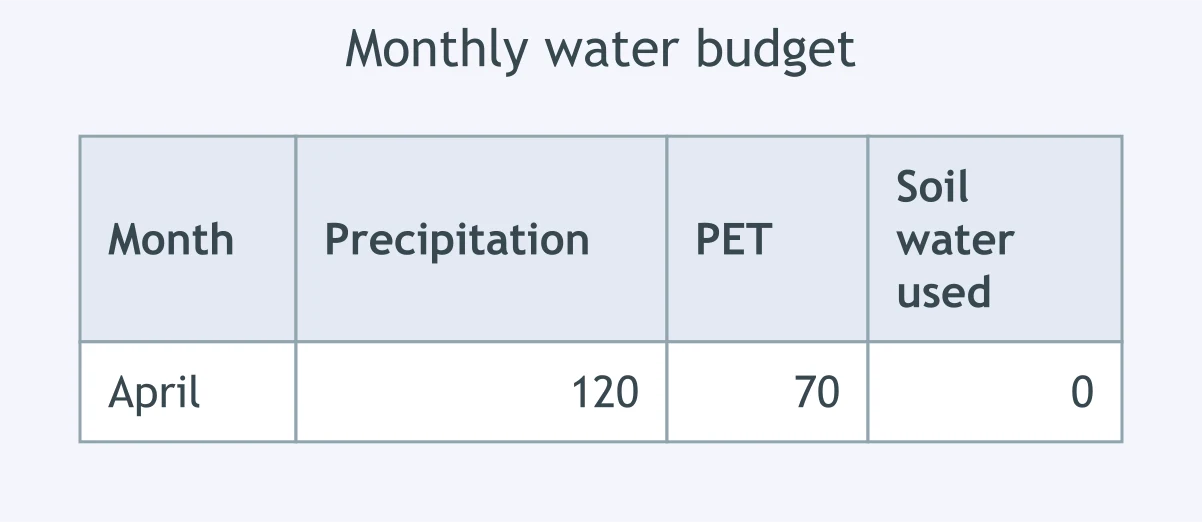
Use the table for April, when soil storage is full. What is actual evapotranspiration?
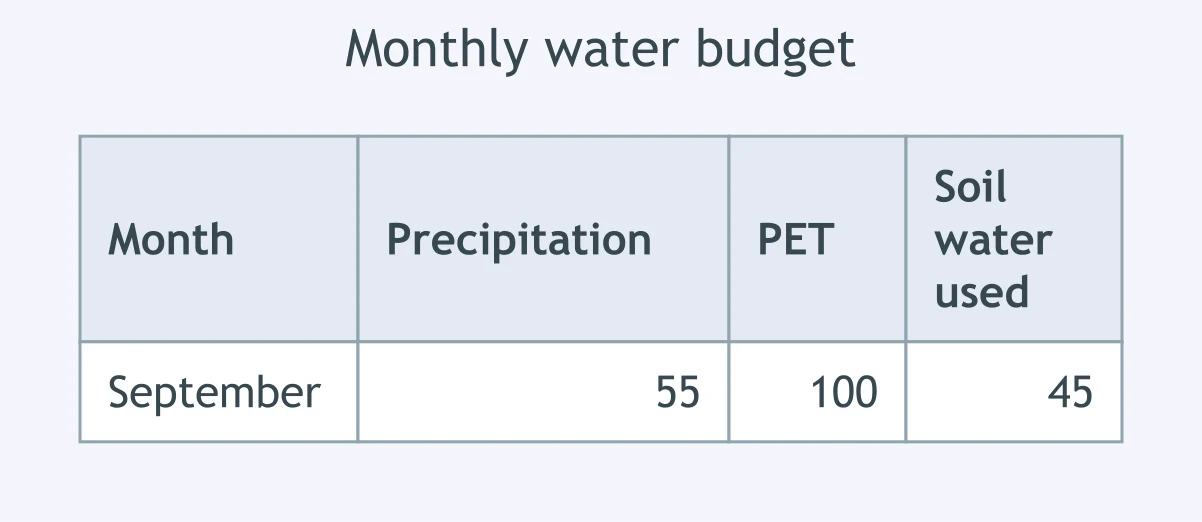
Use the one-row table. What is the actual evapotranspiration for September?
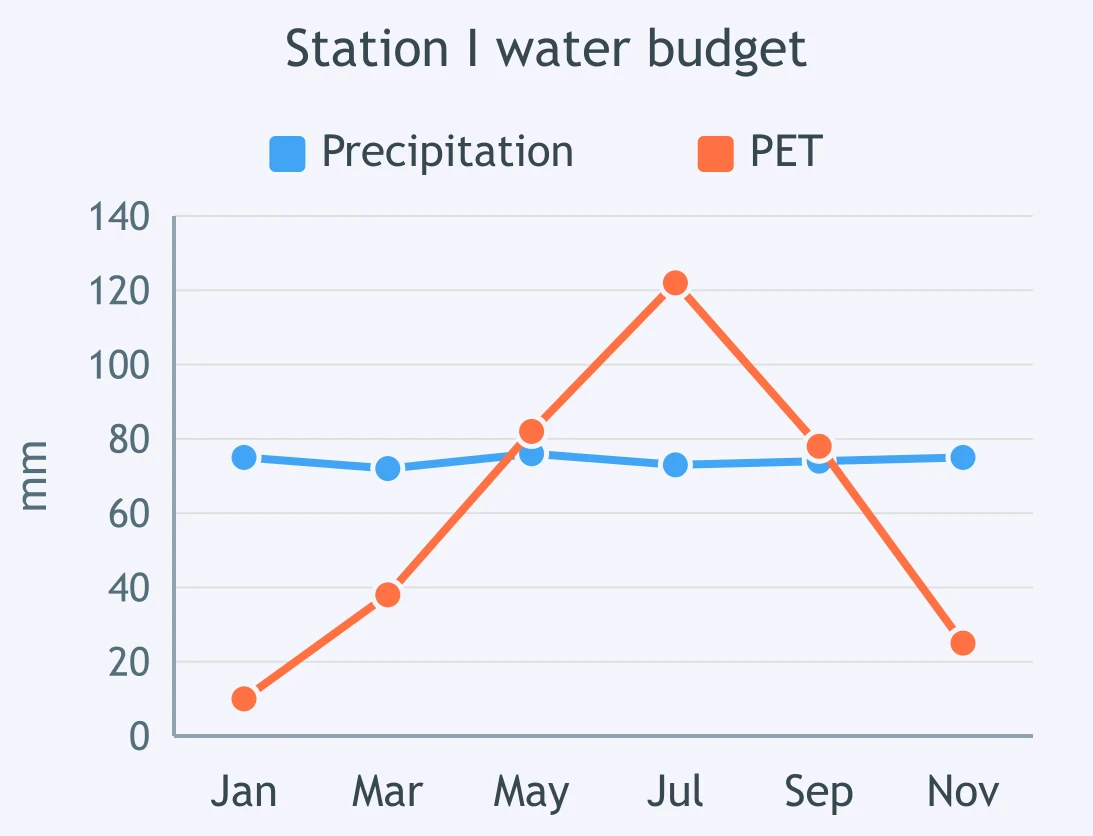
Use the graph for a mid-latitude station with nearly even precipitation. After the summer drawdown, when does soil storage recharge?
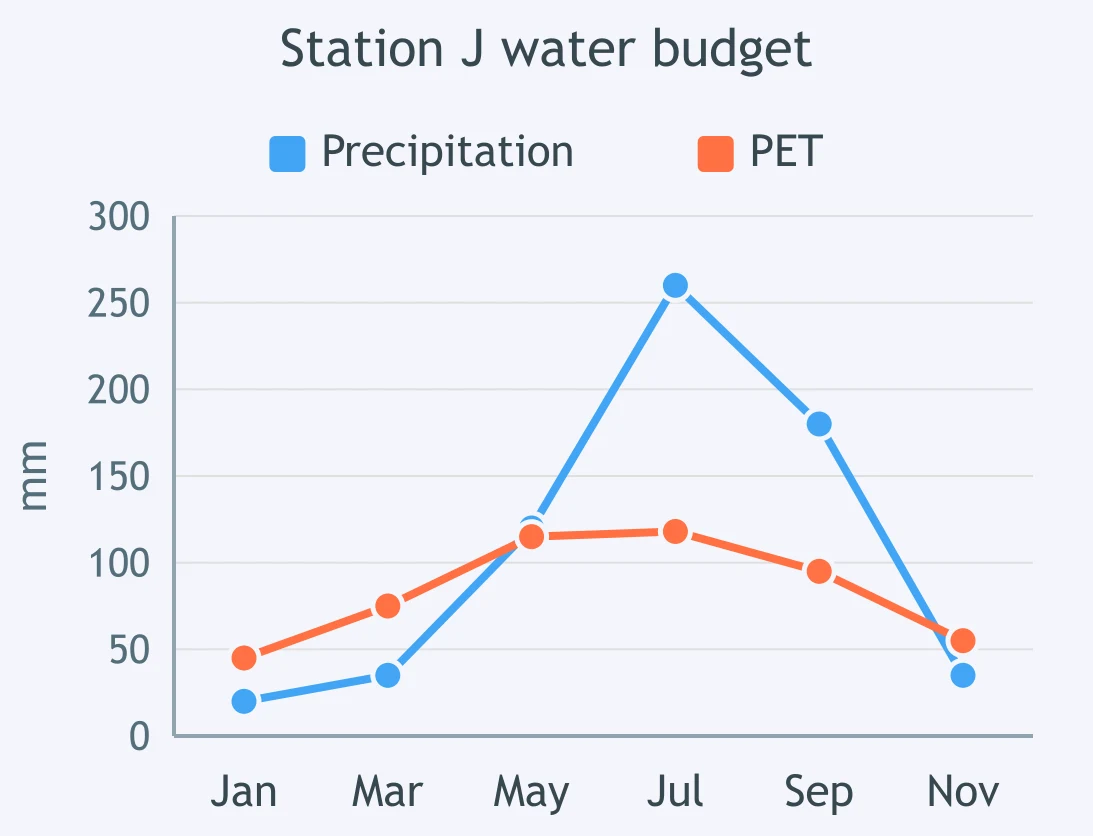
Use the monsoon-station graph. During which season does soil storage most likely increase fastest?
Use the graph for a coastal station. If soil storage is full in April, when will the store decrease before a deficit appears?
Crack the passcode before the zombies get in.
Answer, then swat bugs for bonus points.
Race through questions at your own speed.
Same question on every screen. Fastest wins.

Pick a tile, answer, hit bonuses and steals.
20 questions