Loading
by BlastRoom
Trace water through the water cycle, name the process at each step, and compare how much water each reservoir stores.
#earth_space_science
40 questions
One question set, multiple game modes. Tap any game to see it in action. Not sure which to pick?
Answer to place stones and capture territory.
Outrun the snow together.
Earn blasts, then hunt the other team.
Answer to earn energy, then climb.

The class blasts through walls together.
Bid on mystery lots. Most money wins.
Sell tours. Nice, standard, or a total scam.

Answer, restock, and serve the rush.
More correct answers pulls the rope your way.
Answer, then shoot down the alien wave.
Answer, then tap to leap the frozen ridge.
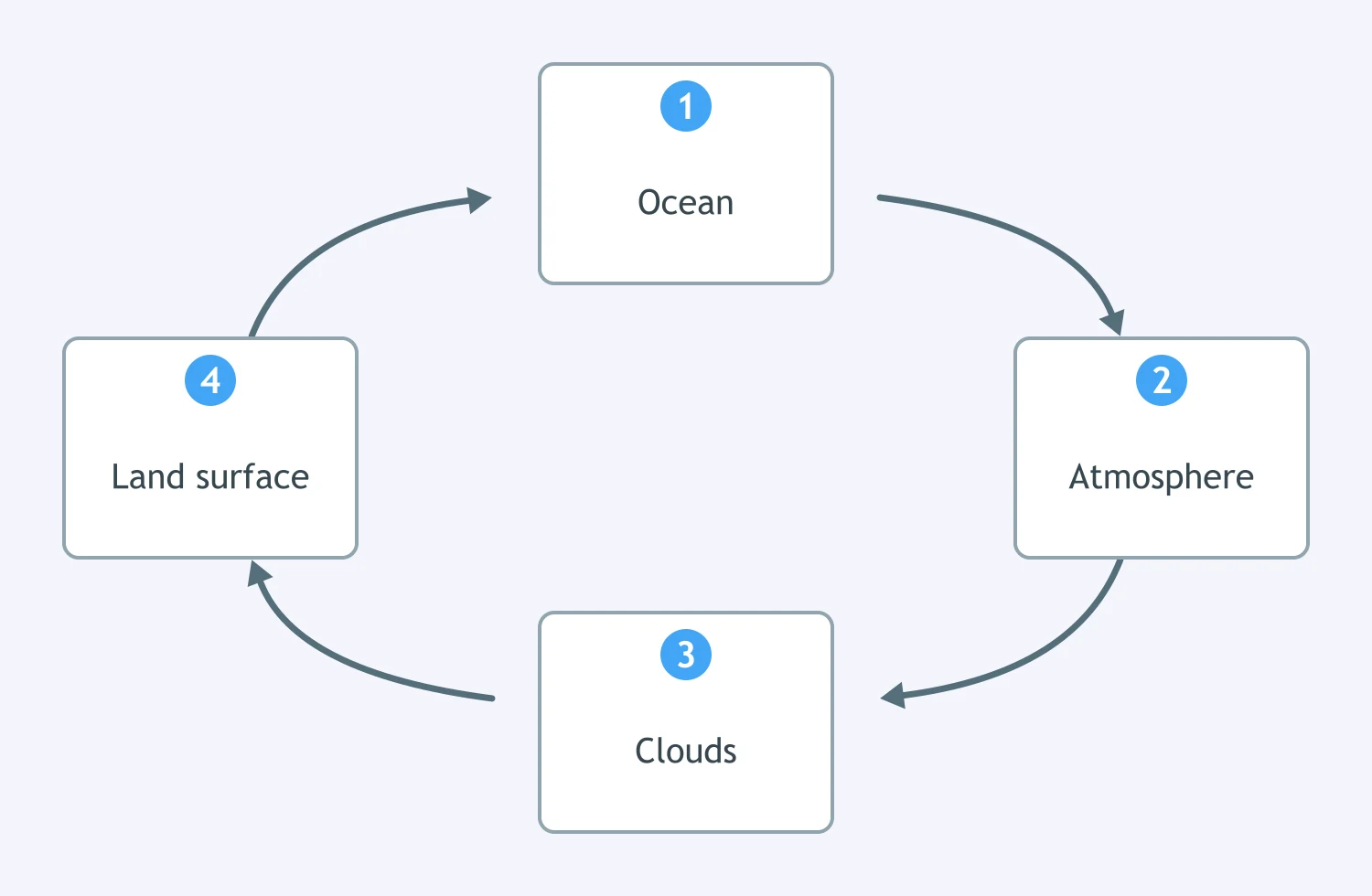
In the water cycle diagram, water moves from the ocean's surface up into the air. Which process does that arrow represent?
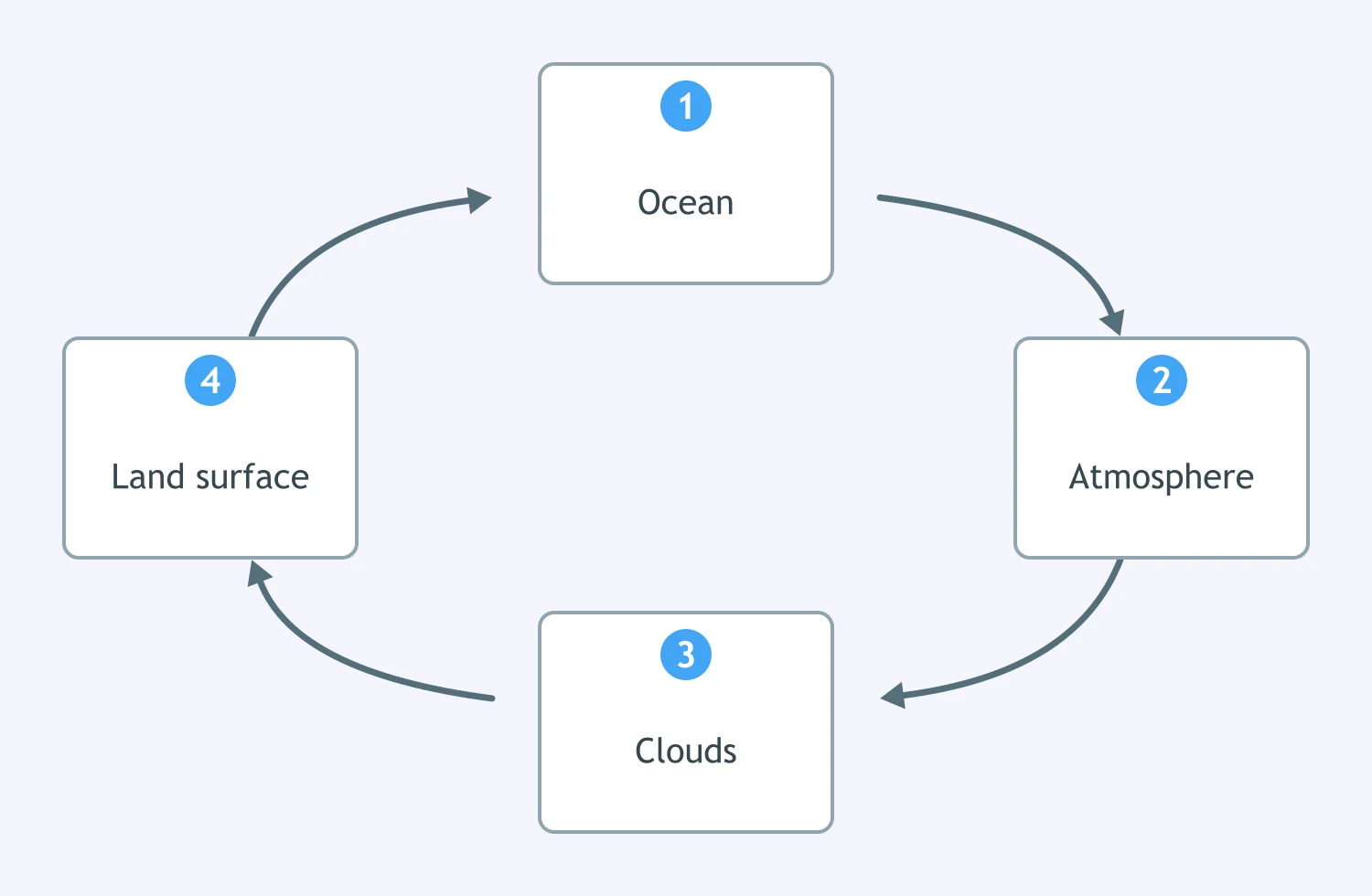
In the same diagram, water moving from the land surface back into the ocean completes the loop. Which process does that arrow represent?
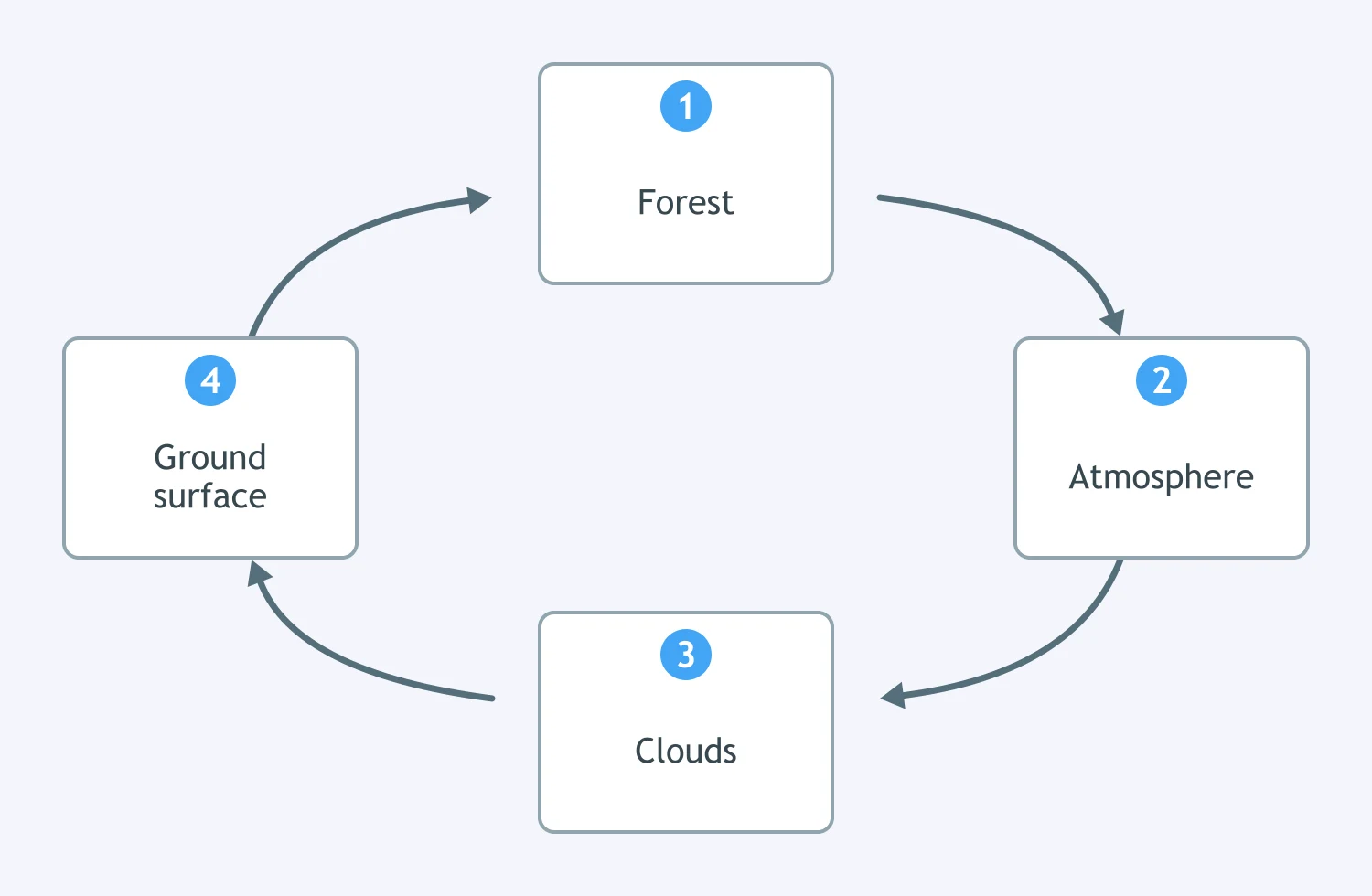
In the water cycle diagram, water leaves the forest and enters the air above it. Which process does that arrow represent?
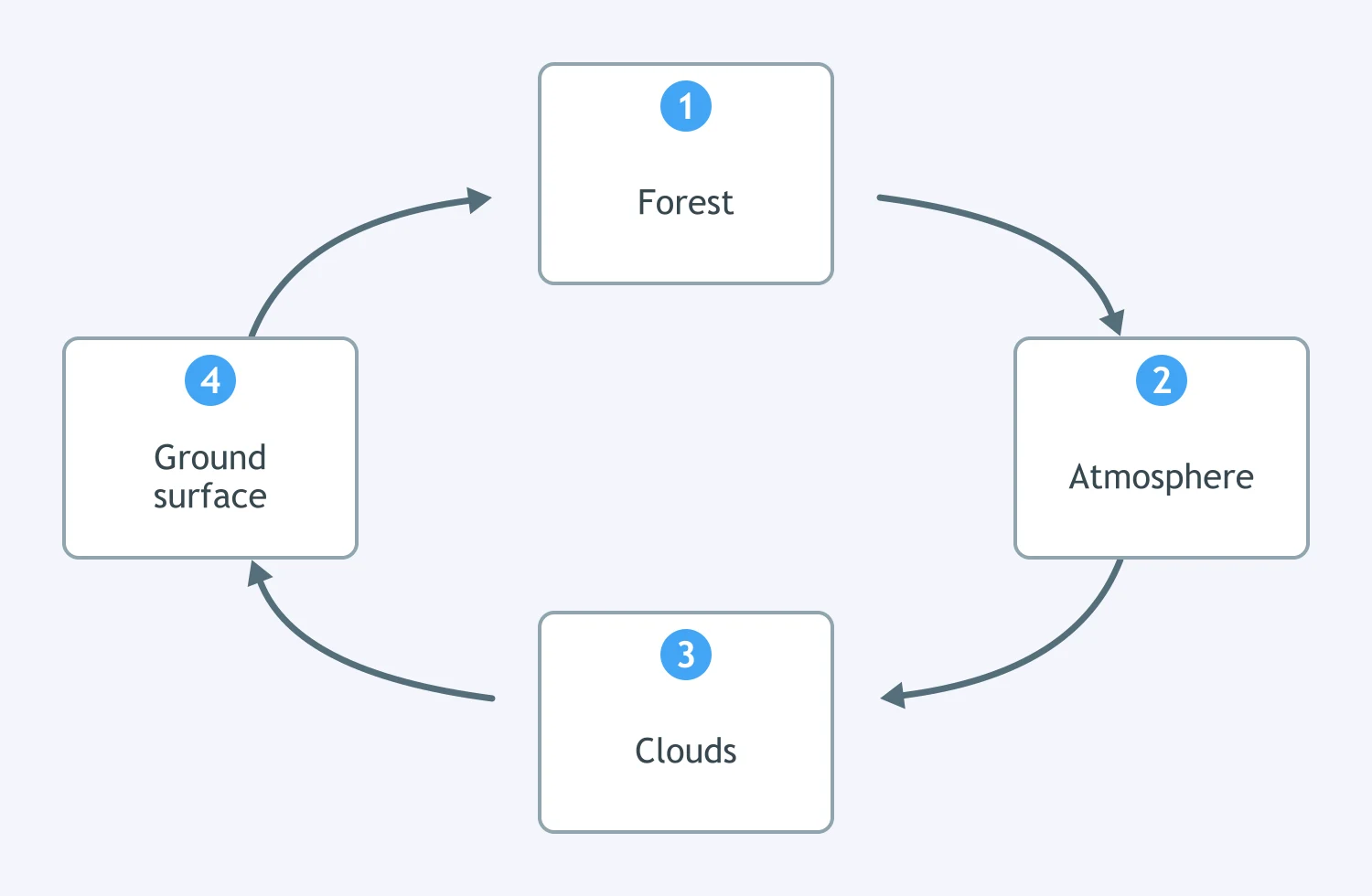
In the same diagram, water at the ground surface moves down to where the forest's roots can reach it, closing the loop. Which process does that arrow represent?
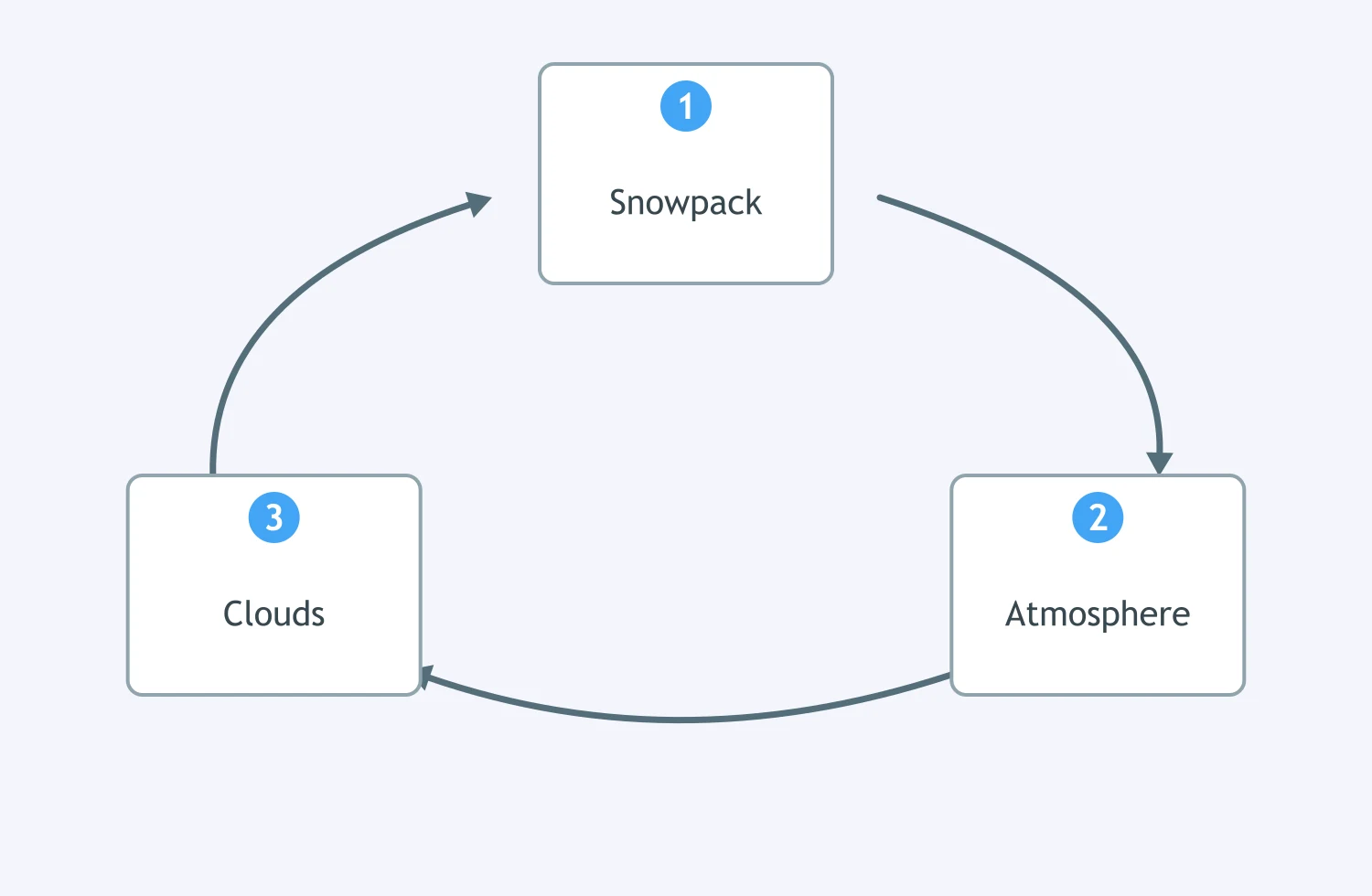
In the water cycle diagram, water leaves a mountain snowpack and enters the air directly, without ever melting. Which process does that arrow represent?
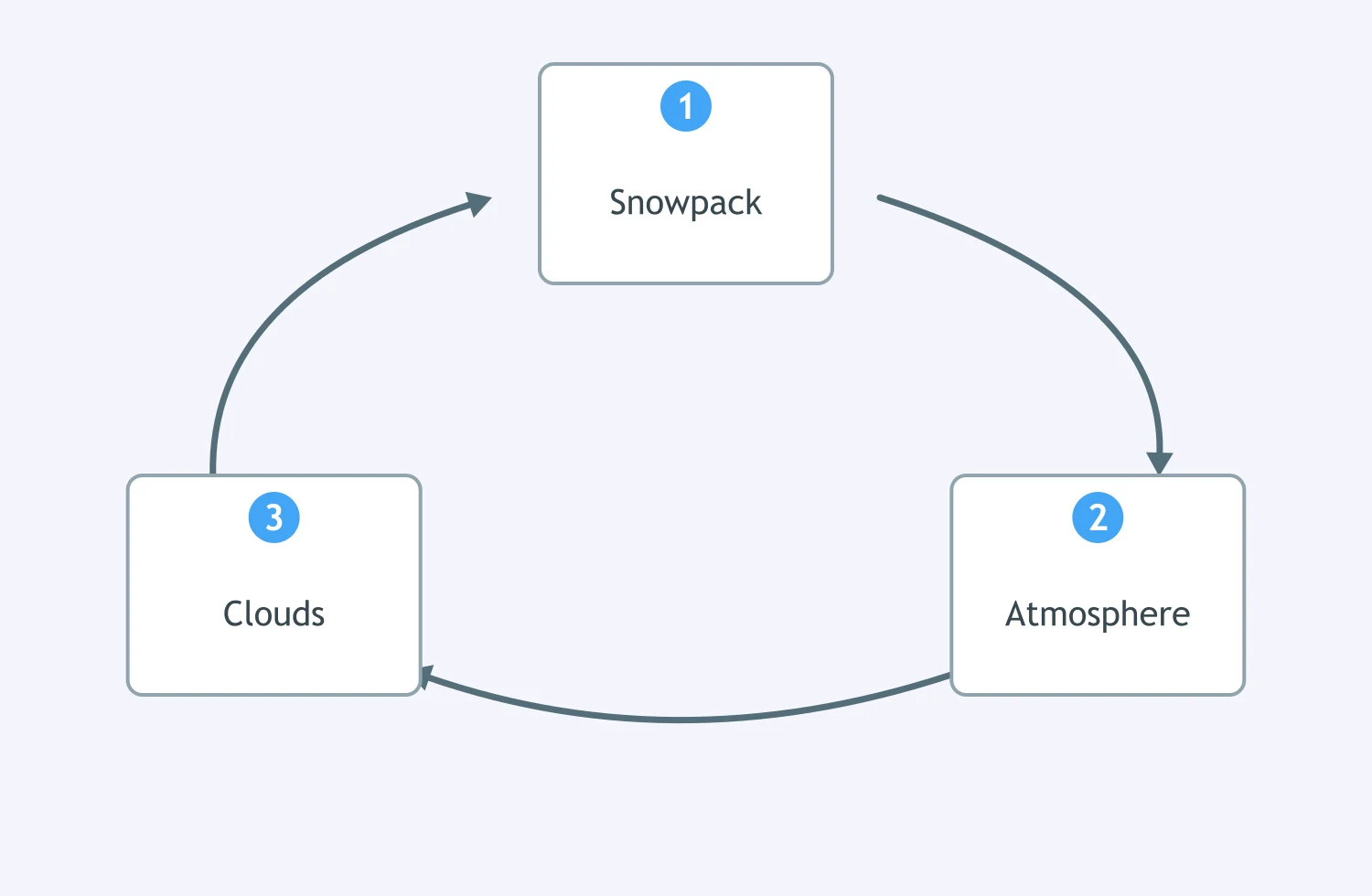
In the same diagram, snow falls from the clouds back onto the snowpack, closing the loop. Which process does that arrow represent?
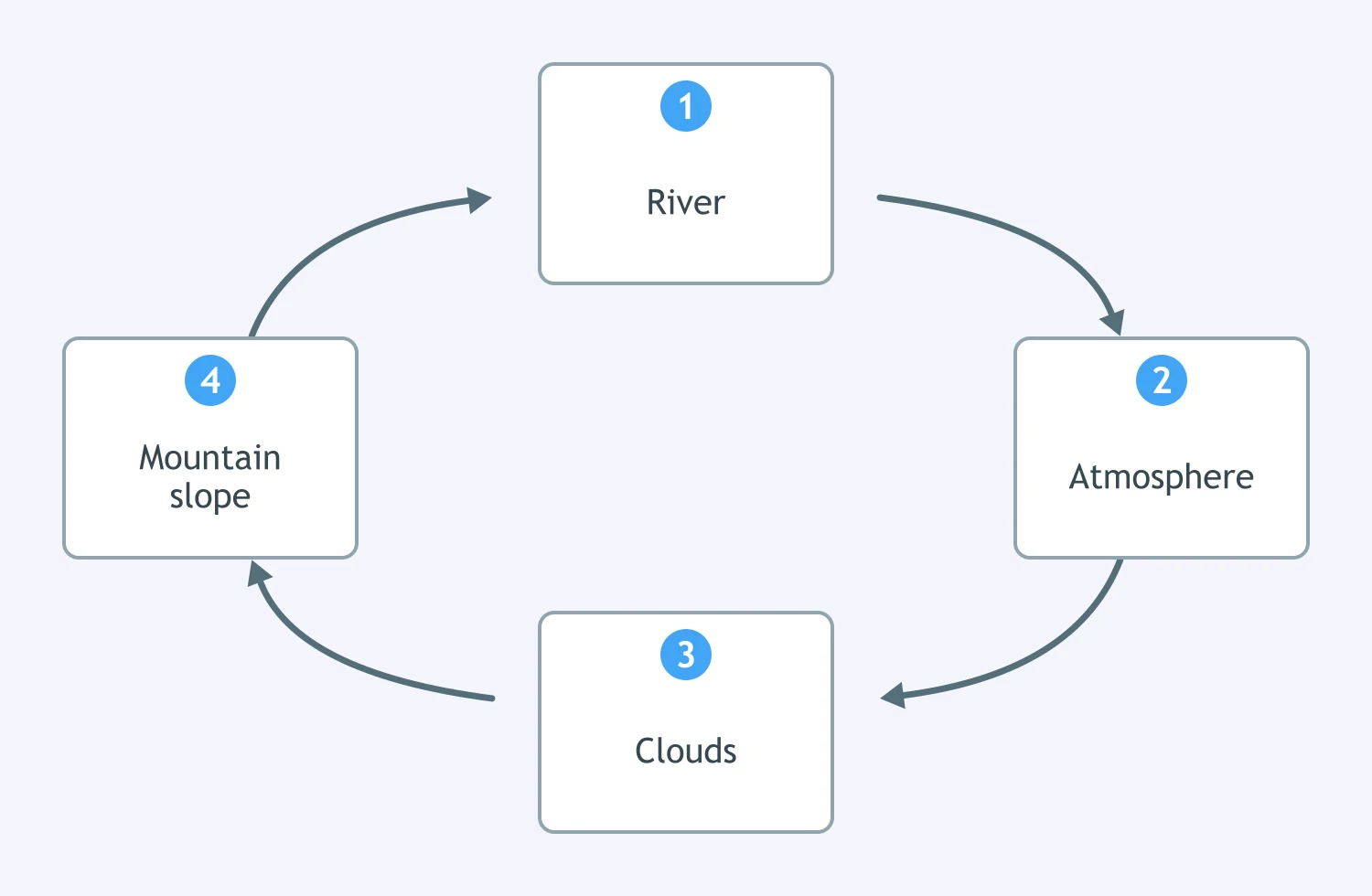
In the water cycle diagram, water moves from a mountain slope down into the river, closing the loop. Which process does that arrow represent?
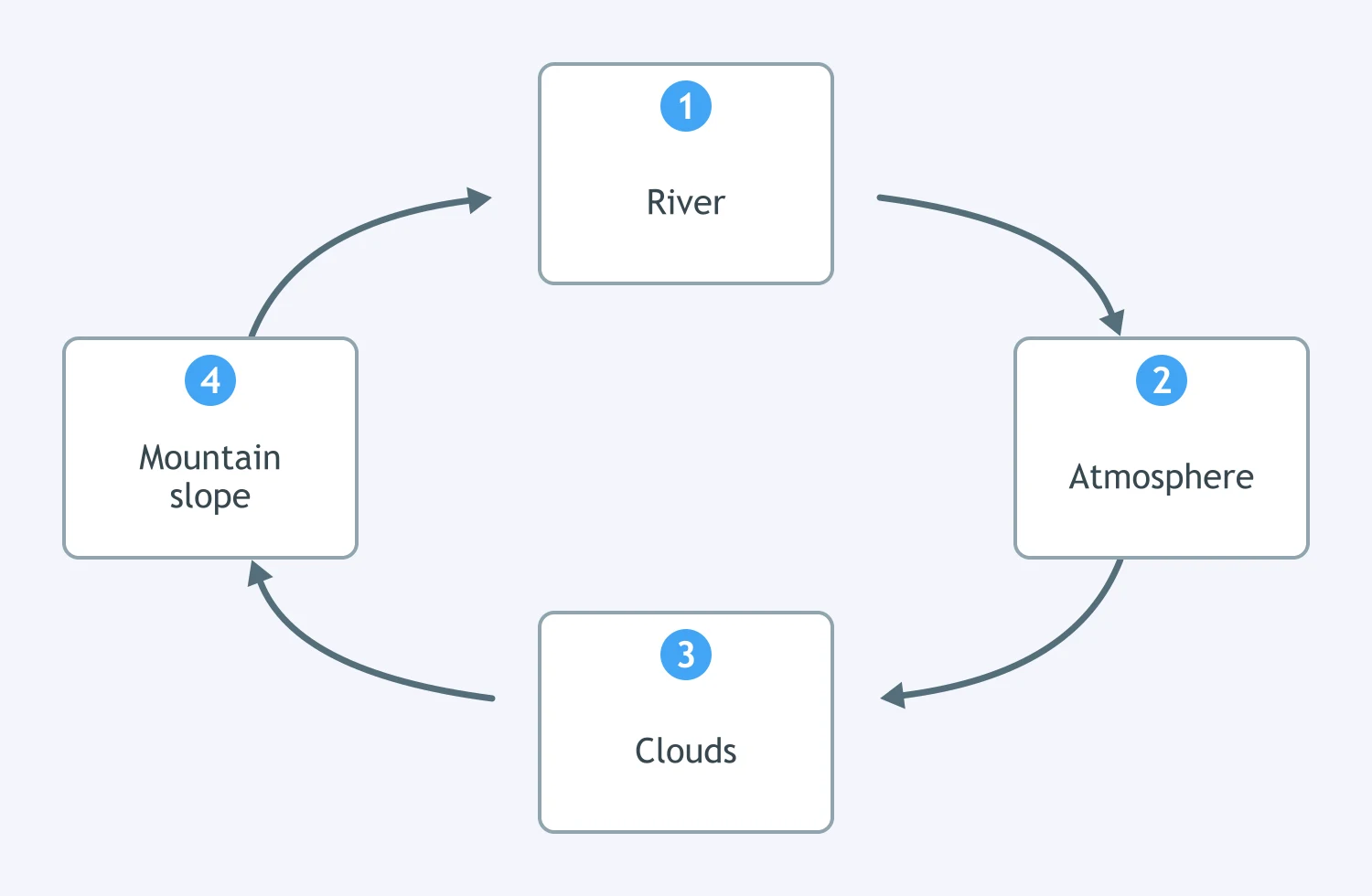
In the same diagram, water leaves the river and enters the air above it. Which process does that arrow represent?
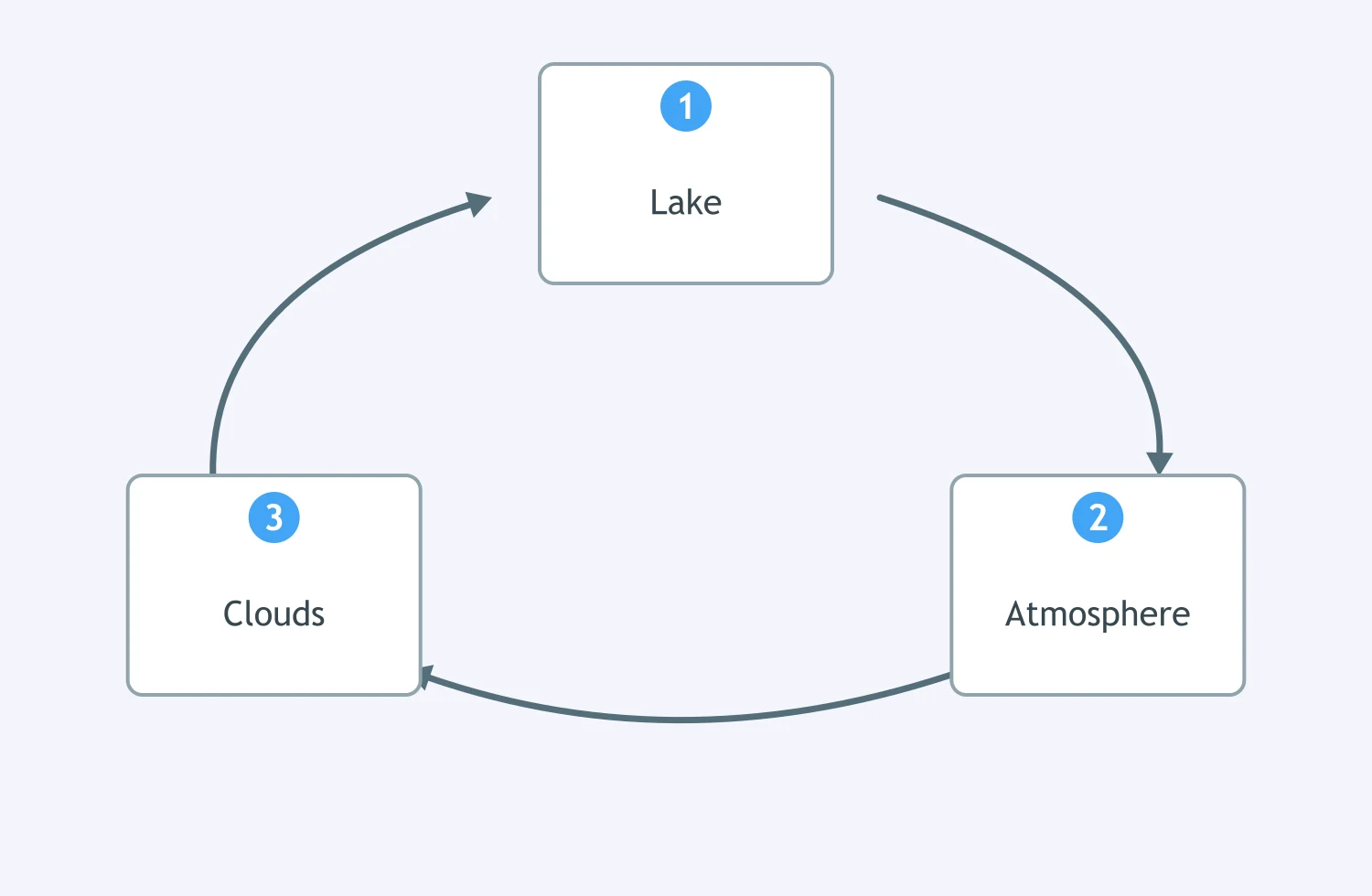
In the water cycle diagram, water vapor in the air changes into the tiny droplets that make up clouds. Which process does that arrow represent?
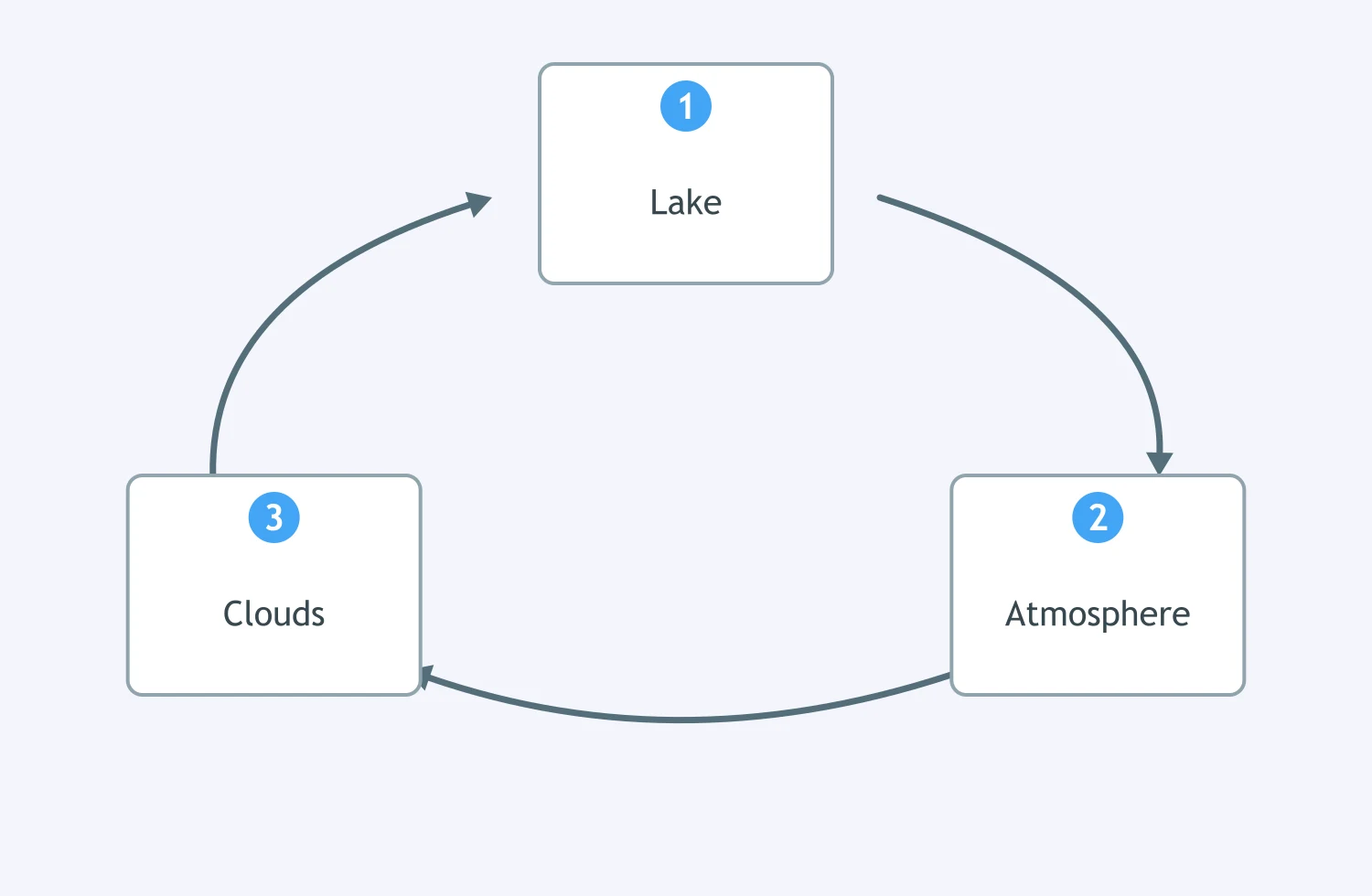
In the same diagram, water falls from the clouds into the lake, closing the loop. Which process does that arrow represent?
On a cold, dry, sunny winter day, a mountain snowpack visibly shrinks, but no meltwater trickles from its edge and the ground beneath stays dry. Which process is removing the snow?
A puddle disappears from a sidewalk on a warm, breezy afternoon, leaving no trace of water anywhere nearby. Which process removed the puddle?
A farmer notices his cornfield loses far more soil moisture on a hot, sunny day than on an overcast day at the same temperature, even though no rain fell either day. Which plant-driven process explains the extra water loss?
Warm, humid air rises over a mountain range and cools until visible clouds form along the peaks. Which process is forming those clouds?
During a heavy downpour on a compacted, sun-baked clay driveway, water sheets downhill across the surface toward the street instead of soaking in. Which process is moving that water?
A garden bed soaks up an entire rain shower within minutes, and no water is left standing or flowing across the surface afterward. Which process moved the water into the soil?
Weather radar shows rain falling from a thunderstorm cloud onto a wheat field below. Which process is delivering that water to the field?
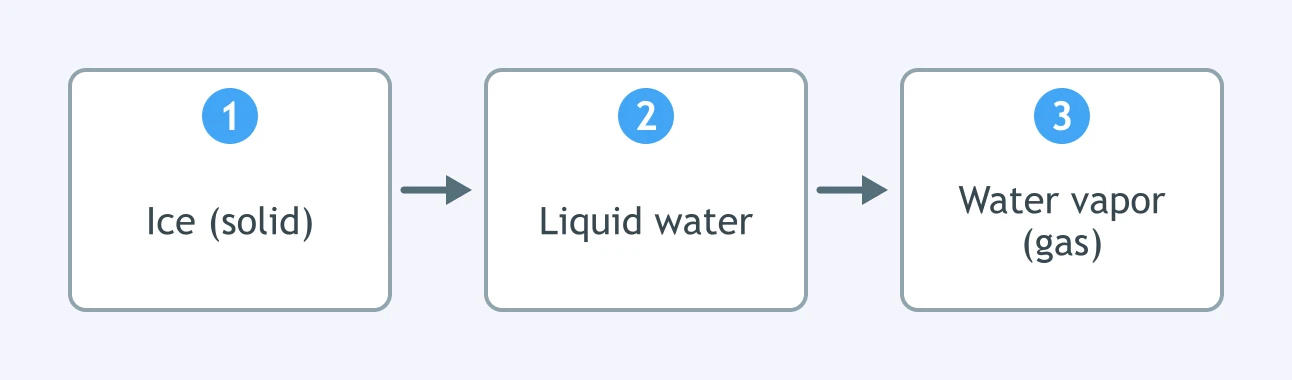
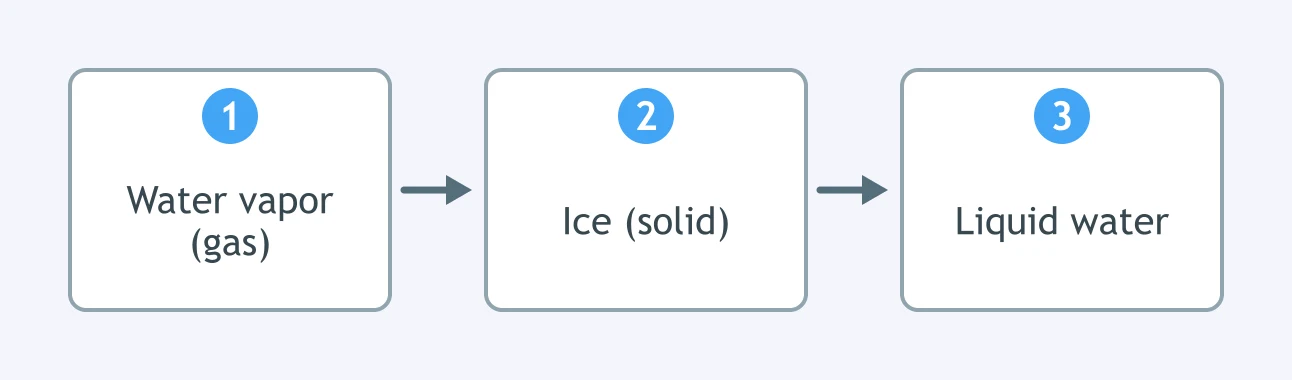
In the diagram, ice changes into liquid water. What happens to energy during that change?
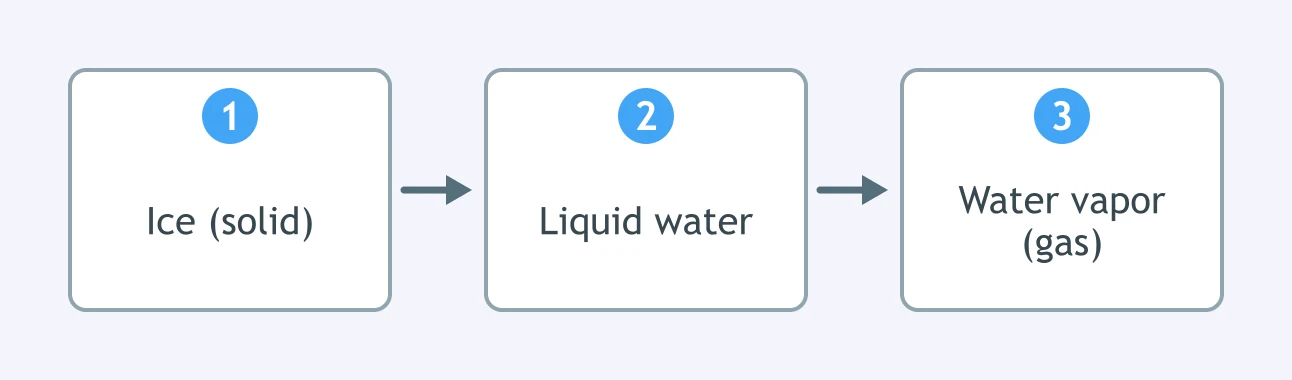
In the same diagram, liquid water changes into water vapor. What happens to energy during that change?
In the diagram, water vapor changes into liquid water. What happens to energy during that change?
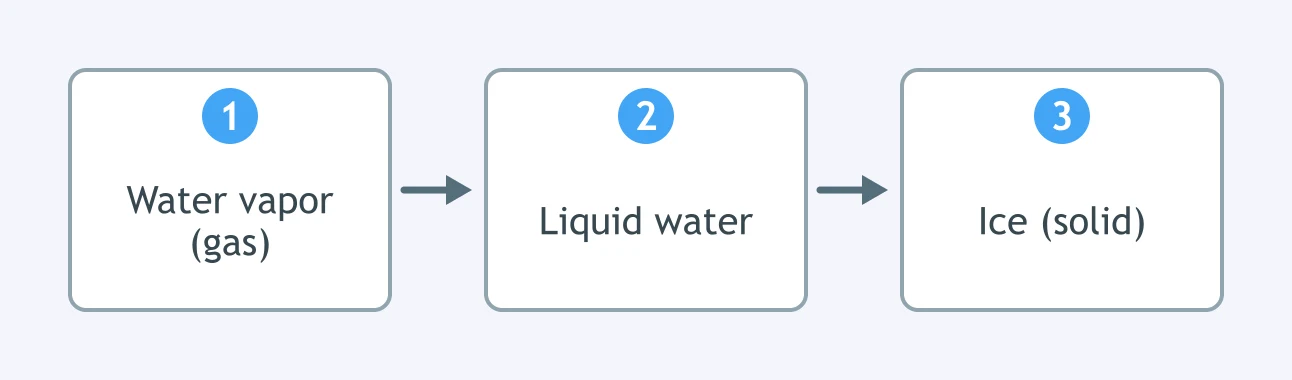
In the same diagram, liquid water changes into ice. What happens to energy during that change?
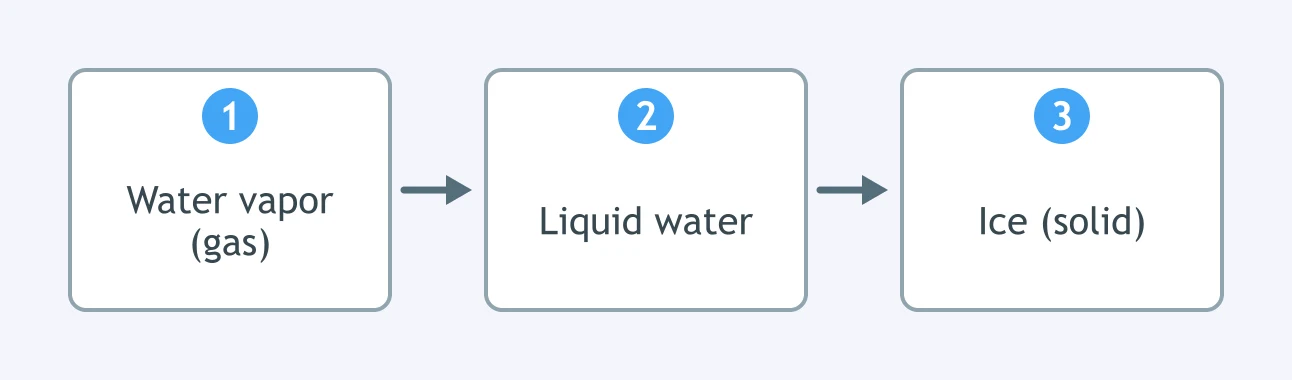
In the diagram, ice changes directly into water vapor without becoming liquid first. What happens to energy during that change?
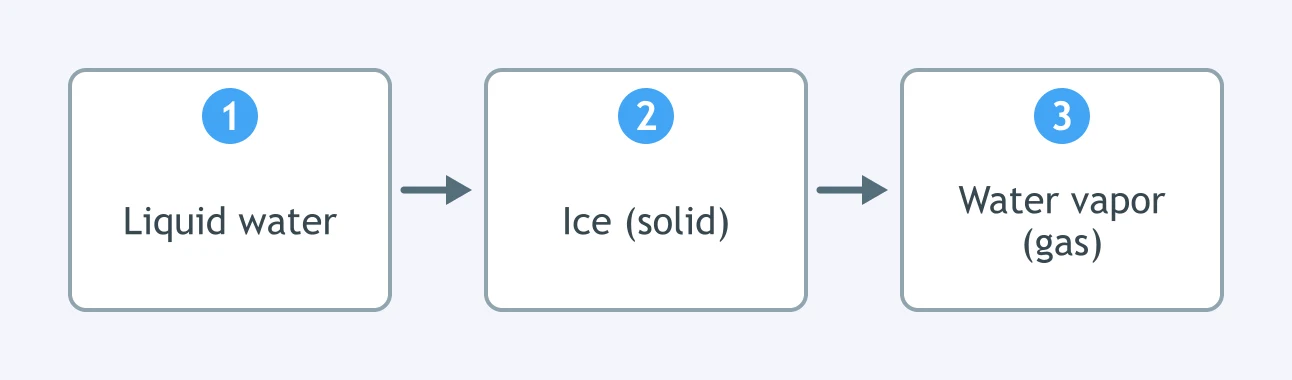
In the diagram, water vapor changes directly into ice without becoming liquid first. What happens to energy during that change?
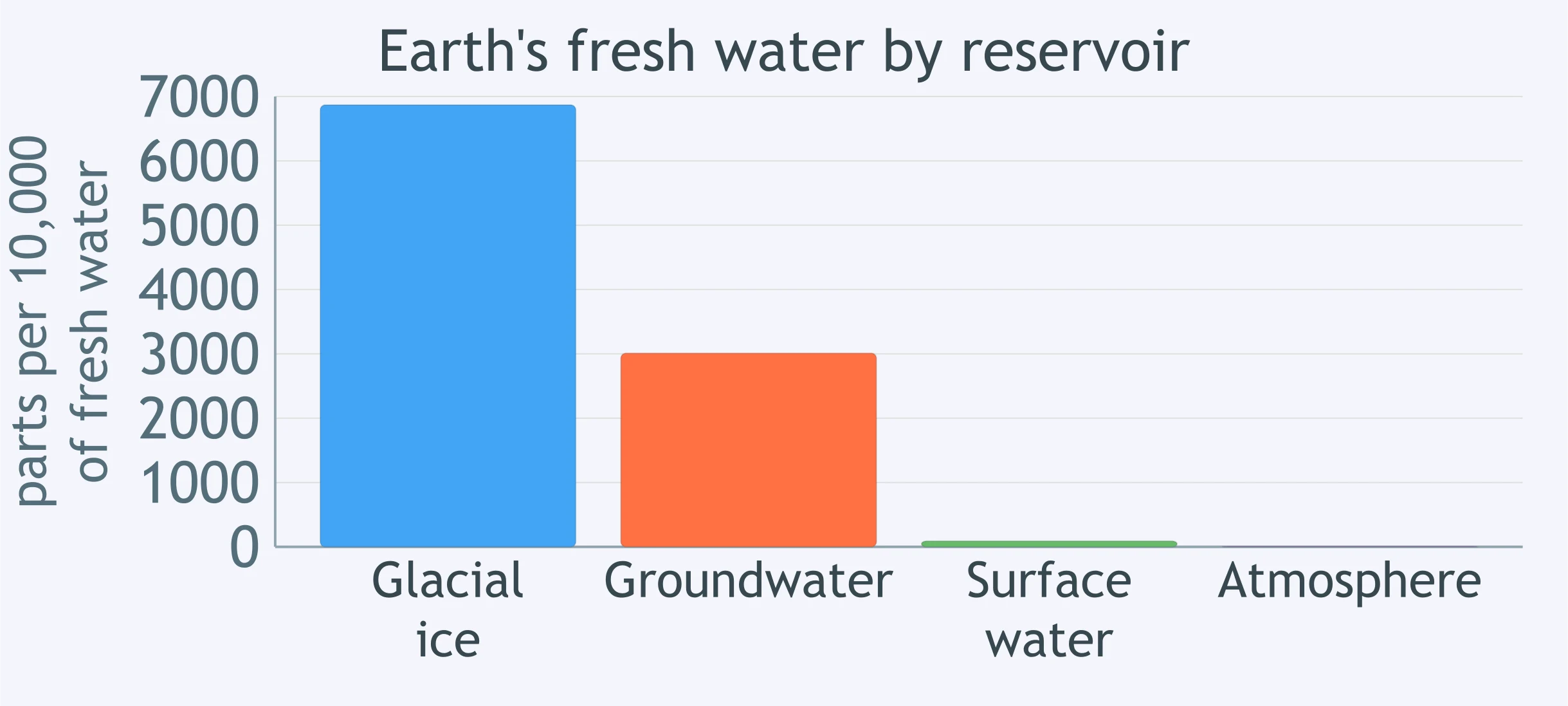
Use the graph. Of all the fresh water on Earth, which reservoir holds the largest share?
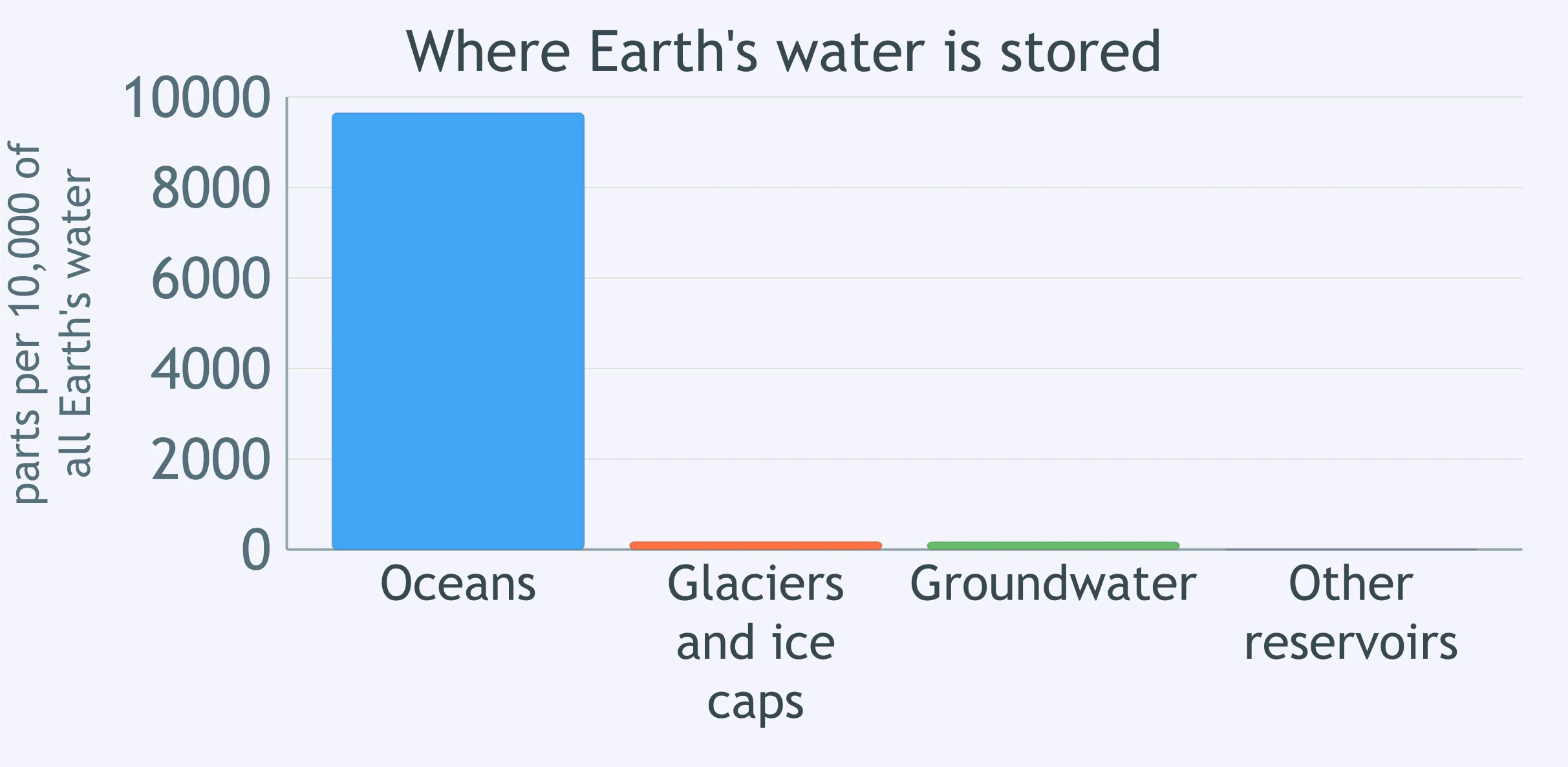
Use the graph, which compares all of Earth's water, not just the fresh water. Which reservoir holds the largest share?
Water stays in some reservoirs for only days and in others for thousands of years. Which reservoir has the shortest average residence time, so its water is replaced fastest?
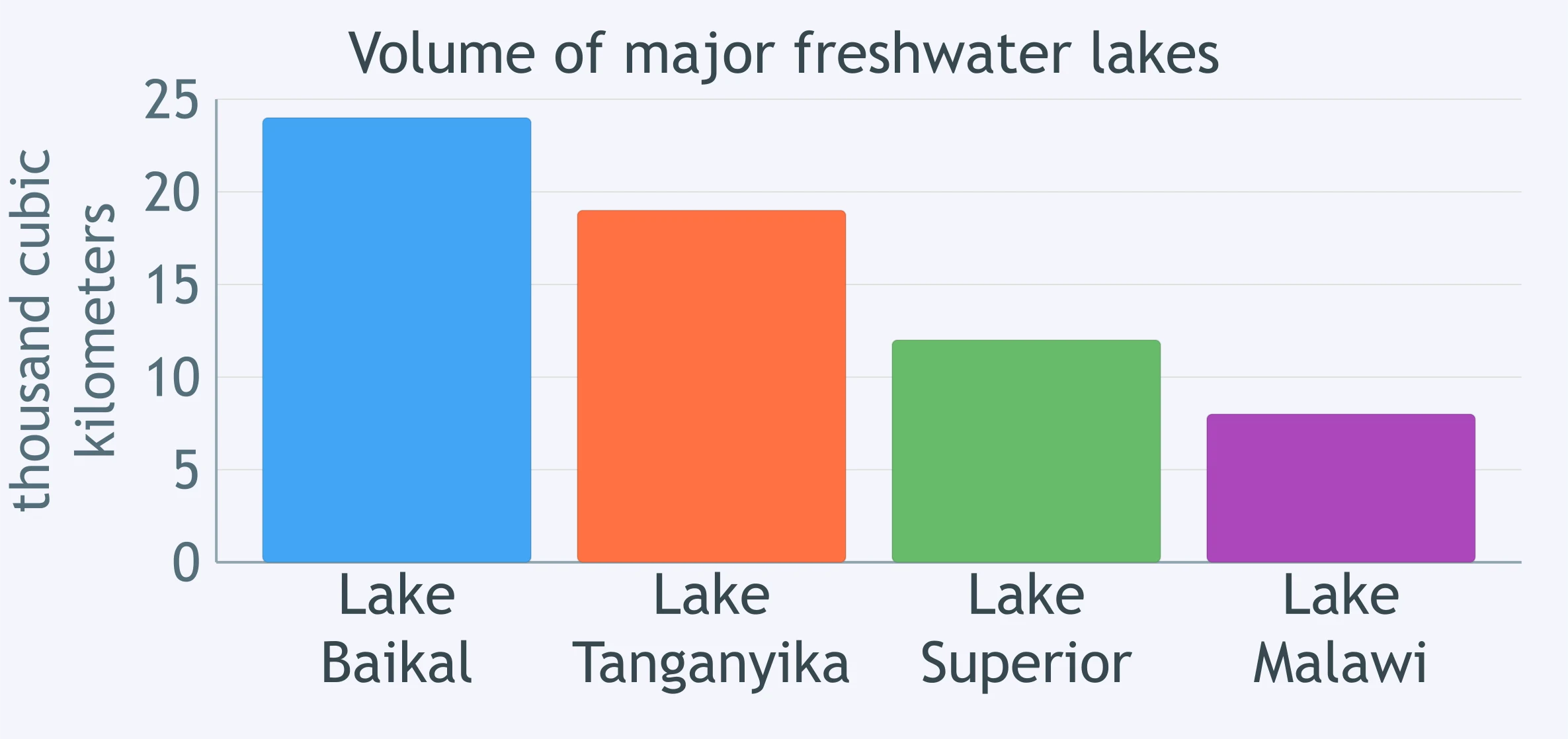
Use the graph comparing major freshwater lakes. Which lake holds the largest volume of fresh water?
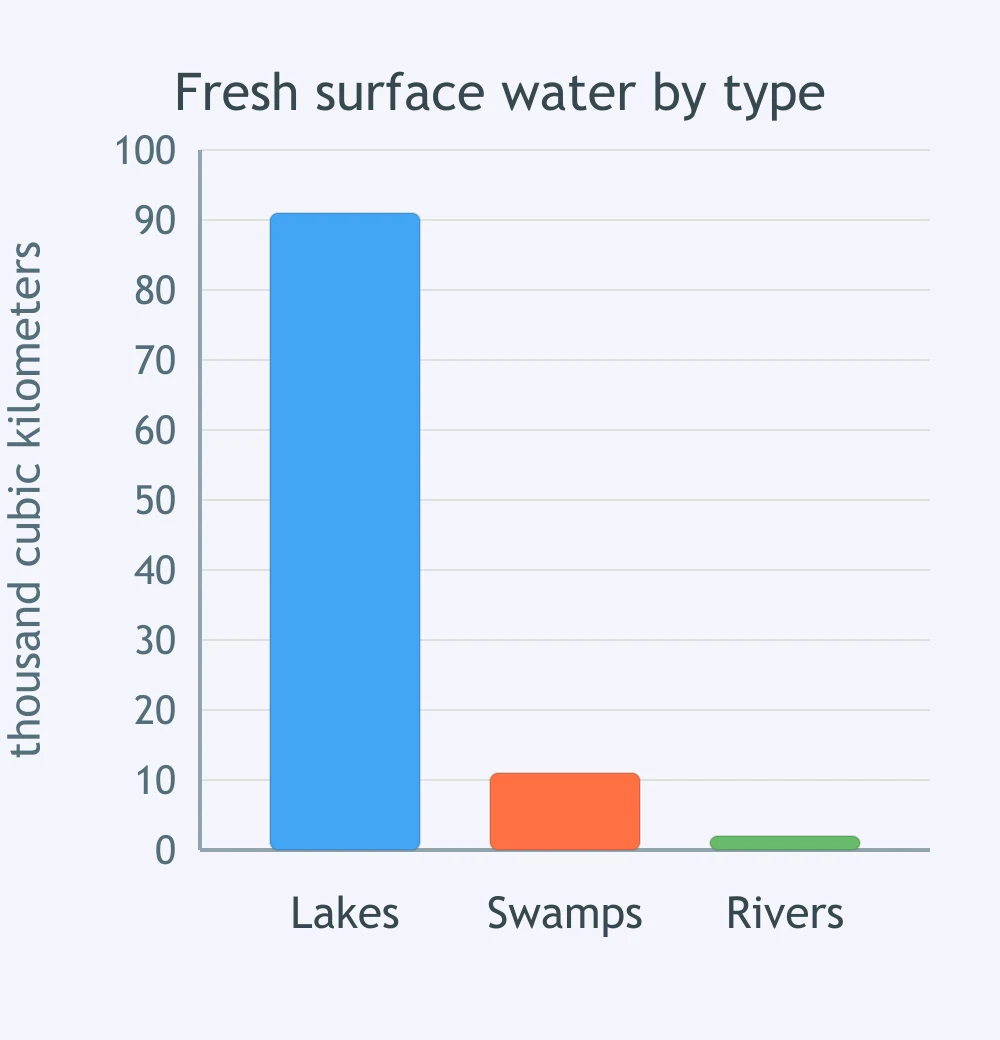
Use the graph, which compares three kinds of fresh surface water. Which one holds the smallest volume at any moment, even though it carries most of the water that reaches the ocean?
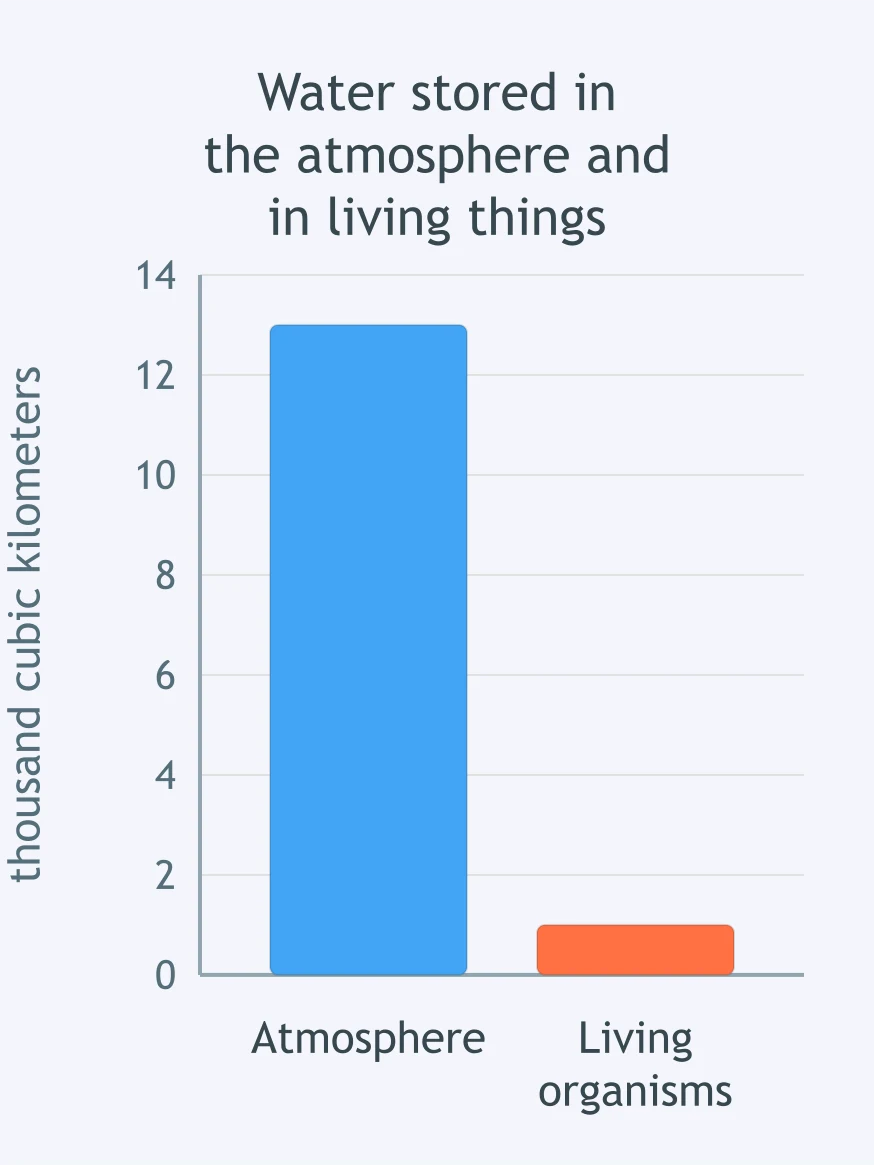
Use the graph. At any moment, which holds more water: the atmosphere or all living organisms on Earth combined?
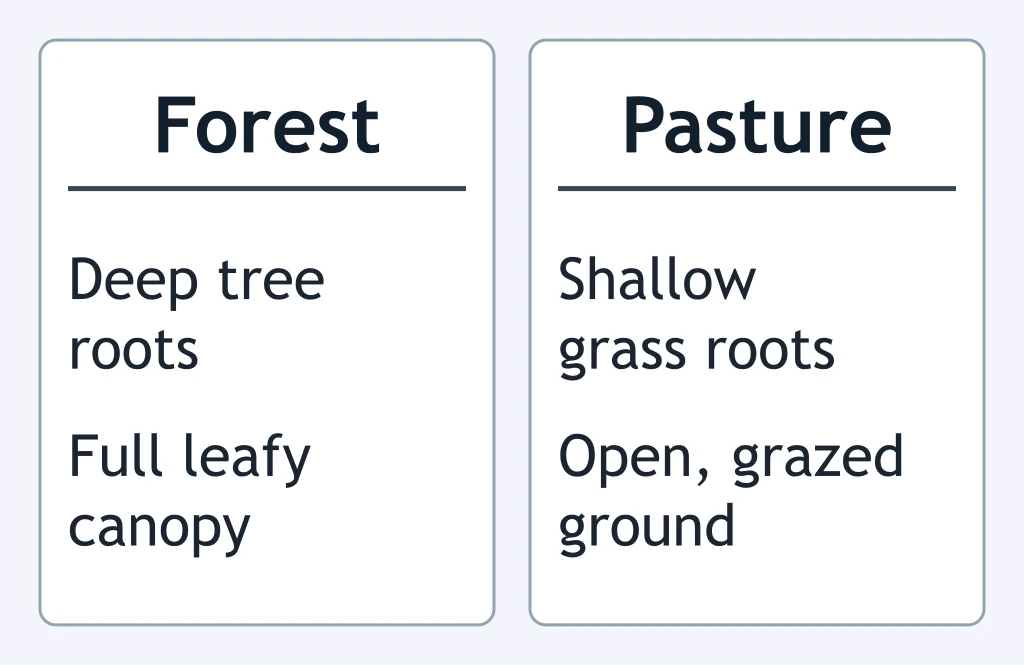
A large forest is cleared and replaced by pasture grass. Which change in the local water cycle is expected?
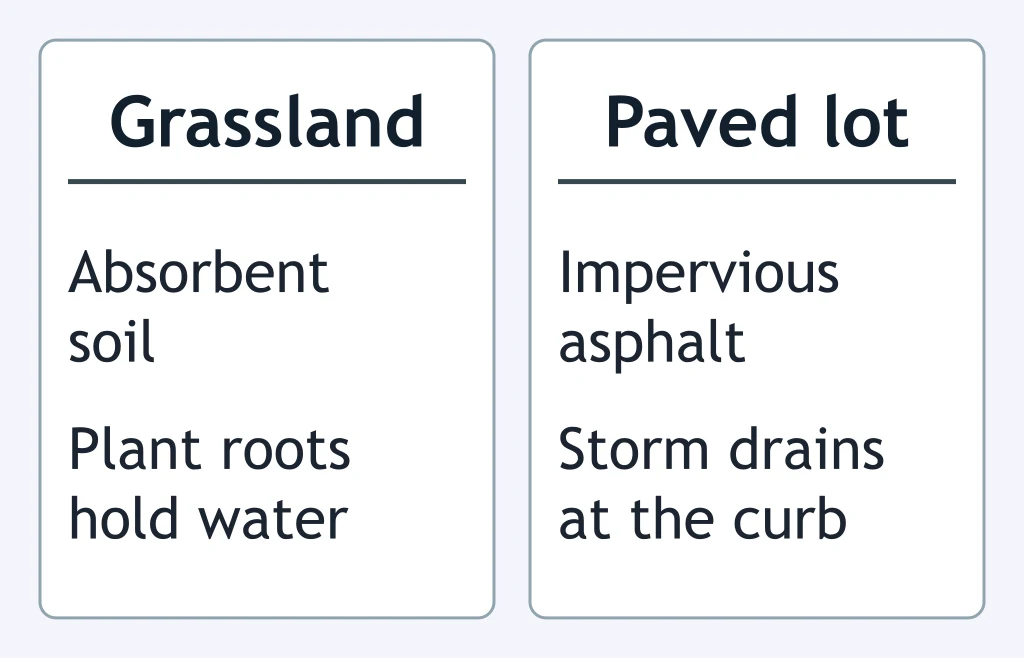
A grassy field on a hillside is paved over for a parking lot. How does the local water cycle change?
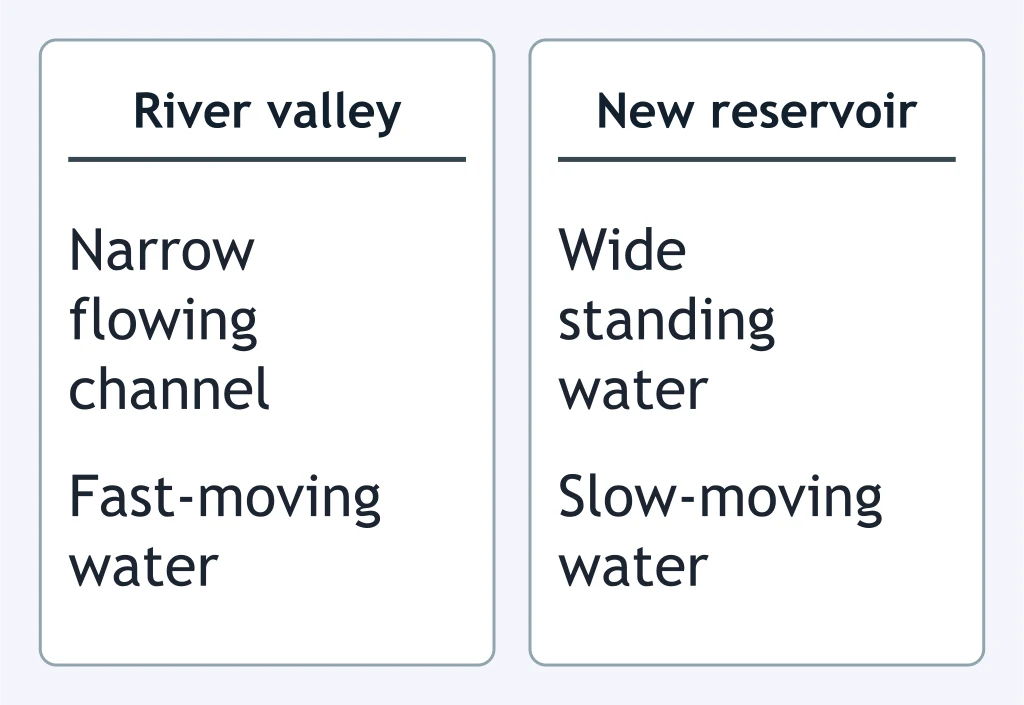
A dam is built across a river, creating a wide reservoir behind it. Which change in the local water cycle is expected?
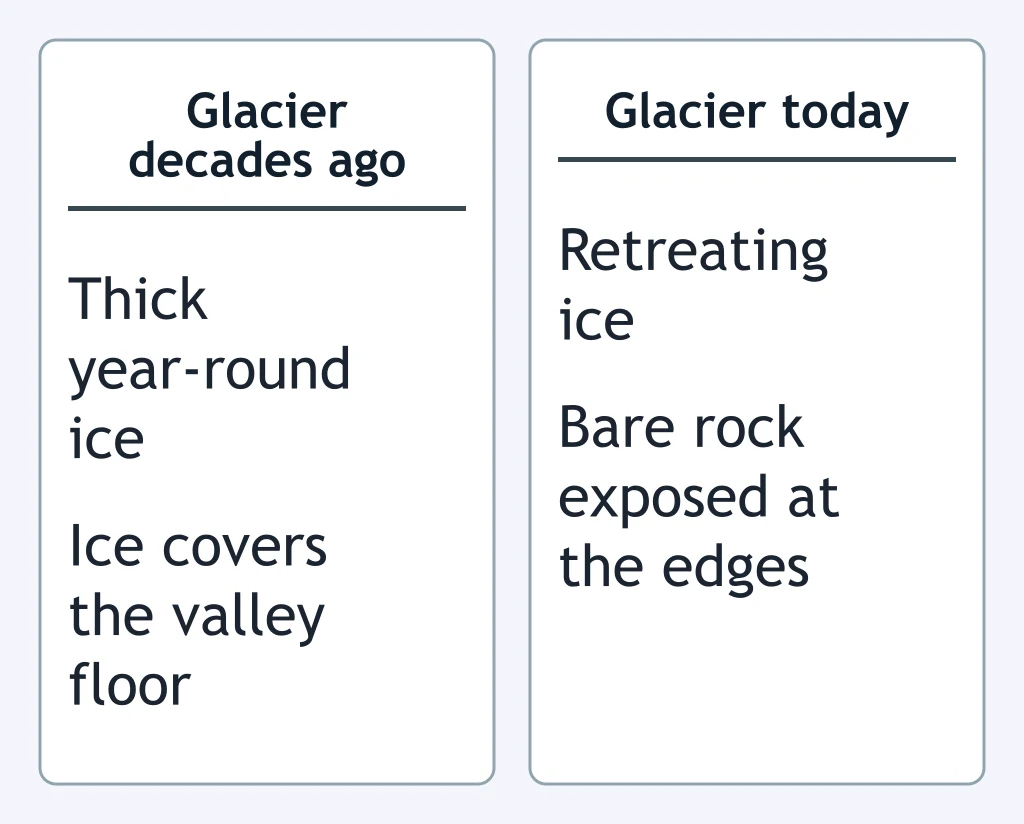
A mountain glacier has been retreating for decades under a warming climate. Which change in the local water cycle is expected?
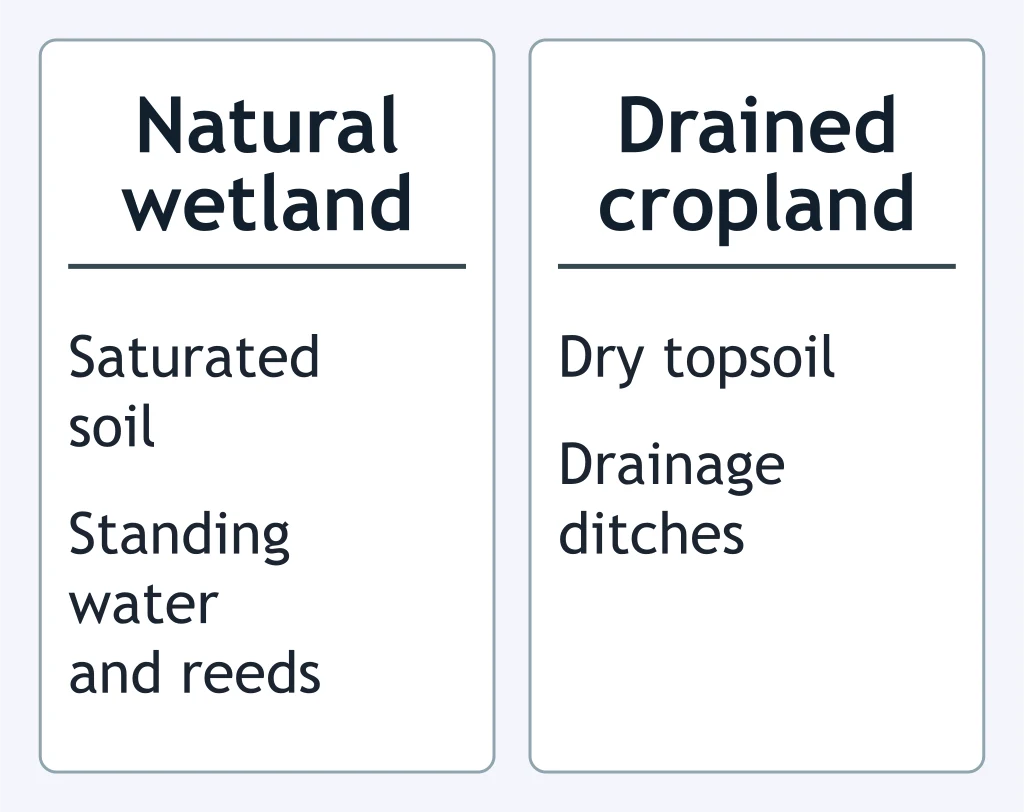
A wetland is drained with ditches and converted to cropland. Which change in the local water cycle is expected?
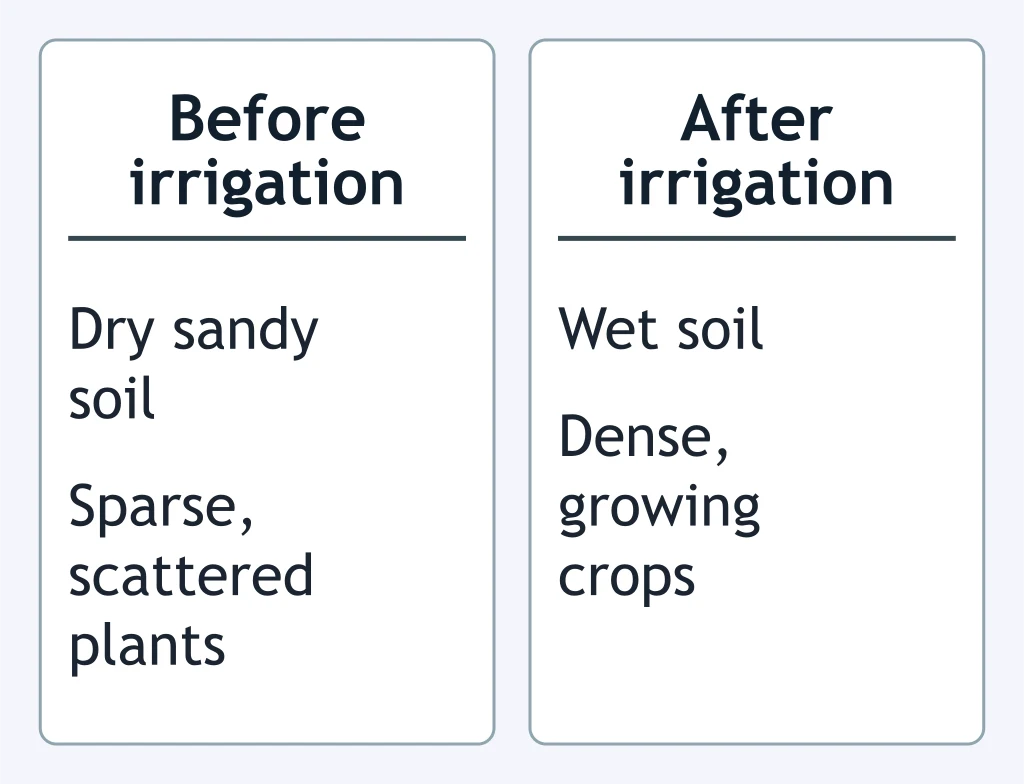
A dry desert region is irrigated and planted with dense rows of crops. Which change in the local water cycle is expected?
Rain lands on a hillside, soaks into the soil, and later reappears at a spring that feeds a stream. Which sequence names these steps in order?
Ocean water changes into vapor, rises into the sky, cools into cloud droplets, and later falls onto a coastal forest as rain. Which sequence names these steps in order?
A forest's leaves release water vapor into calm morning air, the vapor cools into low fog over the valley, and later that fog drips from tree branches onto the ground. Which sequence names these steps in order?
Rain falls across a lake's watershed, flows overland into the lake, and some of that lake water later rises back into the sky as vapor. Which sequence names these steps in order?
Snow on an icy peak turns straight into vapor on a dry, sunny day, the vapor drifts downwind and cools into clouds, and those clouds later drop snow on a neighboring ridge. Which sequence names these steps in order?
Crack the passcode before the zombies get in.
Answer, then swat bugs for bonus points.
Race through questions at your own speed.
Same question on every screen. Fastest wins.

Pick a tile, answer, hit bonuses and steals.
Runoff and the Water Budget
25 questions