Loading
by BlastRoom
Read a meander cross section, name depositional landforms, and predict sediment behavior as stream velocity and grain size change.
#earth_space_science
40 questions
One question set, multiple game modes. Tap any game to see it in action. Not sure which to pick?
Answer to place stones and capture territory.
Outrun the snow together.
Earn blasts, then hunt the other team.
Answer to earn energy, then climb.

The class blasts through walls together.
Bid on mystery lots. Most money wins.
Sell tours. Nice, standard, or a total scam.

Answer, restock, and serve the rush.
More correct answers pulls the rope your way.
Answer, then shoot down the alien wave.
Answer, then tap to leap the frozen ridge.
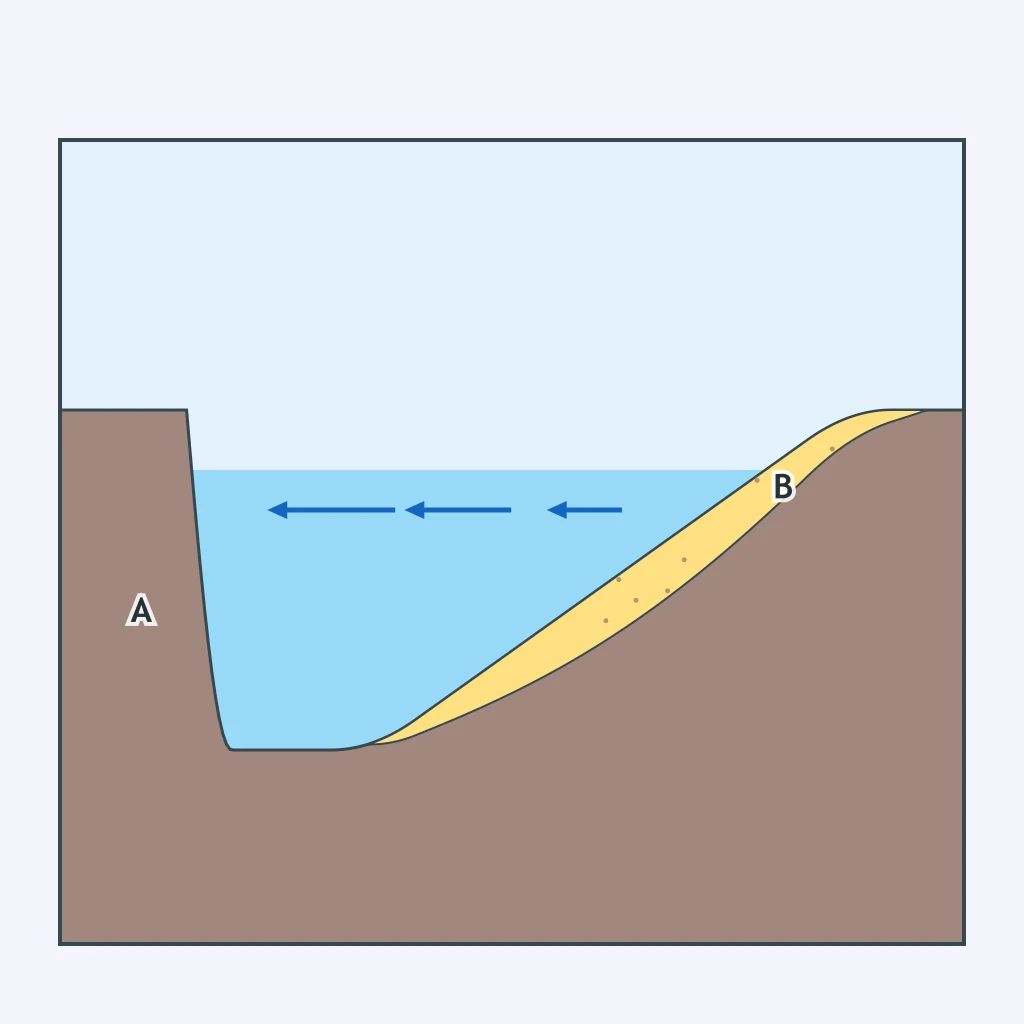
The cross section marks point A on the deep, steep-sided bank of a meander. What is happening to the channel there?
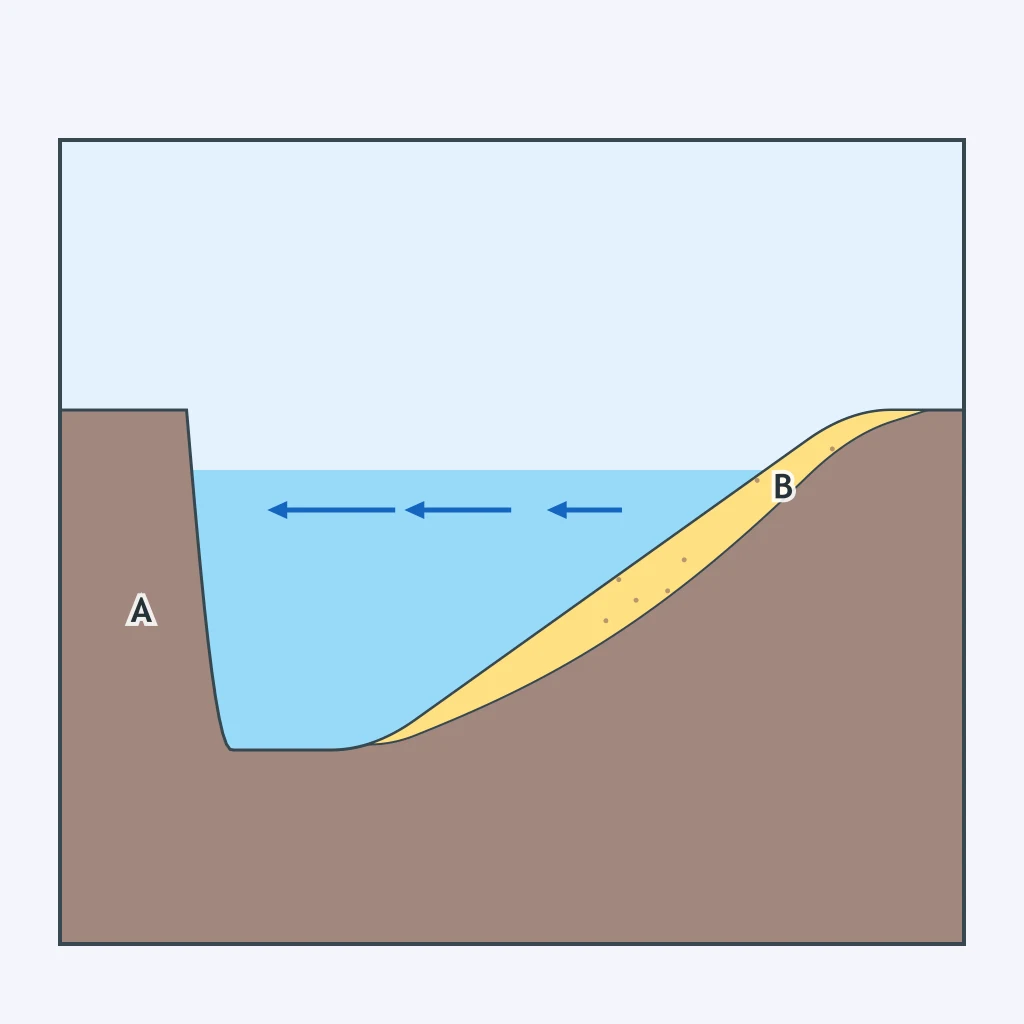
The cross section marks point B on the shallow, gently sloping bank of the same meander. What is happening to the channel there?
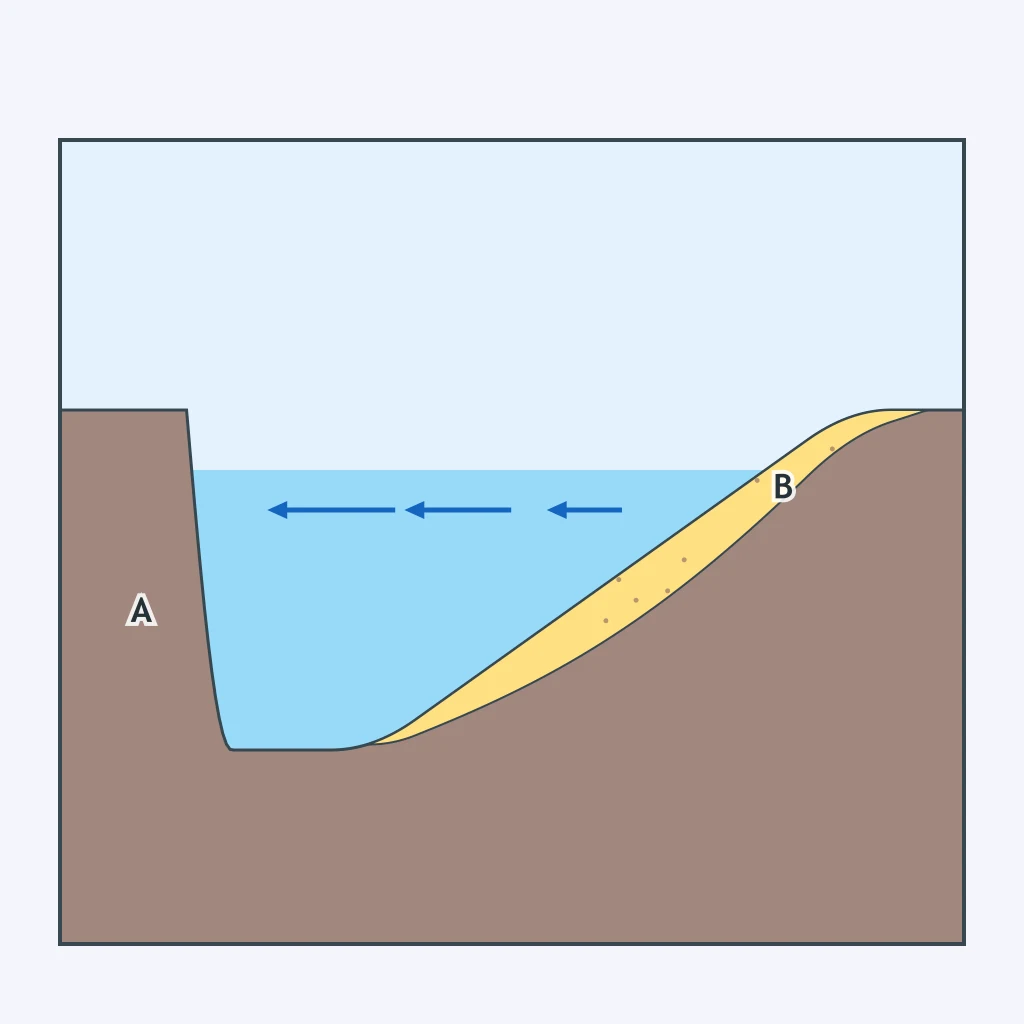
In the cross section, the velocity arrows drawn in the water are longest near one point. Is the current fastest near point A or point B?
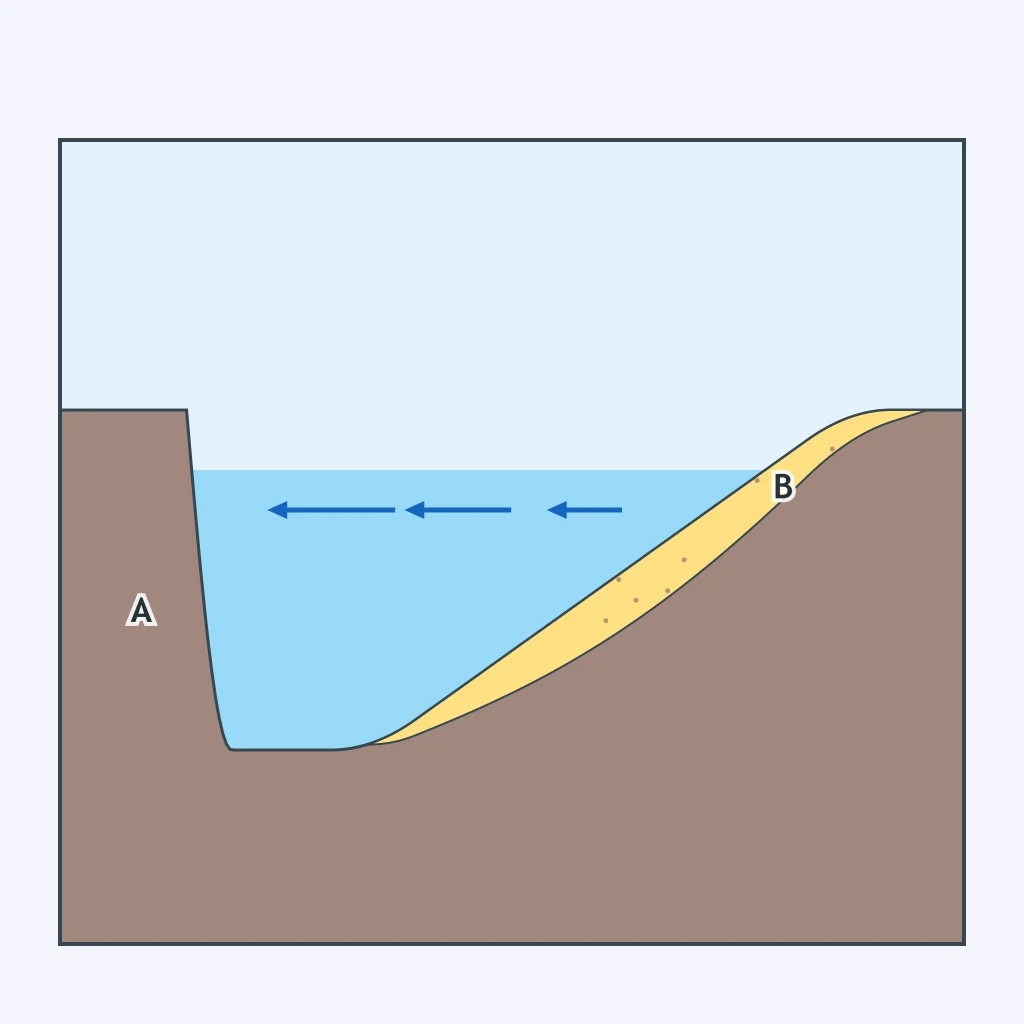
Which point in the cross section, A or B, marks the stream's cut bank?
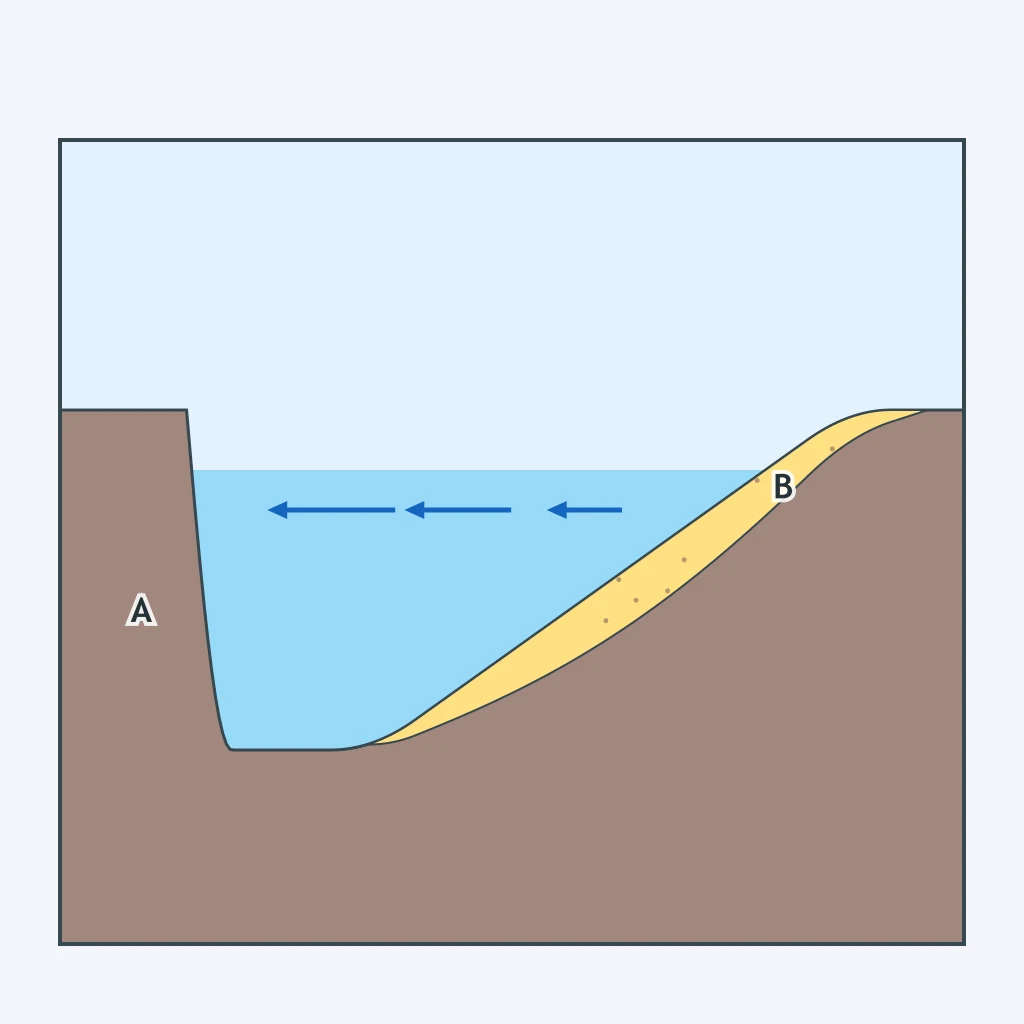
Which point in the cross section, A or B, marks the stream's point bar?
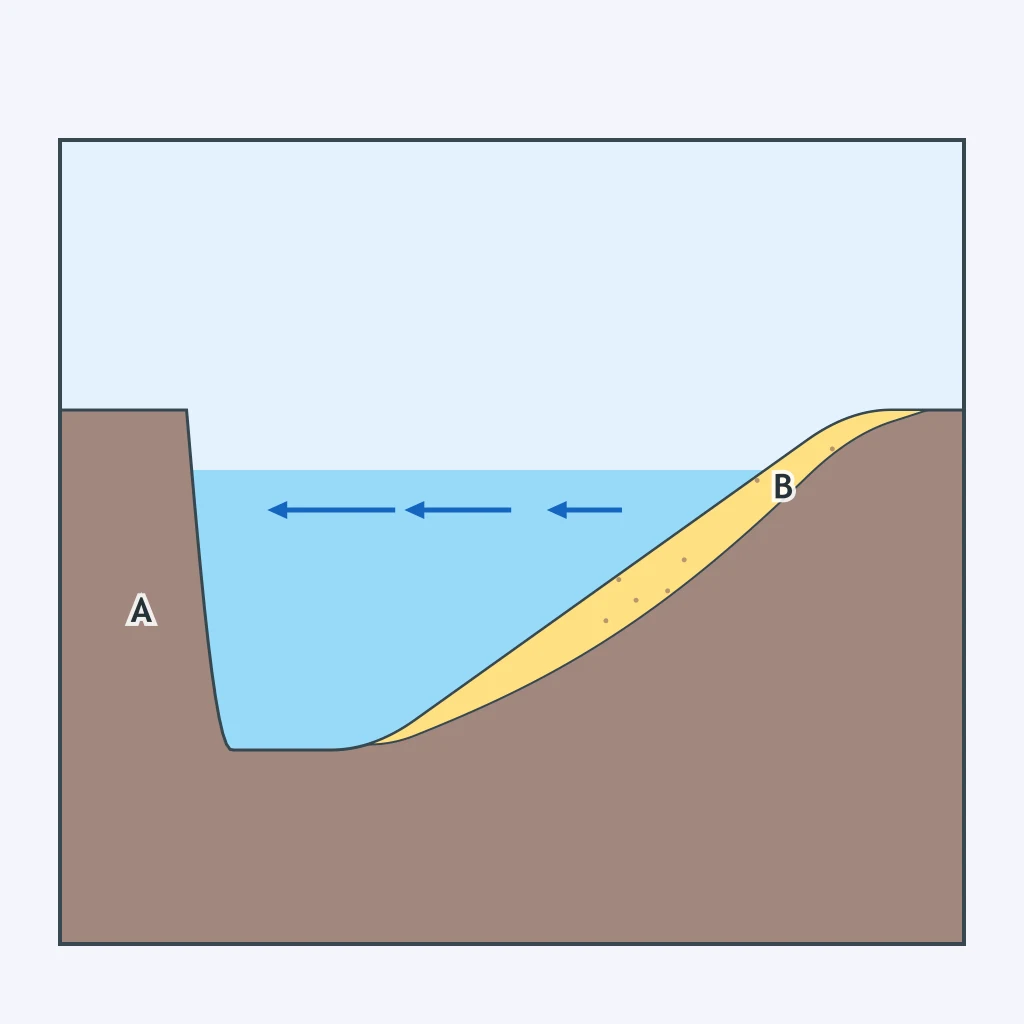
If the pattern shown continues for years, what will happen to the position of this meander bend?
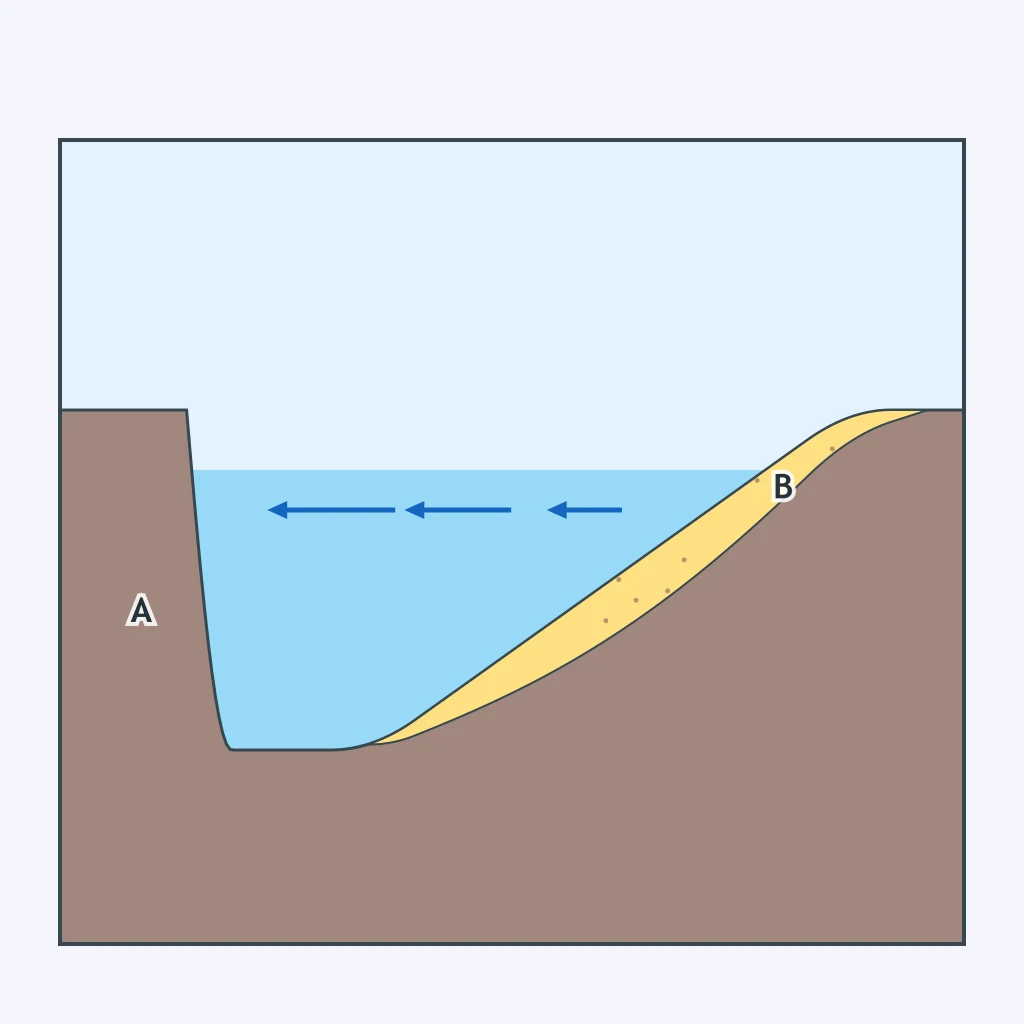
Why is the water in the cross section deeper at point A than at point B?
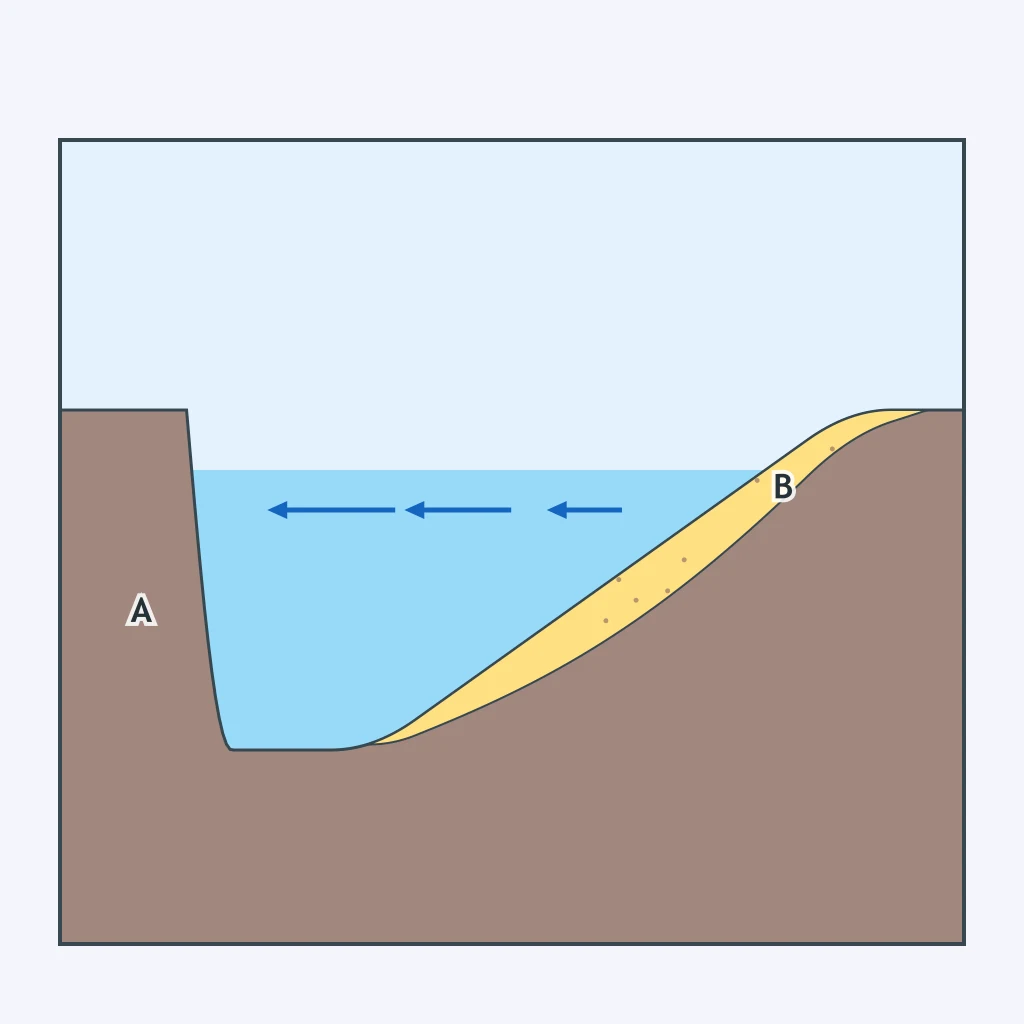
Engineers plan to reinforce whichever bank of this meander is losing the most land to the stream. Based on the cross section, which point should they reinforce?
A river enters a quiet bay, its current stops almost at once, and the sediment it carried settles in beds that build the shoreline outward into standing water. What landform is this?
A steep mountain stream reaches the flat floor of a desert valley, spreads out, slows abruptly, and drops its sediment in a cone-shaped deposit at the base of the mountains. What landform is this?
During a flood, a stream overflows its banks, and the current slows the instant it leaves the channel, dropping its coarsest sediment right along the channel edge and building low ridges there. What landform is this?
Over time, a meander bend narrows at its neck until the stream cuts straight across, leaving the old curved channel isolated as a crescent-shaped body of standing water. What landform is this?
During a major flood, water spreads far beyond a stream's channel and levees across the broad, flat valley bottom, slows to almost nothing, and drops a wide sheet of fine sediment. What is this deposit called?
On the inside of a meander bend, where the current is slow and shallow, sand steadily accumulates into a curved, gently sloping ridge just above the water. What landform is this?
A river reaches the ocean, its current slows, and it splits into several smaller channels that each drop sediment, building a fan-shaped area of new land at the coastline. What landform is this?
A stream leaves a narrow canyon and spreads out over dry, flat desert ground, building a fan-shaped mound of sediment. Where on this fan is the coarsest sediment found?
A stream flowing at 100 centimeters per second slows to 25 centimeters per second where it leaves the mountain front. Which load is dropped first?
A stream's cross-sectional area narrows from 8 square meters to 2 square meters while its discharge stays at 16 cubic meters per second. What happens to the sediment it can carry through the narrow section?
Water flowing at 90 centimeters per second in a straight stretch slows to 20 centimeters per second on the inside of a meander bend. What settles there first?
After a rainstorm raises a stream's discharge, its velocity rises from 15 to 60 centimeters per second. What happens to the fine silt already sitting on the streambed?
A stream with a cross-sectional area of 4 square meters and a discharge of 12 cubic meters per second enters a reservoir, where its area increases to 24 square meters at the same discharge. What settles first as it enters the reservoir?
A stream's velocity falls from 200 to 50 centimeters per second as it leaves a steep valley for a flat plain. Coarse gravel drops out almost immediately. What happens to the finer sand and clay it was also carrying?
Floodwater spreads out of a channel and across a floodplain, slowing from 60 centimeters per second in the channel to 2 centimeters per second across the flat valley floor. Which sediment is deposited across the floodplain itself?
A stream winds in wide loops across a broad flat valley, has a very low gradient, and is flanked by oxbow lakes and a wide floodplain. Which stage of stream development does this describe?
A stream cuts a steep, narrow V-shaped valley, drops rapidly over rapids and waterfalls, and has almost no floodplain. Which stage of stream development does this describe?
A stream flows in gentle curves at a moderate gradient, with a floodplain beginning to form but the valley walls still close on either side. Which stage of stream development does this describe?
A youthful mountain stream flows through a V-shaped valley with rapids and waterfalls. What kind of erosion mainly shapes its valley at this stage?
A stream has well-developed meanders and a floodplain nearly as wide as its valley, but the valley walls are still visible at a few points along its course. Which stage of stream development does this describe?
An old-age stream winds across a broad floodplain and drops sediment along much of its course. Why does it deposit so much sediment?
Sand grains bounce along a stream bed in short hops, lifted briefly by the current and dropping back to the bottom. What is this mode of transport called?
Fine silt and clay particles are held aloft within the moving water itself, swirling in the current rather than touching the streambed. What is this mode of transport called?
Large pebbles and cobbles are pushed and rolled along the streambed by the current without ever leaving the bottom. What is this mode of transport called?
A stream flowing over limestone bedrock carries away dissolved calcium and other ions in the water, invisible to the eye. What is this mode of transport called?
Sand and gravel grinding along a stream's bed and banks wear down both the streambed and the grains themselves as they travel. What is this process called?
The sheer force of fast-moving water alone pries loose blocks of soil and rock directly from a stream's banks, with no grinding by sediment involved. What is this process called?
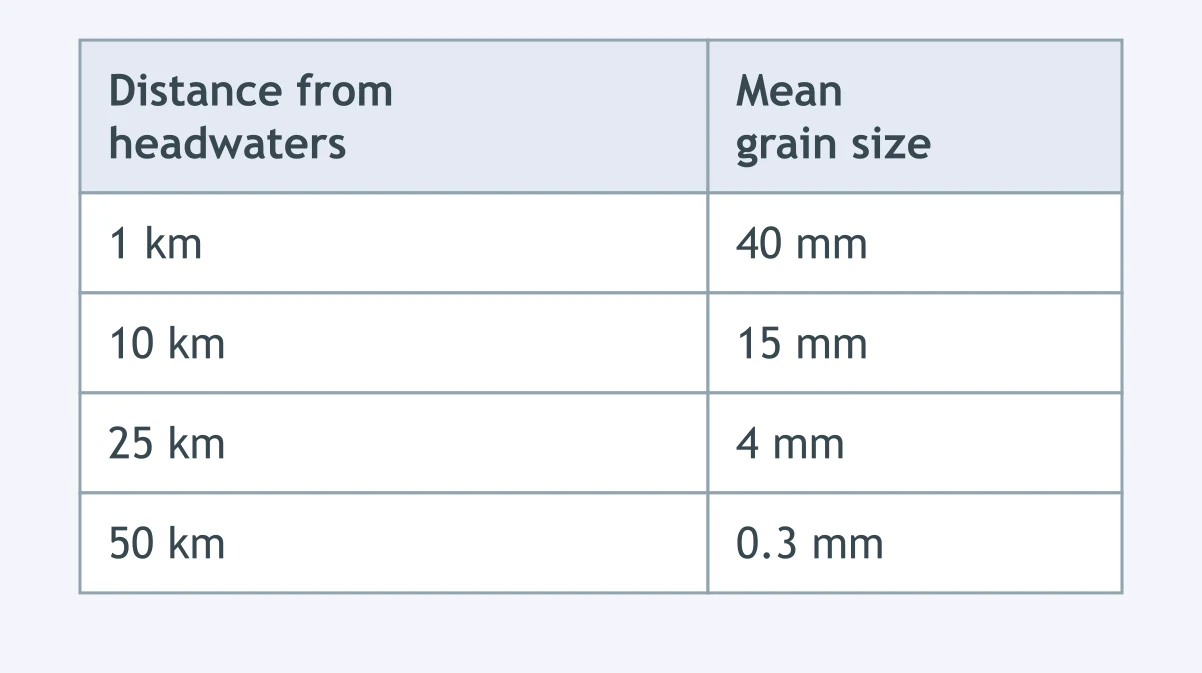
A table shows mean particle diameter in millimeters for bed samples taken at different distances from the headwaters. What does the trend show?
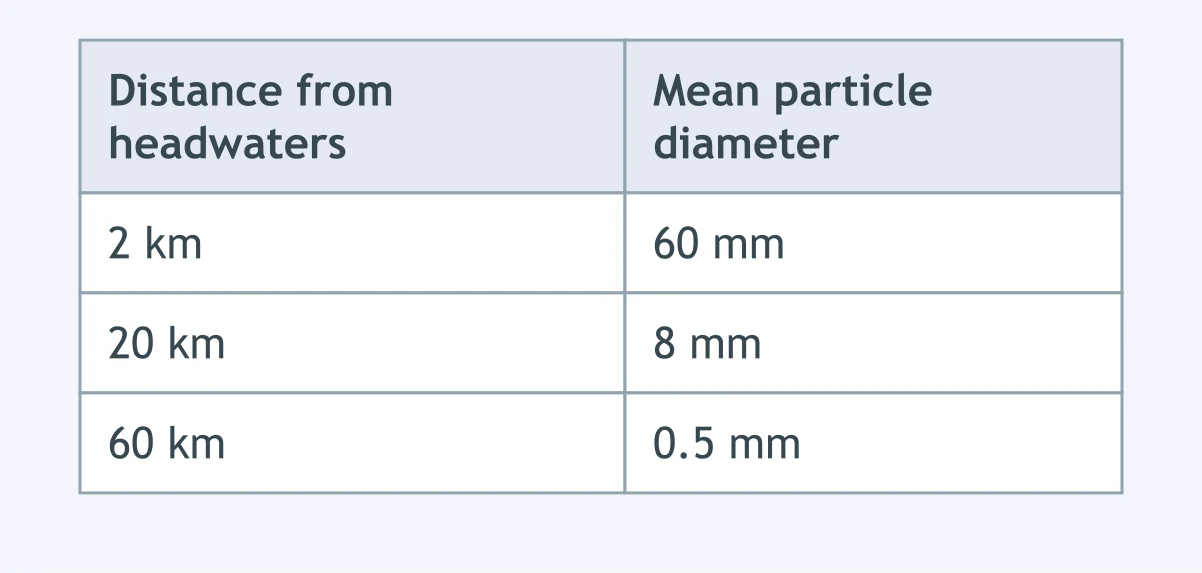
The table gives mean grain size at four distances downstream. Which explanation best accounts for this trend?
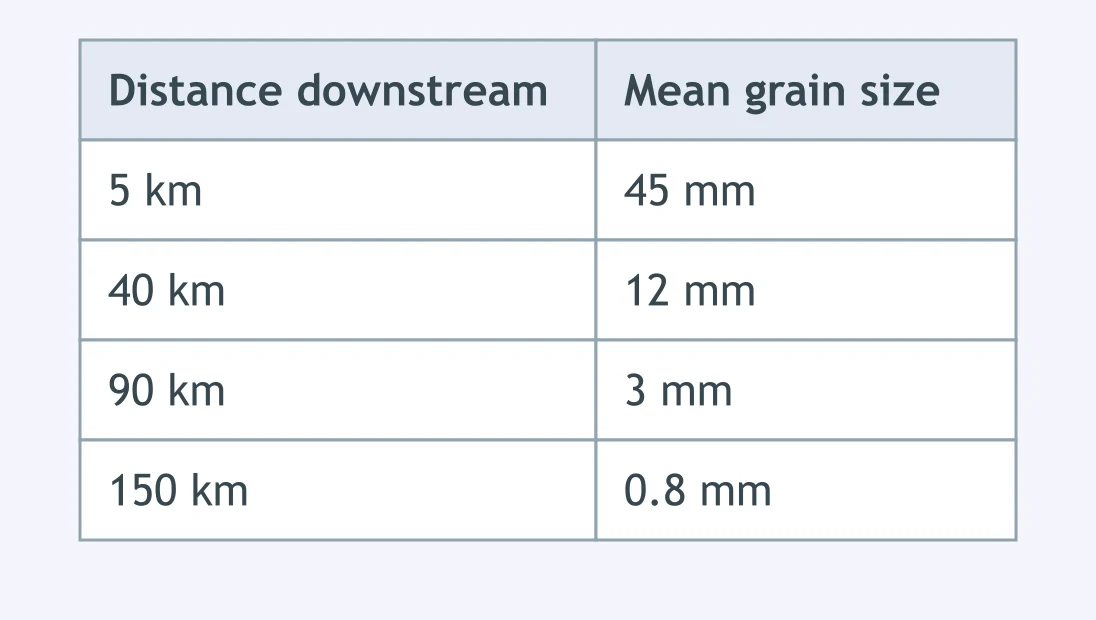
At Point X near the headwaters the bed grain size is 30 mm; at Point Y near the mouth it is 1 mm. A student says this proves the river has gotten shorter over time. What is the actual explanation for the data?
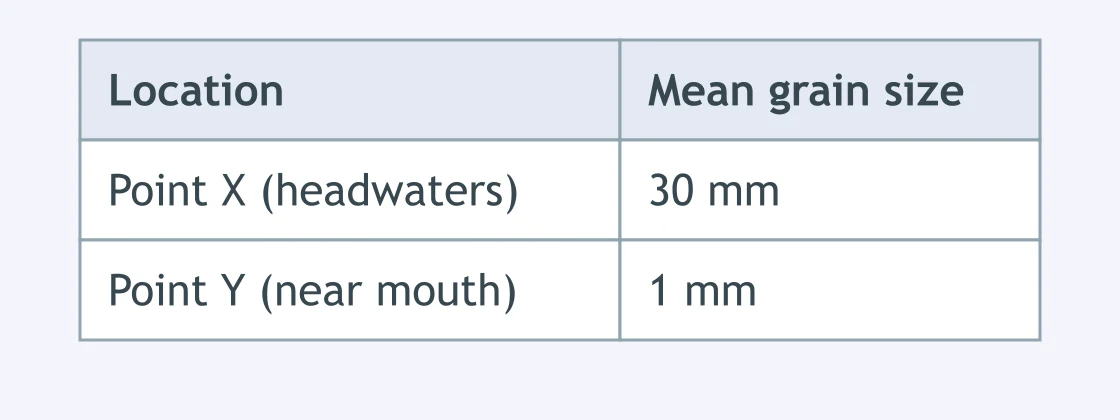
The table gives mean grain size along a stream. A steep tributary joins the main channel at 15 kilometers. What most likely explains the grain size recorded at that point?
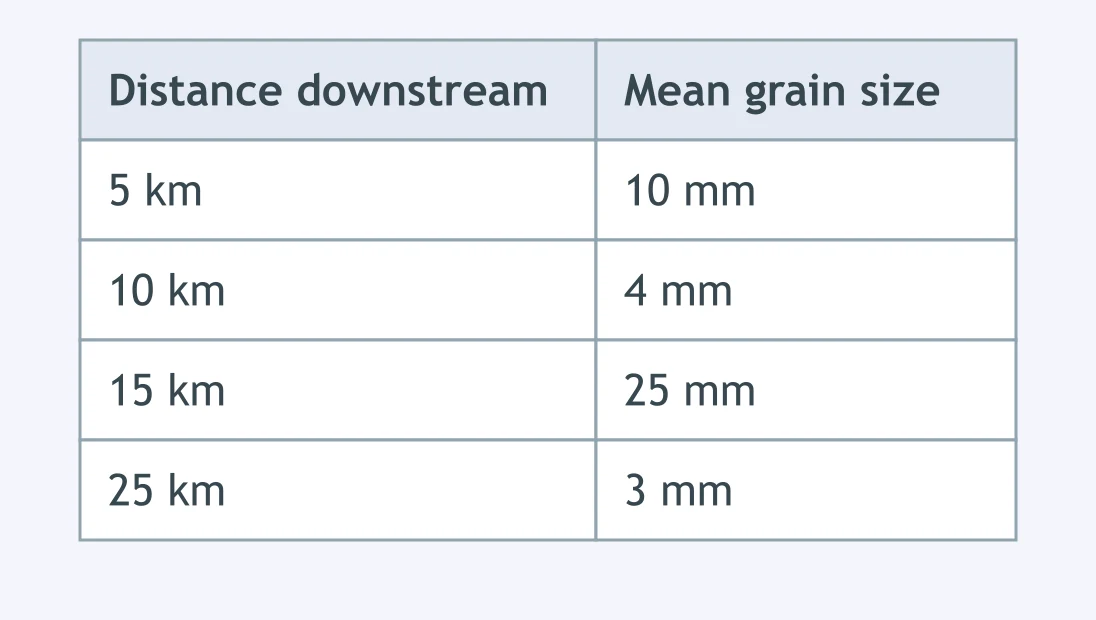
The table gives mean grain size in millimeters at distances from the headwaters. Which distance has the finest recorded sediment?
Crack the passcode before the zombies get in.
Answer, then swat bugs for bonus points.
Race through questions at your own speed.
Same question on every screen. Fastest wins.

Pick a tile, answer, hit bonuses and steals.
Running Water Review
40 questions