Loading
by BlastRoom
Review the agents of erosion, how sediment sorts and deposits, mass wasting, and the landforms these processes build.
#earth_space_science
40 questions
One question set, multiple game modes. Tap any game to see it in action. Not sure which to pick?
Answer to place stones and capture territory.
Outrun the snow together.
Earn blasts, then hunt the other team.
Answer to earn energy, then climb.

The class blasts through walls together.
Bid on mystery lots. Most money wins.
Sell tours. Nice, standard, or a total scam.

Answer, restock, and serve the rush.
More correct answers pulls the rope your way.
Answer, then shoot down the alien wave.
Answer, then tap to leap the frozen ridge.
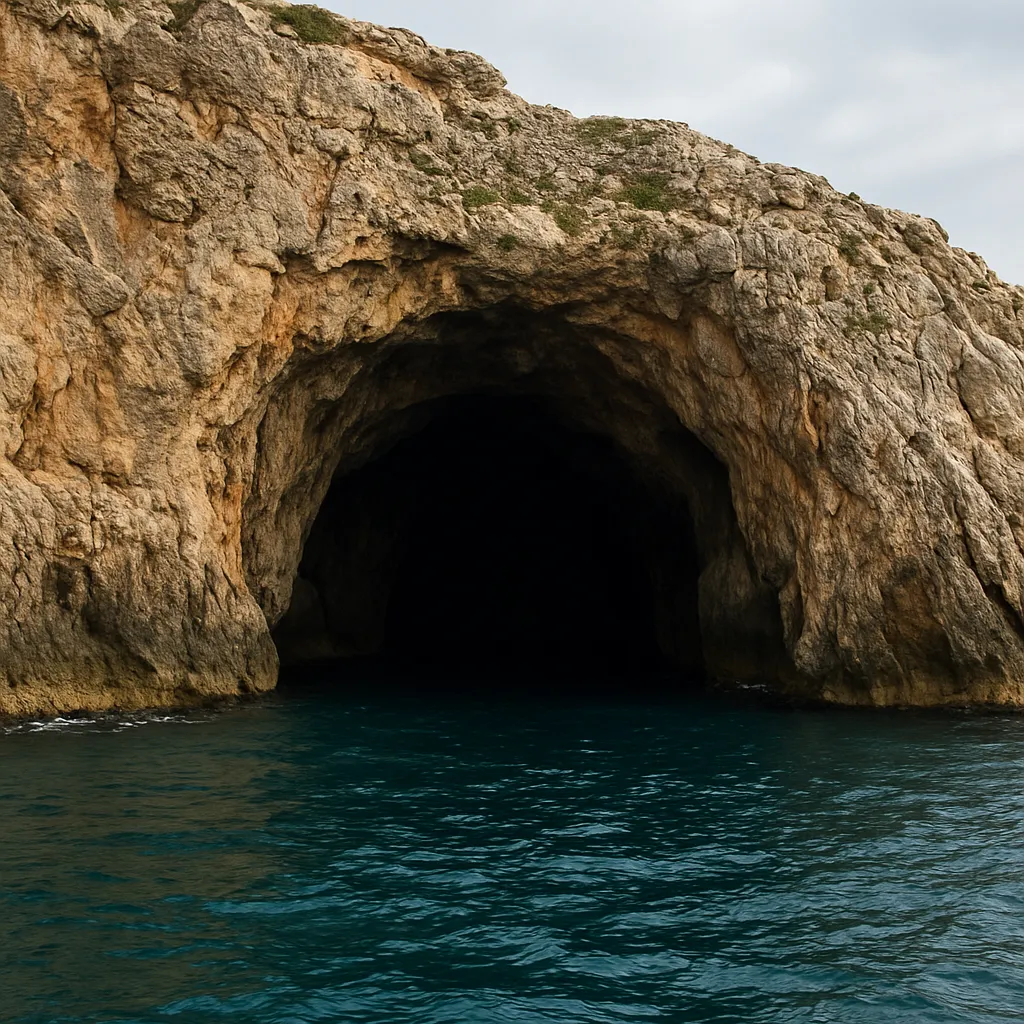
A sea cave has been hollowed into a coastal cliff exactly at the high-tide line, with an overhanging arch of unweathered rock above it. Which agent carved this hollow?
In a narrow canyon, the streambed is pitted with smooth, cylindrical holes drilled straight down into solid bedrock, each one holding a rounded pebble. Which agent drilled these holes?
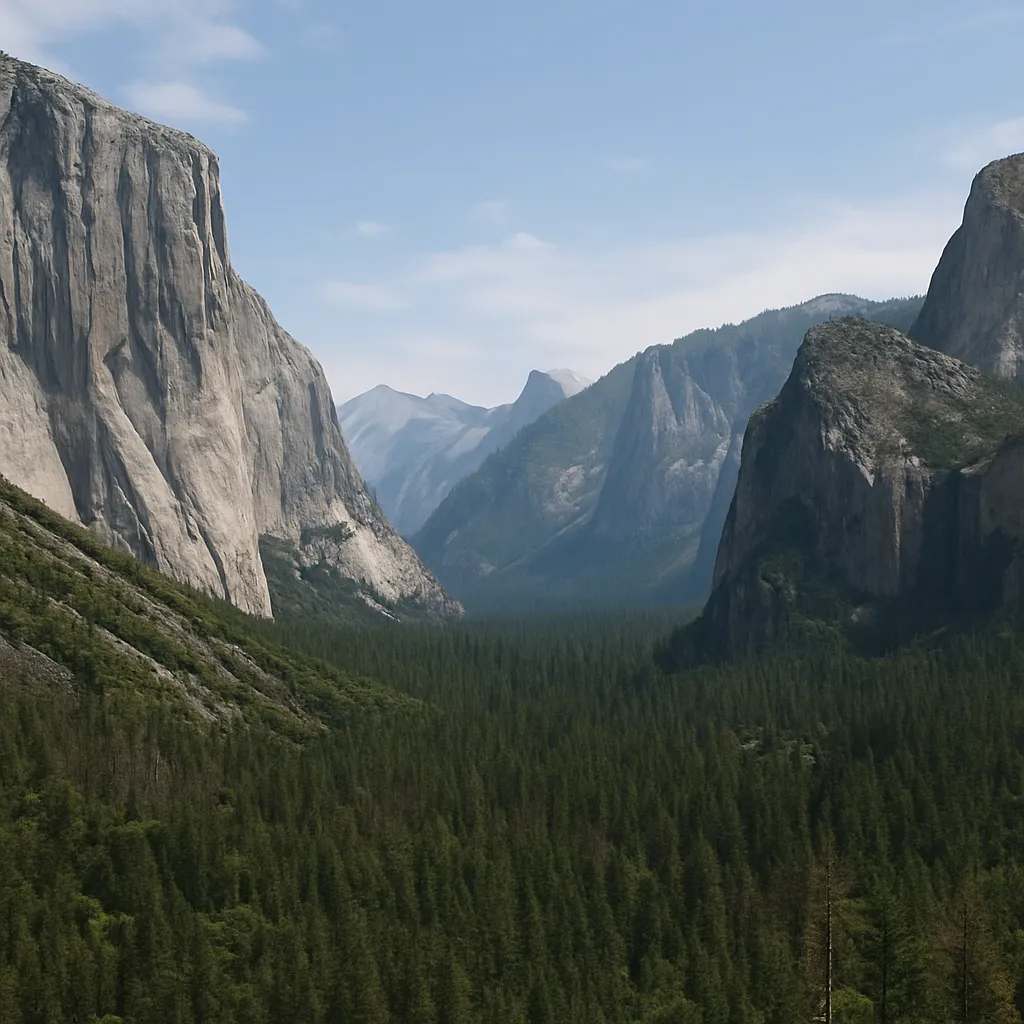
A mountain valley has a broad, U-shaped cross profile, and its granite walls are polished smooth with long, parallel scratches all running the same direction. Which agent carved it?
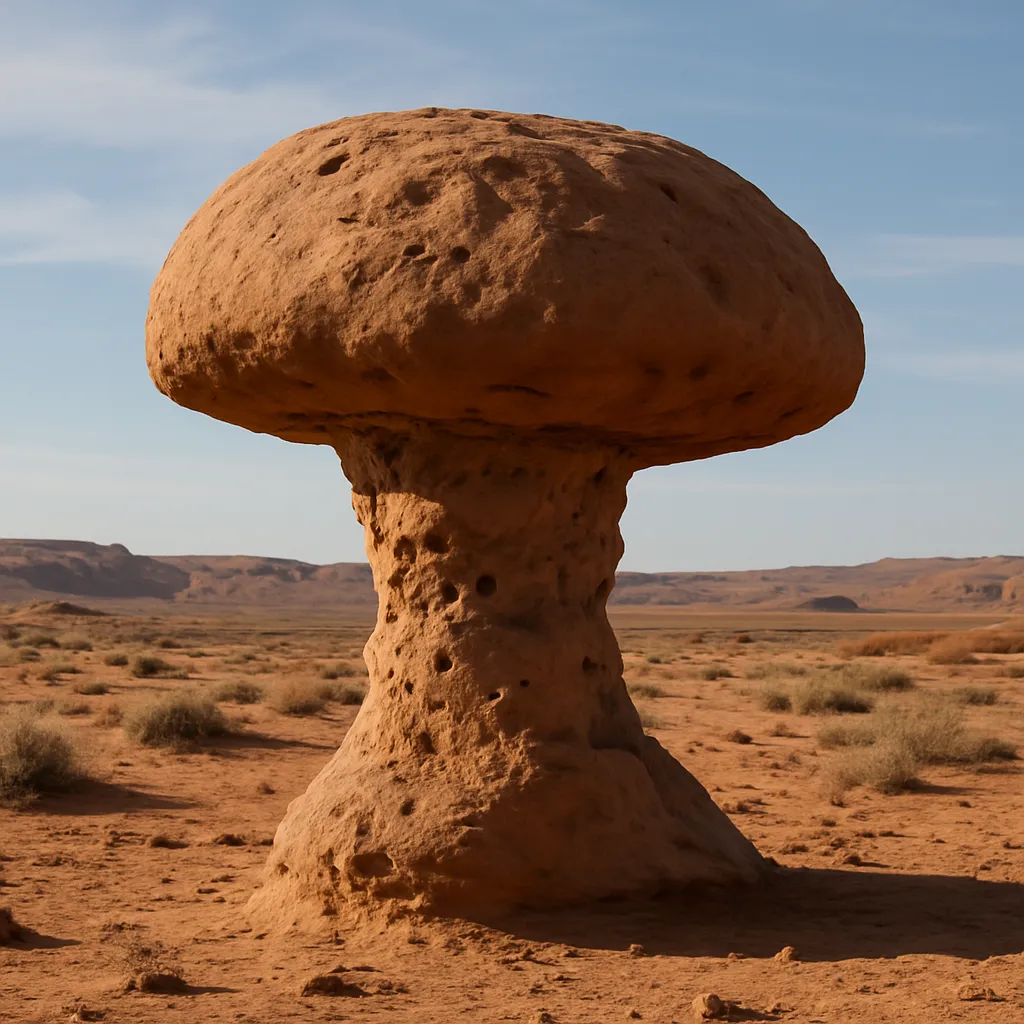
In a desert, an isolated rock stands with a narrow, pitted base and a wider, smoother top, shaped almost like a mushroom. Which agent shaped this rock?
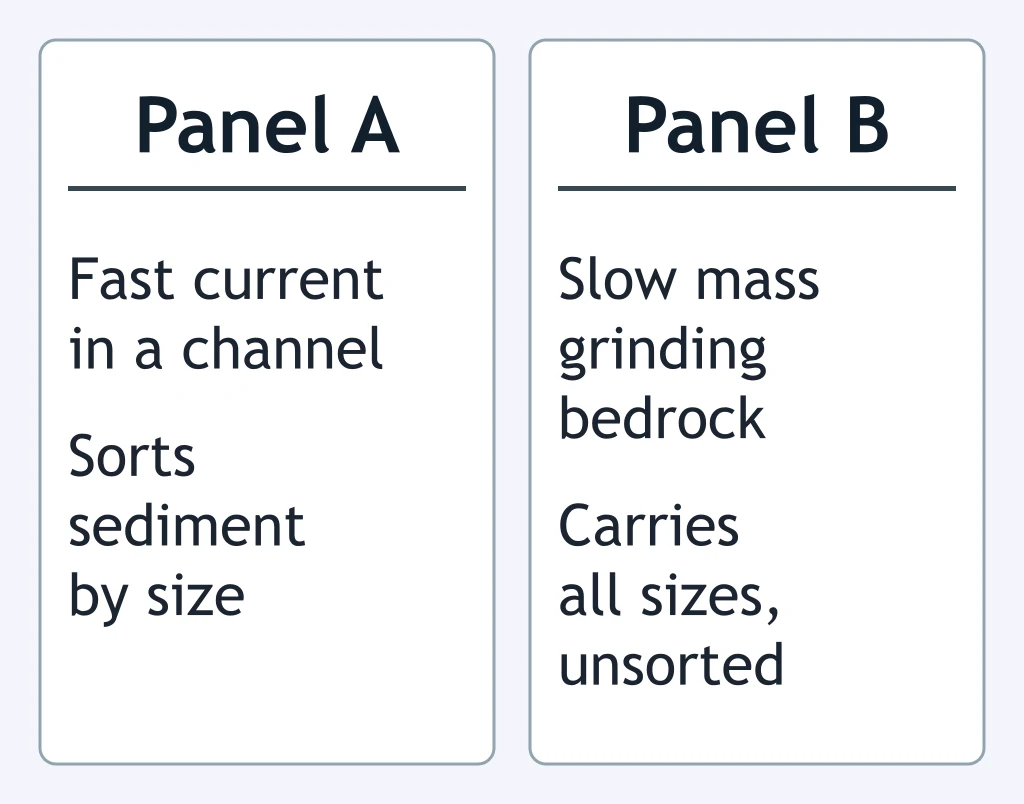
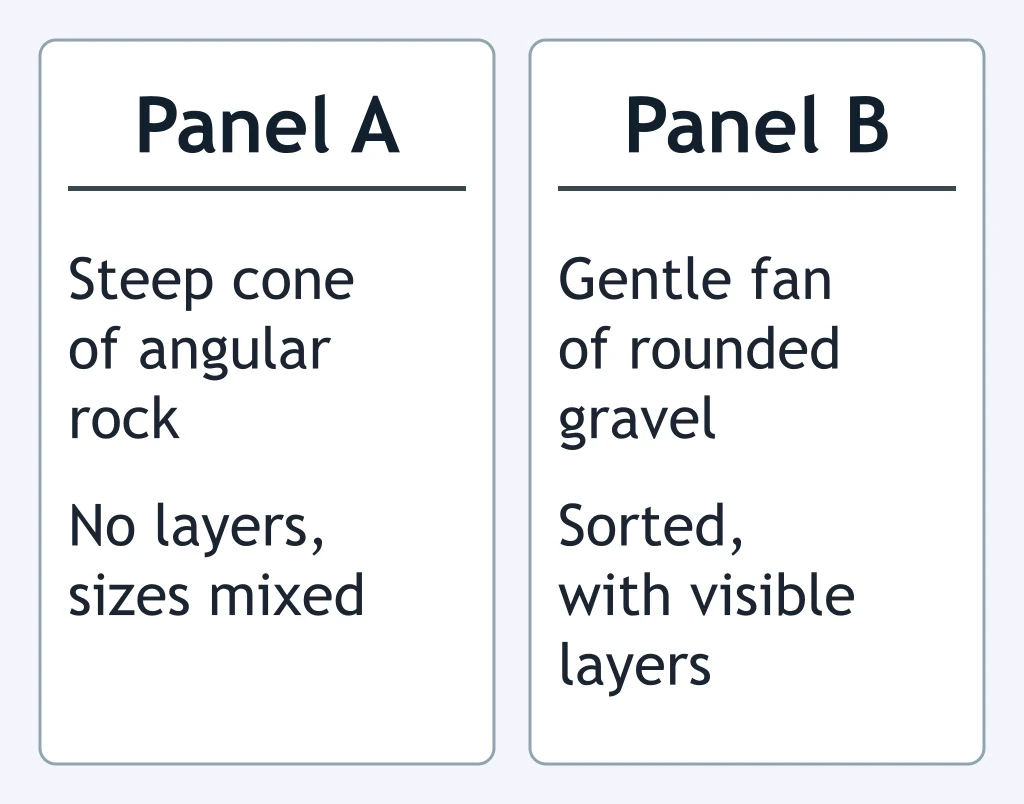
Two erosion agents are compared for the largest particle each can transport. Which agent, shown in Panel B, can move boulders together with sand and clay in one unsorted mass?
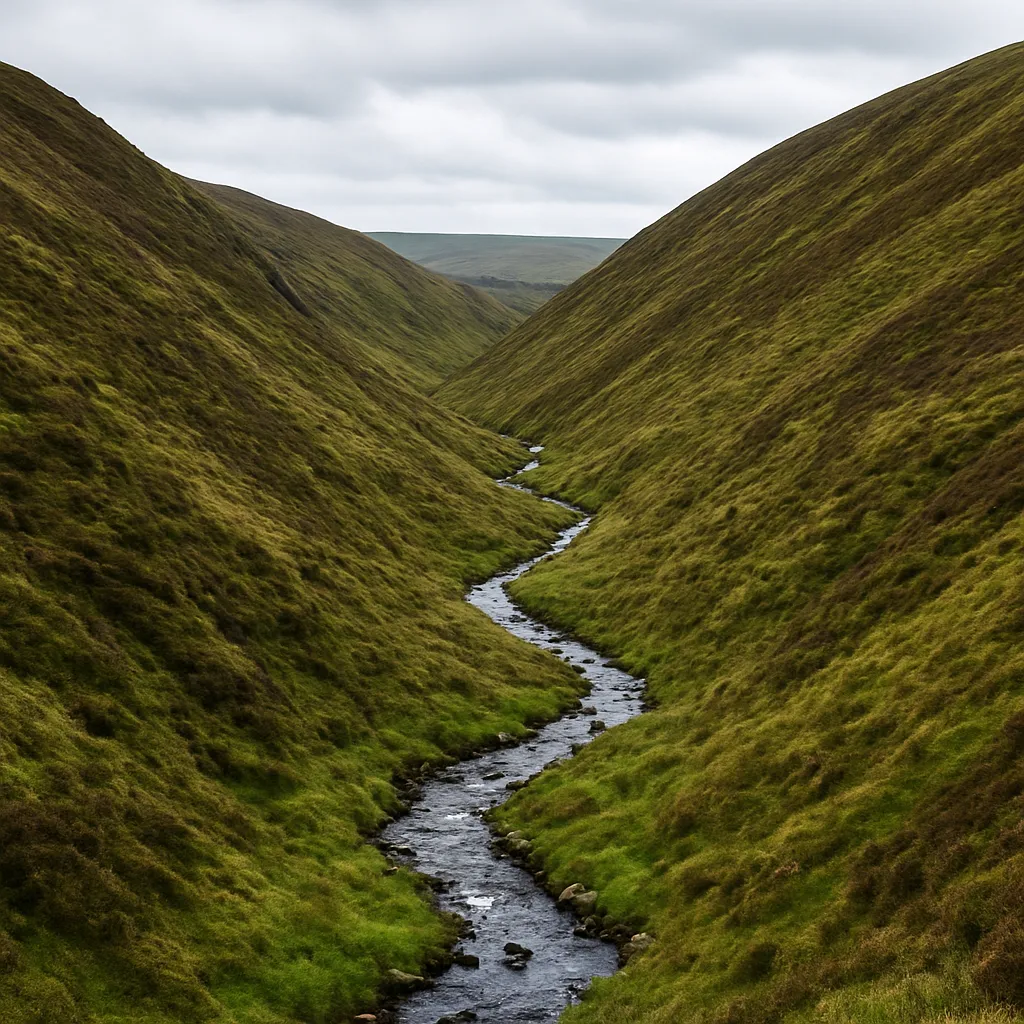
A mountain stream has cut a narrow, steep-walled valley shaped like the letter V, with a channel that bends back and forth across its floor. Which agent shaped this valley?
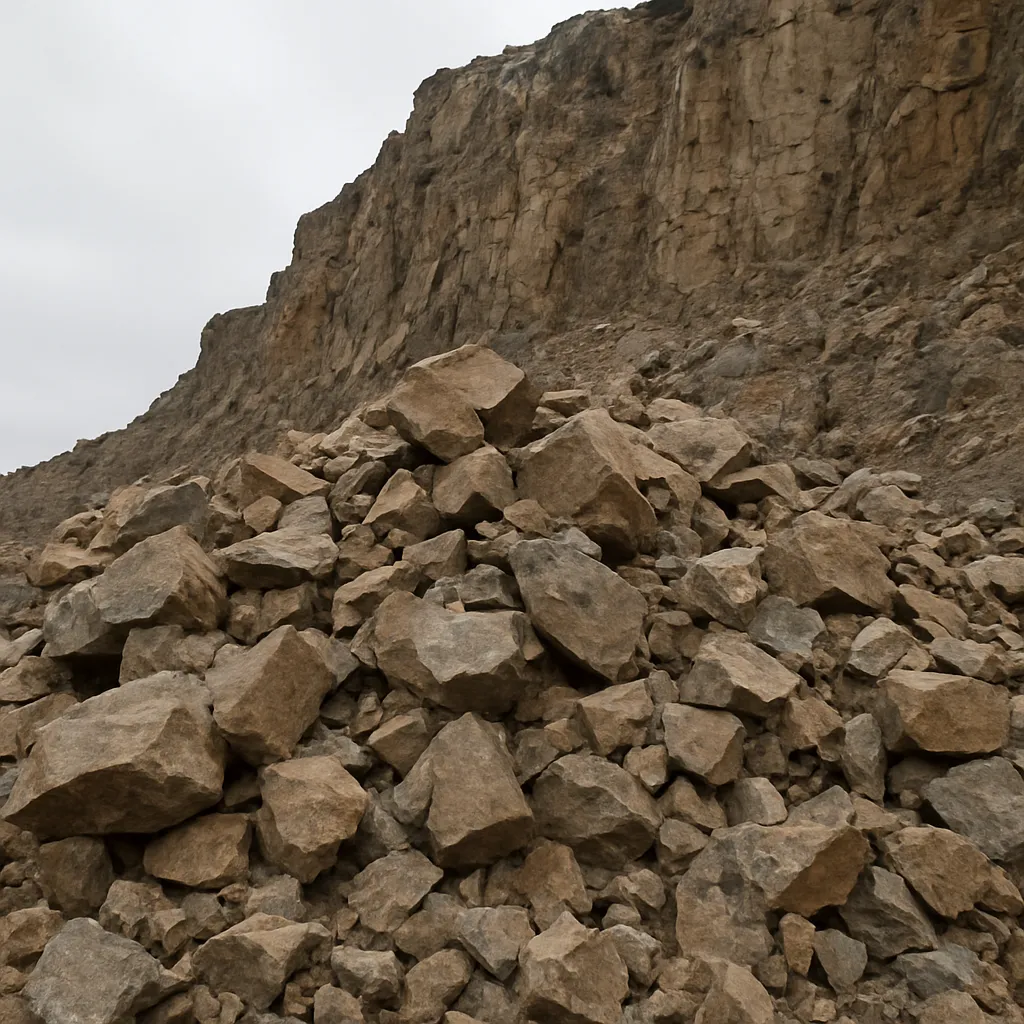
A pile of angular, unsorted rock fragments of many sizes has built up in a steep cone shape at the base of a cliff. Which agent deposited this material?
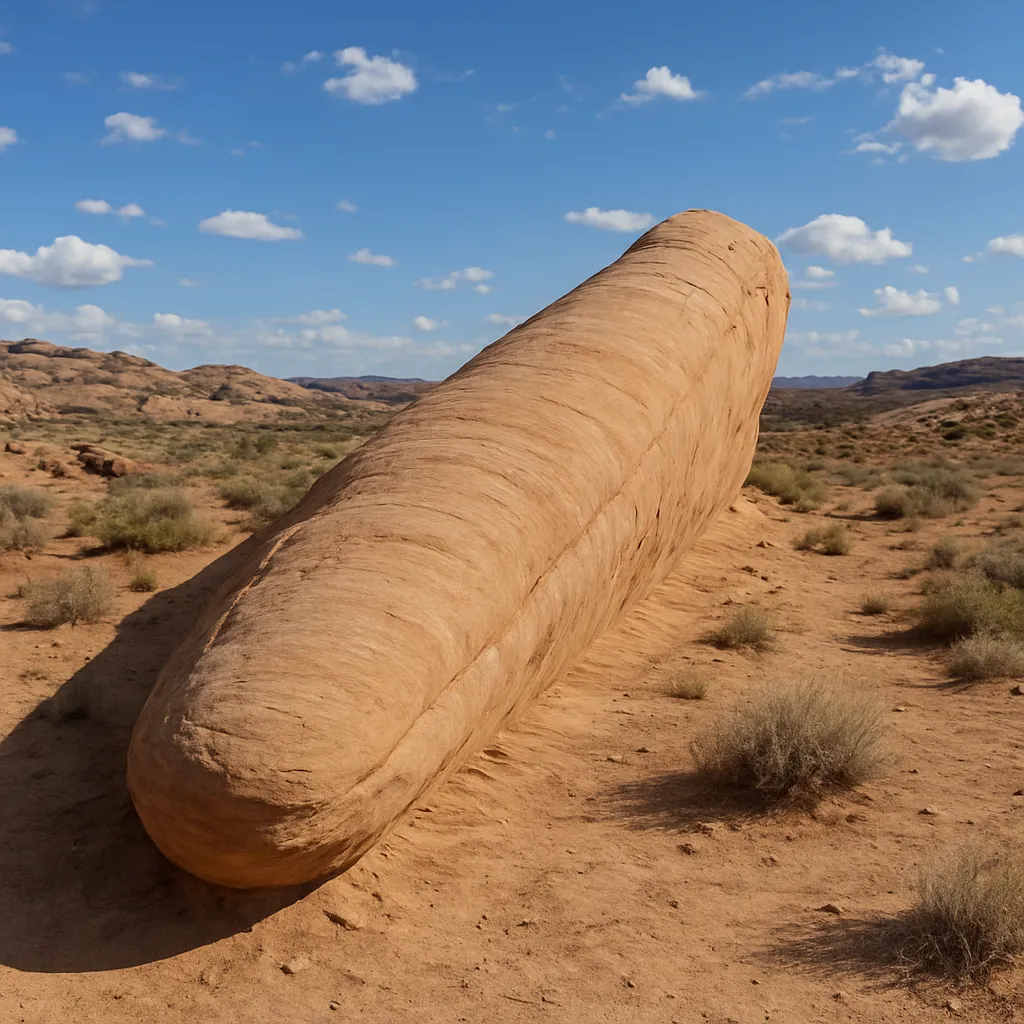
A streamlined desert ridge of soft rock stands higher and blunter at one end and tapers to a low point at the other. It is one of dozens of parallel ridges lined up the same way across a dry plain with no streams. Which agent shaped this ridge?
A quartzite boulder sits alone on shale bedrock in a flat farm field far from any exposed quartzite. One face of it is flattened, polished, and scored with fine parallel scratches. Which agent carried and scarred this boulder?
Where a fast mountain river enters a calm lake, coarse sand and gravel pile up right at the river's mouth while fine clay drifts far out before settling. What causes this pattern?
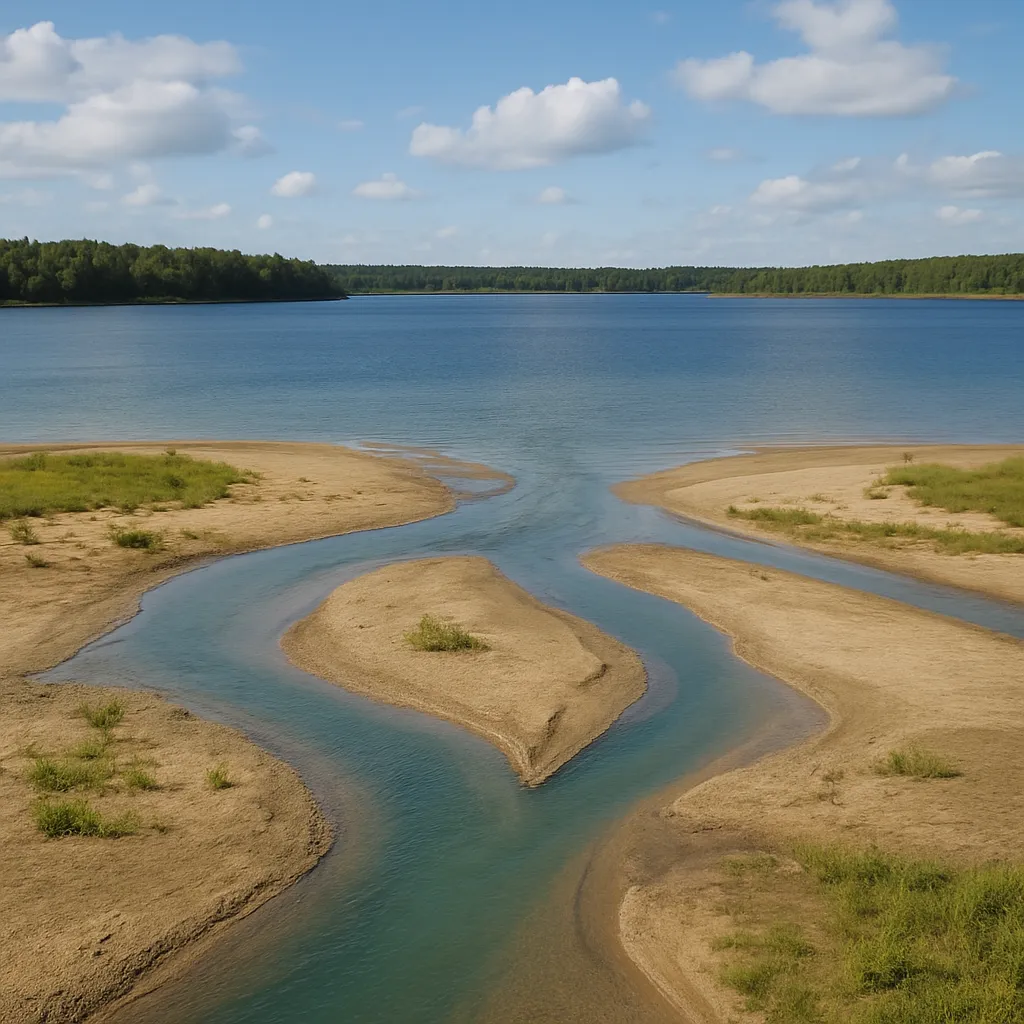
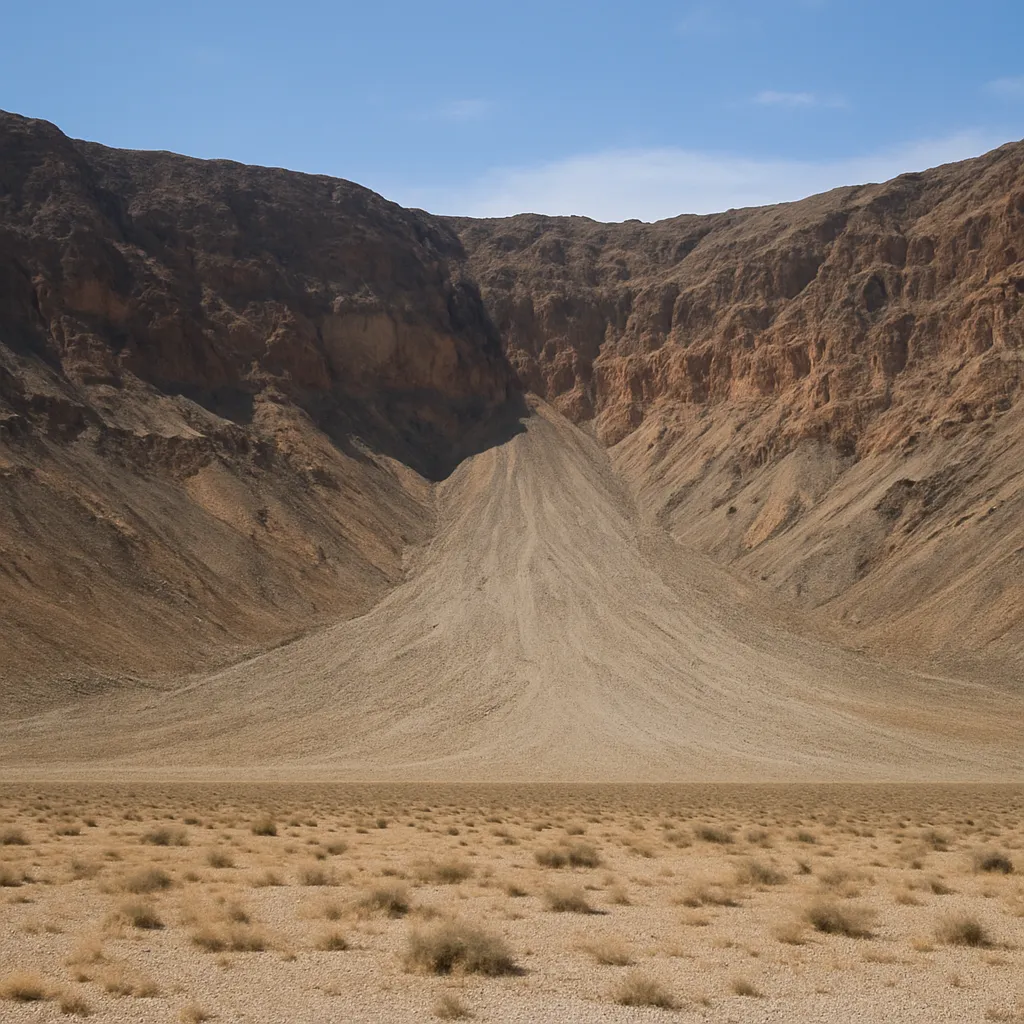
A mountain stream leaves a narrow canyon and reaches a flat desert valley floor, where it drops a fan-shaped apron of gravel that is coarsest near the canyon mouth. What caused the stream to drop its load there?
During a flood, water spills out of the channel and spreads over the floodplain, dropping its coarsest sediment in a low ridge along the bank before it slows further and drops only fine mud beyond. What is this ridge called?
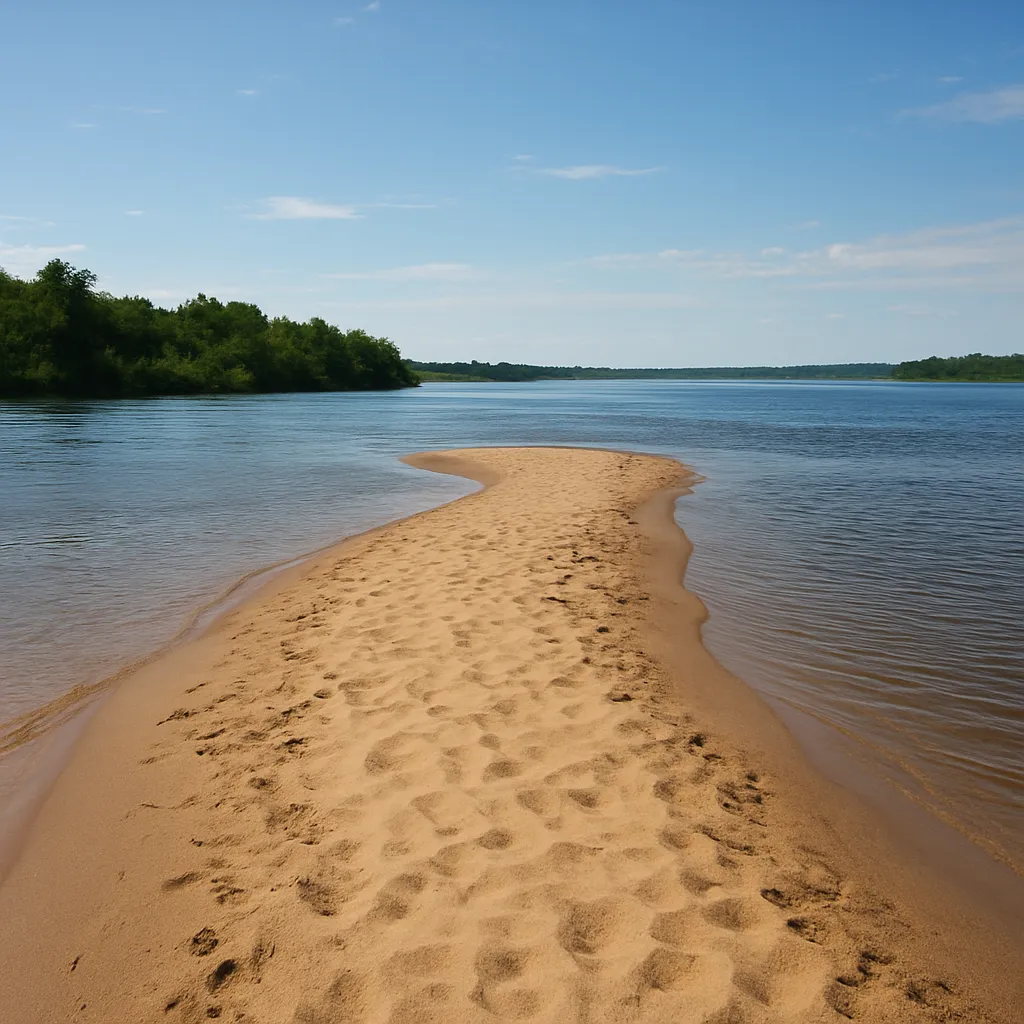
As waves rush up a beach, they drop the heaviest sand and pebbles first, near the surf, while lighter grains are carried farther up the slope before the water drains back down. What controls where each grain size stops?
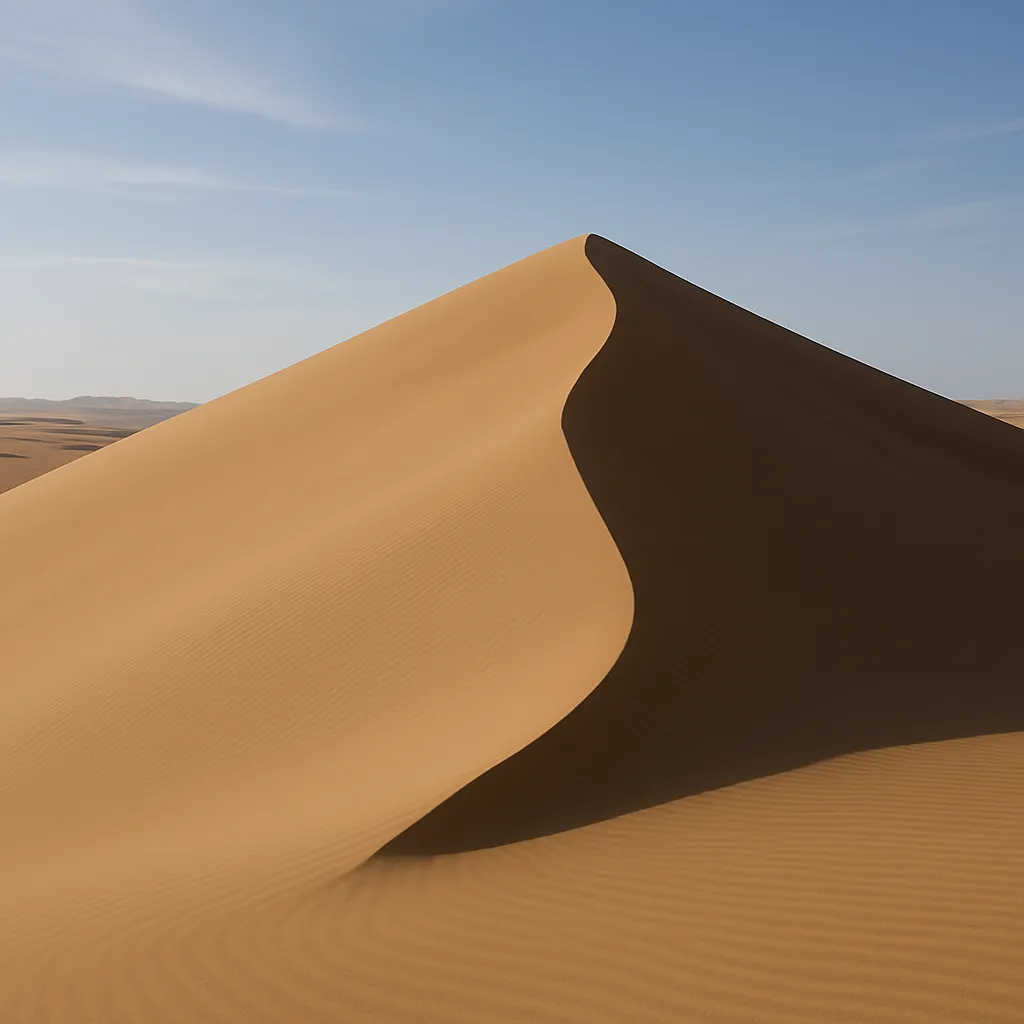
Wind blowing across open ground suddenly loses speed just past the crest of a dune, in the wind shadow on the far side. What happens to the sand grains the wind was carrying at that point?
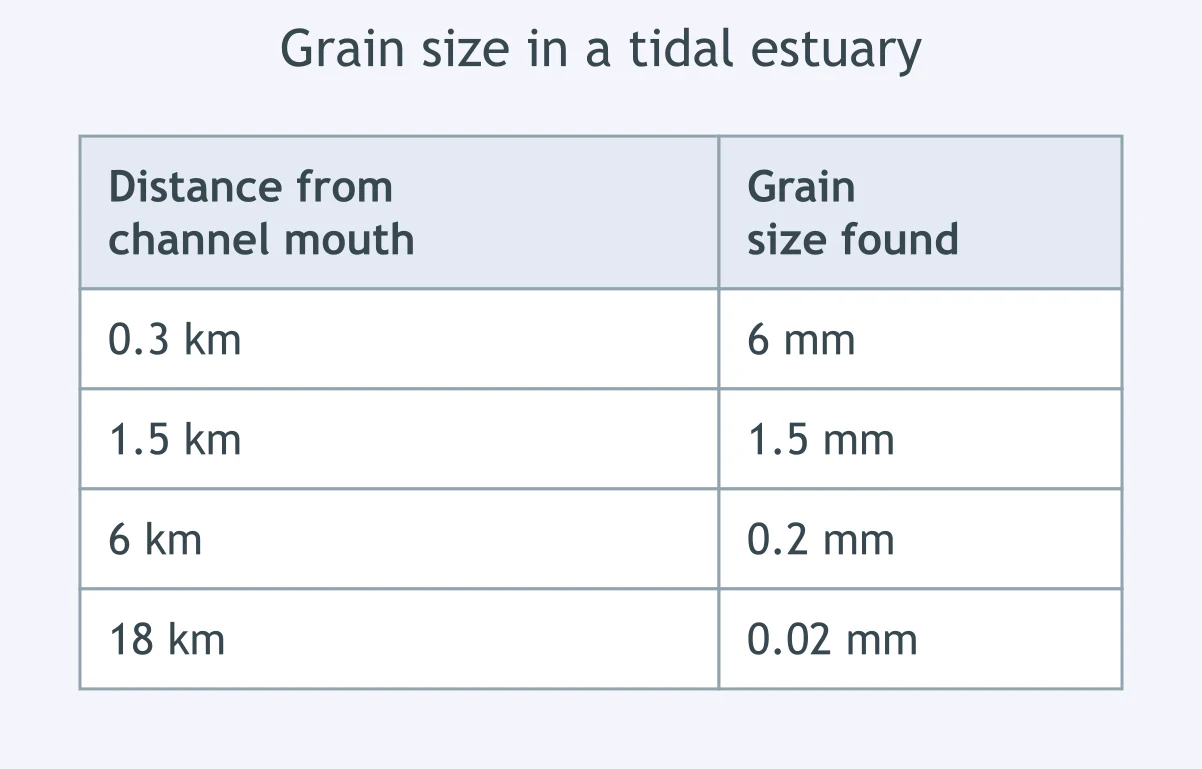
The table shows grain size measured at increasing distances from where a river's channel empties into a tidal estuary. What does this pattern show about the current's speed as it moved from the channel into the estuary?
Where a delta's distributary channel enters open water, the coarsest sediment drops first, building a small ridge called a mouth bar, while mud drifts farther into the bay. What causes the mouth bar to form right there?
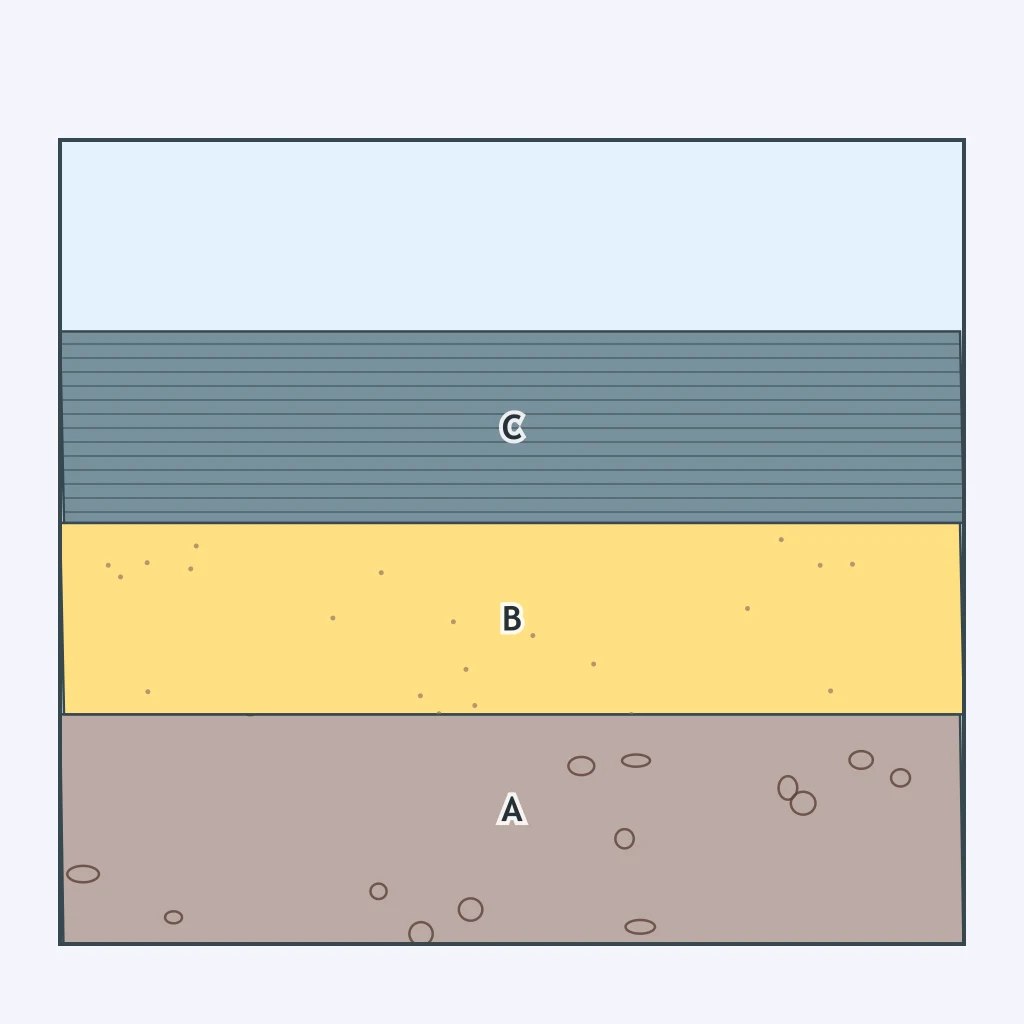
The figure shows a bed in which particle size decreases smoothly upward, from gravel at the base through sand to clay at the top. What does this show about the current?
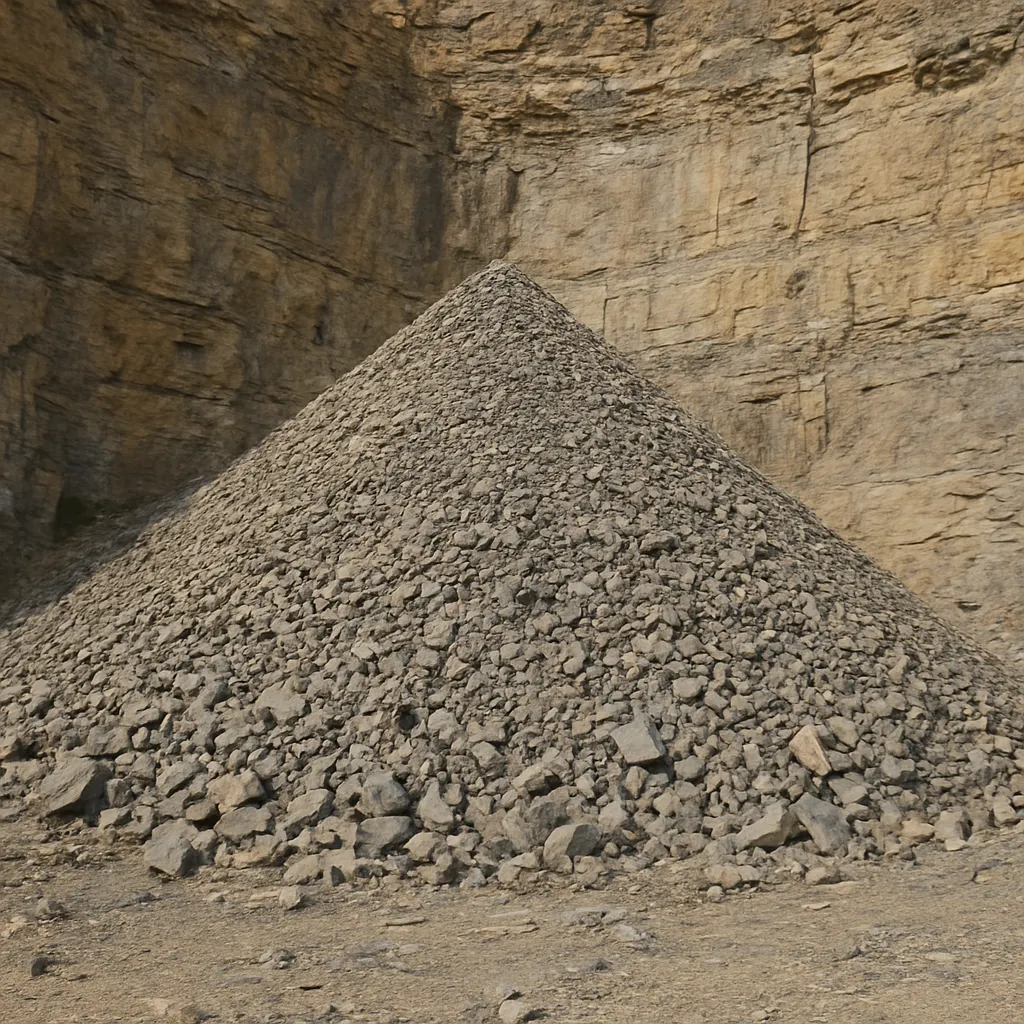
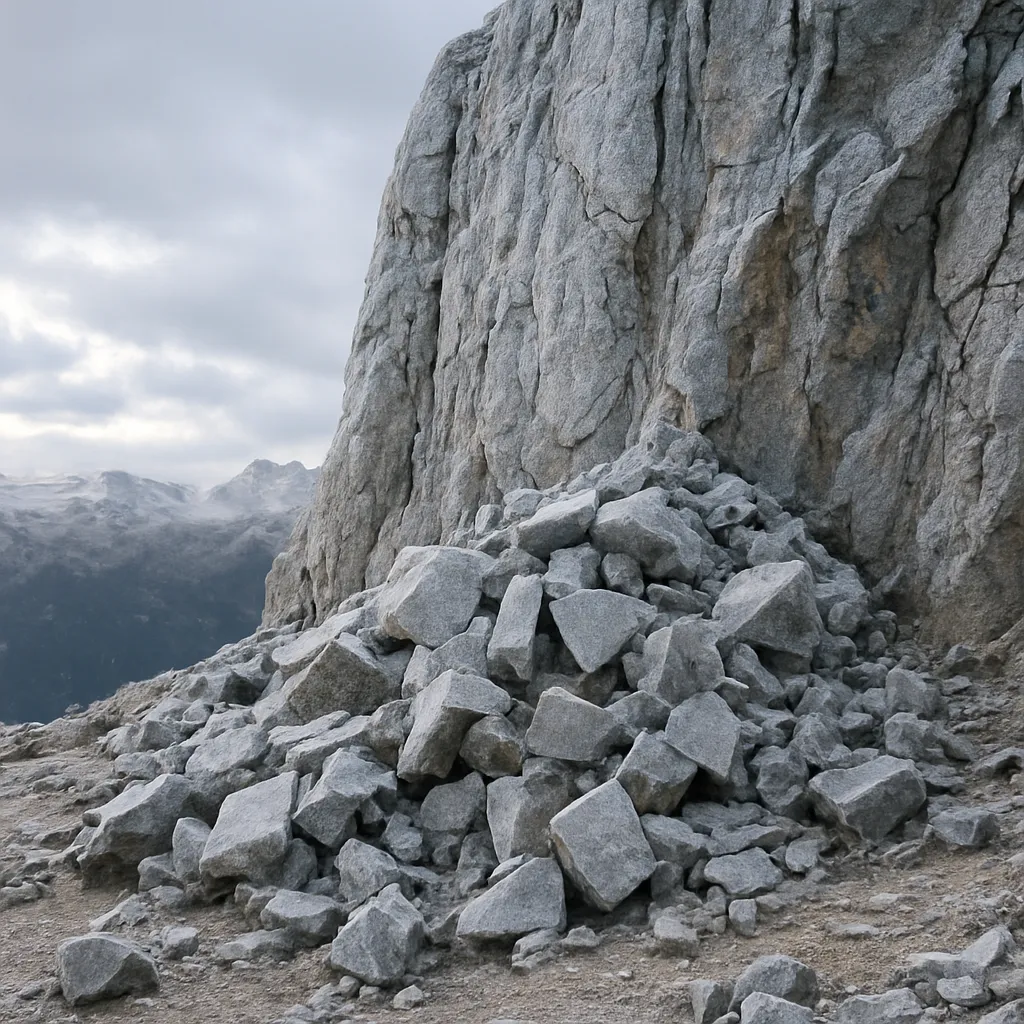
A steep cone of loose, angular rock fragments has piled up directly against the base of a jointed granite cliff in a cold mountain region. What is this pile called?
Two deposits sit at the base of the same cliff, shown side by side. Which panel shows the deposit built by gravity alone, with no water sorting it?
Rockfall from a granite cliff builds a steep pile of loose, broken stone at its base. The pile keeps growing, but its surface never gets steeper than one particular slope. What is this steepest stable slope called?
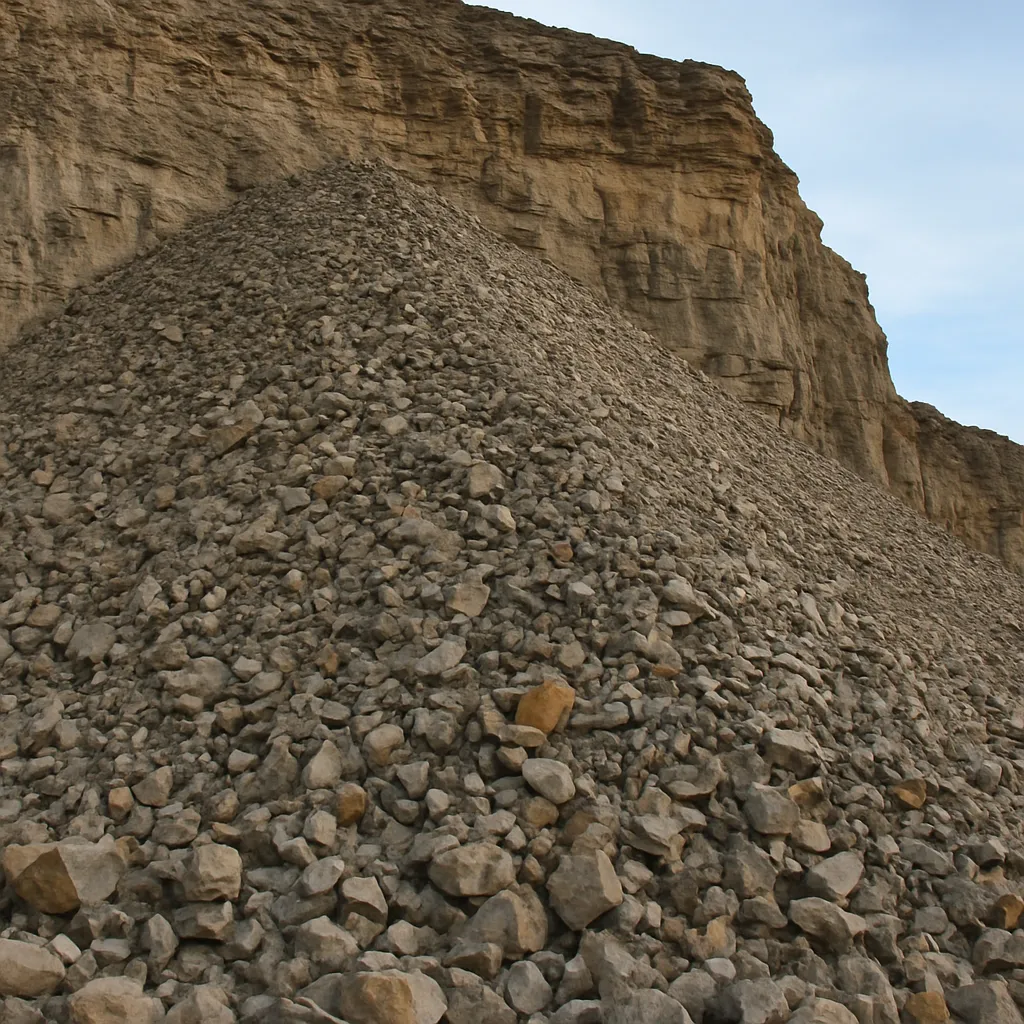
Every winter, water seeps into cracks in an alpine cliff, freezes, expands, and pries rock loose. The broken fragments tumble down onto the pile of rock at the cliff's base. Which process breaks the rock loose?
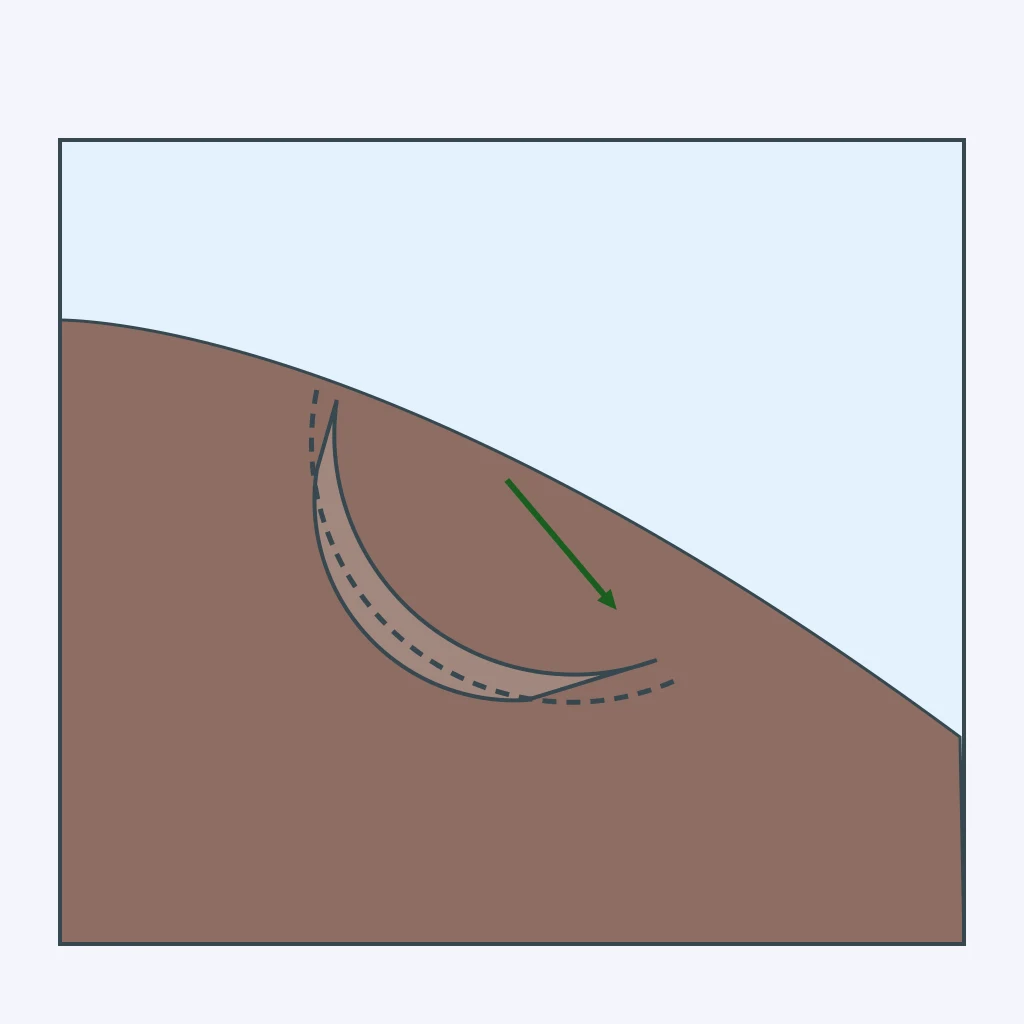
The image shows a block of hillside that has rotated down along a curved surface, leaving a step-like scarp above it. What kind of mass movement is this?
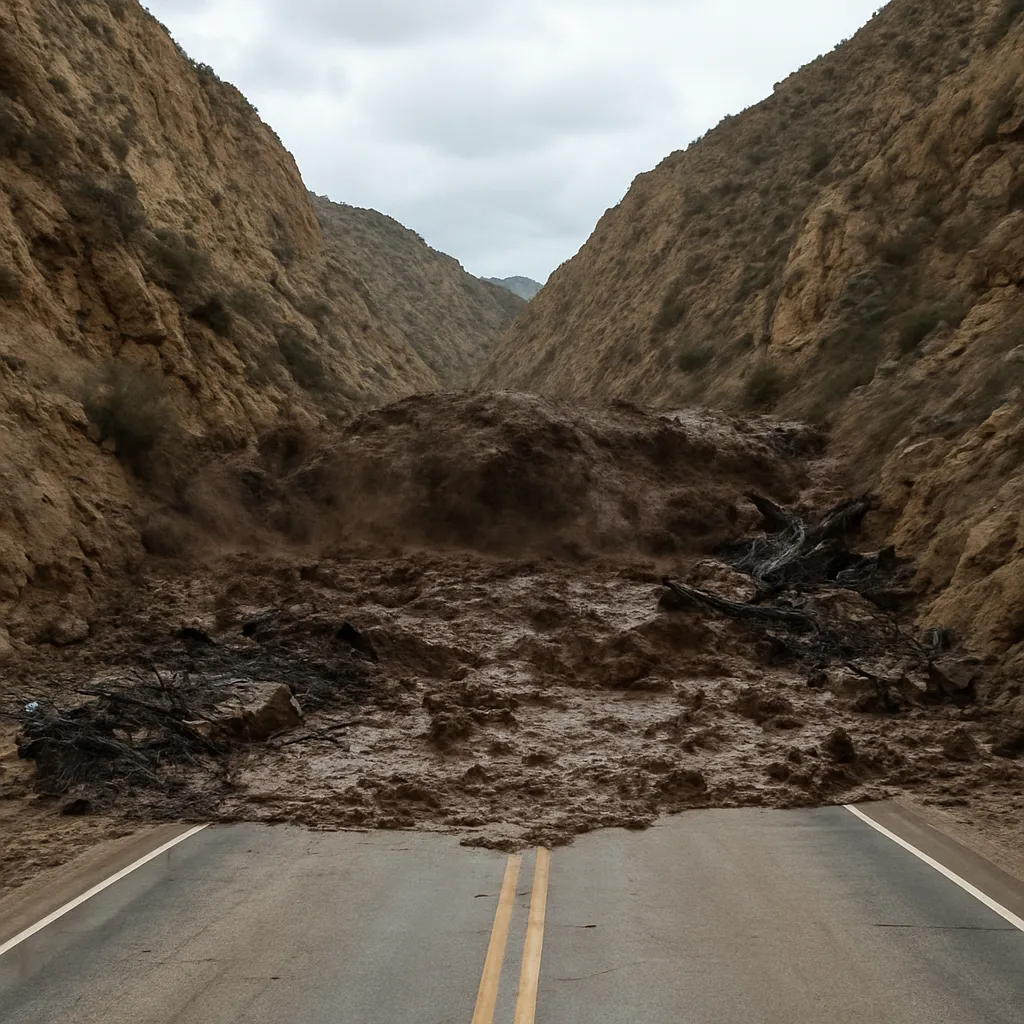
After a wildfire stripped the vegetation from a steep hillside, a heavy rainstorm sent a channel of mud and charred debris surging down a canyon and burying a road. What process buried the road?
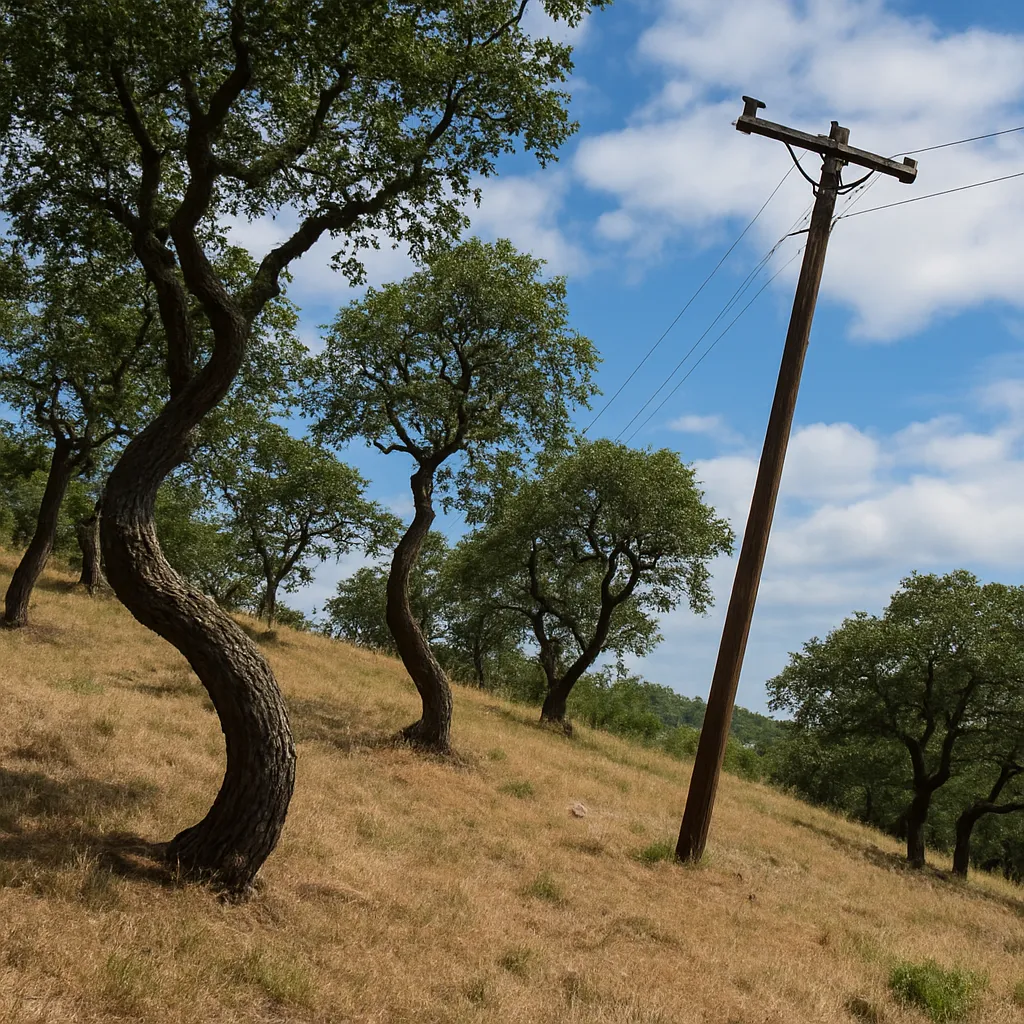
Several tree trunks on a hillside curve sharply near their base before growing straight upward again, and a nearby utility pole leans slightly downhill. Which process bent the trunks this way?
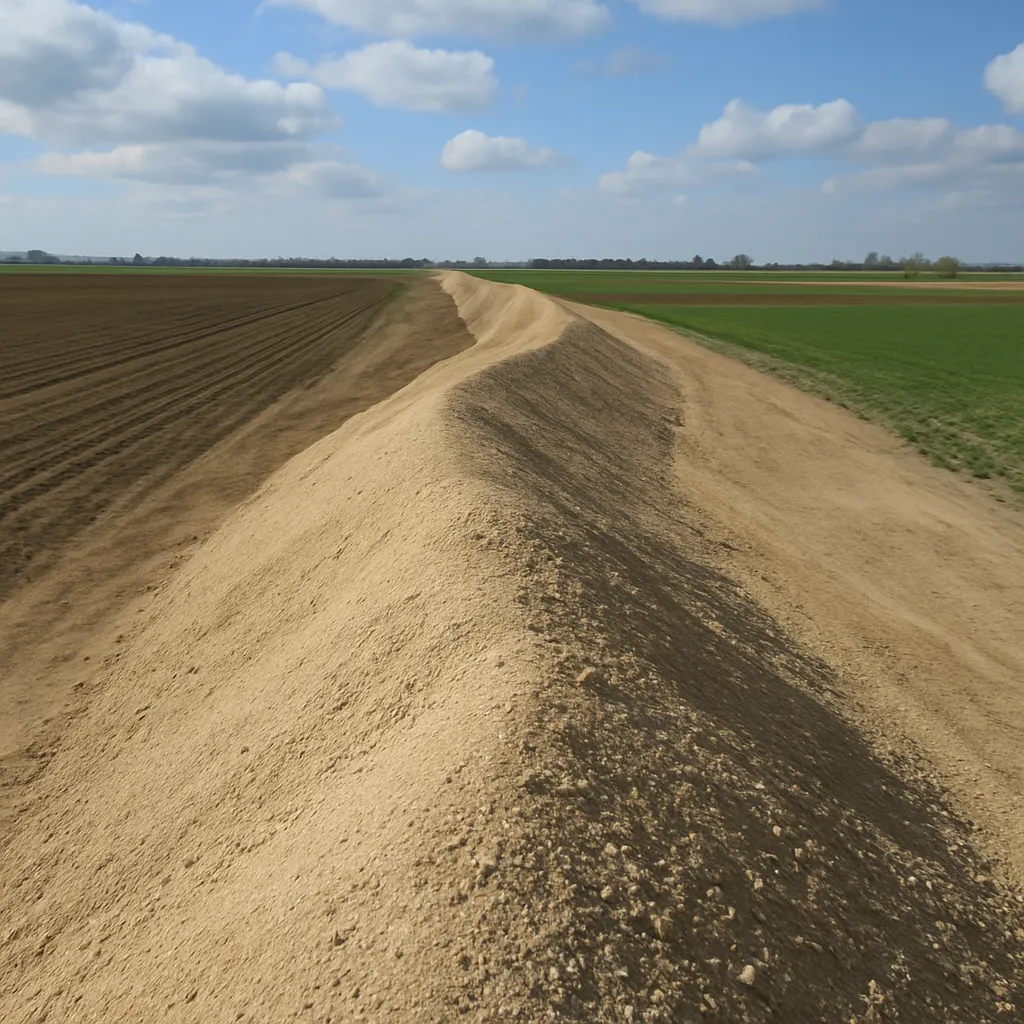
Road crews cutting through a ridge in central Maine found it filled entirely with sorted, rounded sand and gravel, laid down in a long, sinuous mound unrelated to today's drainage. Which process built this ridge?
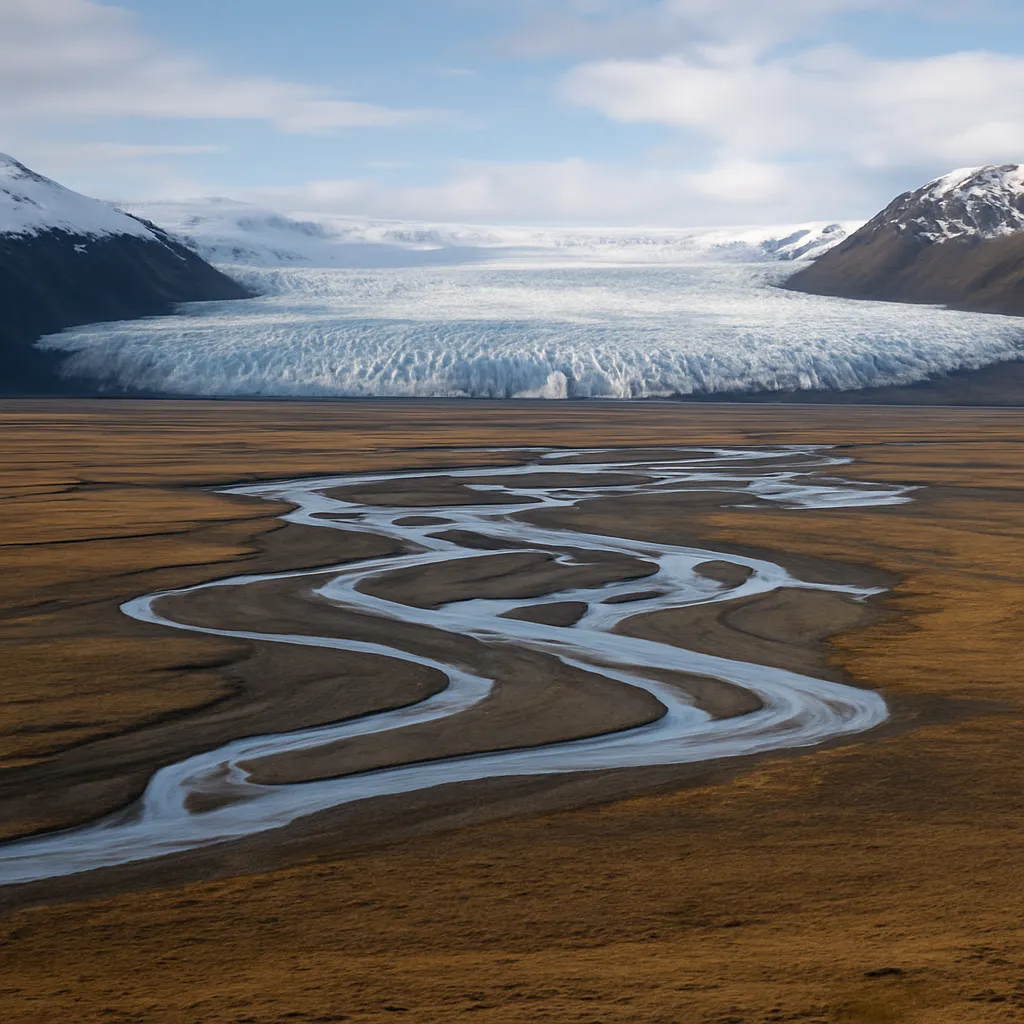
Beyond the edge of a retreating glacier lies a broad, flat plain built of layers of sorted sand and gravel that get thinner and finer moving away from the ice margin. Which process built this landform?
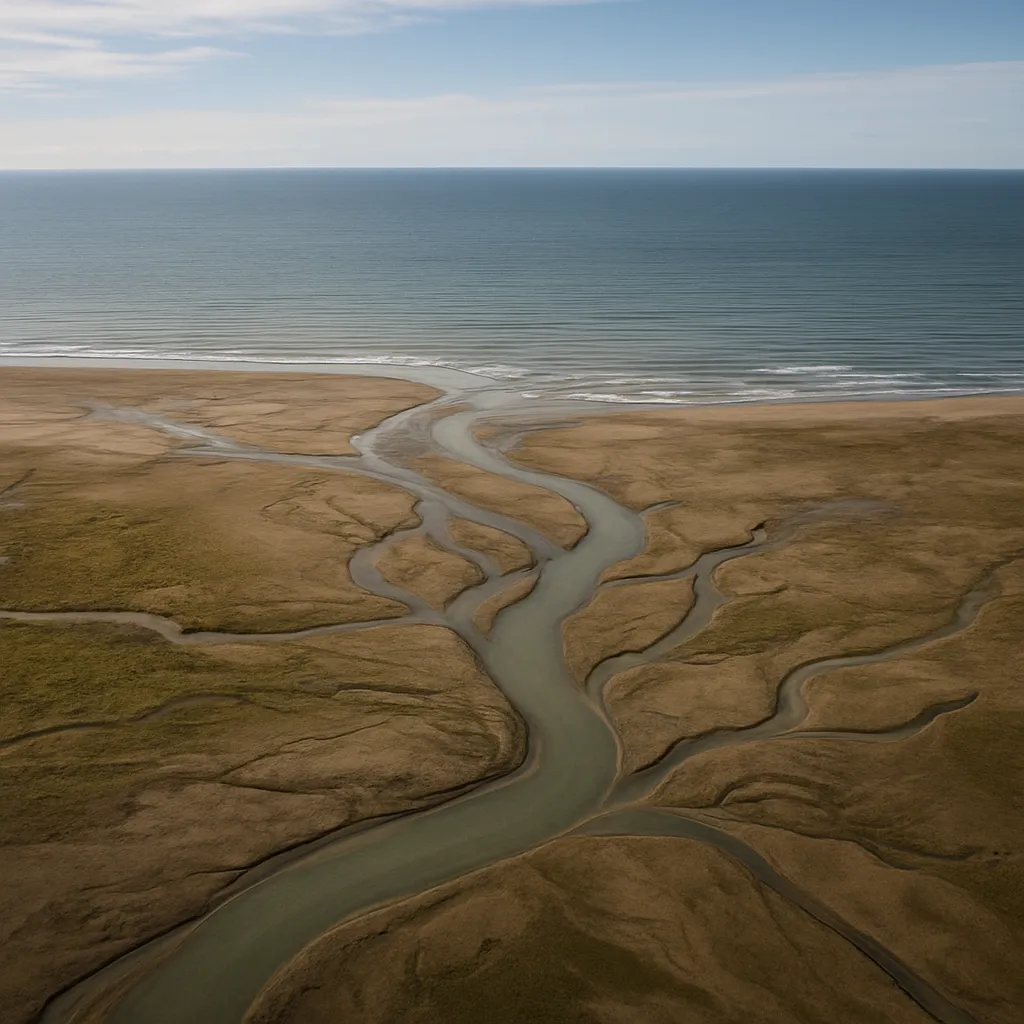
Where the Ganges River meets the Bay of Bengal, it drops the sediment it has carried for hundreds of kilometers, building a broad, branching area of new land. What is this landform called?
A narrow, curving ridge of sand extends from a headland out into open water, like the spit at Provincetown, Massachusetts. Which process built this landform?
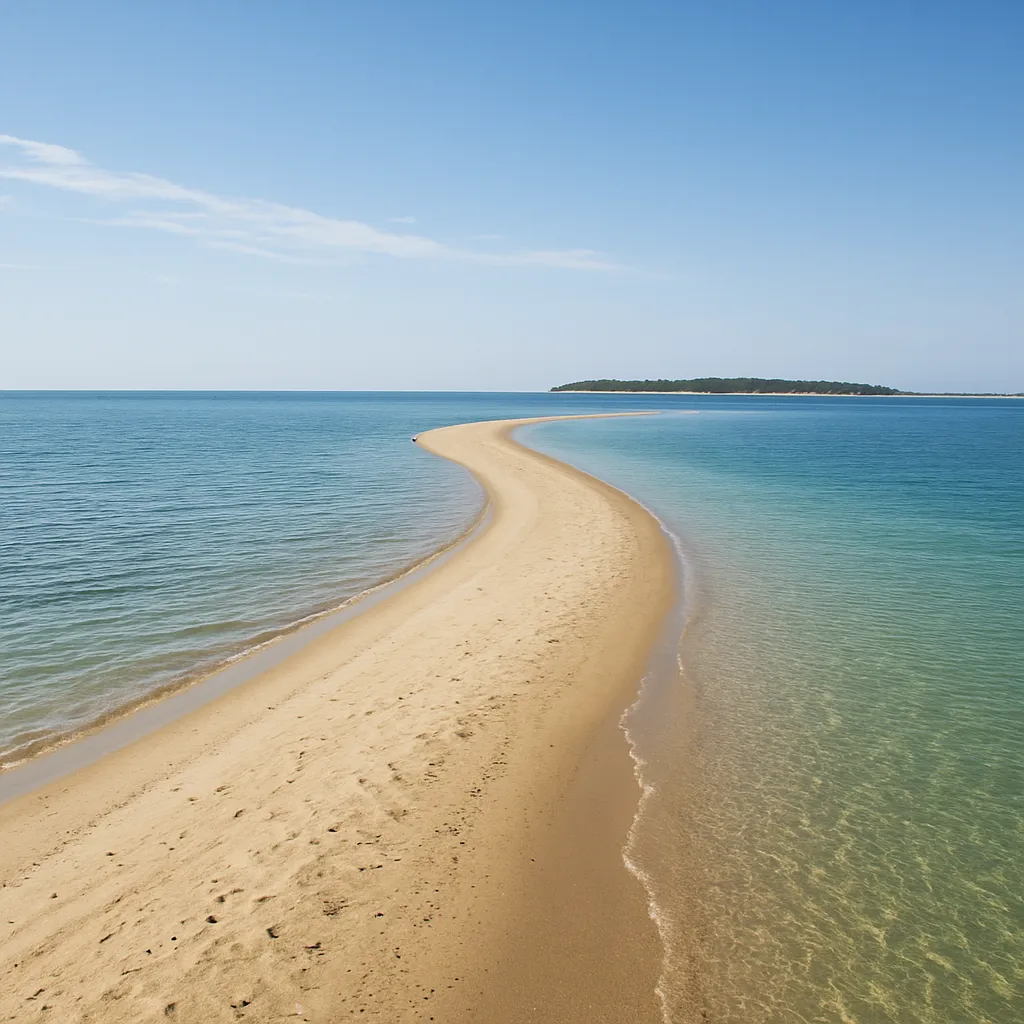
Geologists mapping a long, curving ridge that marks a glacier's farthest advance find it built from a chaotic mix of clay, sand, gravel and boulders with no internal layering, unlike the sorted gravel plains beyond it. Which process deposited this ridge?
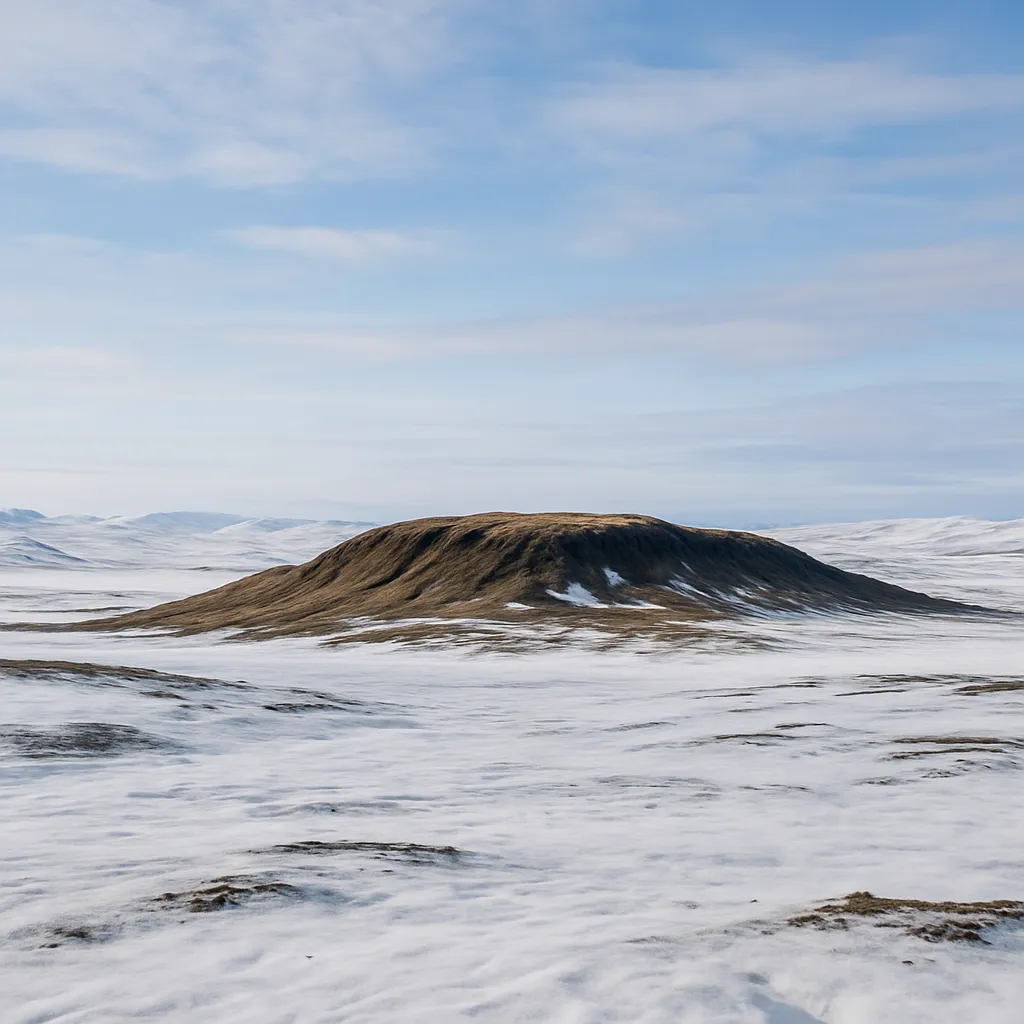
The Loess Hills of western Iowa are capped by a deposit of fine, wind-blown silt over 60 meters thick in places, entirely lacking the layers a water-laid deposit would show. What best explains the lack of layering in this silt?
Along North Carolina's Outer Banks, a long, narrow island of sand runs parallel to the mainland shore, separated from it by a shallow lagoon. Which process built this island?
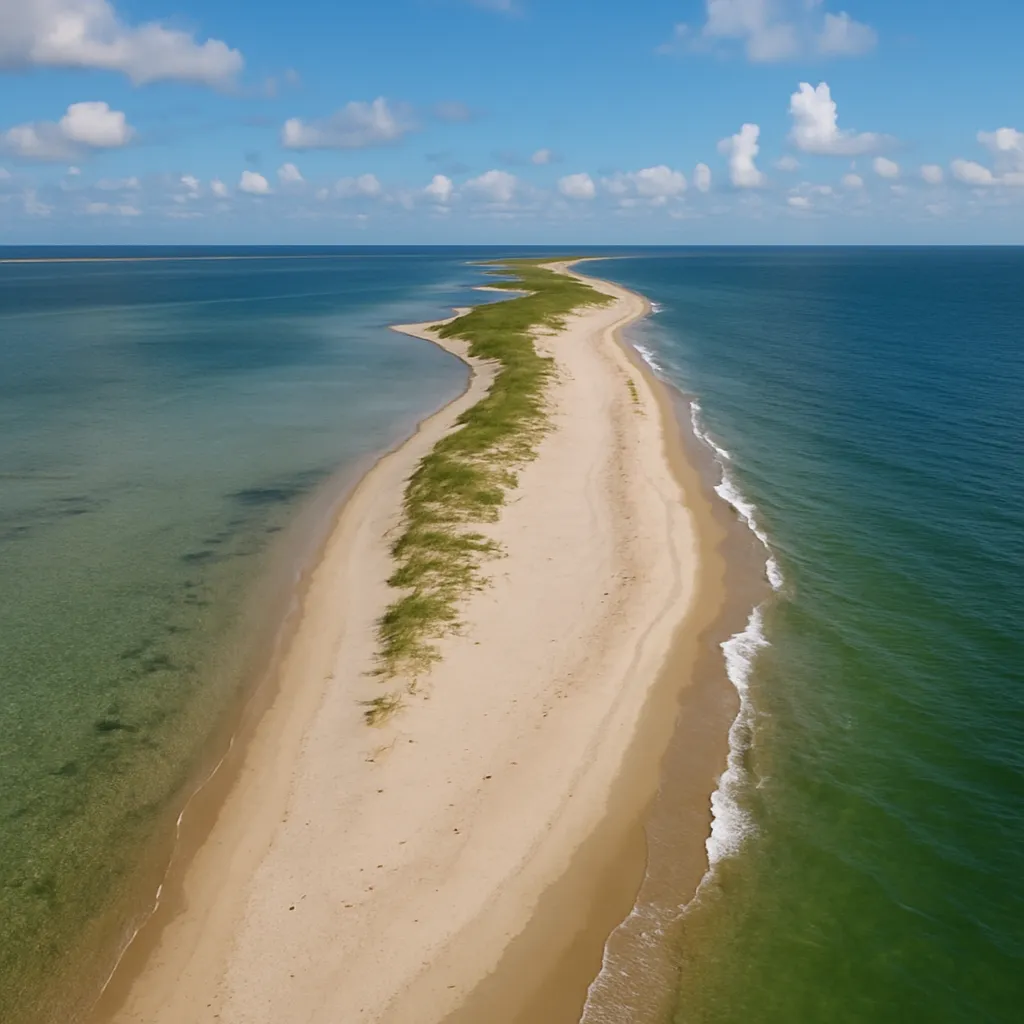
On the inside of a river's meander bend, a curved deposit of sand has built up, while the outside of the same bend is being cut away. Which process built the sand deposit?
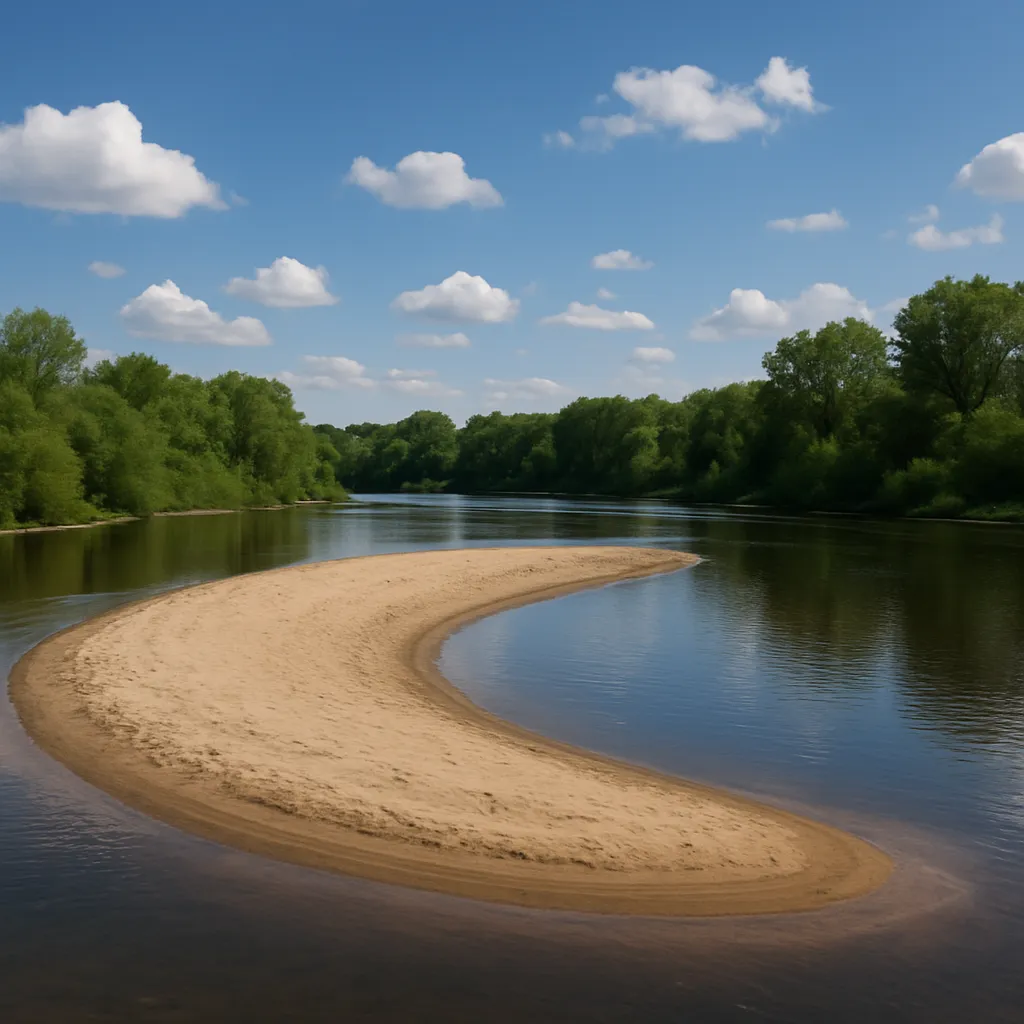
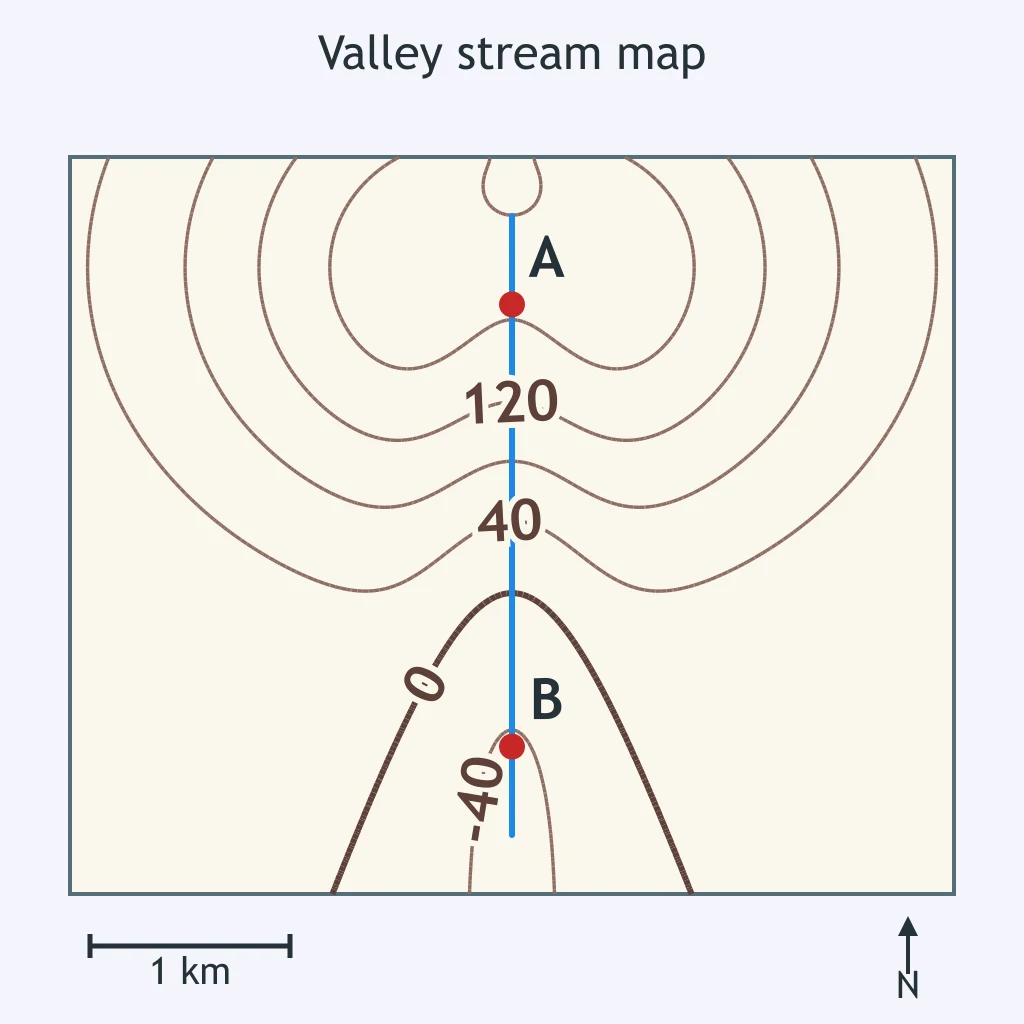
The topographic map shows a stream crossing several contour lines. Based on how the contour lines bend where they cross the stream, which way is the stream flowing?
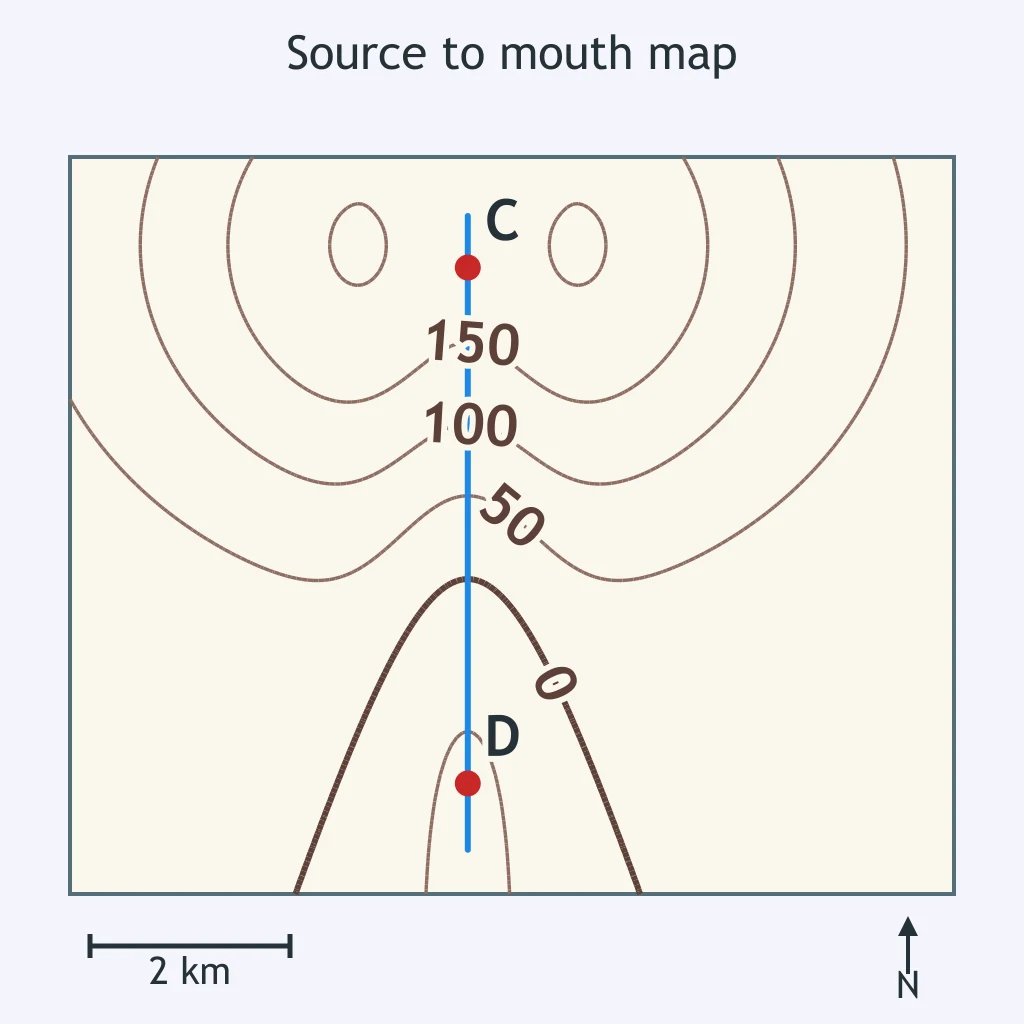
On this map, points C and D both sit directly on the stream's course, with C near the top of the valley and D near the bottom. Which point is closer to the stream's source?
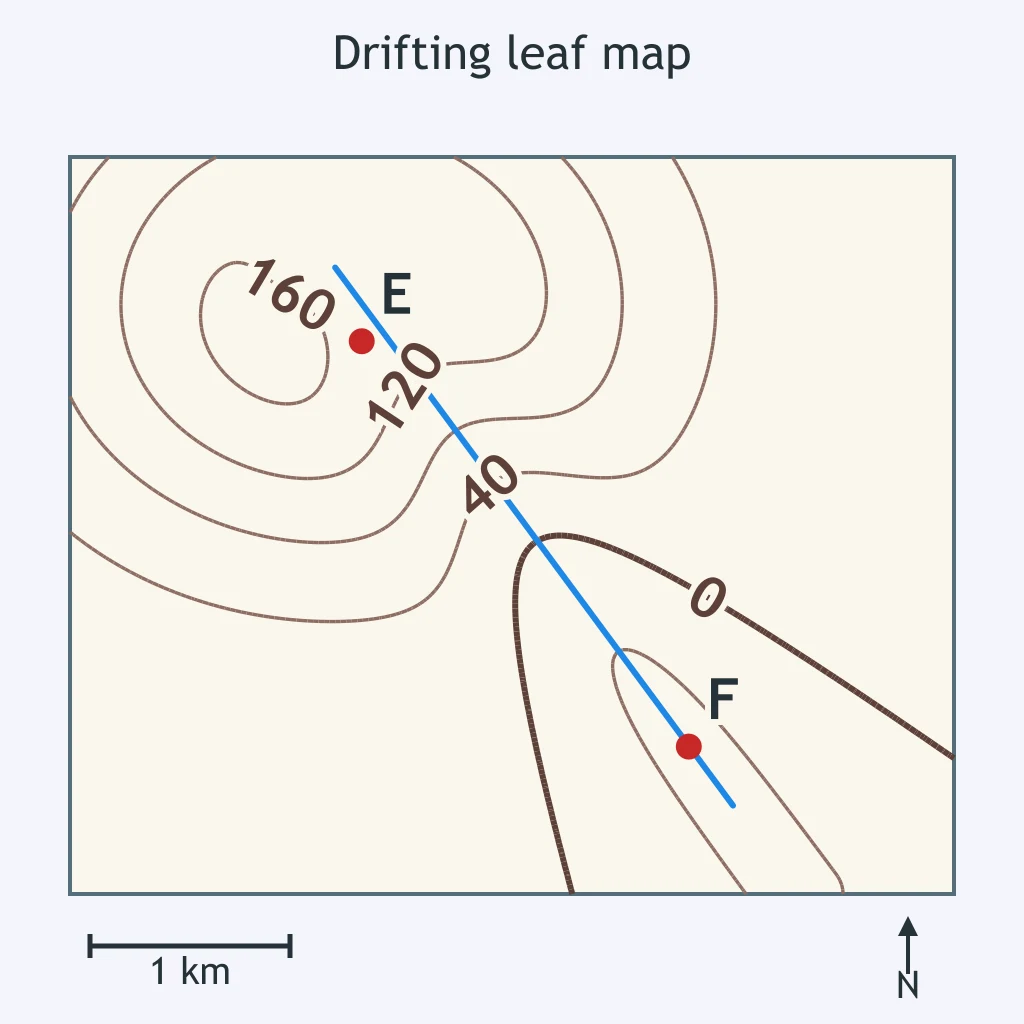
A leaf dropped into the channel at point E drifts along with the current. Based on the contour pattern, toward which lettered point will it travel?
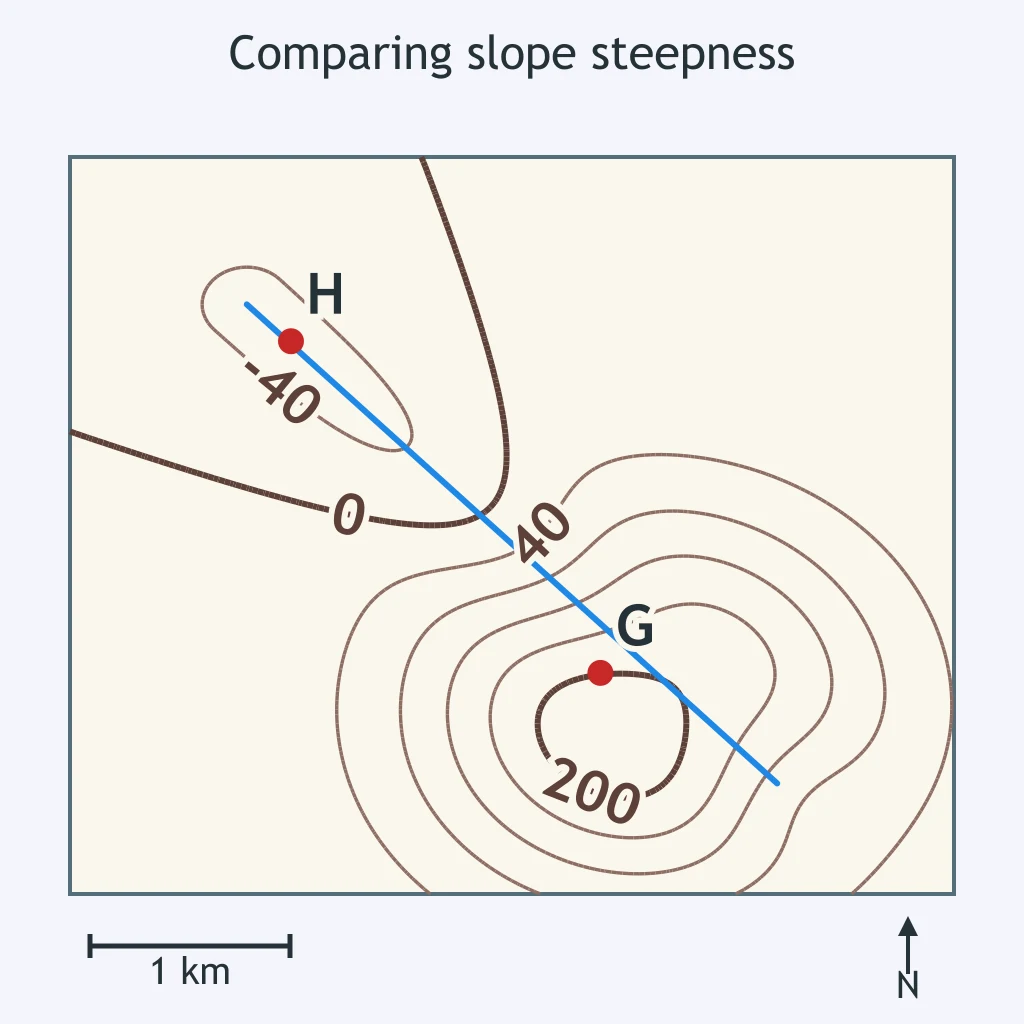
Use the contour lines on this map. Which point, G or H, sits on the steeper slope?
A canoe launched at the benchmark on this map drifts downstream with the current. Based on the elevations shown, will it end up nearer point I or point J?
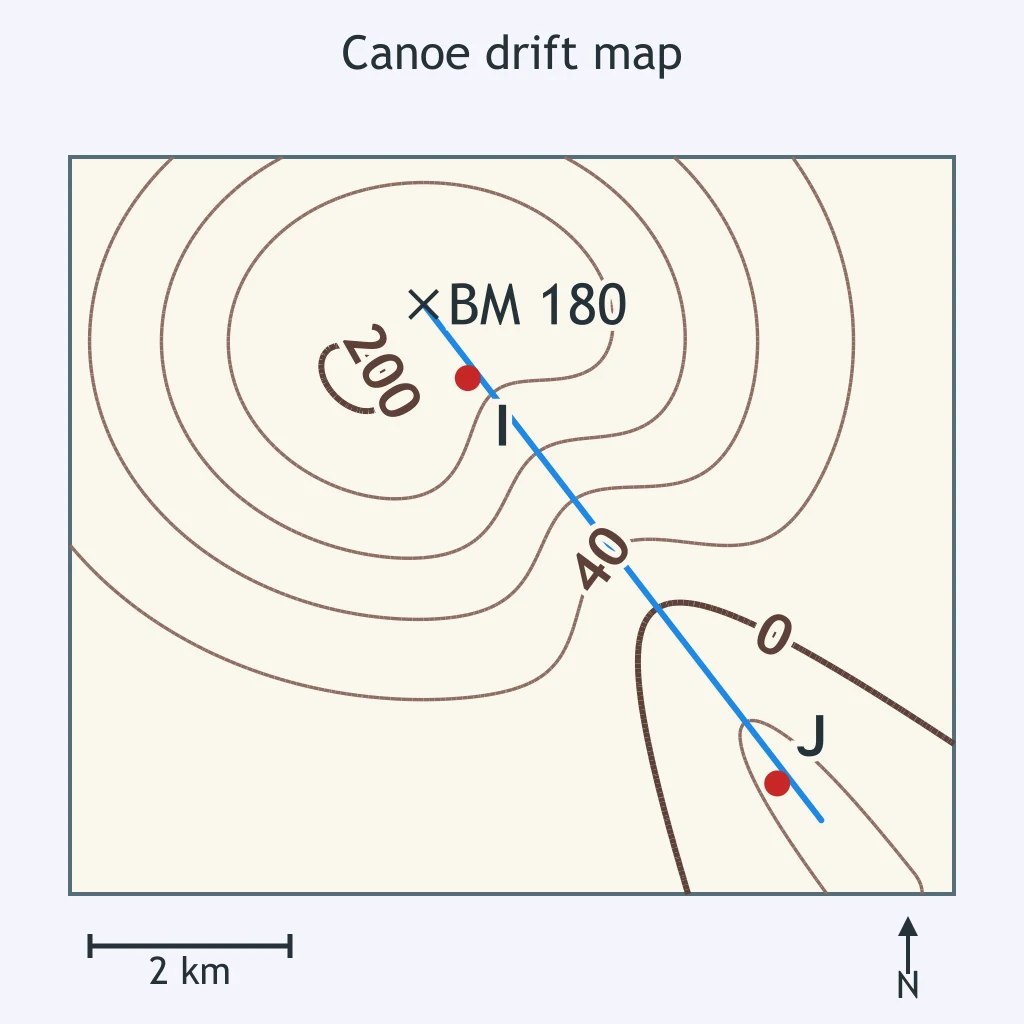
Fish swimming upstream in this channel always move from lower ground toward higher ground. Based on the map, are they swimming from point K toward point L, or from point L toward point K?
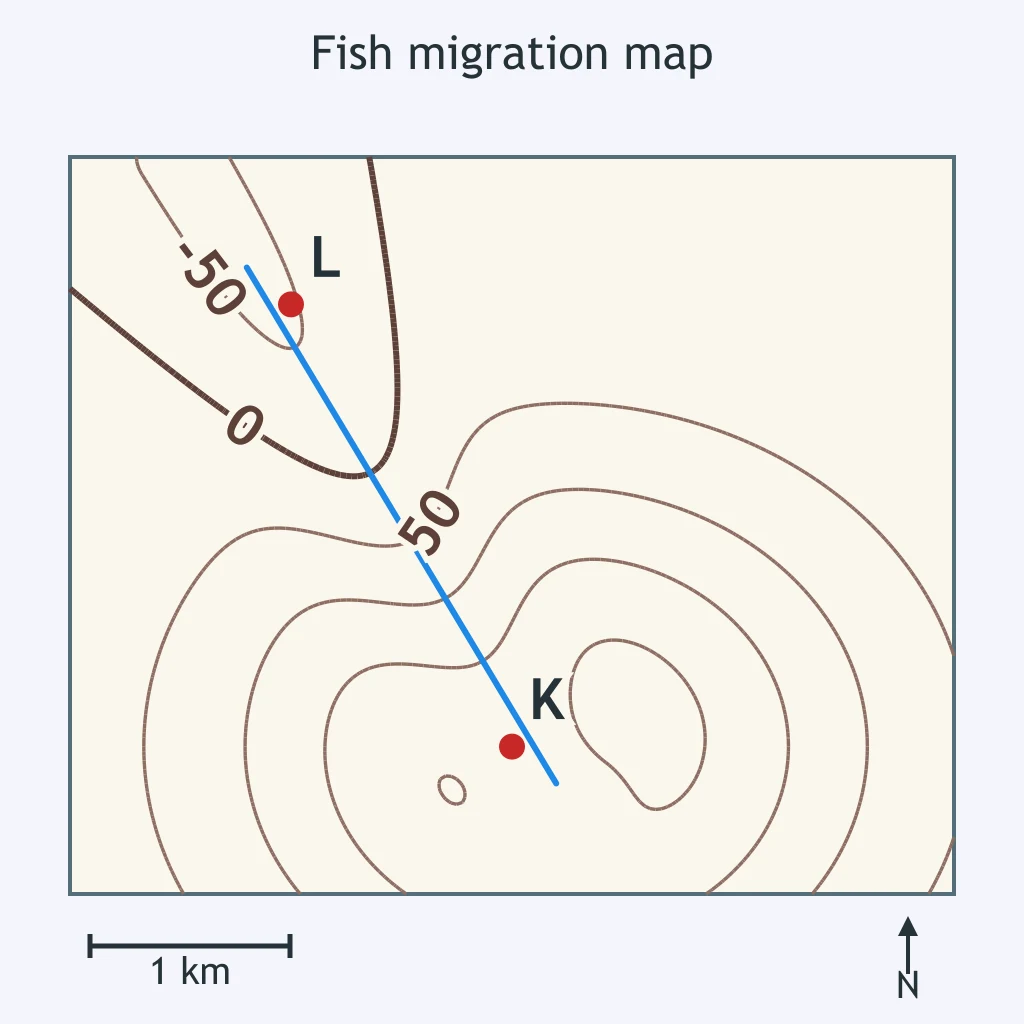
A chemical spill enters this stream at point M. Based on the contour pattern, will the spill travel toward point N, or stay pooled at M?
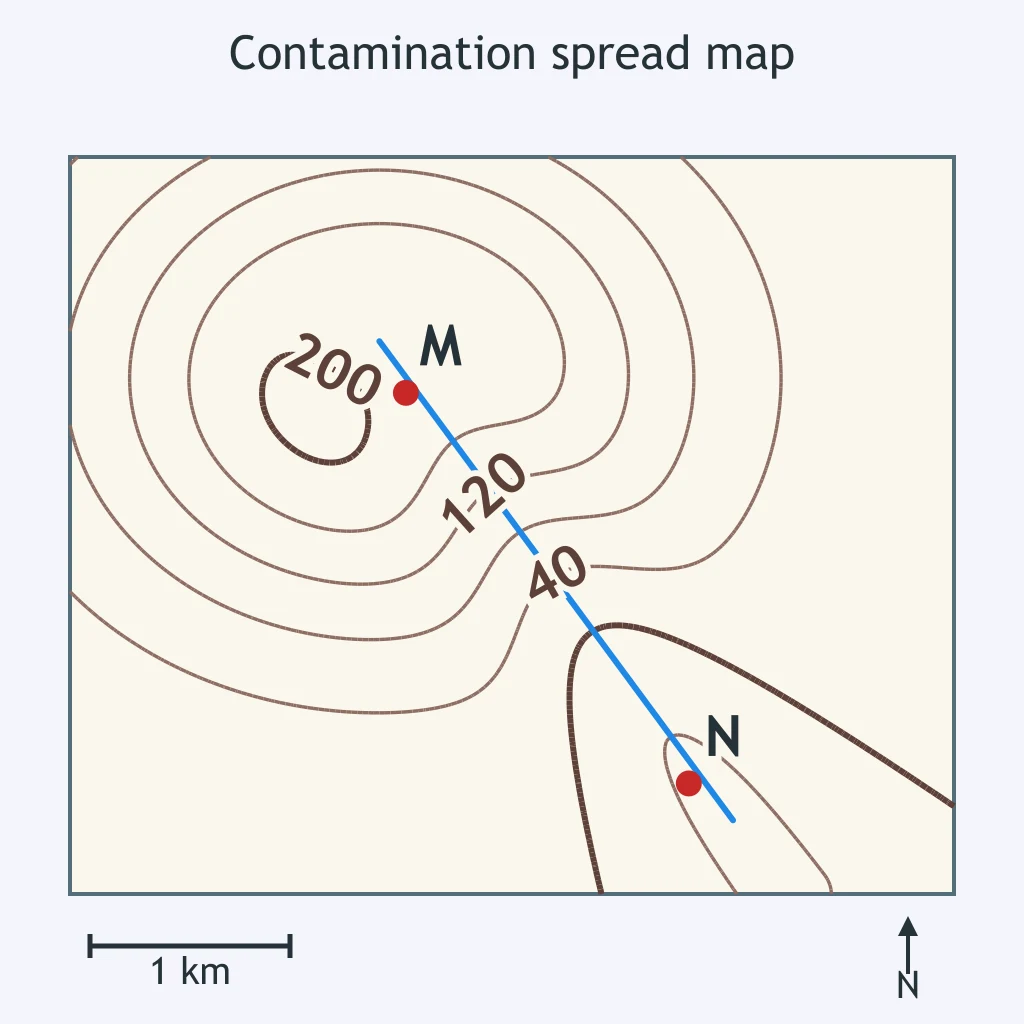
On this map, the stream flows past points O and P. Based on the contour values, which point is upstream?
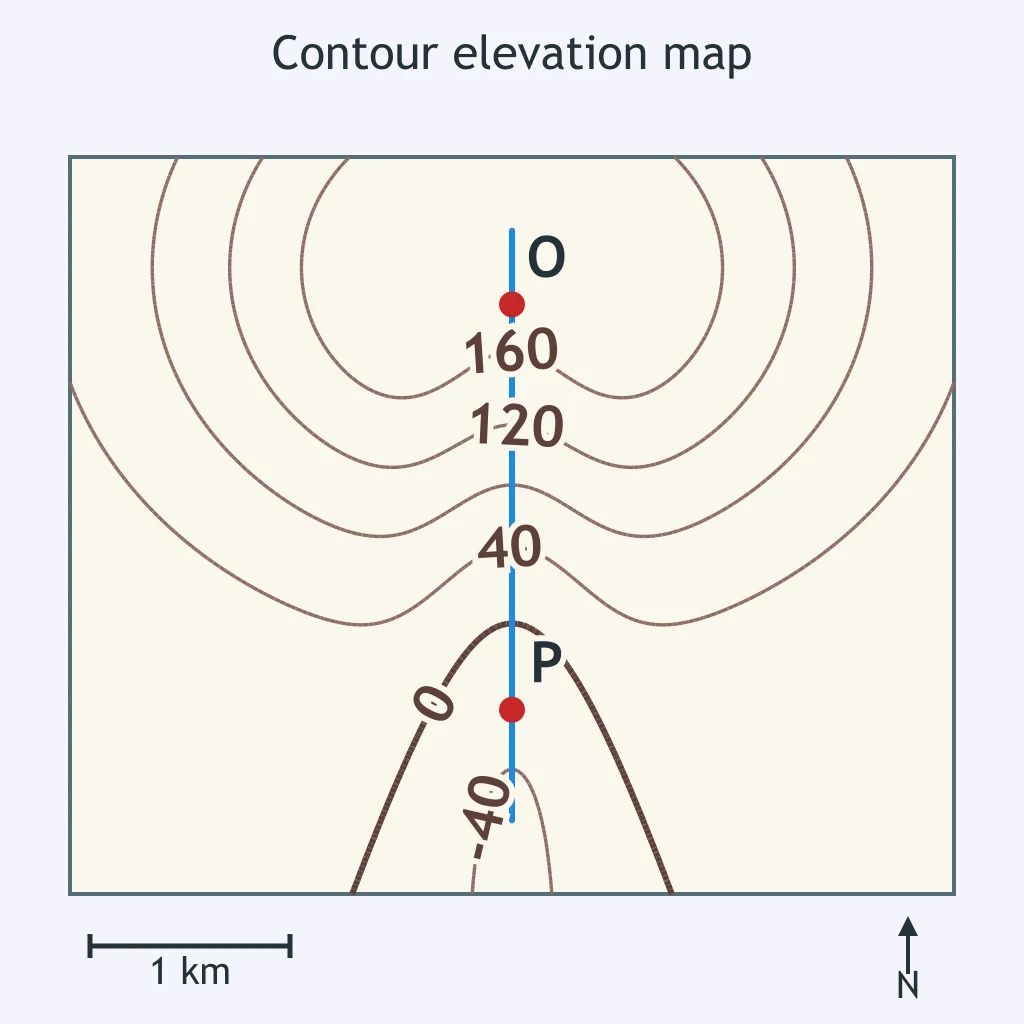
Crack the passcode before the zombies get in.
Answer, then swat bugs for bonus points.
Race through questions at your own speed.
Same question on every screen. Fastest wins.

Pick a tile, answer, hit bonuses and steals.
Stream Erosion and Deposition
40 questions