Loading
by BlastRoom
Read graded beds, isolate settling controls, and compare sorted and unsorted deposits.
#earth_space_science
30 questions
One question set, multiple game modes. Tap any game to see it in action. Not sure which to pick?
Answer to place stones and capture territory.
Outrun the snow together.
Earn blasts, then hunt the other team.
Answer to earn energy, then climb.

The class blasts through walls together.
Bid on mystery lots. Most money wins.
Sell tours. Nice, standard, or a total scam.

Answer, restock, and serve the rush.
More correct answers pulls the rope your way.
Answer, then shoot down the alien wave.
Answer, then tap to leap the frozen ridge.
The figure shows a bed in which particle size decreases smoothly upward, from gravel at the base through sand to clay at the top. What does this show about the current?
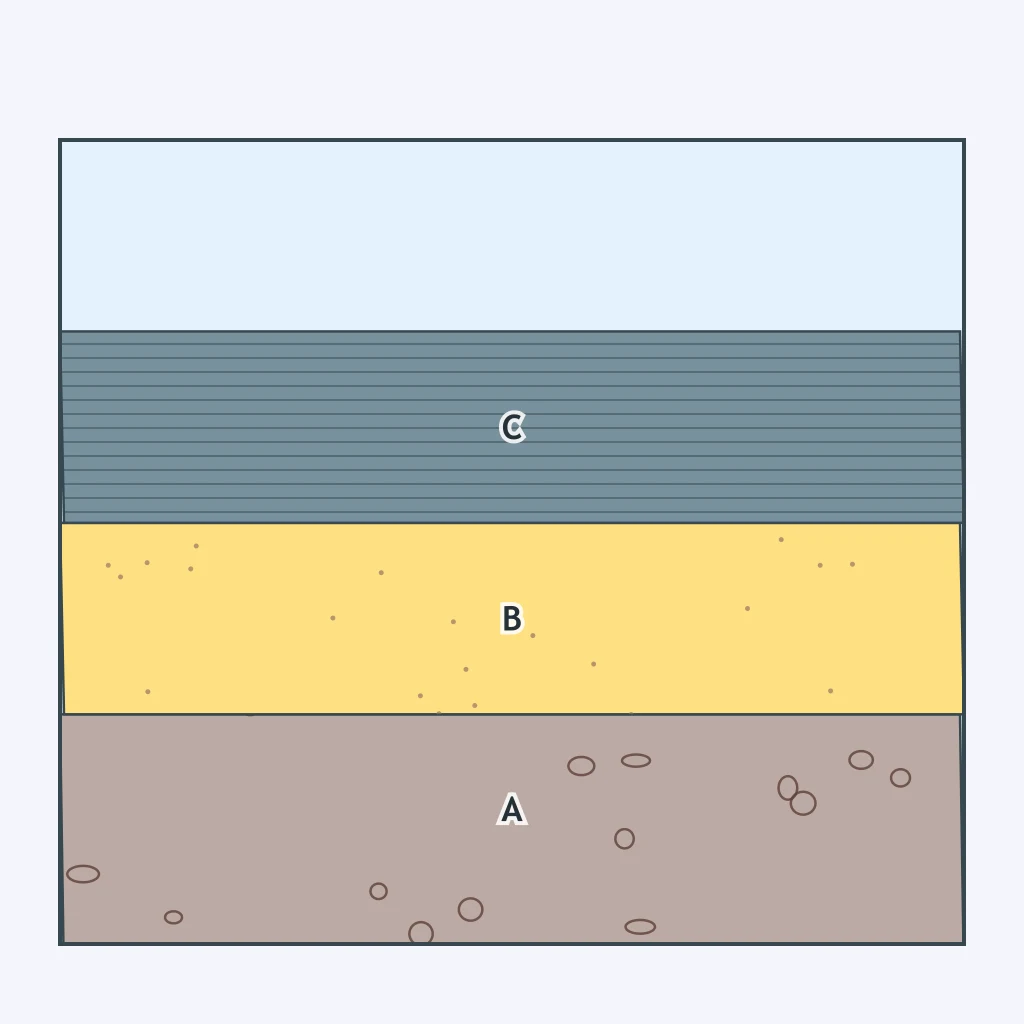
The figure shows a bed in which particle size increases smoothly upward, from clay at the base through sand to gravel at the top. What does this pattern show about the current?
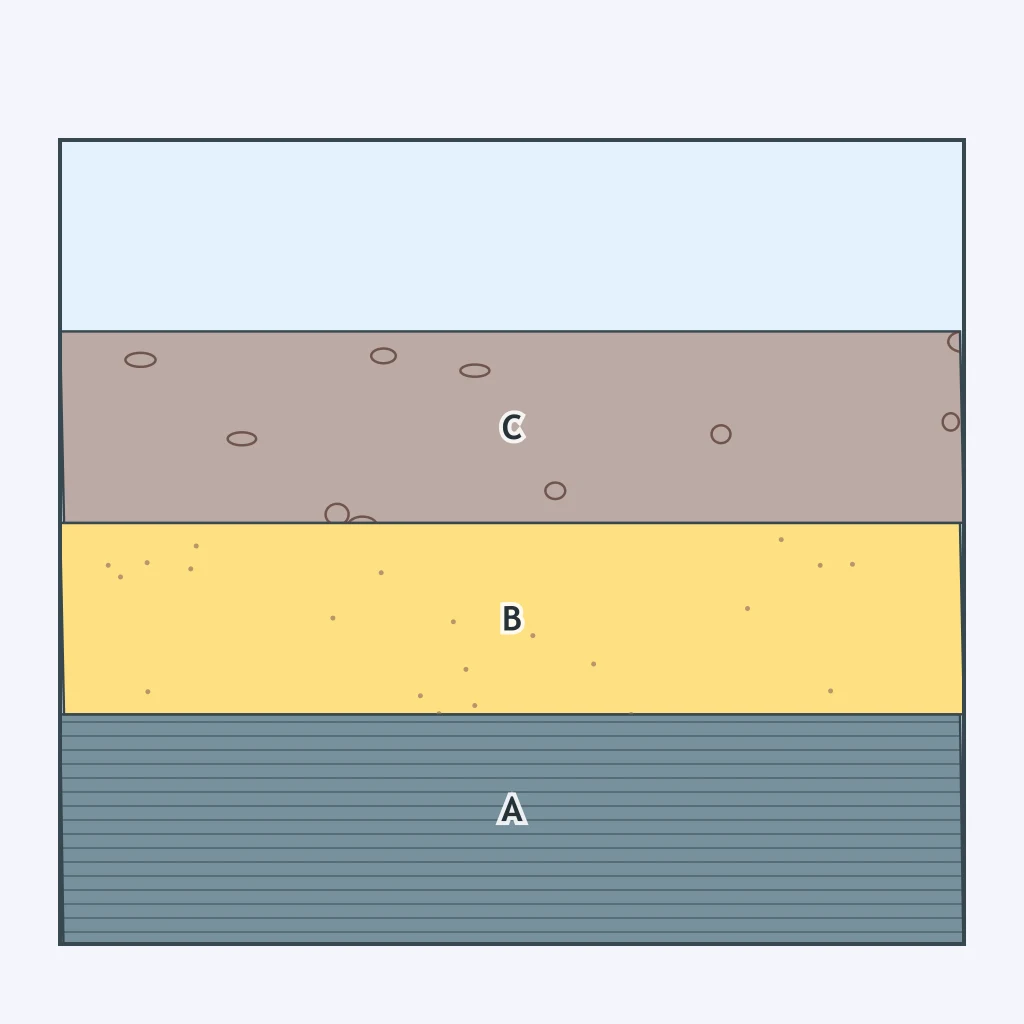
The figure shows a bed made of three layers with no change in grain size anywhere from bottom to top. What does this show about the current?
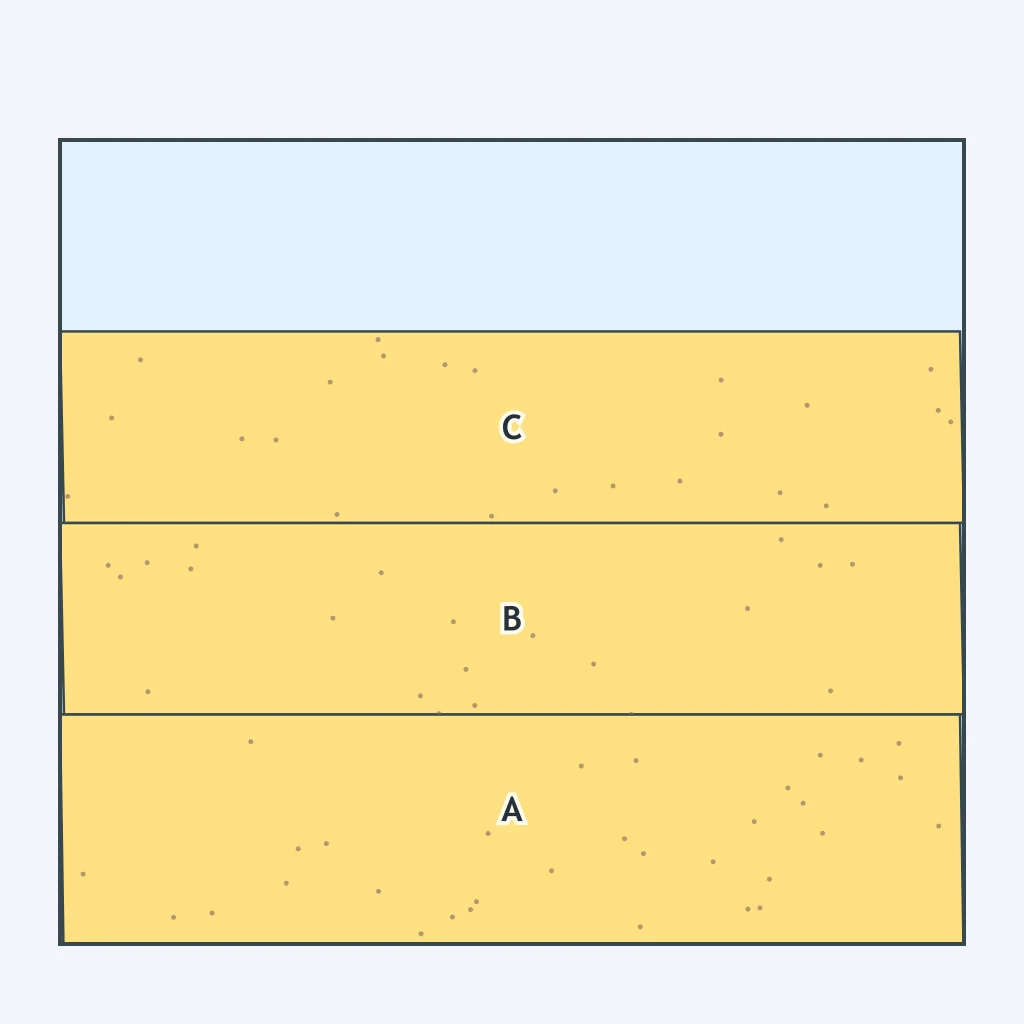
The figure shows a bed that grades from gravel at the base, to clay in the middle, and back to gravel at the top. What does this pattern show about the current while this bed was deposited?
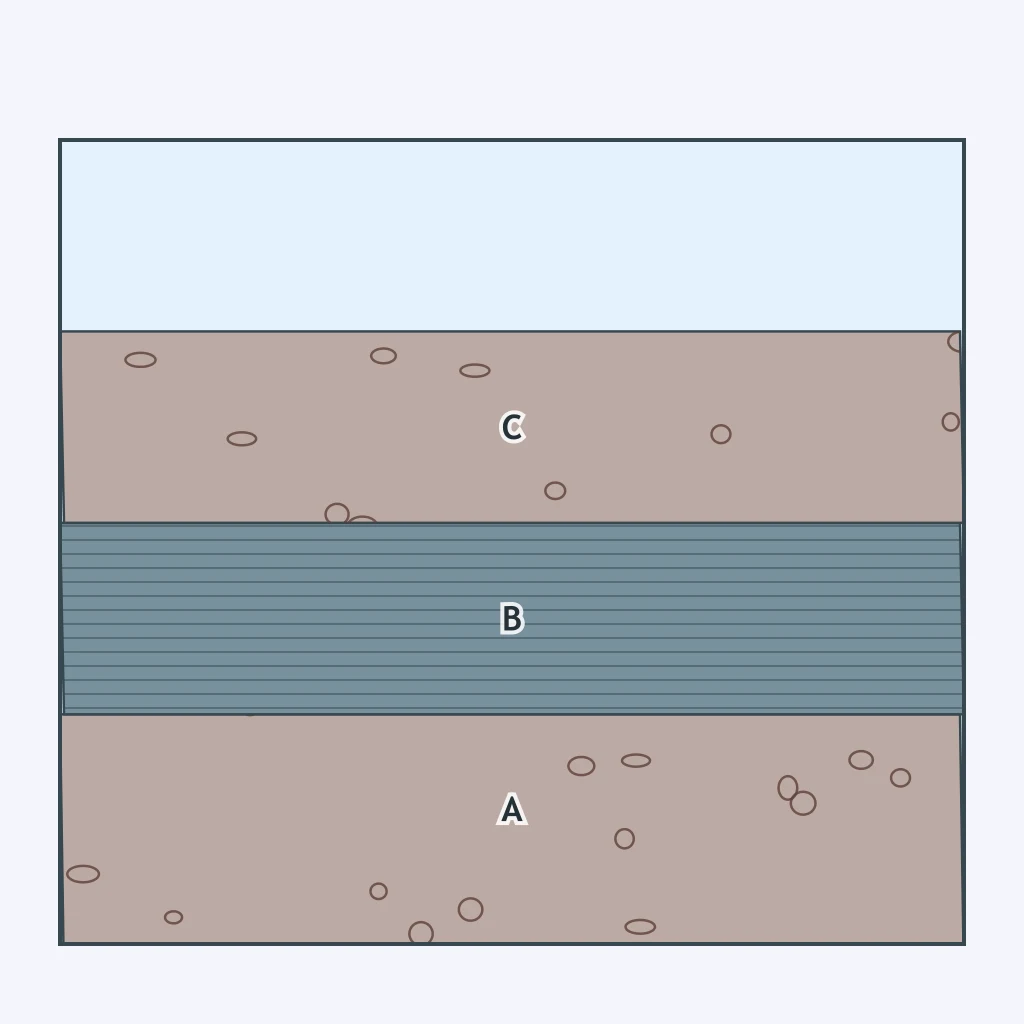
The figure shows a bed that grades from clay at the base, to gravel in the middle, and back to clay at the top. What does this pattern show about the current while this bed was deposited?
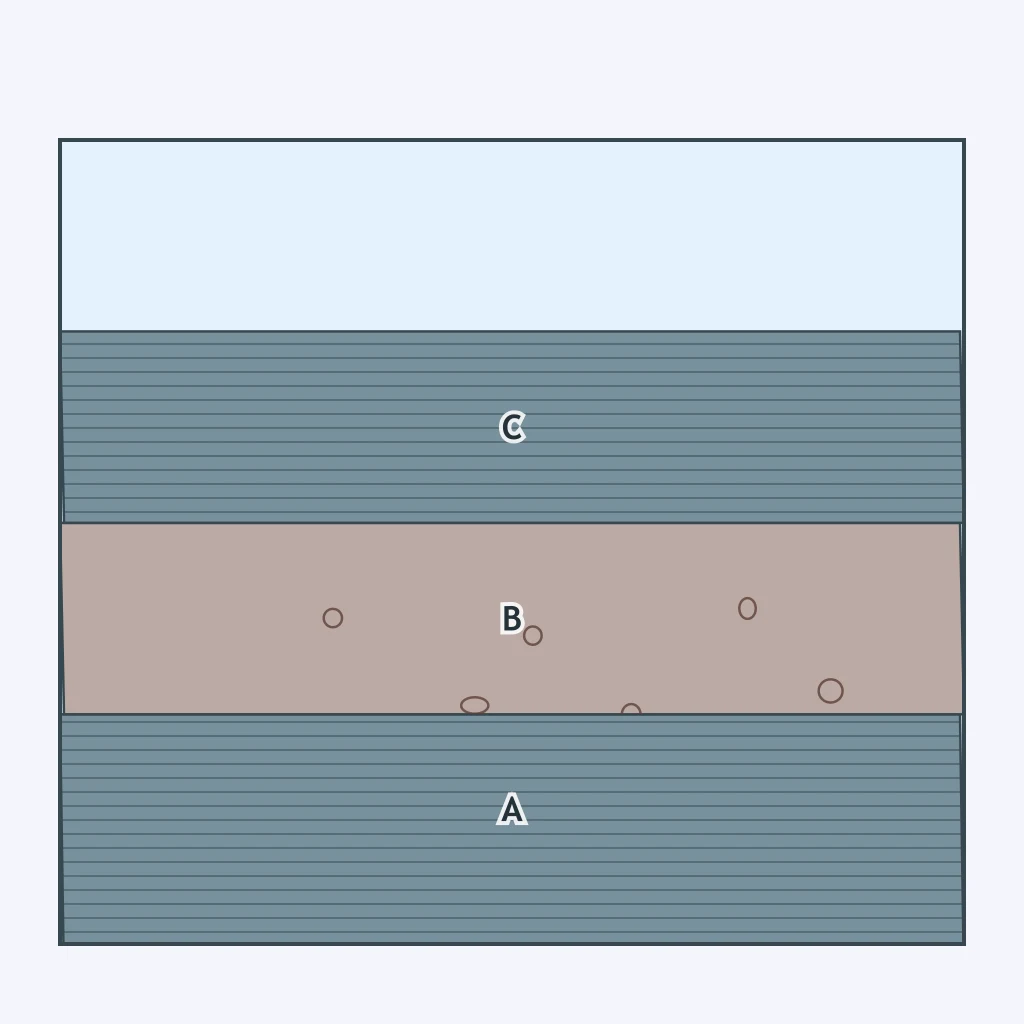
The figure shows two fining-upward layers stacked on each other: gravel to clay, then gravel to clay again. What does this pattern most likely record?
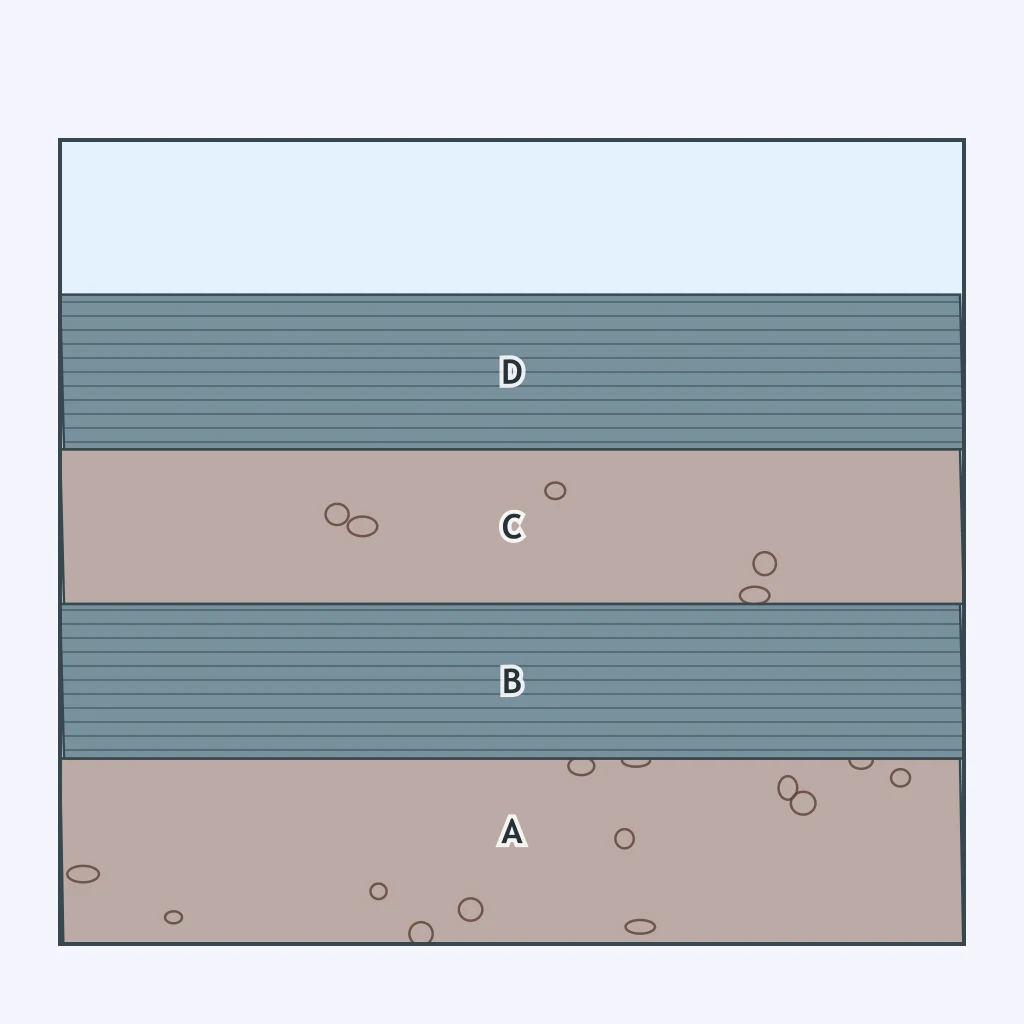
The figure shows two coarsening-upward layers stacked on each other: clay to gravel, then clay to gravel again. What does this pattern most likely record?
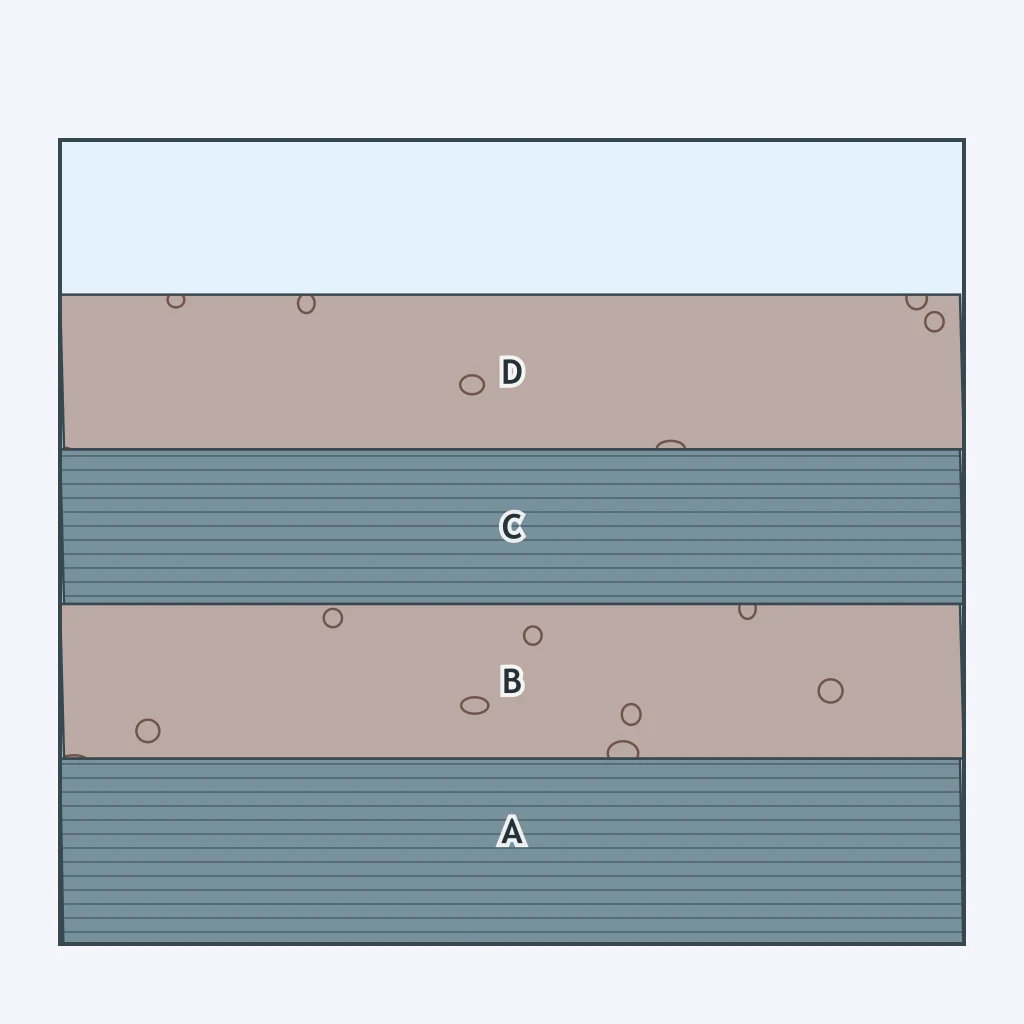
Three particles of the same size and the same shape but different densities are dropped into a tall column of still water. Which settles fastest?
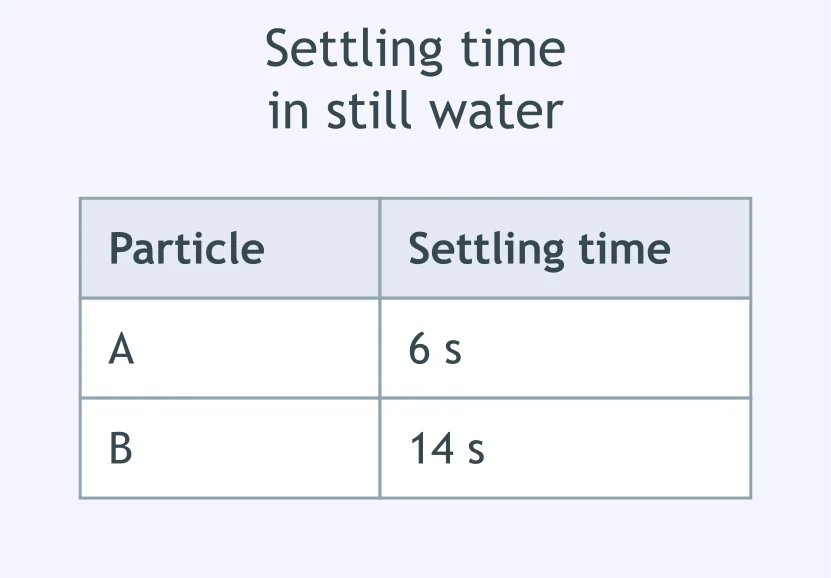
The table gives settling times in still water for Particle A and Particle B, which are the same size and shape but have different densities. Which particle is denser?
Two mineral grains have the same density and the same rounded shape. One is 2 millimeters across and the other is 0.1 millimeters across, dropped into the same still water. Which settles first?
A river drops its sand close to shore but carries fine mud far out into a lake before the mud finally settles. Which settling control explains why the mud travels so much farther?
Two particles have the same size and the same density. One is a rounded sphere and the other is a flat, plate-like flake. Which one sinks faster in still water?
Mica flakes are still found suspended far from shore long after sand grains of the same density have settled out nearby. What best explains this pattern?
Two identical particles, the same size, density and shape, are dropped at the same time: one into a jar of water and one into a jar of much thicker syrup. Which one reaches the bottom first?
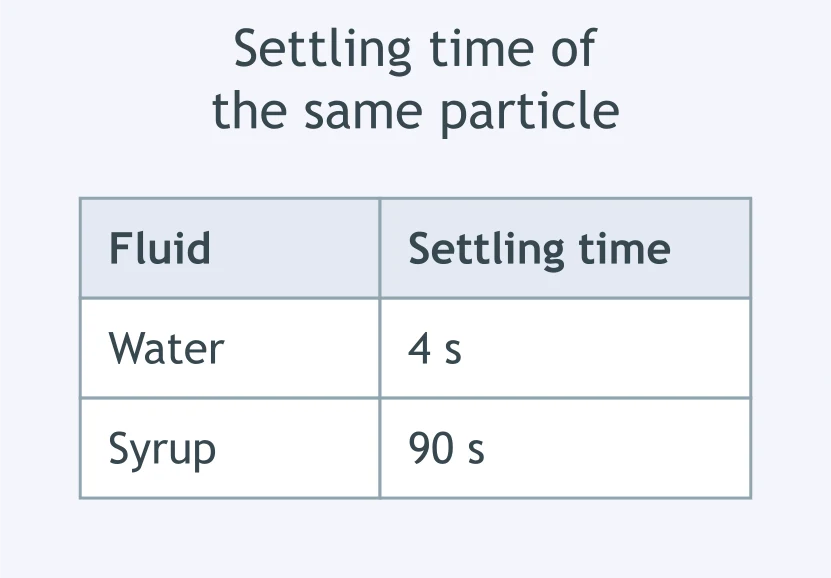
The table gives the settling time of the same particle dropped into two different fluids. According to the table, which fluid slowed the particle's settling the most?
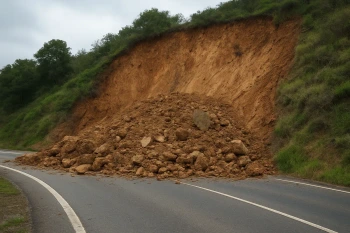
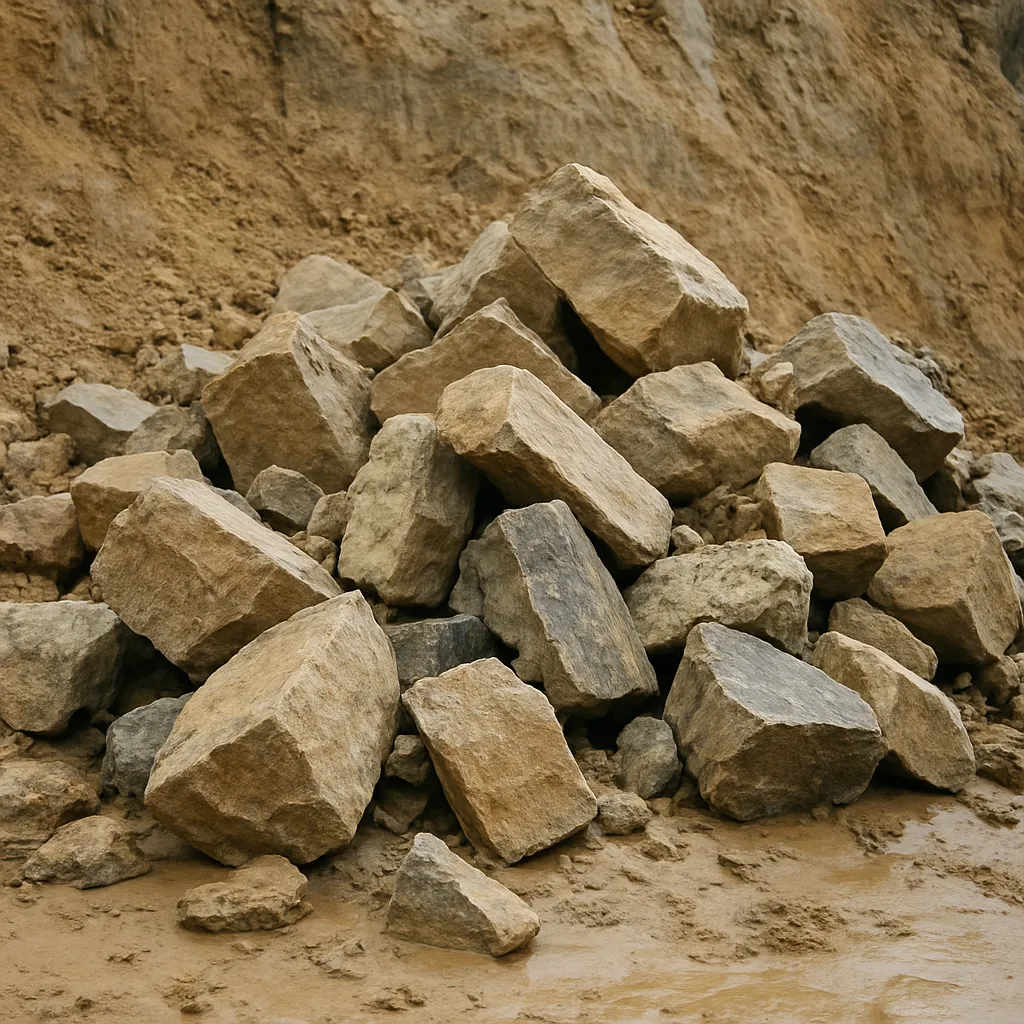
A deposit at the foot of a steep hillside holds angular blocks, sand and clay jumbled together with no layering of any kind. What does this indicate?
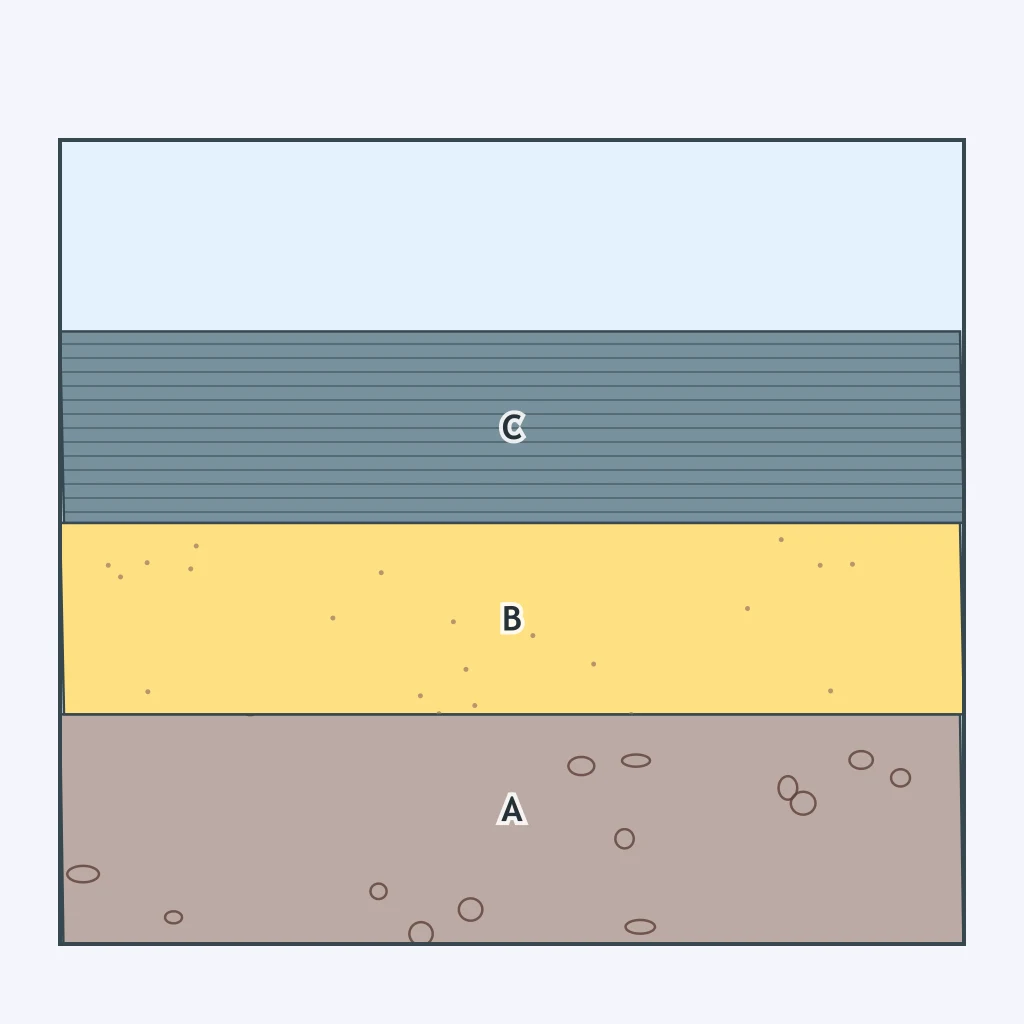
The cross section shows a bed with distinct layers: coarse pebbles at the bottom, sand in the middle, and fine mud at the top, each layer sorted by size. What does this layering suggest about how the bed formed?
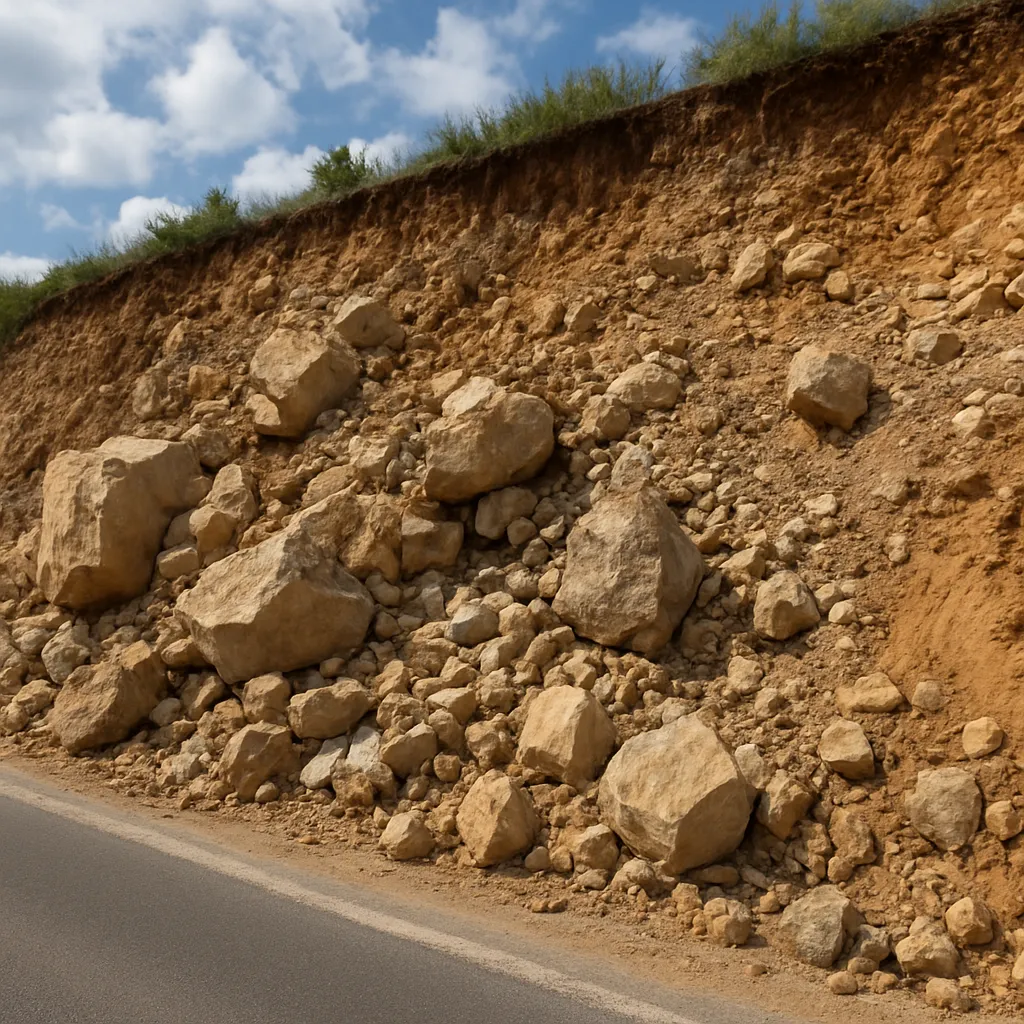
A roadcut through a glacial moraine exposes a mix of clay, sand, gravel and large boulders packed together with no sorting by size. What does this lack of sorting indicate about how the material was deposited?
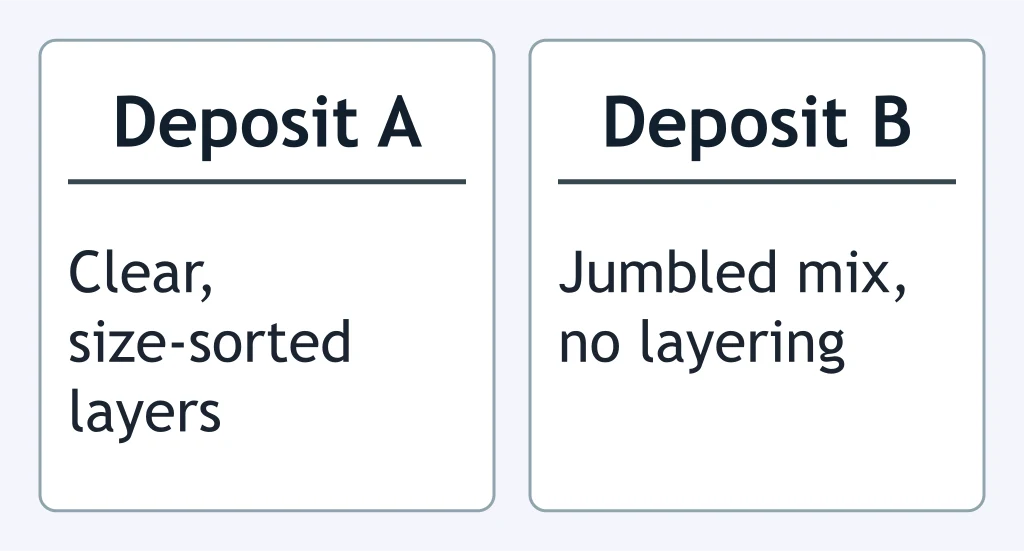
Deposit A is made of clear, size-sorted layers. Deposit B is a jumbled mix of every particle size with no layering. Which deposit most likely formed from a fast-moving debris flow?
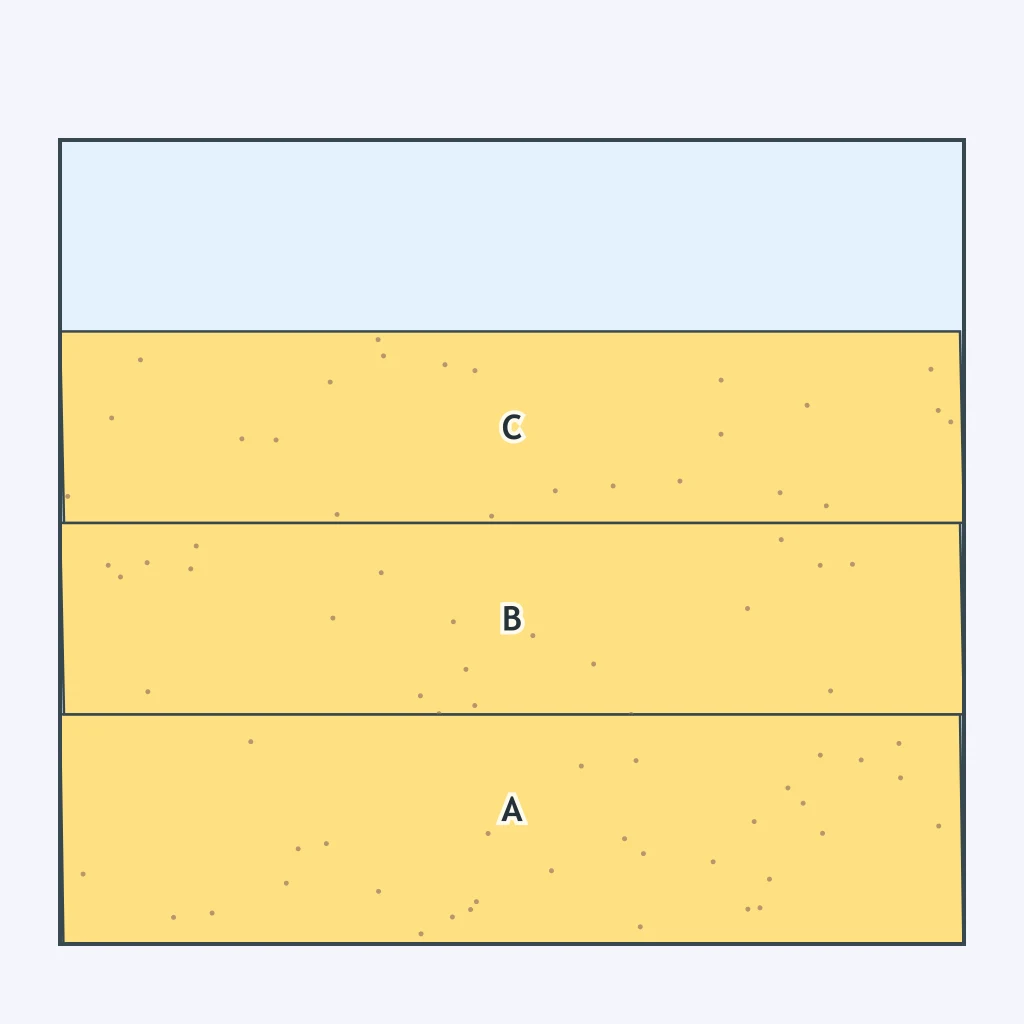
The cross section shows a beach deposit with well-sorted, evenly layered sand grains that are all similar in size. What does this strong sorting suggest about the water that deposited it?
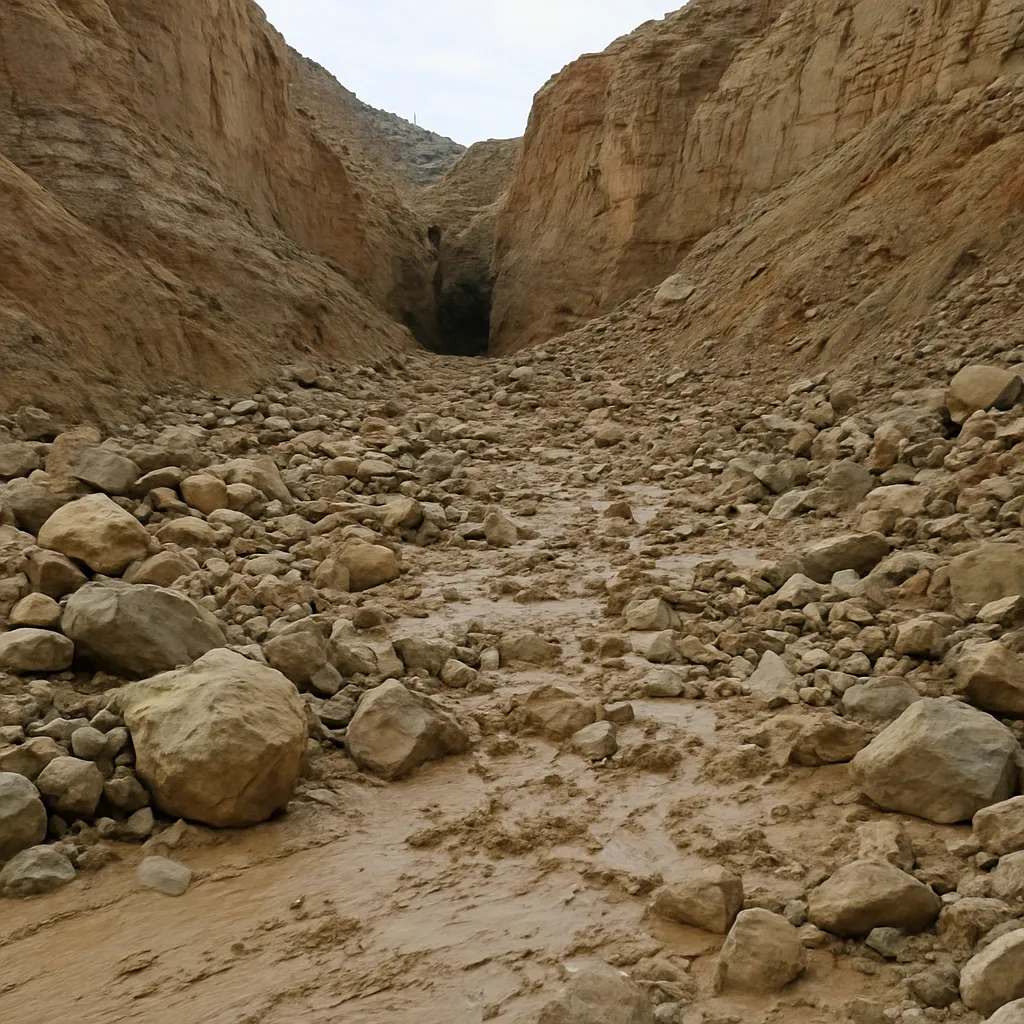
A debris-flow deposit at the mouth of a canyon contains boulders, sand and mud all mixed together with no layering, dropped in minutes during a flash flood. What does the lack of sorting show about how it moved?
Which feature marks a deposit as sorted rather than unsorted?
The table gives settling times in still water for four particles of equal density and shape. Which reaches the bottom first?
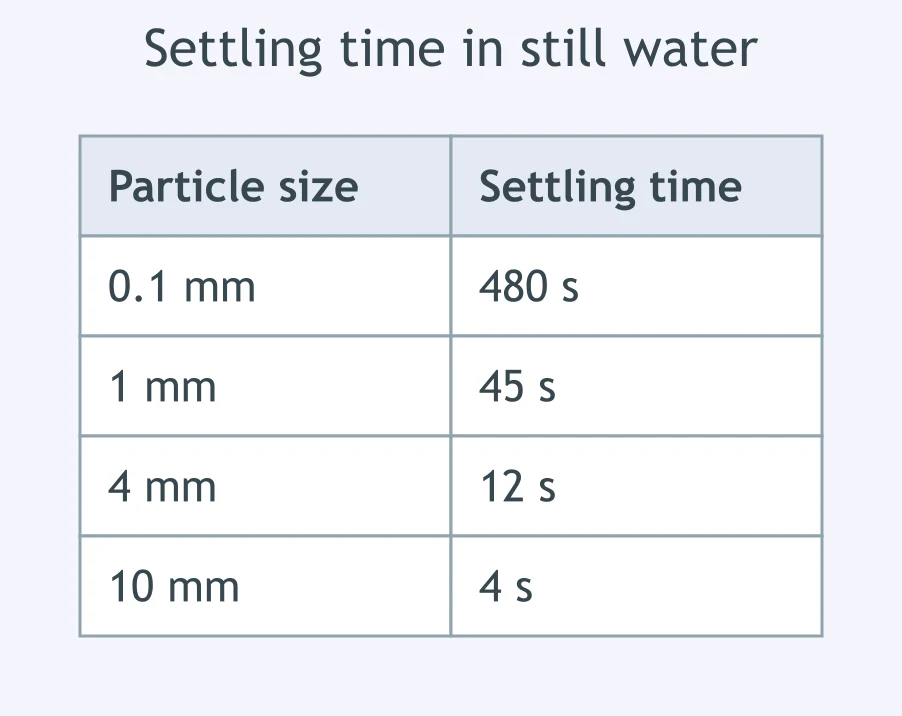
The table gives settling times in still water for four particles of equal density and shape. Which particle takes the longest to reach the bottom?
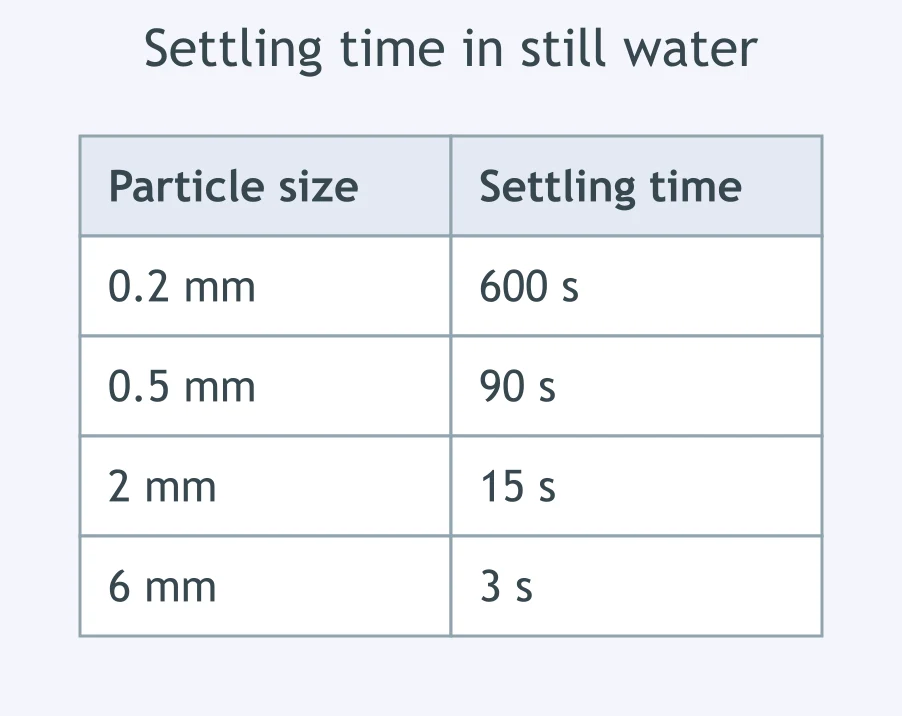
The table gives settling times in still water for three particles of the same size and shape but different densities. Which particle is the least dense?
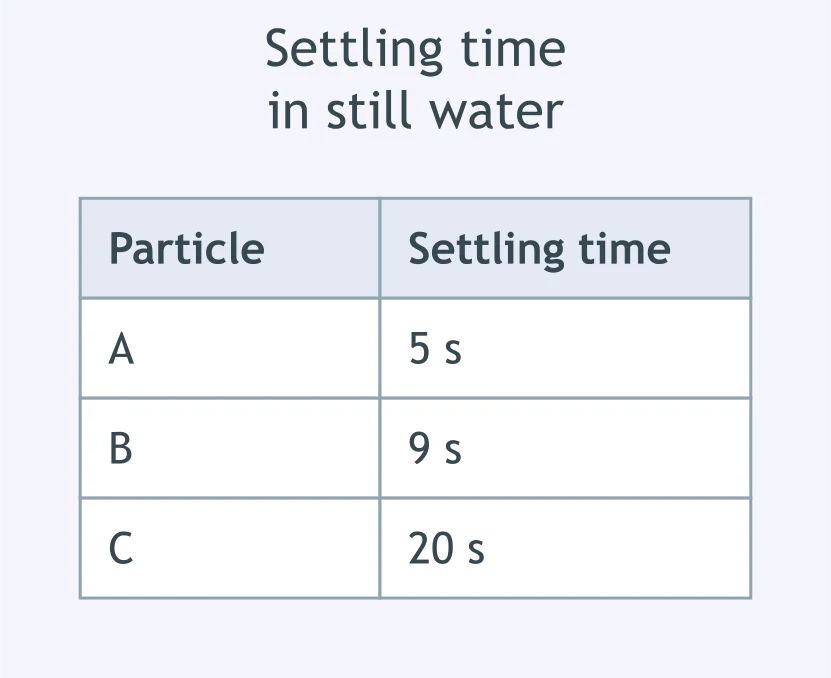
The table gives settling times in still water for four particles of the same shape and density. According to the table, which two particles settle in about the same amount of time?
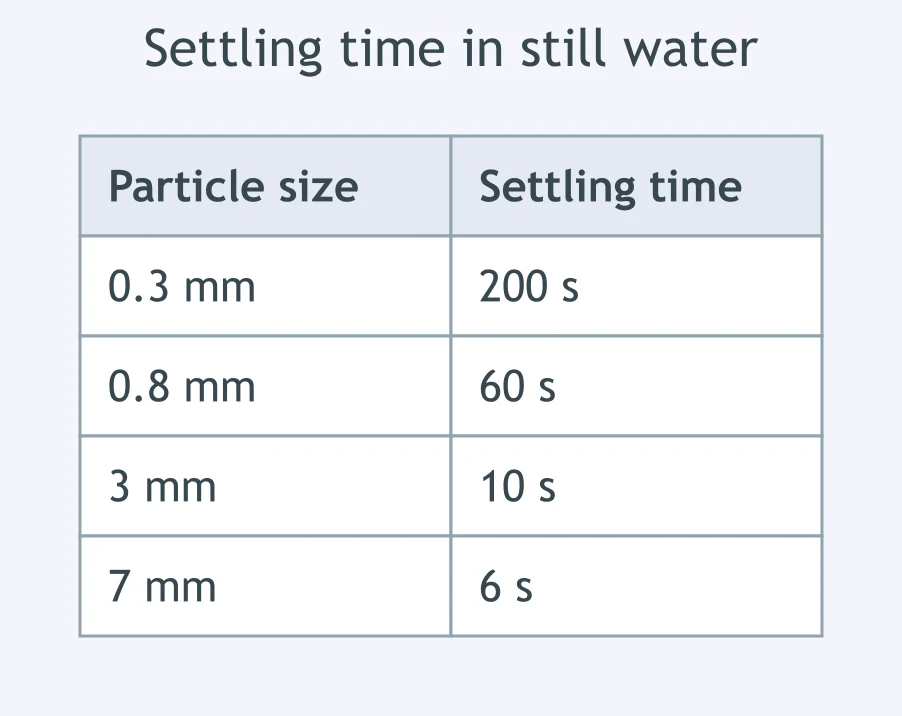
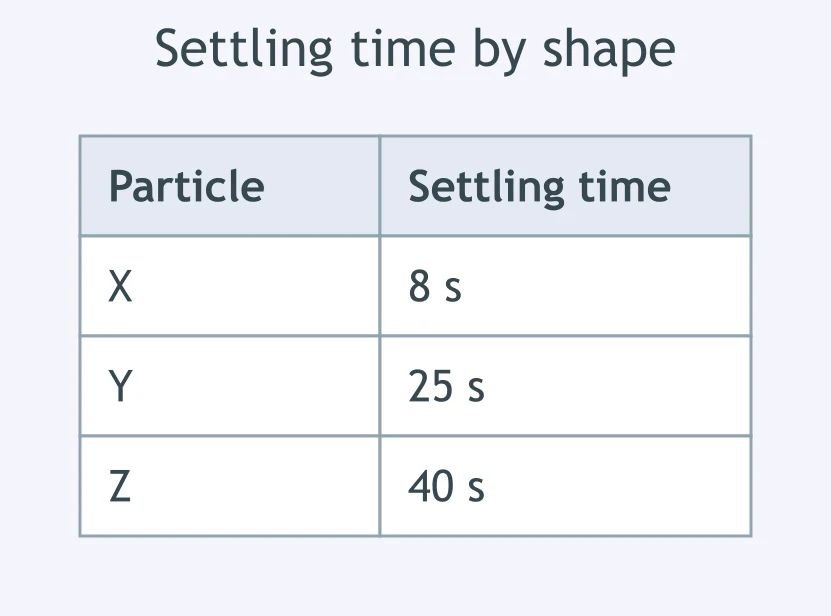
The table gives settling times in still water for three particles of the same size and density but different shapes. Which particle is the most rounded?
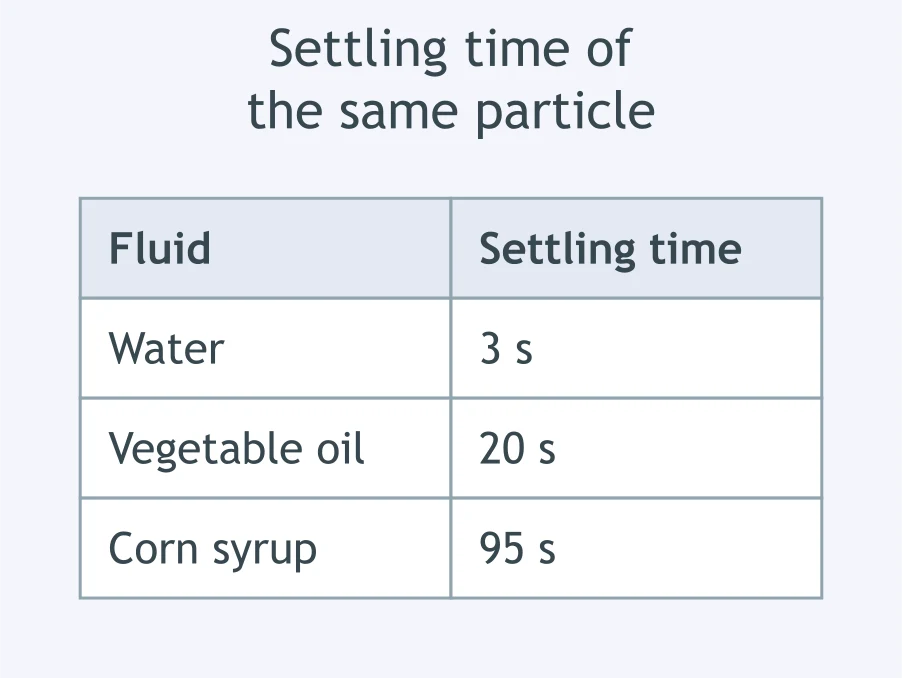
The table gives the settling time of the same particle in three different fluids. In which fluid is the resistance to the particle's motion the greatest?
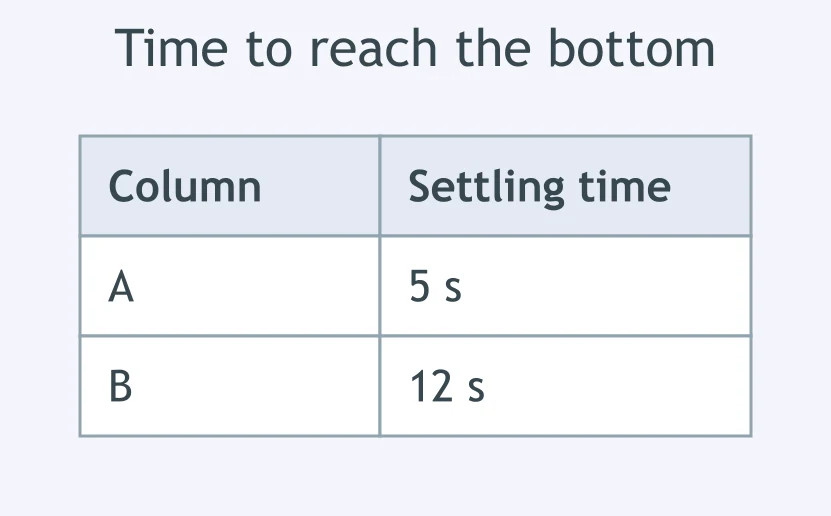
The table gives the time for the same particle to reach the bottom of two water columns of different depth, falling at the same steady settling speed in both. Which column is deeper?
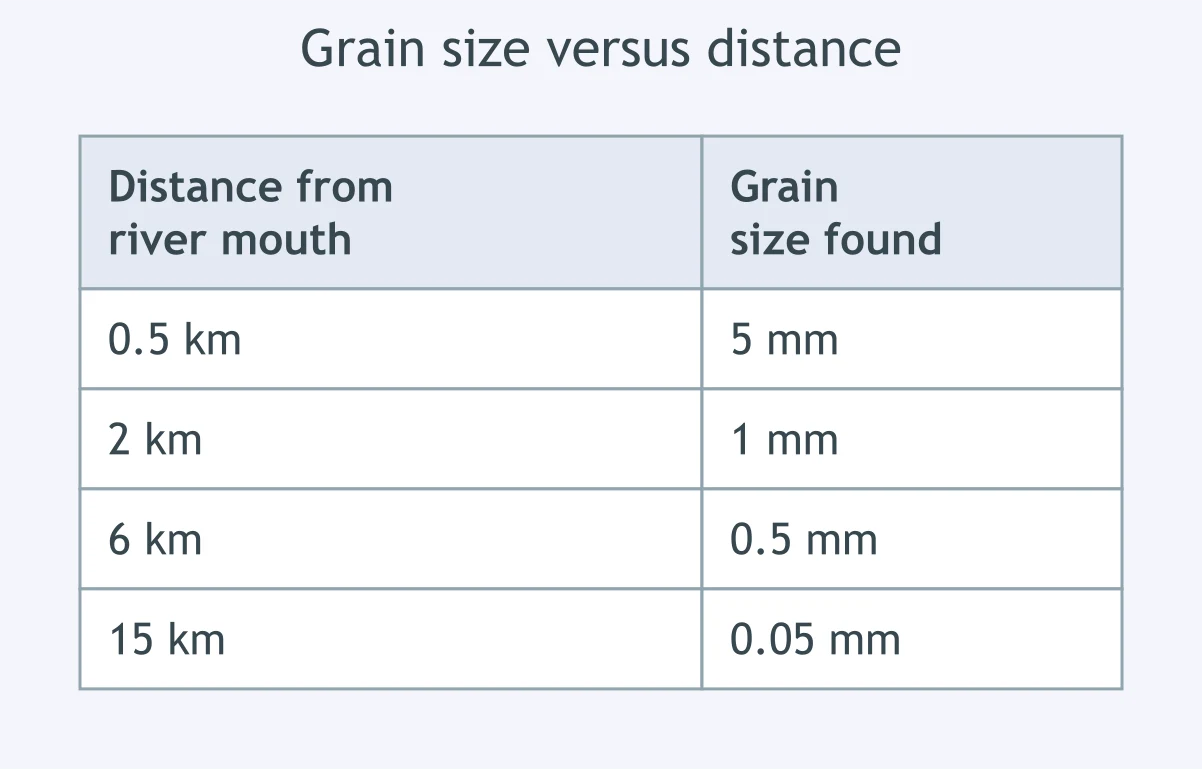
As a river enters a lake, particles slow and settle out at different distances from the river mouth. The table gives the grain size found at each distance. Which grain size traveled farthest into the lake?
Crack the passcode before the zombies get in.
Answer, then swat bugs for bonus points.
Race through questions at your own speed.
Same question on every screen. Fastest wins.

Pick a tile, answer, hit bonuses and steals.
Landforms and Landscapes
30 questions