Loading
by BlastRoom
Explore what makes rock weather faster or slower: climate, surface area, mineral makeup, and time.
#earth_space_science
25 questions
One question set, multiple game modes. Tap any game to see it in action. Not sure which to pick?
Answer to place stones and capture territory.
Outrun the snow together.
Earn blasts, then hunt the other team.
Answer to earn energy, then climb.

The class blasts through walls together.
Bid on mystery lots. Most money wins.
Sell tours. Nice, standard, or a total scam.

Answer, restock, and serve the rush.
More correct answers pulls the rope your way.
Answer, then shoot down the alien wave.
Answer, then tap to leap the frozen ridge.
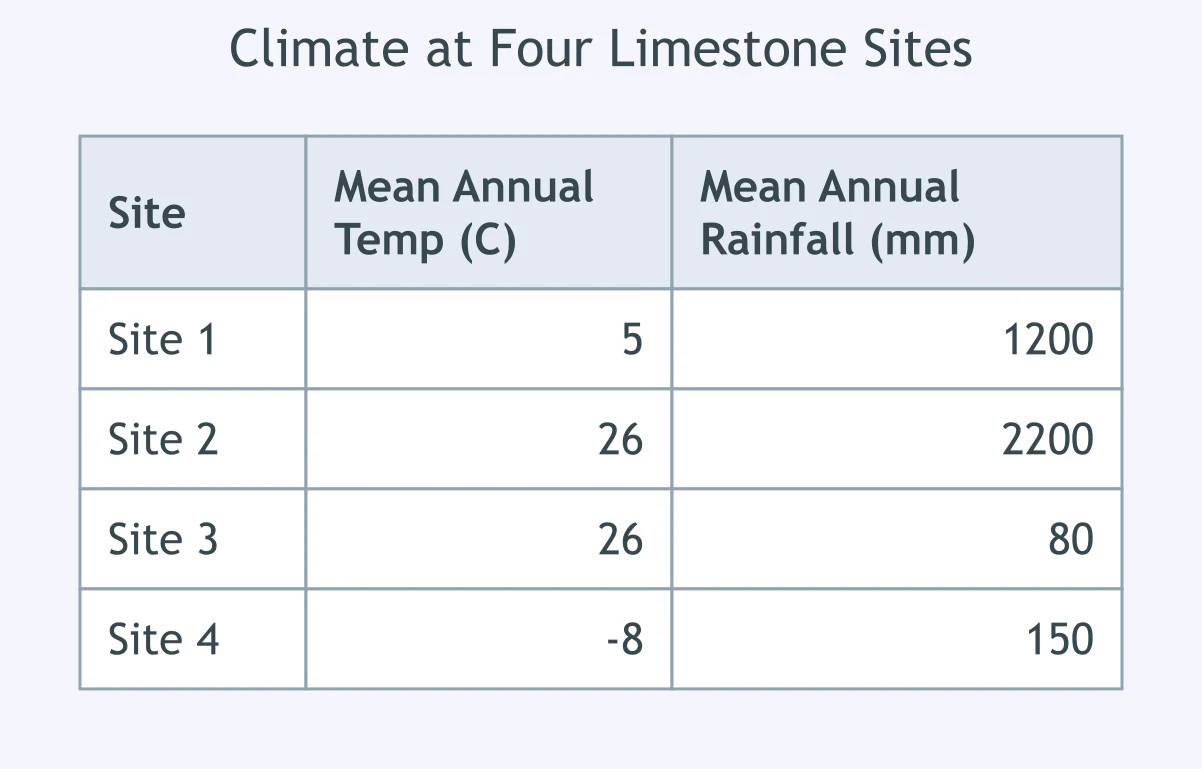
The table gives mean annual temperature and rainfall for four sites, all developed on limestone bedrock. At which site should chemical weathering be fastest?
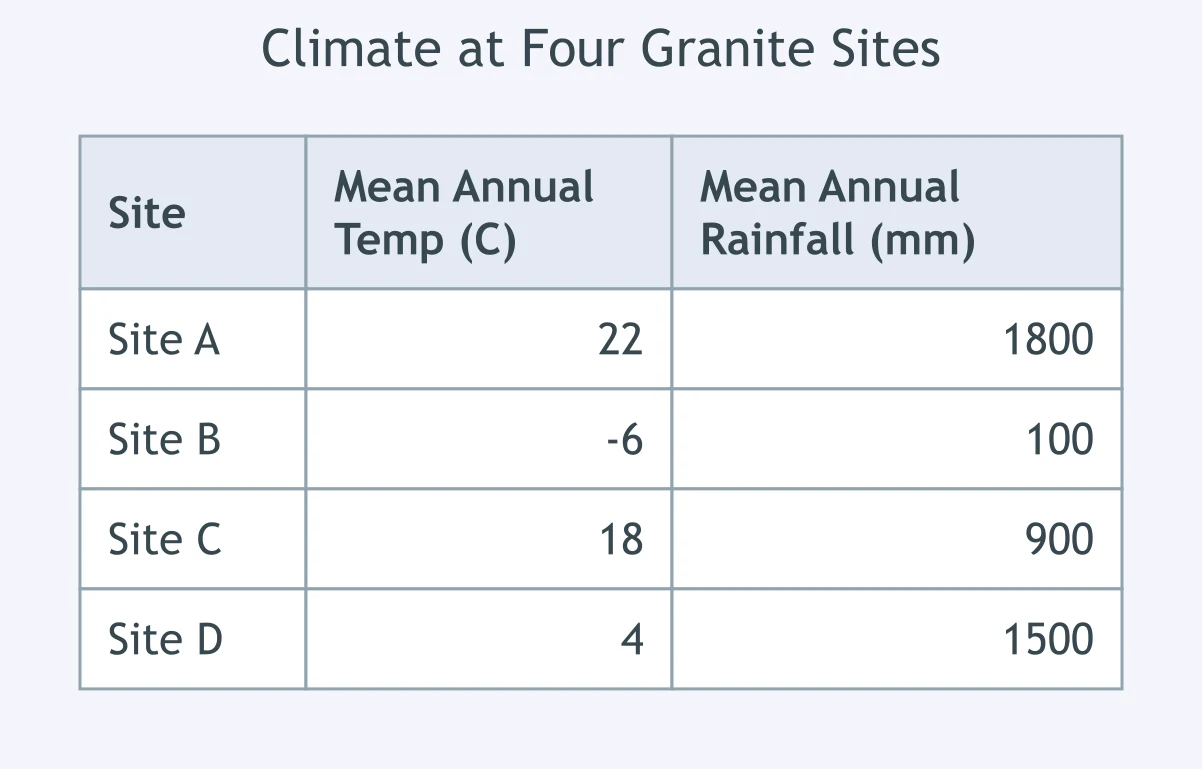
The table lists mean annual temperature and rainfall for four sites, all underlain by granite. At which site should chemical weathering be slowest?
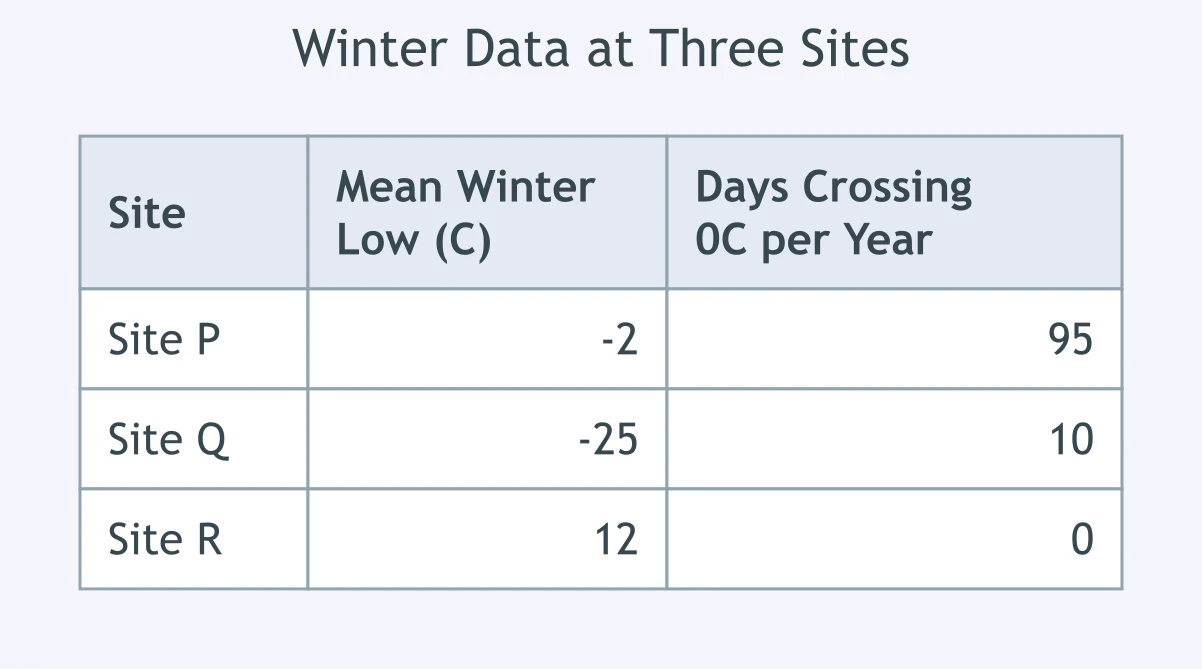
The table gives winter temperature data for three sites. Frost wedging needs water that repeatedly freezes and thaws. At which site should frost wedging be most active?
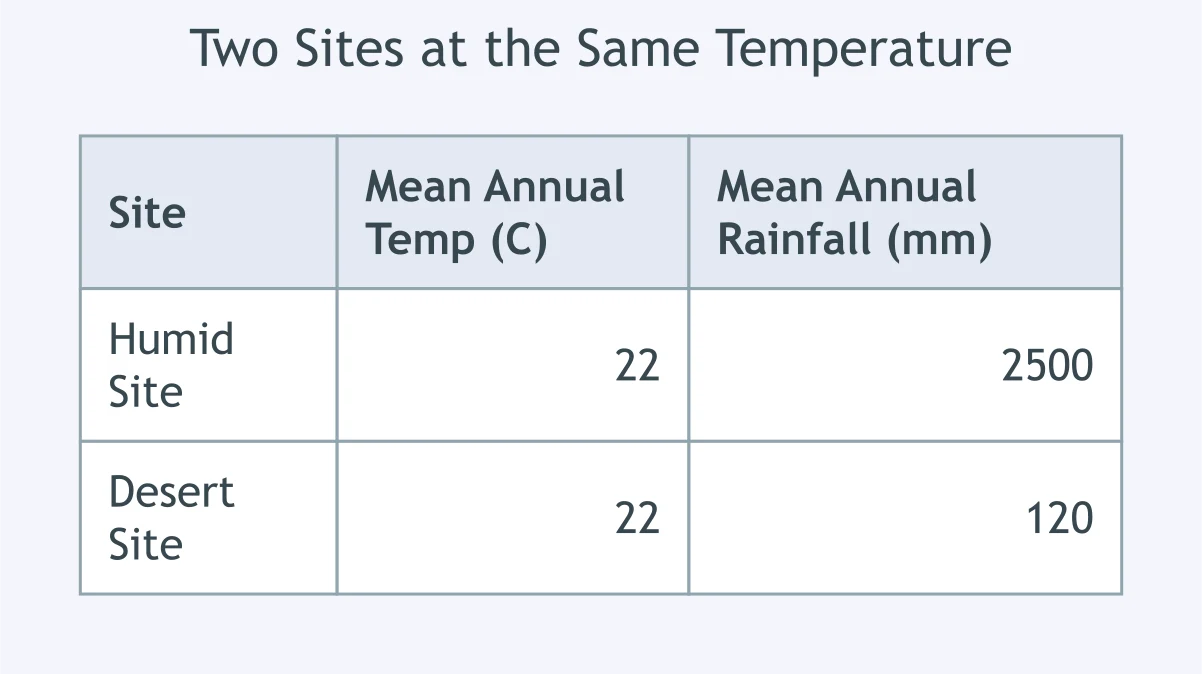
The table shows two sites with the same mean annual temperature but very different rainfall, both on granite bedrock rich in feldspar. Where should hydrolysis of the feldspar proceed faster?
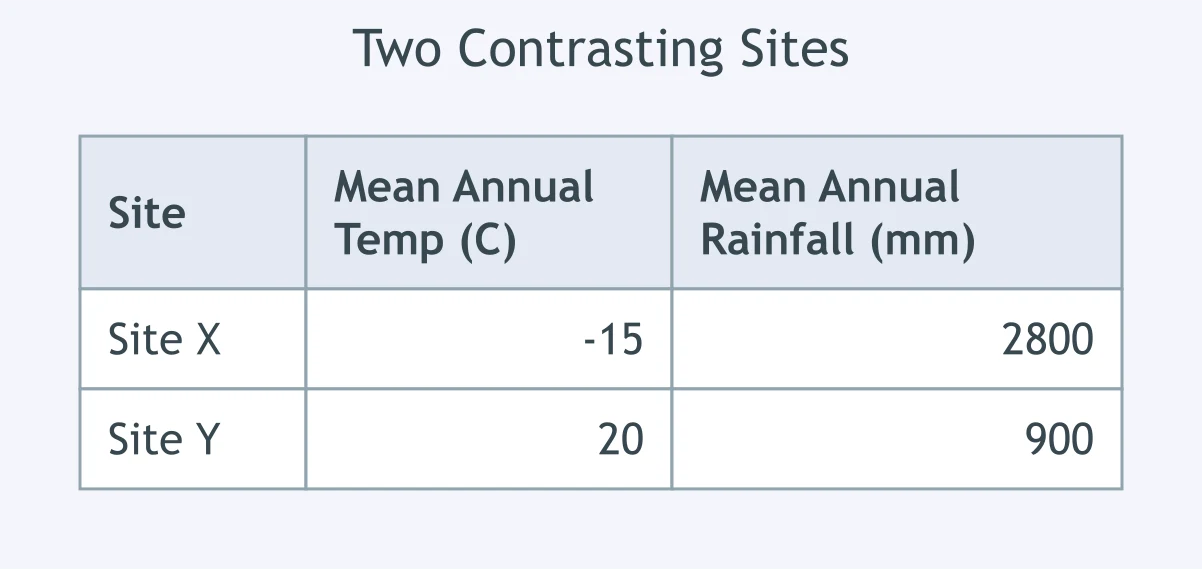
Site X is very cold but receives heavy rainfall, while Site Y is warm but receives less rain. Both sites share the same limestone bedrock. Where is chemical weathering faster overall?
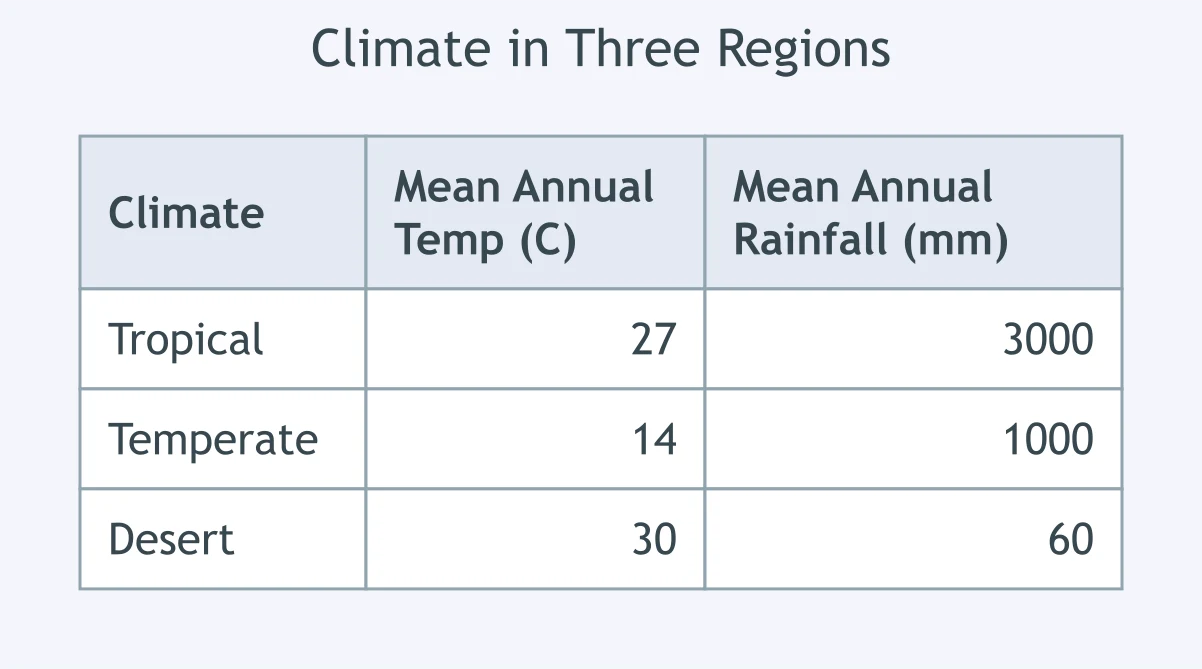
The table gives climate data for three regions, all developed on the same bedrock. Ranked from fastest to slowest, which order for chemical weathering rate is correct?
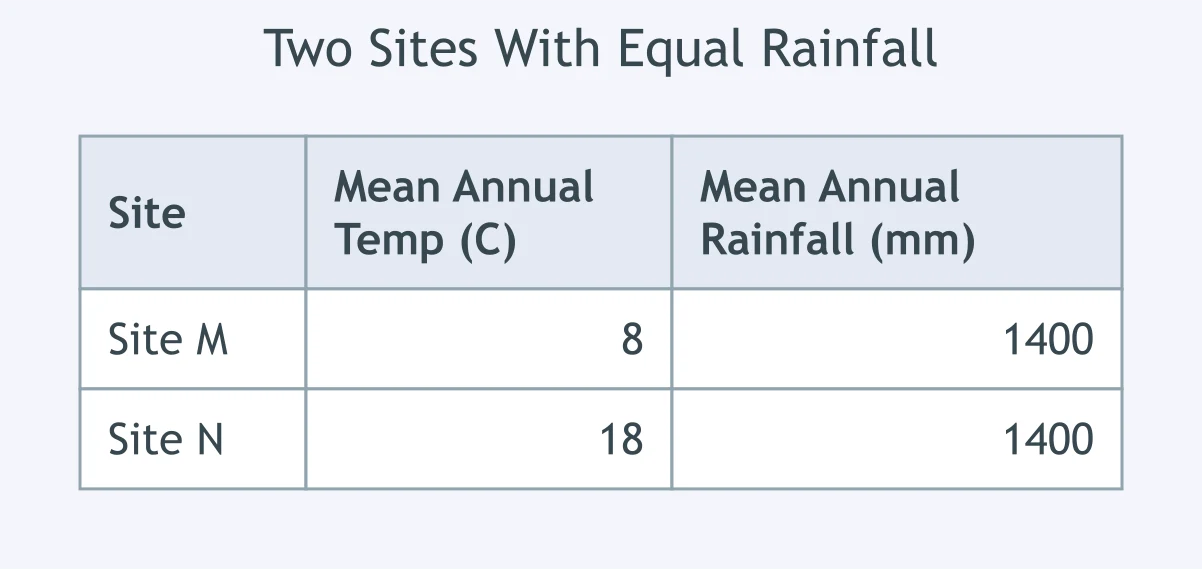
Site M and Site N receive the same annual rainfall on the same rock type, but Site N's mean annual temperature is 10 degrees Celsius higher than Site M's. Which site weathers chemically faster, and why?
A cube of granite 4 cm on each side is cut into cubes 2 cm on a side. How does the total surface area exposed to weathering change?

A cube of shale 9 cm on each side is cut into cubes 3 cm on a side. By what factor does the total surface area exposed to weathering increase?

A cube of sandstone 8 cm on each side is cut into cubes 2 cm on a side. What is the new total surface area exposed to weathering?

A cube of limestone 6 cm on each side is cut into cubes 1 cm on a side. How does the total surface area exposed to weathering change?

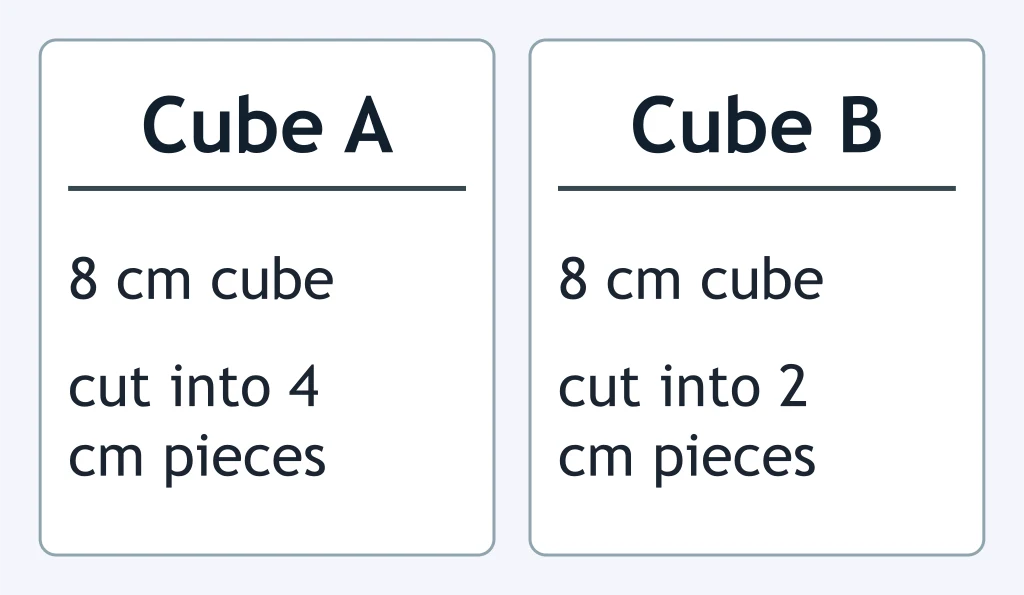
The figure compares two identical basalt cubes after they are broken up as labeled. Which one exposes more total surface area to weathering?
A geologist crushes a rock sample into much smaller fragments before adding acid to test how fast it reacts. Why does crushing the rock speed up the reaction?
A cemetery has marble and granite headstones placed in the same year, standing side by side in the same climate. The marble inscriptions are now far harder to read than the granite ones. What explains this?
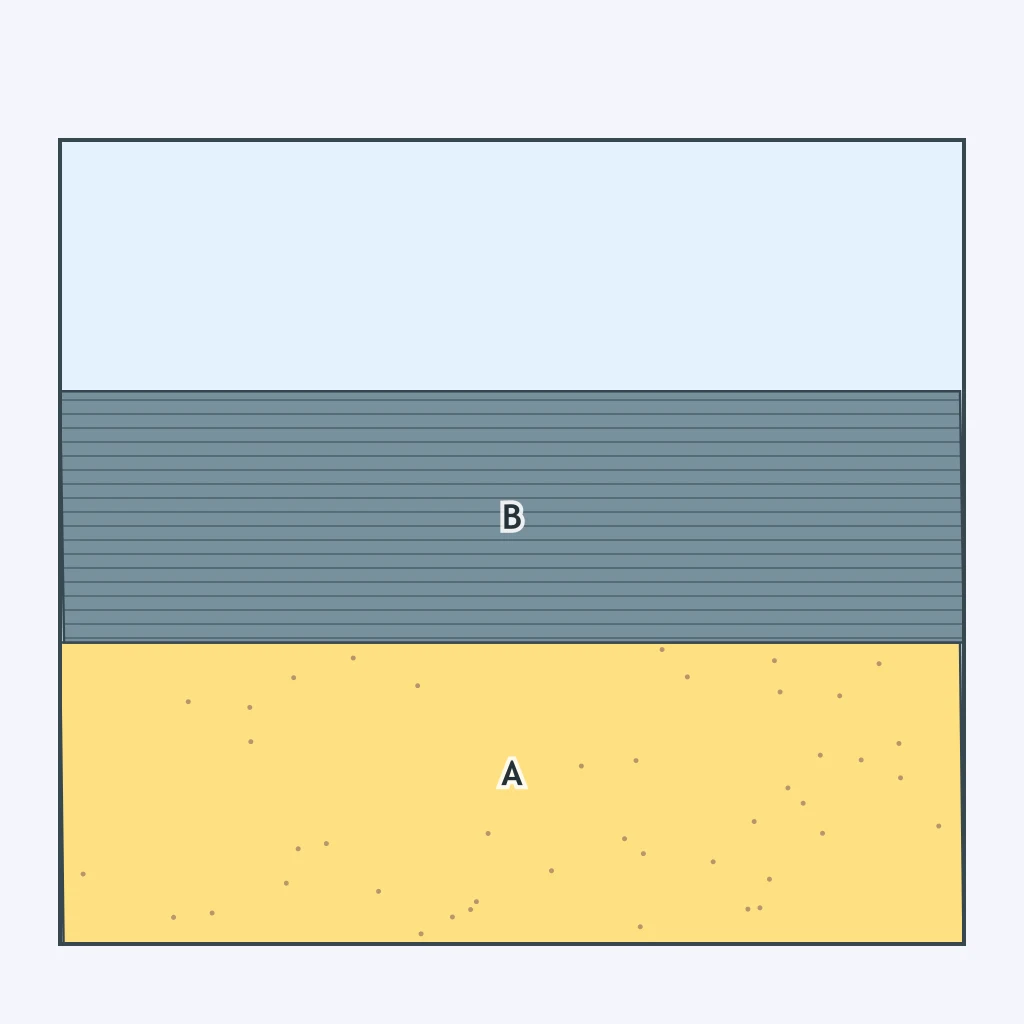
The cross section shows two rock layers, letter A is sandstone made mostly of quartz grains, and letter B is shale made mostly of clay minerals. Which layer should resist chemical weathering better?
Olivine crystallizes from magma at a much higher temperature than quartz does. In a humid climate, which of these two minerals weathers faster, and why?
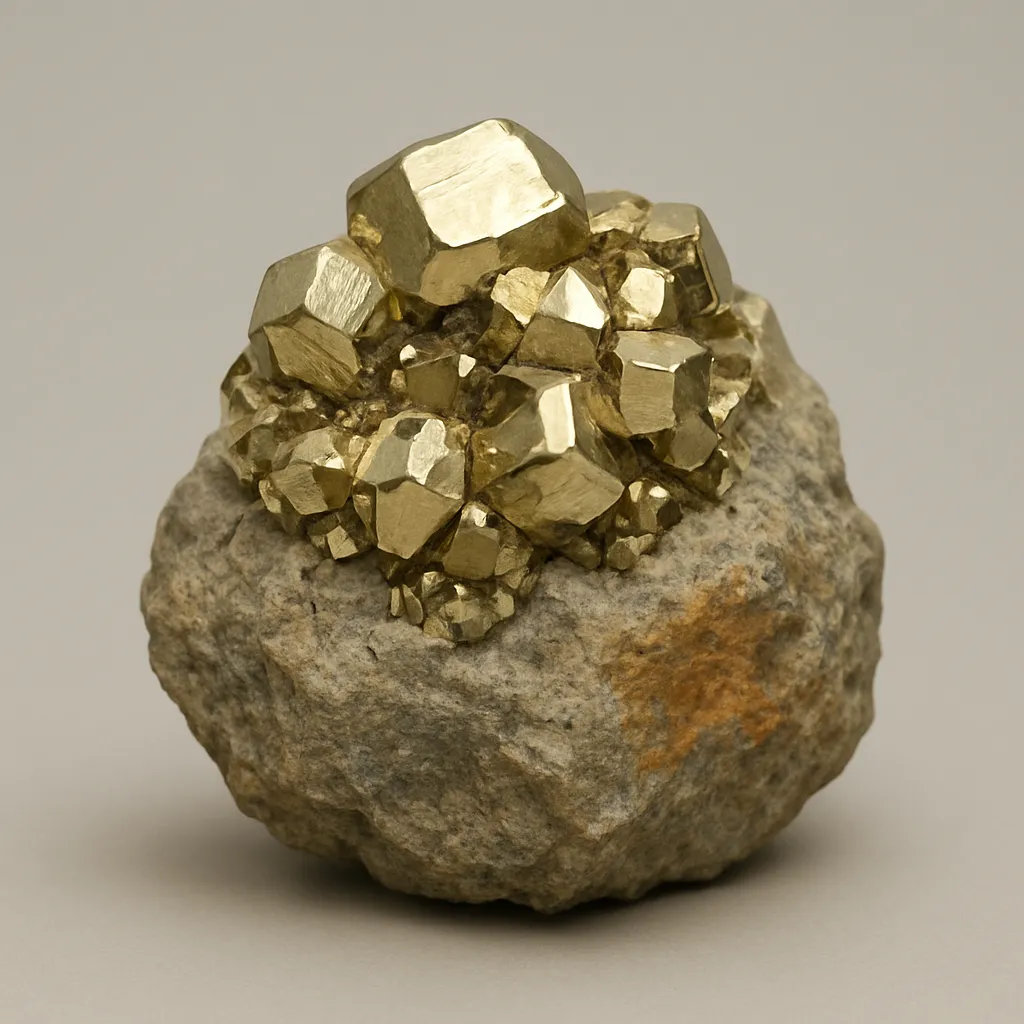
A rock specimen contains a metallic gold-colored mineral. After sitting outdoors for a few years, a rusty orange-brown stain spreads across the rock around it. What process produced the stain?
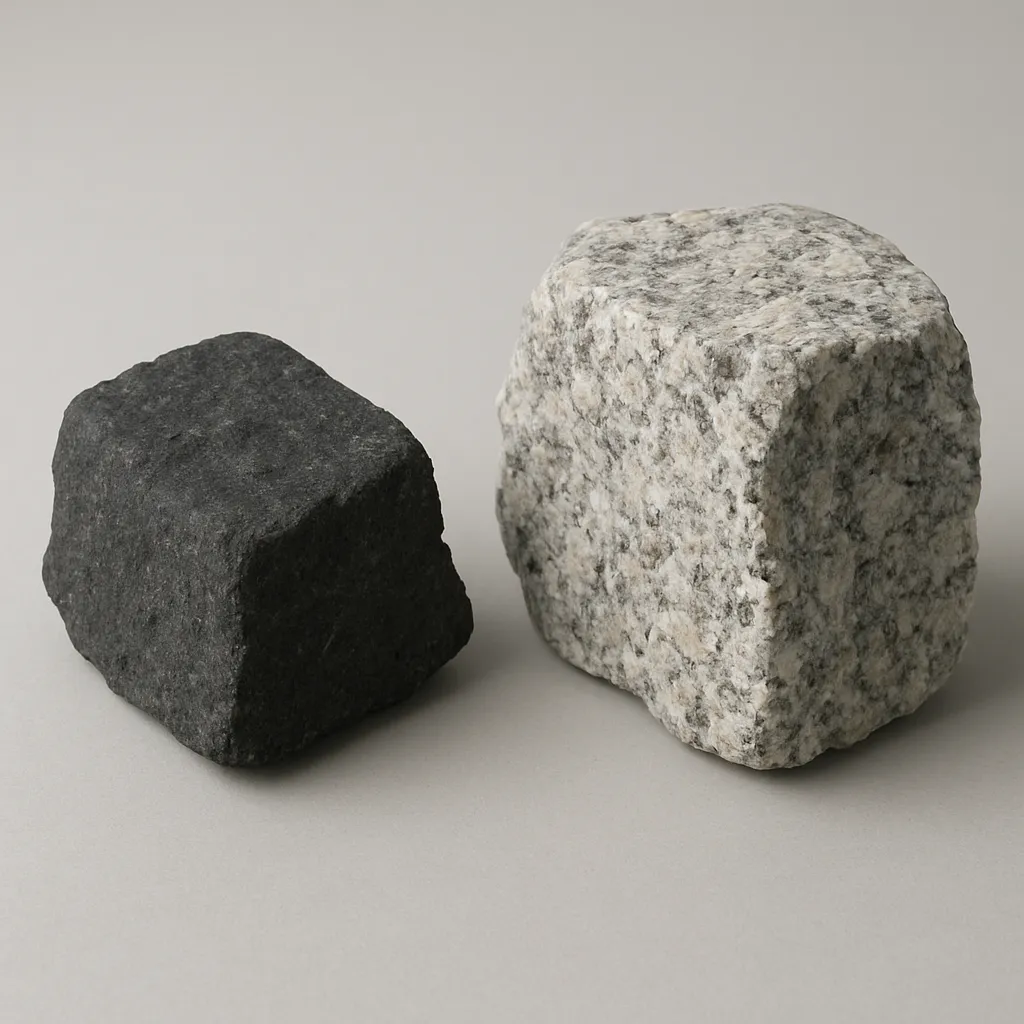
The image shows two rock specimens: a dark, fine-grained sample and a light-colored, coarse-grained sample, both exposed to the same rainfall. Which one should weather chemically faster, and why?
A hiking trail passes limestone outcrops in one stretch and quartzite outcrops in another, both exposed to the same rainfall for thousands of years. Which outcrop should show more pitting and dissolution grooves?
Two identical basalt boulders sit on the same warm, rainy hillside. One is bare rock, and the other is covered with lichens and moss. Which weathers chemically faster, and why?
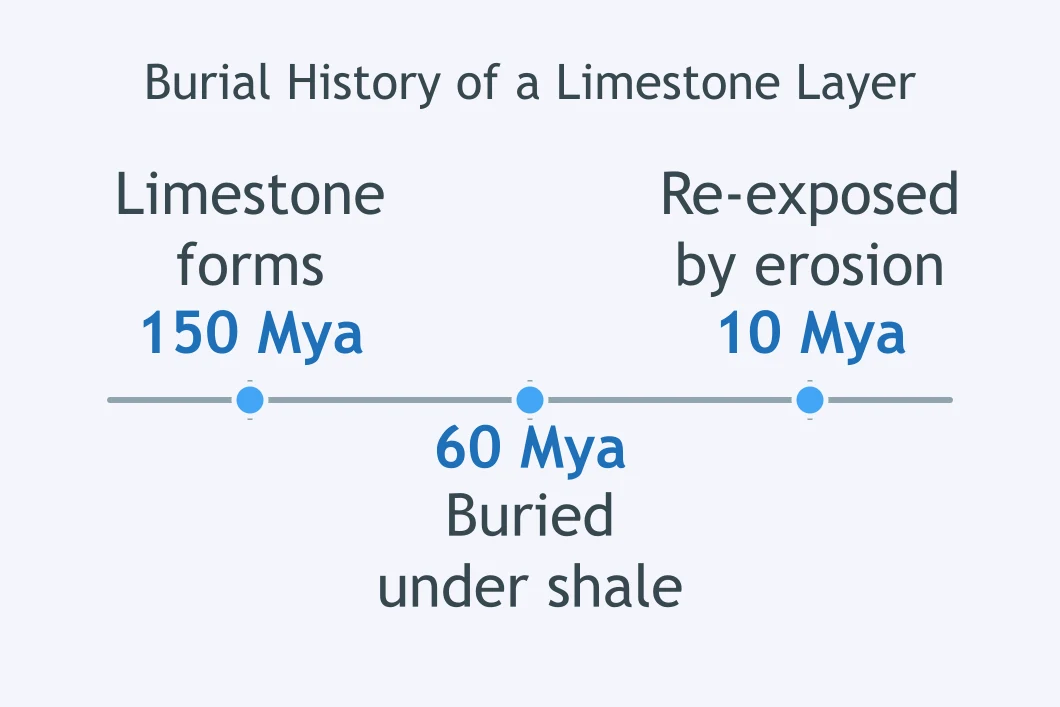
The timeline shows a limestone layer's burial history. For about how many million years was it protected from weathering by burial?
A rockslide in a mountain valley exposed fresh granite bedrock 5 years ago. A nearby cliff face of the same granite has been exposed to the same climate for 10,000 years. Which face should show more weathering, and why?
An ancient stone monument was buried under windblown sand for 2,000 years and has just been excavated. A twin monument of the same stone, in the same climate, stood exposed the entire time. Which one should be less weathered?
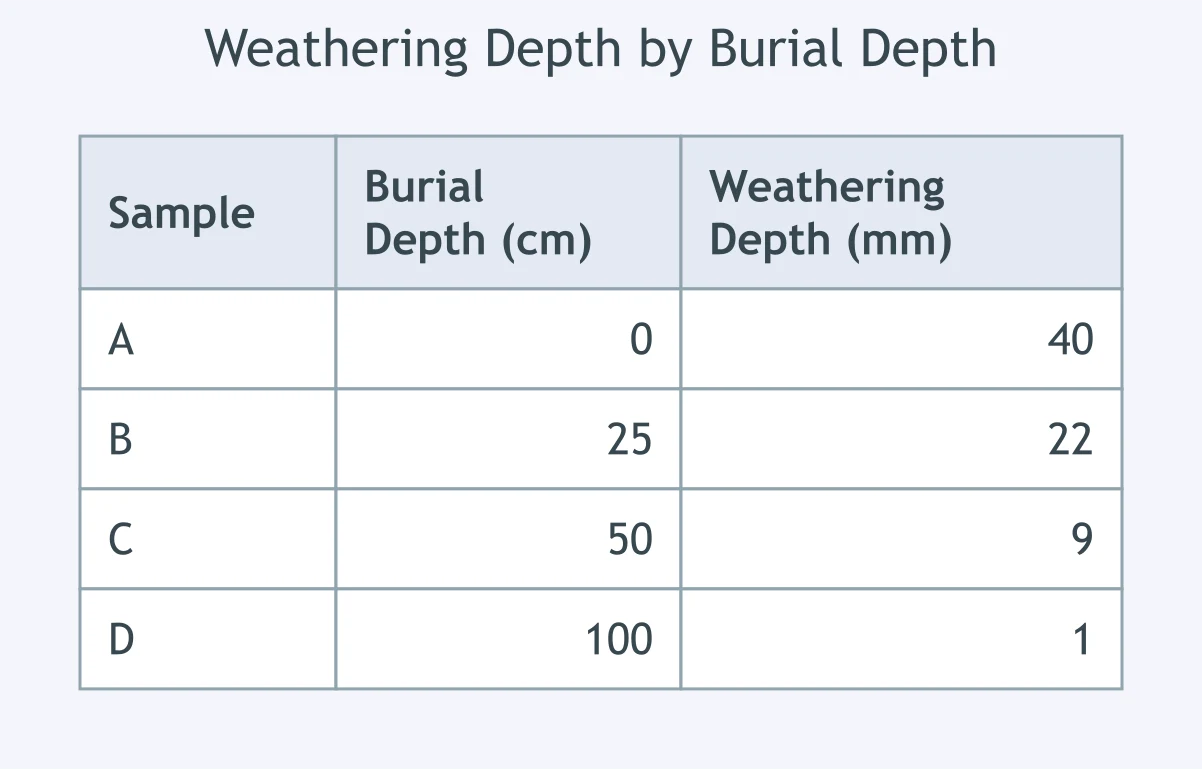
The table shows weathering depth measured in identical rock samples buried at different depths, for the same length of time in the same climate. Which pattern does the data support?
Rank these from fastest to slowest: a boulder cracking apart in a wildfire's heat, a headstone's inscription fading over 150 years, and a mountain range weathering to a lowland over 200 million years.
Crack the passcode before the zombies get in.
Answer, then swat bugs for bonus points.
Race through questions at your own speed.
Same question on every screen. Fastest wins.

Pick a tile, answer, hit bonuses and steals.
Weathering and Soil Review
40 questions