Loading
by BlastRoom
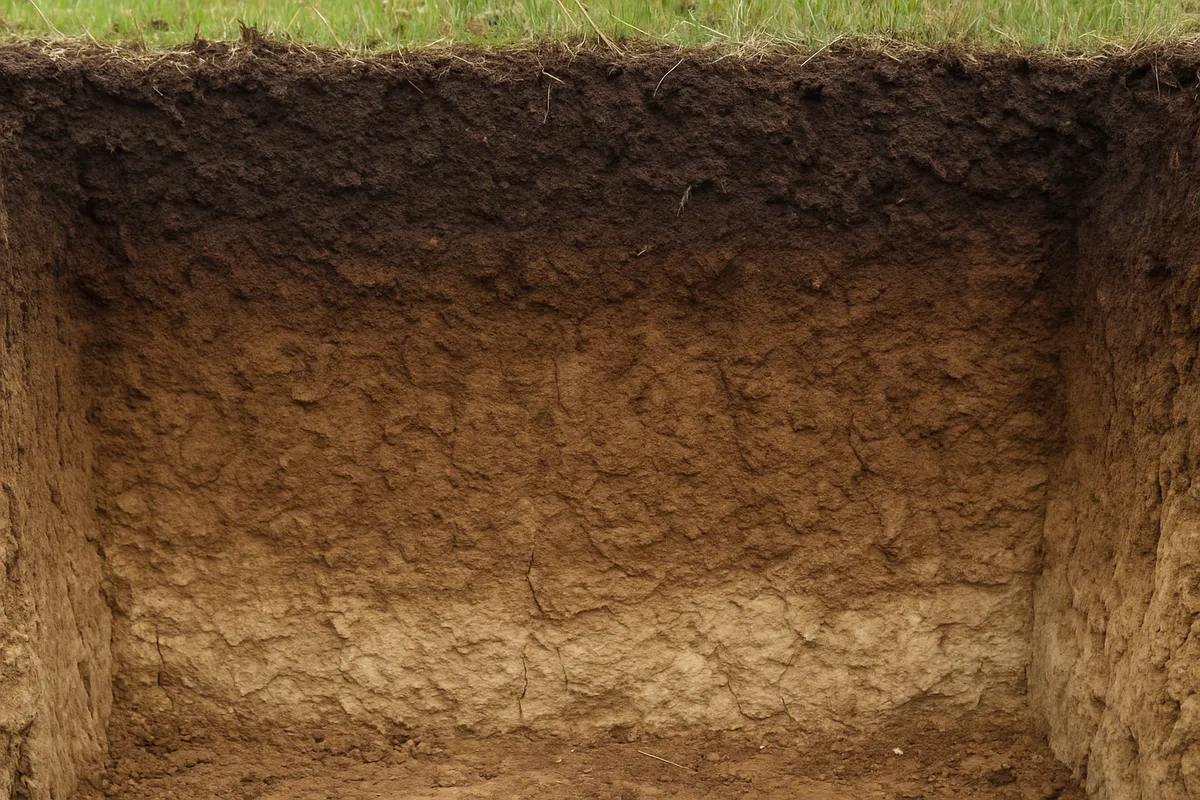
Read soil profiles and texture data to identify horizons, soil origin, and soil properties.
#earth_space_science
40 questions
One question set, multiple game modes. Tap any game to see it in action. Not sure which to pick?
Answer to place stones and capture territory.
Outrun the snow together.
Earn blasts, then hunt the other team.
Answer to earn energy, then climb.

The class blasts through walls together.
Bid on mystery lots. Most money wins.
Sell tours. Nice, standard, or a total scam.

Answer, restock, and serve the rush.
More correct answers pulls the rope your way.
Answer, then shoot down the alien wave.
Answer, then tap to leap the frozen ridge.
At the very surface of the soil profile, a loose layer of freshly fallen leaves and twigs has not yet broken down into mineral soil. Which horizon is this?
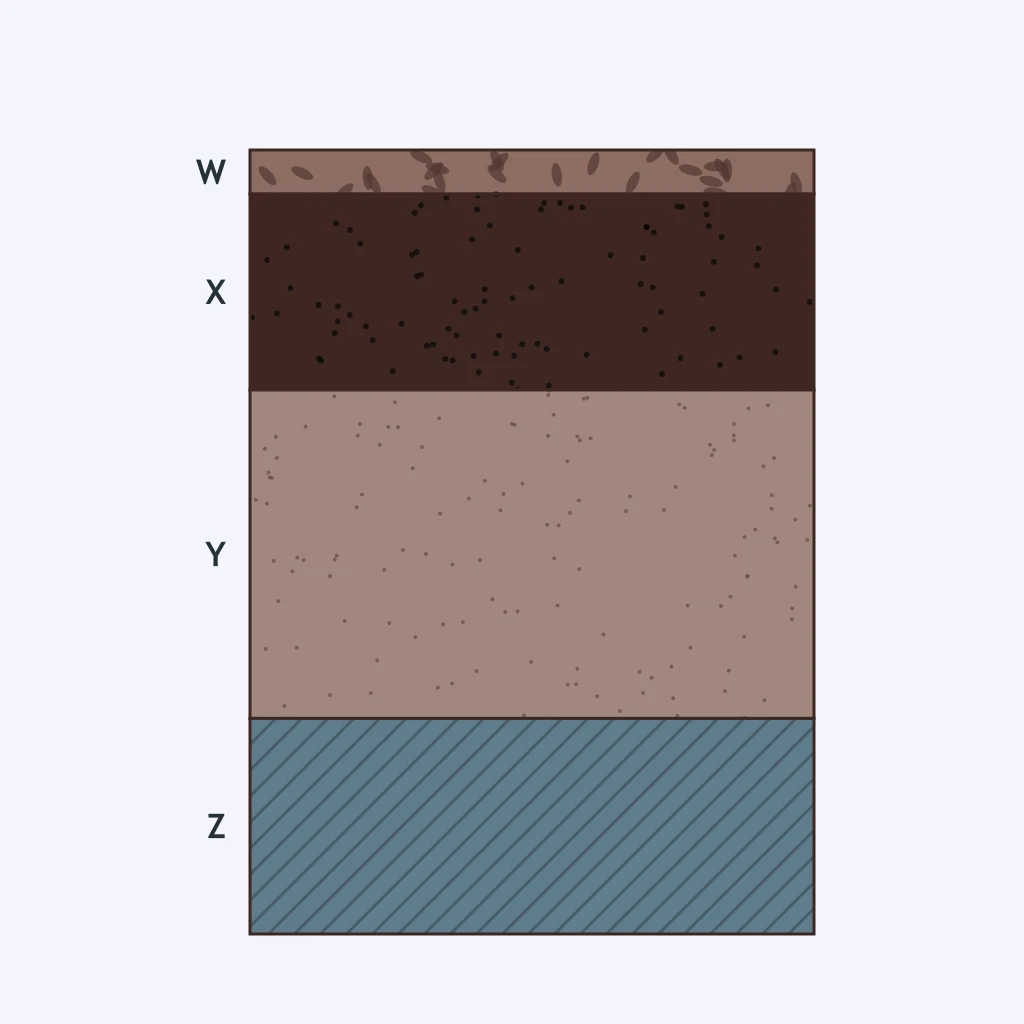
In the soil profile the uppermost mineral layer is dark and crumbly with abundant humus mixed through it, lying directly beneath the surface litter. Which horizon is this?
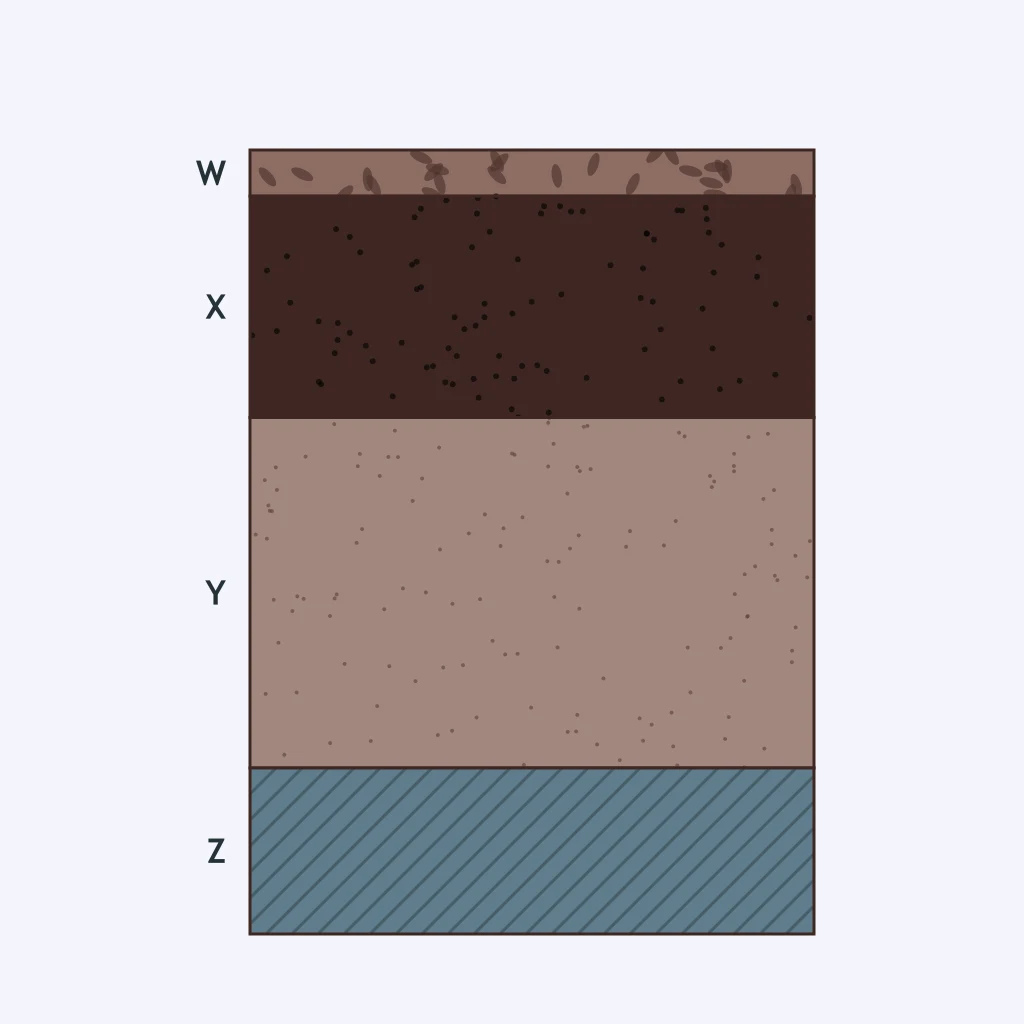
Near the bottom of the profile, a layer is solid, unweathered rock that has not been broken down into soil particles at all. Which horizon is this?
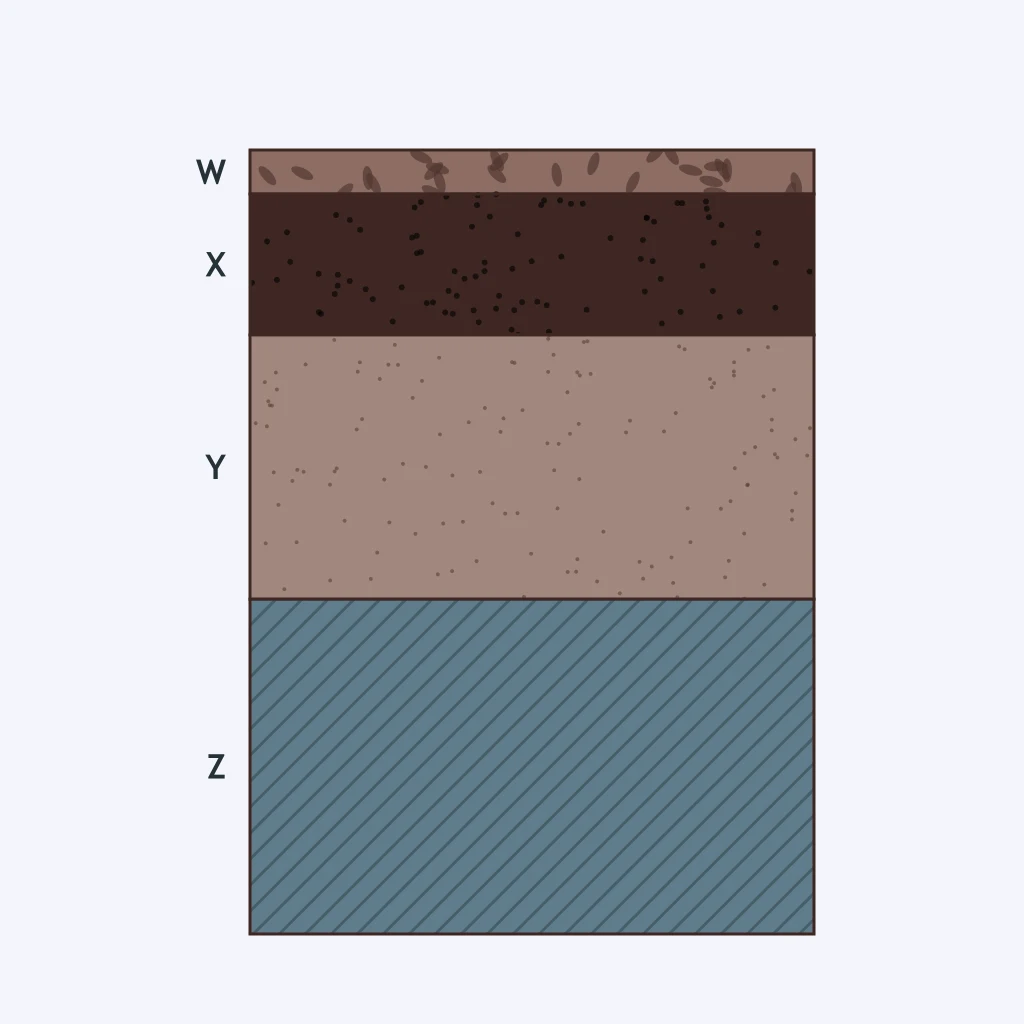
The layer directly above solid bedrock consists of broken, partly weathered rock fragments that have not yet mixed with any organic matter. Which horizon is this?
A dense, reddish-brown layer lies below the topsoil, where clay and iron oxides washed down from above have settled and packed together. Which horizon is this?
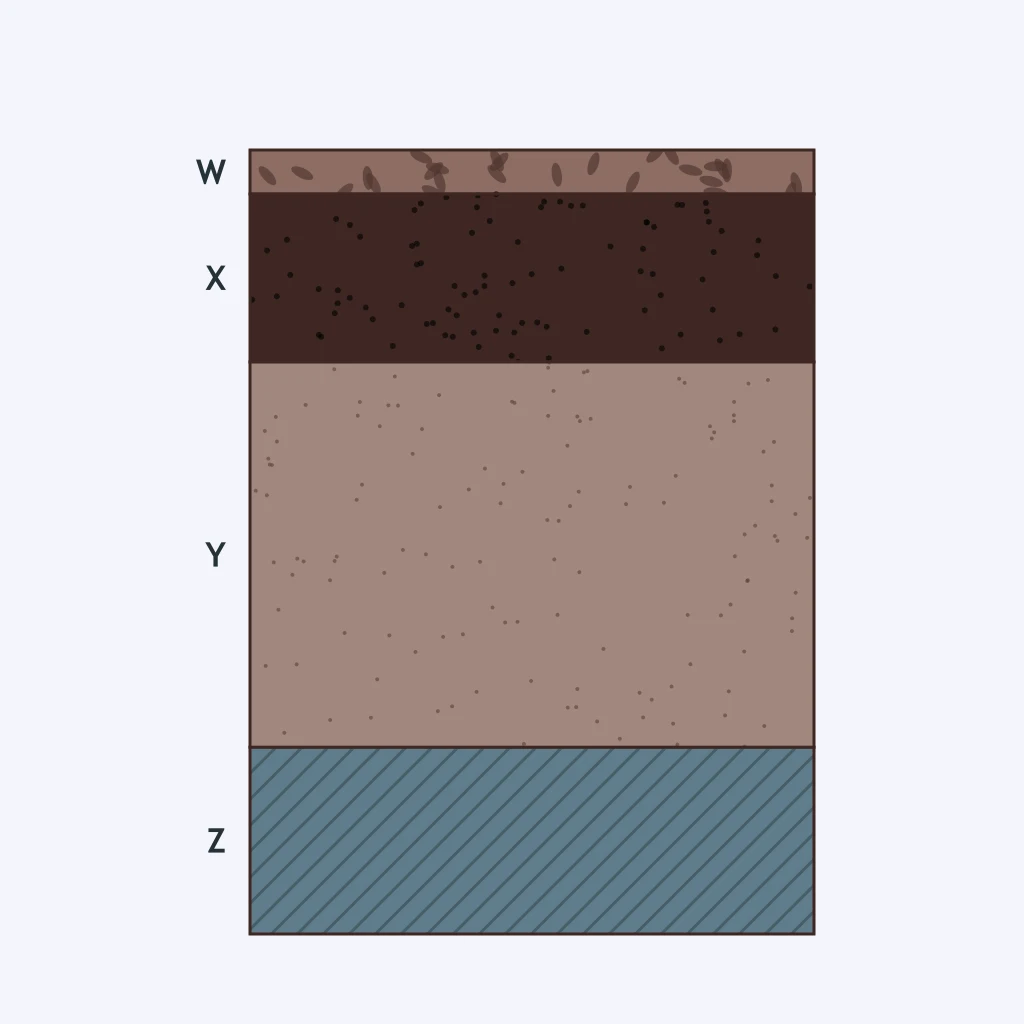
The thinnest layer at the very surface of the profile is made of undecomposed leaves and twigs that have not yet broken down into soil. Which horizon is this?
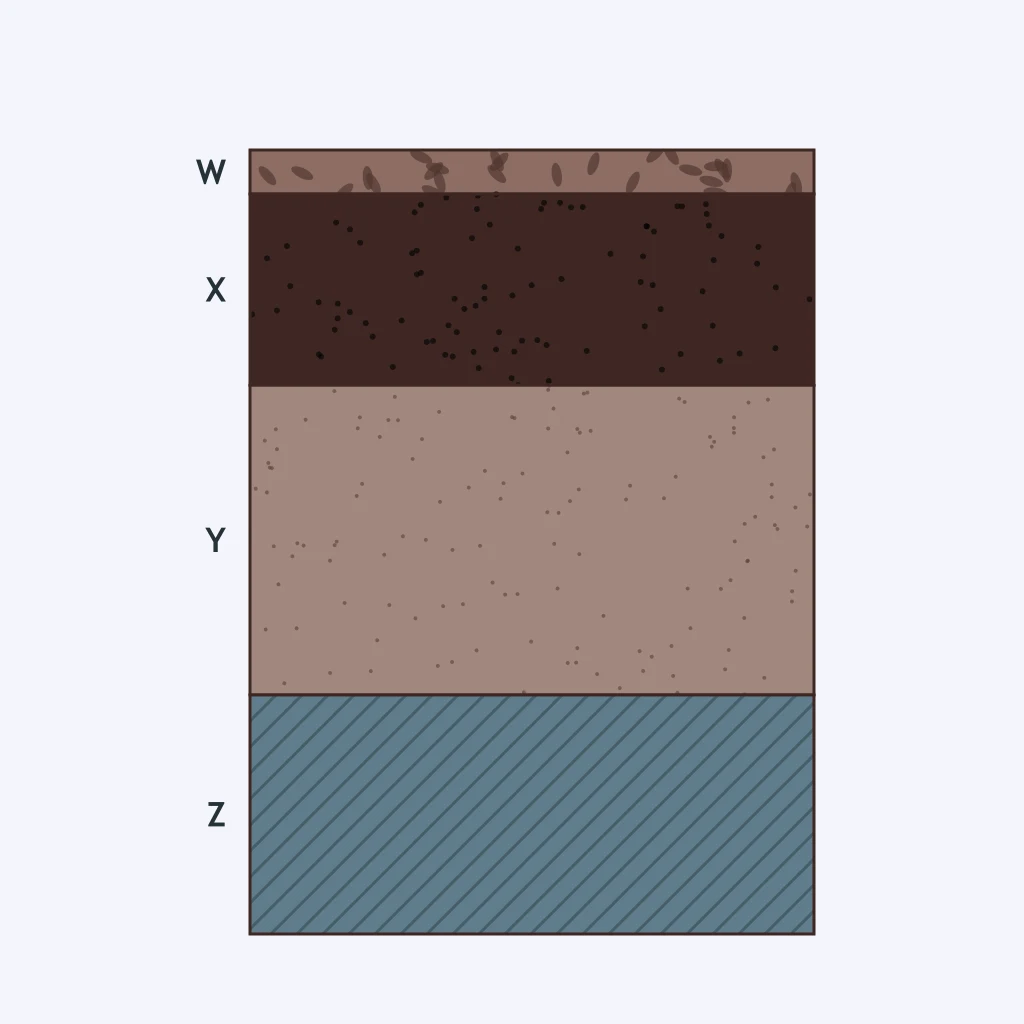
Just beneath the dark, loose topsoil, a layer is noticeably more compact and a different color because material carried down by percolating water has settled there. Which horizon is this?
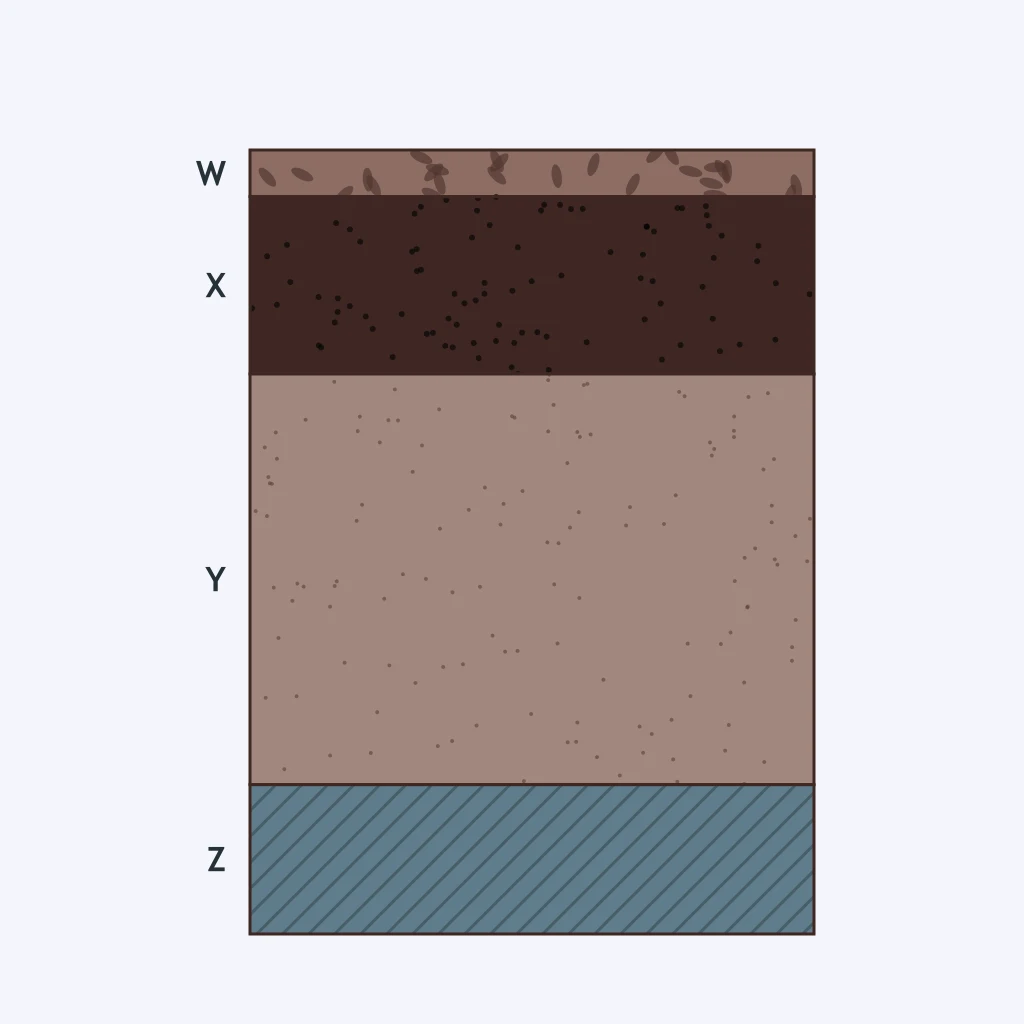
Which horizon is no longer solid rock but has been changed least by soil-forming processes such as leaching and the build-up of clay?
At the very bottom of the profile, the material is solid rock with no soil structure, roots, or mixing, showing that it has not yet weathered into regolith. Which horizon is this?
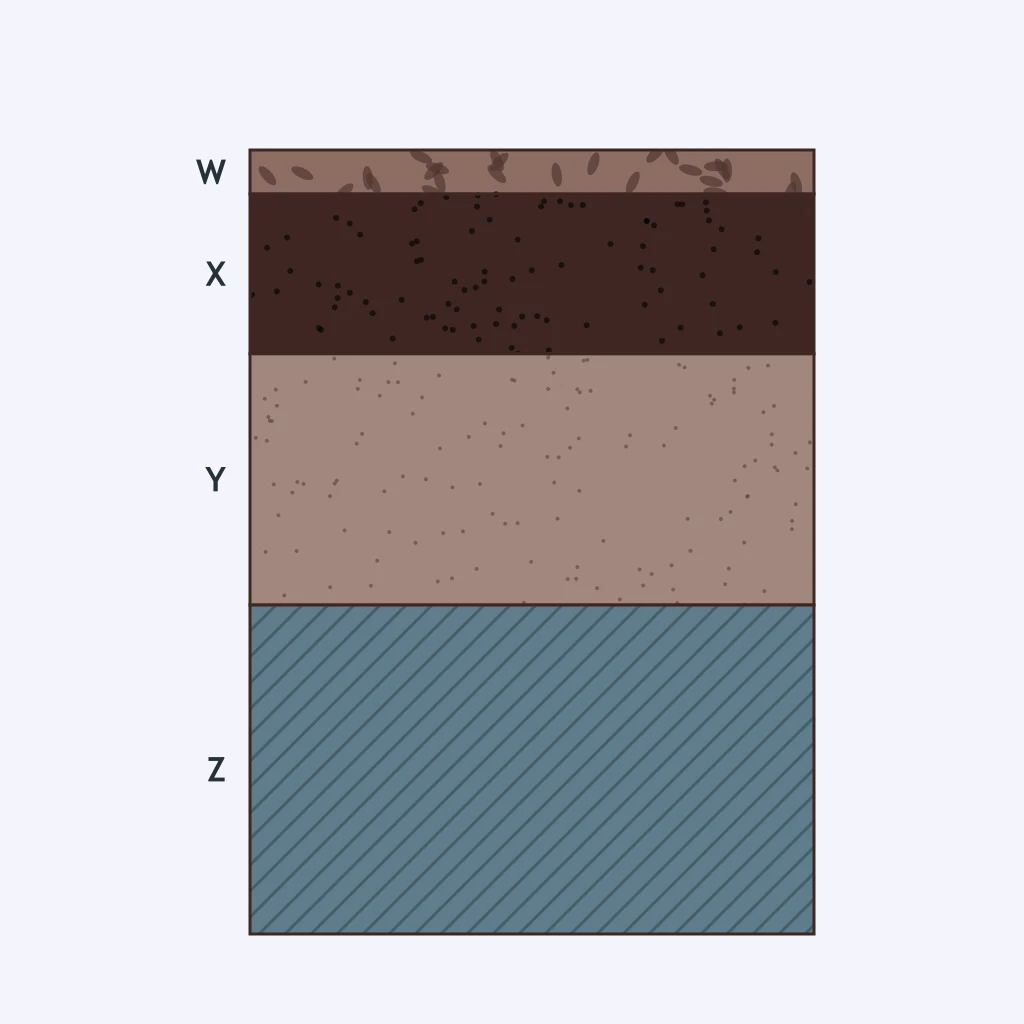
Earthworms and other soil organisms mix decomposing leaves with mineral particles near the surface, producing a dark, nutrient-rich layer. Which horizon does this describe?
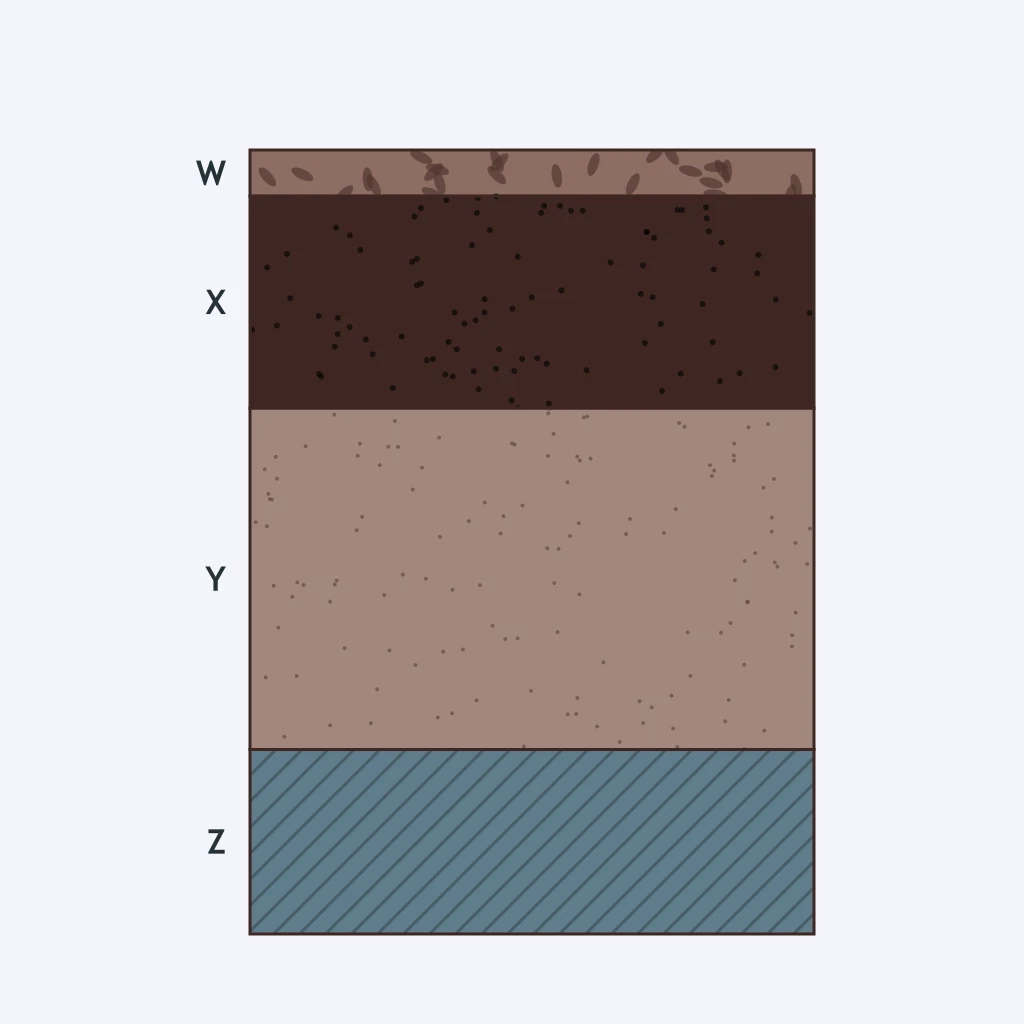
Rainwater carries dissolved iron and fine clay downward and drops them in a layer where the soil becomes reddish and dense. What is that layer called?
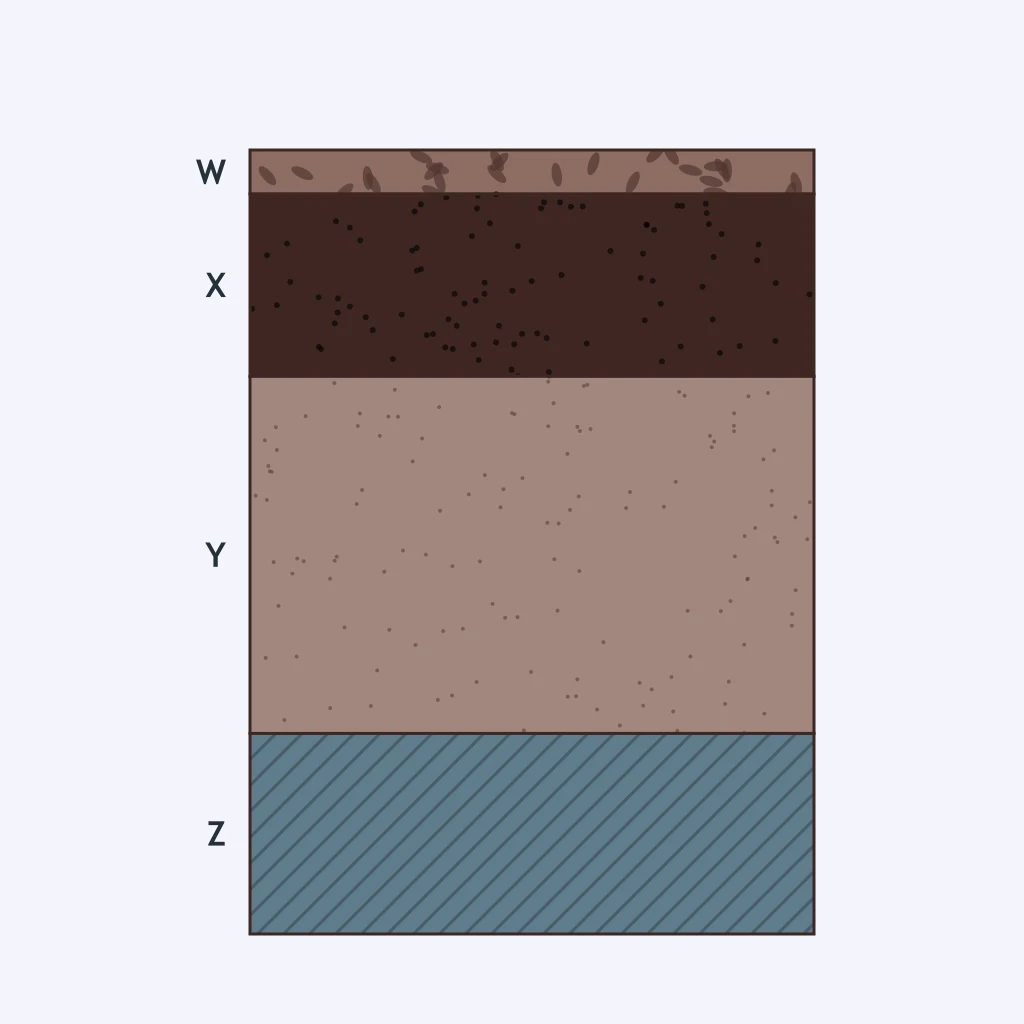
Physical and chemical weathering slowly break solid bedrock into loose, coarse rock fragments that have not yet developed distinct soil layering. Which horizon does this describe?
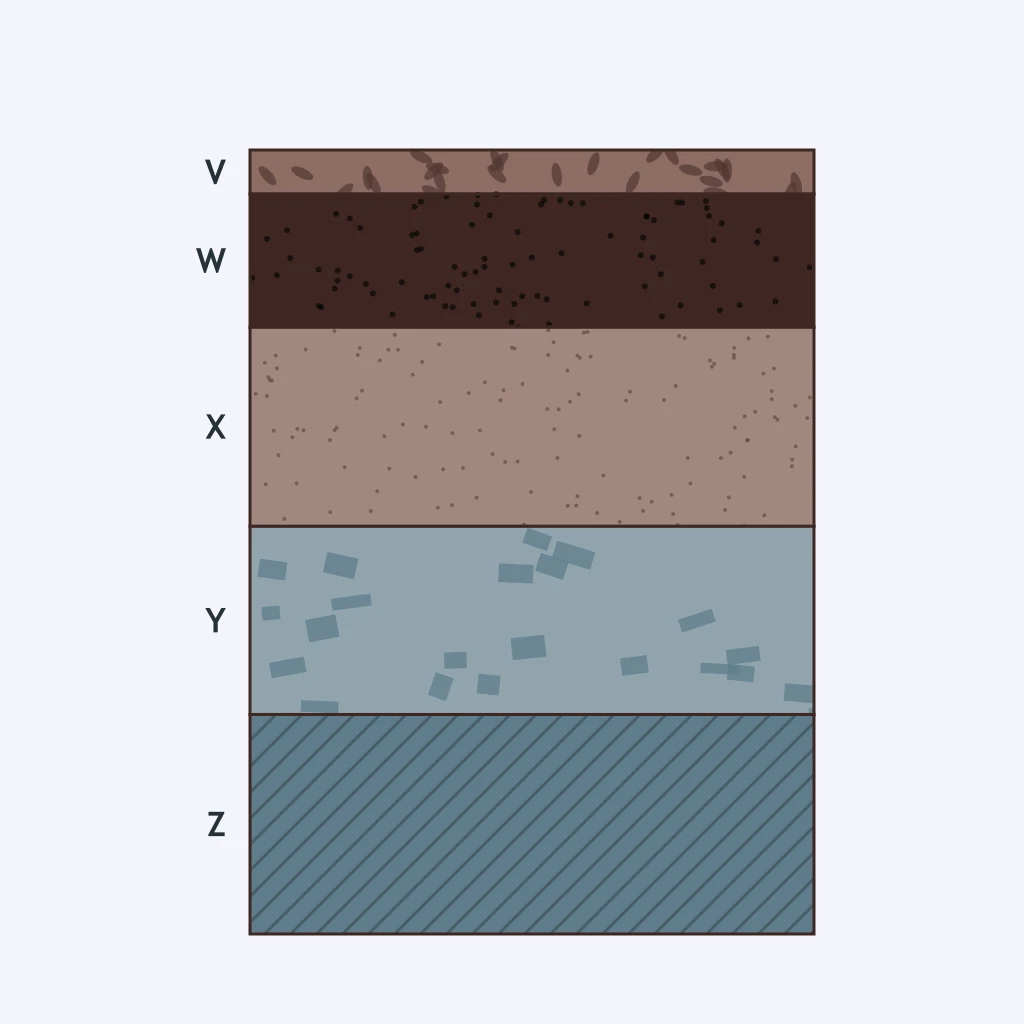
Fallen leaves, twigs, and dead organisms pile up at the surface and slowly begin to decompose into organic matter. Which horizon does this describe?
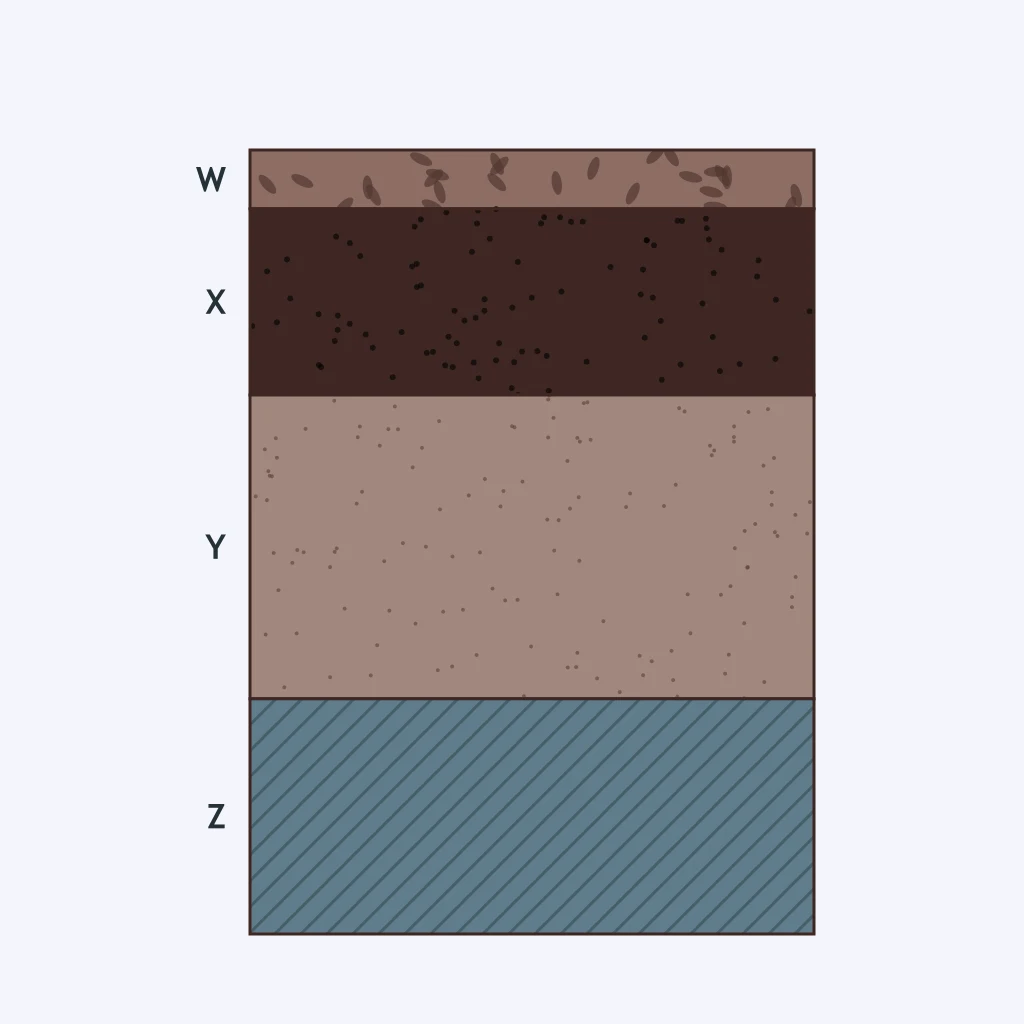
This layer lies beneath all soil development and consists of unweathered rock that serves as the ultimate source of the soil's mineral material. Which horizon does this describe?
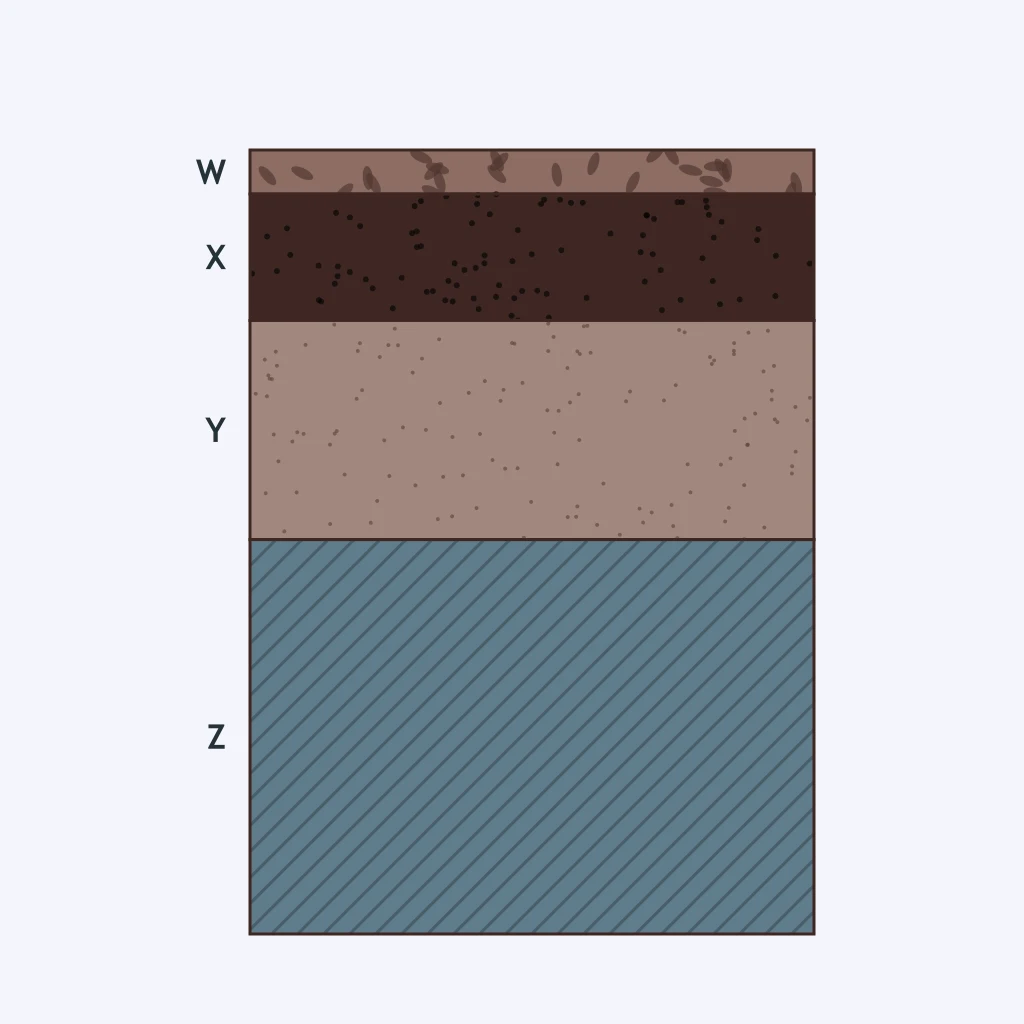
As water percolates down through the A horizon, it dissolves and carries away soluble minerals and fine particles, leaving that layer lighter in color. What is this process called?
Over long periods, repeated accumulation of clay in the B horizon can cement the layer into a dense, root-restricting mass. What is this hardened layer called?
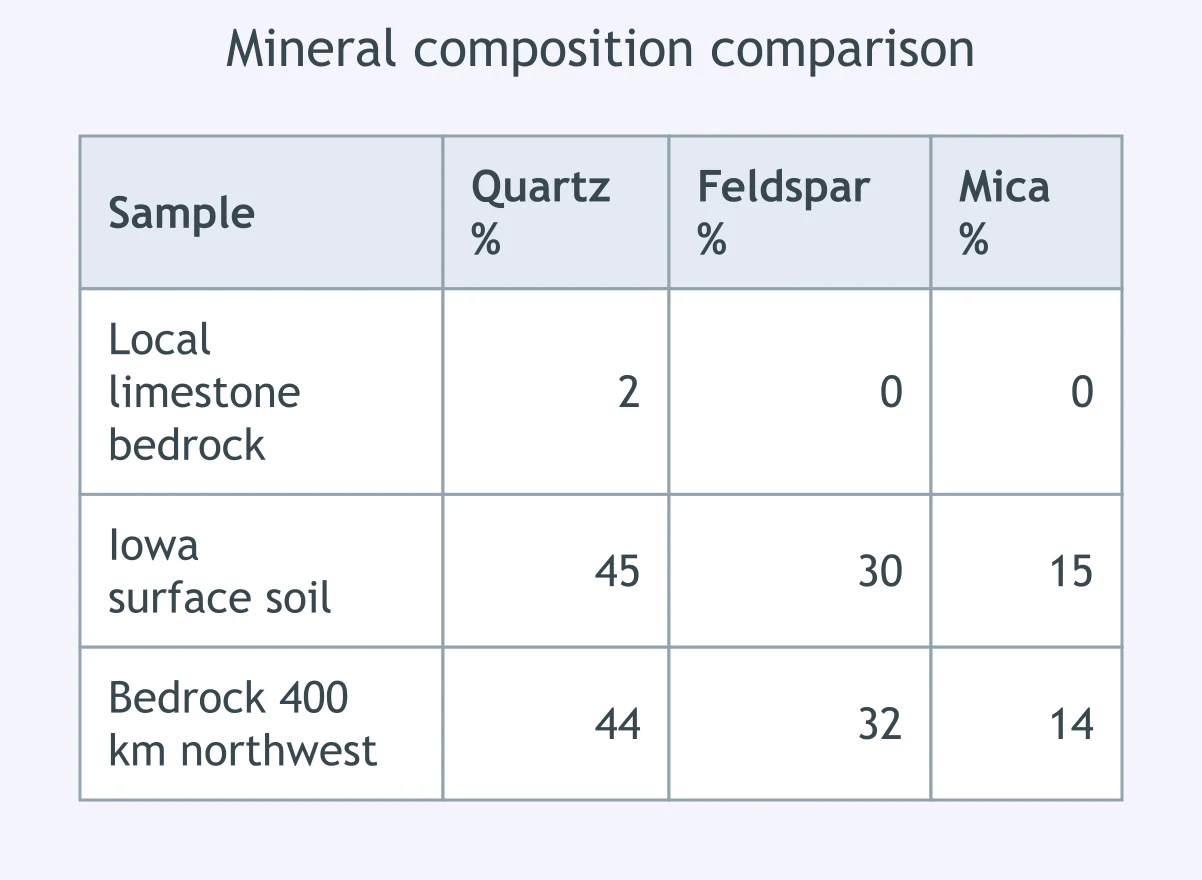
A soil in Iowa is thick and silty and rests on limestone bedrock. The table compares the minerals in the soil with the local bedrock and with bedrock 400 km to the northwest. What kind of soil is it?
In the Amazon Basin, deep red, clay-rich soil sits directly on top of decomposing granite bedrock, and its minerals are weathered forms of the minerals in that rock. What kind of soil is this?
Along the coast of the Netherlands, thick layers of fine silt and clay carried in by rivers and ocean currents over centuries rest on top of much older, unrelated sand deposits. What kind of soil is this?
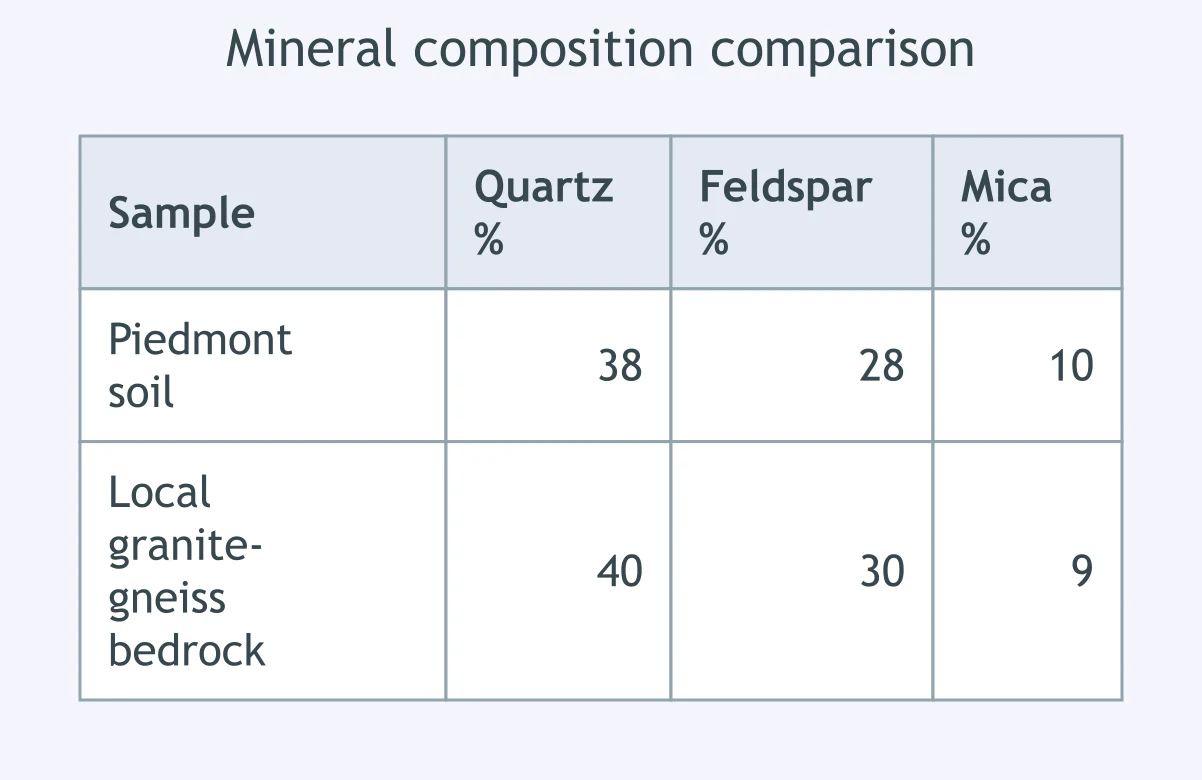
In the Piedmont region of the southeastern United States, a reddish clay soil lies on granite and gneiss bedrock. The table compares the minerals in the soil with the bedrock just beneath it. What kind of soil is this?
A layer of fine, wind-blown silt called loess covers parts of the Mississippi River Valley, having been picked up from dried glacial outwash hundreds of kilometers away and dropped by the wind. What kind of soil is this?
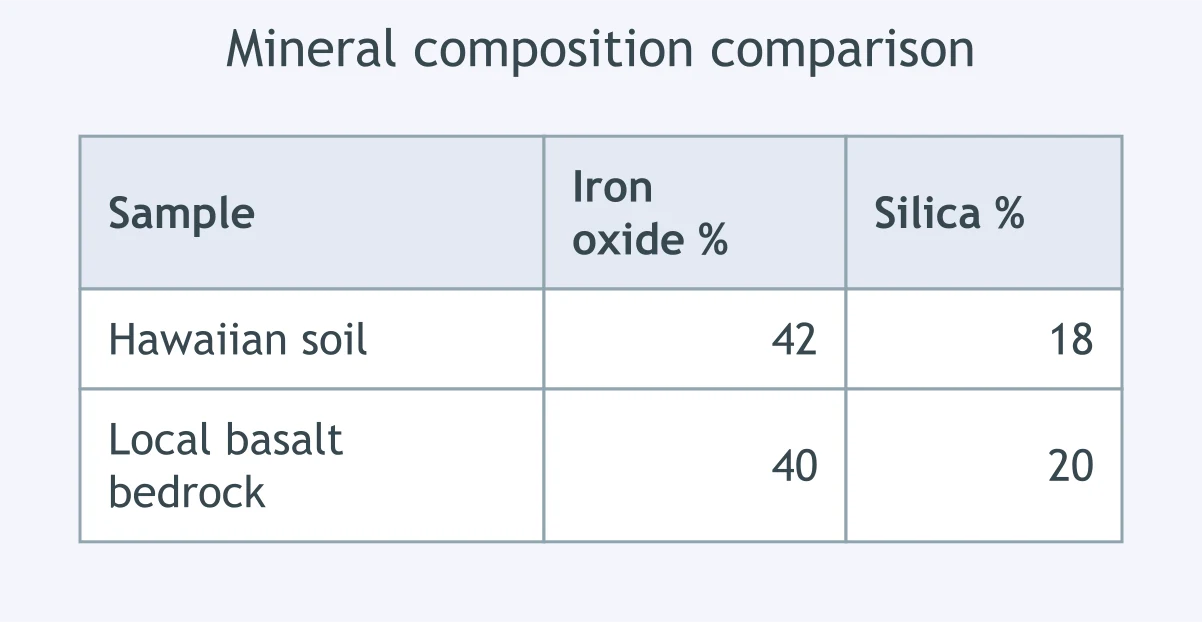
In Hawaii, a thin soil lies on basalt lava flows. The table compares the soil with the basalt just beneath it. What kind of soil is this?
Glacial meltwater deposited sand and gravel across parts of Cape Cod, Massachusetts, far from the granite bedrock that actually underlies the region. What kind of soil is this?
In parts of the Ozark Plateau, soil sits directly on limestone bedrock and contains chert fragments and clay residue left behind as the limestone slowly dissolved. What kind of soil is this?
The table gives the sand, silt, and clay percentages by weight for a soil texture sample. How will water move through this soil?
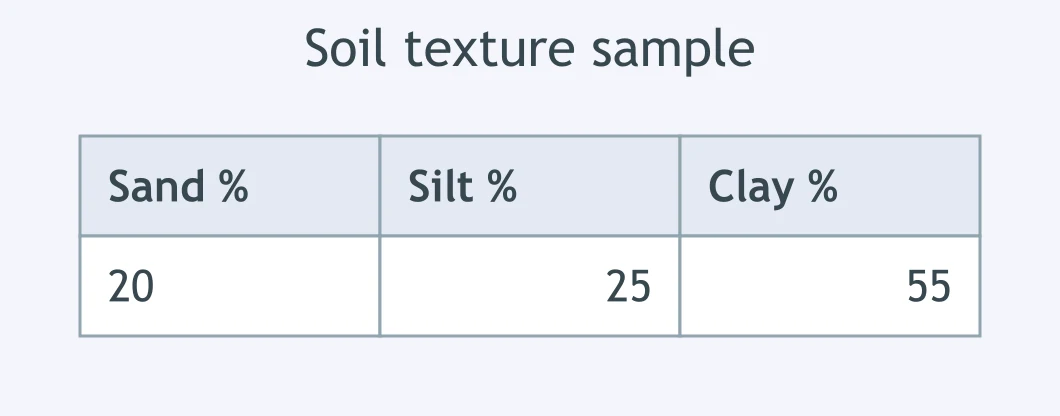
A soil texture sample is shown in the table with its composition percentages by weight. How will water move through this soil?
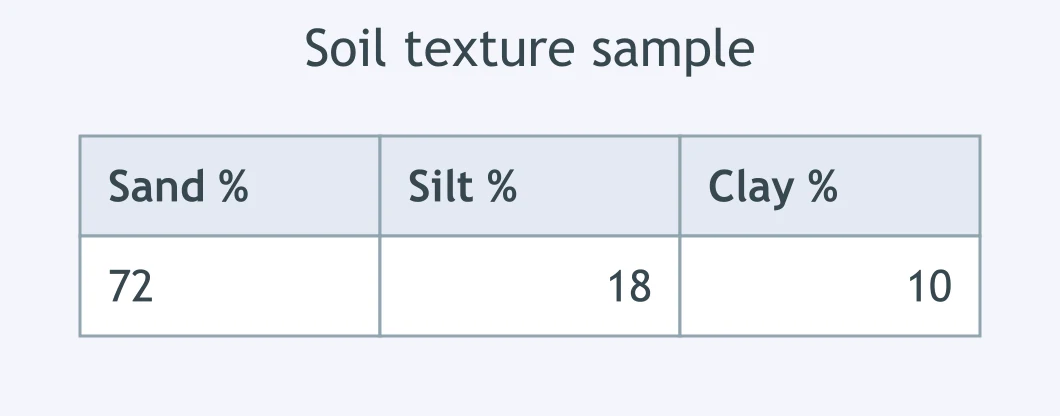
The table gives the sand, silt, and clay percentages by weight for a soil sample. Which texture class does this sample belong to?
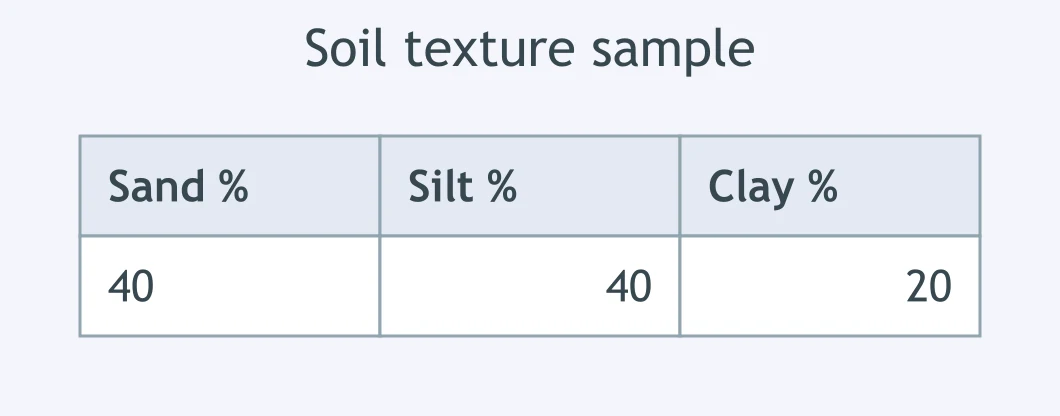
The table shows a soil texture sample's sand, silt, and clay percentages by weight. Which property is greatest in this sample?
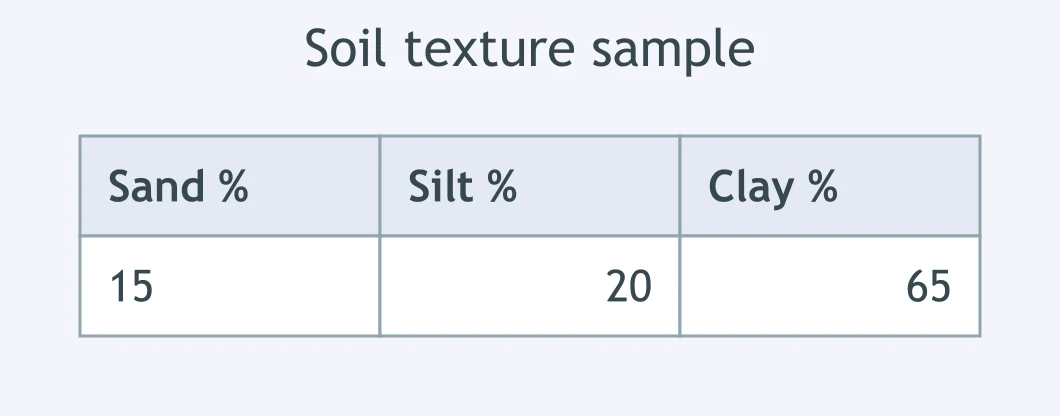
Use the table of sand, silt, and clay percentages by weight for the soil texture sample. Which property would be greatest in this sample?
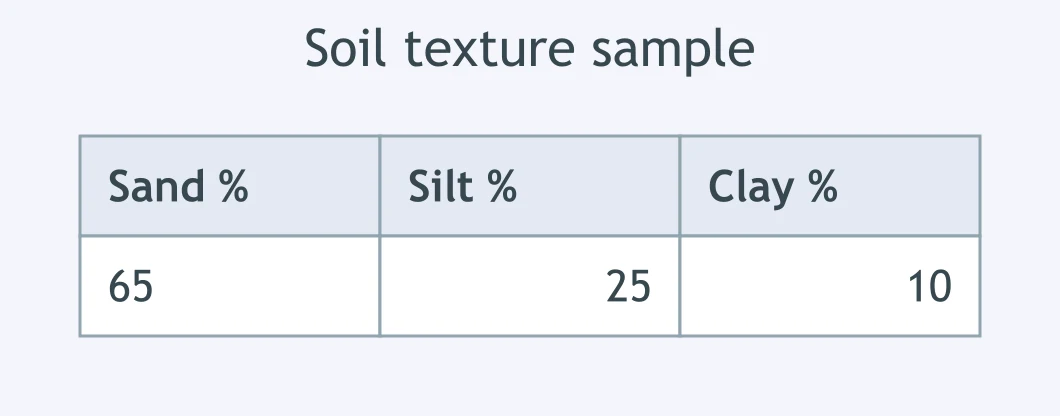
The table compares two soil samples by texture. Which sample would allow water to pass through it fastest?
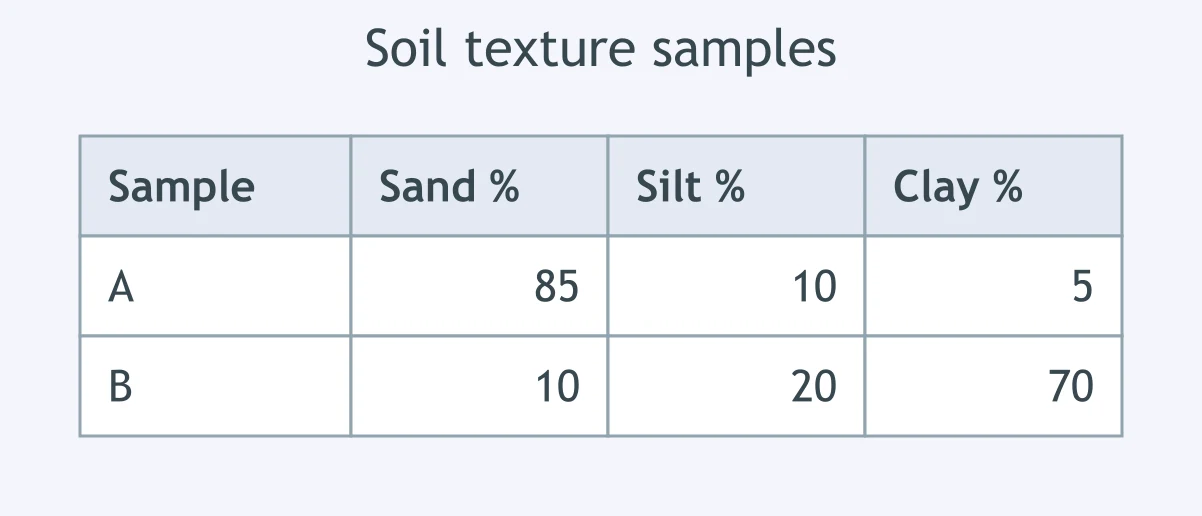
For a soil texture sample, the table lists the percentages of sand, silt, and clay by weight. Which property makes this soil prone to waterlogging after heavy rain?
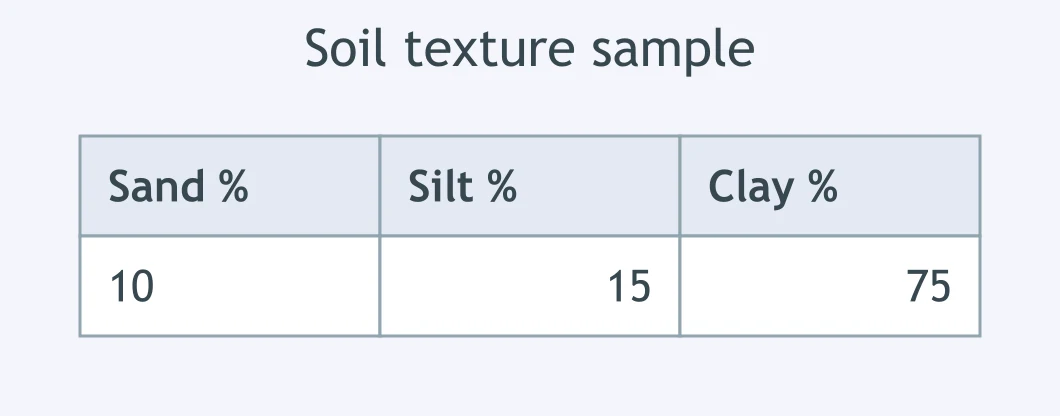
The table reports the sand, silt, and clay percentages by weight for a soil texture sample. Which property makes this soil unsuitable for retaining irrigation water?
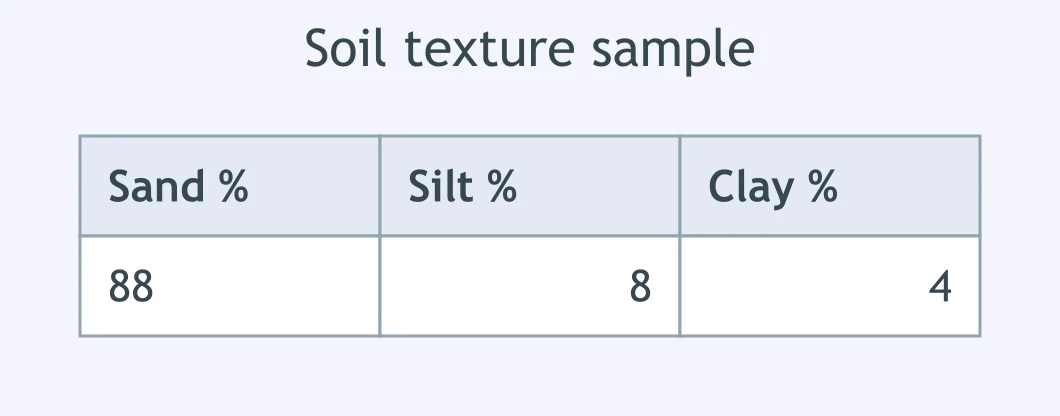
Two garden plots get equal rain. The sandy plot drains within minutes, while the clay plot stays waterlogged for days afterward. Which property differs most?
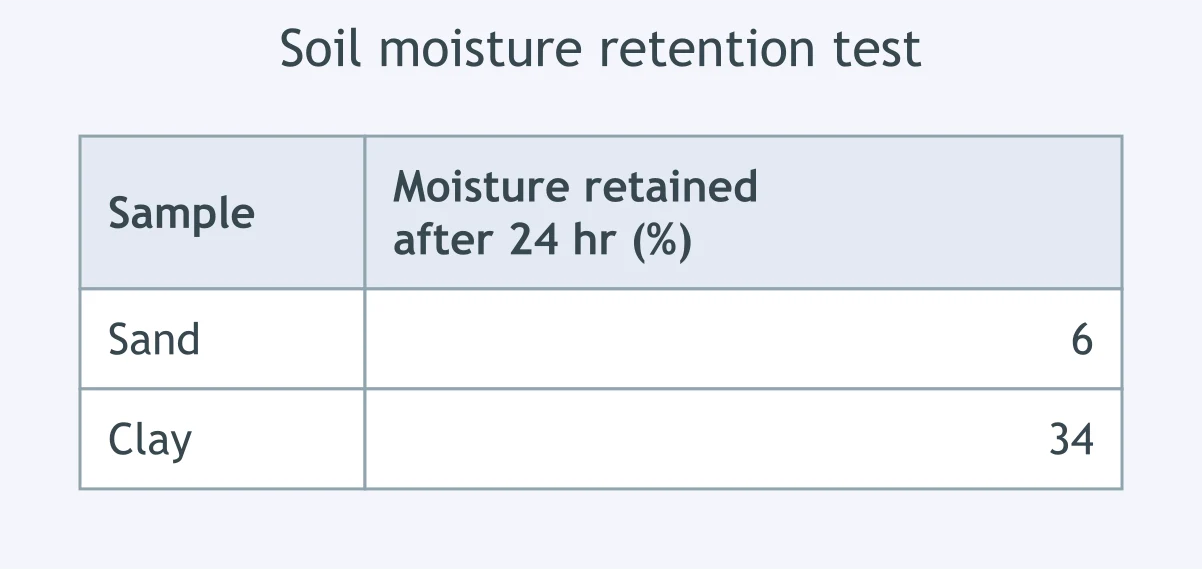
The table shows how much moisture two soil samples retained 24 hours after an equal soaking. Which property is much higher in the clay sample?
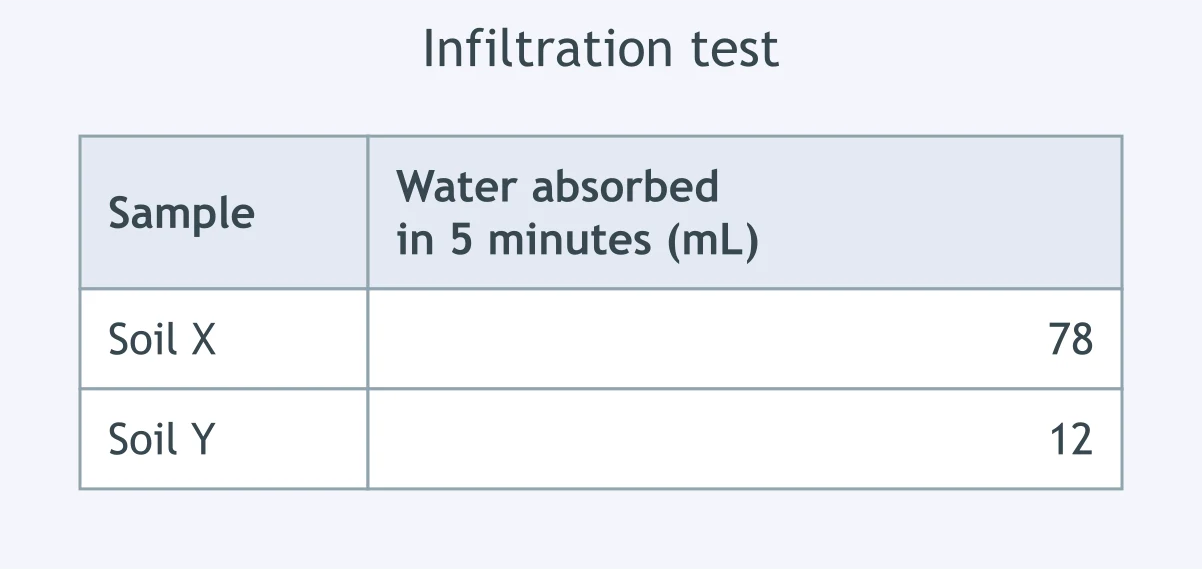
The table shows how much water two soil samples absorbed during a 5-minute infiltration test. Which soil has the greater permeability?
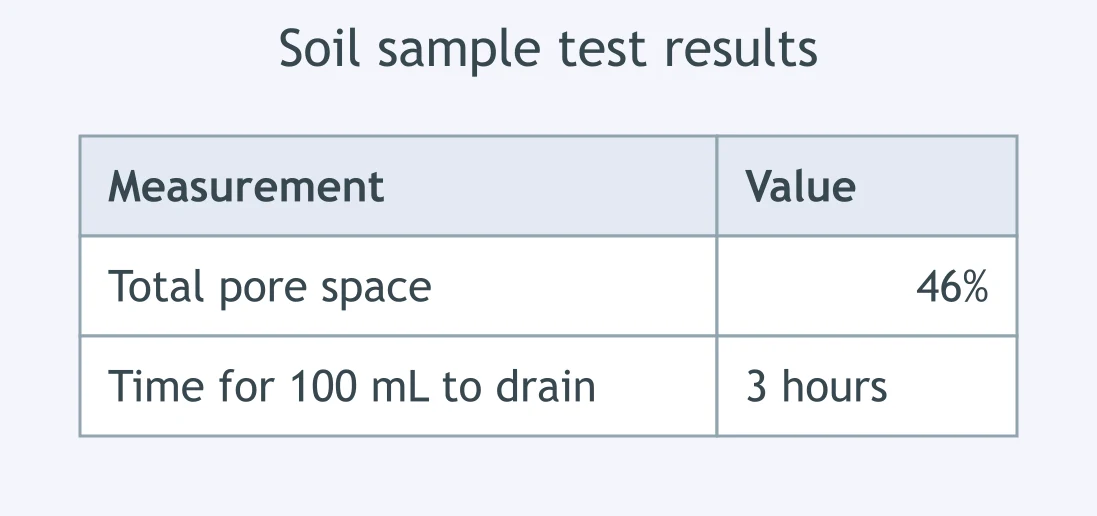
A soil sample was tested in the lab, and the table shows the results. Despite its high total pore space, which property is low in this sample?
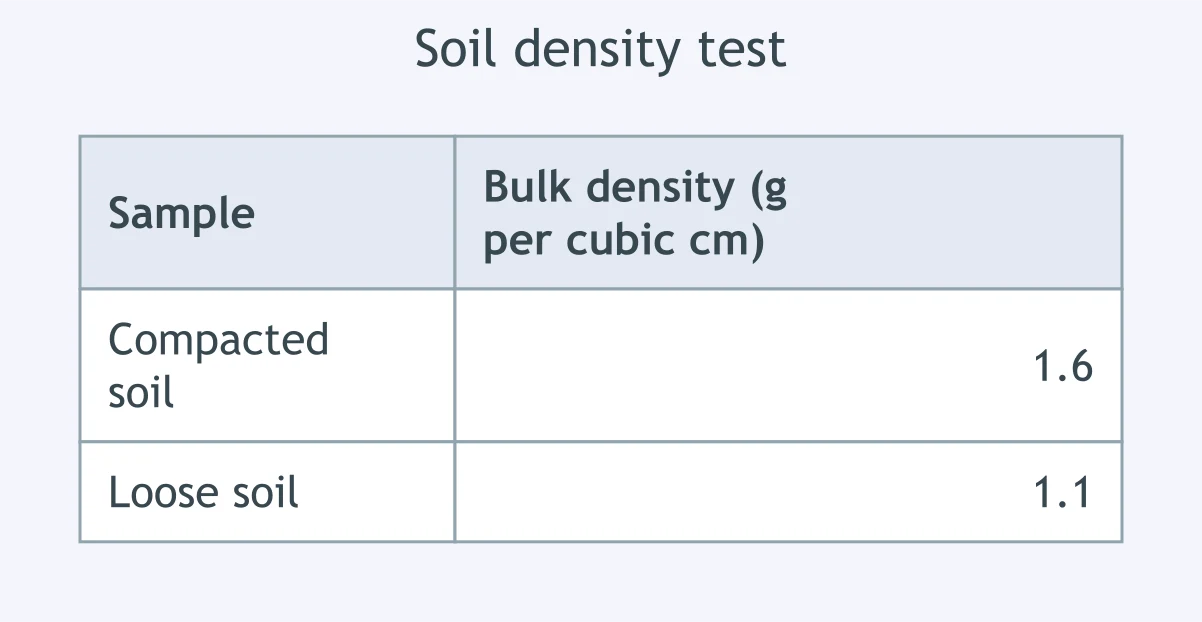
The table gives the bulk density of two soil samples. Which sample has more pore space between its particles?
A gardener presses a moist ball of soil between her fingers; sandy soil crumbles apart immediately, while clay soil holds its shape and feels sticky. Which property differs most between the two?
A student places a drop of dilute hydrochloric acid on soil sample one, which fizzes vigorously, while sample two shows no reaction at all. What does the fizzing reveal about sample one?
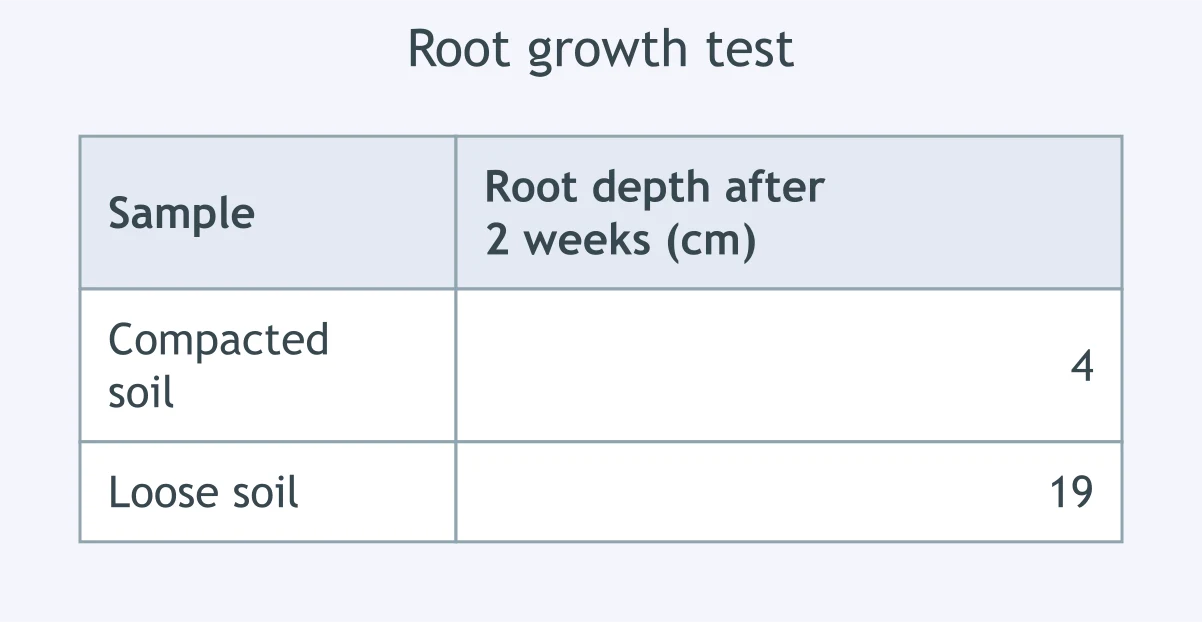
The table shows how deep roots grew after two weeks in compacted versus loose soil of the same type. Which property most likely limited root growth in the compacted sample?
Crack the passcode before the zombies get in.
Answer, then swat bugs for bonus points.
Race through questions at your own speed.
Same question on every screen. Fastest wins.

Pick a tile, answer, hit bonuses and steals.
Agents of Erosion
40 questions