Loading
by BlastRoom
Who gets pushed out, who gets kept out, and who has nowhere to go.
#us_hs_human_geography
40 questions
One question set, multiple game modes. Tap any game to see it in action. Not sure which to pick?
Answer to place stones and capture territory.
Outrun the snow together.
Earn blasts, then hunt the other team.
Answer to earn energy, then climb.

The class blasts through walls together.
Bid on mystery lots. Most money wins.
Sell tours. Nice, standard, or a total scam.

Answer, restock, and serve the rush.
More correct answers pulls the rope your way.
Answer, then shoot down the alien wave.
Answer, then tap to leap the frozen ridge.
Investors renovate low-rent inner-city rowhouses, cafes open nearby, rents triple, and many long-time low-income tenants leave. What process best names this sequence?
Real estate agents warn white owners that integration will lower values, buy their homes cheaply, then resell at higher prices to Black households. What practice is described?
Higher-income residents leave aging apartments, landlords subdivide large homes, and rents fall enough for lower-income households to move in. What process is this?
Beyond the beltway, farms are converted into spread-out subdivisions and shopping strips that require driving between uses. What land-use pattern is this?
Artists and young professionals start buying into an old warehouse district near downtown, beginning a wave of gentrification. What usually draws these first newcomers?
Lenders use maps that mark minority neighborhoods as risky and then deny mortgages or charge worse terms there. What practice is this?
Middle-class households, jobs, and shopping move outward from the central city to surrounding municipalities, weakening the old core's tax base. What process is this?
In the filtering process, landlords divide older houses into small rental units and then cut back on upkeep. What stage often comes last?
A new transit stop opens near a low-rent district. Investors soon buy buildings and market upscale units, and rents rise. Why did the transit stop draw this investment?
Clauses in many US property deeds once barred owners from selling or renting their homes to Black families. What were these clauses called?
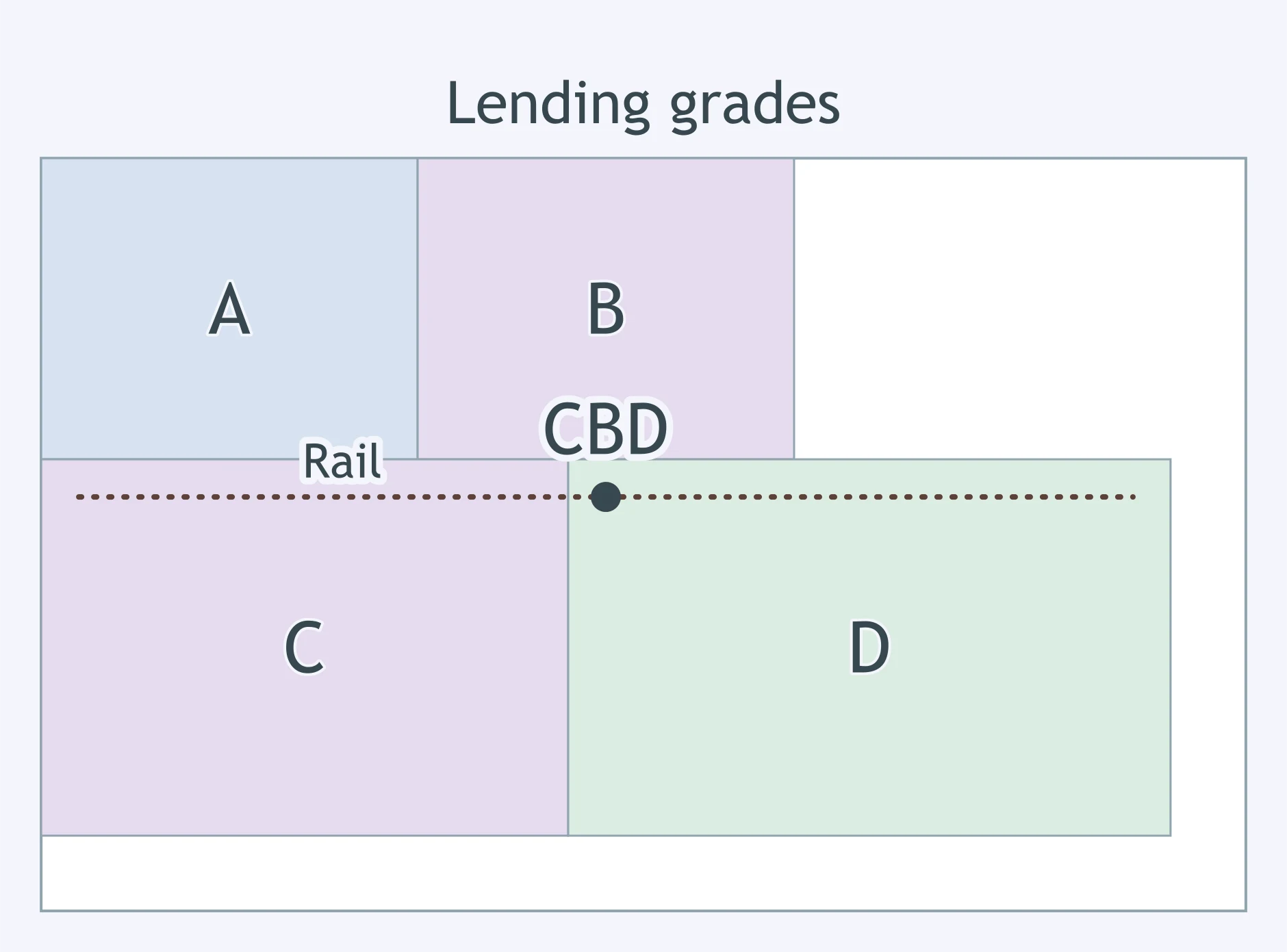
On the shaded lending-grade map, the lowest-graded neighborhoods lie along the rail line. In redlining, what did the lowest grade usually mean?
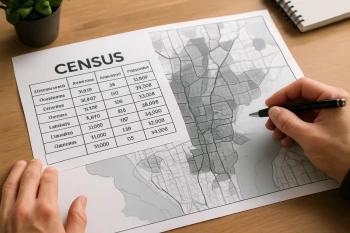
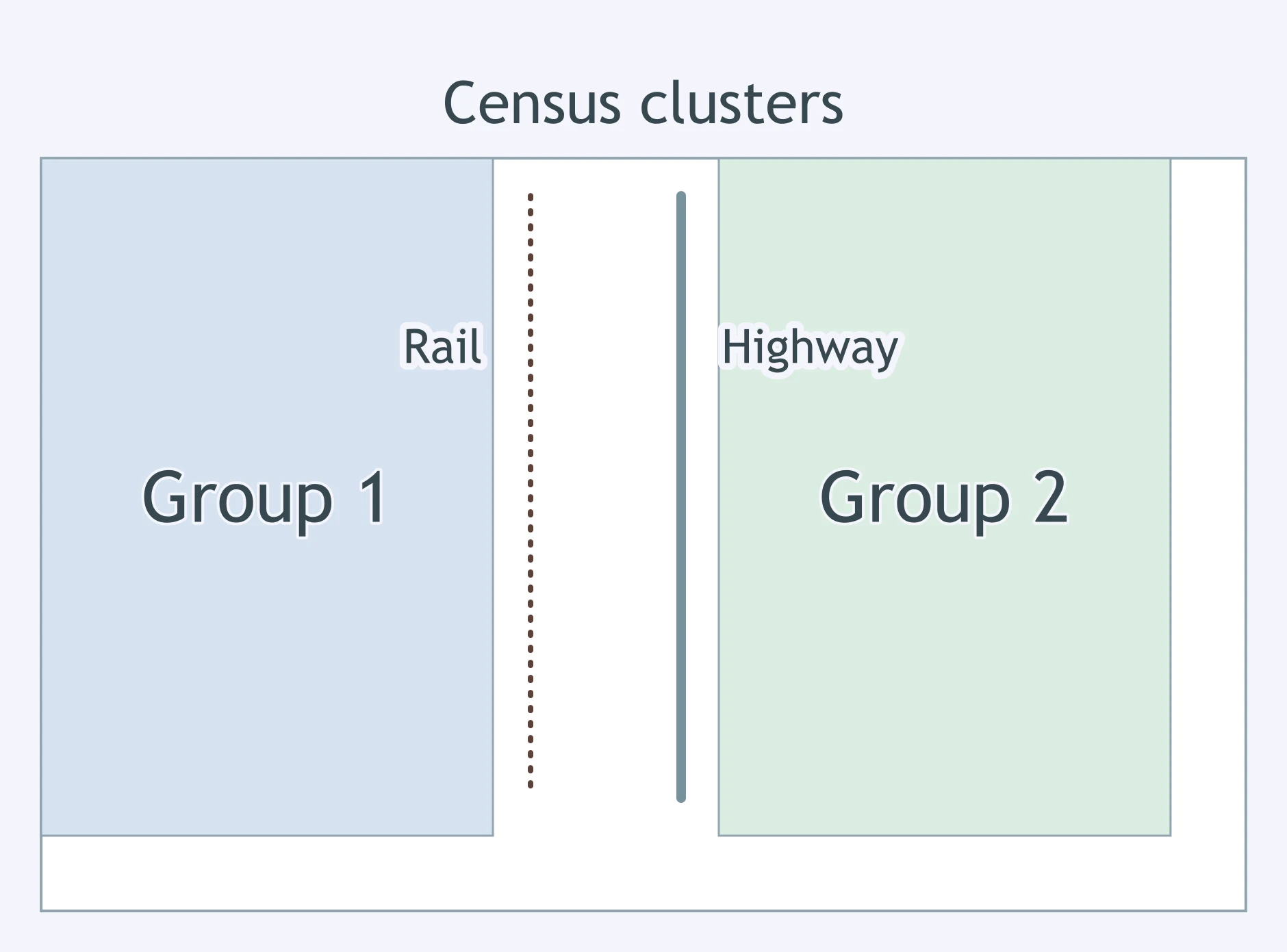
The map shades two residential clusters separated by a rail line and highway; census tracts on each side are dominated by different racial groups. What pattern does it document?
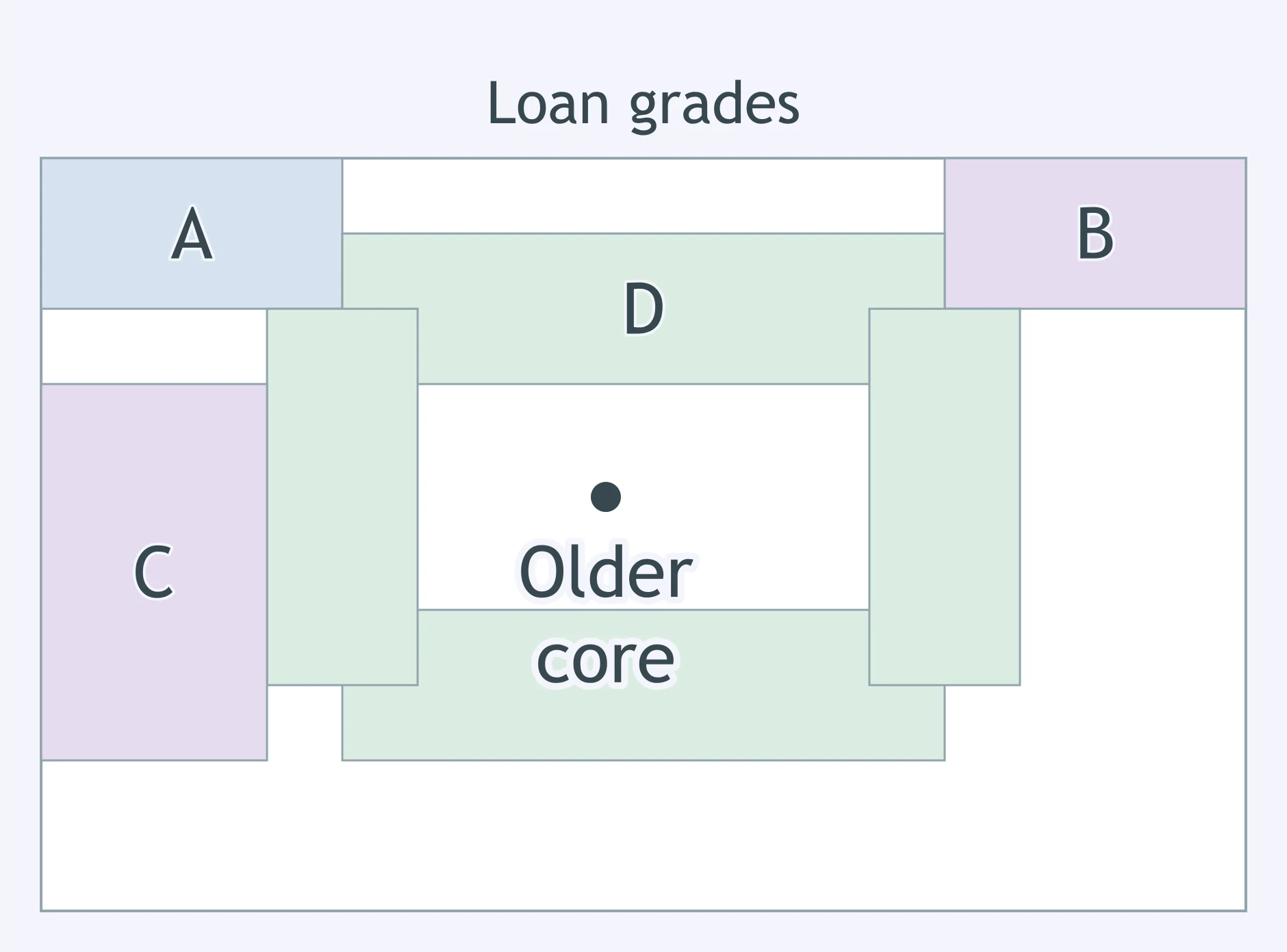
The map shows loan grades assigned before mortgages were made. Grade D areas form a continuous band around the older core. What was the practical effect?
A neighborhood map shows most subsidized apartments concentrated in one quadrant while high-income districts have almost none. What does the map reveal?
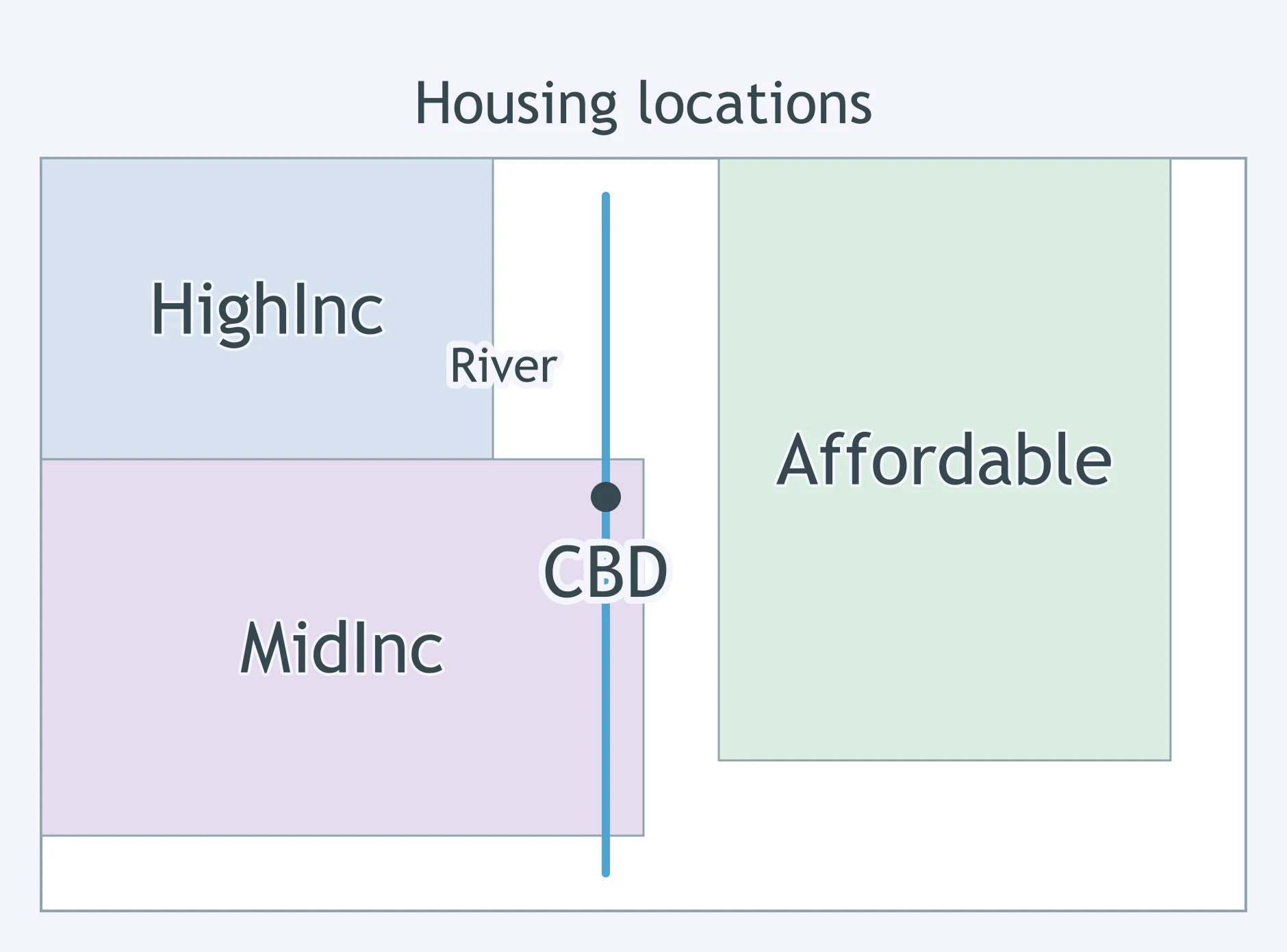
A redlining map gives the best grade to new white subdivisions and the worst grade to older mixed or Black neighborhoods. What did the grading reinforce?
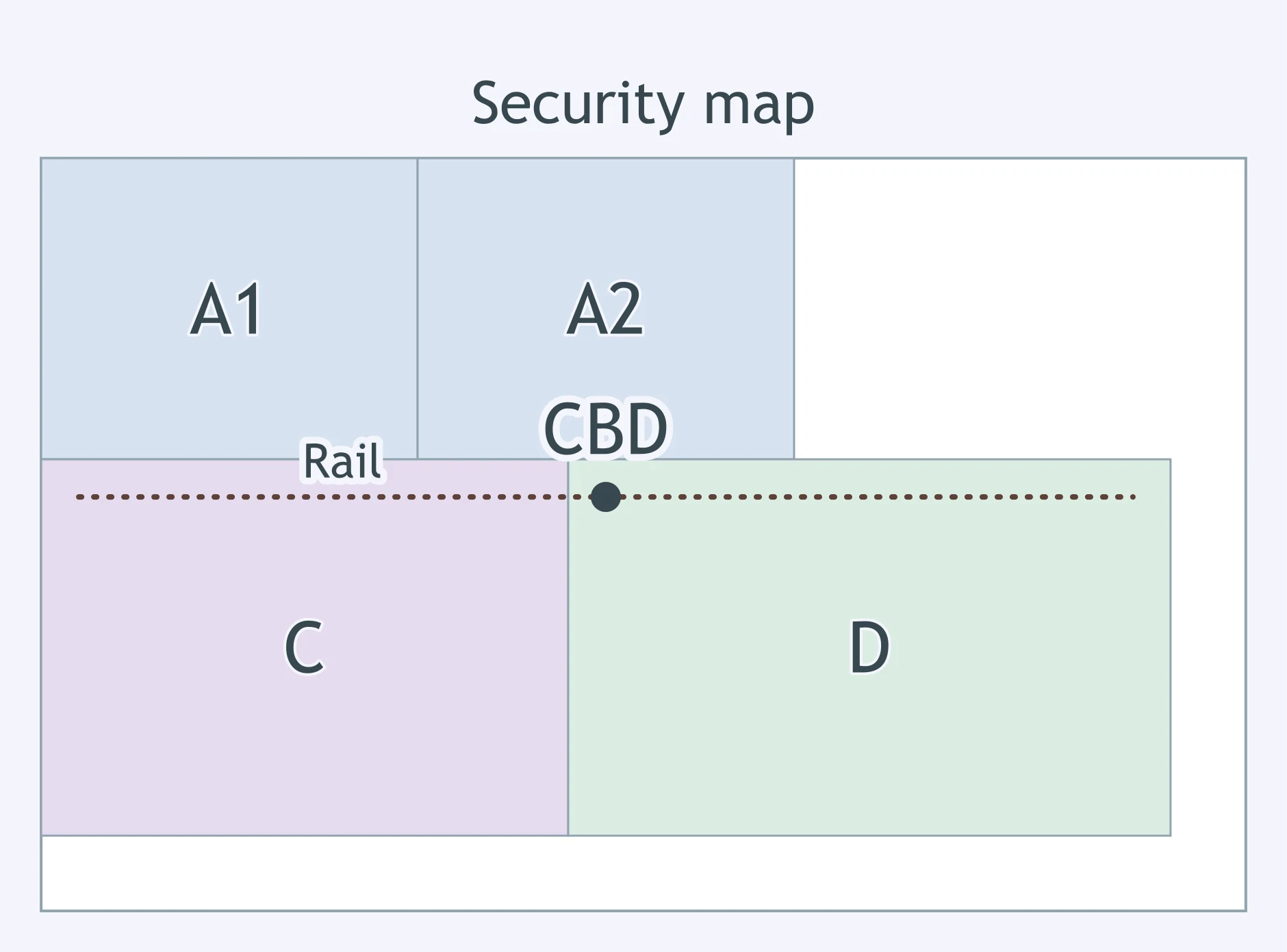
On the map, D-graded neighborhoods lie next to factories and rail yards and also contain most Black households. How did redlining treat those areas?
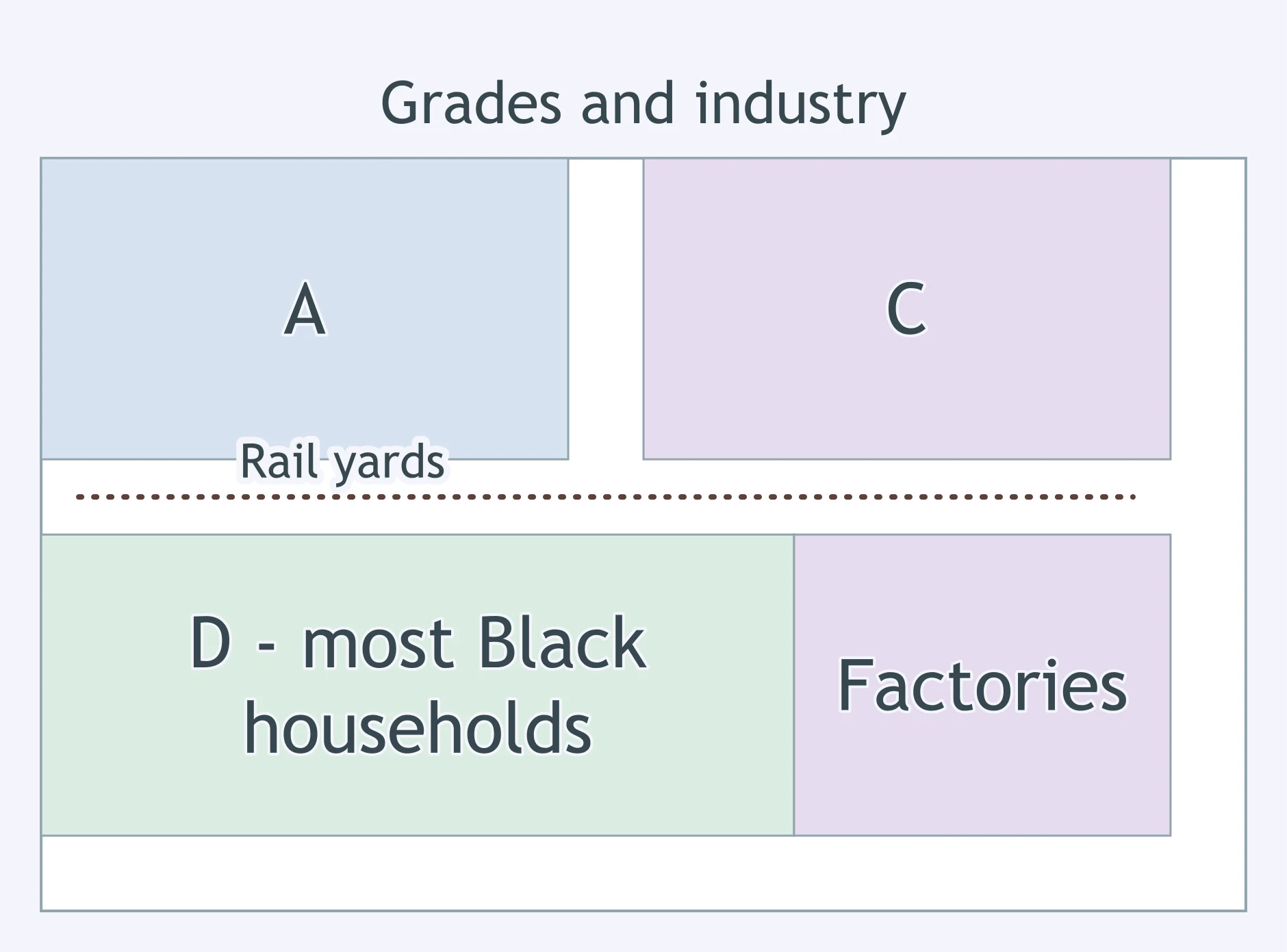
The map shows a sharp boundary: one side has high home values and mostly owner-occupied units, while the other has low values and renters. What pattern is being mapped?
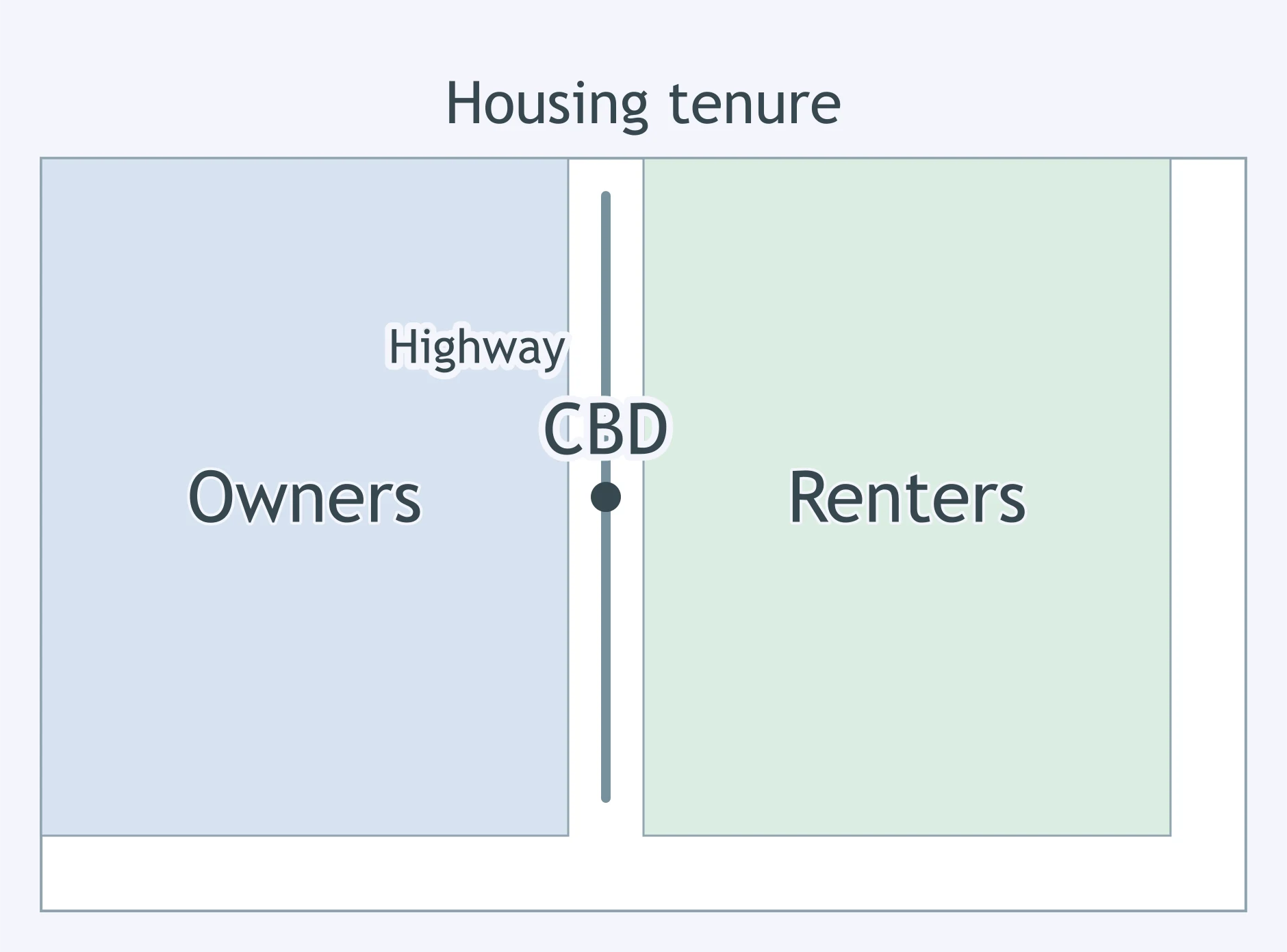
A city's former HOLC map outlined neighborhoods in graded colors. Why are the lowest-grade areas important for studying today's inequality?
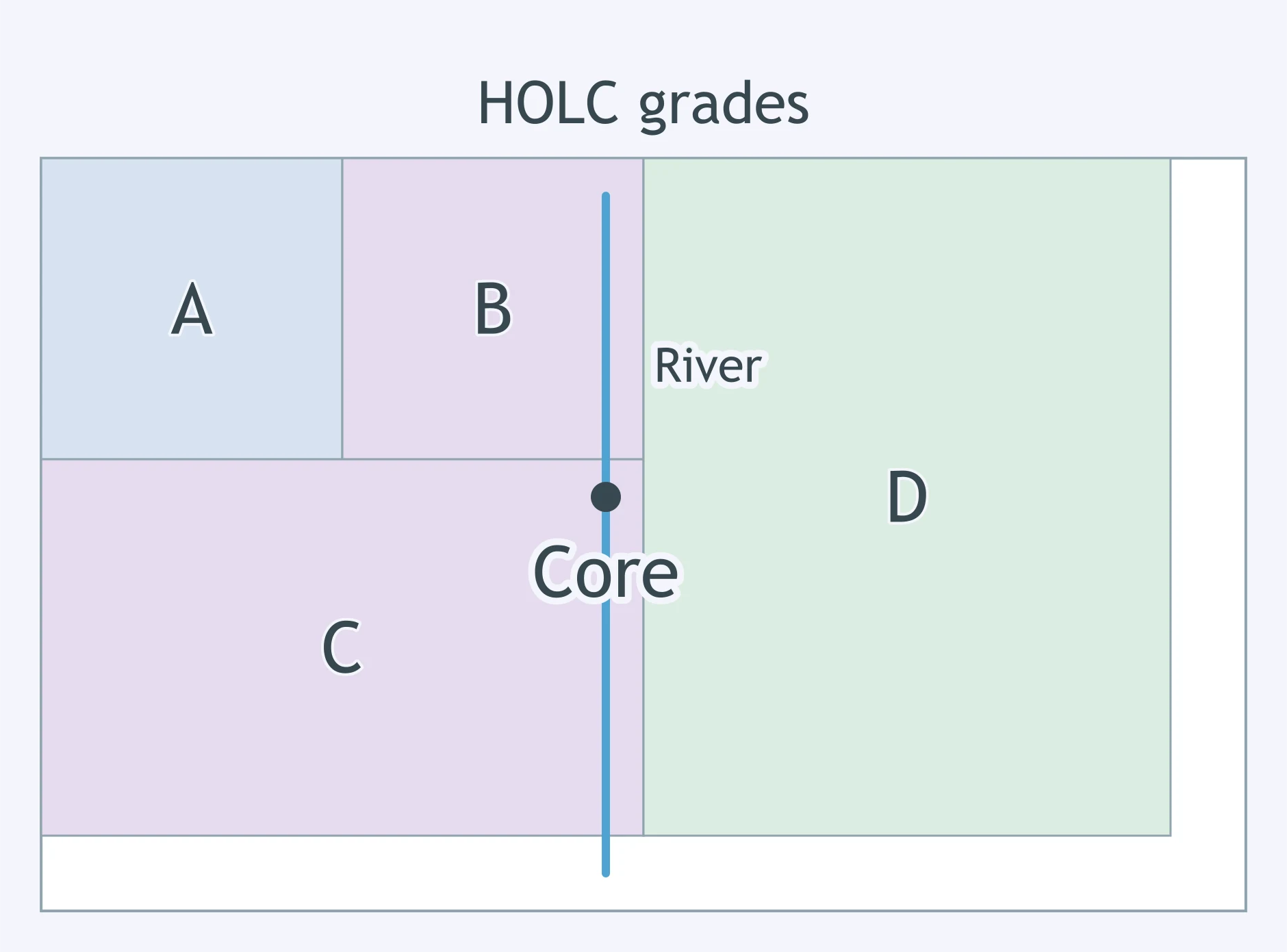
At the city edge, households build small homes on unused land without legal title and add rooms as money becomes available. What kind of settlement is this?
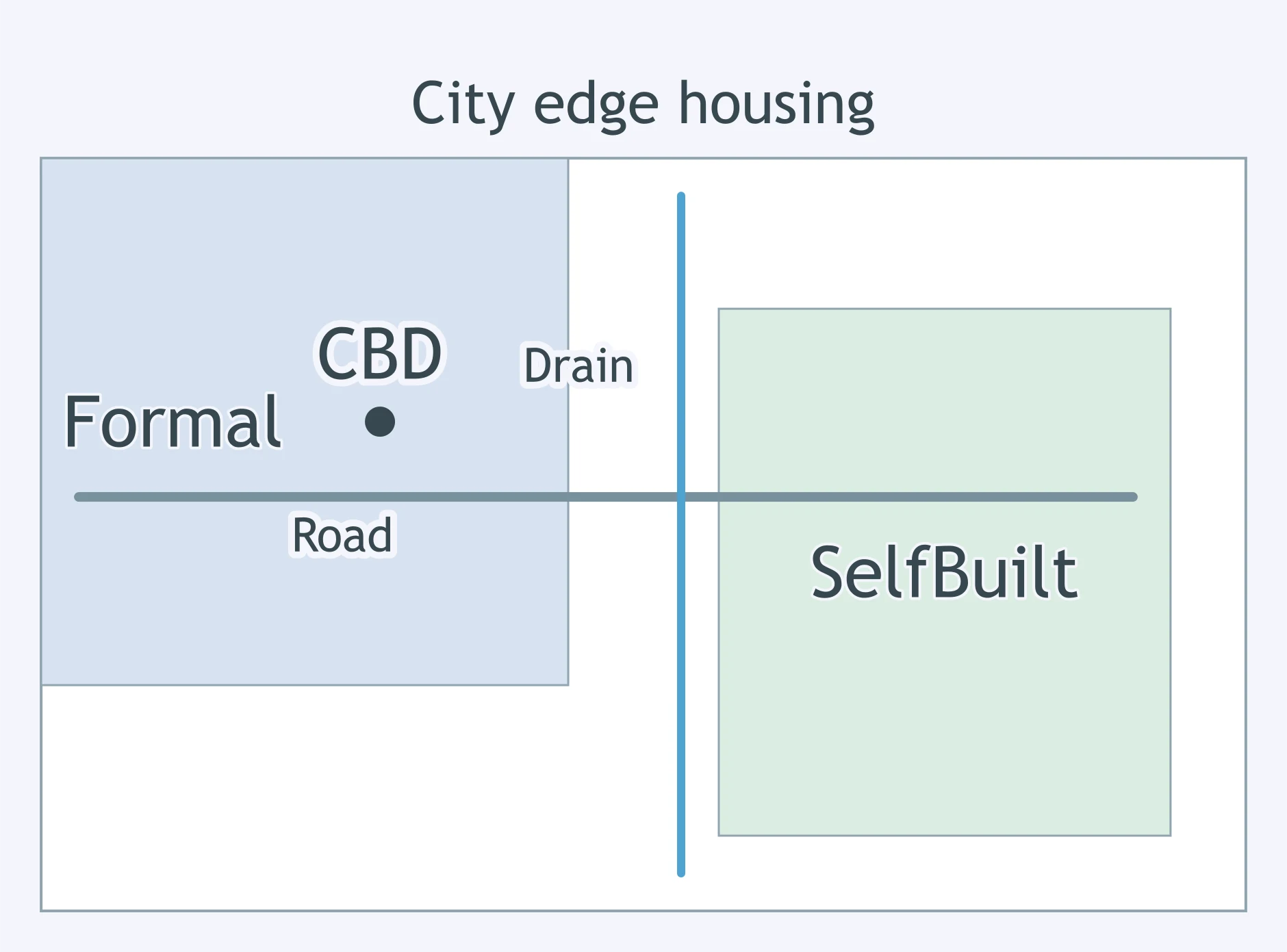
Residents hold no deeds or leases but have lived for years on hillside plots, tapping shared water lines and negotiating with officials. Their land tenure is best described as what?
A settlement grows beside a railway as migrants build houses from salvaged brick and metal outside the formal permit system. What phrase best classifies it?
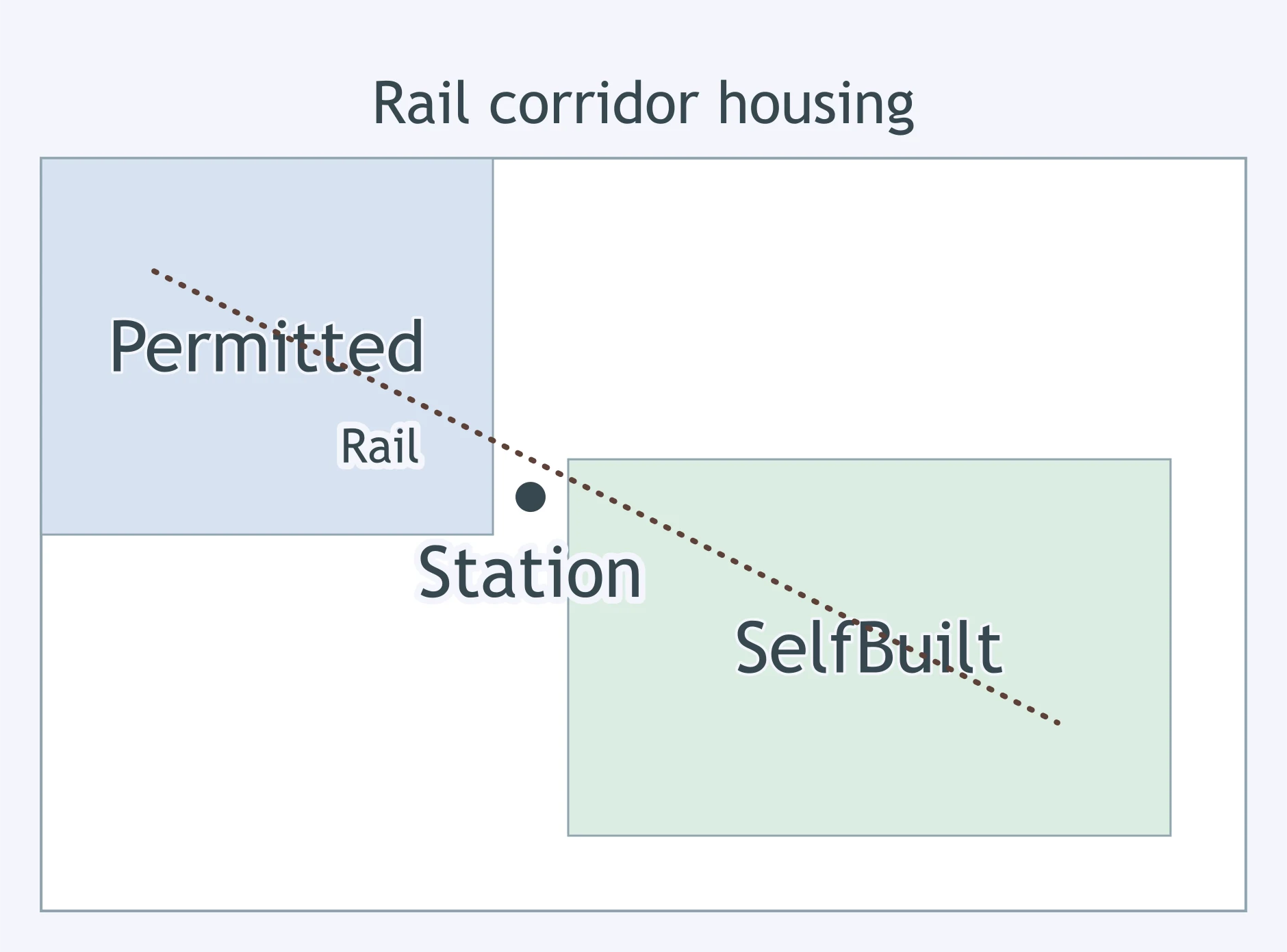
In a self-built district, households improve roofs, pave lanes, and connect utilities over many years after first occupying land informally. What is this pattern?
Why are residents of an informal settlement especially vulnerable to eviction?
A survey in Rio de Janeiro finds a neighborhood built by residents on public land, with unplanned streets and few permits. What local term names this kind of settlement?
The map shows self-built housing expanding along a drainage channel outside serviced subdivisions. What urban challenge is most directly shown?
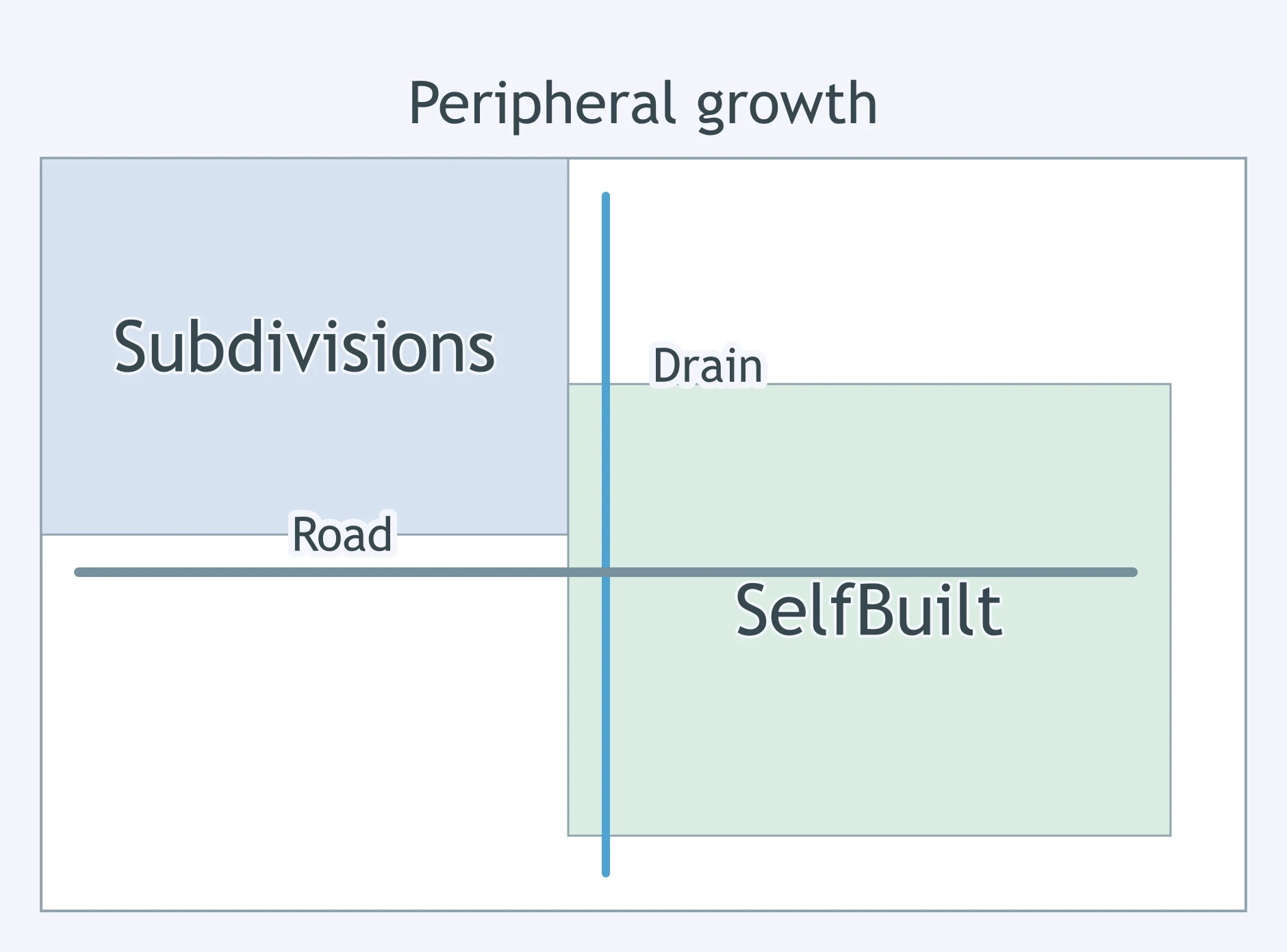
Rural migrants occupy peripheral land because formal apartments require deposits and documents they do not have. The housing market they use is best described as what?
A city clears a low-income district for a stadium and gives households cash payments too small to rent nearby. What outcome is most likely?
After renovations raise rents near downtown, many long-time renters move to outer neighborhoods with longer commutes. What happened to those renters?
A public housing complex is demolished and replaced by mixed-income buildings with fewer deeply affordable units. What is a likely effect on former residents?
An informal hillside settlement is bulldozed without nearby replacement housing. What pattern often follows?
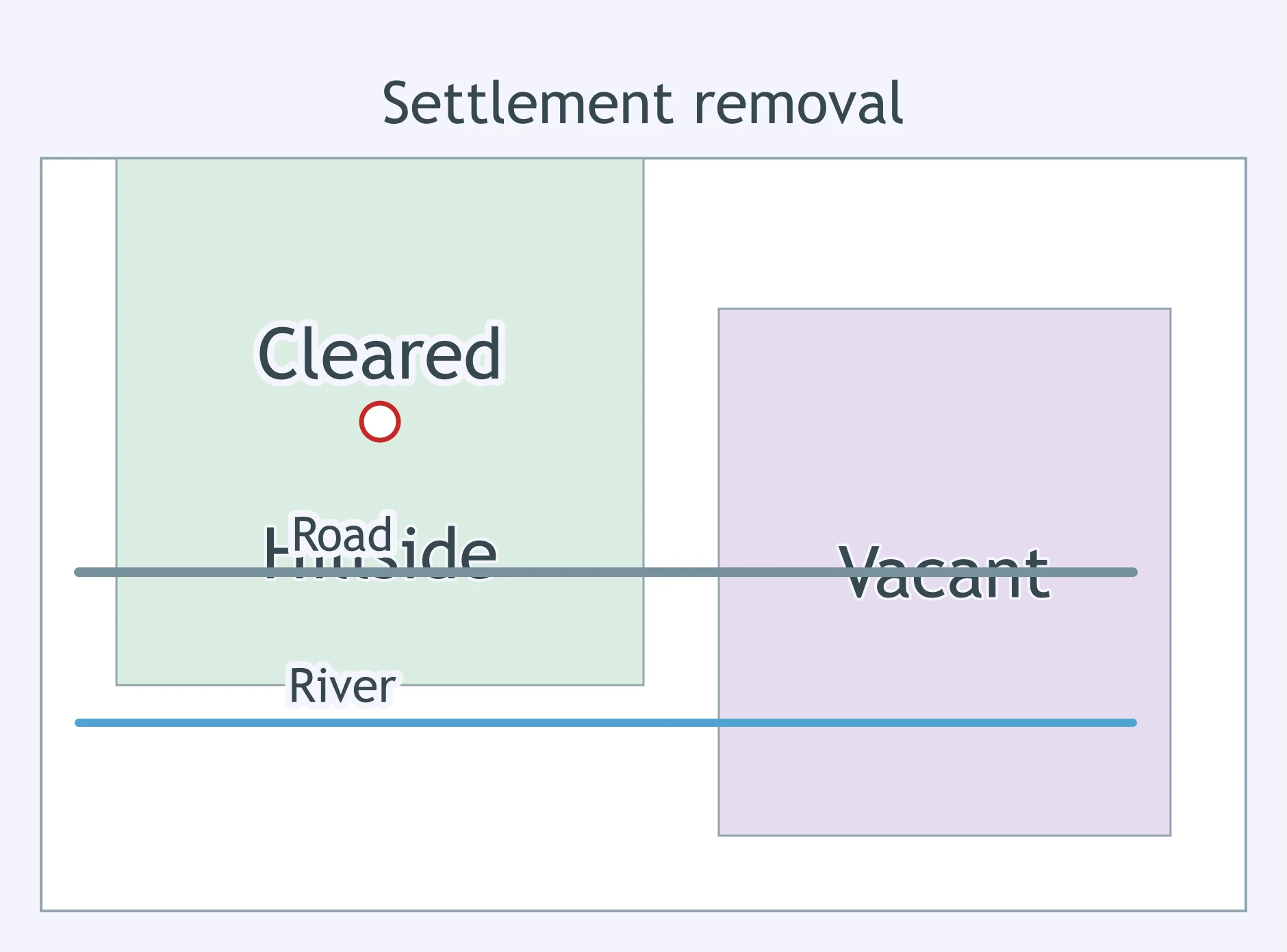
A landlord converts low-rent apartments into short-term luxury units, and tenants without strong lease protections leave the area. This is an example of what outcome?
High-income demand raises rents. Even residents who are not evicted lose familiar stores, churches, and institutions as they are replaced. What is this called?
A highway project removes affordable units but builds no comparable replacements. What does this do to the housing supply for low-income households?
Property taxes rise after surrounding home values surge, and long-time owners on fixed incomes sell and move. What pushed them out?
A city requires large apartment projects to reserve 15 percent of units at rents affordable to lower-income households. What policy is this?
A city limits how much a landlord may raise rent each year for covered apartments. What policy response is being used?
To reduce exclusion, a region enforces rules against refusing to rent, sell, or lend to households because of protected identity categories. What policy area is this?
A city wants to help very low-income households pay private-market rent without building units itself. What tool directly does that?
Instead of demolishing a large self-built settlement, officials install water lines, sewers, street lights, and recognize occupancy rights. What approach is this?
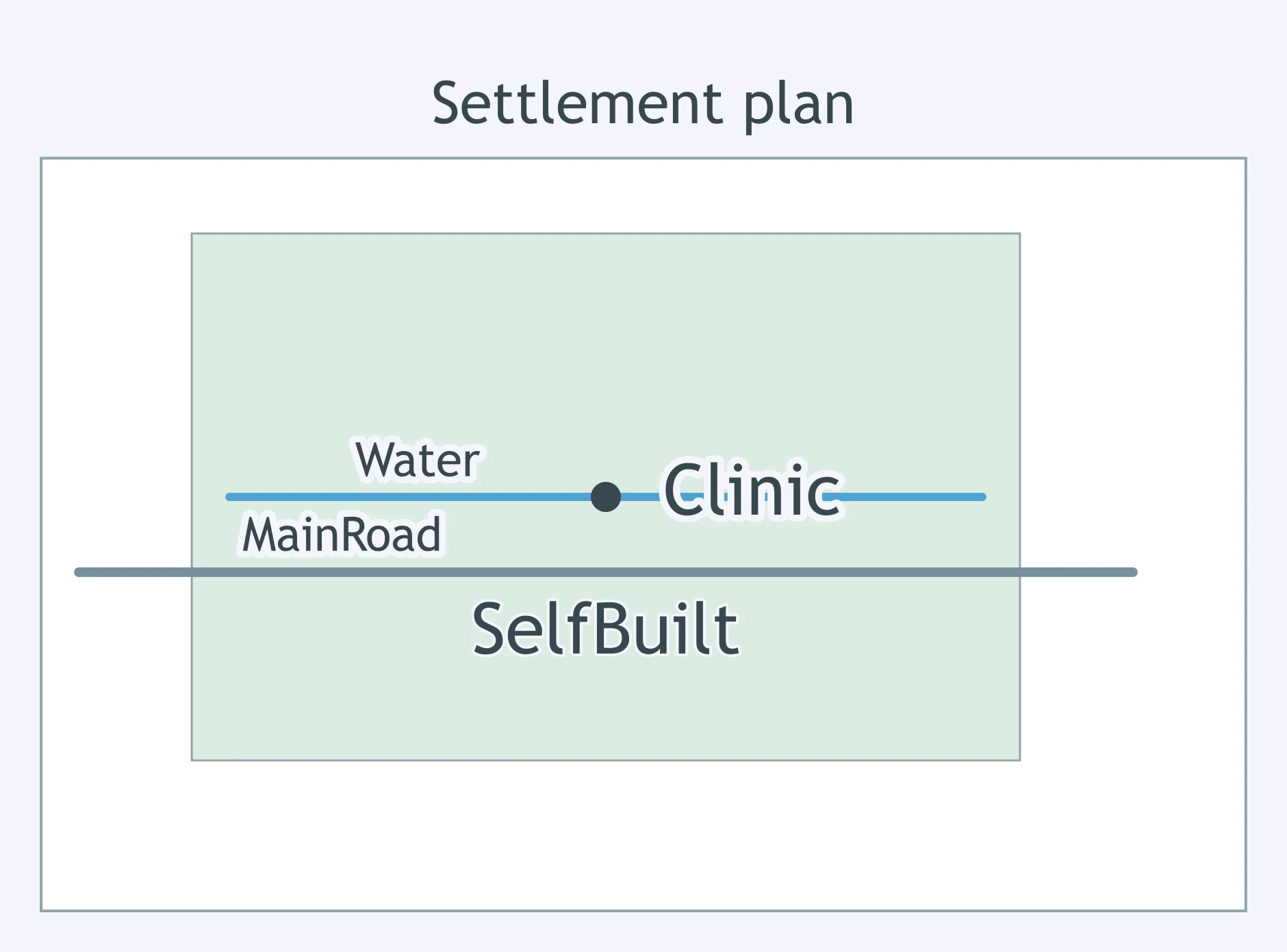
A nonprofit holds land out of speculation while residents buy or rent homes under resale limits that preserve affordability. What model is this?
North American Urban Models: Concentric Zone, Sector, Multiple Nuclei and Galactic
35 questions
World Urban Models: Latin American, African, Southeast Asian and European
35 questions
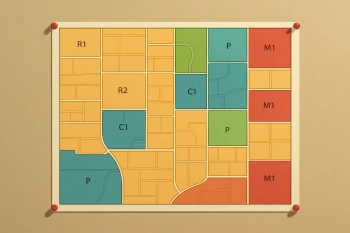
Density, Land Use and Zoning
30 questions
Urban Infrastructure and Transportation
25 questions

Urban Sustainability: Smart Growth, New Urbanism and Greenbelts
30 questions
Crack the passcode before the zombies get in.
Answer, then swat bugs for bonus points.
Race through questions at your own speed.
Same question on every screen. Fastest wins.

Pick a tile, answer, hit bonuses and steals.