Loading
by BlastRoom
Use patterns of similarity in embryo development to work out how species are related.
#us_grade_8_science
20 questions
One question set, multiple game modes. Tap any game to see it in action. Not sure which to pick?
Answer to place stones and capture territory.
Outrun the snow together.
Earn blasts, then hunt the other team.
Answer to earn energy, then climb.

The class blasts through walls together.
Bid on mystery lots. Most money wins.
Sell tours. Nice, standard, or a total scam.

Answer, restock, and serve the rush.
More correct answers pulls the rope your way.
Answer, then shoot down the alien wave.
Answer, then tap to leap the frozen ridge.
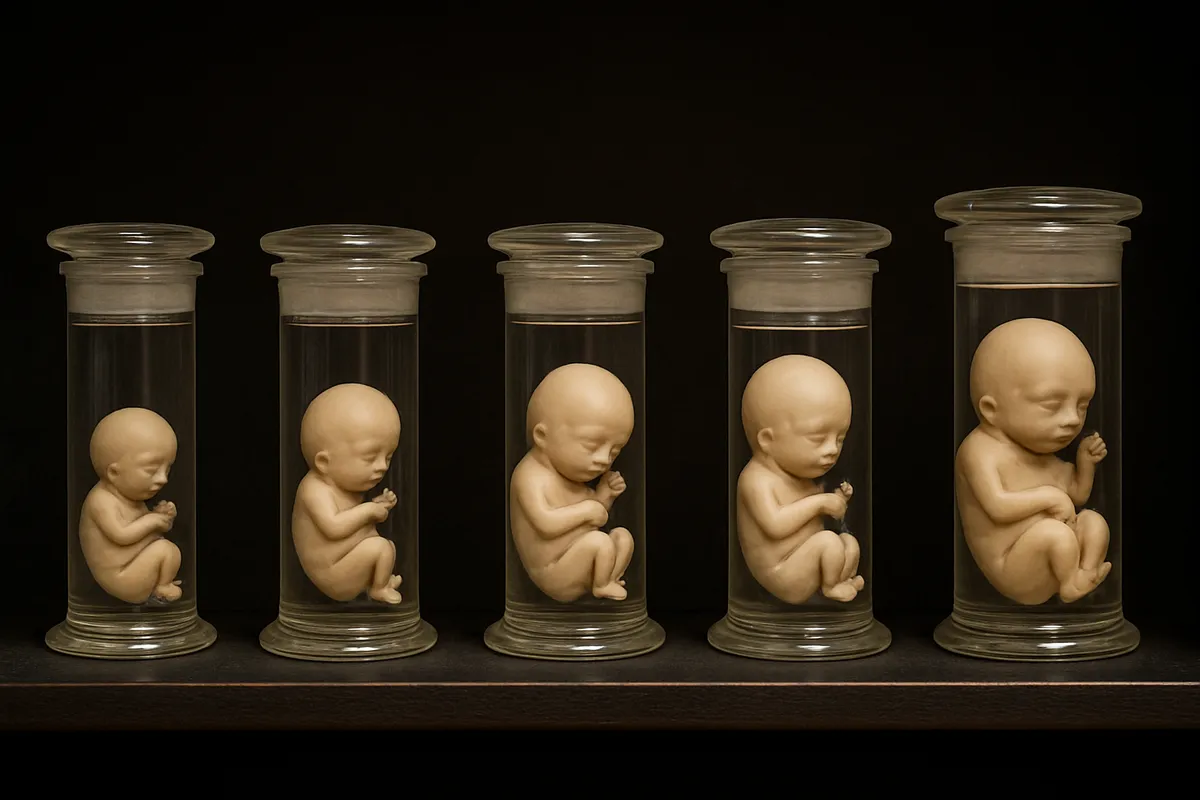
Early embryos of a chicken, a snake and a rabbit each show a tail and pouches in the neck region, though only the snake keeps a tail as an adult. What best explains the shared early features?
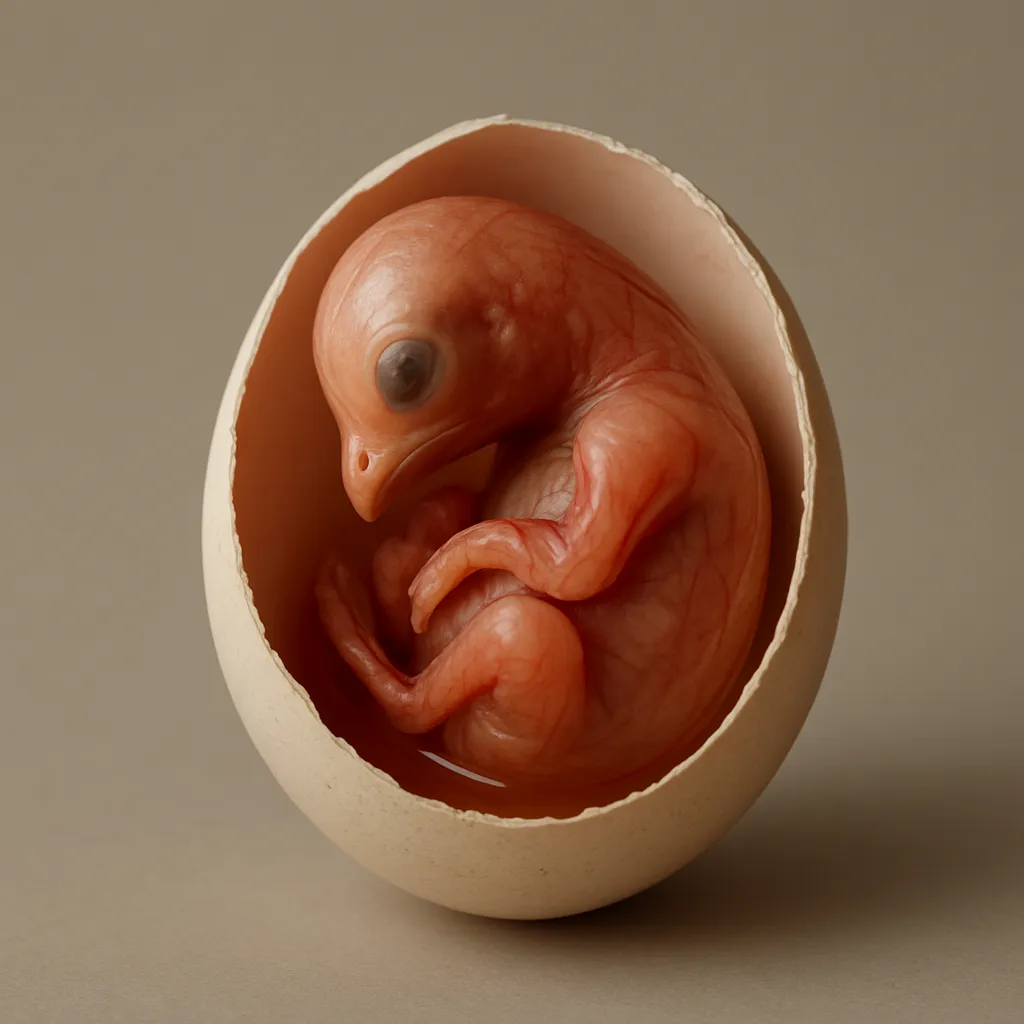
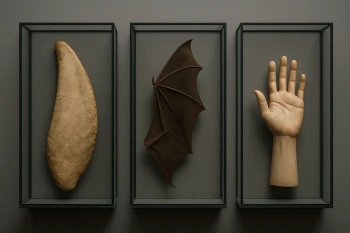
Human, bat and whale embryos all form a paddle-shaped limb bud with five ridges before the adult hand, wing or flipper takes shape. What does this pattern of similarity indicate?
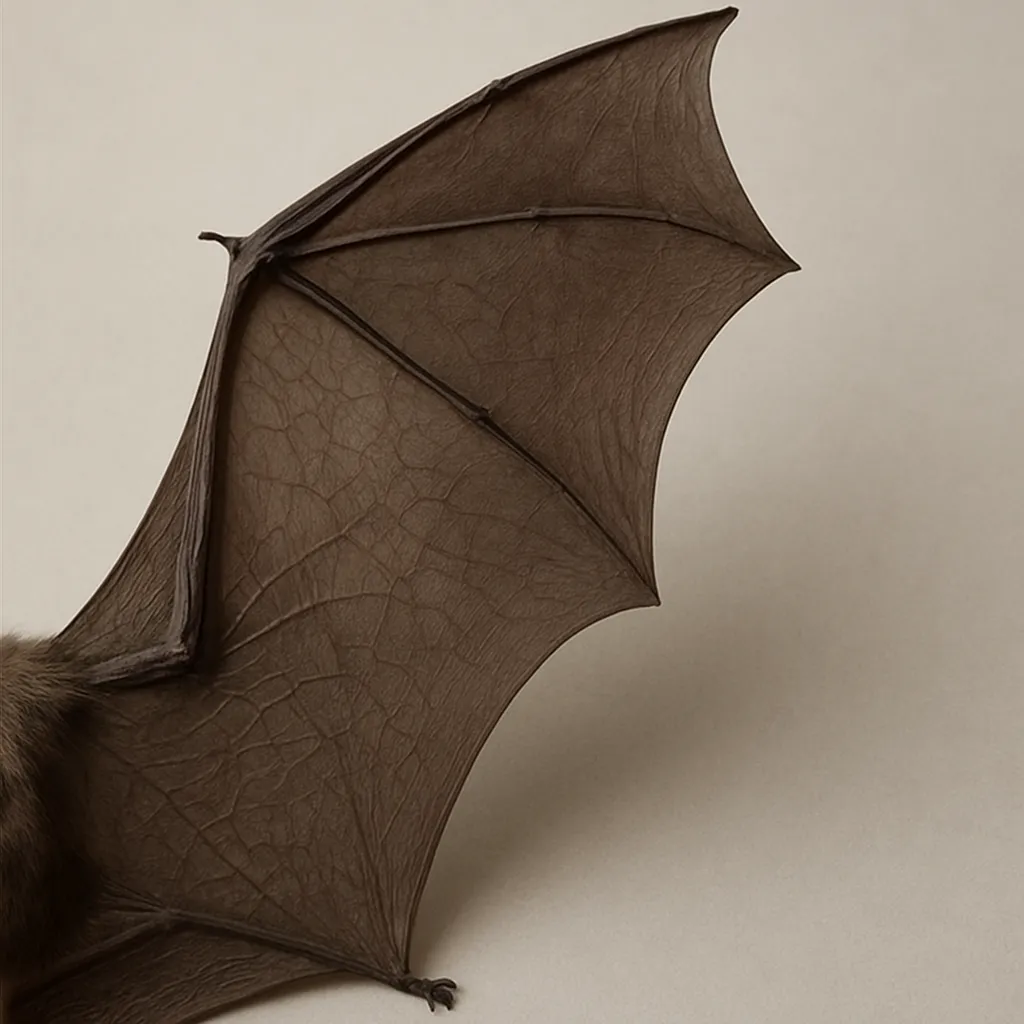
Embryos of a chicken, a lizard and a human each develop inside a fluid-filled sac called an amnion, even though only some develop inside an egg laid outdoors. What does this shared structure suggest?
In a fish embryo the pouches in the neck region become gill slits; in a human embryo the same pouches become parts of the jaw and ear. What does this shared starting structure show?
A human embryo grows a tail during its fifth week and reabsorbs most of it before birth, while a mouse embryo keeps its tail. What does the temporary human tail suggest?
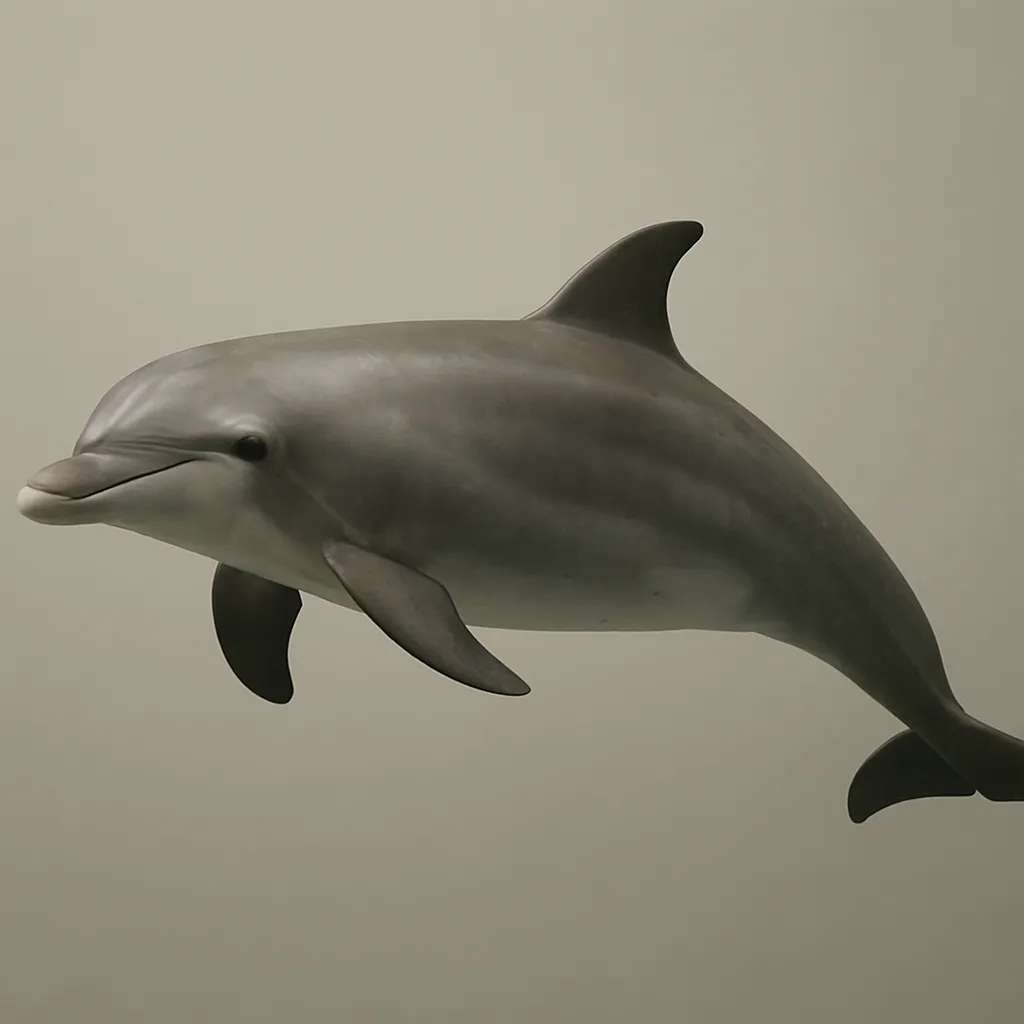
Dolphin embryos begin to form hind limb buds that later disappear, and no adult dolphin has hind legs. What does the appearance of these buds indicate?
A scientist claims that birds and crocodiles share a more recent common ancestor than either shares with frogs. Which embryo observation would best support that claim?
Embryos of species P and Q cannot be told apart until day 24 of development. Embryos of species P and R look clearly different by day 8. What do these observations suggest?
A chicken embryo and a duck embryo stay nearly identical through day 5, while a chicken embryo and a turtle embryo differ noticeably by day 2. Which pair shares the more recent common ancestor?
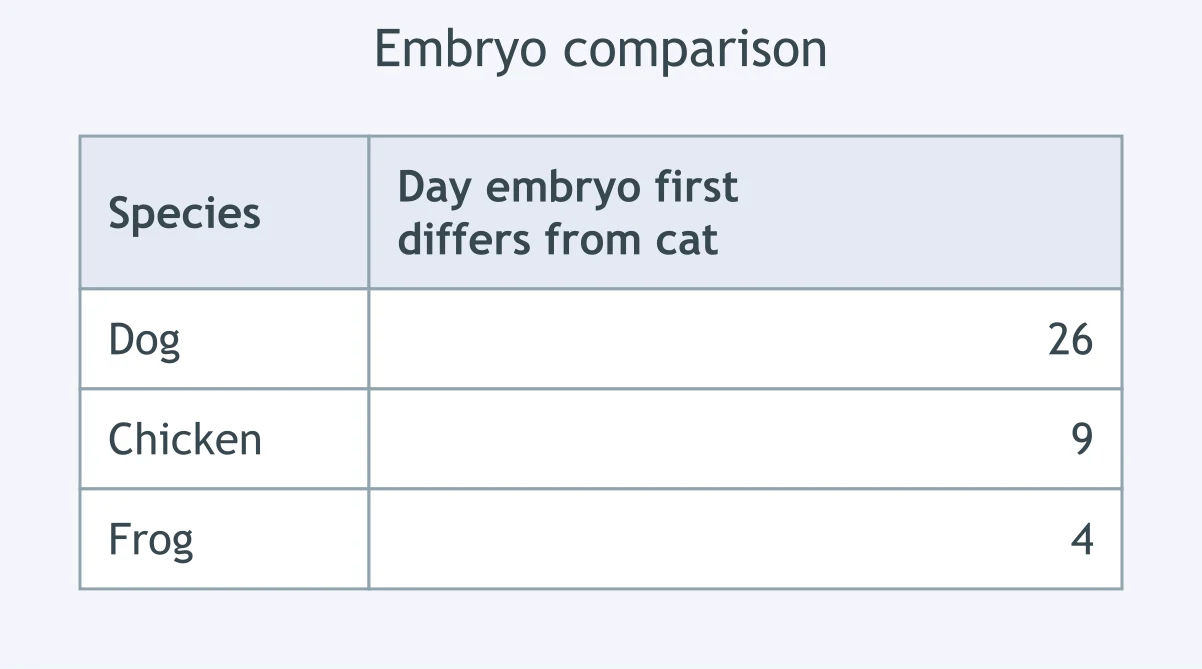
Look at the table. It shows the day of development on which each species' embryo first becomes clearly different from a cat embryo. Which species is most closely related to the cat?
Genetic evidence shows that a horse is more closely related to a rhinoceros than to a kangaroo. What should scientists expect to find when they compare the embryos?
Two species whose embryos become different very early in development are usually judged to be distant relatives. What is the reasoning behind that judgment?
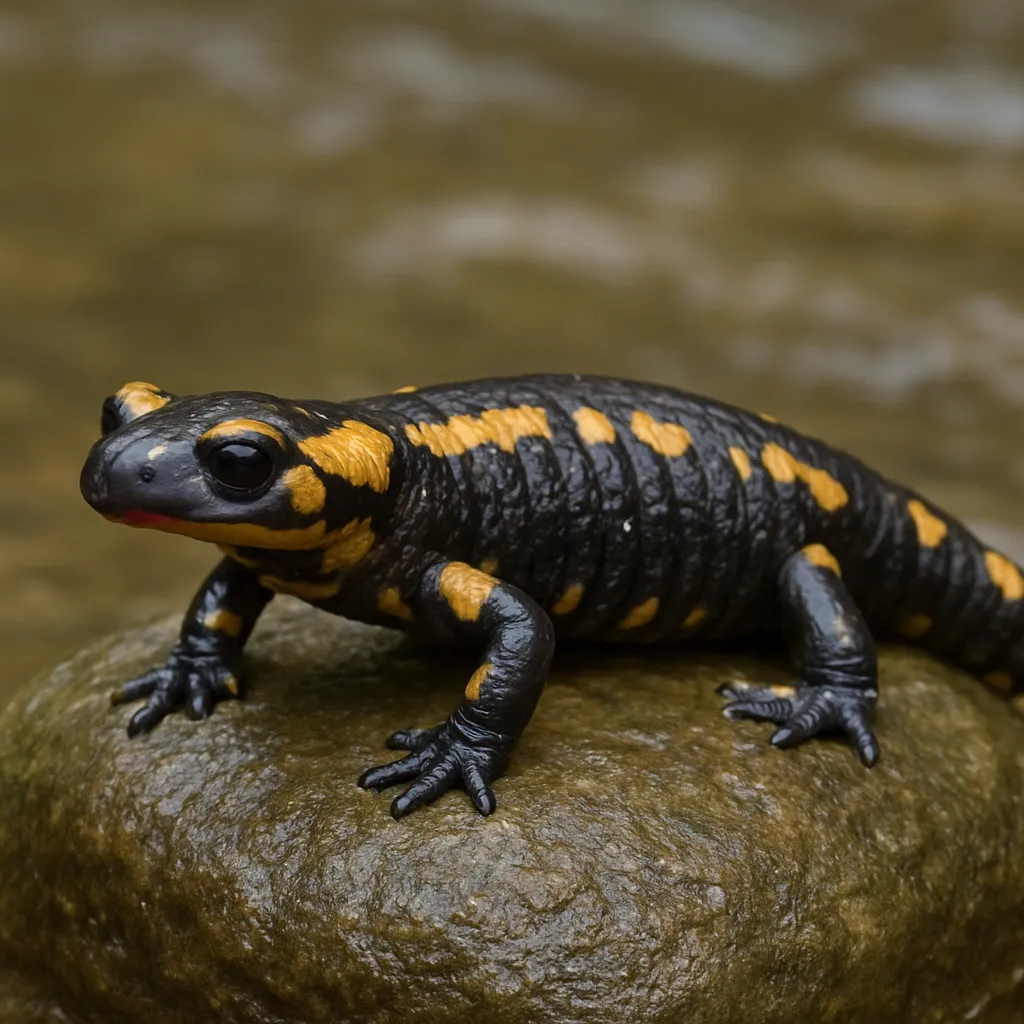
Fish, salamander and lizard embryos all grow tail buds. Salamander and lizard embryos also grow limb buds that form fingers and toes, while fish embryos grow fin buds that never do. Which conclusion does this best support?
Two beetle species follow the same fourteen segmentation steps as their embryos develop. A third beetle species follows a different path after step three. What is best supported?
A student sees that early shark embryos and early human embryos both form pouches in the neck region, and concludes that humans evolved from the sharks swimming in oceans today. What is wrong with this?
A student concludes that because chicken and human embryos look so alike early on, a human embryo is a chicken for part of its development. Why is that reasoning faulty?
A student argues that pig and human embryos look alike only because both develop in warm fluid inside the mother. Which evidence would best challenge that explanation?
A student sees that early rabbit and early bat embryos look almost identical and concludes that bats evolved from modern rabbits. How should the conclusion be corrected?
A student claims that embryo evidence is useless, since adult frogs and adult mice look nothing alike. Why does that claim fail?
Fish embryos develop inside a fluid-filled sac called an amnion, just as bird and human embryos do.
Crack the passcode before the zombies get in.
Answer, then swat bugs for bonus points.
Race through questions at your own speed.
Same question on every screen. Fastest wins.

Pick a tile, answer, hit bonuses and steals.

Natural Selection Over Generations
20 questions