Loading
by BlastRoom
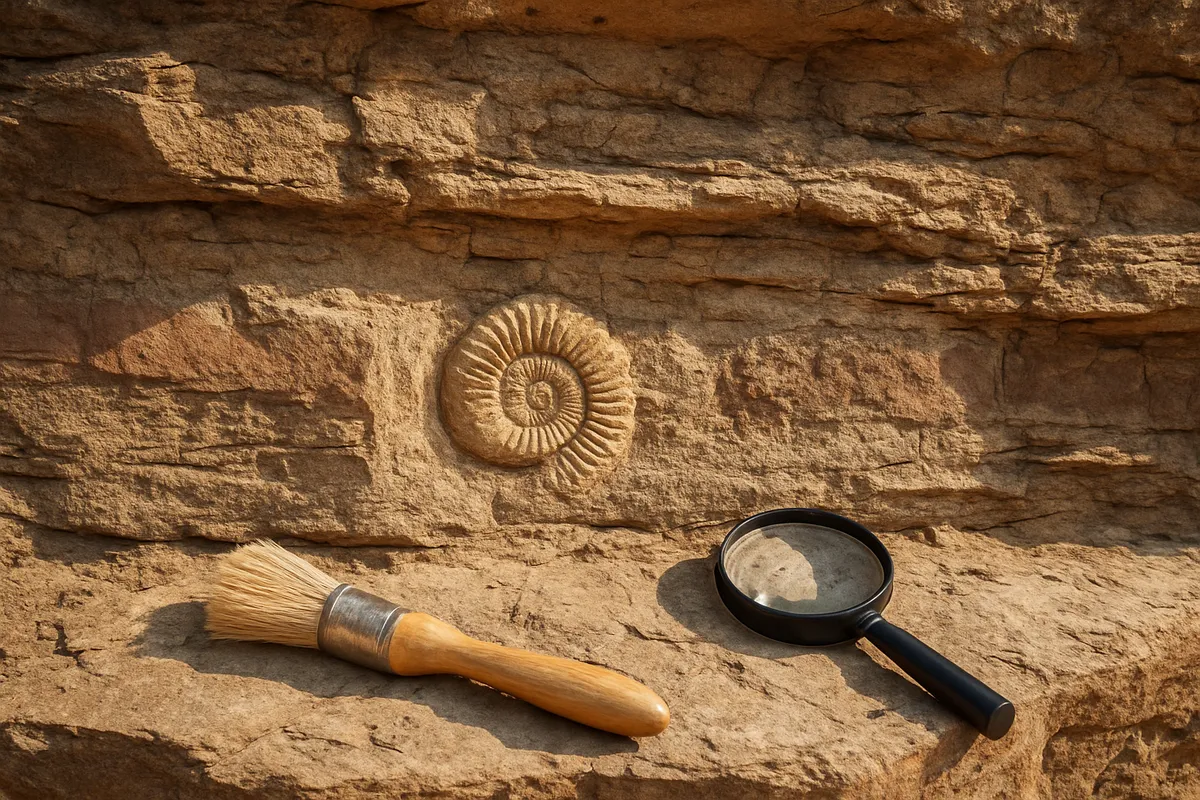
Read undisturbed rock layers and fossil counts for evidence of past life, changing environments, diversity and extinction.
#us_grade_8_science
40 questions
One question set, multiple game modes. Tap any game to see it in action. Not sure which to pick?
Answer to place stones and capture territory.
Outrun the snow together.
Earn blasts, then hunt the other team.
Answer to earn energy, then climb.

The class blasts through walls together.
Bid on mystery lots. Most money wins.
Sell tours. Nice, standard, or a total scam.

Answer, restock, and serve the rush.
More correct answers pulls the rope your way.
Answer, then shoot down the alien wave.
Answer, then tap to leap the frozen ridge.
An undisturbed cliff has four layers. From bottom to top, layer 1 holds trilobites, layer 2 trilobites and fish, layer 3 fish and ferns, and layer 4 ferns and mammal bones. Which statement does this record support?
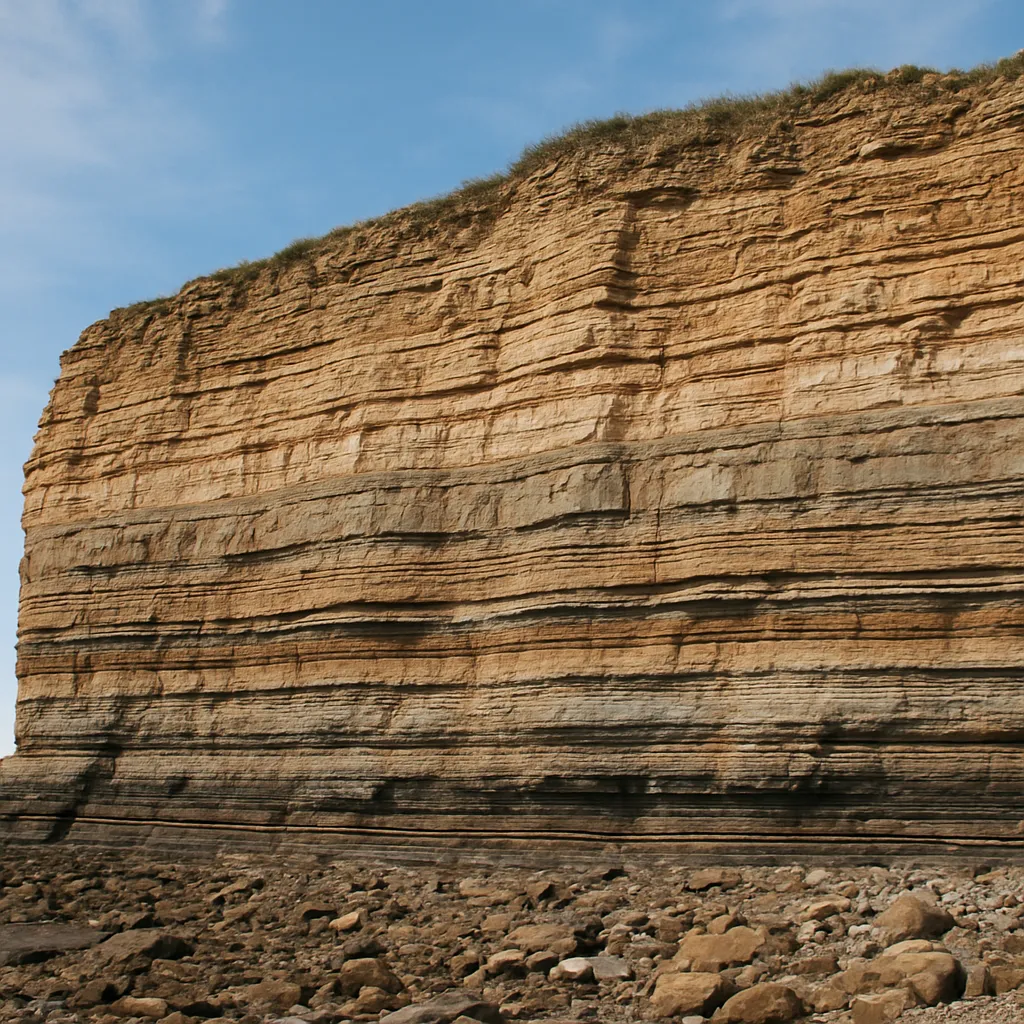
A road cut exposes six undisturbed sedimentary layers, each holding different fossils. Which layer holds the oldest fossils?
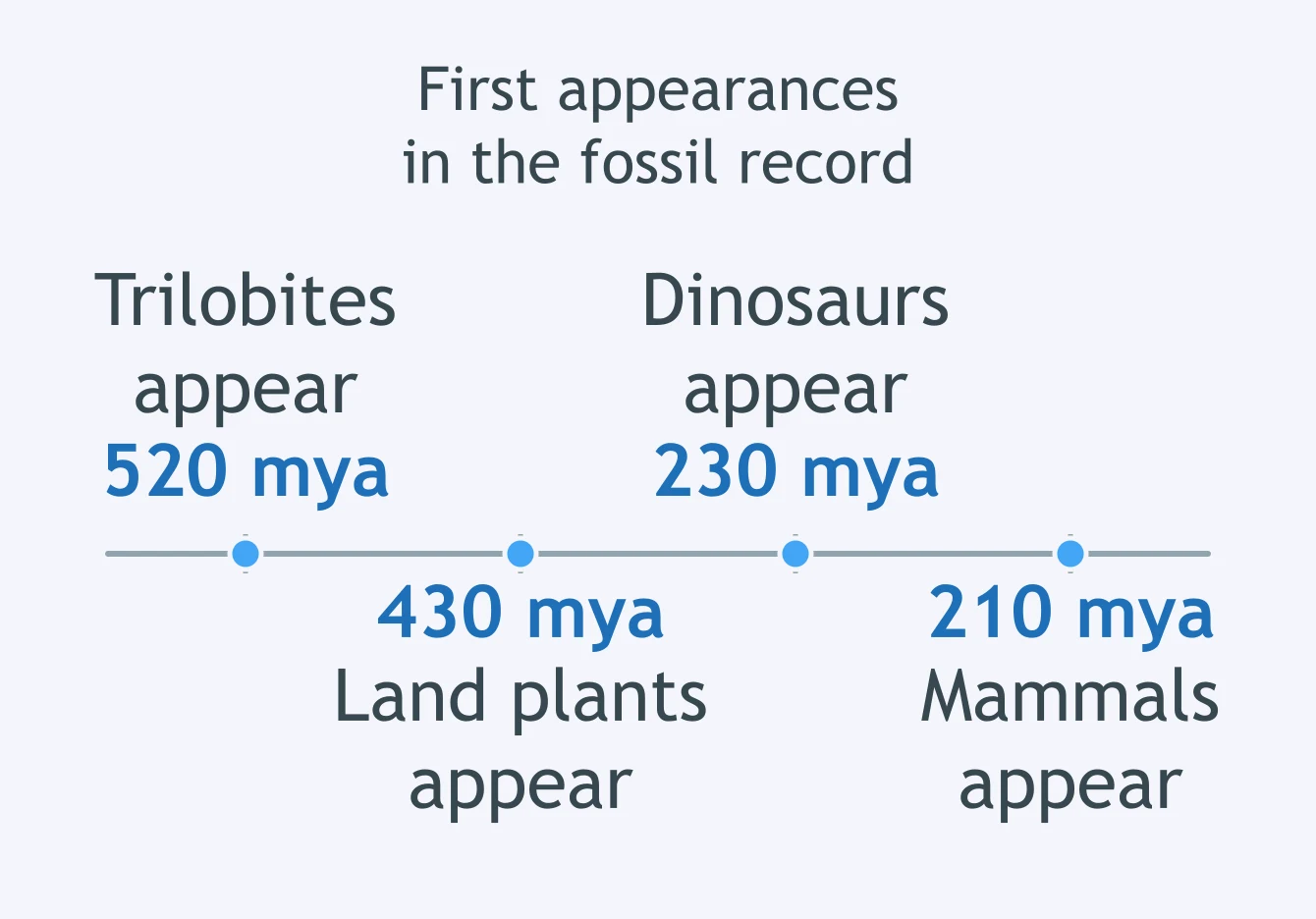
Use the timeline of first appearances in the fossil record. Which group shows up in the record earliest?
A shallow sea is home to many jellyfish, worms and clams, but rock that formed on its floor holds mostly clam shells as fossils. Why are clams far more common as fossils?
If rock layers have been folded and turned upside down, the lowest layer may hold the youngest fossils.
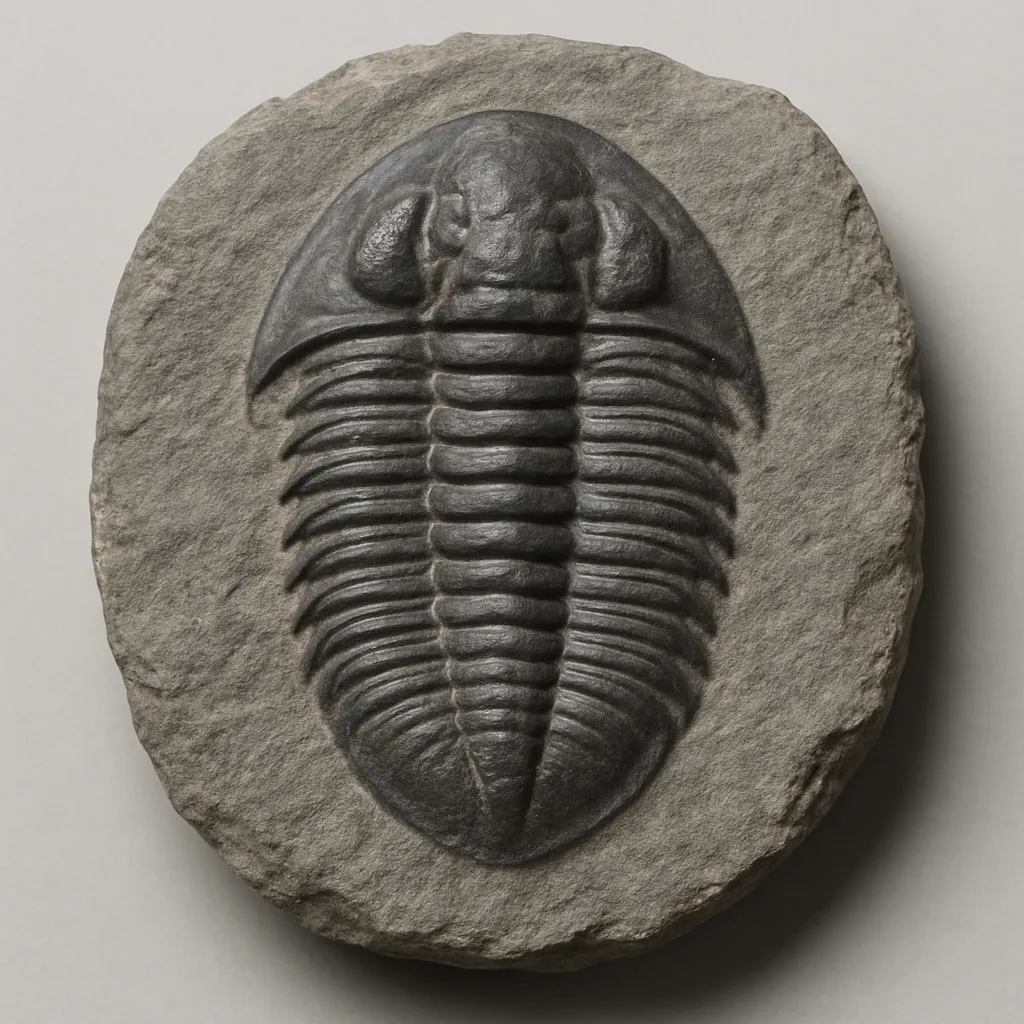
Trilobites occur in the three lowest layers of an undisturbed cliff and in none of the four layers above them. What does the cliff record?
A geologist finds the same short-lived fossil clam species in one rock layer in Ohio and in one rock layer in Spain. What is the best conclusion about the two layers?
Which kind of fossil is most useful as an index fossil for matching the ages of rock layers on different continents?
A volcanic ash bed dated at 20 million years old lies above a fossil-bearing layer in undisturbed rock. What can be said about those fossils?
Fossil ferns fill layers dated about 300 million years old, while the first fossil flowering plants appear in layers dated about 130 million years old. What does this pattern show?
A rock layer in the middle of Kansas, hundreds of kilometers from any ocean, holds fossil corals, clam shells and shark teeth. What is the best conclusion about that layer?
A coal seam sits on rock holding fossil tree trunks still upright, giant fern fronds and roots in place. What was this area like when the layer formed?
A lake bed layer beneath a modern oak forest holds pollen from spruce and fir trees. What does this suggest about the area when that layer formed?
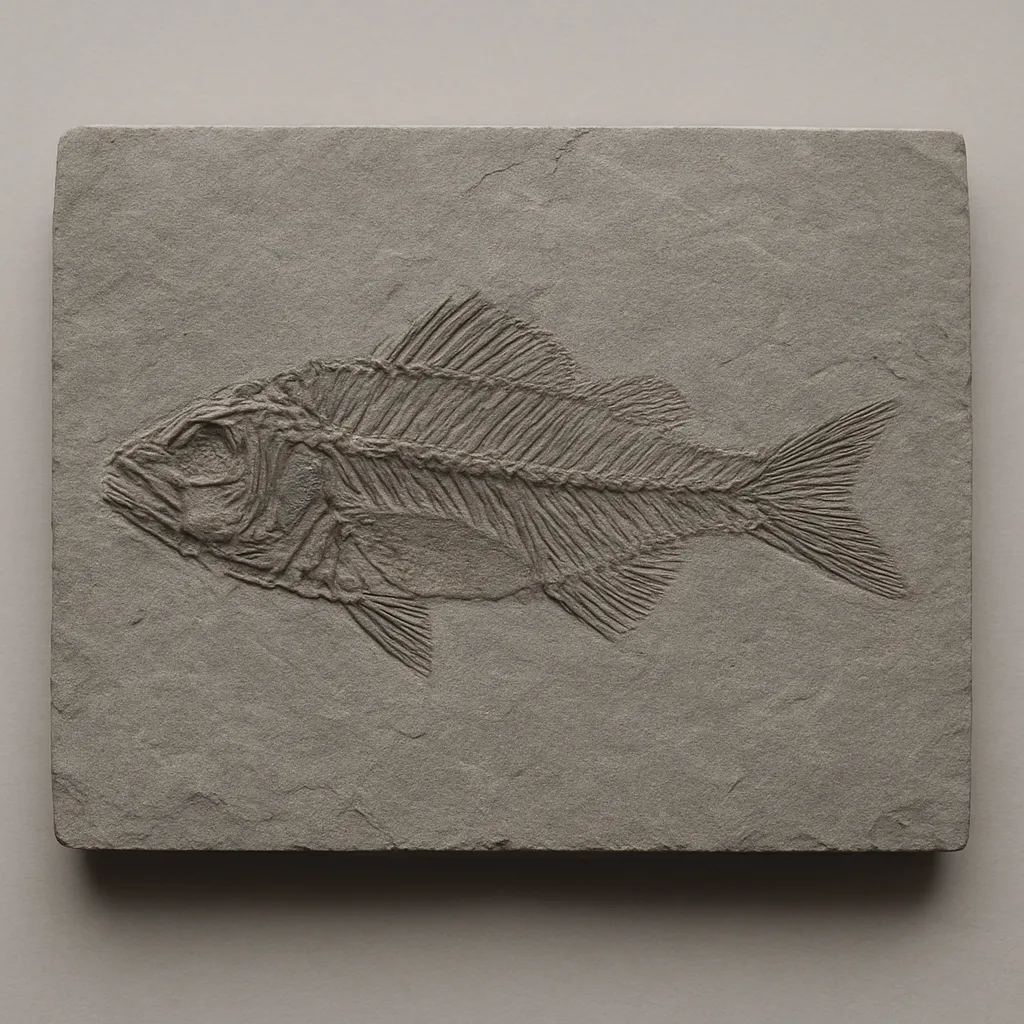
A layer of fine mud holds complete fossil fish, water lily leaves and freshwater snails. What environment does this evidence best indicate?
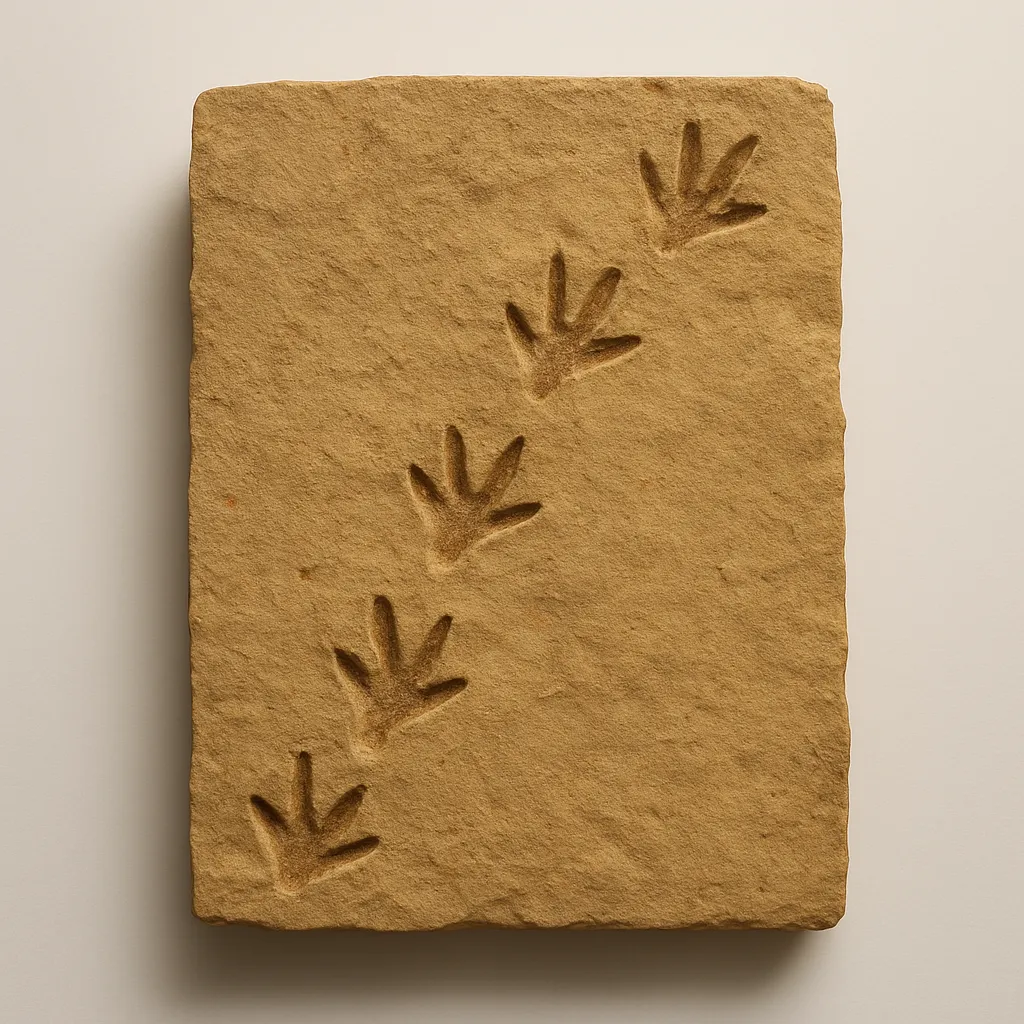
Sandstone with tall, steeply slanted layers holds fossil reptile trackways and no water plants at all. What was the environment when it formed?
Fossil tree trunks and fern leaves found in Antarctic rocks show that those plants grew on top of the ice sheet that covers Antarctica today.
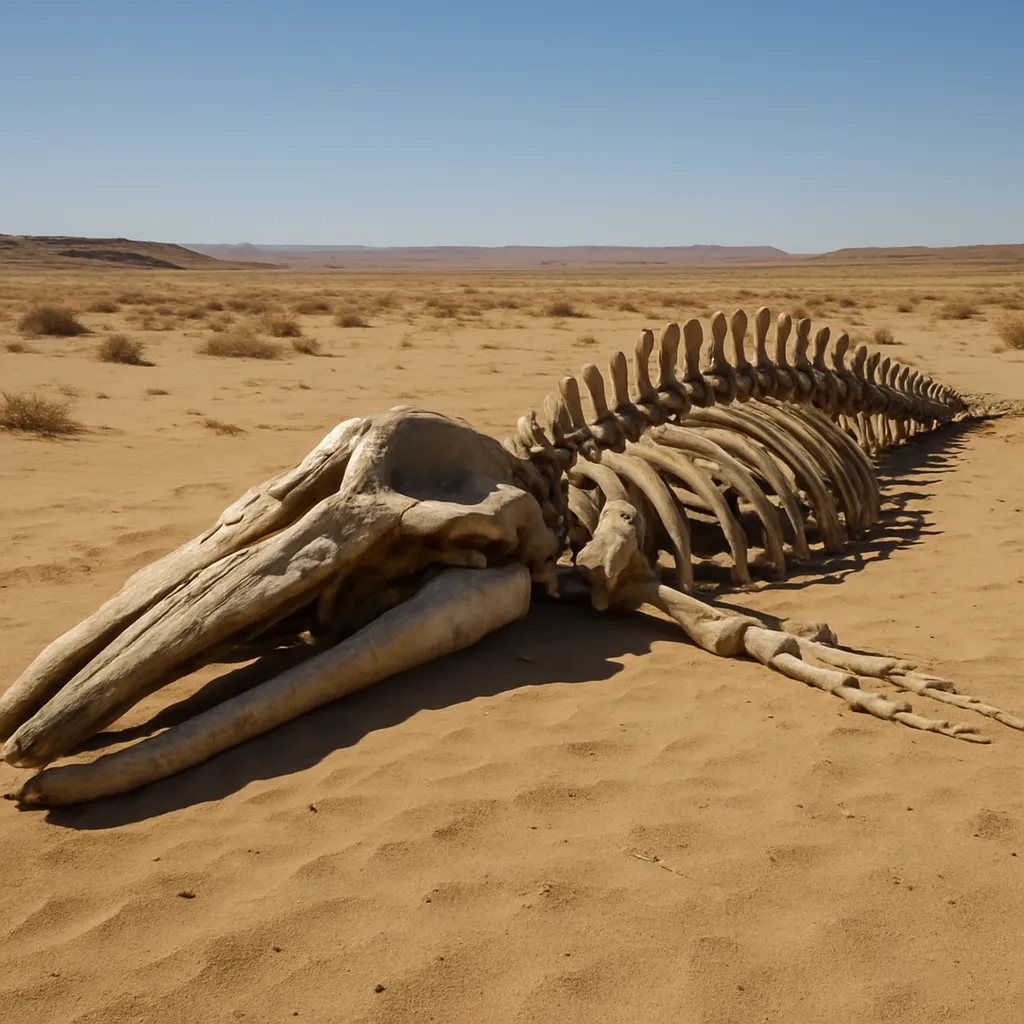
In a desert in Egypt, a rock layer holds whale skeletons and fossil sea urchins. What does this layer record?
Gravel beside an Ohio river holds bones of woolly mammoths and reindeer. What does this show about the region when those animals died?
In one cliff the lower layers hold marine shells and the upper layers hold land plants and insects. What change does the cliff record at that place?
Fossil corals fill a limestone layer high in the Alps. What is the best explanation for corals being found on a mountain?
Trilobite species counts fall from about 70 in layers 400 million years old, to 10 at 300 million years, to none in any layer younger than 252 million years. What does this show?
Layers dated 200 million years old hold about 5 mammal species, while layers dated 60 million years old hold about 90. What does this pattern show?
Just above one thin clay bed, dinosaur, ammonite and many plankton fossils all disappear together from the record worldwide. What does this pattern show?
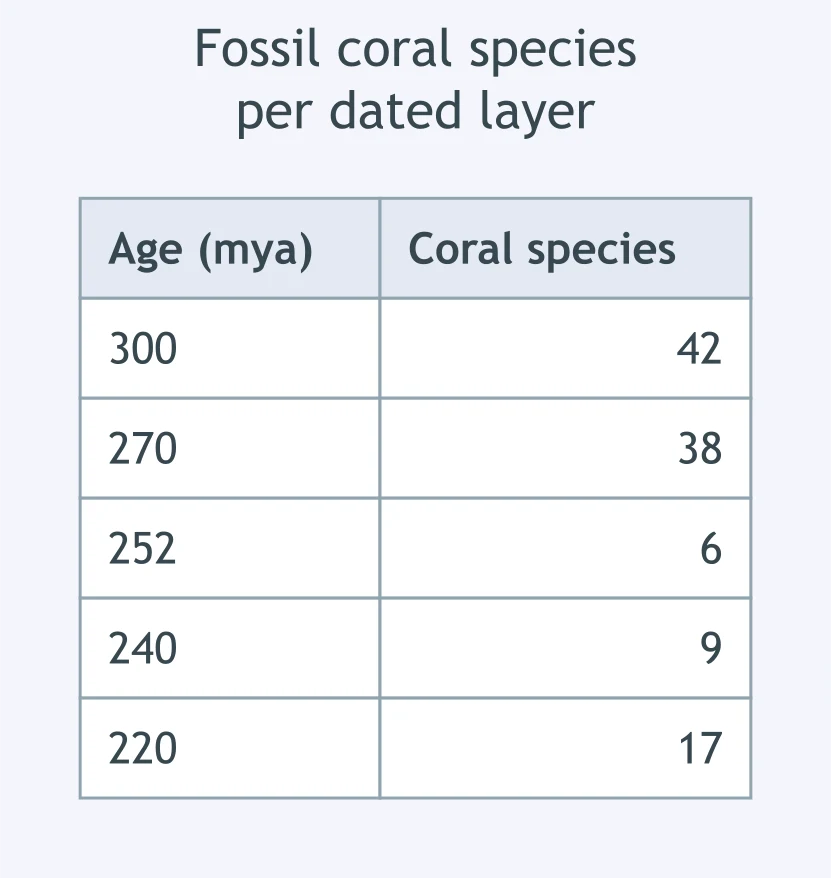
Use the table of fossil coral species counted in dated rock layers. Which statement about the data is accurate?
Above the layer dated 66 million years old, dinosaur fossils vanish while mammal species counts climb from about 20 to over 100. What do these counts together show?
In the fossil record, simple single-celled life appears long before any animals.
Rock layers spanning 10 million years record 30 new bird species appearing and only 2 disappearing. What does this pattern show?
About 90 percent of the marine species present below one rock boundary are missing above it at sites all over the world. What is this pattern called?
Counts of flowering plant species rise from 2 in layers 130 million years old to hundreds in layers 70 million years old. What does the record document?
One clam species is counted in layers older than 5 million years on every continent, and in zero layers younger than that anywhere. What is the best conclusion?
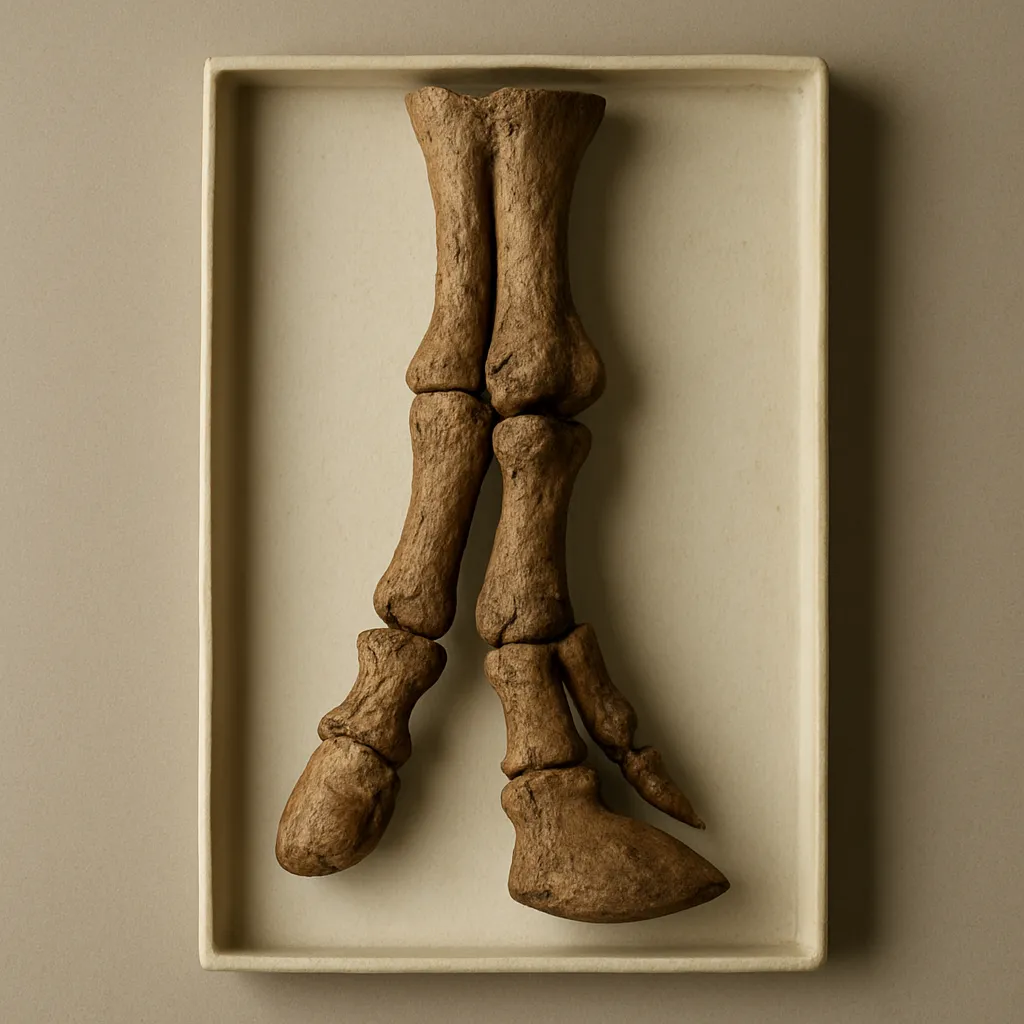
Fossil horse relatives, oldest to youngest, show a dog-sized animal with four toes, a larger three-toed animal, a still larger one with one big toe, and the single-hoofed modern horse. What does this series show?
Fossil whale relatives, oldest to youngest, show a four-legged land mammal, a long-bodied swimmer with small hind legs, and a fully aquatic whale with tiny hip bones. What does this document?
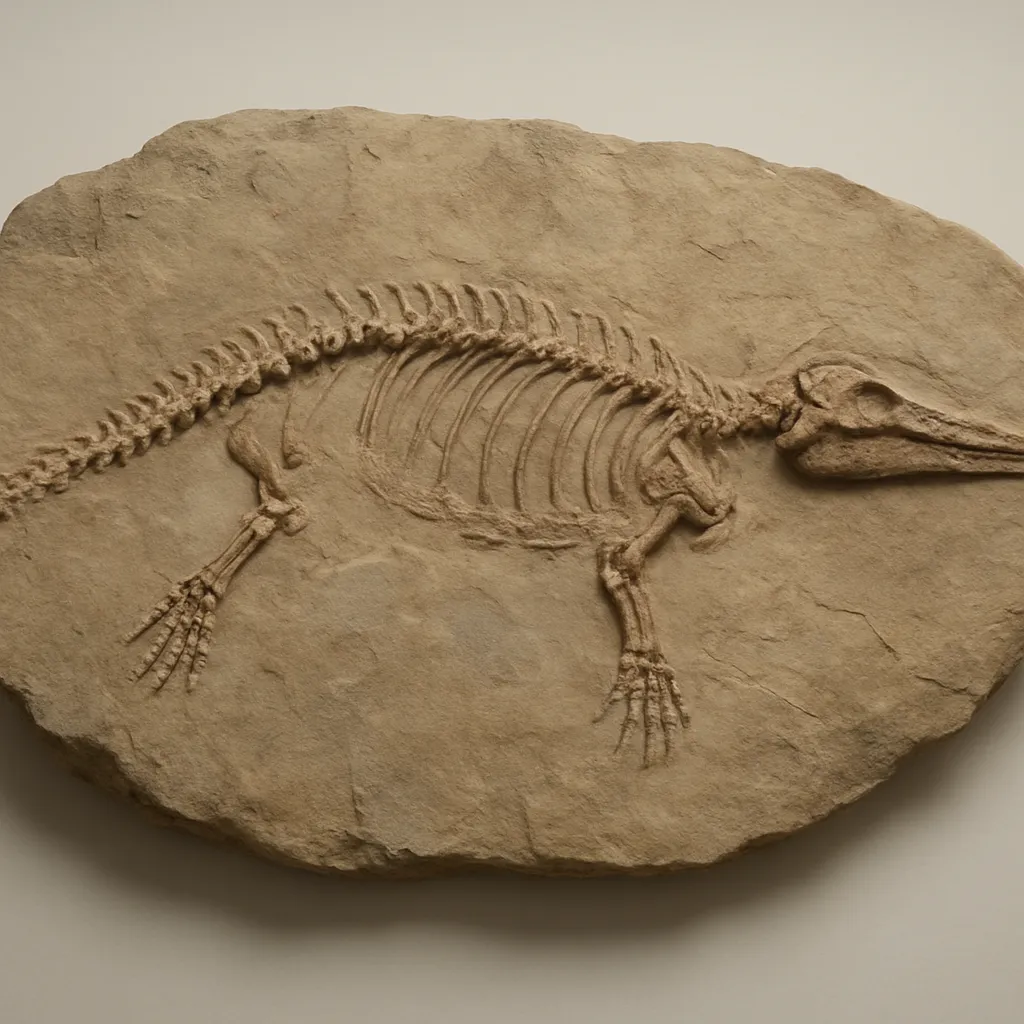
Modern whales carry small hip and leg bones buried inside the body wall, and fossil whale relatives had working hind legs. What does this evidence support?
Fossils in age order show a fish with fin rays, then a fish with sturdy fin bones, a flat head and a neck, then an animal with four limbs and toes. What does this record?
Fossil horse relatives grew taller over millions of years. A student says each animal stretched taller during its life and passed that height on. Why is this reading wrong?
Fossil snail shells in one cliff get steadily wider from the lowest layer to the highest, across hundreds of thousands of years. What does this series record?
Fossil elephant relatives, oldest to youngest: a pig-sized animal with a short snout, a larger animal with a long jaw and tusks, and the modern elephant with a long trunk. What does this show?
Two cat-like fossil forms in younger layers each share the same unusual tooth and ankle features with one older fossil form. What does this pattern best support?
As grasslands spread, fossil horse relatives in younger layers show taller, harder-wearing teeth. What does this pattern best support?
Most kinds of living things that have ever lived on Earth were preserved as fossils.
Crack the passcode before the zombies get in.
Answer, then swat bugs for bonus points.
Race through questions at your own speed.
Same question on every screen. Fastest wins.

Pick a tile, answer, hit bonuses and steals.
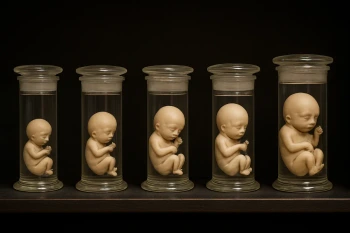
Embryological Evidence
20 questions