Loading
by BlastRoom
Students read property data recorded before and after substances interact and judge whether a chemical reaction occurred.
#us_grade_8_science
40 questions
One question set, multiple game modes. Tap any game to see it in action. Not sure which to pick?
Answer to place stones and capture territory.
Outrun the snow together.
Earn blasts, then hunt the other team.
Answer to earn energy, then climb.

The class blasts through walls together.
Bid on mystery lots. Most money wins.
Sell tours. Nice, standard, or a total scam.

Answer, restock, and serve the rush.
More correct answers pulls the rope your way.
Answer, then shoot down the alien wave.
Answer, then tap to leap the frozen ridge.
Before mixing, a colorless liquid boils at 100 degrees C and an aluminum metal melts at 660 degrees C. Afterward the dish holds a white powder that melts at 2072 degrees C. What do these data indicate?
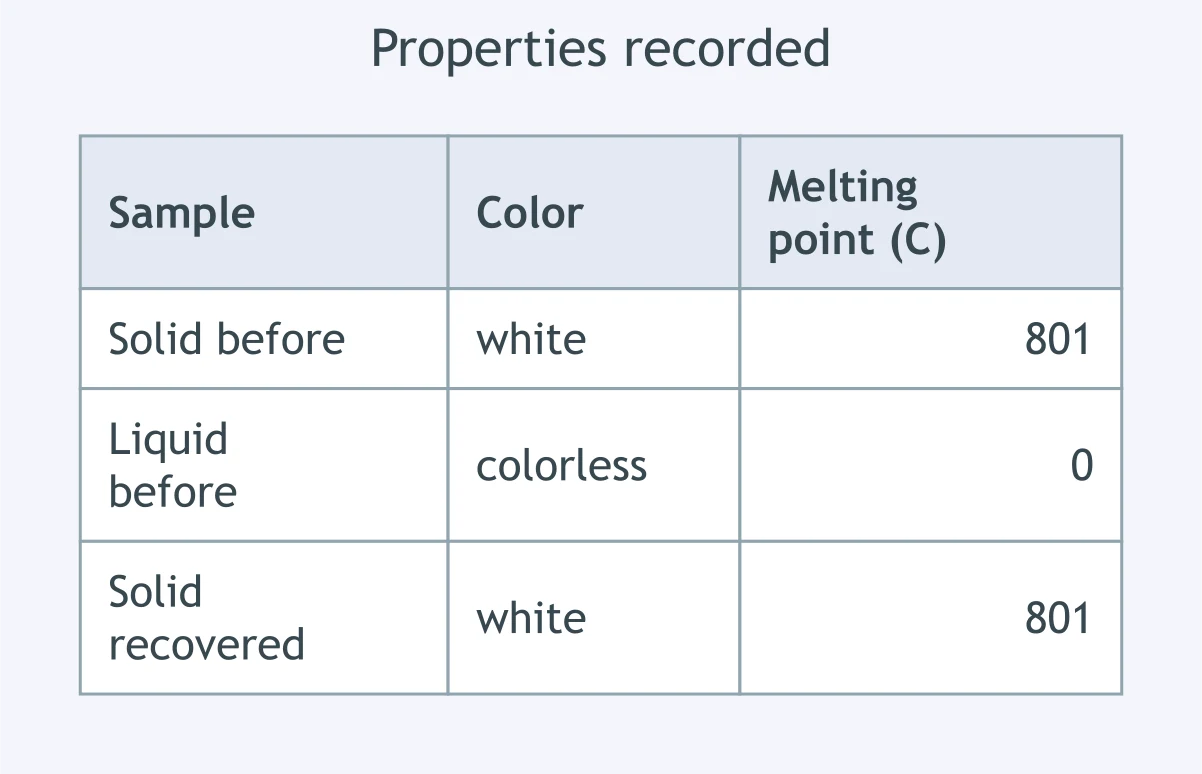
Use the table. The white solid is stirred into the liquid until it disappears, the liquid is then evaporated away, and the recovered solid is tested. Which conclusion do the data support?
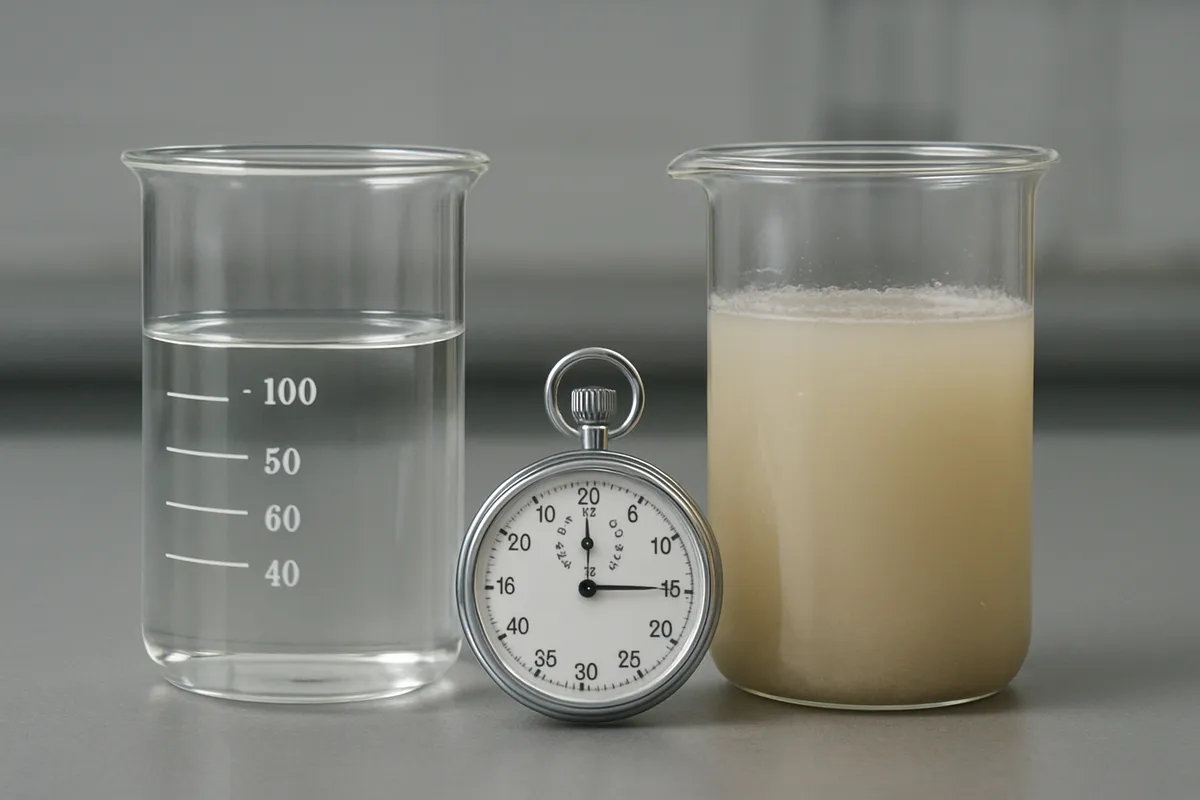
Two clear colorless solutions are poured together. Afterward the container holds a cloudy liquid and a fine white solid that does not dissolve in water, though both starting solutions were completely clear. What do these data indicate?
A yellow powder melting at 115 degrees C is heated with a gray powder melting at 1538 degrees C. Afterward one dark solid remains, and it melts at 1195 degrees C. What do the data show?
A white solid melting at 62 degrees C is warmed until it becomes a colorless liquid, then cooled overnight. The solid that returns is white and melts at 62 degrees C. Which conclusion do these data support?
Granulated sugar is a white solid that dissolves in water and tastes sweet. After long heating it is a black solid that does not dissolve in water and smells burnt. What do these data indicate?
Gray iron filings are magnetic; yellow sulfur powder is not. The two powders are stirred together in a dish. The mixture is still yellow and gray, and a magnet lifts gray specks out of it. What happened?
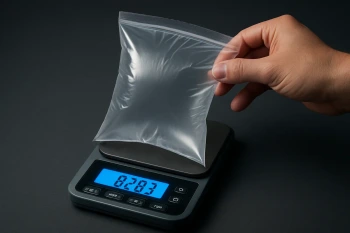
In an open dish, 60.0 g of solid and liquid are mixed. Bubbling is seen for a minute, and afterward the dish and contents have a mass of 57.8 g. Which conclusion do these data support?
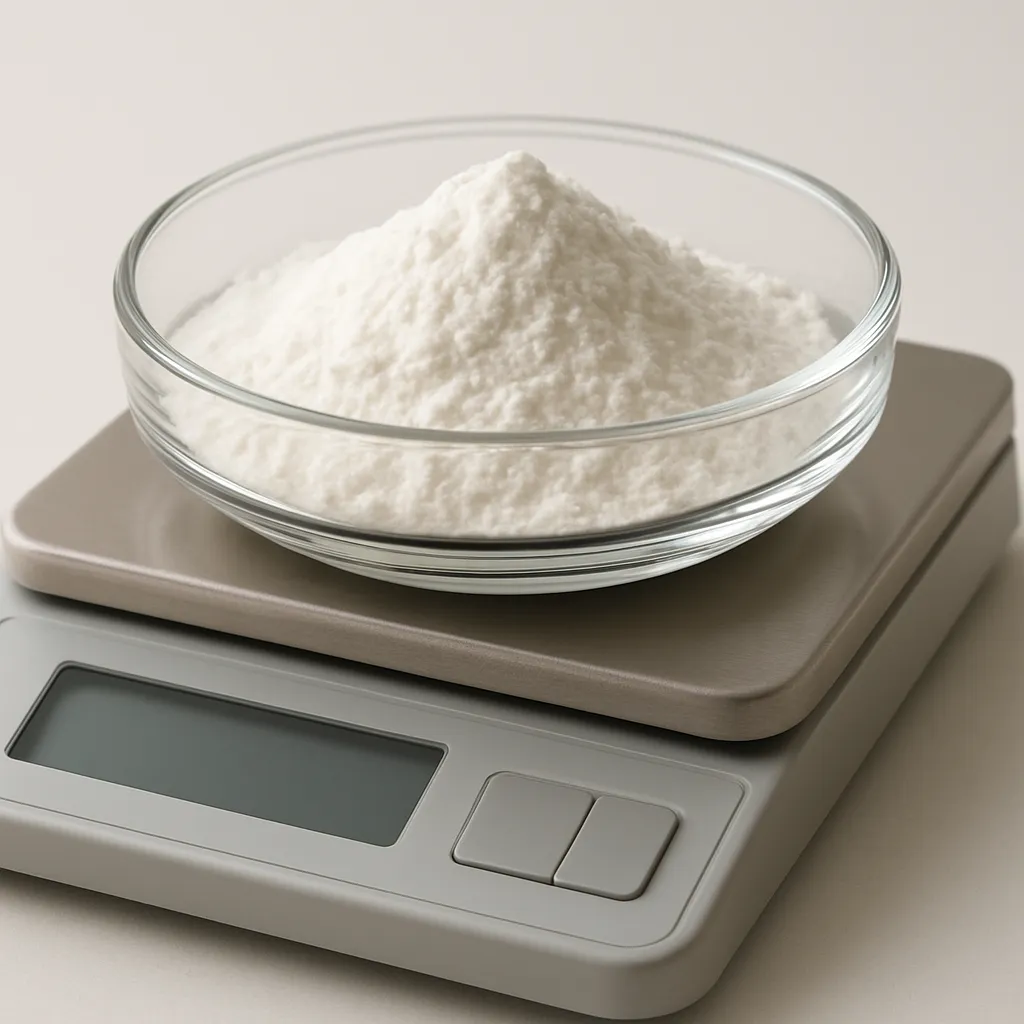
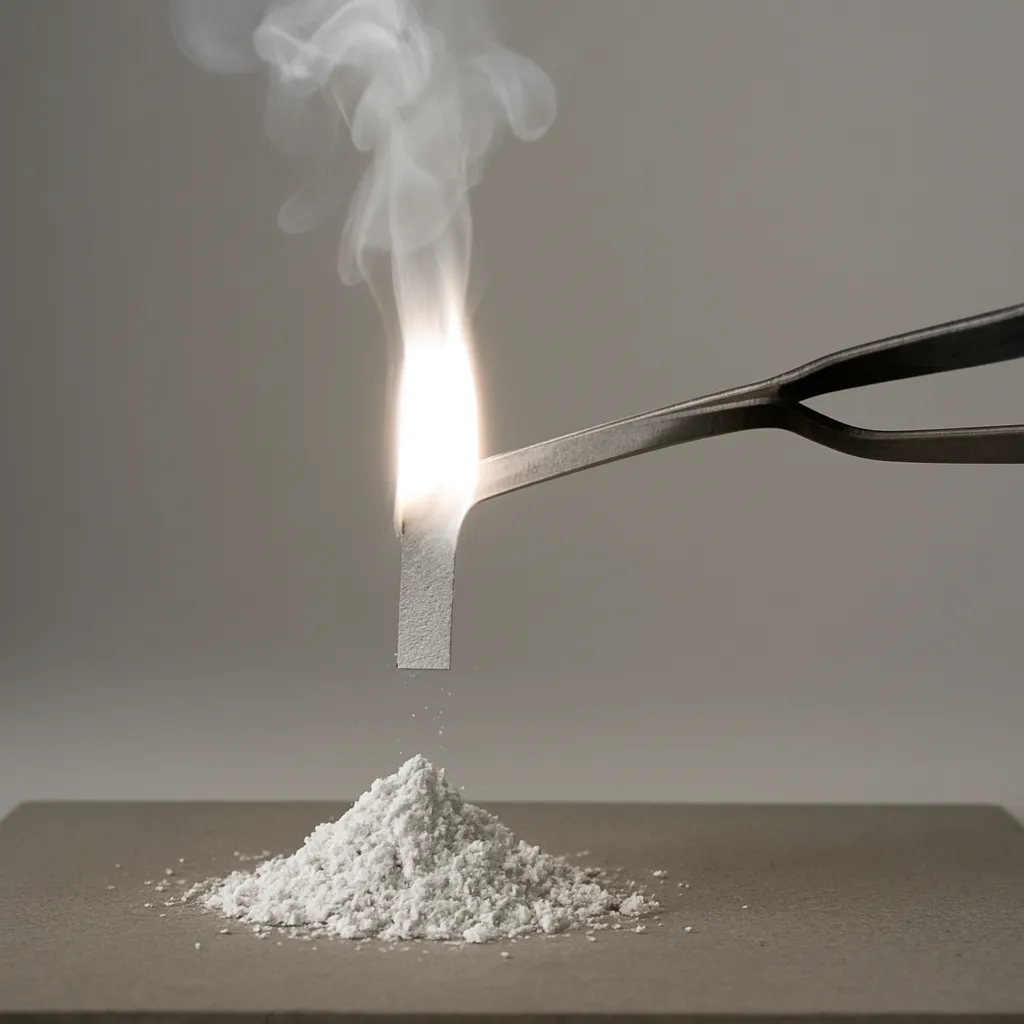
A shiny gray metal strip that melts at 650 degrees C is burned in air. What remains is a crumbly white powder that stays solid past 2800 degrees C. What do these data indicate?
Liquid P has a density of 1.00 g/mL and liquid Q has a density of 0.79 g/mL. After stirring them together, the single clear liquid has a density of 0.95 g/mL. What is the best conclusion?
A gas that will not burn is bubbled through a warm colorless liquid. The gas collected afterward burns with a pale flame, and the liquid left behind is now yellow. Which conclusion do these data support?
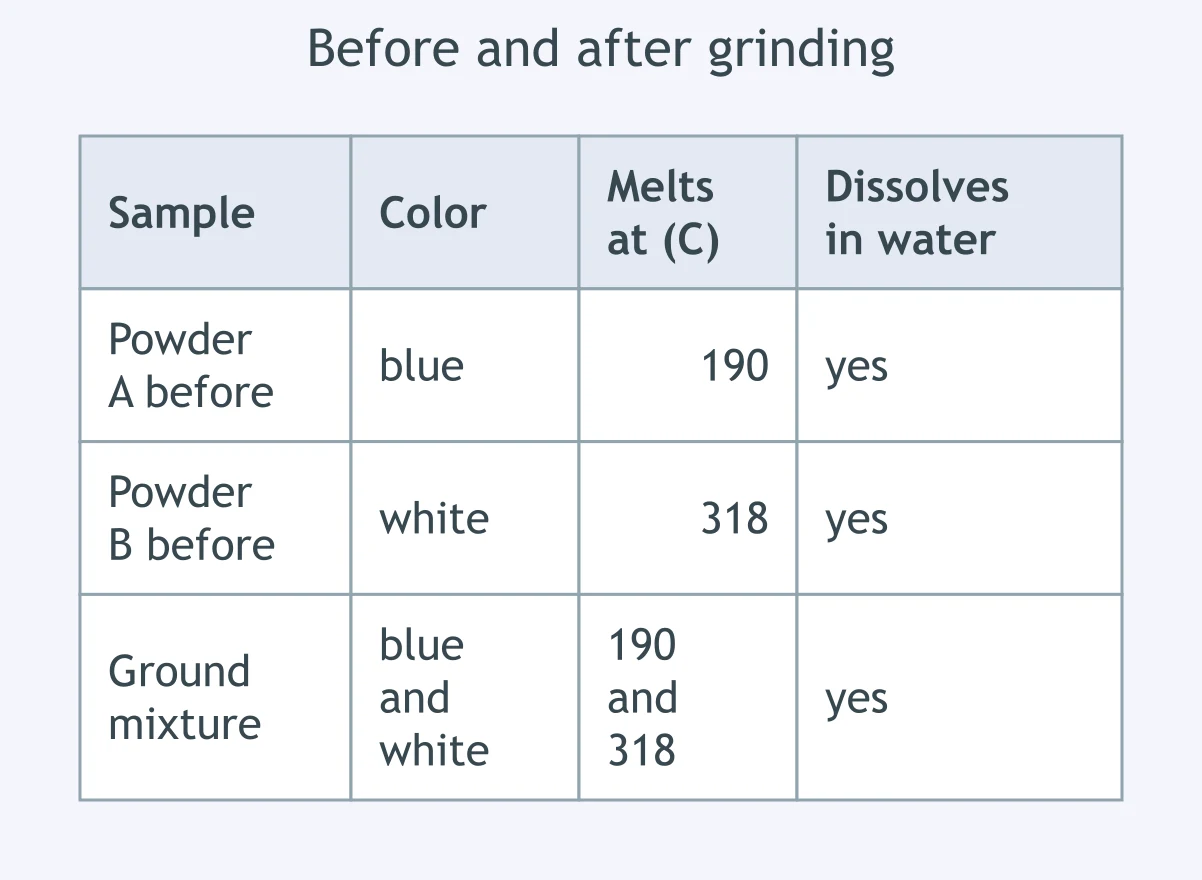
Use the table of properties recorded before and after two powders were ground together in a dish. Which conclusion do these data support?
A group mixes two clear solutions and records: the mixture cooled from 22 to 9 degrees C, it stayed clear, its volume equals the two volumes added, and it is still a liquid. Which record best supports a reaction?
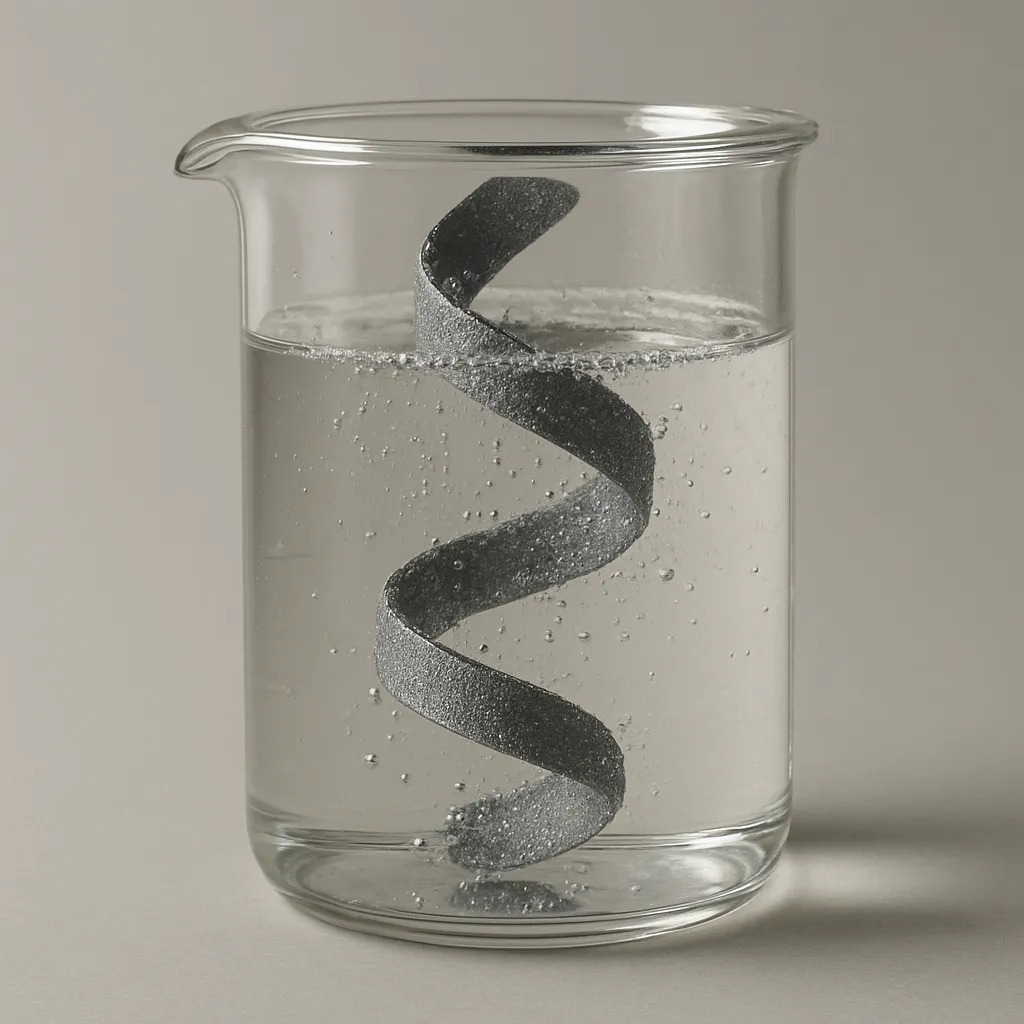
A metal ribbon is dropped into a liquid. Students note: the ribbon sinks, it is shiny gray, the liquid stays clear, and gas bubbles form on the ribbon and burn when lit. Which note is the strongest evidence of a reaction?
After heating a solid, a student may take one more measurement: the mass of the empty crucible, the room temperature, the melting point of the solid left, or the heating time. Which is most useful?
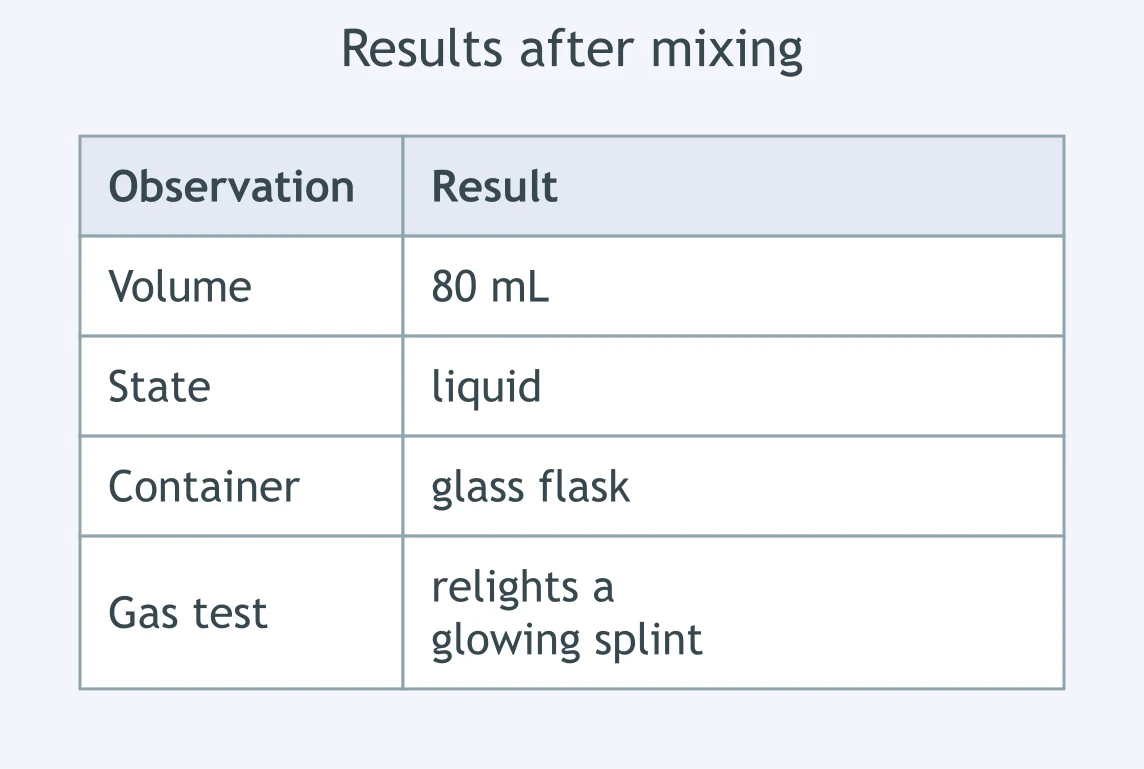
Use the results table from one mixing trial. Which row gives the strongest evidence that a chemical reaction occurred?
A team argues that no reaction happened when a powder was stirred into water and the water evaporated. Their notes list four items. Which note best supports their claim of no reaction?
Students burn steel wool and record: it was gray before burning, it burned for 20 seconds, it was held over a metal tray, and its mass rose from 3.0 to 4.1 g. Which record best shows a reaction?
After a white powder is stirred into a clear liquid, the mixture warms by 15 degrees C, it fizzes steadily, the powder disappears from view, and the liquid stays clear. Which two observations point to a reaction?
A student claims that two liquids reacted because the mixture turned green. Which further measurement would best test that claim?
Two groups mix the same solutions. Group 1 reports a solid settling on the bottom. Group 2 reports that the beaker felt cold. Which report is the stronger evidence that a new substance formed?
An electric light bulb gives off light and heat, which shows that a chemical reaction is happening inside it.
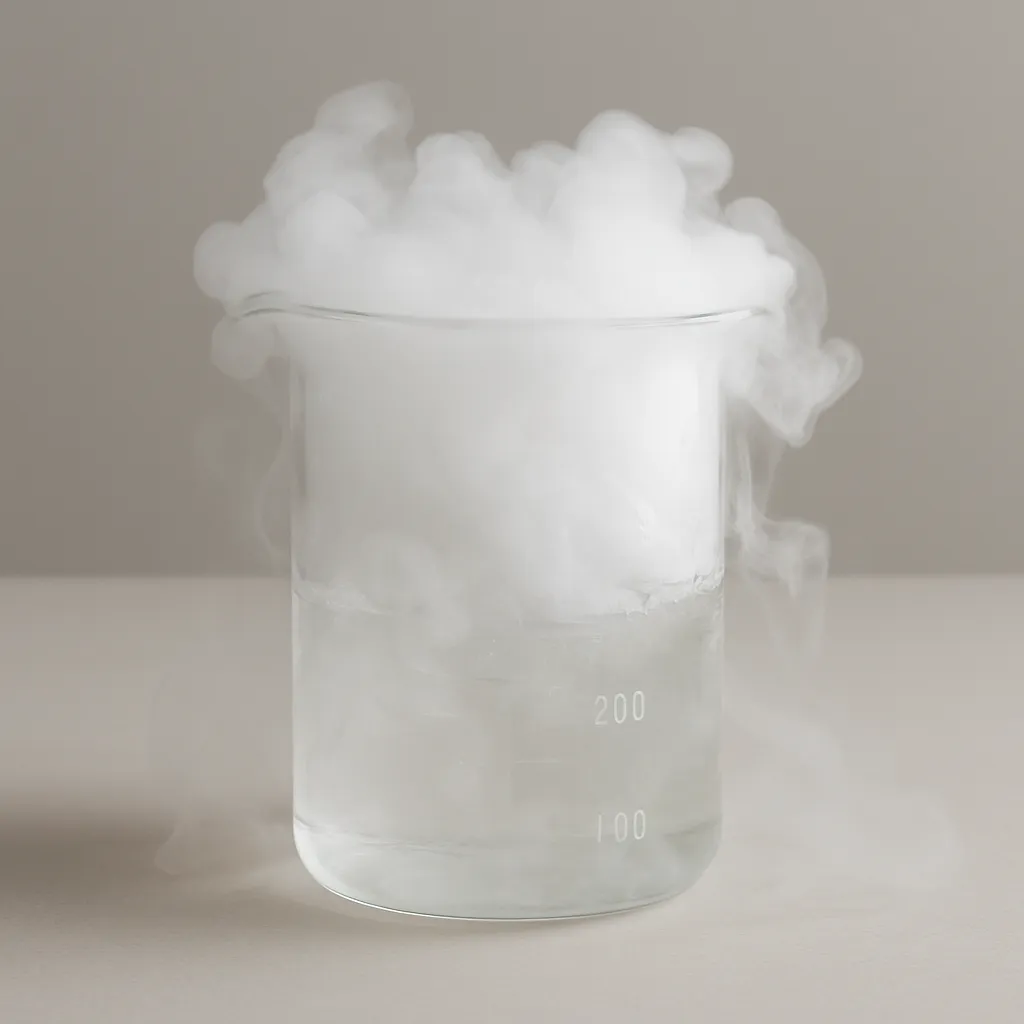
Solid carbon dioxide is placed in a warm beaker and white fog pours over the rim. A student says the fog proves a reaction. What does the fog actually show?
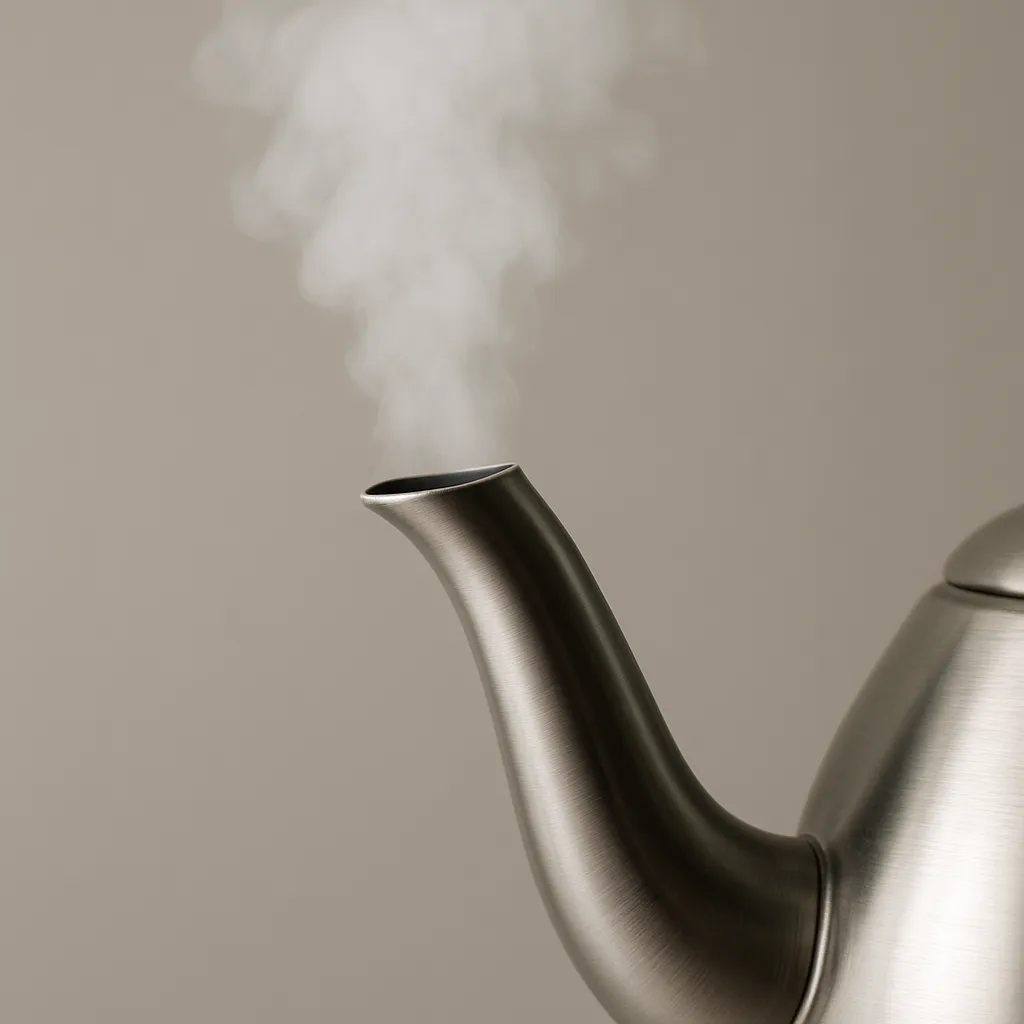
A kettle boils and a white plume appears above the spout. A student calls the plume a new substance made by heating. Which statement about the plume is correct?
A spoon of salt is stirred into water and vanishes completely. One student says the salt was destroyed and a new liquid was made. What do further tests actually show?
A powder is stirred into water and the beaker becomes noticeably warmer, though nothing bubbles, changes color or settles out. Why is warming alone not enough to conclude that a reaction occurred?
A student pours blue liquid into yellow liquid and the mixture turns green, then claims a reaction occurred. Which statement about the green mixture is correct?
An open beaker of water is left on a shelf for a week. Its mass drops from 180 g to 145 g. Why is this loss not evidence that a chemical reaction destroyed matter?
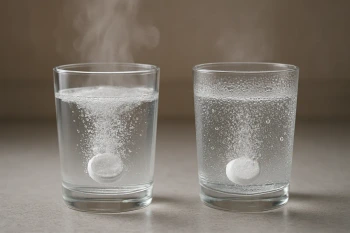
Bubbles rise through a beaker of plain water sitting on a hot plate, and beside it a tablet fizzes in cold water. Both were called reactions. Which statement about the plain water is correct?
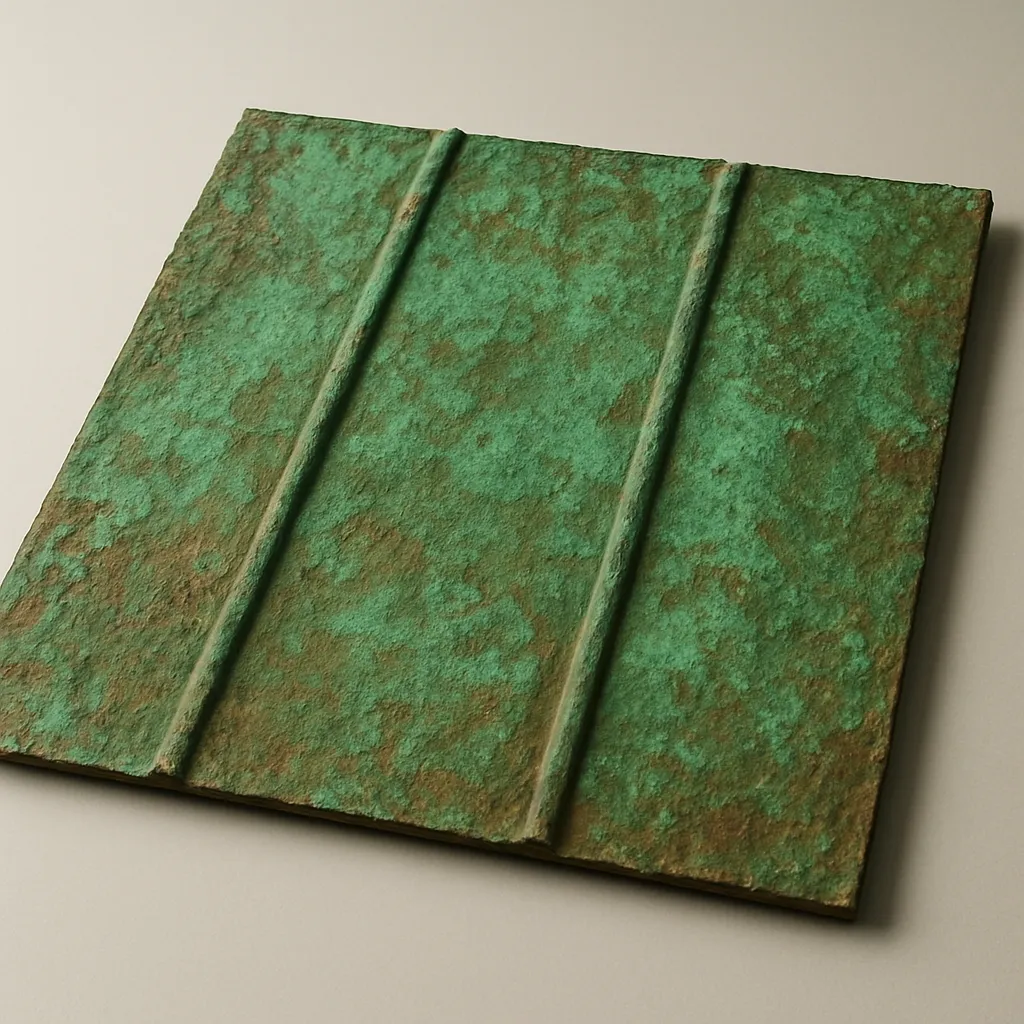
A shiny orange metal with a density of 8.9 g/mL sits outside for years. The green crust that now covers it has a density of 3.9 g/mL and crumbles easily. What do these data indicate?
Before an experiment, a solid melts at 119 degrees C. It is ground, warmed gently, and cooled. The solid now in the dish also melts at 119 degrees C. What does this single property tell you?
A sealed flask holds 45.0 g of two liquids. After mixing, the contents turn deep orange and the sealed flask still reads 45.0 g. What is the best conclusion from these data?
Before heating, a white powder dissolves completely in water. After heating, the solid left in the dish will not dissolve in water at all. What does this one property tell you?
A magnet lifts a gray powder from a dish. The powder is mixed with a yellow powder and heated. Afterward a single dark solid remains and the magnet lifts nothing. What do these data indicate?
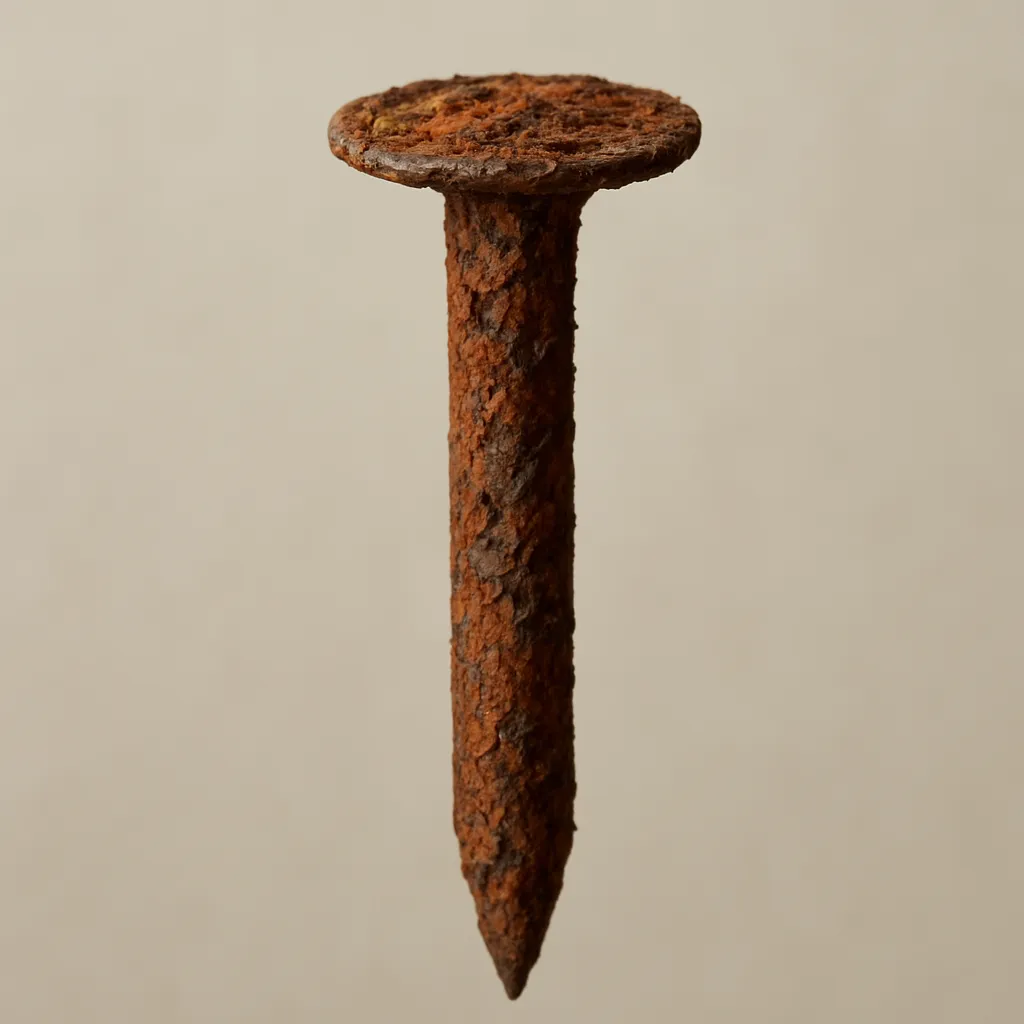
A shiny gray nail is left in damp air. Weeks later it is covered in red-brown flakes that rub off, and the flakes do not conduct electricity while the metal did. What do these data indicate?
A clear liquid has no smell before an experiment. After a solid is stirred in and left overnight, the same container gives off a sharp smell. What does this one observation support?
Before mixing, a solution conducts electricity well enough to light a bulb. After a second solution is added and a white solid settles out, the liquid barely lights the bulb. What do these data indicate?
A colorless liquid boils at 78 degrees C. It is poured between containers, filtered, and boiled again, and it still boils at 78 degrees C. Which conclusion do these data support?
Matter is destroyed during a chemical reaction carried out inside a sealed container.
In a chemical reaction, the atoms of the starting substances are rearranged to form new substances.
Crack the passcode before the zombies get in.
Answer, then swat bugs for bonus points.
Race through questions at your own speed.
Same question on every screen. Fastest wins.

Pick a tile, answer, hit bonuses and steals.
Balancing Chemical Equations
40 questions