Loading
by BlastRoom
Identify and compare substances using measured density, solubility and conductivity data.
#us_grade_8_science
40 questions
One question set, multiple game modes. Tap any game to see it in action. Not sure which to pick?
Answer to place stones and capture territory.
Outrun the snow together.
Earn blasts, then hunt the other team.
Answer to earn energy, then climb.

The class blasts through walls together.
Bid on mystery lots. Most money wins.
Sell tours. Nice, standard, or a total scam.

Answer, restock, and serve the rush.
More correct answers pulls the rope your way.
Answer, then shoot down the alien wave.
Answer, then tap to leap the frozen ridge.
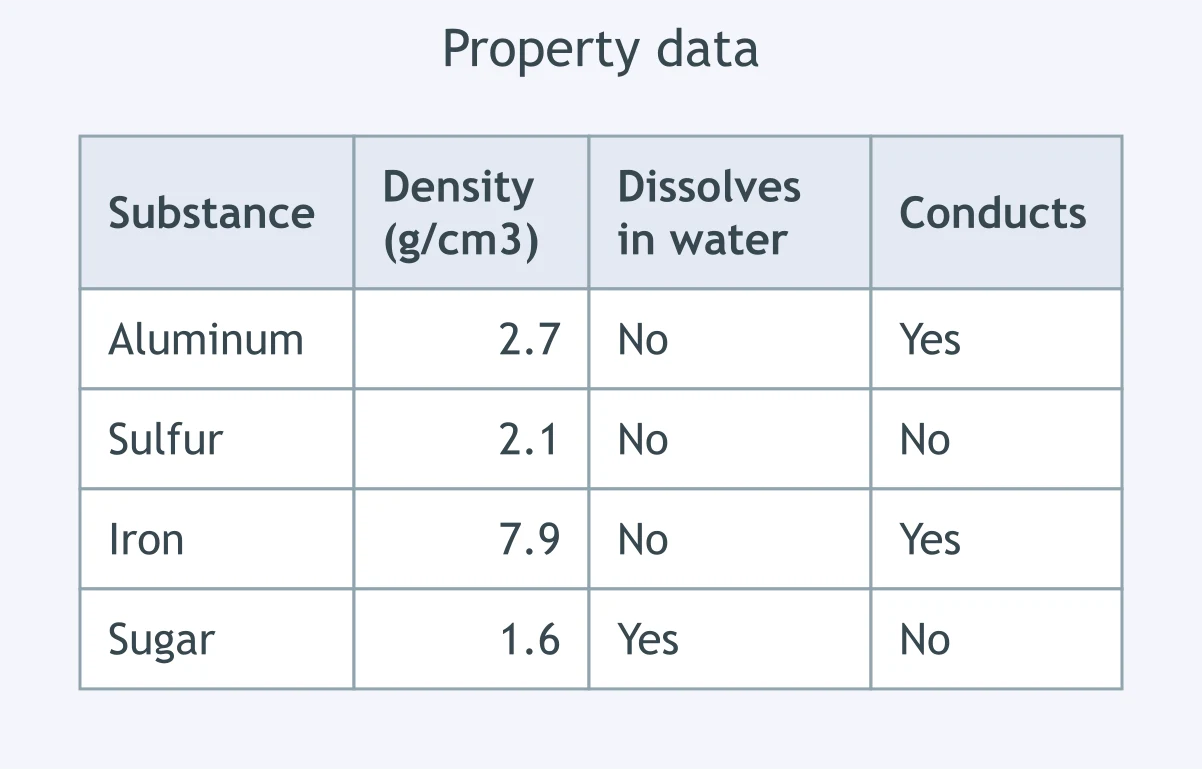
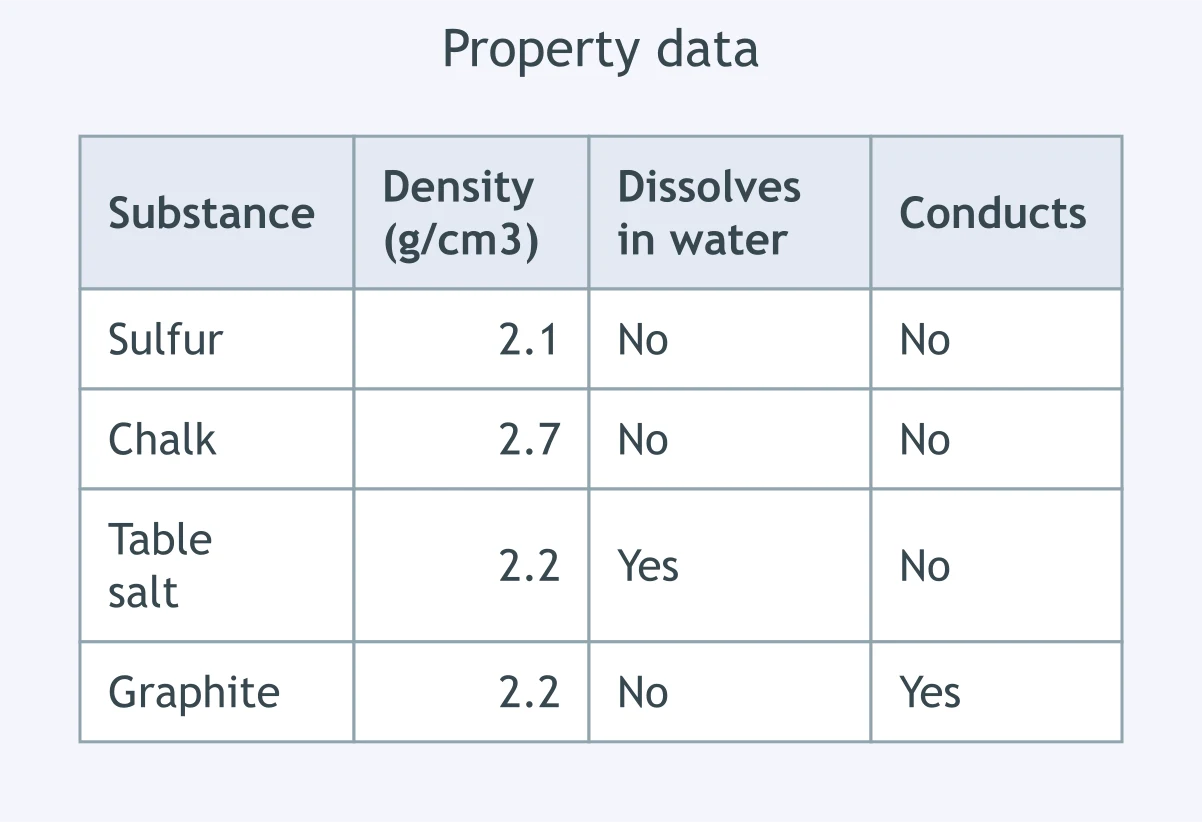
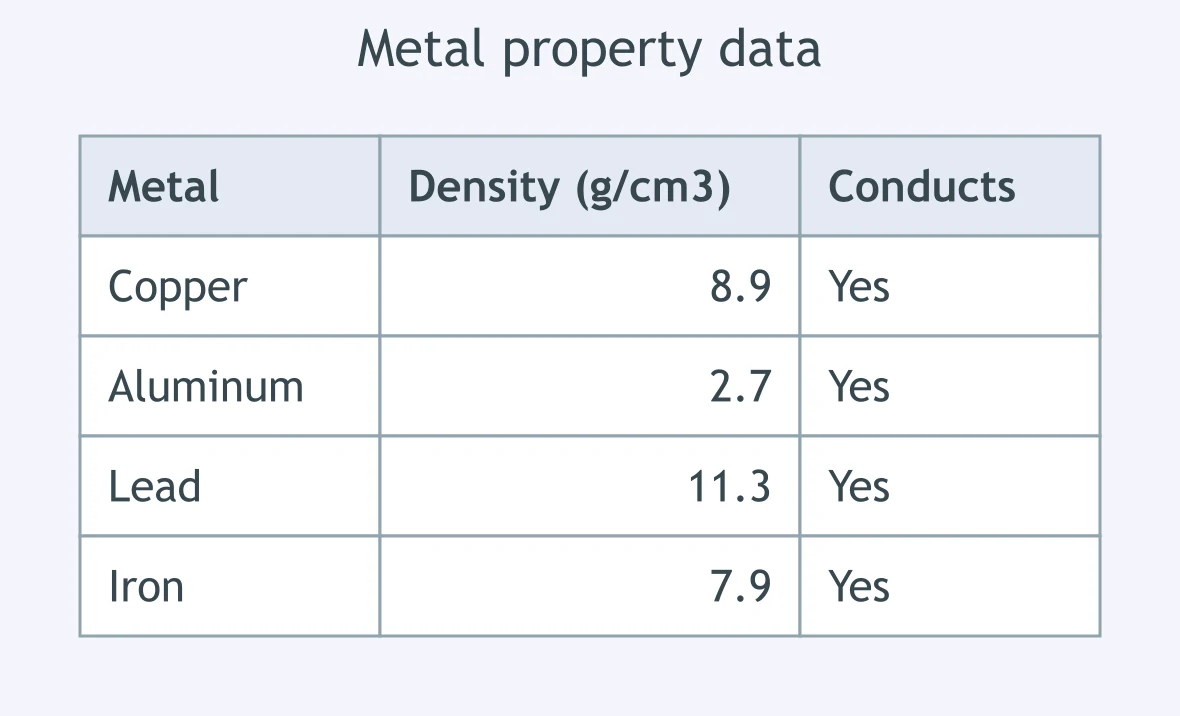
An unknown gray solid has a density of 2.7 g/cm3, does not dissolve in water, and conducts electricity. Use the property table. Which substance is the unknown?
A wooden block has a mass of 45 g and a volume of 60 cm3. Water has a density of 1.0 g/cm3. What is the block's density, and what happens when it is placed in water?
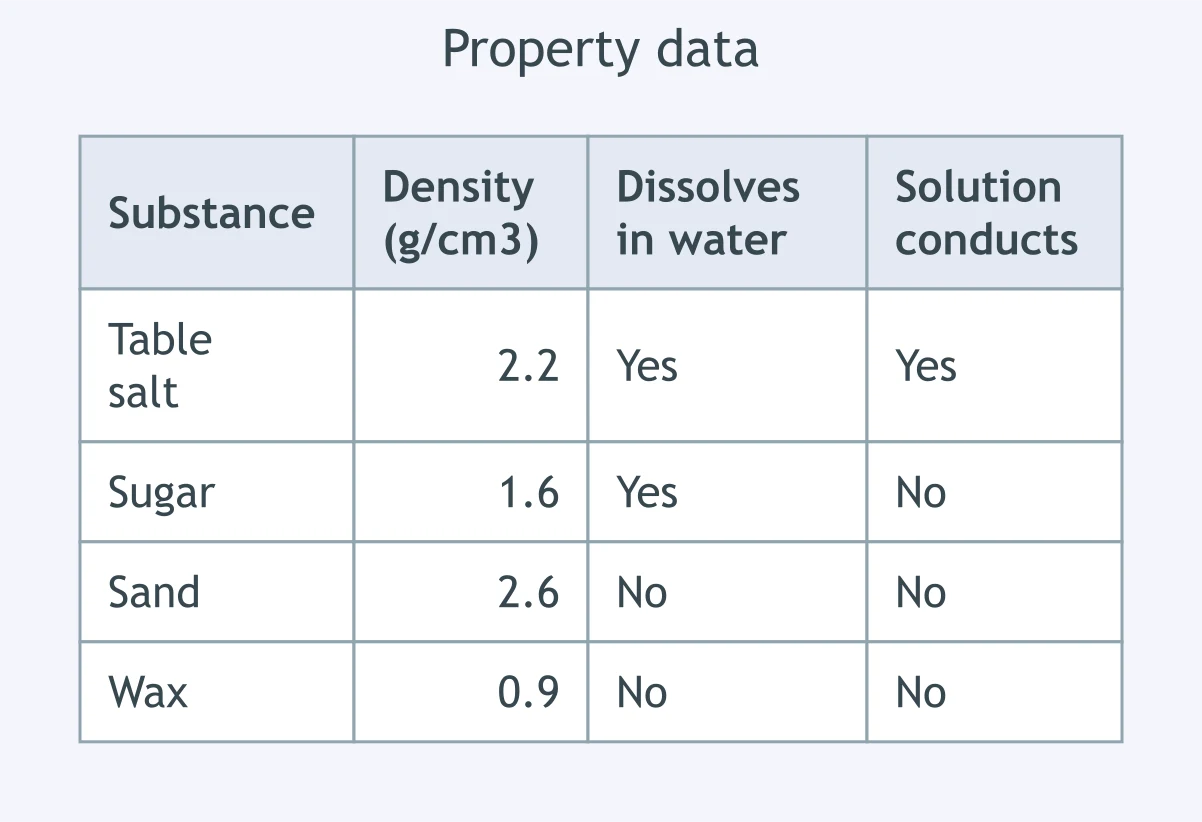
A white solid dissolves in water, and the solution it forms conducts electricity. Its density is 2.2 g/cm3. Use the property table. Which substance is it?
A metal cube has a mass of 216 g, and each of its sides measures 3 cm. What is the density of the cube?
A silvery metal sample has a mass of 226 g and a volume of 20 cm3. Lead is 11.3, zinc 7.1, titanium 4.5, and copper 8.9 g/cm3. Which metal is the sample?
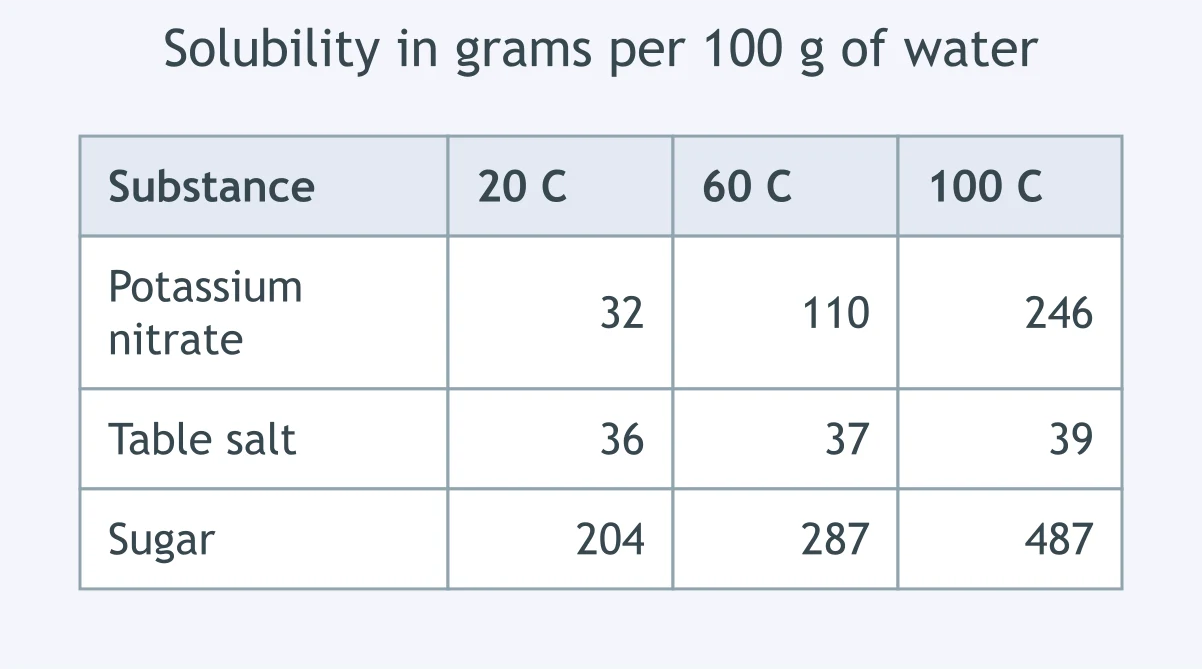
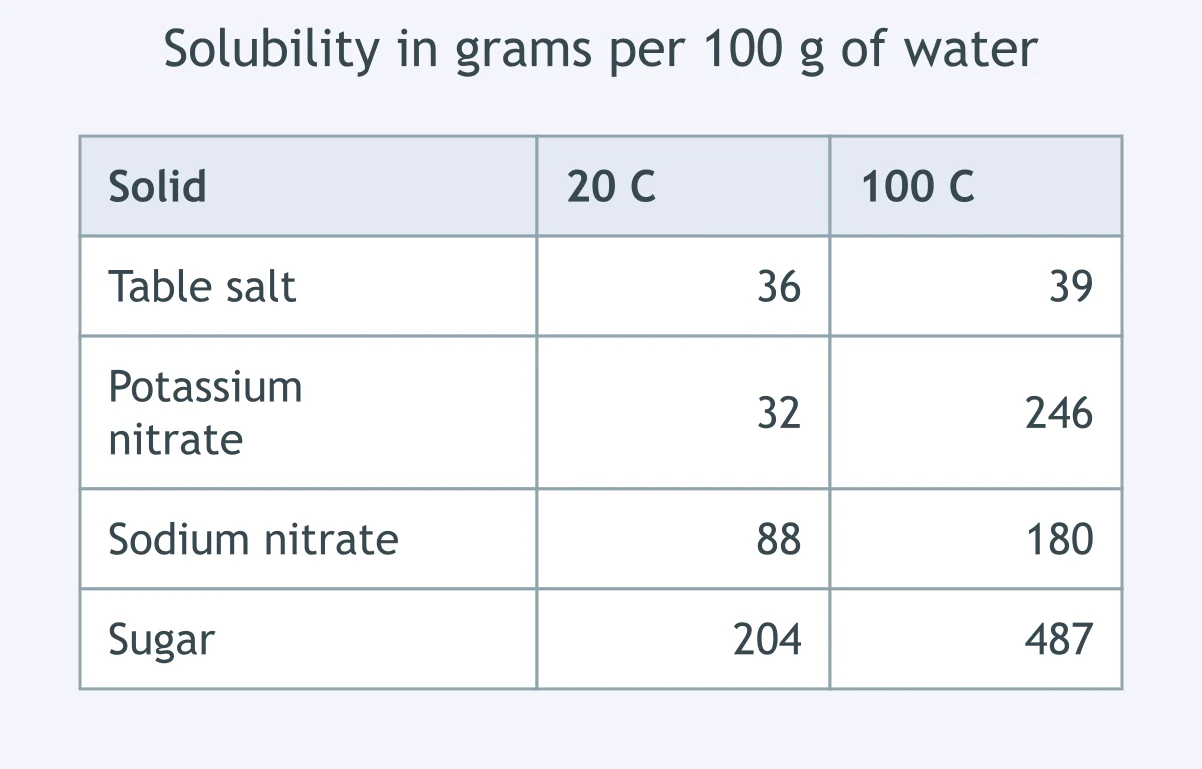
At 20 degrees C, 100 g of water dissolves 36 g of table salt and 32 g of potassium nitrate. At 100 degrees C the figures are 39 g and 246 g. What do the data show?
A stone with a mass of 120 g is lowered into a cylinder holding 50 mL of water, and the water level rises to 90 mL. What is the density of the stone?
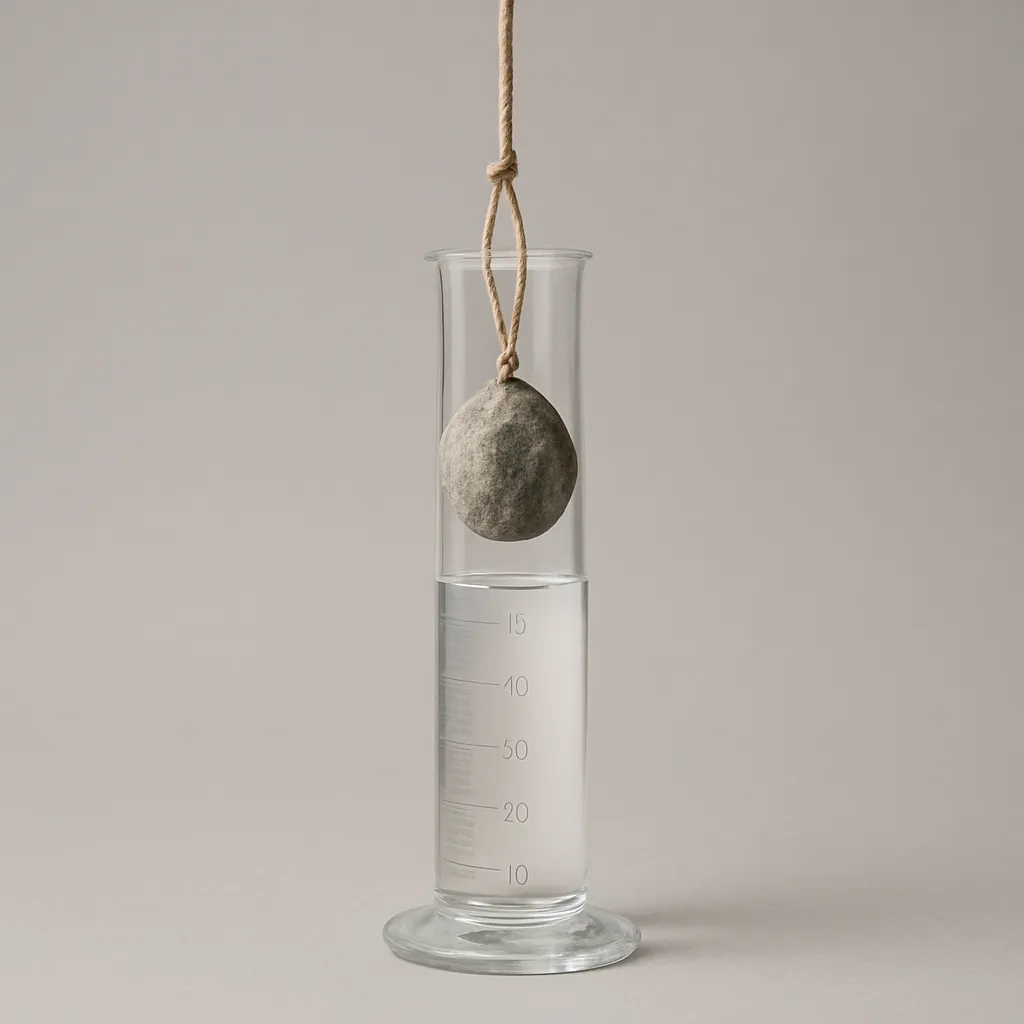
An unknown solid conducts electricity and does not dissolve in water. Which of these substances can be ruled out at once: table salt, copper, graphite, or iron?
Cooking oil has a density of 0.92 g/cm3. A plastic bead has a mass of 5.0 g and a volume of 4.0 cm3. What happens when the bead is dropped into the oil?
An unknown liquid has a density of 1.26 g/cm3 and does not conduct electricity. Use the property table. Which liquid is it?
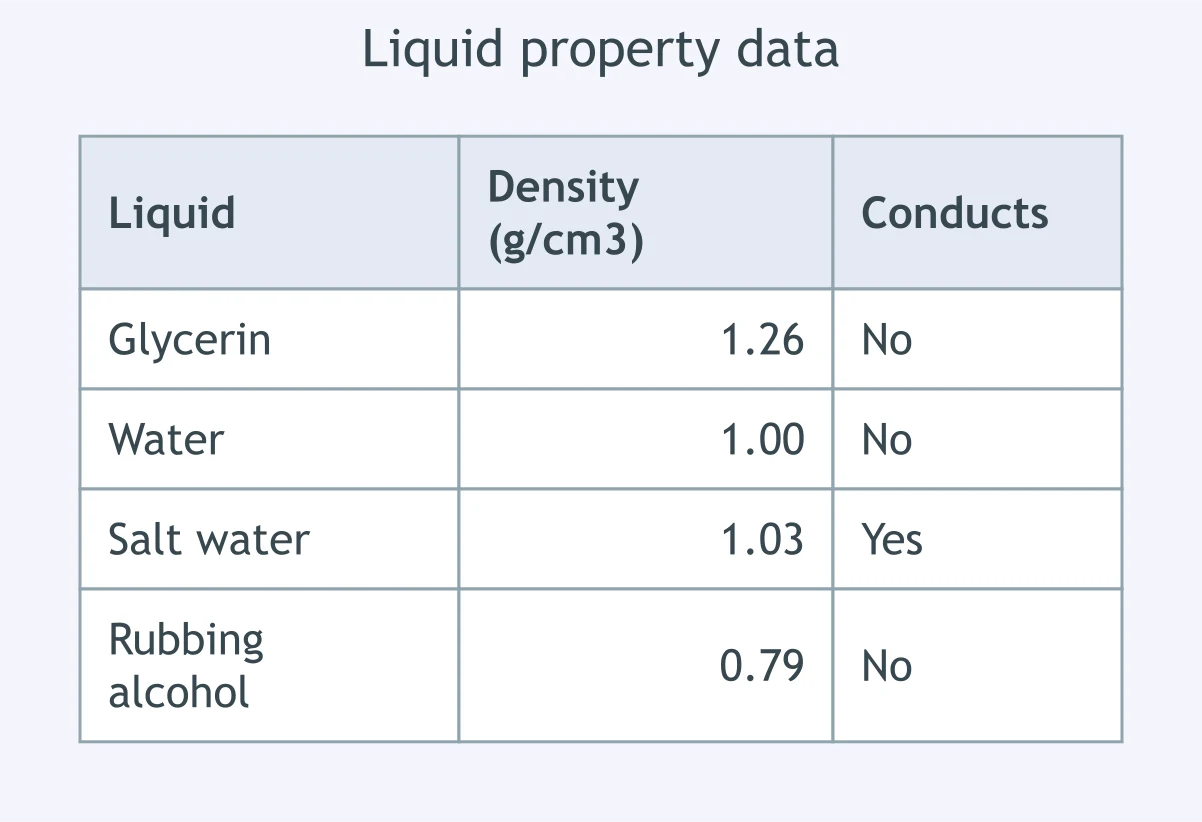
Use the solubility table, which gives grams of solid dissolving in 100 g of water. How much potassium nitrate dissolves at 60 degrees C?
Sample A has a mass of 40 g and a volume of 5 cm3. Sample B is a larger piece of the same substance with a volume of 20 cm3. What is the mass of sample B?
A gray solid conducts electricity. A 10 cm3 piece of it has a mass of 79 g. Iron is 7.9, sulfur 2.1, graphite 2.2, and aluminum 2.7 g/cm3. Which substance is it?
A student stirs 50 g of table salt into 100 g of water at 20 degrees C. At that temperature 36 g of salt dissolves in 100 g of water. What is observed?
A silvery metal melts at 420 degrees C. Use the table of melting points and densities. Which metal is it?
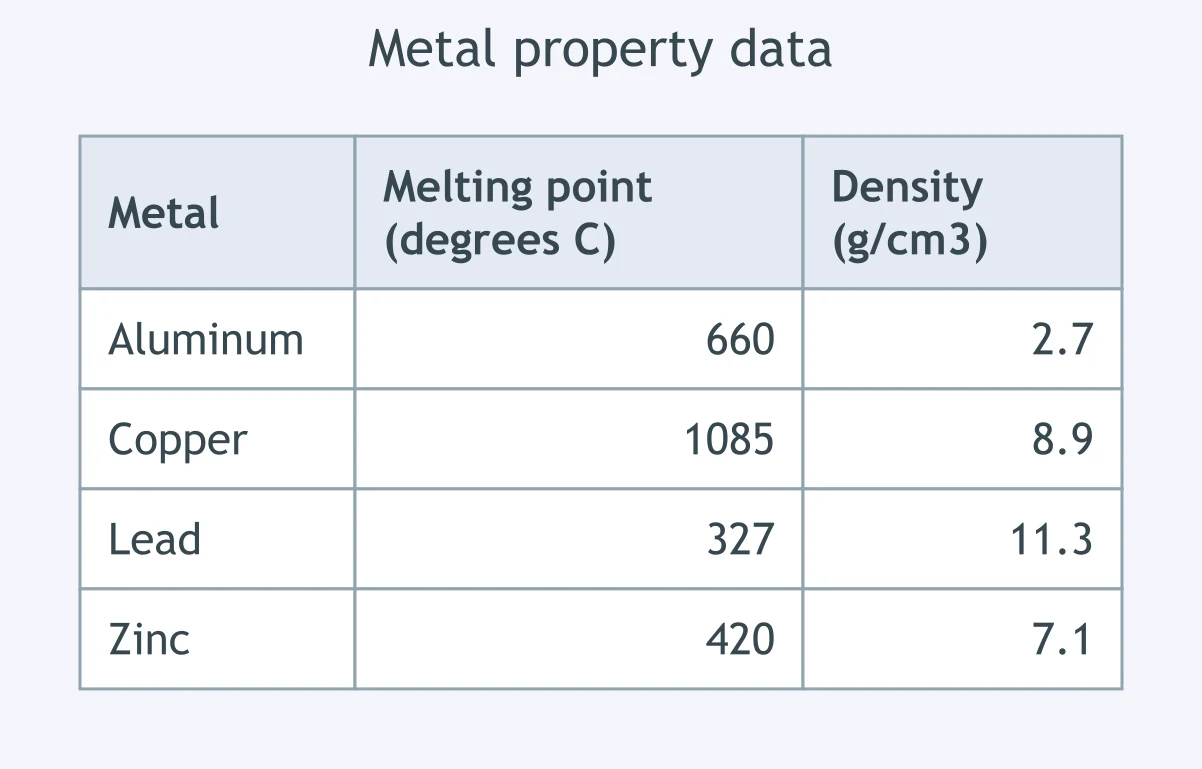
Aluminum has a density of 2.7 g/cm3. What is the mass of an aluminum block whose volume is 50 cm3?
An open bottle of soda goes flat much faster in a warm room than in a refrigerator. What does this show about the solubility of a gas in water?
A sample dissolves in water, does not conduct electricity as a solid, and its solution does not conduct either. Is the sample table salt, sugar, copper, or sand?
Iron has a density of 7.9 g/cm3. A piece of iron has a mass of 158 g. What is its volume?
A yellow powder does not dissolve in water, does not conduct electricity, and has a density of 2.1 g/cm3. Use the property table. Which substance is it?
Ice has a density of 0.92 g/cm3 and liquid water 1.00 g/cm3. An ice cube is dropped into a glass of water. What happens, and why?
Potassium nitrate dissolves at 32 g per 100 g of water at 20 degrees C. What mass of it dissolves in 250 g of water at the same temperature?
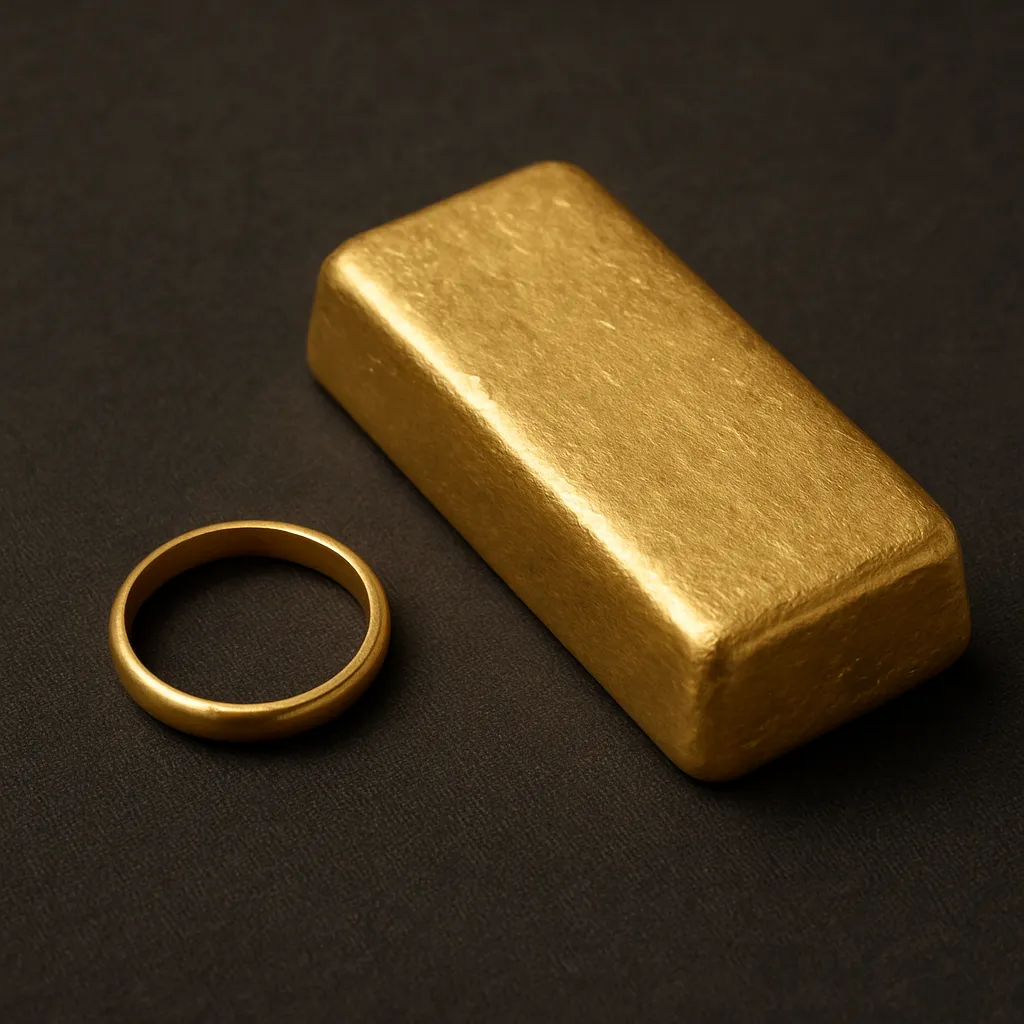
A gold ring and a much larger gold bar are tested in the lab. Which measurement gives the same value for both and shows they are the same substance?
A plastic cube sinks in vegetable oil, which has a density of 0.92 g/cm3, but floats in water, which has a density of 1.00 g/cm3. What does this show about the cube?
Solid table salt does not conduct electricity, but salt water does, while sugar water does not. What do these test results show?
A liquid sample has a mass of 250 g and a volume of 200 mL. One milliliter equals one cubic centimeter. What is the density of the liquid?
A shiny solid conducts electricity well, can be hammered into a flat sheet, and does not dissolve in water. Which class of element does it belong to?
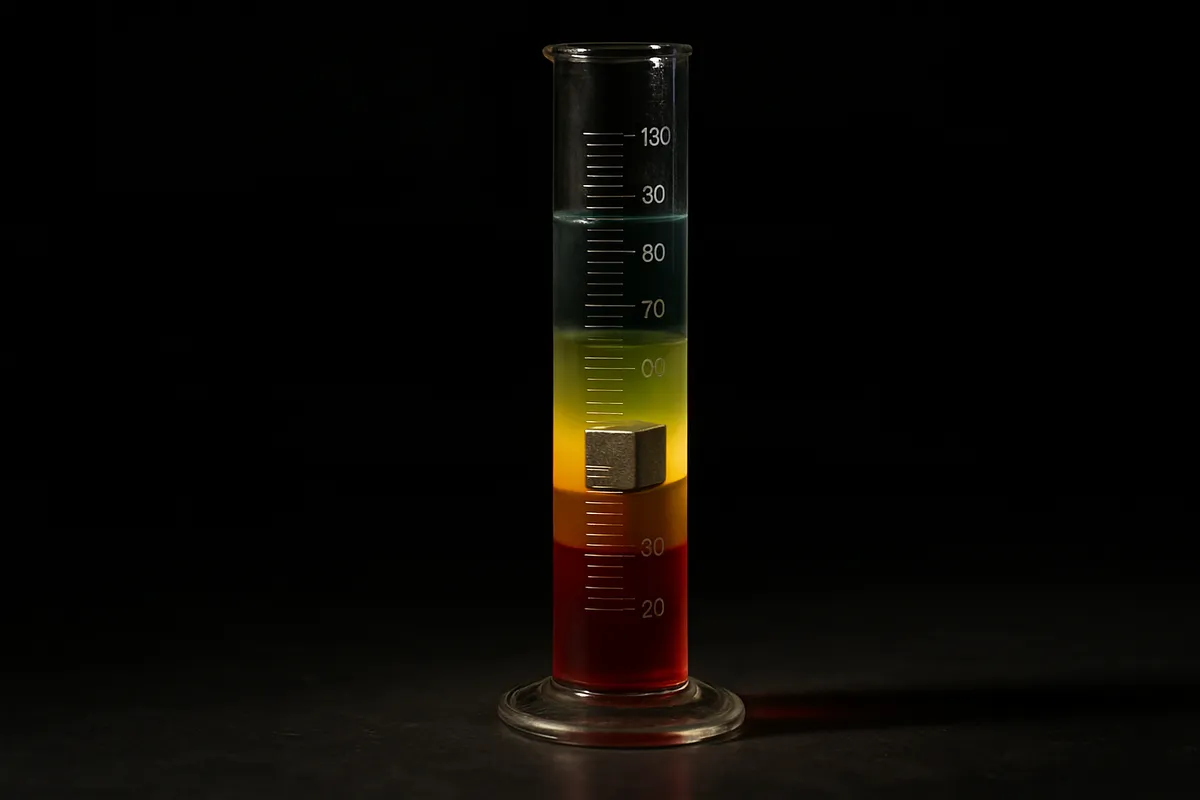
Four liquids are poured into one cylinder: corn syrup at 1.38 g/cm3, water at 1.00, vegetable oil at 0.92, and rubbing alcohol at 0.79. Which liquid settles at the bottom?
Use the solubility table, which gives grams of solid dissolving in 100 g of water. Which solid's solubility changes least between 20 and 100 degrees C?
Cutting a copper wire in half doubles the density of each piece.
A student tests four samples with a conductivity tester: a copper wire, distilled water, salt water, and a plastic rod. Which two samples complete the circuit?
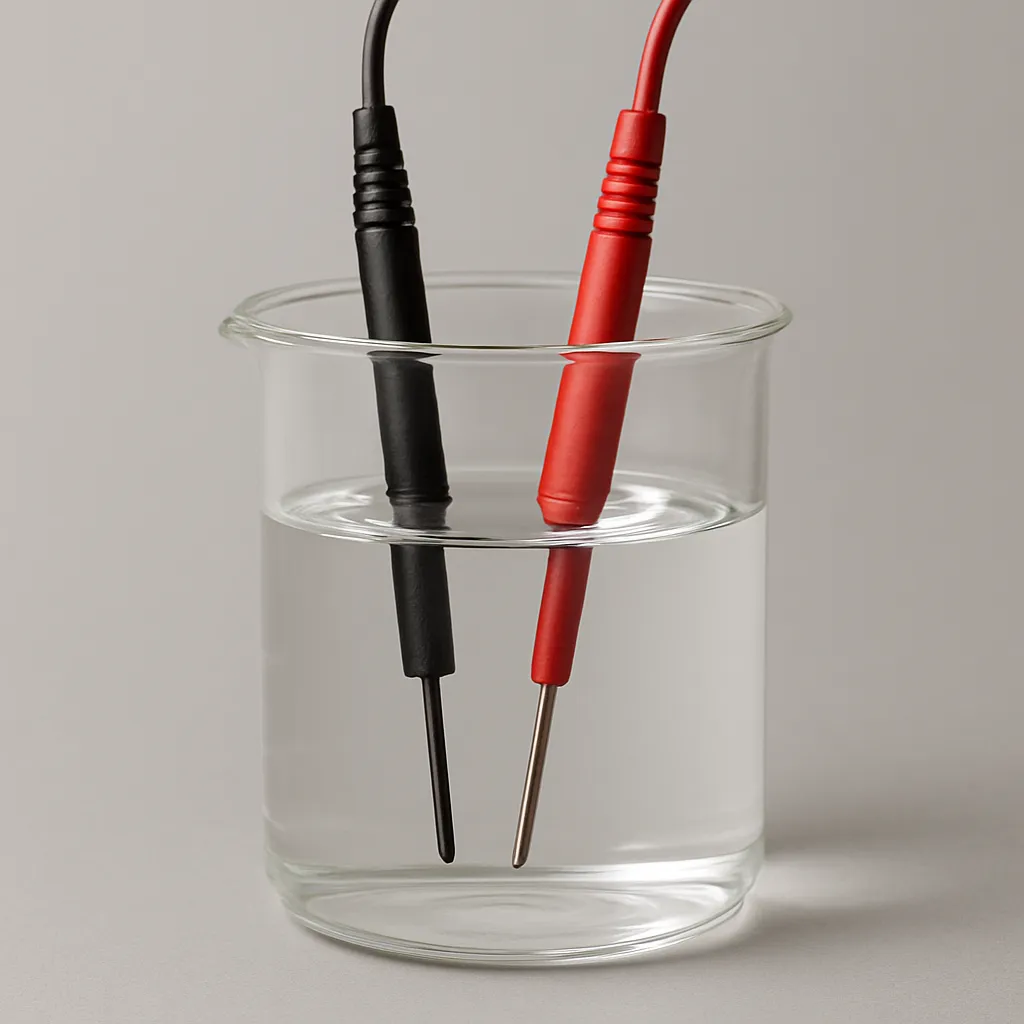
Two cubes have the same volume. Cube X has a mass of 60 g and cube Y has a mass of 20 g. What do these data show about the cubes?
Two white solids have exactly the same density, but one dissolves in water and the other does not. What can be concluded?
A soft black solid conducts electricity but is not a metal. Its density is 2.2 g/cm3. Sulfur is 2.1, graphite 2.2, table salt 2.2, and iron 7.9 g/cm3. Which substance is it?
A colorless liquid has a mass of 39.5 g and a volume of 50 mL. One milliliter equals one cubic centimeter. Water is 1.00, ethanol 0.79, glycerin 1.26, and mercury 13.6 g/cm3. Which liquid is it?
A sample has a density of 8.9 g/cm3 and conducts electricity. Use the property table. Which metal matches the sample?
Cooling a saturated potassium nitrate solution makes some of the dissolved solid crystallize out of the water.
A teacher holds up a long copper wire and a short copper wire. Which measured property is different for the two wires?
Graphite is a nonmetal, yet it conducts electricity. What does this show about using a conductivity test to identify an unknown substance?
A student grinds a lump of potassium nitrate into powder before stirring it into 100 g of water at 20 degrees C. At that temperature 32 g can dissolve. How does grinding change the result?
Crack the passcode before the zombies get in.
Answer, then swat bugs for bonus points.
Race through questions at your own speed.
Same question on every screen. Fastest wins.

Pick a tile, answer, hit bonuses and steals.
Atoms and the Periodic Table: Key Terms in Use
20 questions