Loading
by BlastRoom
Explain how gravity governs the orbits and speeds of planets, moons, asteroids and comets.
#us_grade_8_science
40 questions
One question set, multiple game modes. Tap any game to see it in action. Not sure which to pick?
Answer to place stones and capture territory.
Outrun the snow together.
Earn blasts, then hunt the other team.
Answer to earn energy, then climb.

The class blasts through walls together.
Bid on mystery lots. Most money wins.
Sell tours. Nice, standard, or a total scam.

Answer, restock, and serve the rush.
More correct answers pulls the rope your way.
Answer, then shoot down the alien wave.
Answer, then tap to leap the frozen ridge.
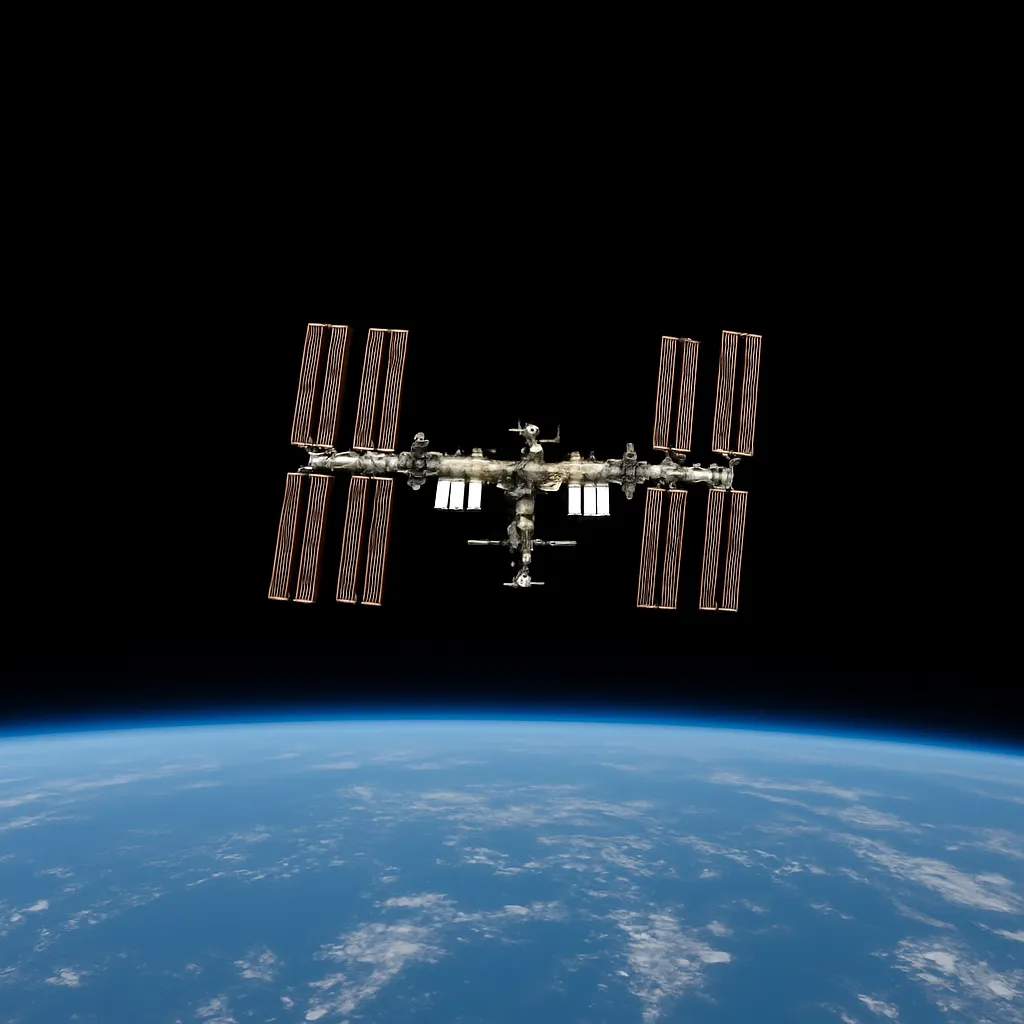
The International Space Station circles Earth every 90 minutes with its main engines shut off. It neither falls to the ground nor drifts away. Which statement best explains its path?
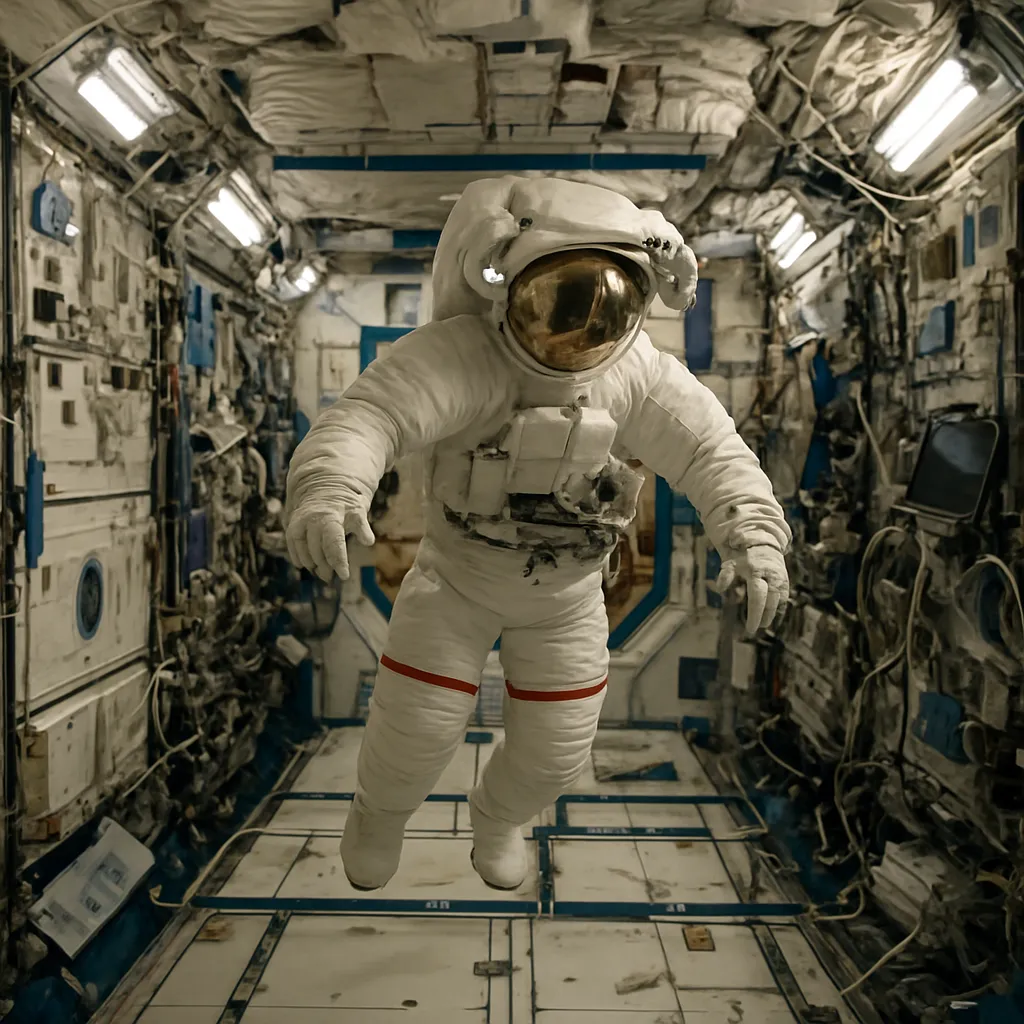
Astronauts inside the orbiting space station float instead of standing on the floor. Which statement best explains what they experience?
The Moon has circled Earth for billions of years with nothing pushing it along. Which statement best explains why it neither crashes into Earth nor escapes into space?
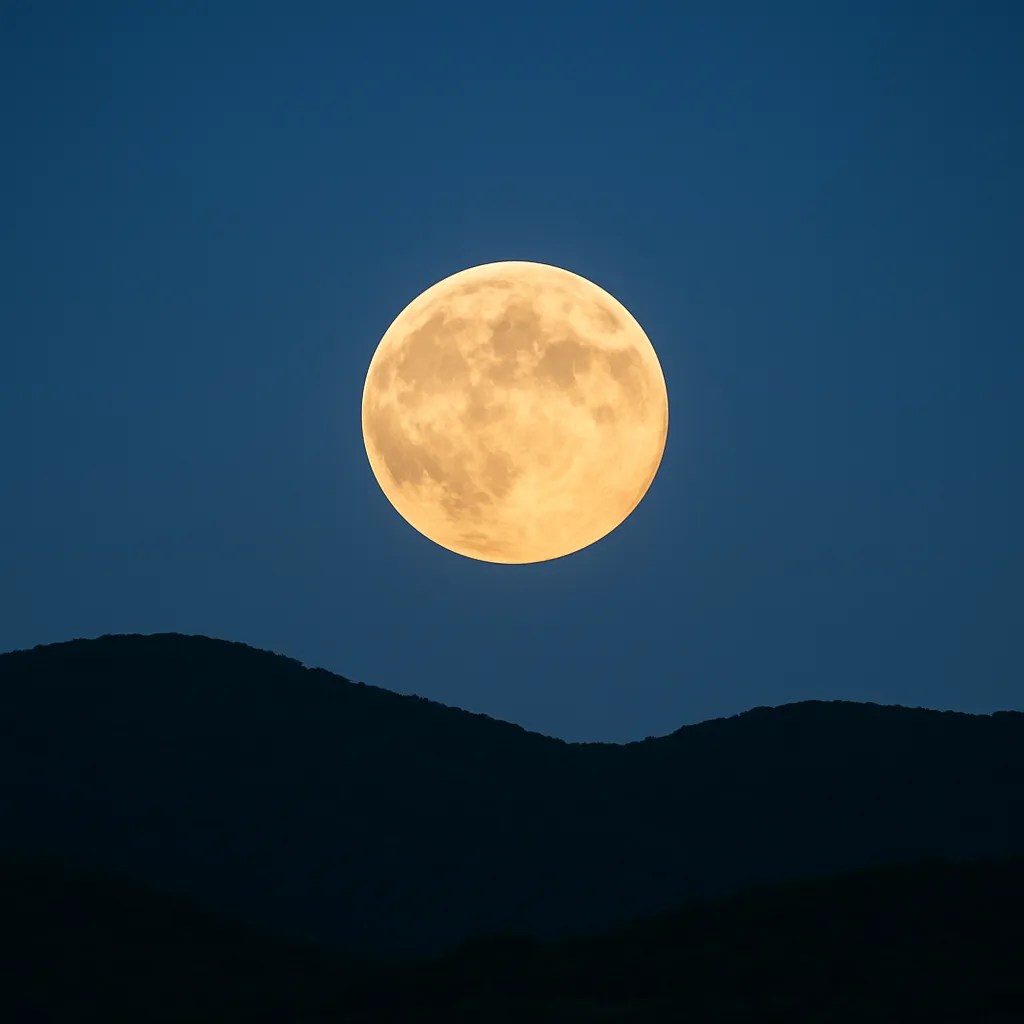
Imagine the Sun's gravity suddenly stopped acting on Earth, with nothing else changing. What would happen to Earth's motion?
A spacecraft coasting in orbit around Earth has its engines off, yet Earth's gravity is still acting on it.
A rock dropped from a tall tower with no sideways motion falls straight down. The Moon does not fall onto Earth. What does the Moon have that the dropped rock does not?
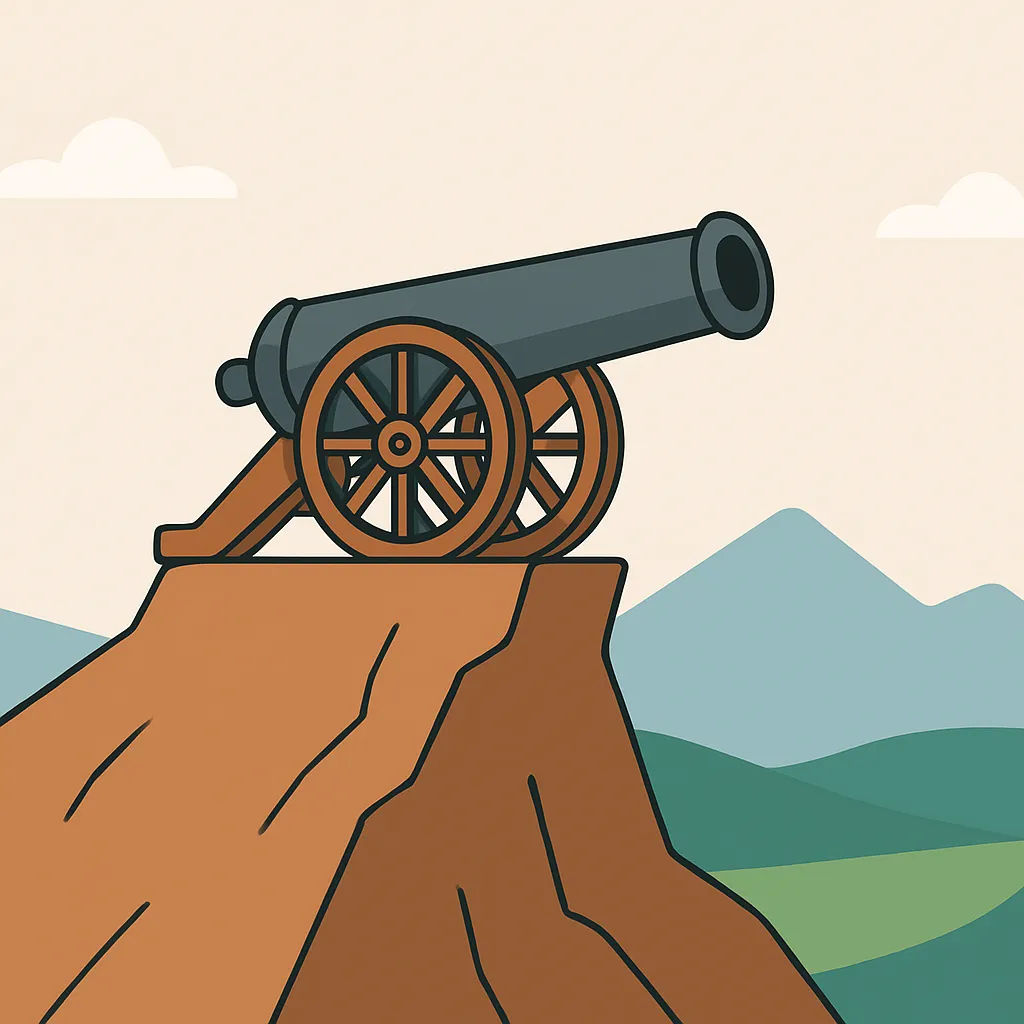
A cannonball fired horizontally from a mountain top lands far away. Fired much faster, it circles the whole planet and returns. Which statement best explains the circling path?
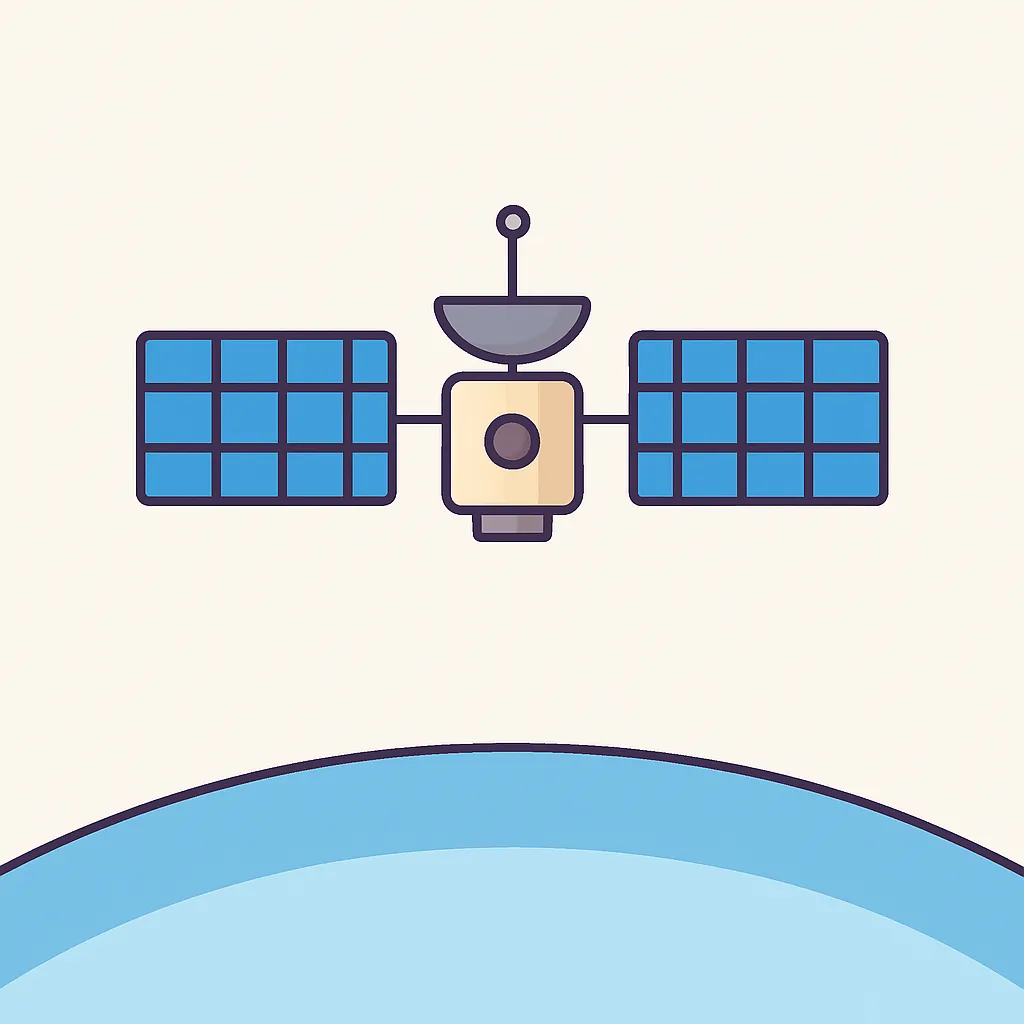
A satellite in a very low orbit meets faint traces of atmosphere and slowly loses forward speed. Over years its orbit drops until it burns up. Why does losing speed bring it down?
Io circles Jupiter once every 1.77 days and has done so for far longer than people have watched it. What keeps Io on that repeating path?
Voyager 1 left the solar system with enough speed to escape the Sun's pull. Its engines are off and nothing pushes it, yet it keeps moving outward. Which statement explains this?
Ocean tides rise and fall twice each day. The Sun is far more massive than the Moon, and the Moon is about 390 times nearer to Earth. Which statement about their effects on tides is correct?

Which statement best explains why every planet orbits the Sun rather than orbiting one another?
The main asteroid belt has narrow gaps that are swept nearly empty of asteroids. Which body's repeated gravitational tugs mainly clear these gaps?
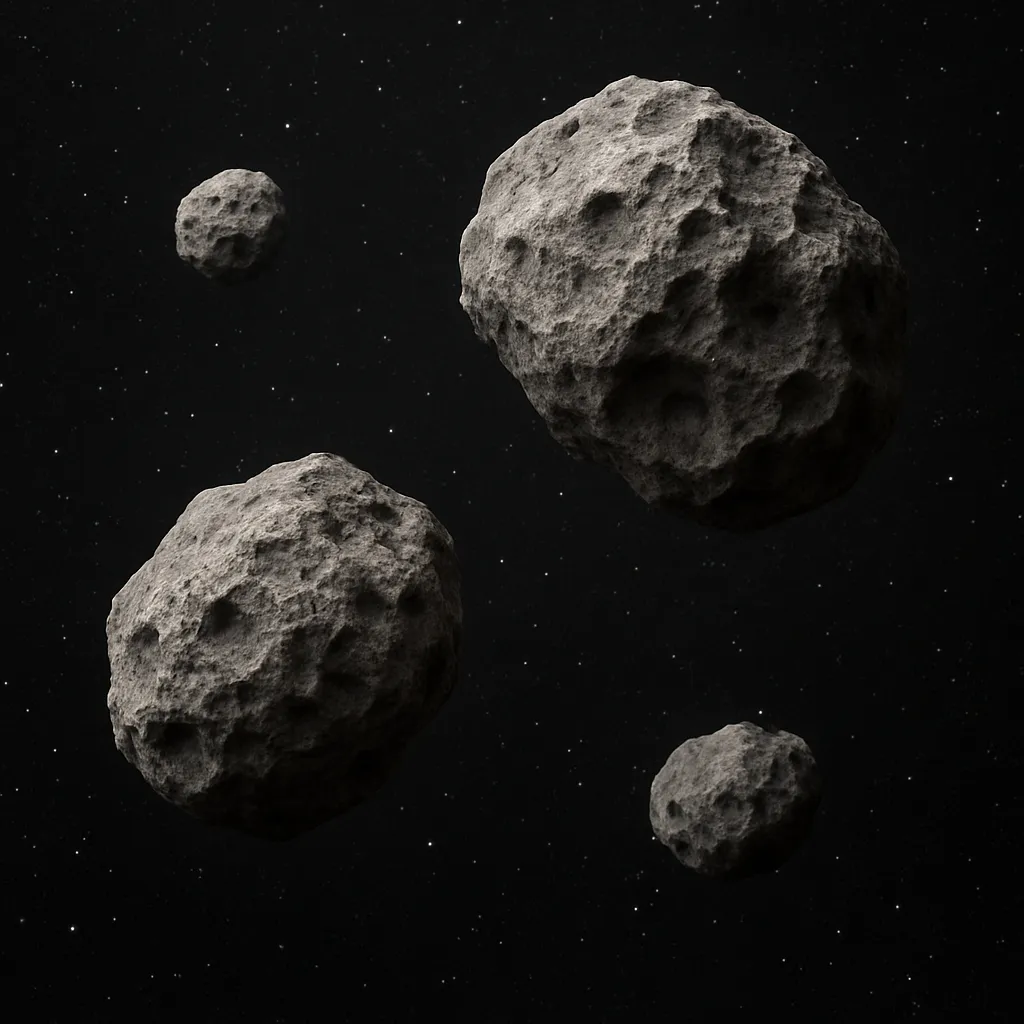
Mars's small moons Phobos and Deimos are lumpy like potatoes, while Earth's much larger Moon is round. Which statement best explains the difference?
Halley's Comet swings far out beyond Neptune's orbit and then returns to the inner solar system about every 76 years. Which body's pull brings it back each time?
A GPS satellite circles twice a day about 20,000 kilometers above the ground, while the Sun sits about 150 million kilometers away. Which body's pull mainly shapes the satellite's orbit?
Two moons of equal mass sit at the same distance from their planets. Planet A has ten times the mass of planet B. Which moon feels the stronger pull from its planet?
The highest high tides each month come at new moon and full moon, when the Sun, the Moon and Earth are in a straight line. Which statement best explains this?
Earth pulls on the Moon and keeps it in orbit. How does the Moon's pull on Earth compare with Earth's pull on the Moon?
A student says the Moon orbits Earth because Earth is the largest object in the solar system. Which correction is accurate?
Mercury goes once around the Sun in 88 days, while Earth takes 365 days from a greater distance. Which statement best accounts for the difference?
You are standing on a sidewalk. Which object pulls on you with the strongest gravitational force?
Look at the table of planet distances and orbital speeds. Which statement best describes the pattern the data show?
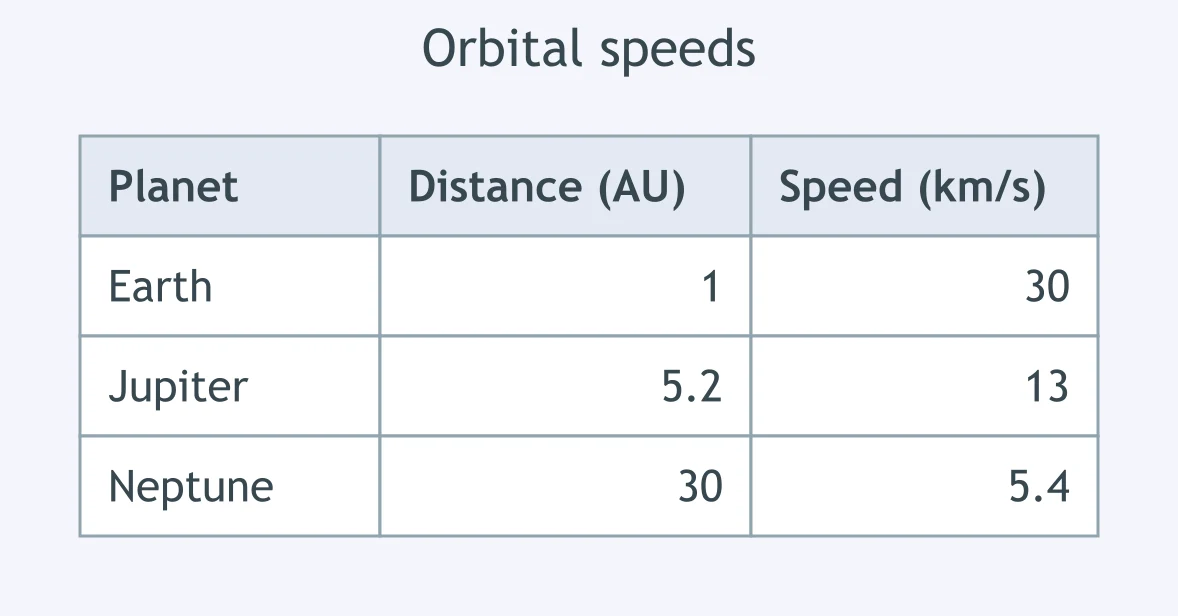
Saturn orbits about 9.5 astronomical units from the Sun and takes about 29 Earth years. Uranus orbits about 19 astronomical units out. What is the best prediction for Uranus's year?
Astronomers find a small icy body orbiting the Sun much further out than Neptune. What should they expect of the time it takes to complete one orbit?
Mars takes 687 Earth days to circle the Sun while Earth takes 365, and Mars orbits about 1.5 times further out. Which reasoning connects the distance to the time?
A student claims that planets closer to the Sun move faster along their orbits. Which observation best supports that claim?
A spacecraft flying close past a planet can have its path bent and its speed changed by the planet's gravity.
Asteroids in the main belt orbit the Sun from between the paths of Mars and Jupiter. How should their orbital periods compare with the 687-day year of Mars?
Two probes of equal mass are placed in circular solar orbits, one at 1 astronomical unit and one at 5 astronomical units. Which statement about their orbital periods is accurate?
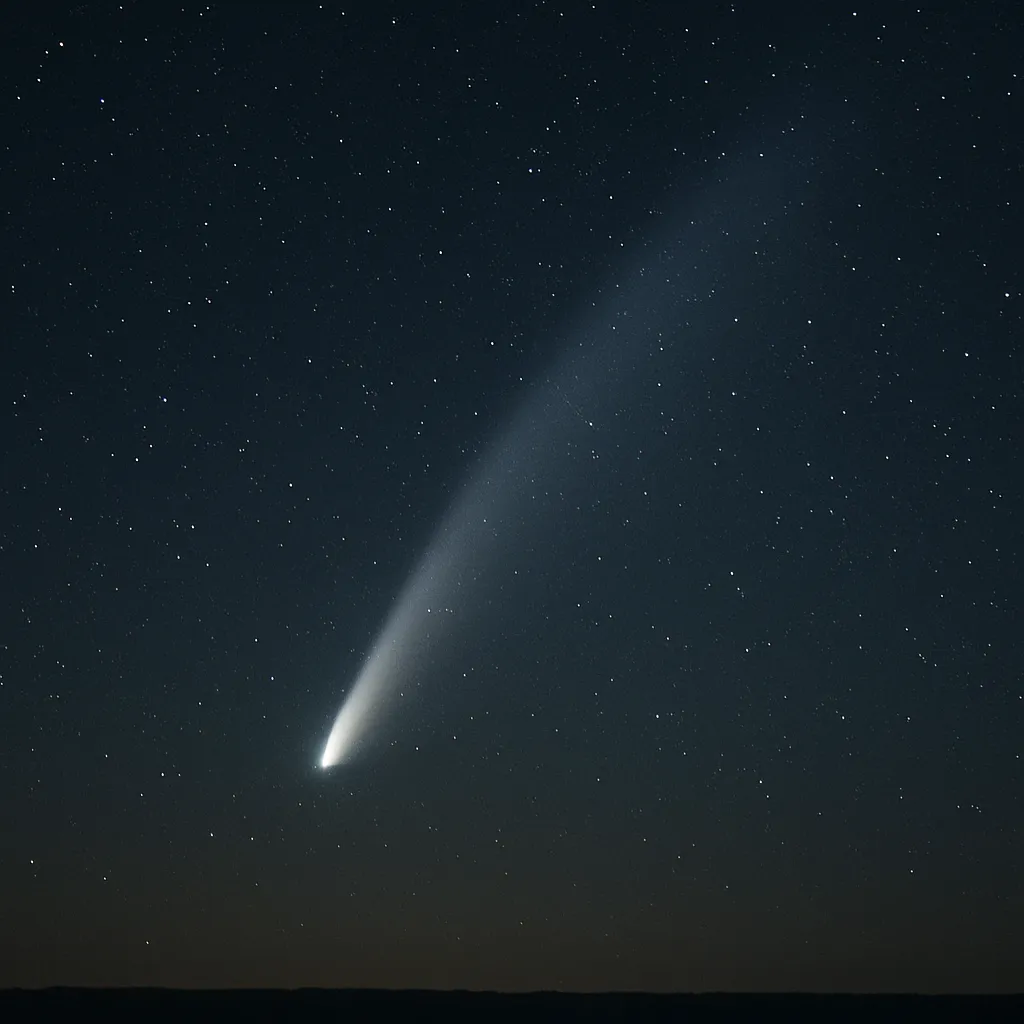
A comet moves fastest as it rounds the Sun and slowest when it is far out beyond Neptune's orbit. Which statement best explains the change in its speed?
Astronomers find some planets around other stars by watching the star wobble back and forth in a small loop. What causes the wobble?
During Mercury's 88-day orbit its distance from the Sun changes between about 46 million and 70 million kilometers. Where along that path is the Sun's pull on Mercury strongest?
An astronaut weighs 720 N on Earth. The Moon's surface gravity is about one sixth of Earth's. About how much does she weigh on the Moon?
A rocket must reach about 11 km/s to escape Earth's gravity, but a spacecraft leaving the Moon needs only about 2.4 km/s. What explains the difference?
A comet follows a long, stretched oval orbit around the Sun. Where is the Sun located on that oval?
A comet slows steadily for decades as it climbs away from the Sun, then speeds up again all the way back in. What does this repeating pattern show about the Sun's pull?
The planets orbit the Sun in nearly the same flat plane because they formed from one flat, spinning disk of gas and dust.
A probe on an oval solar orbit comes within 1 astronomical unit of the Sun and reaches 4 astronomical units at its furthest. How does the Sun's pull at 4 units compare with the pull at 1 unit?
On the Moon, where there is no air, an Apollo 15 astronaut dropped a hammer and a feather at the same moment. What happened?
Crack the passcode before the zombies get in.
Answer, then swat bugs for bonus points.
Race through questions at your own speed.
Same question on every screen. Fastest wins.

Pick a tile, answer, hit bonuses and steals.
The Sun: Structure and Activity
20 questions