Loading
by BlastRoom
Work out which body sits in the middle, whose shadow lands where, and which moon phase each eclipse needs.
#us_grade_8_science
20 questions
One question set, multiple game modes. Tap any game to see it in action. Not sure which to pick?
Answer to place stones and capture territory.
Outrun the snow together.
Earn blasts, then hunt the other team.
Answer to earn energy, then climb.

The class blasts through walls together.
Bid on mystery lots. Most money wins.
Sell tours. Nice, standard, or a total scam.

Answer, restock, and serve the rush.
More correct answers pulls the rope your way.
Answer, then shoot down the alien wave.
Answer, then tap to leap the frozen ridge.
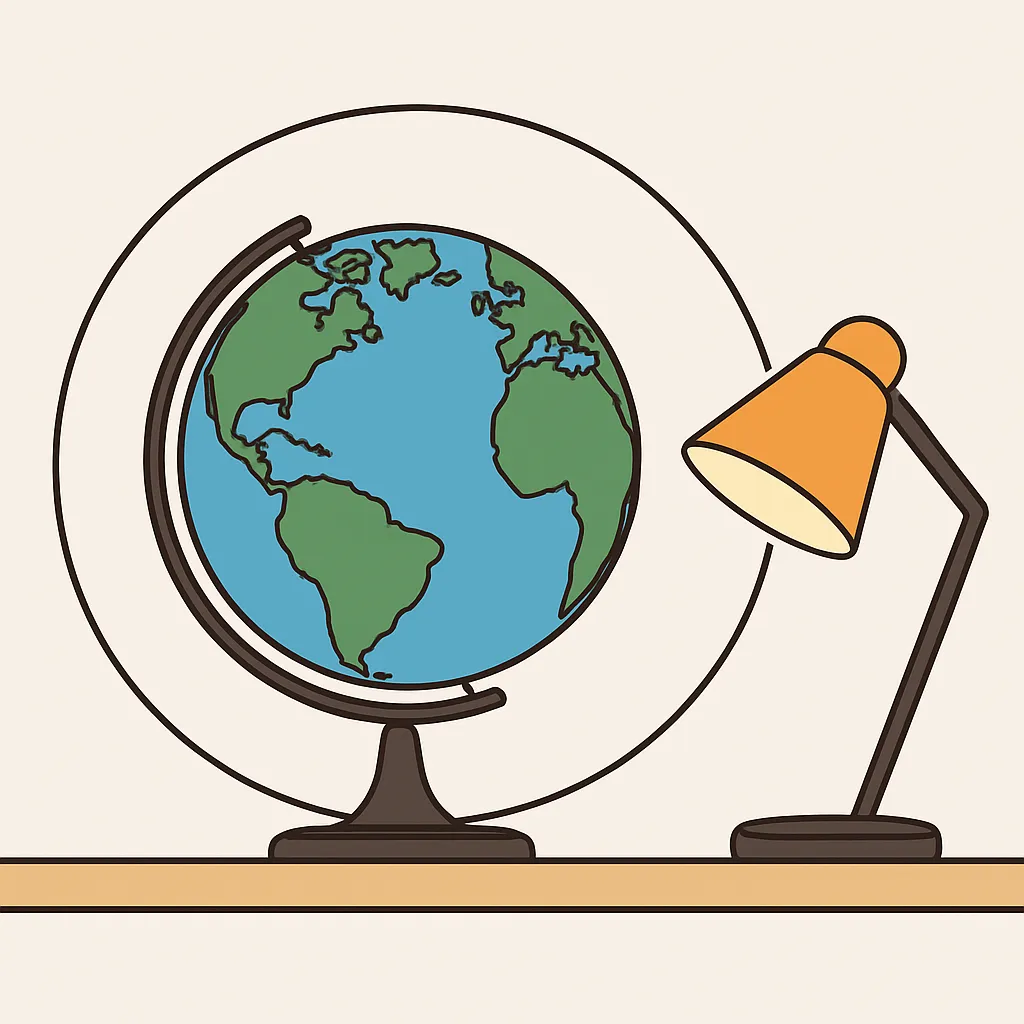
A student holds a small ball so that its shadow falls on the surface of a globe. A lamp lights the scene from across a dark room. Which real event does that shadow on the globe model?
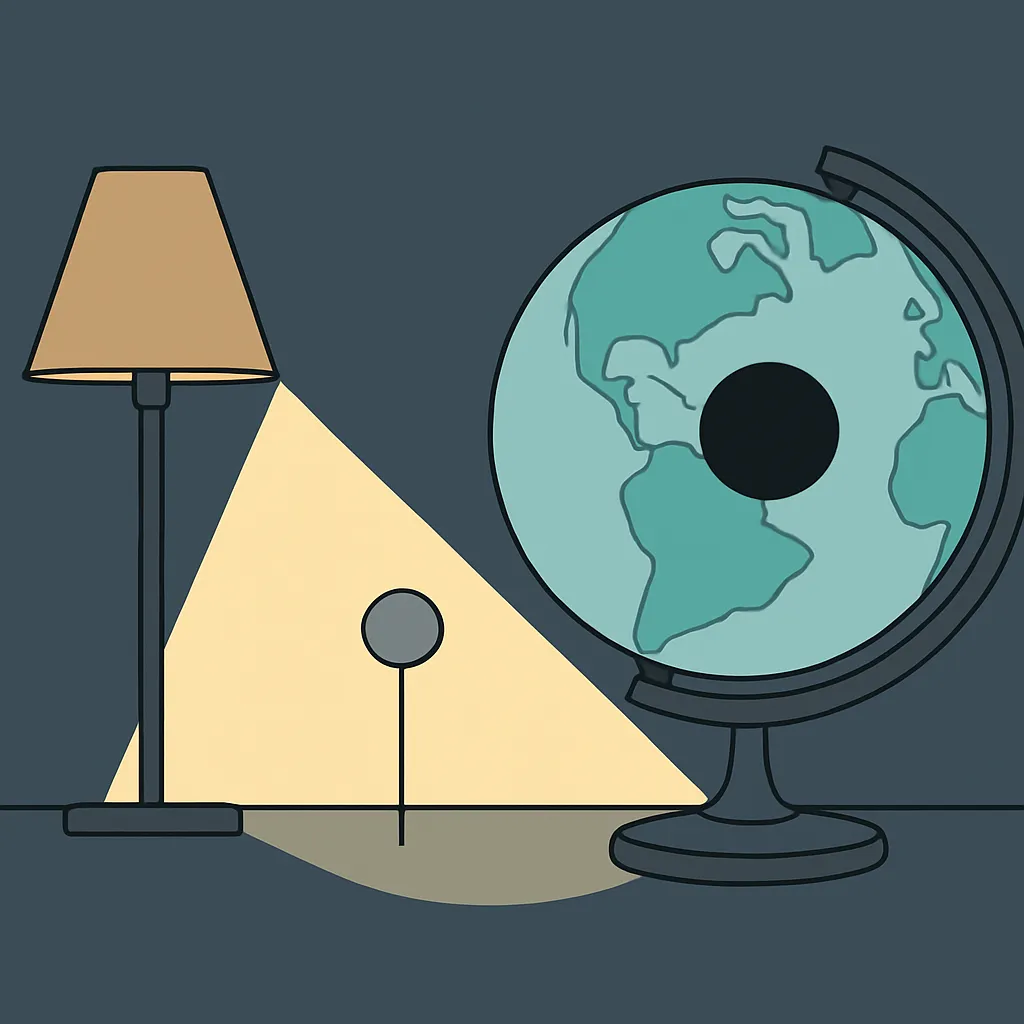
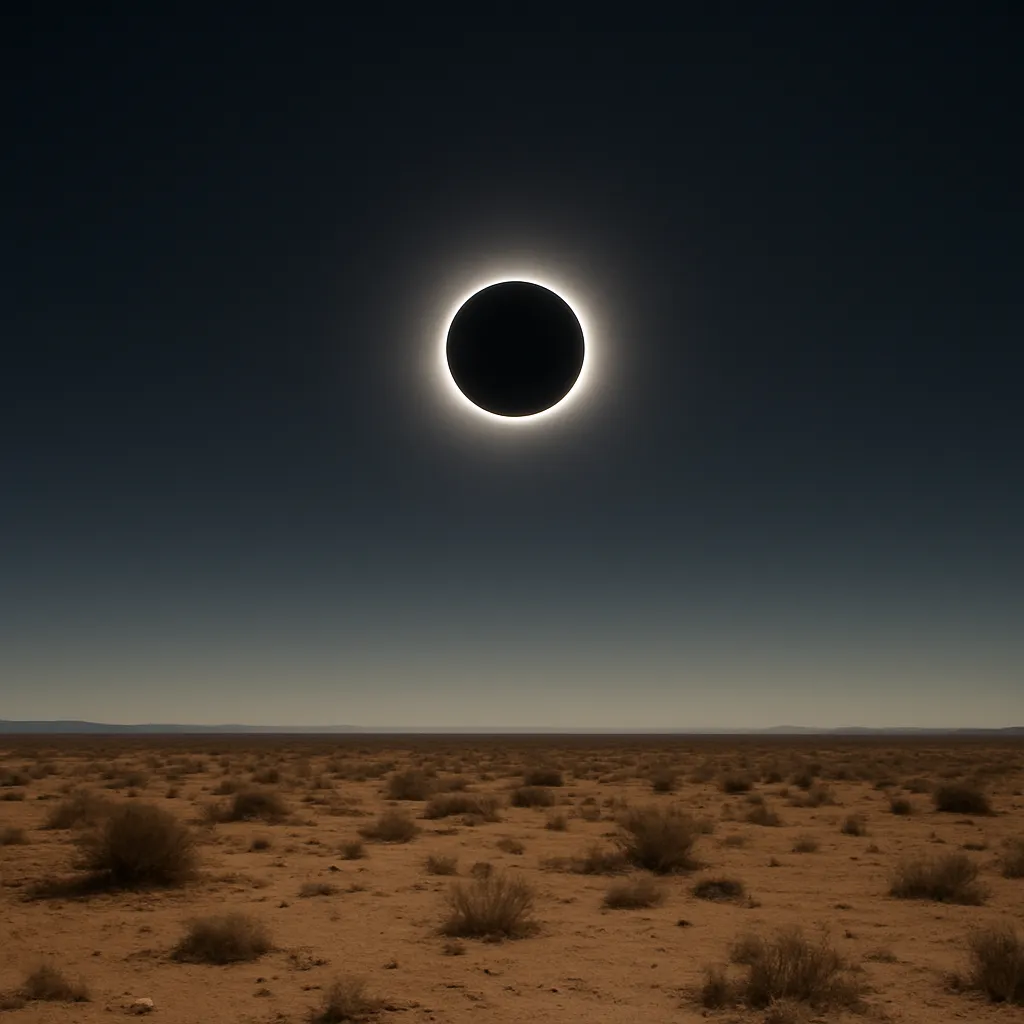
In the middle of the day in Chile, viewers saw a black disc where the sun had been, ringed by a faint glow. Which body was sitting between the other two?
Astronomers report that the moon spent about 90 minutes inside the darkest part of a shadow, watched at once by observers across a whole hemisphere. Whose shadow, and what was in the middle?
When Earth sits directly between the sun and the moon, a solar eclipse is under way.
The moon's shadow swept a dark track across Africa. A few hundred kilometers to the side of that track, people saw only part of the sun covered. Which shadow region were those people standing in?
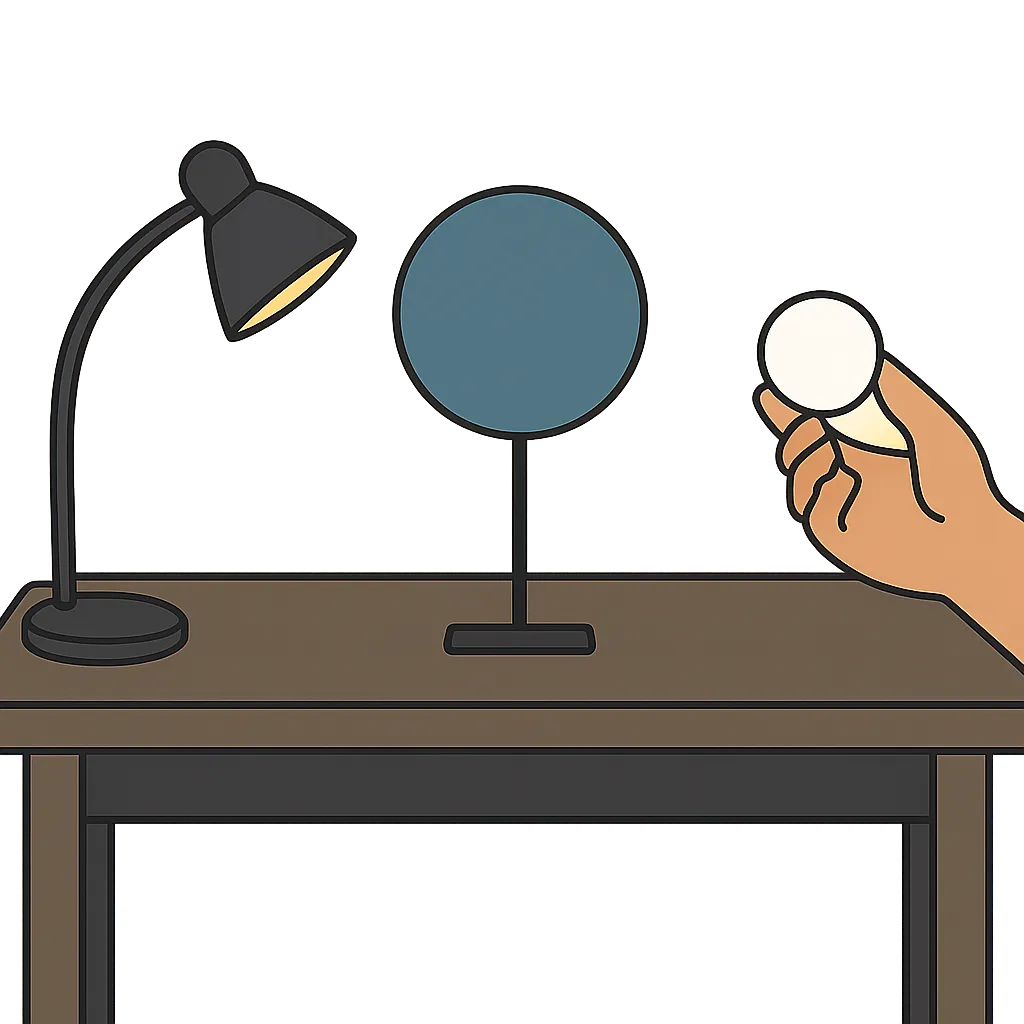
A class models the Earth-sun-moon system with a lamp, a large foam sphere for Earth and a small one for the moon. Where must the small sphere go to model a solar eclipse?
A solar eclipse is total only along a narrow strip of Earth's surface, while a lunar eclipse is visible from the whole night side of Earth at once. What explains that difference?
During one lunar eclipse, a curved dark edge covers only the lower part of the moon, and the rest stays bright the whole time. What does this show?
The sun is about 400 times wider than the moon, yet during a total solar eclipse the moon just covers it. What explains this?
A student claims there should be a solar eclipse at every new moon, since the moon is between Earth and the sun then. What is wrong with the claim?
Full moon comes around every 29.5 days, but lunar eclipses happen only about two or three times a year. What else has to be true at a full moon for a lunar eclipse to happen?
In a table-top model, a hoop standing for the moon's orbit is tipped so one side rises above the table and the other dips below it. What does tipping the hoop show?
Eclipses cluster into seasons about six months apart rather than arriving every month. Which feature of the Earth-sun-moon system sets that spacing?
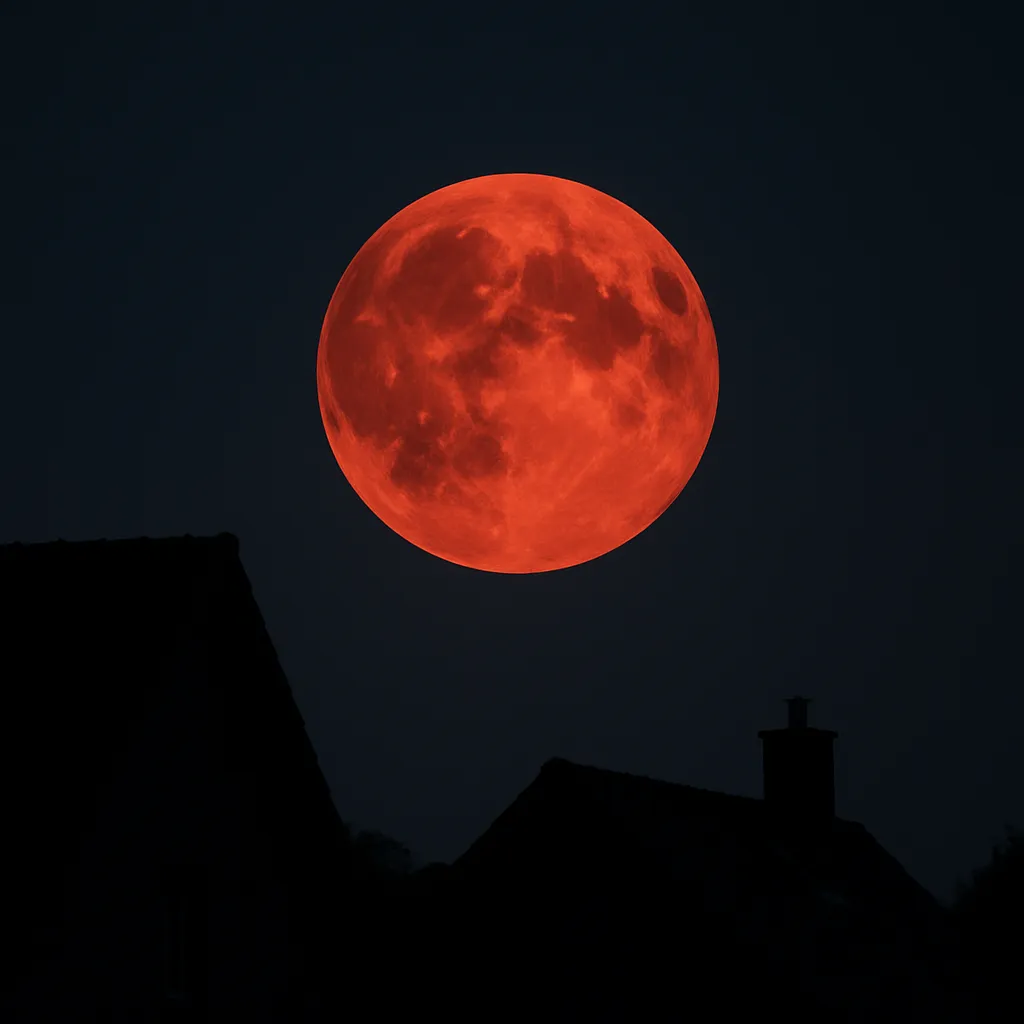
Over about an hour the whole lit disc of the moon dims and turns deep coppery red, and everyone on the night side of Earth can watch it at once. What happened, and what phase came first?
In one town a total solar eclipse lasts only about two minutes, though the moon covers part of the sun for over two hours. Why is the total part so short?
Watchers see a dark curved edge creep across the sun for an hour, then the sky drops to twilight for two minutes before the sun reappears. Which eclipse is this, and which phase does it need?
During a total lunar eclipse the moon glows dull red instead of disappearing from view. Where does the light reaching it come from?
A total lunar eclipse is safe to watch with bare eyes, but looking at a solar eclipse without a filter can damage them. What explains the difference?
A friend points at a thin crescent moon in the evening sky and says Earth's shadow is taking a bite out of it. Why is that explanation wrong?
During a total solar eclipse, the sun's faint outer atmosphere, called the corona, can be seen glowing around the moon.
Crack the passcode before the zombies get in.
Answer, then swat bugs for bonus points.
Race through questions at your own speed.
Same question on every screen. Fastest wins.

Pick a tile, answer, hit bonuses and steals.
Tides and Gravity
20 questions