Loading
by BlastRoom
A mixed review across agricultural origins, systems, models and consequences.
#us_hs_human_geography
65 questions
One question set, multiple game modes. Tap any game to see it in action. Not sure which to pick?
Answer to place stones and capture territory.
Outrun the snow together.
Earn blasts, then hunt the other team.
Answer to earn energy, then climb.

The class blasts through walls together.
Bid on mystery lots. Most money wins.
Sell tours. Nice, standard, or a total scam.

Answer, restock, and serve the rush.
More correct answers pulls the rope your way.
Answer, then shoot down the alien wave.
Answer, then tap to leap the frozen ridge.
Archaeologists find that the earliest farming in Mesoamerica and in China used crops unknown in Southwest Asia, such as maize and rice. What does this show?
Early domestication of wheat and barley is most strongly associated with which region?
A society begins saving seed, breeding animals, and living year-round near fields. What change is being described?
Seed drills, crop rotation, enclosure, and selective livestock breeding raised farm output in Europe before and during industrialization. What is this associated with?
High-yield wheat and rice, synthetic fertilizer, and expanded irrigation raised cereal harvests in many countries after World War II. What was this change called?
Potatoes, maize, horses, cattle, and many diseases moved between the Americas and the Eastern Hemisphere after European contact. What process was this?
Taro, yams, and bananas are often linked to early vegetative planting in what world region?
Why did plant and animal domestication help permanent villages and towns grow?
Norman Borlaug's high-yield wheat varieties helped launch the Green Revolution. Which world region saw the smallest early gains from it?
Maize was domesticated in Mesoamerica. Over centuries, neighboring groups traded seed and passed it on until maize was grown across much of North America. What does this spread illustrate?
A family works a tiny irrigated rice plot by hand, harvests multiple crops, and eats most of the rice at home. Which labels fit the farm?
A ranch covers thousands of acres, uses few workers per acre, and sells cattle to meatpackers. Which labels fit the operation?
A vegetable grower near a city uses greenhouses, irrigation, and paid labor to sell lettuce and herbs to restaurants. Which labels fit the farm?
A herding group moves goats across dry rangeland and uses the animals mainly for household food, fiber, and local exchange. Which labels fit the system?
A village clears a forest plot, grows crops for a few years, then leaves it fallow and moves to another plot. Which labels fit the system?
A dairy farm uses expensive milking equipment, carefully managed feed, and daily sales to a nearby city. Which labels fit the farm?
A feedlot keeps cattle in a confined space, buys feed, uses veterinary services, and sells beef to processors. Which labels fit the operation?
A vineyard on a Mediterranean coast uses skilled pruning, irrigation, and hired labor to sell grapes for wine. Which labels fit the farm?
A wheat farm on the plains plants one crop across 3,000 acres, uses large machines, and sells the harvest through grain elevators. Which labels fit it?
A plantation in Malaysia employs many hired workers per acre to tend and harvest oil palms, and it ships the palm oil overseas. Which labels fit it?
A household garden produces vegetables on a small plot with hand labor, and nearly all of the food is eaten by the family. Which labels fit it?
A sheep station in dry Australia uses vast pasture, few workers per acre, and sells wool to global buyers. Which labels fit the operation?
A hillside community rotates maize fields through long fallow periods and grows mostly for village consumption. Why is this system classified as extensive?
A heated greenhouse grows flowers year-round on little land and sells them to florists. Which labels fit the operation?
A dairy farmer wants fresh milk delivered to a city before it spoils. In von Thunen's model, what location best fits that product?
Refrigerated trucks sharply lower the cost of moving milk to a city. What change would von Thunen's logic predict?
Fields at a city's edge are being sold and turned into housing subdivisions. Which explanation fits bid-rent theory?
A strawberry grower earns far more per acre than a hay grower and needs frequent trips to a city market. What outcome fits bid-rent logic?
A bulky, low-value farm product becomes unprofitable after only a short haul to market. What location pattern does von Thunen's model predict?
A new bridge cuts travel time from farms east of a city but not from farms west of it. What adjustment fits von Thunen's transport-cost logic?
A downtown farmers' market raises prices for fresh herbs grown nearby. What happens to herb growers' bid for close-in land?
A model assumes one market, a flat uniform plain, equal soil quality, and farmers who minimize transport costs. Whose agricultural model uses those assumptions?
For a crop sold in one city, shipping costs grow with distance until they use up all the money the crop can earn. What boundary has been reached?
Fuel prices rise for farmers shipping produce to a city. What result best fits von Thunen's model?
Homes stand close together in a village, with fields surrounding the built-up center. What rural settlement pattern is shown?
Farmhouses are spread far apart, and each family lives on or near its own fields. What rural settlement pattern is shown?
Houses and farms form a narrow line along a river road, with access stretched along the route. What settlement pattern is shown?
Rural roads meet at right angles every mile, and square farm parcels repeat across the landscape. What survey system produced this pattern?
A deed describes land by following a creek, a stone wall, and a large oak before returning to the start. What survey system does this use?
Narrow farms extend back from a river so many owners have water access. What land division pattern is this?
A Midwestern county has straight roads, square fields, and section lines from the township and range survey. About how much land does one section cover?
Colonial New England villages had houses around a common green, with farmland outside the compact center. What was a main reason settlers built clustered villages like this?
Irrigation water evaporates repeatedly in a dry climate, leaving minerals behind in the soil. What environmental problem can result?
Too many animals graze a dry rangeland until grasses and shrubs no longer protect the soil. What process can this accelerate?
Farmers plow along contour lines and build terraces on a slope. What environmental effect is the practice designed to have?
A region plants the same banana variety across most farms for many years. What risk increases because of this monoculture?
Fertilizer washes from cornfields into a river and feeds algal blooms downstream. What problem can this cause in lakes or coastal waters?
A chemical spray kills many insects, but the survivors reproduce and the spray works less well each year. What has developed?
Population growth forces slash-and-burn farmers to return to old plots after 2 years instead of 15. What problem is likely?
A large confined animal operation stores manure in open lagoons near streams. What environmental risk is most direct?
A farmer leaves crop residue on fields and disturbs the soil less between harvests. What is this practice called?
Wetlands are drained and converted to cropland. What ecosystem service is commonly reduced?
Groundwater from the Ogallala Aquifer is pumped for irrigation faster than rainfall can replace it. What trend is expected?
A cocoa farmer receives little of the final price of a chocolate bar sold overseas. What feature of the commodity chain helps explain this?
One corporation sells seed, buys grain, processes food, and distributes packaged products. What term best describes this role in the food system?
A household can consistently obtain enough safe and nutritious food for an active life. What condition is being described?
A low-income neighborhood has few supermarkets, limited transit, and mostly convenience stores for groceries. What concept best fits this situation?
Coffee is sold with a label promising minimum prices and labor standards for small producers. What food-system approach is this?
A crop variety has a gene inserted to resist a specific insect pest. What kind of crop is it?
A restaurant buys most produce from farms within a short drive to reduce shipping distance and support nearby growers. What movement does this reflect?
A country earns much of its farm income from one export crop whose world price changes sharply. What is a major risk?
Wealthy countries subsidize grain production, allowing exports at low prices. What concern do critics raise about farmers in poorer countries?
A tomato grower signs an agreement to plant the variety, schedule, and quality standards required by a food-processing company. What arrangement is this?
U.S. stores sell fresh grapes in winter by importing them from the Southern Hemisphere. What feature of the modern food system does this show?
A social movement argues that communities should control their own seeds, land access, and food policy rather than depend only on global markets. What idea is this?
The Von Thunen Model and Bid-Rent
30 questions
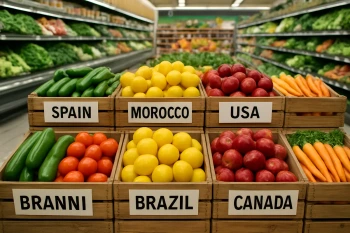
The Global System of Agriculture: Commodity Chains, Agribusiness and Food Security
35 questions
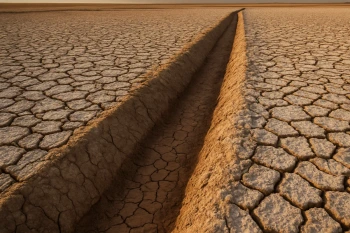
Consequences of Agricultural Practices: Land, Soil, Water and Sustainability
35 questions
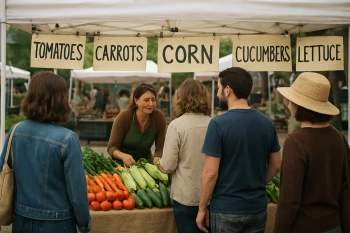
Contemporary Challenges: GMOs, Organics, Food Deserts and Women in Agriculture
35 questions
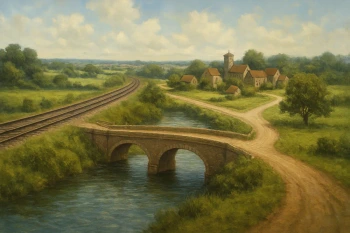
The Origins and Influences of Urbanization
Crack the passcode before the zombies get in.
Answer, then swat bugs for bonus points.
Race through questions at your own speed.
Same question on every screen. Fastest wins.

Pick a tile, answer, hit bonuses and steals.
30 questions