Loading
by BlastRoom
Why land use forms rings around a market, and what breaks the pattern.
#us_hs_human_geography
30 questions
One question set, multiple game modes. Tap any game to see it in action. Not sure which to pick?
Answer to place stones and capture territory.
Outrun the snow together.
Earn blasts, then hunt the other team.
Answer to earn energy, then climb.

The class blasts through walls together.
Bid on mystery lots. Most money wins.
Sell tours. Nice, standard, or a total scam.

Answer, restock, and serve the rush.
More correct answers pulls the rope your way.
Answer, then shoot down the alien wave.
Answer, then tap to leap the frozen ridge.
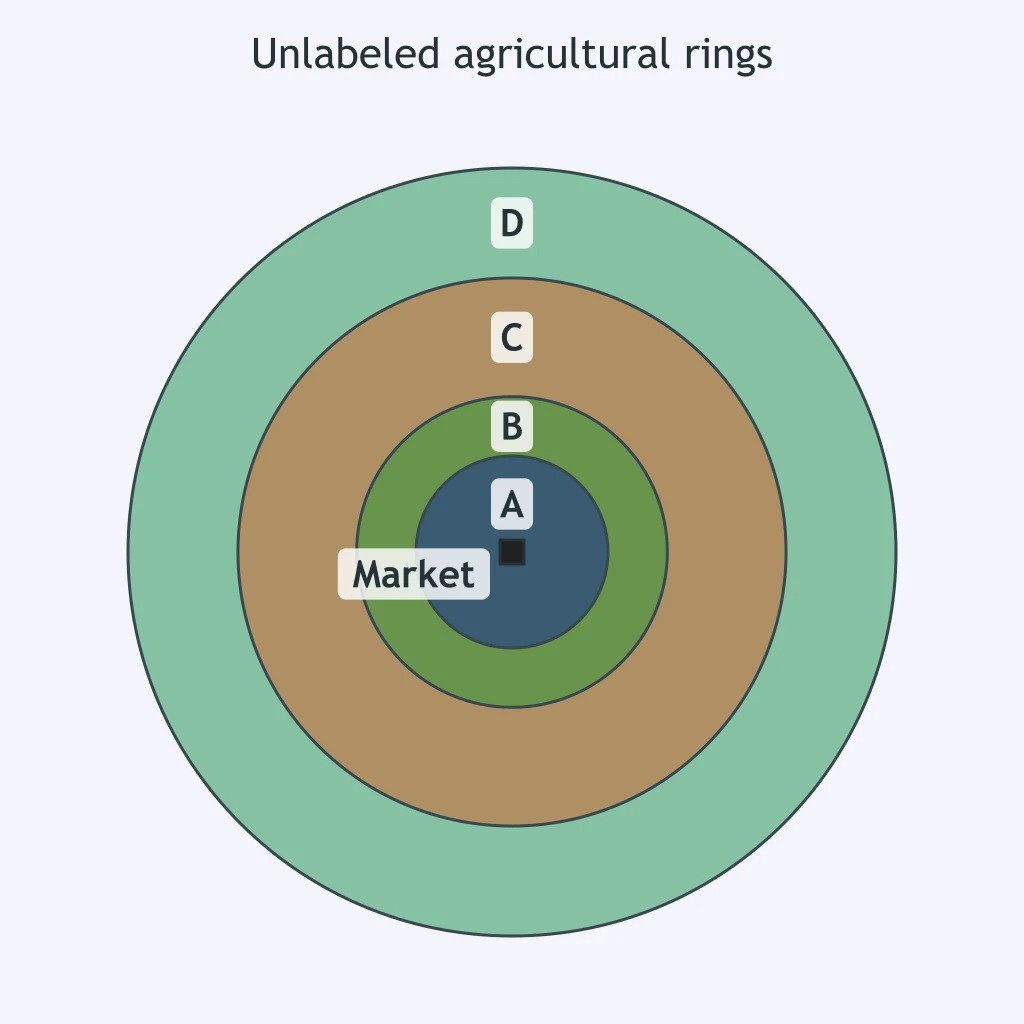
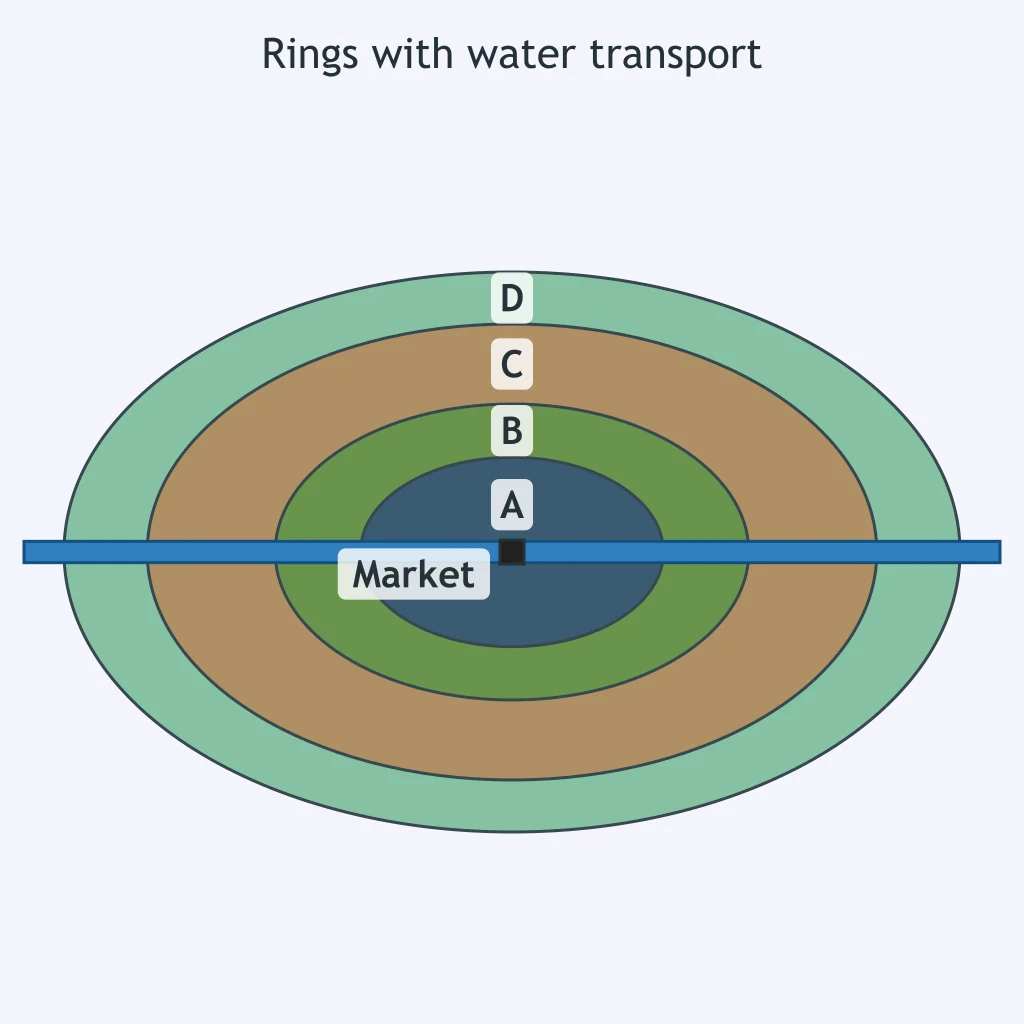
In the unlabeled von Thunen ring diagram, Ring A touches the central market. What land use belongs in Ring A?
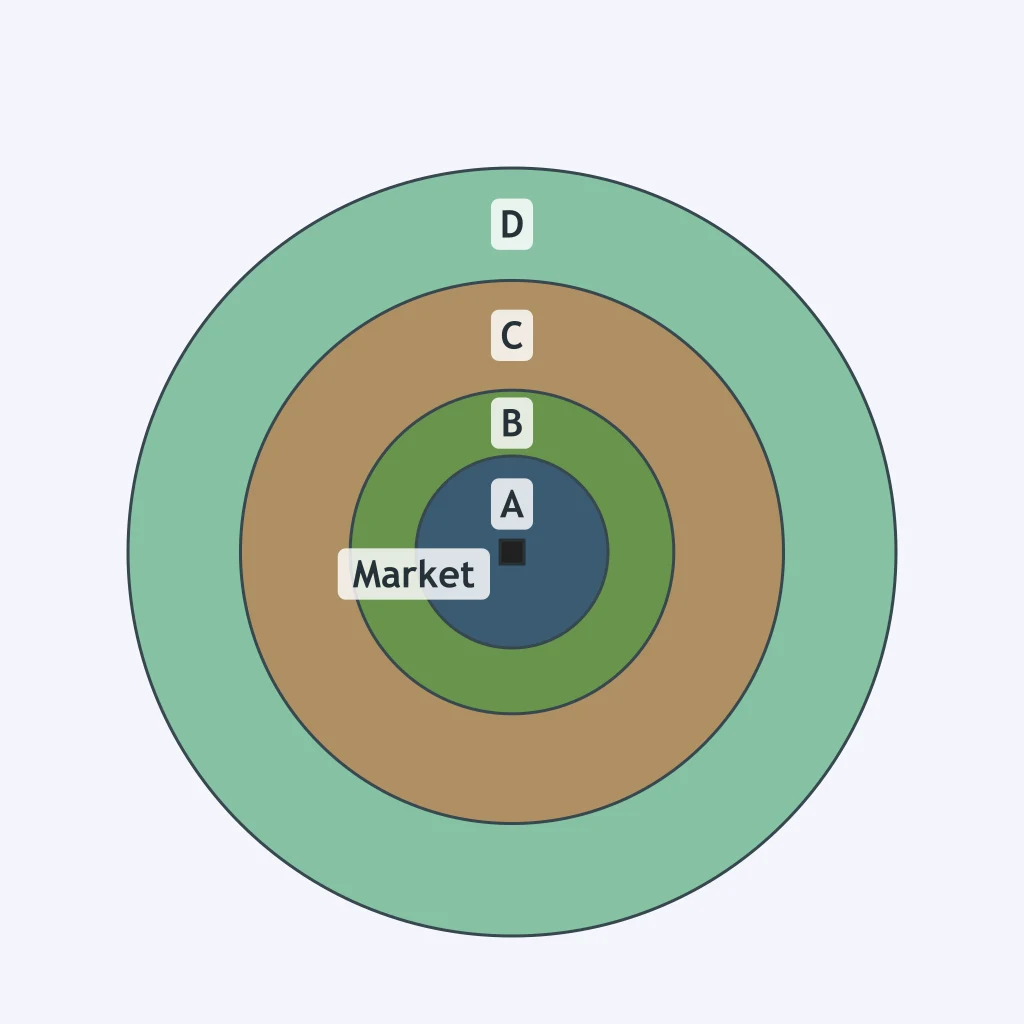
The diagram shows four unlabeled rings around a market town. Ring D is the outermost belt. What land use fits Ring D?
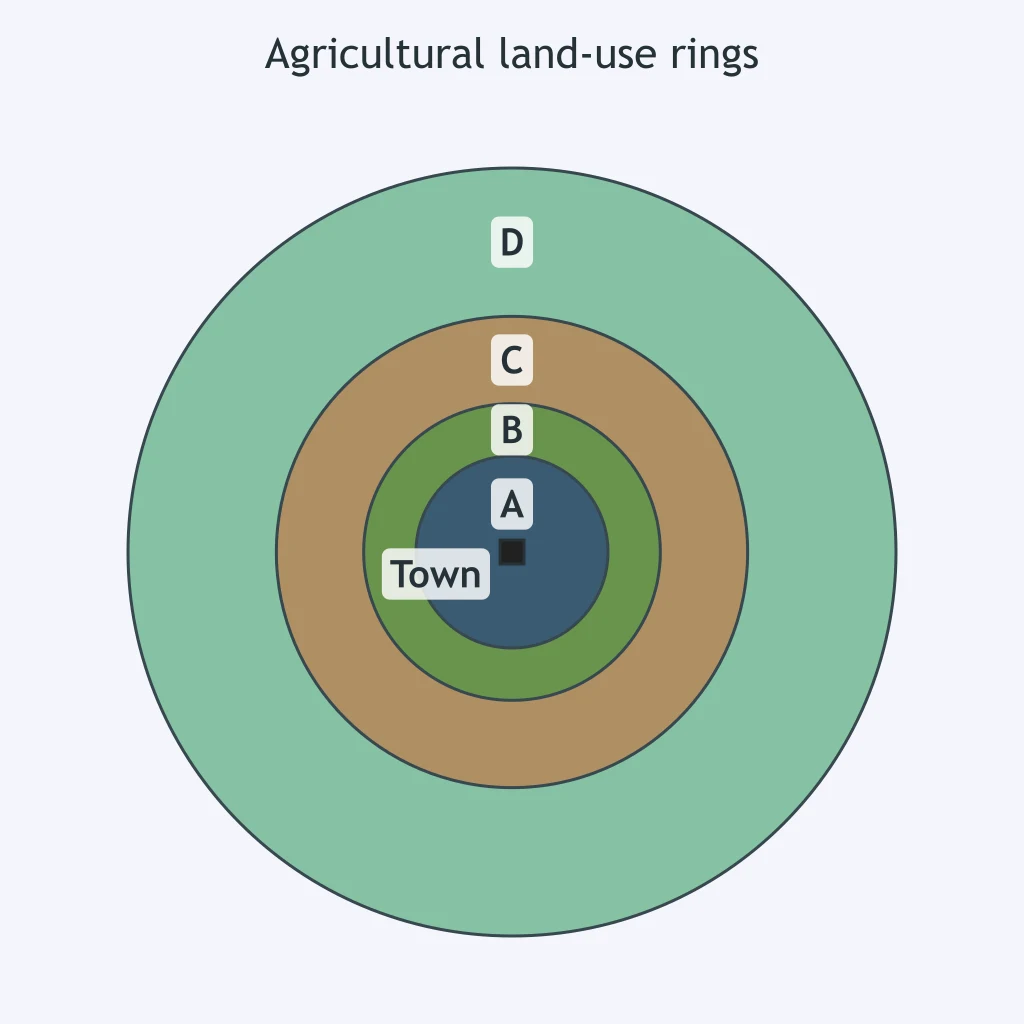
On the ring diagram, Belt B lies just outside the market-gardening belt. Which use is most likely in Belt B in the classic model?
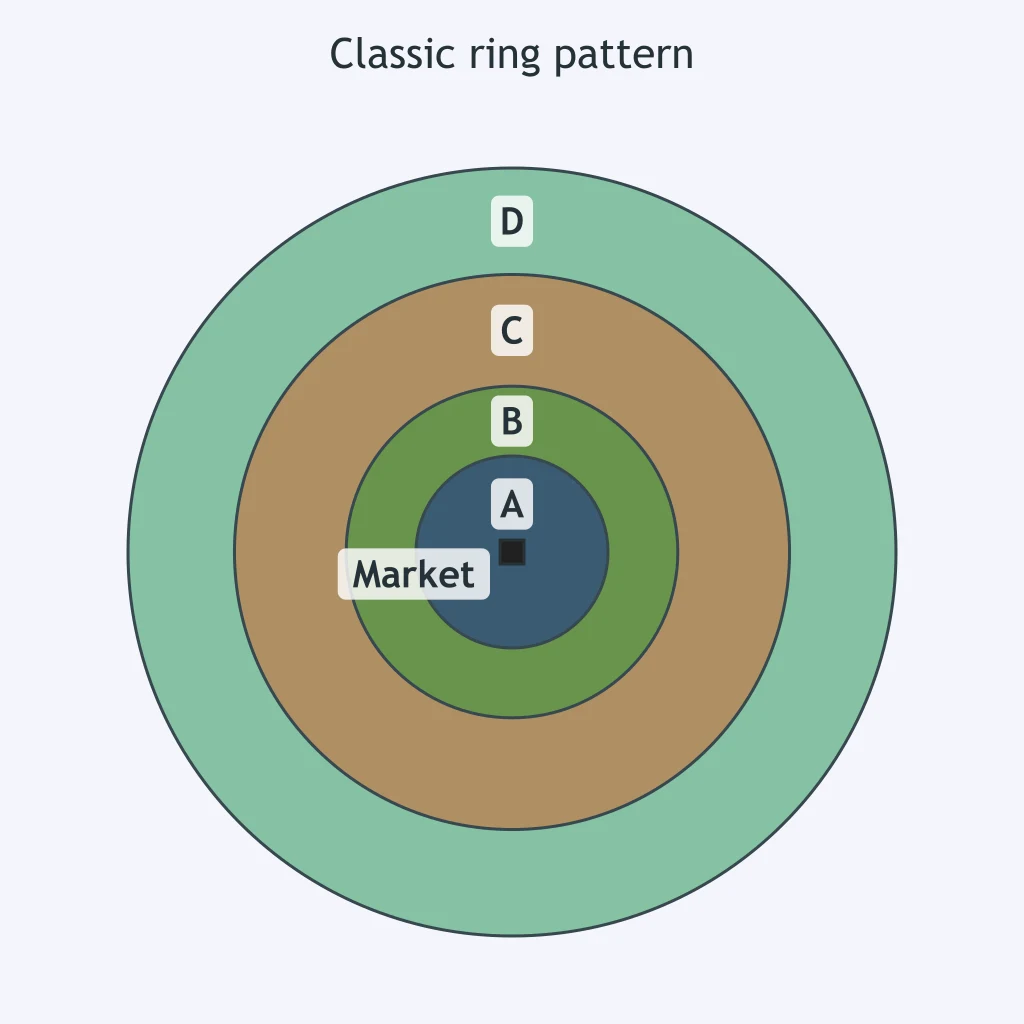
In the figure, Ring C is outside the timber belt but inside the grazing belt. What land use belongs there?
A von Thunen diagram has a narrow inner belt labeled W. Which land use should be placed in W?
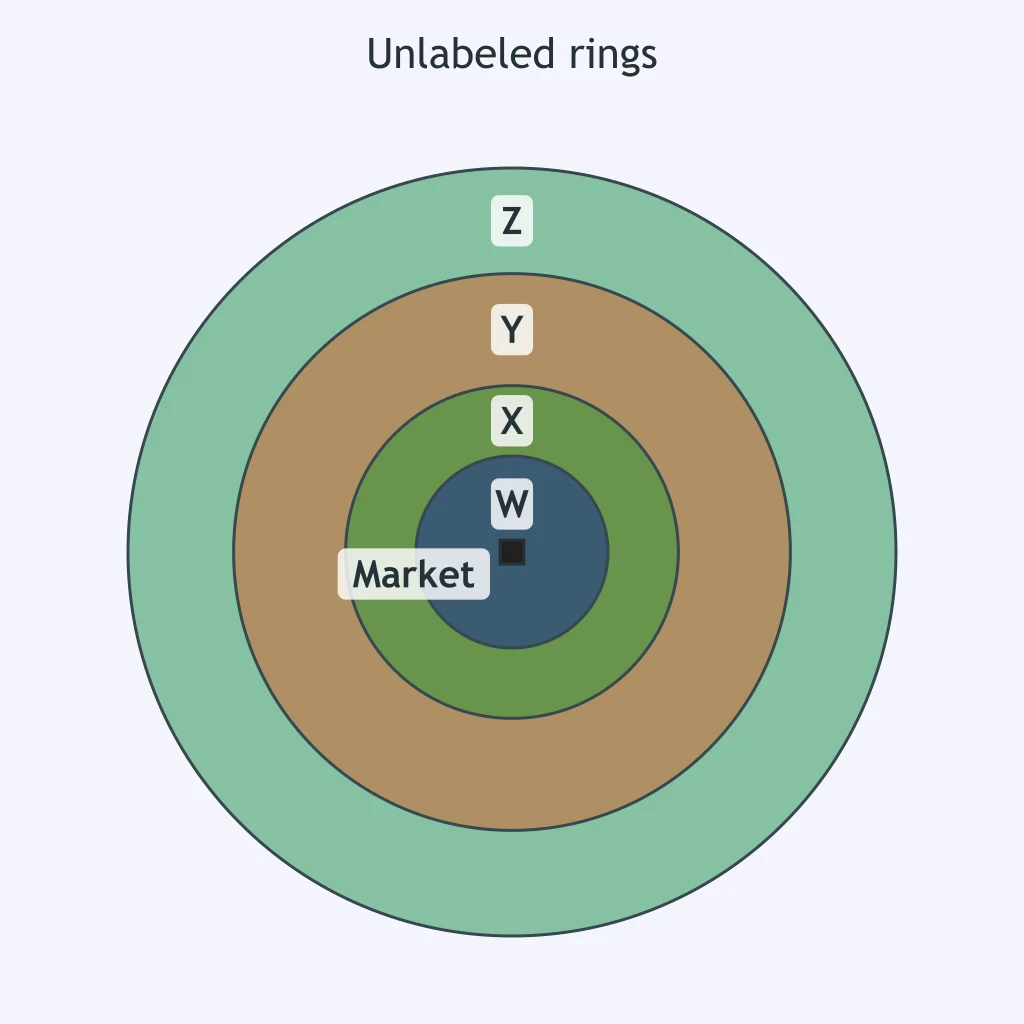
In the diagram, Ring X is second from the market. Which activity best matches Ring X?
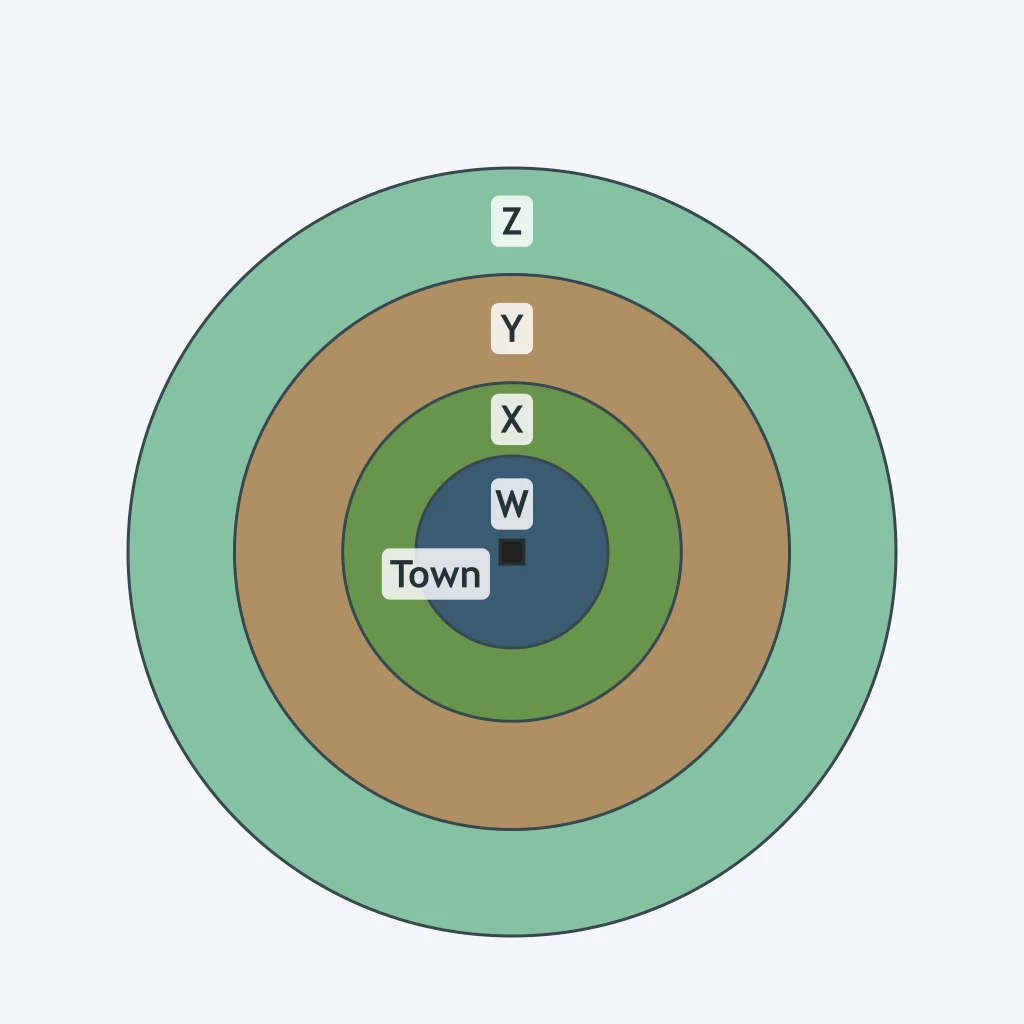
A teacher points to Ring Y, the third belt from the market, on the model. What land use is the best label for Ring Y?
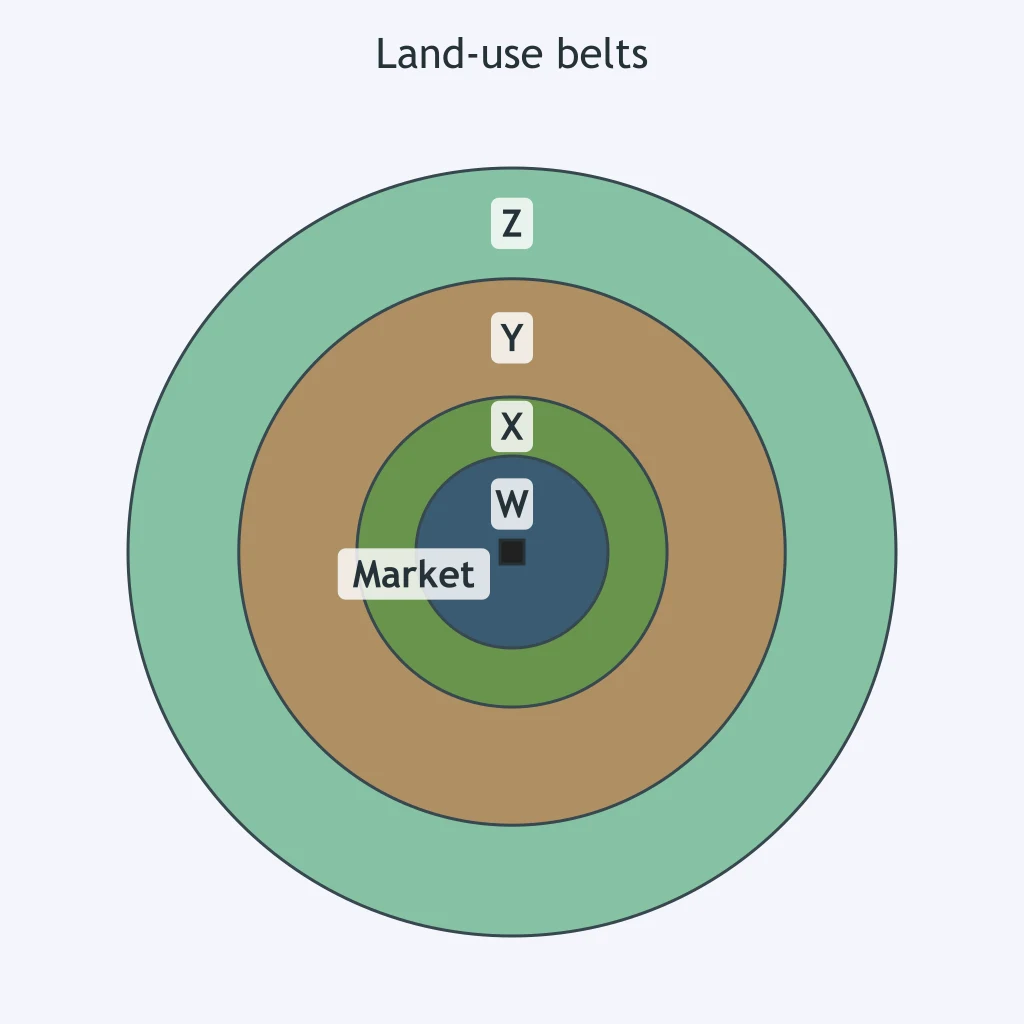
In the unlabeled model, Belt Z is farthest from the central market. Which agricultural use fits Belt Z?
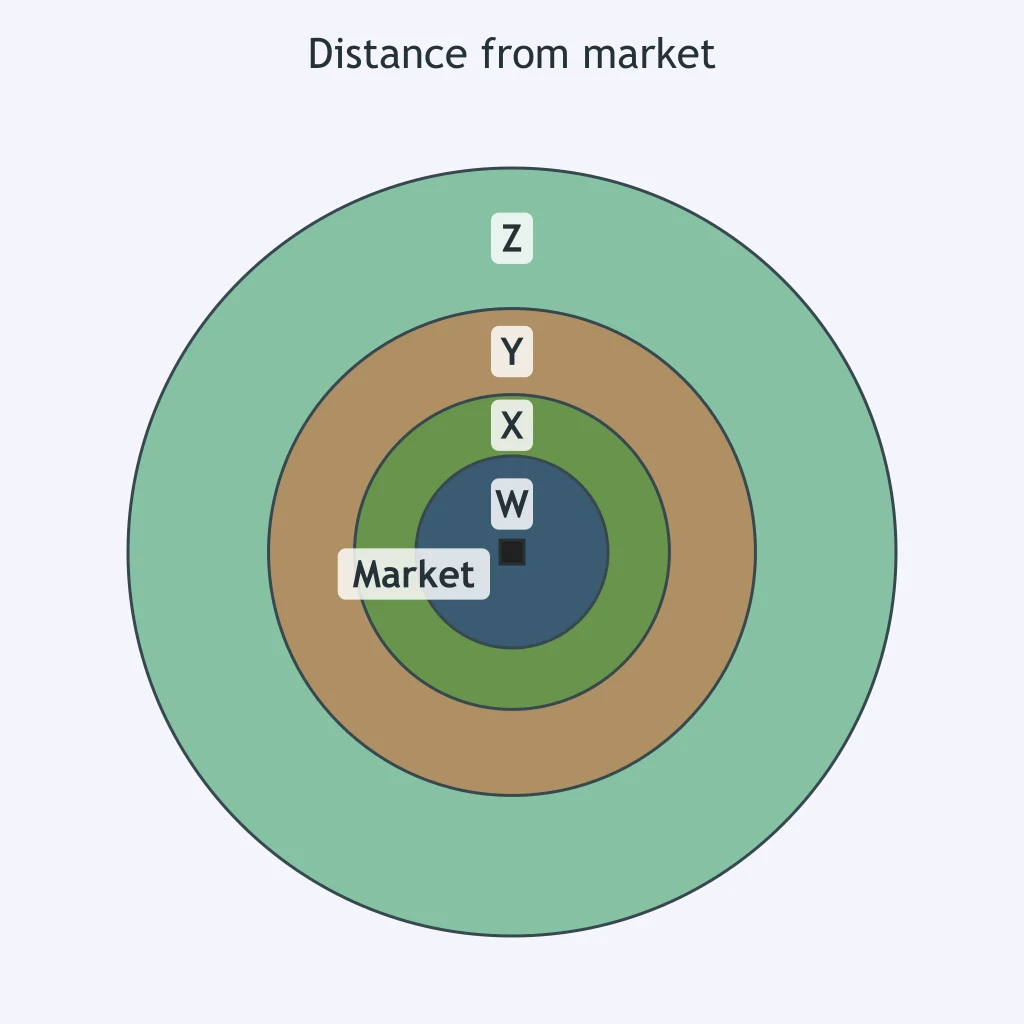
Two farmers grow the same crop with the same yield, but one is 5 miles from market and one is 55 miles away. Who can bid more for land?
A tomato grower and a wheat grower both want land one mile from a city market. Tomatoes spoil quickly and earn high revenue per acre. Who is likely to outbid whom?
Use the bid-rent curve. At 10 miles and 50 miles, where can this crop pay a higher land rent?
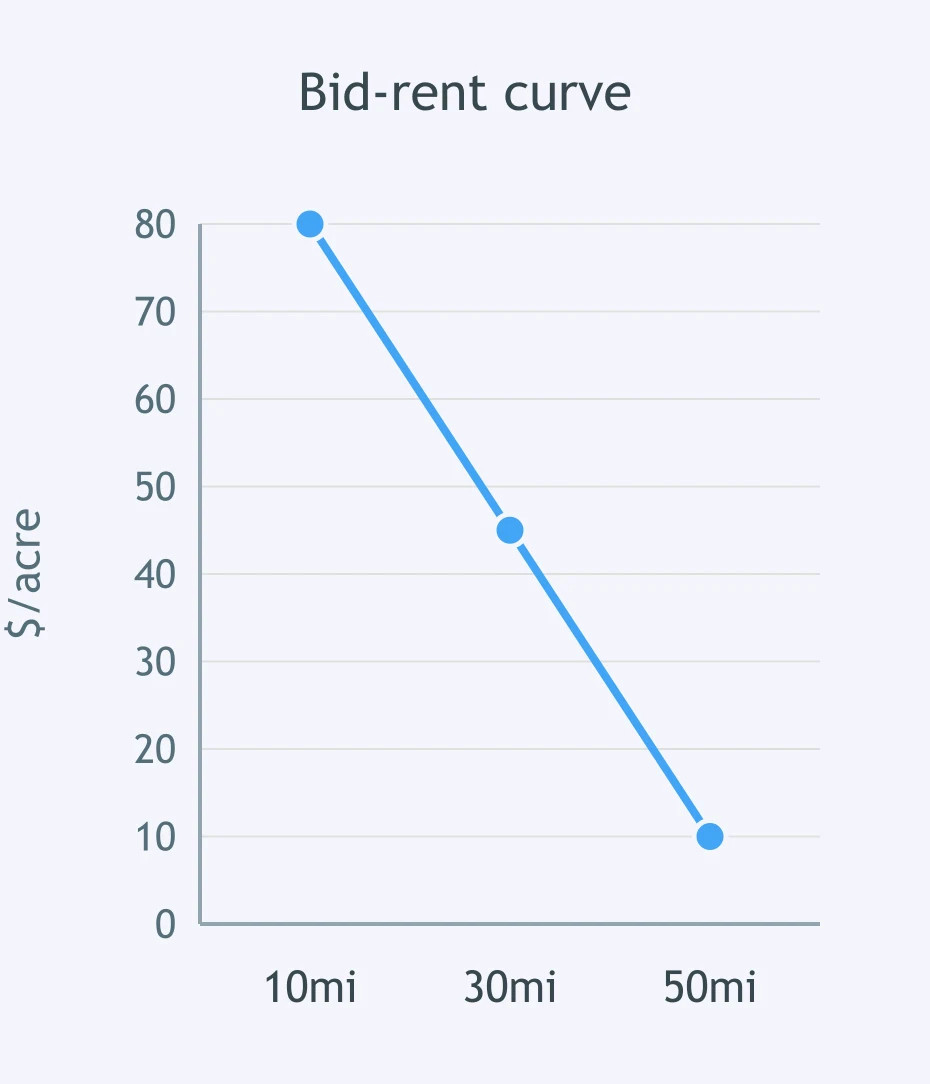
On a graph, dairy's bid-rent line falls steeply with distance from market, while grain's falls gently. What best explains the steeper dairy line?
The graph shows a crop's possible rent after hauling costs. Which distance gives the farmer the strongest ability to pay for land?
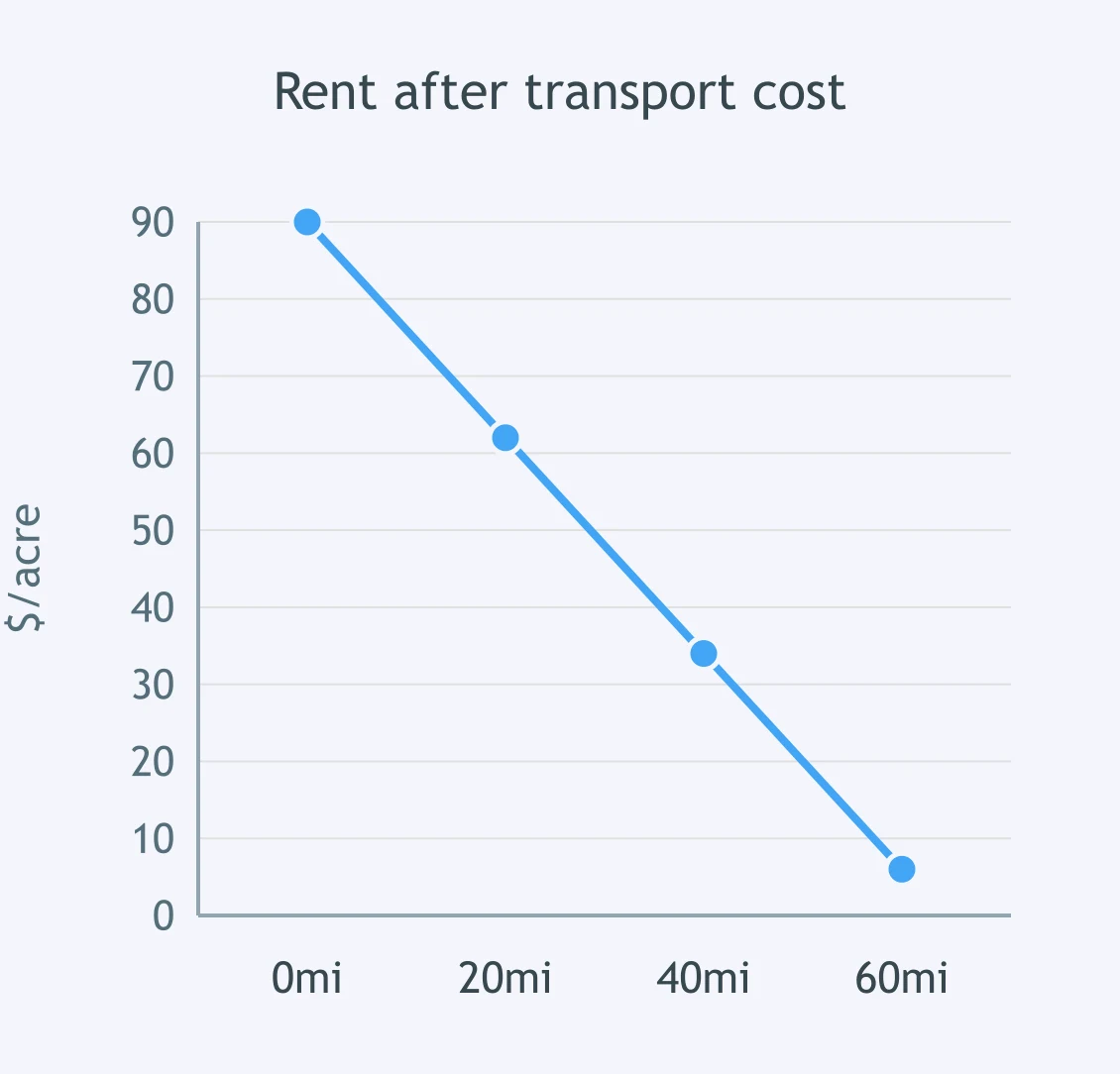
Fuel prices rise for two grain farmers, one 12 miles from market and one 80 miles away. Who loses more ability to bid for land?
Use the curve for Crop A. Compared with a field at 15 miles, what can Crop A pay for land at 75 miles?
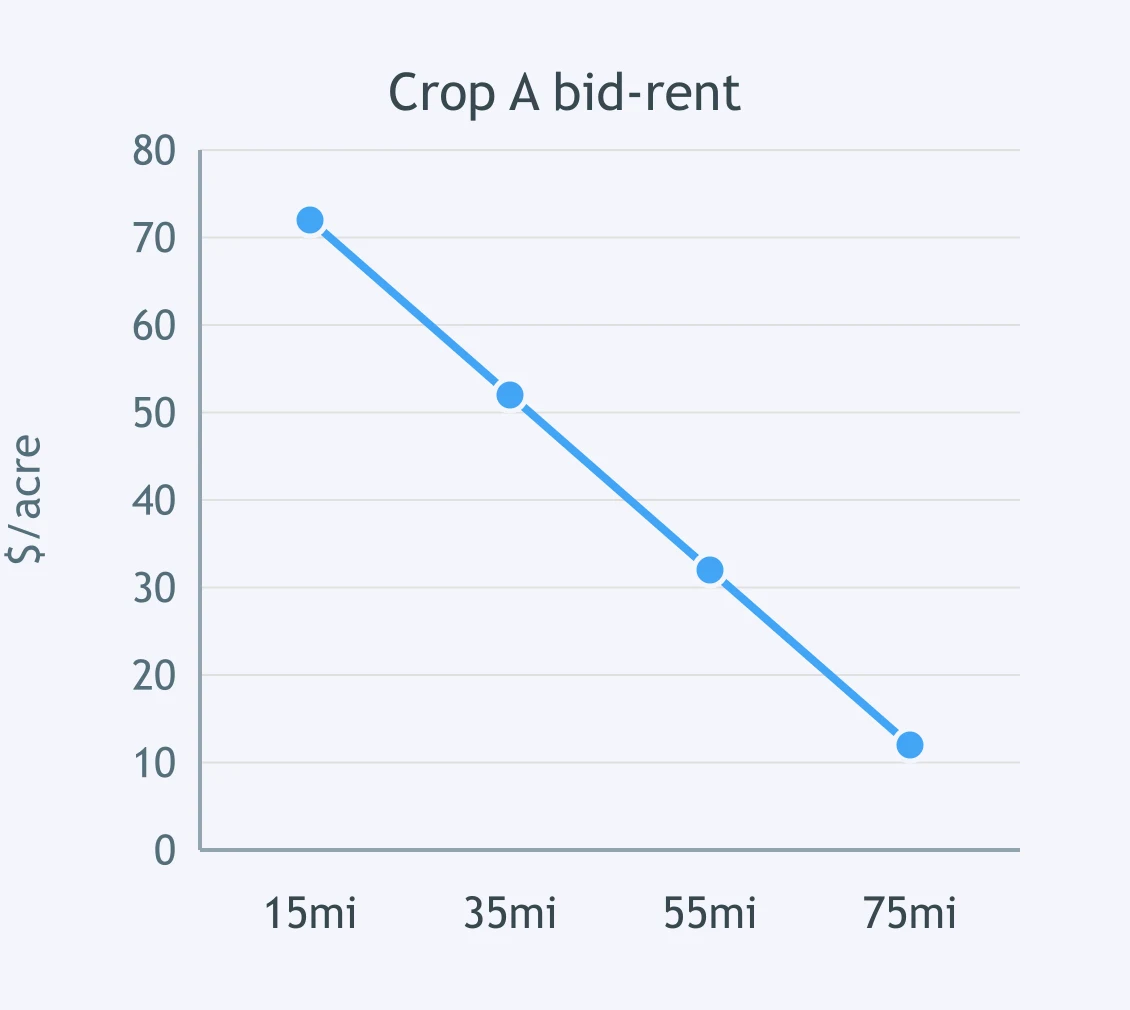
A new highway cuts hauling costs for farms 60 miles from market. What happens to their bid-rent compared with before?
Use Line A in the graph. What activity best fits this bid-rent curve?
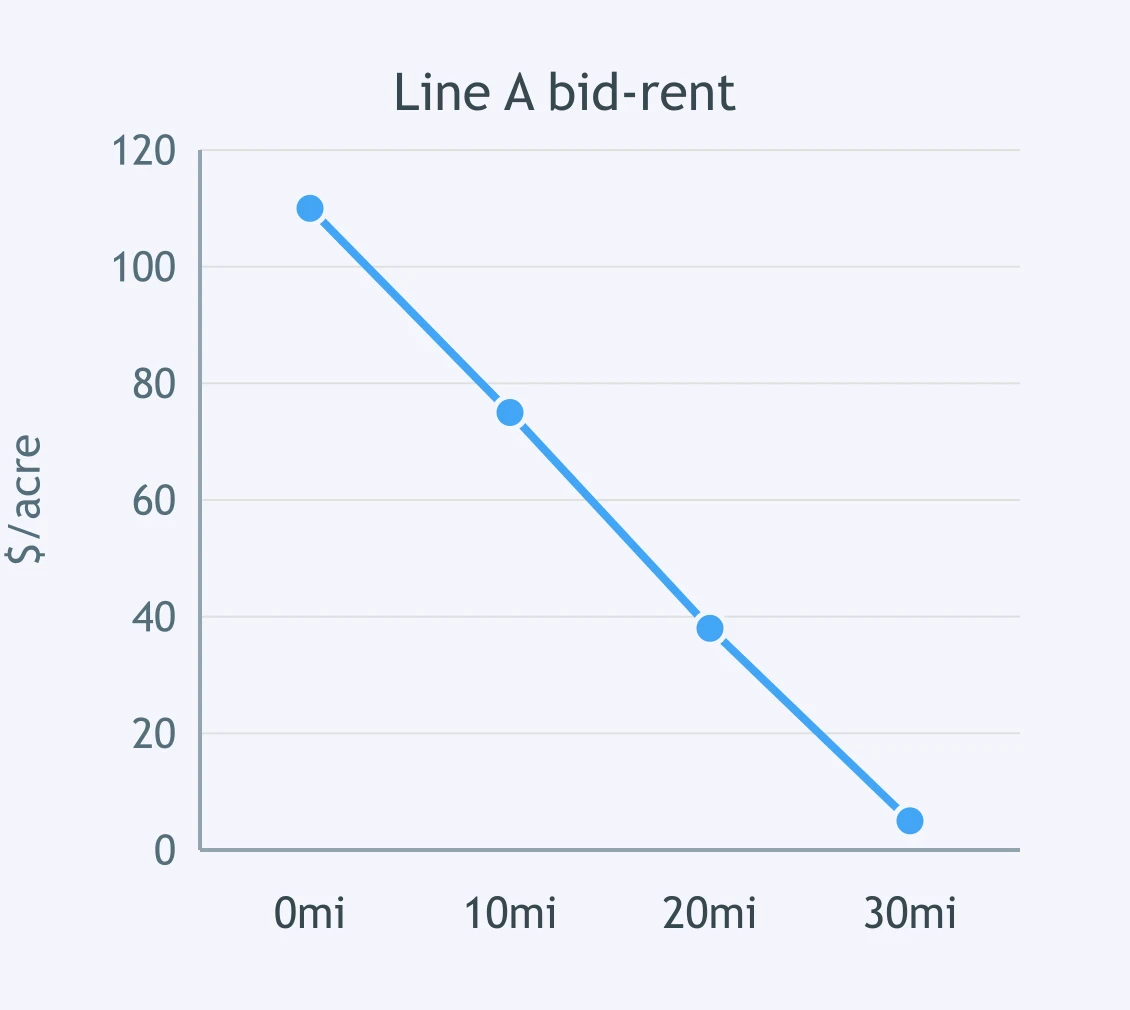
Use the graph of Line B's bid-rent curve. What type of farming does it most likely describe?
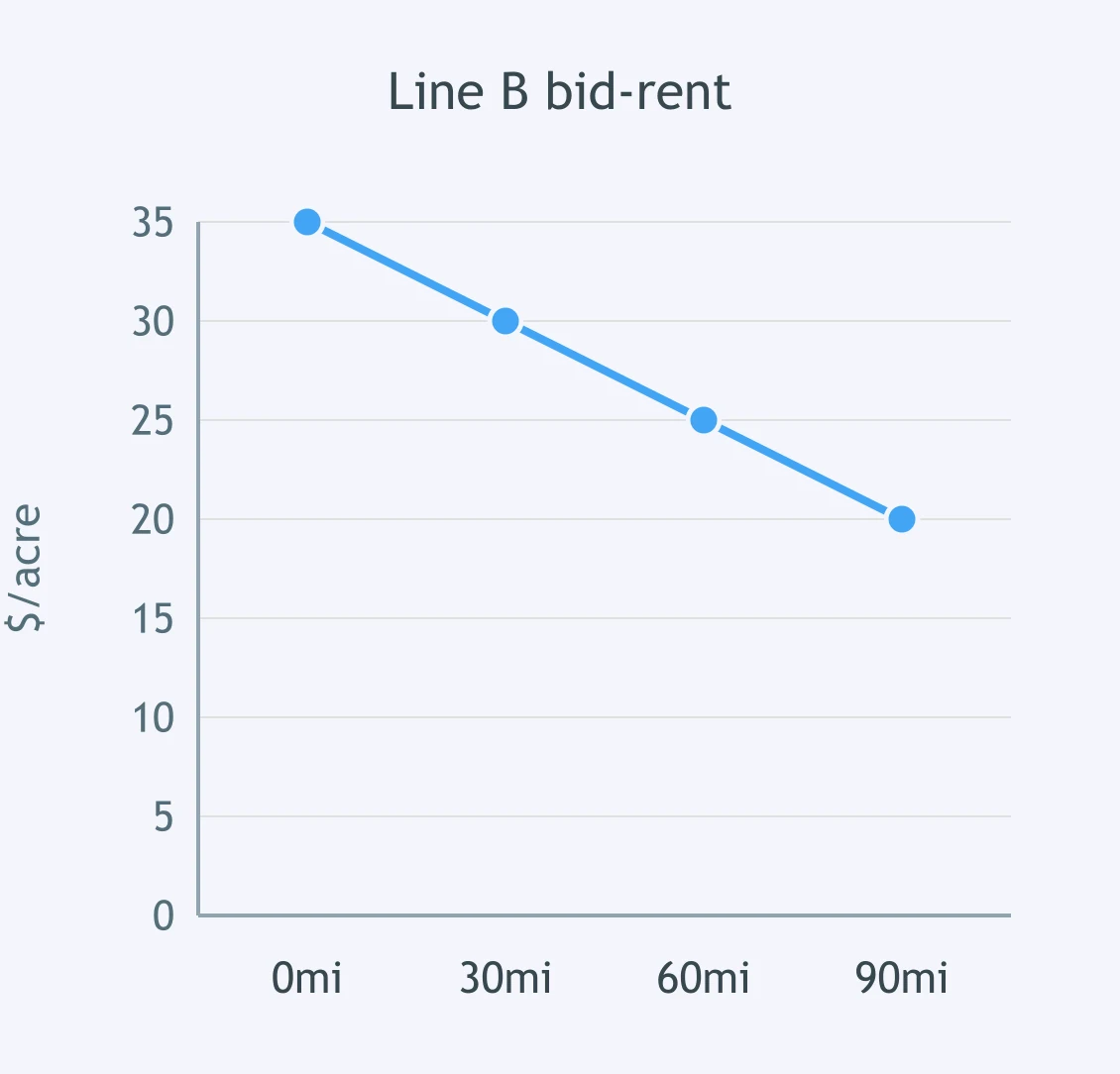
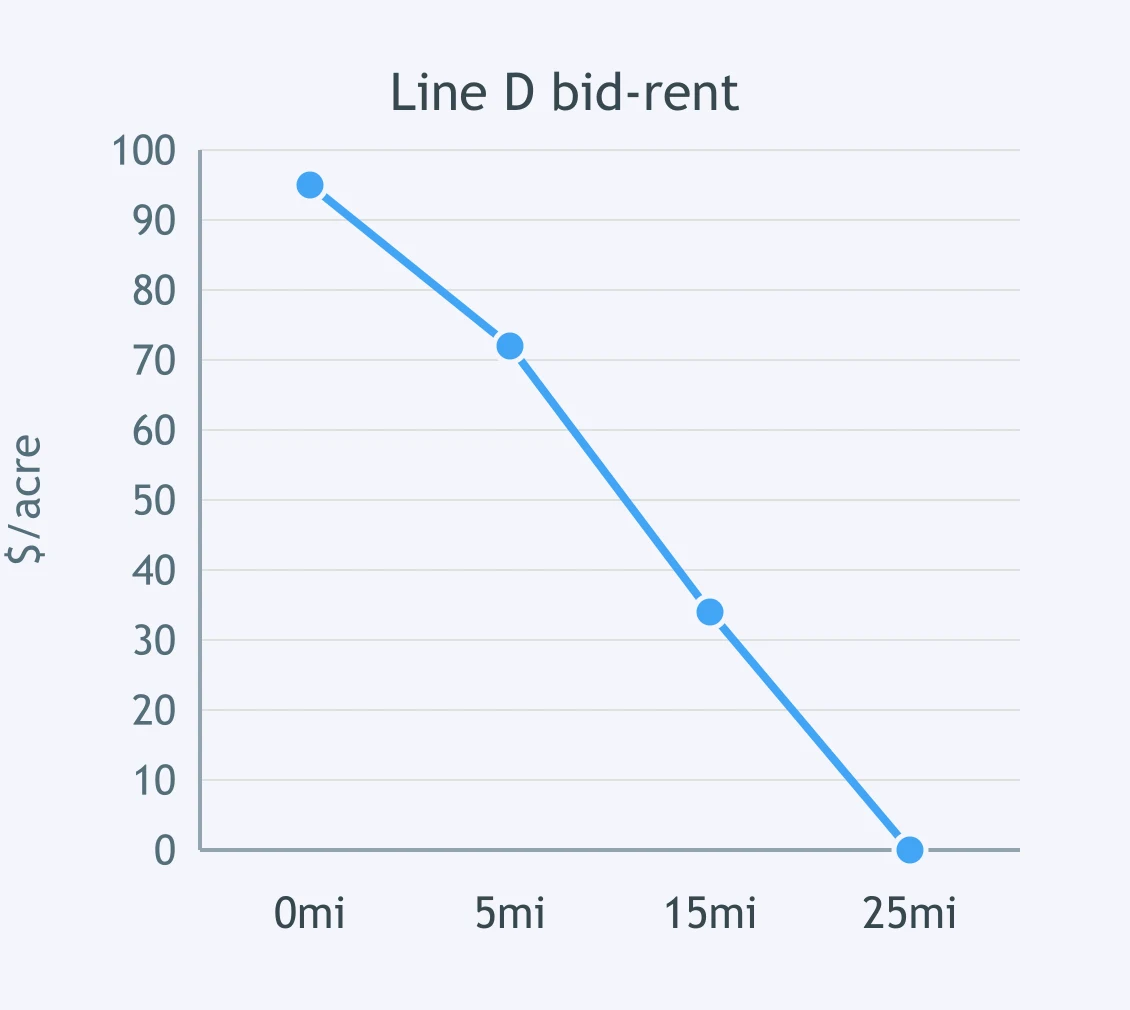
Use the plotted bid-rent curve for Line C. Market gardening's curve starts near $95 per acre and falls to zero by 25 miles, and grazing's starts near $35 per acre and stays positive past 90 miles. Which land use is the best match for Line C?
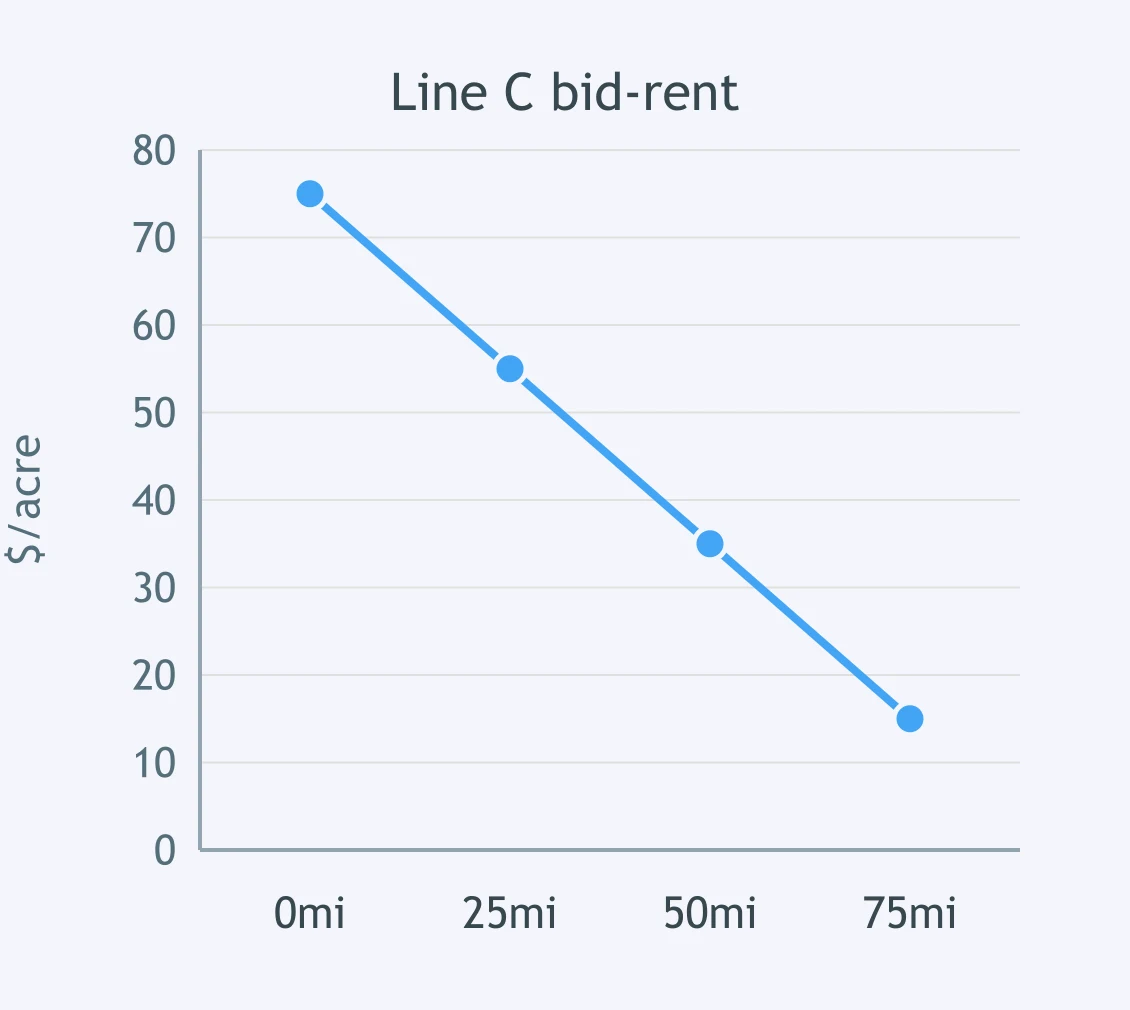
Use the graph of Line D's bid-rent curve. What conclusion best follows from it?
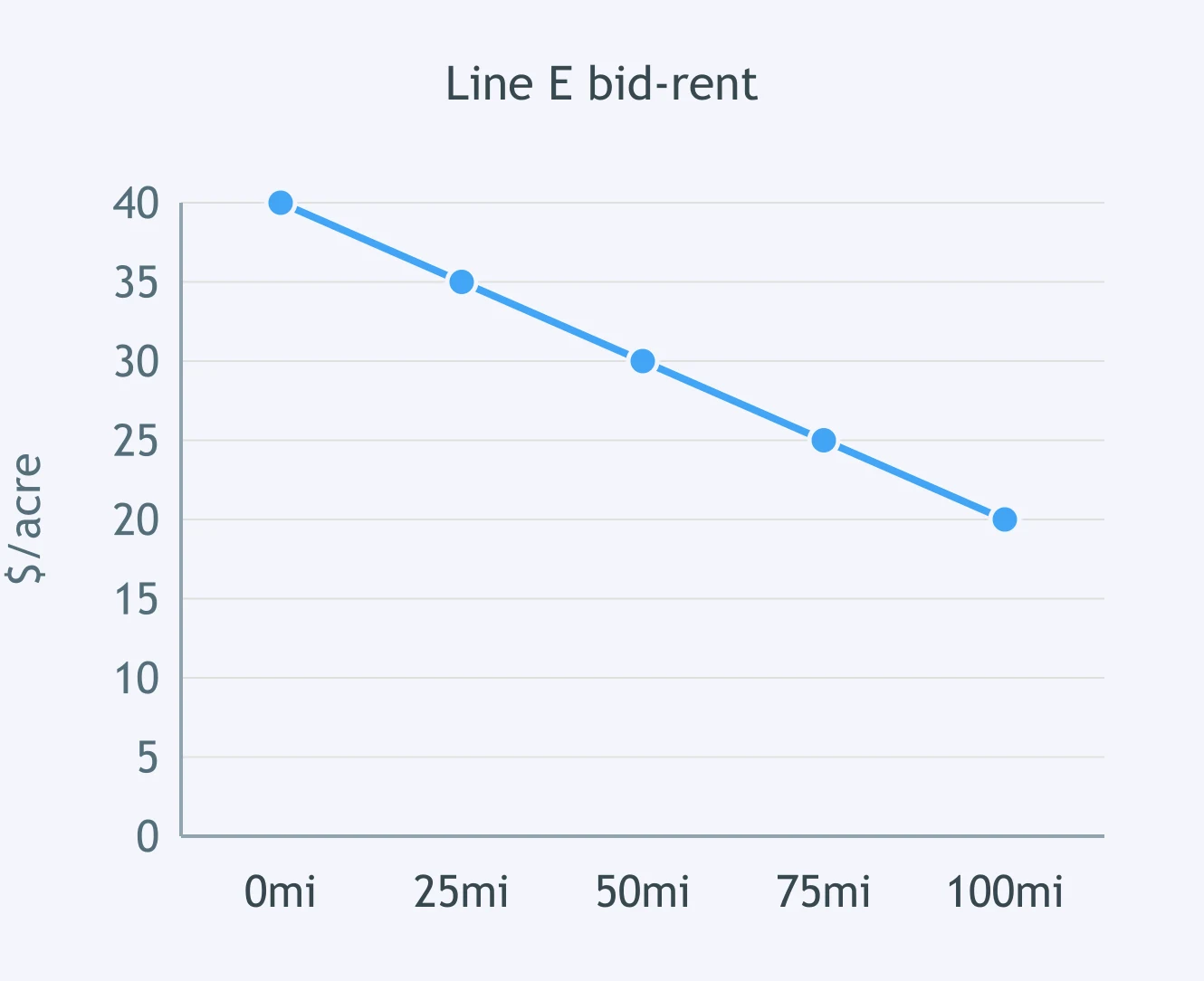
Use the graph of Line E's bid-rent curve. What land use best fits that pattern?
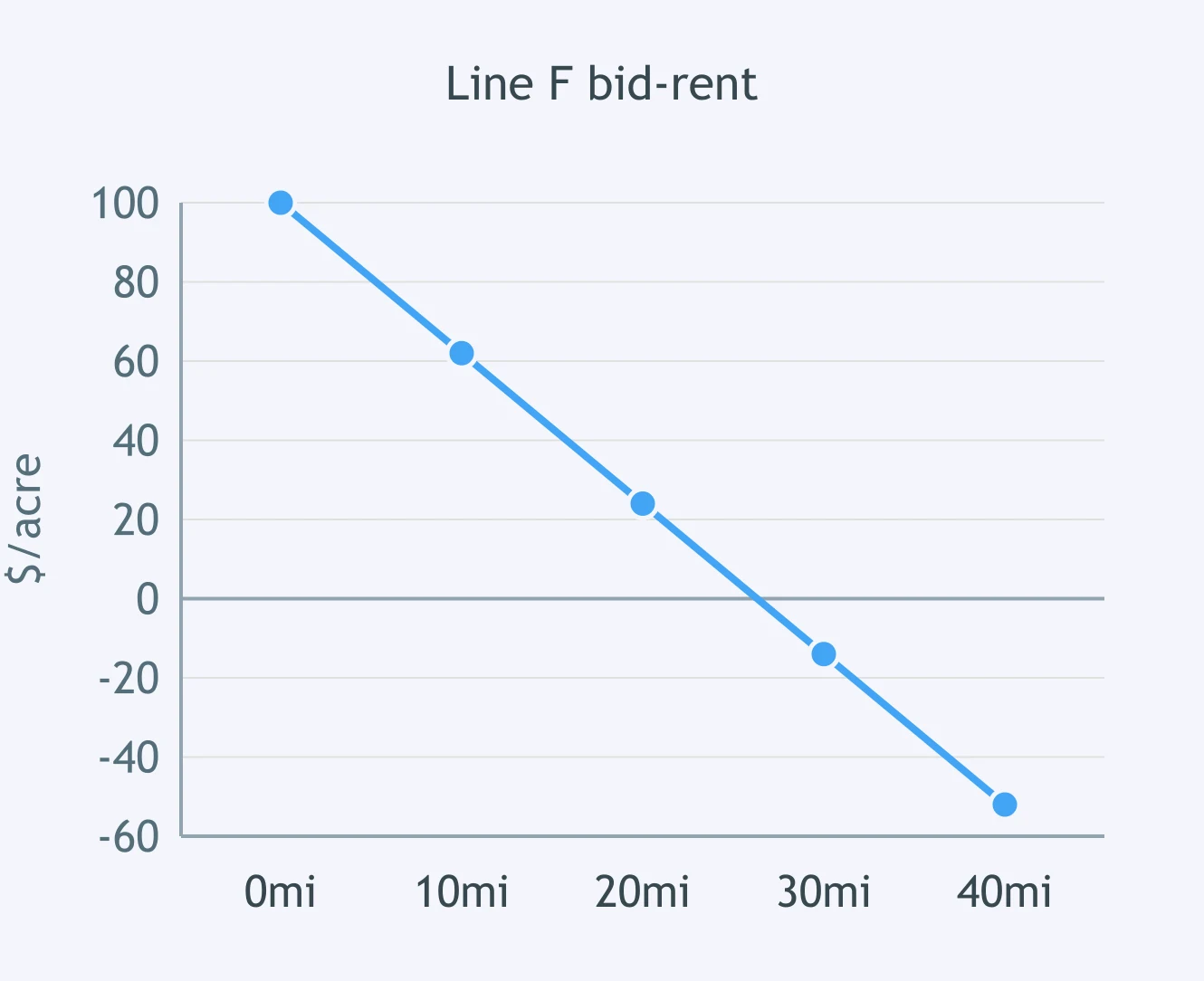
Use the graph of Line F's bid-rent curve. What does it imply?
Why did von Thunen assume a flat plain with one market and uniform soil?
In von Thunen's model, all farmers are assumed to sell to one central market. What does that assumption help explain?
Von Thunen's model assumes farmers act to maximize profit. How does that assumption shape the predicted pattern?
Von Thunen called his model "The Isolated State." What does that name assume about the farming region?
A real farming region does not match perfect rings because a river makes shipping cheaper in one direction. What assumption has been broken?
Refrigerated trucks let milk travel much farther without spoiling. What change would the model predict for the dairy belt?
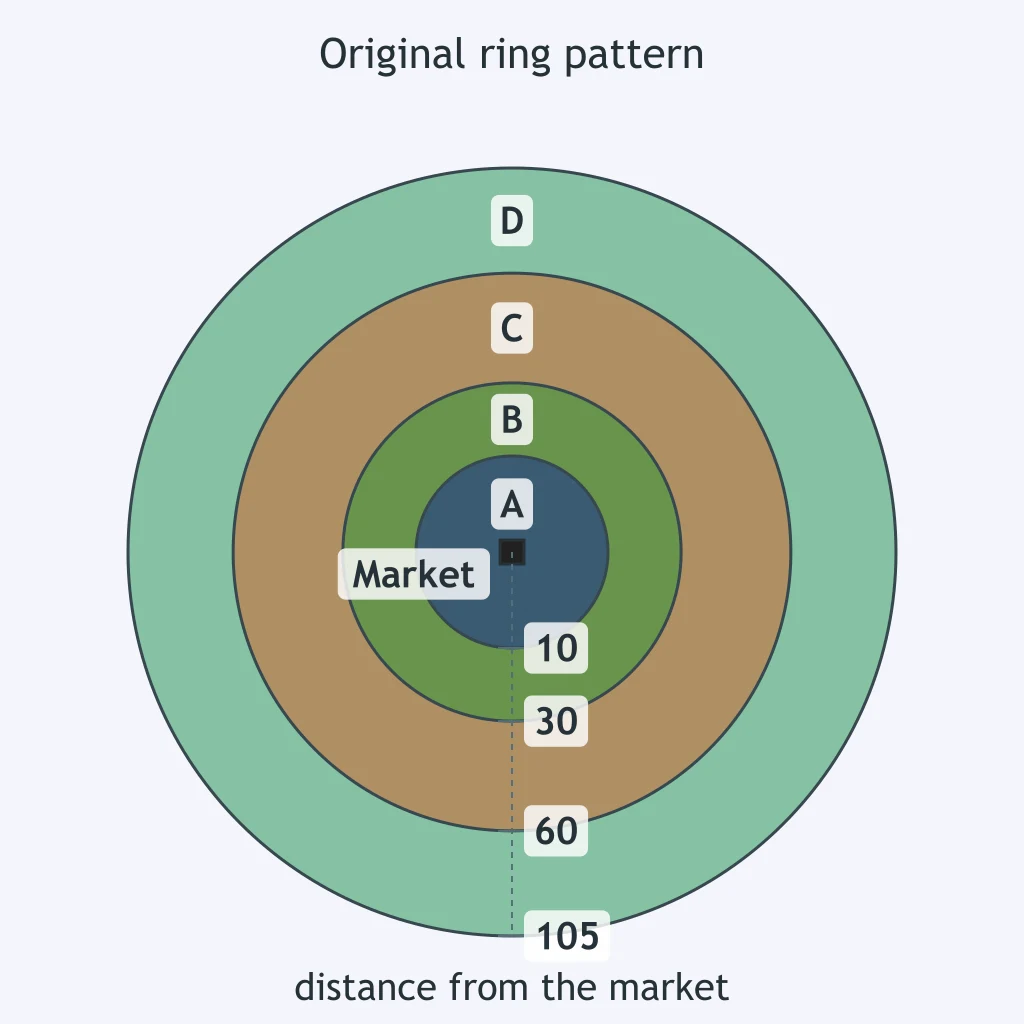
A paved road lowers freight costs from farms east of the market but not west of it. How would the ring pattern change?
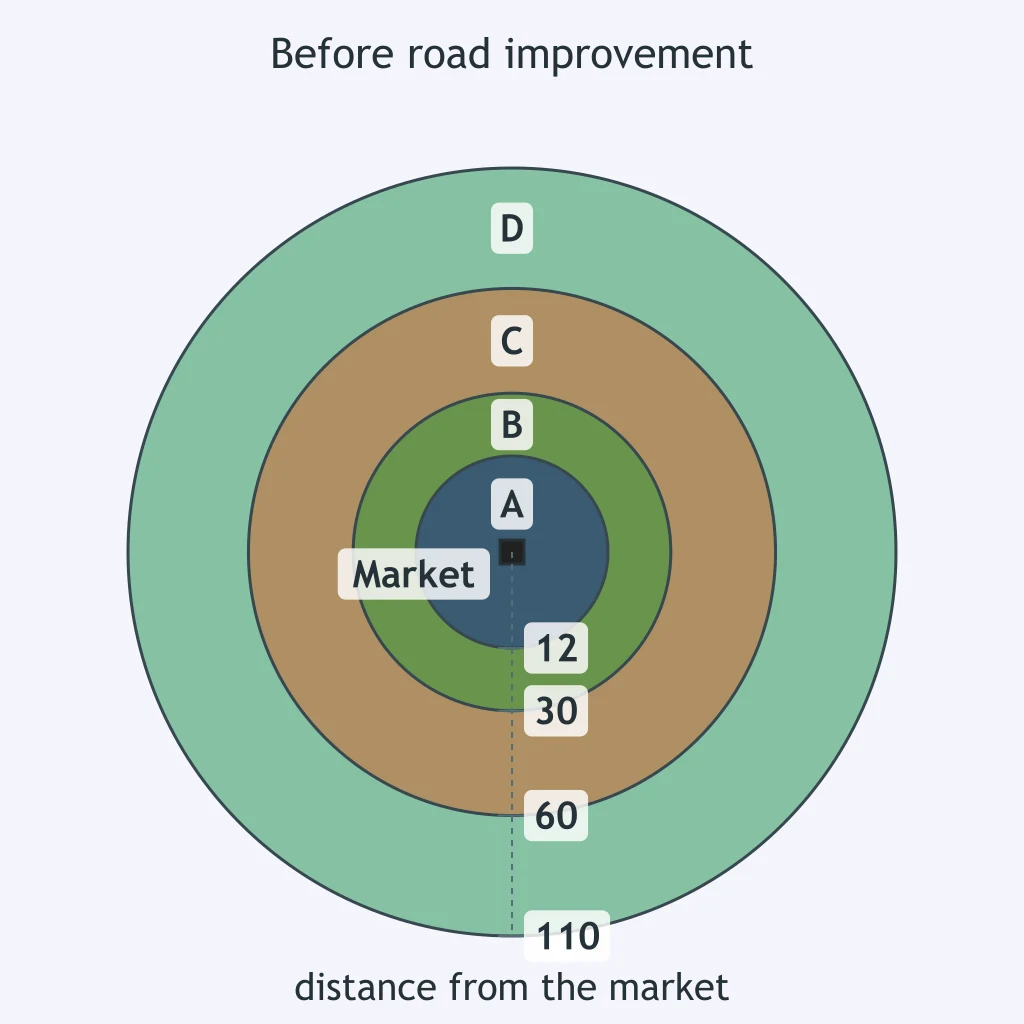
A canal through the market makes bulky crops much cheaper to ship along the waterway. What happens to the model's circular pattern?
The Second Agricultural Revolution
25 questions
The Green Revolution and Its Consequences
30 questions
Subsistence Agriculture: Regions and Practices
35 questions
Commercial Agriculture: Regions and Practices
35 questions
The Global System of Agriculture: Commodity Chains, Agribusiness and Food Security
35 questions
Crack the passcode before the zombies get in.
Answer, then swat bugs for bonus points.
Race through questions at your own speed.
Same question on every screen. Fastest wins.

Pick a tile, answer, hit bonuses and steals.