Loading
by BlastRoom
High-yield seed, fertilizer and irrigation, and the bill that came with them.
#us_hs_human_geography
30 questions
One question set, multiple game modes. Tap any game to see it in action. Not sure which to pick?
Answer to place stones and capture territory.
Outrun the snow together.
Earn blasts, then hunt the other team.
Answer to earn energy, then climb.

The class blasts through walls together.
Bid on mystery lots. Most money wins.
Sell tours. Nice, standard, or a total scam.

Answer, restock, and serve the rush.
More correct answers pulls the rope your way.
Answer, then shoot down the alien wave.
Answer, then tap to leap the frozen ridge.
An agronomist supplies short-stalked wheat seed, fertilizer advice, and access to pump irrigation for the same fields. Which farming change is this package meant to produce?
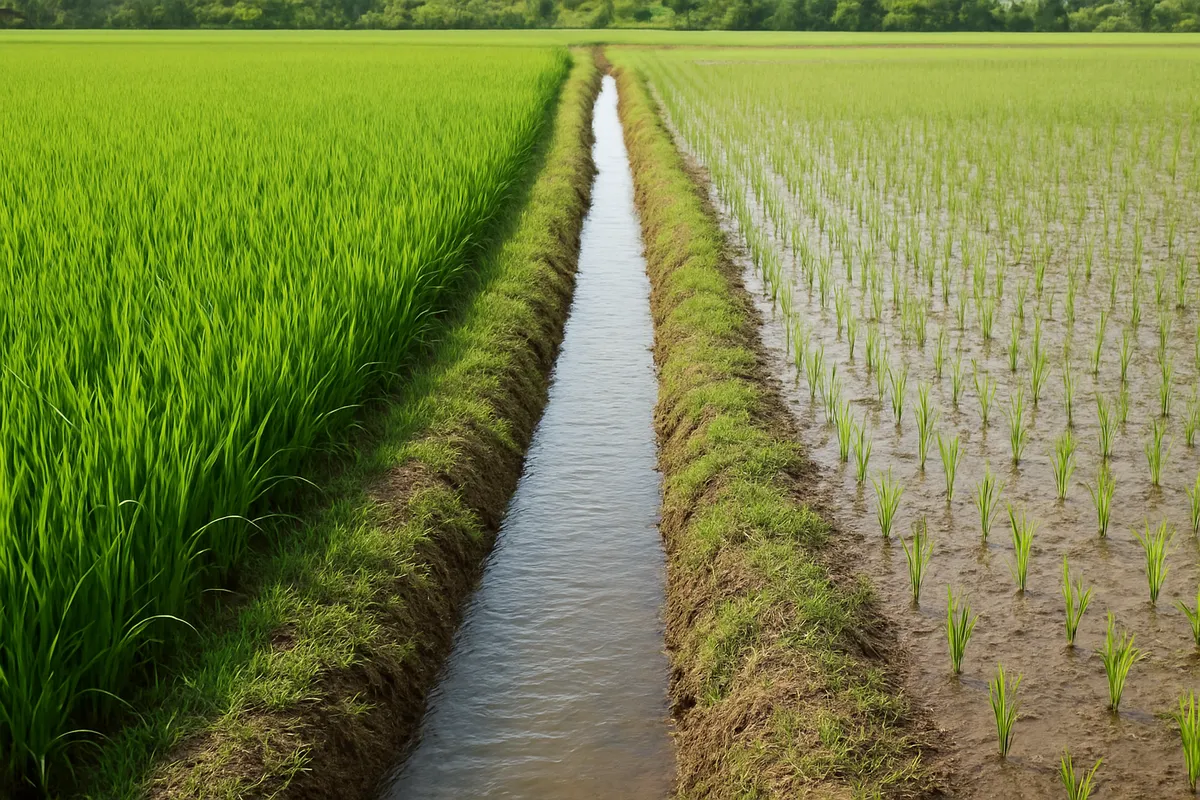
A rice research station releases dwarf rice seed that performs best with nitrogen fertilizer and controlled irrigation. What does this describe?
A farm keeps the same acreage but adds improved seed, chemical fertilizer, and canal water to harvest more grain. Which land-use pattern is increasing?
In the 1960s, high-yield wheat seed first bred in Mexico was shipped to farmers in India and Pakistan. Which scientist is most linked to developing these wheat varieties?
Green Revolution wheat was bred with short, stiff stalks. Why did this trait matter?
A demonstration plot uses new seed only where canal water, fertilizer, and pest control arrive together. Why are the inputs bundled?
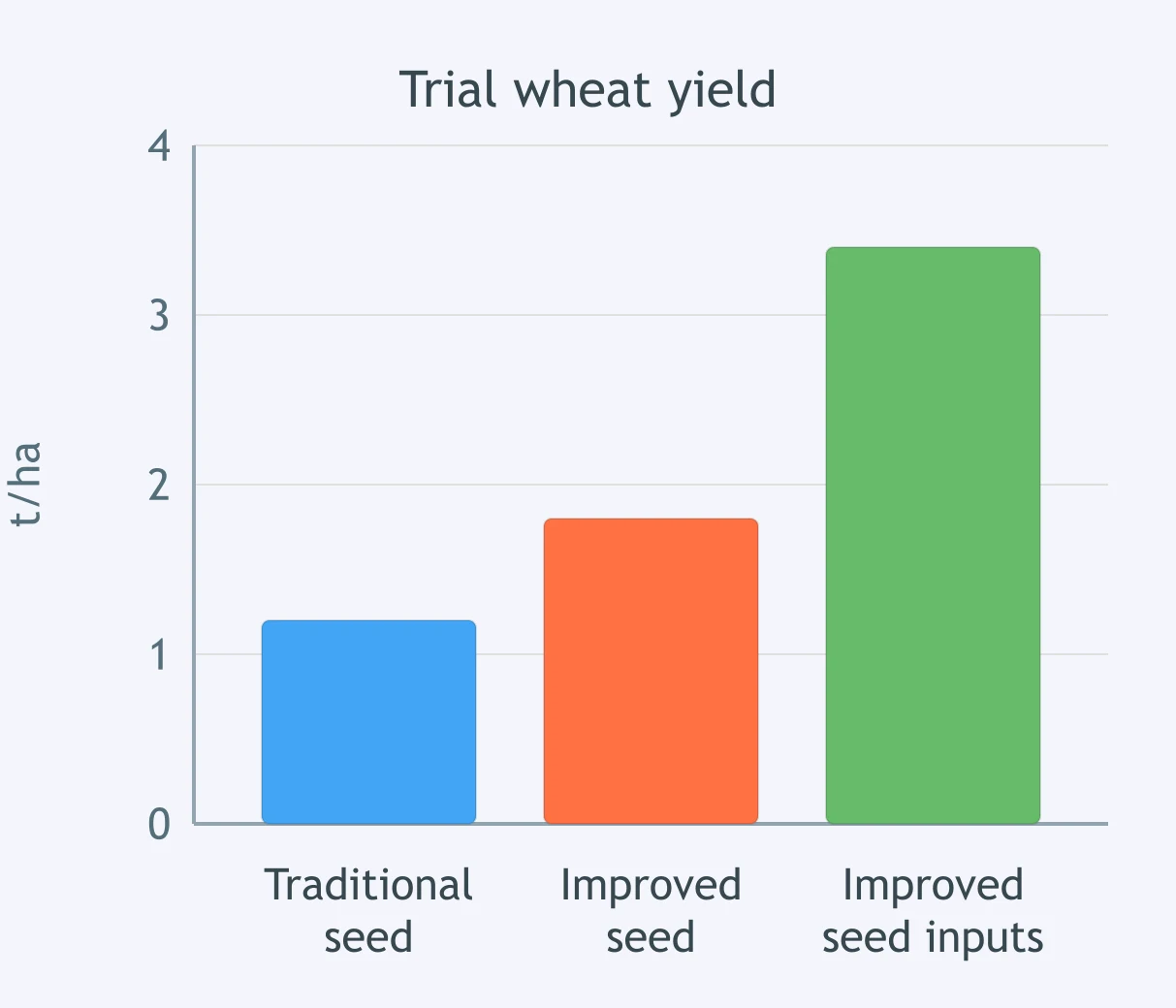
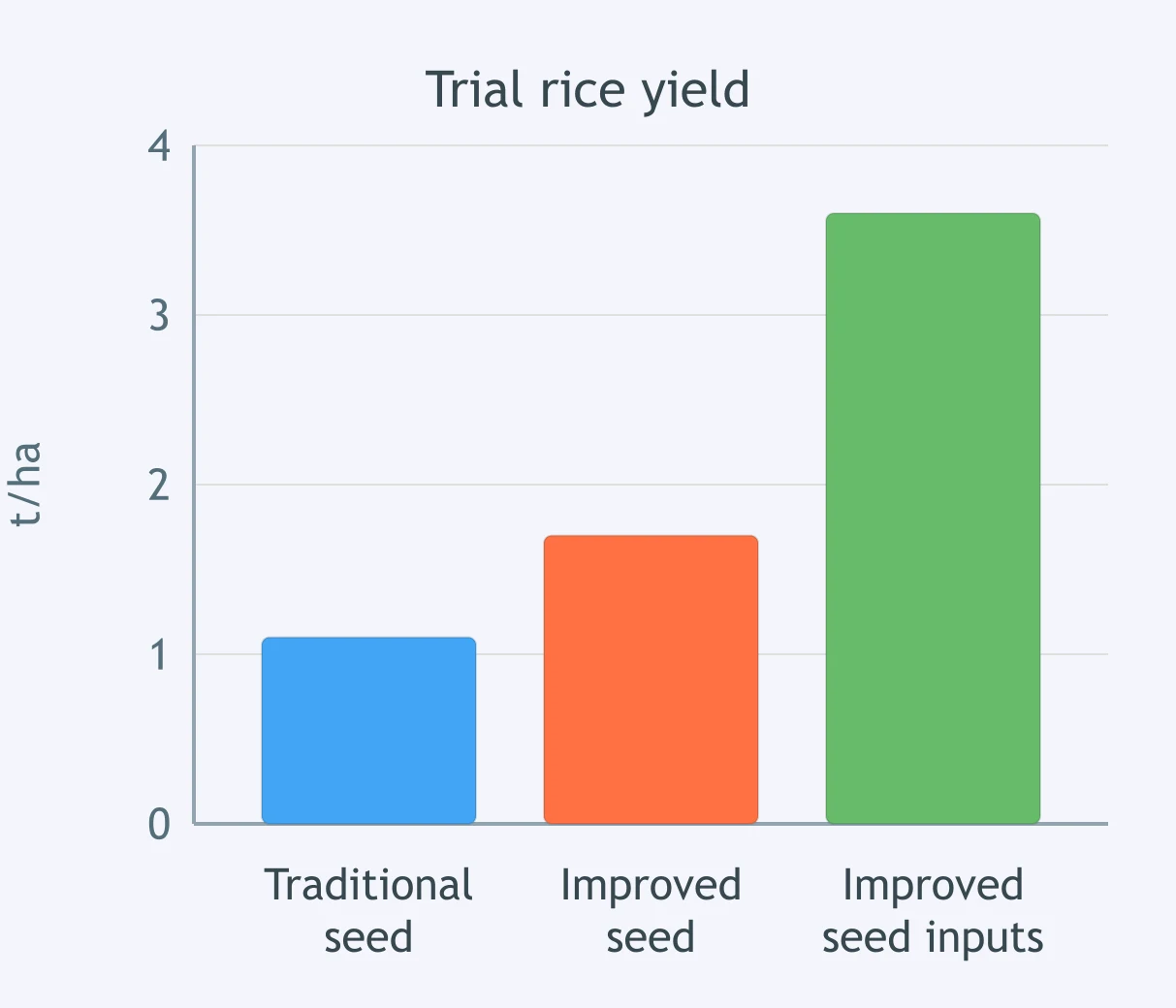
The graph compares trial plots using the same land area. What conclusion does it support about the new seed, fertilizer, and water package?
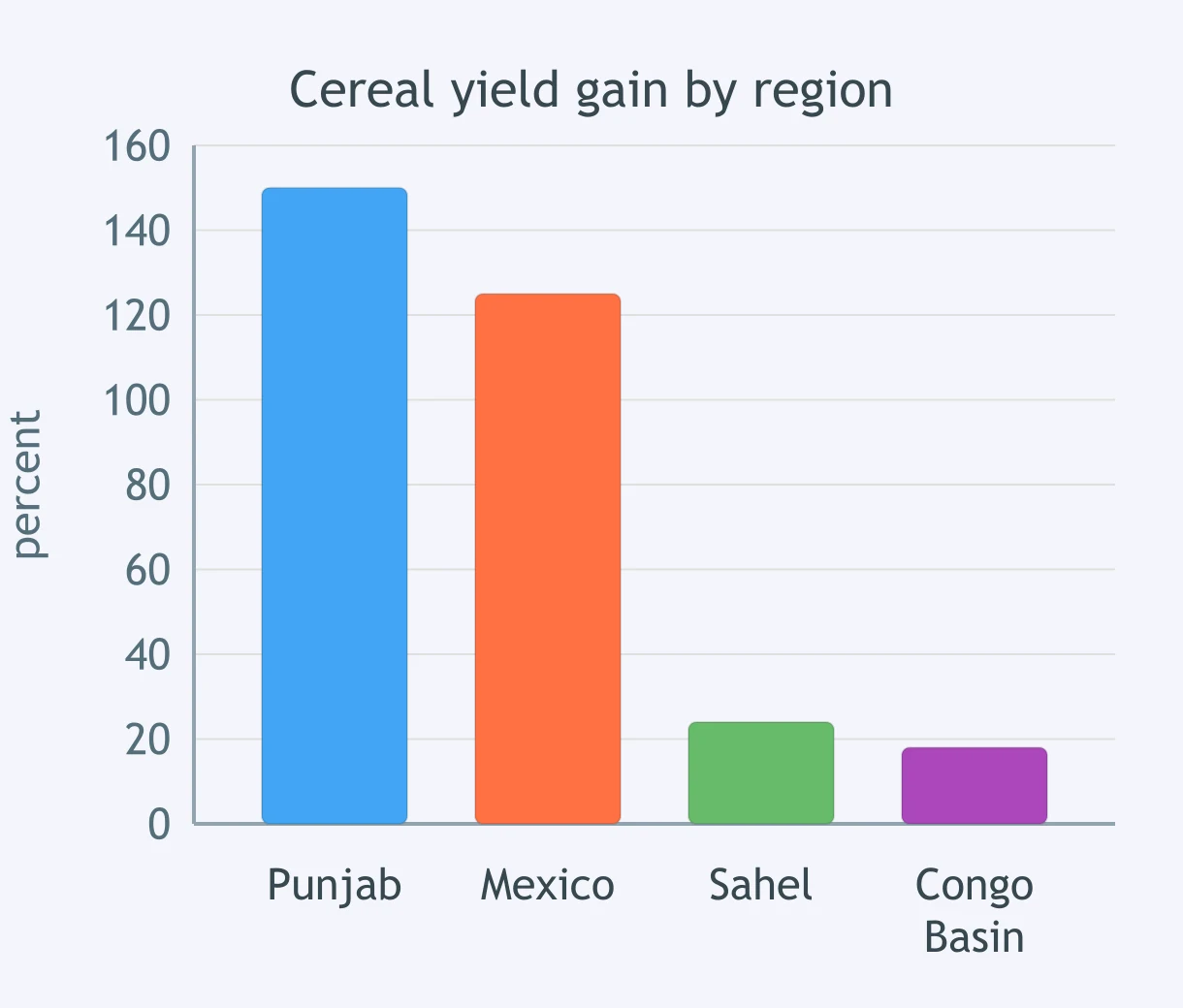
Use the graph of cereal yield gains by region. What pattern fits the diffusion of Green Revolution farming?
Irrigated wheat districts in northwest India adopted new varieties faster than dryland millet areas. What best explains the difference?
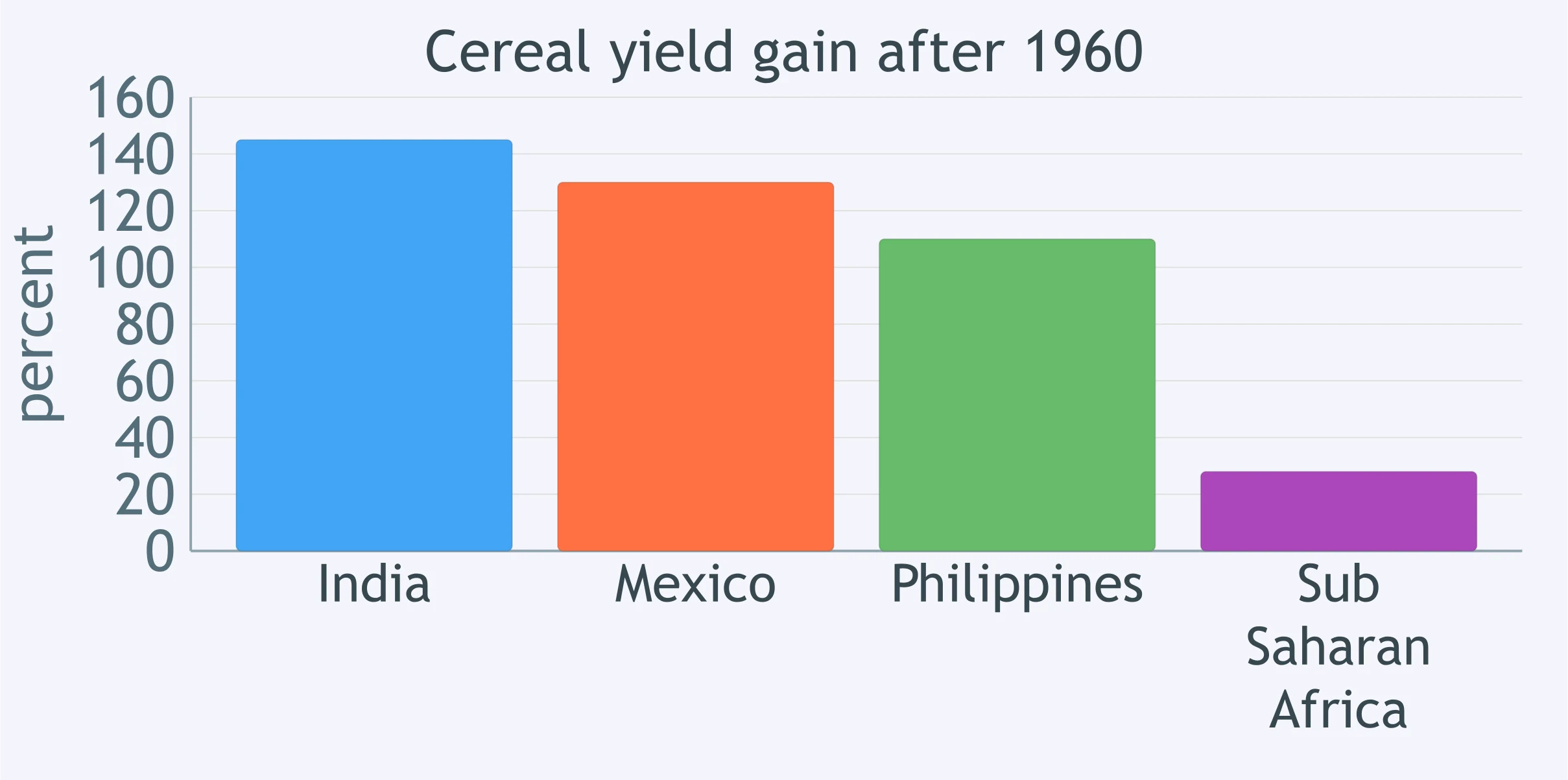
Mexico and India became classic Green Revolution examples, while many rain-fed African farming regions saw smaller gains. What factor helps explain this gap?
New rice varieties spread across parts of South and Southeast Asia more readily than to root-crop regions. What made those Asian areas better suited?
The graph compares yield gains in selected regions after high-yield seed spread. Which regional contrast matches Green Revolution geography?
In a rain-fed region growing sorghum, millet, and cassava, farmers receive little benefit from early wheat and rice seed programs. What is missing?
The graph shows one country's wheat yield by decade. During which decade does the line rise most steeply?
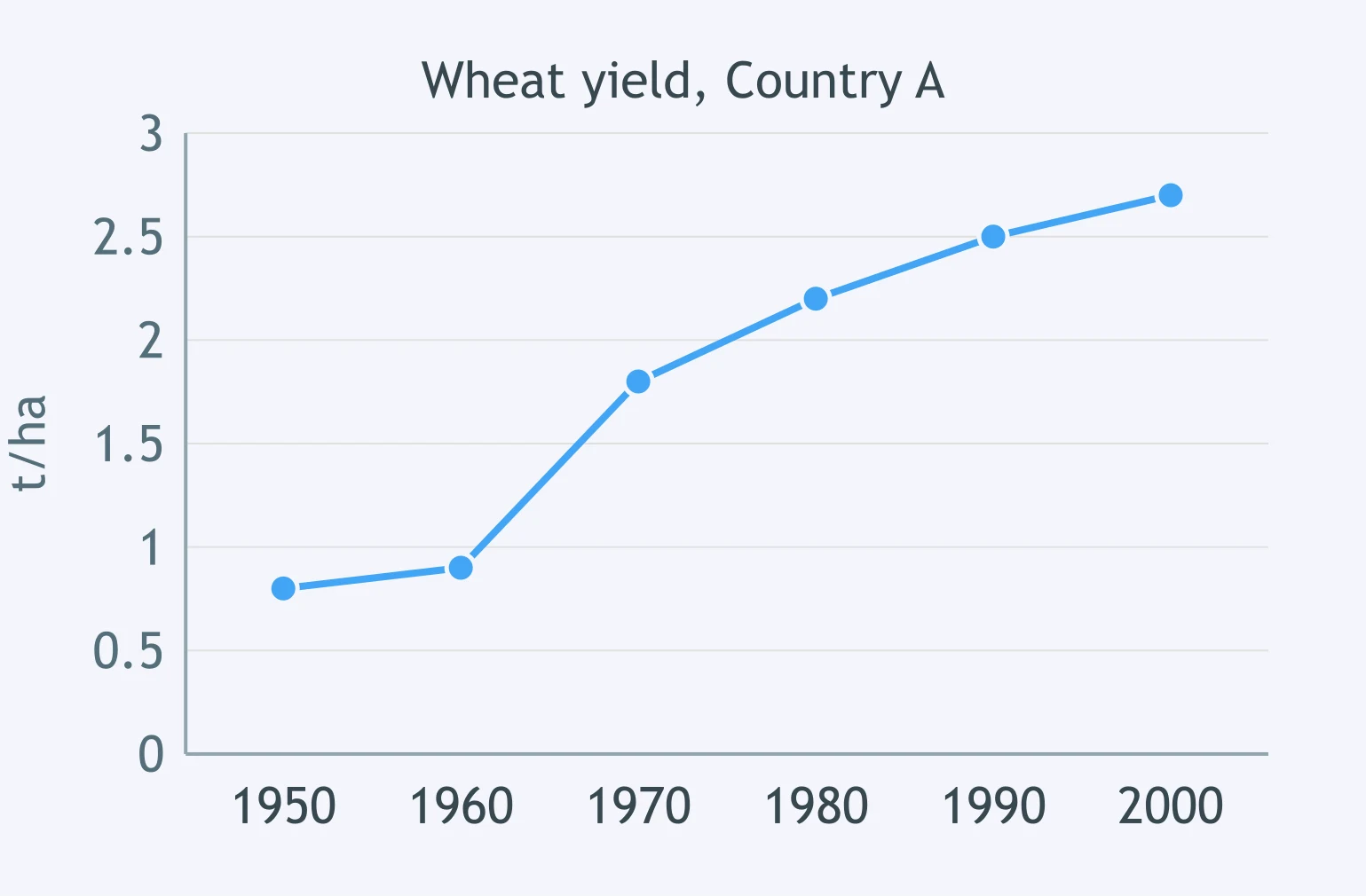
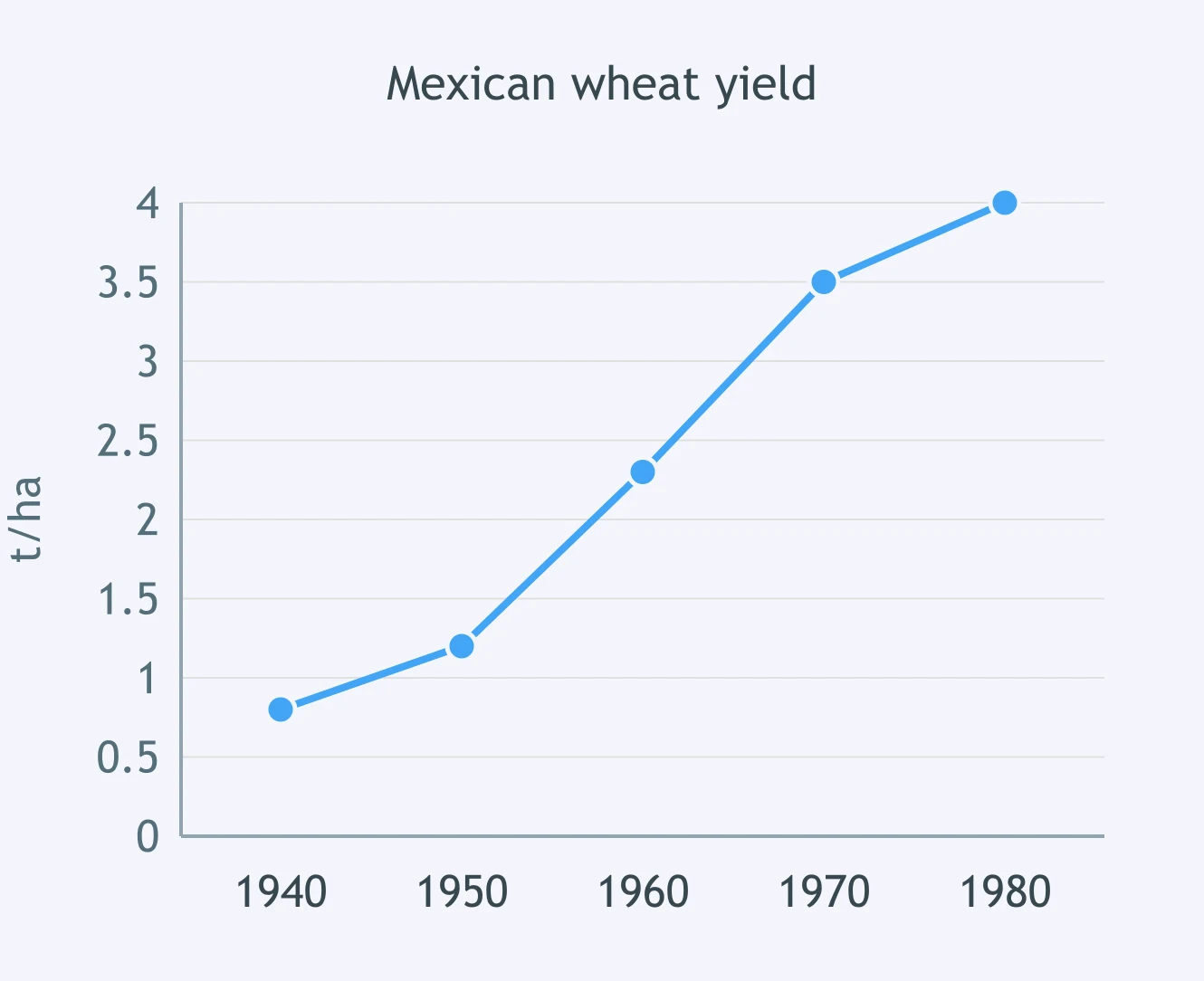
The graph shows Mexican wheat yield over time. What overall pattern does the plotted line show?
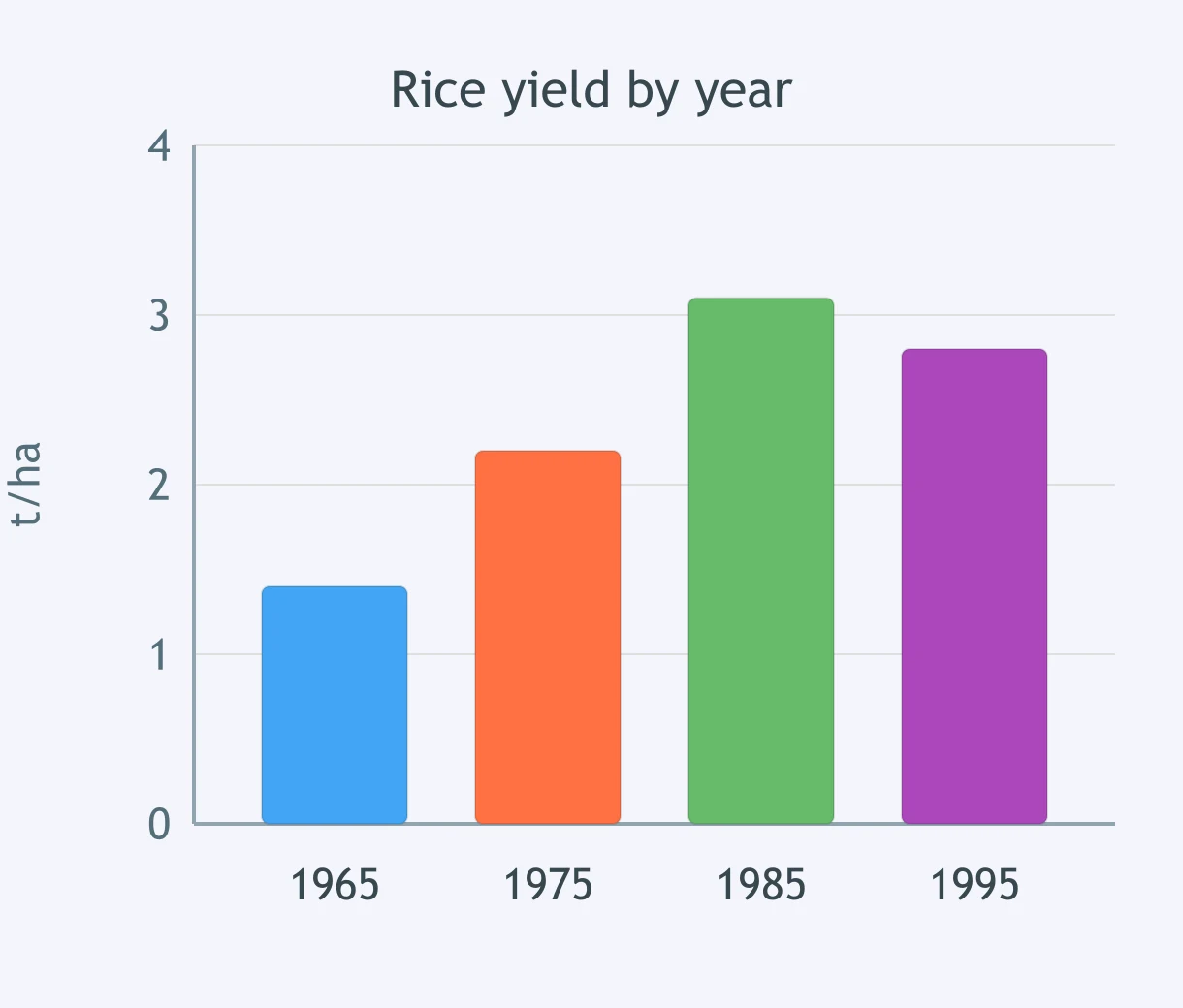
Use the rice-yield graph. Which year has the highest yield?
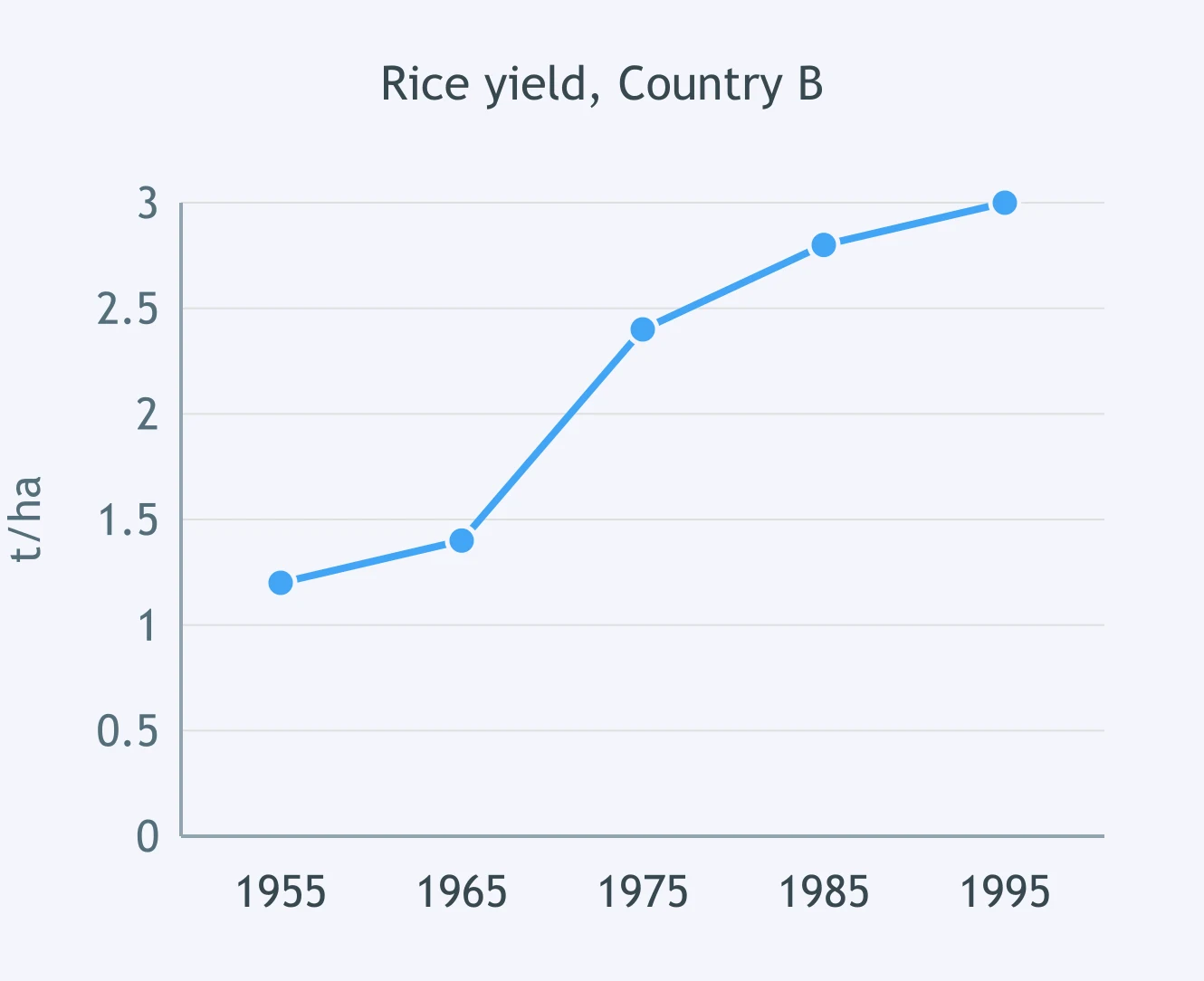
The line graph shows rice yield in one country. Between which two plotted years is the increase largest?
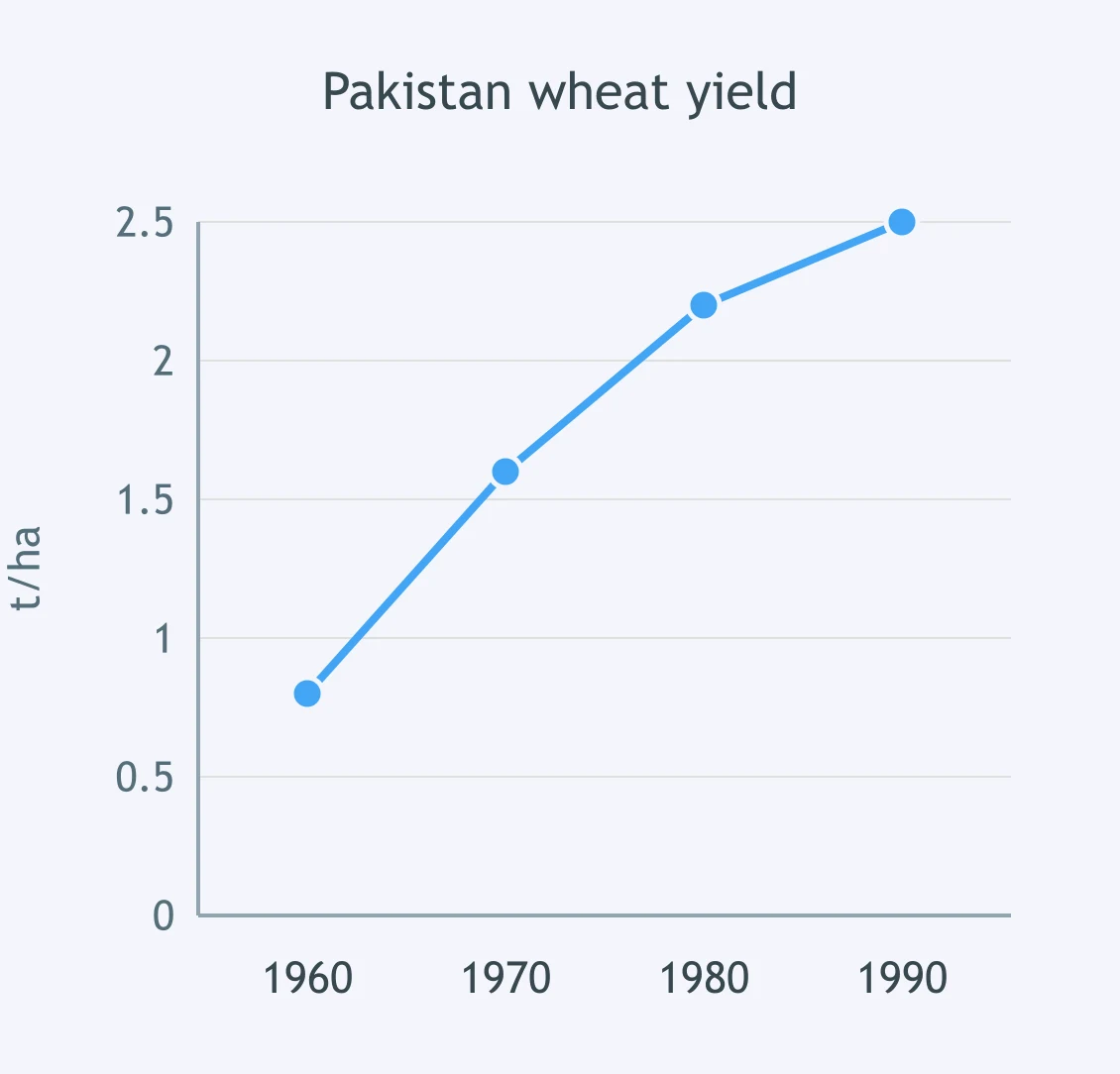
Use the Pakistan wheat-yield graph. Which statement describes the change from the first point to the last point?
The graph compares yields from three trial treatments. Which treatment produces the greatest yield?
After years of canal irrigation in a dry district, white crusts appear on fields and crop growth weakens. Which environmental cost is shown?
Farmers using tube wells must drill deeper each season to reach water for high-yield wheat. What problem does this show?
Heavy fertilizer use on irrigated fields washes nitrogen into a river, causing algal blooms and fish deaths downstream. What is the environmental cost?
A pest survives repeated chemical spraying, and its offspring become harder to control in later seasons. Which Green Revolution cost is this?
Farmers replace many local rice landraces with one high-yield variety across a region. Which environmental concern increases?
A district raises grain output with canal water, but fields near canals become waterlogged and salty. Which step would most directly reduce this damage while keeping irrigation?
High-yield farming depends on manufactured fertilizer and pumps that burn fuel. Which environmental concern can follow?
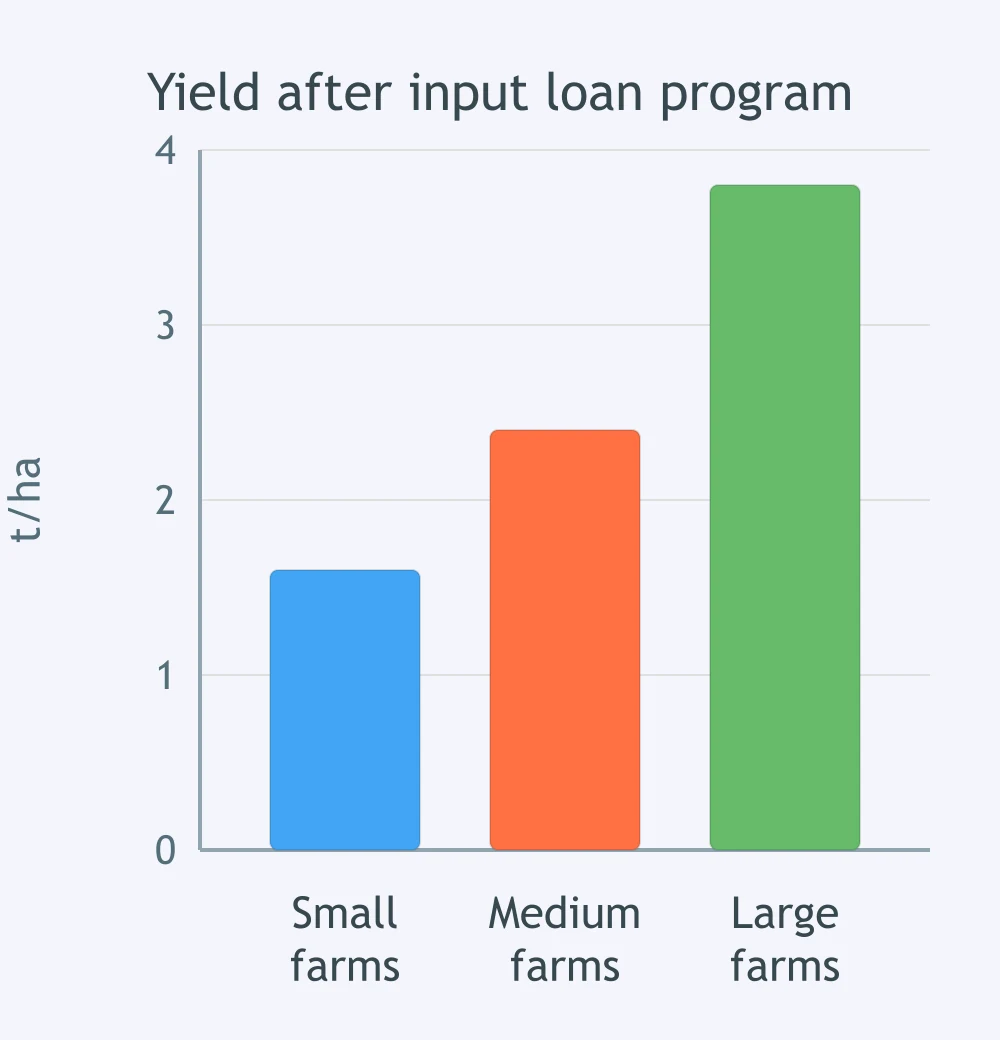
The graph compares yields after a loan program that required collateral for pumps and fertilizer. What equity effect does it suggest?
A smallholder buys improved seed but cannot afford enough fertilizer or irrigation, while a wealthier neighbor buys the complete package. What is the likely village effect?
A government subsidy covers pump installation only for farmers with secure land titles. How can this shape Green Revolution benefits?
Large farms can spread the cost of machinery, fertilizer, and irrigation over more acres than small farms. What equity consequence may result?
Introduction to Agriculture: Climate, Intensive and Extensive
35 questions
Rural Settlement Patterns and Survey Methods
30 questions

Agricultural Hearths and the First Agricultural Revolution
30 questions
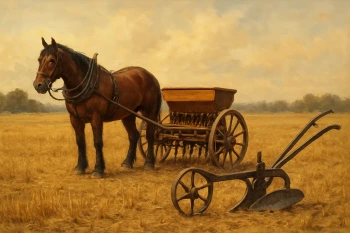
The Second Agricultural Revolution
25 questions
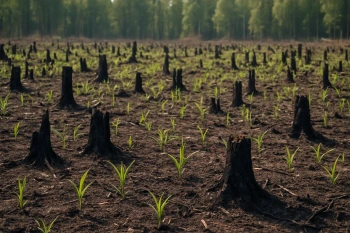
Subsistence Agriculture: Regions and Practices
35 questions
Crack the passcode before the zombies get in.
Answer, then swat bugs for bonus points.
Race through questions at your own speed.
Same question on every screen. Fastest wins.

Pick a tile, answer, hit bonuses and steals.