Loading
by BlastRoom
What can be farmed where, and how hard the land is worked.
#us_hs_human_geography
35 questions
One question set, multiple game modes. Tap any game to see it in action. Not sure which to pick?
Answer to place stones and capture territory.
Outrun the snow together.
Earn blasts, then hunt the other team.
Answer to earn energy, then climb.

The class blasts through walls together.
Bid on mystery lots. Most money wins.
Sell tours. Nice, standard, or a total scam.

Answer, restock, and serve the rush.
More correct answers pulls the rope your way.
Answer, then shoot down the alien wave.
Answer, then tap to leap the frozen ridge.
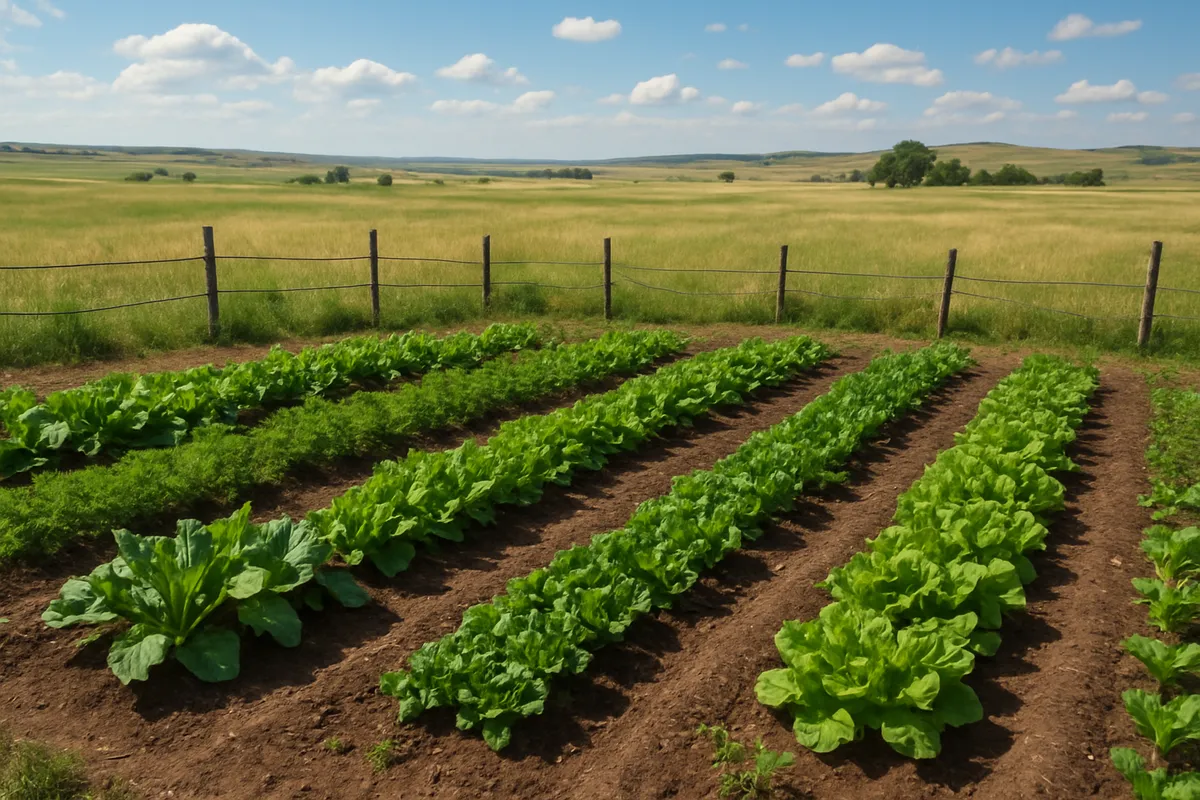
A grower works a two-acre plot under glass, applies fertilizer often, and harvests vegetables three times a year. How should this operation be classified?
A cattle operation uses thousands of acres of dry rangeland, few workers, and sparse natural pasture. What classification fits best?
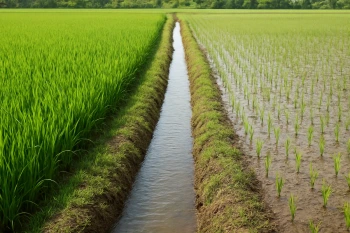
A farm family transplants rice seedlings by hand in terraced paddies, maintains irrigation, and harvests from a small area. What system is this?
A grain farm uses one combine over several thousand acres, has low labor per acre, and takes one annual harvest. What system is being described?
A grower on the edge of a city sends fresh greens to restaurants every morning. Why do farms like this locate so close to the city?
A village clears a forest plot, burns the cut vegetation, plants crops for a few years, then moves to a new plot. By land-use intensity, what is this?
A dairy farm near a large city keeps cows in barns, buys feed, and uses milking machines several times a day on limited acreage. What classification fits?
A sheep station in a dry interior region rotates flocks across a huge fenced lease and sells wool to world markets. How does it differ from pastoral nomadism?
A vegetable farm plants several succession crops on a small irrigated plot and hires crews for repeated harvests. What does this show?
Wheat farms on semi-arid plains often cover thousands of acres. What is the main climate reason they are so large?
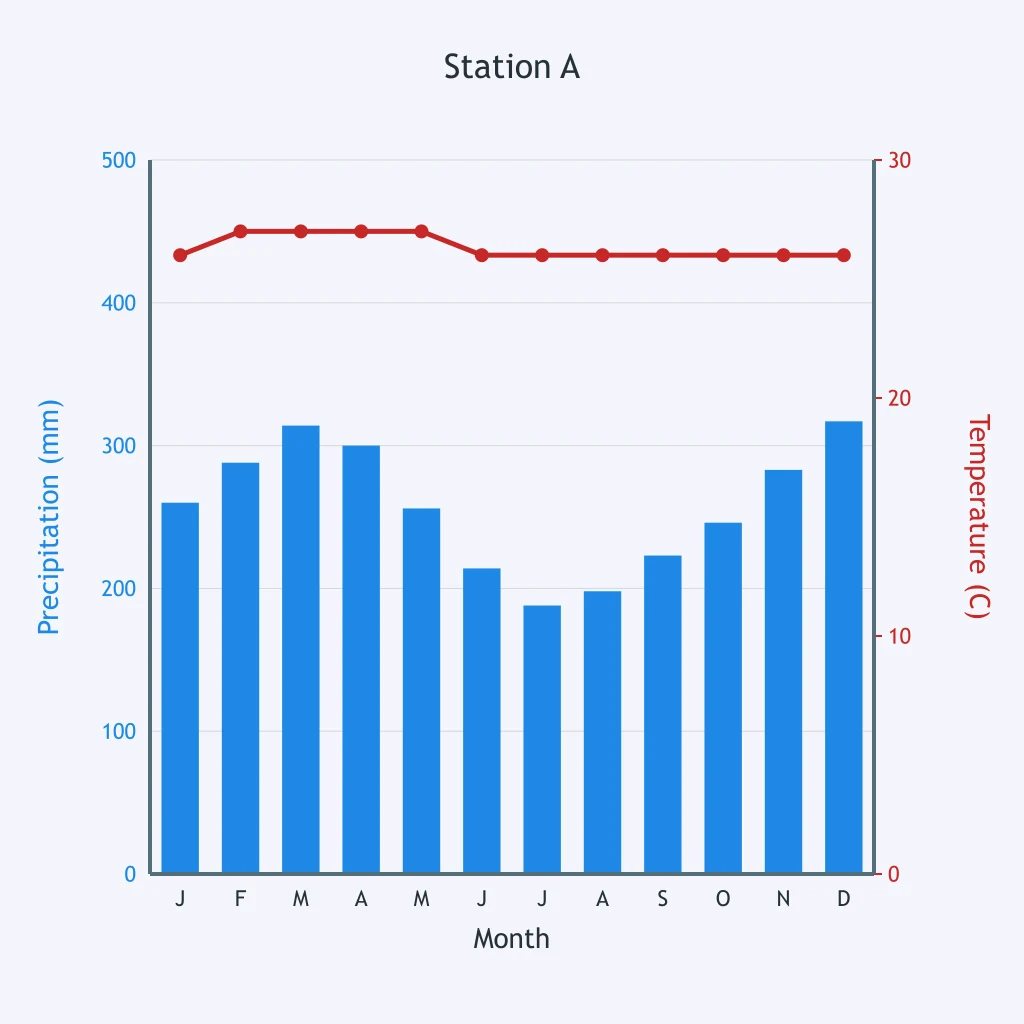
Use the climatograph for Station A. A commercial grower choosing among these systems would most likely select what?
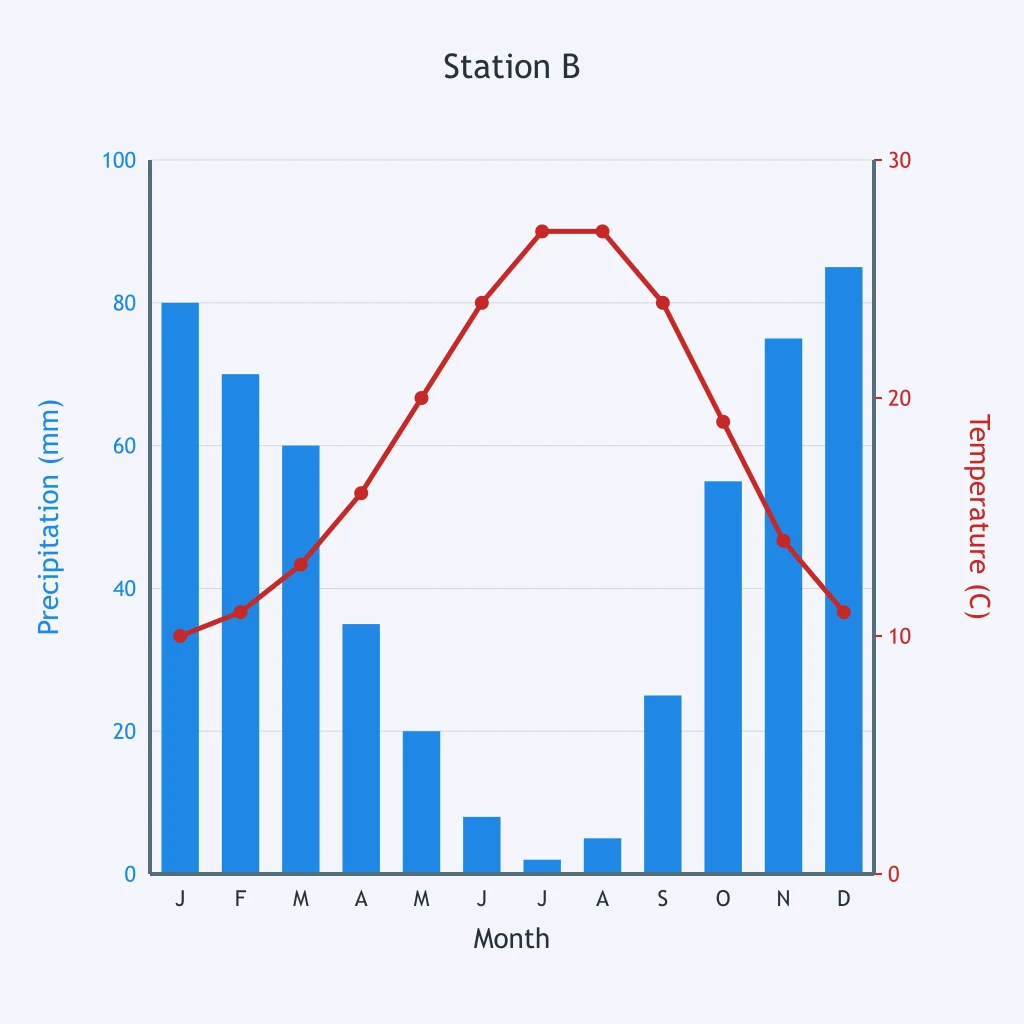
Use the climatograph for Station B. Which agricultural system best fits this seasonal pattern?
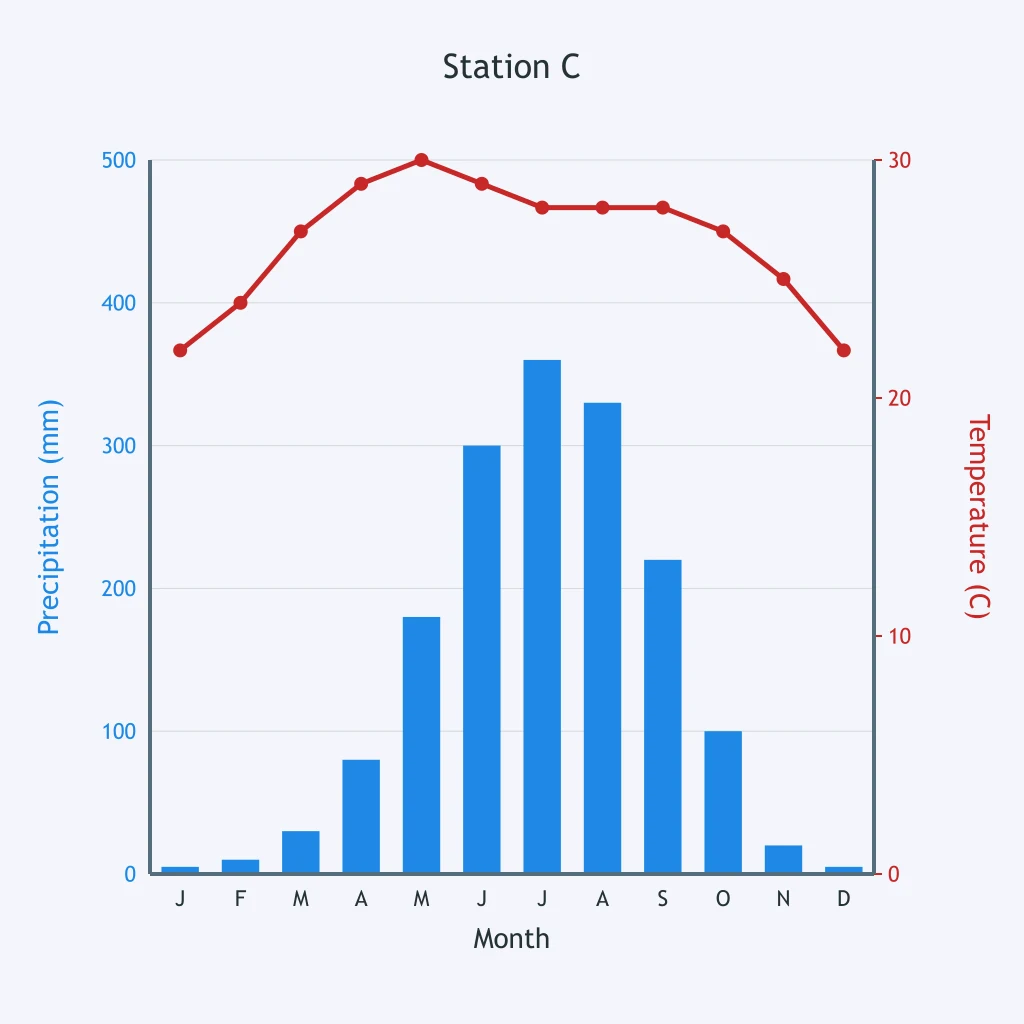
Use the climatograph for Station C. The climate pattern most directly supports which farming system?
Use the climatograph for Station D. A farmer relying on rainfall over broad fields would most likely grow what?
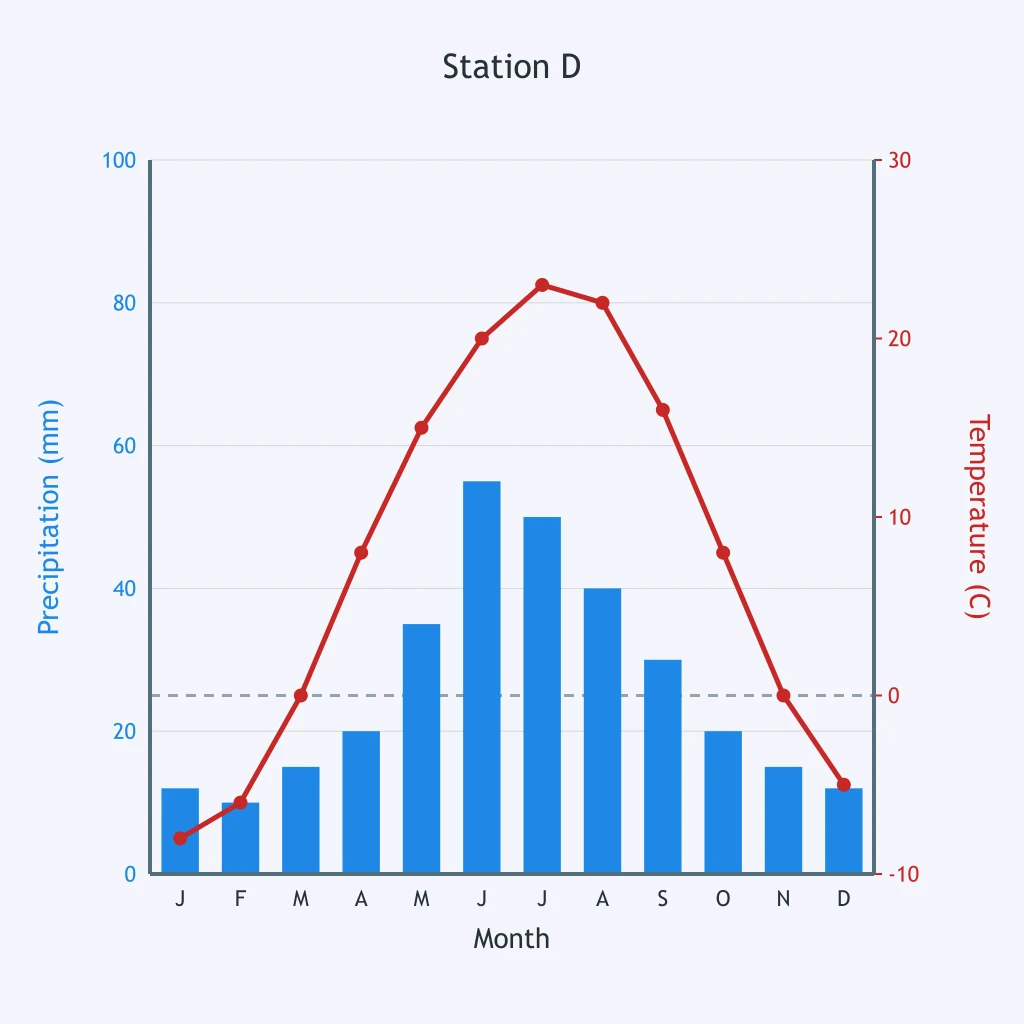
Use the climatograph for Station E. Which land-use system best matches this cool, moist setting?
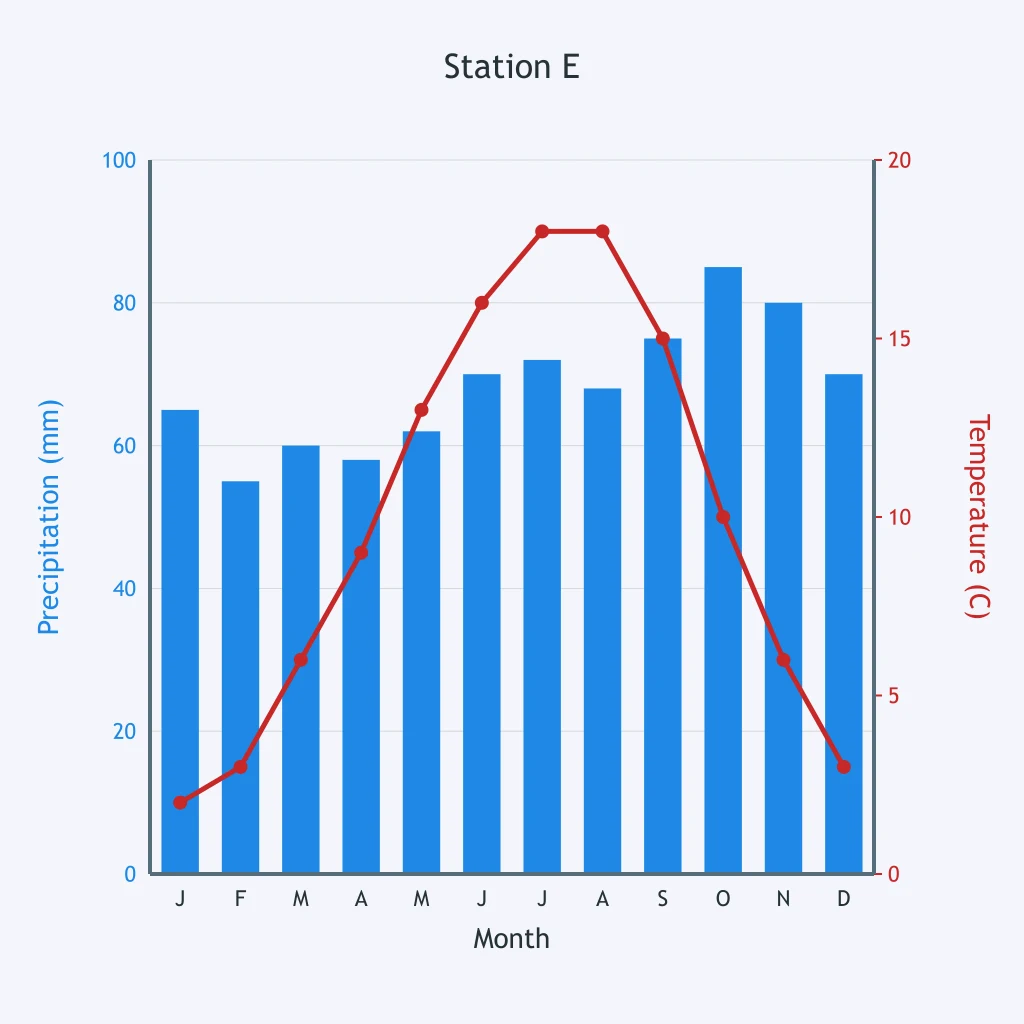
Use the climatograph for Station F. Away from irrigation, which land use is most likely?
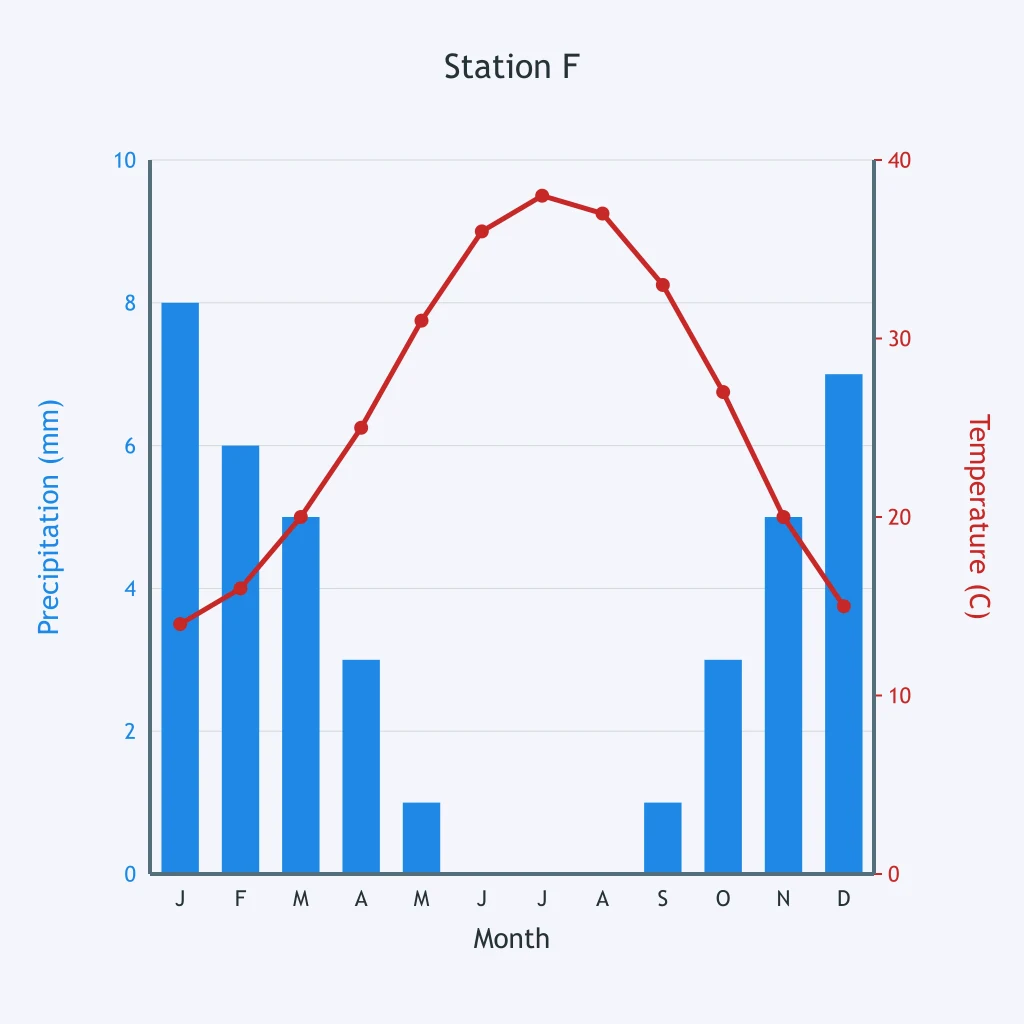
Use the climatograph for Station G. Which commercial crop system is best suited to this climate?
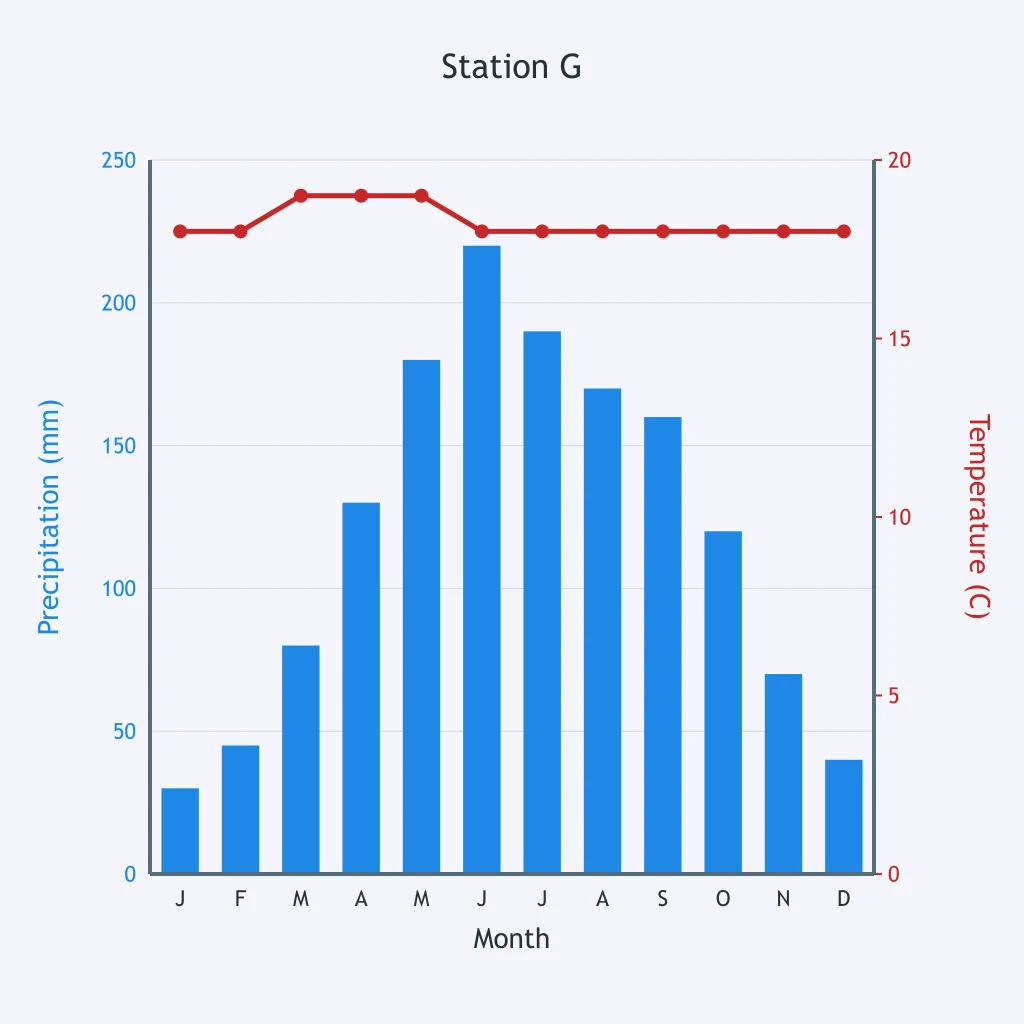
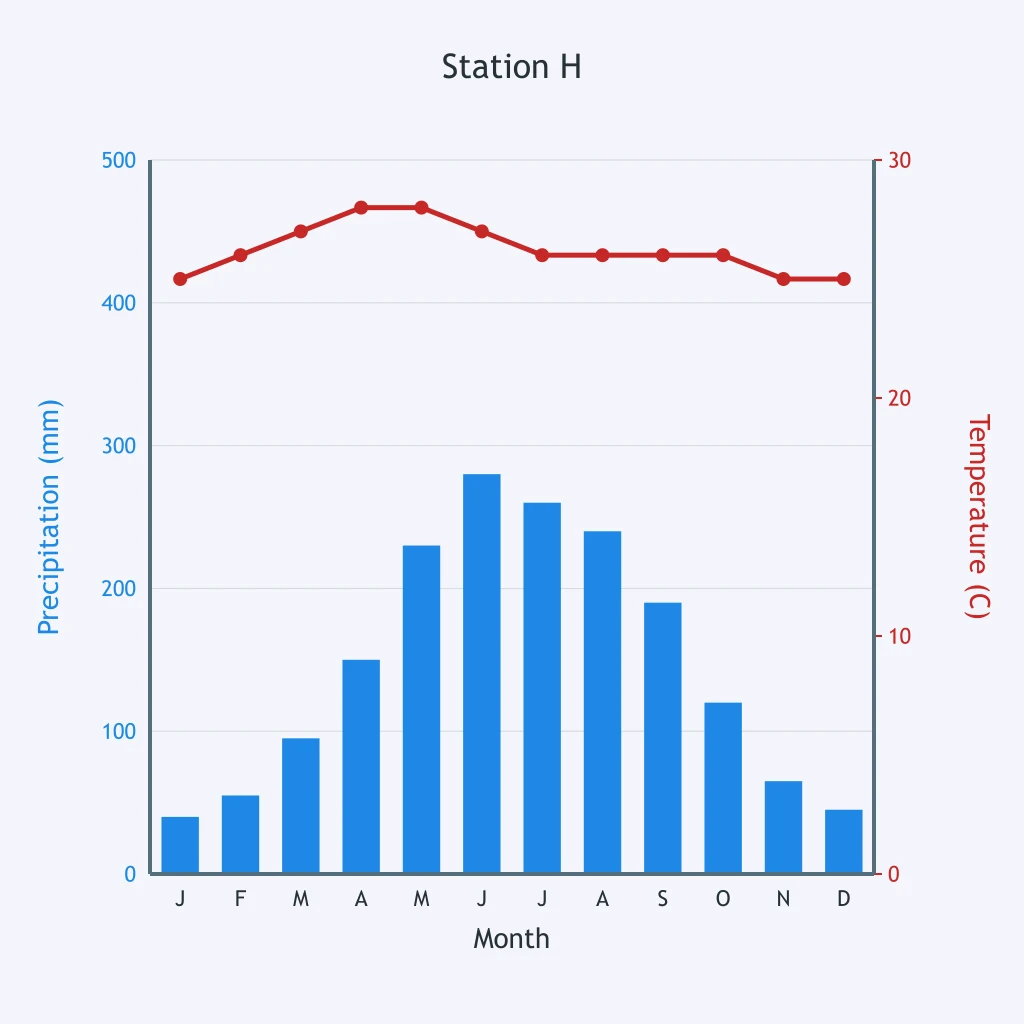
Use the climatograph for Station H. Which practice fits the climate shown best?
A land-use report separates farmland into grazing ranges, cropped fields, and fields being rested. The cropped fields are called what?
A county's farms mainly support cattle and sheep on grasslands rather than plowed crops. That land category is what?
A grower leaves a field unseeded for one season so soil moisture and nutrients can recover. What is the field called during that season?
A field left fallow this season could be plowed and planted next year. In land-use statistics, which larger category includes it?
A dryland village sows one plot while another rests, then switches them the next year on the same fixed fields. What practice is this?
Rocky hillsides with thin soils cannot be plowed. Why are they often used to graze goats or sheep instead?
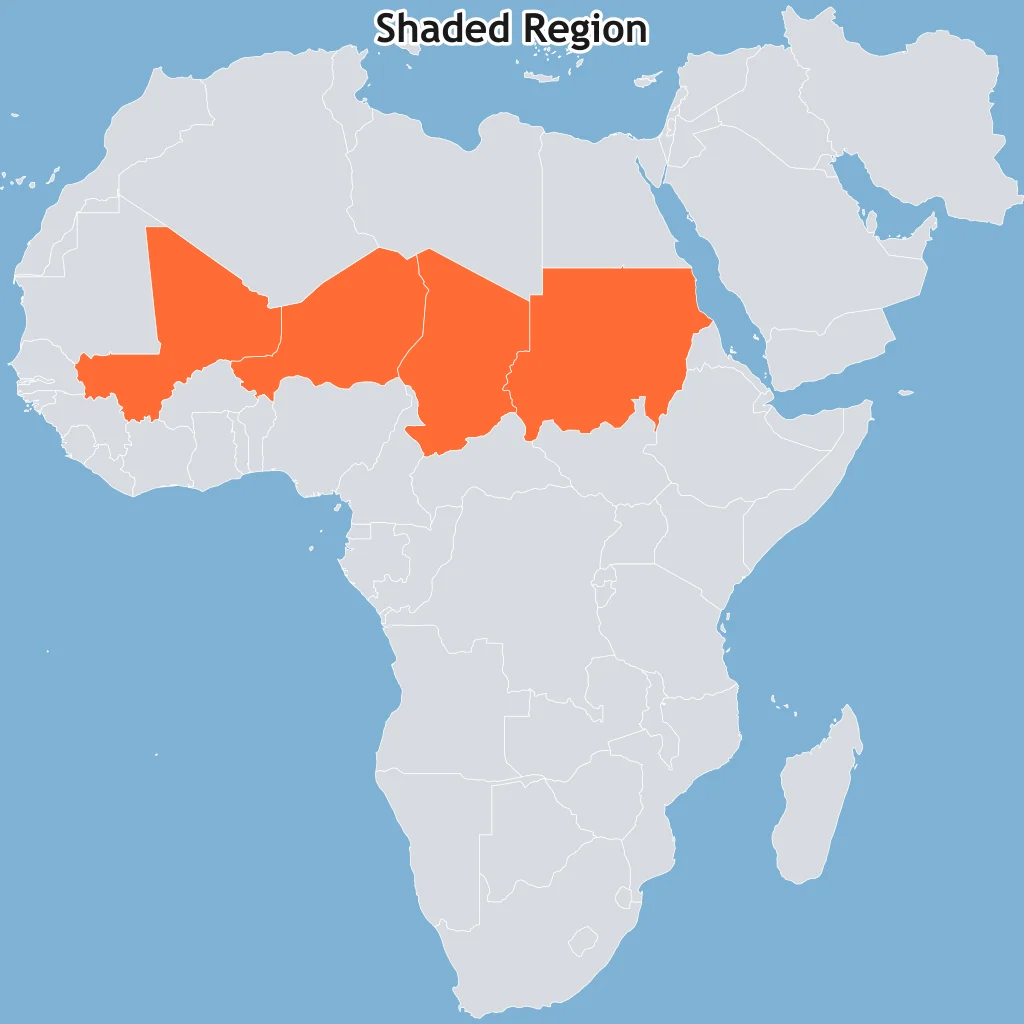
Use the map of the shaded Sahel countries. Dry, variable rainfall makes crop farming risky away from rivers. What land use fits best?
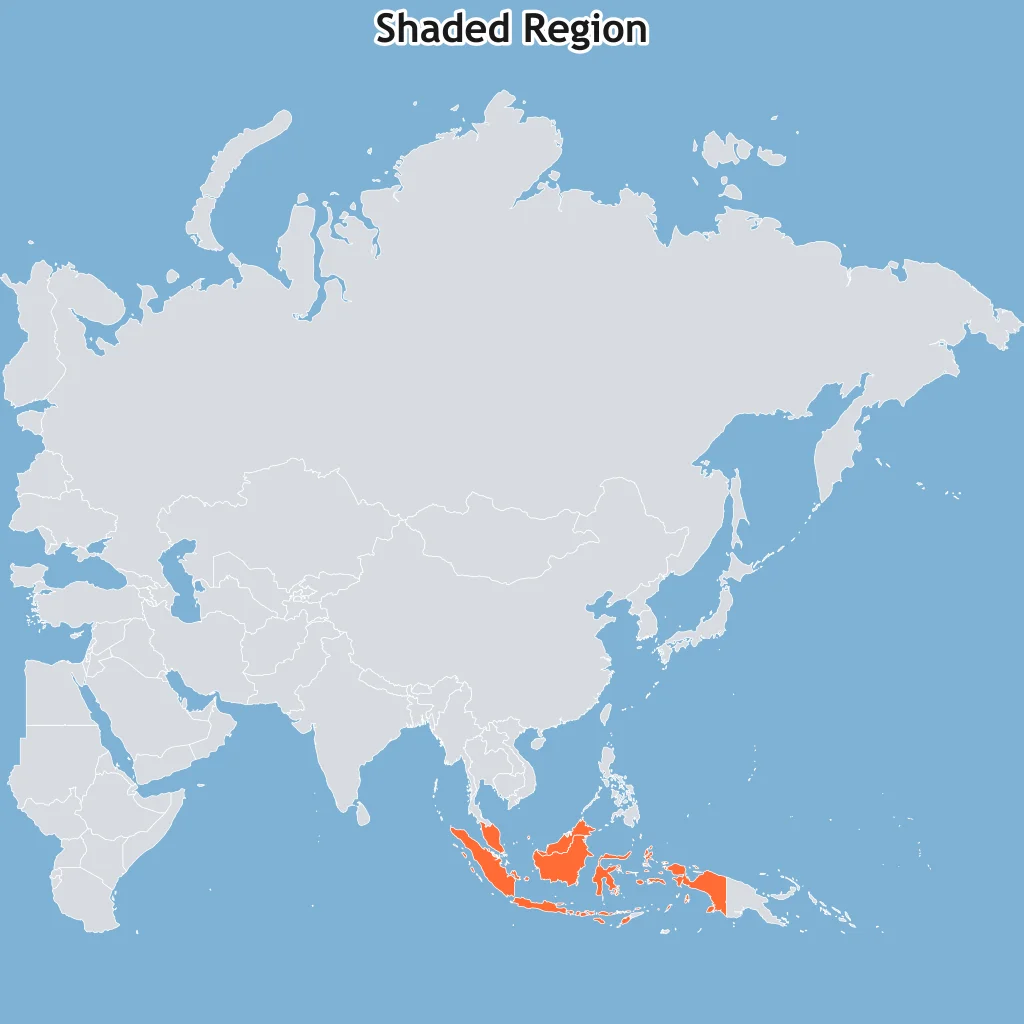
Use the map of the shaded Southeast Asian countries. Warm humid conditions there support which major agricultural land use?
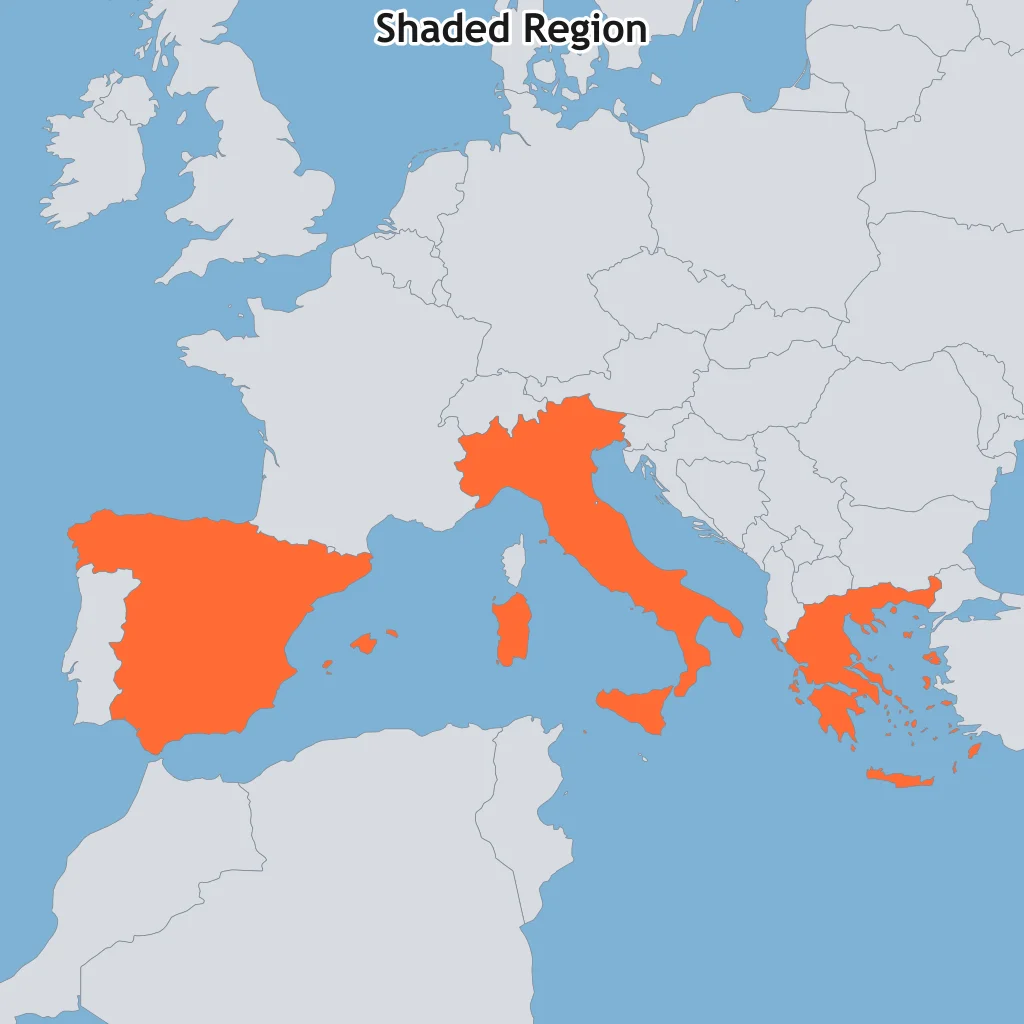
Use the map of the shaded southern European countries. Which land use best matches their coastal climate?
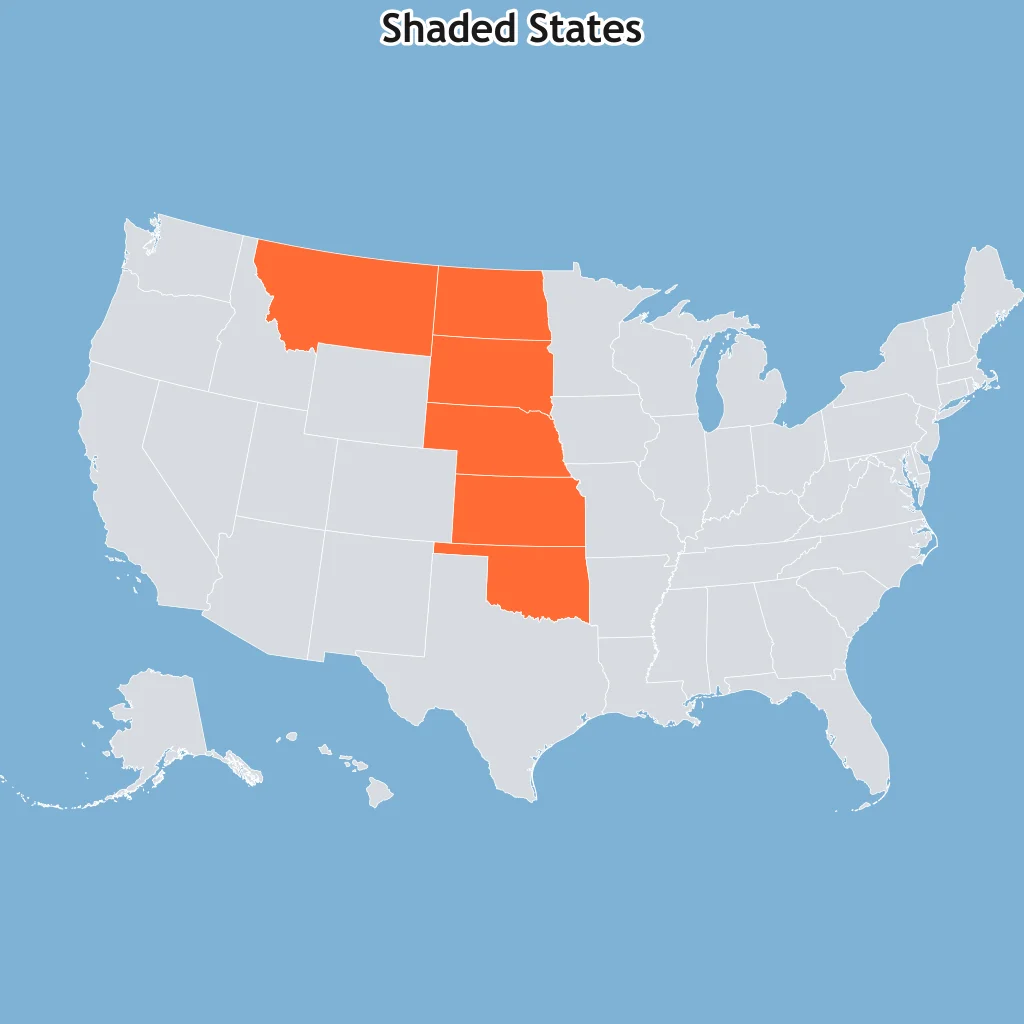
Use the map of the shaded Great Plains states. Which agricultural use best fits this broad interior region?
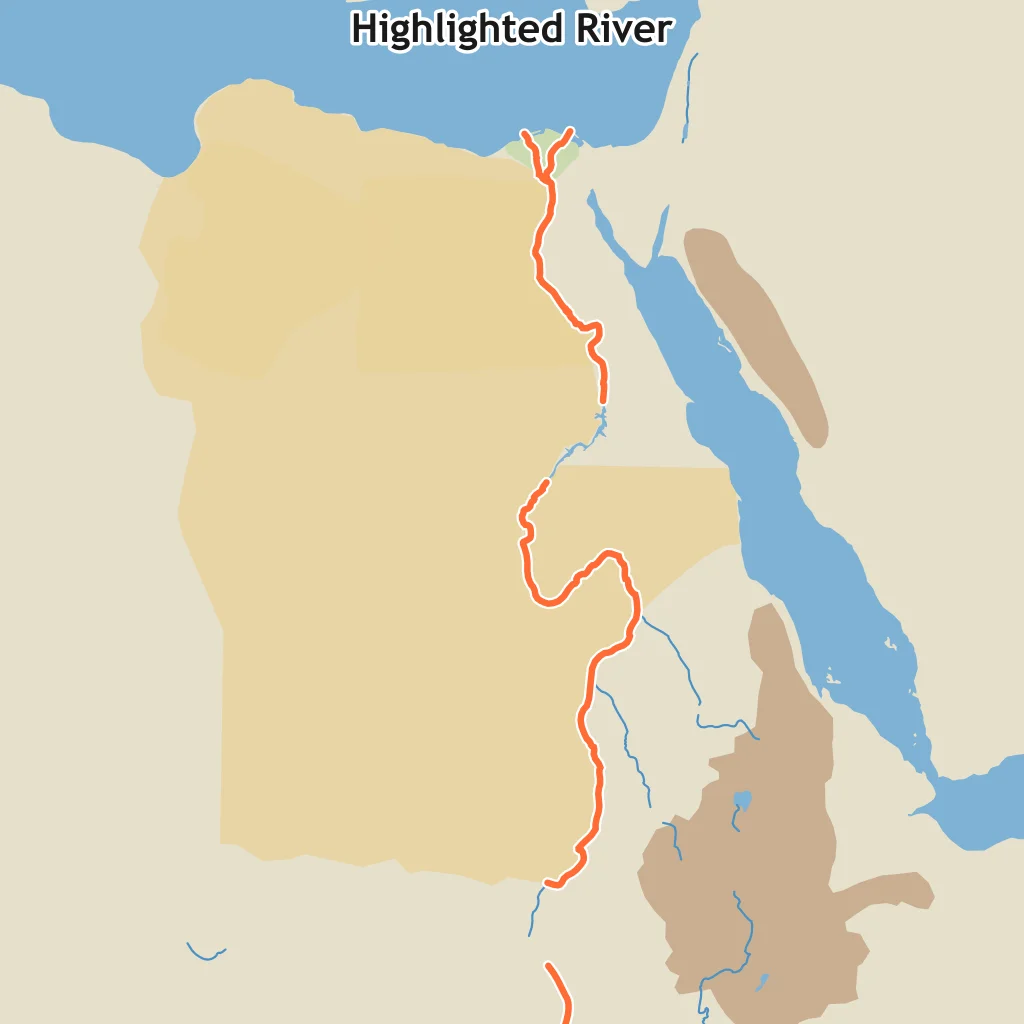
Use the map with the highlighted river. Along this corridor, what land use is most likely compared with the surrounding desert?
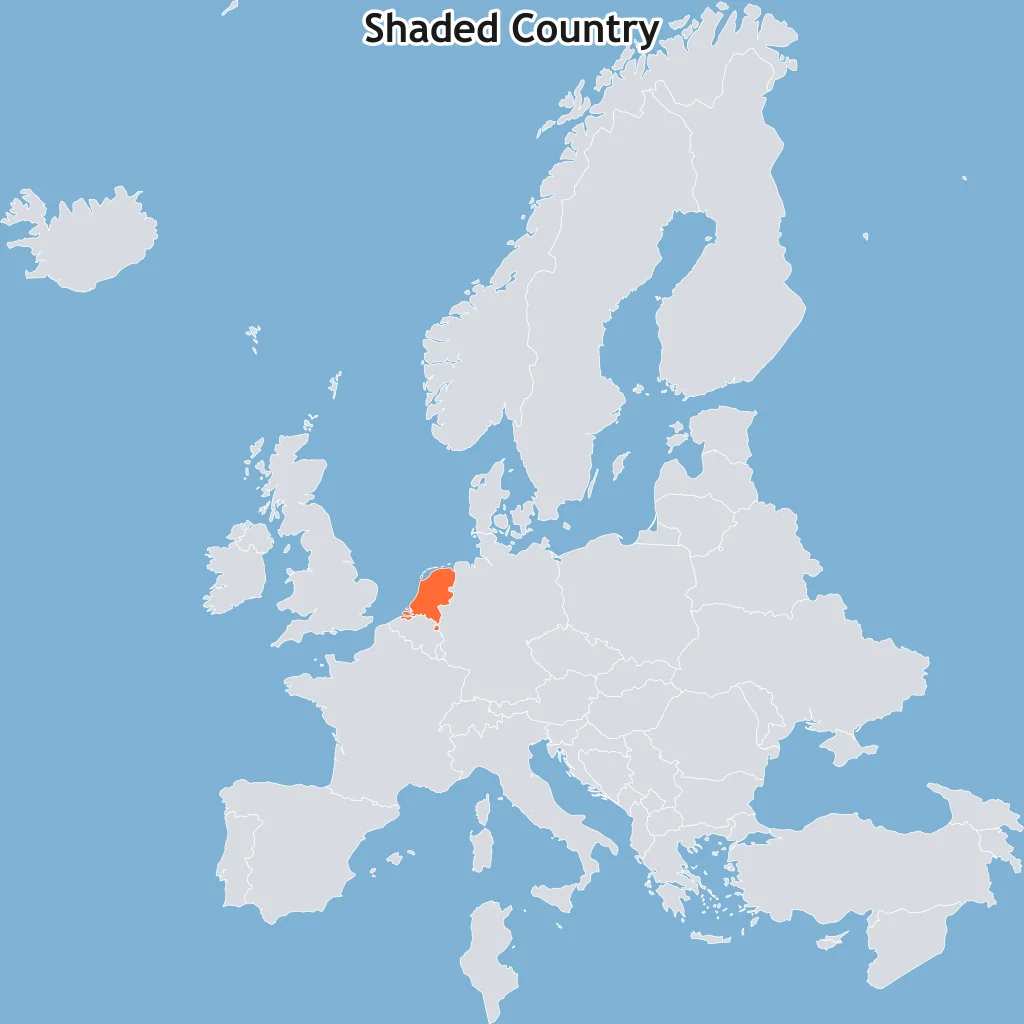
Use the map of the shaded country. Its small area, dense settlement, and access to European cities favor which land use?
Farmers nearest a large city pay high land rent and add greenhouses, irrigation, and labor to small plots. What outcome follows?
Geographers classify a farm as intensive or extensive based mainly on what?
Compared with nearby market gardens, a wheat farm spreads production over much larger fields with fewer workers per acre. What comparison is most likely?
In a bid-rent pattern, farms closest to an urban market pay the highest land rents. What practice becomes most profitable there?
Two farms grow the same crop. Farm A adds irrigation, fertilizer, and labor to a smaller plot; Farm B uses wider fields with fewer inputs. What should hold if weather is similar?
Crack the passcode before the zombies get in.
Answer, then swat bugs for bonus points.
Race through questions at your own speed.
Same question on every screen. Fastest wins.

Pick a tile, answer, hit bonuses and steals.
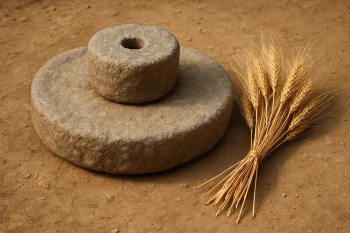
Agricultural Hearths and the First Agricultural Revolution
30 questions