Loading
by BlastRoom
Predict which way particles and water move across a membrane, why they move that way, and what happens once movement evens out.
#biology
40 questions
One question set, multiple game modes. Tap any game to see it in action. Not sure which to pick?
Answer to place stones and capture territory.
Outrun the snow together.
Earn blasts, then hunt the other team.
Answer to earn energy, then climb.

The class blasts through walls together.
Bid on mystery lots. Most money wins.
Sell tours. Nice, standard, or a total scam.

Answer, restock, and serve the rush.
More correct answers pulls the rope your way.
Answer, then shoot down the alien wave.
Answer, then tap to leap the frozen ridge.
Use the table. A cell is placed in a beaker of salt solution. The membrane lets water through but not salt. What is the net movement of water?
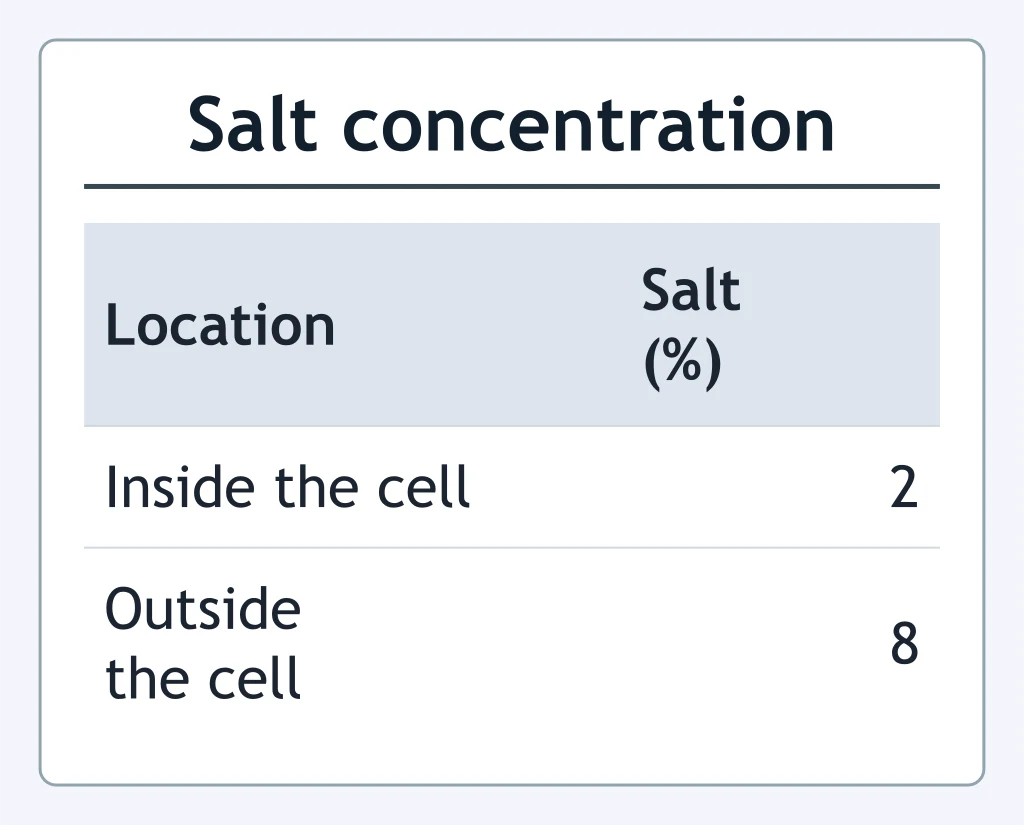
Use the table. The membrane around this cell is permeable to water but not to sugar. Which way does water move overall?
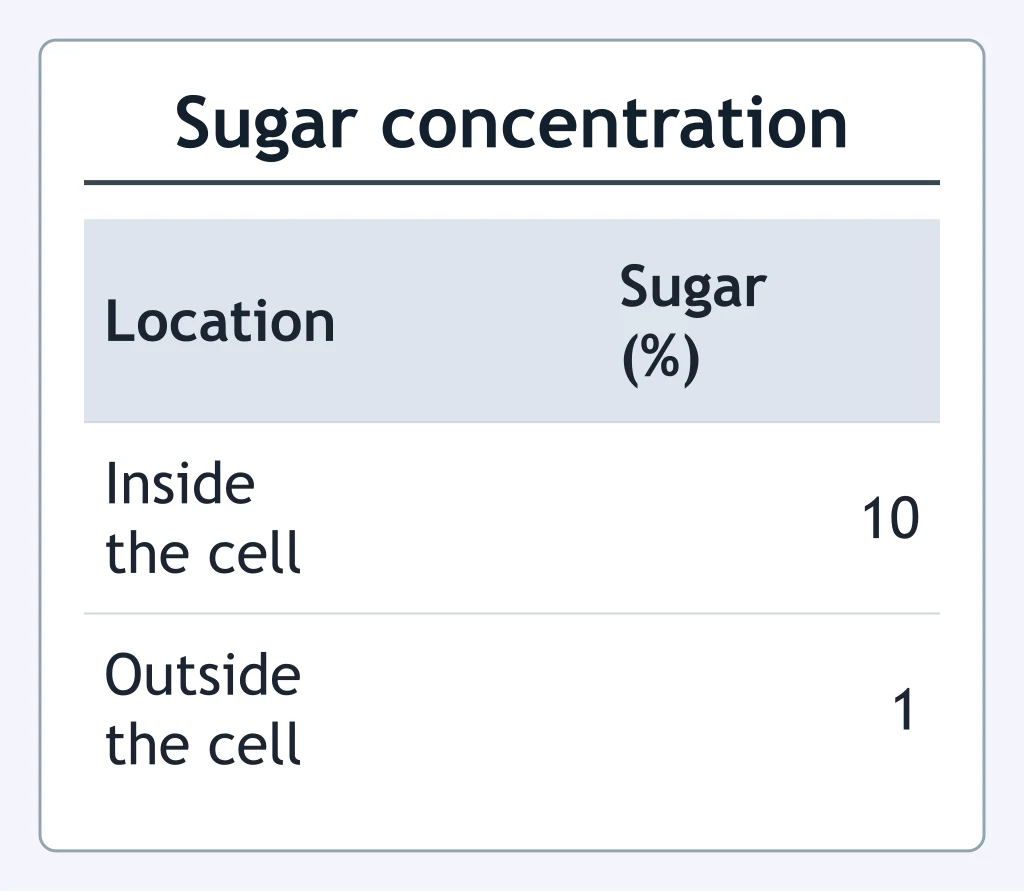
Use the table. Oxygen crosses this cell membrane freely. What is the net movement of oxygen?
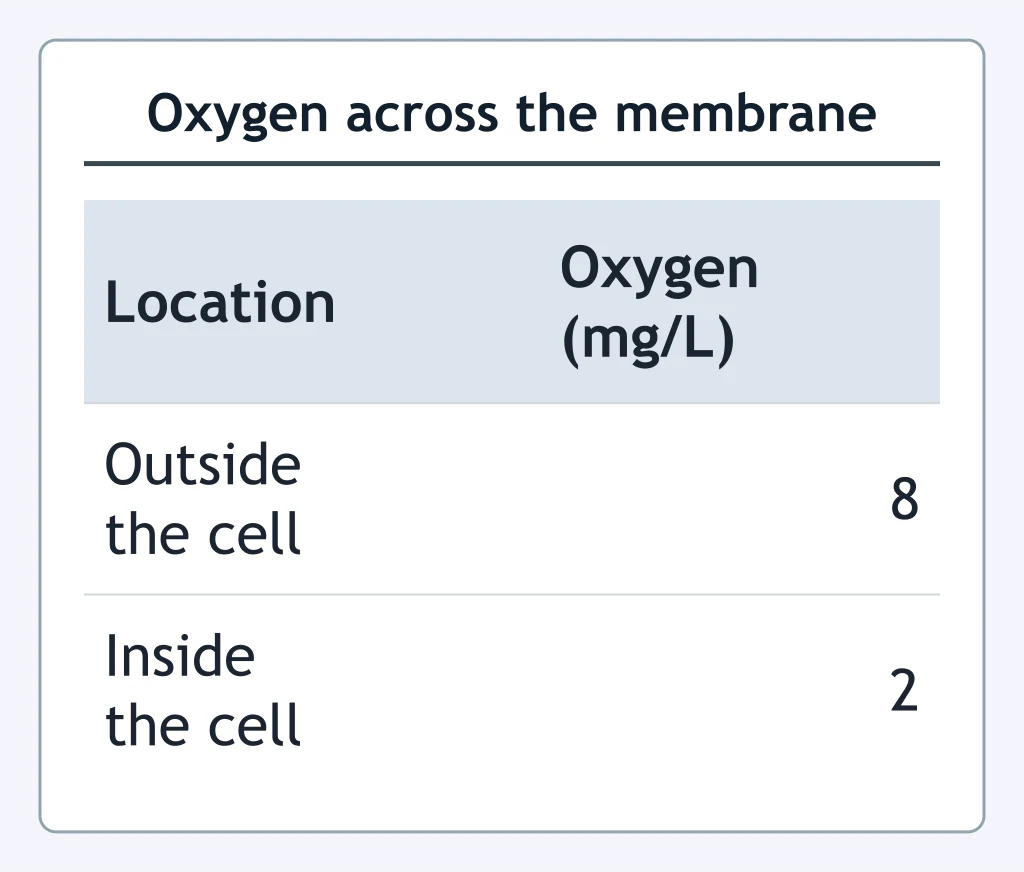
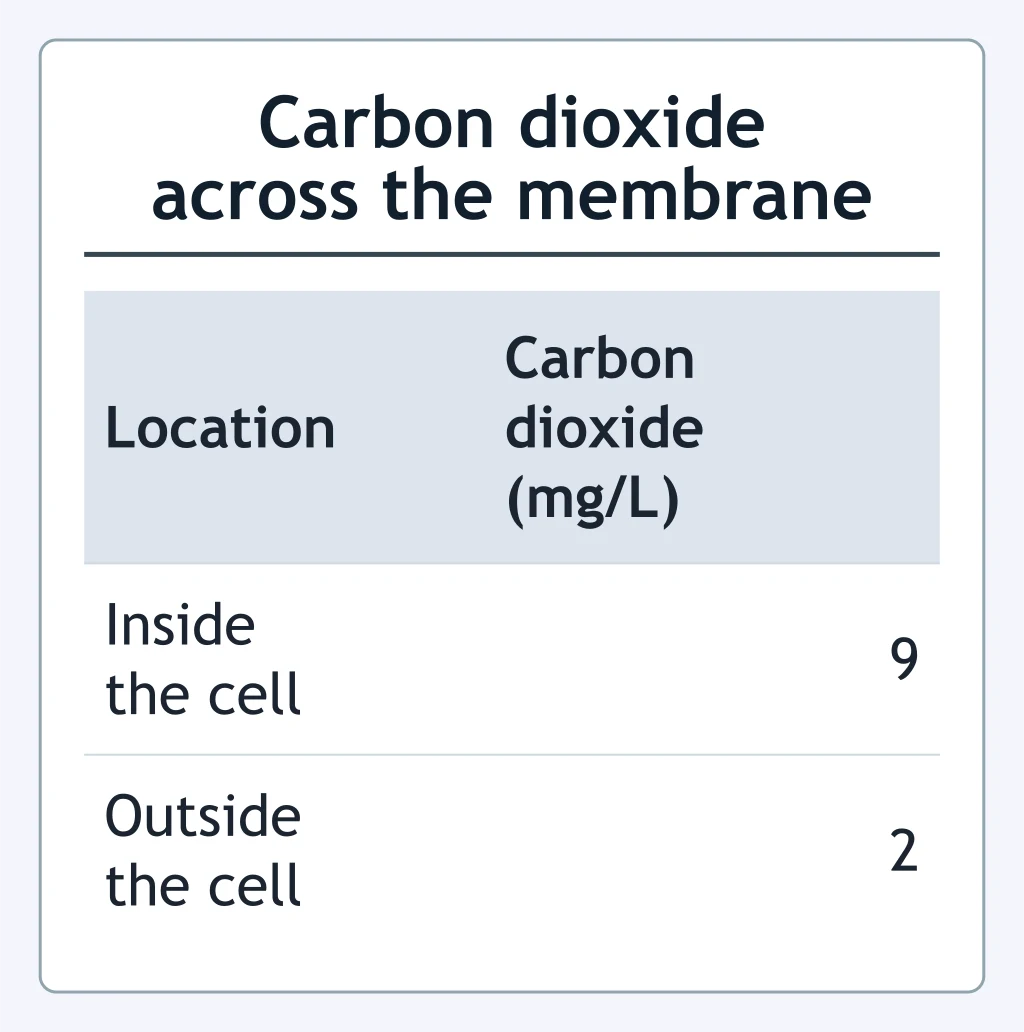
Use the table. This cell is respiring, and carbon dioxide crosses its membrane freely. Which statement describes the carbon dioxide?
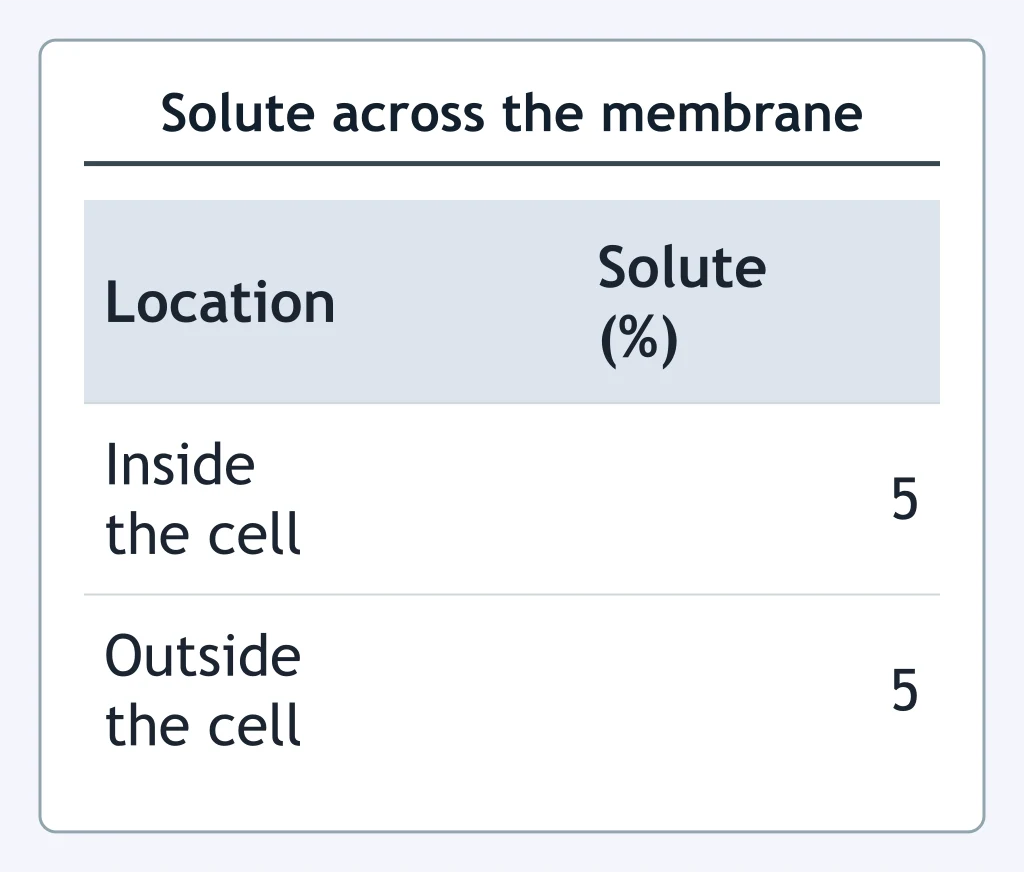
Use the table. The membrane lets water through but not the solute. What happens to the water?
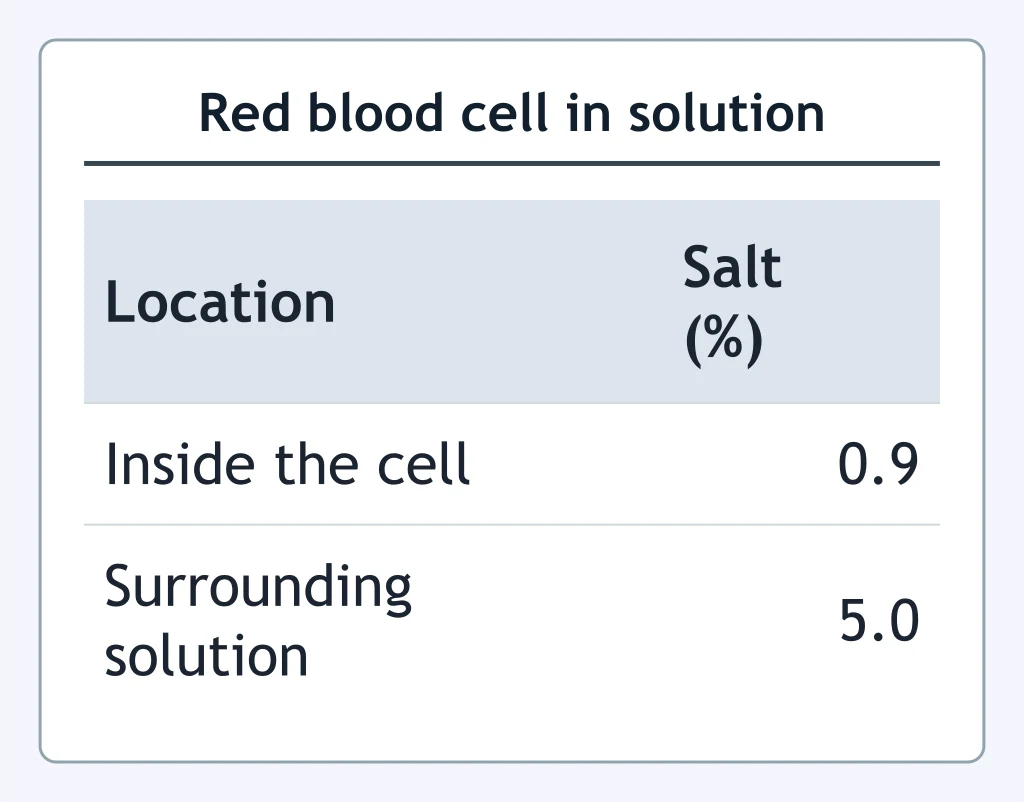
Use the table. A red blood cell is dropped into the solution shown. What happens to the volume of the cell over the next few minutes?
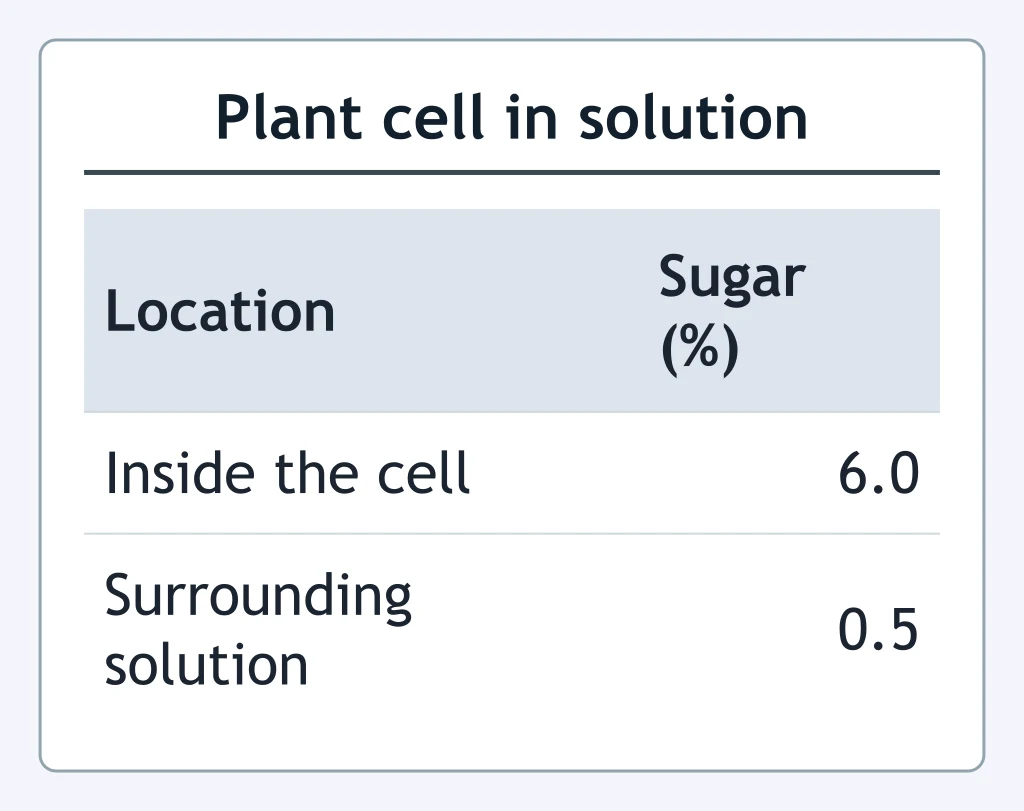
Use the table. A plant cell is placed in the solution shown. What is the most likely result after an hour?
Use the table. Glucose crosses this membrane only through carrier proteins, and no ATP is being used. Which way does glucose move?
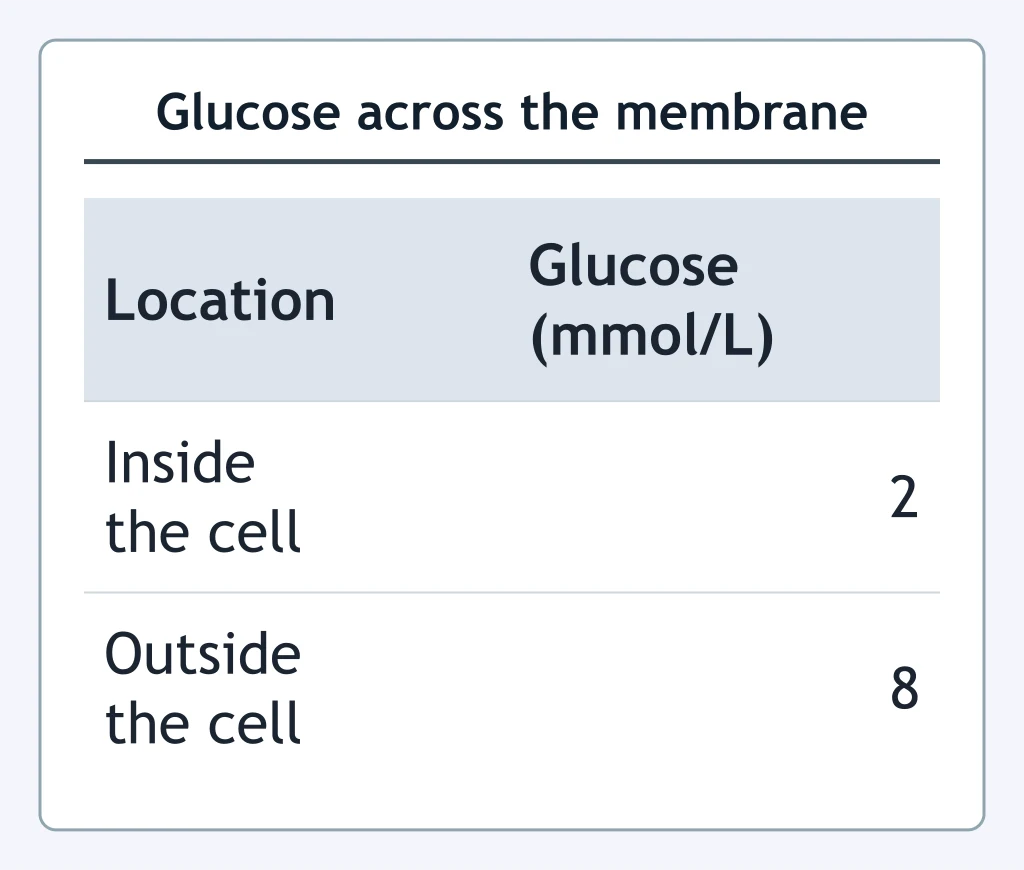
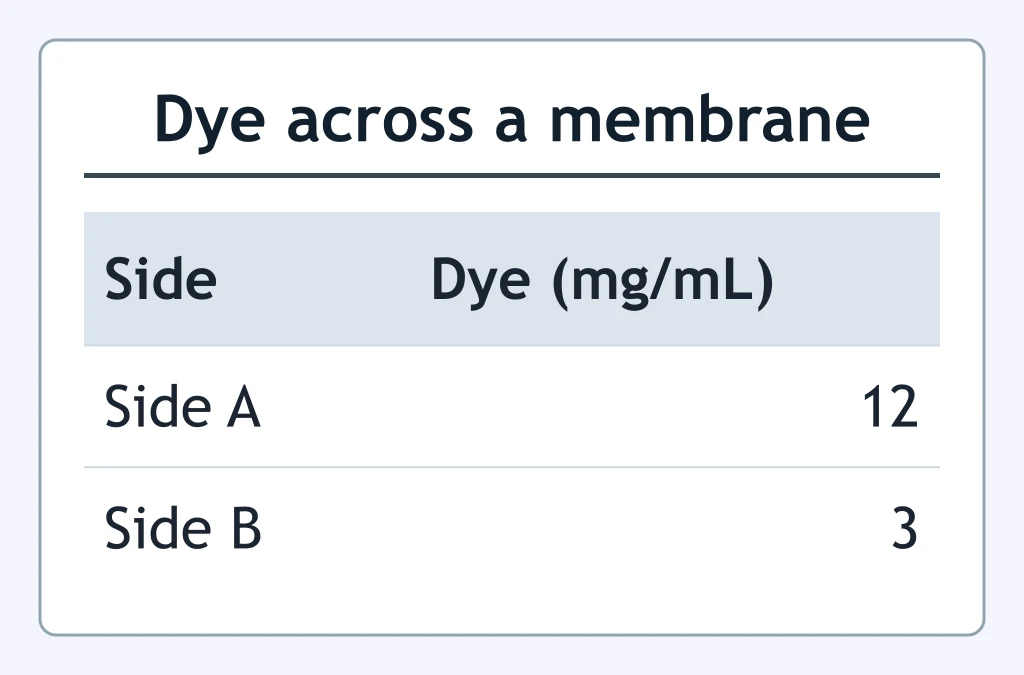
Use the table. A membrane that dye can cross separates side A from side B. What is the net movement of the dye?
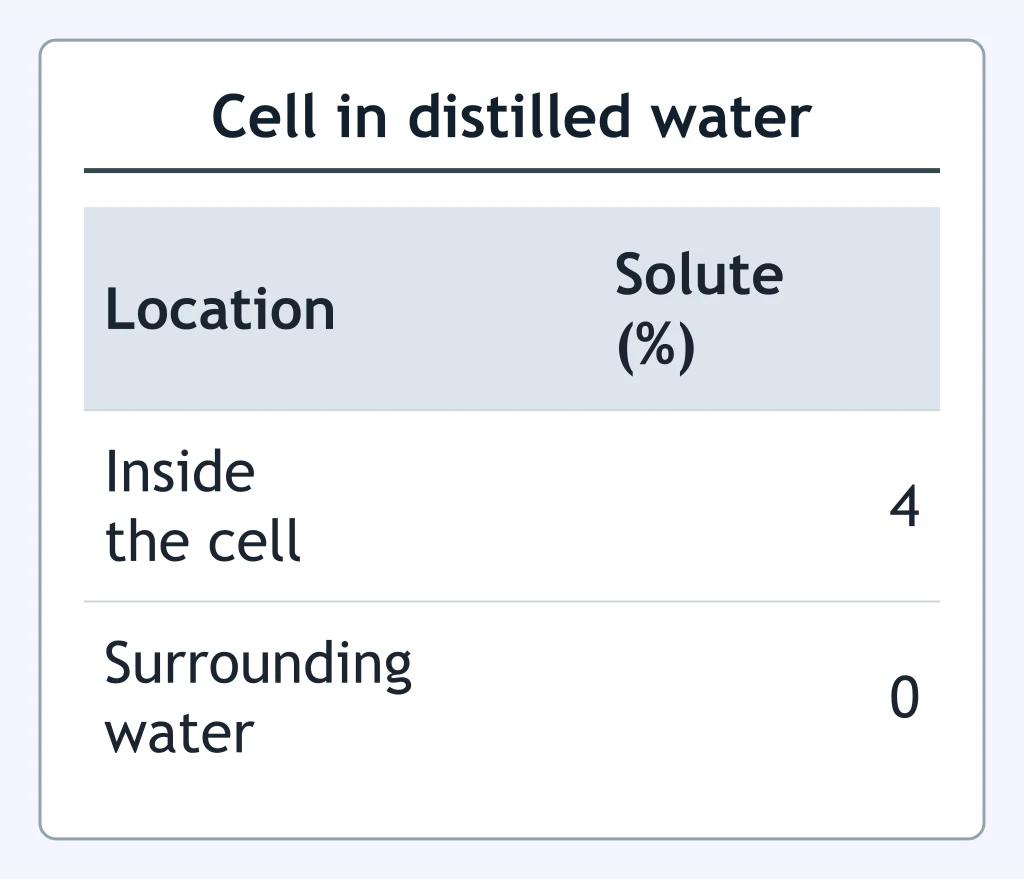
Use the table. A cell is placed in the distilled water shown. How would you describe the water surrounding the cell?
A drop of blue dye is placed at one end of a shallow dish of still water. Over an hour the color spreads until it is even throughout the dish, with no stirring and no living cells present. Which process accounts for this?
A dried raisin is left in a dish of pure water. After several hours the raisin is plump and heavier, and the water is no sweeter than before. Which process explains the change in the raisin?
Root hair cells take up potassium ions from soil water even though the ions are already more concentrated inside the root cells than in the soil. Which process is at work?
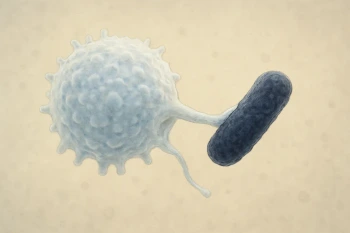
A white blood cell surrounds a bacterium with its membrane, pinches the membrane closed, and takes the whole bacterium inside in a vesicle. Which process is this?
A gland cell makes a protein hormone, packages it in a vesicle, and the vesicle fuses with the cell membrane so the hormone is released outside. Which process is this?
Glucose is more concentrated in the blood than inside a muscle cell. It enters the muscle cell through a specific membrane protein, and the cell uses no ATP to move it. Which process is this?
Someone opens a bottle of perfume at the front of a still, closed classroom. Minutes later students at the back can smell it, though nobody moved and no fan was running. Which process best explains this?
A plant is watered with very salty water. Under a microscope, the cell membranes have pulled away from the cell walls and the cells look shrunken. What is this condition called?
A sugar solution is separated from pure water by a membrane that sugar cannot cross. After several hours the water level on each side stops changing. Which statement describes the water molecules at that point?
Blue dye has spread until it is evenly colored throughout a beaker of water. Which statement about the dye molecules from that moment on is correct?
What is the term for the state in which particles keep moving in both directions across a membrane but there is no net change in concentration on either side?
A cell sits in an isotonic solution for an hour and its size does not change. What is happening to water at the cell membrane during that hour?
A membrane that sugar cannot cross separates a sugar solution from pure water. At equilibrium, the sugar will be spread evenly on both sides of the membrane.
Two solutions on either side of a membrane have reached equilibrium and no net movement of water is occurring. Which change would start a net movement of water again?
A student says that once a solution reaches equilibrium the particles have run out of energy and settle. Why is this wrong?
A technician wants a dye to reach the center of a block of agar sooner. Which change would do that?
Two identical beakers of water are set up, one at 5 degrees Celsius and one at 40 degrees Celsius. A drop of food coloring is added to each. In which beaker does the color spread faster, and why?
A researcher repeats a membrane experiment but makes the concentration difference between the two sides much larger than before. What happens to the initial rate of diffusion?
The lining of the small intestine is folded into millions of tiny villi rather than being smooth. How does this shape affect absorption?
In a lung disease, the wall between the air sac and the capillary becomes thickened with scar tissue. What does this do to the rate at which oxygen diffuses into the blood?
A healthy air sac in the lung is lined by a wall only one cell thick and is wrapped in capillaries carrying blood low in oxygen. Which pair of features most speeds up gas exchange there?
At the same temperature, small molecules usually diffuse faster than large molecules.
Oxygen moves from the air in the alveoli of the lung, where it is plentiful, into the blood, where it is scarce. Which statement about the energy for this movement is correct?
Diffusion and osmosis are both described as passive transport. What does calling them passive mean?
A poison stops a cell from making any ATP, though the membrane stays intact. Carbon dioxide is still building up inside the cell. What will happen to that carbon dioxide?
Which movement across a cell membrane must be paid for with ATP?
A student writes that a cell must burn ATP to let water in by osmosis. Which correction should the teacher make?
If a cell does not supply the energy for diffusion, where does the energy that moves the particles come from?
Endocytosis requires the cell to use energy.
Which pair of processes are both passive, moving substances down a concentration gradient without ATP?
Crack the passcode before the zombies get in.
Answer, then swat bugs for bonus points.
Race through questions at your own speed.
Same question on every screen. Fastest wins.

Pick a tile, answer, hit bonuses and steals.
Active Transport, Endocytosis and Exocytosis
20 questions