Loading
by BlastRoom
Sort structures to plant cells, animal cells or both, and tell the two apart under the microscope.
#biology
40 questions
One question set, multiple game modes. Tap any game to see it in action. Not sure which to pick?
Answer to place stones and capture territory.
Outrun the snow together.
Earn blasts, then hunt the other team.
Answer to earn energy, then climb.

The class blasts through walls together.
Bid on mystery lots. Most money wins.
Sell tours. Nice, standard, or a total scam.

Answer, restock, and serve the rush.
More correct answers pulls the rope your way.
Answer, then shoot down the alien wave.
Answer, then tap to leap the frozen ridge.
Which structure is present in a typical plant cell but absent from a typical animal cell?
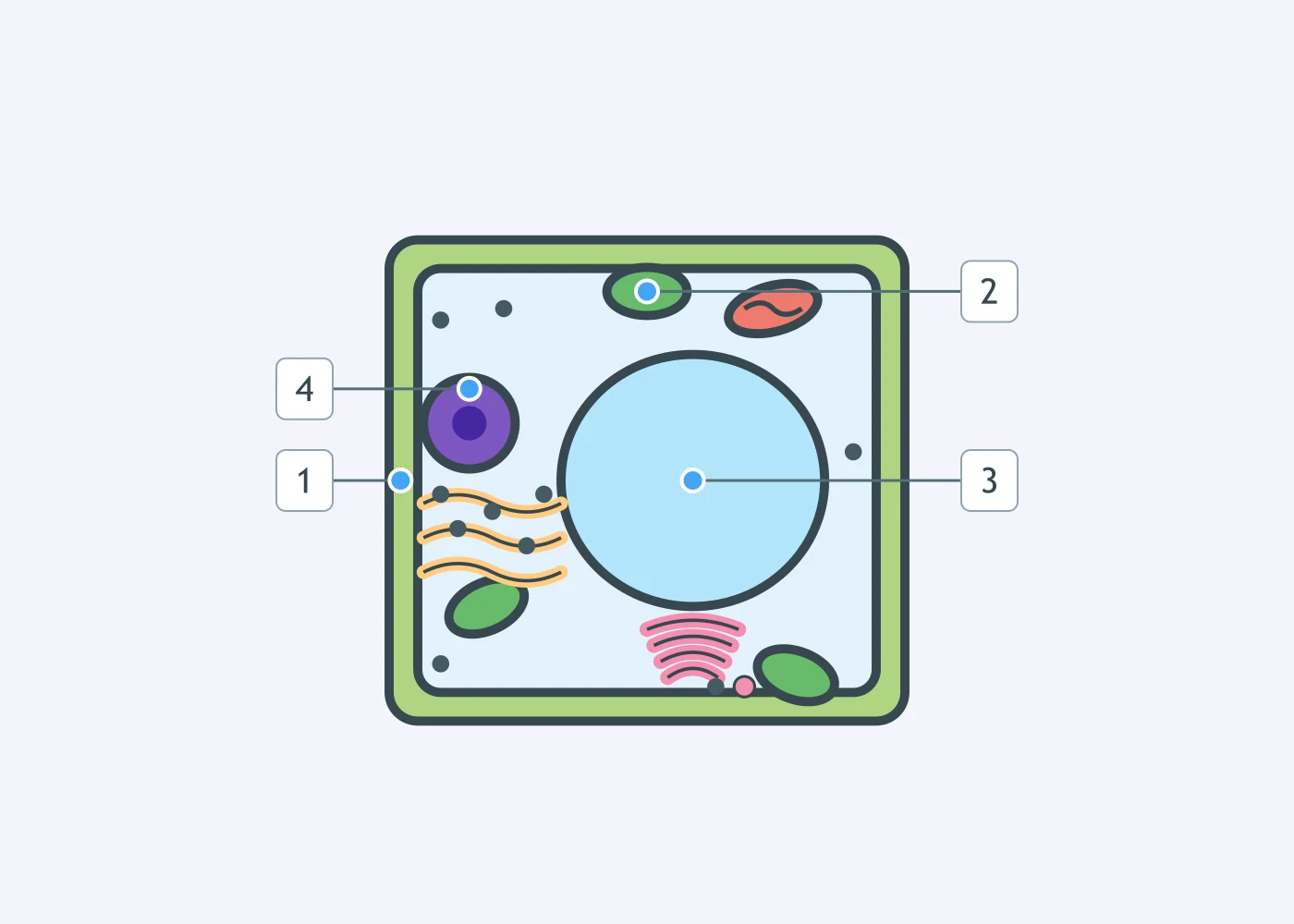
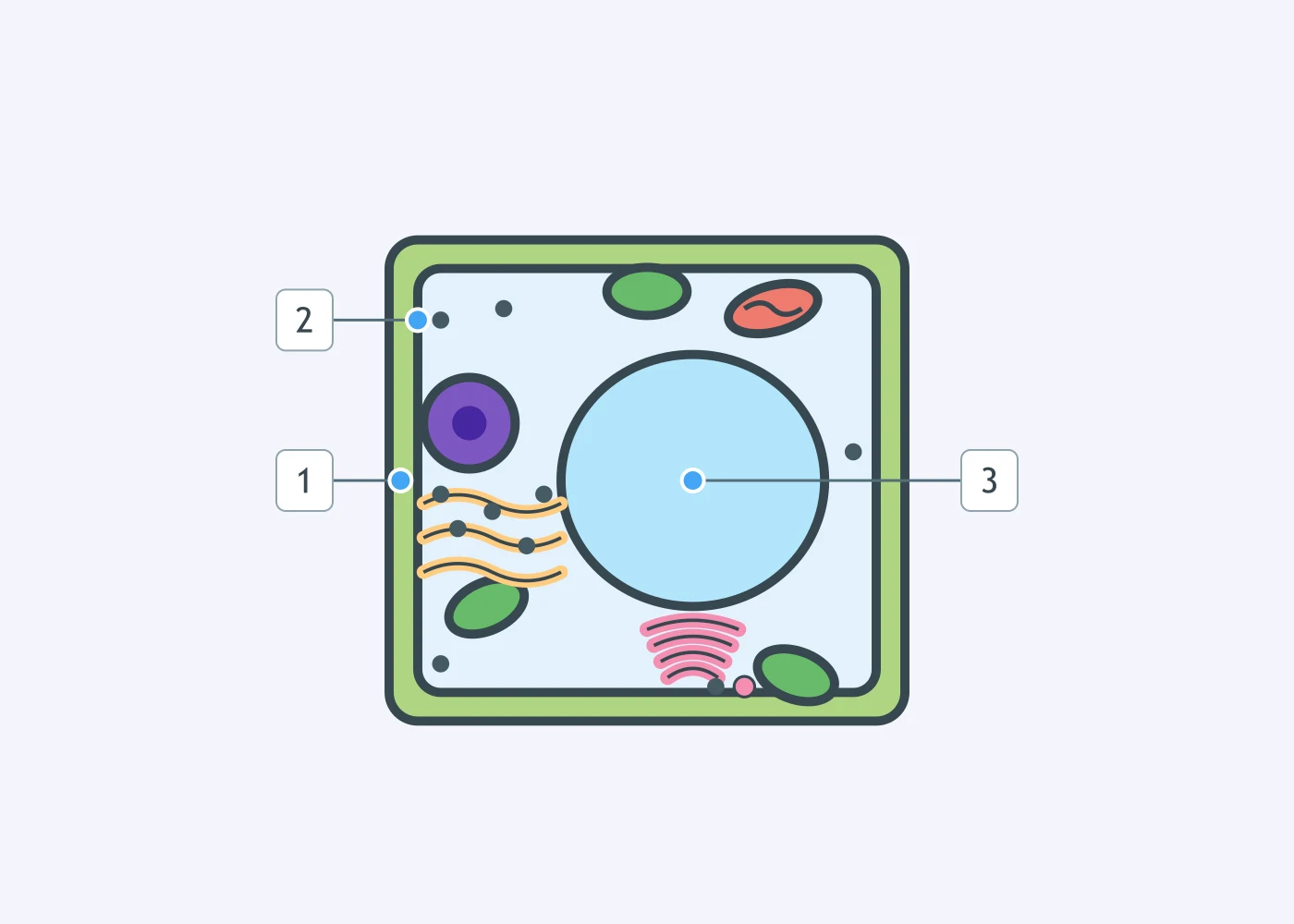
Look at the cell in the diagram, where four structures are labeled 1 to 4. Is this a plant cell or an animal cell, and which labeled structure is the strongest evidence?
A limp stalk of celery stands in fresh water for an hour and becomes firm again, but a slice of raw chicken left in water does not stiffen. Which difference between the two kinds of cell explains this?
A plant cell contains chloroplasts, yet it also contains mitochondria. Why does it need both?
Which organelle is normally found in animal cells but not in the cells of flowering plants?
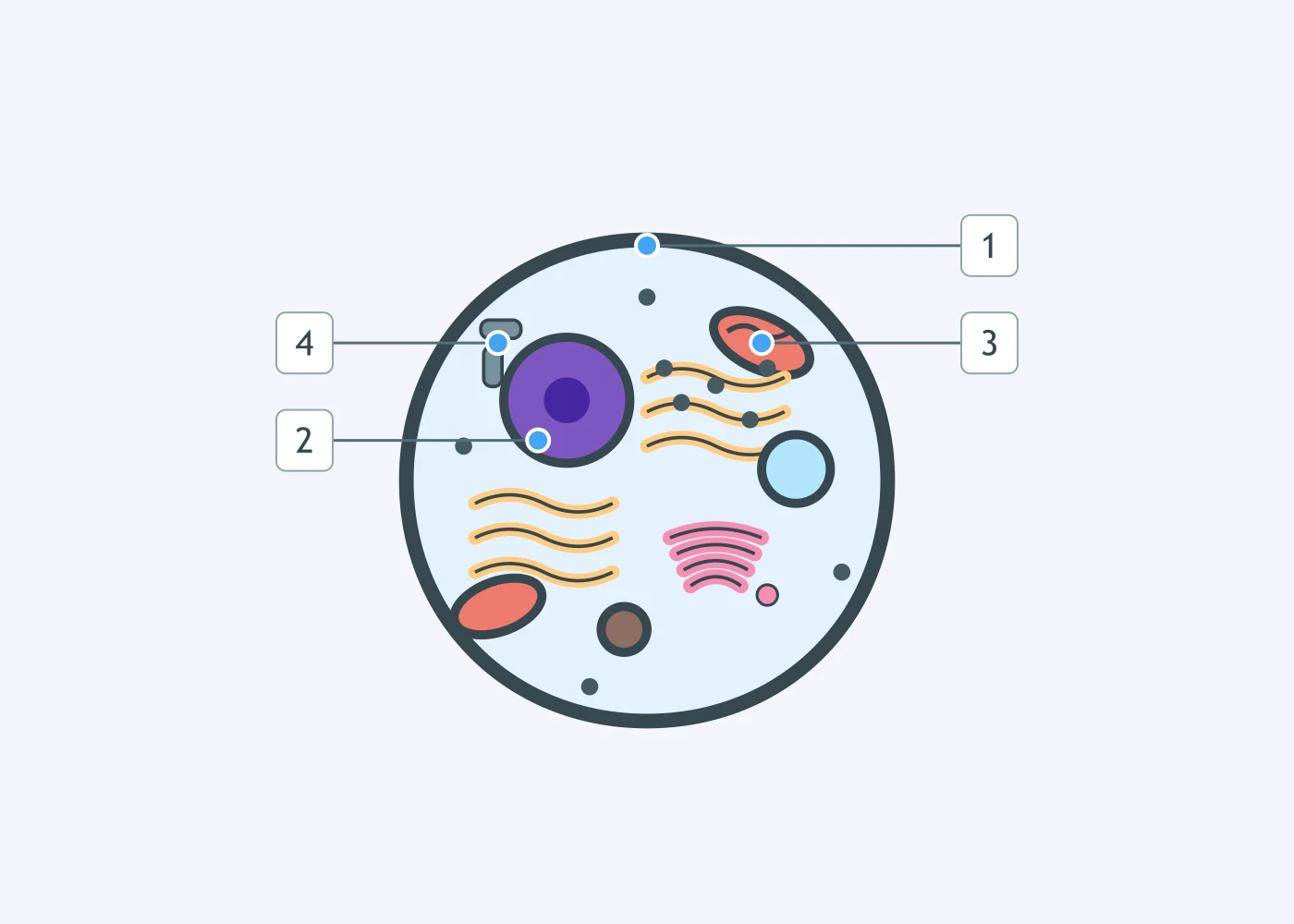
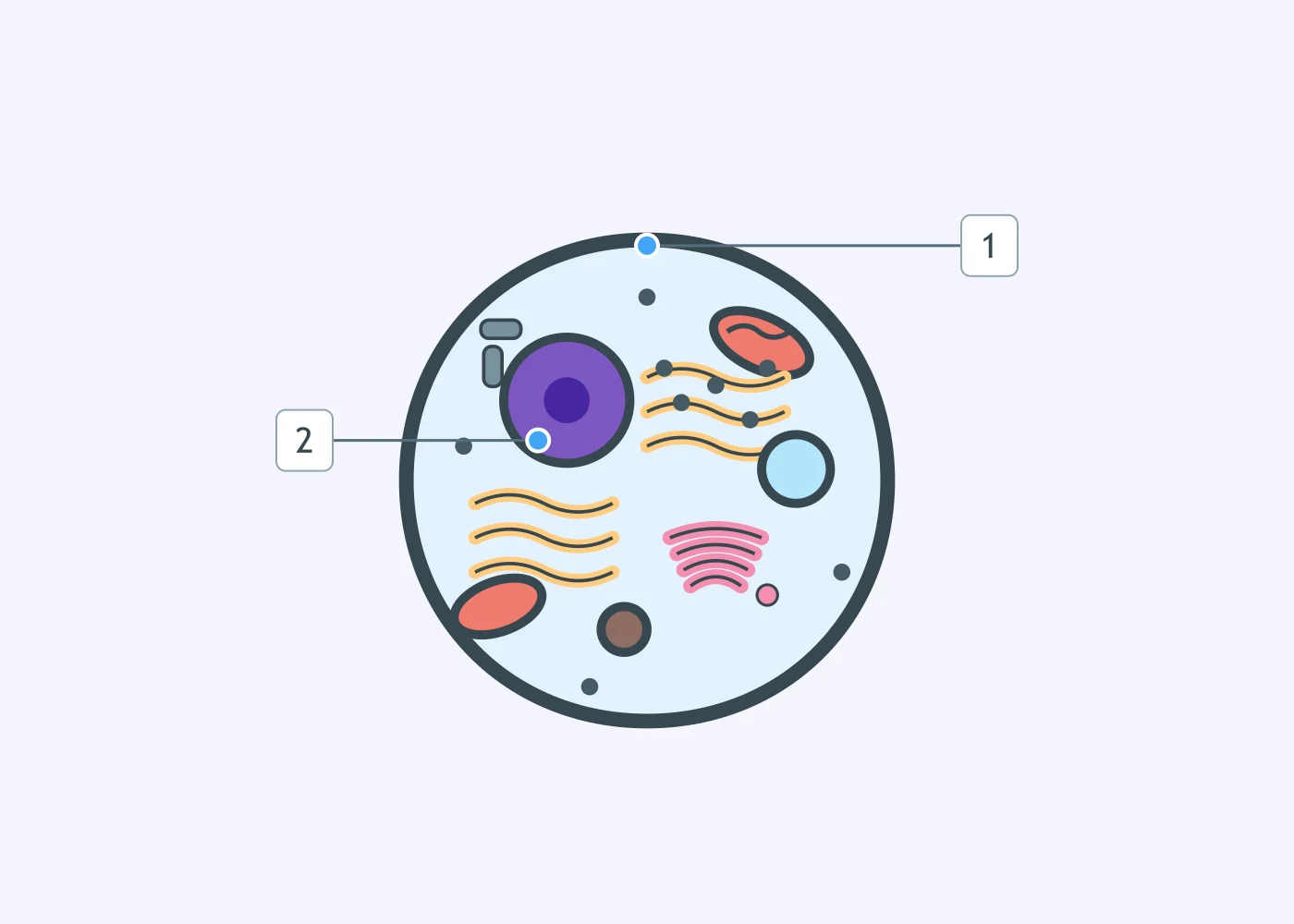
The cell in the diagram has no rigid layer outside its outer boundary. Which labeled structure gives further evidence that it is an animal cell?
A cell contains a nucleus, mitochondria, ribosomes, a Golgi apparatus and a pair of centrioles. It has no cell wall and no chloroplasts. What kind of cell is it?
Sea water floods a garden, and within a day the plants are wilted. What has happened inside the plant cells?
A student lists structures found in BOTH plant and animal cells: nucleus, ribosomes, mitochondria and cell membrane. Which structure belongs on the same list?
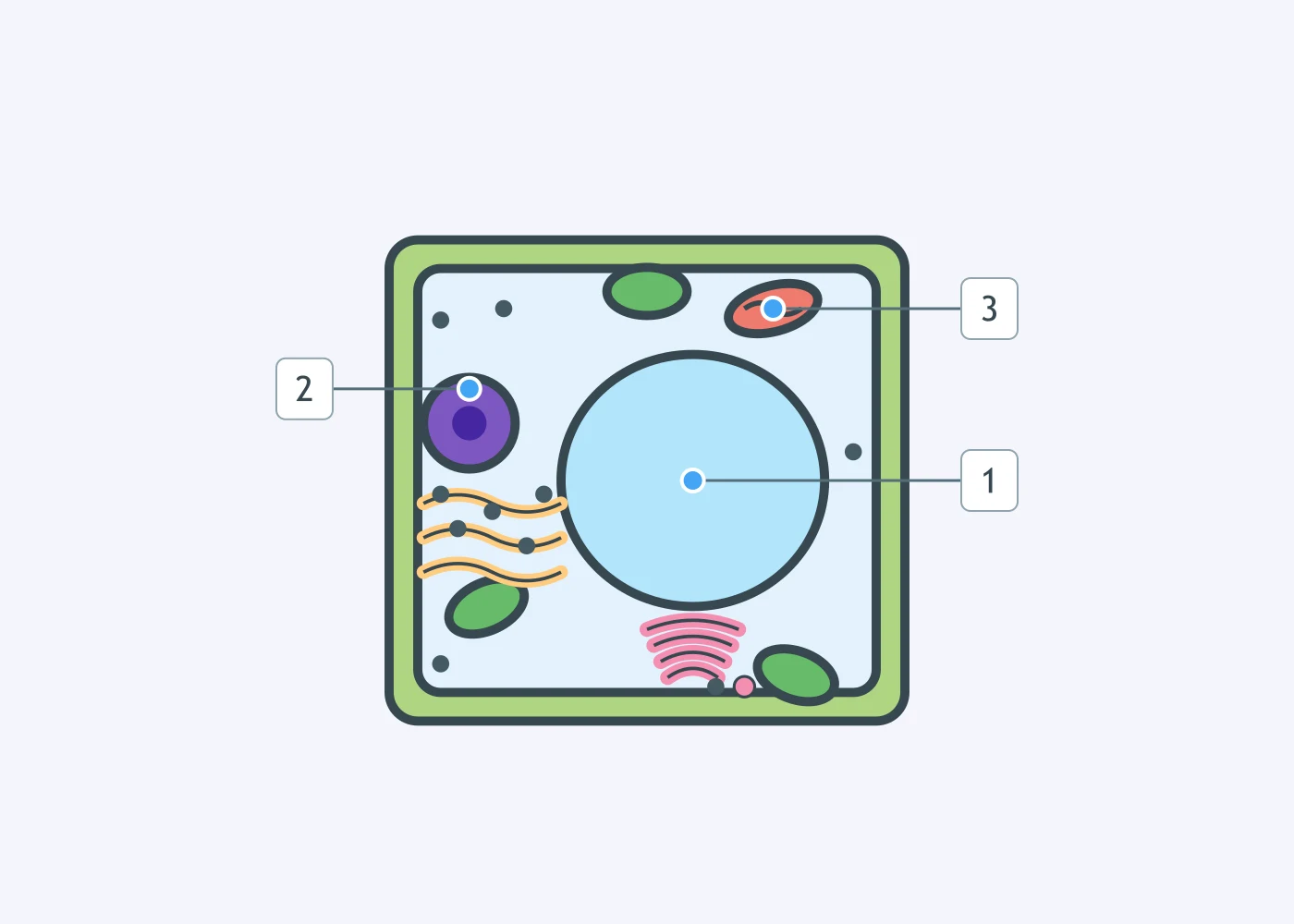
In the cell shown, structure 1 takes up most of the cell's volume. What is it, and what does it hold?
A student has two unlabeled wet mounts at 400x, one of onion epidermis and one of human cheek lining. Which observation identifies the onion slide?
Fluids given into a vein are made up at the same salt concentration as blood plasma rather than with pure water. Which difference between animal and plant cells makes this necessary?
In which cells are chloroplasts found?
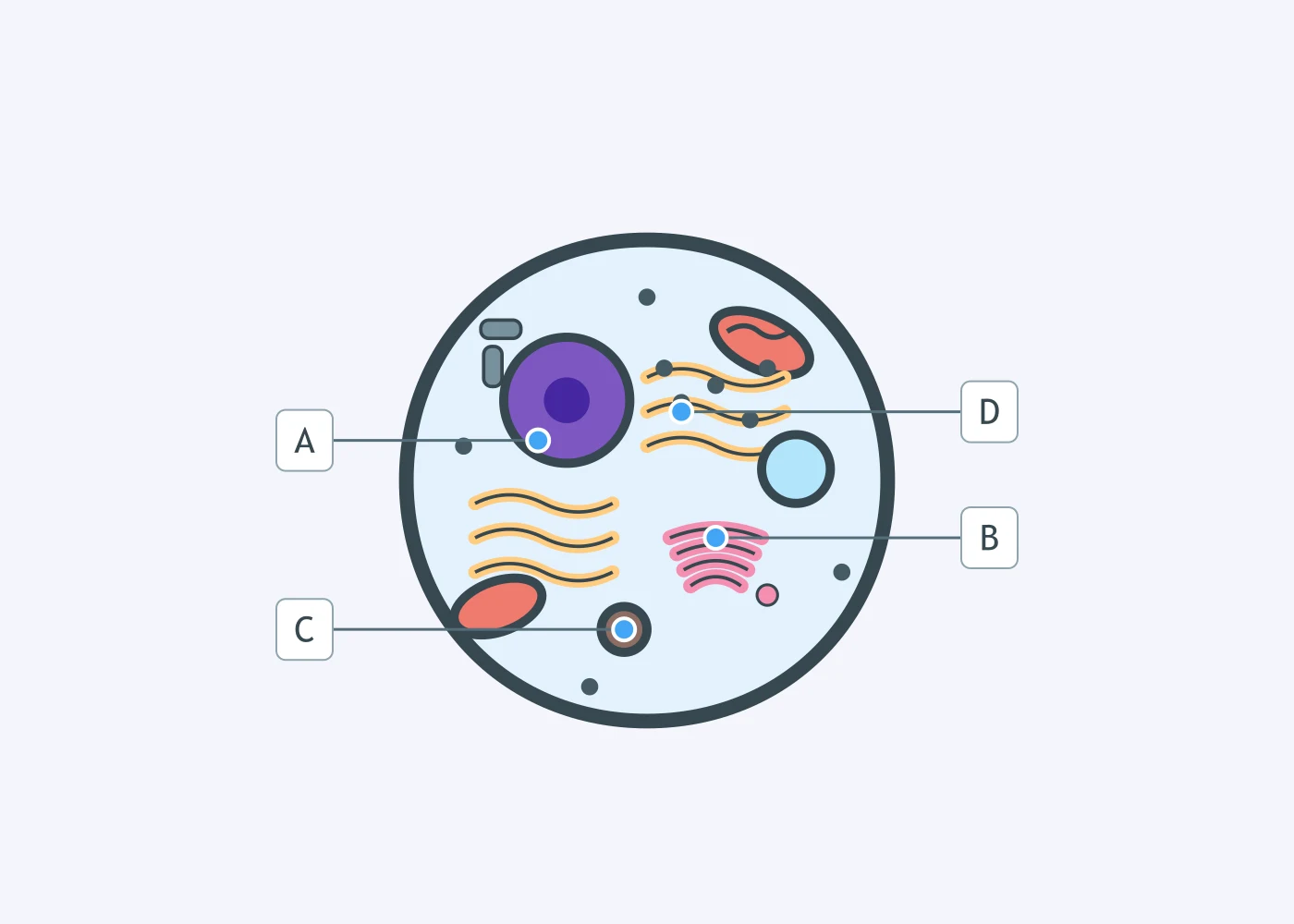
In the cell shown, which labeled structure contains digestive enzymes that break down worn-out organelles and particles the cell has taken in?
The cell membrane is present in both plant and animal cells. What job does it do in each?
A white blood cell squeezes out through the wall of a capillary and changes shape to engulf a bacterium. Why can a leaf cell do nothing of the kind?
The cell wall of a plant cell is made mainly of cellulose.
In the cell shown, structure 1 lies immediately outside structure 2. What is structure 1, and what does its presence rule out?

At the end of division an animal cell pinches inward until it splits in two, but a plant cell builds a new wall across its middle instead. Why can a plant cell not pinch inward?
Bacteria, plant cells and animal cells all have a cell membrane, cytoplasm and ribosomes. Which structure do plant and animal cells have that a bacterium does not?
A student says the cell in the diagram must be a plant cell because it contains structure 3 and structure 4. Why is the student wrong?
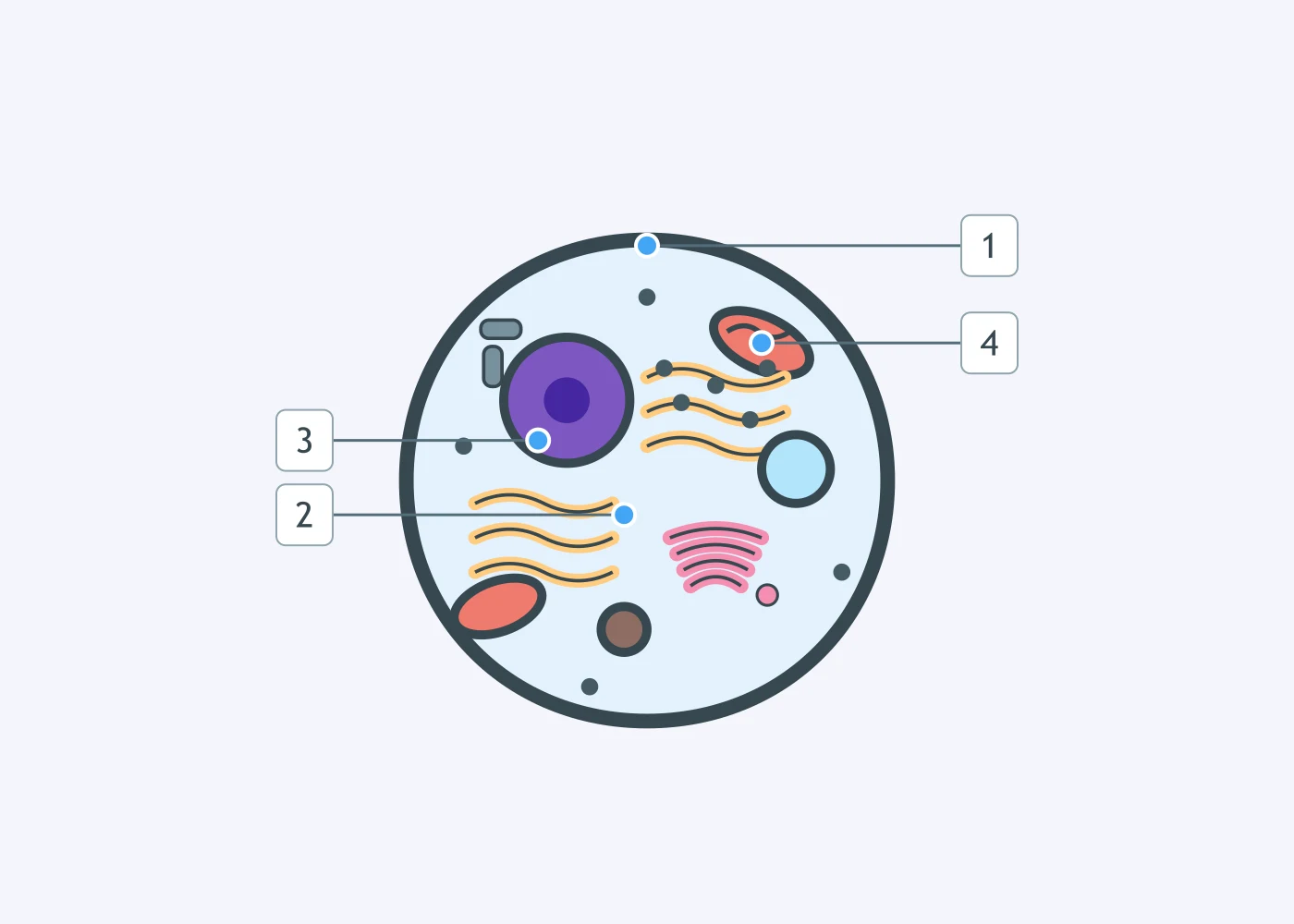
A student records four cells. Cell 1 has a cellulose wall and chloroplasts. Cell 2 has a cellulose wall but no chloroplasts. Cell 3 has no wall but has centrioles. Cell 4 has no wall and no nucleus. Which are plant cells?
The cells of a plant's roots contain no chloroplasts. What follows for the root?
Which structure takes up most of the volume of a mature plant cell and has no counterpart of that size in an animal cell?
In the cell shown, which labeled structure captures light energy and uses it to build glucose?
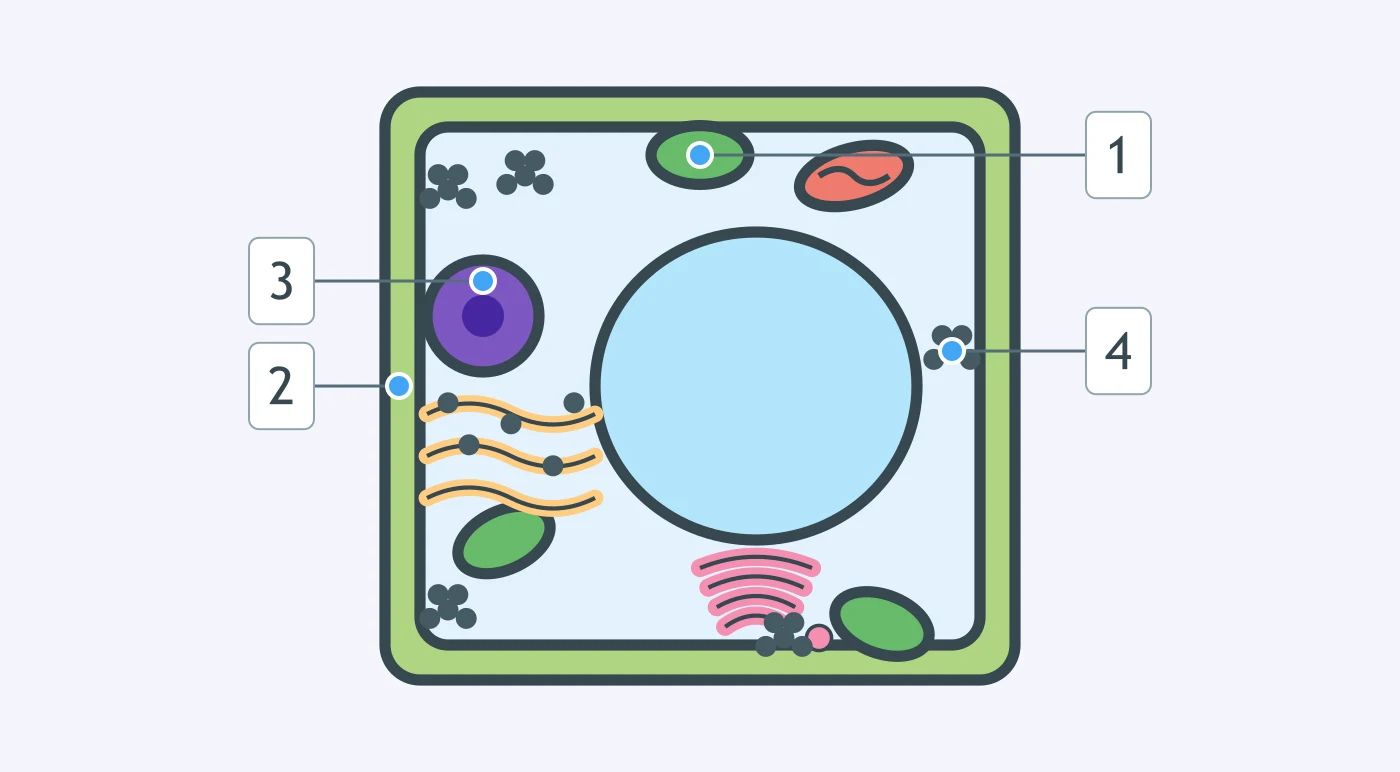
Ribosomes are found in both plant and animal cells. What do they do in each?
A potted plant is kept in complete darkness for three days, and measurements show the air around it losing oxygen the whole time. Why?
Mitochondria are found in both plant and animal cells, but not in equal numbers. Which cell would you expect to contain the most?
The cell shown comes from a human, and structure 4 is one of several small ones. What is it, and how does it compare with the equivalent structure in a plant cell?
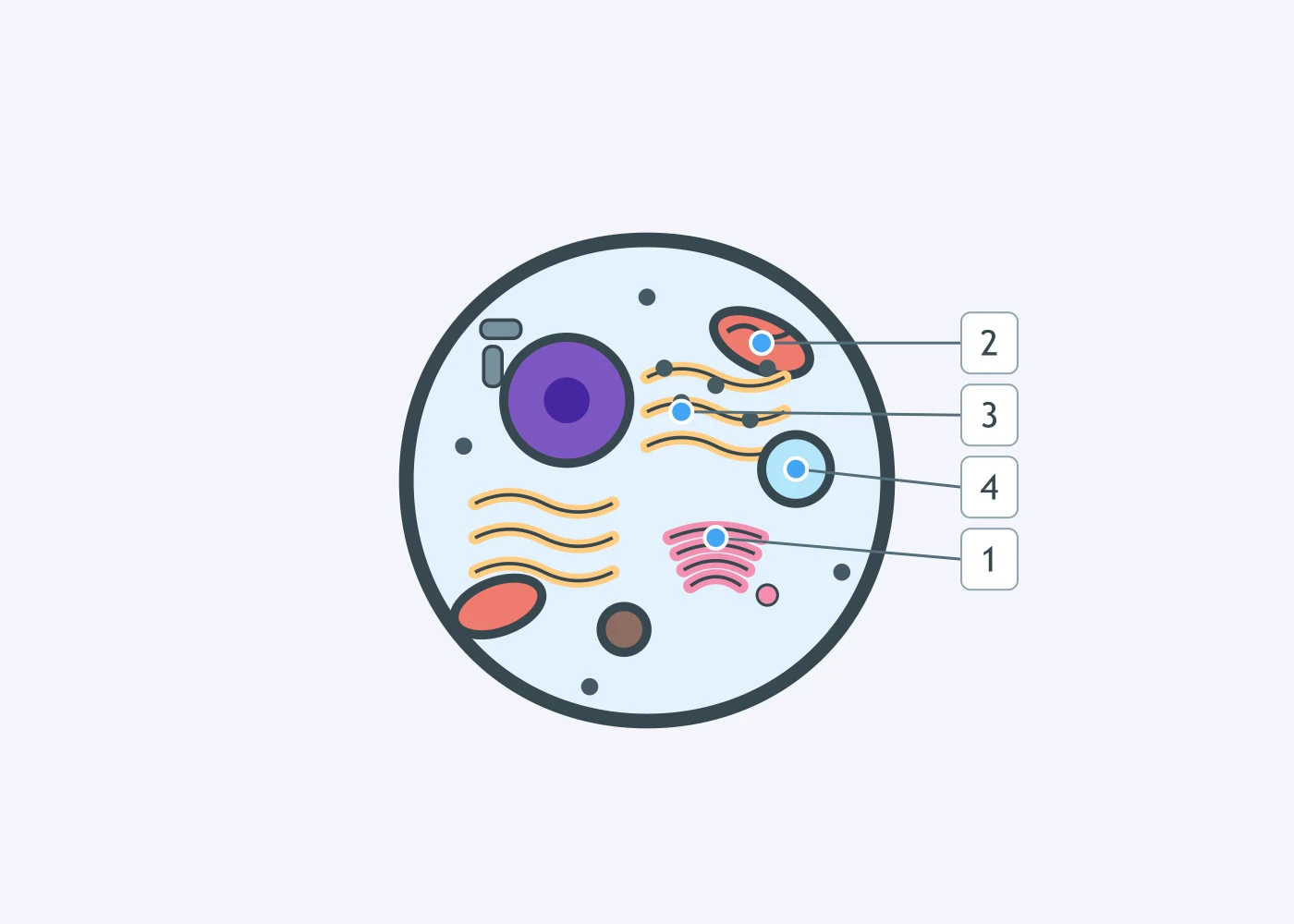
Under a school light microscope at 400x a student can see the wall, nucleus and cytoplasm of an onion cell, but not its ribosomes or its cell membrane. Why not?
In a mature plant cell the nucleus usually lies squashed against the side of the cell, while in an animal cell it usually sits near the middle. What causes the difference?
Inside the nucleus of both plant and animal cells is a dense region where ribosomes are put together. What is it called?
A student draws a cell seen at 400x in a moss leaf and labels three structures. Which labeled structures together show that this is a plant cell and not an animal cell?

Both plant and animal cells are filled with a jelly-like material in which the organelles sit and many of the cell's chemical reactions take place. What is it?
A cheek cell smear is stained with methylene blue and viewed at 400x. Which labeled structure takes up the stain most strongly and is therefore the easiest to find?
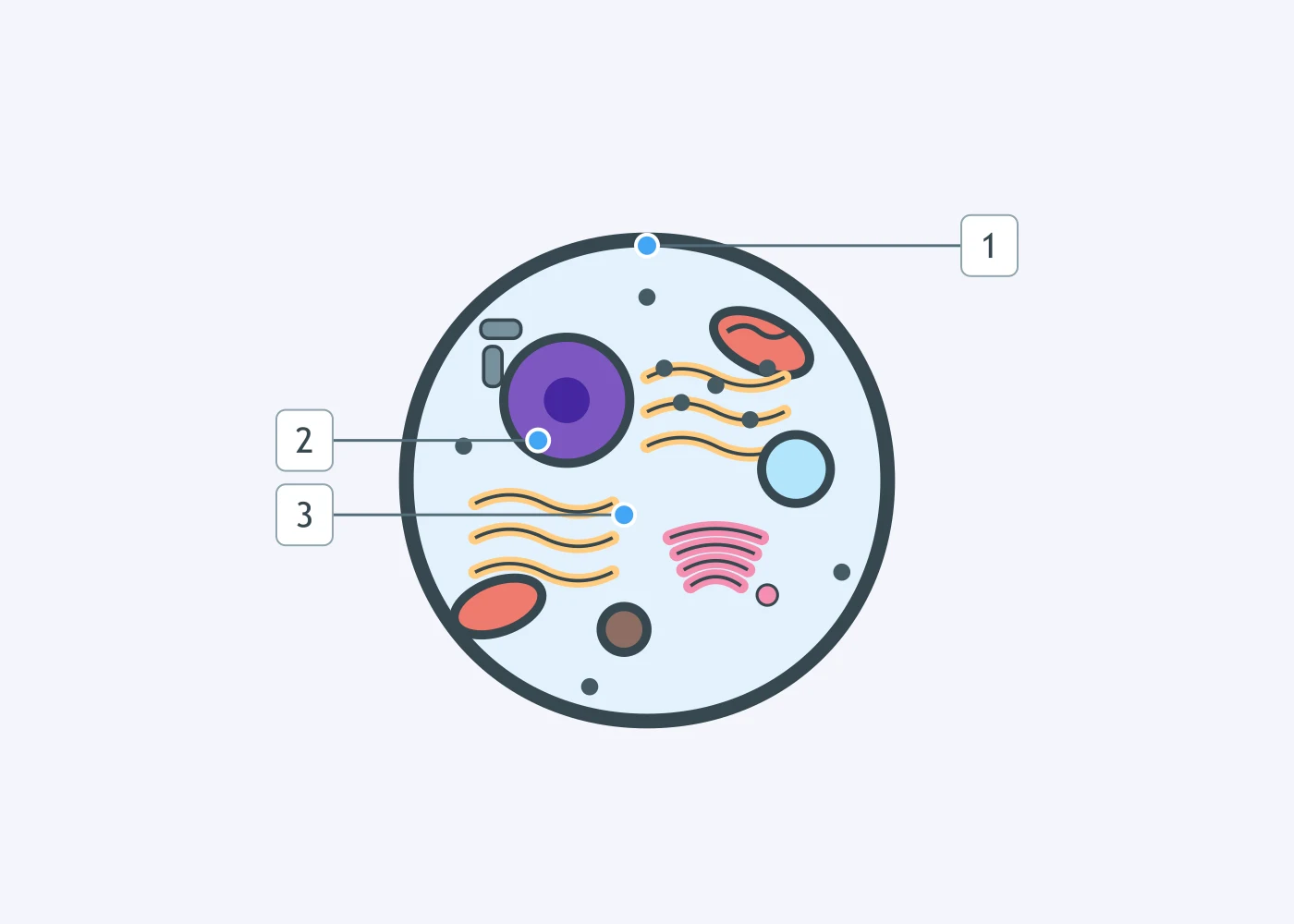
The nucleus is found in both plant and animal cells. What does it do in each?
Which structure, found in both plant and animal cells, is a network of protein fibers that supports the cell from the inside and moves organelles around it?
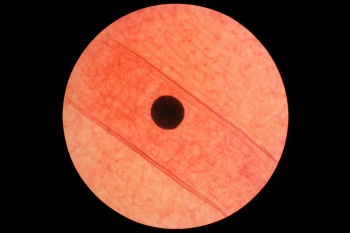
Onion epidermis cells like the one shown look colorless at 400x, and structure 3 looks empty. What explains both observations?
Ribosomes are found only in animal cells.
Cheek cells like the one shown look rounded and lie scattered rather than in rows. Which labeled structure is their only outer boundary, and what does that explain?
Crack the passcode before the zombies get in.
Answer, then swat bugs for bonus points.
Race through questions at your own speed.
Same question on every screen. Fastest wins.

Pick a tile, answer, hit bonuses and steals.
Levels of Biological Organization
20 questions