Loading
by BlastRoom
Read real enzyme-rate data to find the optimum, explain the drop after it, and predict the next result.
#biology
20 questions
One question set, multiple game modes. Tap any game to see it in action. Not sure which to pick?
Answer to place stones and capture territory.
Outrun the snow together.
Earn blasts, then hunt the other team.
Answer to earn energy, then climb.

The class blasts through walls together.
Bid on mystery lots. Most money wins.
Sell tours. Nice, standard, or a total scam.

Answer, restock, and serve the rush.
More correct answers pulls the rope your way.
Answer, then shoot down the alien wave.
Answer, then tap to leap the frozen ridge.
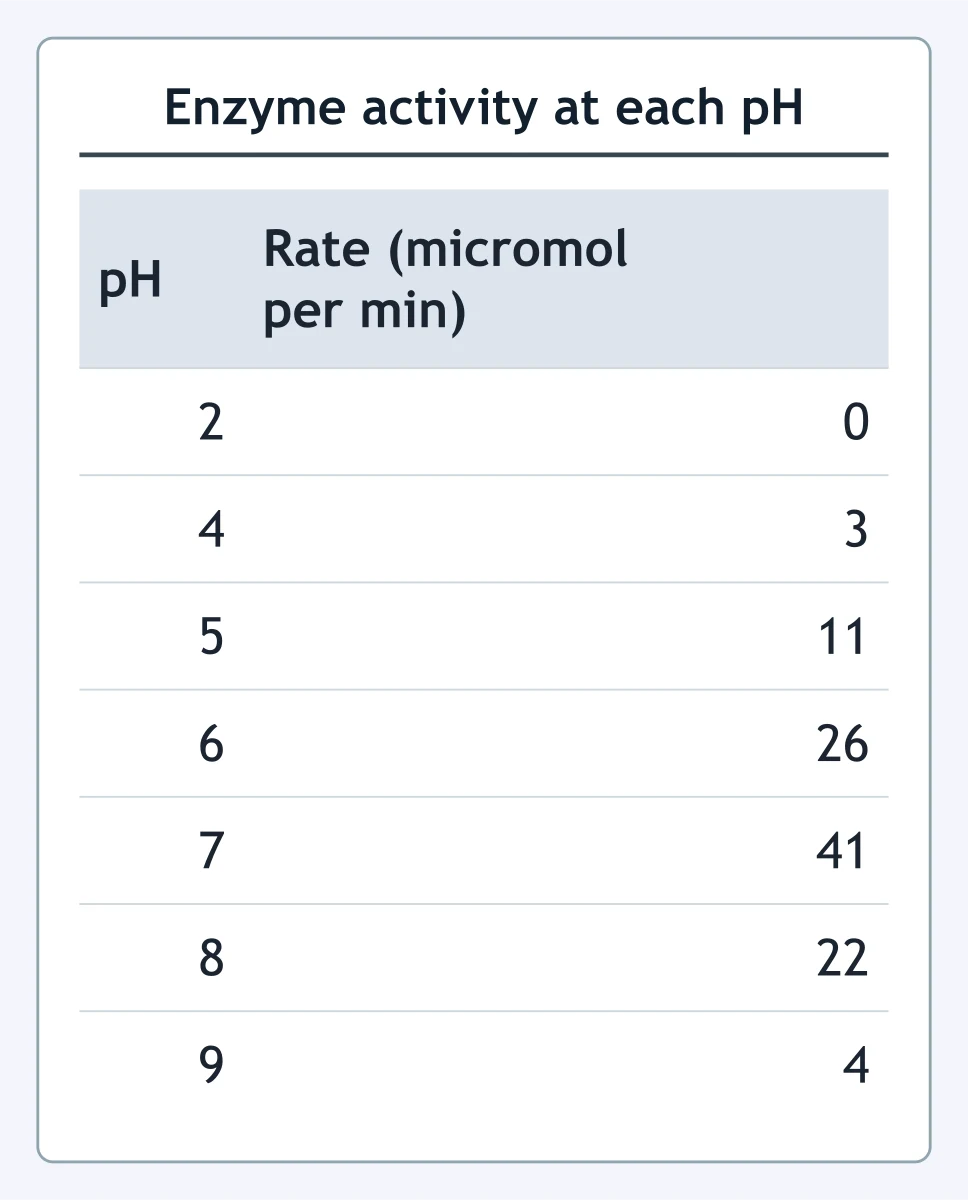
The table shows how fast one enzyme converted its substrate at seven different pH values. At which pH does this enzyme work fastest, and what is that pH called?
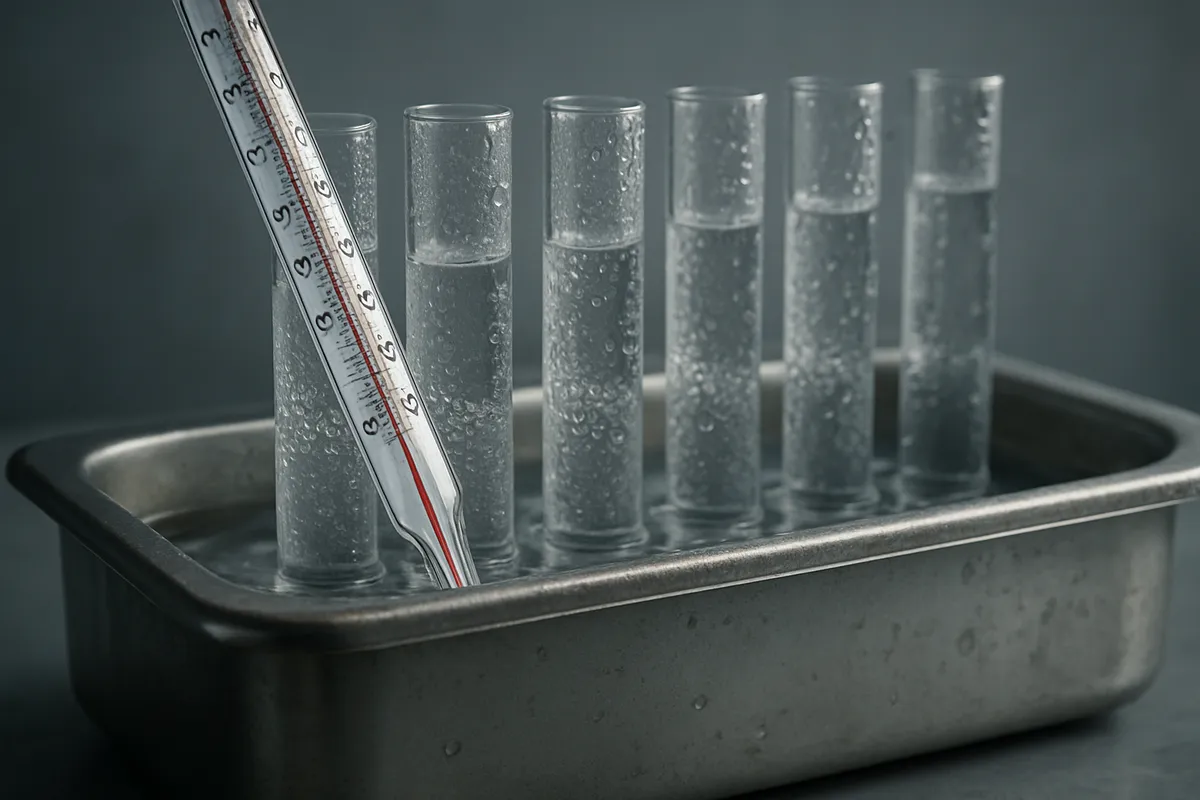
A technician needs the fastest possible reaction from this enzyme. Use the graph. Which temperature should she run the reaction at, and why?
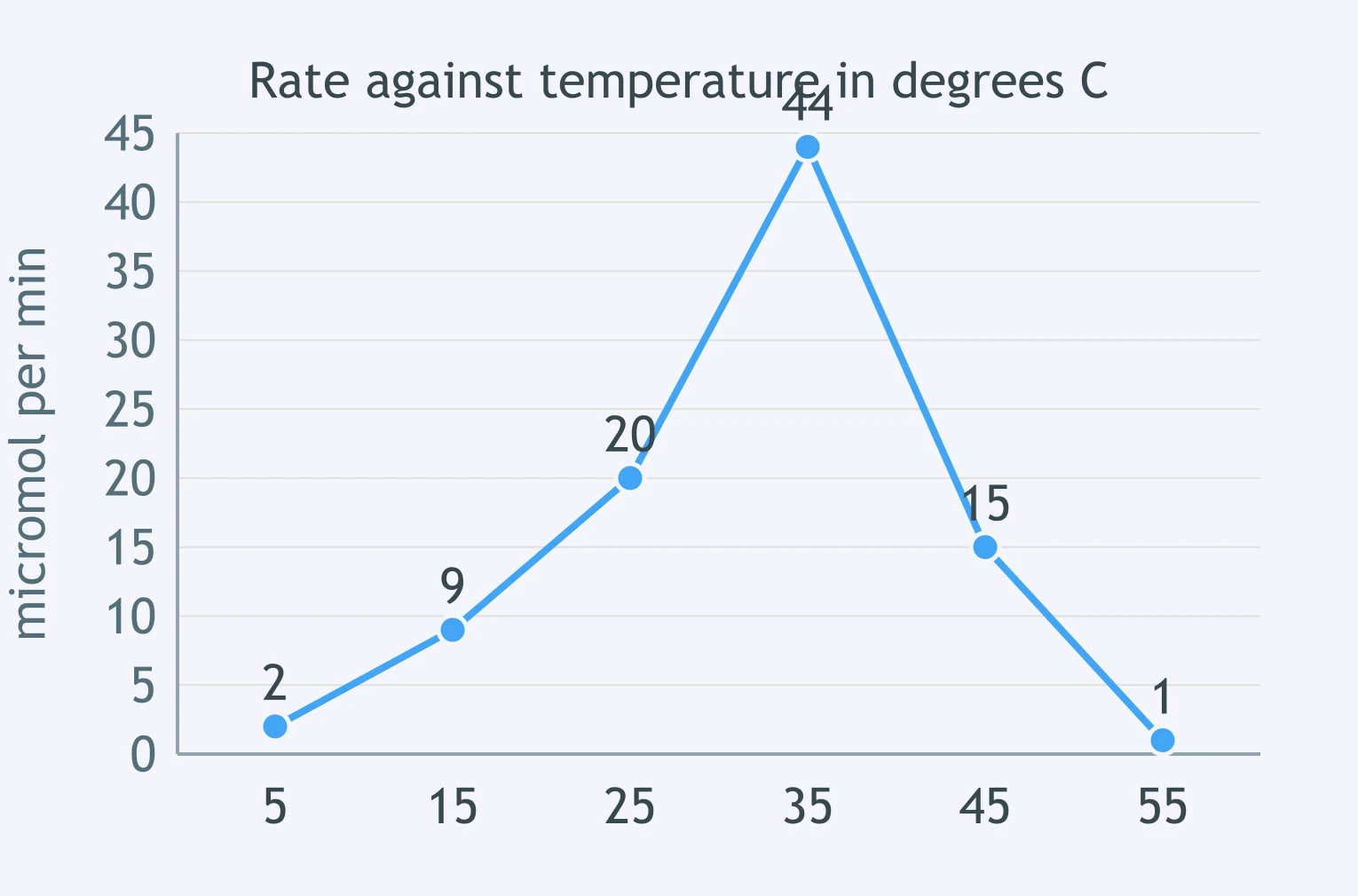
Look at the table of reaction rates. Which statement about this enzyme's optimum pH is correct?
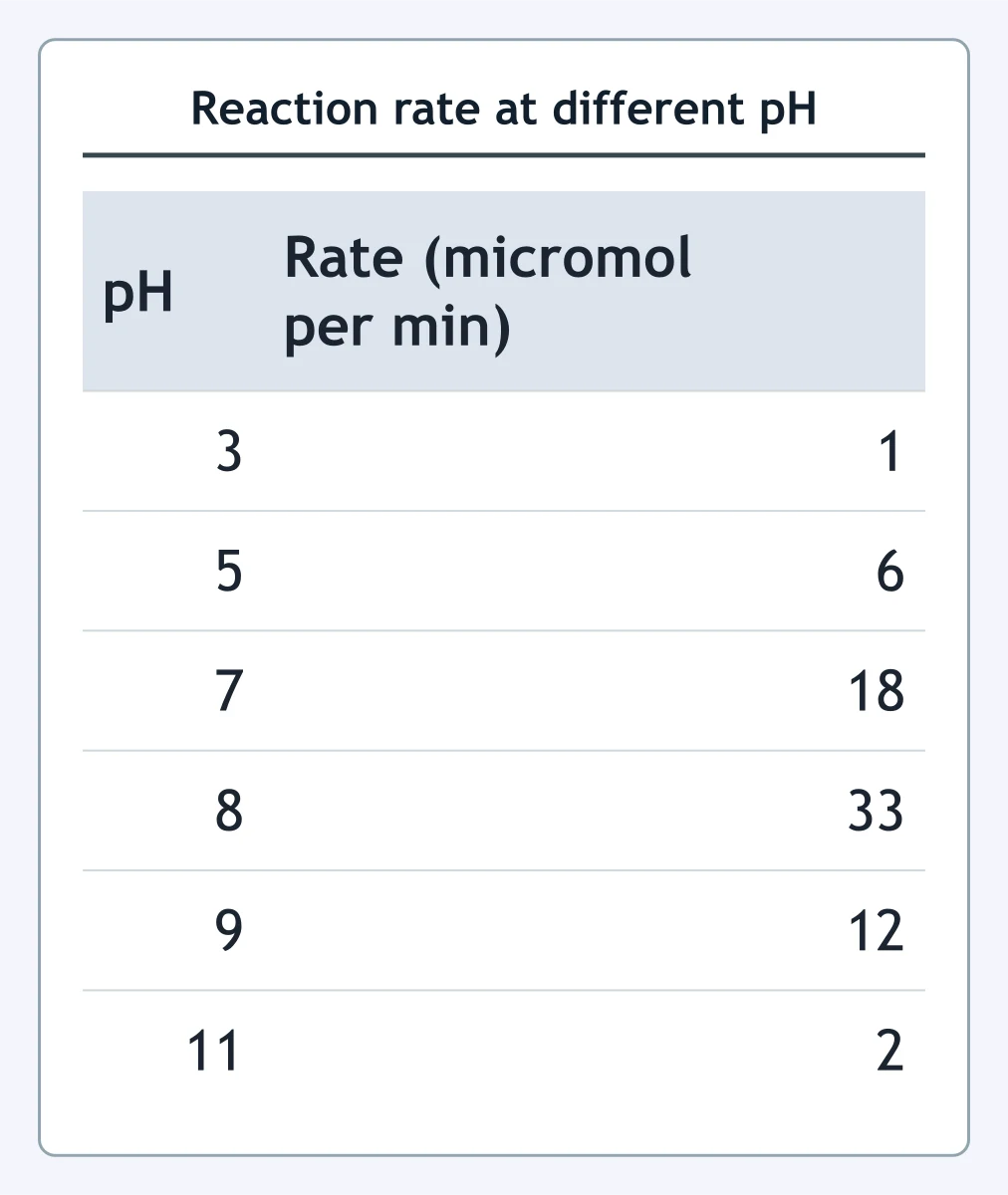
A student is choosing a buffer in which to run this stomach enzyme so that it digests protein as fast as possible. Use the graph. Which buffer should she choose, and what does the peak show?
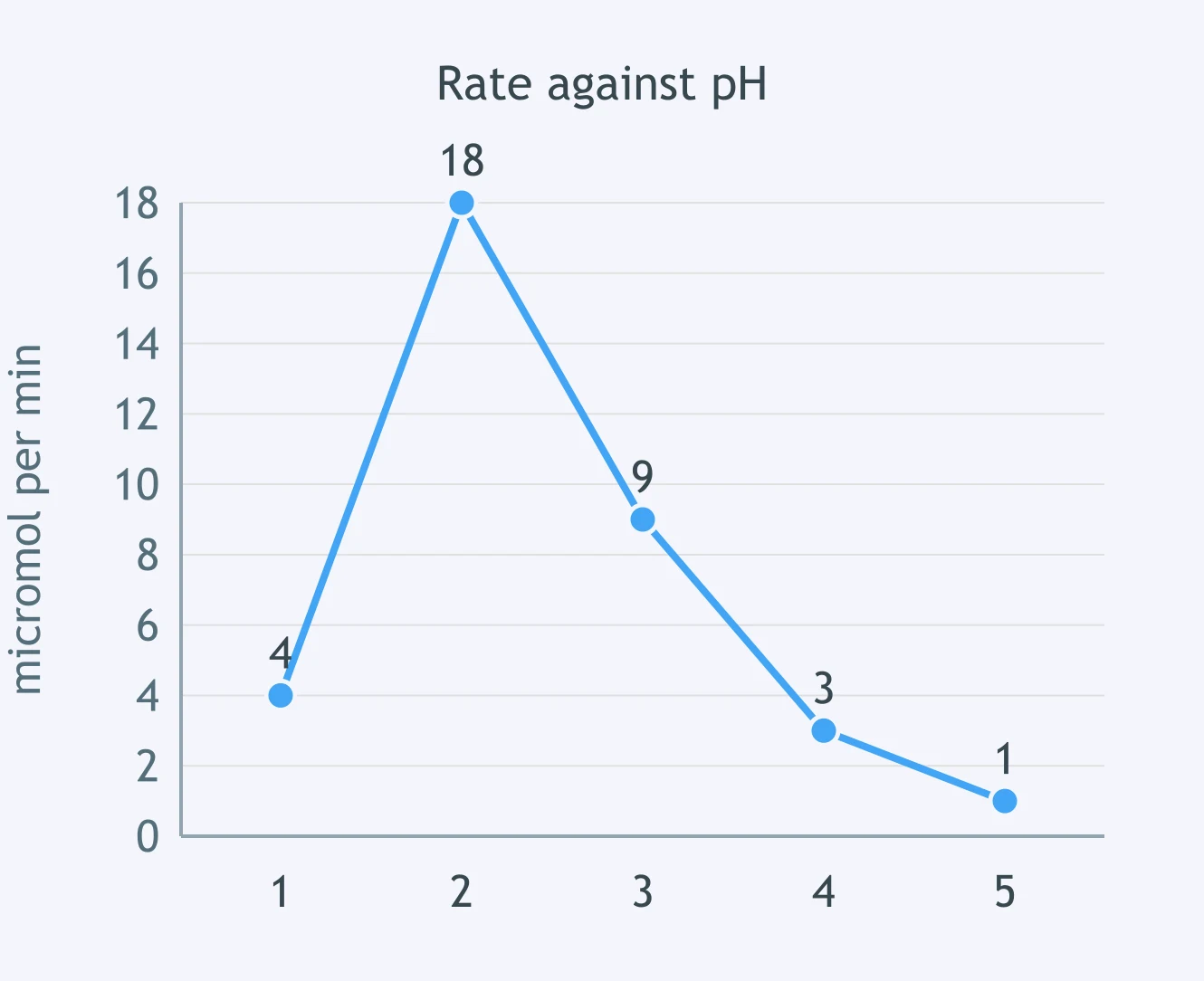
The table shows the activity of an enzyme from a hot-spring bacterium at seven temperatures. Which reading is this enzyme's optimum temperature?
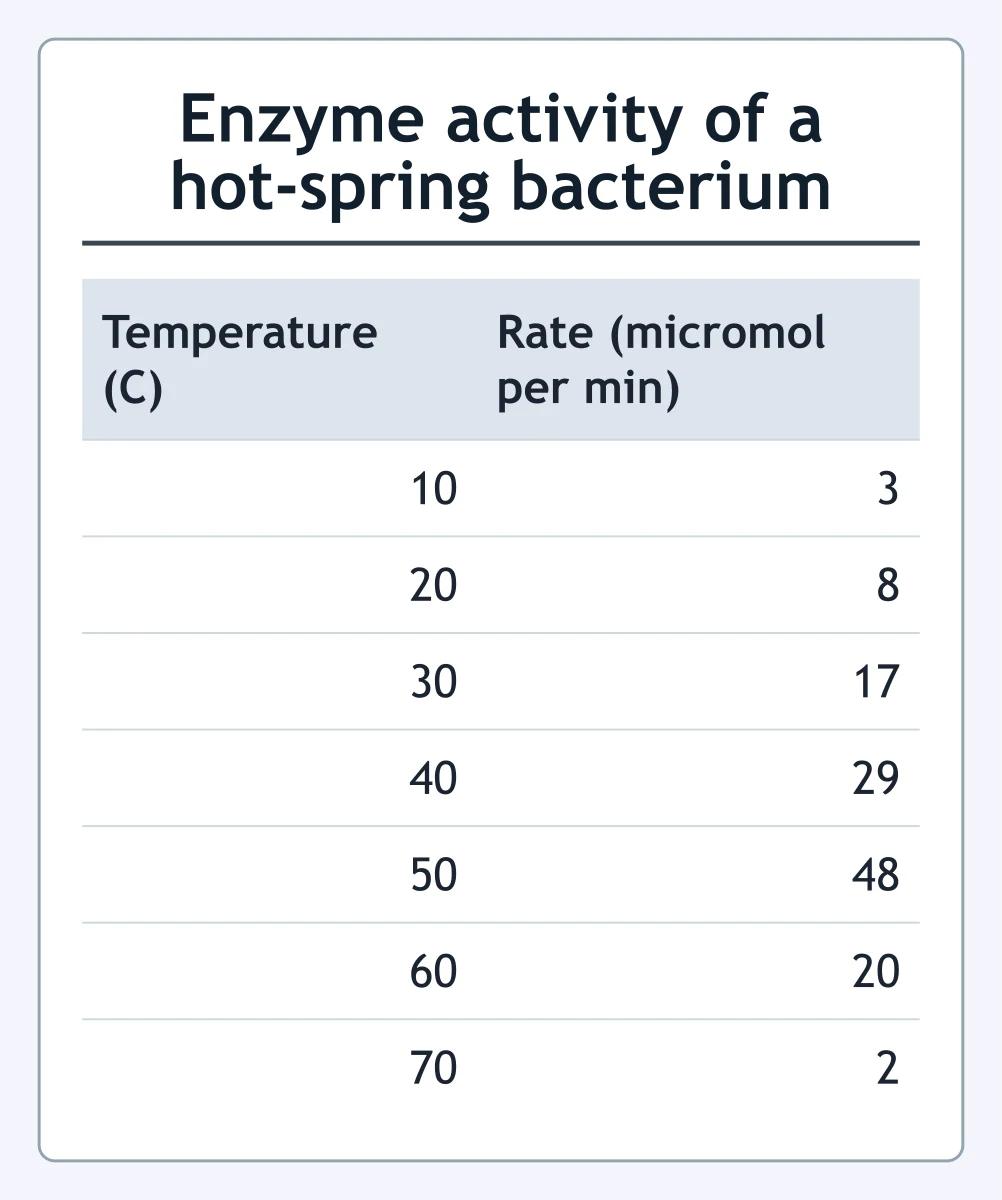
Use the graph of this human enzyme. On the left of the peak the rate climbs, but past the peak it drops steeply. What is happening to the enzyme molecules on the falling side?
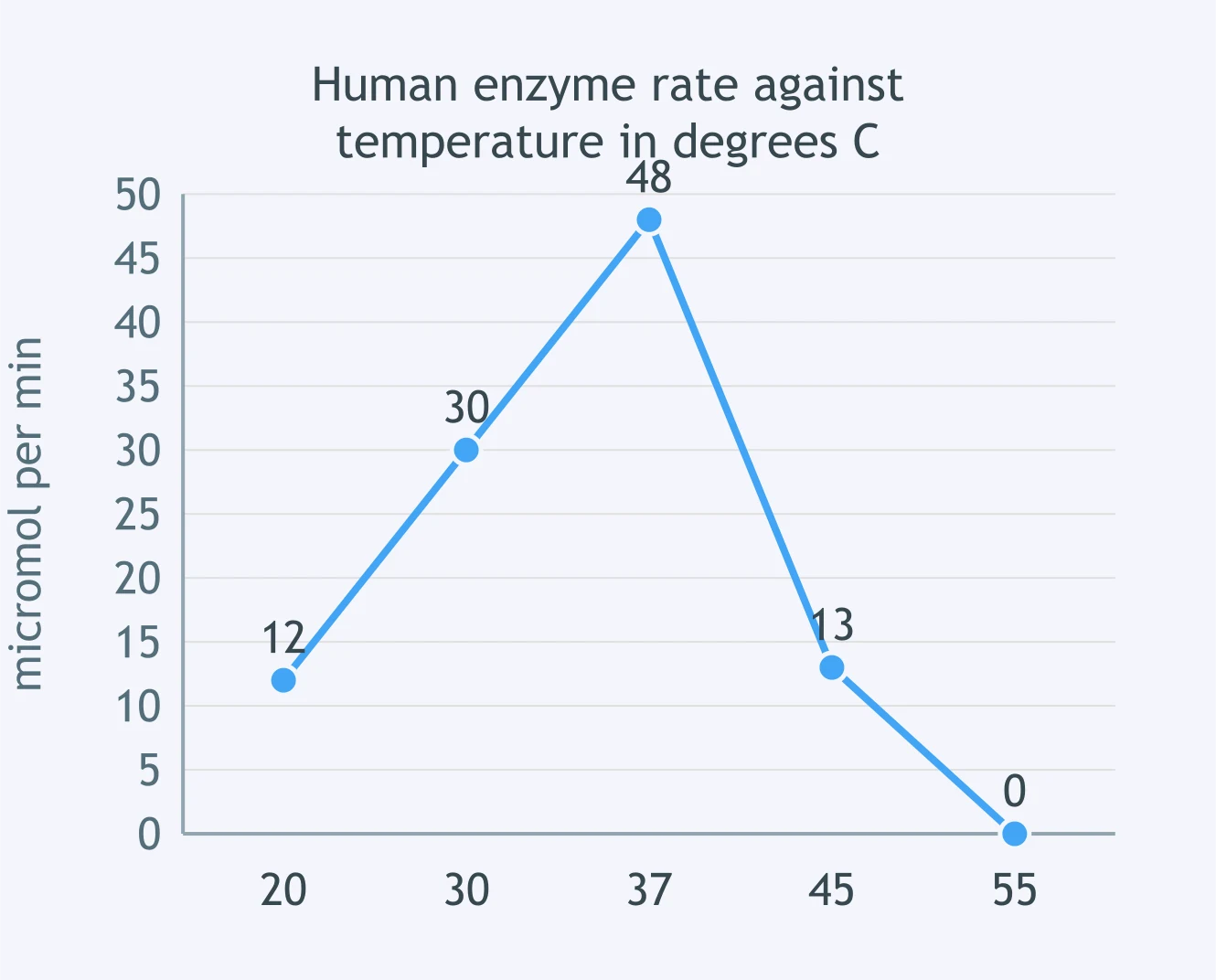
The table shows this enzyme's rate at six pH values. A sample held at the highest pH tested was afterwards returned to pH 7, and it still produced no product. What does that result show?
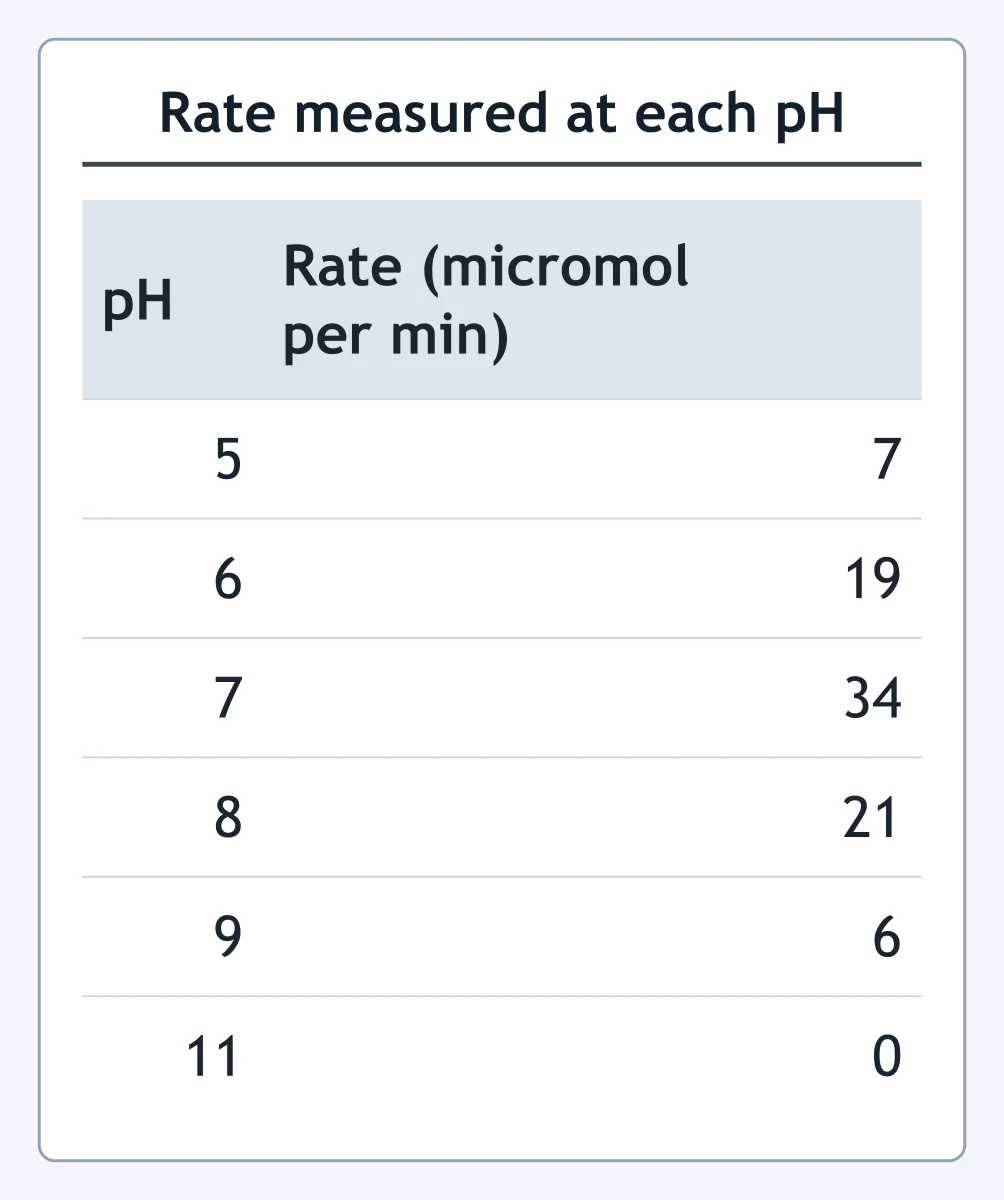
Use the graph. The rate at the highest temperature tested is lower than the rate at the lowest temperature tested. Which statement accounts for that comparison?
A protease works fastest at 37 degrees C. A sample is heated to 70 degrees C for ten minutes, cooled back to 37 degrees C, and given fresh protein substrate. It digests almost none. Why?
An enzyme's temperature curve is not symmetrical: the rate climbs gradually up to the optimum but collapses over just a few degrees above it. Why are the two sides so different?
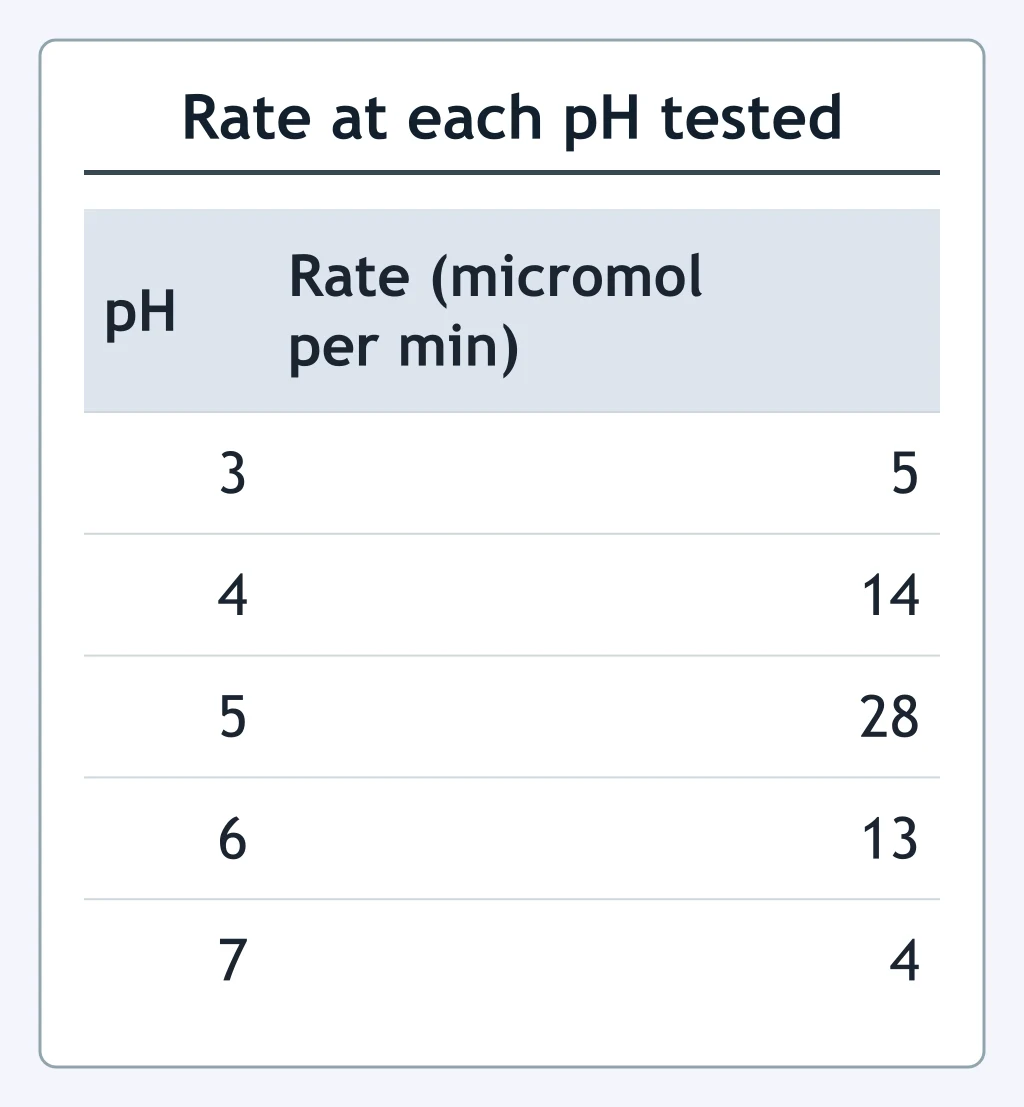
A student measured this enzyme's rate at five whole pH values, shown in the table. She now runs the same reaction at pH 4.5. What is the most reasonable prediction, and why?
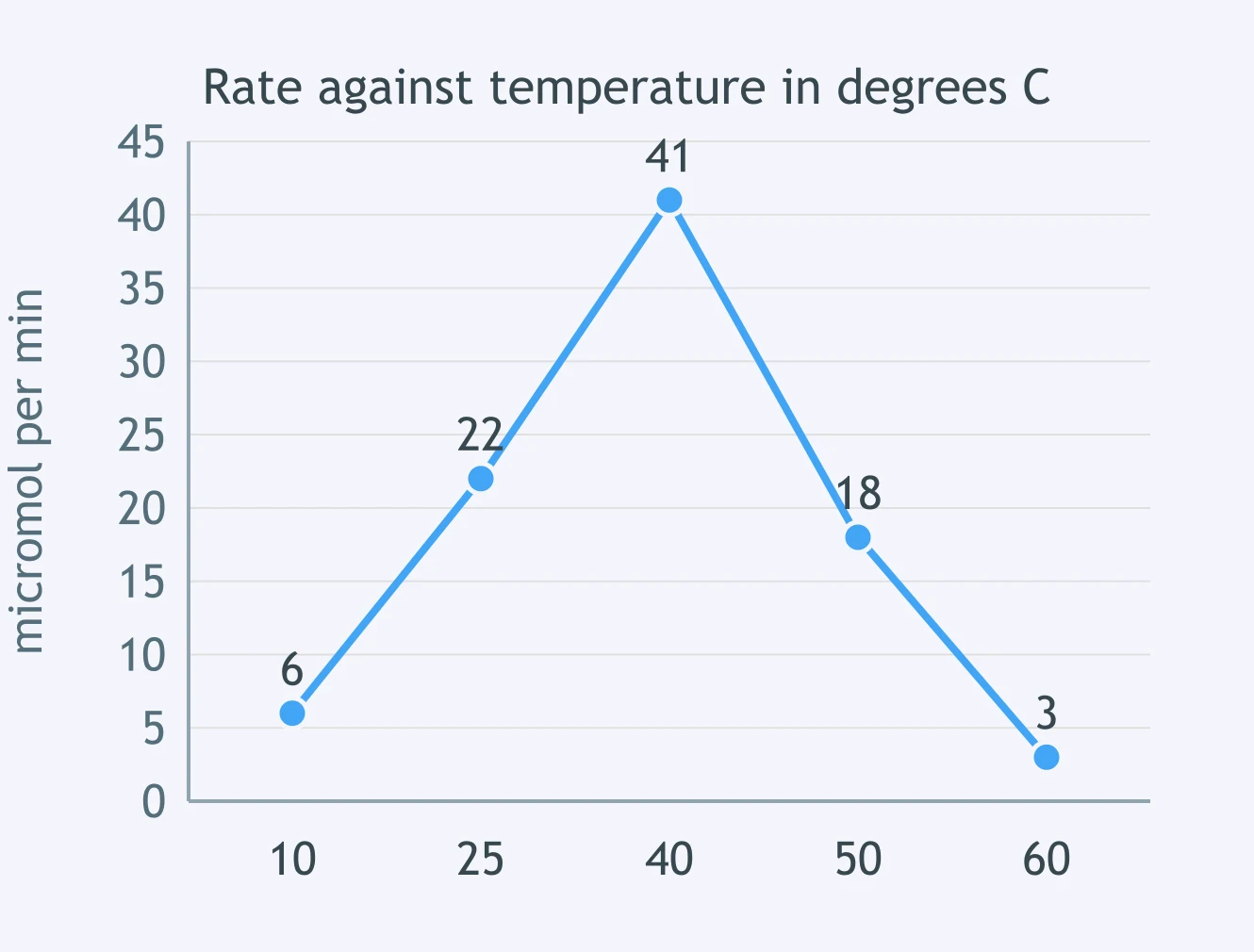
Use the graph of this plant enzyme. The class now repeats the reaction at 60 degrees C, a temperature not yet tested. What should they predict, and why?
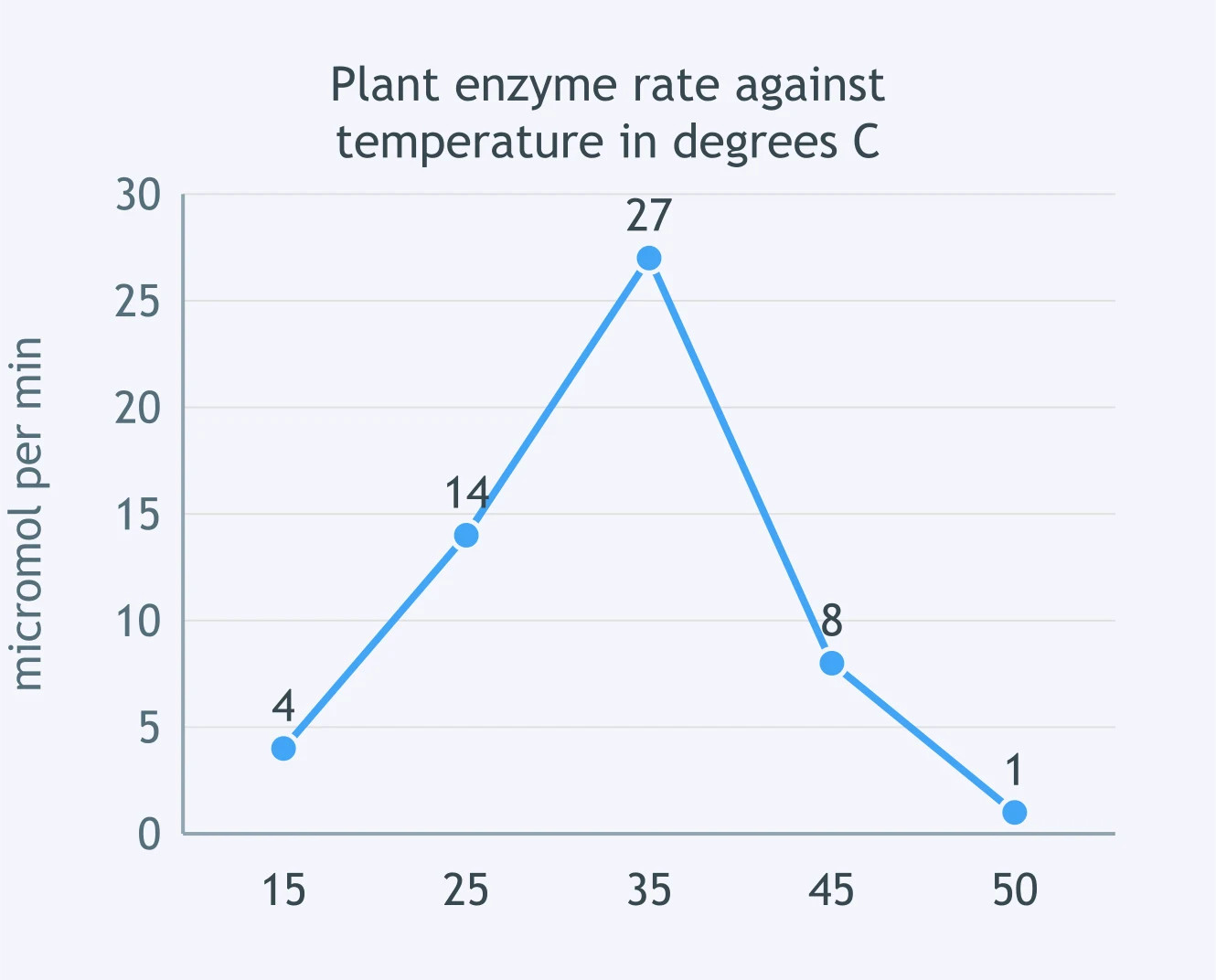
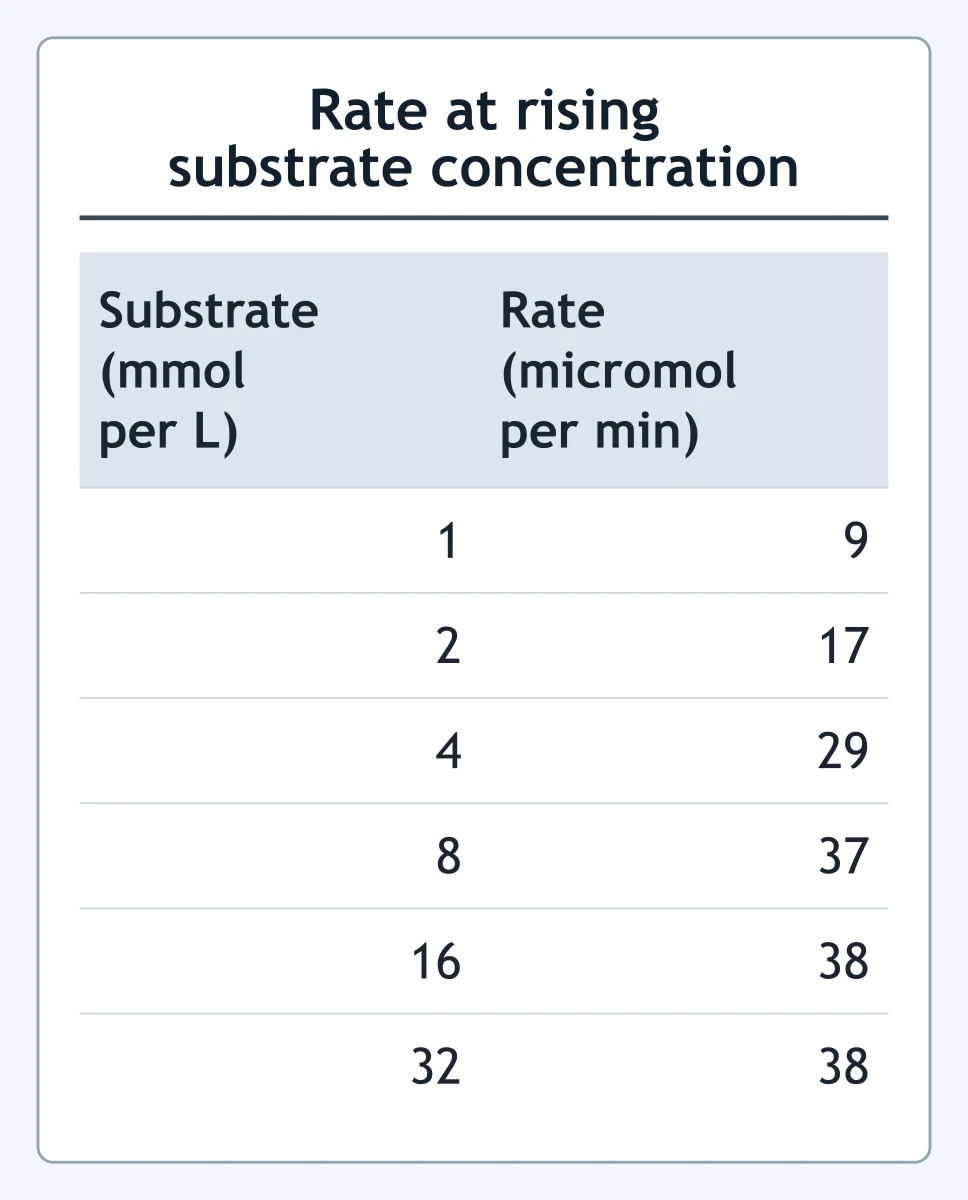
The amount of enzyme was held constant while substrate concentration was raised, as the table shows. The student now runs the reaction at 64 mmol per L. What should she predict?
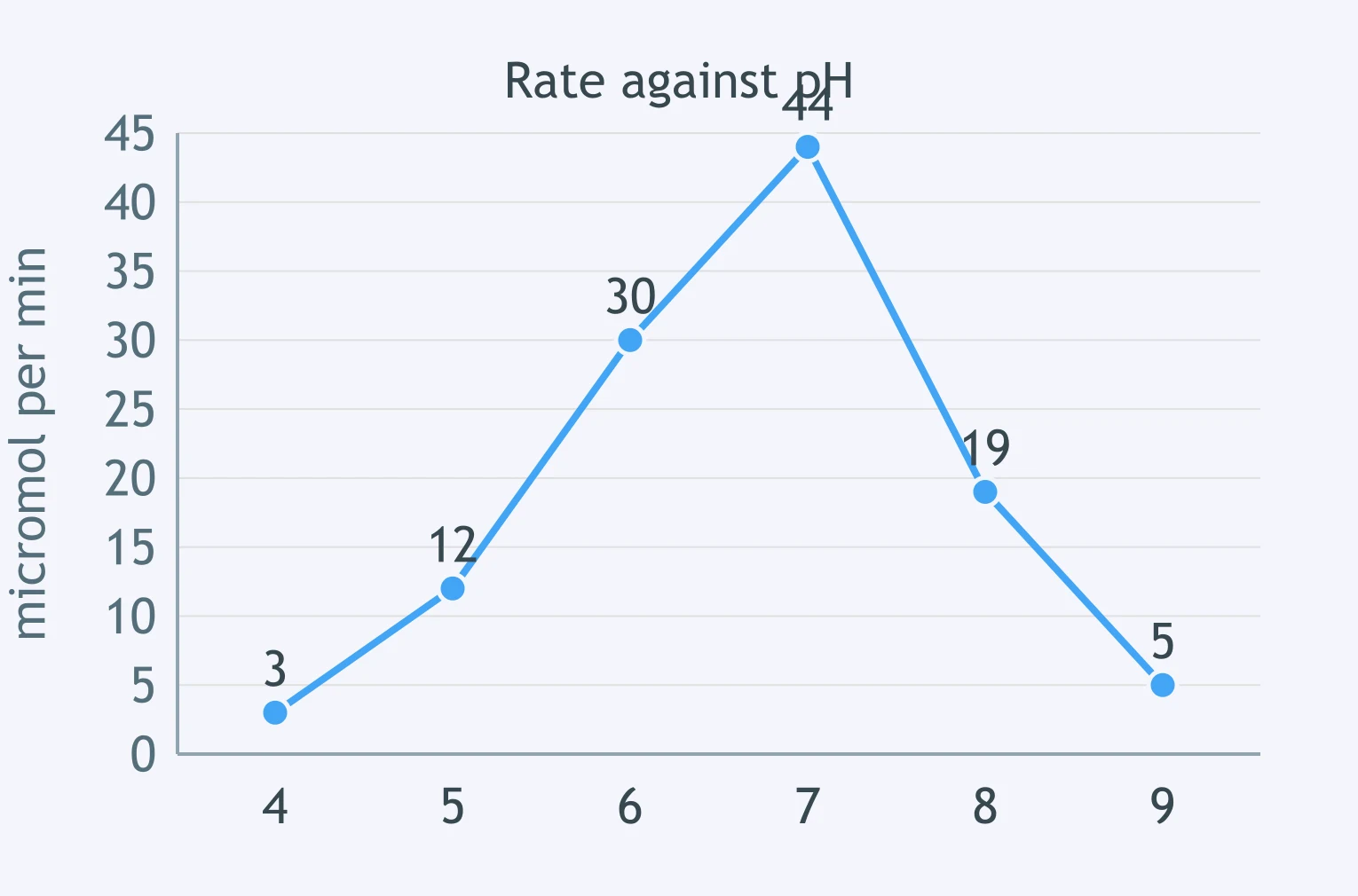
Use the graph. A group now runs this reaction at pH 6.5, between two of the tested values. What is the most reasonable prediction, and why?
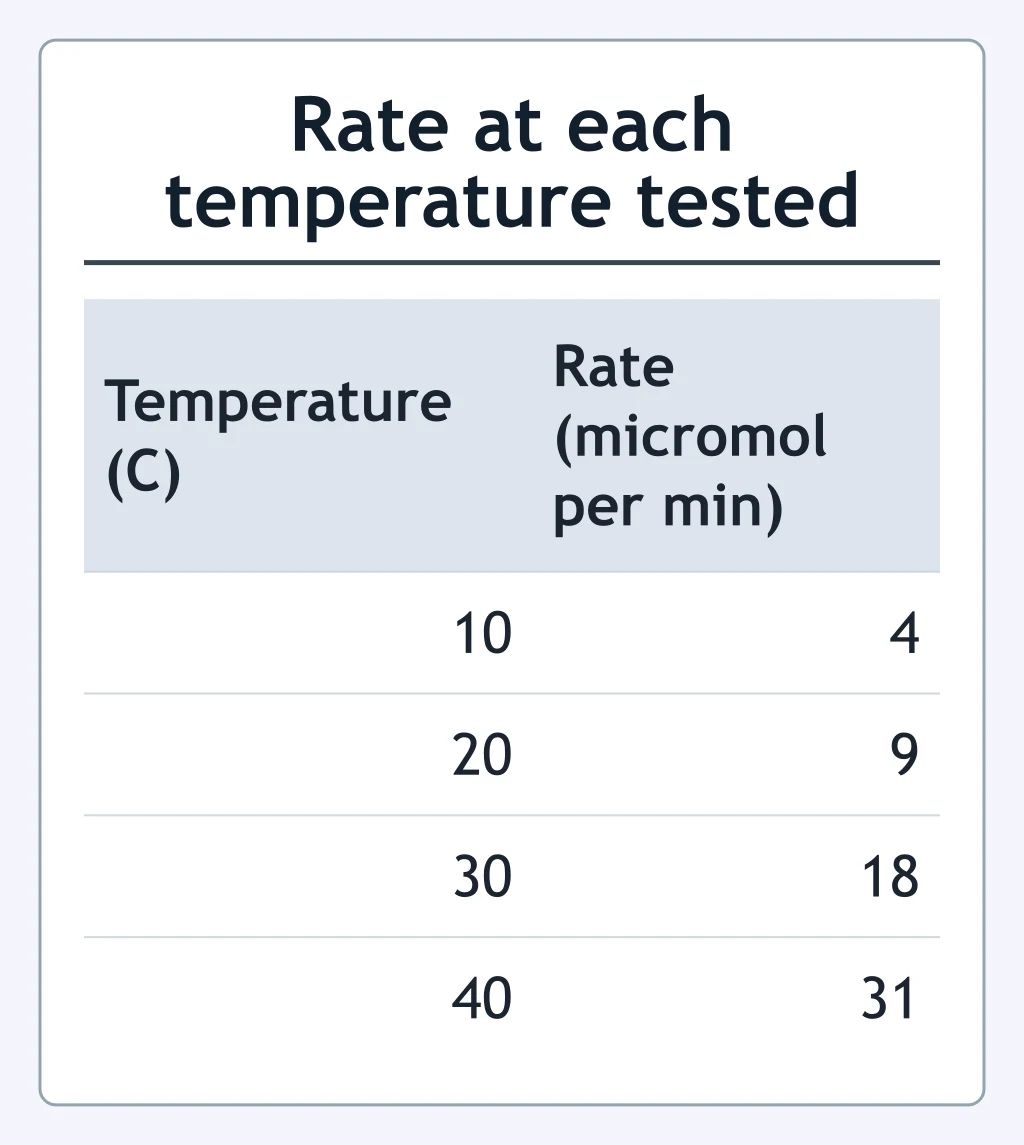
A class tested this enzyme only over the range shown in the table, and the rate rose at every step. Another group then ran the same reaction at 60 degrees C and collected almost no product. Is that result consistent with the table?
The enzyme concentration was kept constant while substrate concentration was raised, as the table shows. Why does the rate stop rising at the top of the range?
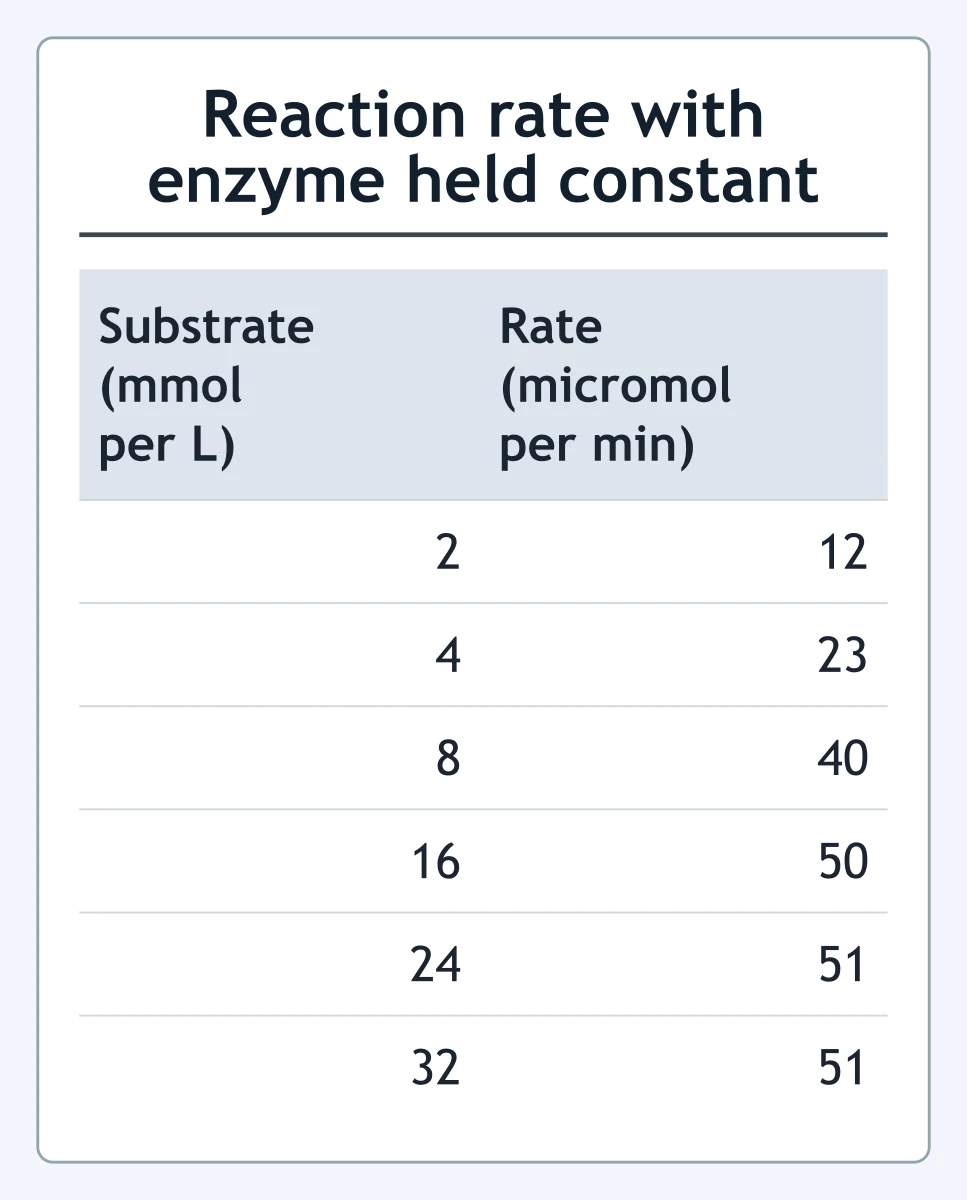
Use the graph. The reaction is already at the flat part of the curve. Which change would raise the rate further, and why?
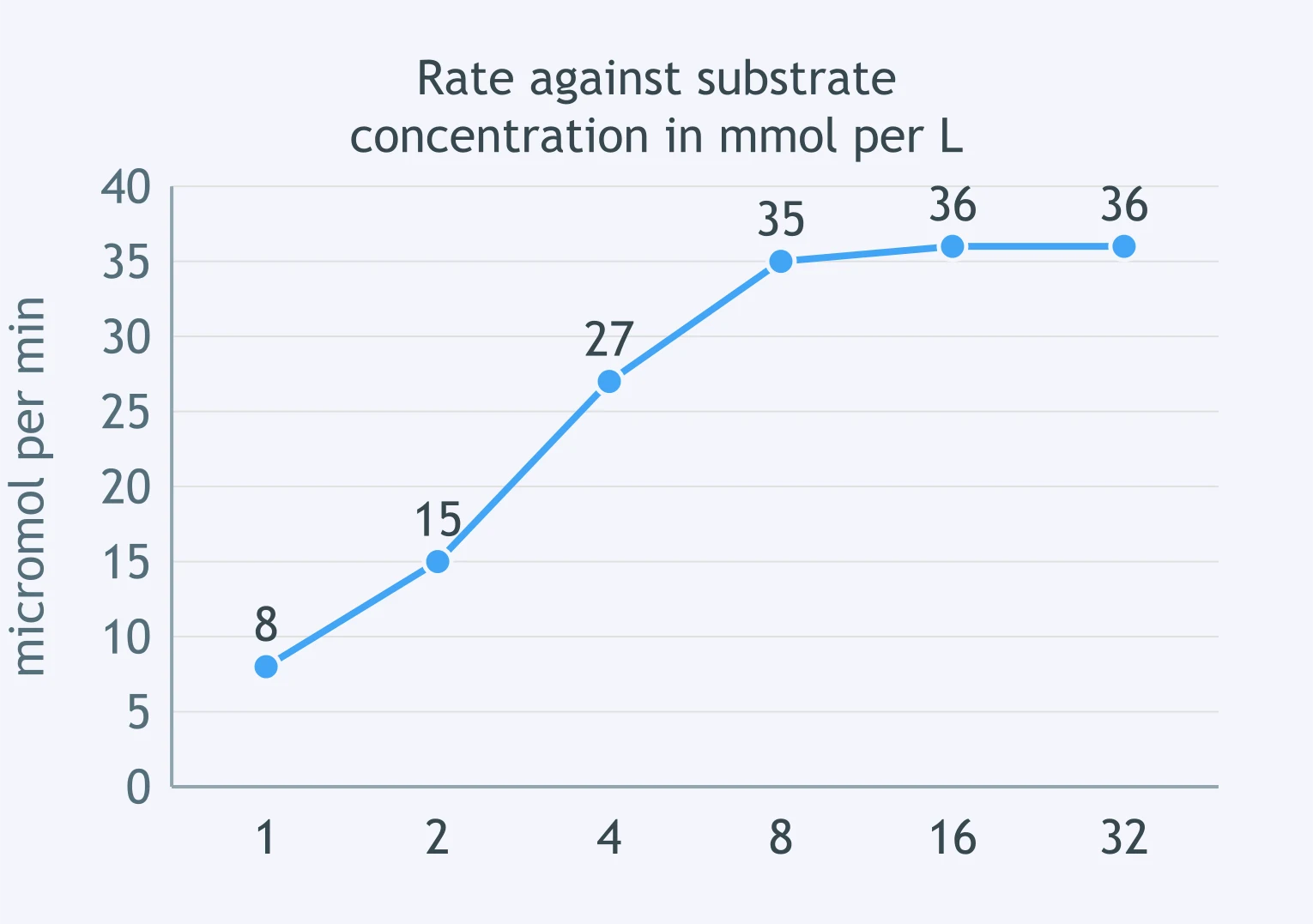
The table shows rates measured at rising substrate concentrations with temperature, pH and enzyme amount all held constant. At the two highest concentrations, what is limiting the rate?
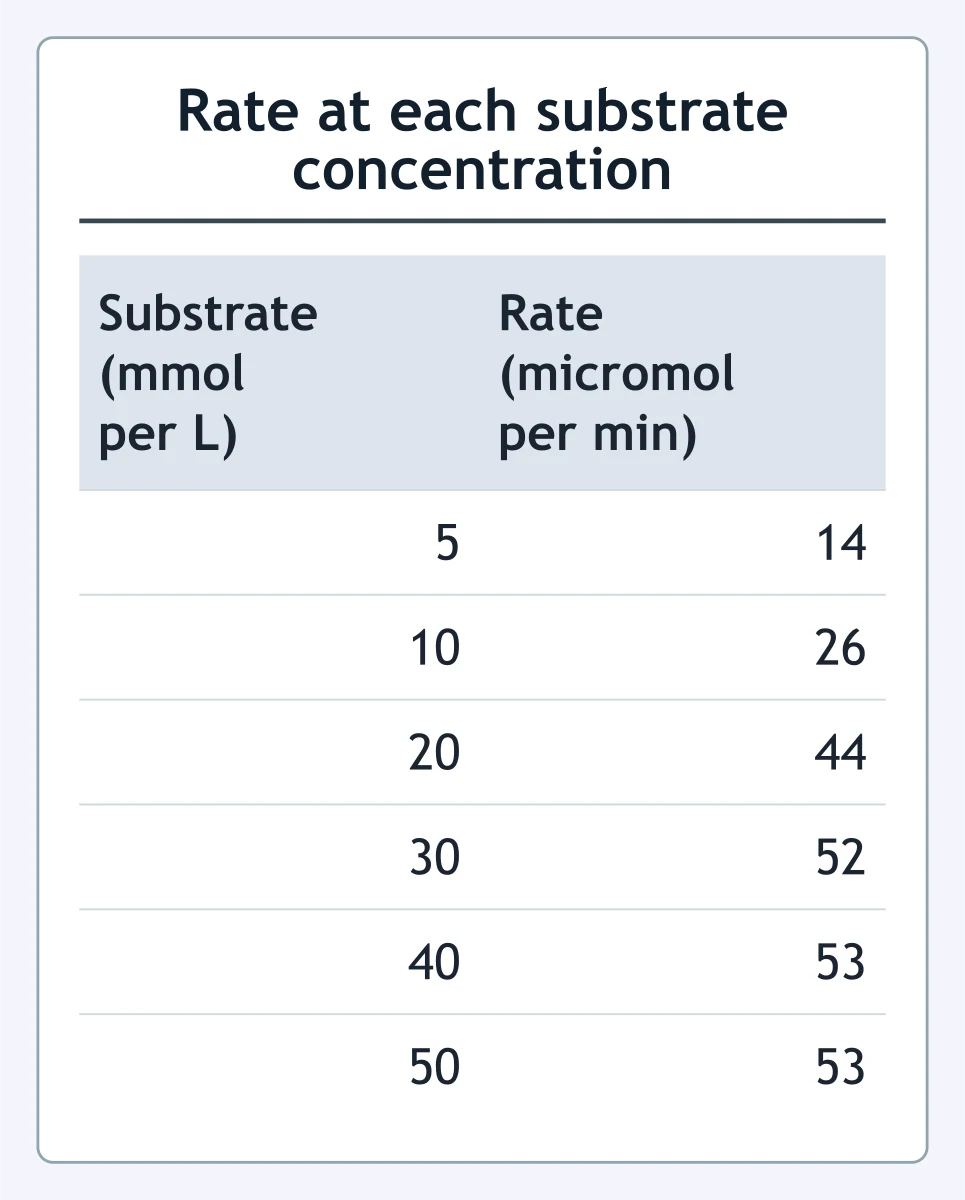
In a saturated enzyme reaction, doubling the substrate again produces no extra product per minute, but doubling the enzyme nearly doubles the rate. Why do the two changes have different effects?
On a substrate concentration graph the rate climbs almost in step with concentration at first, then flattens into a plateau. Why do the two parts of the curve behave so differently?
Crack the passcode before the zombies get in.
Answer, then swat bugs for bonus points.
Race through questions at your own speed.
Same question on every screen. Fastest wins.

Pick a tile, answer, hit bonuses and steals.
Cell Organelles and Their Functions
40 questions