Loading
by BlastRoom
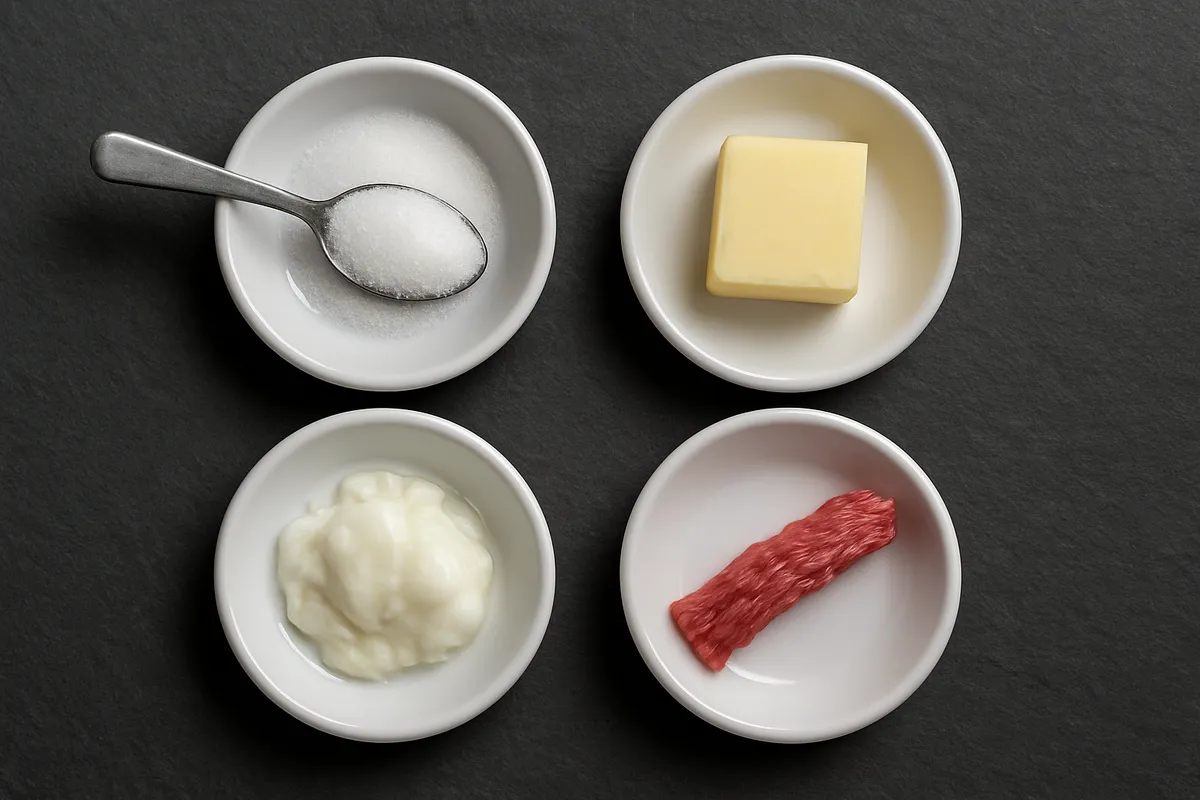
Sort carbohydrates, lipids, proteins and nucleic acids by their elements, monomers, functions and where you find them.
#biology
40 questions
One question set, multiple game modes. Tap any game to see it in action. Not sure which to pick?
Answer to place stones and capture territory.
Outrun the snow together.
Earn blasts, then hunt the other team.
Answer to earn energy, then climb.

The class blasts through walls together.
Bid on mystery lots. Most money wins.
Sell tours. Nice, standard, or a total scam.

Answer, restock, and serve the rush.
More correct answers pulls the rope your way.
Answer, then shoot down the alien wave.
Answer, then tap to leap the frozen ridge.
Starch, glycogen and cellulose are all long chains assembled from the same kind of repeating unit. What is that unit?
A protein chain is taken apart completely into its individual repeating units. What are those units called?
DNA and RNA are both polymers. Which monomer are they built from?
A chemist takes a polymer from a cell apart and finds about 20 different kinds of monomer in the mixture. Which macromolecule group did the polymer come from?
Lipids are the group that does not form a true polymer of identical units. A triglyceride, a common fat, is assembled from which units?
Glycogen is the polymer that liver and muscle cells store. When a cell breaks glycogen down, which monomer is released into the blood?
Which pairing of a monomer with a polymer it builds is correct?
Starch is the main energy-storage polysaccharide in plants, while glycogen fills that role in animals.
Every macromolecule group contains carbon, hydrogen and oxygen. Which group's monomers always contain nitrogen as well, with sulfur in a few of them?
A student is given a sample of starch and a sample of DNA. Which element is present in the DNA but absent from the starch?
Glucose has the formula C6H12O6, and sucrose has the formula C12H22O11. In carbohydrates generally, hydrogen and oxygen appear in about which ratio?
A sample is analyzed and found to contain only carbon, hydrogen and oxygen, with very few oxygen atoms for the number of carbon atoms in its long chains. Which group is it from?
Nitrogen is not found in every macromolecule group. Which two groups contain nitrogen in all of their building blocks?
A student compares a glucose molecule with a fatty acid chain from a fat. Which statement about their elements is accurate?
The middle of a cell membrane is packed with the hydrocarbon tails of phospholipids, which do not mix with water. What does this structure mean for a water-soluble molecule such as glucose?
Human digestive enzymes break starch down into glucose but leave the cellulose in celery untouched, even though both are glucose polymers. What accounts for the difference?
An enzyme folds so that a pocket on its surface fits the shape of one particular molecule. What does that structure explain about how enzymes work?
Heating a protein to a high temperature unfolds its three-dimensional shape without breaking the chain into separate amino acids. Why does the protein stop doing its job?
Hemoglobin folds into a shape that holds four iron-containing groups, each able to grip one oxygen molecule and release it later. What general point about proteins does this illustrate?
In DNA the bonds holding the two strands to each other are much weaker than the bonds running along each strand's backbone. How does this arrangement help a cell copy its DNA?
The sugar-phosphate backbone of a DNA molecule repeats identically along its whole length, while the bases attached to it vary. Which part of the molecule carries the cell's information?
Fatty acid tails with double bonds have kinks and cannot pack closely; tails with no double bonds are straight and pack tightly. Which is liquid at room temperature, and why?
The upper surface of a leaf is coated with a waxy layer of lipid that water will not mix with. What does this structure do for the plant?
The roughly 20 amino acids share the same backbone but differ in their side groups. How does this produce the huge variety of proteins a cell makes?
A migrating bird must carry fuel for a long flight while adding as little mass as possible. Which macromolecule group does it store for the trip, and why?
A sprinter needs energy released quickly at the start of a race. Which macromolecule group supplies the cell's fastest fuel?
A skin cell and a nerve cell in the same person build different proteins. Which macromolecule group holds the instructions for which proteins get built?
Nearly every reaction in a cell is sped up by a catalyst that lowers the activation energy needed to start it. Which macromolecule group are those catalysts drawn from?
A plant cell keeps its shape and resists bursting because of a rigid wall outside its membrane. Which macromolecule group is that wall built from?
The basic sheet that every cell membrane is built on is a double layer of one kind of molecule. Which macromolecule group does that molecule belong to?
Testosterone and estrogen are steroids released by one organ and carried in the blood to change activity in another. Which group do they belong to, and what job are they doing?
Antibodies that recognize a virus, and the keratin that makes hair and fingernails tough, are both examples of the same macromolecule group. Which one?
A gene stays in the nucleus, but the ribosome that builds the protein sits in the cytoplasm. Which molecule carries the copy of the gene's message from one to the other?
A student claims that all four macromolecule groups exist mainly to supply the cell with energy. Which group's main role most clearly contradicts that claim?
Fats and oils are polymers built from long chains of one identical repeating monomer, the same way starch is.
Two glucose molecules are joined together to make the double sugar maltose, and a molecule of water is released as the bond forms. What is this reaction called?
A person eats a potato. In the digestive tract, a molecule of water is added at each bond as the starch is taken apart. What is happening, and what is the result?
A ribosome joins five amino acids into a single chain, releasing one water molecule for every bond it forms. How many water molecules are released in all?
Hydrolysis and dehydration synthesis are opposite reactions: one uses a water molecule to split a polymer, and the other releases a water molecule as a polymer is built.
When one amino acid is joined to the next in a growing chain, what is the name of the bond that forms between them?
Crack the passcode before the zombies get in.
Answer, then swat bugs for bonus points.
Race through questions at your own speed.
Same question on every screen. Fastest wins.

Pick a tile, answer, hit bonuses and steals.
Enzymes and How They Work
20 questions