Loading
by BlastRoom
Follow substrate, active site and activation energy through catalysis, and work out what denatures an enzyme.
#biology
20 questions
One question set, multiple game modes. Tap any game to see it in action. Not sure which to pick?
Answer to place stones and capture territory.
Outrun the snow together.
Earn blasts, then hunt the other team.
Answer to earn energy, then climb.

The class blasts through walls together.
Bid on mystery lots. Most money wins.
Sell tours. Nice, standard, or a total scam.

Answer, restock, and serve the rush.
More correct answers pulls the rope your way.
Answer, then shoot down the alien wave.
Answer, then tap to leap the frozen ridge.
Amylase breaks down starch but has no effect on cellulose, even though both are long chains of glucose. What best accounts for this?
As a substrate enters an enzyme's active site, the enzyme shifts shape slightly so that it grips the substrate more closely. What is this adjustment called?
A mutation changes one amino acid inside an enzyme's active site. The rest of the protein folds normally. What is the most likely effect on the enzyme?
Two enzymes are present in the same cell, at the same temperature and pH, yet each acts on a completely different substrate. Which difference between them explains this?
A single enzyme can catalyze any reaction in a cell, as long as the molecules involved are small enough to reach it.
A cell reaction runs very slowly at 37 degrees Celsius. With its enzyme present, the same reaction runs thousands of times faster at the same temperature and forms exactly the same products. What has the enzyme done?
A reaction releases energy as it proceeds. An enzyme is added and the reaction goes much faster. Compared with the same reaction without the enzyme, how much energy is released overall?
Two identical tubes hold the same reactants. The tube with enzyme reaches its final amount of product in 3 minutes; the tube without enzyme reaches the same amount after 24 hours. What does this comparison show?
In a chemical reaction, what does the term activation energy refer to?
A student says that because enzymes make reactions go faster, an enzyme must be pushing energy into the reaction it speeds up. Why is that claim wrong?
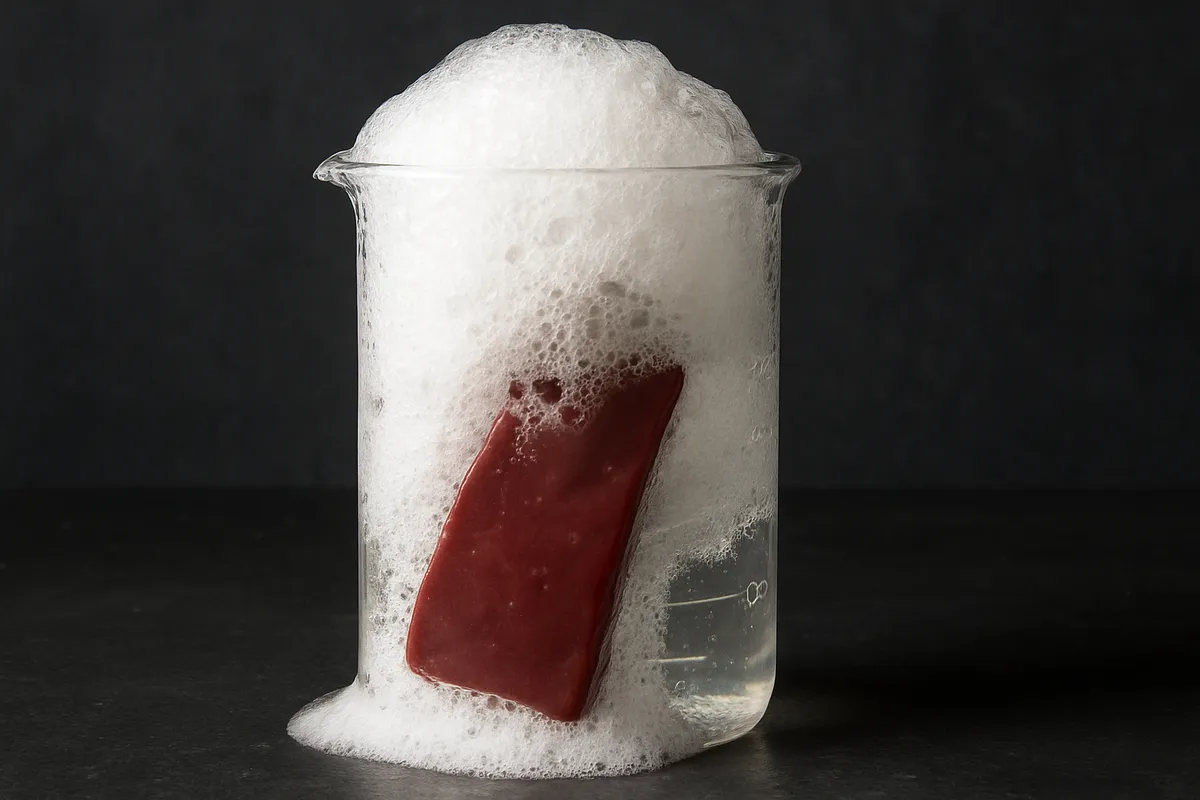
Catalase extracted from potato is boiled for 5 minutes, then cooled back to room temperature and mixed with fresh hydrogen peroxide. No bubbles of oxygen appear. Why not?
Pepsin digests protein in the stomach at about pH 2. If pepsin passes into the small intestine, where the contents are about pH 8, it stops working. What has happened to the pepsin?
Which treatment is most likely to denature an enzyme taken from a human cell?
Two tubes of the same enzyme are held for 20 minutes, one at 5 degrees Celsius and one at 80 degrees Celsius. Both are then brought to 37 degrees Celsius and given substrate. The cold tube makes product; the hot tube makes none. Why?
When biologists say that an enzyme has been denatured, what has happened to it?
One molecule of sucrase binds a molecule of sucrose, splits it, and releases glucose and fructose from the active site. What is true of that sucrase molecule immediately afterward?
Catalase speeds up a reaction in which hydrogen peroxide is broken down into water and oxygen. Which term names hydrogen peroxide's role in this reaction?
Which sequence correctly describes what happens during an enzyme-catalyzed reaction?
A tube holds a very small amount of enzyme and a large amount of substrate. Within an hour nearly all the substrate has been converted, and the enzyme can still be detected in the tube. How can so little enzyme convert so much substrate?
What is the name for the temporary structure formed while a substrate is held in an enzyme's active site?
Crack the passcode before the zombies get in.
Answer, then swat bugs for bonus points.
Race through questions at your own speed.
Same question on every screen. Fastest wins.

Pick a tile, answer, hit bonuses and steals.
Cell Theory and Its Discovery
20 questions