Loading
by BlastRoom
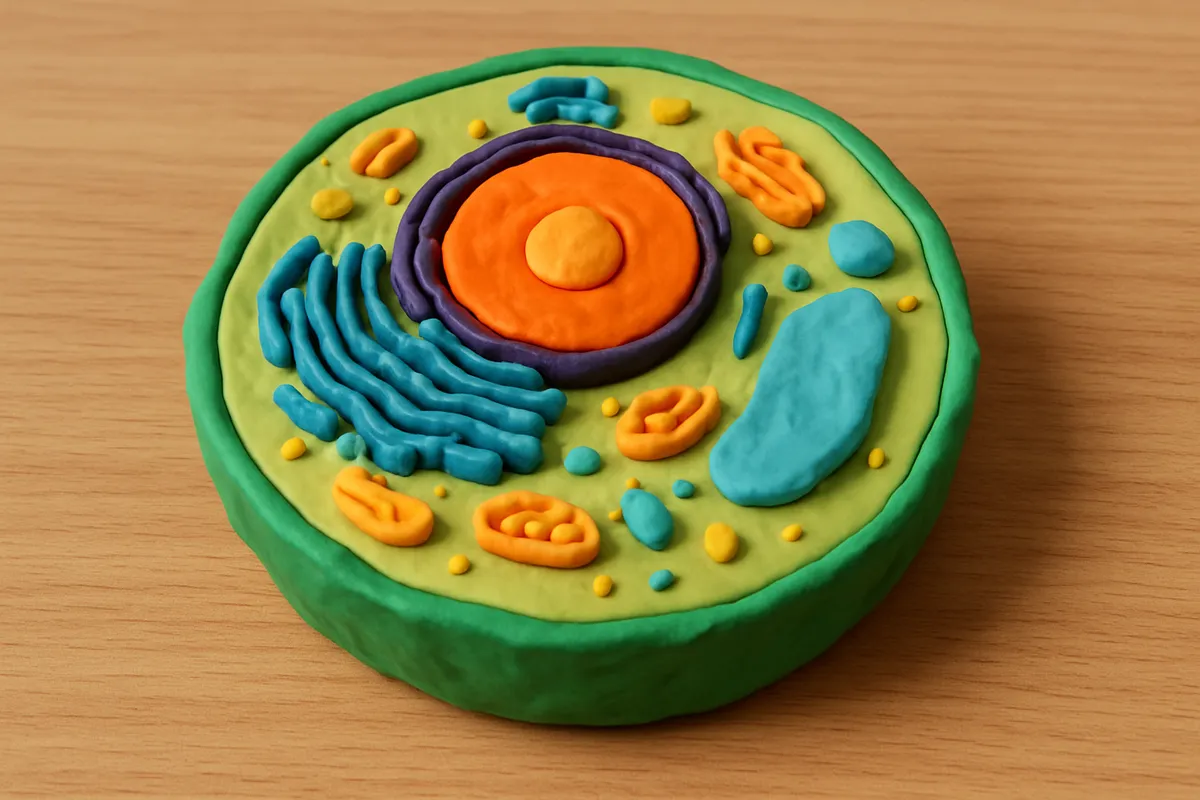
Match every organelle to what it does, and work out which one a cell is missing from what has gone wrong.
#biology
40 questions
One question set, multiple game modes. Tap any game to see it in action. Not sure which to pick?
Answer to place stones and capture territory.
Outrun the snow together.
Earn blasts, then hunt the other team.
Answer to earn energy, then climb.

The class blasts through walls together.
Bid on mystery lots. Most money wins.
Sell tours. Nice, standard, or a total scam.

Answer, restock, and serve the rush.
More correct answers pulls the rope your way.
Answer, then shoot down the alien wave.
Answer, then tap to leap the frozen ridge.
A structure sits near one side of the nucleus as a stack of flattened membrane sacs, with small bubbles of membrane pinching off its outer edges. Which organelle is described?
An organelle is a small sac bounded by a single membrane. Its interior is kept more acidic than the cytoplasm around it and is filled with dozens of enzymes that break large molecules apart. Which organelle is described?
A large structure is wrapped in two membranes pierced by many pores. Inside are long threads of DNA wound onto protein, plus one dense region with no membrane of its own. Which organelle is described?
A network of flattened membrane tubes runs outward from the nuclear envelope, and its outer surface is covered with tiny granules that give it a bumpy texture. Which organelle is described?
A branching network of membrane tubes has a completely smooth surface. Its enzymes build lipids and steroids and break down drugs and poisons. Which organelle is described?
Outside a plant cell's outer boundary lies a rigid layer built mainly of cellulose fibers. It keeps the cell's shape and stops it bursting when water floods in. Which structure is described?
An organelle in a leaf cell has two outer membranes, and inside sit stacks of flat disks packed with a green pigment that absorbs light. Which organelle is described?
The outer boundary of an animal cell is a sheet only two molecules thick, made of phospholipids with proteins floating in it, and it decides what enters and leaves. Which structure is described?
Near the nucleus of an animal cell sit two short cylinders of protein tubes, lying at right angles to each other, that help organize the fibers pulling chromosomes apart. Which organelle is described?
In a mature plant cell one fluid-filled sac takes up most of the interior, pushing the cytoplasm into a thin layer against the wall and pressing outward to keep the cell firm. Which organelle is described?
A structure has no membrane at all. It is built from two unequal pieces of RNA and protein that clamp together, and it can float free in the cytoplasm or attach to a membrane network. Which organelle is described?
Running through the cytoplasm of an animal cell is a scaffold of protein filaments and hollow protein tubes. It holds the cell's shape, anchors organelles in place, and lets the cell crawl. Which structure is described?
In an inherited disease, nerve cells slowly fill with membrane fragments and worn-out organelles held inside vesicles. The waste is collected but never broken down. Which organelle is failing in these cells?
A patient's muscle cells take in oxygen and glucose normally but release only a small fraction of the usual amount of ATP, and the muscles tire after a few seconds of work. Which organelle is not working properly?
A gland cell builds a protein correctly and folds it, but the finished protein never receives its sugar tags, is never sorted, and turns up in the wrong compartments instead of leaving the cell. Which organelle is failing?
A plant is watered normally, yet its leaves stay limp and its cells never become firm even though water is entering them freely. Which structure is not doing its job in those cells?
A damaged cell can no longer keep potassium in or sodium out. Ions, sugars, and water now move in and out freely, and the inside of the cell soon matches the fluid around it. Which structure has been damaged?
A drug is added to cells. Messenger RNA is still made and amino acids are still present, but no amino acids are ever joined into a chain. Which organelle has the drug stopped?
A seedling grows pale white leaves. In bright light it makes no sugar of its own and dies once the food stored in its seed runs out. Which organelle has failed to develop in its leaf cells?
A person's liver cells no longer break down alcohol or the by-products of medicines, so these substances build up in the blood. Which organelle is not working in those liver cells?
Treated cells round up into balls, can no longer crawl across a dish, and their organelles drift loose in the cytoplasm instead of staying in position. Which structure has the treatment destroyed?
A toxin plugs every pore in one organelle's envelope. Ribosomes are undamaged and DNA is intact, but no messenger RNA ever reaches the cytoplasm and protein production stops. Which organelle has been blocked?
A plasma cell pours out huge amounts of antibody protein for export. By volume it holds far more of one organelle than a fat-storing cell of the same size does. Which organelle, and why?
A heart muscle cell contracts without rest for a lifetime. Compared with a skin cell of the same size, it is crowded with one organelle. Which organelle, and why?
A white blood cell swallows bacteria all day long. Under the microscope its cytoplasm is crowded with one kind of small sac that a nearby skin cell has only a few of. Which organelle, and why?
Liver cells taken from someone who has taken a barbiturate drug for weeks show a great expansion of one membrane network compared with untreated liver cells. Which organelle, and why?
A palisade cell just under the upper surface of a leaf holds many more of one organelle than a root cell of the same plant does. Which organelle, and why?
A goblet cell in the lining of the gut releases sticky mucus, a protein coated in sugar chains. One organelle in it is unusually large and well developed. Which organelle, and why?
A young dividing cell near the tip of a root has many small sacs of fluid, while a fully grown cell higher up the same root has one enormous one. Why does the grown cell hold so much more?
A developing red blood cell fills its own cytoplasm with hemoglobin, a protein it never exports. Its cytoplasm is crowded with one structure, though its rough ER stays small. Which structure, and why?
A salivary gland cell makes an enzyme and releases it into the mouth. In what order does the enzyme pass through the cell's structures on its way out?
The instructions for a protein are stored in the cell's DNA, but the protein is built in the cytoplasm. In what order are the structures used, from storage to finished chain?
A digestive enzyme is made in a cell but is never released; it ends up inside a sac that breaks down waste. Which route does it take?
A white blood cell surrounds a bacterium and destroys it. In what order do the cell's structures act on that bacterium?
A leaf cell makes sugar in the light and later uses that sugar to power its own work at night. In what order do the organelles handle the energy?
A lipid is assembled inside a cell and then sent out of it. Which route does the lipid follow?
The rough ER and the Golgi apparatus both handle the same exported protein. How do their jobs on it differ?
A lysosome is full of enzymes that would damage the cell if they were loose in the cytoplasm. Which organelle produces the lysosome, and how does it keep the enzymes safe?
A leaf cell contains both chloroplasts and mitochondria. What is the relationship between the work the two organelles do?
A plant cell has a cell wall and a cell membrane at its edge, one just outside the other. How do their jobs at that boundary differ?
Crack the passcode before the zombies get in.
Answer, then swat bugs for bonus points.
Race through questions at your own speed.
Same question on every screen. Fastest wins.

Pick a tile, answer, hit bonuses and steals.
Plant Cells and Animal Cells
40 questions