Loading
by BlastRoom
How the phospholipid bilayer and its embedded proteins decide what enters and leaves a cell.
#biology
20 questions
One question set, multiple game modes. Tap any game to see it in action. Not sure which to pick?
Answer to place stones and capture territory.
Outrun the snow together.
Earn blasts, then hunt the other team.
Answer to earn energy, then climb.

The class blasts through walls together.
Bid on mystery lots. Most money wins.
Sell tours. Nice, standard, or a total scam.

Answer, restock, and serve the rush.
More correct answers pulls the rope your way.
Answer, then shoot down the alien wave.
Answer, then tap to leap the frozen ridge.
A cell sits in watery extracellular fluid and is filled with watery cytoplasm. Its membrane is built from two sheets of phospholipids. Where are the fatty acid tails of those phospholipids found?
Suppose one phospholipid in a membrane flipped the wrong way round, so its fatty acid tail stuck out into the watery fluid outside the cell. Why would that arrangement not last?
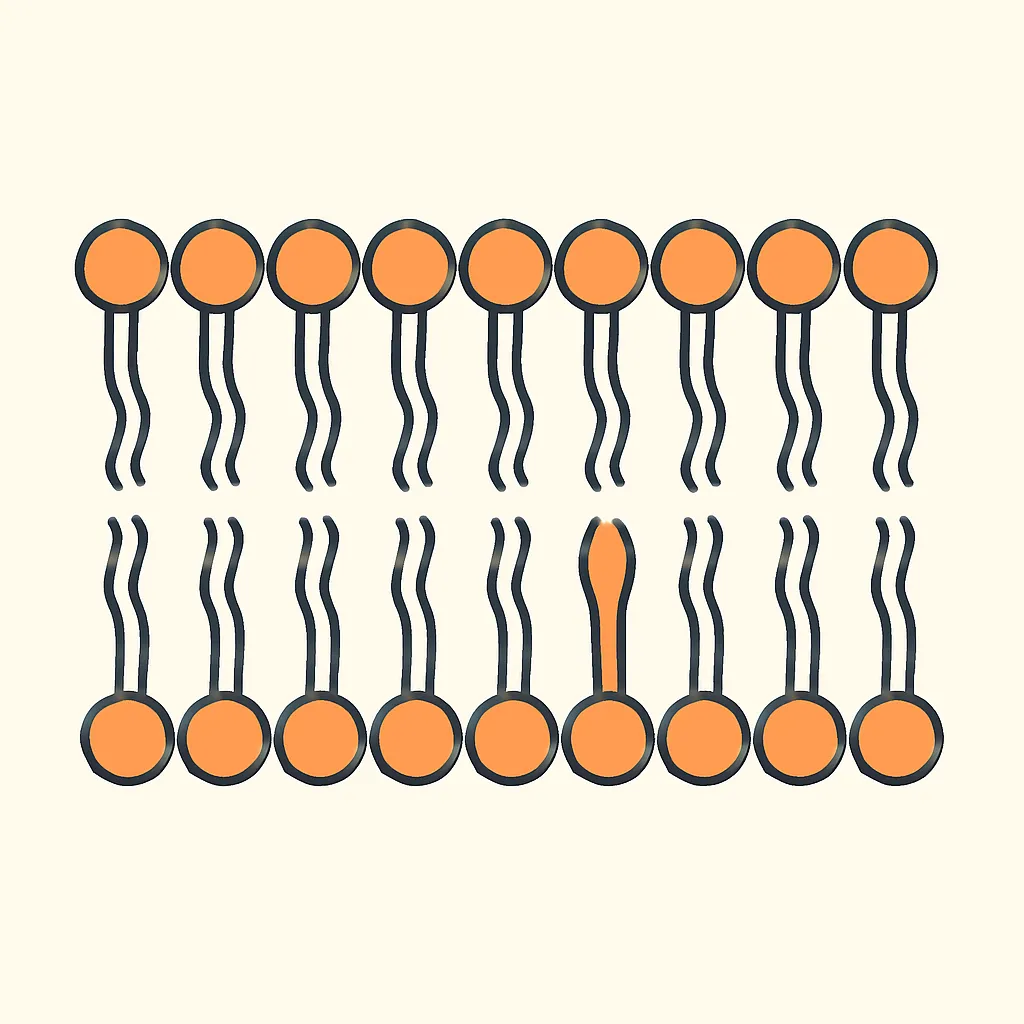
A cell membrane is described as a fluid mosaic. Which observation would you expect if the membrane really is fluid?
Membrane proteins are described as embedded in the bilayer. Where does a channel protein that carries ions into the cell sit?
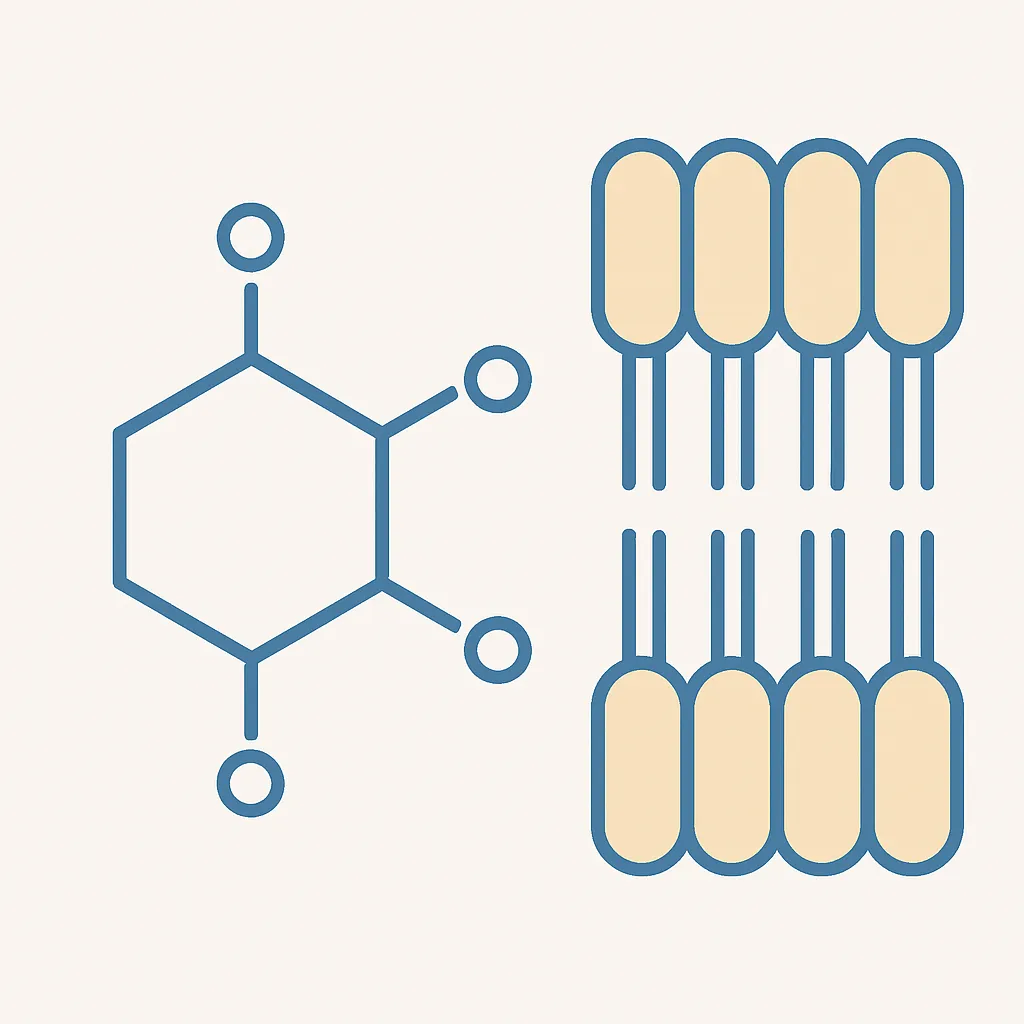
In an animal cell membrane, where is cholesterol found?
Oxygen, sodium ions, glucose and amino acids are all present in the fluid around a cell. Which of them passes through the lipid interior of the membrane most readily with no transport protein involved?
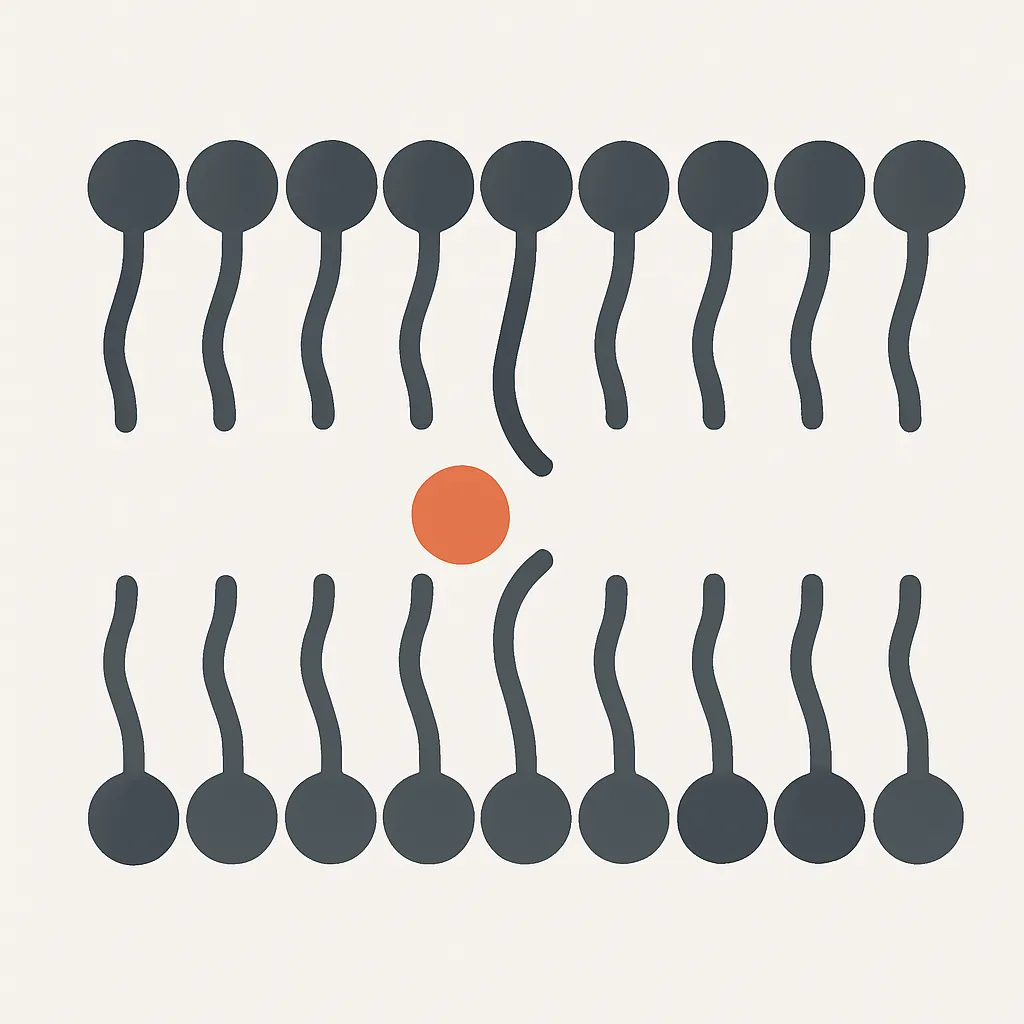
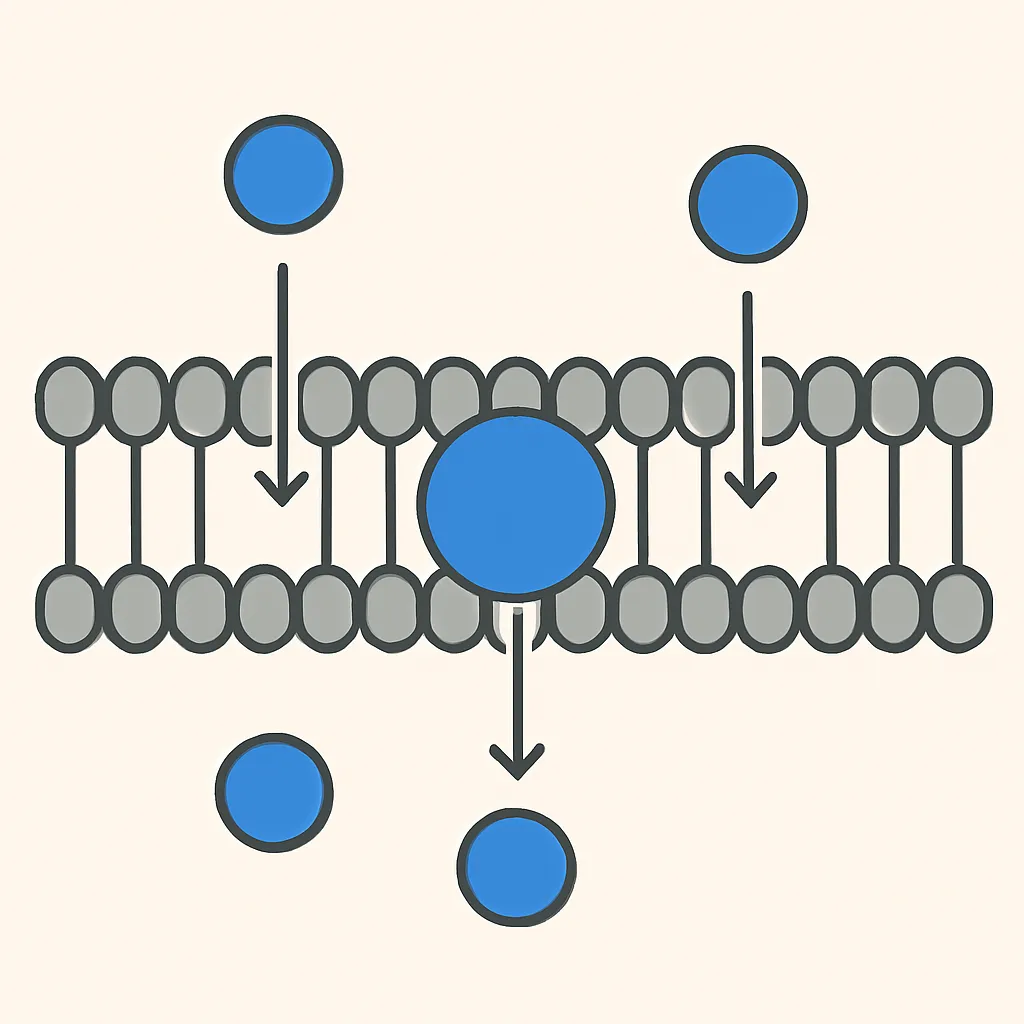
The figure shows a sodium ion held at the outer surface of a membrane. Why can it not slip straight through the middle of the bilayer on its own?
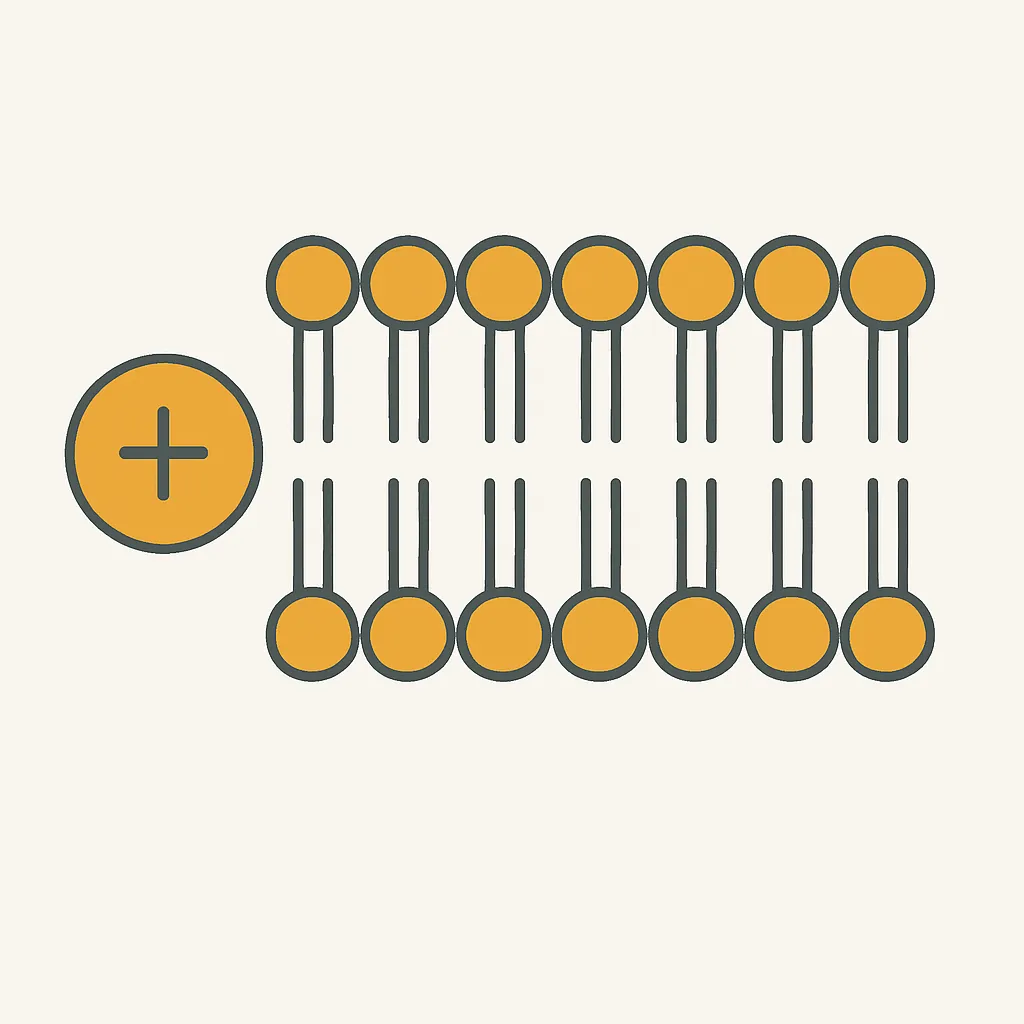
The interior of a cell membrane is nonpolar. Which property of a molecule best predicts that it will cross that interior without a transport protein?
The figure shows a substance crossing the membrane through a protein channel rather than through the lipid interior. Which of these substances moves across a membrane that way?
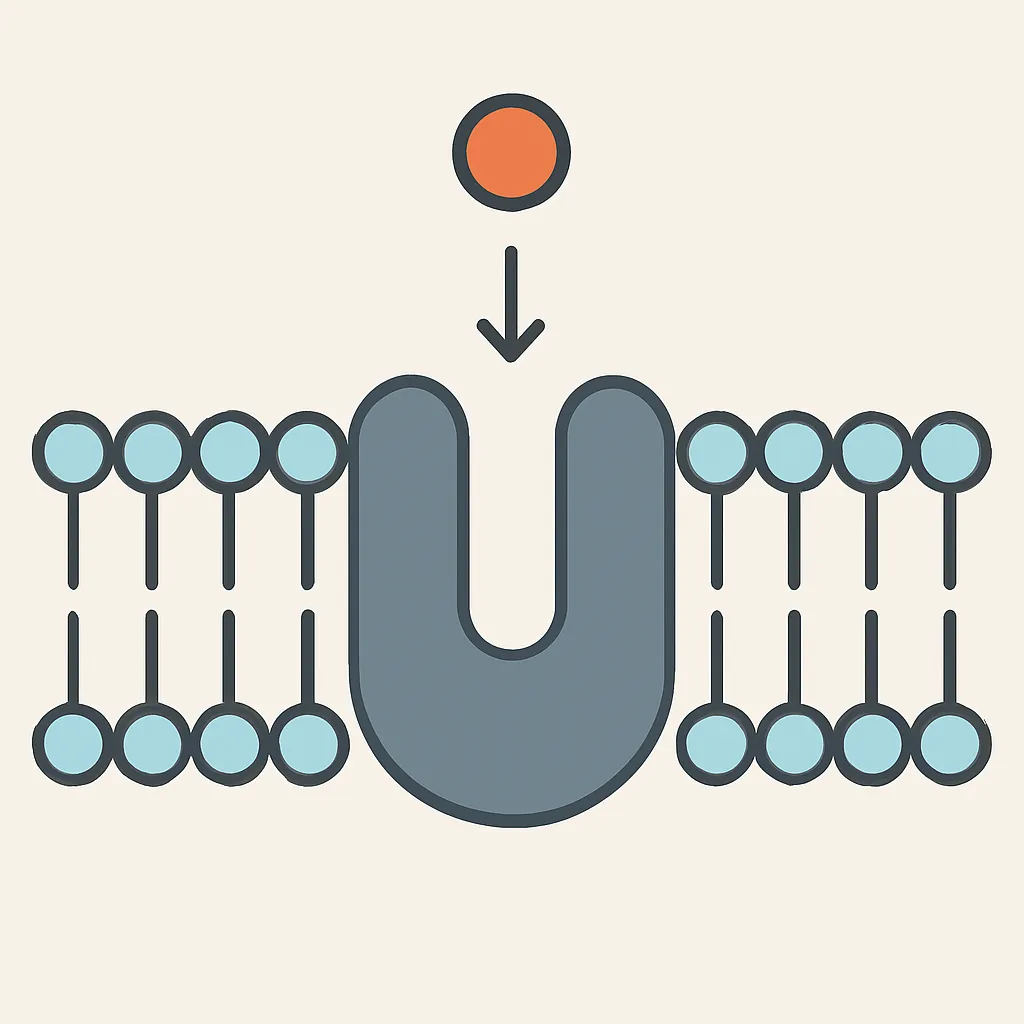
Oxygen must be carried across the cell membrane by a transport protein.
Glucose is a large polar molecule and the interior of the bilayer is nonpolar, yet a liver cell takes glucose in steadily. Which membrane component accounts for that?
An immune cell recognizes a body cell as belonging to the same organism by binding to markers on the membrane's outer surface. Which membrane component are those markers?
Water is a polar molecule, yet it crosses some cell membranes far faster than the lipid interior alone would allow. Which membrane component explains that speed?
A nerve cell keeps potassium more concentrated inside than outside, moving potassium inward against its concentration gradient. Which membrane component does that work?
A white blood cell has to take in a bacterium far too large for any transport protein. How does the membrane get it inside?
The figure shows oxygen crossing a normal membrane. A chemical now makes the fatty acid tails in that membrane pack together far more tightly than usual. What is the most likely result?
A drug blocks every glucose transport protein in a cell's membrane and changes nothing else about the membrane. What happens next?
A detergent dissolves the fatty acid tails out of a cell's membrane. What is the most likely consequence for the cell?
Cholesterol keeps a cooled animal cell membrane from packing too tightly and losing its fluidity.
A cell is warmed and its phospholipids begin moving past one another much more freely than before. What is the most likely effect on the membrane?
Crack the passcode before the zombies get in.
Answer, then swat bugs for bonus points.
Race through questions at your own speed.
Same question on every screen. Fastest wins.

Pick a tile, answer, hit bonuses and steals.
Hypertonic, Hypotonic and Isotonic
40 questions