Loading
by BlastRoom
Predict whether a cell swells, shrinks or stays the same in a given solution, in animal cells and in walled plant cells.
#biology
40 questions
One question set, multiple game modes. Tap any game to see it in action. Not sure which to pick?
Answer to place stones and capture territory.
Outrun the snow together.
Earn blasts, then hunt the other team.
Answer to earn energy, then climb.

The class blasts through walls together.
Bid on mystery lots. Most money wins.
Sell tours. Nice, standard, or a total scam.

Answer, restock, and serve the rush.
More correct answers pulls the rope your way.
Answer, then shoot down the alien wave.
Answer, then tap to leap the frozen ridge.
A red blood cell is dropped into a beaker of distilled water. What would you expect to see happen to the cell over the next few minutes?
A human cheek cell whose cytoplasm is about 0.9% salt is placed in a 10% salt solution. Predict the change in the cell.
A white blood cell is placed in the solution shown in the table. Predict what happens to the cell.
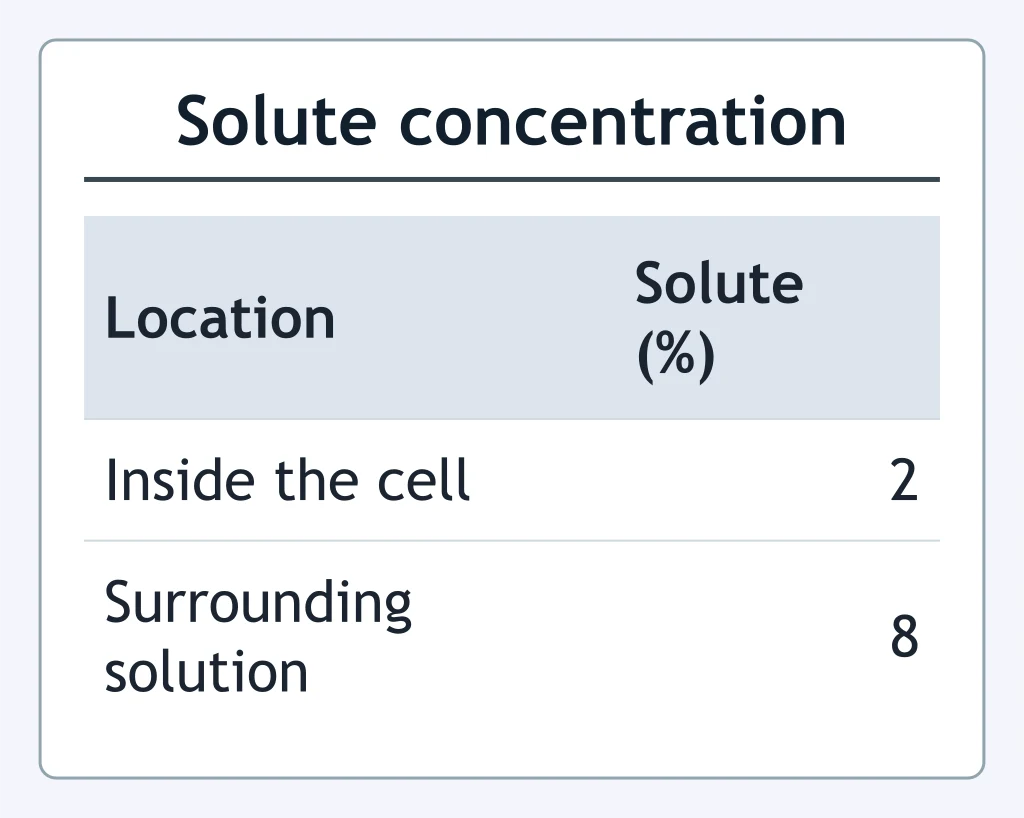
An animal cell is placed in the solution shown in the table. What will happen to the cell?
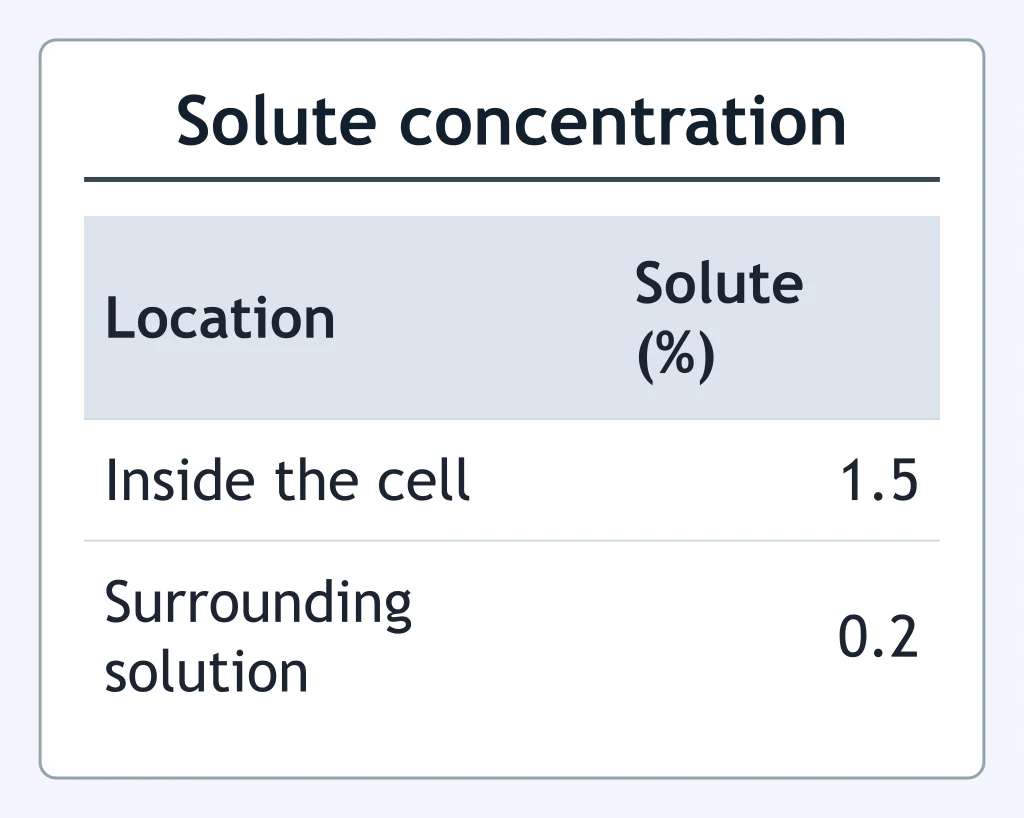
Blood for transfusion is stored in 0.9% saline, the same solute concentration as red blood cell cytoplasm. Why do the cells keep their normal shape in it?
A paramecium living in pond water constantly bails water out using its contractile vacuole. If that vacuole stopped working, what would happen to the cell?
A drop of blood is added to 0.9% saline and another to 3% saline. Under the microscope, how will the two samples differ?
A red blood cell with 0.9% solute in its cytoplasm is placed in a 5% salt solution. Which pair correctly names the solution and the result?
Identical animal cells with 0.9% solute cytoplasm are put in three beakers: A is 0.2% salt, B is 0.9% salt and C is 5% salt. In which beaker do the cells gain mass?
An animal cell placed in a hypotonic solution can burst, because it has no cell wall to resist the water entering it.
Limp lettuce leaves are left in a bowl of cold pure water and turn crisp and firm. What has happened inside their cells?
An onion cell is left in concentrated sugar solution. Under the microscope its membrane has pulled away from the cell wall. Why has that happened?
A plant cell from a leaf is placed in the solution shown in the table. Predict what happens to the cell.
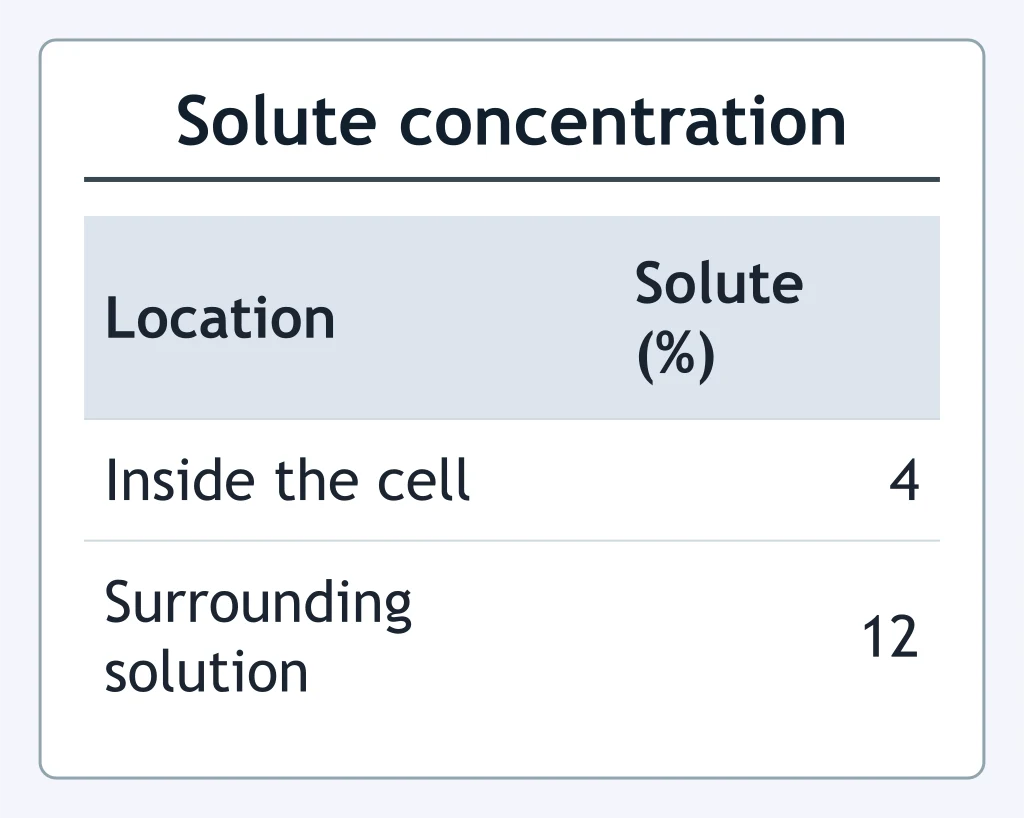
A plant cell is placed in the solution shown in the table. What happens to it?
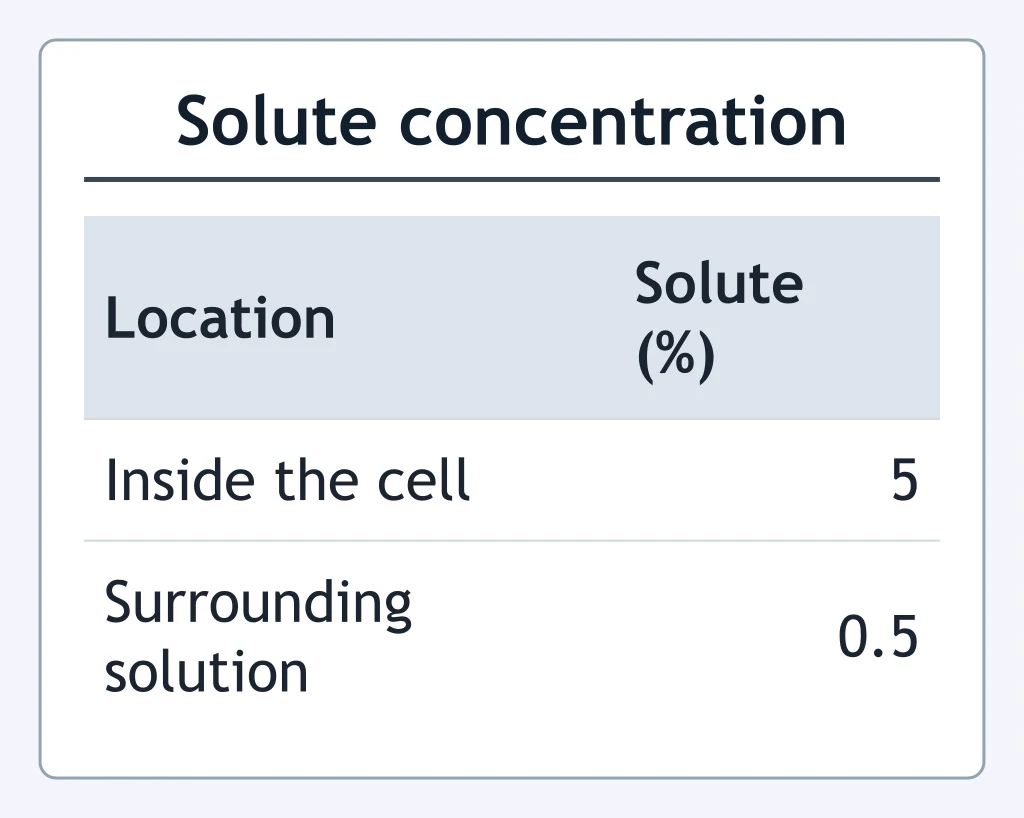
A red blood cell and a plant leaf cell are both placed in distilled water. What difference would you expect after ten minutes?
A gardener waters a houseplant with water that has a lot of salt dissolved in it, and by evening the plant is wilting. What is happening in the root cells?
Plant cells are placed in a solution isotonic to their cell sap. How does the tissue look compared with the same tissue in pure water?
The two guard cells around a stoma take up water from the surrounding leaf cells. What does this do to the stoma, and why?
Turgor pressure builds up in a plant cell when water moves into it by osmosis and presses the cell contents against the cell wall.
A turgid plant cell is moved from pure water into a concentrated salt solution. Which sequence describes what happens next?
Look at the table. Compared with the cell, the surrounding solution is:
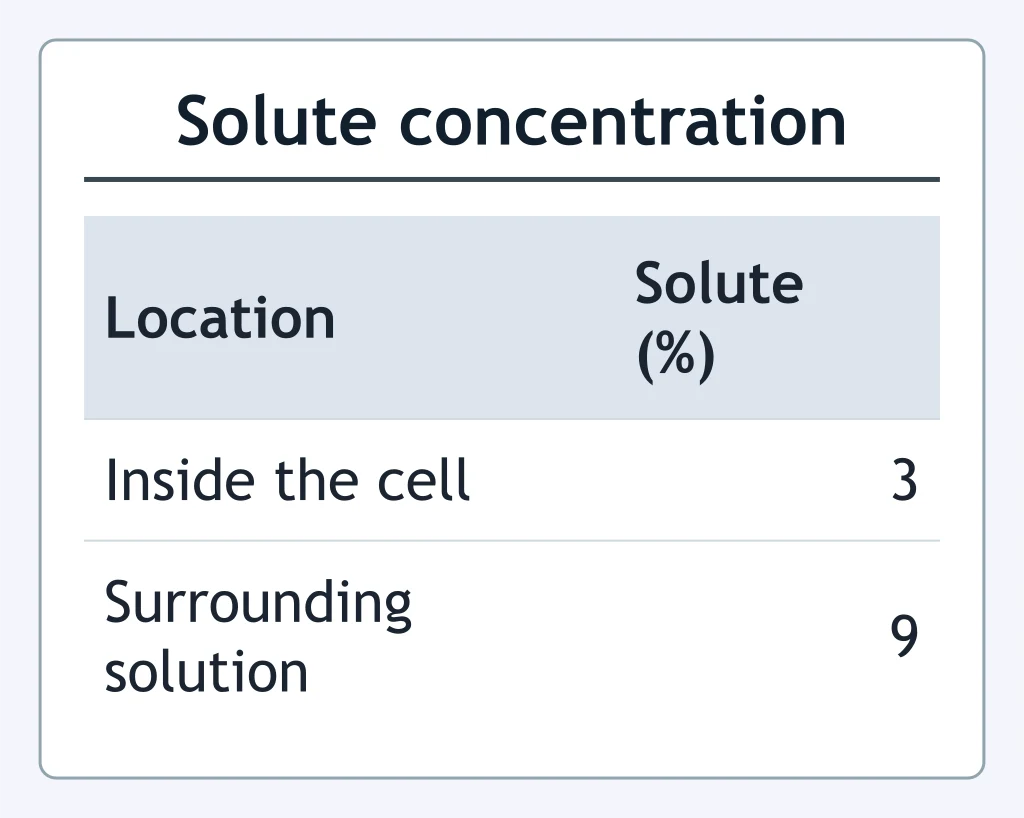
Use the table. Compared with the cell, how would you label the surrounding solution?
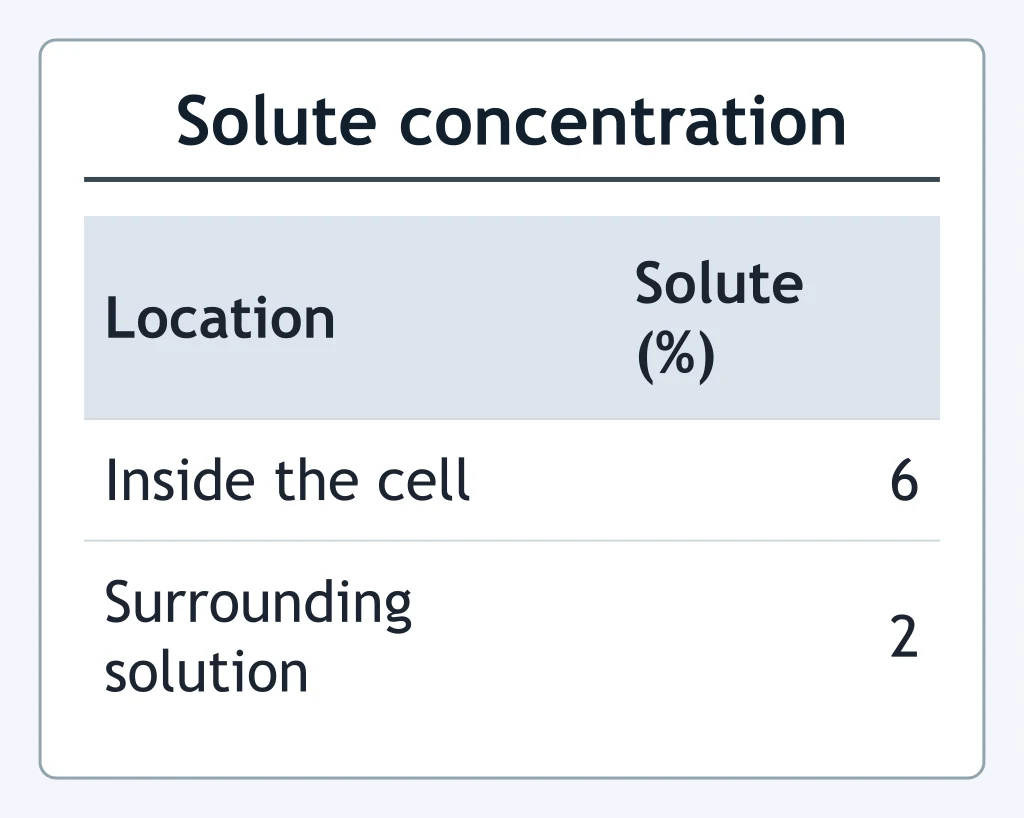
Read the table. Which term describes the solution surrounding this cell?
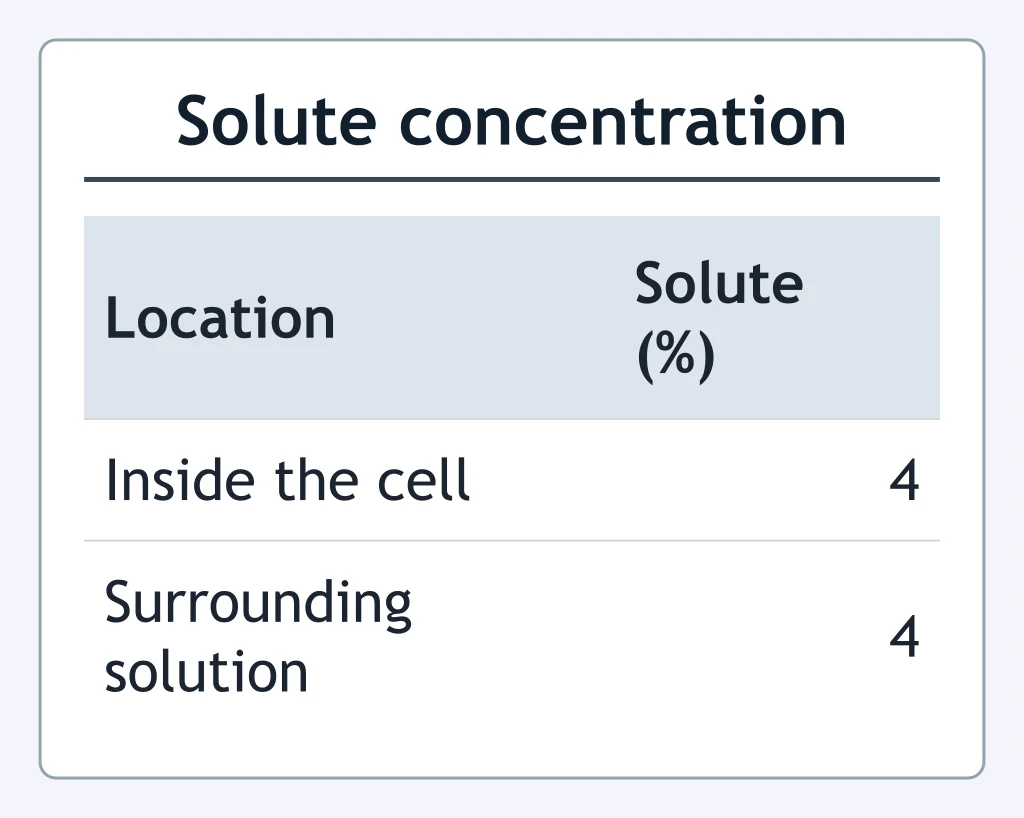
A red blood cell is placed in the saline shown in the table. Which way does water move overall?
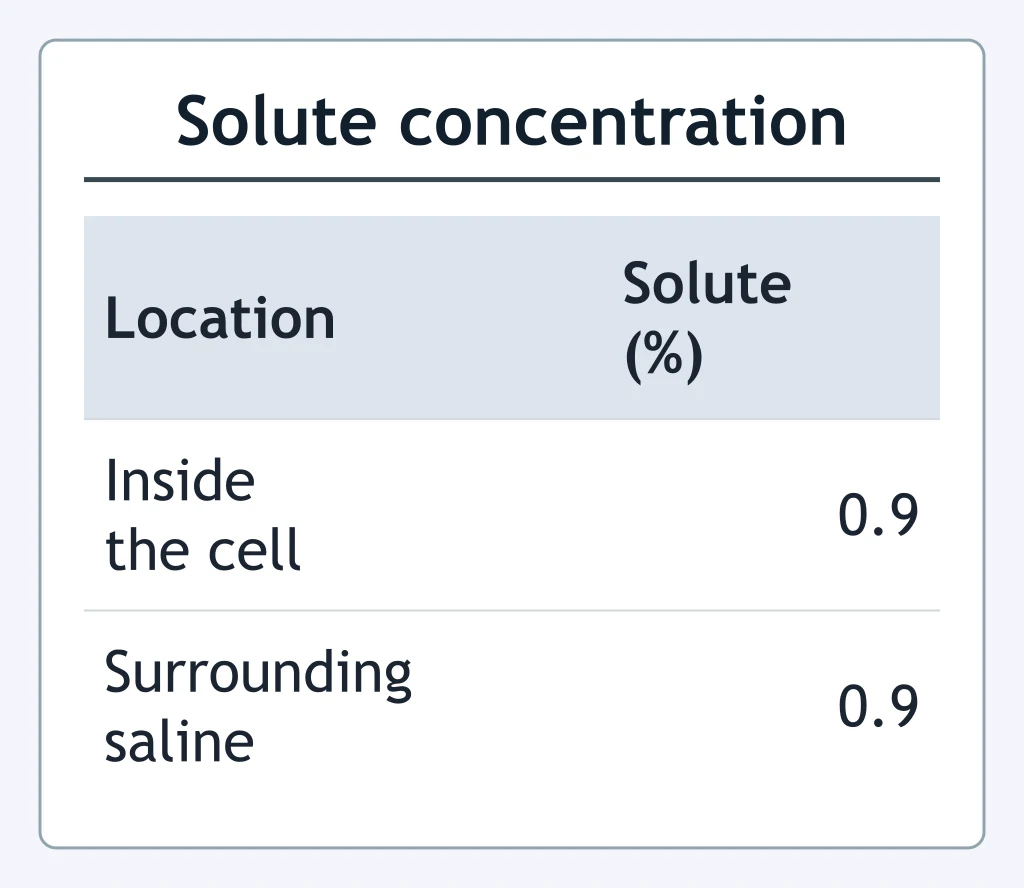
Use the concentrations in the table. In which direction will there be a net movement of water?
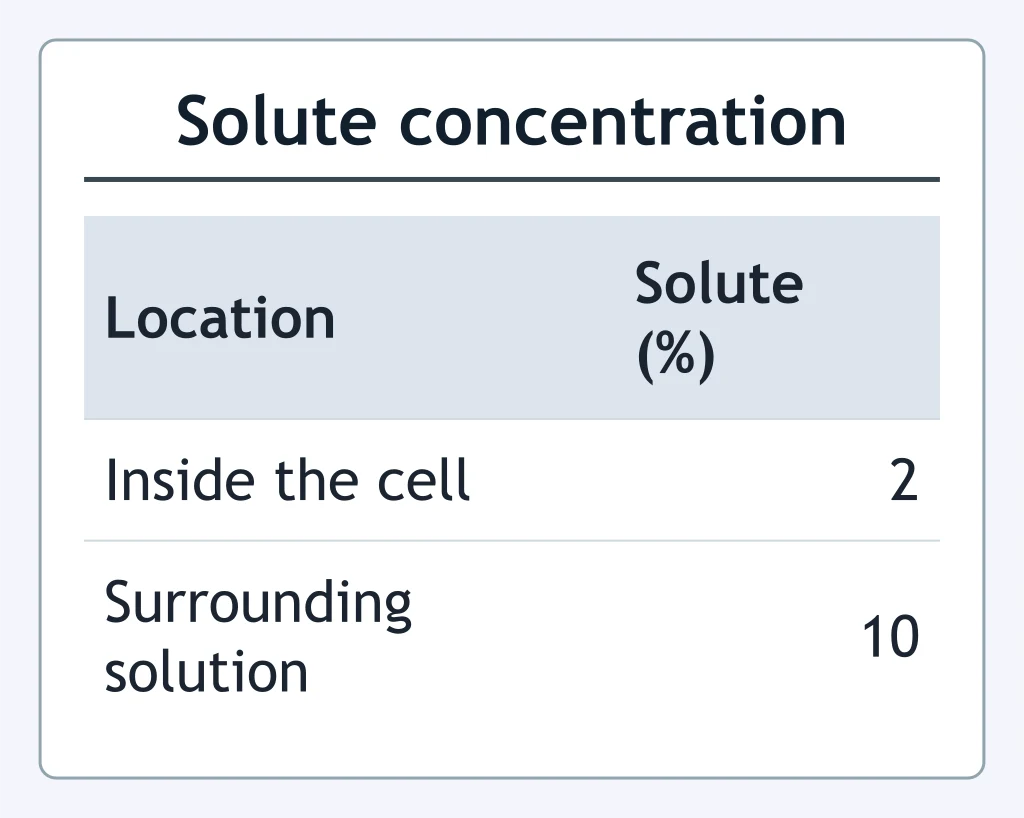
Look at the table. Which direction will water move by osmosis?
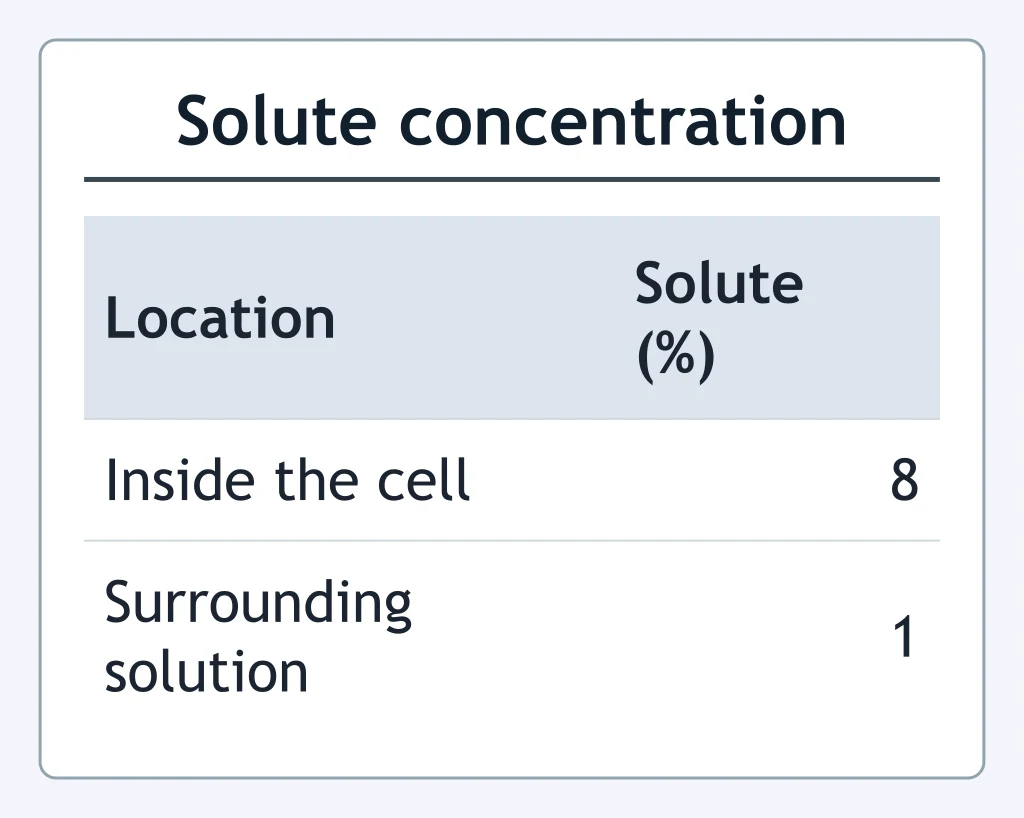
Read the table. Compared with the surrounding solution, the cell's cytoplasm is:
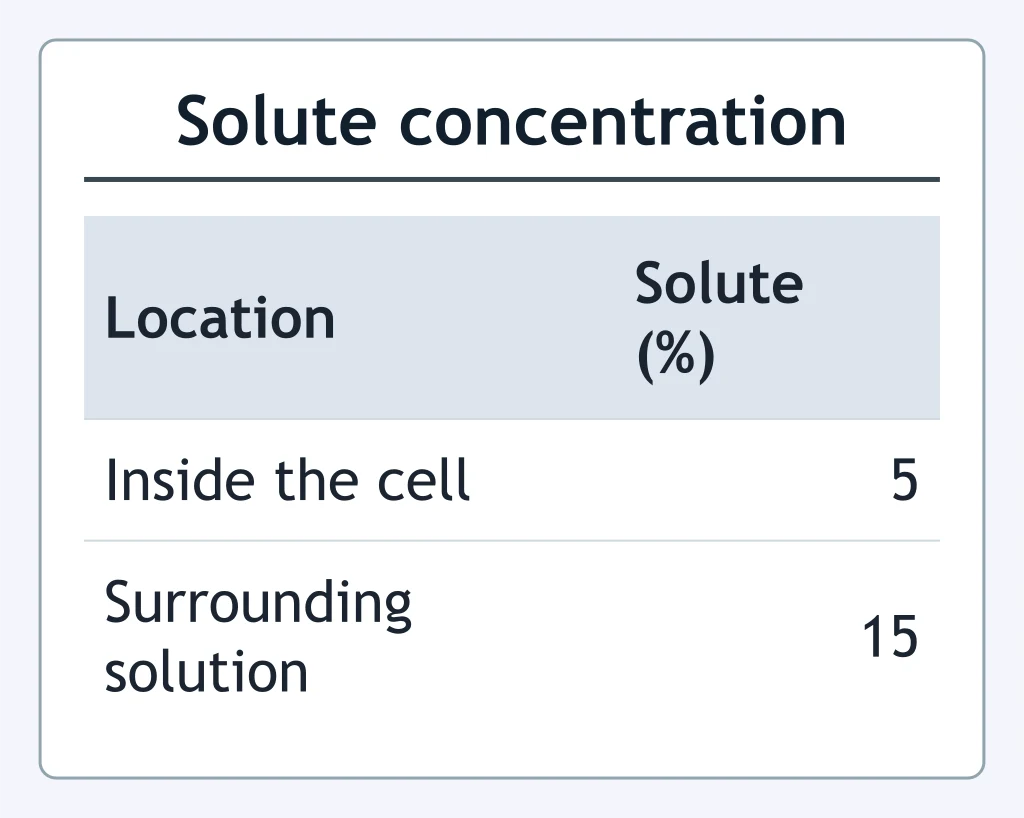
A cell sits for one hour in the solution shown in the table. What happens to its volume?
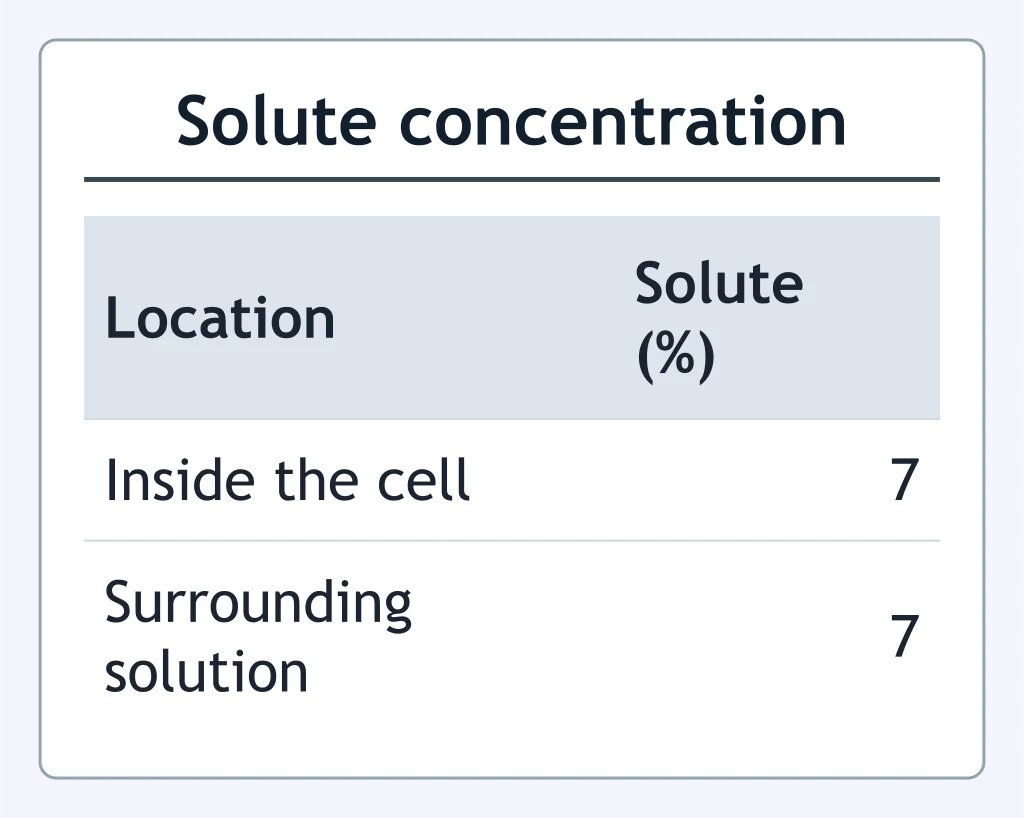
Fish is preserved by packing it in dry salt, and bacteria on the surface of the fish die. Why?
Sprinkling table salt on a slug makes the slug shrink and produce a lot of slime. What is happening to the cells of its moist skin?
An open jar of honey can sit for months without going moldy, even though mold spores land in it. Which explanation fits?
A freshwater fish is accidentally released into the ocean. What problem do its body cells now face?
Fluids given to a patient through a drip are made isotonic with blood, never from distilled water. What would distilled water do?
Grass beside a road that is salted each winter often dies back in a strip nearest the pavement. What happens to the grass root cells?
Soaking limp celery in concentrated salt water is the best way to make it crisp and firm again.
Red blood cells are placed in an unknown solution. Under the microscope many are swollen and some have burst. Compared with the cells, the unknown solution was:
A student weighs a piece of tissue, leaves it in solution Y for 30 minutes, and finds its mass unchanged. What does this tell her about solution Y?
Identical potato strips are left for an hour in two solutions. The strip in solution A loses 1.2 g; the strip in solution B gains 0.8 g. What can you conclude about solution A?
Onion epidermal cells left in solution Z are firm, with their contents pressed against the cell walls and no sign of plasmolysis. Solution Z must have been:
A plant cell seen under the microscope with its shrunken contents pulled away from the cell wall has been sitting in a hypotonic solution.
Crack the passcode before the zombies get in.
Answer, then swat bugs for bonus points.
Race through questions at your own speed.
Same question on every screen. Fastest wins.

Pick a tile, answer, hit bonuses and steals.
Homeostasis and Feedback
20 questions