Loading
by BlastRoom
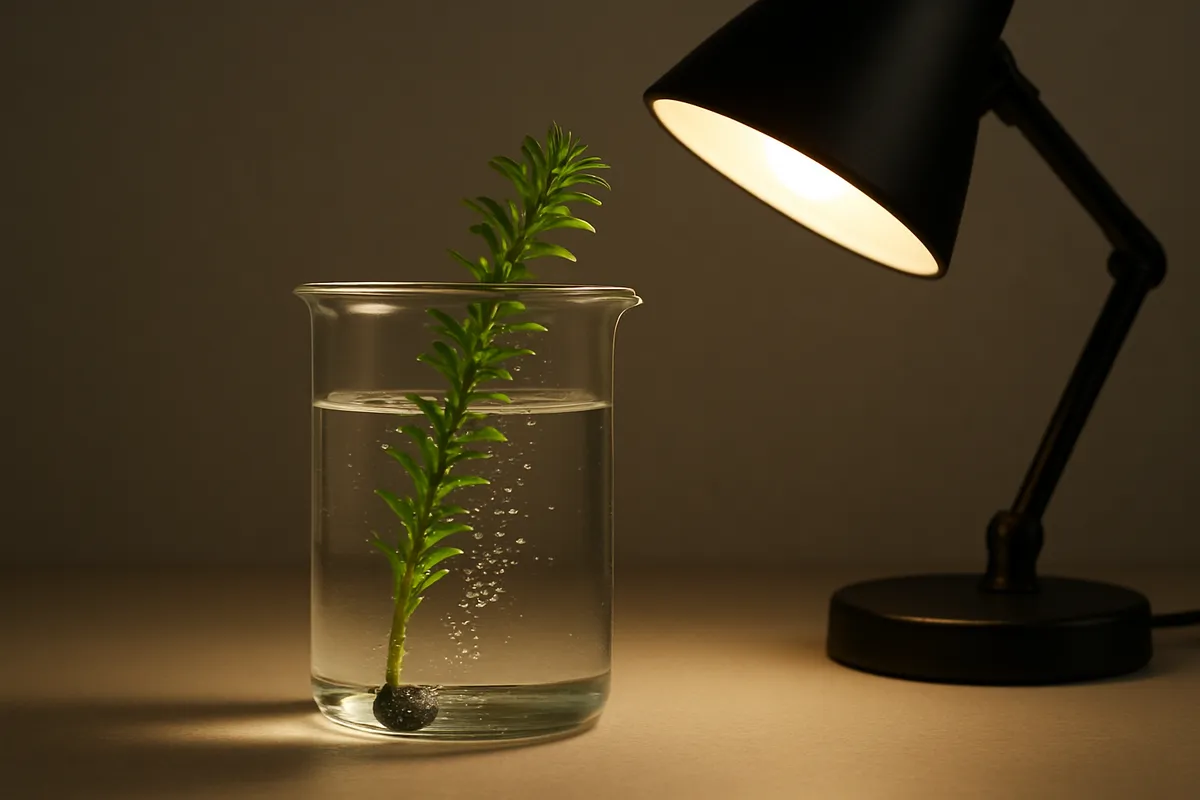
Read bubble counts, oxygen output and mass change to work out which factor is limiting the rate.
#biology
20 questions
One question set, multiple game modes. Tap any game to see it in action. Not sure which to pick?
Answer to place stones and capture territory.
Outrun the snow together.
Earn blasts, then hunt the other team.
Answer to earn energy, then climb.

The class blasts through walls together.
Bid on mystery lots. Most money wins.
Sell tours. Nice, standard, or a total scam.

Answer, restock, and serve the rush.
More correct answers pulls the rope your way.
Answer, then shoot down the alien wave.
Answer, then tap to leap the frozen ridge.
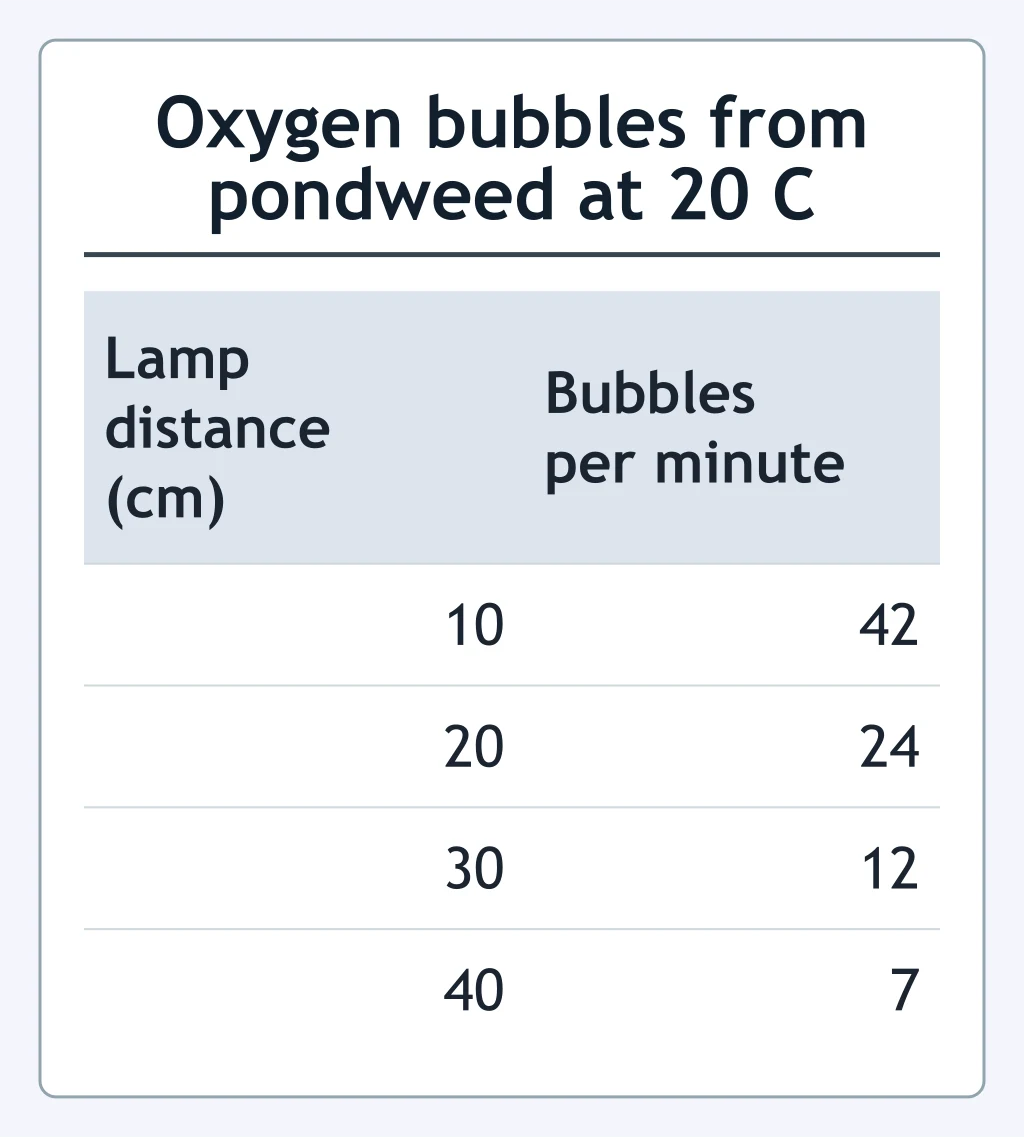
Look at the table. A pondweed shoot released oxygen bubbles at four lamp distances, with the water held at 20 C. How many more bubbles per minute were counted at 10 cm than at 30 cm?
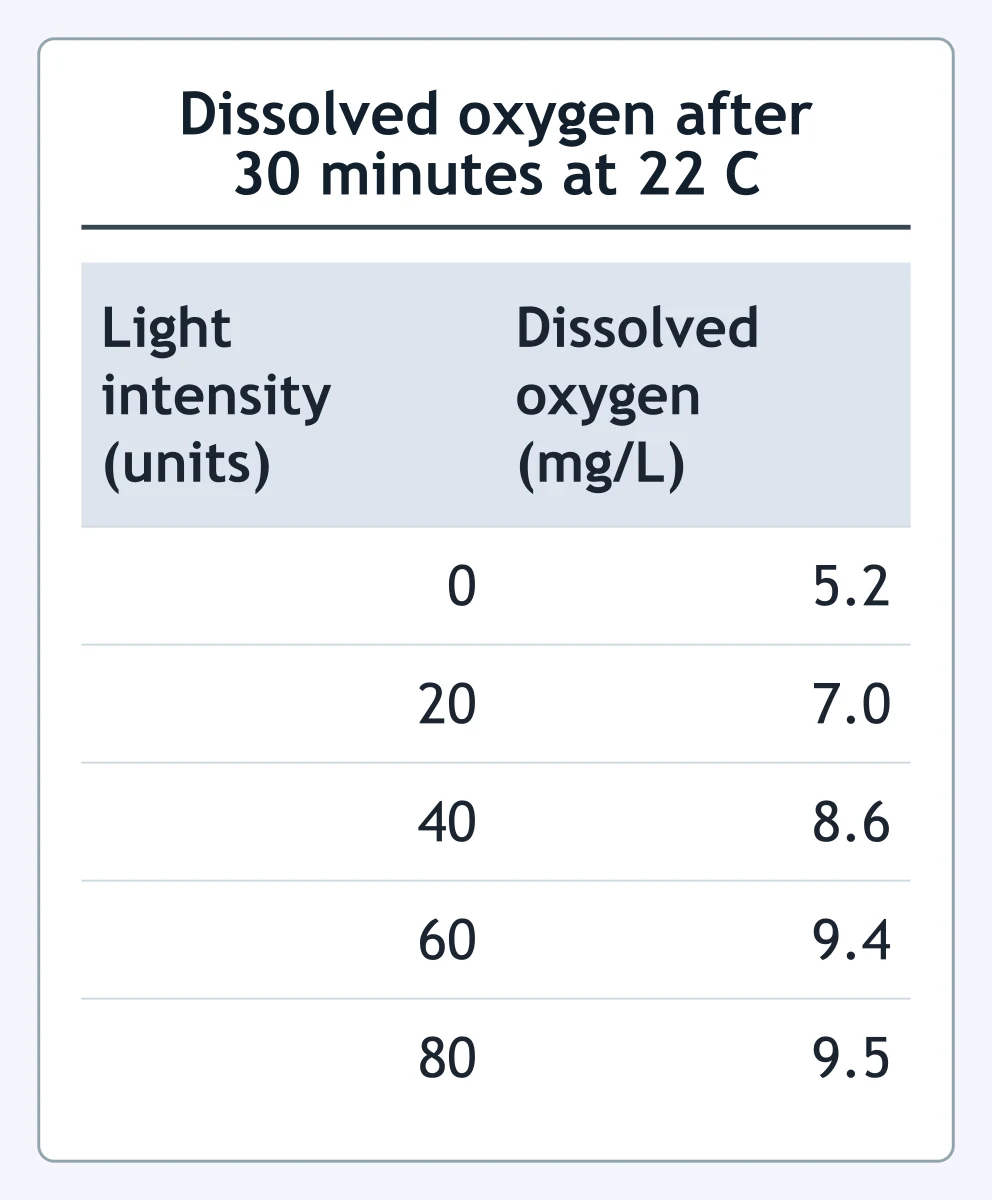
Look at the table. Elodea shoots were sealed in tubes at 22 C and the dissolved oxygen was measured after 30 minutes at each light intensity. What was the dissolved oxygen at 40 units of light?
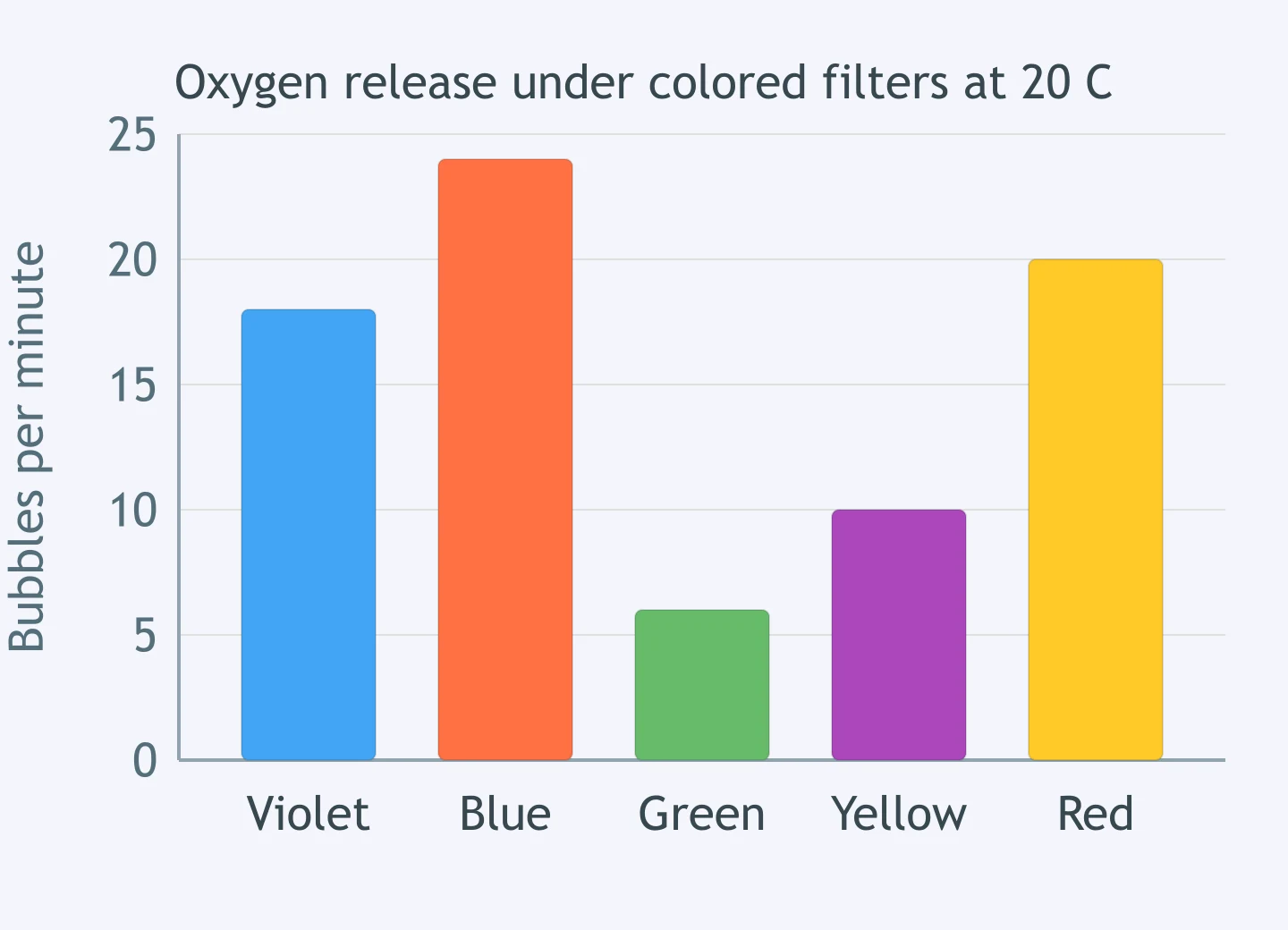
Use the bar graph. The same pondweed shoot was lit through five colored filters at 20 C with the lamp in one position. How many bubbles per minute were released under the green filter?
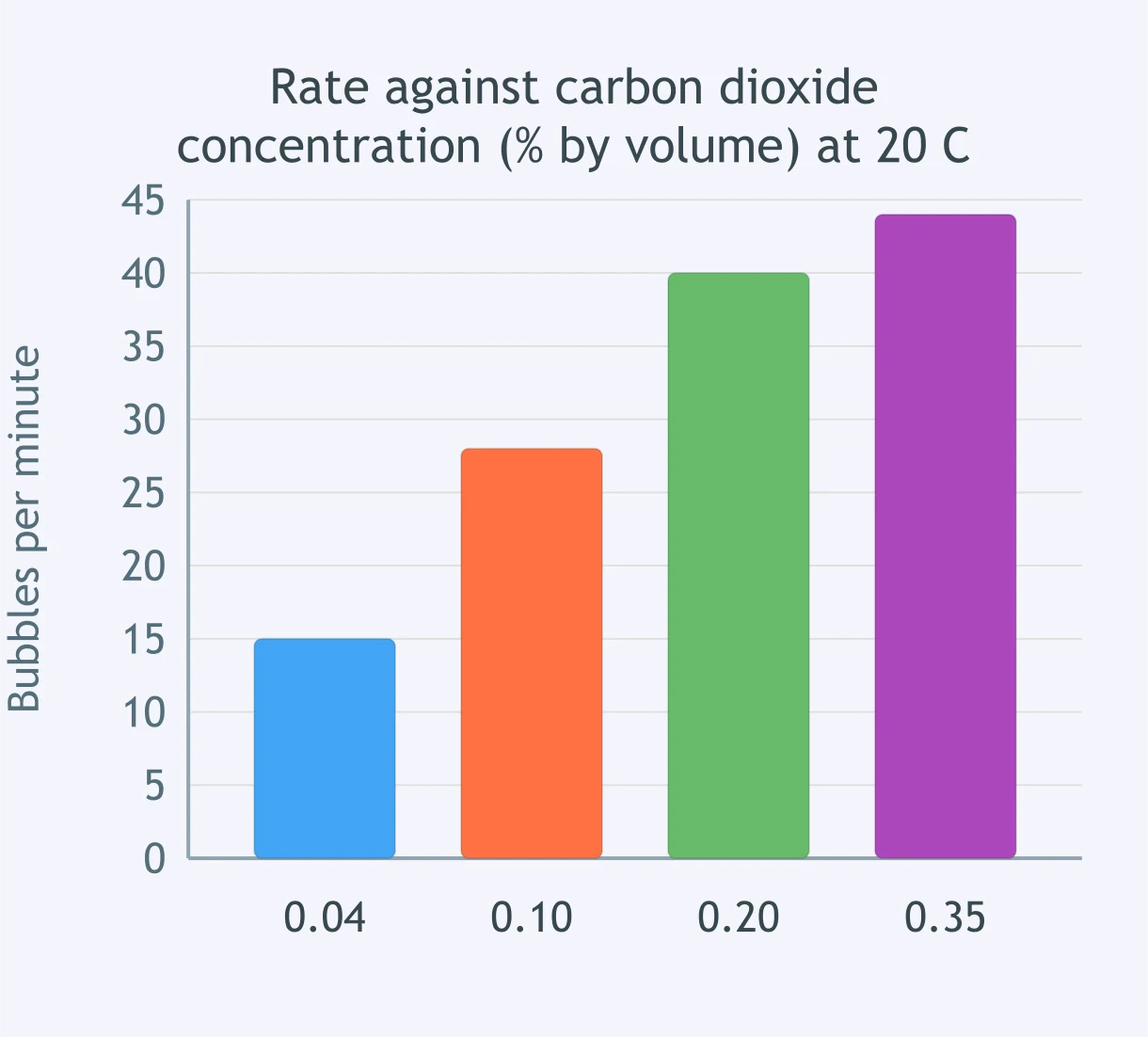
Use the bar graph. Pondweed was kept at 20 C in bright light while the carbon dioxide concentration of the water was varied. How many more bubbles per minute were released at 0.20% carbon dioxide than at 0.04%?
Look at the graph. A pondweed shoot was lit at one fixed intensity while the water temperature was changed. What was the rate at 35 C?
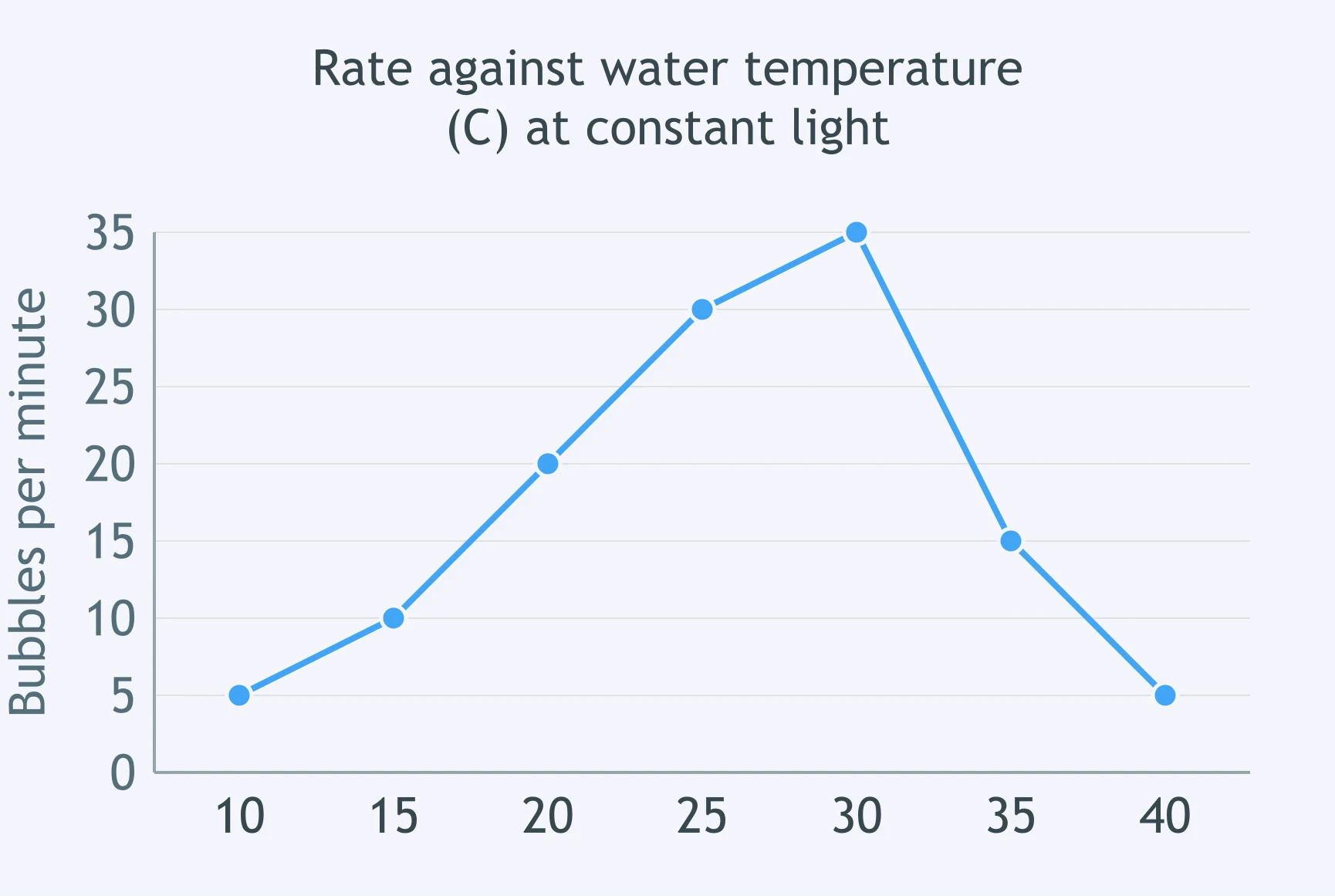
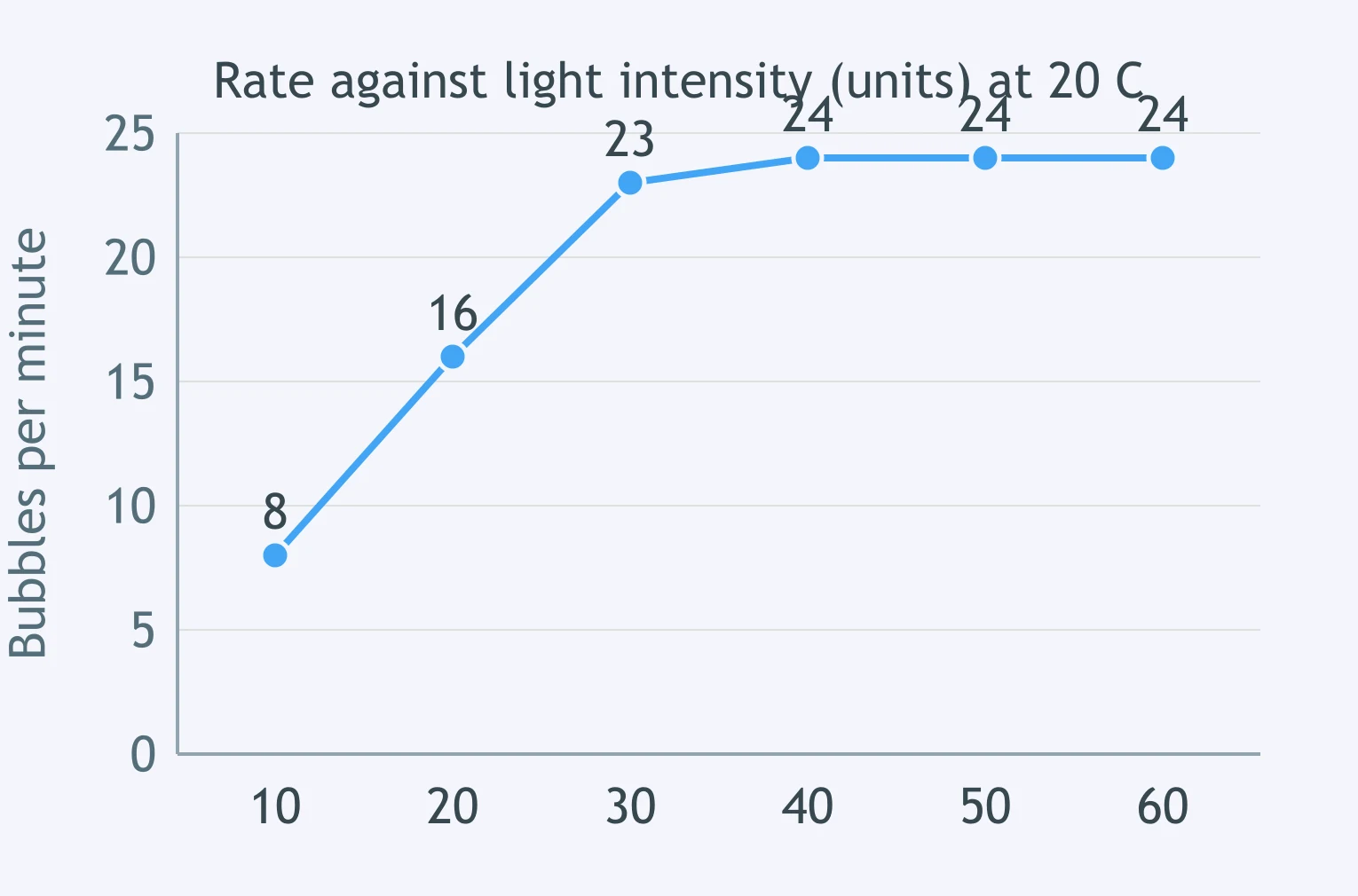
Look at the graph. A pondweed shoot in water at 20 C was lit at rising intensities. What do the readings from 40 units of light onward indicate?
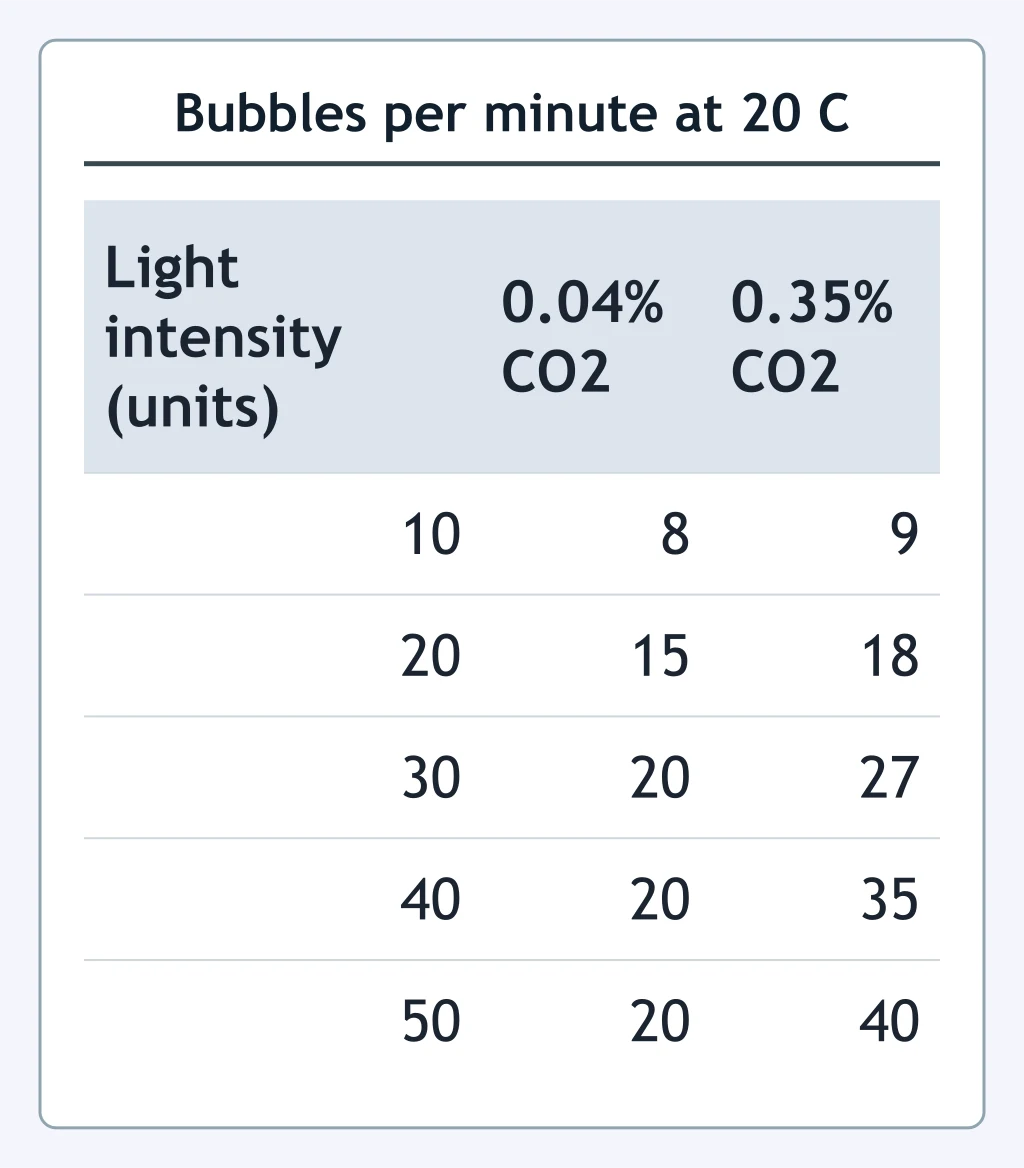
Look at the table. Two pondweed shoots at 20 C were lit at rising intensities, one in water at 0.04% carbon dioxide and one at 0.35%. What is limiting the rate of the 0.04% shoot above 30 units of light?
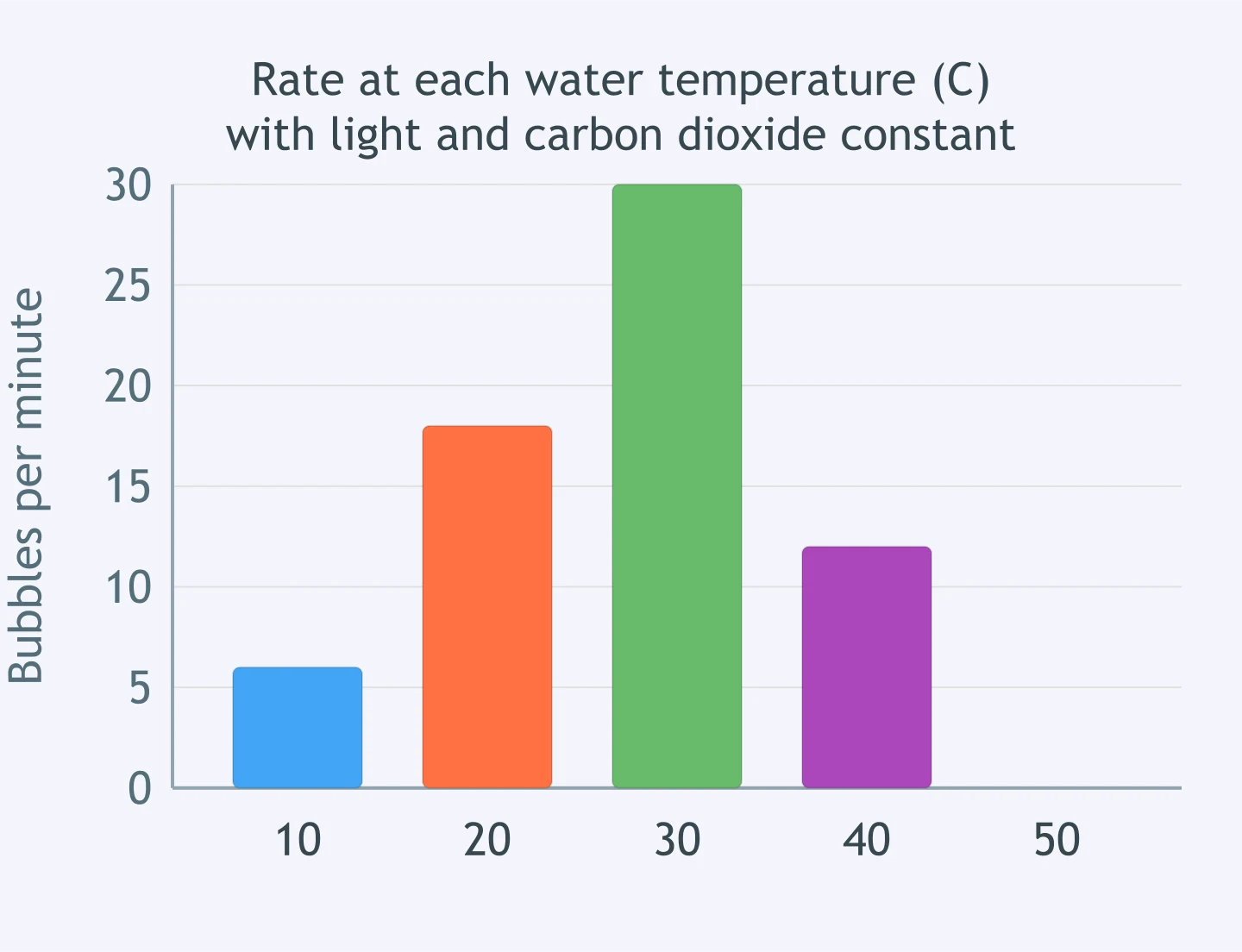
Use the bar graph. Light intensity and carbon dioxide were held constant while the water temperature was changed. What best explains the fall in rate between 30 C and 50 C?
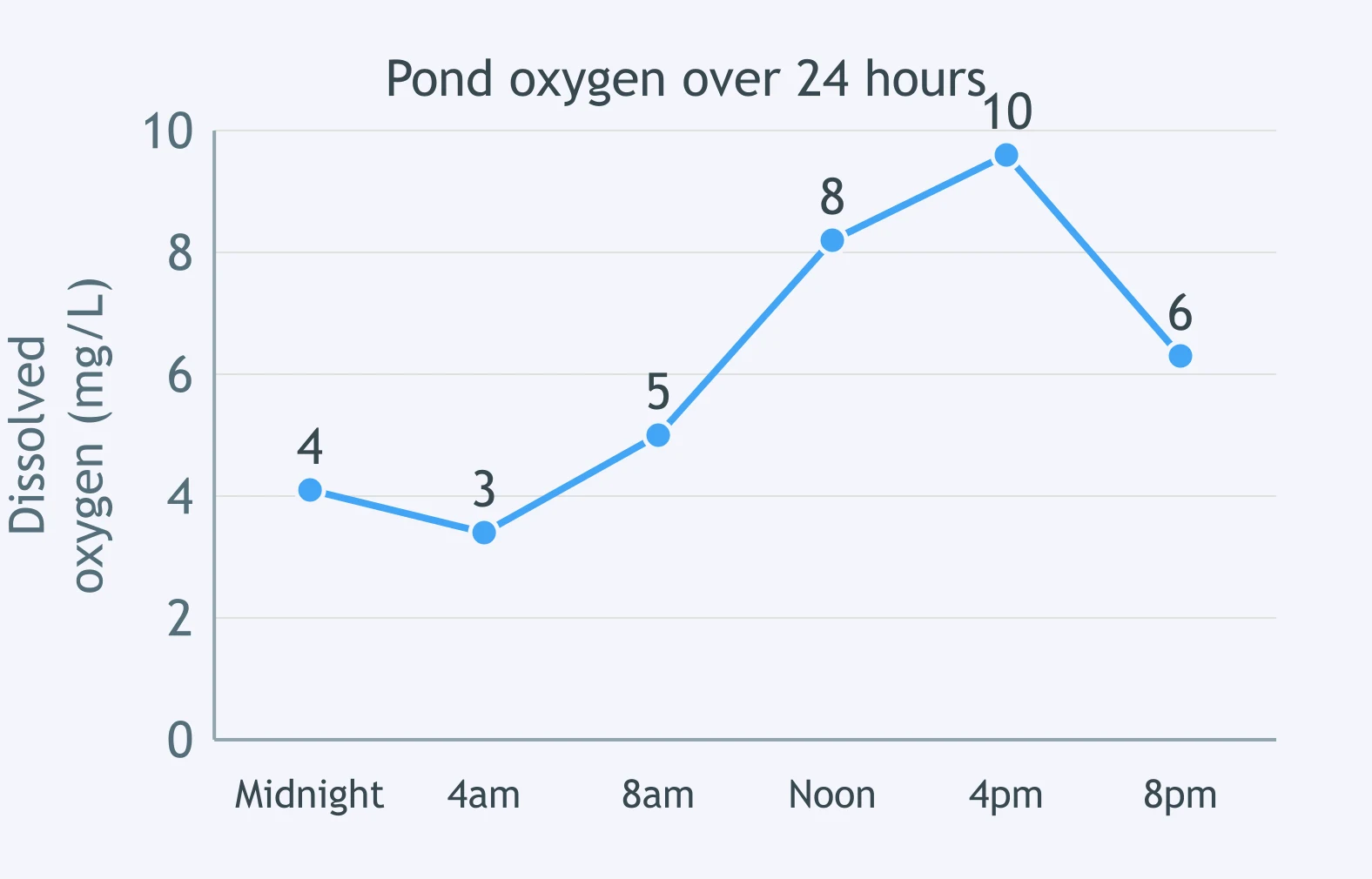
Look at the graph of dissolved oxygen in a pond over 24 hours. Why is the oxygen level lowest at 4 a.m.?
A pondweed shoot at 20 C in water with the normal 0.04% carbon dioxide gave 20 bubbles per minute in bright light. Sodium hydrogen carbonate was added to raise the carbon dioxide; in the same light the rate rose to 38. What had been limiting the rate?
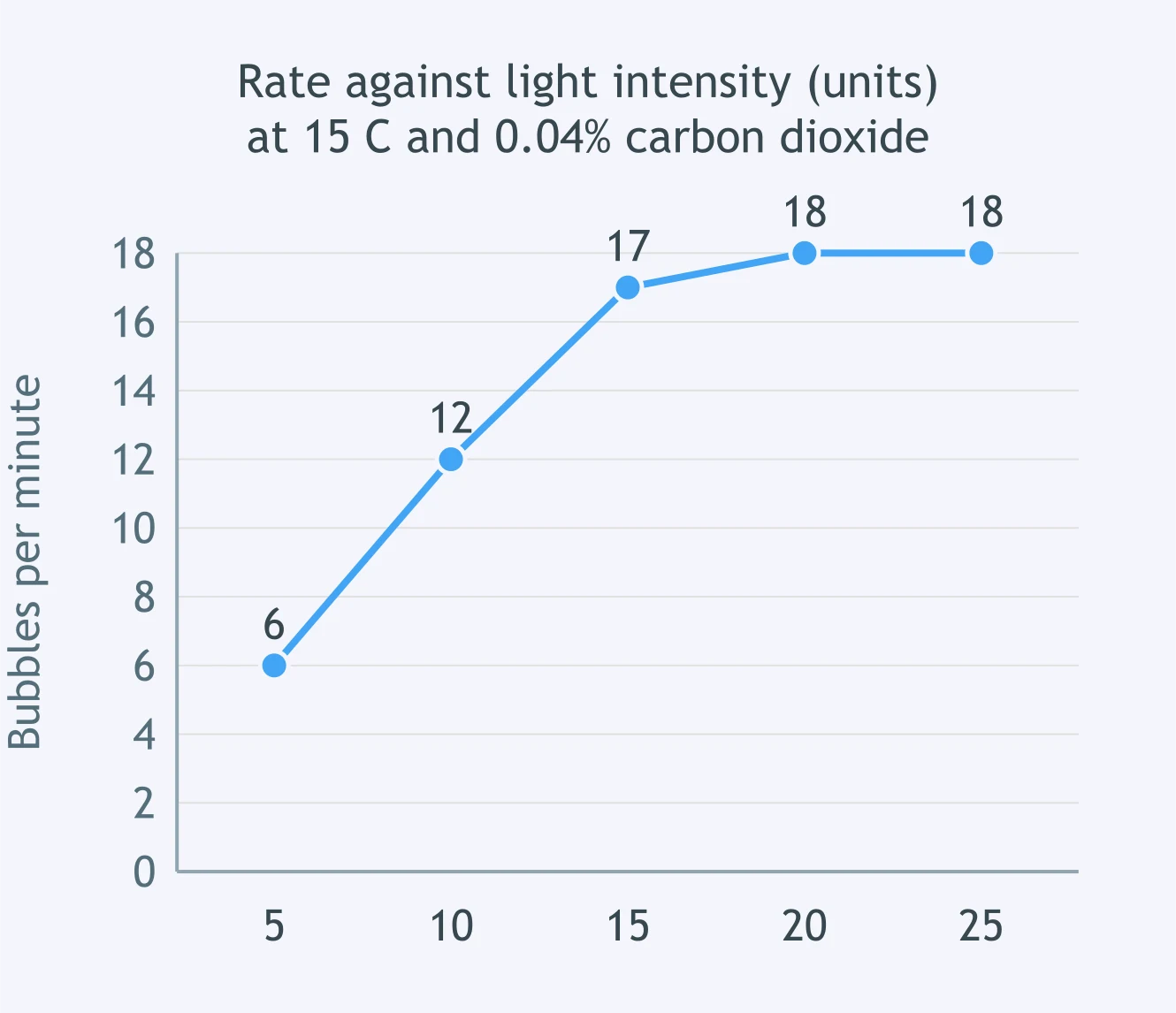
Look at the graph. The lamp is now set to give 35 units of light with the temperature and carbon dioxide unchanged. What rate is most likely?
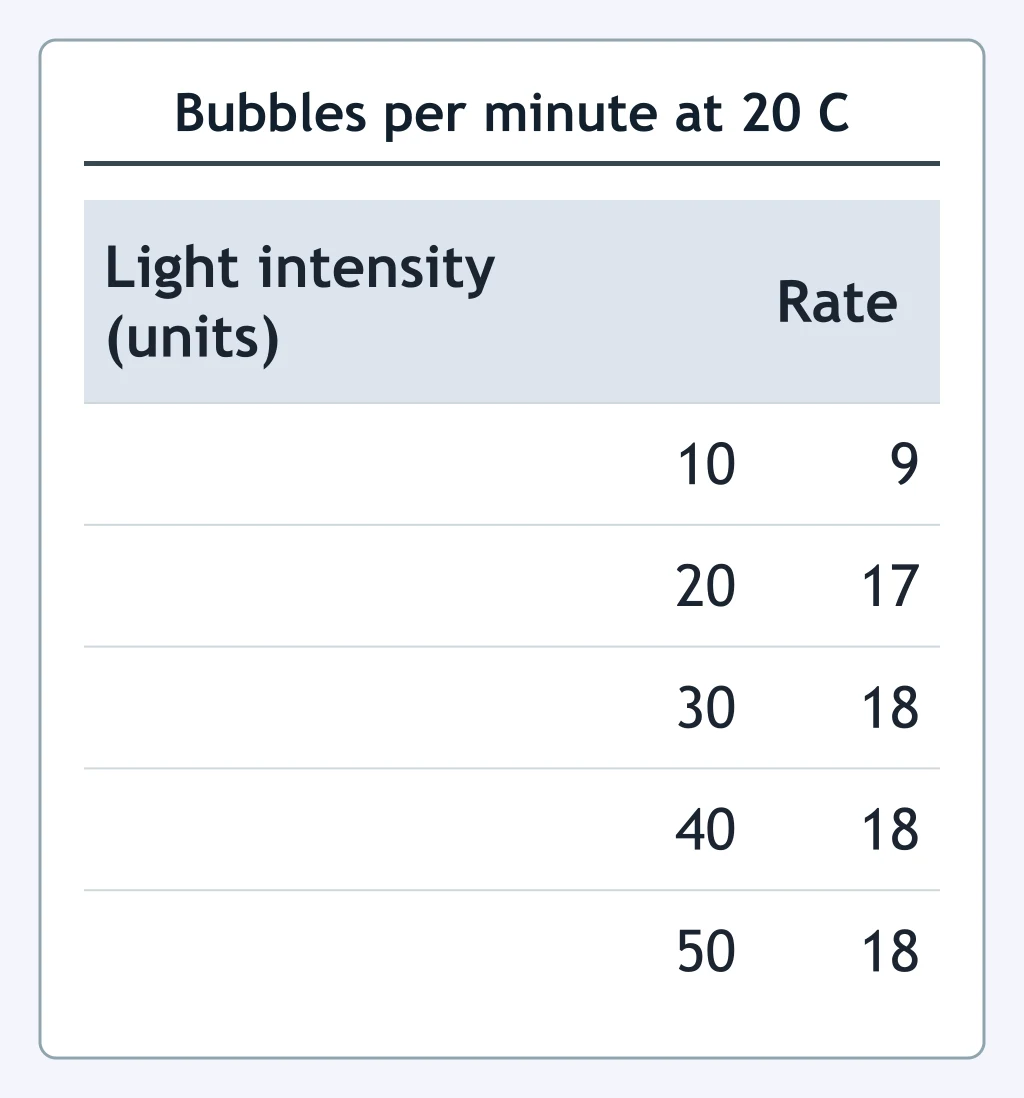
Look at the table. If the carbon dioxide concentration of the water were raised while the light stayed at 50 units and the temperature at 20 C, what would most likely happen to the rate?
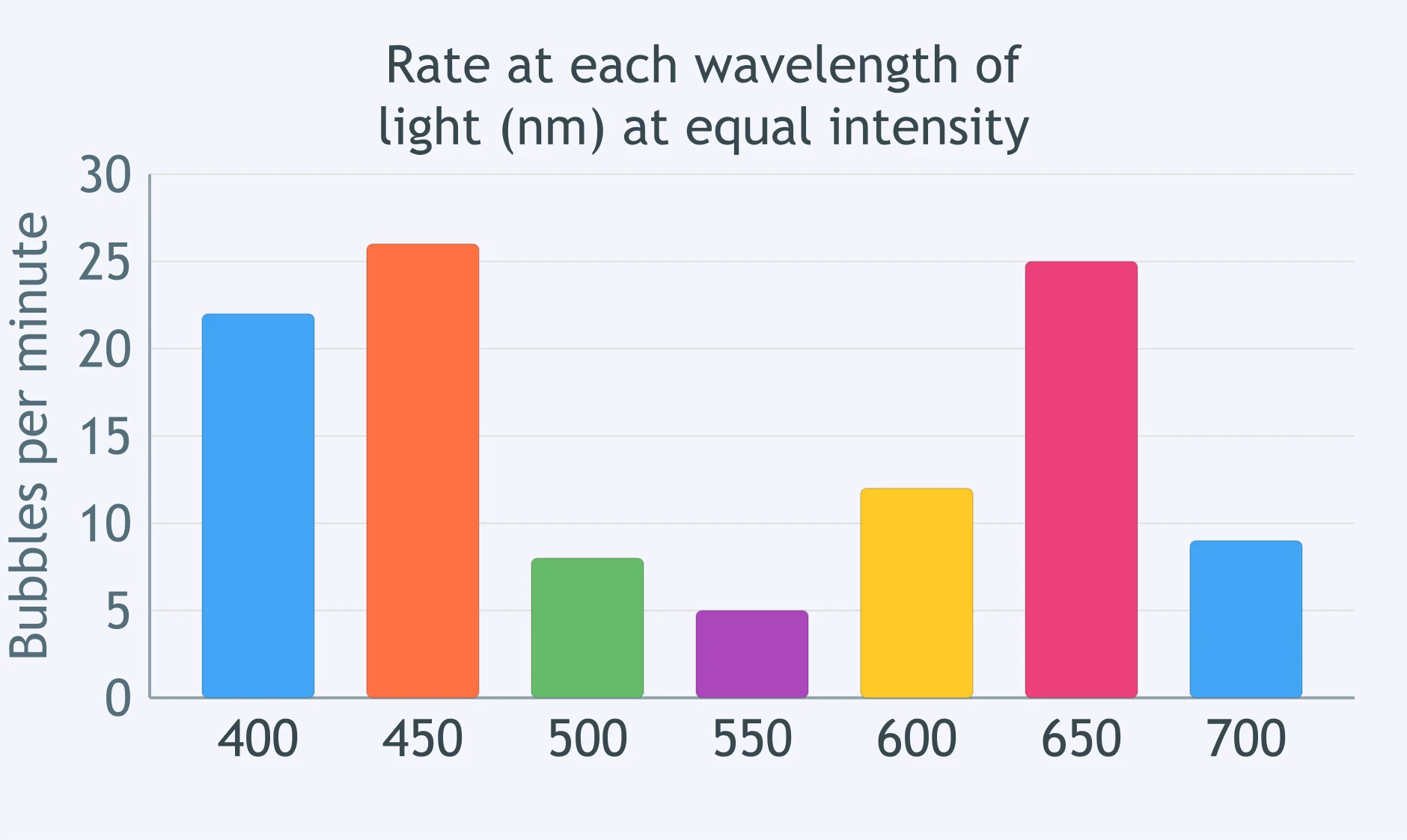
Use the bar graph. A filter passing light of 625 nm is used next, at the same intensity and temperature. Which rate is most likely?
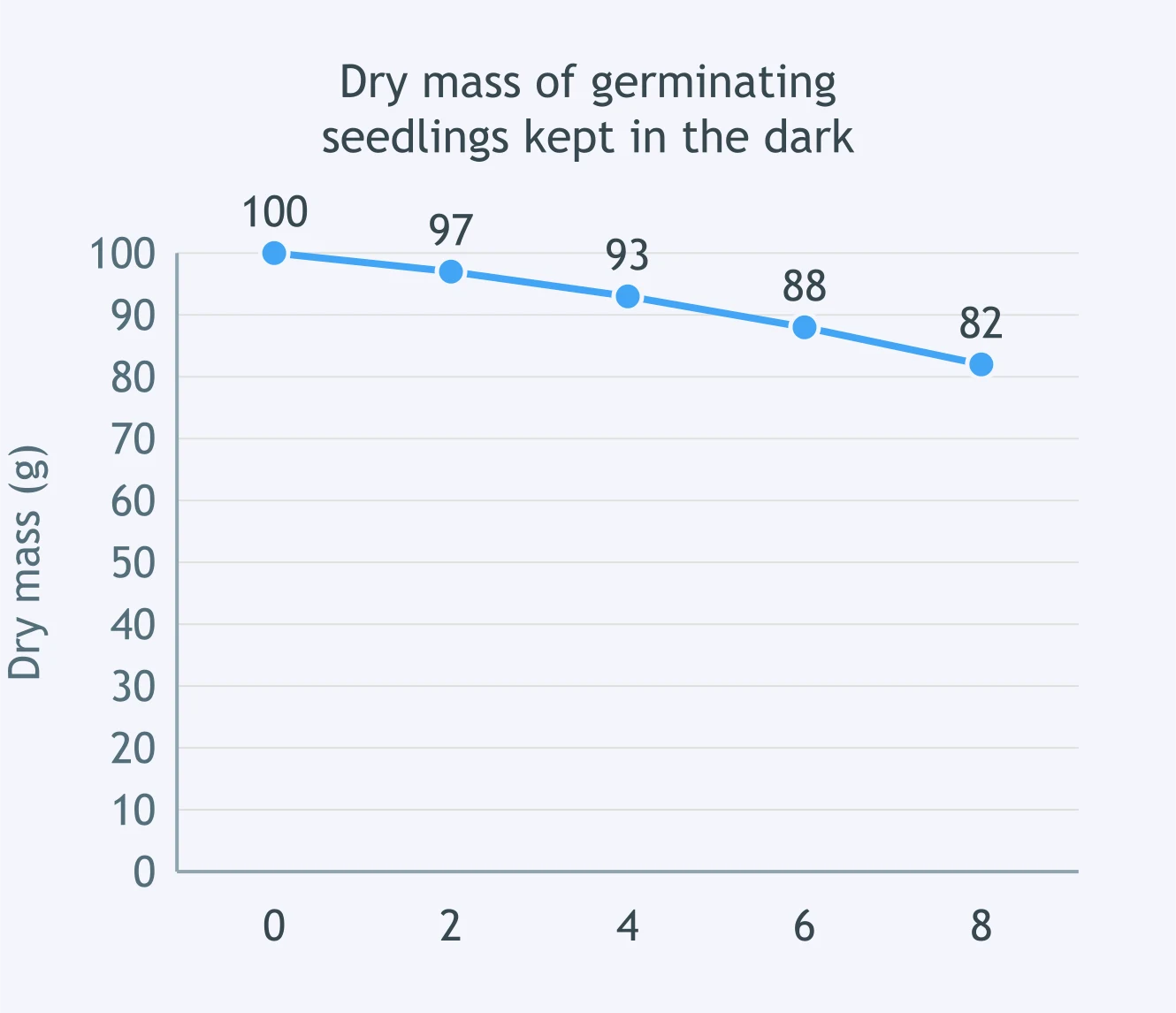
Look at the graph. Germinating seedlings were kept in complete darkness and their dry mass was measured every two days. What is the most likely dry mass on day 10?
Sodium hydrogen carbonate was added to a pondweed beaker to supply carbon dioxide, with bright light and 20 C held constant. The rate was 7 bubbles per minute at 0.0 g/L, 16 at 0.5, 26 at 1.0 and 34 at 1.5. What would 2.0 g/L most likely give?
A student counted bubbles from a pondweed shoot for one minute at each of four lamp distances, took a single count at each distance, and concluded that light intensity controls the rate. What is the strongest criticism of this method?
A class moved a lamp closer to a pondweed shoot in steps, keeping the water at 20 C, and counted more oxygen bubbles at every closer distance. Which conclusion is NOT supported by this investigation?
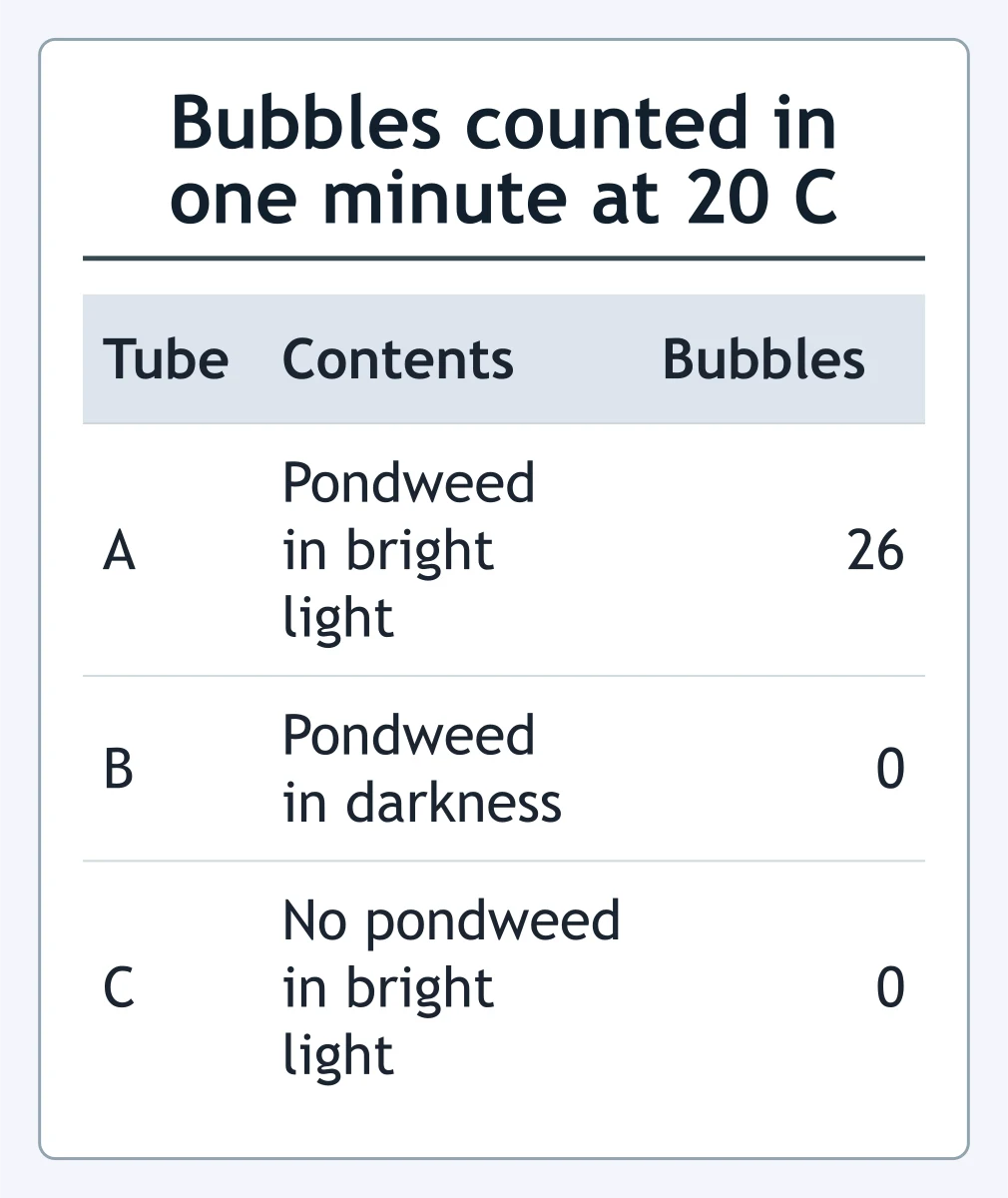
Look at the table. Three tubes were set up at 20 C and the bubbles in each were counted for one minute. Why were tubes B and C included?
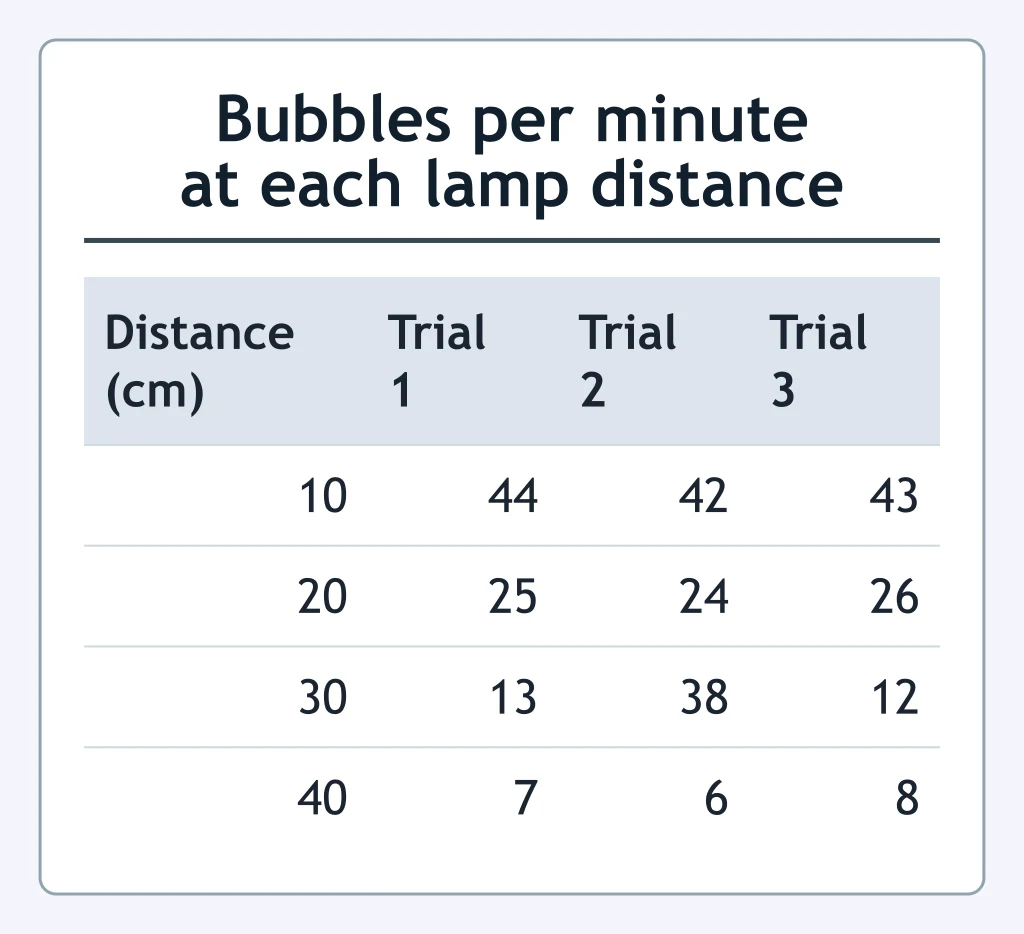
Look at the table of repeat bubble counts. How should the student treat the trial 2 reading of 38 at 30 cm?
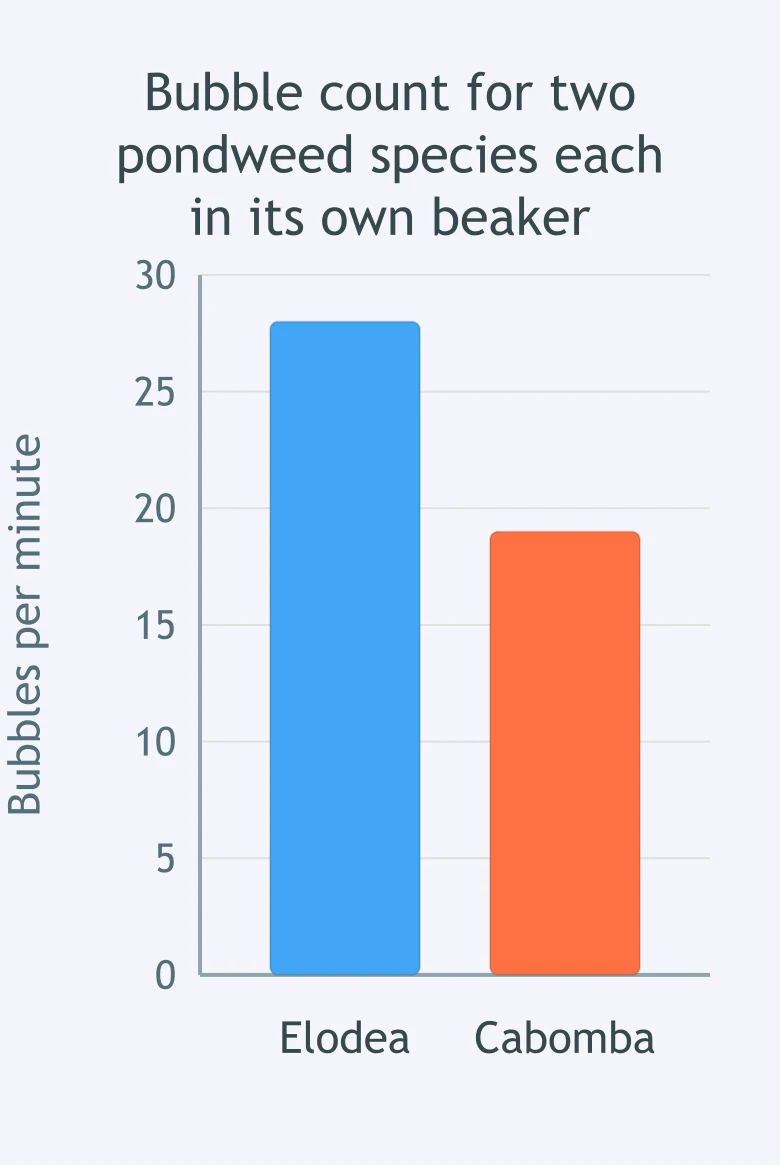
Use the bar graph. Each shoot was a different length and each beaker stood at a different distance from the lamp. What does this data establish?
Crack the passcode before the zombies get in.
Answer, then swat bugs for bonus points.
Race through questions at your own speed.
Same question on every screen. Fastest wins.

Pick a tile, answer, hit bonuses and steals.
Aerobic Respiration and Fermentation
20 questions