Loading
by BlastRoom
Identify folds, faults, stresses, and mountain-building evidence in cross sections and real ranges.
#earth_space_science
30 questions
One question set, multiple game modes. Tap any game to see it in action. Not sure which to pick?
Answer to place stones and capture territory.
Outrun the snow together.
Earn blasts, then hunt the other team.
Answer to earn energy, then climb.

The class blasts through walls together.
Bid on mystery lots. Most money wins.
Sell tours. Nice, standard, or a total scam.

Answer, restock, and serve the rush.
More correct answers pulls the rope your way.
Answer, then shoot down the alien wave.
Answer, then tap to leap the frozen ridge.
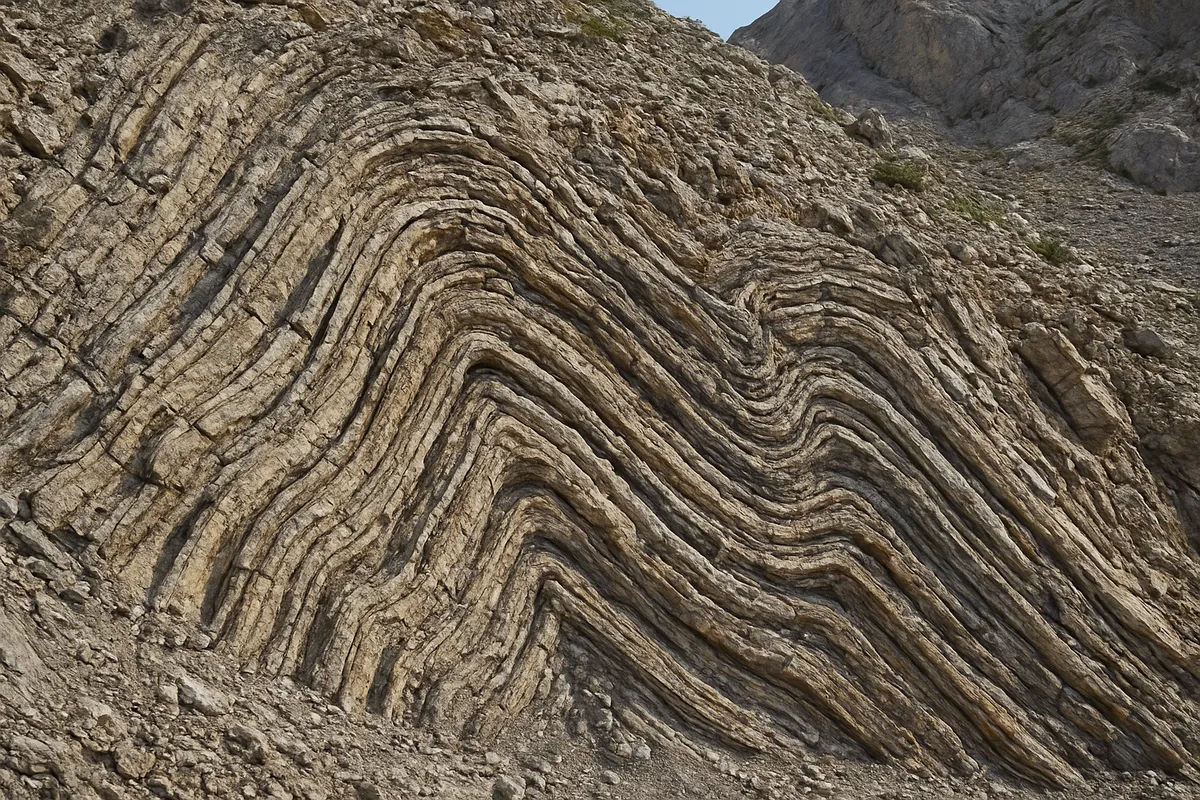
Use the cross section. The sedimentary layers bend into an upward arch. What fold is shown?
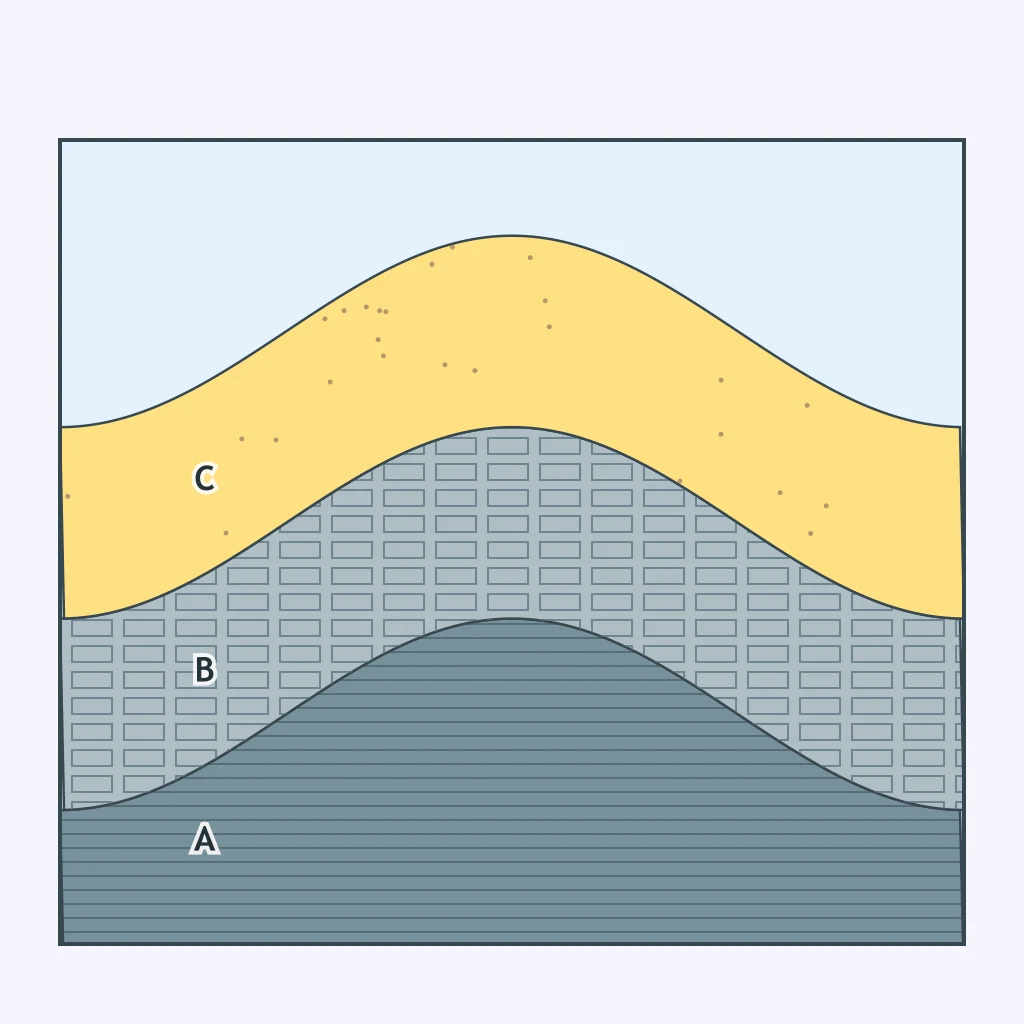
In the cross section, the rock layers dip toward the center of a trough. Which fold is drawn?
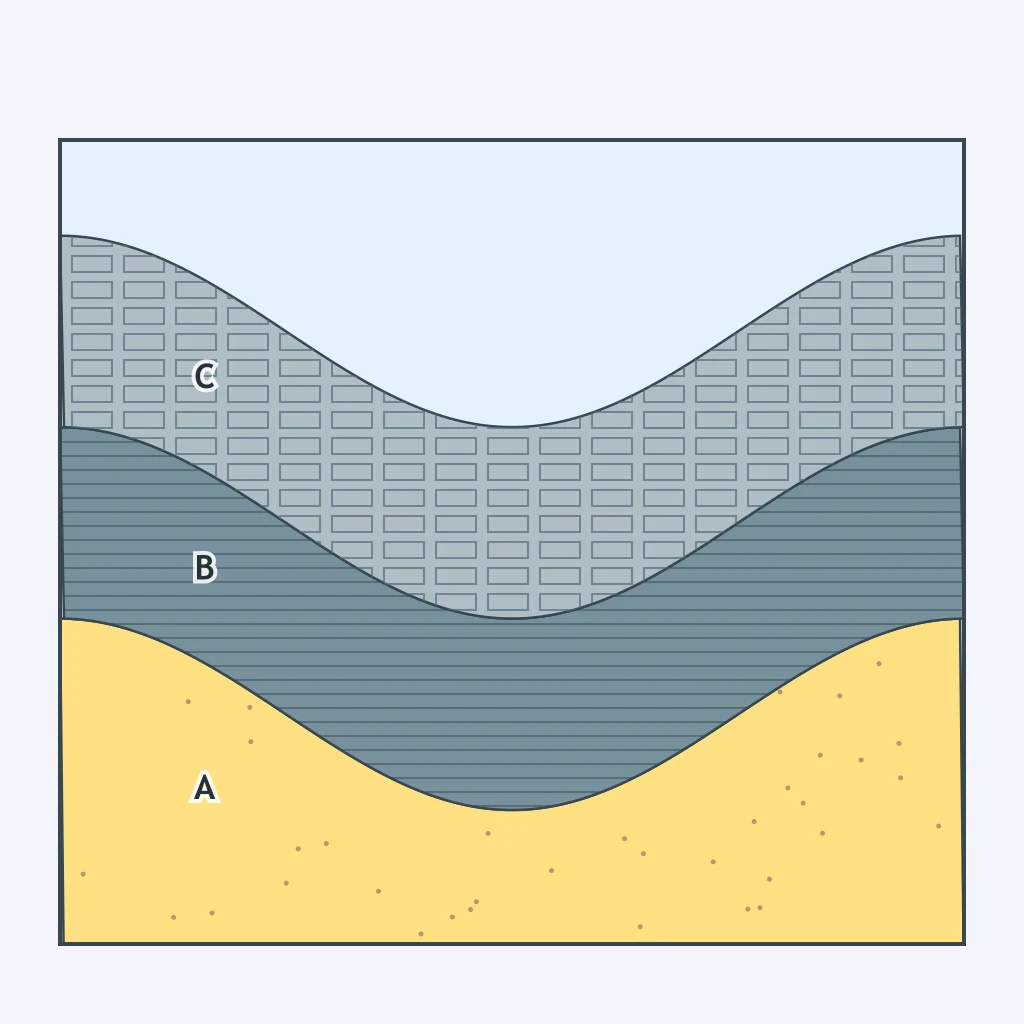
The folded section shows beds arched upward, so erosion would expose the oldest bed near the fold axis. What structure is it?
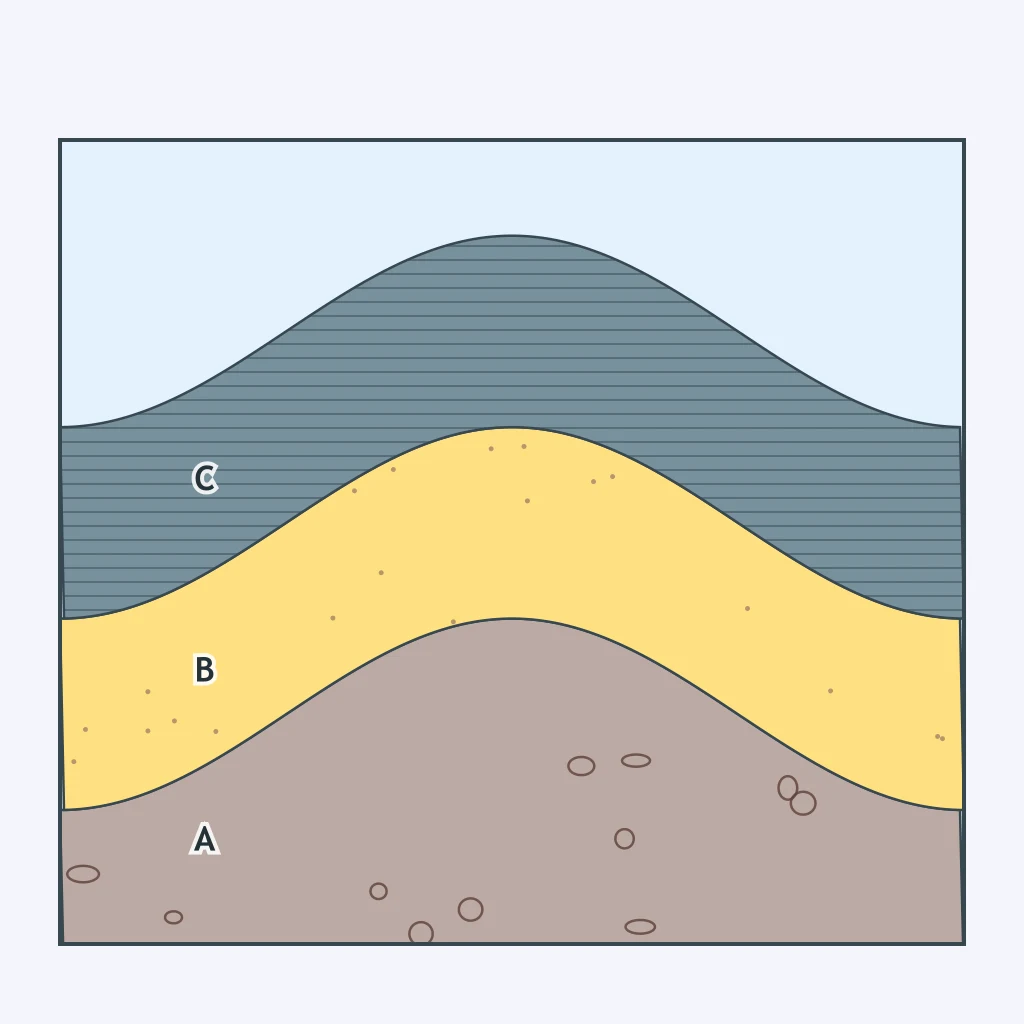
Study the cross section. The beds curve downward into a U-shaped trough. Which term names this fold?
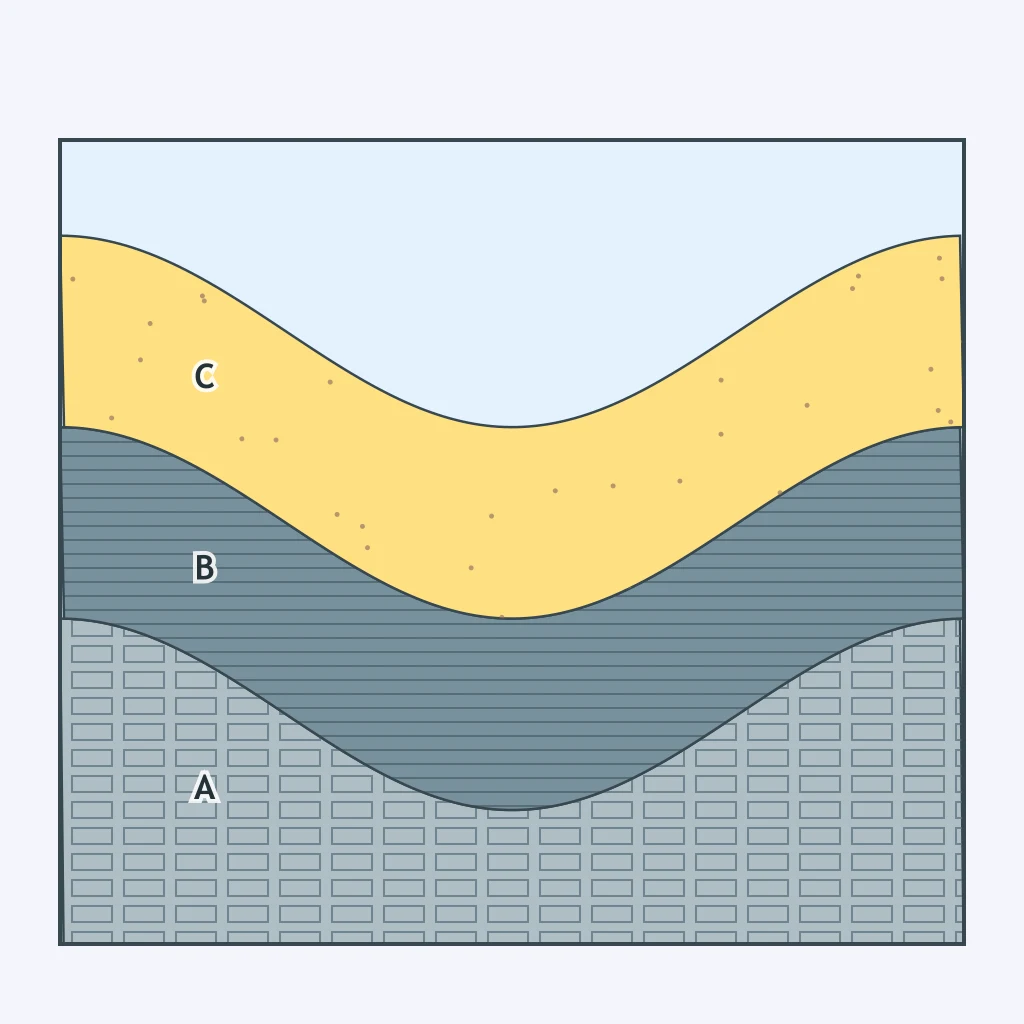
The cross section shows layered rock bent into a central arch, not a step-shaped bend. What fold does the diagram show?
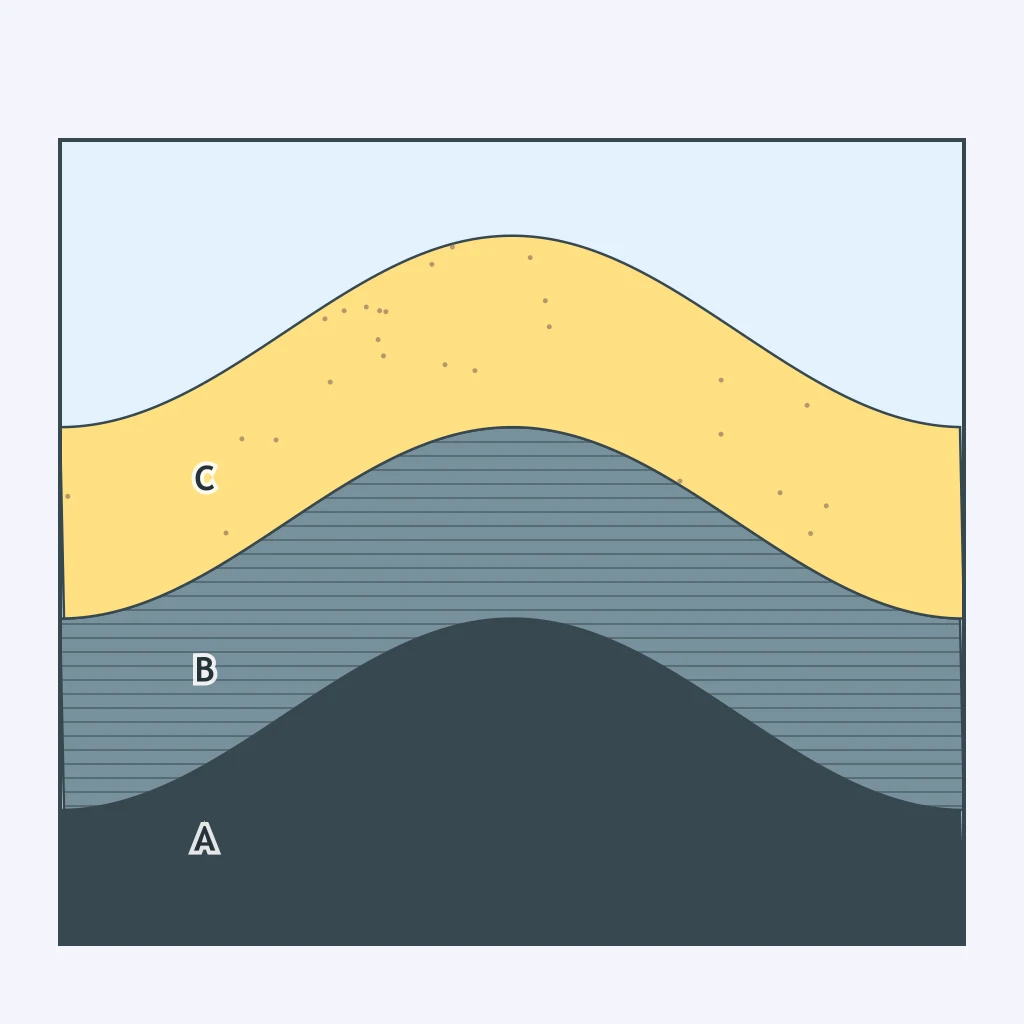
Use the section of folded strata. The layers sag toward the middle instead of rising into an arch. Which structure is present?
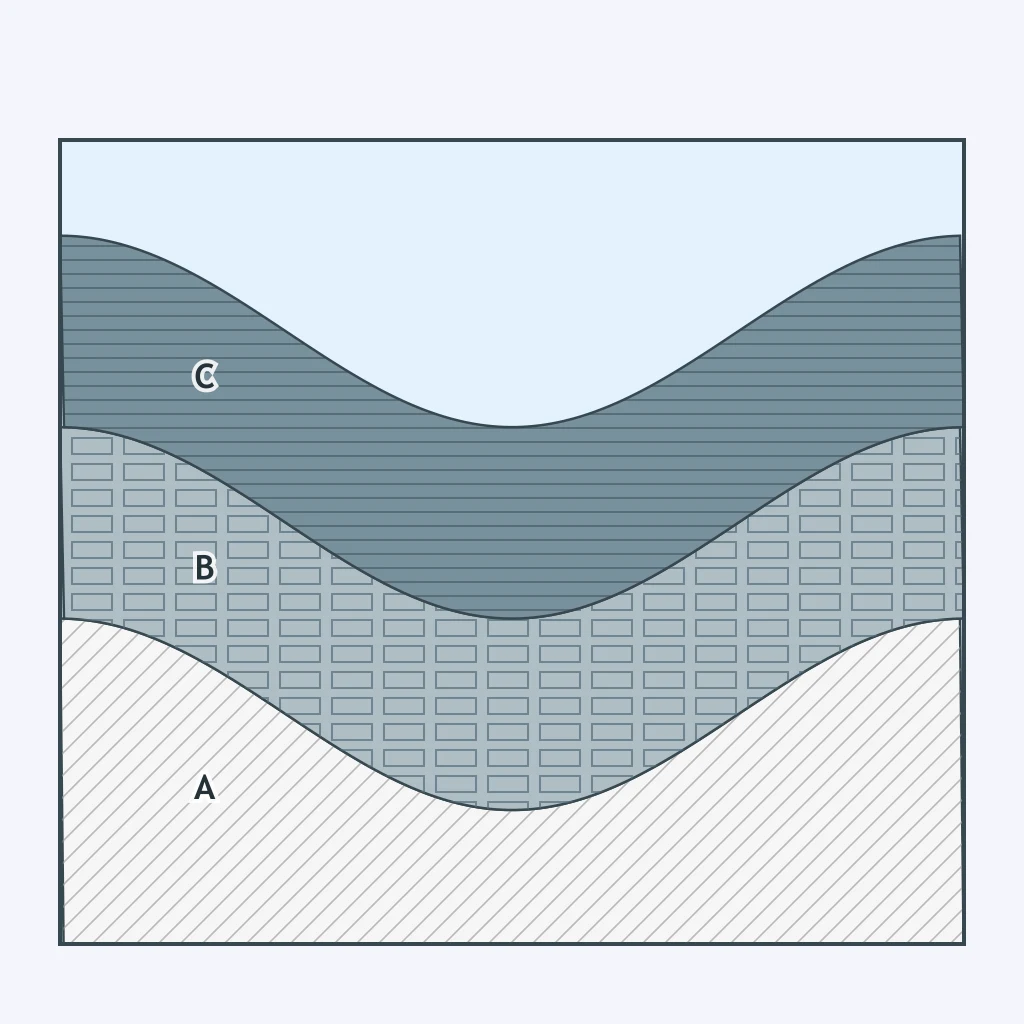
Look at the fold axis in the cross section. The strata slope away from the center on both sides. Which fold is drawn?
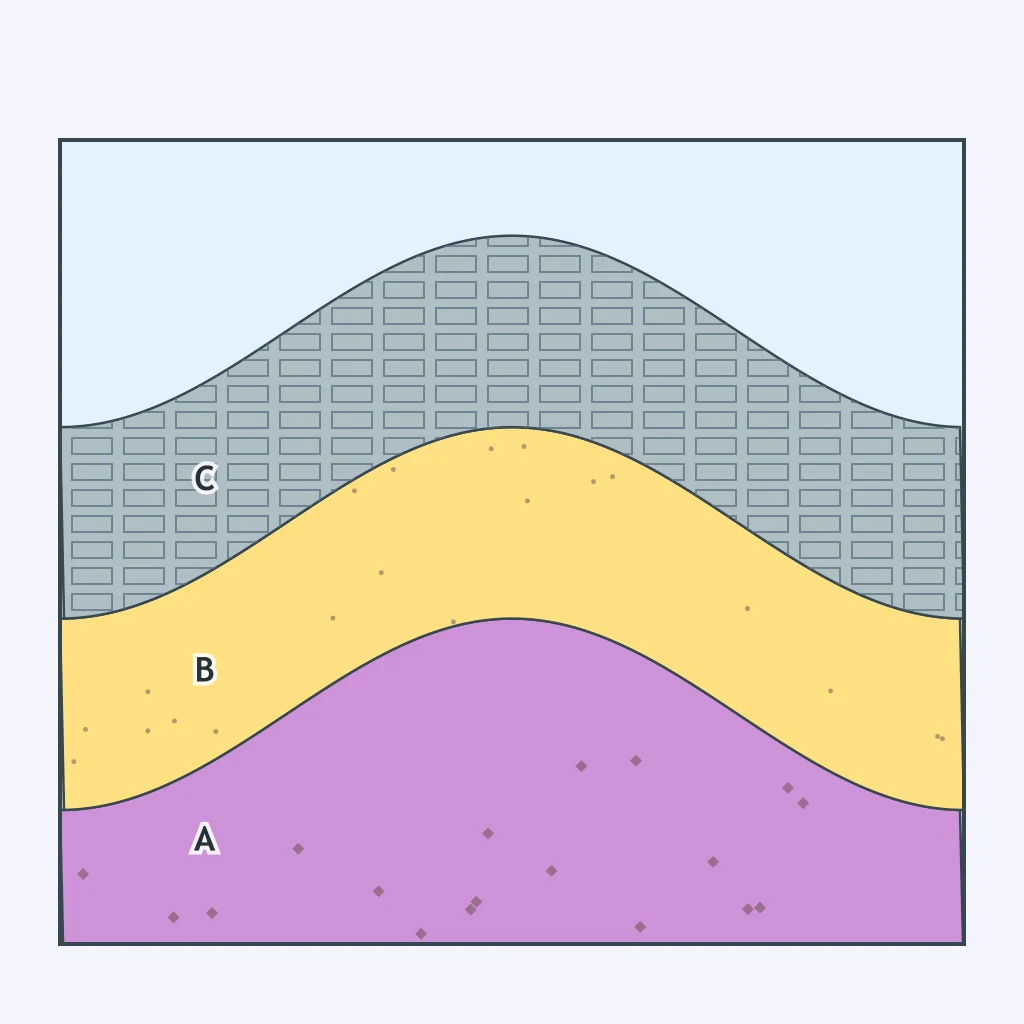
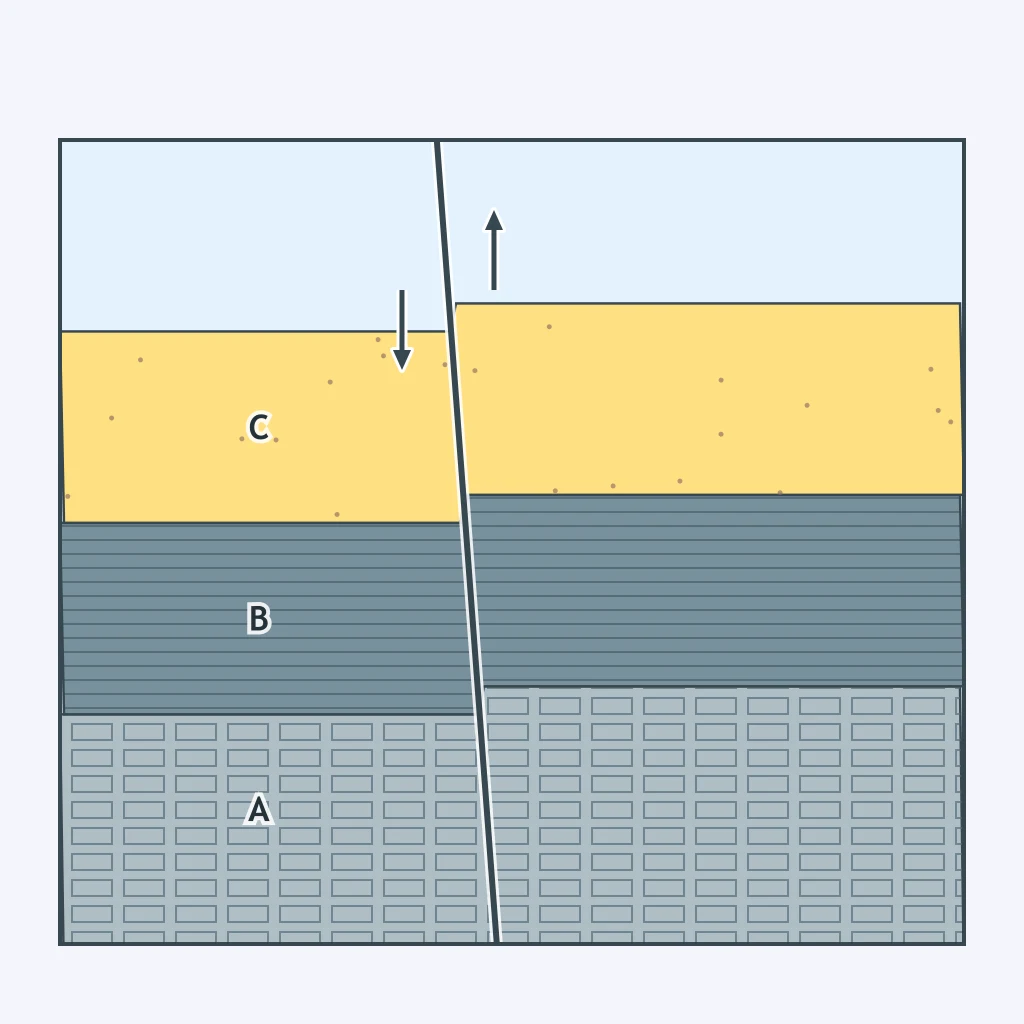
In the faulted section, the block above the sloping fault plane moved down relative to the block below it. Which fault type is shown?
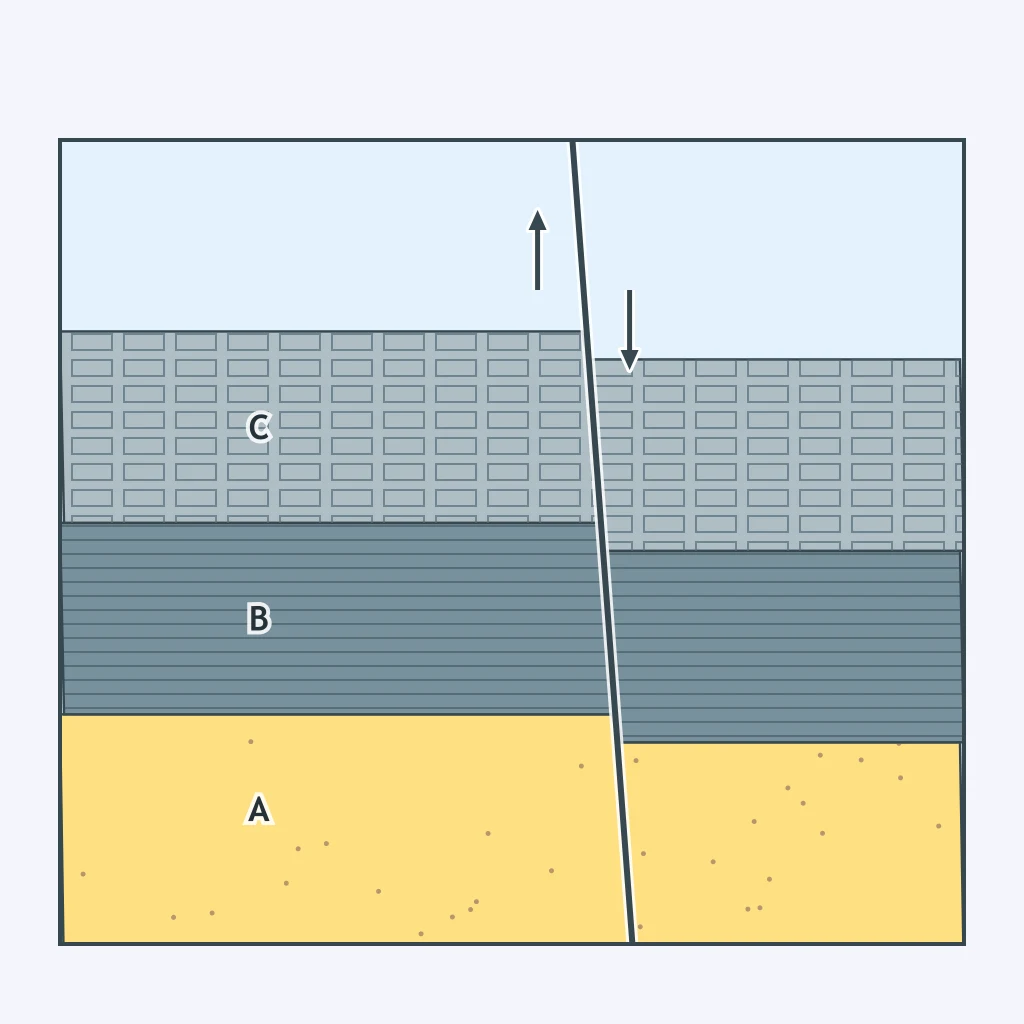
The arrows on the steep fault plane show the hanging-wall block moving up and over the lower block. What fault is drawn?
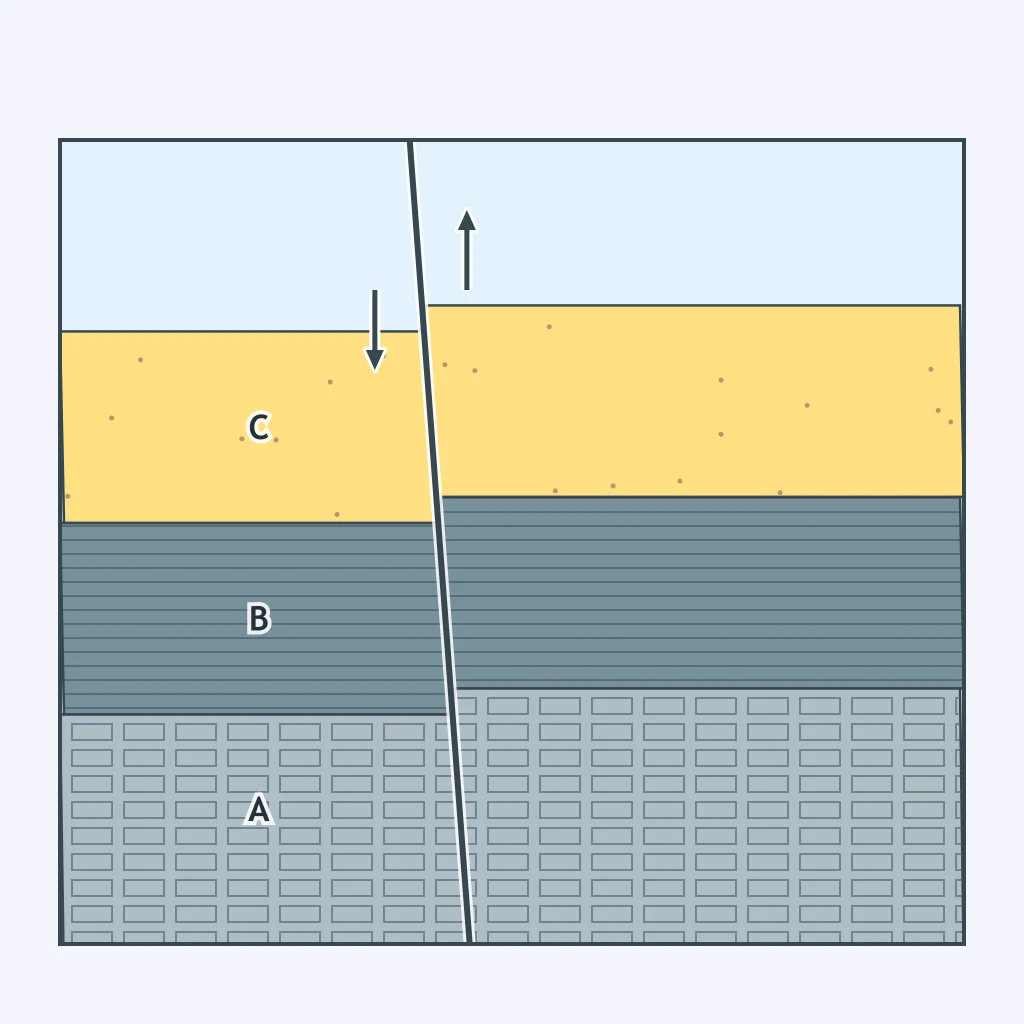
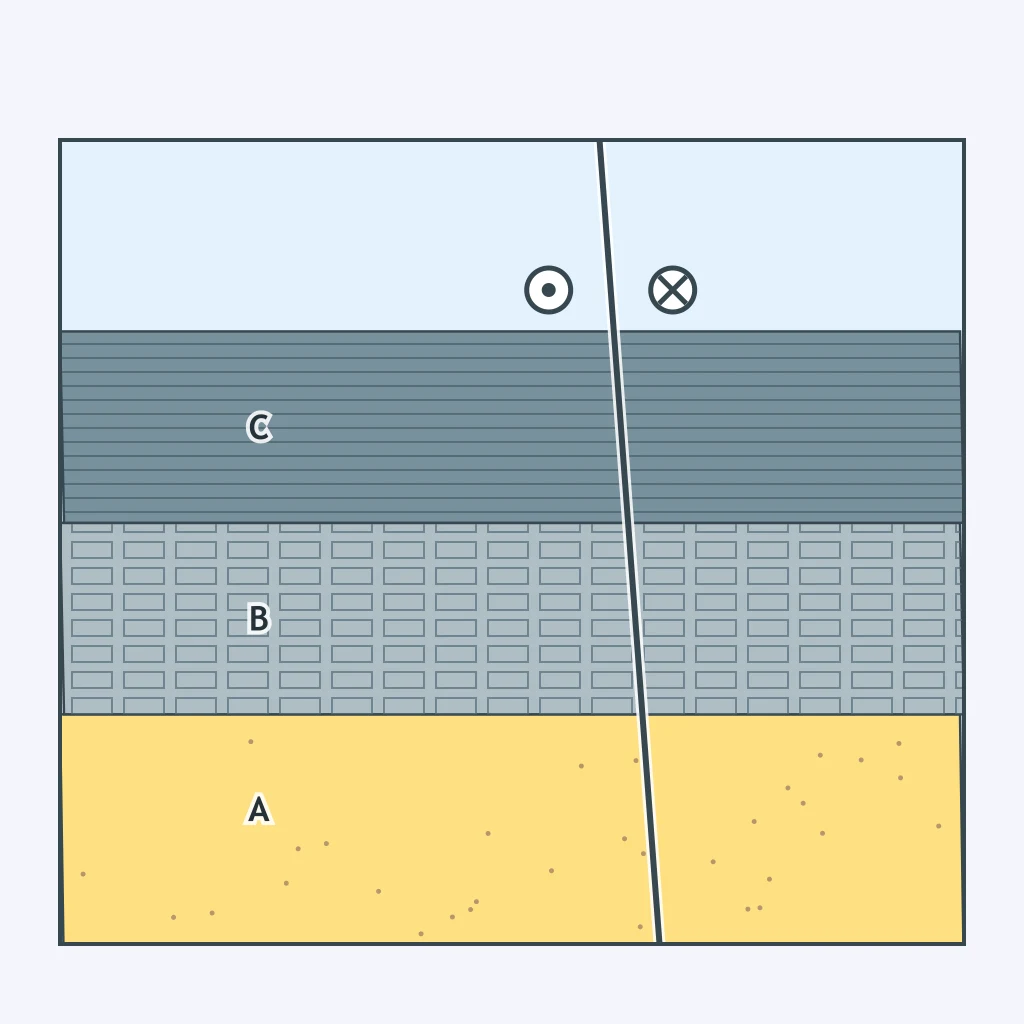
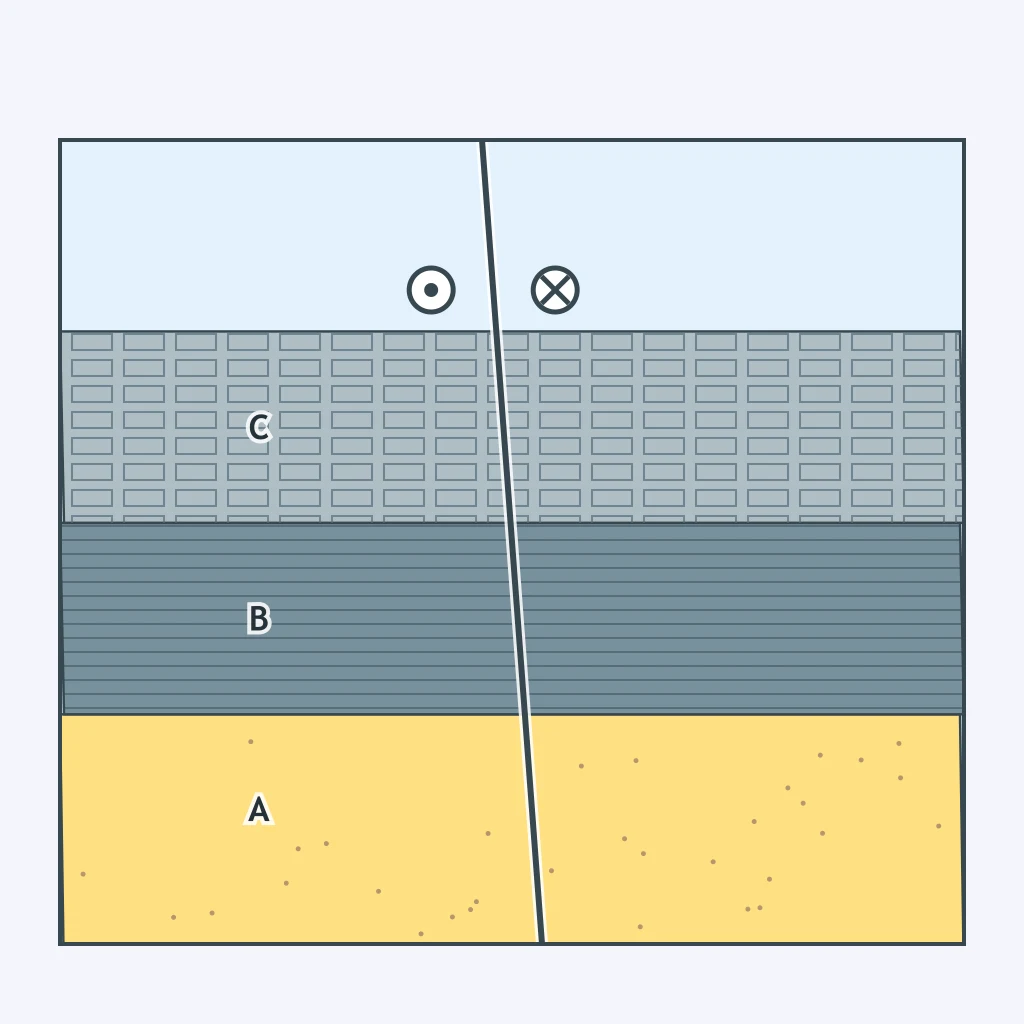
The section shows rock blocks sliding horizontally past each other along a nearly vertical break. Which fault type is represented?
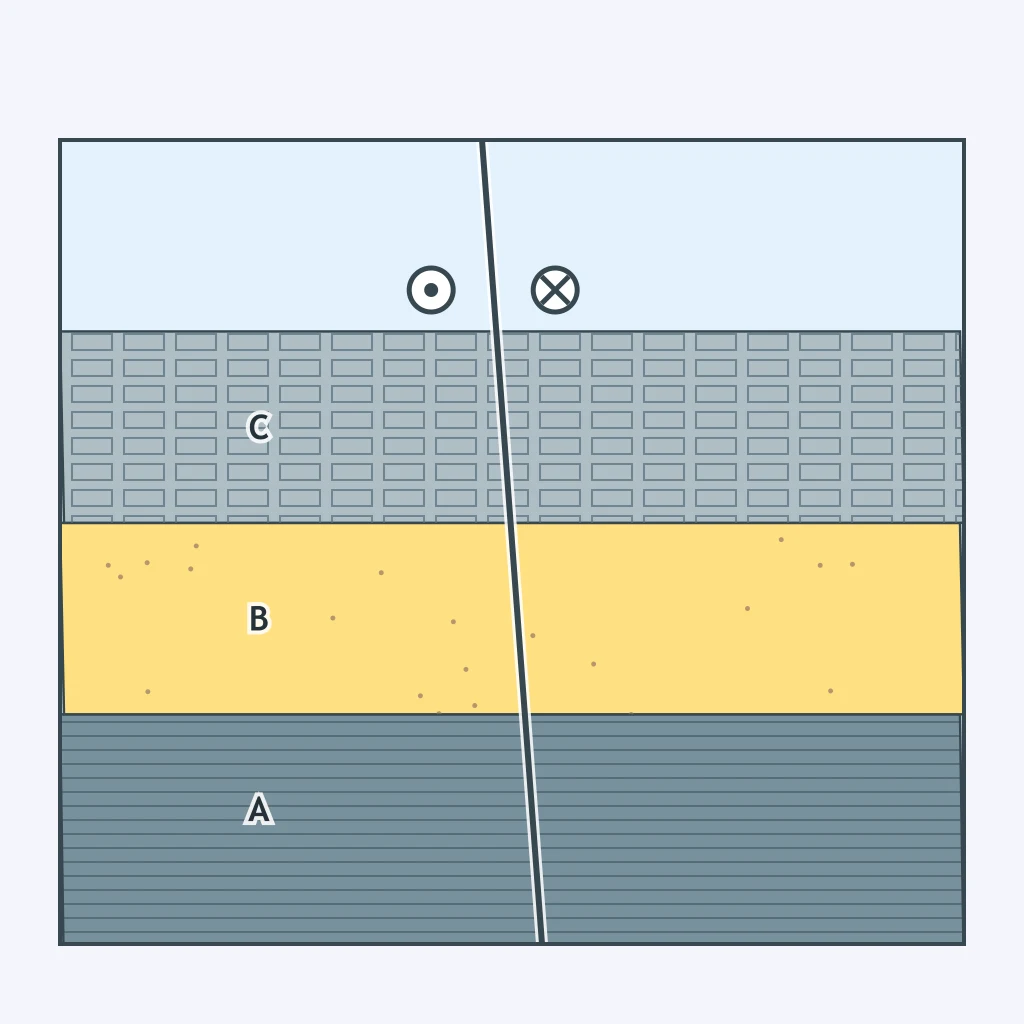
A sloping fault cuts the strata, and the upper block has dropped downward. Which name matches the movement in the diagram?
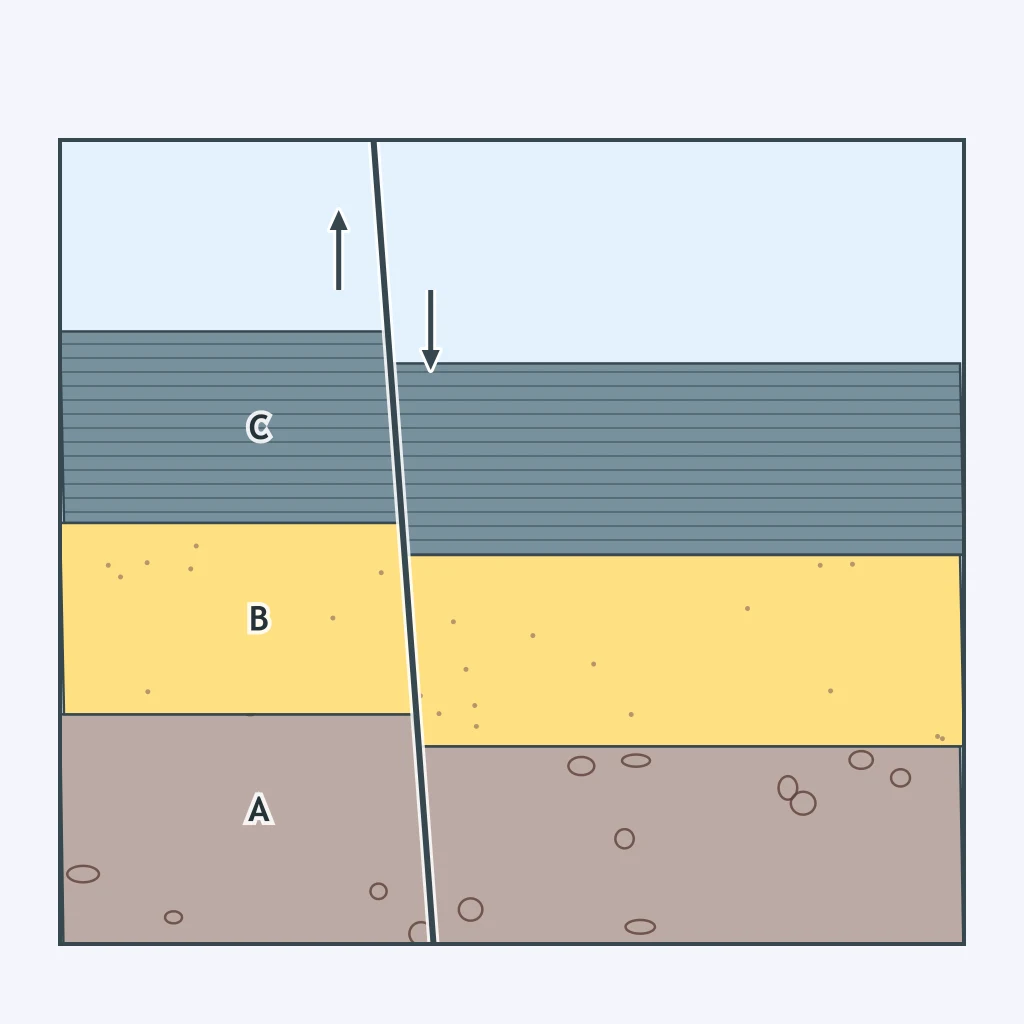
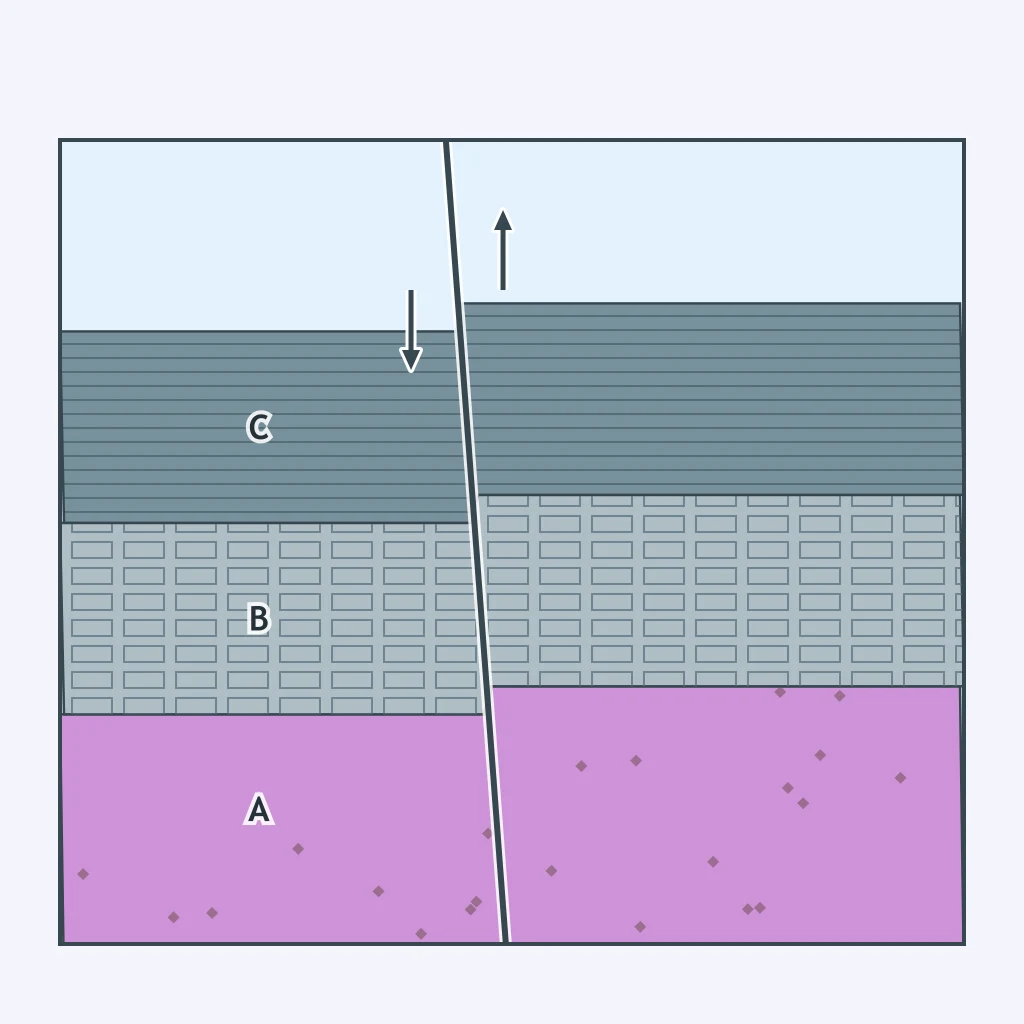
The fault arrows show shortening: the block above the fault plane moved upward relative to the opposite side. Which fault is shown?
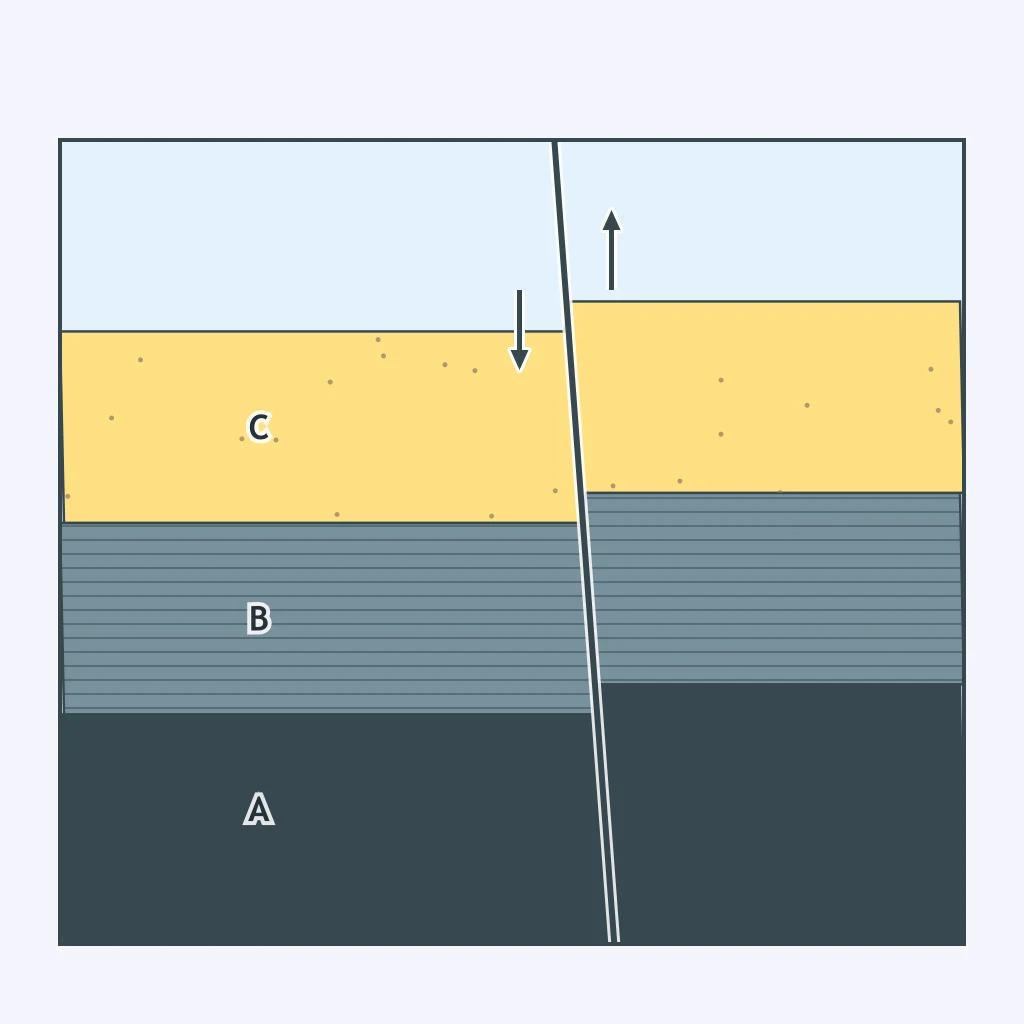
Use the arrows in the cross section. Extension has pulled the crust apart and dropped the hanging wall. What fault is drawn?
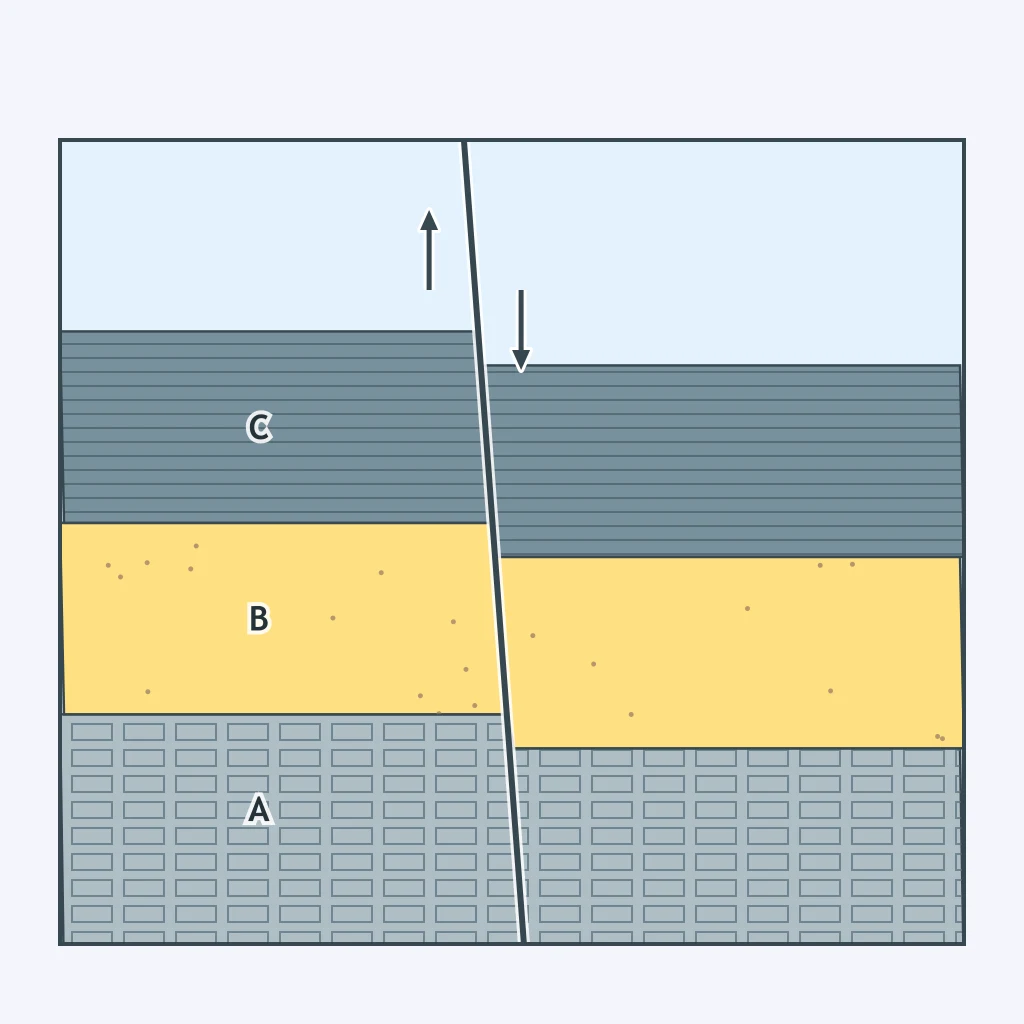
A vertical fault offsets matching beds sideways, with little up-or-down displacement. Which fault type does this motion indicate?
The upper block in the faulted strata has moved up instead of down along the fault plane. Which fault type is shown?
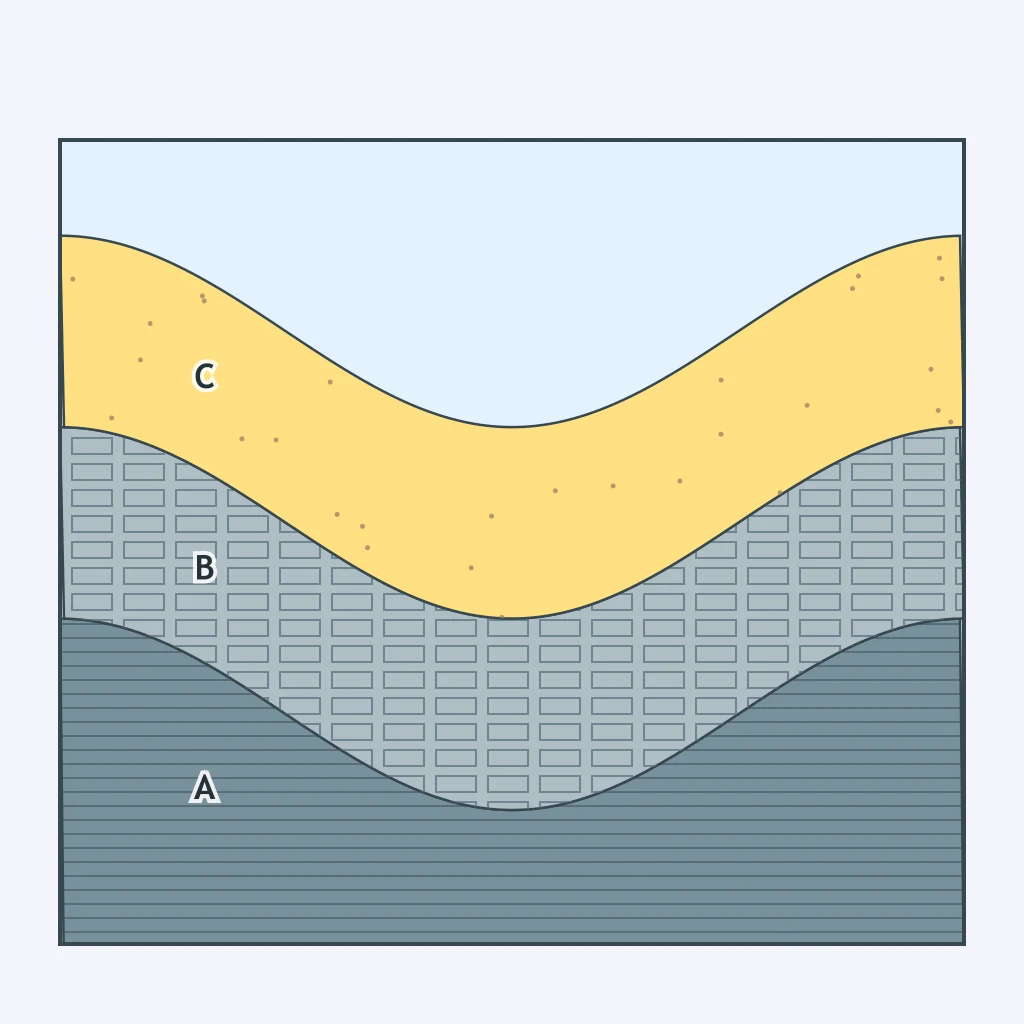
Layers in the cross section are squeezed into folds without being pulled apart. Which stress produced this structure?
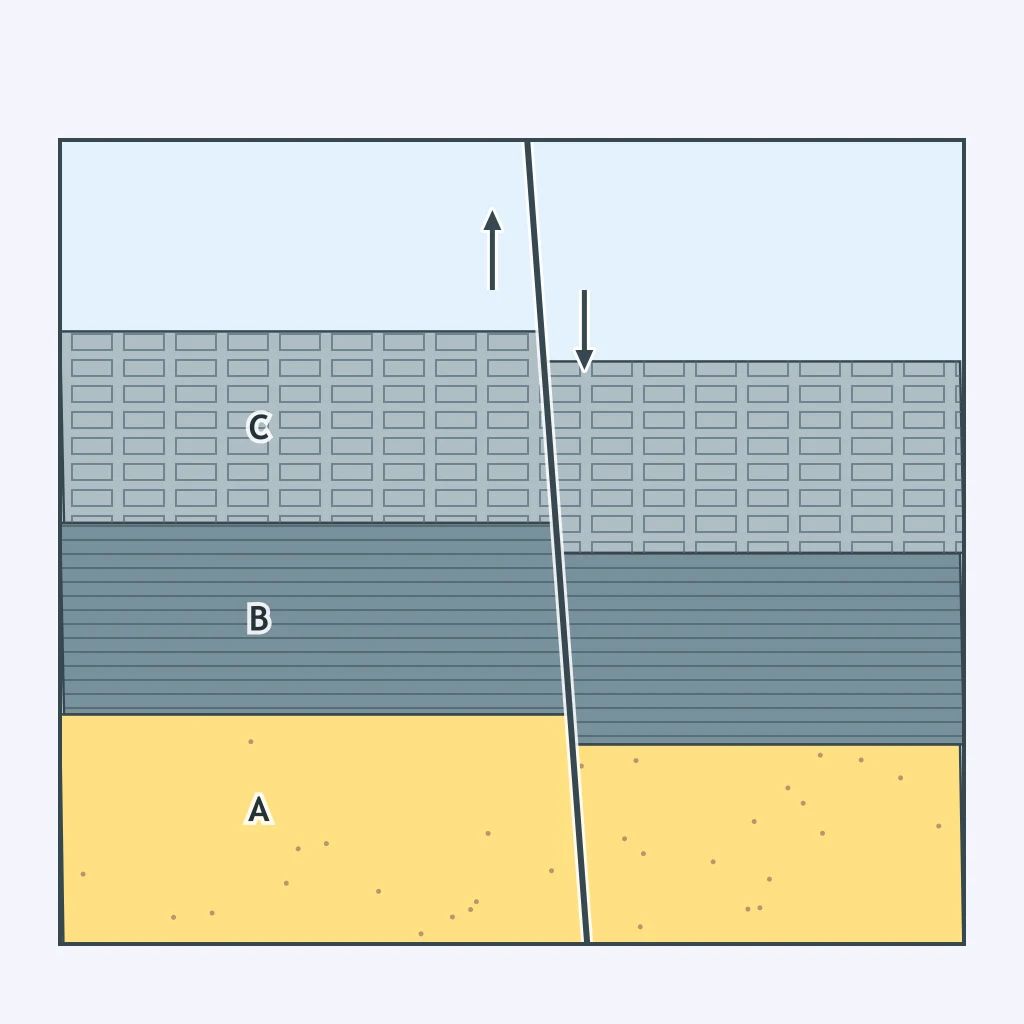
The cross section shows a normal fault with the hanging wall dropped. Which stress most directly caused this motion?
A fault diagram shows blocks sliding sideways past each other, not rising or dropping. Which stress best matches that movement?
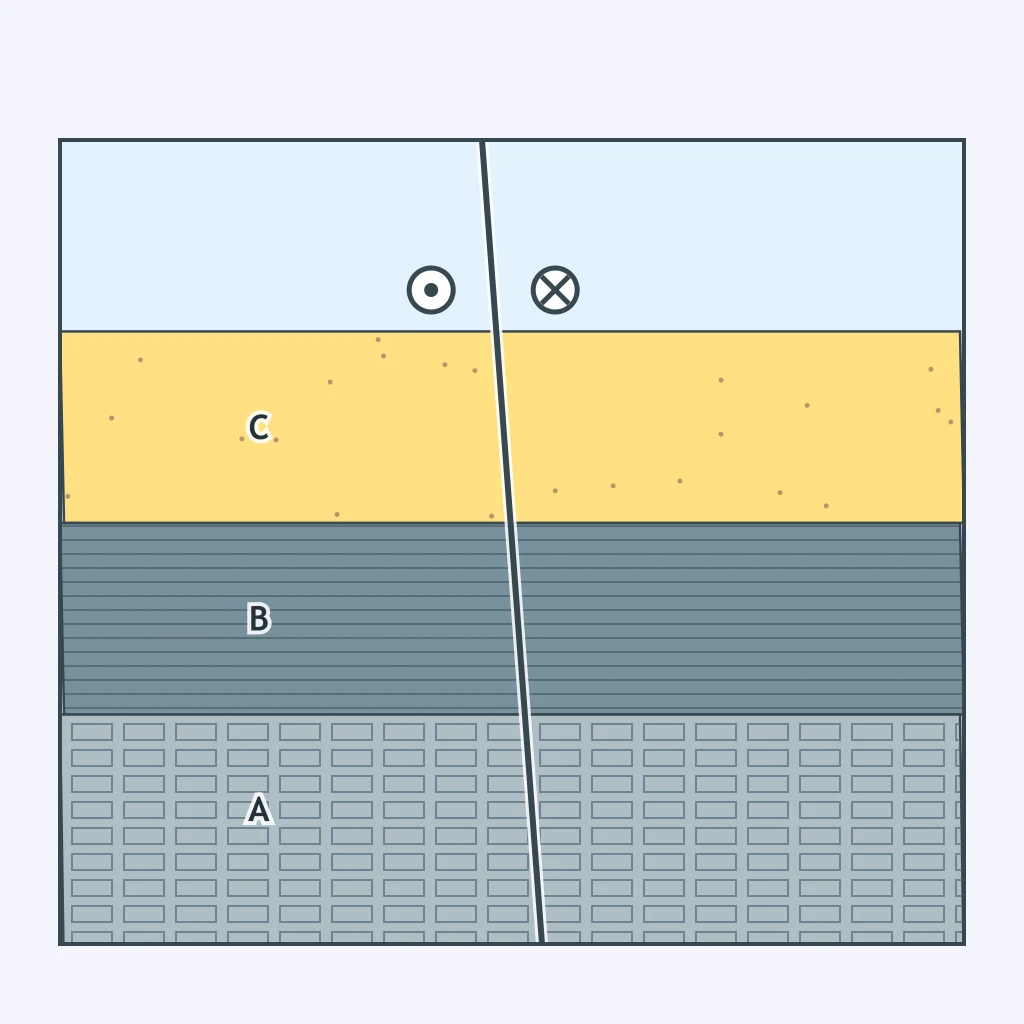
The cross section shows a reverse fault that shortens the rock layers. What type of stress produced it?
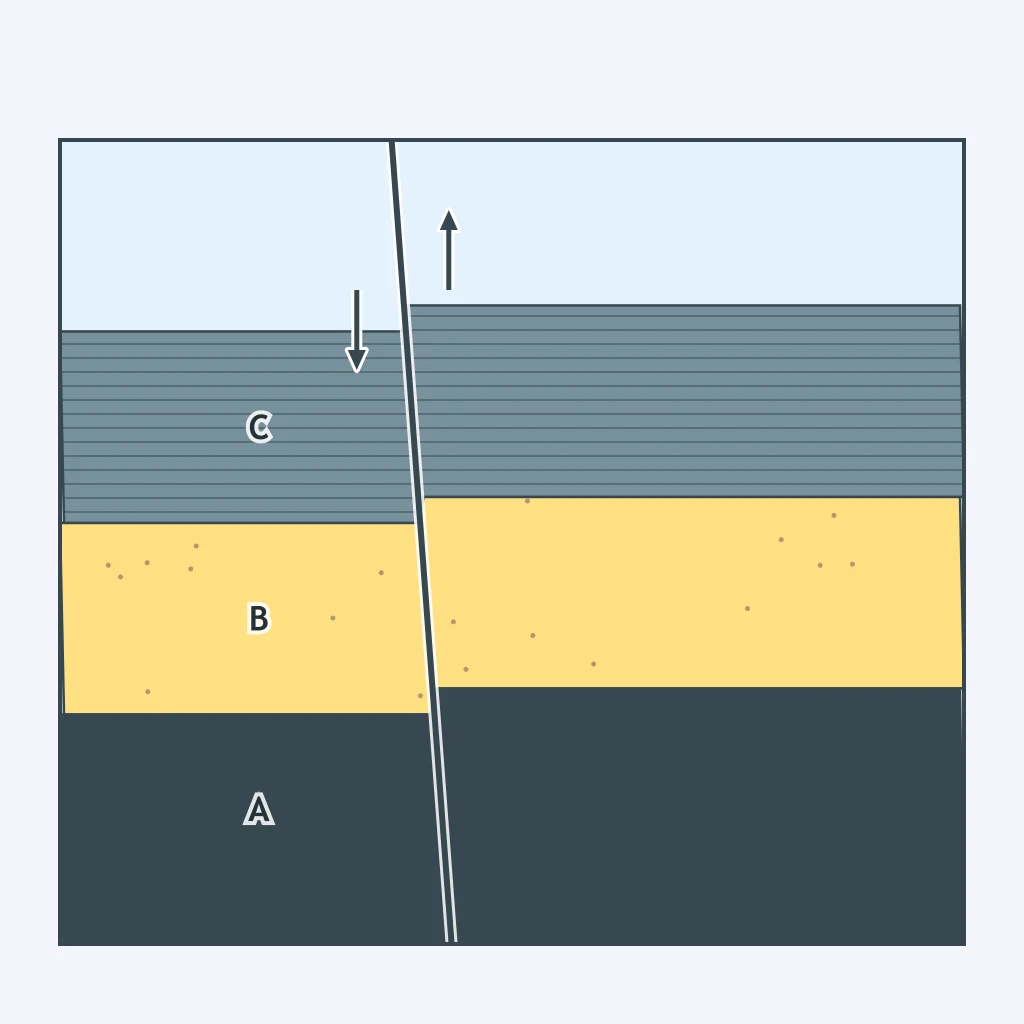
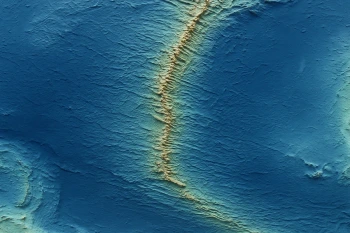
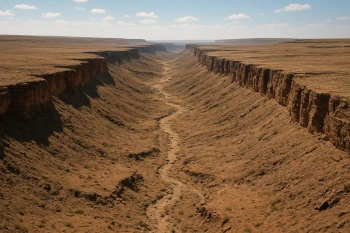
A rift valley forms as crust is stretched and blocks drop along normal faults. Which stress is acting on the lithosphere?
A range has steep mountain fronts and valleys dropped along faults like the one shown. What type of mountains is being built?
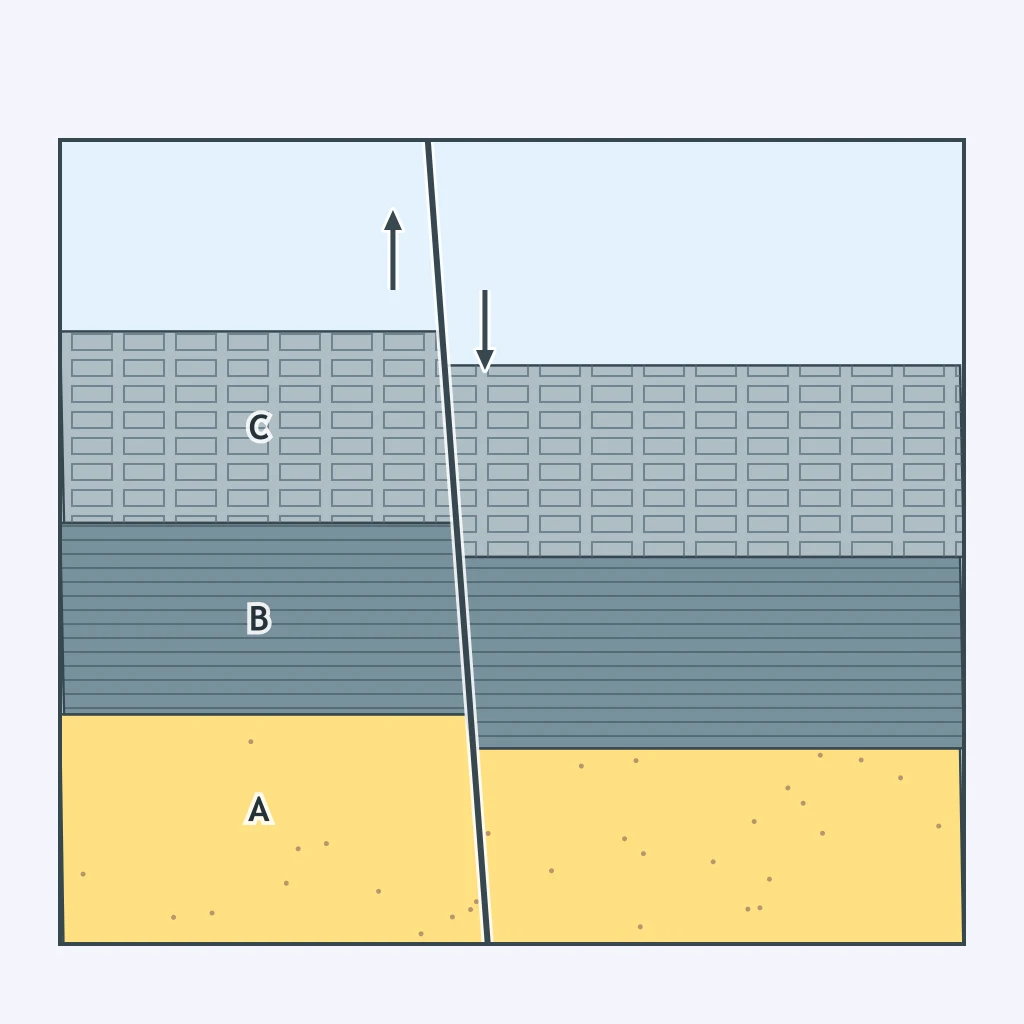
A mountain belt is made of repeated anticlines and synclines produced as sedimentary strata were compressed. Which mountain type is it?
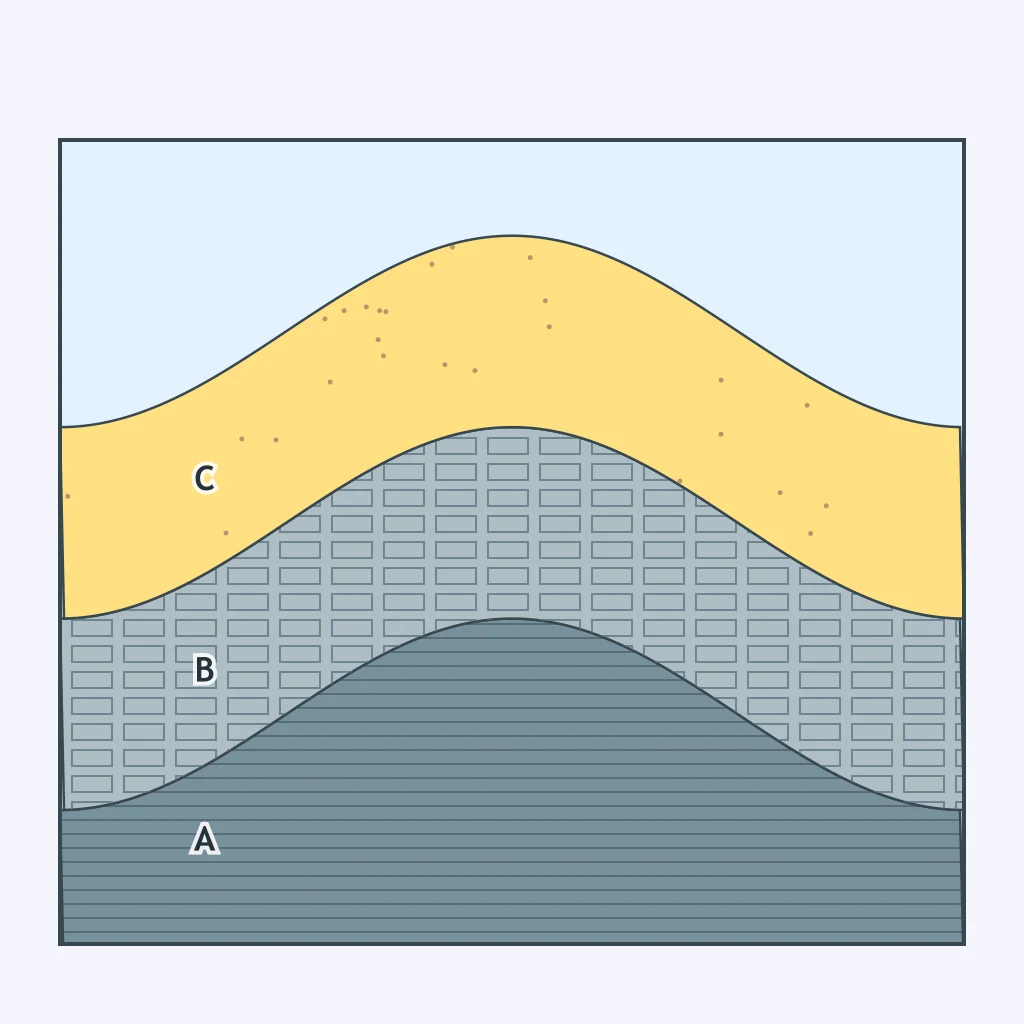
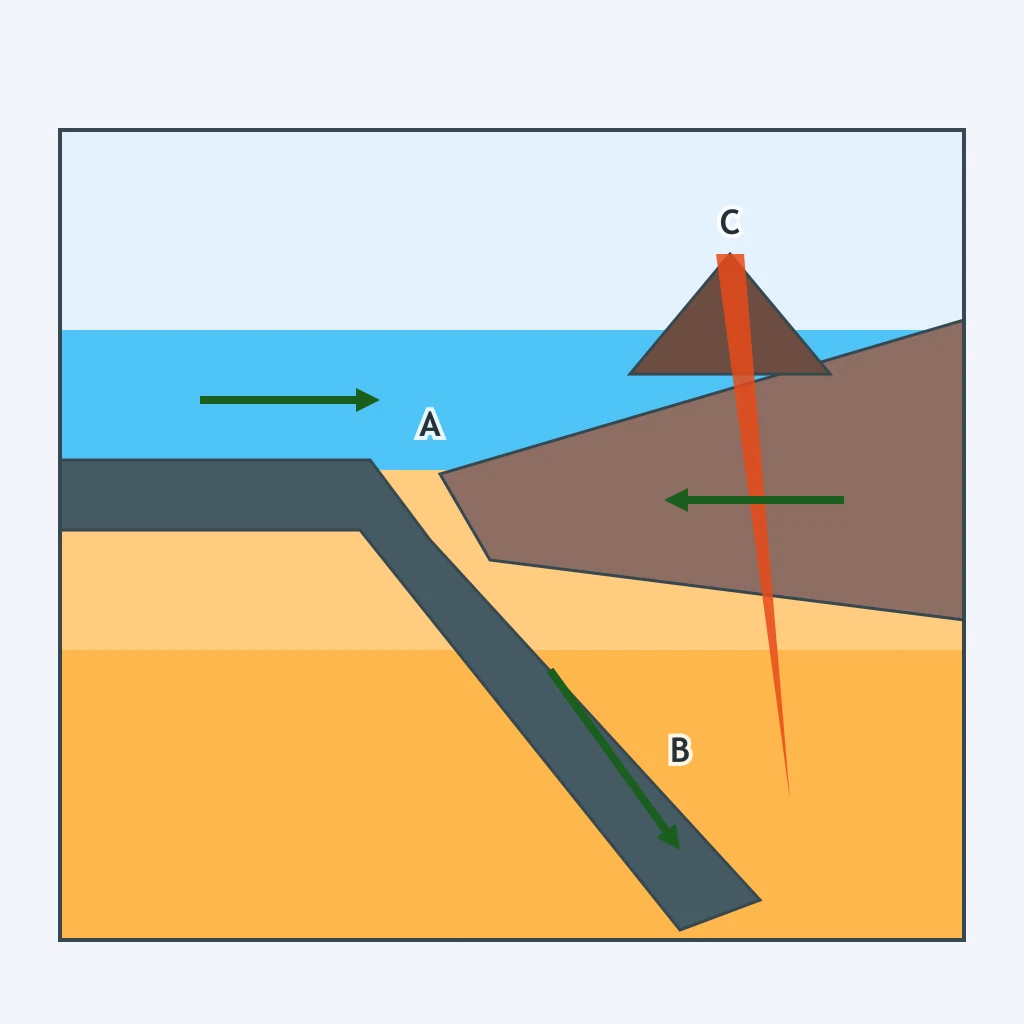
Use the boundary diagram. Magma rises above a subducting oceanic plate and builds a chain of peaks. Which mountain type is forming?
The Black Hills expose older crystalline rock in the center of a broad dome, with sedimentary layers dipping away from the core. Which mountain type fits this structure?
Nevada's Basin and Range has long valleys between tilted crustal blocks bounded by normal faults. Which mountain type is most characteristic?
The Himalayas formed where India and Eurasia collided, crumpling and thickening continental crust. How should this range be classified?
In Great Smoky Mountains National Park, older rocks were pushed over younger limestone along faults. What process does that field relation show?
Marine fossils occur in rocks now high in the Himalayas. What does this evidence show about those rocks?
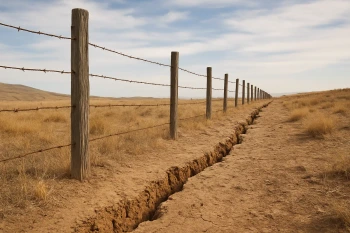
A stream channel crossing the San Andreas Fault is offset sideways, but its two banks are not lifted into a cliff. What motion caused the offset?
The Andes run along western South America beside a trench and an active volcanic chain. What mountain-building process does this pattern indicate?
Crack the passcode before the zombies get in.
Answer, then swat bugs for bonus points.
Race through questions at your own speed.
Same question on every screen. Fastest wins.

Pick a tile, answer, hit bonuses and steals.
What Causes Earthquakes
40 questions