Loading
by BlastRoom
Students explain how stress builds and releases along faults, reading fault type, focus-epicenter geometry, strain records, and global earthquake distribution.
#earth_space_science
40 questions
One question set, multiple game modes. Tap any game to see it in action. Not sure which to pick?
Answer to place stones and capture territory.
Outrun the snow together.
Earn blasts, then hunt the other team.
Answer to earn energy, then climb.

The class blasts through walls together.
Bid on mystery lots. Most money wins.
Sell tours. Nice, standard, or a total scam.

Answer, restock, and serve the rush.
More correct answers pulls the rope your way.
Answer, then shoot down the alien wave.
Answer, then tap to leap the frozen ridge.
Which fault type is drawn in the cross section?
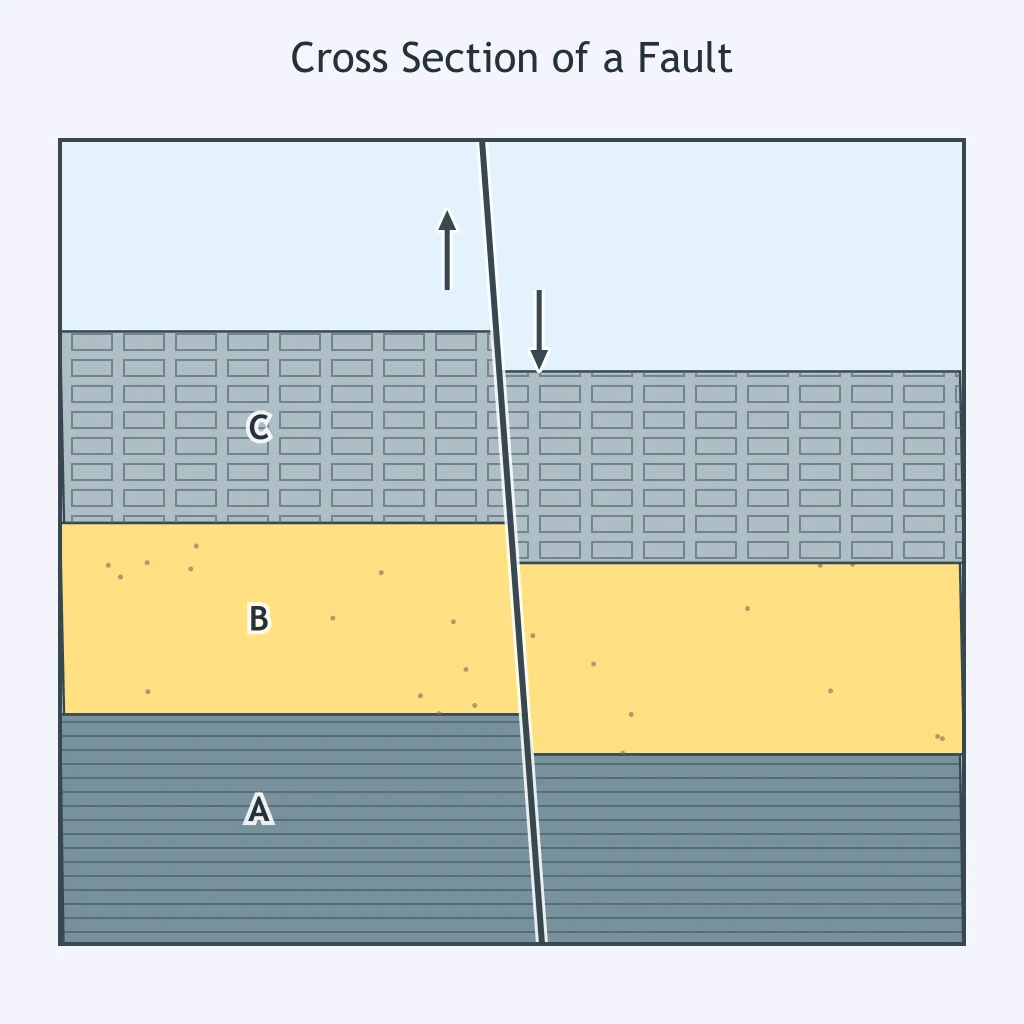
Which fault type is drawn in the cross section?
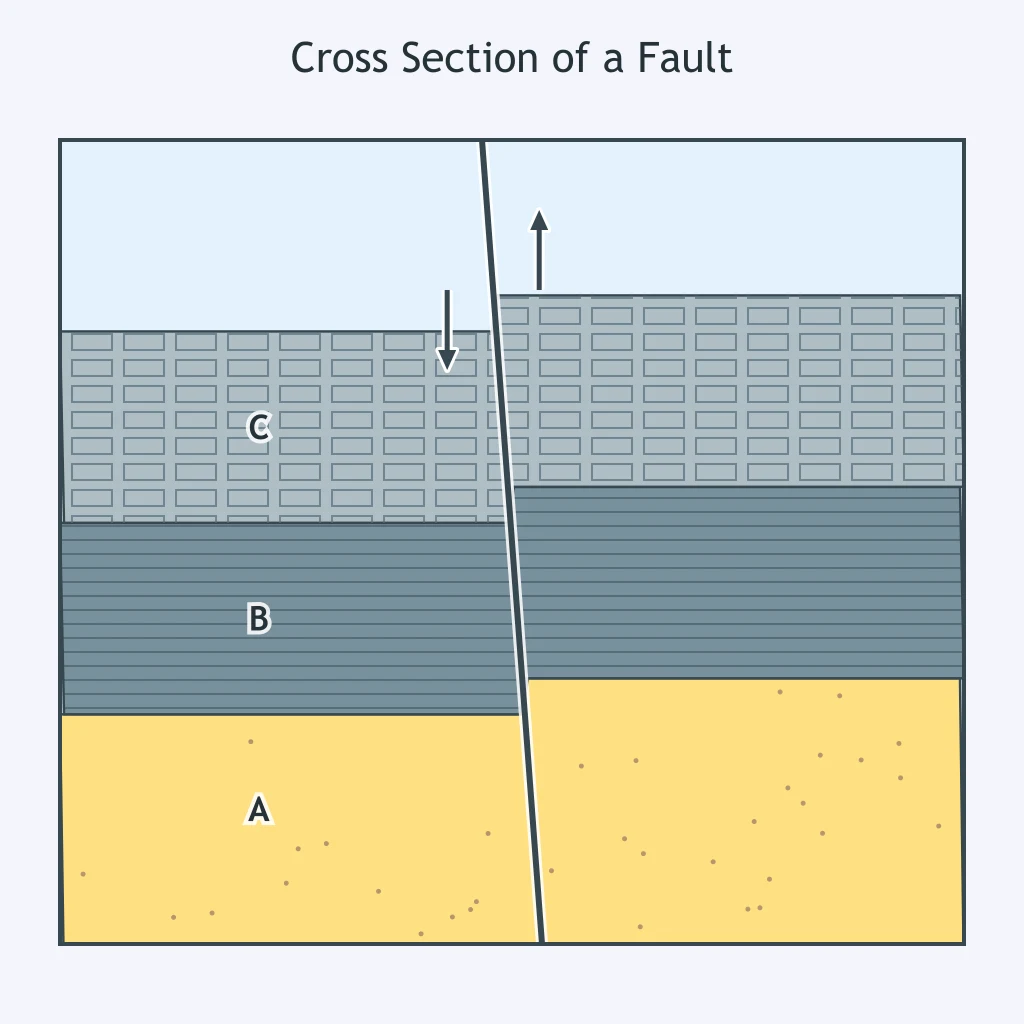
The cross section shows a nearly vertical fault plane with the rock layers on either side offset sideways rather than up or down. Which fault type is drawn?
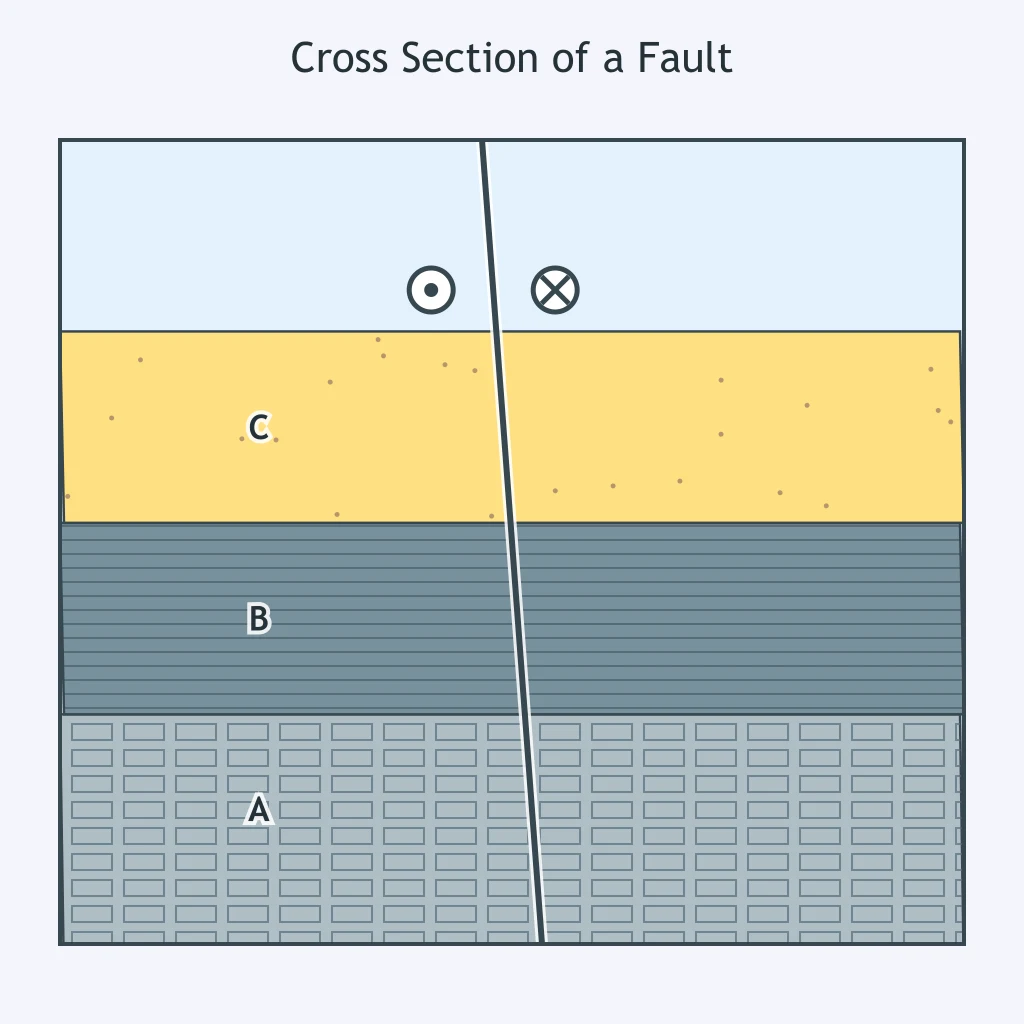
A cross section shows a fault where the hanging wall has dropped relative to the footwall, stretching the crust apart. What type of stress produced this fault?
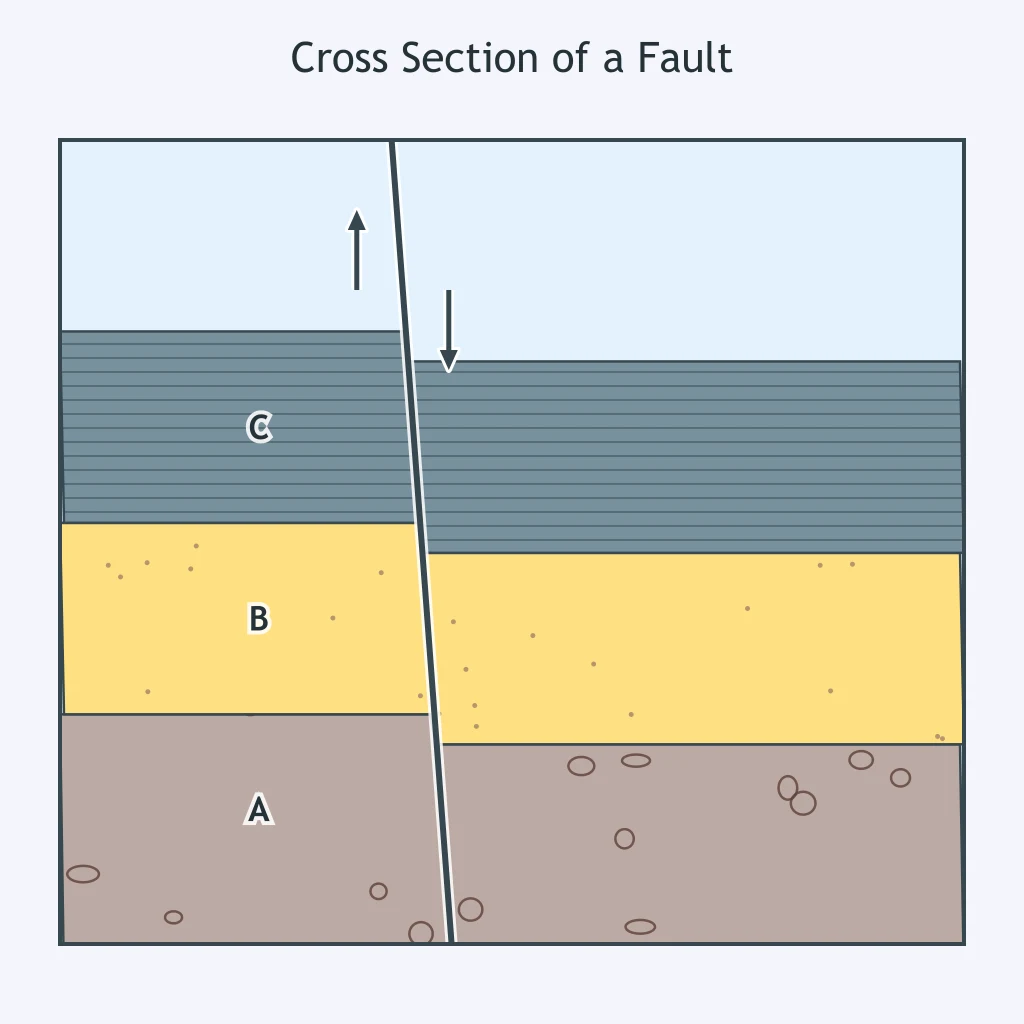
A cross section shows a fault where the hanging wall has been pushed upward relative to the footwall, shortening the crust. What type of stress produced this fault?
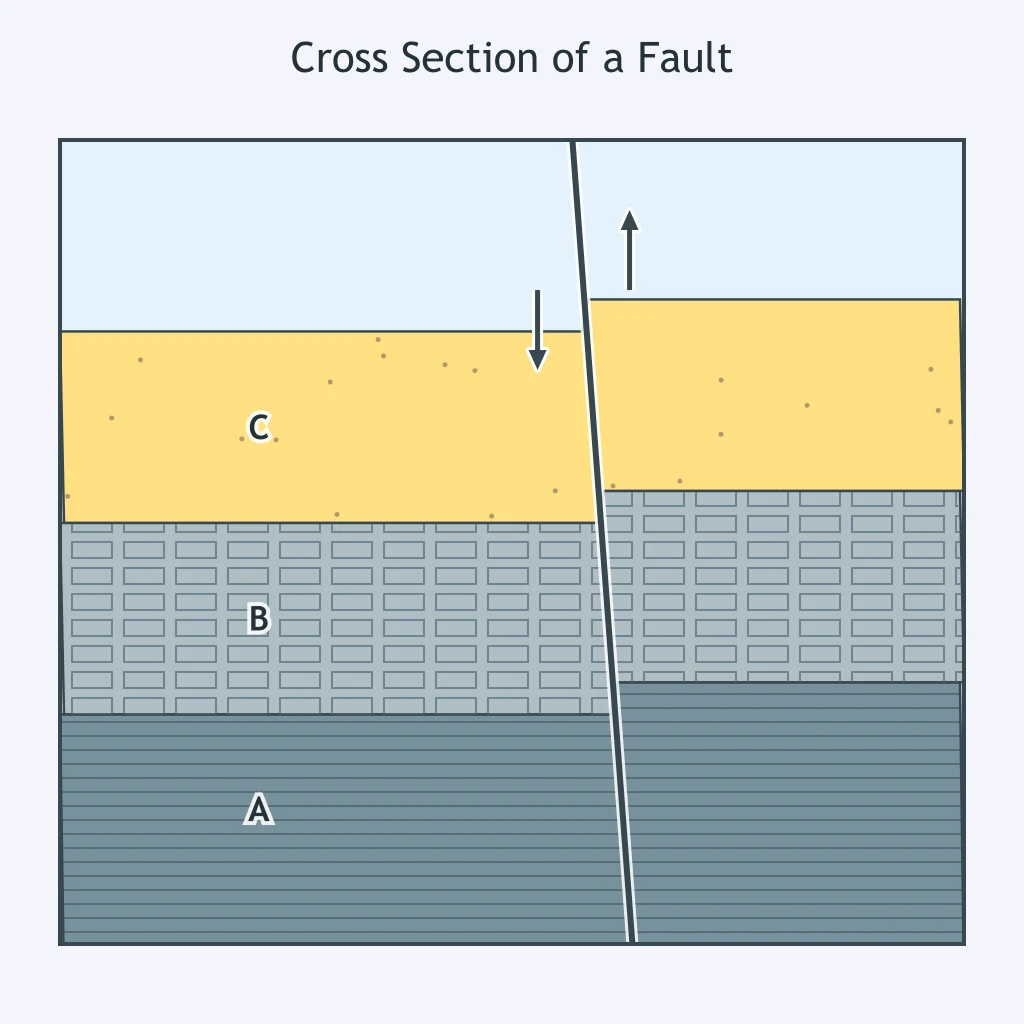
A cross section shows a nearly vertical fault where rock on either side has slid horizontally past each other with no vertical offset. What type of stress produced this fault?
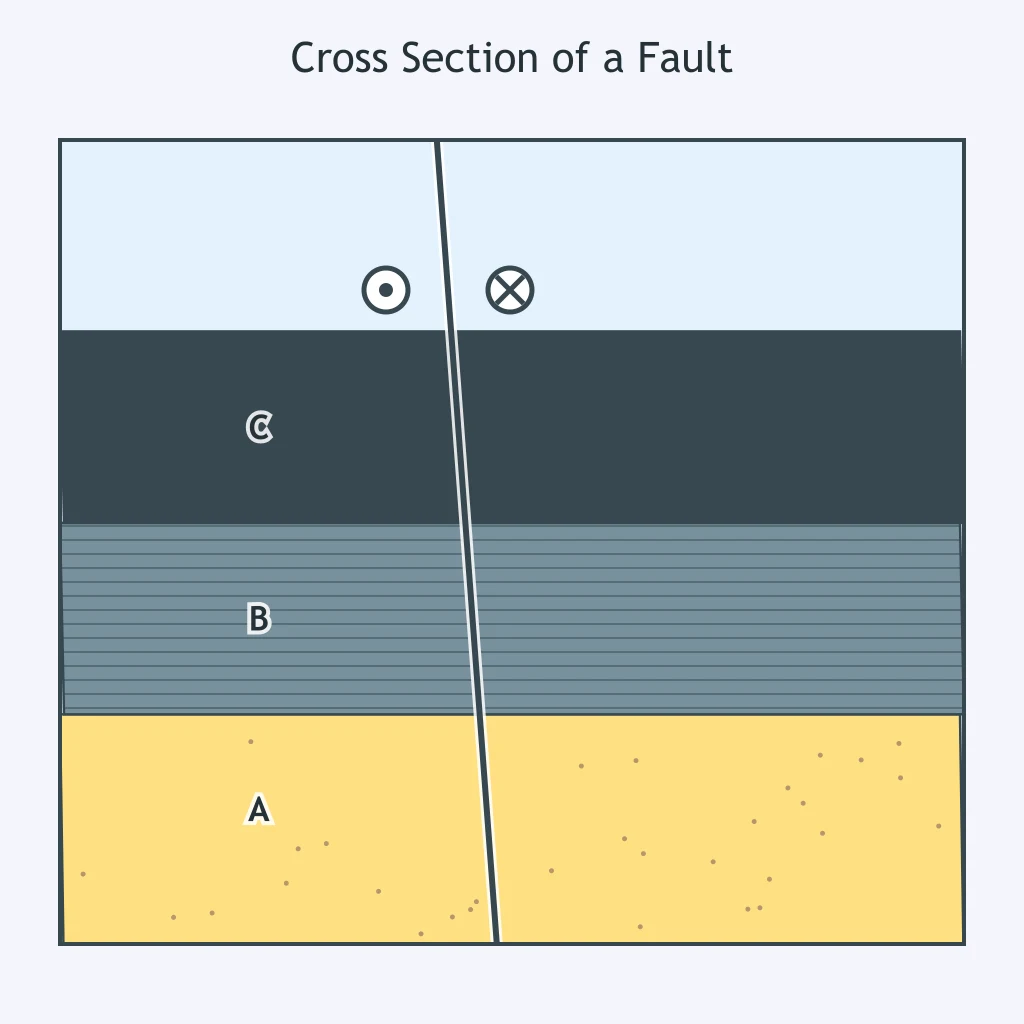
The cross section shows a vertical fault with horizontal offset only, and no layers raised or dropped. Which real fault shows this same style of movement at the surface?
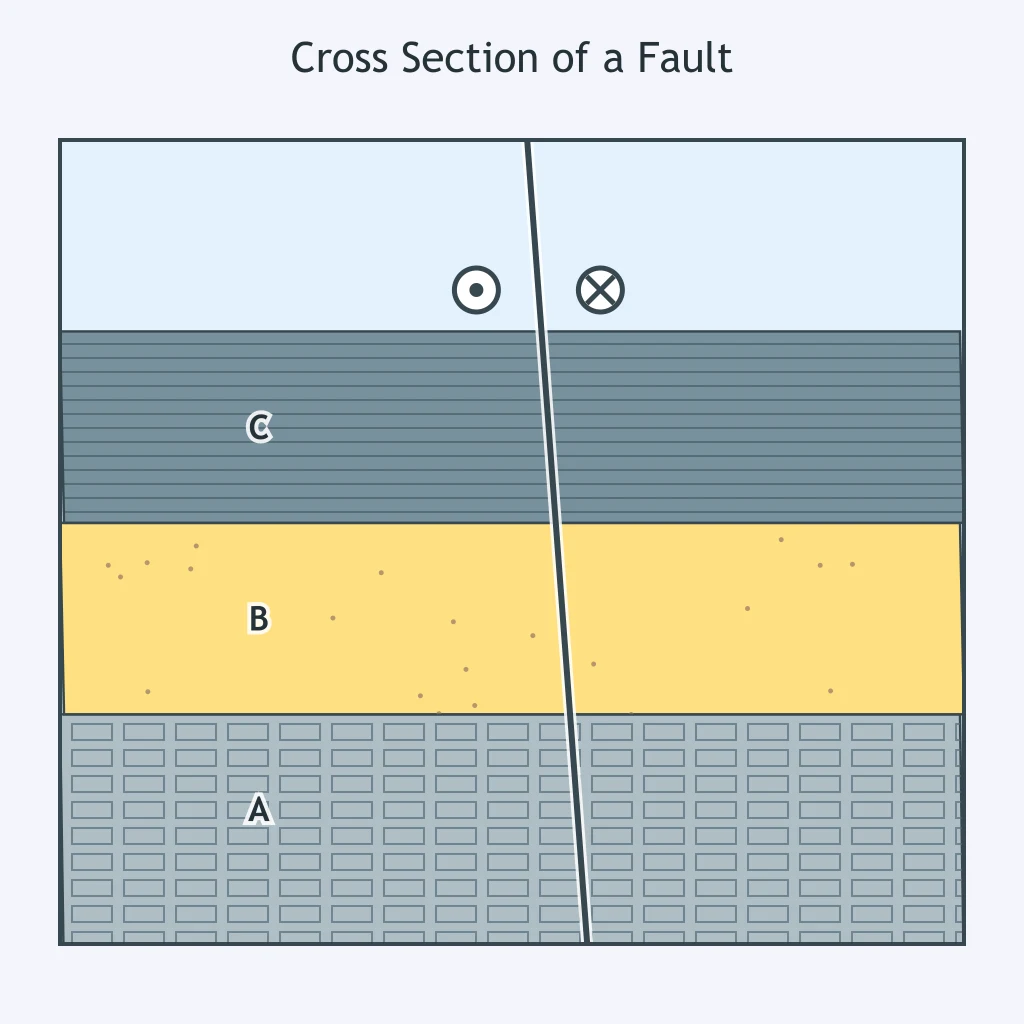
The cross section shows a fault with tension pulling the crust apart and the hanging wall dropped down. This fault style is most common along which type of plate boundary?
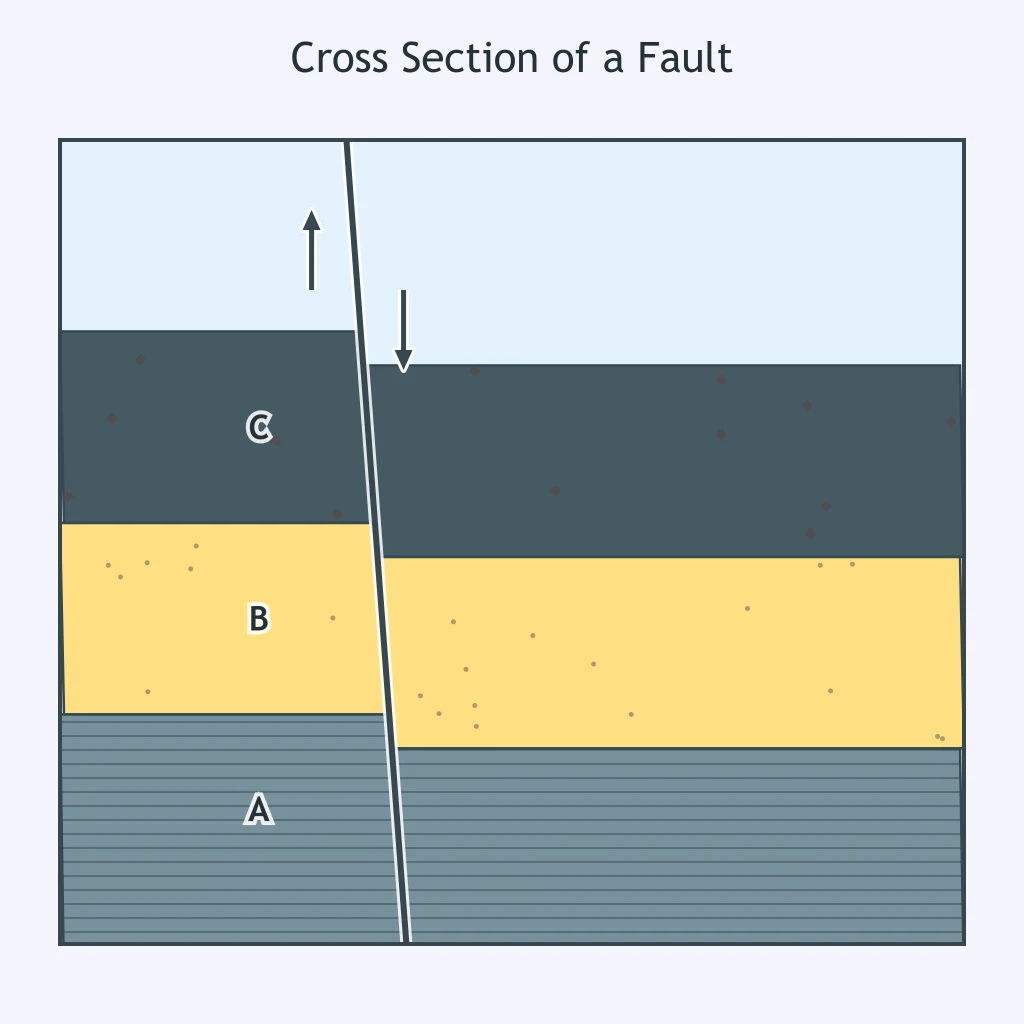
The cross section shows a fault with compression pushing the crust together and the hanging wall pushed up. This fault style is most common along which type of plate boundary?
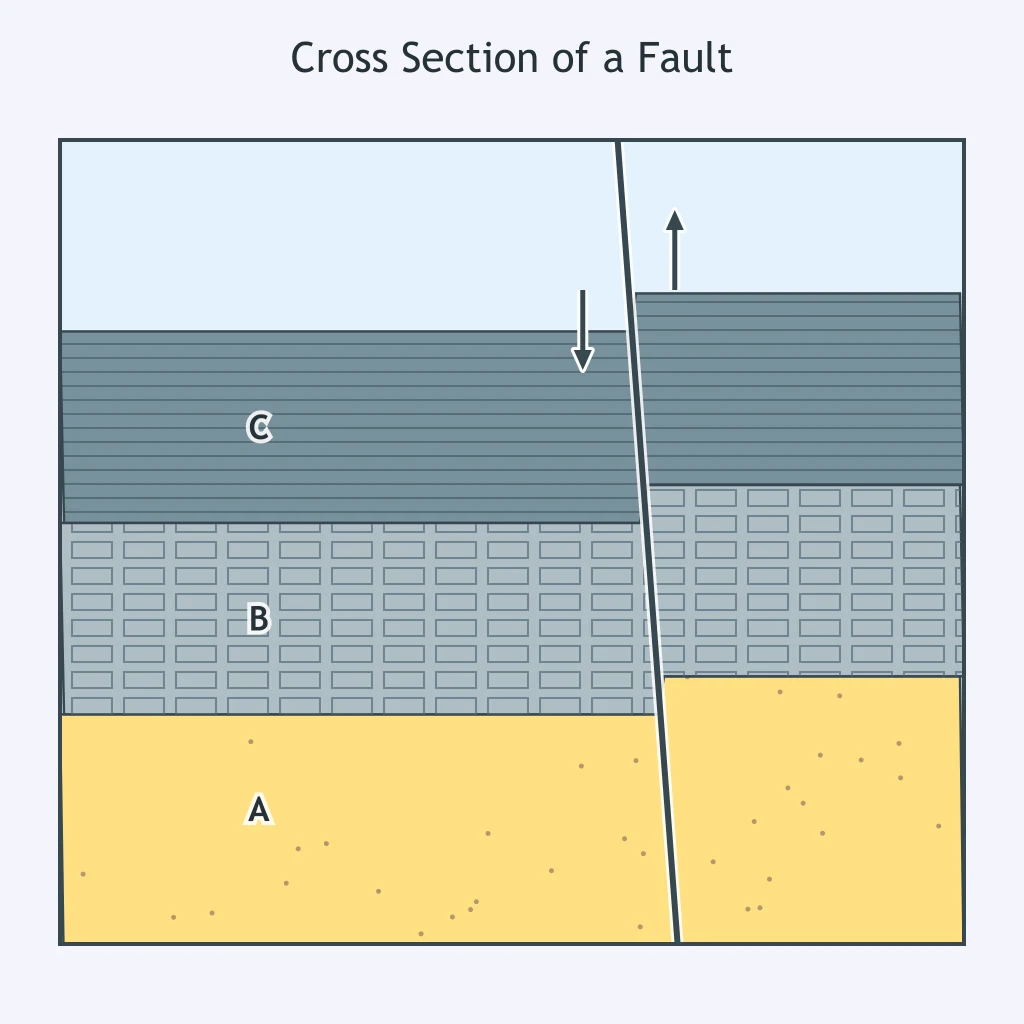
In this cross section showing a normal fault, which block is the footwall: the one above the fault plane or the one below it?
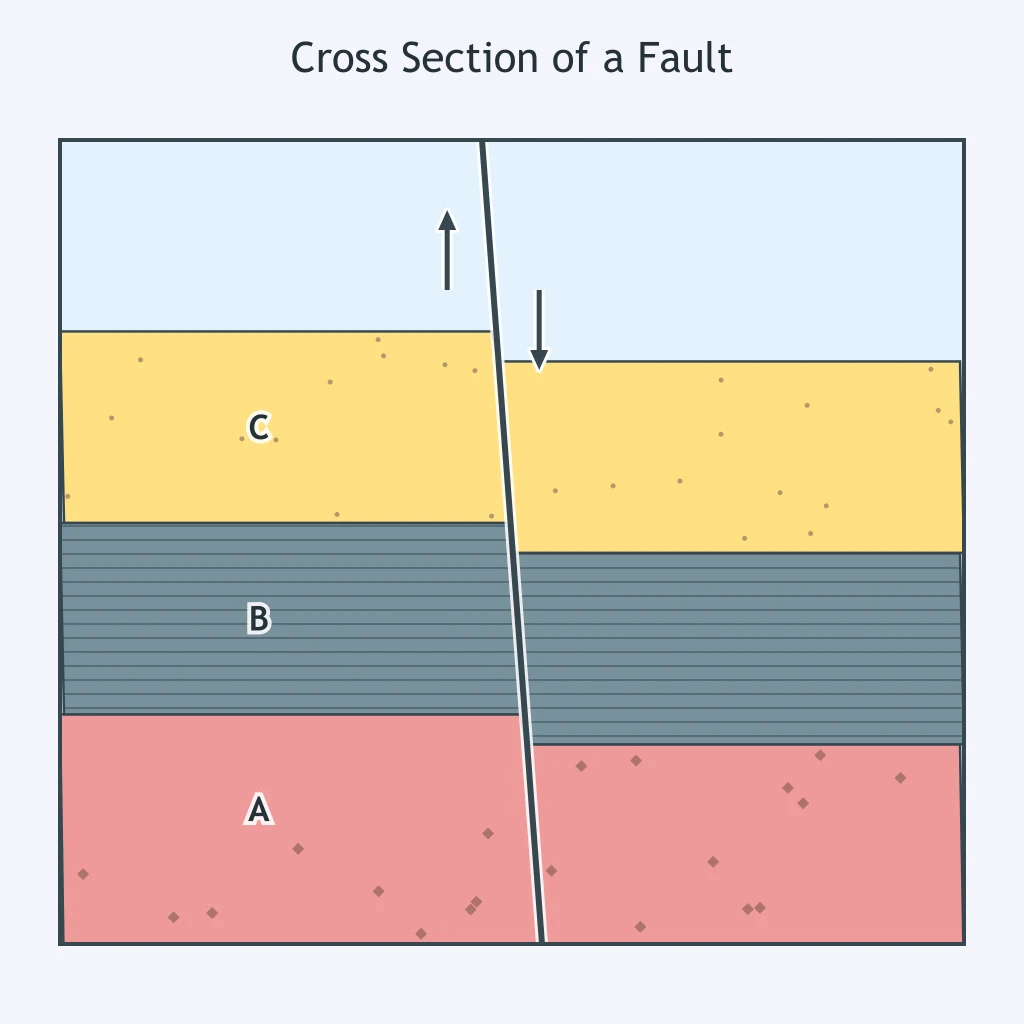
What is the name of the point inside Earth where a fault first ruptures during an earthquake?
What is the name of the point on Earth's surface located directly above where a fault ruptures?
An earthquake's focus lies 24 km directly below the surface. A seismograph station sits 32 km from the epicenter, measured along the surface. How far is the station from the focus?
Two earthquakes release the same amount of energy. One has a focus at 5 km depth and the other at 600 km depth. Which one is likely to cause more damage at the surface?
Seismologists classify an earthquake with its focus at 350 km below the surface as a ___ earthquake.
The map shows the epicenter of the 1906 earthquake near San Francisco. Which city likely felt stronger shaking?
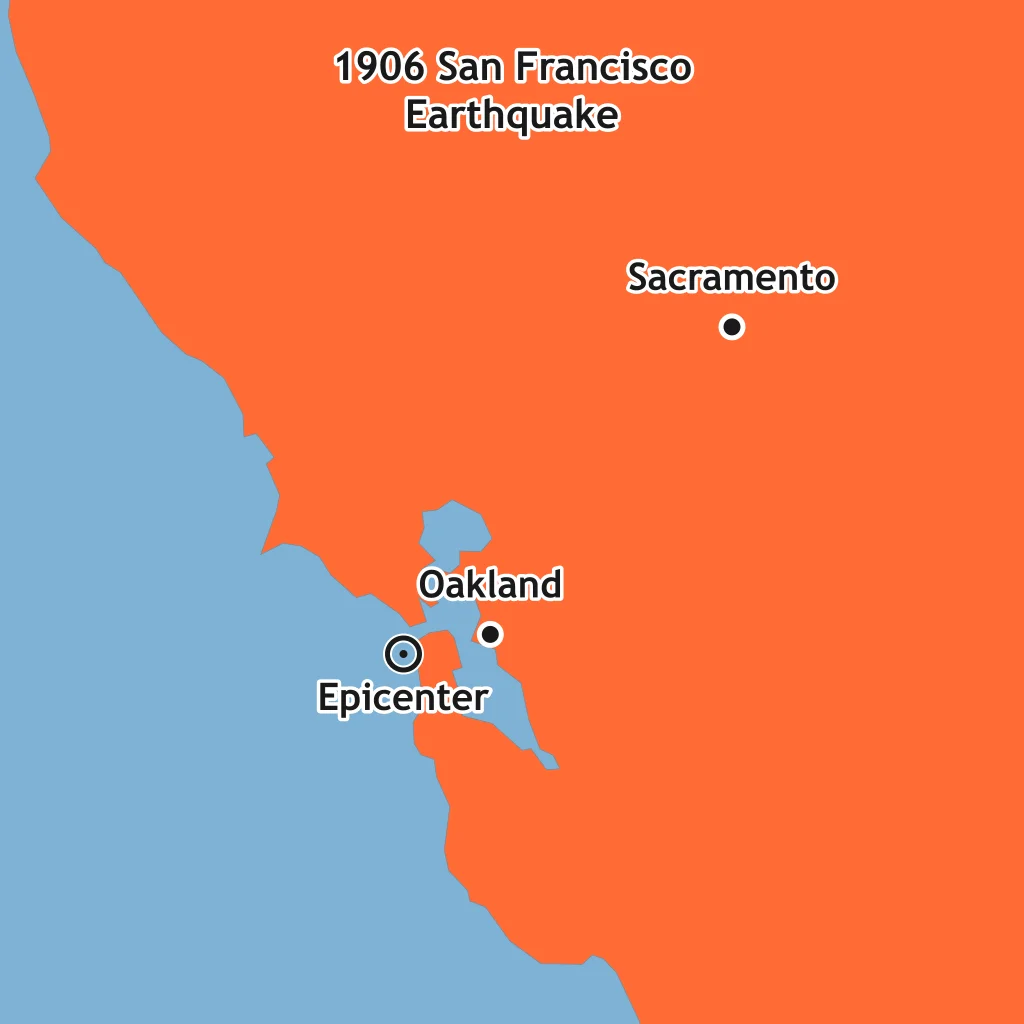
Which point of an earthquake is always located at Earth's surface: the focus or the epicenter?
The graph shows readings taken every 20 years from a strain gauge on a locked fault. An earthquake struck the fault between the 1980 and 2000 readings. Which model of earthquakes does this record support?
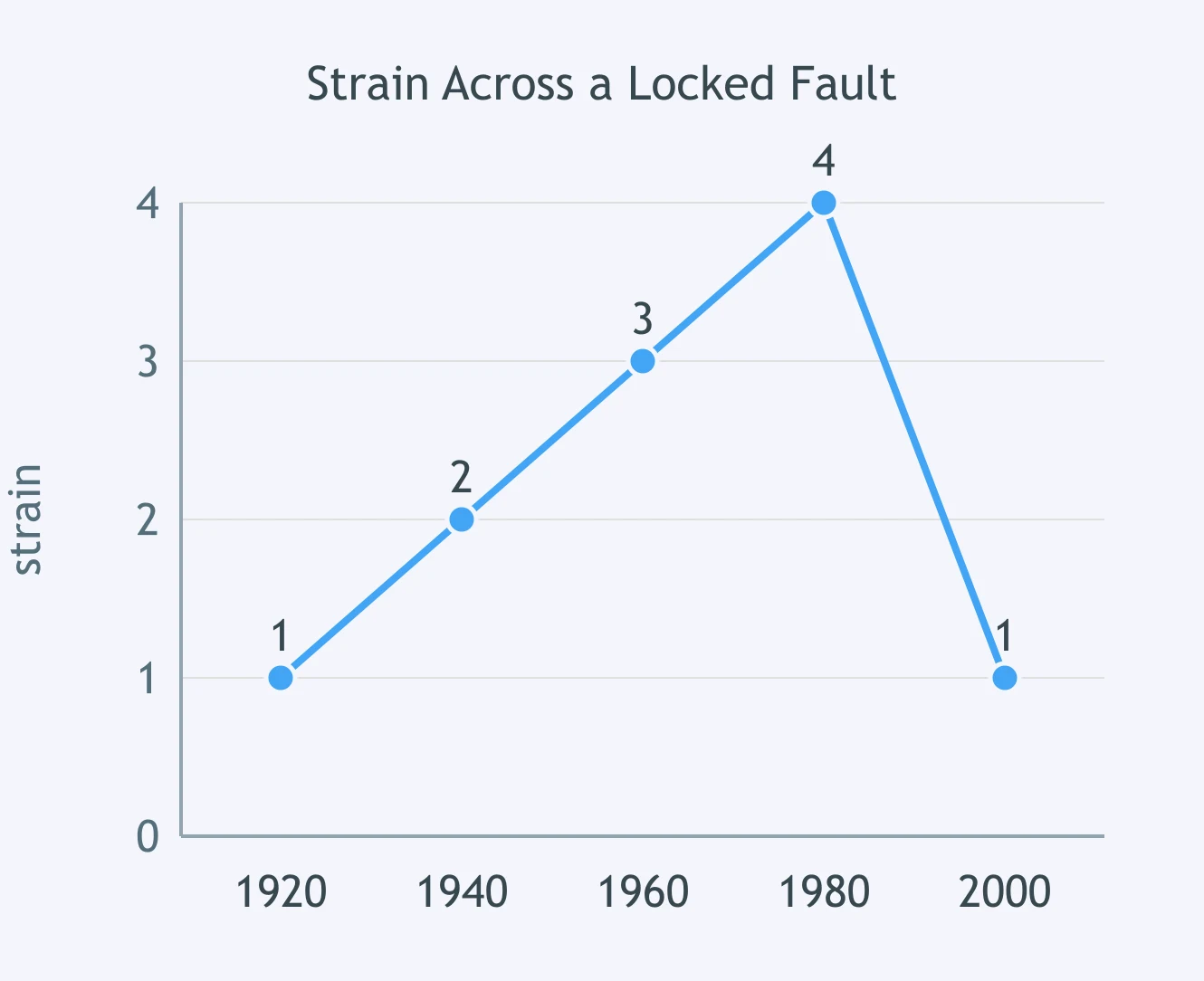
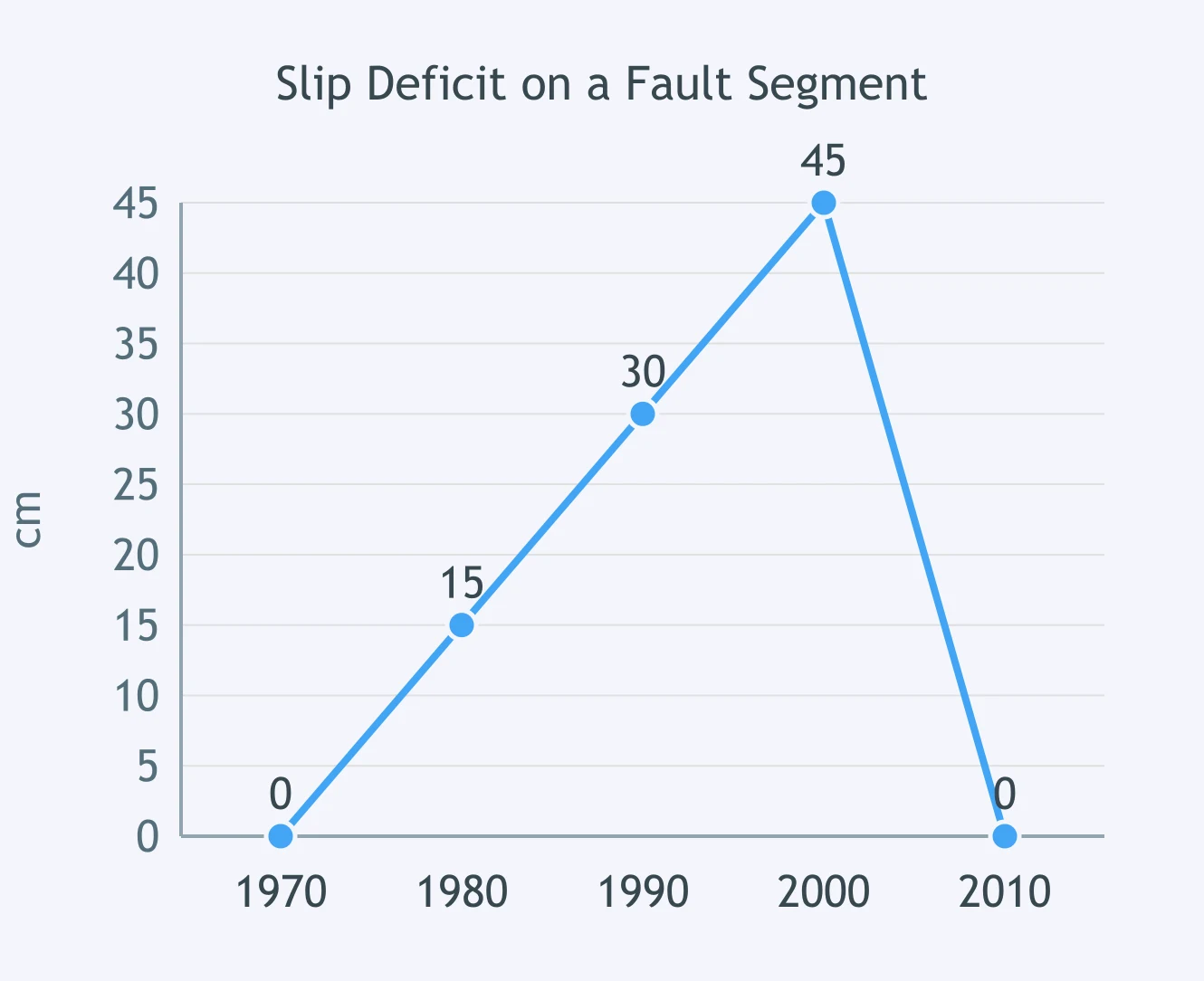
A slip record shows a fault segment accumulating a growing slip deficit for decades, then that deficit suddenly drops to zero in a single event. What does the sudden drop represent?
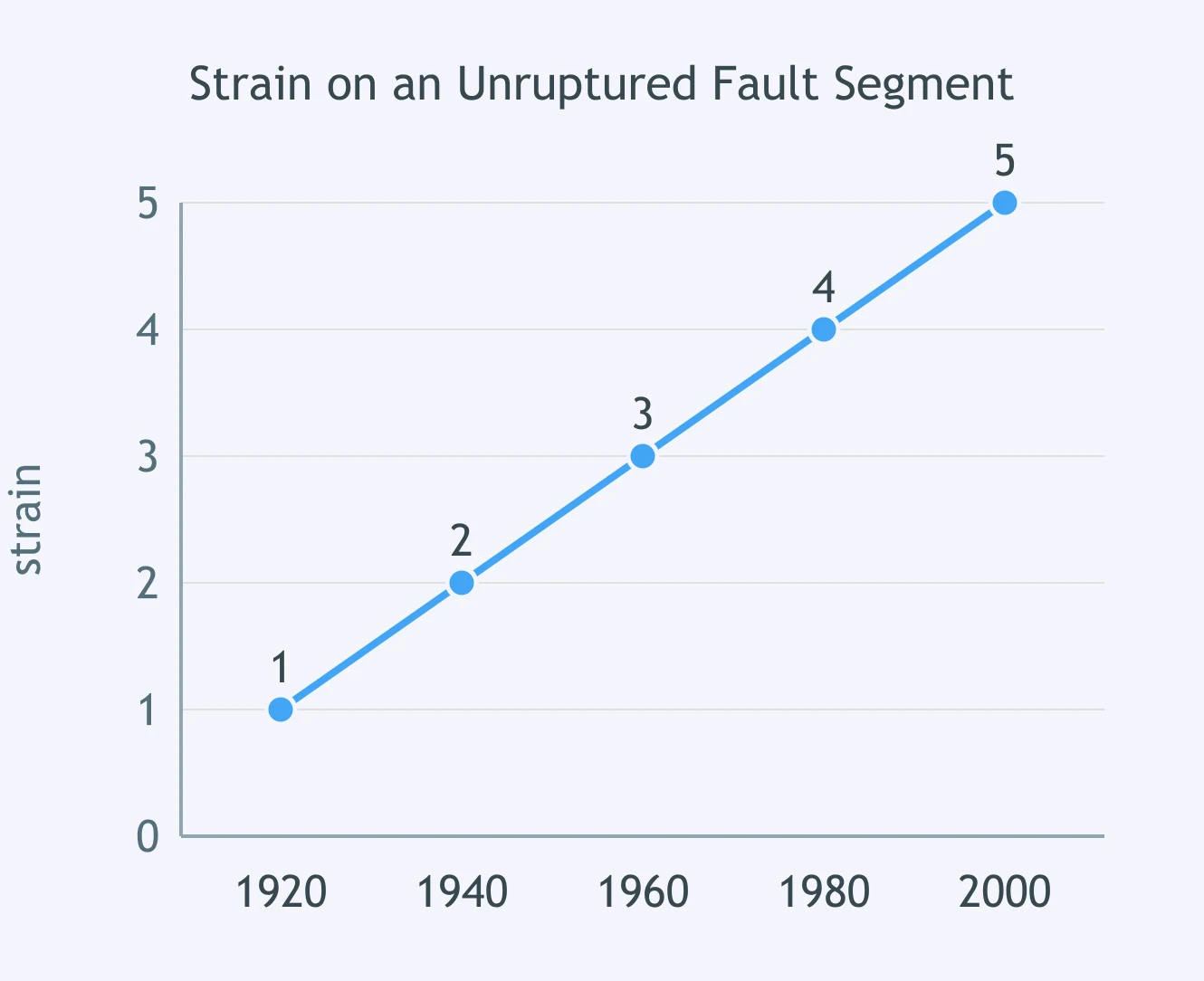
A strain record shows stress rising steadily for 100 years along one segment of a fault with no earthquake yet recorded there, while nearby segments have already ruptured. What does this pattern suggest about the unbroken segment?
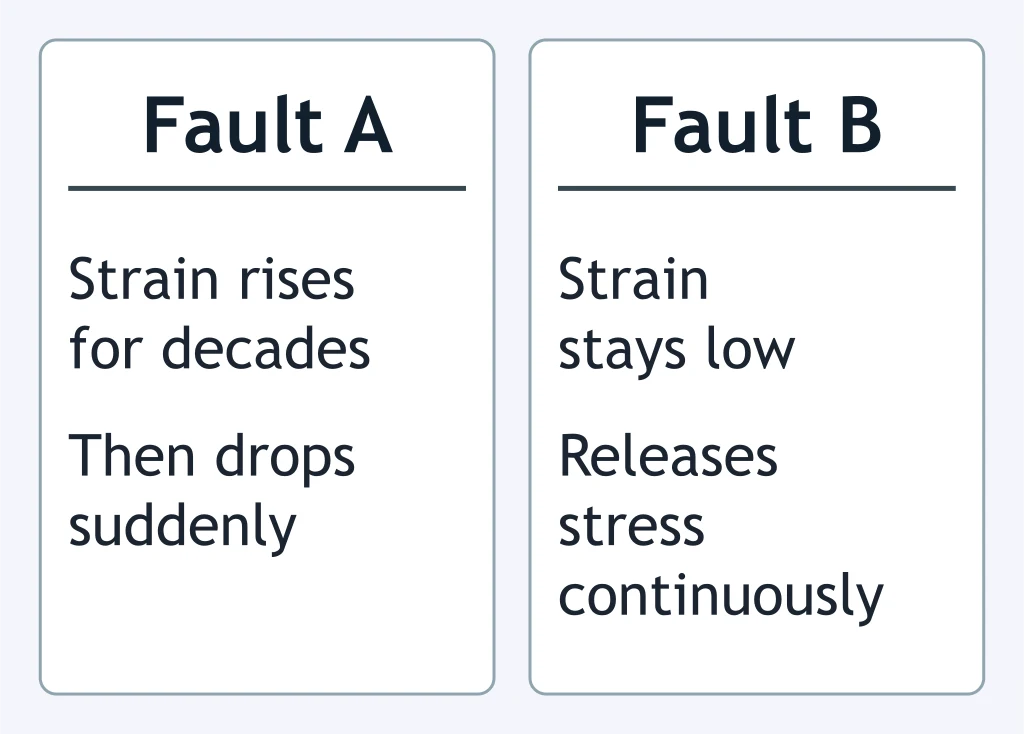
Fault A's strain record rises for decades then drops suddenly every 30 years. Fault B's record stays low and flat because it slips continuously in small amounts. Which fault behaves as a locked, stick-slip fault?
In fault mechanics, the force per unit area applied to rock is called stress. What is the resulting change in the rock's shape or volume called?
A seismometer record shows long quiet periods on a fault interrupted by sudden brief bursts of motion, repeating in a regular pattern over many years. What is this fault behavior called?
GPS measurements show a fault segment accumulating slip deficit at a steady rate of 3 cm per year. If no earthquake has released this segment in 40 years, how much slip deficit has built up?
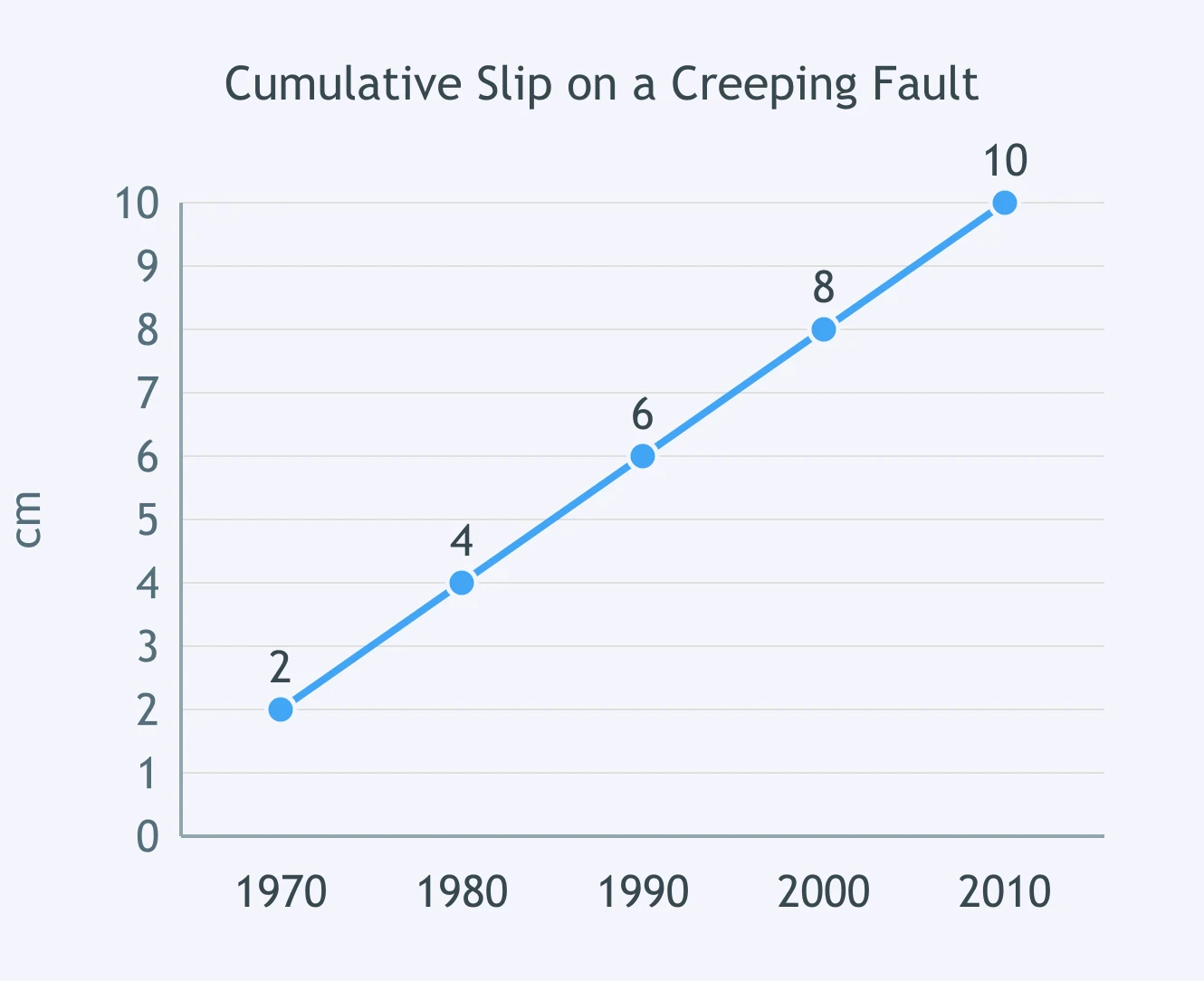
A creepmeter record shows a fault slipping smoothly and continuously at a steady rate with no sudden jumps over 50 years. What does this record indicate about earthquake hazard on this segment?
Along a mountain-building boundary, rock on either side of a fault is being pushed toward each other, shortening the crust. What type of stress is acting there?
In a continental rift valley, rock on either side of a fault is being pulled apart, stretching and thinning the crust. What type of stress is acting there?
Along a transform boundary, blocks of rock on either side of a fault are being pushed past each other in opposite horizontal directions. What type of stress is acting there?
Deep within Earth's crust, rock is squeezed equally from all directions by the weight of overlying material, with no single direction of push dominating. What type of stress is this?
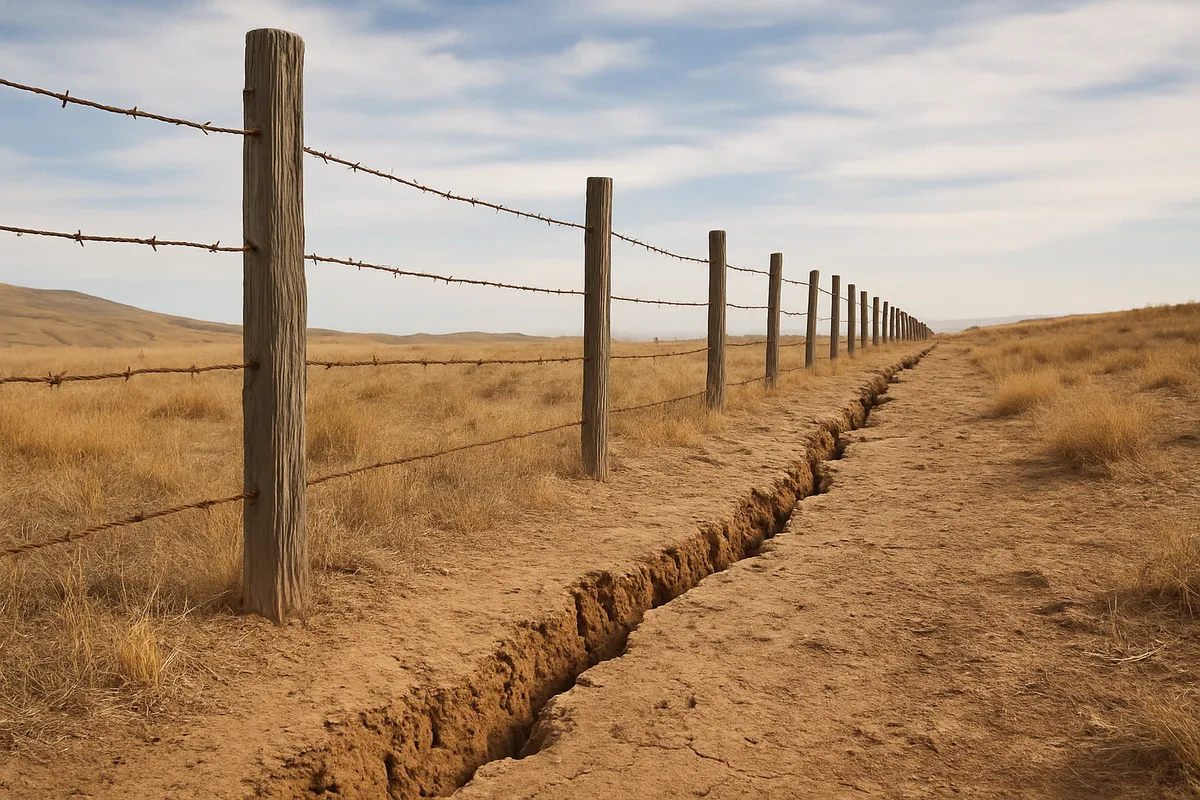
A survey crew finds that a fence crossing a fault has slowly and steadily bent over several years without any earthquake ever being felt at that location. What term describes this gradual movement?
A magnitude 6.5 earthquake strikes, and three days later a magnitude 4.2 tremor occurs in the same area. What is this smaller tremor called?
After an earthquake, geologists find a small, fresh cliff-like step in the ground where one side of the fault has been raised relative to the other. What is this surface feature called?
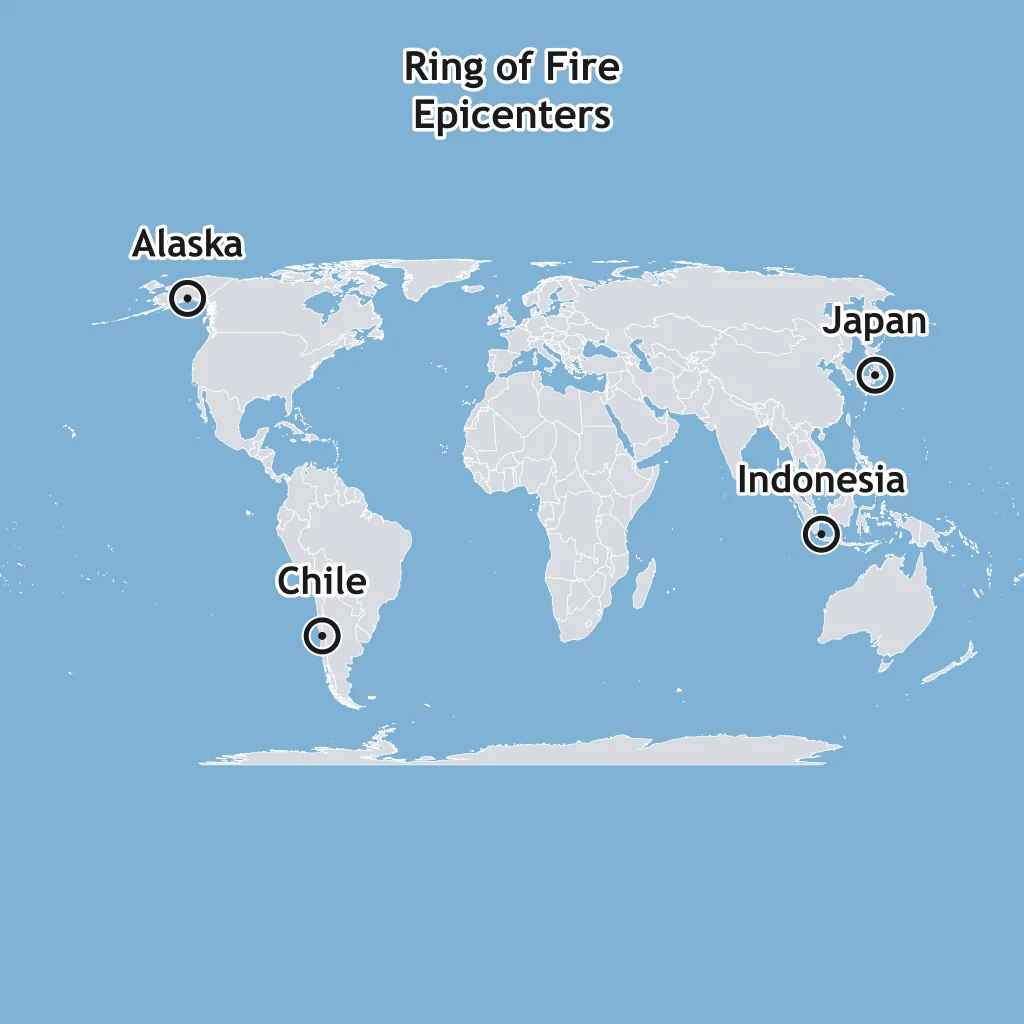
A world map plots earthquake epicenters clustered around Japan, Alaska, Chile, and Indonesia. Which ocean do these clustered epicenters mostly surround?
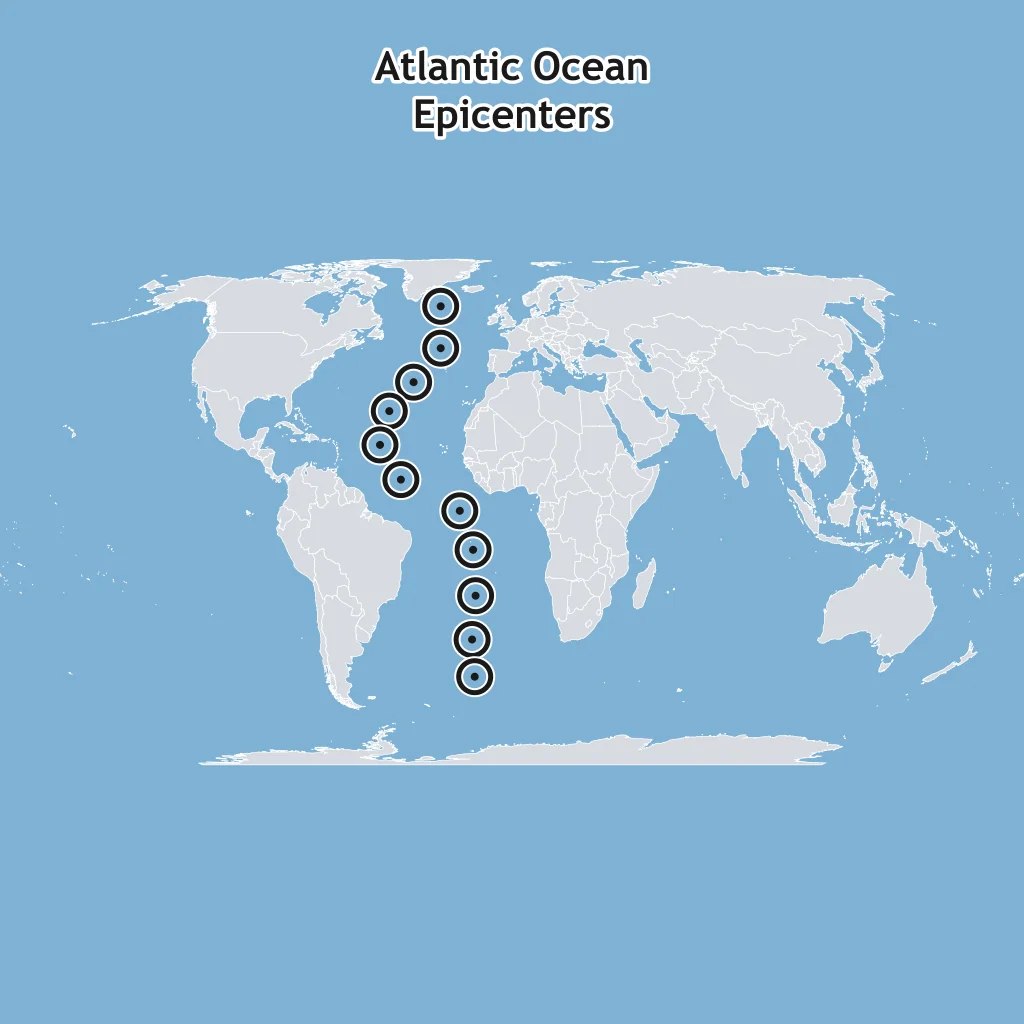
The map marks shallow earthquake epicenters in the Atlantic Ocean, none deeper than about 20 km. What type of plate boundary produces this pattern?
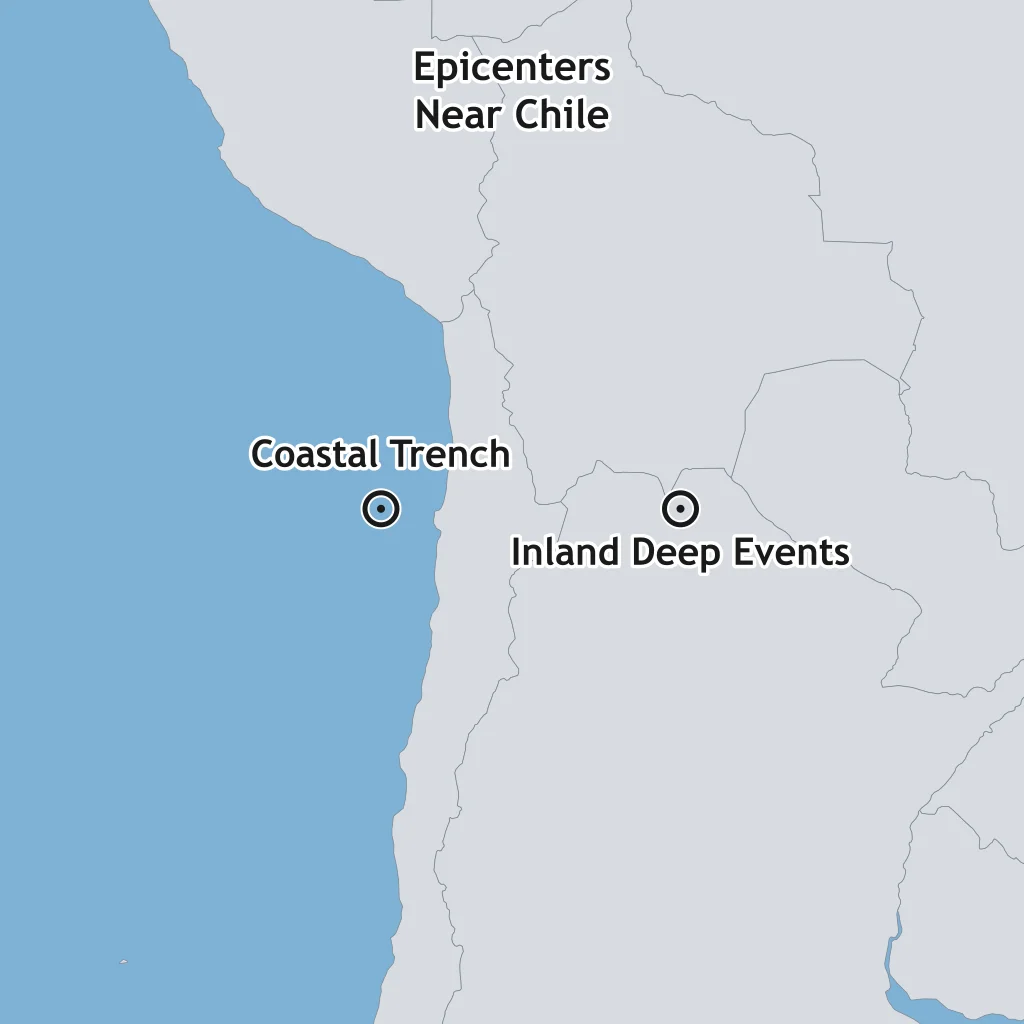
A map plots epicenters near Chile. Shallow events cluster along the coastal trench, while events as deep as 600 km occur farther inland beneath the continent. What produces the deep inland events?
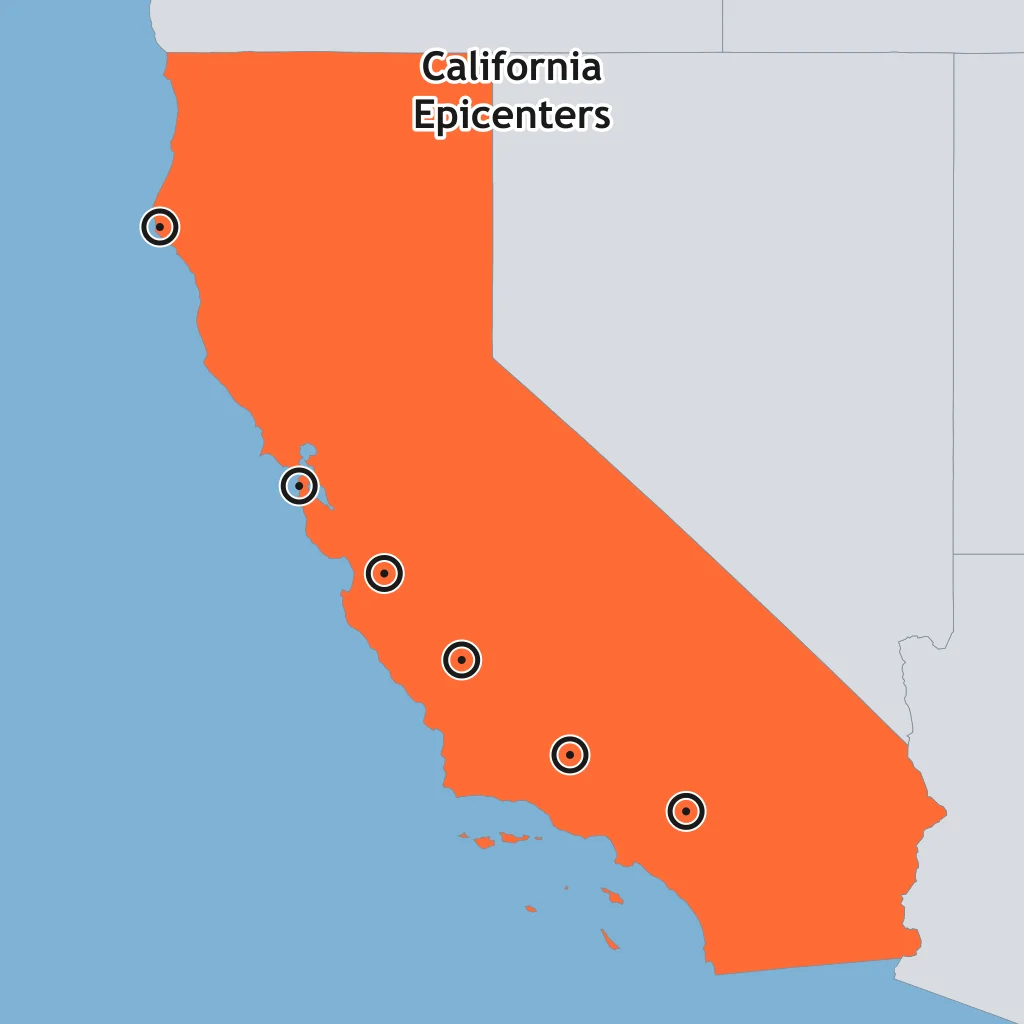
A map of California shows a narrow line of shallow epicenters, all less than 20 km deep, tracing the San Andreas Fault with no nearby volcanoes. What type of plate boundary is this?
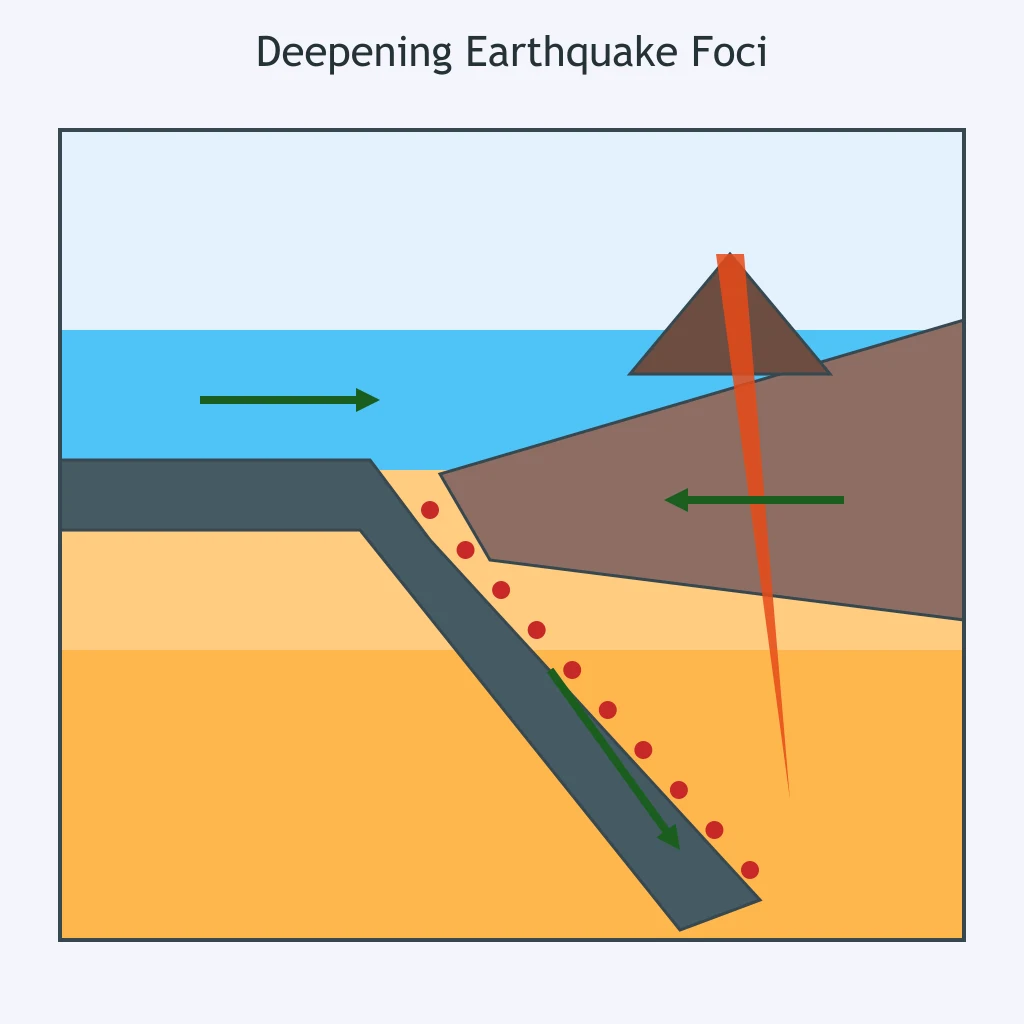
The diagram shows a line of earthquake foci that gets progressively deeper moving from the trench toward the continent, following the top of the descending plate. What is this deepening line of earthquakes called?
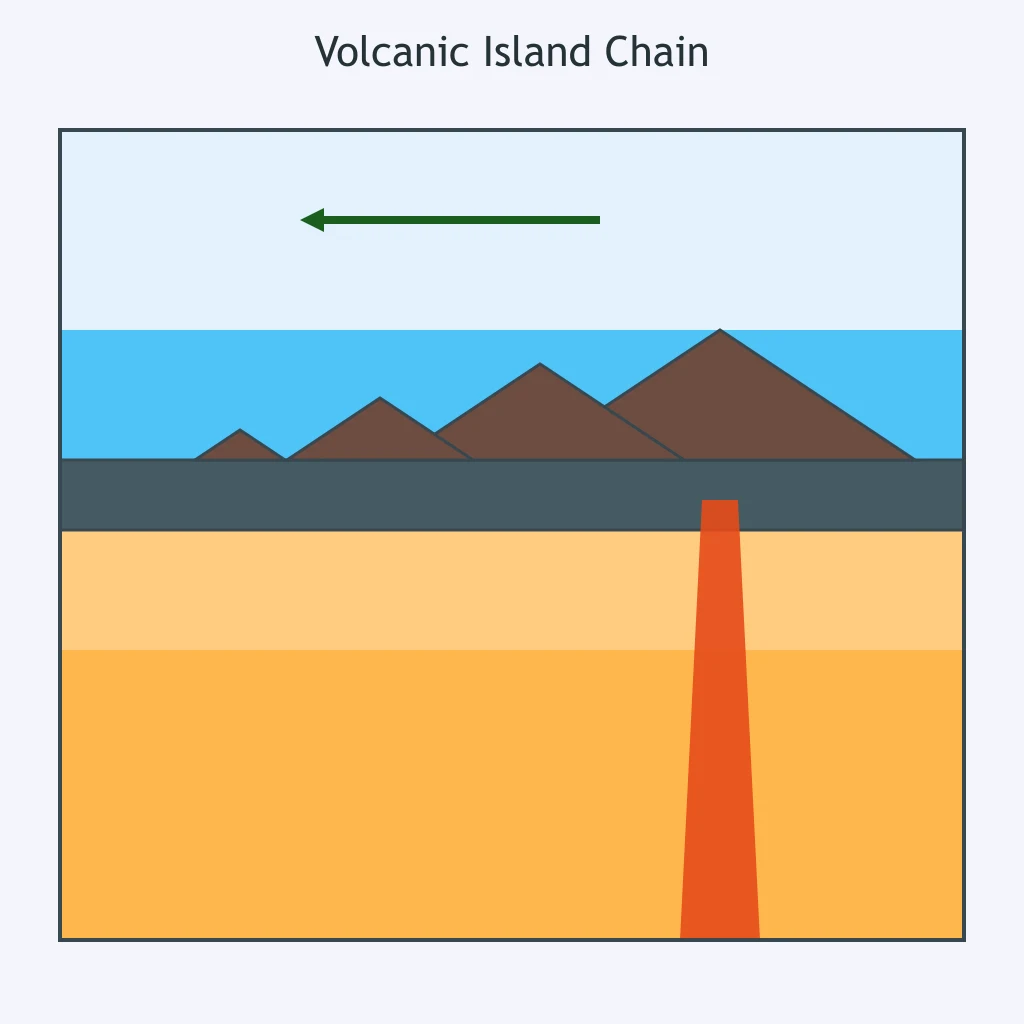
The diagram shows a chain of volcanic islands. Earthquakes in this chain are concentrated only at its youngest, active end. What produces the earthquakes at that active end?
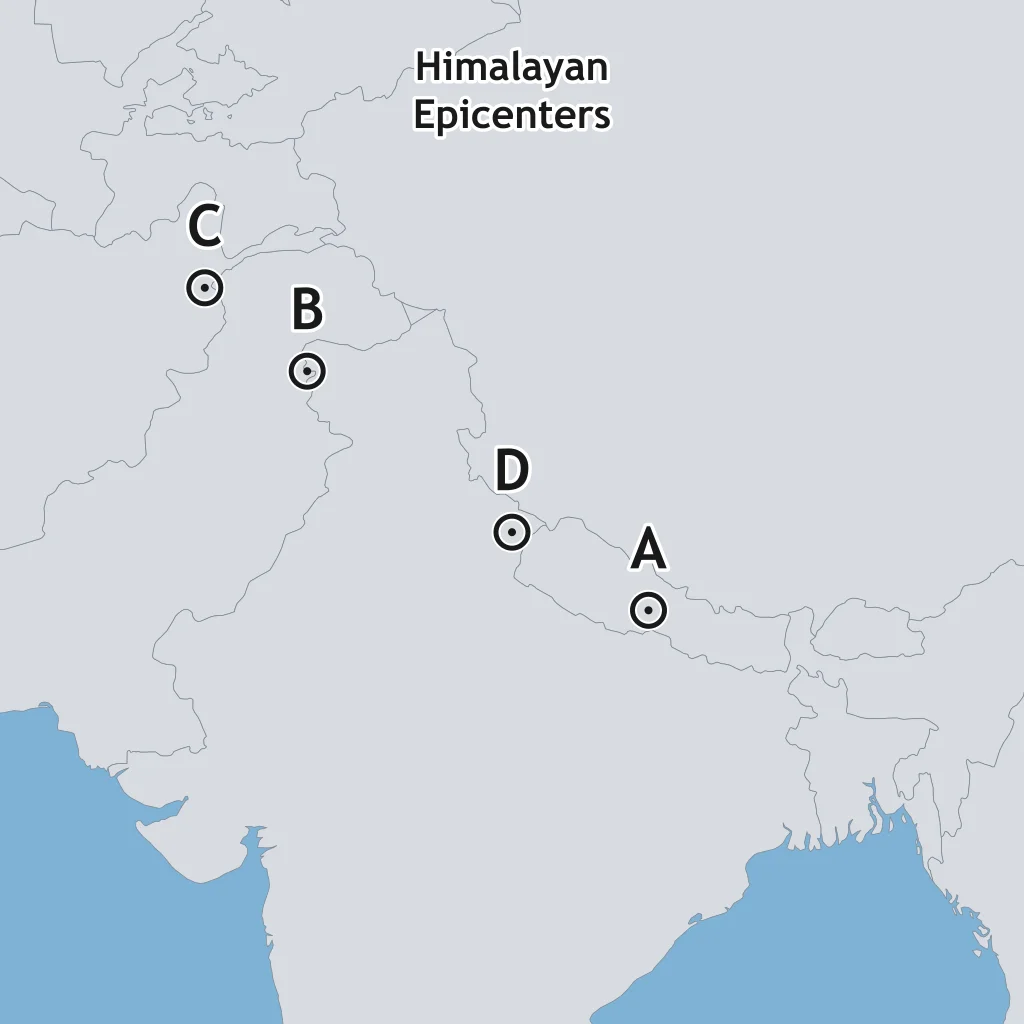
A map shows earthquake epicenters spread broadly across a wide mountain belt from Nepal into northern India and Pakistan, rather than in a single narrow line. What plate process produces this broad, diffuse pattern?
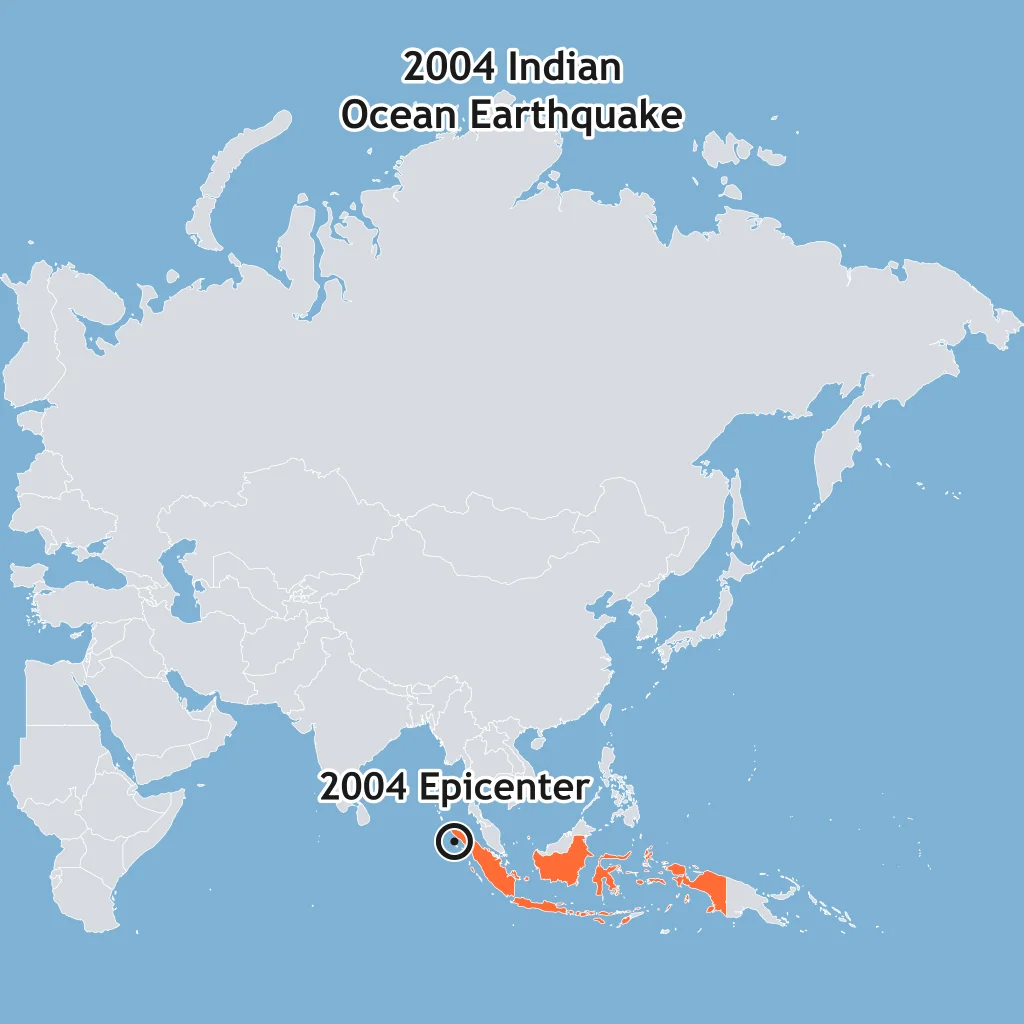
The 2004 Indian Ocean earthquake's epicenter is plotted off the west coast of Sumatra, along a trench where shallow earthquakes cluster. What plate process generates the frequent shallow earthquakes there?
Crack the passcode before the zombies get in.
Answer, then swat bugs for bonus points.
Race through questions at your own speed.
Same question on every screen. Fastest wins.

Pick a tile, answer, hit bonuses and steals.
Locating an Epicenter
40 questions