Loading
by BlastRoom
What happened after the flags came down, and why influence outlasted rule.
#us_hs_human_geography
30 questions
One question set, multiple game modes. Tap any game to see it in action. Not sure which to pick?
Answer to place stones and capture territory.
Outrun the snow together.
Earn blasts, then hunt the other team.
Answer to earn energy, then climb.

The class blasts through walls together.
Bid on mystery lots. Most money wins.
Sell tours. Nice, standard, or a total scam.

Answer, restock, and serve the rush.
More correct answers pulls the rope your way.
Answer, then shoot down the alien wave.
Answer, then tap to leap the frozen ridge.
British India split into India and Pakistan in 1947, Ghana gained self-rule in 1957, and many African territories followed by the mid-1960s. This broad historical process is called
During which decade did more African countries gain independence than in any other?
Many African states kept borders drawn by European powers after independence. Which 1884-1885 meeting set rules for dividing Africa among those powers?
Indonesia declared independence in 1945 after Japanese occupation ended. Which European power tried to restore colonial rule there before recognizing Indonesia in 1949?
About a million European settlers lived in Algeria, and France treated it as part of France. How did Algeria end French rule in 1962?
Kenya became independent in 1963 within borders drawn by British and German officials with little regard for local ethnic groups. What type of boundary did Kenya inherit?
French Indochina broke apart as French colonial rule ended in the 1950s. Which three independent states emerged from it?
Jamaica gained independence from Britain in 1962 but kept ties through a voluntary association of mostly former British territories. What is that organization?
The 1945 United Nations Charter supports the right of peoples to choose their own government. Which principle did many colonies use to demand independence?
Portugal held its African colonies longer than Britain or France did. In what year did Angola and Mozambique become independent?
A former colony exports most of its cocoa beans raw to the former ruler, where processing firms make chocolate and set contract prices. The relationship best shows
An oil-rich state is politically independent, but foreign companies own the refineries, ship profits abroad, and control export contracts. Which theory says ties like these keep poorer countries from developing?
A lender offers a new government a large loan only if it privatizes ports and gives shipping rights to firms from the lender's country. This arrangement most clearly creates
A copper-exporting country earns little because ore is shipped abroad cheaply, refined overseas, and bought back as costly finished wire. The trade pattern is best described as
A former colony's rail lines still run from mines to one coastal port, helping foreign firms ship ore abroad but linking few towns inside the country. What legacy does this show?
A banana-growing state relies on one foreign buyer that owns docks, ships, and packing plants, so farmers accept the buyer's price. What is the clearest source of outside influence?
A post-independence government accepts aid that must be spent on consultants and equipment from the donor country. This condition is an example of
A state exports crude oil but imports gasoline because refining capacity is owned and located abroad. The dependence is mainly caused by foreign control of
A former colony keeps using the old ruler's banks for export credit, insurance, and currency reserves, giving those banks leverage over trade. The situation points to
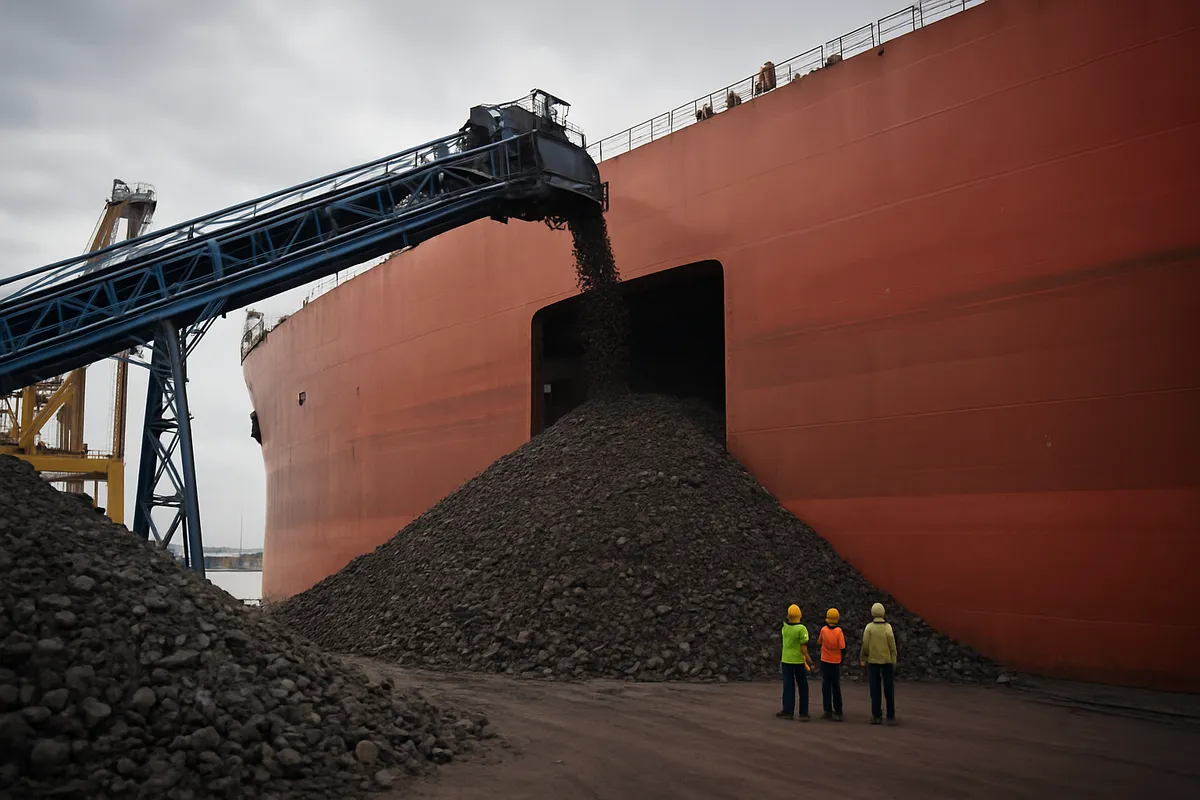
A mining zone has foreign-owned housing, roads, and power lines connected to an export port but few links to the national economy. This pattern is best called
A former colony sells coffee only through a trading company in the former ruler's capital, which grades the beans and decides what they are worth. The strongest evidence of continuing influence is
A newly independent state depends on one mineral for most export earnings, and foreign buyers can reduce purchases to pressure the government. This vulnerability is
A country won independence decades ago, but foreign investors own its plantations and repatriate most profits instead of reinvesting locally. This shows a
In 1964, African leaders agreed to keep inherited colonial borders. The main danger they were trying to avoid was
Colonial borders kept after independence left Somali people living in Somalia, Ethiopia, and Kenya. Somalia then claimed the Somali-populated lands of its neighbors. What is this kind of claim called?
A new government keeps the colonial capital city because ministries, courts, roads, and embassies are already concentrated there. The decision mainly avoids
Leaders of a multiethnic former colony choose a federal constitution so regions can control some local affairs. The design is meant to reduce
After independence, a state adopts one official language for courts and schools even though many local languages are spoken. The policy is meant to promote
A government joins an organization of neighboring states to coordinate trade and security after colonial rule ends. The decision is meant to strengthen
A new state nationalizes foreign-owned mines soon after independence to end outside control of its key resources. Which idea does this policy most directly respond to?
Crack the passcode before the zombies get in.
Answer, then swat bugs for bonus points.
Race through questions at your own speed.
Same question on every screen. Fastest wins.

Pick a tile, answer, hit bonuses and steals.
Types of Political Boundaries and How They Are Made
40 questions