Loading
by BlastRoom
Cumulative review of solar system structure, planets, small bodies, and orbital motion.
#earth_space_science
40 questions
One question set, multiple game modes. Tap any game to see it in action. Not sure which to pick?
Answer to place stones and capture territory.
Outrun the snow together.
Earn blasts, then hunt the other team.
Answer to earn energy, then climb.

The class blasts through walls together.
Bid on mystery lots. Most money wins.
Sell tours. Nice, standard, or a total scam.

Answer, restock, and serve the rush.
More correct answers pulls the rope your way.
Answer, then shoot down the alien wave.
Answer, then tap to leap the frozen ridge.
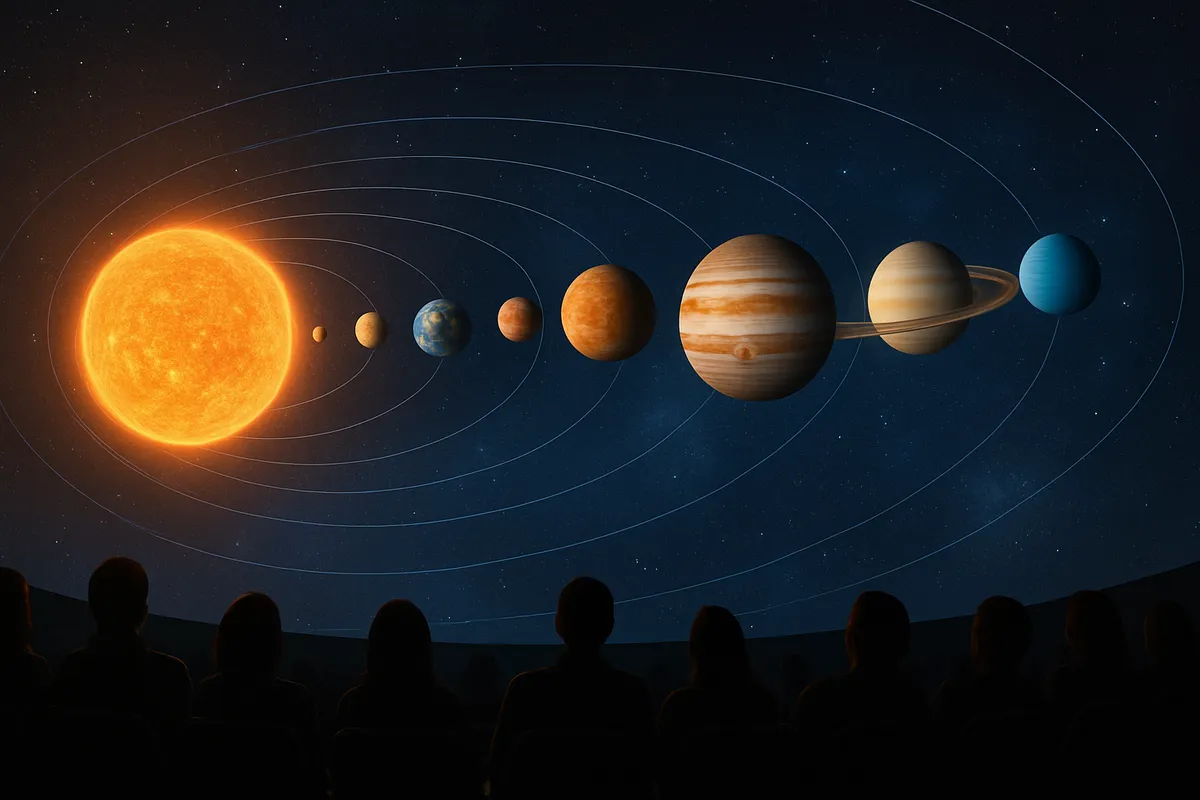
What model says the Sun and planets formed from a collapsing, rotating cloud of gas and dust?
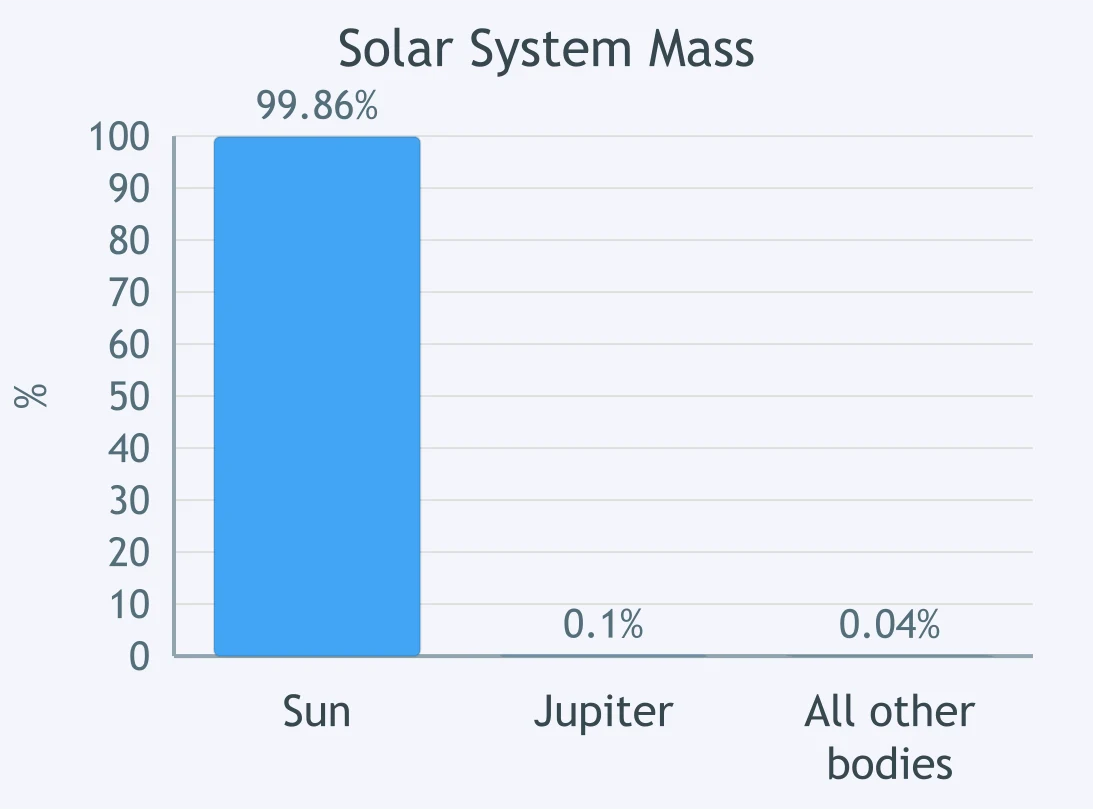
Use the mass chart. What does the pattern show about the solar system's structure?
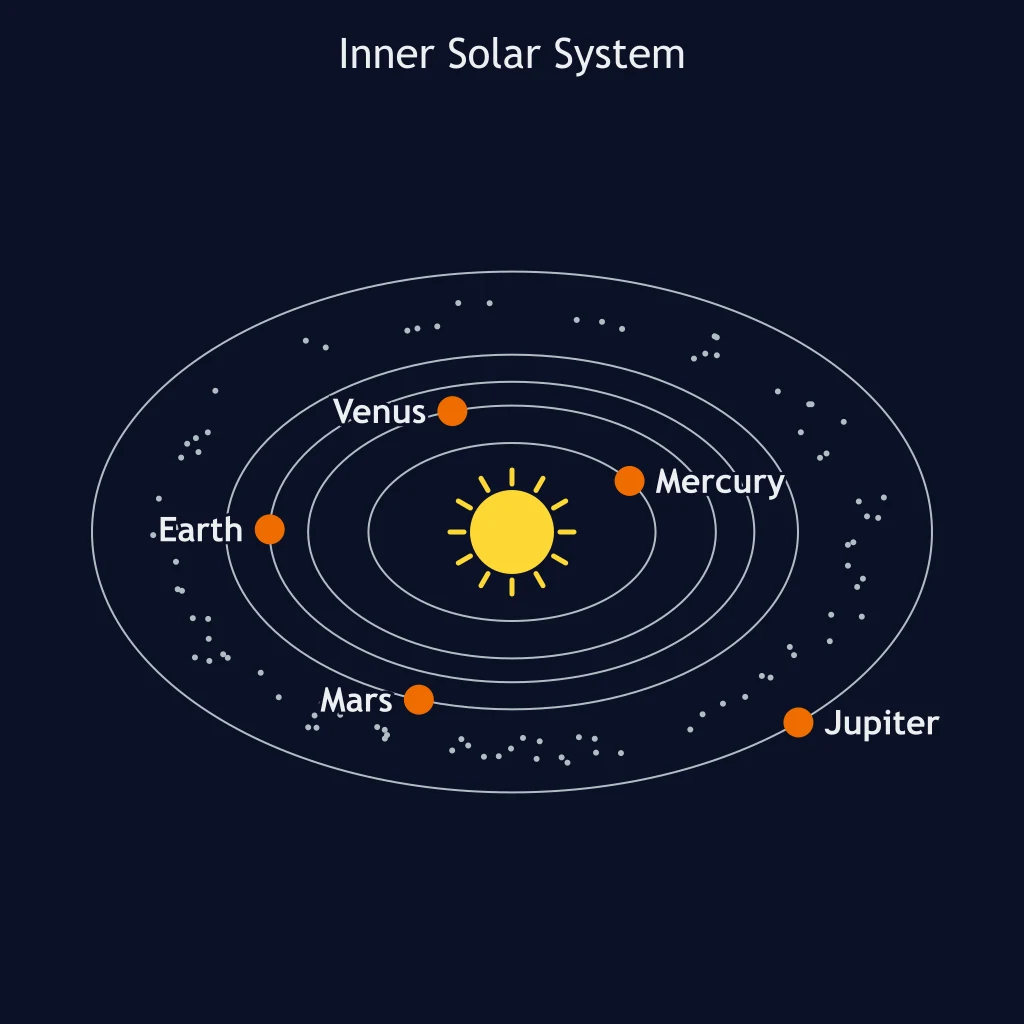
Use the orbit diagram. What is the band of small bodies shown in it called?
The inner planets are rocky, while the outer giant planets kept much more hydrogen, helium, and ice. What early solar system condition best explains this split?
From the Sun outward, what is the order of the major zones of the solar system, from rocky planets to icy leftovers?
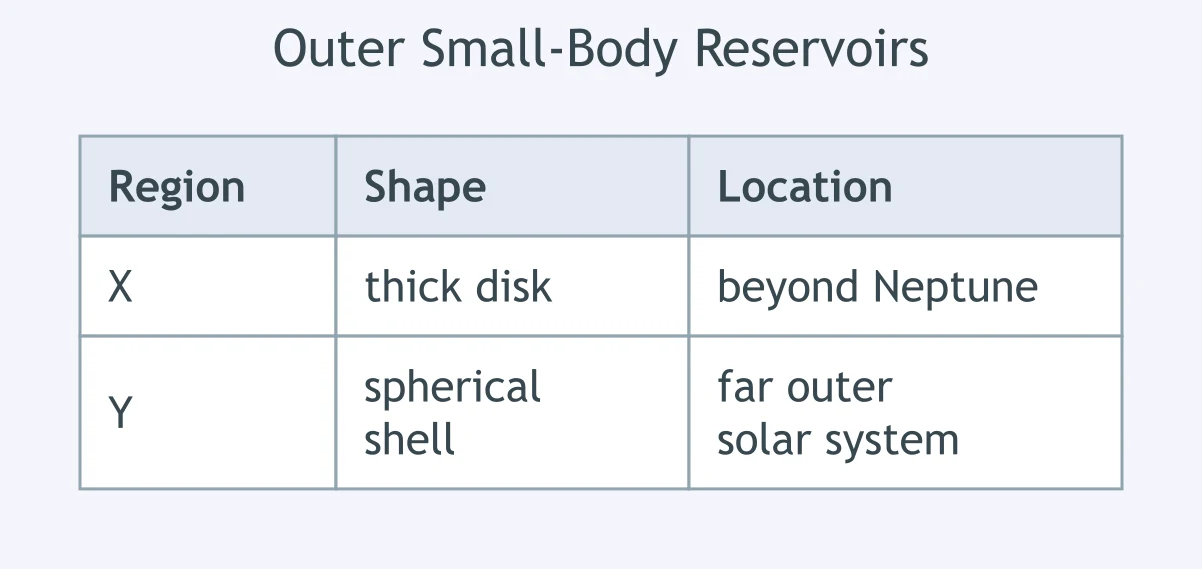
Use the table. What is Region X?
Most planets orbit the Sun in nearly the same plane and direction. What formation idea does that pattern support?
Use the table. Which terrestrial planet is smallest and has almost no atmosphere?
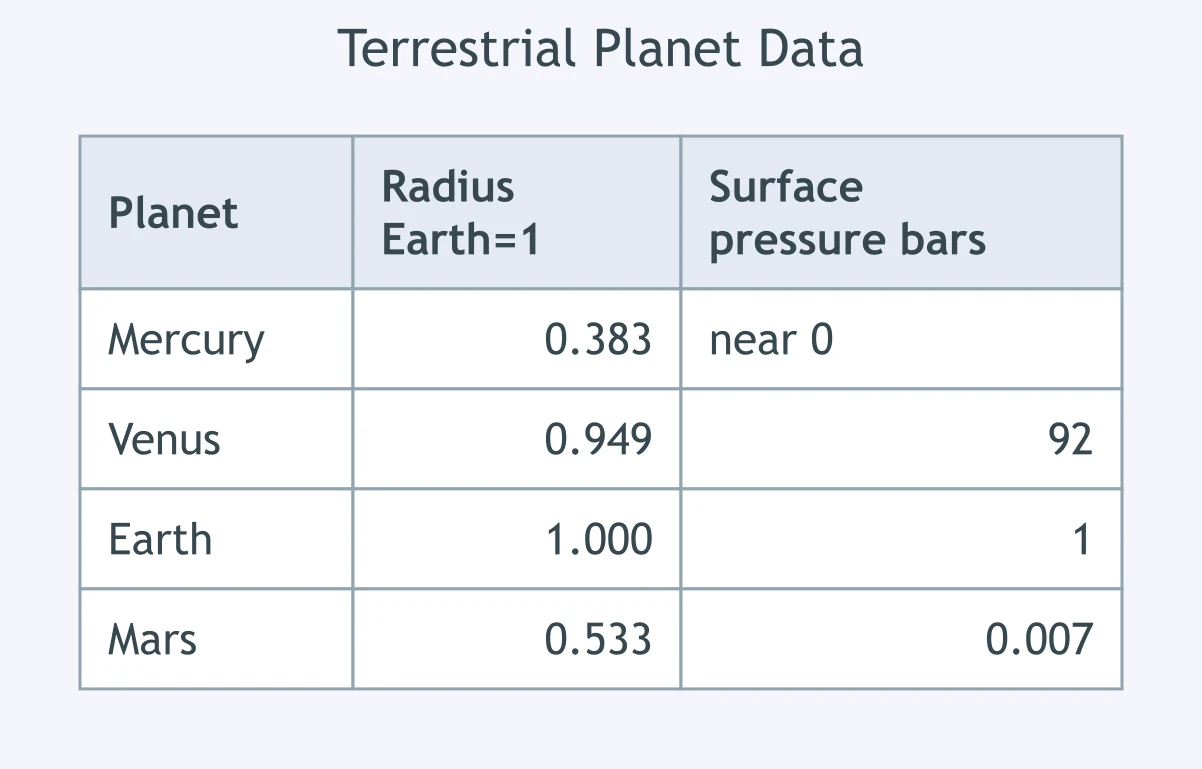
Why is Venus hotter at its surface than Mercury, even though Mercury is closer to the Sun?
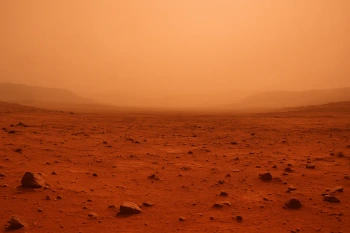
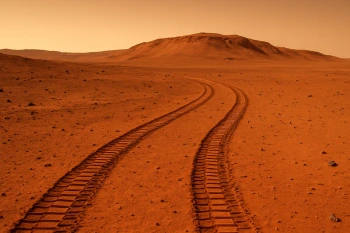
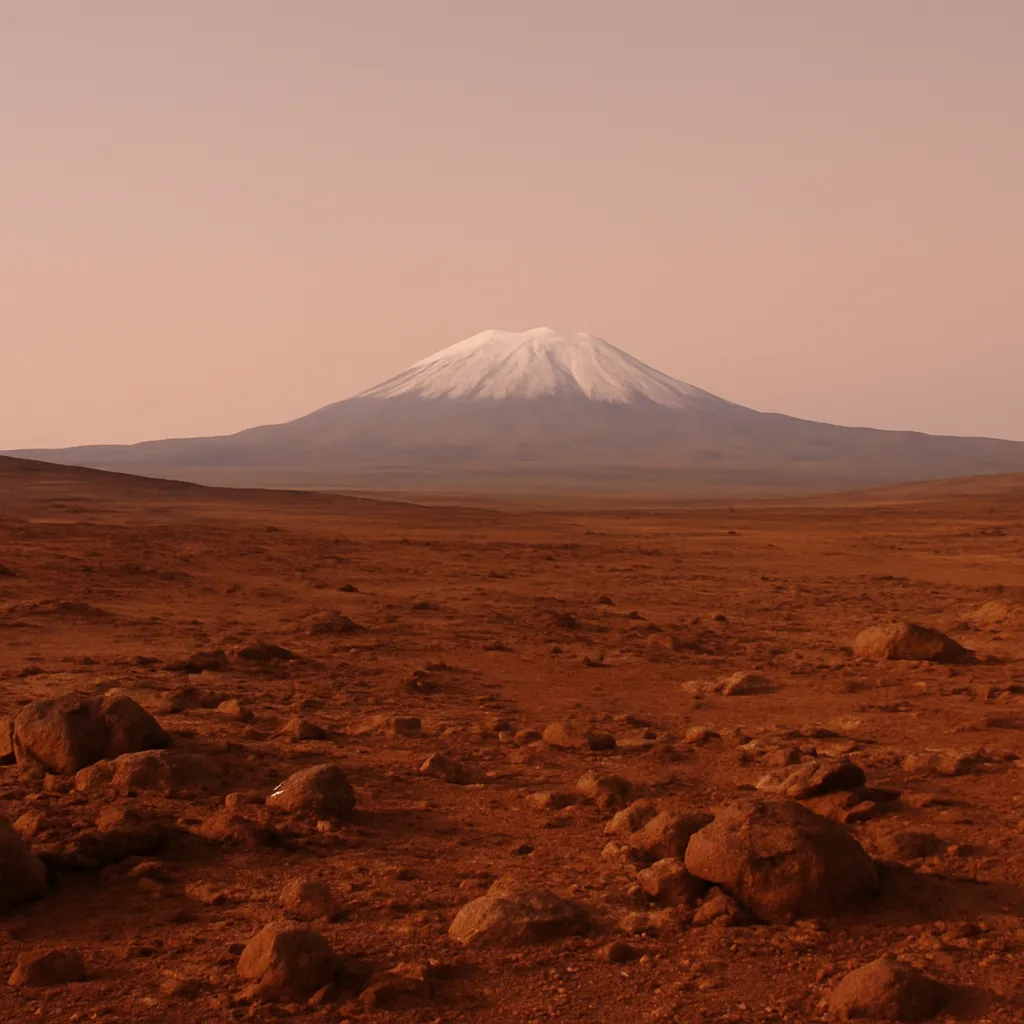
The image shows a rust-colored rocky plain under a dusty pink sky. Which planet is shown?
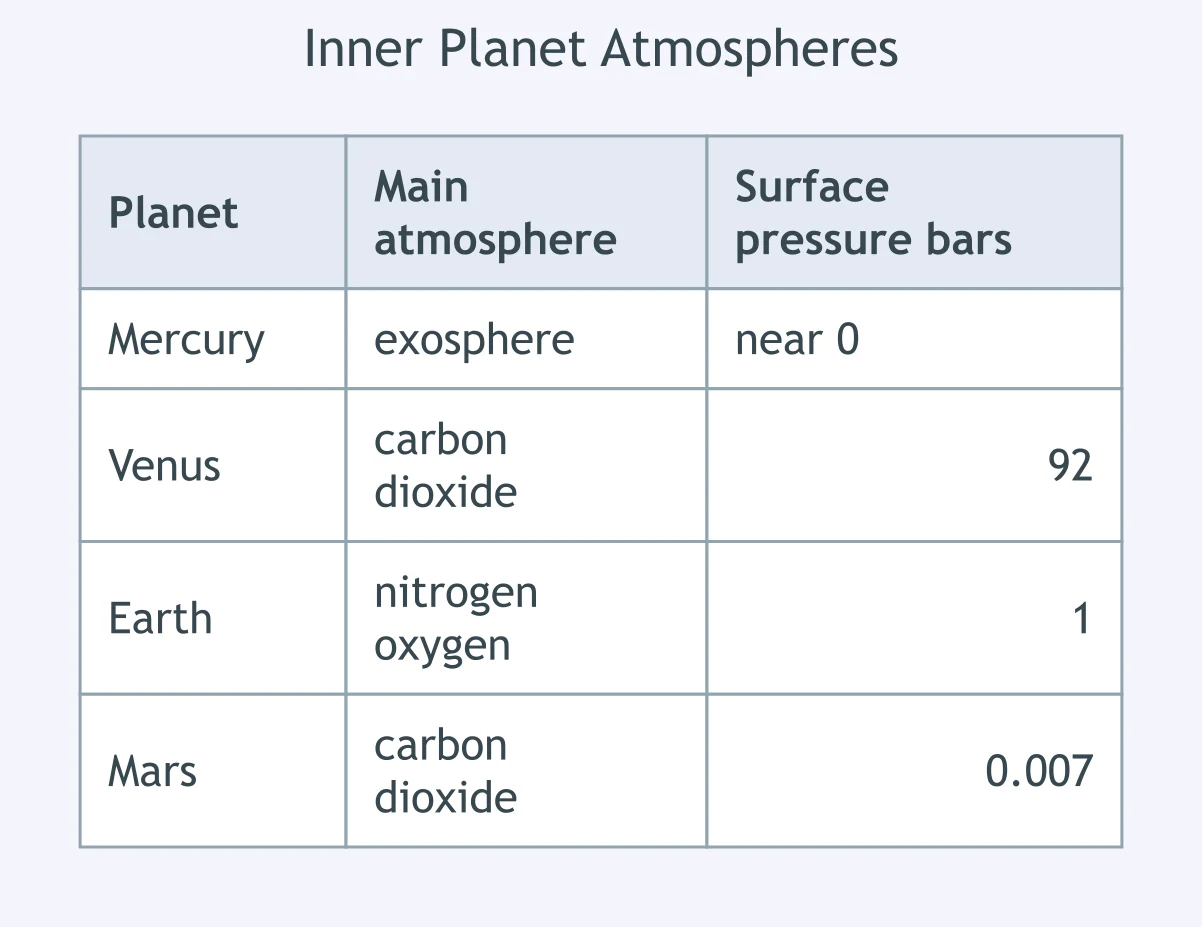
Use the pressure table. Which inner planet has a surface pressure about 92 times Earth's and a carbon dioxide atmosphere?
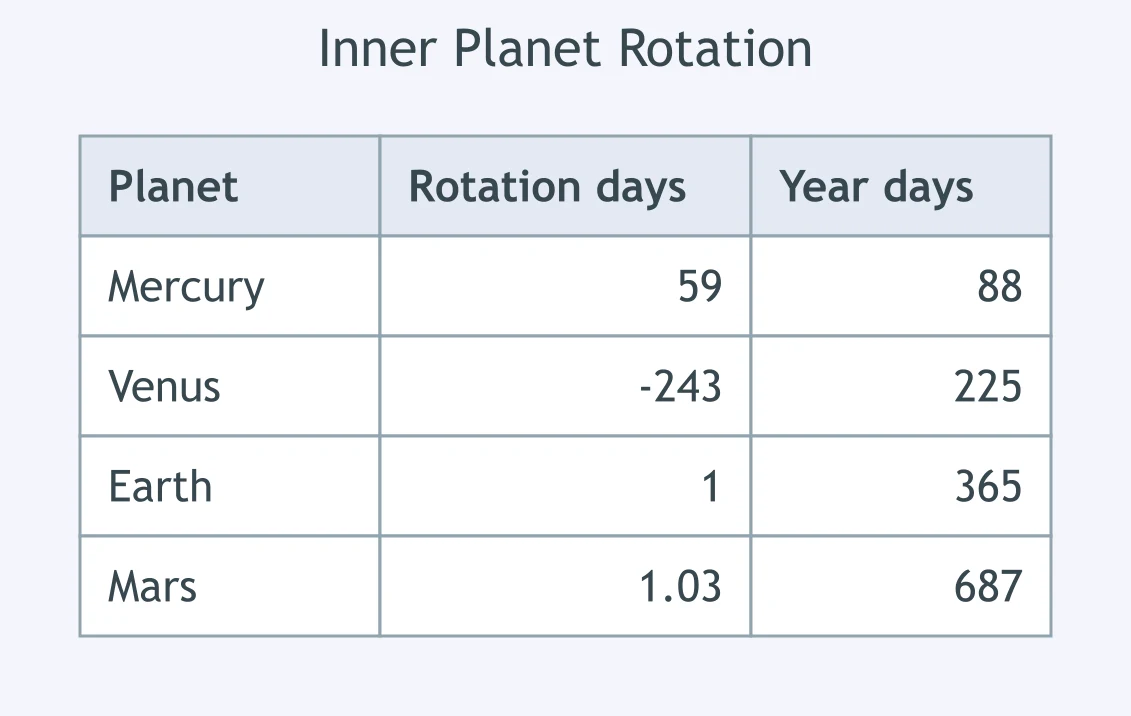
Use the rotation table. Which inner planet rotates retrograde and takes longer to rotate once than to orbit the Sun once?
What gas makes up the largest share of Earth's atmosphere?
Use the moon-count table. Which terrestrial planet listed has two natural satellites?
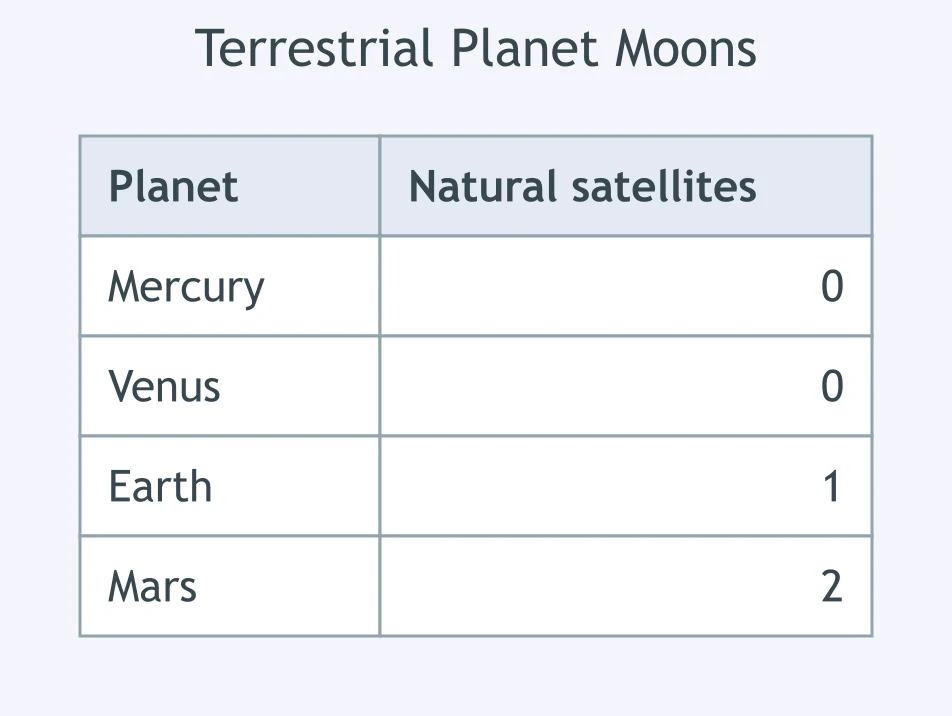
How does the length of a day on Mars compare with the length of a day on Earth?
What are Jupiter and Saturn mainly made of?
Use the table. Which pair combines the greatest masses with the shortest rotation periods?
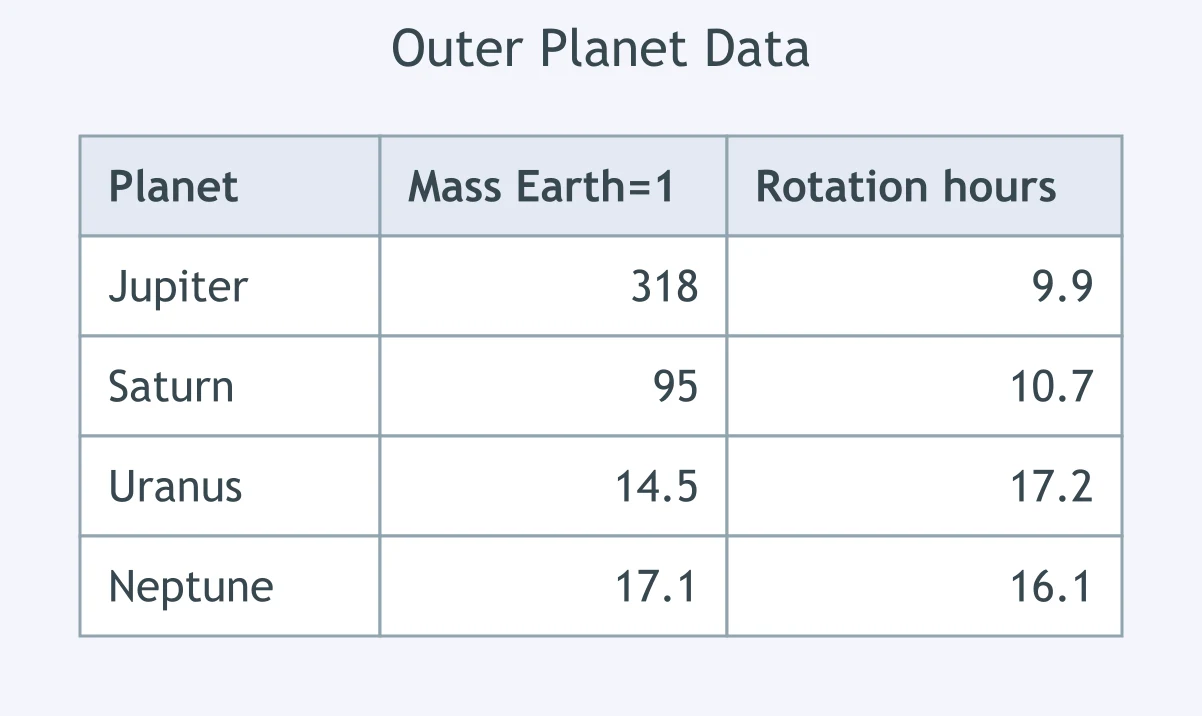
What are Saturn's main rings made of?
The image shows a blue-green planet with rings tilted almost vertical relative to its path around the Sun. Which outer planet is shown?
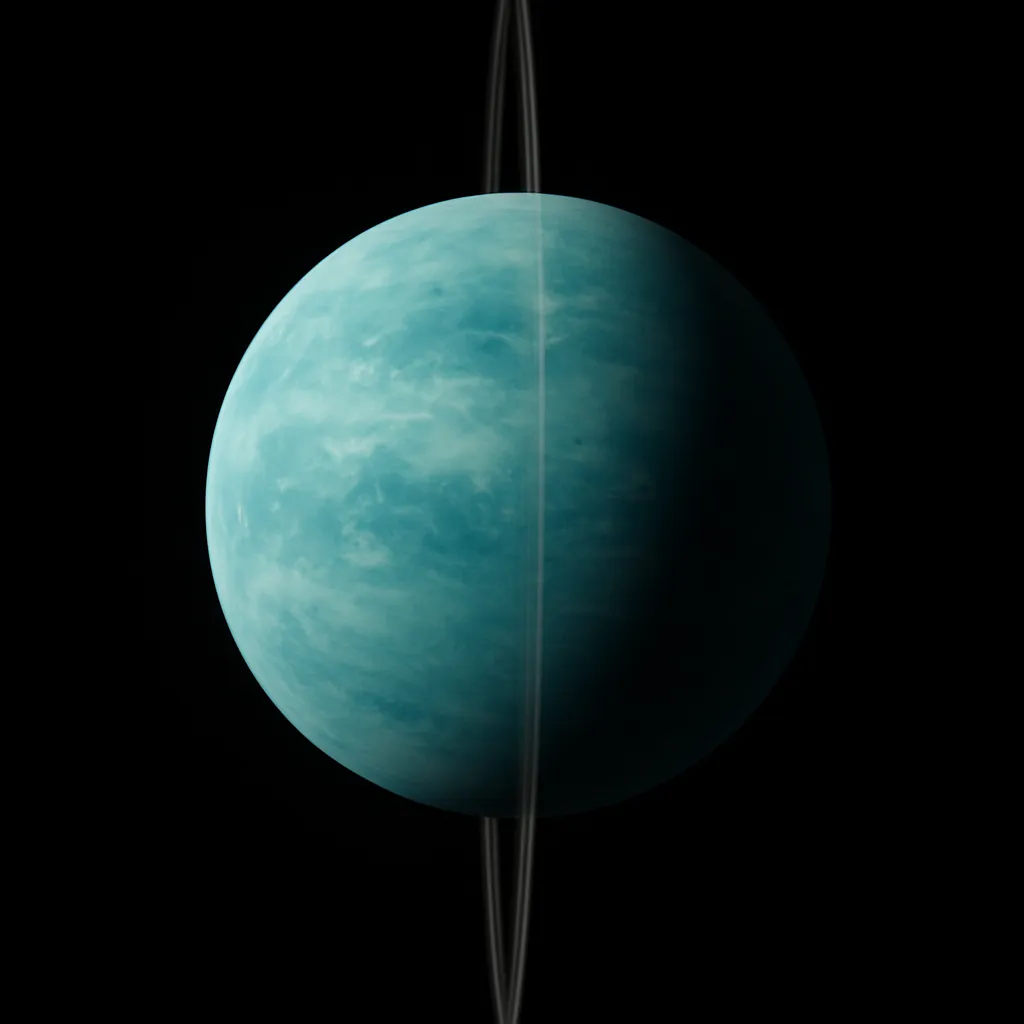
Use the table. Which outer planet is farthest from the Sun and has the longest orbital period?
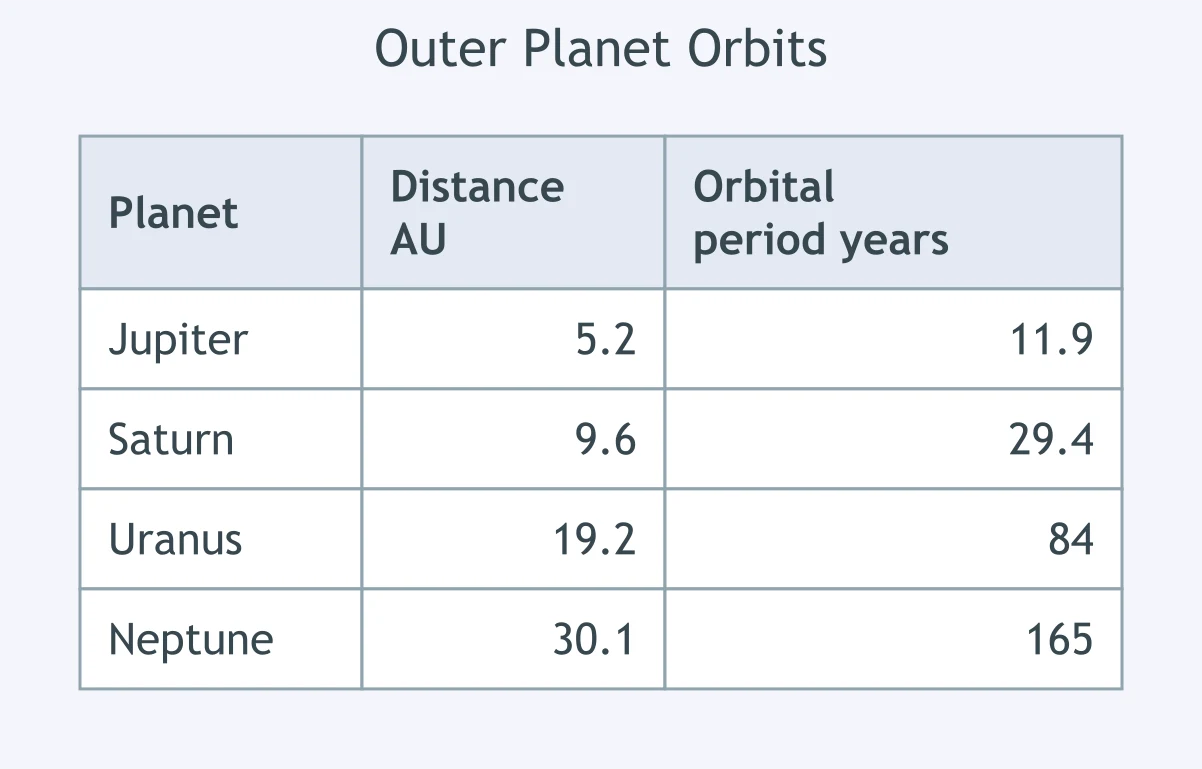
Use the moon table. Which Saturn moon has a dense nitrogen atmosphere and lakes or seas of liquid methane and ethane?
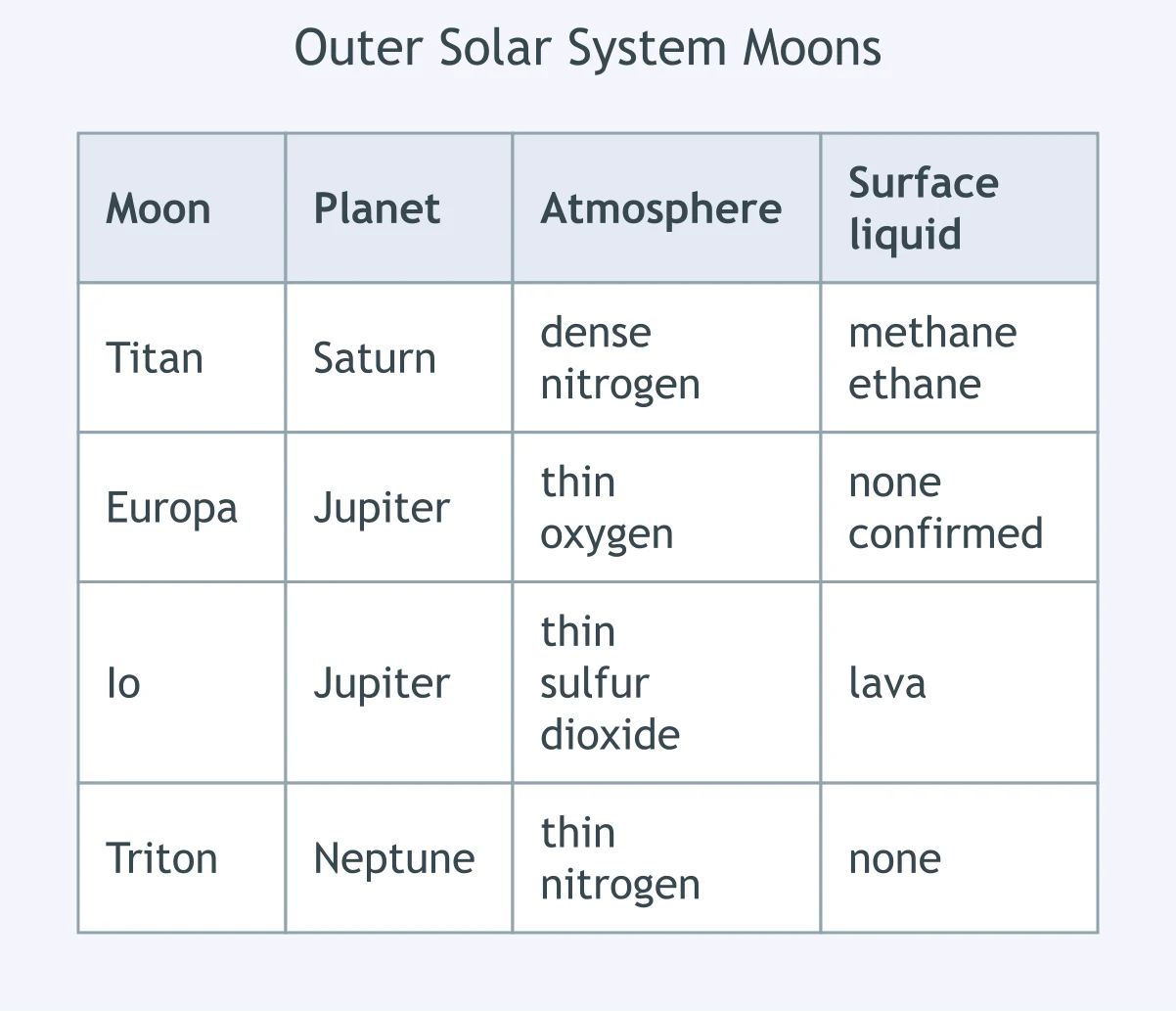
Use the Jupiter-moon table. Which moon should experience the strongest tidal heating?
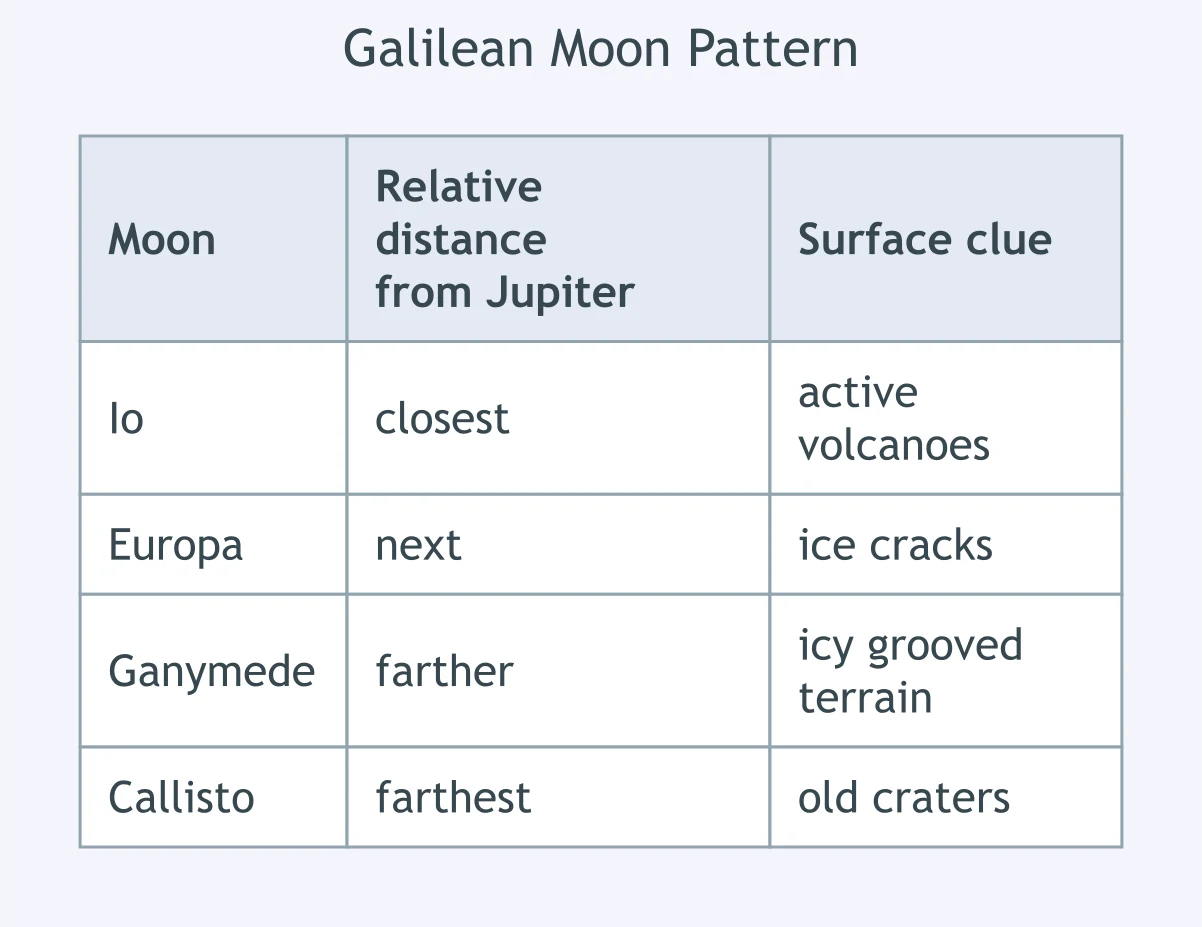
Neptune's largest moon has a retrograde orbit and is thought to be a captured Kuiper Belt Object. What moon is it?
An object in the asteroid belt stays inactive and forms no coma or tail even at its closest point to the Sun. What kind of small body is it most likely?
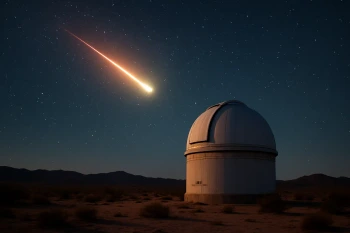
Use the process diagram. What name belongs to the glowing streak in air?
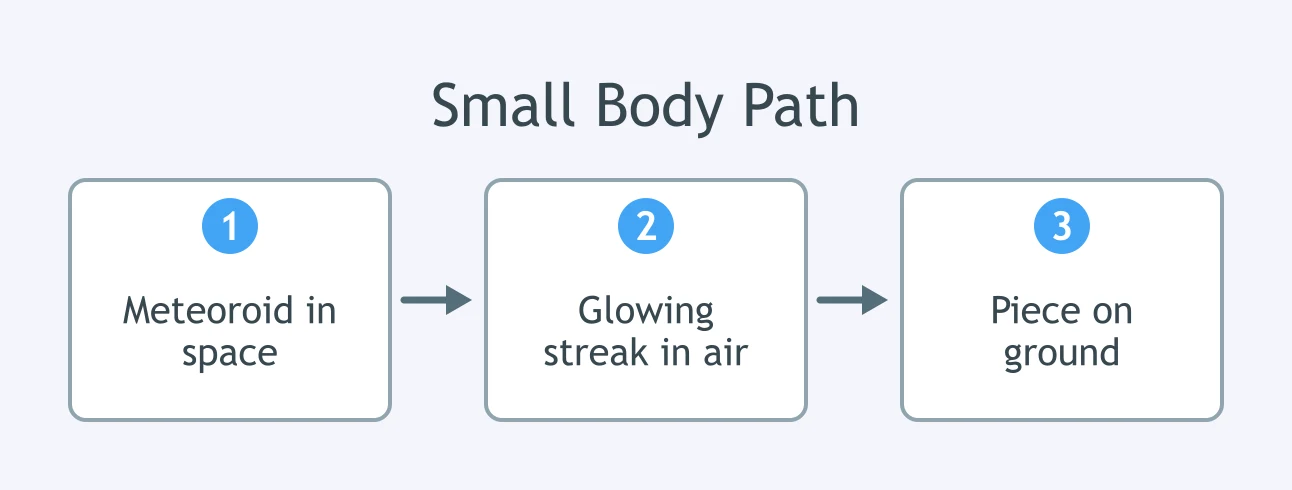
A dense, fusion-crusted stone from an observed fall is collected after it reaches the ground. What is the object called at that point?
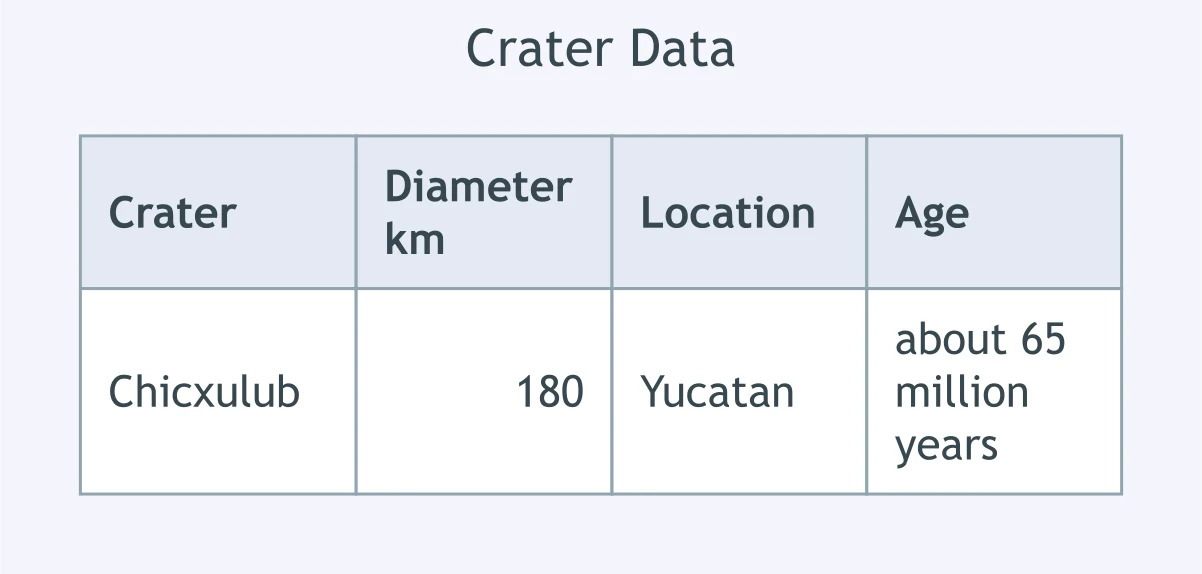
Use the data card for Chicxulub. What event best explains a buried 180 km crater near the Yucatán Peninsula that is about 65 million years old?
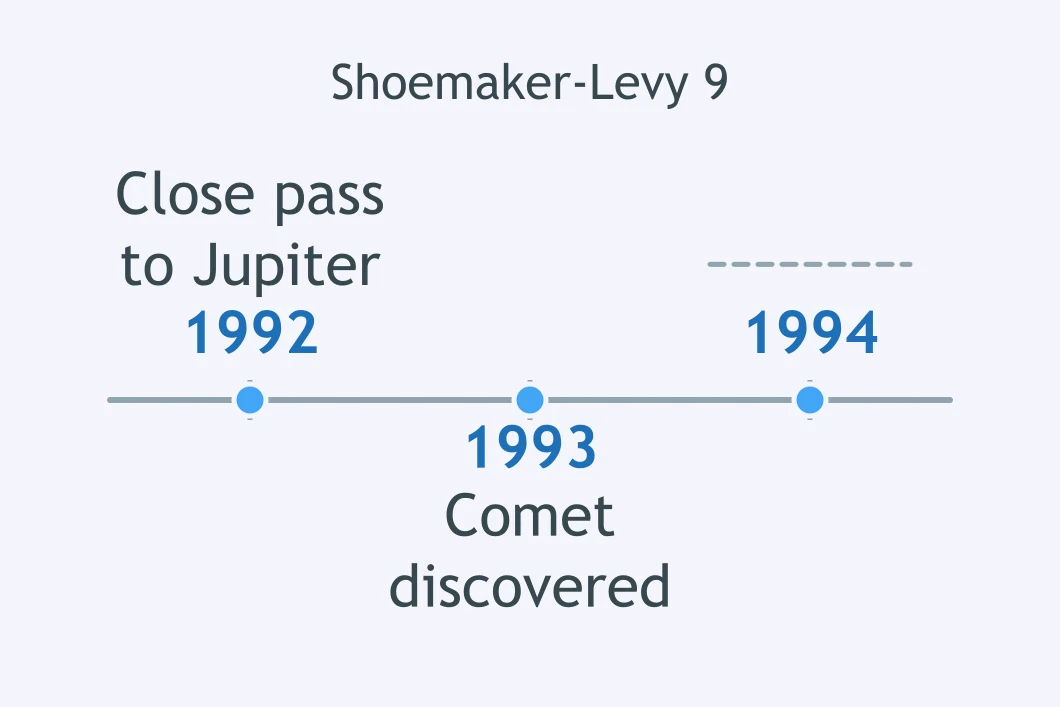
Use the timeline. What happened to Comet Shoemaker-Levy 9 in 1994, the blank event on the timeline?
On June 30, 1908, an object from space flattened about 2,000 square kilometers of Siberian forest but left no impact crater. What type of event was Tunguska?
Arizona's Barringer Crater is about 1.2 km wide and 170 m deep. What process excavated it about 50,000 years ago?
Use the ellipse diagram and . What is the orbit's eccentricity?
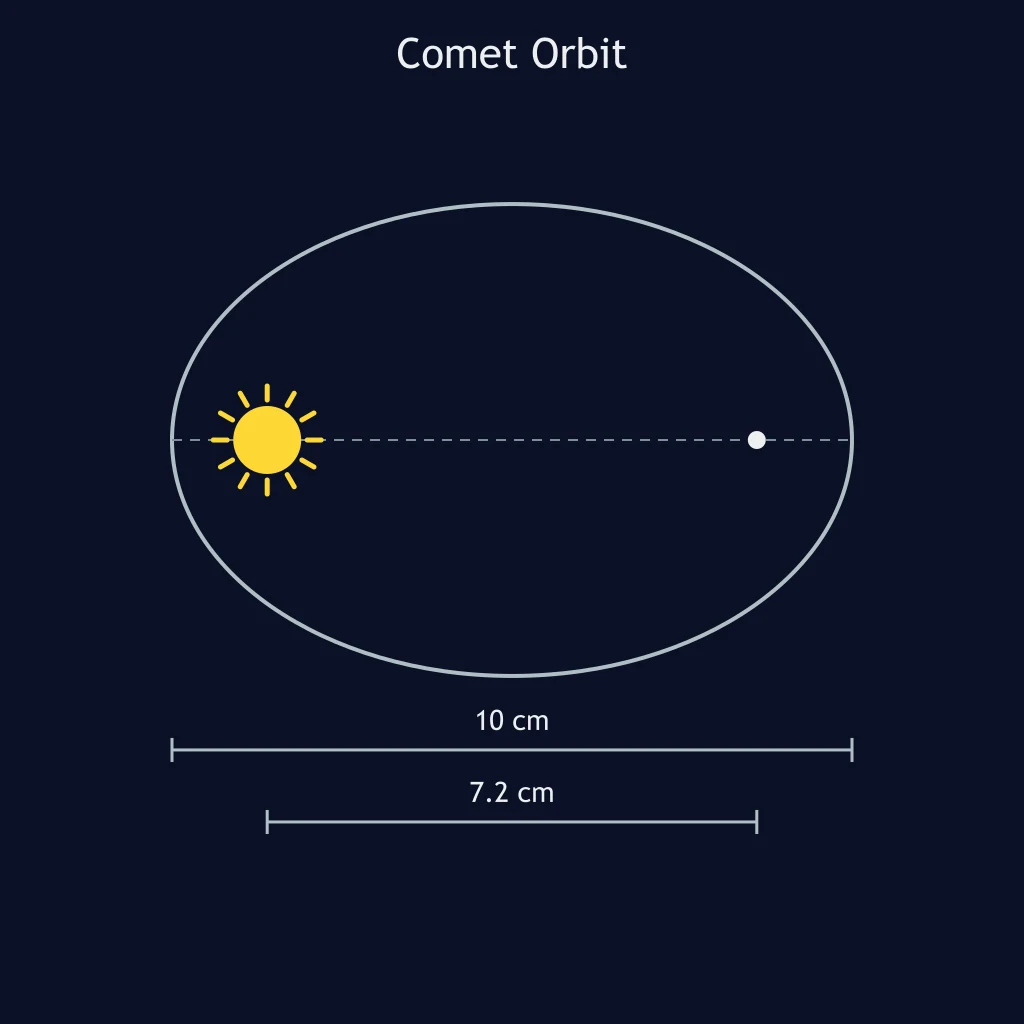
Use the ellipse diagram and . What is the orbit's eccentricity?
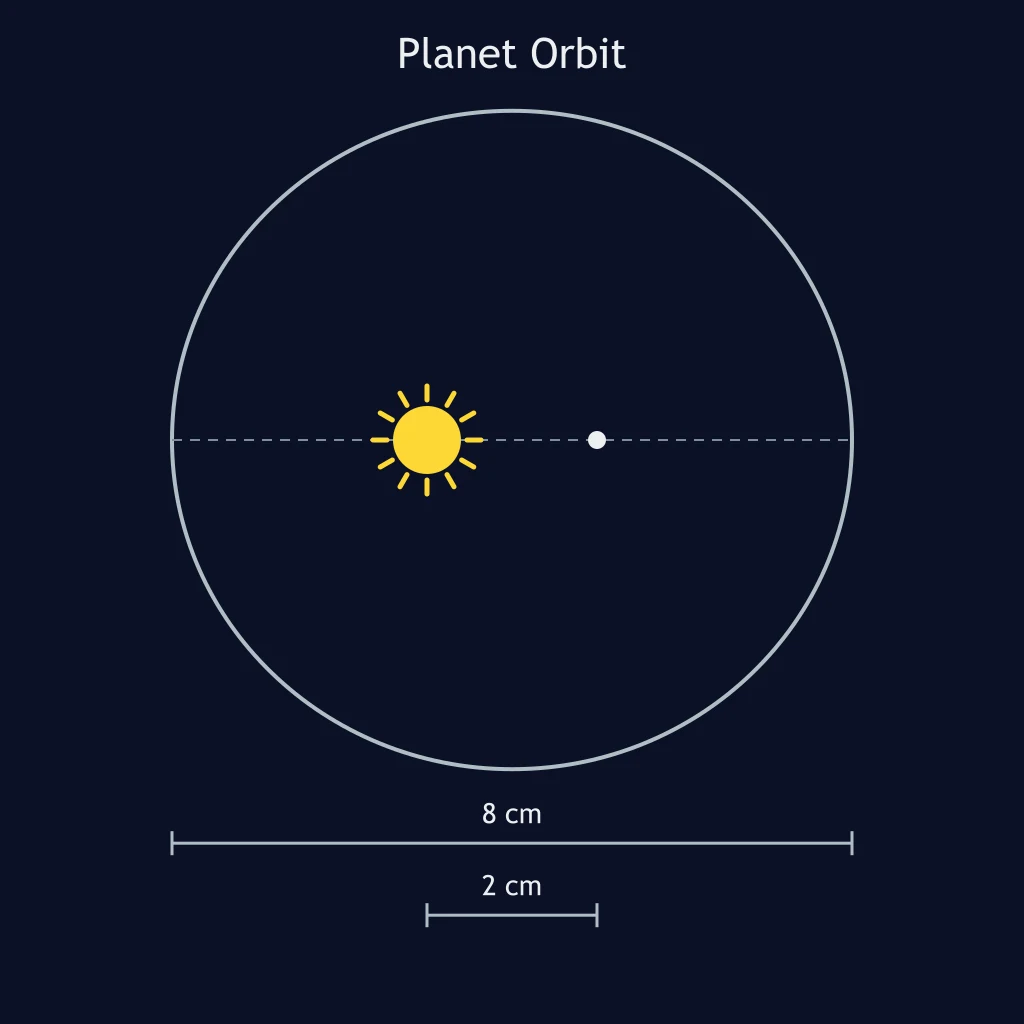
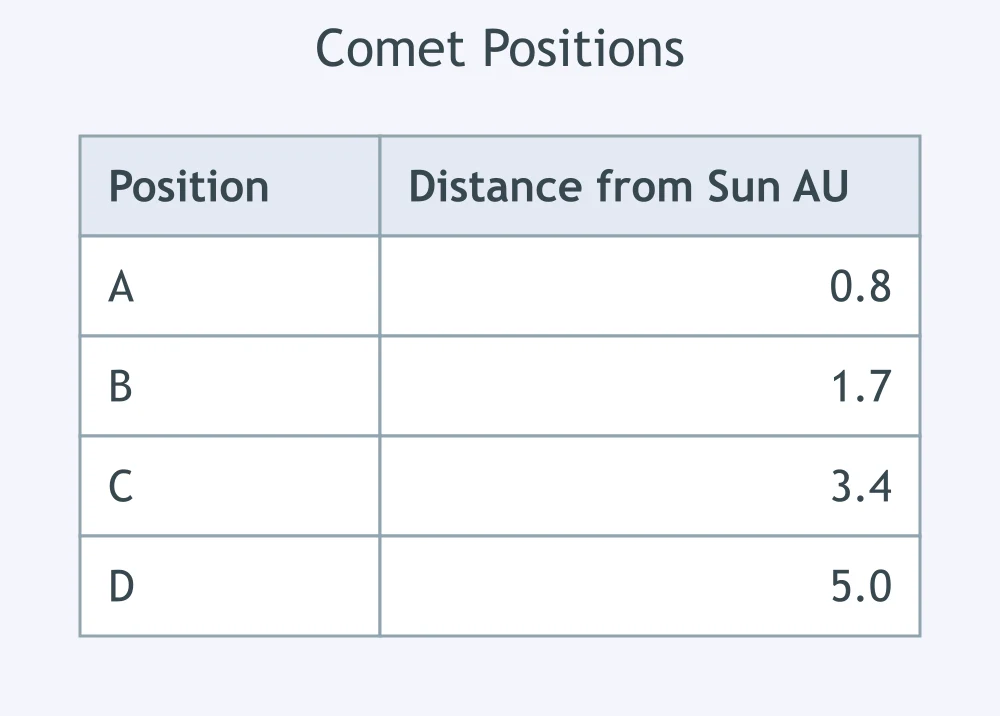
Use the distance table for a comet in an elliptical orbit. At which labeled position should the comet move fastest?
Kepler's third law is , with in Earth years and in AU. If a planet has AU, what orbital period is predicted in Earth years?
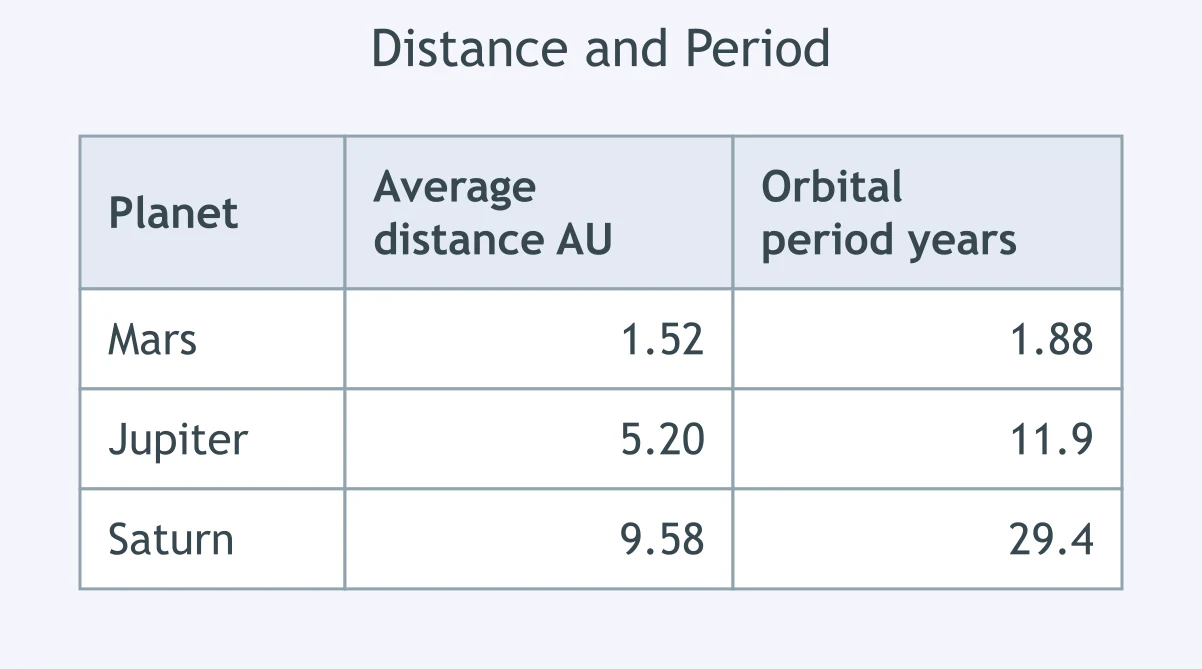
Use the planet table. What happens to orbital period as average distance from the Sun increases?
If a spacecraft's distance from the Sun doubles, what happens to the Sun's gravitational force on it?
A planet's average distance is 9 AU. Using Kepler's law , what is its orbital period in Earth years?
A comet's orbit brings it to 0.5 AU at perihelion and 35 AU at aphelion. Where is its orbital speed greatest?
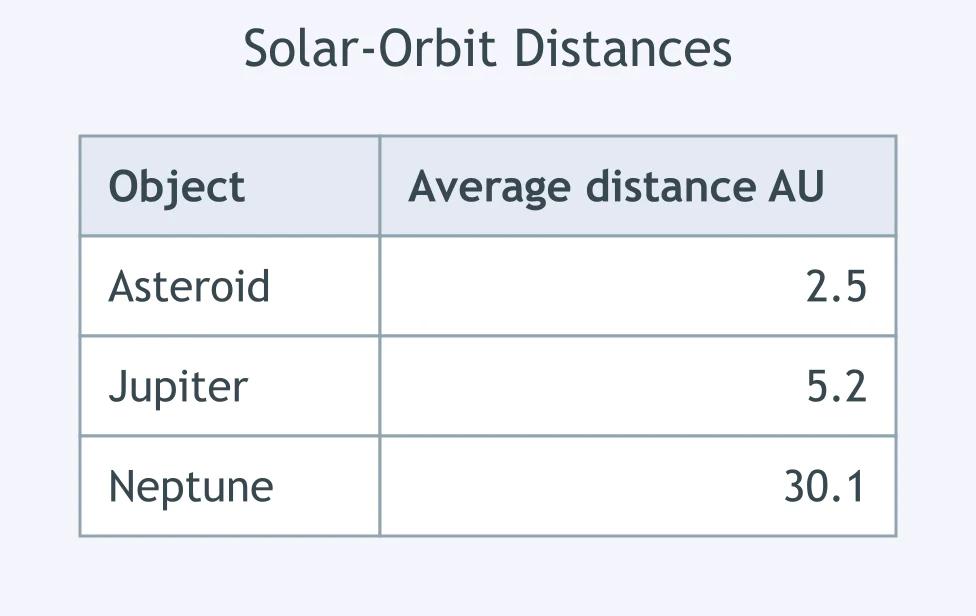
Use the distance table and Kepler's laws qualitatively. What is the orbital-speed order from fastest to slowest?
Two planets are the same distance from a spacecraft. Planet A has 4 times Planet B's mass. How does Planet A's gravitational pull compare?
Crack the passcode before the zombies get in.
Answer, then swat bugs for bonus points.
Race through questions at your own speed.
Same question on every screen. Fastest wins.

Pick a tile, answer, hit bonuses and steals.
The Sun
30 questions